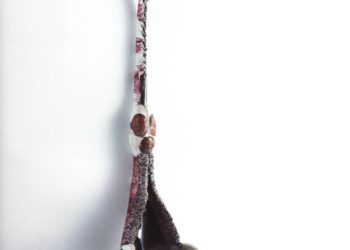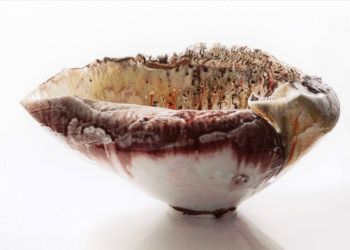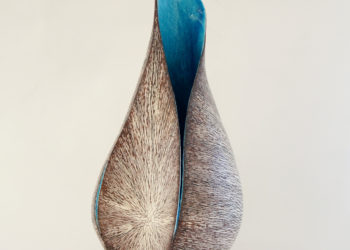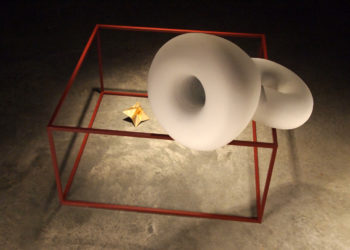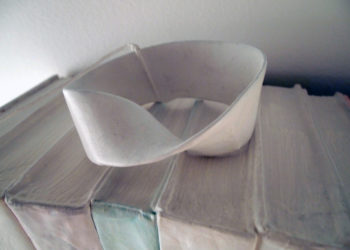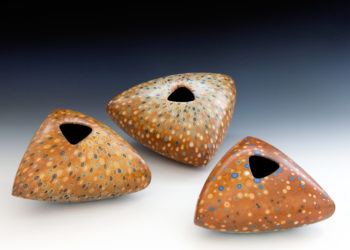
Kwok-Pong ‘Bobby’ Tso: Qoppa, Industrial landscape Series, 2011, White earthenware, wood, hobby paper, latex paint, H 18, W 20, D 15
featured
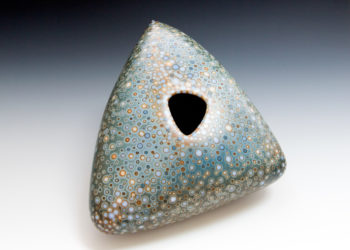
Kwok-Pong ‘Bobby’ Tso: Zeta, Industrial landscape Series, 2011, Porcelain, paint, wood, hobby paper and metal, H 13 1/4” x W 14” x D 6”
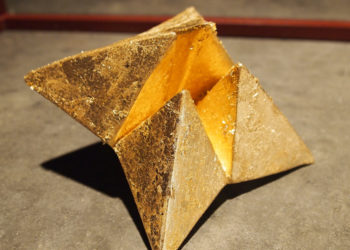
Kimberly Cook: Superstition of Security, 33.5” x 23” x 16”, stoneware, glaze, mason stain, gold luster, 2011
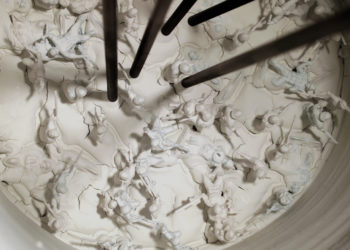
Debra Fleury: Tidal 2011. Dark Stoneware, Porcelain and glass. Fired to cone 6 (neutral atmosphere), (wall installation). Dimensions variable, average size per individual piece is approximately 10 cm x 10 cm x 8 cm
Debra Fleury: Limpid, 2011. Dark Stoneware, Porcelain and glass. Fired to cone 6 (neutral atmosphere), (wall or surface installation). Dimensions variable, average size per individual piece is approximately 11 cm x 11 cm x 5 cm
Cindy Billingsley

Cindy Billingsley’s profile on Ceramics Now Magazine - View her works
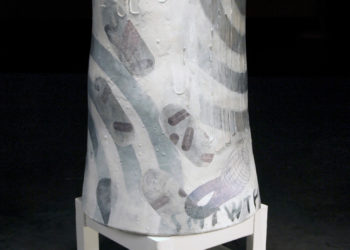
Art should come from the heart of the artist, it should engage the audience, it should connect with the community, it should start a dialog, a debate. It should get people to look at things in a way they have not thought of, or to see what they have looked at but not really seen. Art has to come deeply from the artist, there has to be raw emotion and honesty in the work if it is to connect with people. An Artist paints and sculpts what they know. These are all the reasons I wanted to do a show about Alzheimer’s disease. To start a dialog, to connect, to get people to understand what it is like to have the disease, it is a part of my life, so it is what I know, what I am around. I took those thoughts and feelings and transformed them into visuals to engage my audience.
I speak through paint and clay. Art is a look inside the artist, what I am feeling is transferred into the clay while I am sculpting, Those feelings have to go somewhere. I wanted to tell a story, I wanted you to feel how it is, the frustrations, humor, the compassion and the heartache of having Alzheimer’s disease and for the ones caring for one with this disease.
William Faulkner said it best ~ The aim of every artist is to arrest motion, which is life, by artificial means and hold it fixed so that a hundred years later, when a stranger looks at it it moves again since it is life.
Interview with Kathy Pallie - New artist, January 2012
Interview with ceramic artist Kathy Pallie - New artist, January 2012
→ Subscribe to our monthly newsletter if you want to receive news and interviews with ceramic artists.
→ The full interview with Kathy Pallie will be featured in Ceramics Now Magazine - Issue Two.
Ceramics Now Magazine: When and how did you discover the passion for ceramics?
Kathy Pallie: Growing up, I was always the artsy-craftsy one, making things out of all different kinds of materials, using lots of different techniques. I loved going to my Dad’s office in New York City where they produced display products/props used in retail store windows and interior displays. To me, it was a magical, fantasy industry.
Though I never had art classes in high school, I decided that art would be my major in college. As a first year art student, I was introduced to clay. I immediately loved the tactile sense of working with clay and creating 3-dimensional objects.
My interest in clay took a back seat to advertising design which was my major within the art curriculum. This was followed by a very exciting career in commercial art designing decorative and functional display products for the retail stores, exhibit world and point-of-purchase industries. Most of these products were 3-dimensional, large scale and fabricated from a variety of materials. It was always exciting and challenging to work with materials that had totally different commercial uses and to create products from them that were applicable to the display field. Much of this was done in foreign countries working with cottage industries, sometimes sitting on the ground outdoors with chickens and roosters strutting by.
Years later, when I retired and put my hands back into clay, I realized that this was a material that really excited and intrigued me, and one I had to explore in depth. I was hooked! My “clay play days” took over. Now instead of designing products that had to be marketable or meet a client’s design criteria, this was just me, the clay, and the creative process and didn’t need anyone else’s approval. I played with clay with a childlike approach, investigating, experimenting, and learning, as much and as fast as I could.

The 4 Elements – Earth, Wind, Fire, Water, Earthenware, glazes, 18”H x 14” Diameter, 2011 - View Kathy Pallie’s works
Tell us more about your creative process. Where do you get inspiration from and how do you find the journey towards the final outcome?
My inspiration comes from just living and observing and being receptive to what is going on around me. I’ve always been inspired by the unlimited variety of textures, patterns, and energy found in nature. I love to be outdoors skiing, hiking, swimming, watching the changing light patterns from dawn to sunset, seeing flowers bloom and leaves unfurl. I’ll often take photos for reference, pick up pieces of bark to experience the sensation of the surface texture, and closely observe different patterns and details. I interpret my reaction to these things in clay. Though many of my artworks have a trompe l’oeil effect, I am not trying to mimic Nature. Rather, I try to bring the essence of what I have experienced in the outdoors into interior spaces.
Once in the studio, the clay often seems to have a life of its own as it leads me, morphing from one form and concept to another. On other occasions, I can envision the completed piece before even touching the clay.
— The full interview will be featured in Ceramics Now Magazine - Issue Two.