Lauren Francescone & Rebecca Ramsey: Homebody is on view at Galerie d’Outremont, Montréal
September 9 – November 1, 2026
Essay by Anaïs Castro
The home is often imagined as the place where the self begins: a space of retreat, intimacy, habit, and protection. Yet a home is never simply a shelter. Homes absorb histories, regulate movement, mediate relationships, and quietly shape the ways bodies inhabit space. It is an extension of the body, a vessel for memory, a system of boundaries, and a site where invisible forces such as care, labour, technology, desire, contamination, and communication circulate continuously. Walls regulate intimacy as skin regulates touch; windows are like eyes that open onto the world. Long before architecture became an object of design, the house functioned as a living organism, mediating our relationship to the world. At the heart of Lauren Francescone and Rebecca Ramsey’s two-person exhibition lies this simple yet expansive proposition: that the body and the home are reciprocal structures through which we understand ourselves and our relationship to the surrounding world.
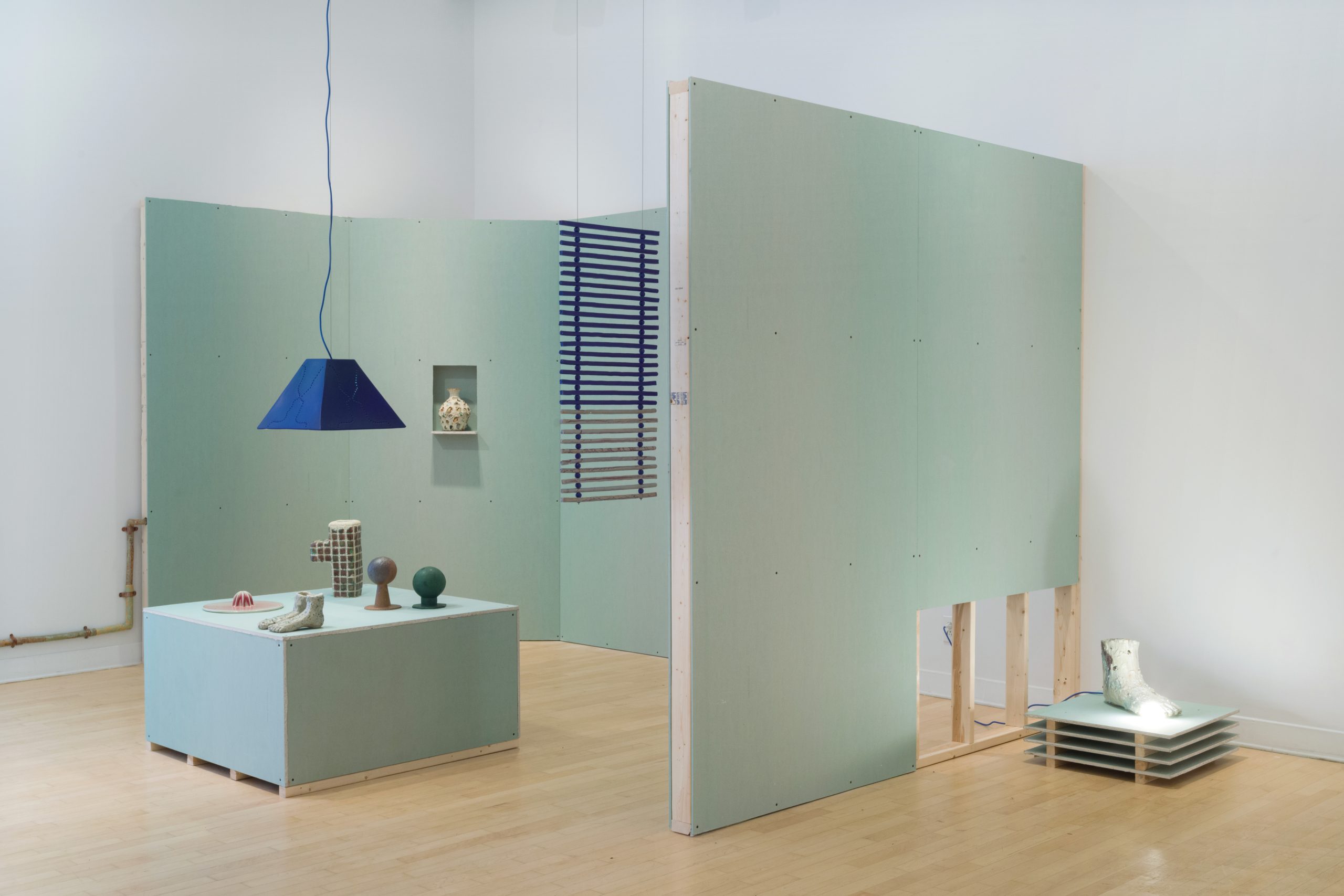
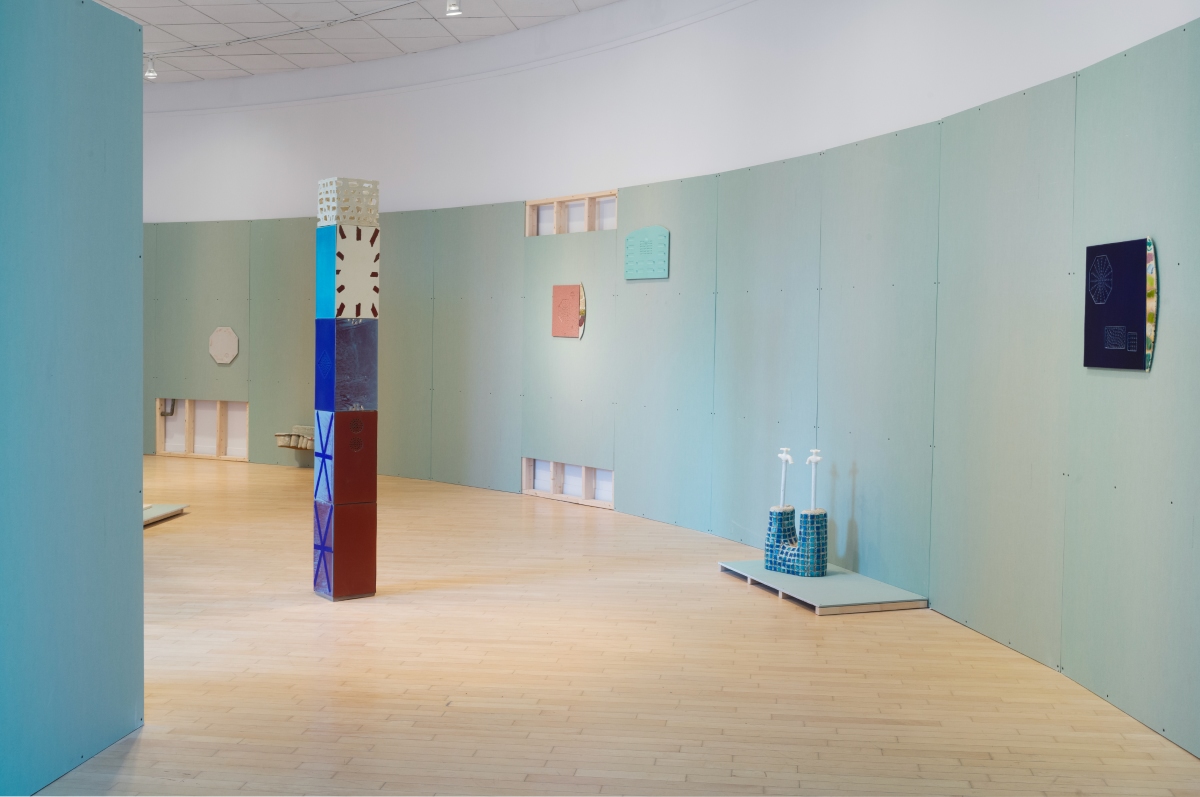
Having developed an ongoing dialogue over the past four years through their respective ceramic practices, Francescone and Ramsey have discovered a remarkable convergence of interests while maintaining distinct artistic voices. Both approach clay as a material capable of registering transformation while investigating domestic space as a site where intimacy and broader ecological, technological, and cultural systems intersect. Developed through parallel residencies in the spring of 2026—Francescone at Shigaraki Ceramic Cultural Park in Japan and Ramsey at Medalta in Alberta—the works presented here mark a significant evolution in both artists’ practices. These residencies afforded opportunities to work at a larger scale while deepening an engagement with ceramic processes, particularly reduction firing and soda firing. In the gallery space, the resulting sculptures create a deconstructed domestic environment.
The exhibition’s title, Homebody, evokes a term often used to describe someone who prefers the familiarity of home to the bustle of public life. It suggests someone choosing withdrawal, introversion, or even social disengagement. Yet in recent years, the home has become increasingly charged as a place where care and labour converge and where work and private life collapse into one another. For both Francescone and Ramsey, home is understood not as a stable refuge but as a permeable organism whose boundaries are constantly negotiated. Their works suggest that isolation is never absolute. Even the most private spaces remain entangled with networks of communication, energy, and exchange. The home is simultaneously as sanctuary and an interface, a shelter and a conduit, a place where vulnerability is both protected and revealed.
Clay is uniquely suited to such an inquiry. Before becoming ceramic, clay remains infinitely responsive and capable of recording the slightest pressure of a hand while preserving traces of time itself. Once fired, it becomes fixed, durable, yet perpetually vulnerable to fracture. Francescone and Ramsey approach clay as a conceptual material whose transformations mirror broader cycles of ecological, bodily, and technological change. Fire, pressure, crystallization, sedimentation, drying, melting, and fracture are not merely technical processes but metaphors for the conditions through which contemporary life itself is experienced.
For Lauren Francescone, the domestic interior has become increasingly entangled with invisible technological infrastructures. Contemporary homes are saturated with signals, networks, wireless transmissions, and glowing screens that quietly organize everyday life while remaining largely imperceptible. Rather than opposing digital technologies to handcrafted making, Francescone proposes unexpected continuities between them. Both involve systems of transformation, the transmission of energy, and acts of translation.
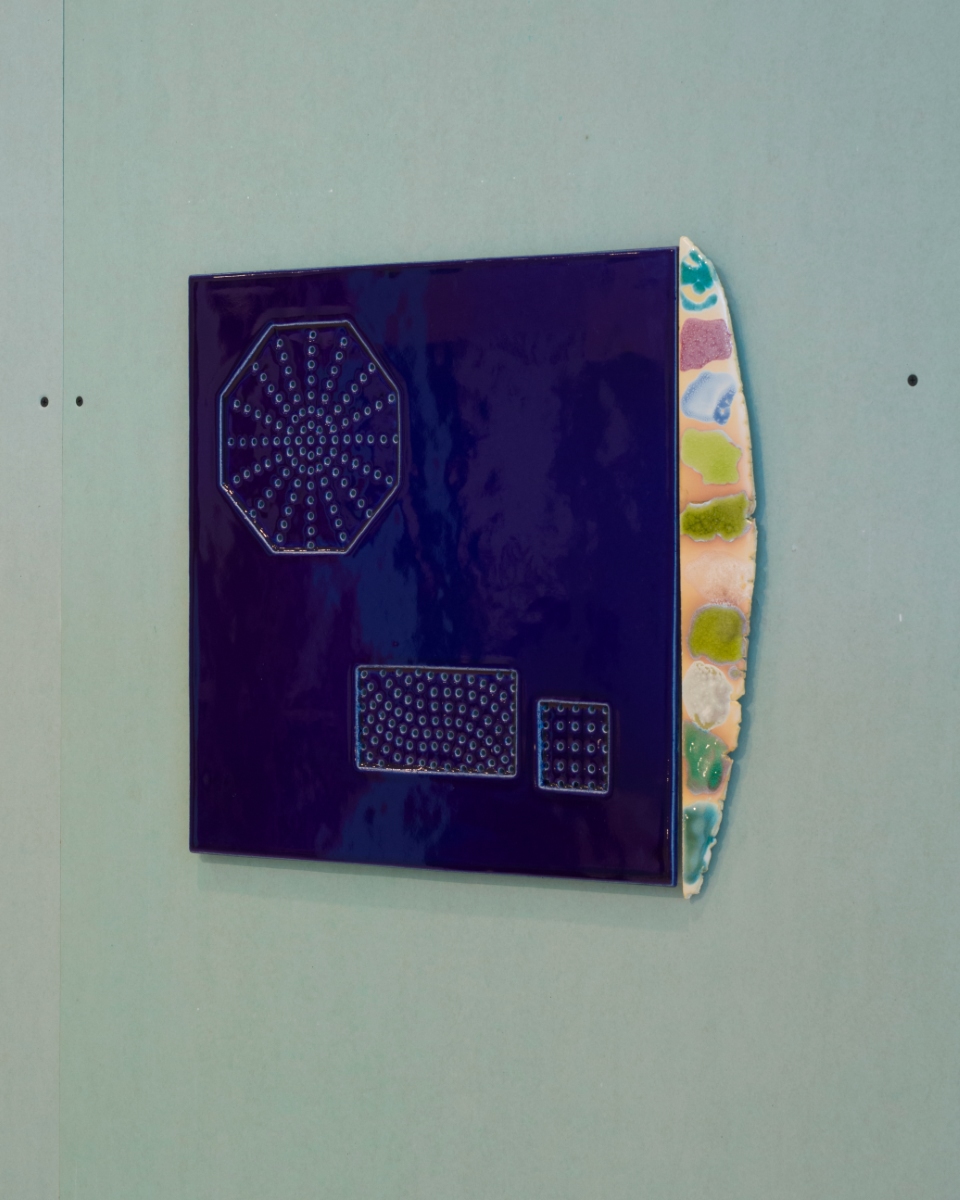
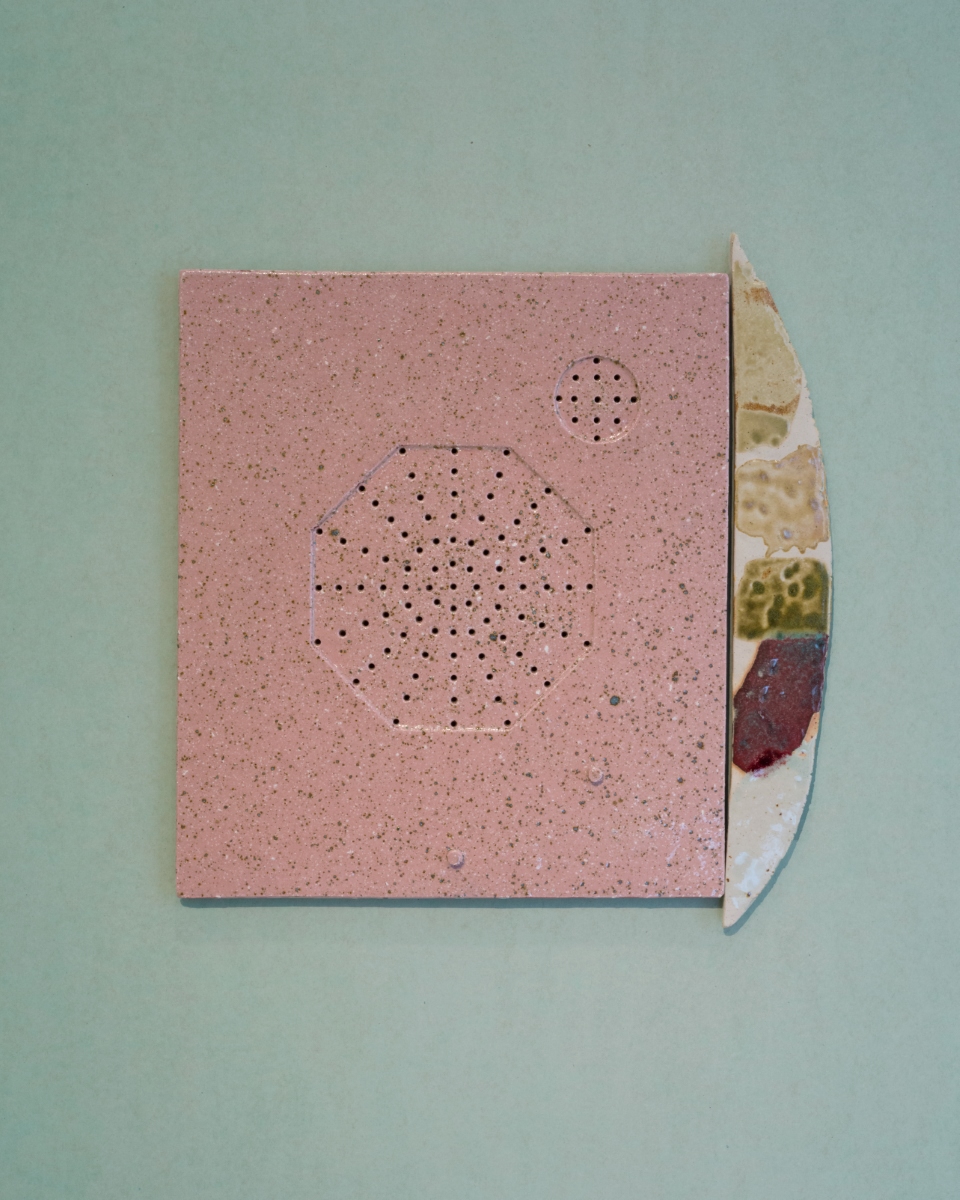
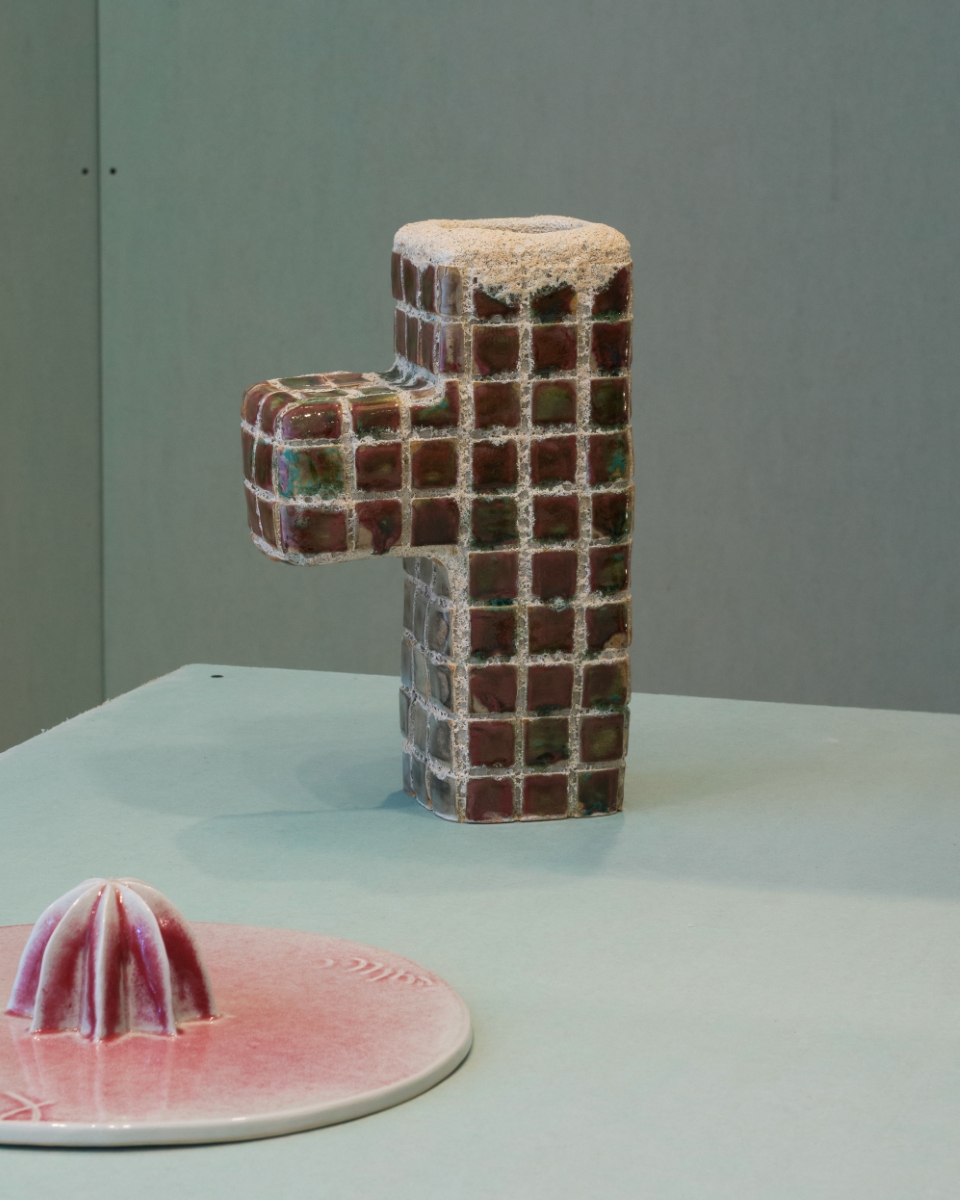
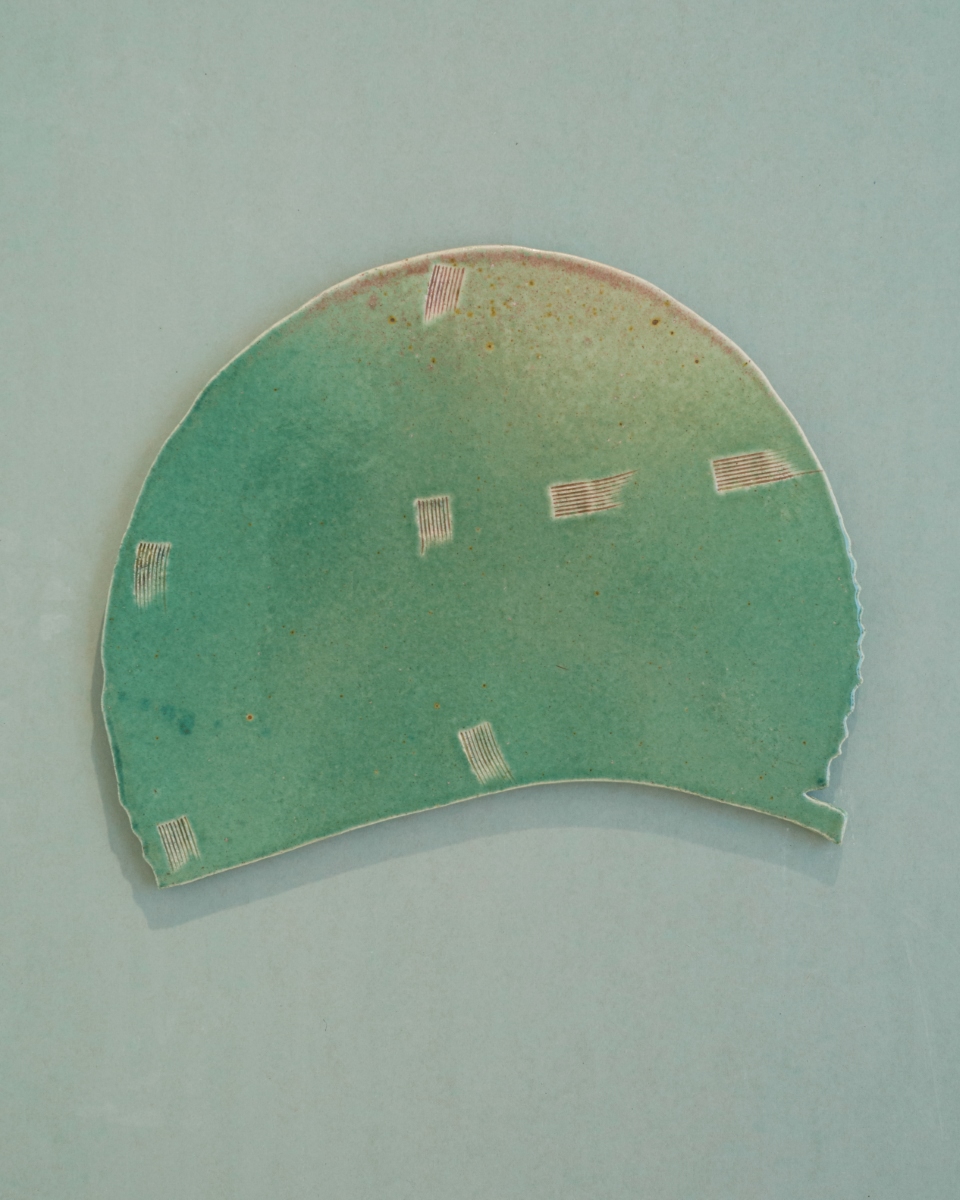
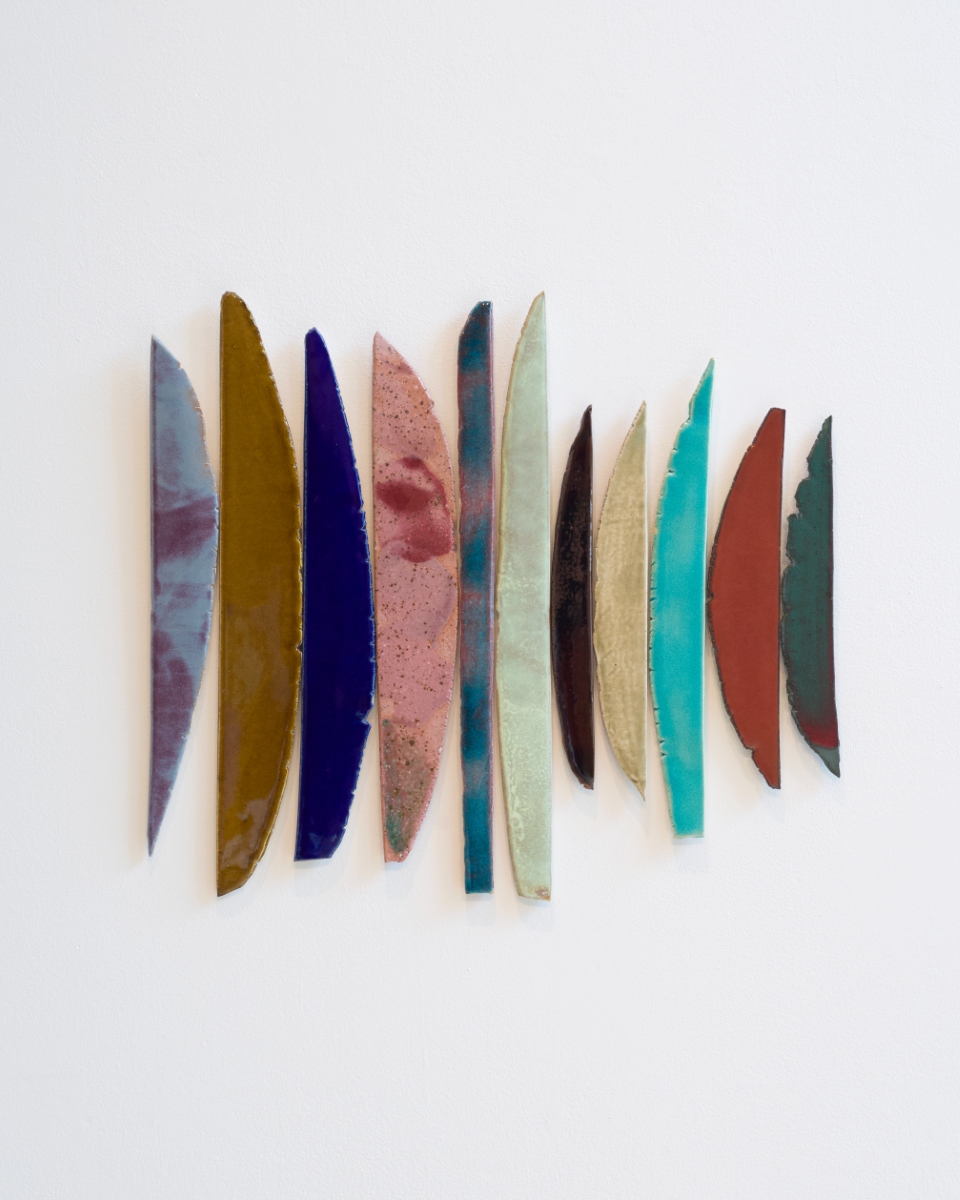
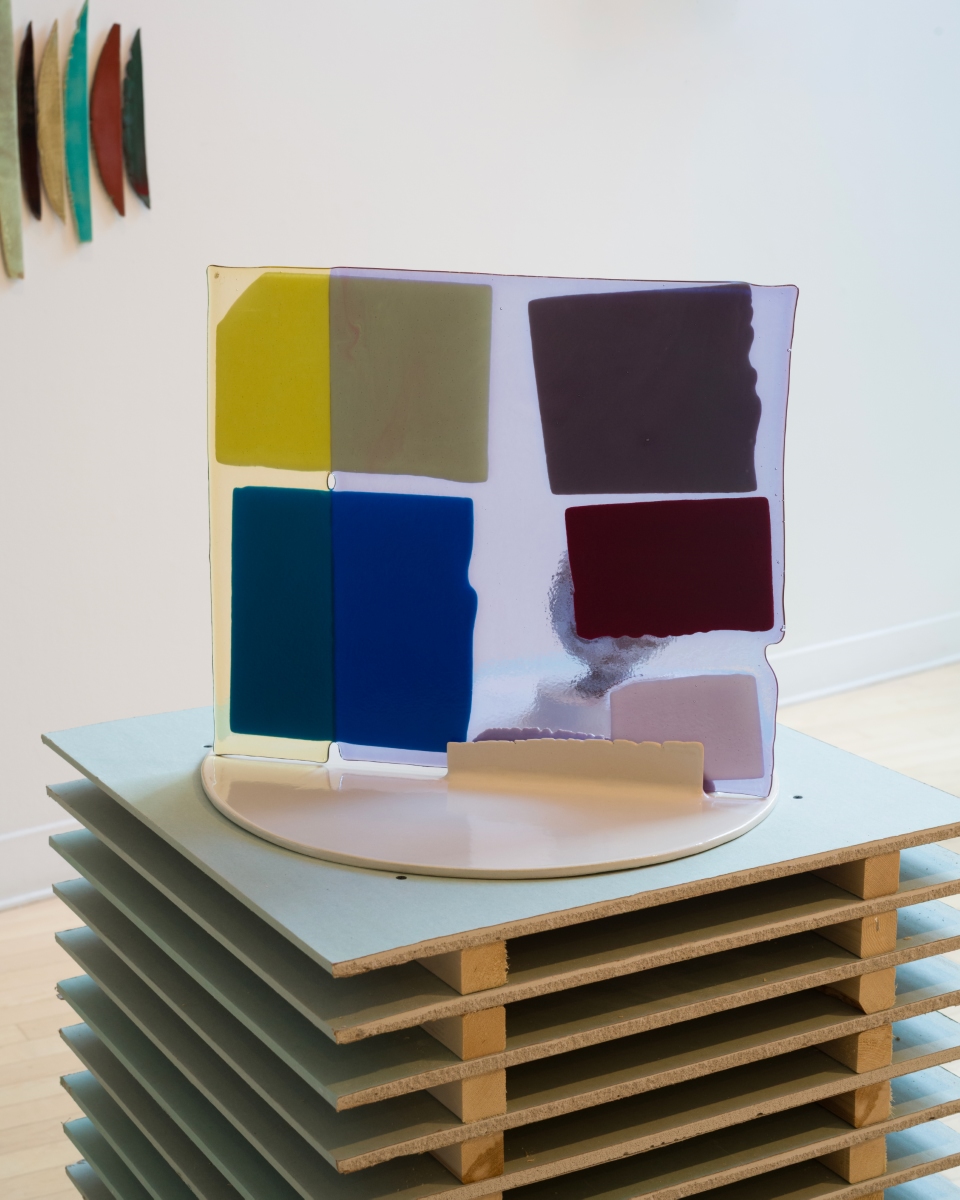
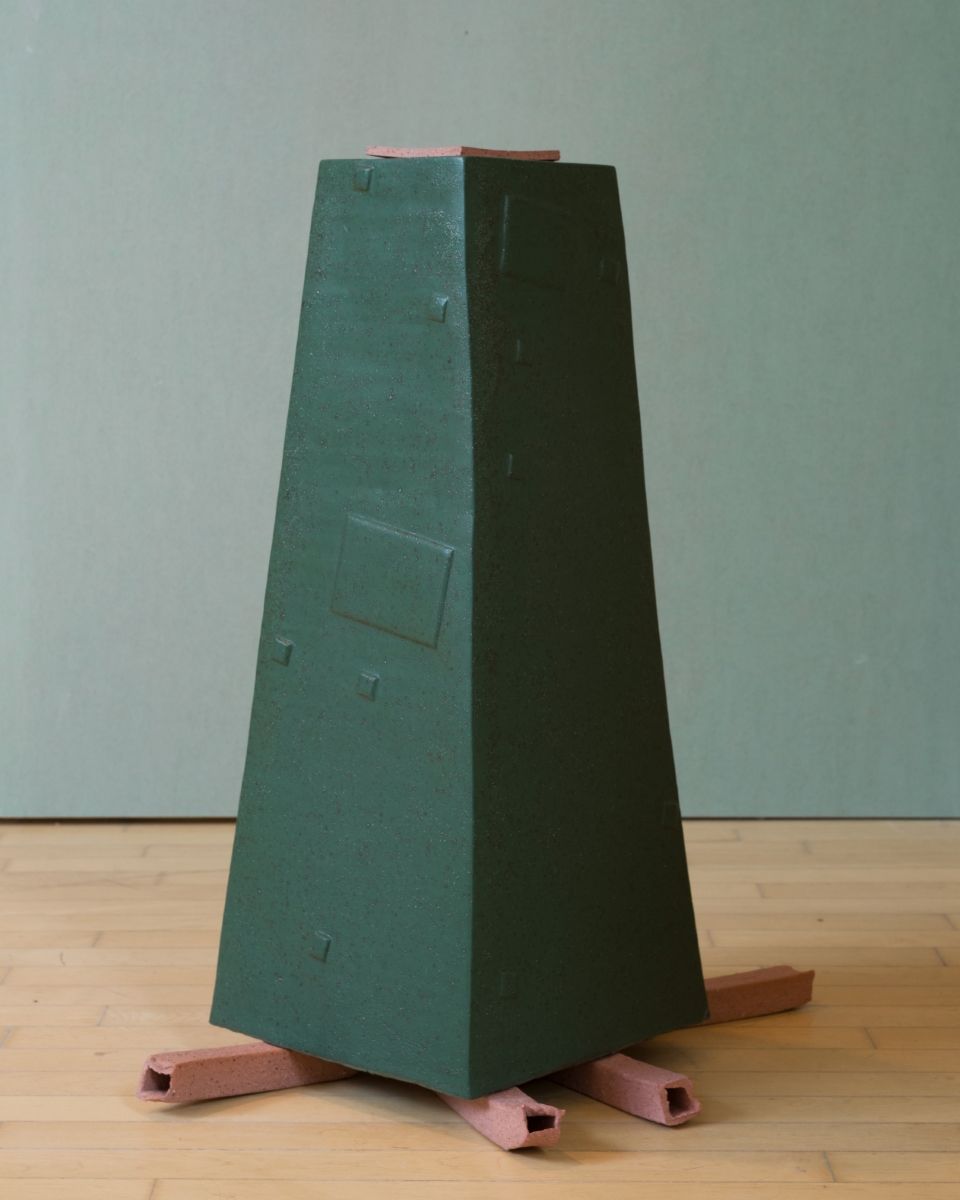
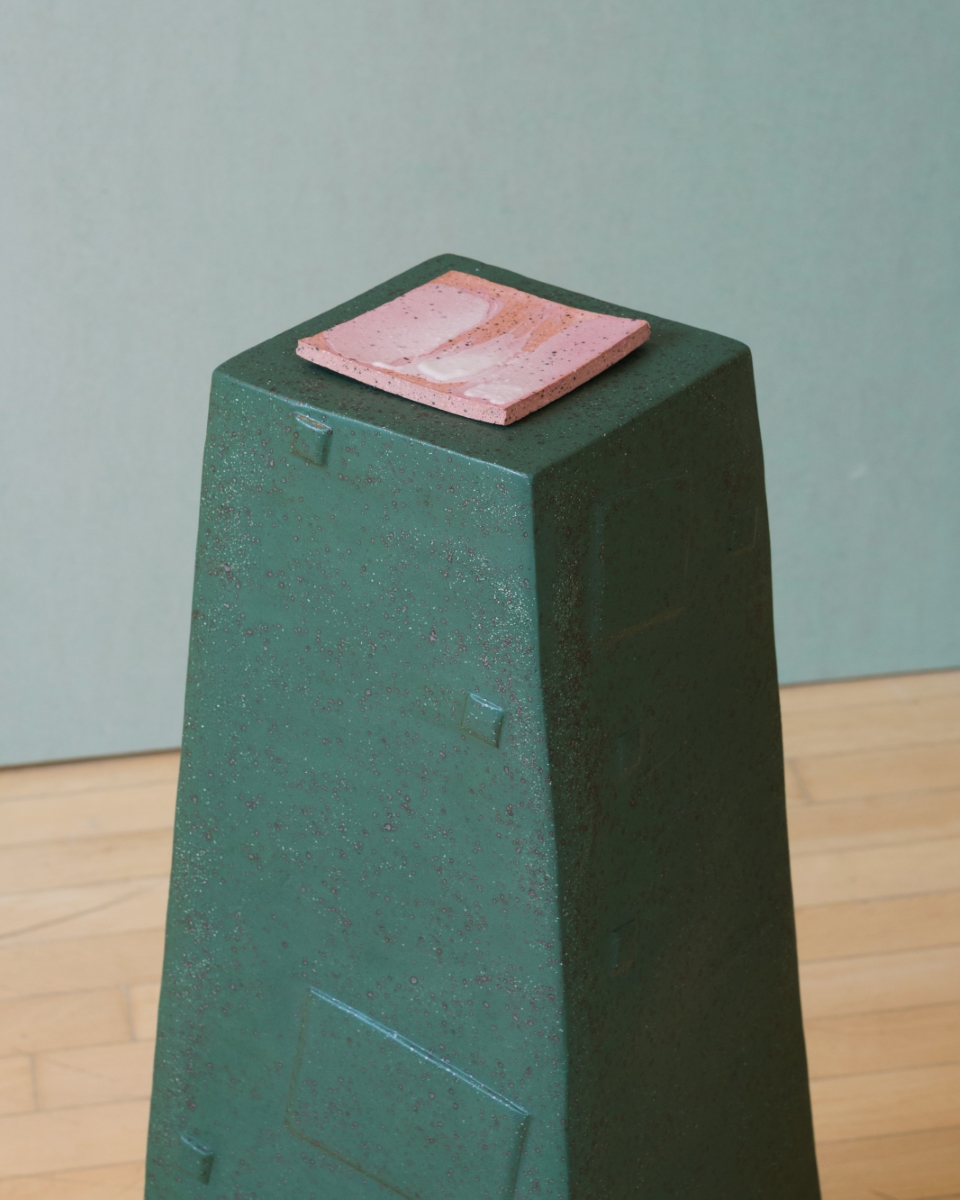
Her ceramic sculptures borrow from familiar domestic and architectural forms while subtly destabilizing their functions. These recognizable objects become strangely autonomous, inviting viewers to consider the hidden infrastructures they normally overlook. The apartment buzzer, for instance, becomes more than a practical device: it marks the invisible thresholds that regulate access, belonging, and exclusion within urban life. Likewise, fused glass works evoke luminous screens, or portals through which perception itself becomes mediated.
Francescone’s practice is deeply invested in the sensuous qualities of ceramics. Saturated glazes, richly coloured surfaces, and carefully composed forms recall both the decorative traditions of pottery and the visual language of graphic design. Yet beneath this seductive materiality lies an ongoing meditation on communication itself. Electricity moving through wires, heat circulating within a kiln, information travelling through digital networks—all depend upon invisible forms of energy that transform one state into another. Earth becomes stone through fire; raw matter becomes image or interface. The ancient alchemy of ceramics quietly parallels the magic of digital communication.
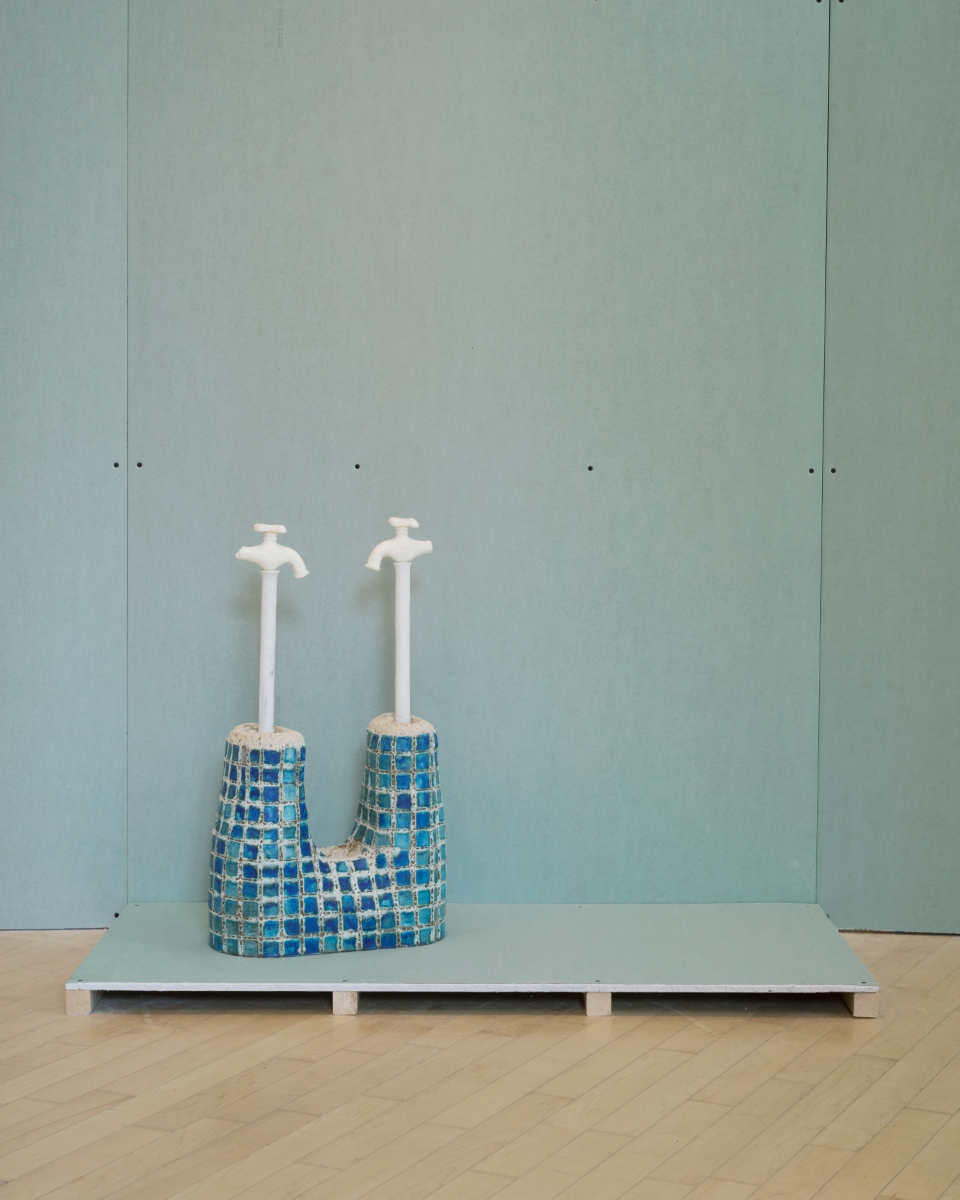
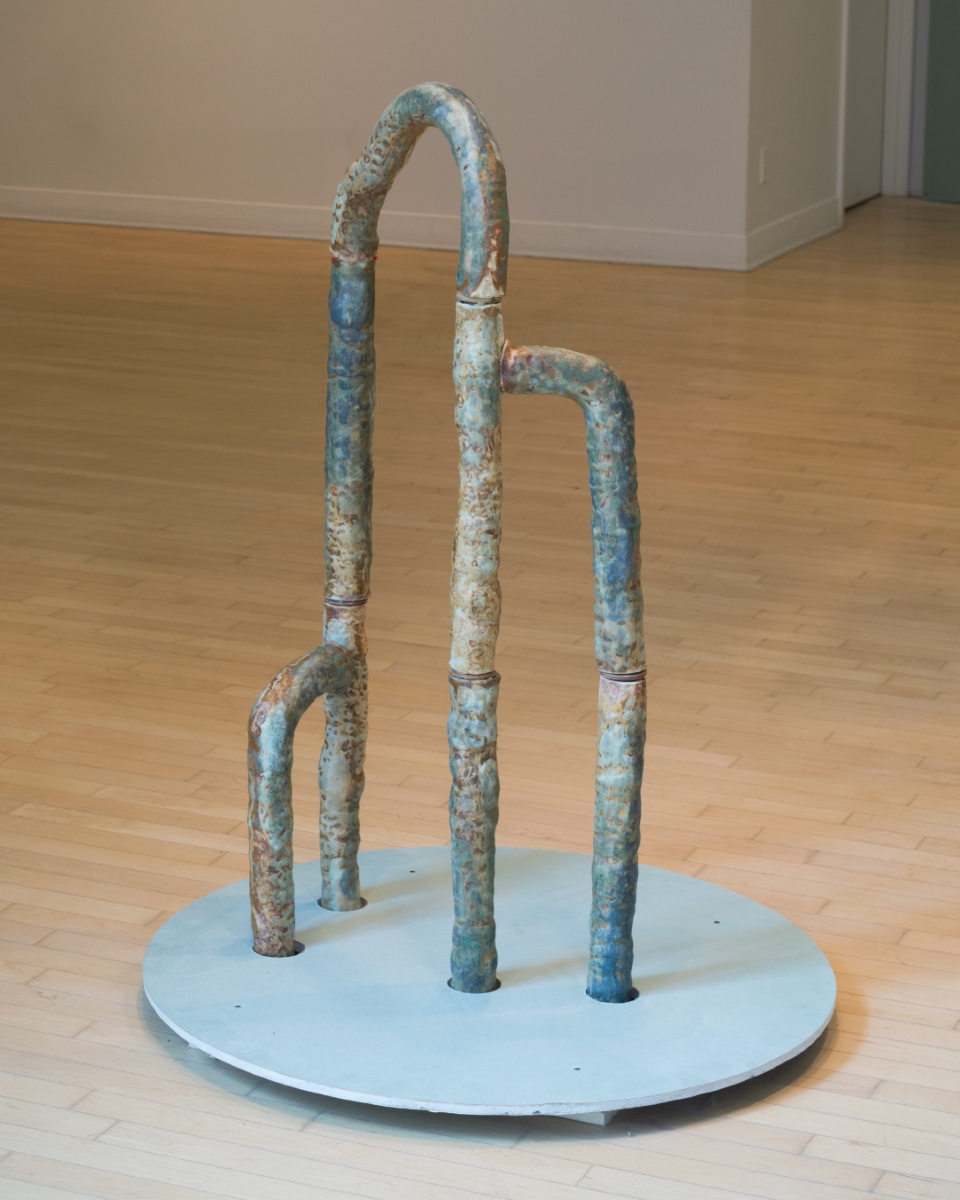
Rebecca Ramsey approaches domestic space through another set of circulatory systems. For her, the house and the body are reciprocal metaphors whose internal structures correlate to one another. Hidden behind walls, ceramic pipes weave through custom drywall constructions, appearing and disappearing as though veins beneath skin. Their looping trajectories evoke anatomical drawings while simultaneously referencing plumbing systems that sustain everyday domestic life. These open and closed circuits suggest bodies that are both autonomous and dependent, self-contained yet profoundly interconnected.
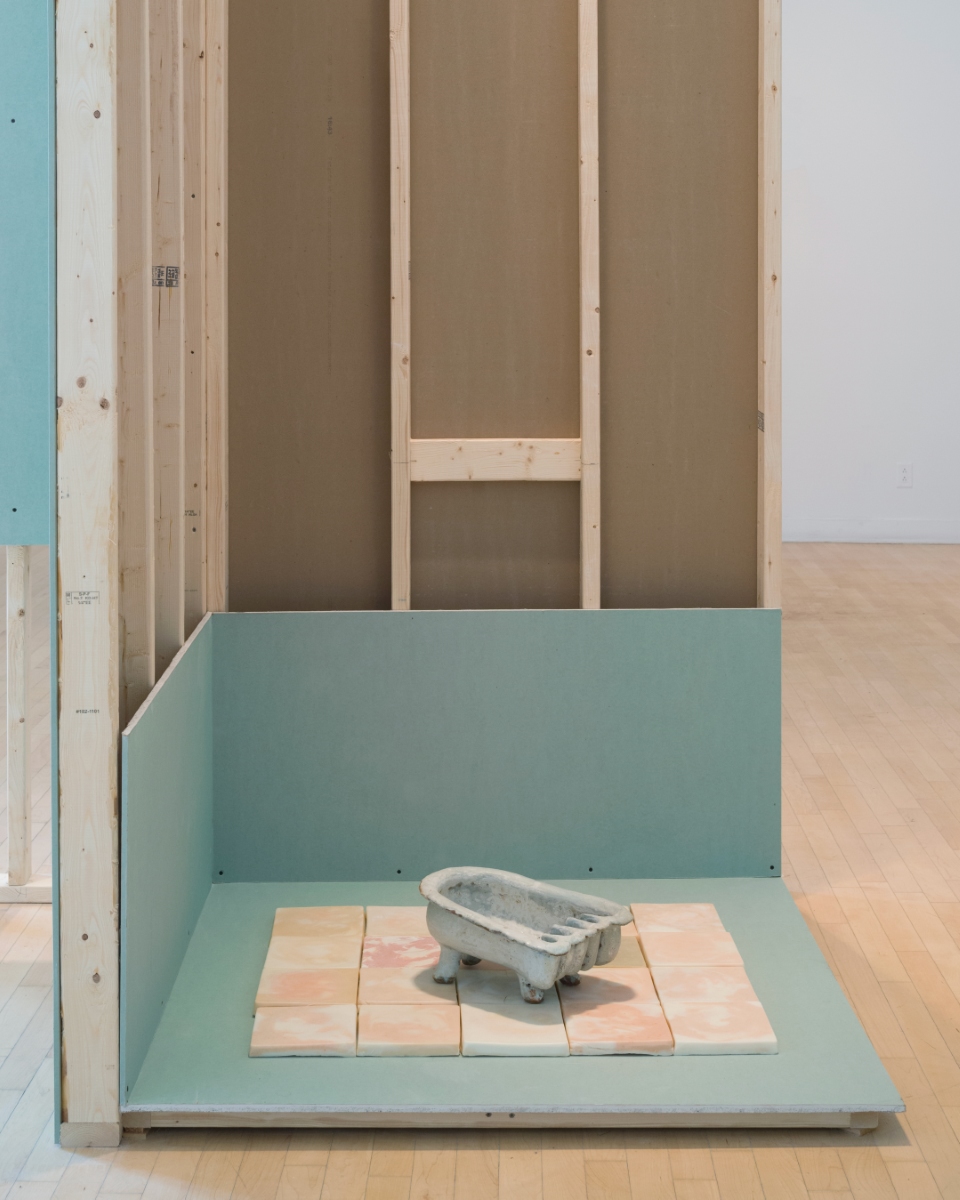
Ramsey’s sculptures frequently draw attention to those architectural elements designed to remain unseen: drainage systems, cavities within walls, hidden conduits through which water, waste, and energy circulate. By rendering these concealed infrastructures visible, she invites us to reconsider the fragile systems that support everyday existence. Hygienic fixtures become sites where questions of purity, vulnerability, and mortality quietly converge.
Her work engages with anthropologist Mary Douglas’s influential arguments in Purity and Danger: An Analysis of Concepts of Pollution and Taboo, where dirt is famously understood as “matter out of place.” Douglas argues that concepts of cleanliness and contamination are never purely hygienic but instead reveal cultural systems for maintaining order and establishing boundaries. Domestic objects play a central role within these systems. Vessels simultaneously contain nourishment and receive refuse; lavatories facilitate cleansing while collecting waste. They occupy a paradoxical position between preservation and rejection.
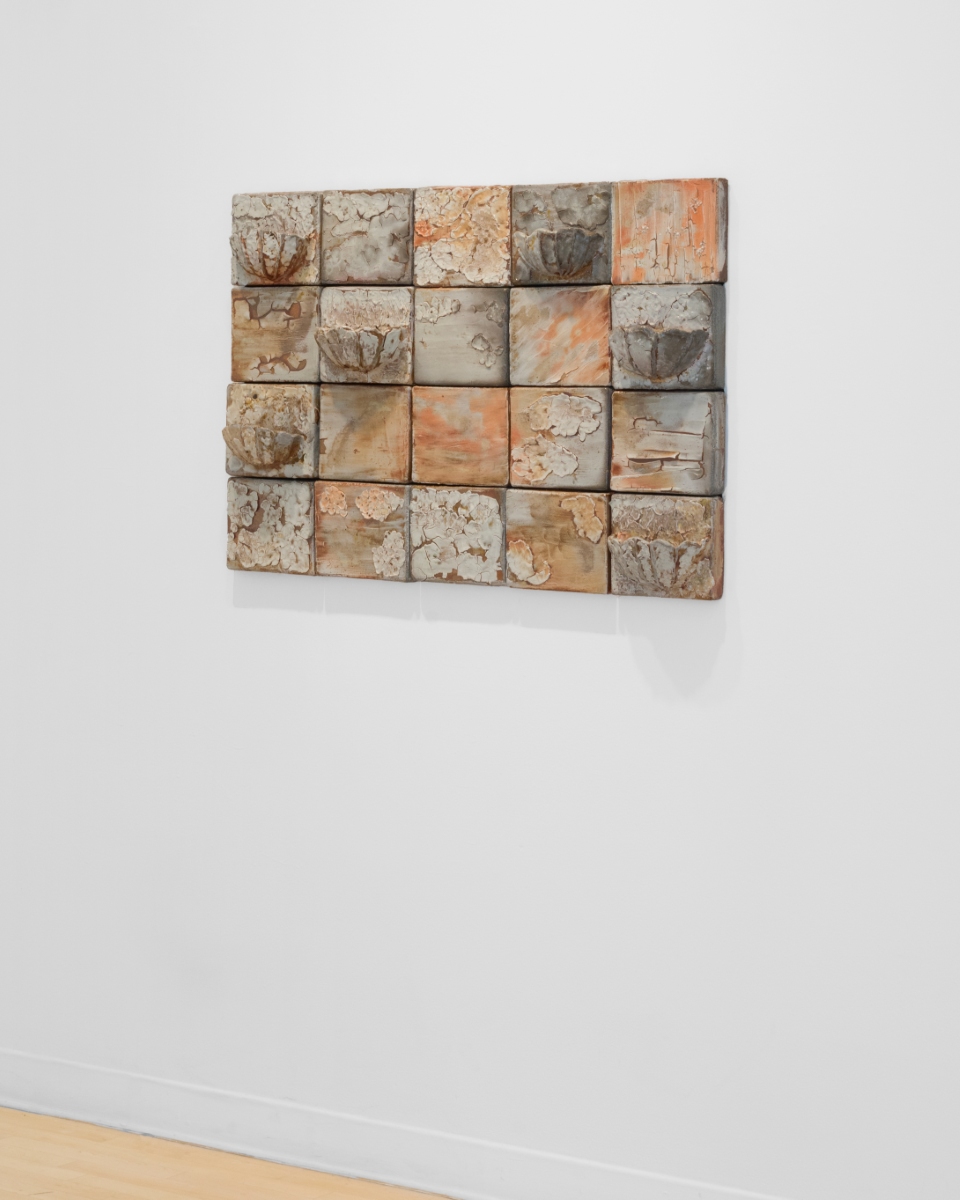
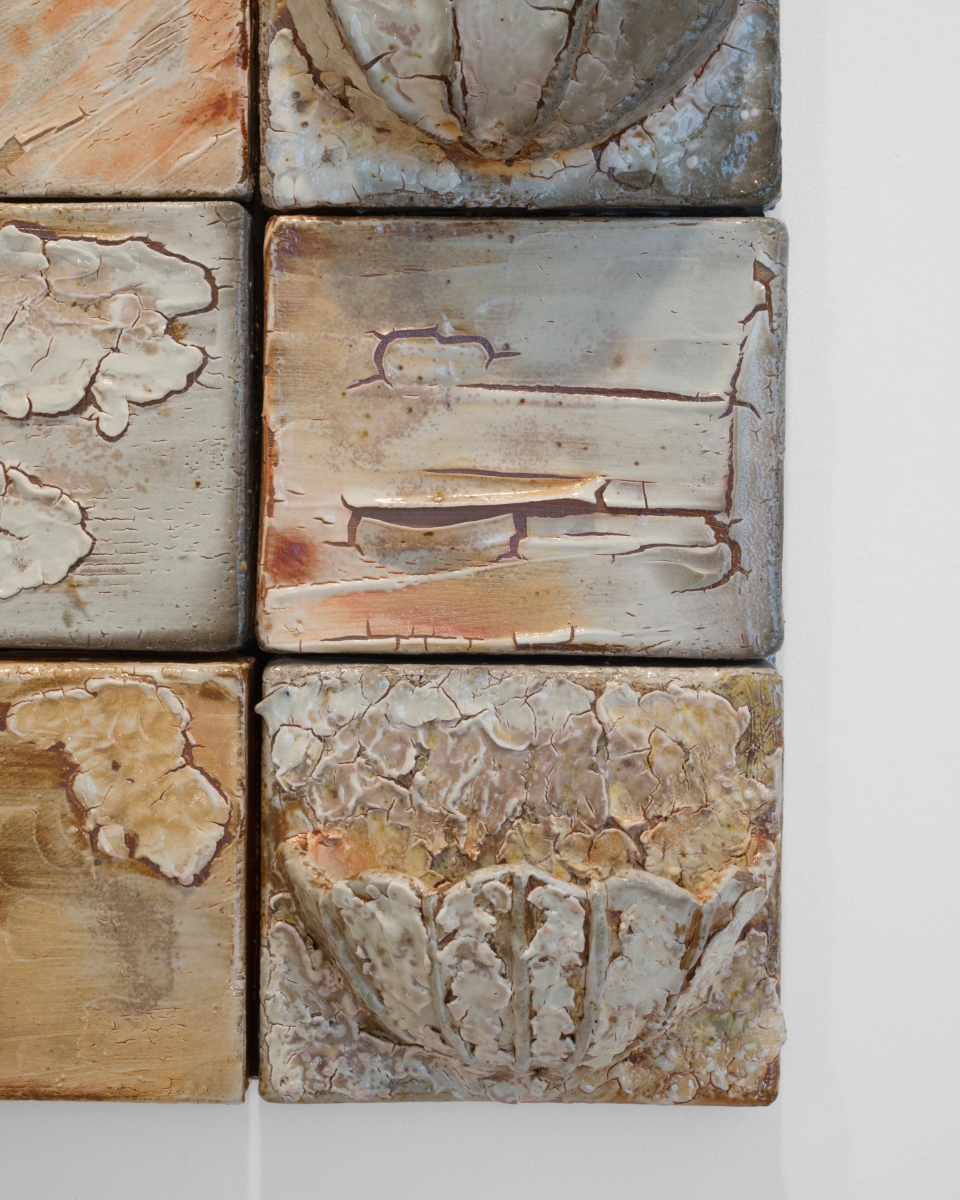
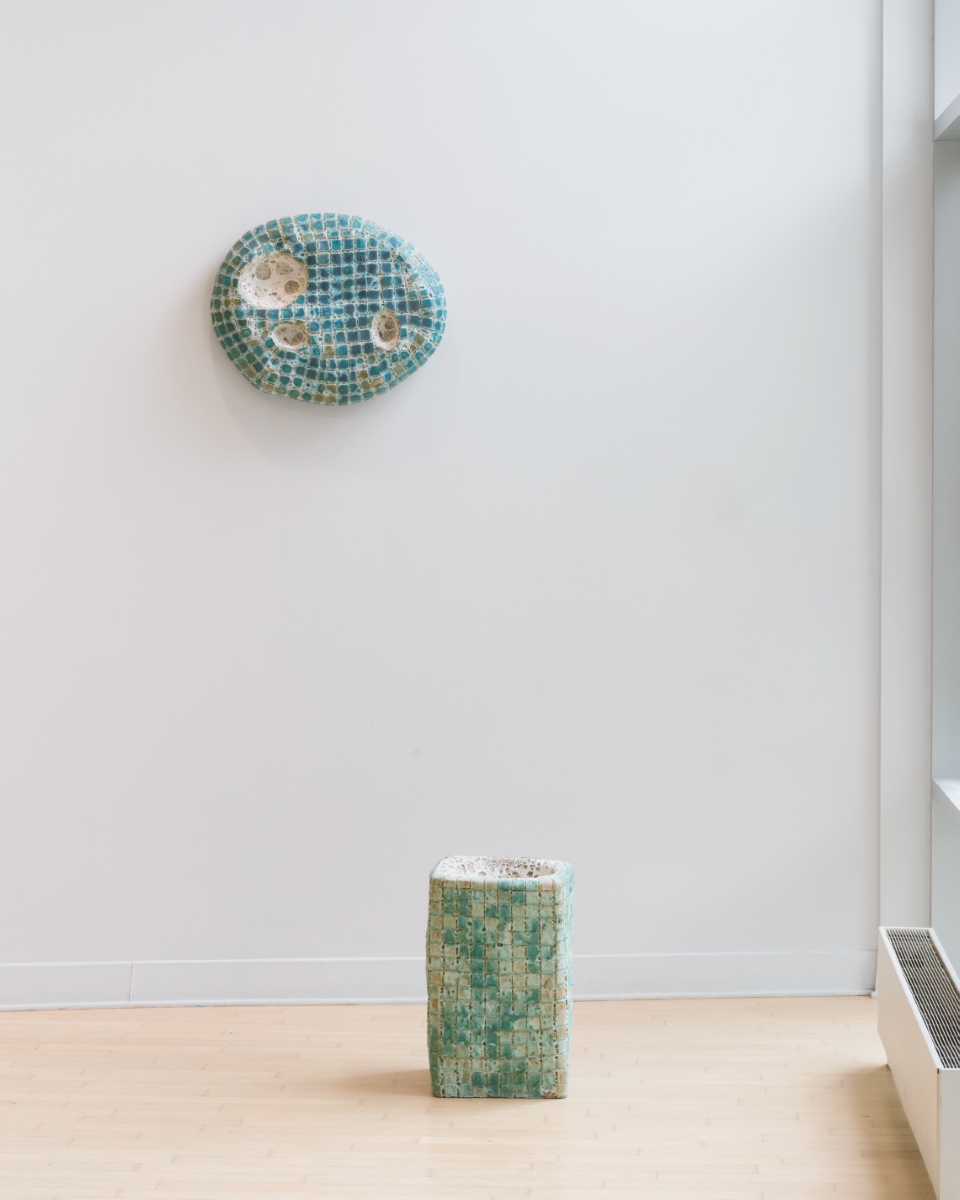
Ramsey extends these ideas materially through her sophisticated use of ceramic glazes. Soda-fired surfaces, crystallized deposits, oozing textures, compressed forms, and fractured finishes evoke geological as well as bodily processes. Her tiled wall installation, punctuated by shell-like protrusions resembling shower niches, is glazed with soda ash—a crystalline residue considered an undesirable by-product in soap making. Here, what is ordinarily discarded becomes aesthetically productive, collapsing distinctions between cleanliness and contamination, ornament and residue.
Running throughout Homebody is a sustained investigation of thresholds. The exhibition repeatedly inhabits spaces of transition: inside and outside, visible and concealed, handcrafted and digital, organic and architectural, softness and rigidity, liquid and solid. These oppositions never fully resolve. Instead, they remain in productive tension, allowing each sculpture to function as a kind of portal between multiple states of being.
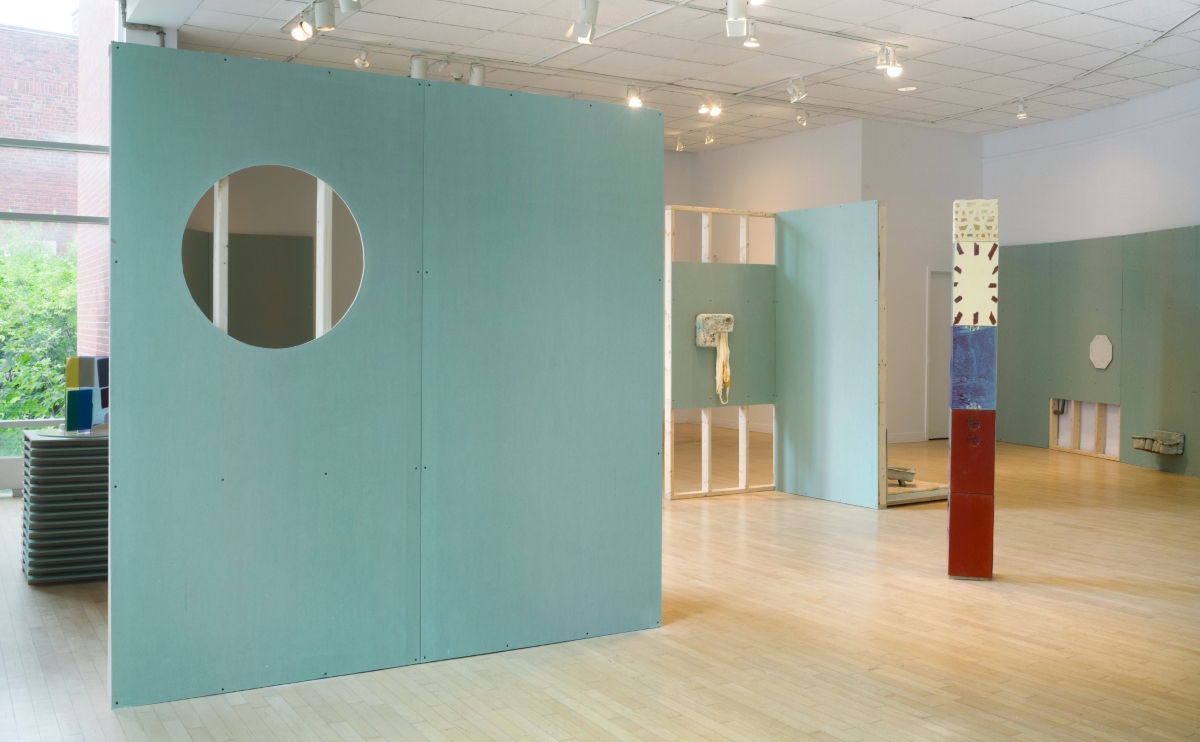
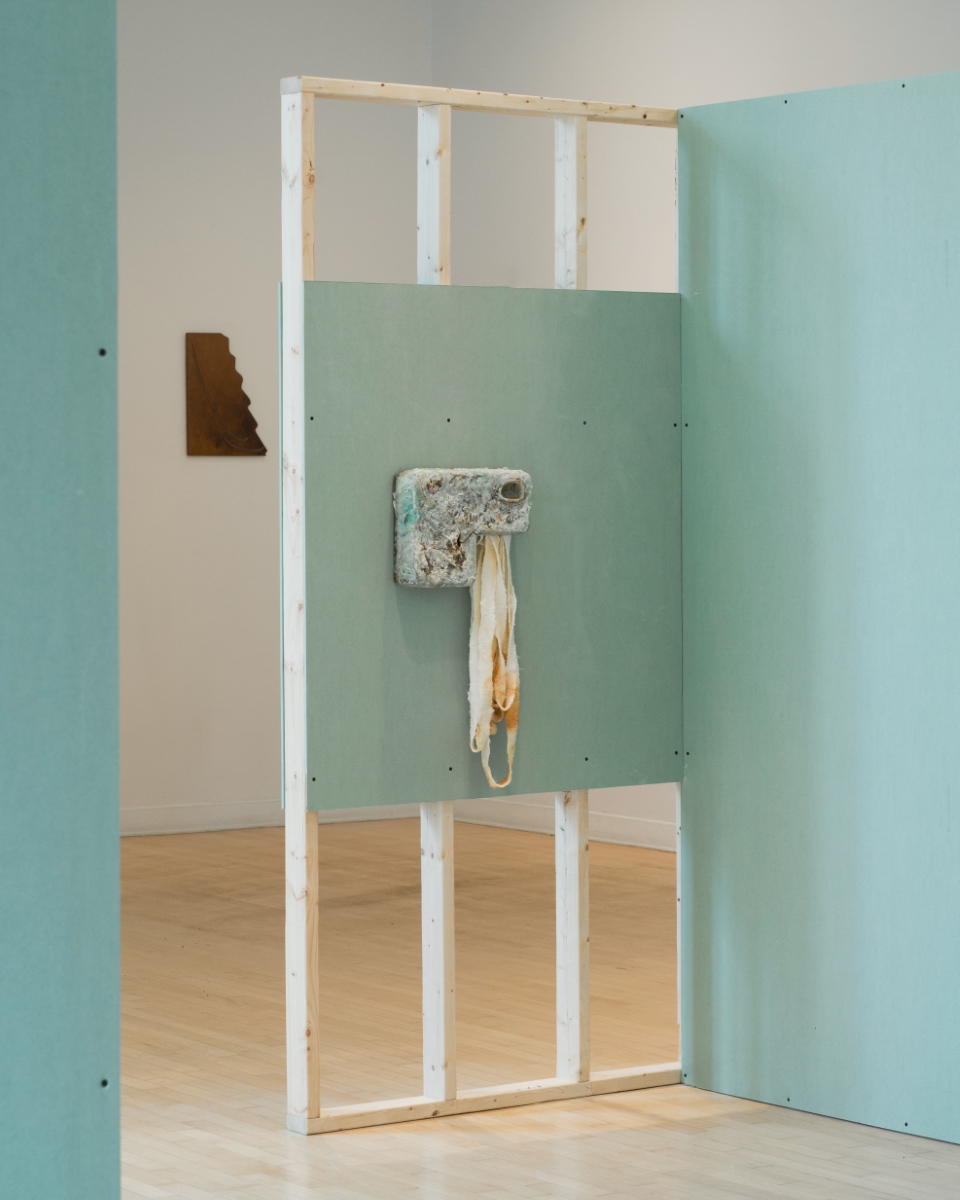
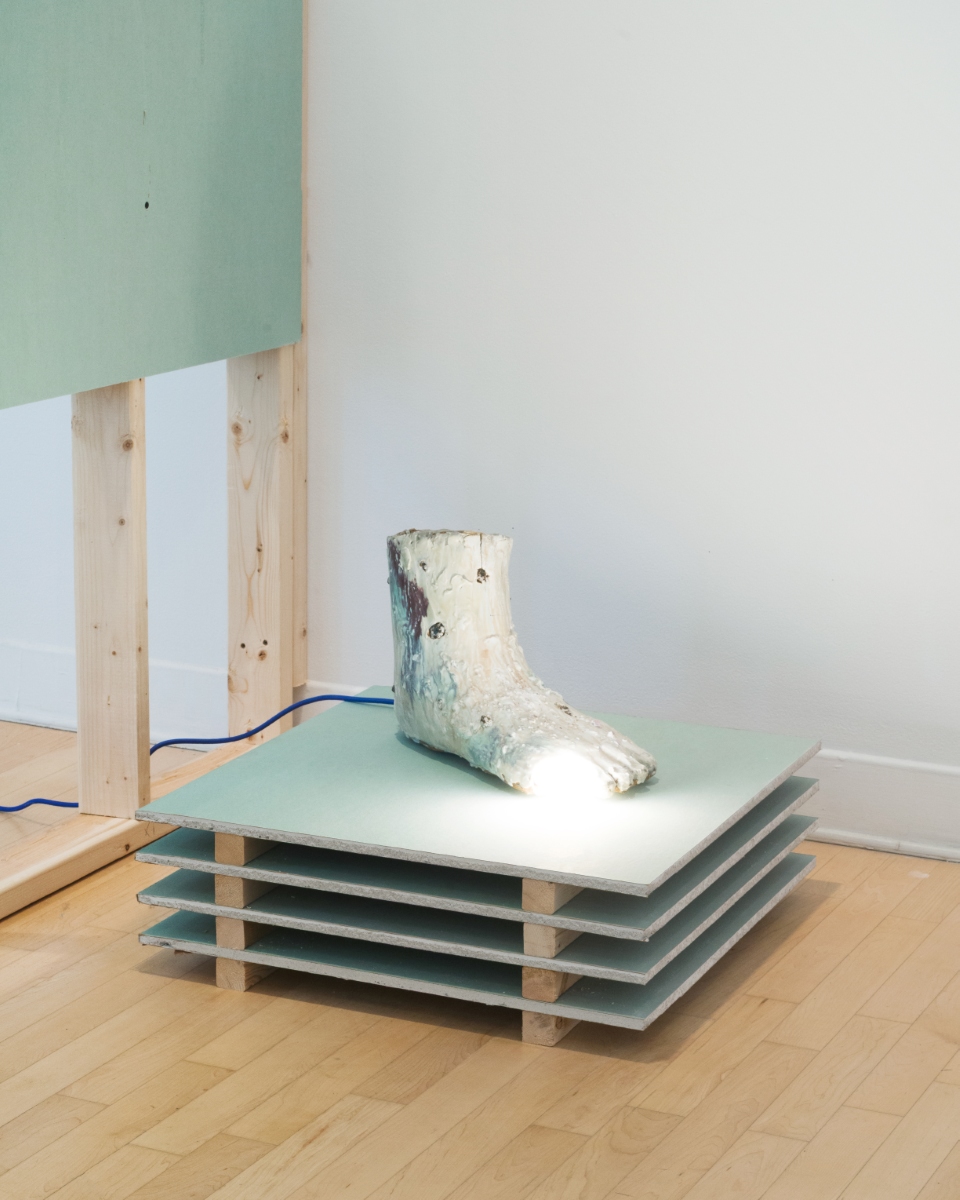
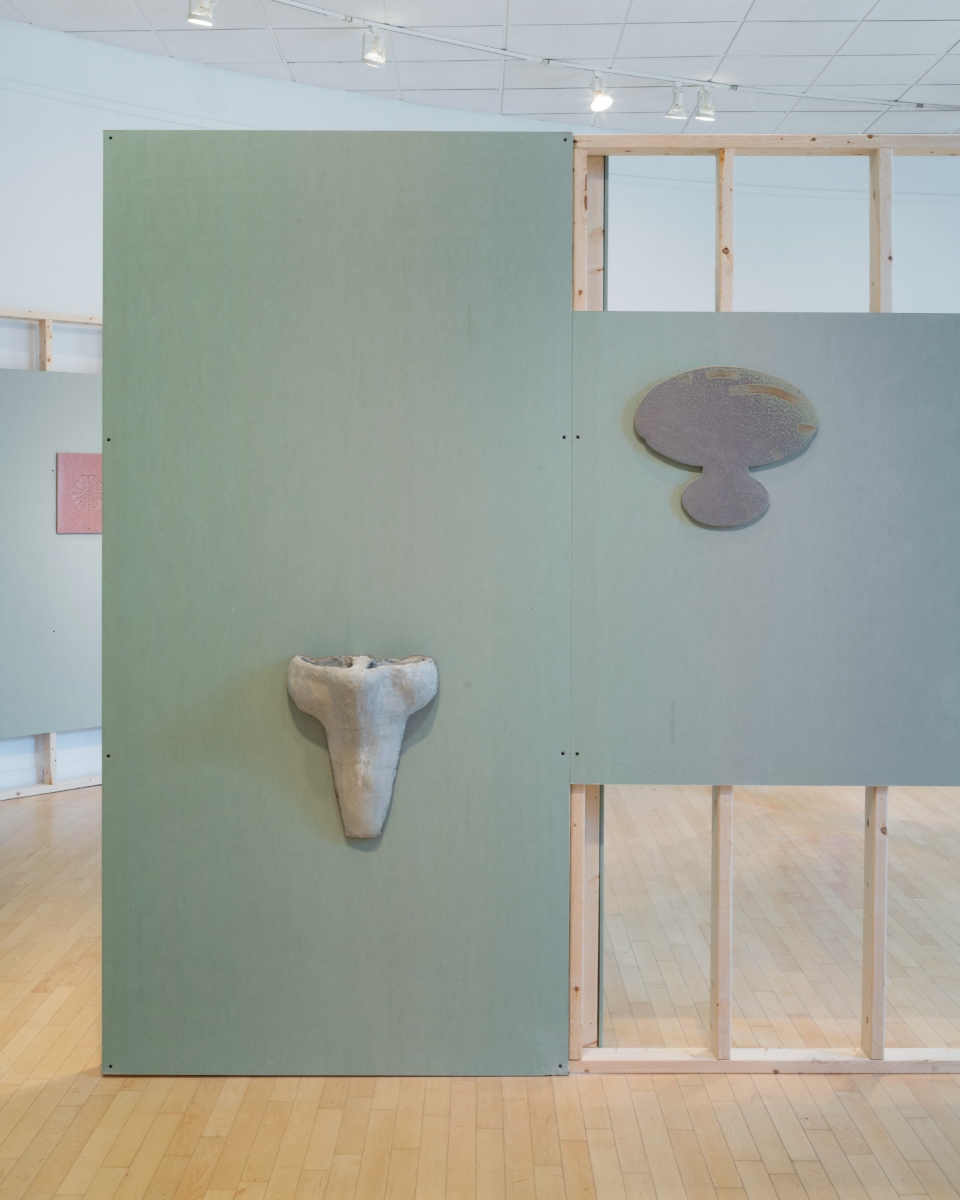
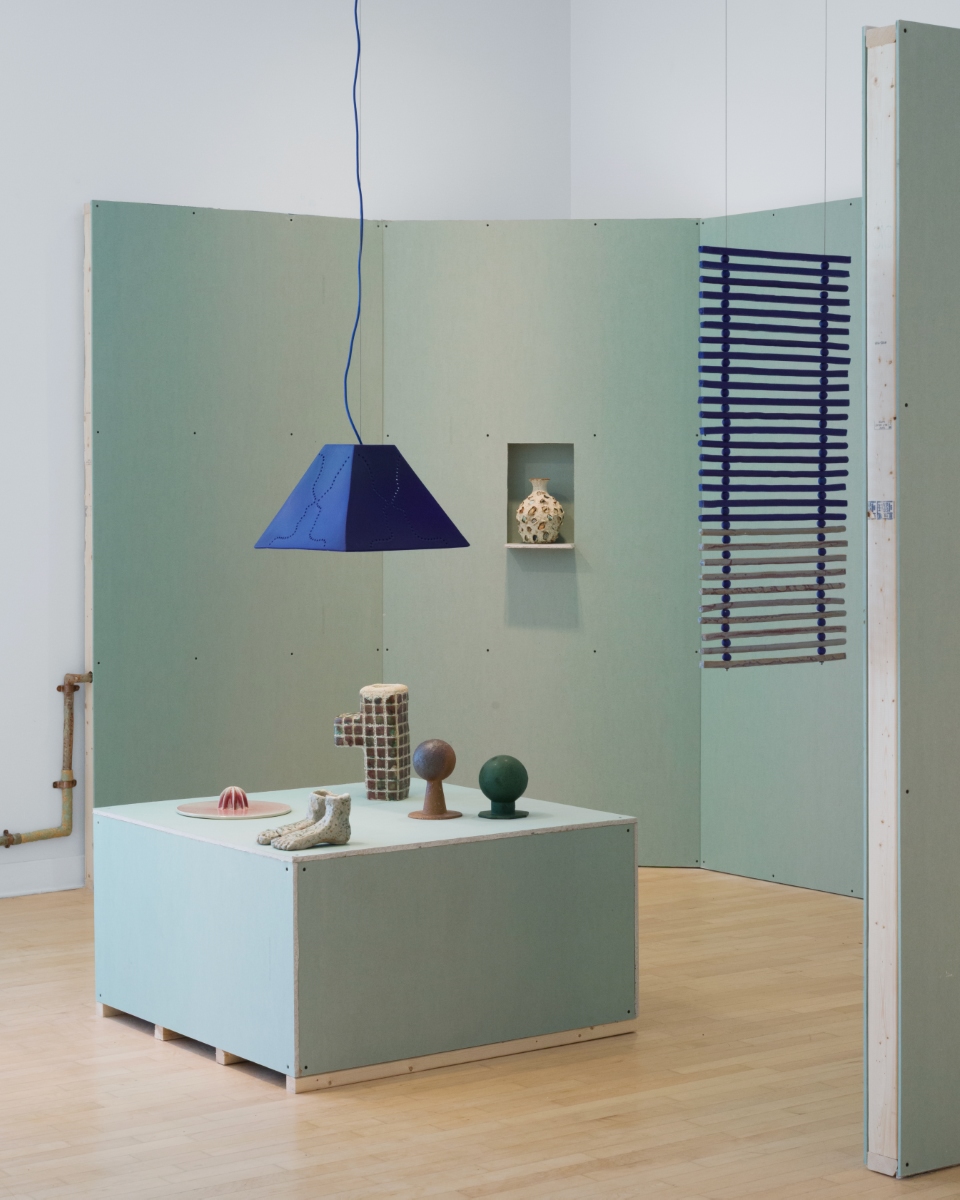
This condition is reinforced through the exhibition’s architectural design. In the exhibition, sculptures emerge from architectural fragments and reveal unexpected spatial encounters between bodies and objects. Francescone and Ramsey have constructed a series of freestanding drywall structures that function simultaneously as partitions and exhibition plinths. Drywall, an essential component of contemporary architecture, also serves in ceramic studios as an absorbent surface on which clay is formed, dried, and stored. This dual function complicates the distinction between process and finished object, positioning the exhibition itself as a space where acts of making remain visibly embedded within the final form.
These temporary constructions organize the gallery less as an exhibition than as a sequence of domestic vignettes. Visitors navigate partial rooms, concealed corners, interrupted sightlines, and moments of unexpected discovery. Sculptures appear to emerge naturally from these architectural fragments, encouraging movement through the space that mirrors the intimate rhythms of inhabiting a home. Following the exhibition, the drywall will be dismantled and returned to the artists’ studios, where it will resume its ordinary function within ceramic production. Even the exhibition architecture participates in an ongoing cycle of transformation rather than existing as a fixed monument.
In shaping clay, Francescone and Ramsey do not seek to illustrate these relationships directly. Rather, their works operate through material analogy. The transformations undergone by clay become vehicles for thinking about bodies, technologies, homes, and environments as interconnected systems in perpetual exchange. Their sculptures resist fixed interpretation, preferring to remain open, suggestive, and quietly enigmatic. The artists invite us to reconsider the thresholds we cross every day, the infrastructures we rarely notice, and the material worlds that quietly sustain us. In doing so, Homebody reminds us that to belong to a home is also to belong to the earth itself.
Lauren Francescone (b. 1983, New York City) lives in Montreal. She is the publisher and designer of Temperatures, a biannual publication about artists working in clay. She has attended numerous residencies including the Banff Centre (2015), the European Ceramic Workcentre (2020), and Anderson Ranch Art Center (2021). Recent exhibitions include Timeline at the ICA, Richmond, Virginia (2024), and Visitor at the Shigaraki Ceramic Cultural Park in Japan (2026). She has a BS from the University of Virginia School of Architecture and an MFA from the Yale School of Art.
Rebecca Ramsey is an artist originally from British Columbia and currently based in Montreal. She has a BFA from Emily Carr University (2017) and an MFA from Concordia University (2024). She has attended residencies at Guldagergaard, Denmark (2017), Est-Nord-Est, St. Jean Port Joli (2025), and Medalta, Medicine Hat (2018/2026). Her work has been exhibited at Projet Casa, the Canadian Clay and Glass Gallery, the Leonard and Bina Ellen Gallery, DRAC, Centre d’art et de diffusion CLARK, Galerie Nicolas Robert and Axenéo7.
Anaïs Castro is a curator and writer based between New York and Montreal. She holds a Master’s degree from the University of Edinburgh and a Bachelor’s degree from Concordia University. Her professional experience includes the National Gallery of Canada and Arsenal Contemporary Art, and she currently serves as Curator at Centre d’art CAB. Castro has independently curated exhibitions and projects across North America, Europe, and Asia. She regularly contributes to a range of art publications, engaging with contemporary artistic practices and the evolving discourses that shape the field.
The artists would like to thank the Canada Council for the Arts, Conseil des arts de Montréal, and the Maison de la culture d’Outremont for their financial support.
Contact
galerie.outremont@montreal.ca
Galerie d’Outremont
41 Av. Saint-Just
Montréal (Québec) H2V 4T7
Canada
Photos by Atlas Documentation and Lauren Francescone