By Katherina Perlongo
What does it mean to belong? To a place, a community, a culture – or to a shared memory, gesture or ritual? Forms of Belonging, the sixth edition of the Officine Saffi Award, explores these questions through an international exhibition dedicated to the ways ceramics can create spaces of recognition and connection.
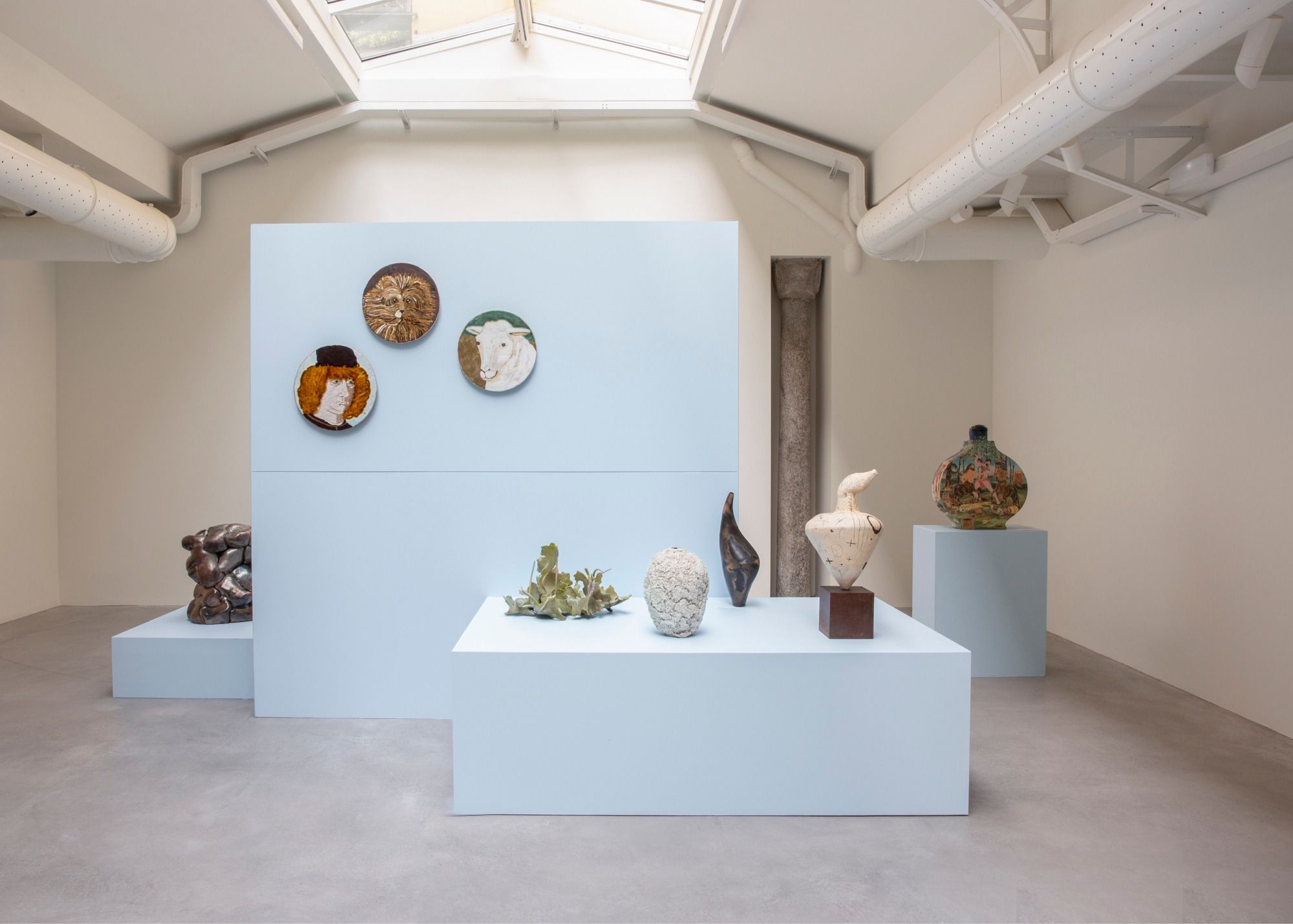
Opened in Milan on September 30, Forms of Belonging brings together 28 artists selected from more than 1,000 applications submitted from 41 countries across five continents. Presented at Fondazione Officine Saffi until November 13, 2026, the exhibition offers a broad view of contemporary ceramic practice, bringing together sculpture, functional objects, installations and narrative works situated between contemporary art, craft and collectible design. Rather than proposing a single definition of what ceramics can be, the sixth edition of the Award reflects the extraordinary diversity of the medium today. The selected artists approach clay through different cultural backgrounds, generations and artistic languages, revealing a field in which traditional knowledge and experimental research exist side by side.
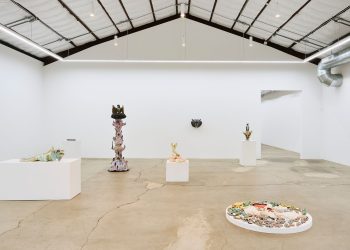
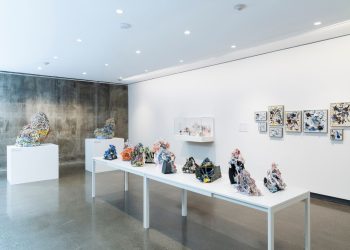
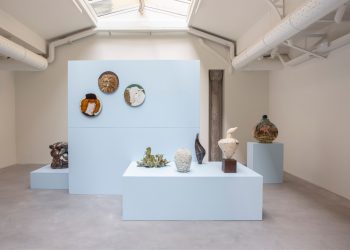
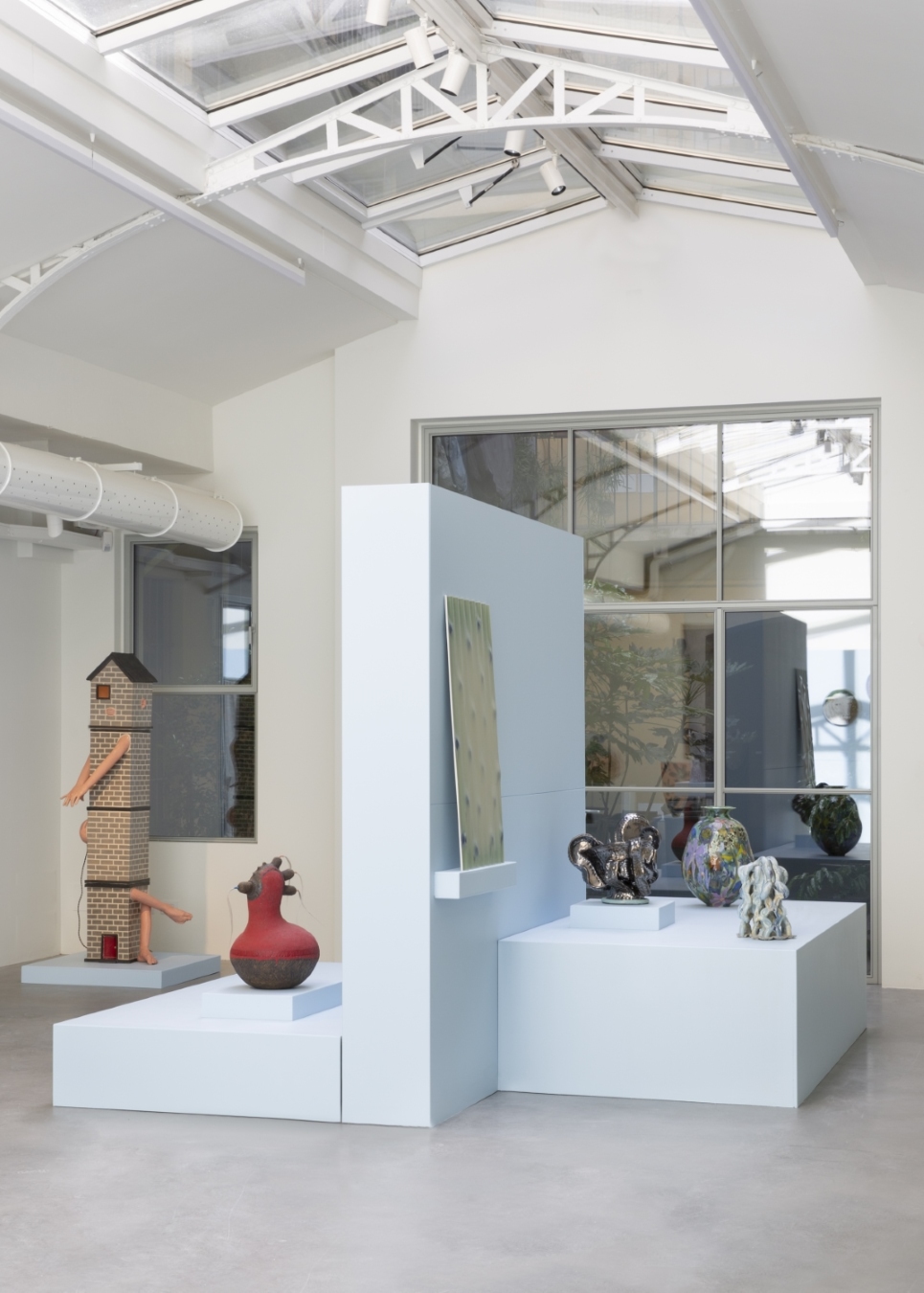
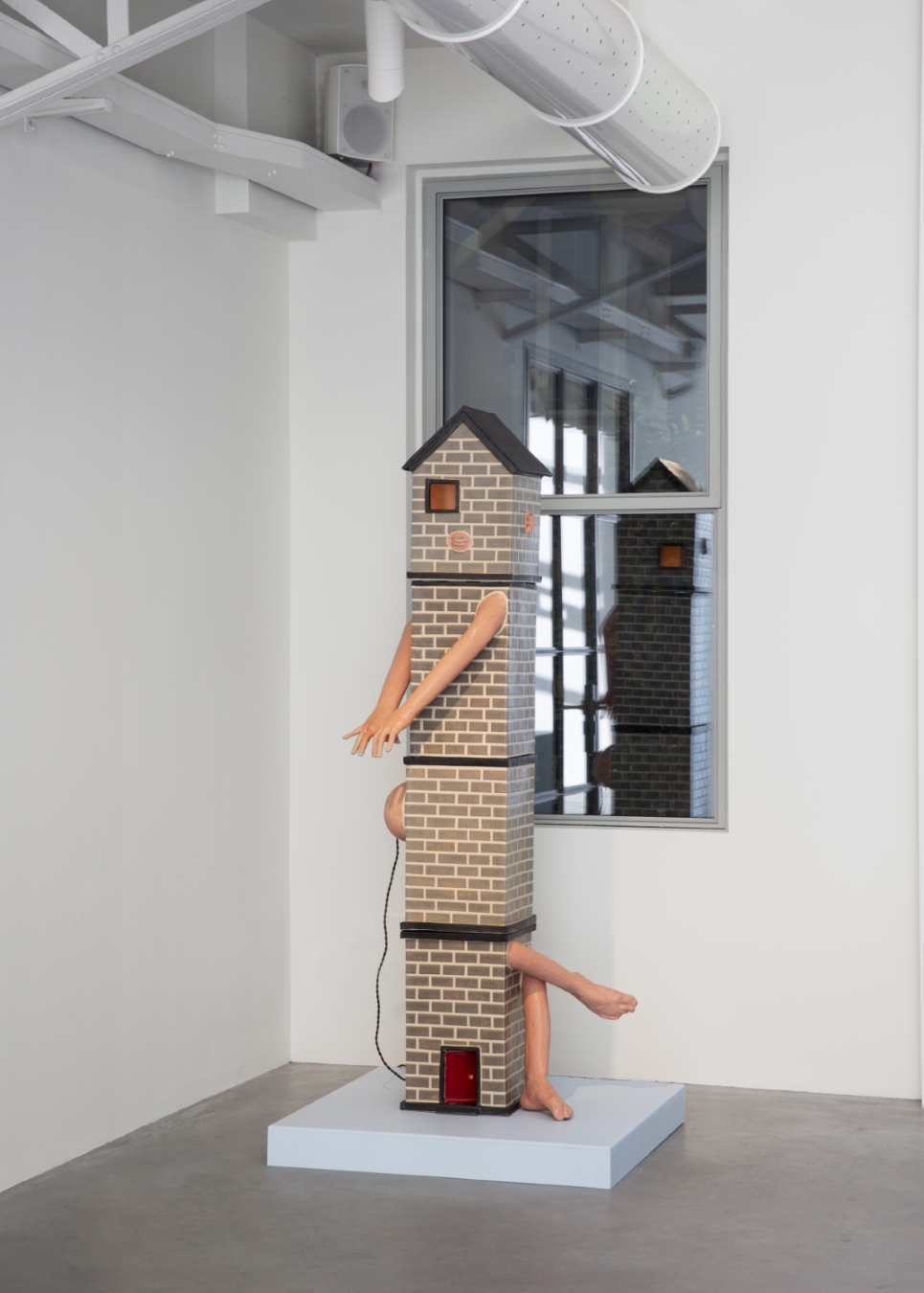
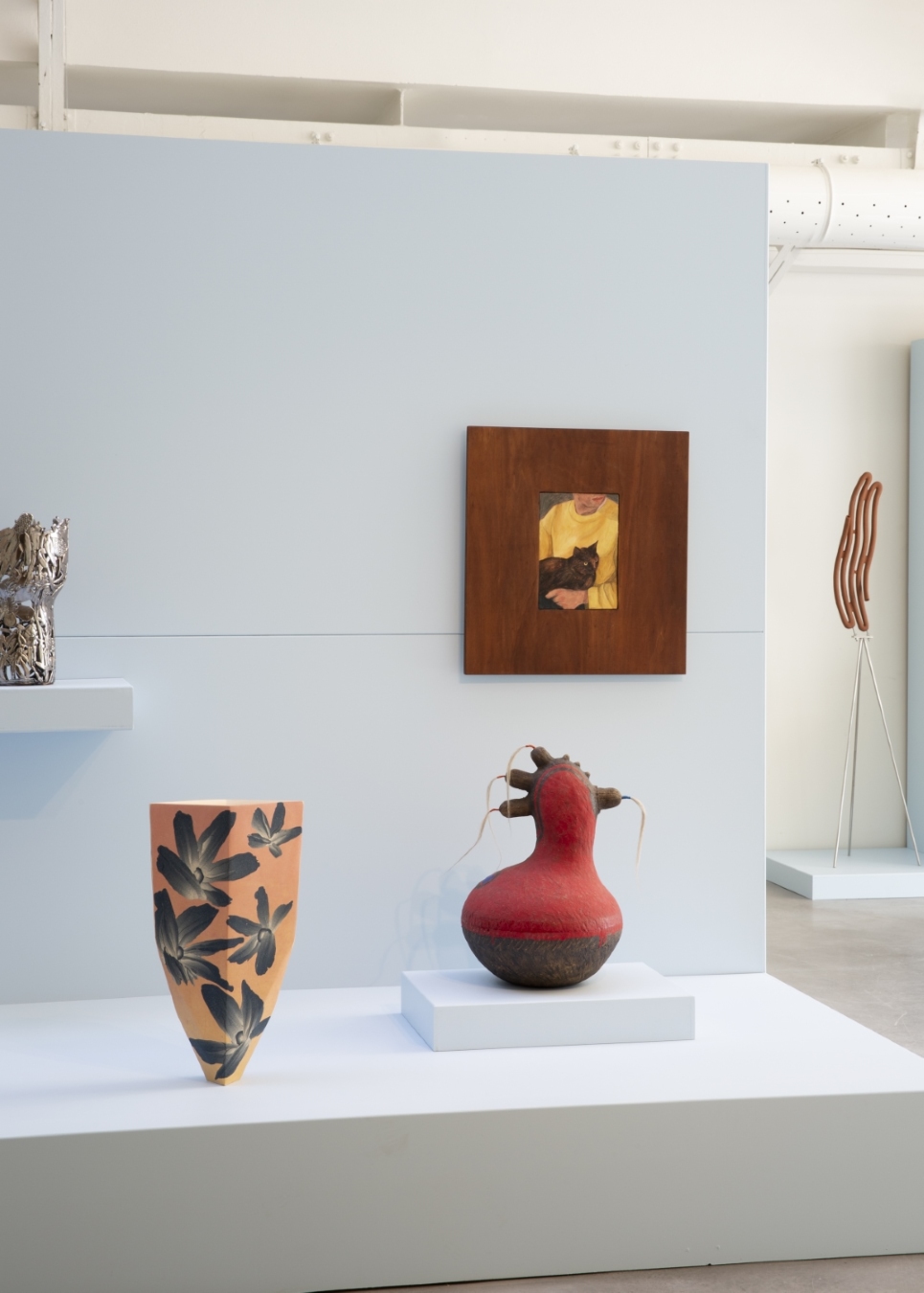
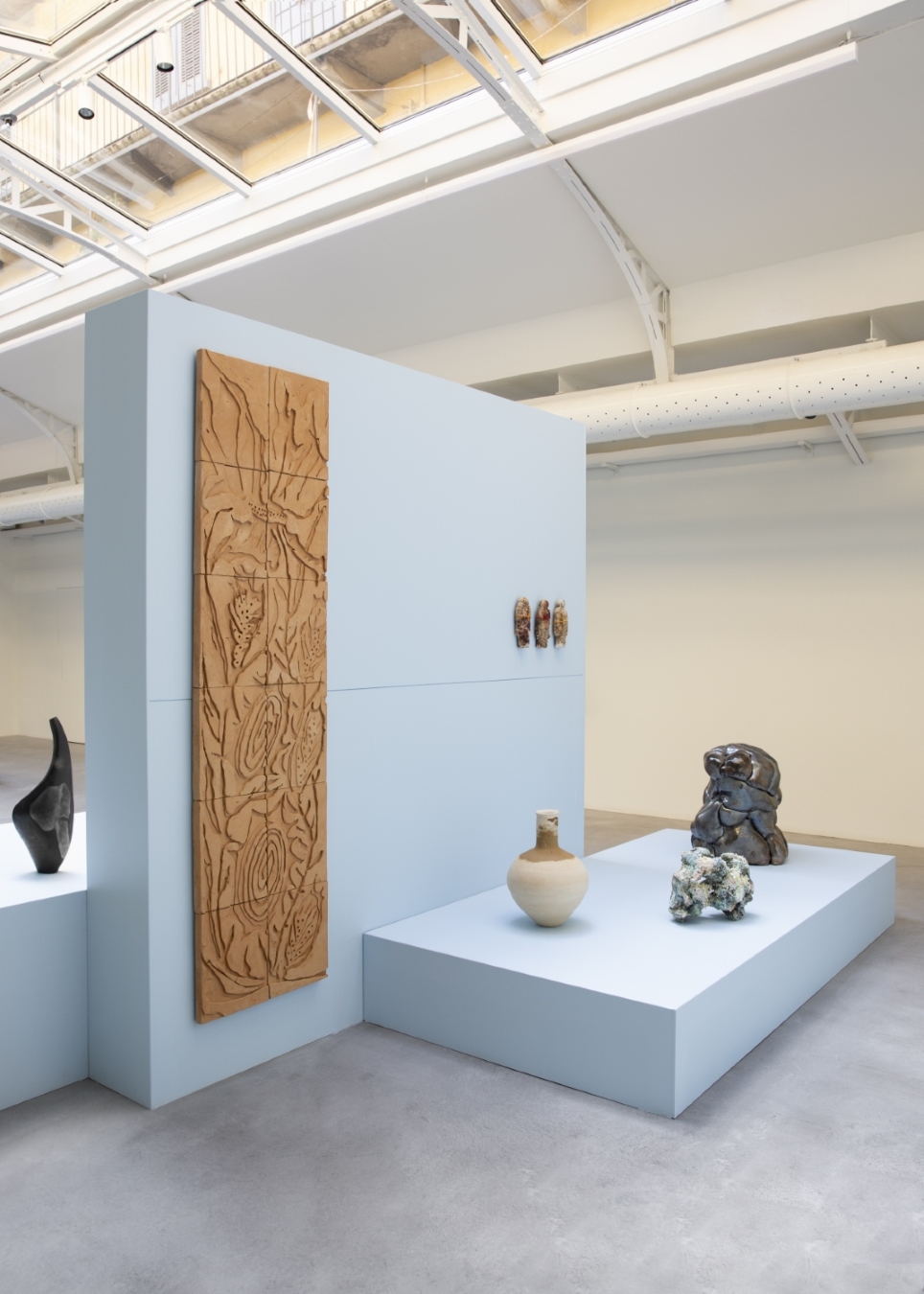
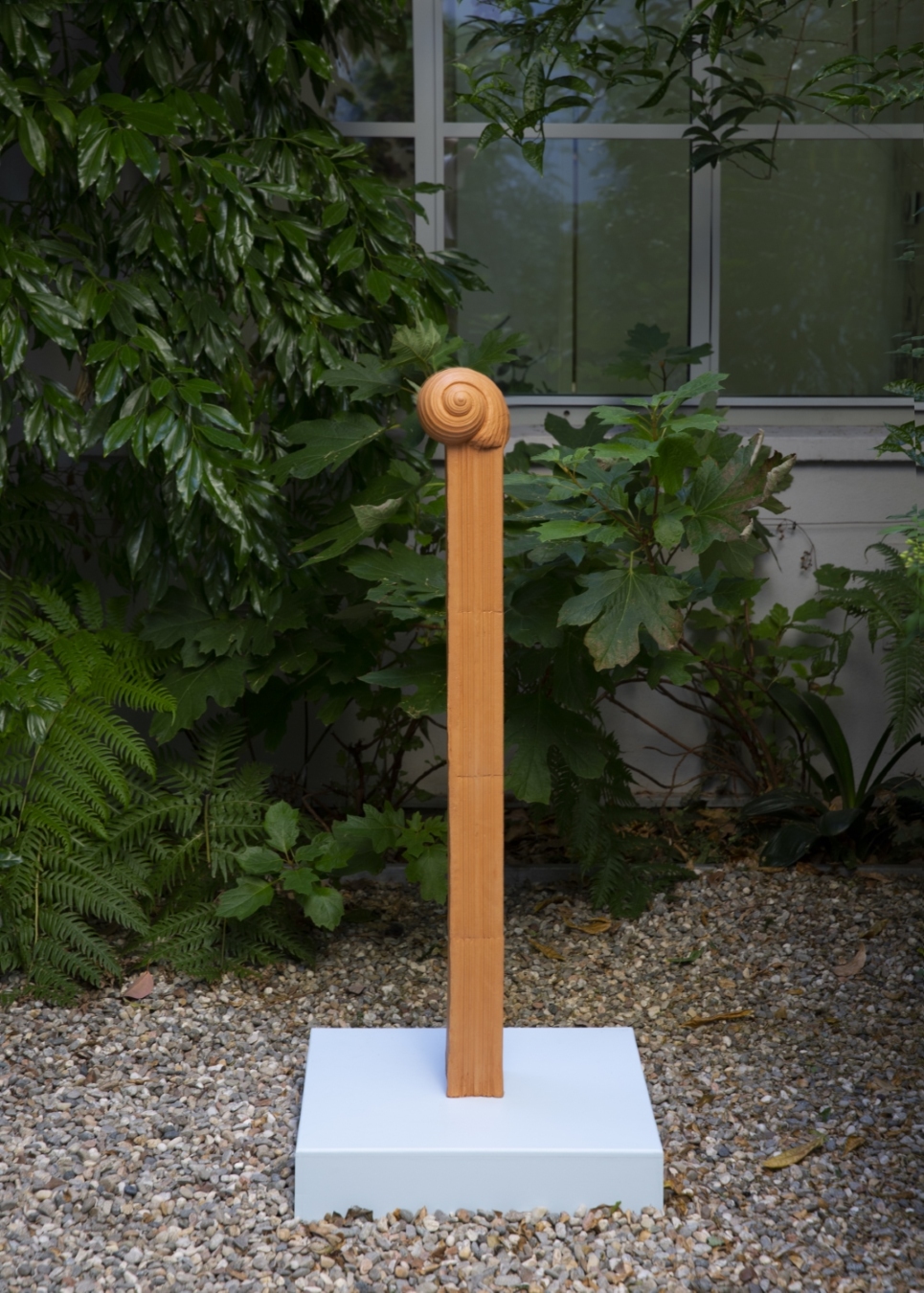
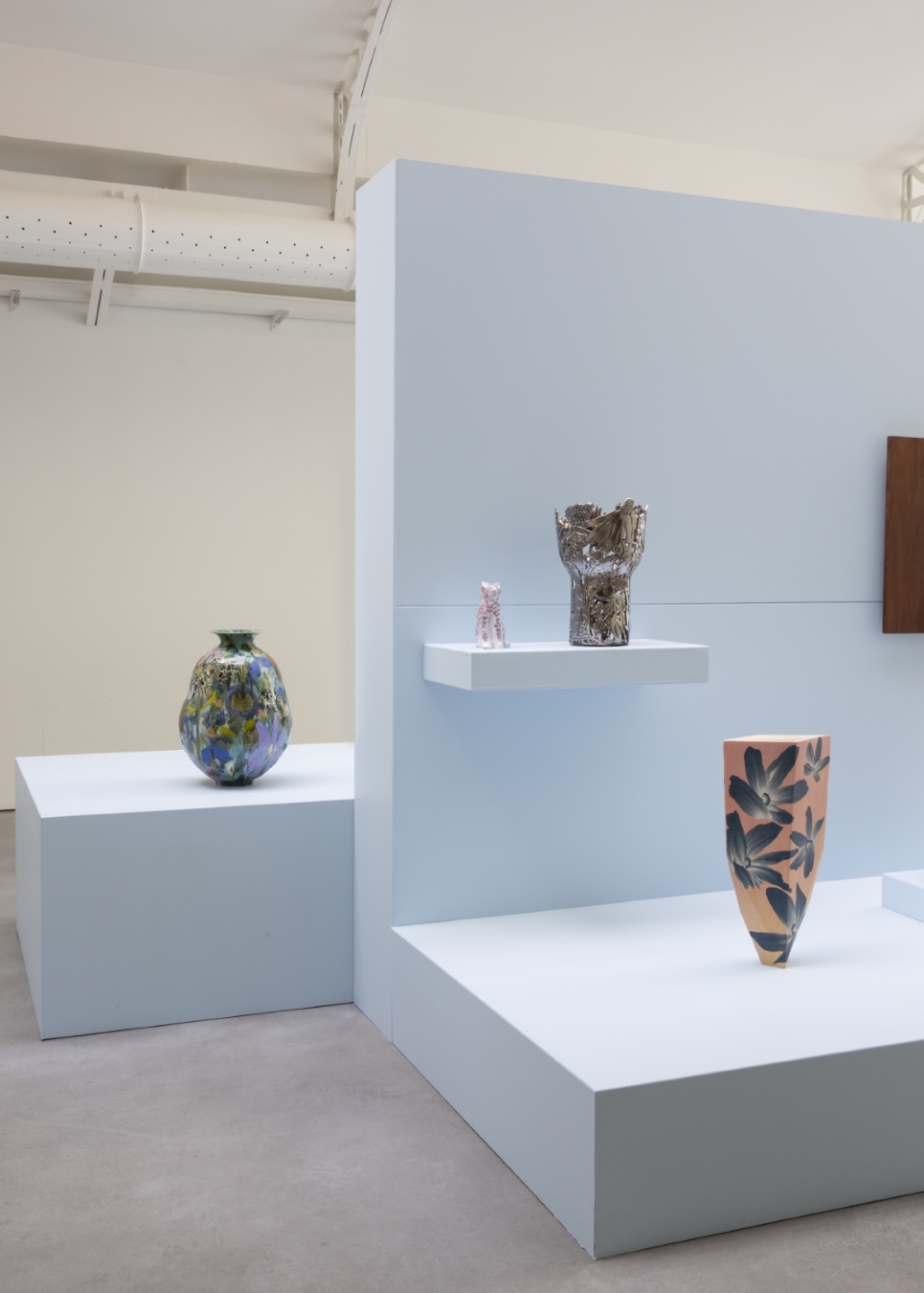
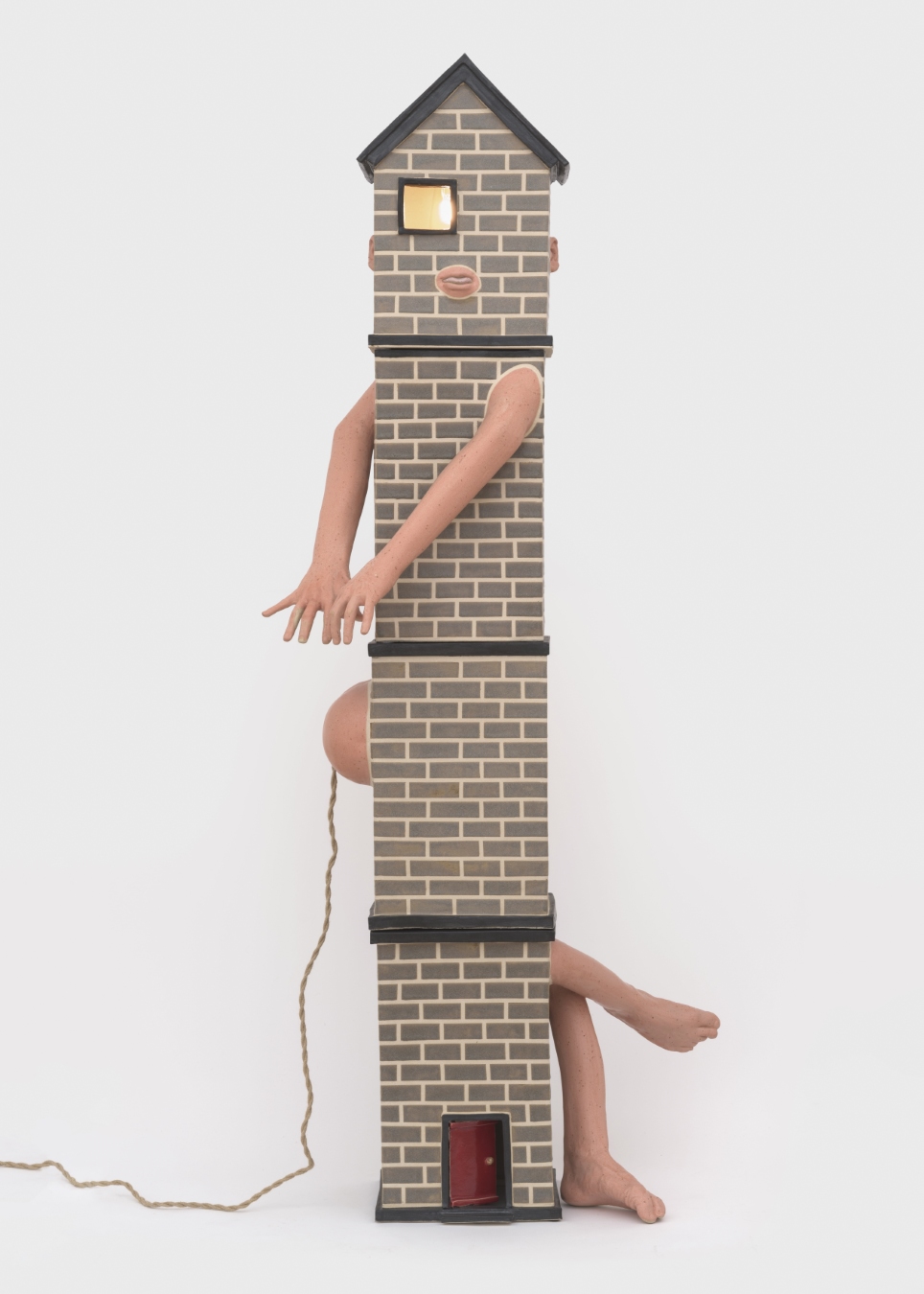
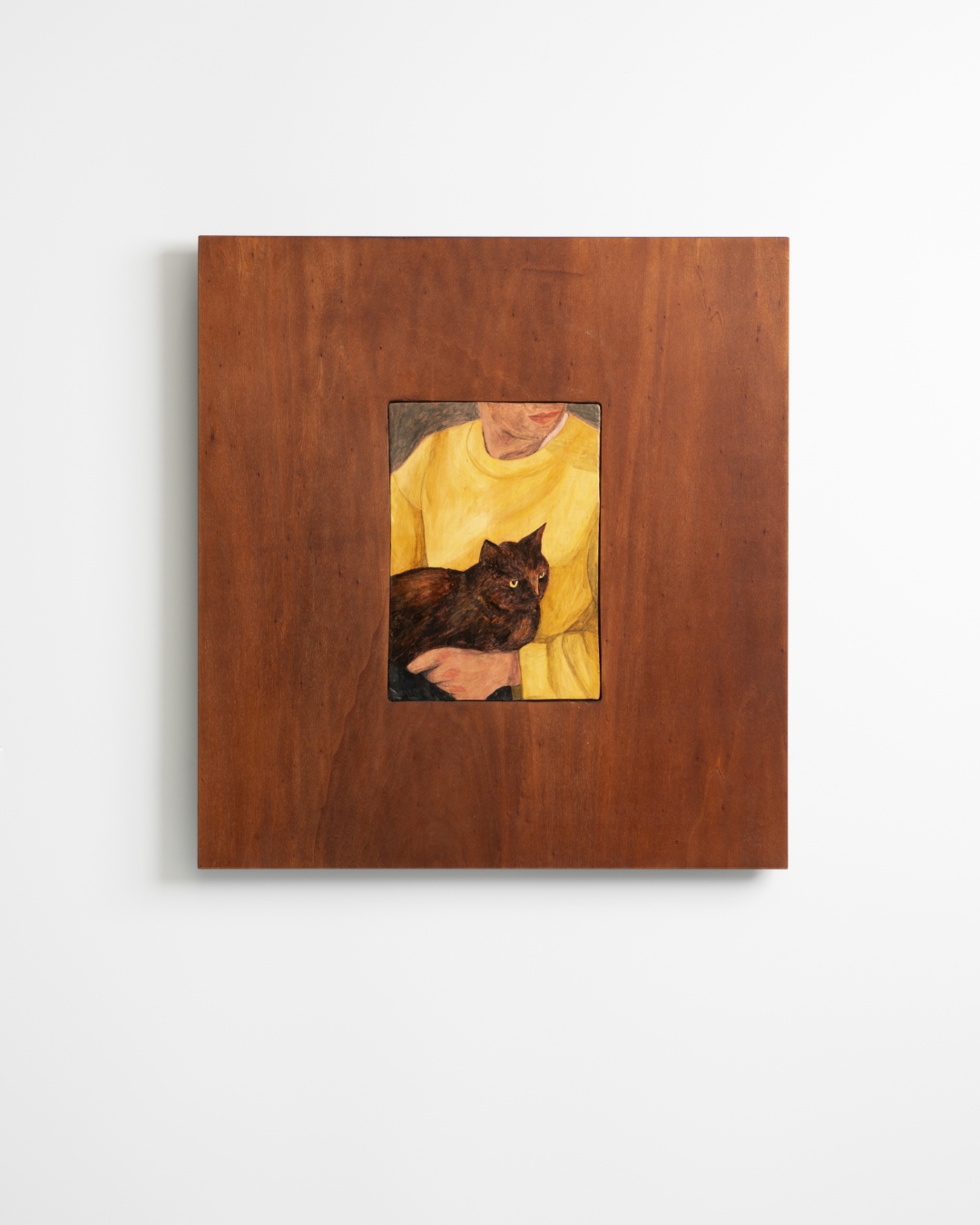
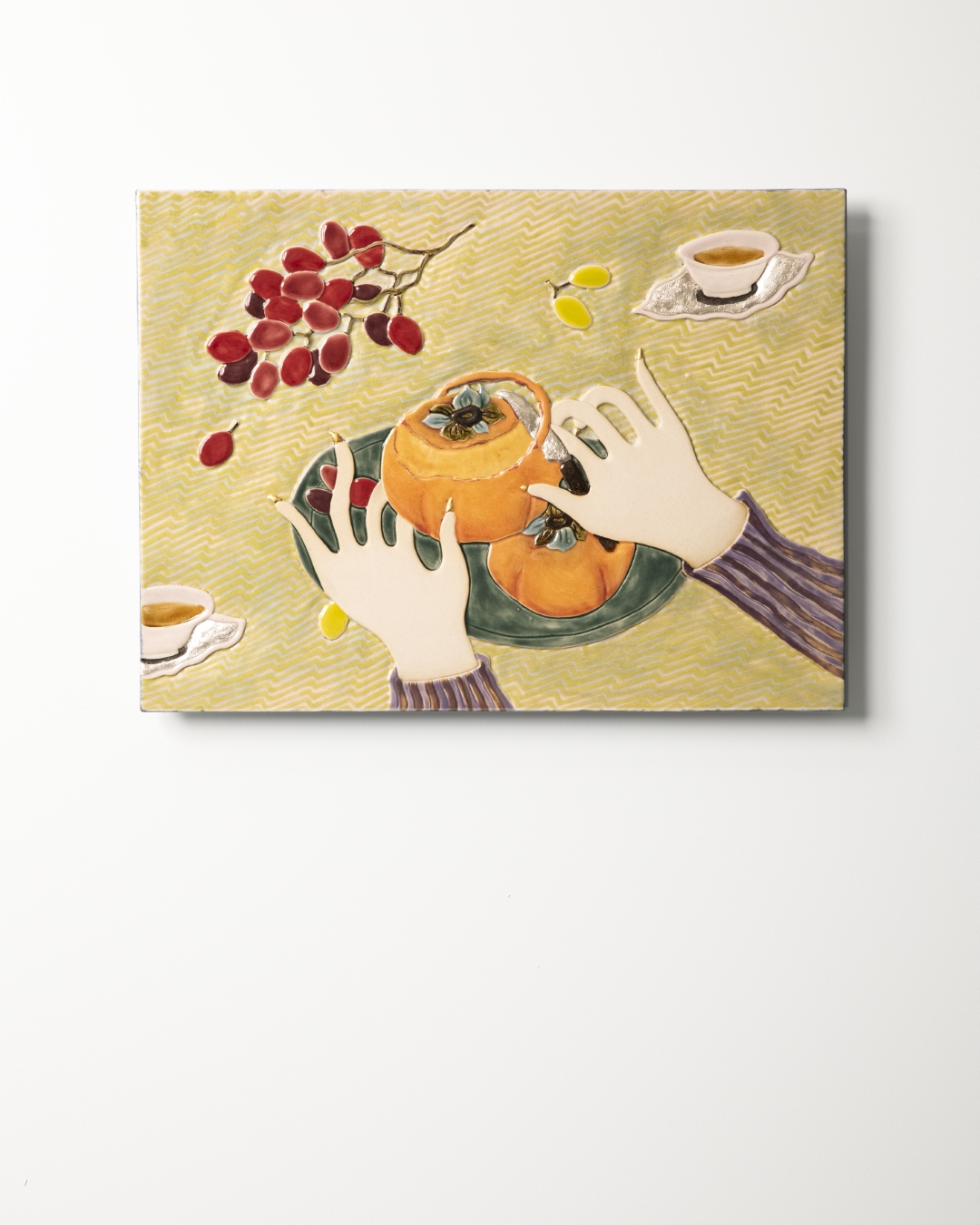
The idea of home provides a first point of departure for thinking about belonging. Home can be the place we return to, a retreat that offers protection, intimacy and a sense of recognition. In Forms of Belonging, this idea is articulated not only through the works themselves, but also through the exhibition display. Pale blue partition walls divide the light-filled spaces of Fondazione Officine Saffi, the Milanese home of contemporary ceramics, founded by Laura Borghi in 2011 and relocated to its present premises two years ago. Matching blue shelves line the walls, creating a setting that evokes a domestic interior – an environment in which the works appear to inhabit different rooms, niches and arrangements. The house itself emerges as a motif at the very beginning of the exhibition, in Jonathan Baldock’s It’s my house and I live here (2025). A vertical, column-like ceramic house, built from what resembles a brick structure, sprouts ears, a mouth and limbs. Half house, half human, it appears as though its inhabitant has merged with the architecture itself. Two wall-based works, hung like pictures in a domestic interior, reinforce the sense of a lived-in space. Samantha Kerdine’s L’Ètreinte (2026) presents a framed fragment of a person sitting comfortably with a cat. Its composition evokes the intimacy of a domestic photograph – the kind of image that might hang above a sofa, quietly recording a moment of closeness. Gerald Mak’s Over Persimmon and Tea (2026), meanwhile, turns to another kind of everyday scene. Two hands are depicted peeling a persimmon over a table set with tea and grapes. The scene suggests the quiet rituals of domestic life: a table prepared for family or friends, the attentive gesture of peeling fruit, and the act of passing it on to others. The long, delicate fingers give the gesture an almost fairy-like quality. This distinctive motif recurs throughout Mak’s work, imbuing familiar moments with a sense of quiet poetry. Both artists were also among the recipients of this year’s residency prizes: Kerdine received the Taoxichuan Art Centre Residency Prize in China, while Mak was awarded the Albuquerque Foundation Residency Prize in Portugal.
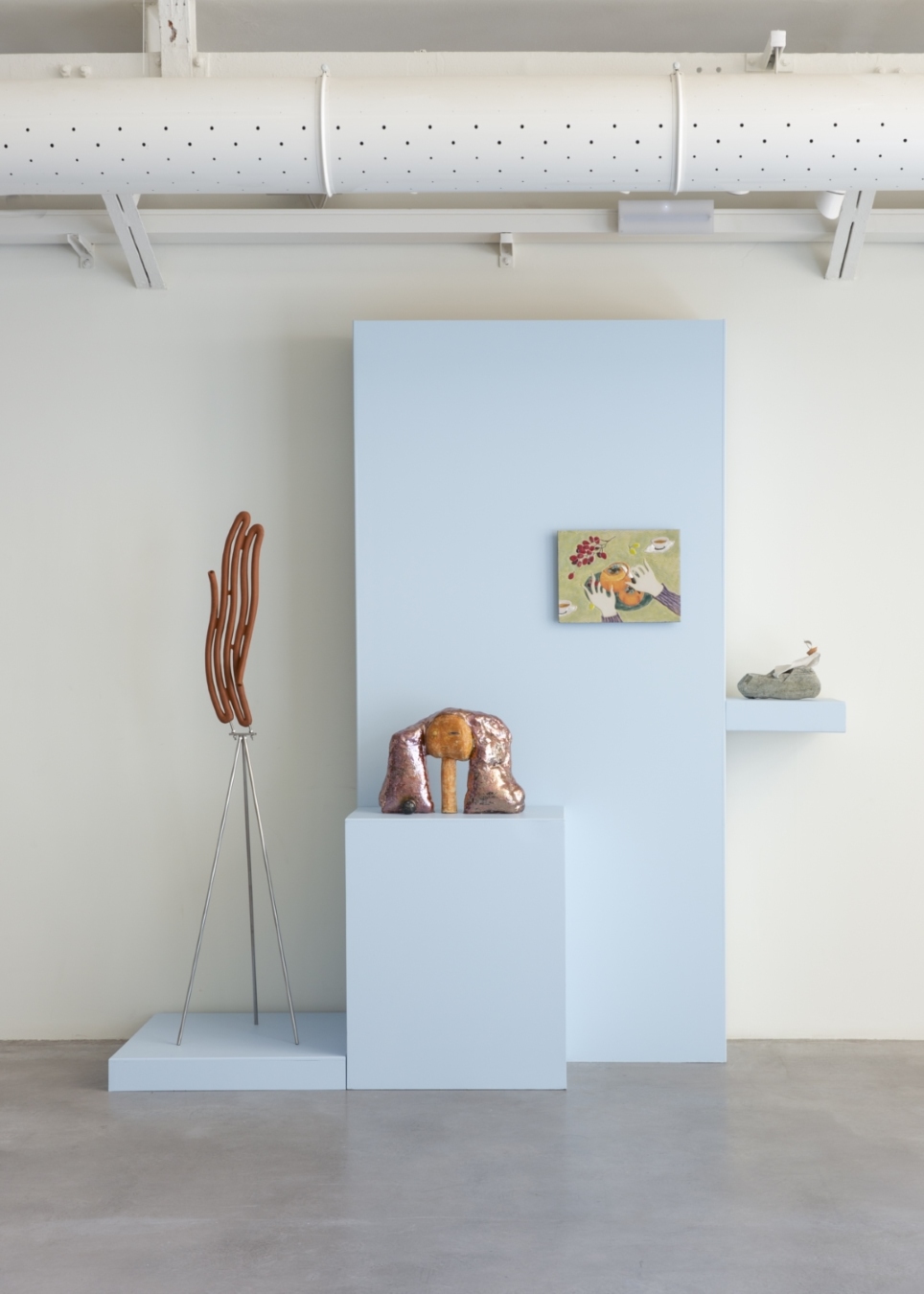
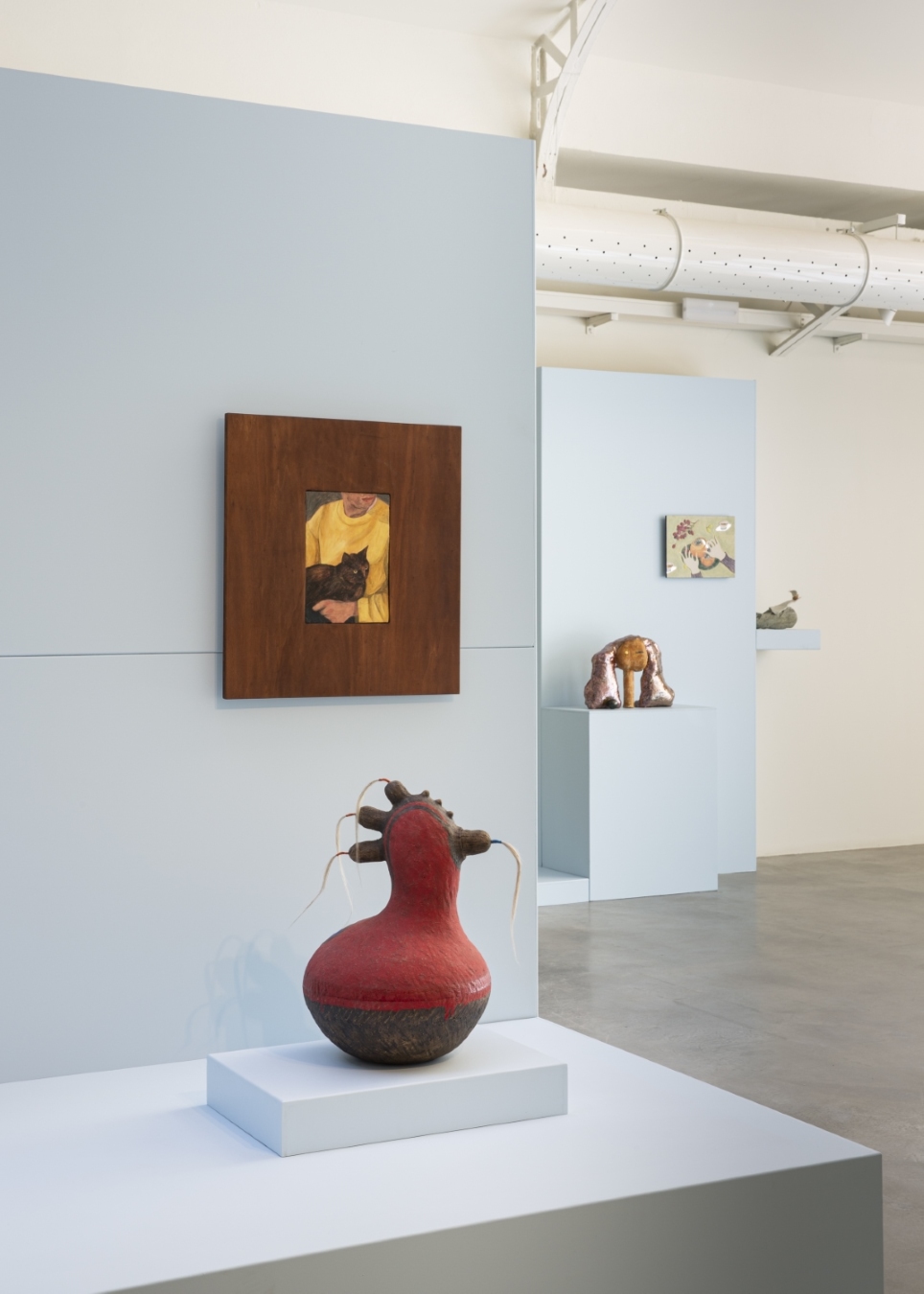
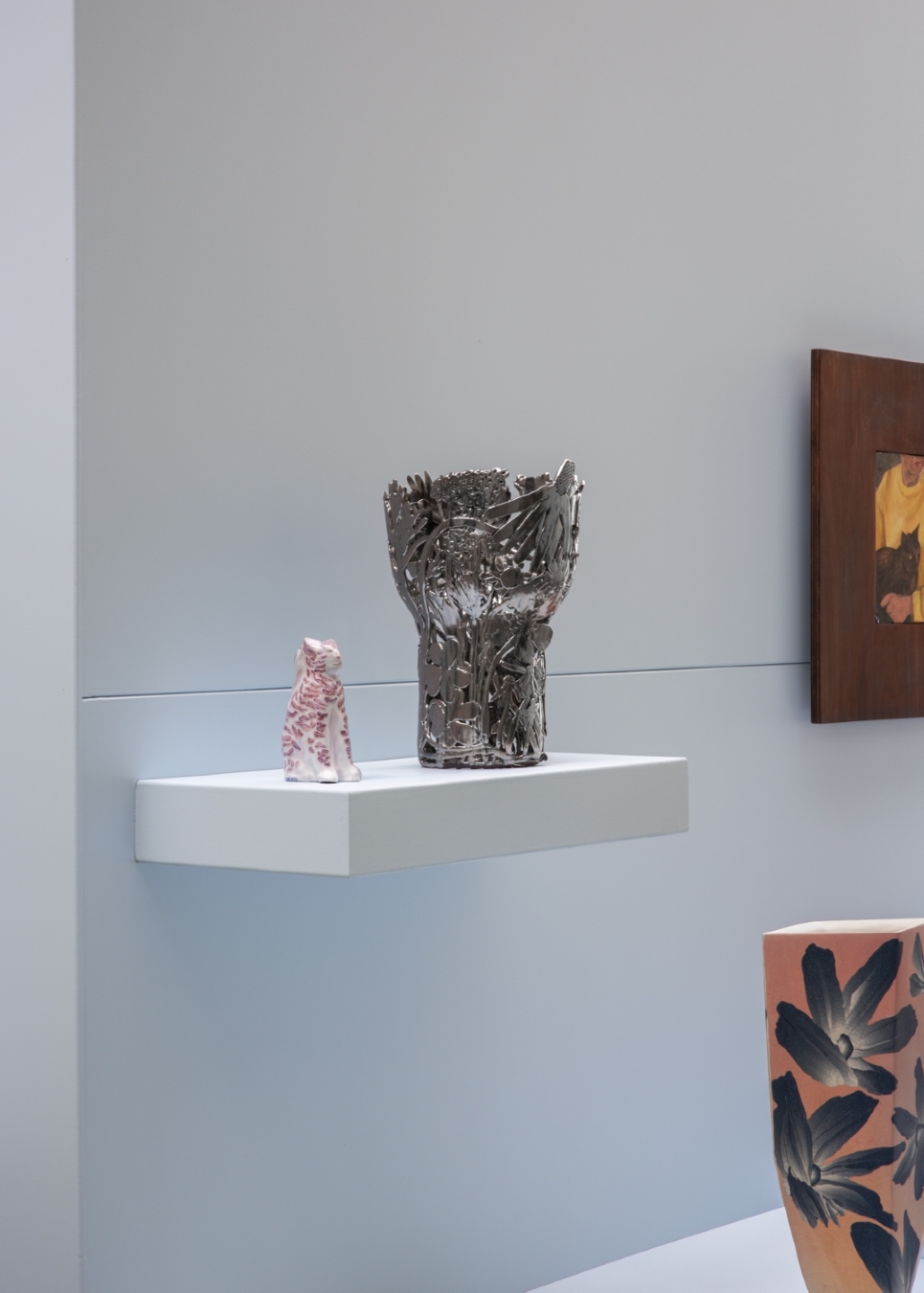
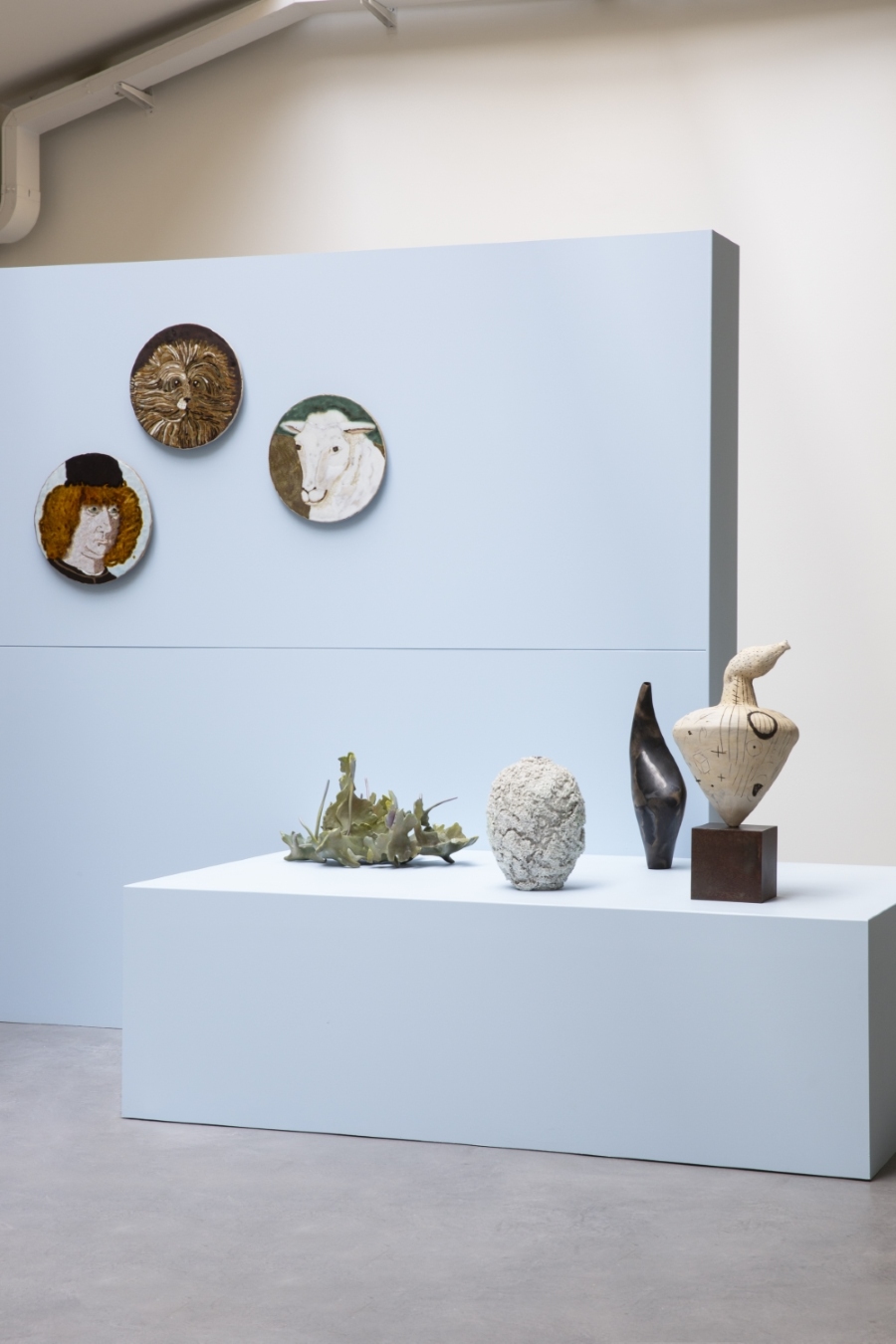
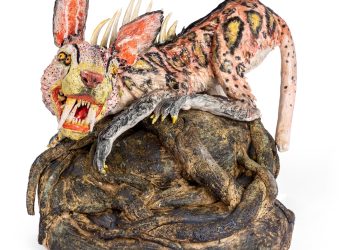
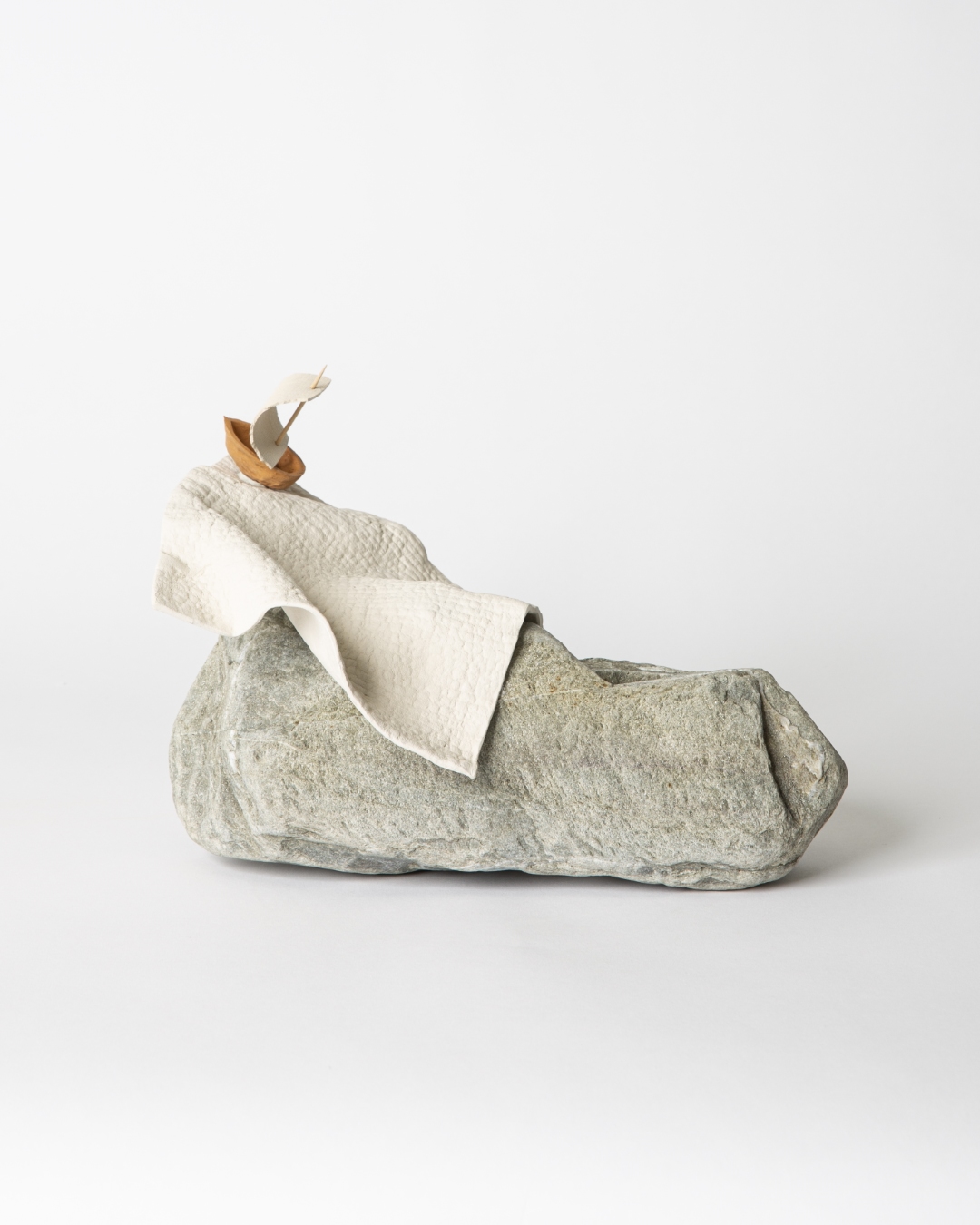
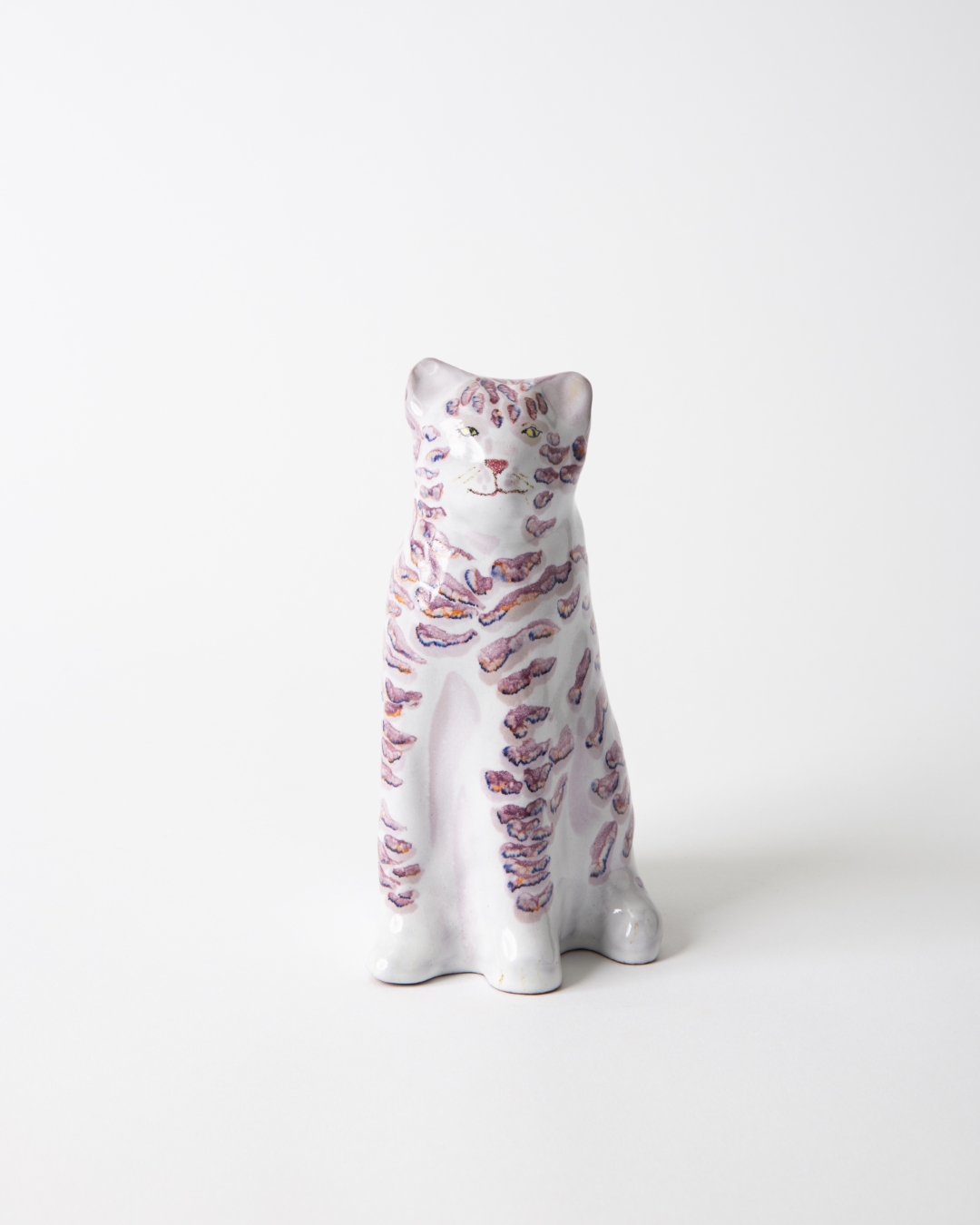
Throughout the exhibition, objects appear as vessels of memory. They carry traces of earlier stages of our lives, remaining with us as tangible links to places, people and experiences that belong to the past. There is a particular kind of recognition in returning, as an adult, to one’s childhood home and finding a room preserved almost exactly as it was left behind – the objects still occupying their familiar places, suspended in another moment of life. This sensation resonates in Ornaghi & Prestinari’s Uscire dal Guscio (2026), placed on a small shelf at the edge of one of the exhibition displays. Like a remnant from childhood, a small sailing boat rises from a stone. The hull is made from half a walnut shell; its ceramic sail and white ceramic wave carry the boat forward, the wave itself shaped from the imprint of a kitchen sponge. The Italian title, Uscire dal Guscio – “coming out of one’s shell” – suggests a movement outward, away from the protected space of childhood and towards independence. The work thus resembles a small relic of a life already left behind: an object that might once have held meaning and now survives as a fragment of memory. A similar sense of persistence surrounds Agalis Manessi’s cat sculpture It’s behind you (2024). Like an object kept on a shelf in a family home, waiting patiently to be encountered again, the sculpture seems to carry the weight of something remembered rather than simply something seen. But what, exactly, lies behind us? The childhood in which such an object might once have had meaning? The object itself? Or the memory that remains attached to it?
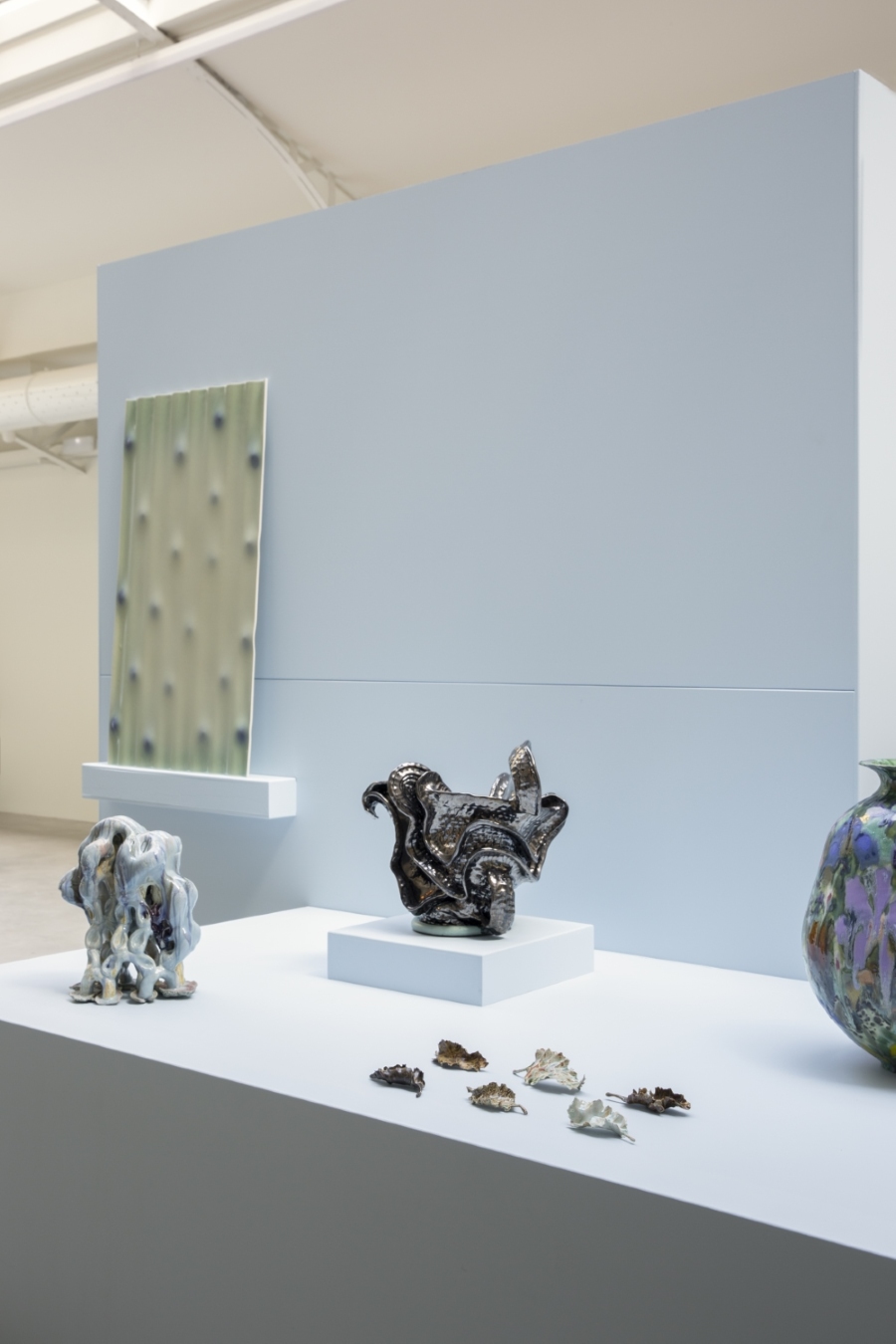
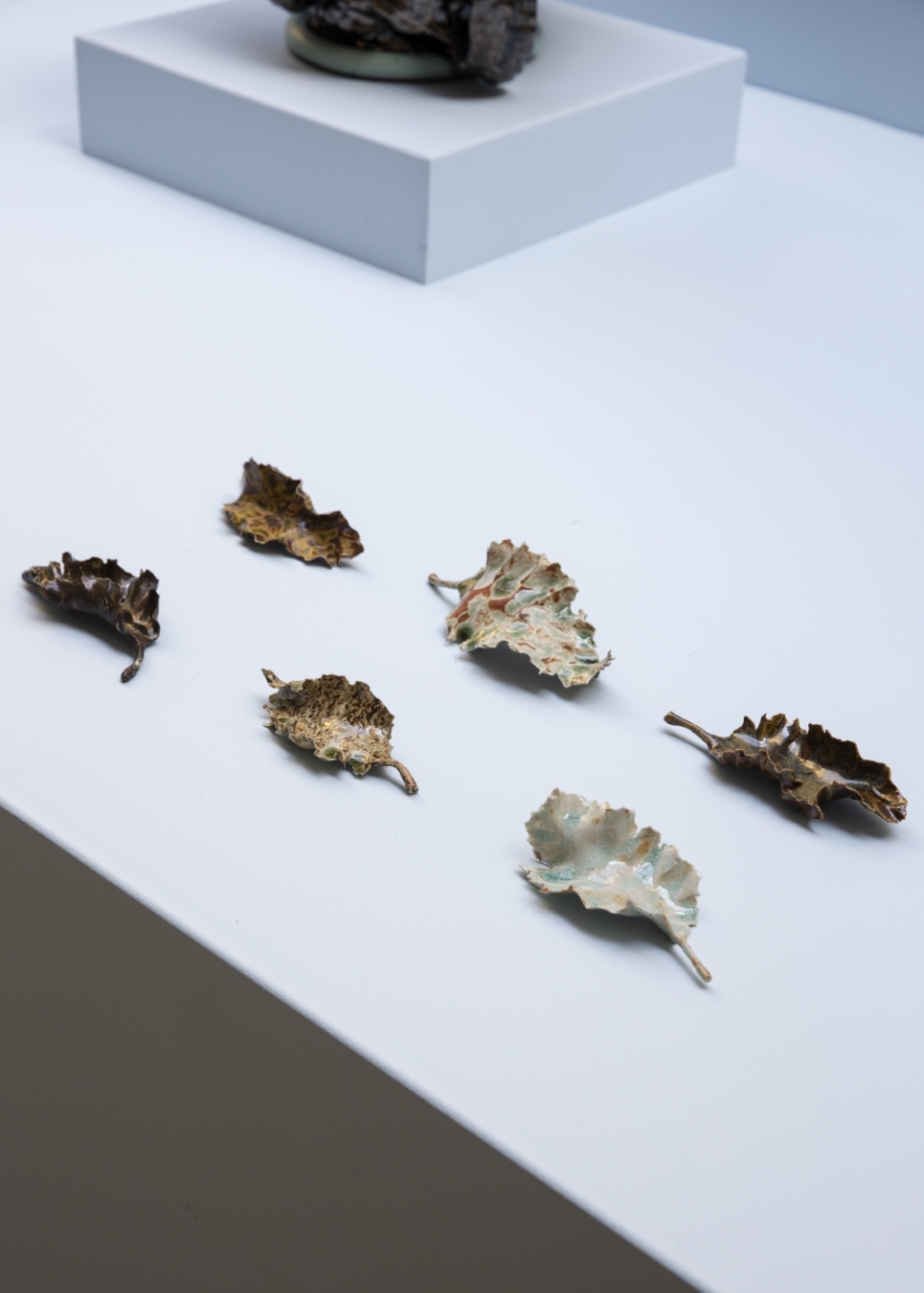
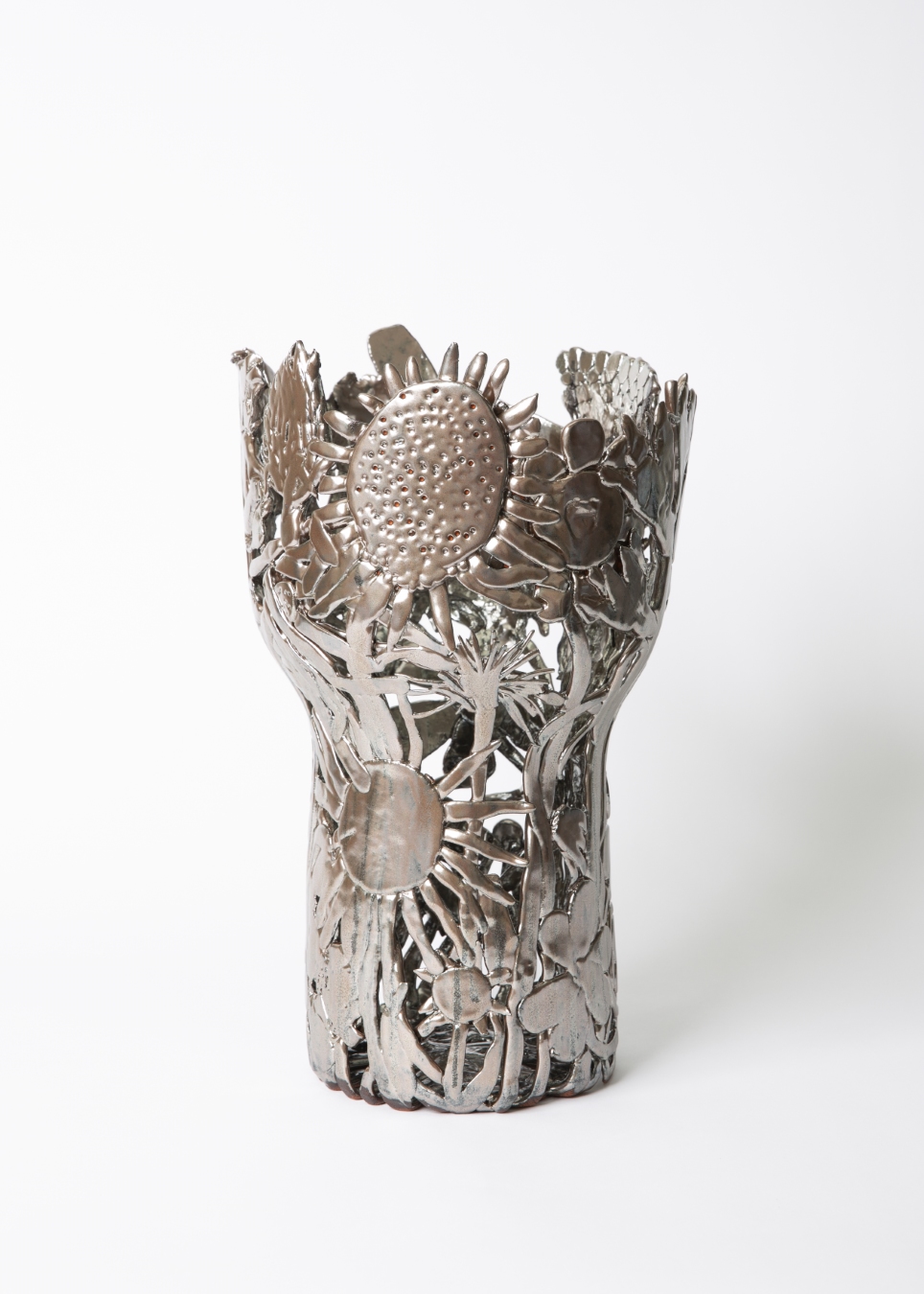
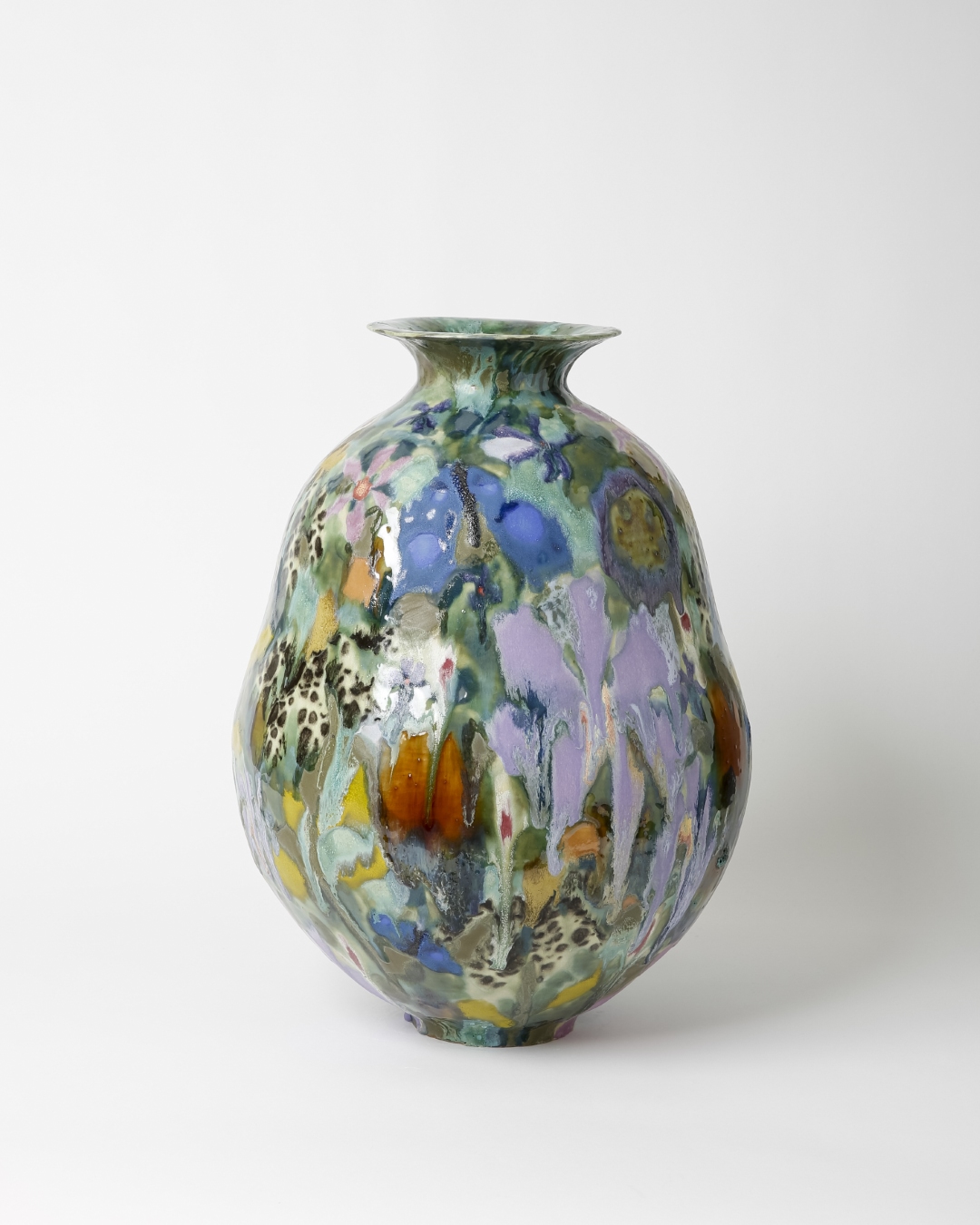
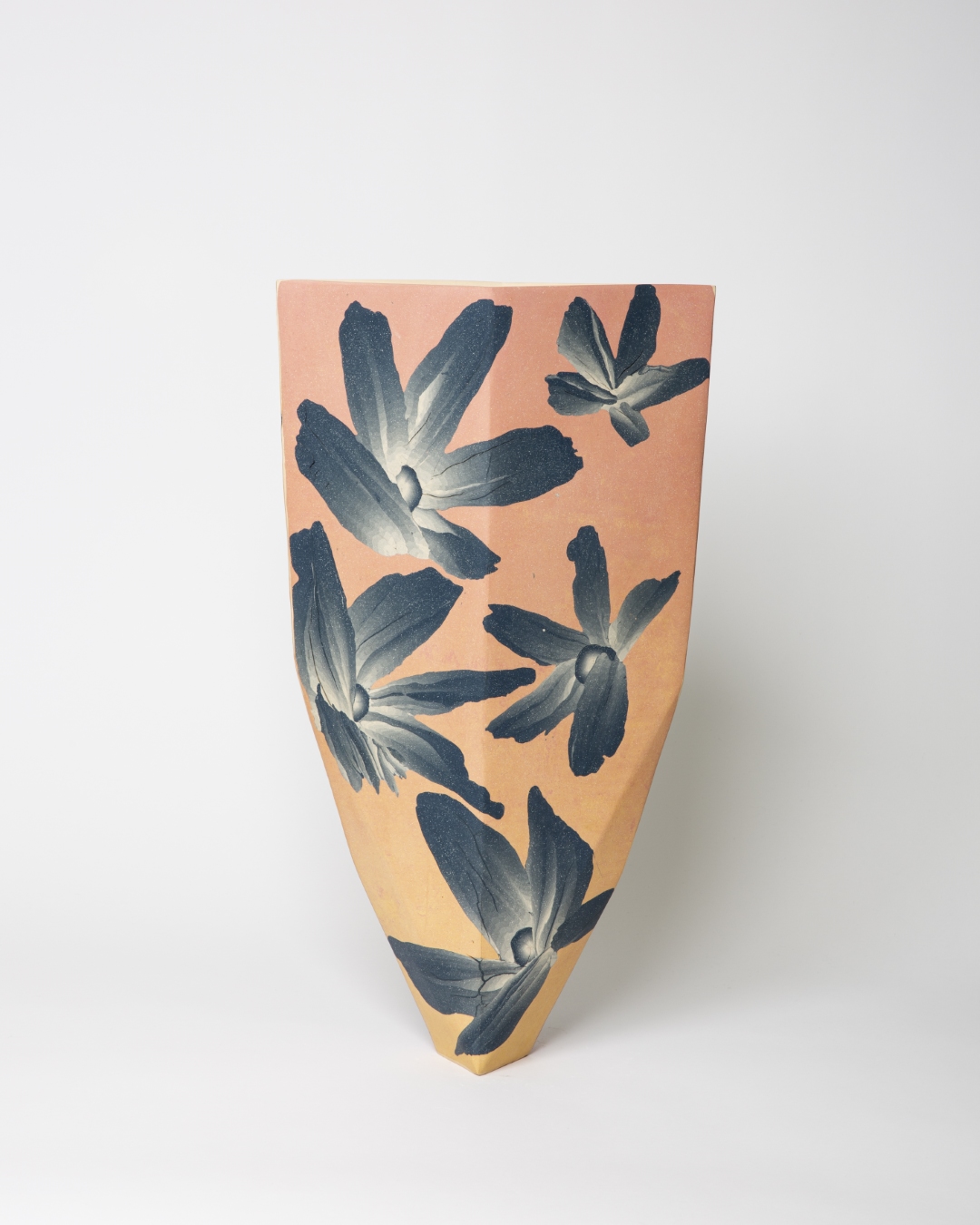
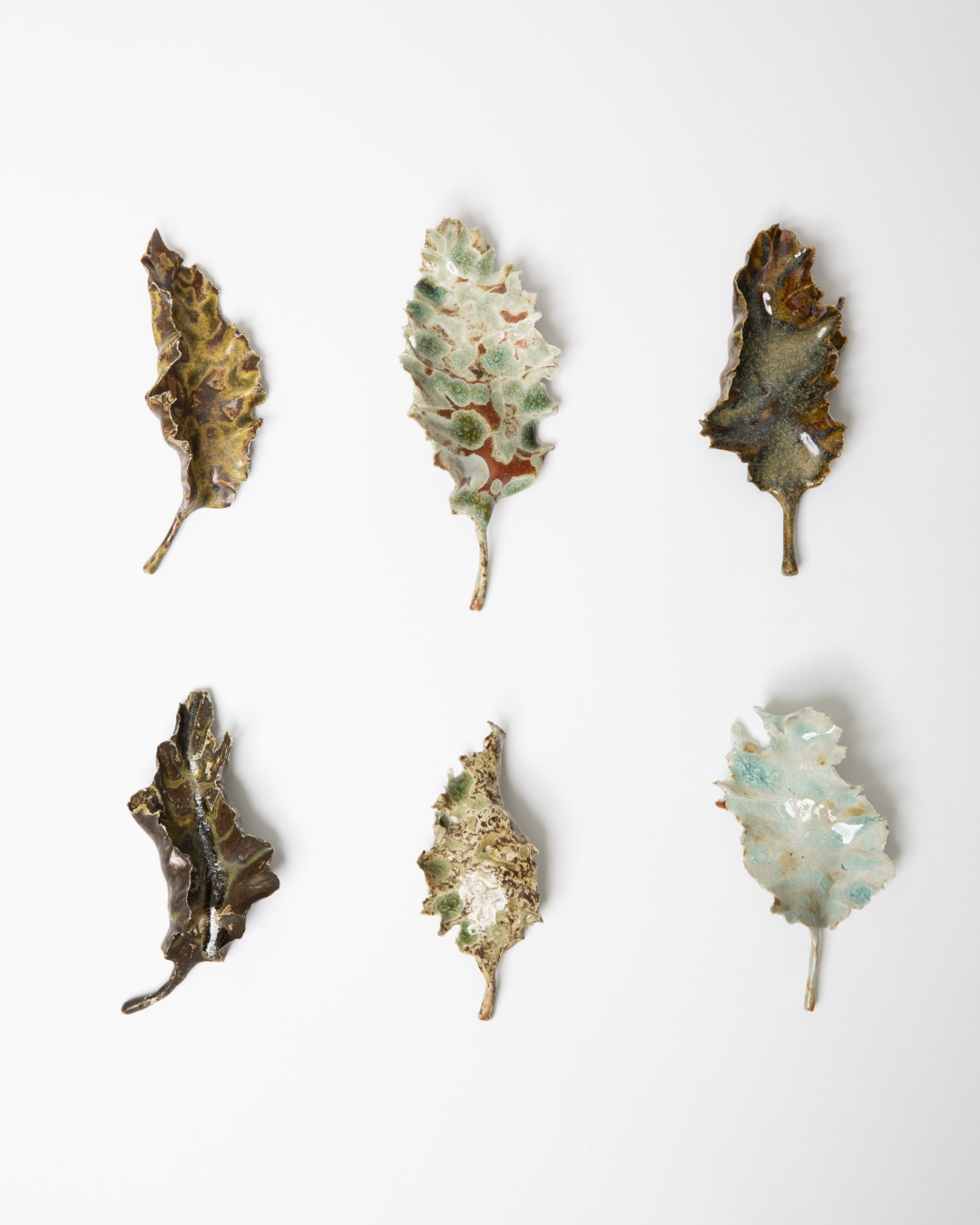
For Marten Herma Anderson, belonging is closely connected to memory and place. His work Held Together (2026) draws on the landscapes and memories of his childhood on the Baltic island of Rügen, particularly his grandmother’s garden. The vessel is constructed from a sequence of pressed-flower forms, arranged one after another to build up its sculptural body. Their delicate shapes recall botanical specimens preserved in childhood memory. In striking contrast, the entire surface is covered with a silver glaze, which envelops the flowers in a reflective, almost protective skin. In Mel Arsenault’s And All This Time We Were In Heaven (2026), a vase becomes almost a field of colour. Its surface is covered by flowing glazes from which flowers seem to emerge, as if taking shape within a constantly shifting stream of pigment. Positioned in front of the glass facade, the work is reflected in the windows overlooking the green courtyard, creating a subtle dialogue between the ceramic object and the vegetation beyond. Flowers also reappear in Cody Hoyt’s (Untitled) Landscape Drawing Vessel (2026), one of the works that immediately catches the eye upon entering the exhibition. Hoyt, recipient of the Fondazione Officine Saffi Special Residency Prize, constructs his vessels from differently pigmented clays, layering, cutting and recombining them into intricate patterns before transforming the flat compositions into three-dimensional forms. The technical mastery of this process is striking, requiring an extraordinary degree of precision as the individual elements are layered, cut and assembled into a coherent whole. Loong Pan’s ongoing series Leaves (2022–ongoing) approaches the relationship between plant life and environment through an extraordinary act of ceramic imitation. Each work meticulously reproduces an actual leaf, capturing its delicate veins, contours and irregularities in clay with remarkable precision. The technical skill is striking: fragile organic structures are translated into enduring ceramic forms with an almost uncanny degree of accuracy. Arranged in an archival sequence reminiscent of a natural history collection, the leaves appear like specimens preserved for close observation. Their glazed surfaces reinforce this impression of conservation, as if the fragile forms had been captured and suspended in time. The works thus blur the boundary between natural specimen and crafted object, transforming something ephemeral into something enduring. Pan is one of two recipients of the Young Artist Prize by Ottostumm | Mogs, alongside Takumi Morozumi. Conceived as an acquisition prize to support a new generation of artists at a crucial stage in their careers, the award recognises emerging practices and supports their further development and visibility. For Pan, whose Leaves combines exceptional technical precision with a sensitive engagement with the natural world, the recognition feels particularly well deserved.
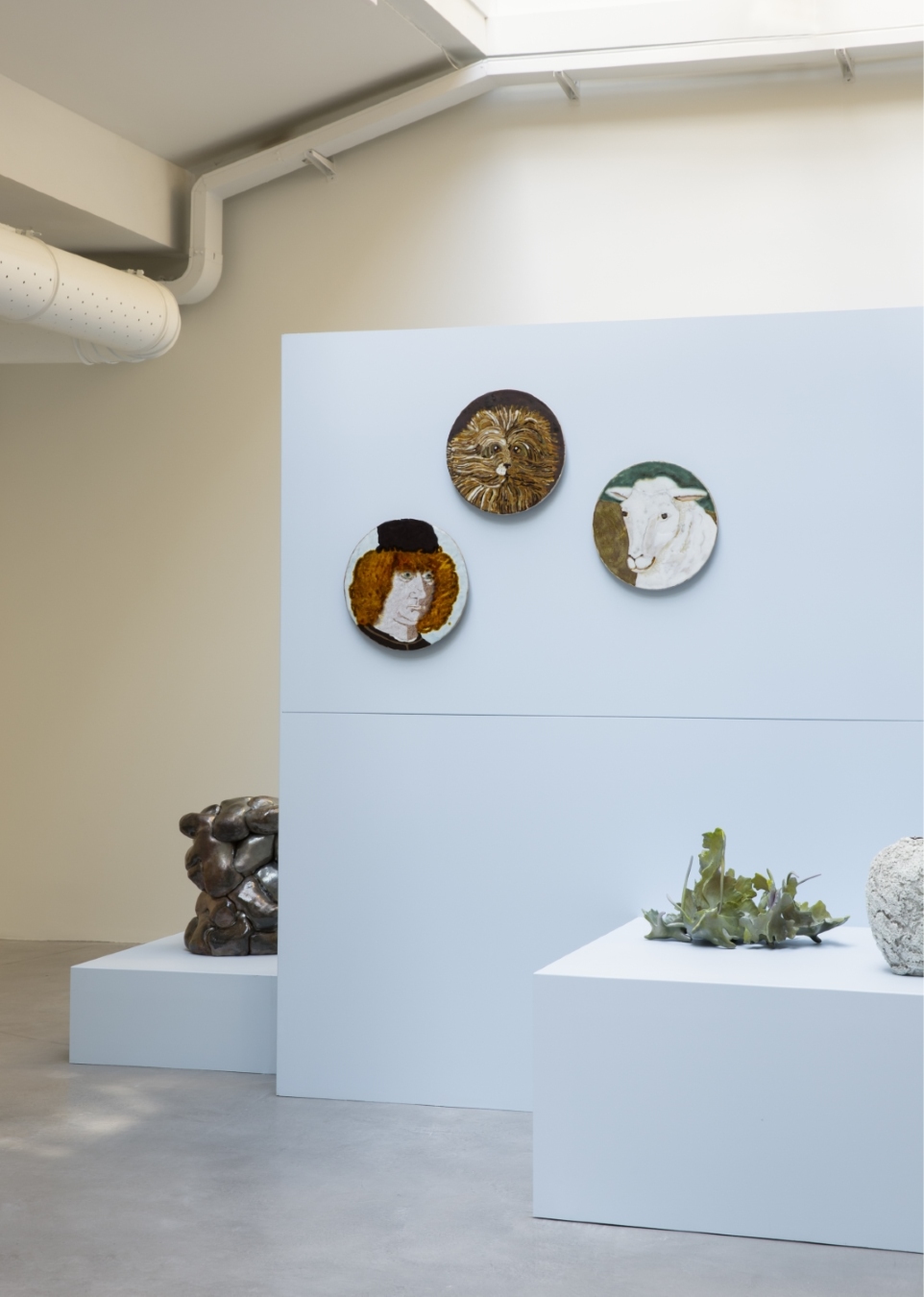
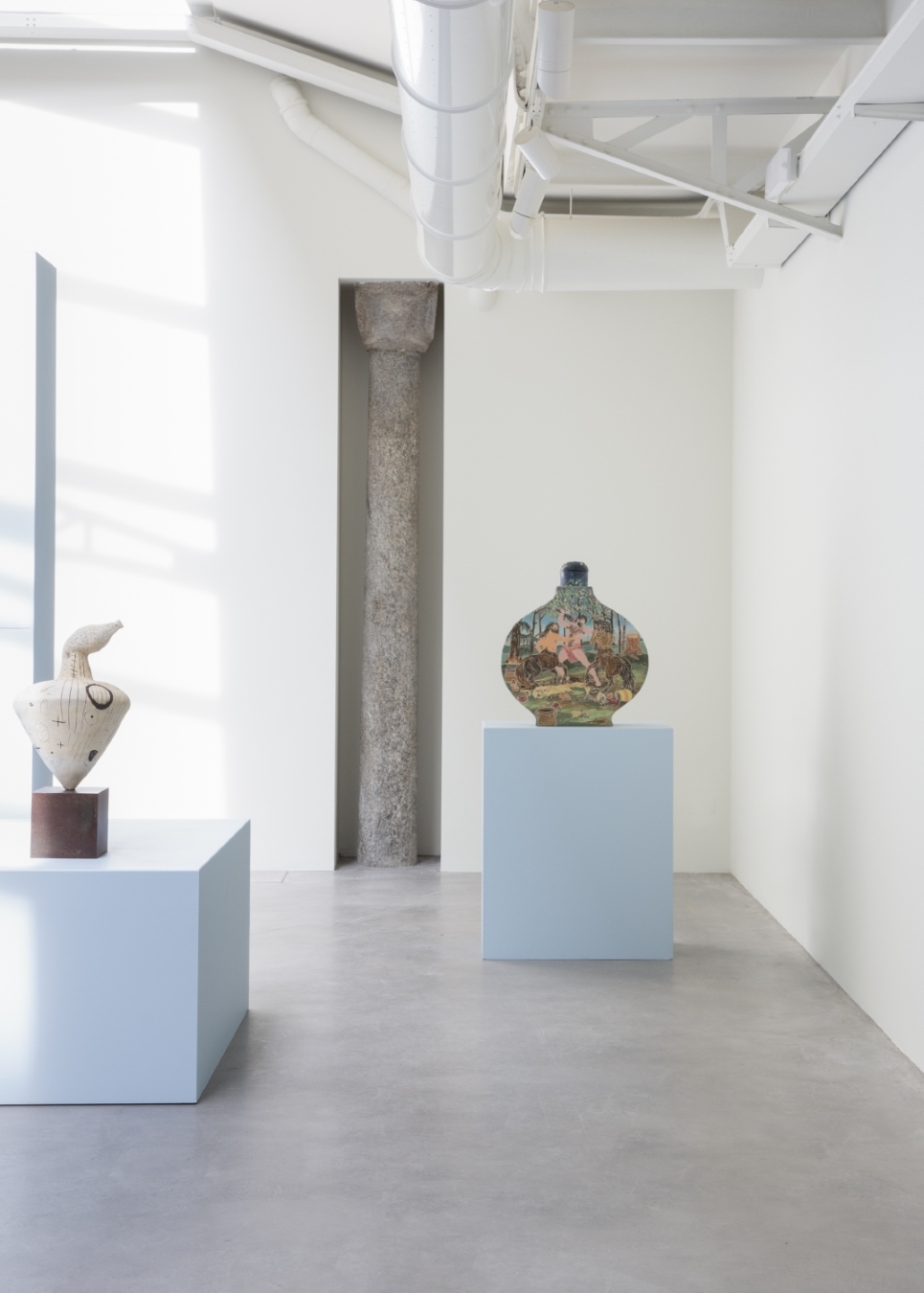
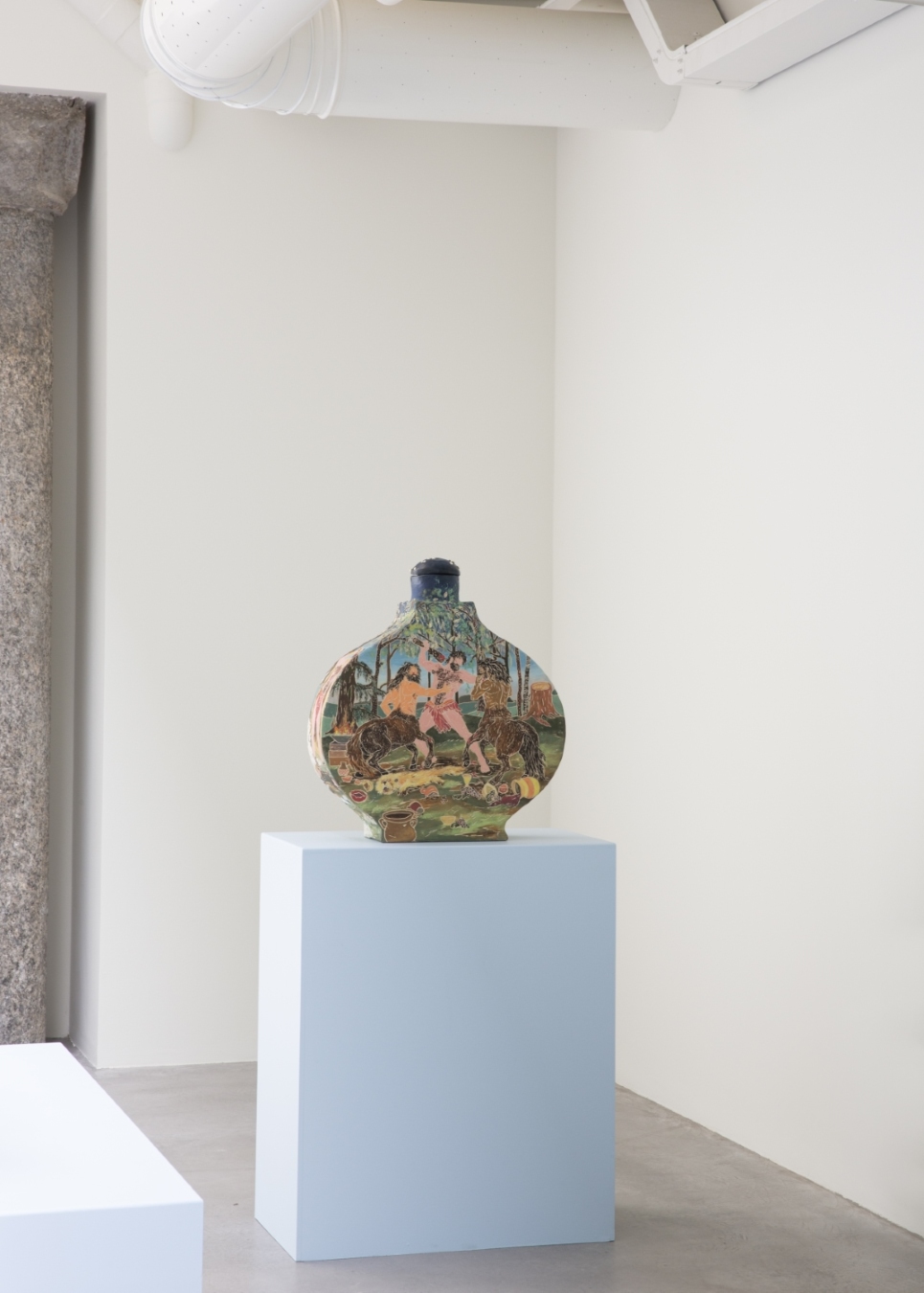
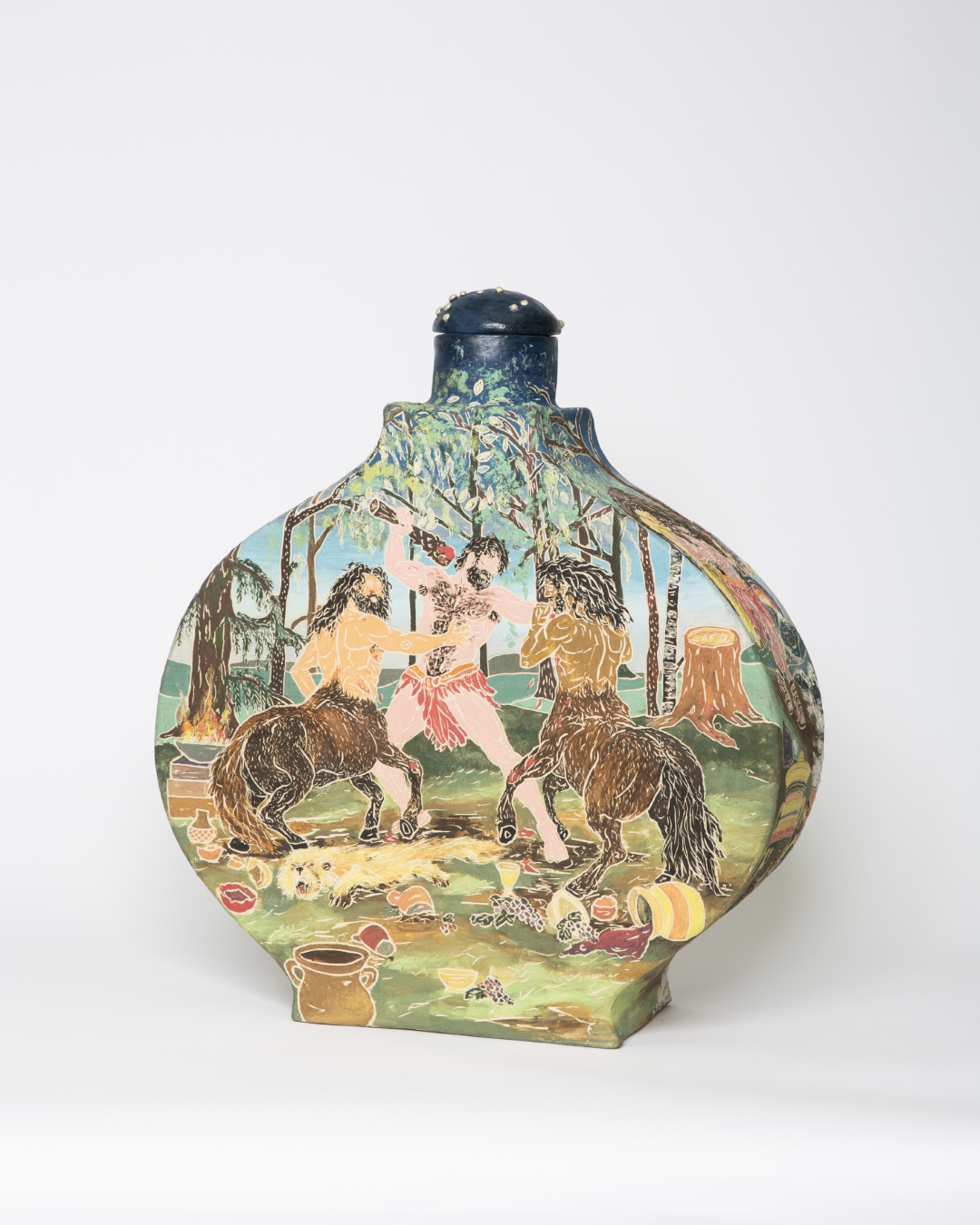
Belonging can also unfold through cultural memory: through stories, images and symbols inherited from a shared cultural history. In Krzysztof Strzelecki’s Labour IV: The Erymanthian Boar and the Death of Chiron (2025), references to ancient mythology bring a centuries-old narrative into a contemporary ceramic context. At the same time, the work connects to the history of ceramics itself, recalling the long tradition of using vessels as surfaces for storytelling. Marta Pierobon’s Cecilia 2 (Las MENINAS) (2026) approaches cultural memory through another canonical image. By referring to Diego Velázquez’s Las Meninas, the work enters into a dialogue with one of the defining traditions of Western painting. Here, belonging is no longer tied to a specific landscape or personal biography, but to a shared visual history: a repertoire of images that has been transmitted, reinterpreted and continually revisited. The reference transforms the ceramic work into part of a larger conversation about how cultural memory is formed – and how artists can position themselves within, respond to or reconfigure the histories they inherit. Both artists were also recognised with residency prizes this year: Pierobon received the Bruckner Foundation Residency Prize in Switzerland, while Strzelecki was awarded the Fondazione Museo della Ceramica di Savona Residency Prize in Italy.
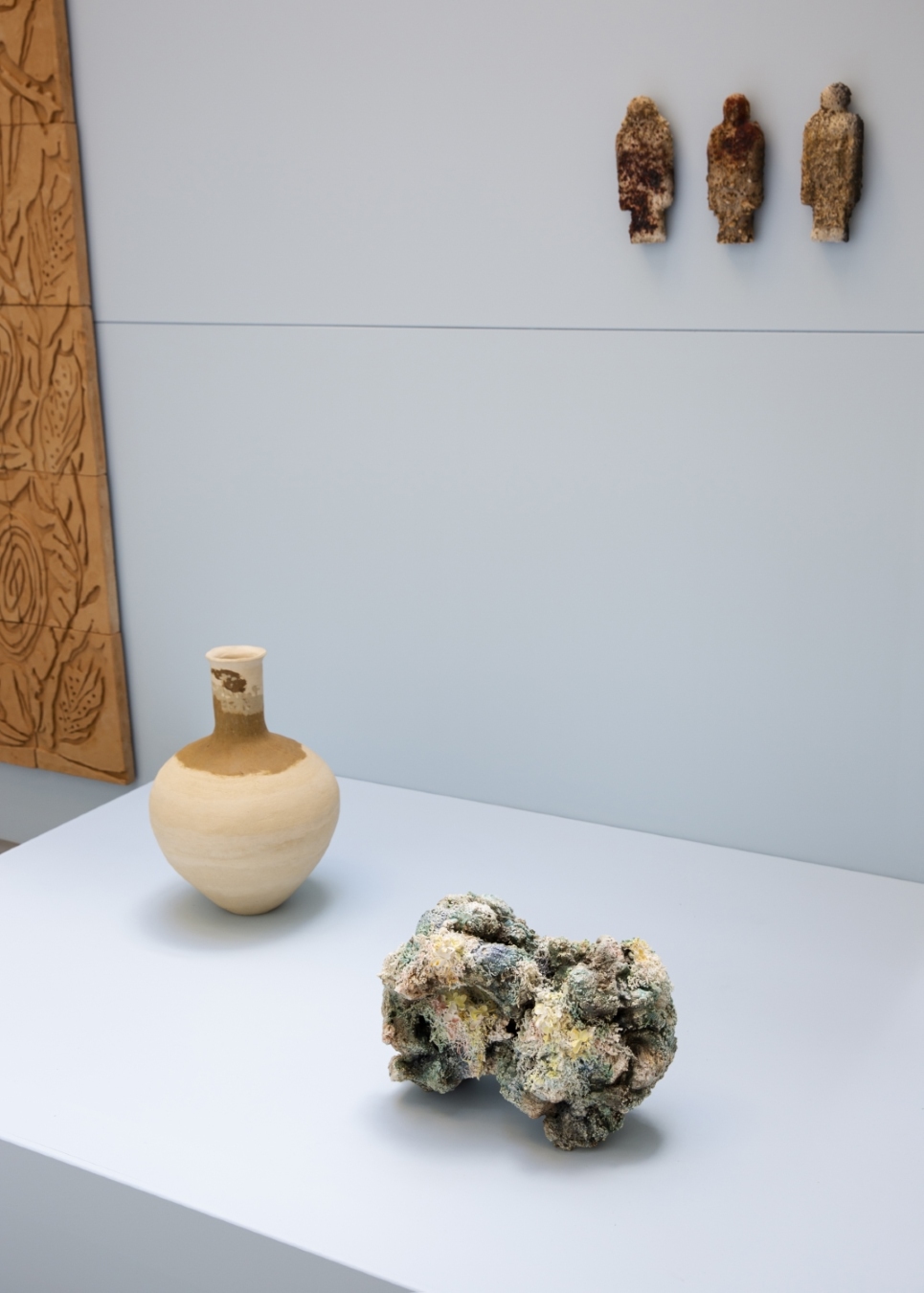
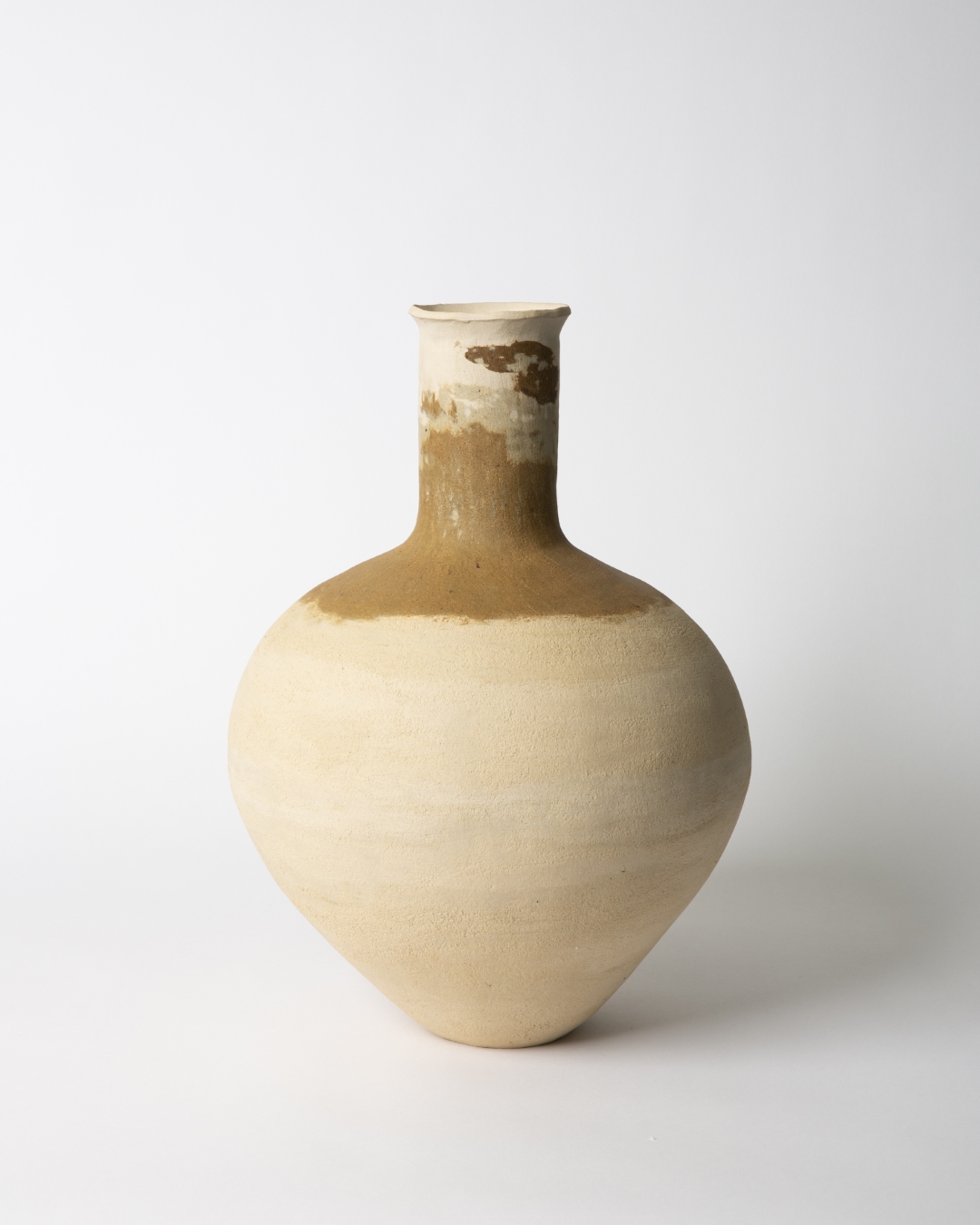
Belonging can also be expressed through the materials we inherit and the places from which they come. In Bisila Noha’s practice, clay becomes a means of connecting personal experience, cultural identity and the histories carried by materials. Her vase Baney B60 (2025), presented at Officine Saffi, is composed of different earths brought together within a single vessel. The work turns soil into a tangible expression of place, bringing different landscapes and histories into one form. Noha’s wider practice explores identity, memory and community, drawing attention to the knowledge and traditions carried across generations, as well as to the often-overlooked contributions of Black women to the history of art and craft. This affinity with materiality and the relationship between artistic expression, human experience and design also informs the Tacchini Prize, awarded to the artist. Conceived as an opportunity for further research and exchange, the prize includes a dedicated exhibition at Casa Tacchini in Milan, where a selection of her works will be presented from October 1 to November 13, 2026. Set within the domestic environment of the apartment in Brera, the exhibition brings Noha’s work into dialogue with the idea of home, extending the exploration of belonging beyond the walls of Officine Saffi. A related connection between material and cultural heritage emerges in Phoebe Collings-James’s Infidel (2023). Drawing on West African and Caribbean coiling techniques alongside other historical and visual references, her ceramic forms bring different cultural histories into dialogue with one another. The vessel becomes more than a functional or sculptural object: it becomes a site where knowledge, memory and identity can meet.
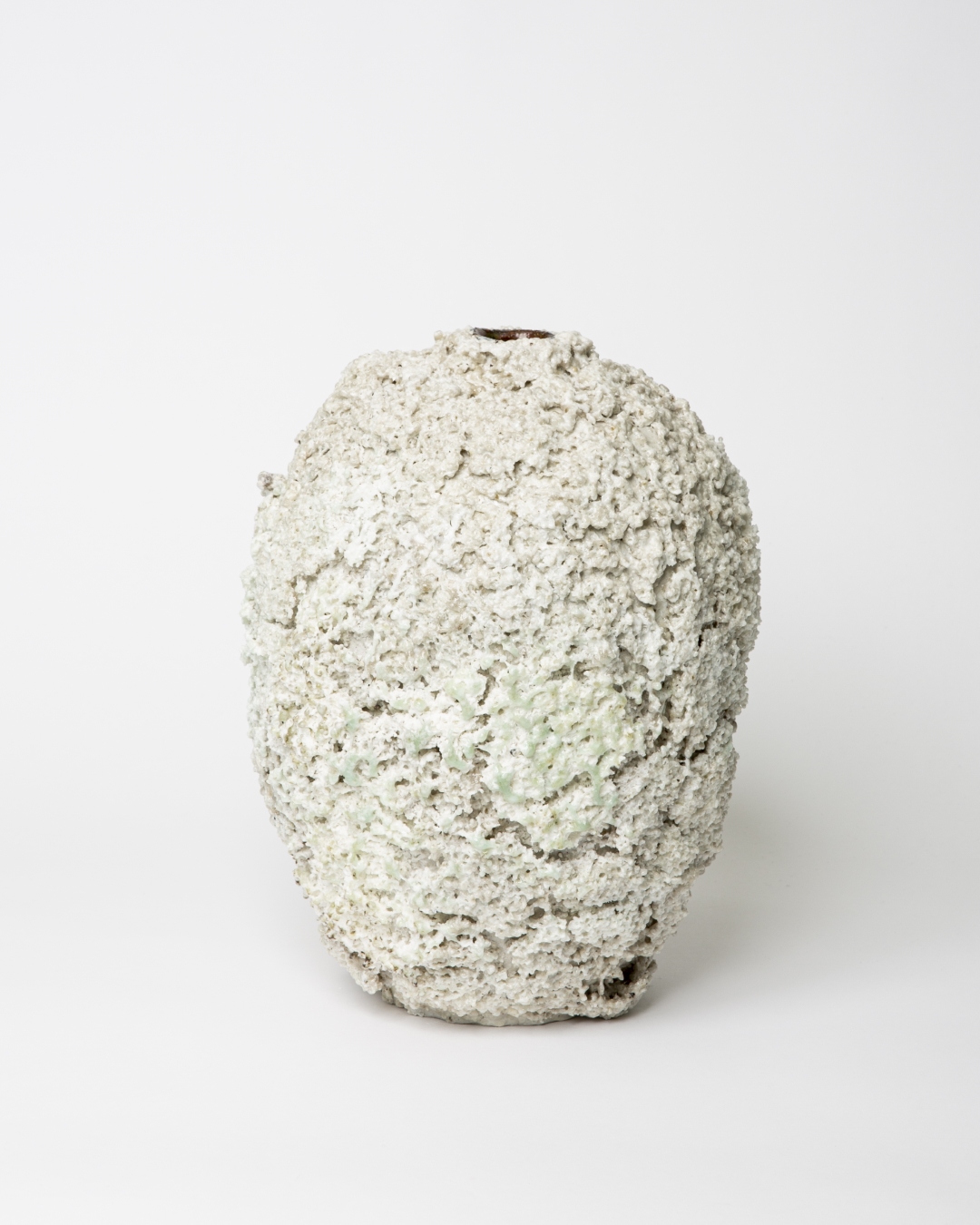
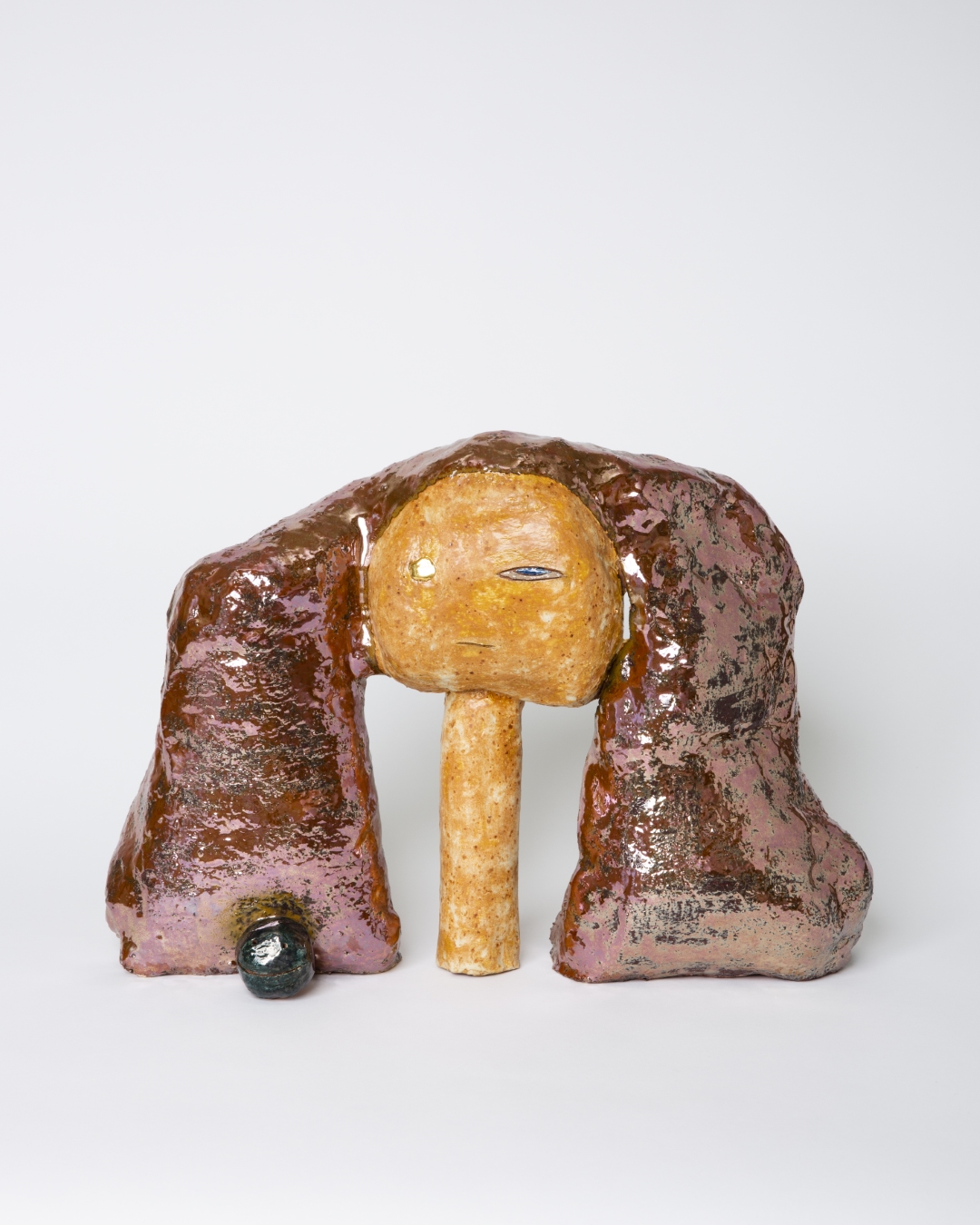
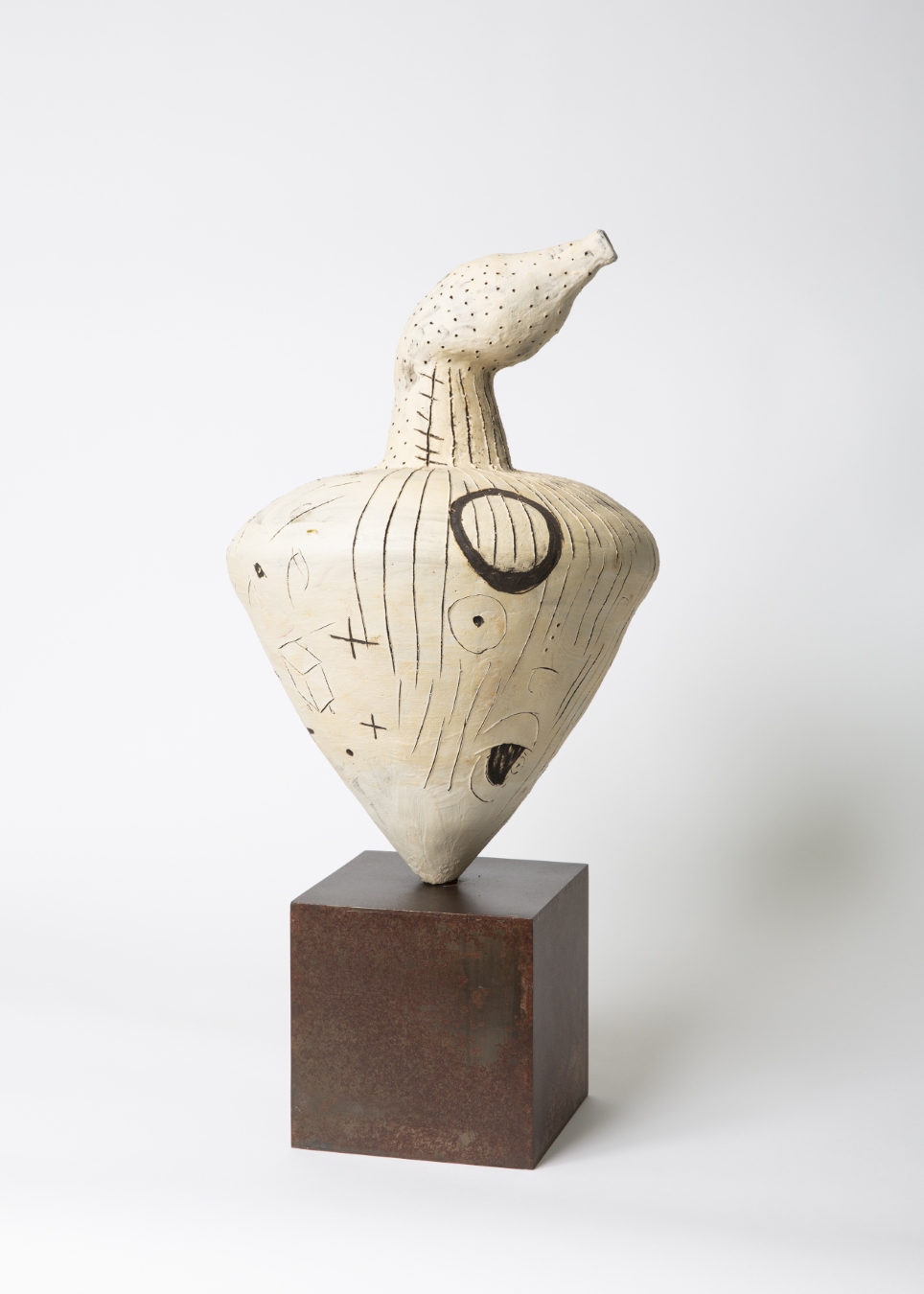
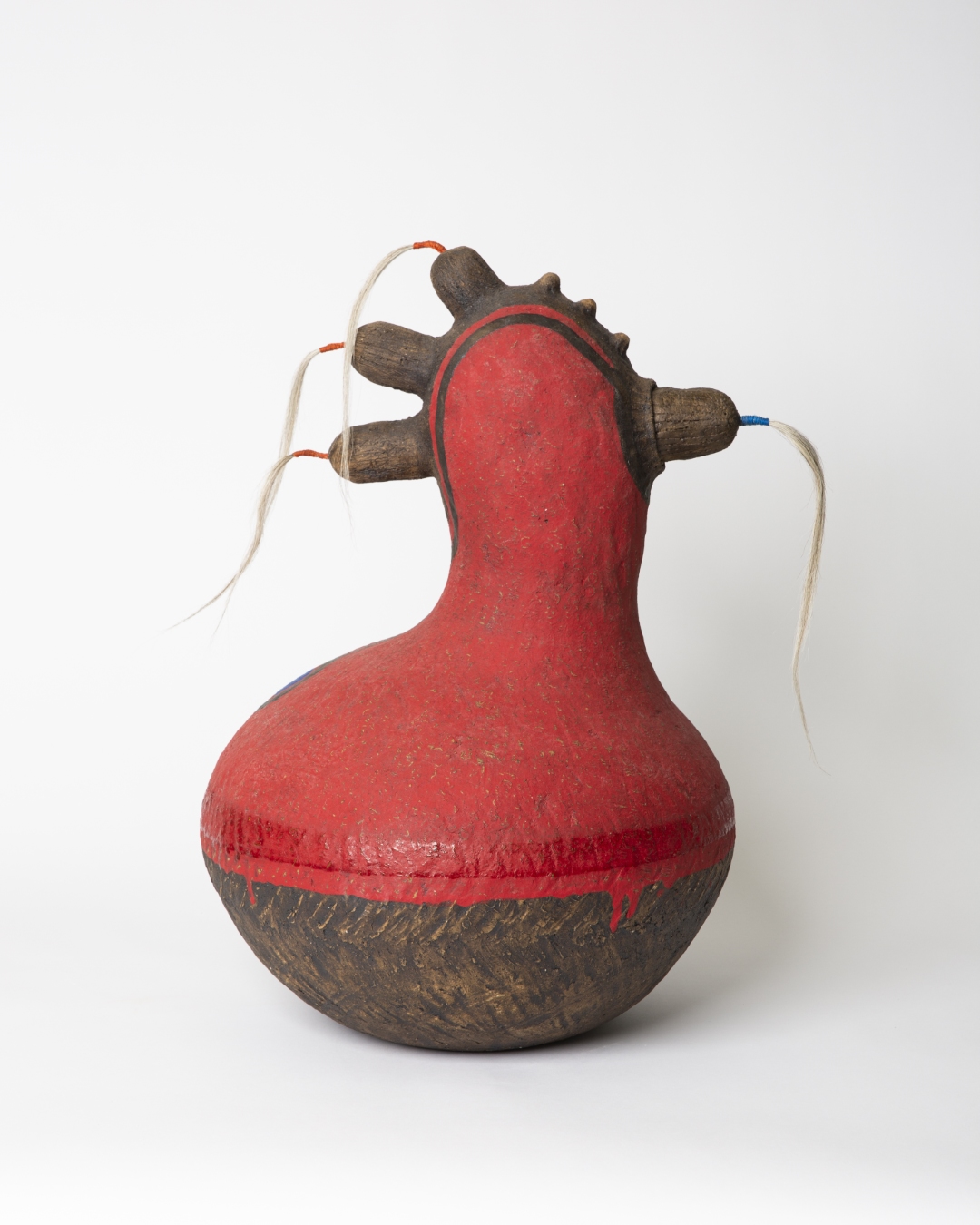
The question of belonging finds a particularly powerful expression in the work of South African artist Andile Dyalvane, winner of the €10,000 Main Prize. Born in the rural Eastern Cape, Dyalvane draws deeply on his Xhosa heritage and his spiritual connection to the land and his ancestors. For him, clay is more than a material: it is umhlaba, or “mother earth,” a medium through which histories, cultural knowledge and lived experiences can be carried across generations. Created together with his wife, Nkuthazo Alexis Dyalvane, iThwasa (The One Who is Blossoming) (2026) embodies this understanding of ceramics as a vessel of memory, identity and lineage. The work takes on the presence of a body, suggesting a living entity that holds traces of both individual and collective experience. Surreal and quietly unsettling, it seems at once deeply grounded in reality and to belong to another realm, bringing the ancestral into dialogue with the contemporary. Its title evokes a process of transformation and becoming, suggesting that identity is never entirely fixed but continues to unfold through relationships, inherited knowledge and encounters with the world. In this sense, belonging emerges not simply as an attachment to a particular place, but as an ongoing connection to those who came before us and those with whom we share the present. Dyalvane’s work affirms ceramics’ capacity to hold collective memory and give material form to a sense of belonging that is at once deeply personal and shared. As the recipient of the Main Prize, the work will become part of the Fondazione Officine Saffi Collection, allowing this conversation between material, memory and cultural inheritance to continue beyond the exhibition.
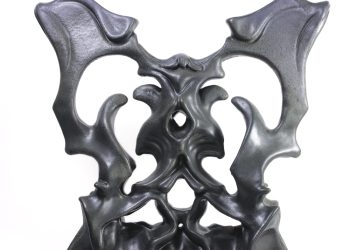
Beyond the works discussed above, the Award’s residency programme also recognises the practices of Trude Westby Nordmark, recipient of the Guldagergaard Residency Prize in Denmark, and Tomás Díaz Cedeño, awarded the Senter for Keramisk Kunst Residency Prize in Norway. Together with the other residency awards, these opportunities extend the exhibition beyond Milan, allowing artists to pursue further research, experiment with materials and processes, and develop new connections within the international ceramics community.
Katherina Perlongo (*1989 in Bolzano, Italy) is a Berlin-based curator working at the intersection of contemporary art, craft, and design. With experience in curatorial and leadership positions across institutions dedicated to modern and contemporary art, her practice focuses on materiality, making, and the narratives embedded in objects.
The 6th Officine Saffi Award, Forms of Belonging (September 30 – November 13, 2026) presents works by Marten H. Anderson (Germany); Mel Arsenault (Canada); Arun Baburaj (India); Jonathan Baldock (United Kingdom); Gianluca Brando (Italy); Soledad Christie (Chile); Phoebe Collings-James (United Kingdom); Tomás Díaz Cedeño (Mexico); Andile Dyalvane (South Africa); Sean Gerstley (USA); Benedikt Hipp (Germany); Cody Hoyt (USA); Samantha Kerdine (France); Pan Loong (China); Corwyn Lund (Canada); Gerald Mak (Hong Kong); Agalis Manessi (Greece); Takumi Morozumi (Japan); Antoine Moulinard (Belgium); Bisila Noha (Spain / Equatorial Guinea); Trude Westby Nordmark (Norway); Ornaghi & Prestinari (Italy); Marta Pierobon (Italy); Yaerin Pyun (Republic of Korea); Coline Rosoux (Belgium); Emily Stapleton-Jefferis (United Kingdom); Krzysztof Strzelecki (Poland); and Flávia Vieira (Portugal).
Subscribe to Ceramics Now to read similar articles, essays, reviews and critical reflections on contemporary ceramics. Subscriptions help us feature a wider range of voices, perspectives, and expertise in the ceramics community.
Captions
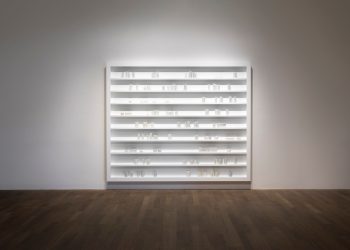
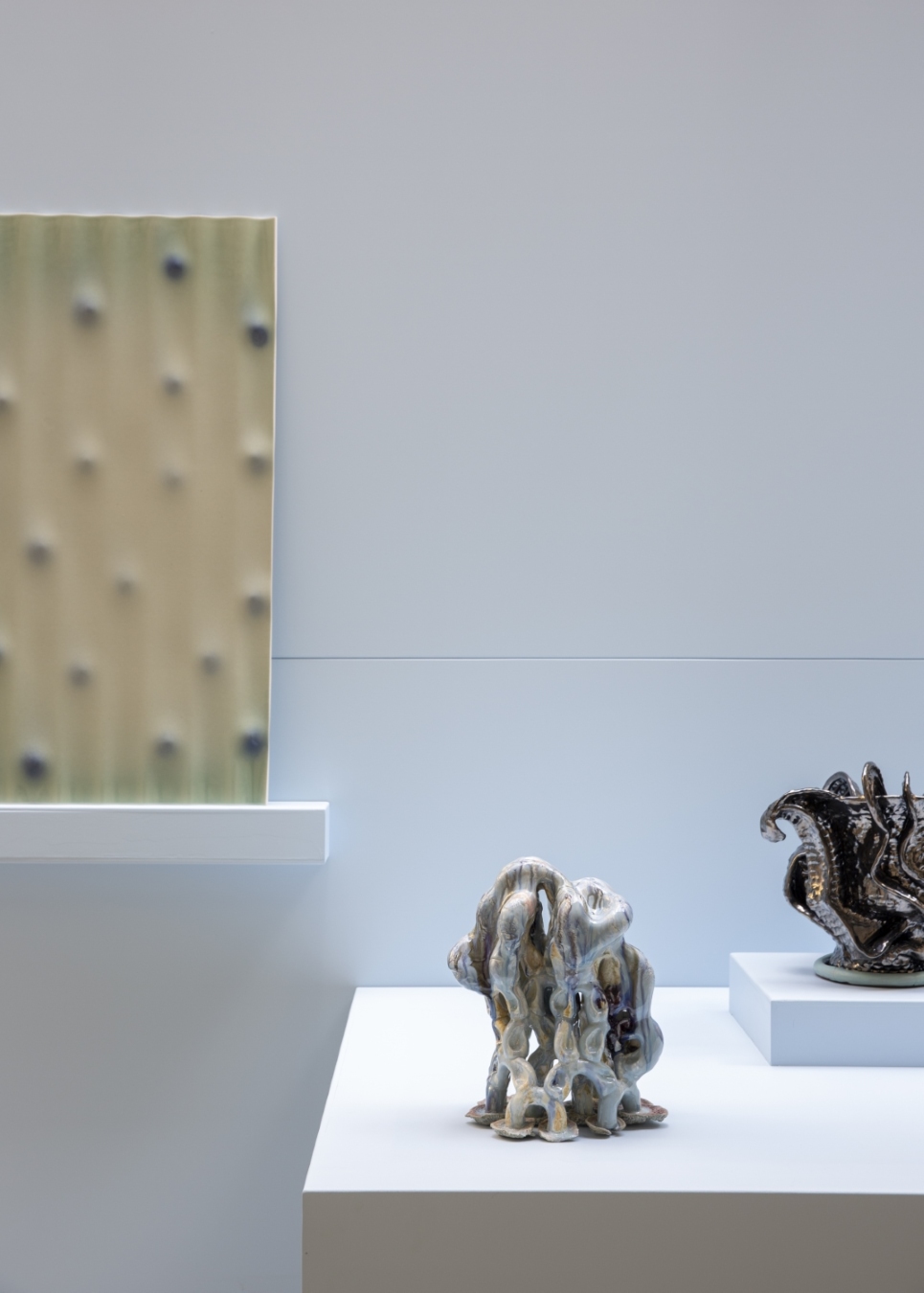
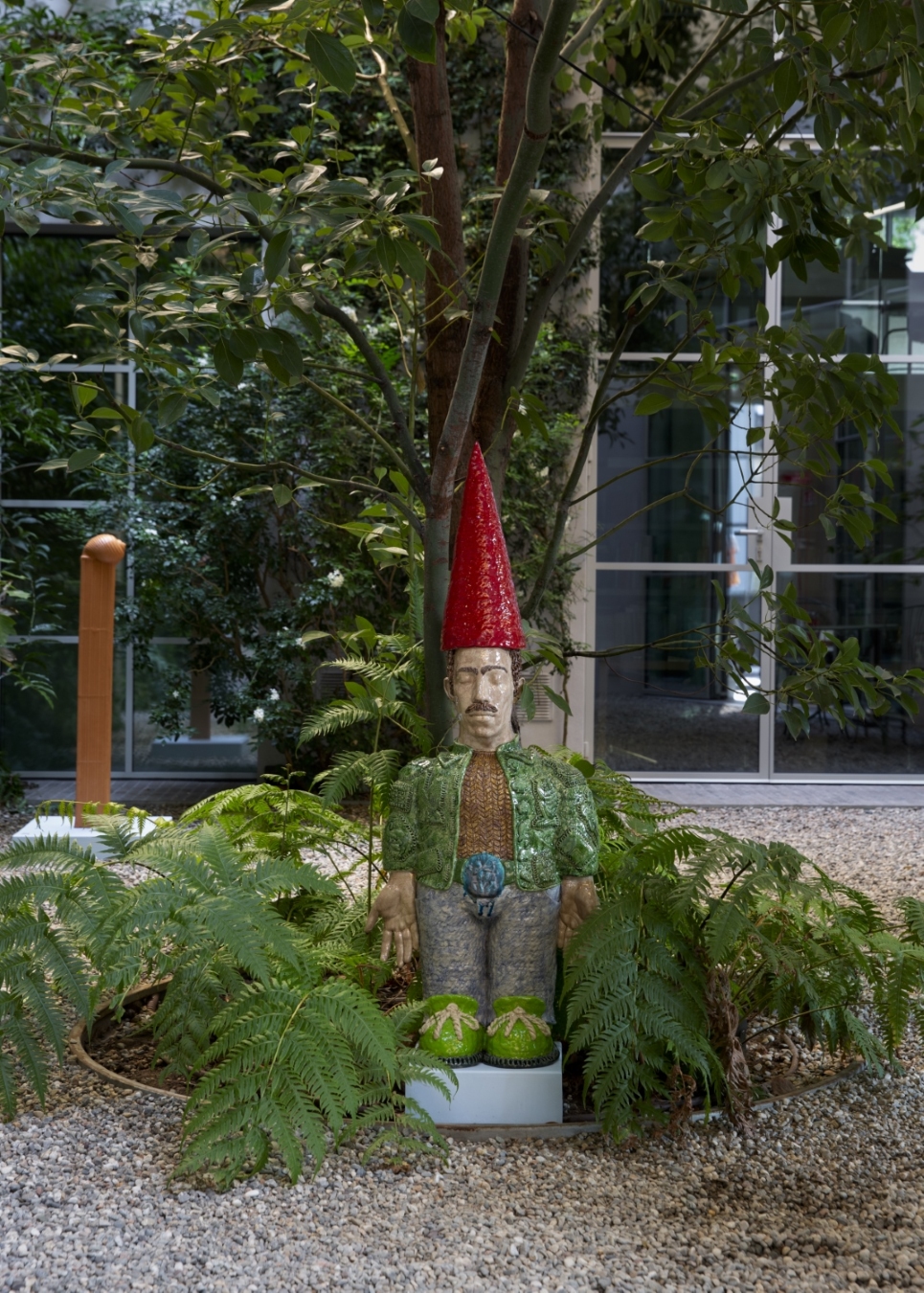
- Installation views, Officine Saffi Award 6 exhibition “Forms of Belonging” at Fondazione Officine Saffi, from 30th September to 13th November 2026, ph. Alessandra Vinci, courtesy Fondazione Officine Saffi
- Jonathan Baldock, It’s My House, and I Live Here, 2025. Courtesy Fondazione Officine Saffi
- Samantha Kerdine, L’étreinte (The Embrace), 2026. Courtesy Fondazione Officine Saffi
- Gerald Mak, Over Persimmon and Tea, 2026. Courtesy Fondazione Officine Saffi
- Ornaghi & Prestinari, Uscire dal guscio (To Come Out of One’s Shell), 2026. Courtesy Fondazione Officine Saffi
- Agalis Manessi, It’s Behind You, 2024. Courtesy Fondazione Officine Saffi
- Marten Anderson, Held Together, 2026. Courtesy Fondazione Officine Saffi
- Mel Arsenault, And All This Time We Were in Heaven, 2026. Courtesy Fondazione Officine Saffi
- Cody Hoyt, (Untitled) Landscape Drawing Vessel, 2026. Courtesy Fondazione Officine Saffi
- Pan Loong, Leaves, 2022-ongoing. Courtesy Fondazione Officine Saffi
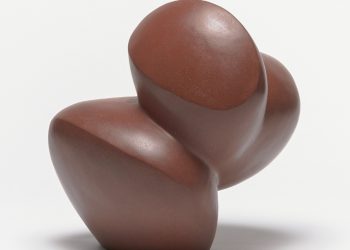
- Takumi Morozumi, Abystrata, 2025. Courtesy Fondazione Officine Saffi
- Krzysztof Strzelecki, Labour IV – The Erymanthian Boar and the Death of Chiron, 2025. Courtesy Fondazione Officine Saffi
- Marta Pierobon, Cecilia #2 (Las Meninas), 2026. Courtesy Fondazione Officine Saffi
- Bisila Noha, Baney B60, 2025. Courtesy Fondazione Officine Saffi
- Phoebe Collings-James, The Infidel, 2025. Courtesy Fondazione Officine Saffi
- Andile Dyalvane, I Thwasa, 2024. Courtesy Fondazione Officine Saffi
- Trude Westby Nordmark, Ecdysis 6, 2024. Courtesy Fondazione Officine Saffi
- Tomás Díaz Cedeño, Columna, 2025. Courtesy Fondazione Officine Saffi