



Takeda Asayo: Sculpturesque Purse, 2009, Cotton, leather, 19” x 17” x 3”
/ Keiko Gallery - Japanese artists
design
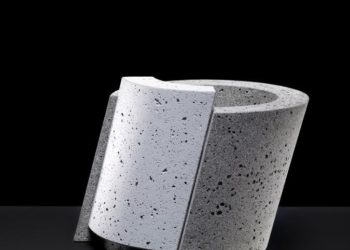
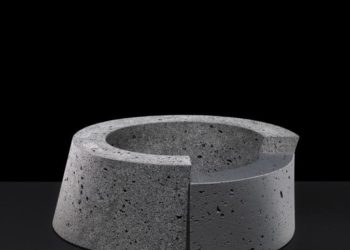
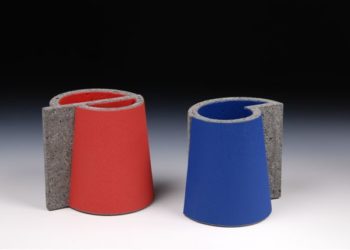
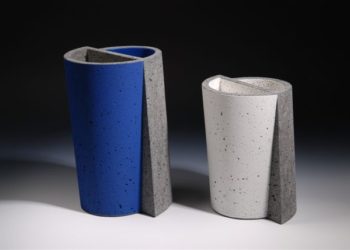
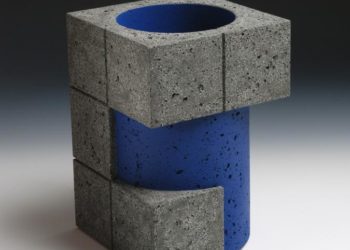
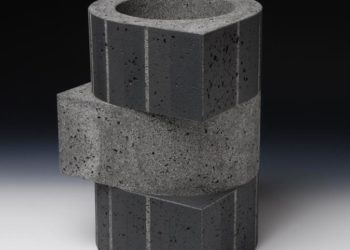
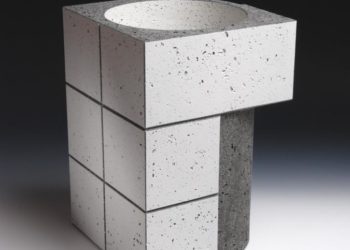
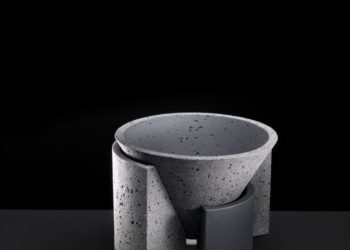
Corner Series by Wim Borst, Meesterlijk - Design and Craft

Corner Series by Wim Borst at Meesterlijk / RAI Amsterdam, Hall 9 stand 39
24 September - 2 October 2011
Meesterlijk presents designers and craftsmen who elevate ordinary utensils, objects, furniture and accessories to icons with timeless allure. This extraordinary quality of Dutch designers, to combine the esthetic with the practical, has been known worldwide for ages.
Meesterlijk strives to strengthen the bond between modern design and craftsmanship. At the fair designers and manufacturers of handmade products will be standing shoulder to shoulder with the practitioners of traditional crafts, such as jewelry making and woodcarving. Unique furniture and other products are for sale, such as glass, metal and ceramic objects and also fashion accessories, such as tailor made shirts, shoes (ladies and gentlemen’s), hats, bags, jewelry etc.
The fair takes place in the same building and at the same time as Woonbeurs Amsterdam, the largest event on living, interior and garden of The Netherlands.
Opening times:
Saturday, Sunday, Tuesday, Wednesday: 10.00 - 18.00 h
Thursday and Friday 10.00 - 22.00 h
Monday 26 September only open for invited professionals.
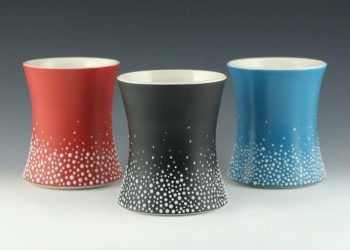
Wim Borst Ceramics - View Wim Borst’s profile on Ceramics Now Magazine.
Jan Bontelaan 6, 2015 EH Haarlem. Tel: +31(0)23 524 87 97
info@wimborst-ceramics.nl, www.wimborst-ceramics.nl
Interview with Claire Muckian - Artist of the month, September 2011
Interview with ceramic artist Claire Muckian - Artist of the month, September 2011
→ Subscribe to our monthly newsletter if you want to receive news and interviews with ceramic artists.
Ceramics Now Magazine: You are a very young and talented ceramic artist. Can you tell us what was your first experience with ceramics?
Claire Muckian: Thank you, but I’m not that young actually. I studied art in school, liked it very much but never considered it as a possible career. After many years training and working in various environmental management roles, I began to realise how much I missed making art. So, I returned to the University of Ulster in Belfast to do the BA Fine and Applied Arts with a view to specialising in drawing. There, I had a brief introduction to clay, which I had never used before and had an instant connection with it as a material. I loved how malleable it was and how you could so easily transfer a quality of touch during making. I viewed it as an extension of my drawing practice. So, I made an impulsive decision to specialise in ceramics for my Degree after that.

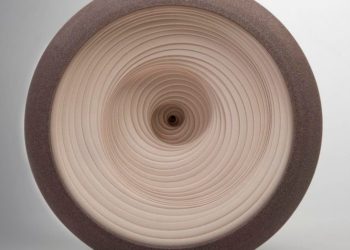
Turbine, porcelain - View her works
Constructing using hand-building techniques give your works a sense of delicacy and lightness. How do you make your works? Tell us more about the process.
As I mentioned before, I enjoy making where I can transfer a sensitivity of touch to the material. It is important for me that the sculptures maintain a certain immediacy, vibrancy, and vulnerability that can be achieved easily with drawing, but that tends to be lost when making 3-dimensional work. I think this is the case with ceramics in particular, where so much time and processes are involved. I predominantly choose hand-building techniques such as pinching and coiling so you can build quickly and loosely. I’m not so interested in the perfect surface and I like to achieve an appearance of the handmade. I like the texture of hammered metal and to leave holes and marks like fingerprints. This gives the work an unfinished aesthetic that adds energy and immediacy to what are seemingly primitive works but that still feel fresh and relevant.
I wish to heighten the viewer’s awareness of space, air and silence. I am interested in the viewer’s experience and response to objects, particularly the handmade object. I believe that the viewer finishes these forms off in their mind and participates in their making to a certain degree.
Chris Wight
Chris Wight’s profile on Ceramics Now Magazine - View his works
“When working with bone china for the first time I was struck by its pure whiteness, ability to take on fine detail and its astonishing translucence. This light responsive property, that enables bone china to switch between translucent and opaque states - gradually or instantaneously - as light changes around it, continues to be a major source of fascination.
Providing a subconscious inspiration for many pieces is my interest in the patterns, textures, shapes and forms found in nature - often and in particular, the ‘tiny worlds’ seen under a microscope or through a macro lens. In addition to these themes, I continue to develop a small strand of works that focus on ‘iconic’ objects from my own childhood.
Bone china has many testing characteristics for a maker - an in-flexible ‘body’ prone to crumbling when worked, an inability to be wheel-thrown and a propensity to collapse or bend when firing. Add to these a very keen ‘clay memory’, a trait that causes repaired splits and stresses to reappear again once fired and you inevitably face high loss rates in production. For this reason most ceramicists avoid using bone china. However, through time I have come to understand the nature of the clay and I now relish the constant challenges it presents. Still, a tension exists between the clay’s constraints and my intent as an artist to counter or exploit them in order to reveal its inherent beauty and demonstrate its perhaps unexpected versatility.
To capitalize on the allure of bone china I adopt ‘high-risk’ techniques - often unconventional, certainly against traditional good practice - which push the clay to its very limits. Intuition allied with experience is relied on to make a successful piece. New technologies like water-jet cutting brought together with long-established ceramic processes make possible the creation of works significantly greater in height and volume whilst crucially keeping the ceramic thin enough to retain delicacy and translucence. I routinely combine traditional and modern approaches whilst attempting to push back the boundaries and to redefine the perception of bone china as something more than simply the sole preserve of fine tableware.” Chris Wight


