By Monica Monaia
Come, let’s commune together.
Andile Dyalvane
Before clay becomes vessel, sculpture, or form, it is earth. It is the ground beneath our feet, the material from which objects have been shaped across cultures and continents. It precedes borders and disciplines, linking humanity through shared acts of making, care, and survival. In this sense, clay is not simply a medium but a common ground, an ancestral matter that holds memory, continuity, and relation. Yet materials do not speak on their own. How clay is understood, framed, and valued depends on the perceptual frameworks through which it is encountered.
How we look at art is never neutral. Vision is shaped by inherited structures, disciplinary habits, and historical power relations that determine what is seen, how it is interpreted, and what remains invisible. For much of its history, art from the African continent has been approached through Western epistemologies that often isolated objects from their cultural, spiritual, and relational contexts. Meaning was extracted, translated, and stabilised according to external categories, while other ways of knowing – embodied, communal, cosmological – were marginalised or dismissed.
Contemporary African artists are challenging this legacy, not only through what they make, but through how their work asks to be encountered. Rather than presenting objects to be deciphered, their practices call for forms of attention grounded in listening, sensing, and relational presence. This shift demands a parallel transformation in curatorial and critical approaches: a willingness to loosen singular modes of seeing and to engage artworks on their own cultural and ontological terms.
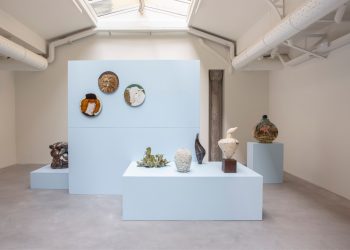
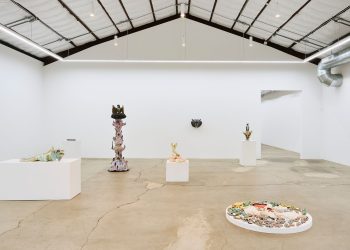
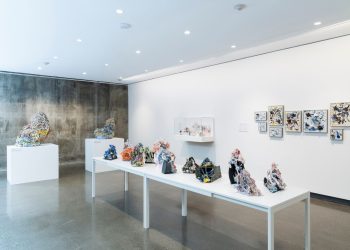
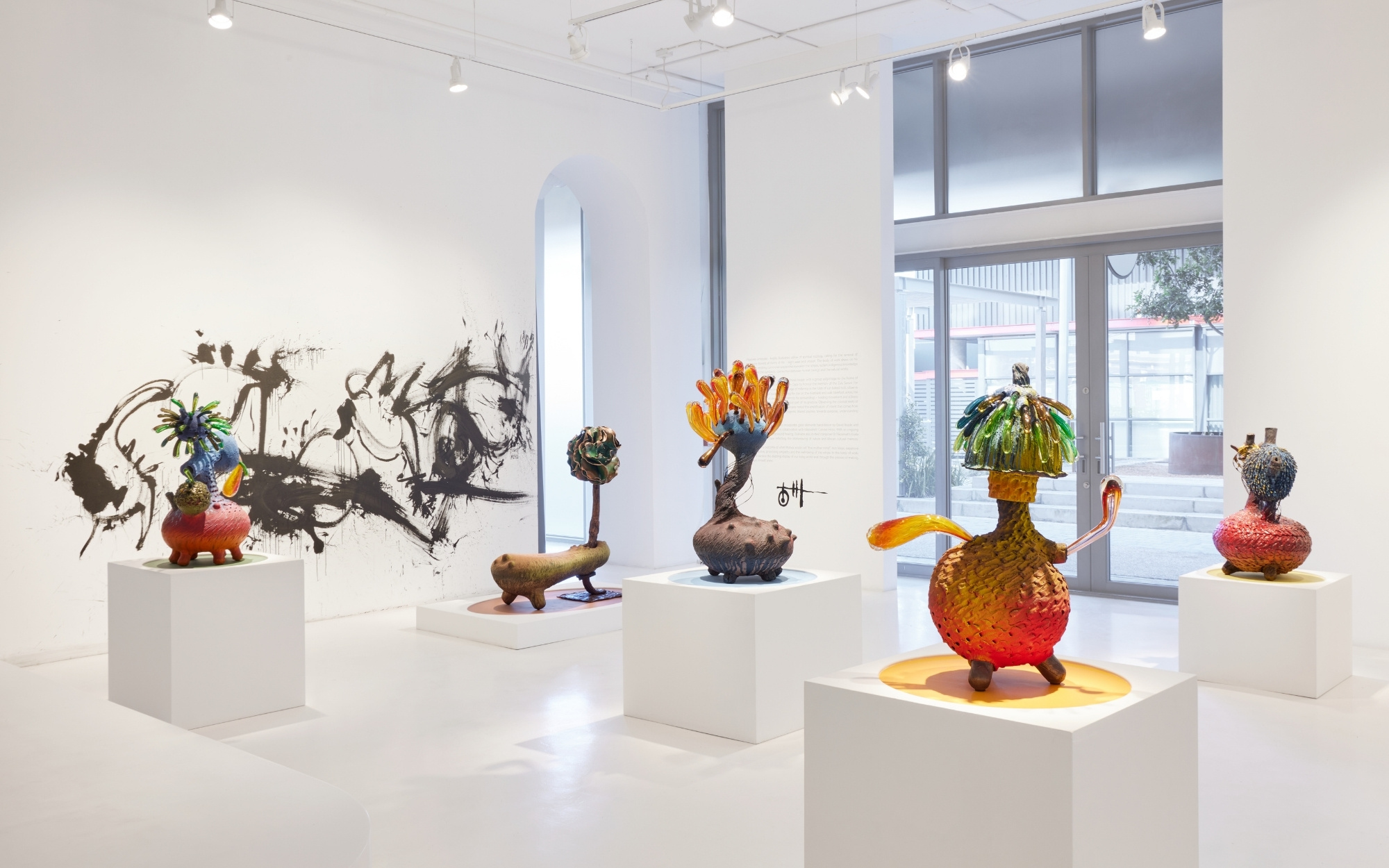
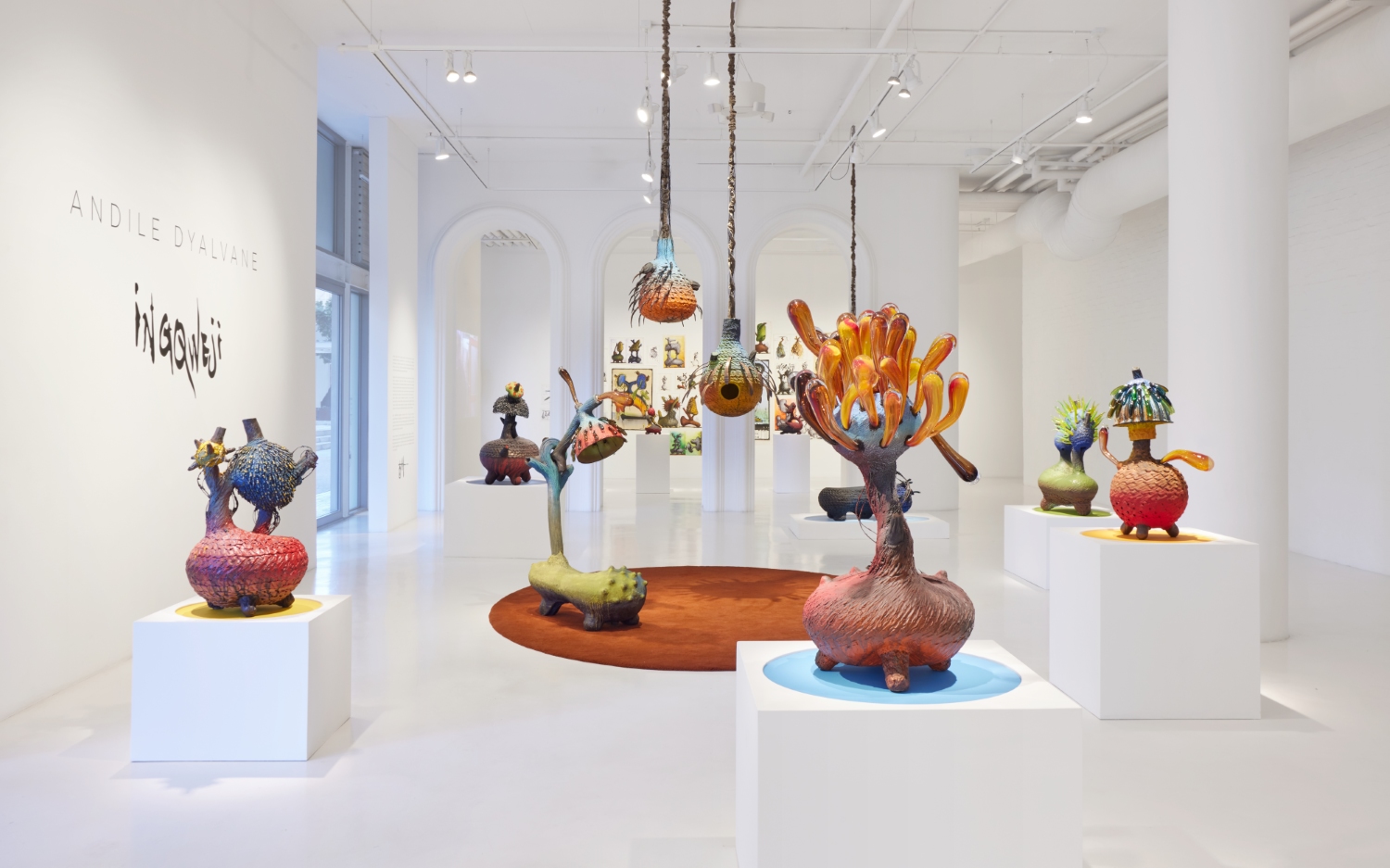
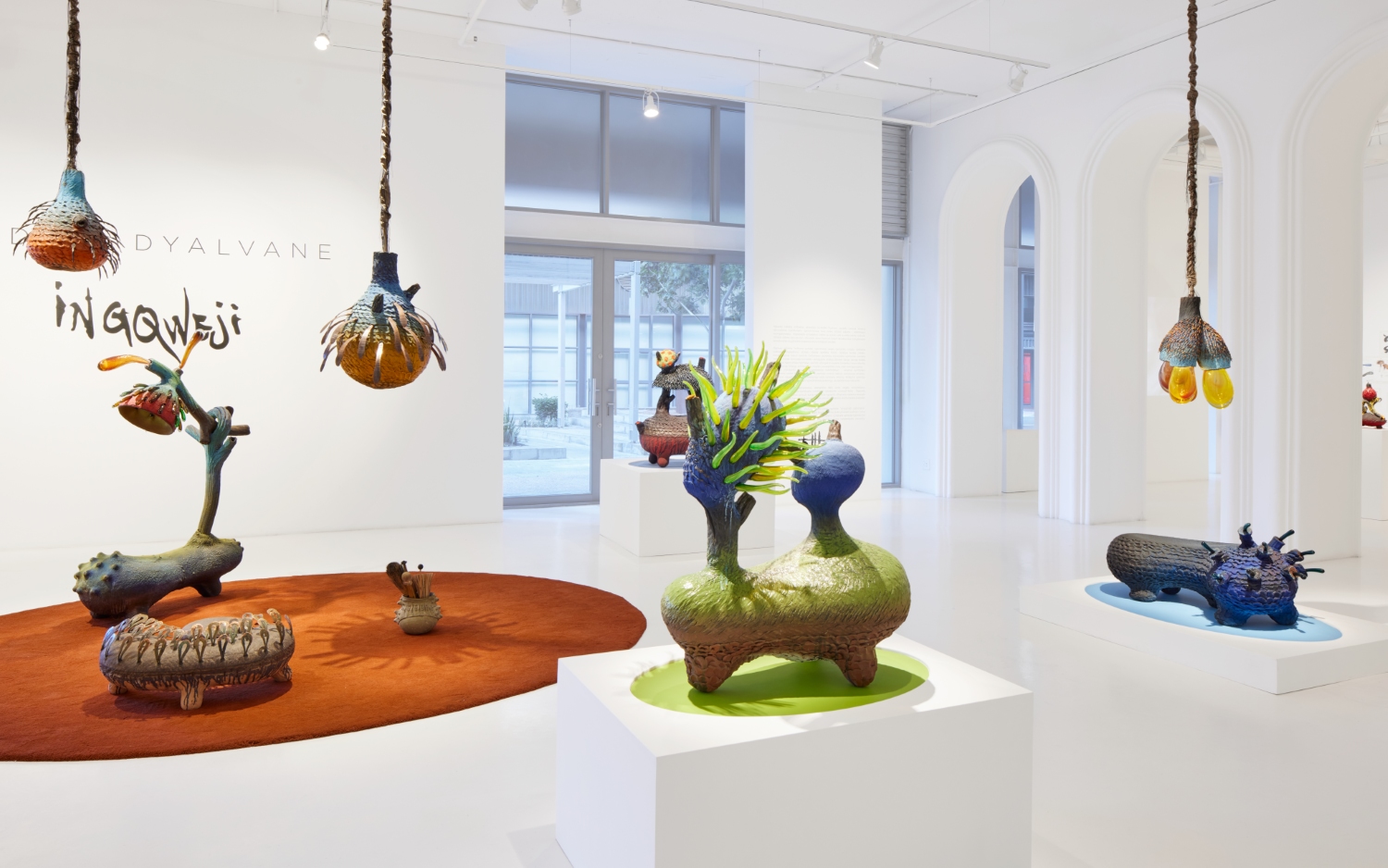
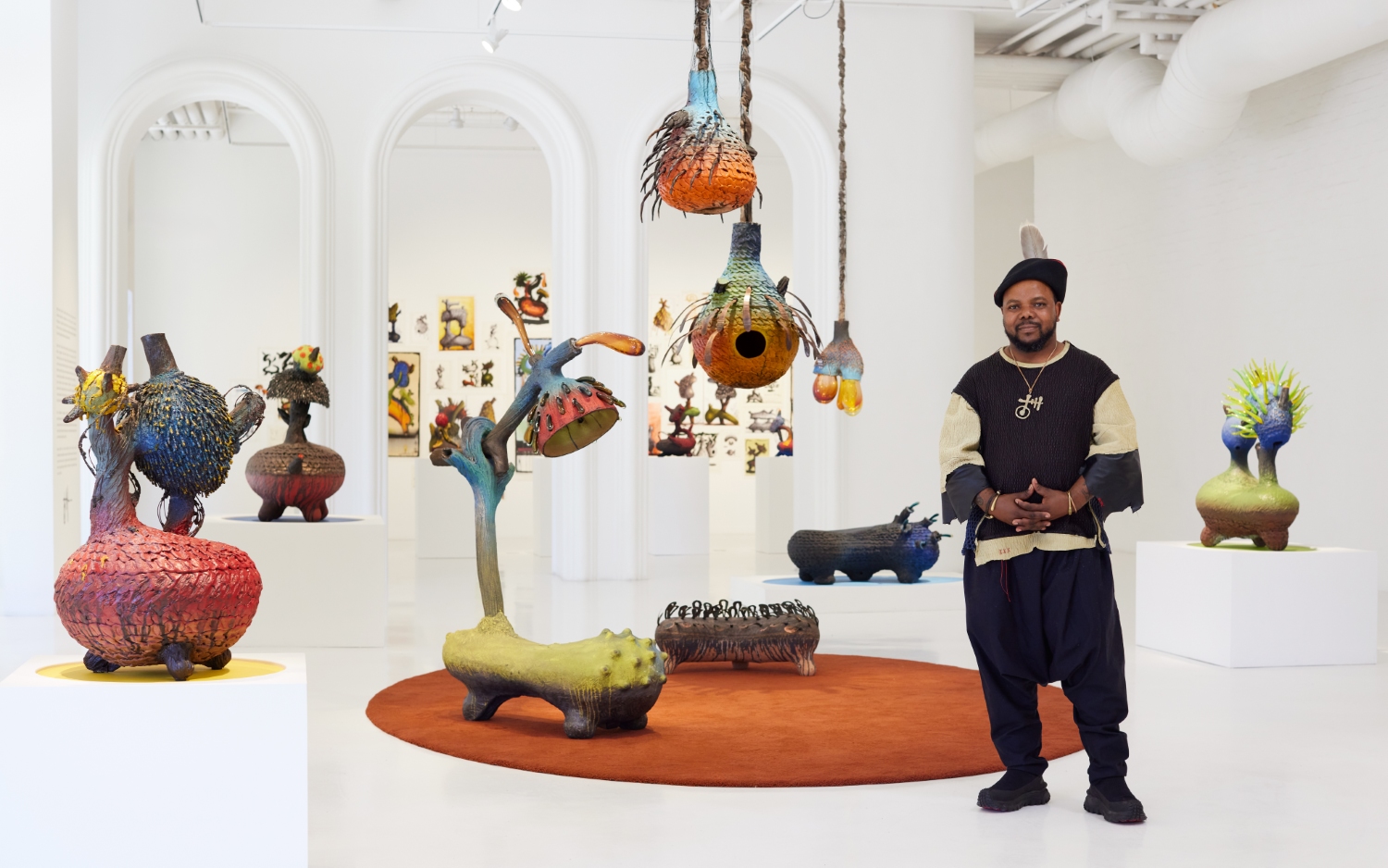
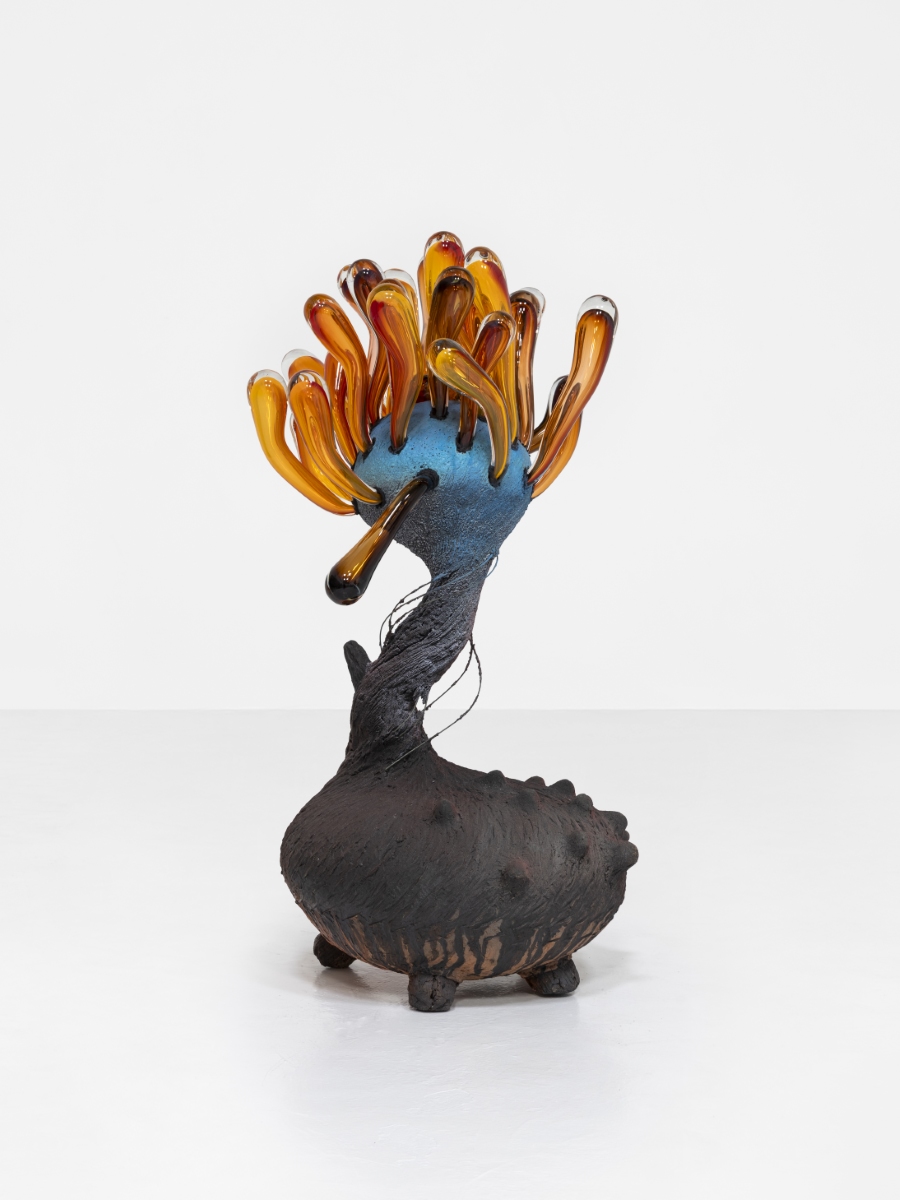
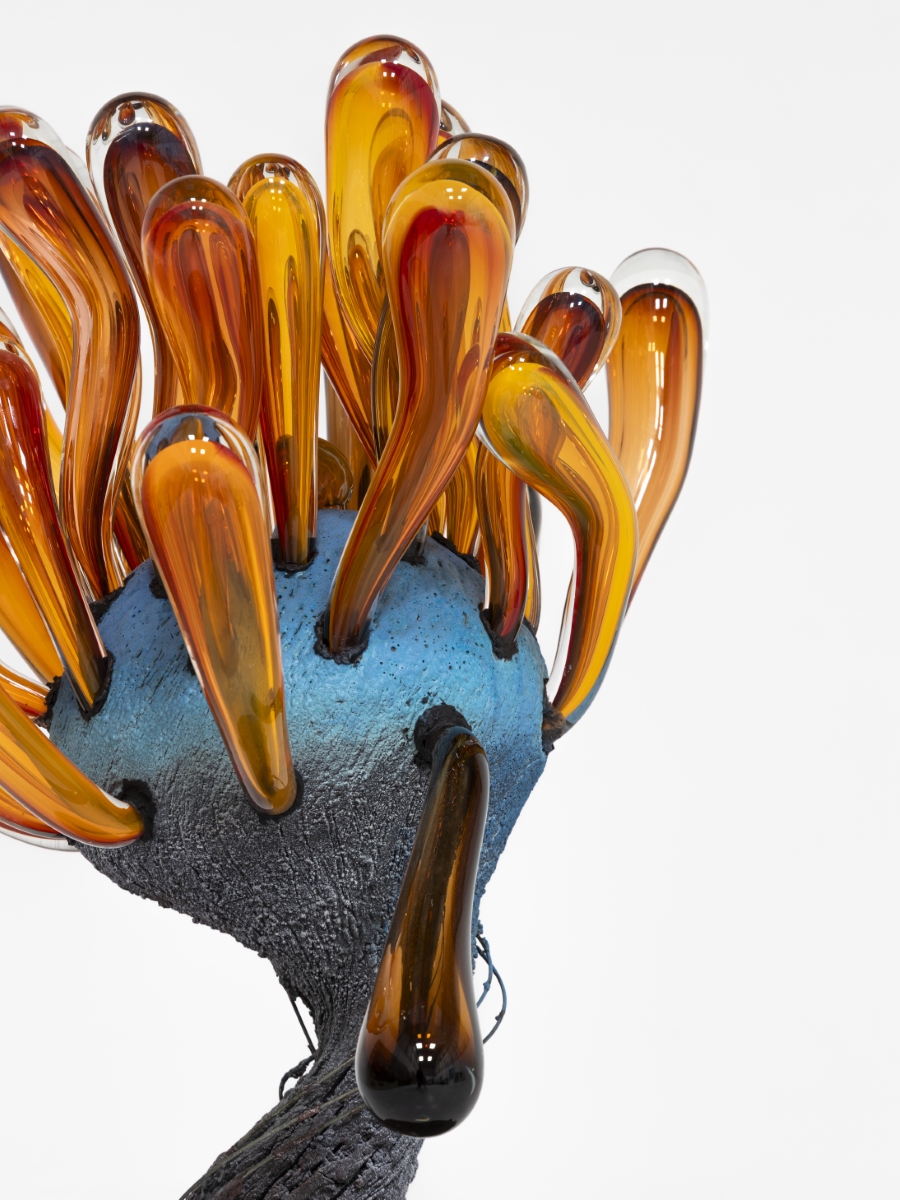
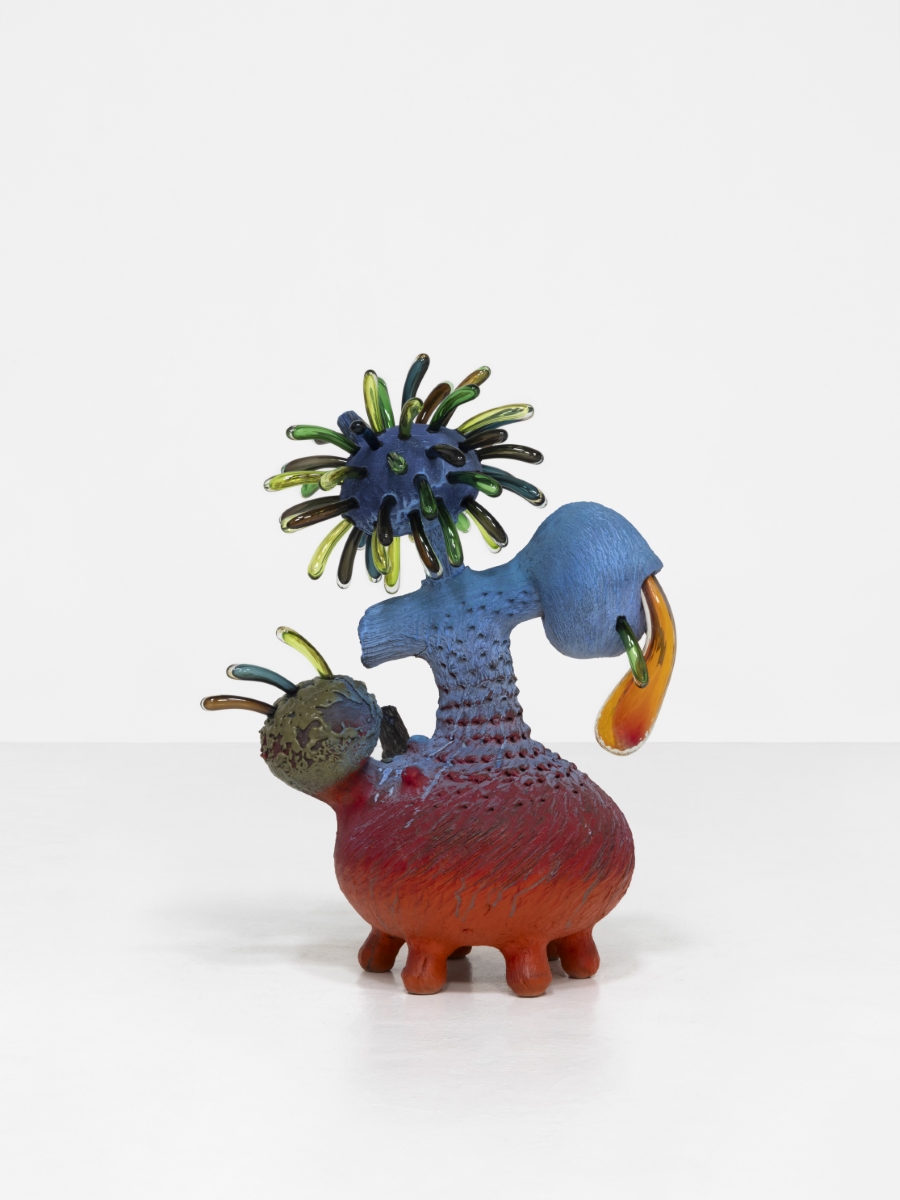
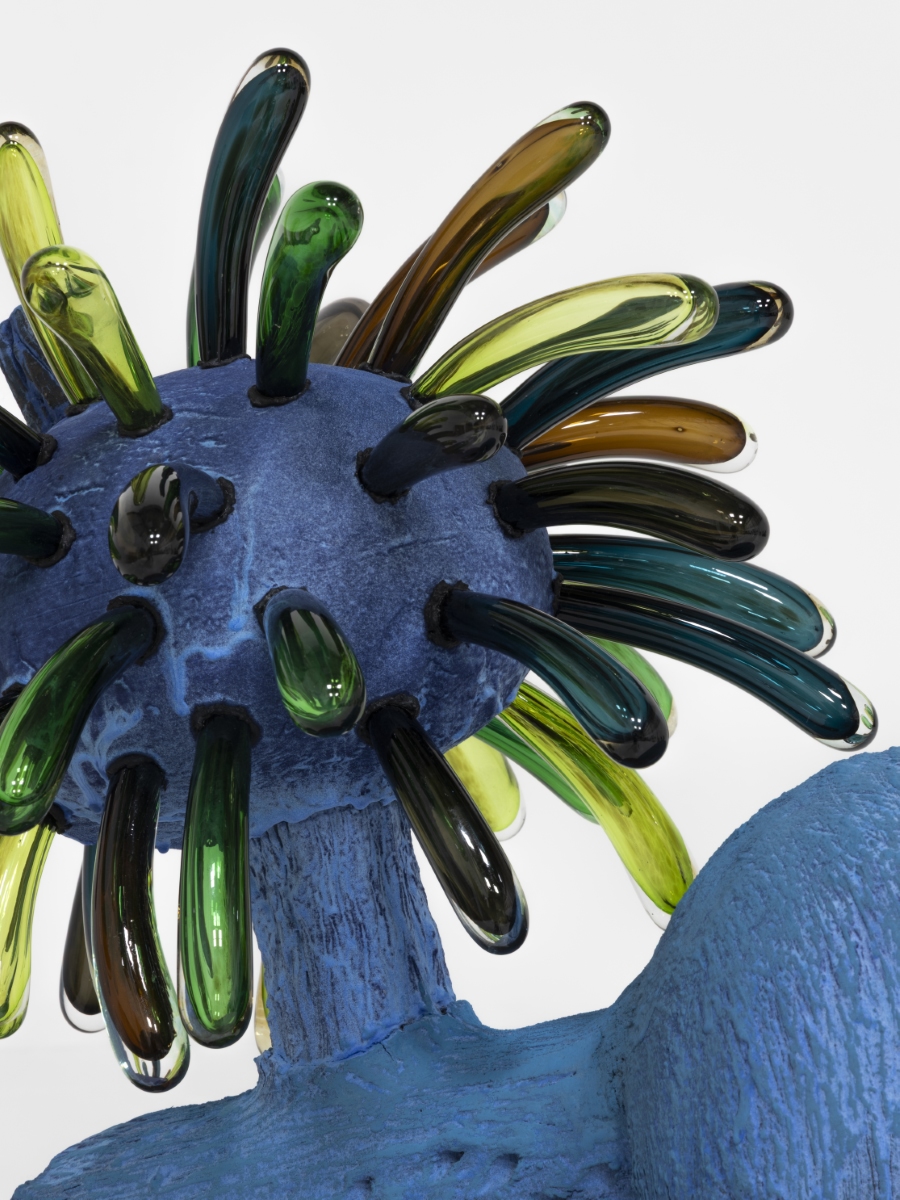
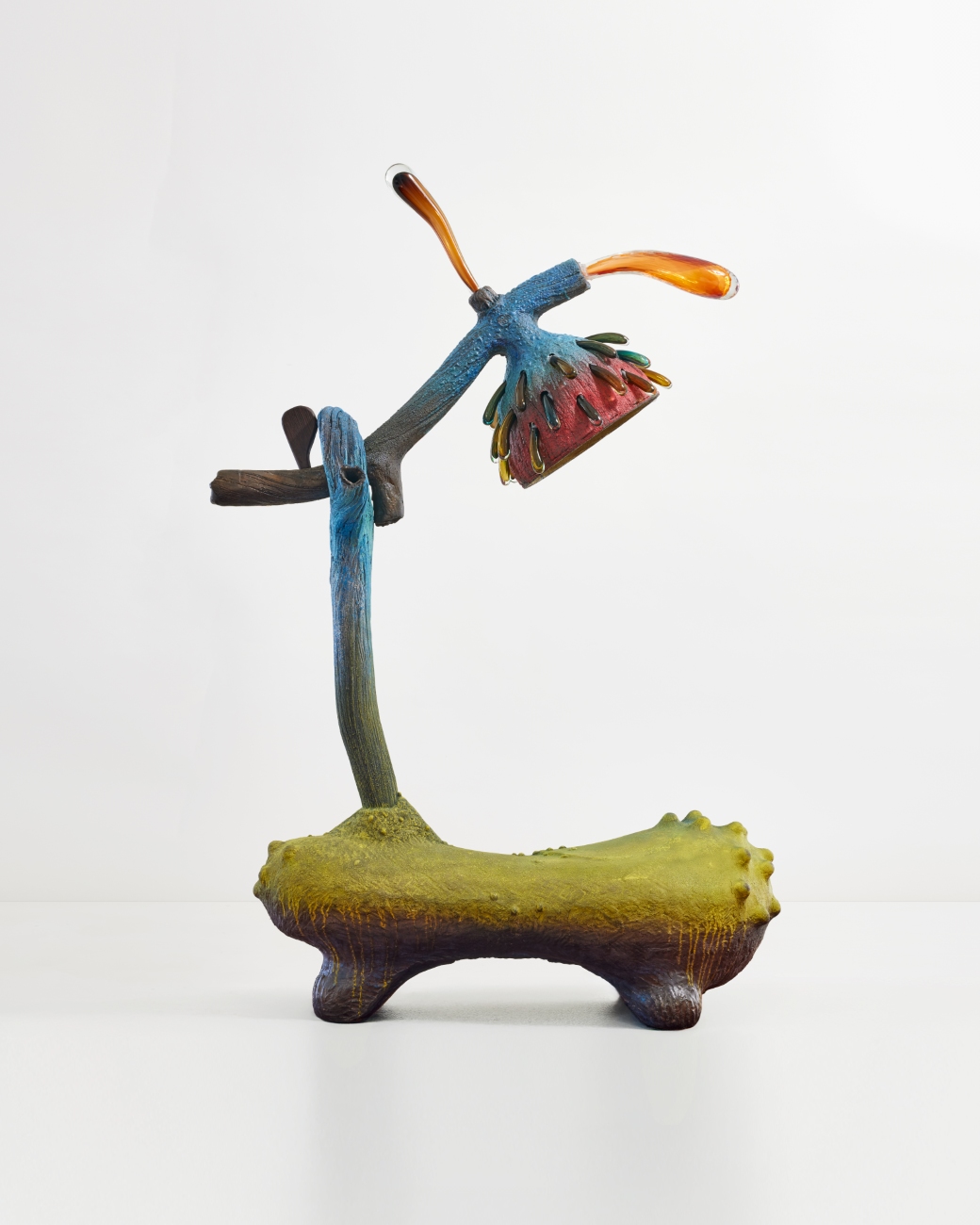
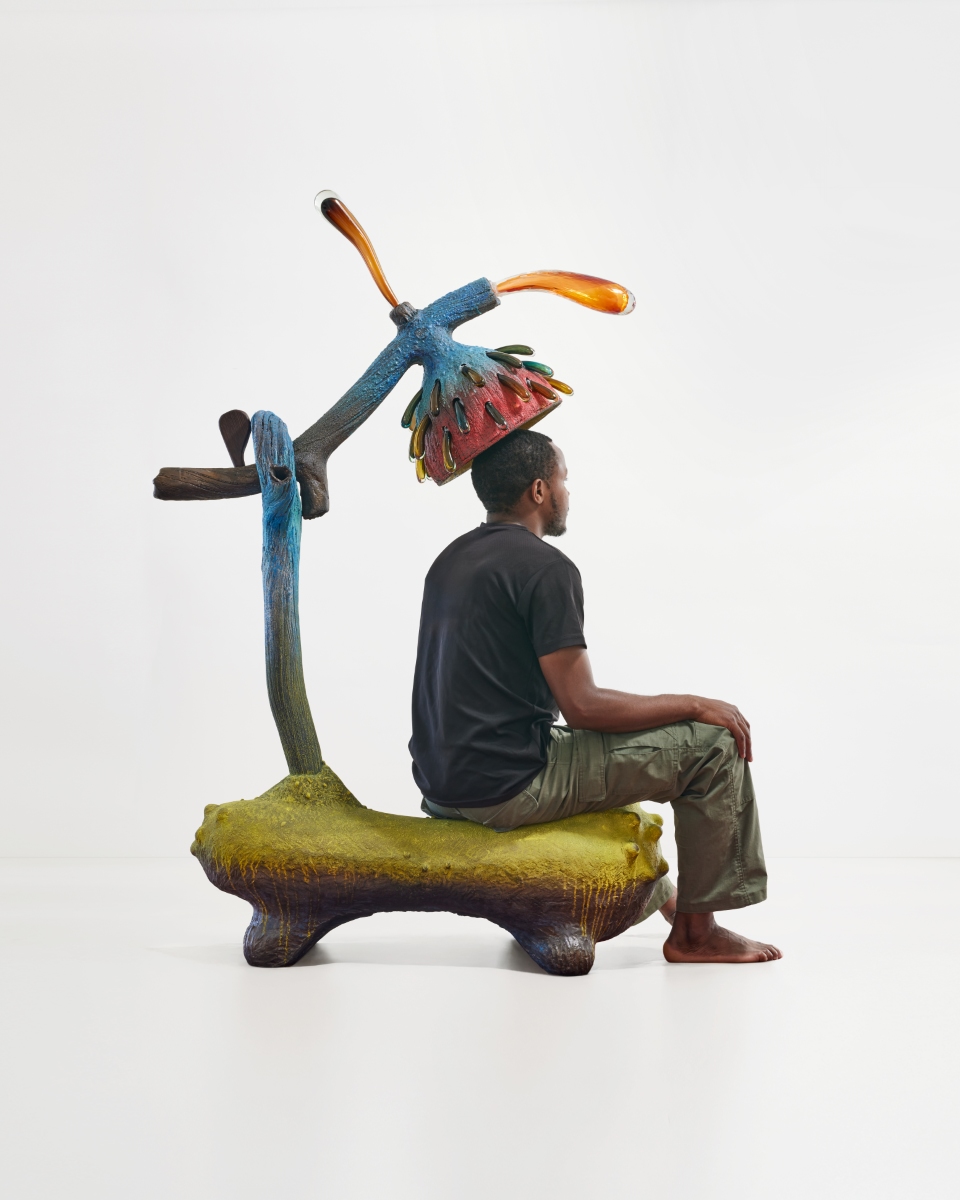
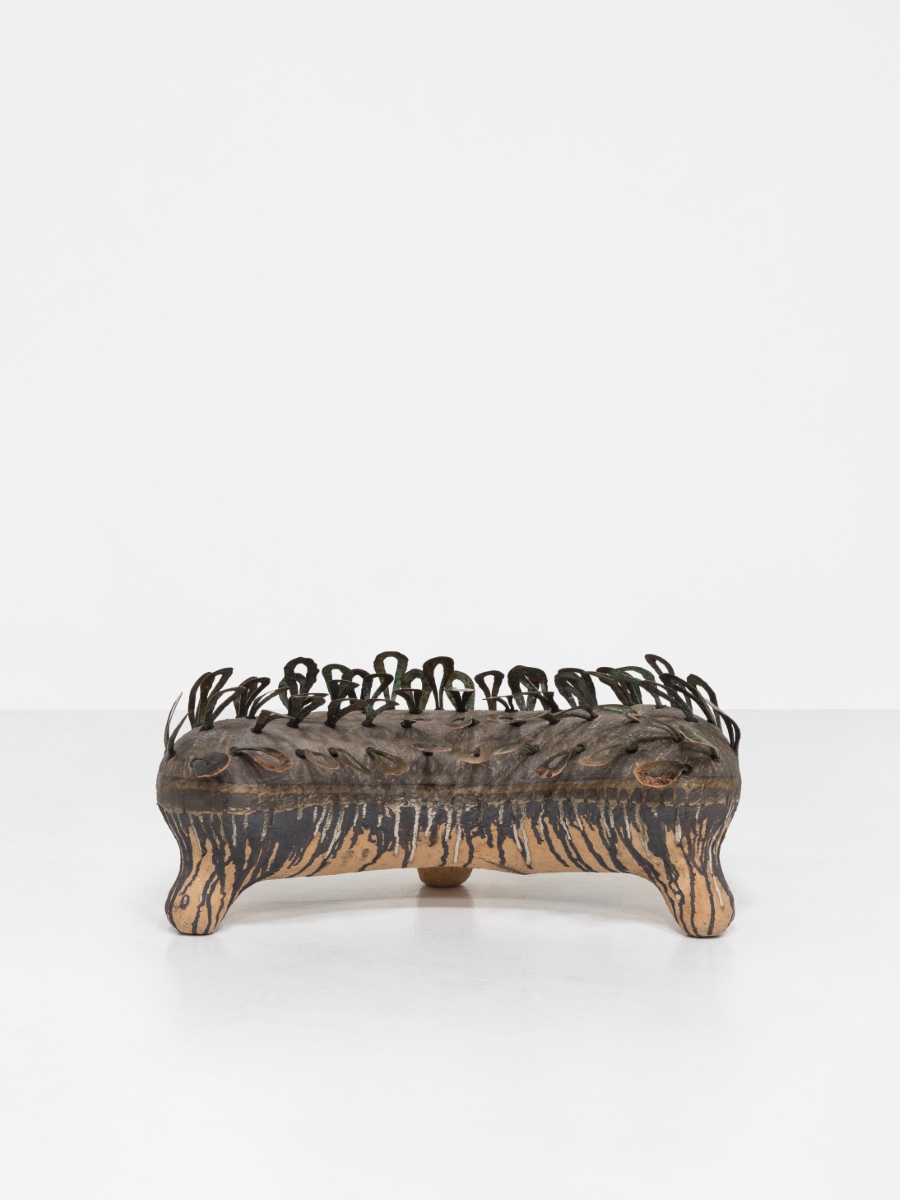
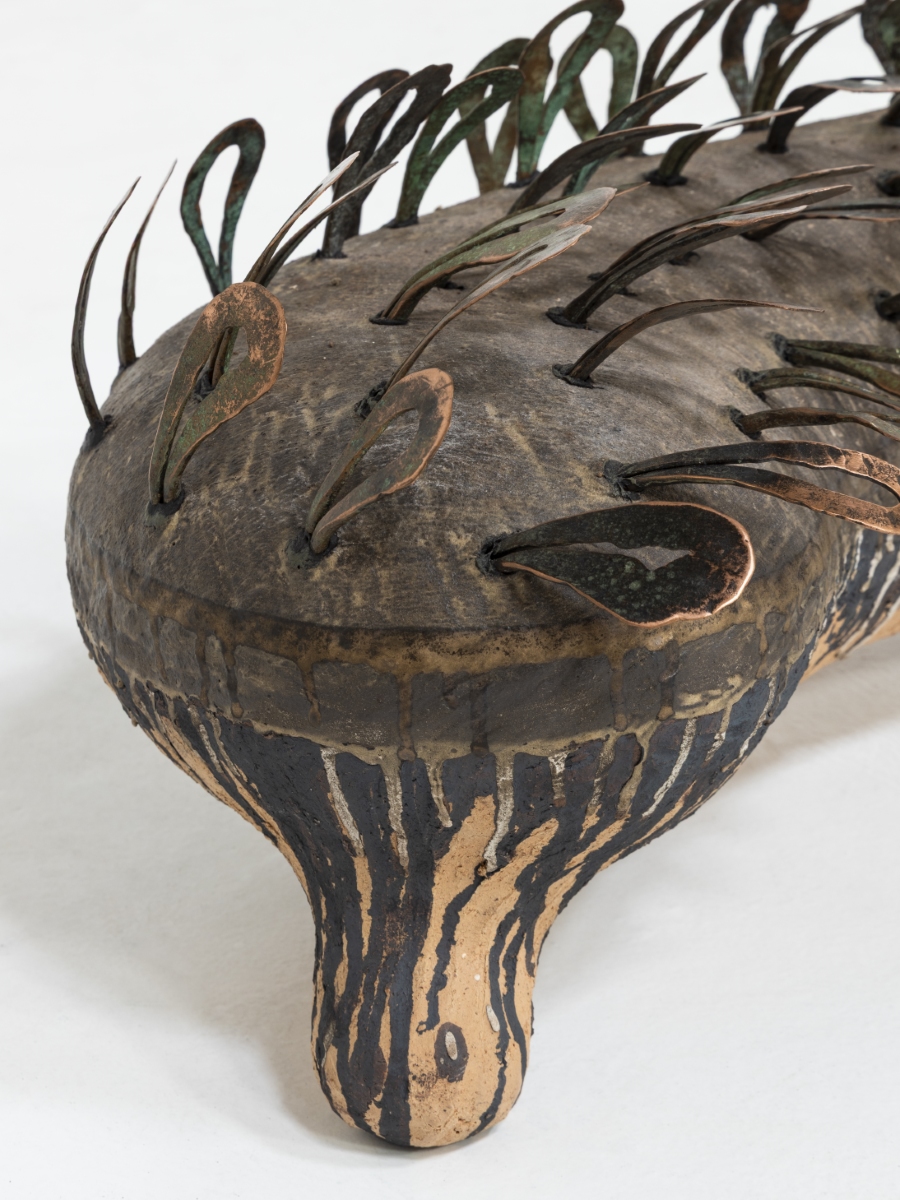
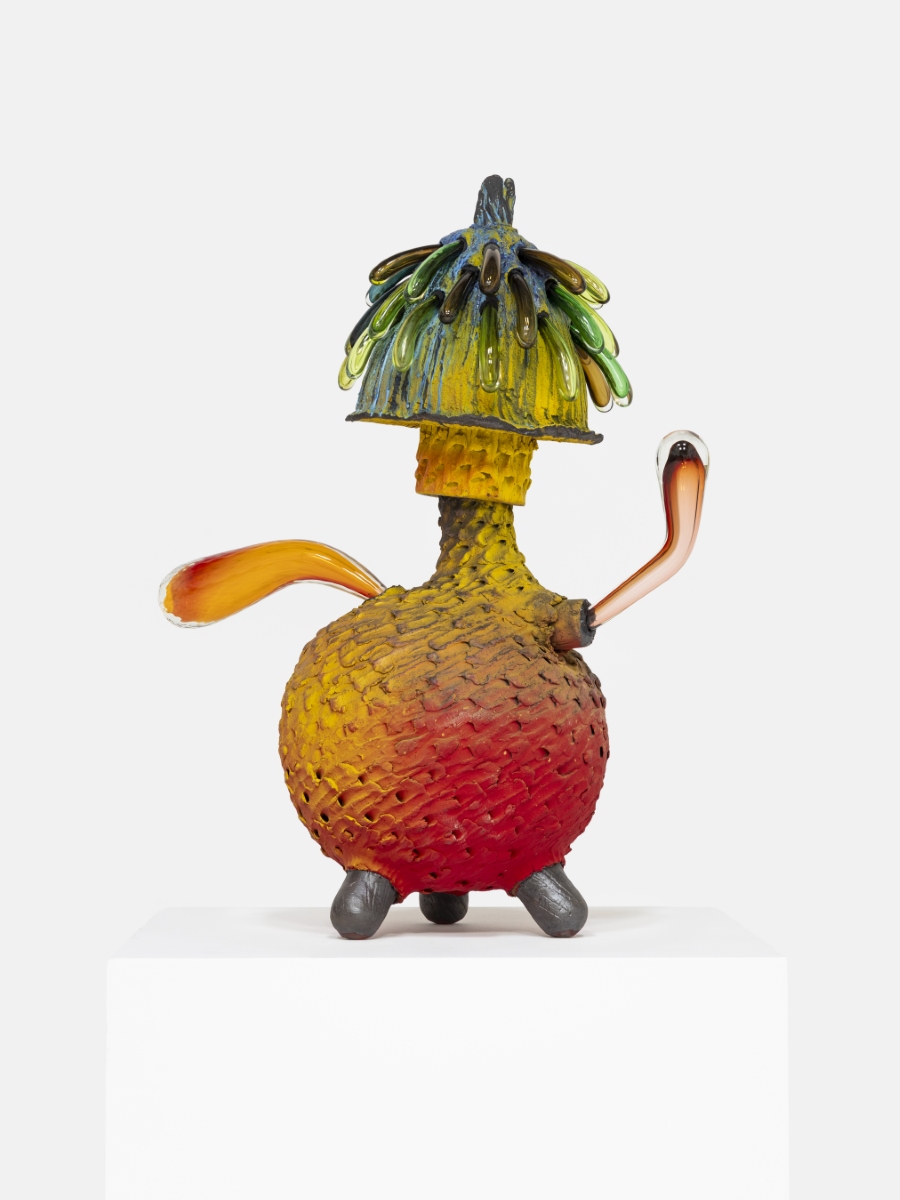
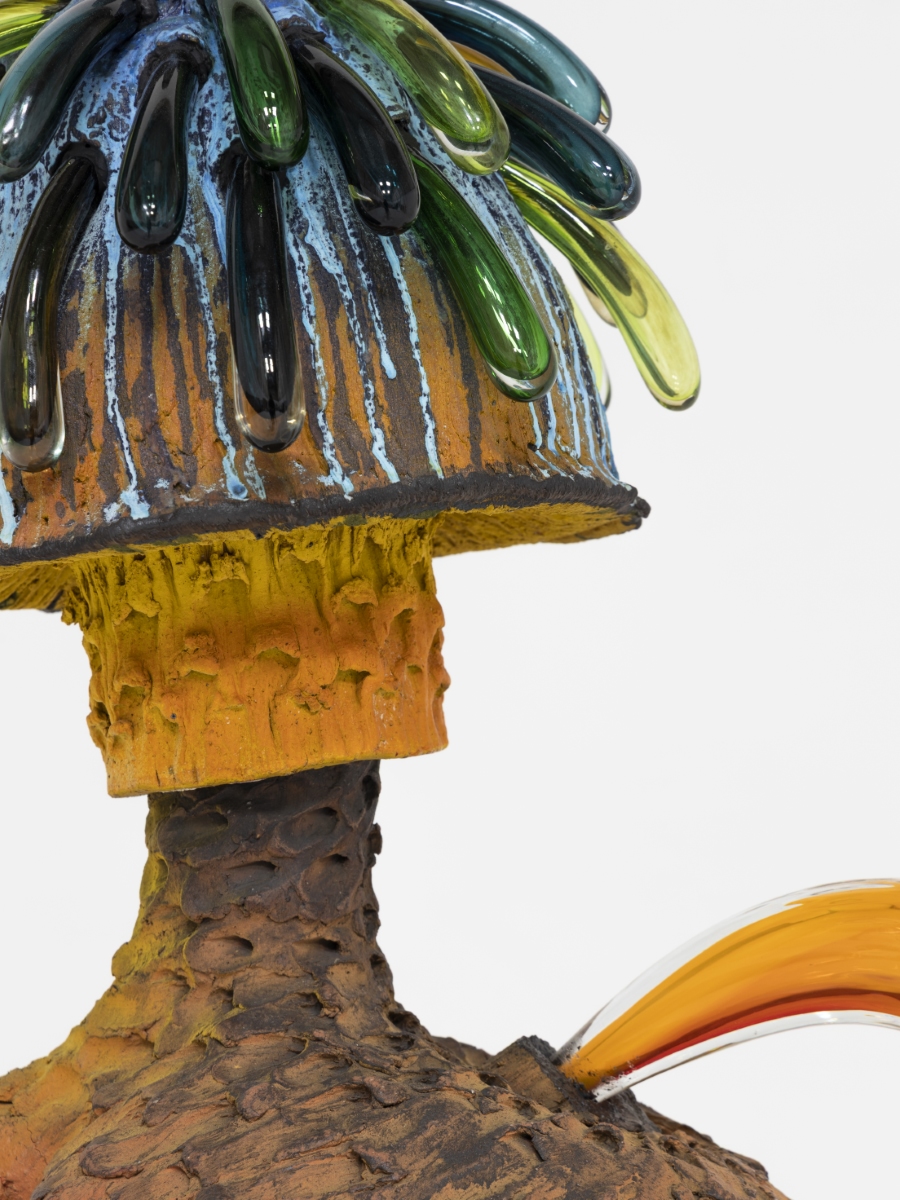
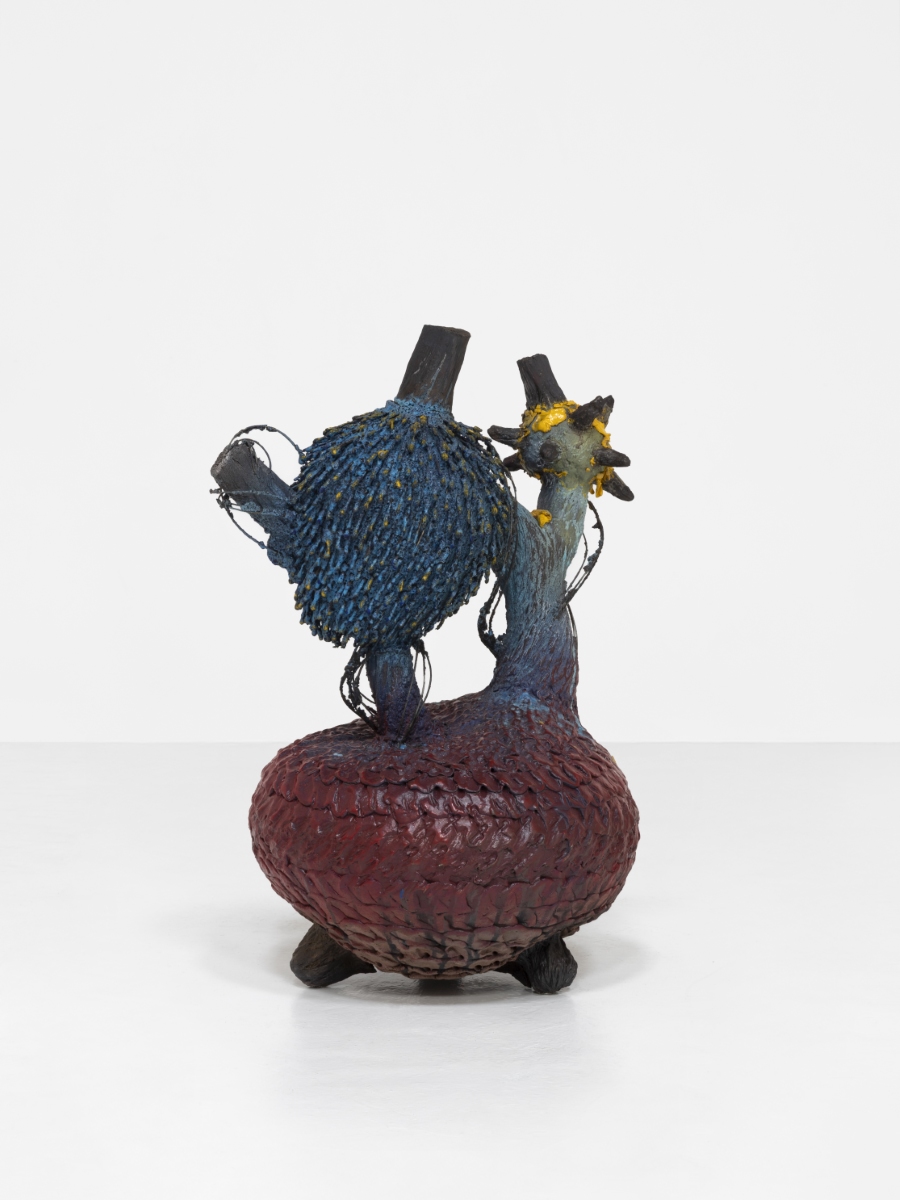
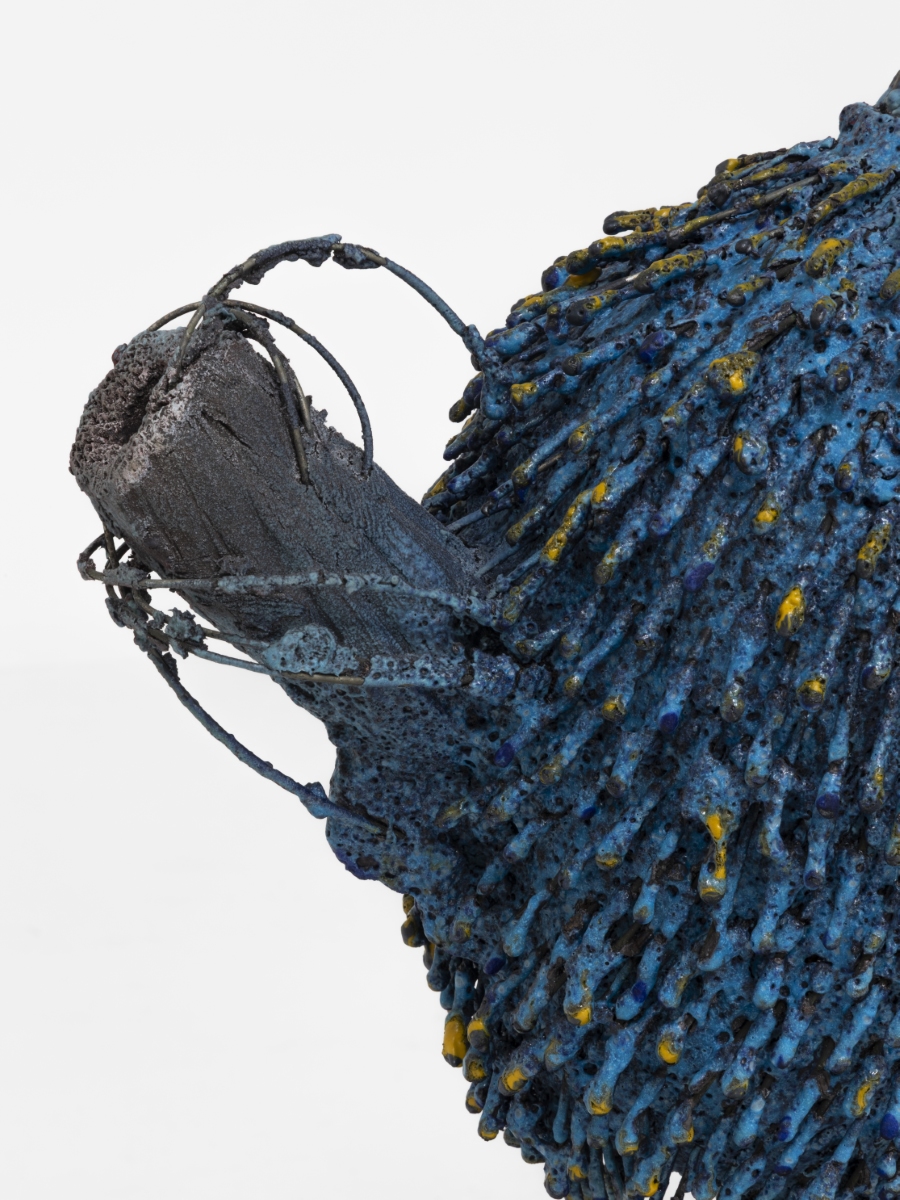
It is within this context that Andile Dyalvane’s exhibition iNgqweji takes place. Installed at Southern Guild in Cape Town from 22 November 2025 to 29 January 2026, iNgqweji (“bird’s nest” in isiXhosa) reveals a ceramic landscape shaped by deserts, forests, and caves. Organic forms extend throughout the space, animated by saturated colours and richly worked surfaces. The exhibition brings ceramics into dialogue with free-blown glass, hand-forged copper, light, and sound, through collaborations with composer Dr Nkosenathi Koela, glassblower David Reade, and blacksmith Conrad Hicks.
Process, Material, and Relation in iNgqweji
The exhibition’s point of departure lies not in the studio, but in a pilgrimage. To honour the legacy of Credo Mutwa – a Zulu traditional healer whose teachings sought to restore precolonial cosmologies after centuries of colonial erasure – Dyalvane travelled with fellow practitioners across the Karoo to Mutwa’s home in Kuruman, in the Northern Cape.
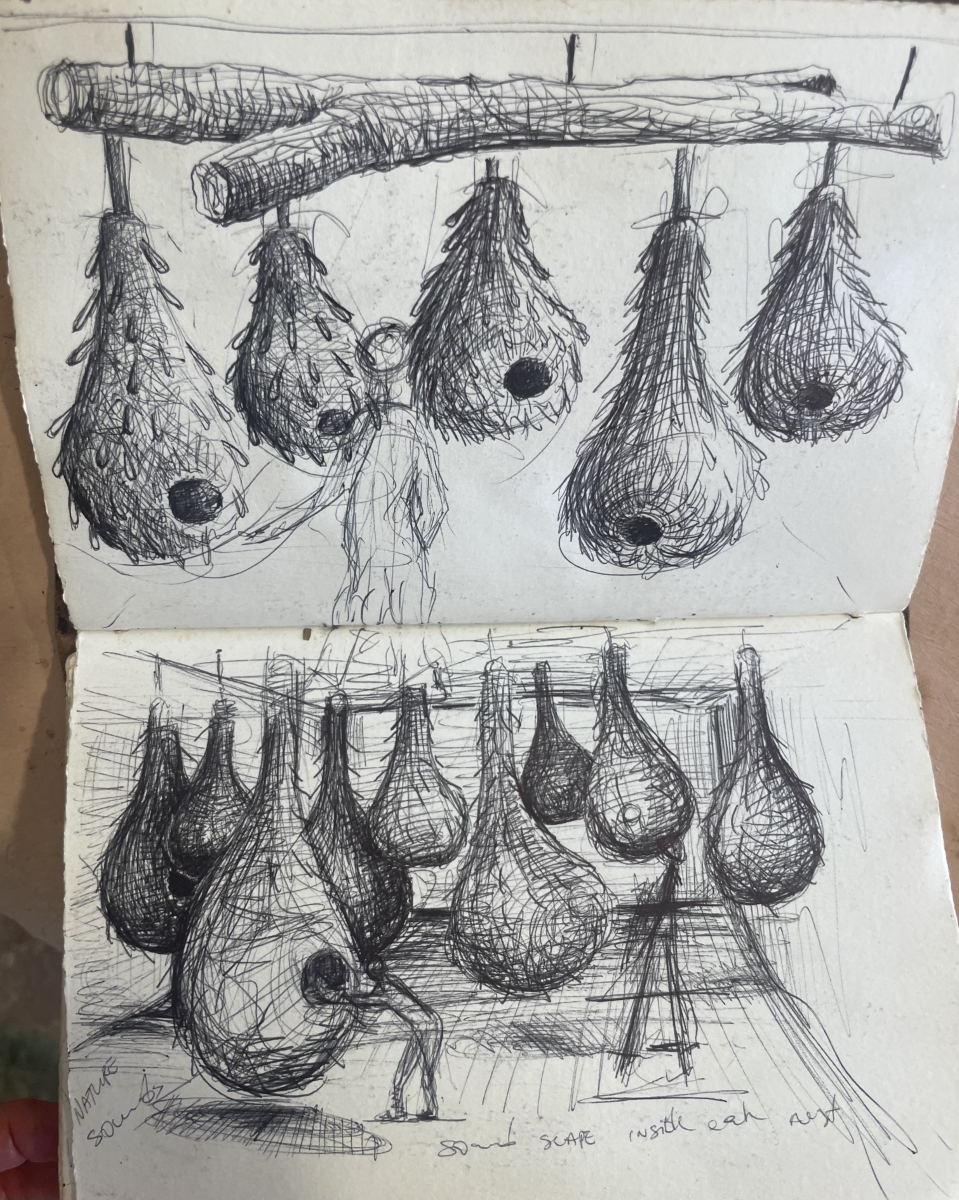
For Dyalvane, travel is a way of connecting to land – its history and its living presence – and forms a central mode of embodied engagement in his practice. Along the journey, he was struck by the vast communal nests of the Sociable Weaver birds: intricate structures composed of hundreds of chambers. Within these nests, shaped by a complex social organisation, he recognised a form of collective intelligence and relationality that would become central to iNgqweji.
Carrying this awareness of relational intelligence and ecological attunement into the gallery, the exhibition was preceded not by a conventional opening, but by a ritual act, an activation through offering.1 Inside the gallery, Dyalvane performed a ceremony intended to energise the works and situate them within a living spiritual continuum. The act made explicit what would otherwise remain implicit: that these ceramic forms are not inert objects awaiting interpretation, but presences.
Dyalvane later shared with me his wish that this ceremony could take place outdoors, within his community, where the works can be experienced and “can live there, get the dust and the smoke, feel the sound of the birds and the wind.” (Dyalvane, 2025). Even within the controlled space of the gallery, however, the ceramics retain a vitality that exceeds their physical form. They carry energy, shaping how they interact with the viewer, the space, and one another.
Andile Dyalvane is widely recognised as one of the most significant ceramic artists working on the African continent today. At the core of his practice lies a sustained engagement with ancestry, land, and spiritual continuity. His ceramic works function as vessels through which memory, healing, and cultural transmission are activated.
Born in 1978 in the rural village of Ngobozana, near Qobo-Qobo in South Africa’s Eastern Cape, Dyalvane grew up immersed in agricultural life, tending cattle and working the land alongside his family. This formative relationship with soil, landscape, and seasonal rhythms continues to shape his practice. Clay – umhlaba, meaning “earth” or “mother earth” in isiXhosa – is not simply a material resource but a living substance, inseparable from lineage and responsibility. To work with clay is to remain in dialogue with the land and with Xhosa ancestral knowledge systems that understand matter as alive, responsive, and relational.
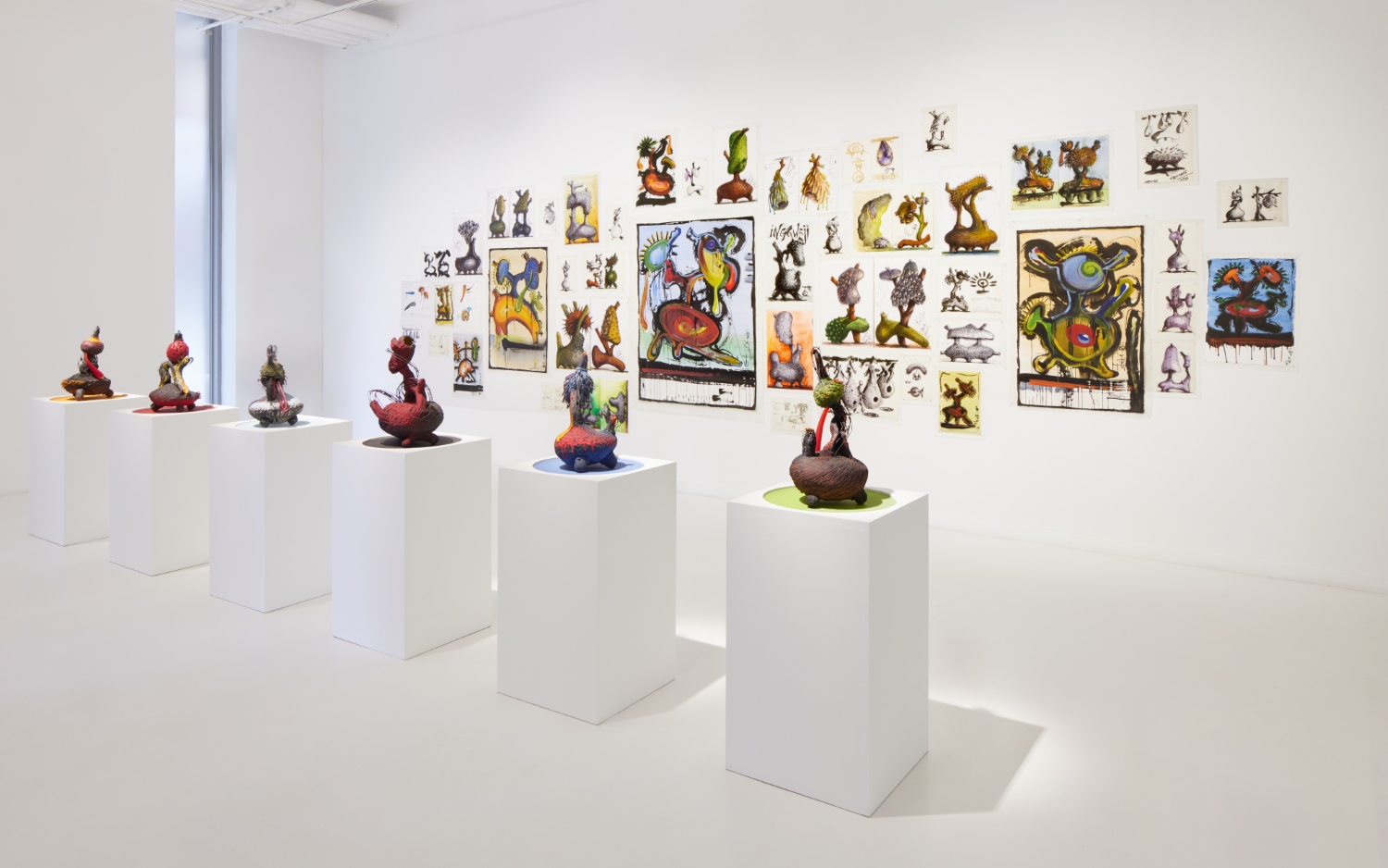
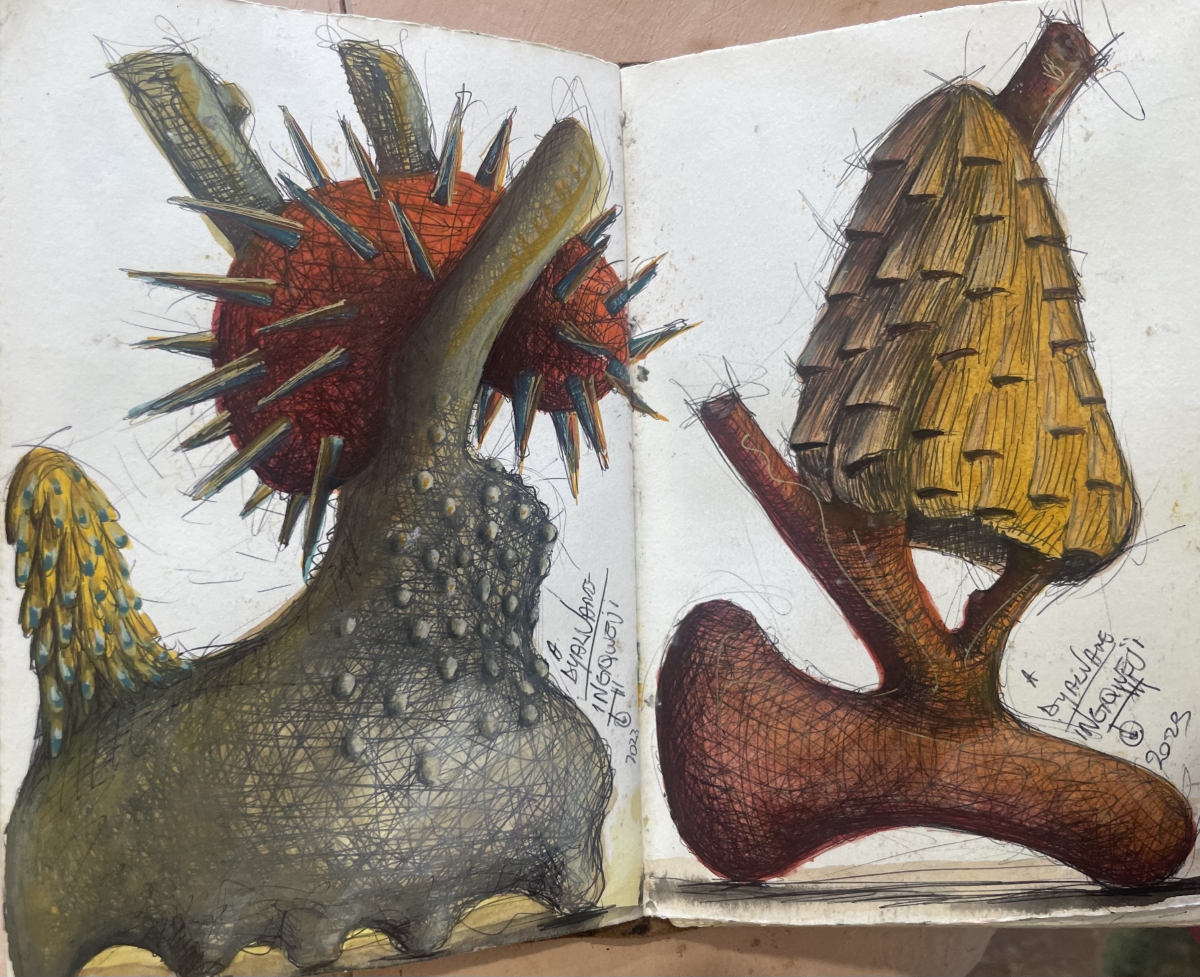
Dyalvane’s process begins with drawing. Sketching functions less as technical preparation than as a practice of listening and reception. Forms emerge through recurring visions, sometimes prompted by sound, observation, or movement through nature. When encountering the Sociable Weaver nests, he began with detailed, almost naturalistic drawings, before gradually reworking these motifs through successive sketches, allowing images to shift from observation to interpretation.
From drawing, Dyalvane moves to the making of small clay models, using them to test proportion, structure, surface, and colour before translating forms into larger works. This incremental approach allows the work to unfold over time rather than being imposed upon.
Collaboration is central to his practice. Dyalvane works closely with craftspeople he admires, not as ancillary contributors but as co-makers who expand the scale, resonance, and vitality of the work. Through these collaborations, ceramics becomes a collective act of making, mirroring the communal intelligence that inspired these works.
Sound plays a particularly integral role. Several ceramic works contain embedded microphones or speakers that transmit recordings of birds, wind, and environmental soundscapes. Copper bristles integrated into the ceramic forms function as musical instruments, allowing the sculptures to vibrate and resonate, animating the clay and activating it as a sonic body.
In one suspended ceramic work resembling a weaver’s nest, an opening at the base invites bodily proximity. During my visit, Andile invited me to stand beneath it. He then struck the copper bristles with drumsticks, producing harmonic tones reminiscent of tongue drums. The sound enveloped the body, collapsing the boundary between listener and object. Language felt almost beside the point. This was not an encounter premised on interpretation, but one rooted in sensation, resonance, and presence.
Such experiences align with a growing understanding of art not as an object to be explained, but as an event that happens to the viewer.
Relational Being, Experience, and African Philosophical Thought
Ways of seeing are shaped by underlying assumptions about what the world is made of and how beings relate to one another. These assumptions often remain unspoken, operating as silent frameworks that guide perception in advance. When such frameworks are treated as universal, they obscure the existence of other ways of being through which art and material culture are understood.
Anthropologist Philippe Descola has shown how Western modernity is structured by a worldview that separates nature from culture, subject from object, and material from spirit. Within this scheme, artworks are approached as discrete entities, detached from the relational worlds that produced them and positioned for analysis and classification. Practices grounded in relational, spiritual, or ecological ontologies are often misread through this lens, not because they lack complexity, but because the mode of perception itself is ill-equipped to recognise them.
John Dewey offers a parallel critique from within Western philosophy. In Art as Experience, he argues that art does not reside in isolated objects but emerges through lived experience, in the dynamic interaction between material, environment, and perceiver. When art is severed from the conditions of life and absorbed into abstract systems of explanation, it risks becoming something to be deciphered rather than encountered.
These perspectives suggest that the challenge is perceptual. When African artistic practices who draw from indigenous knowledge are approached through concepts that privilege detachment and objecthood, their relational dimensions are rendered invisible. What is required then is not simply new interpretive categories, but an openness to encountering art as a field of relations.
African philosophical traditions offer crucial insight within this space of reorientation. Philosopher J.M. Nyasani articulates a relational understanding of being through his analysis of the “I” and the “We.” In African philosophy, personhood does not precede relation but comes into being through it. The self is constituted through relationships with others, with ancestors, with land, and with the material world. Being is distributed across a network of relations that sustain life and meaning.
Read through this lens, iNgqweji resists the logic of detached spectatorship. Instead, it activates a shared field of experience in which ceramics, sound, space, memory, and bodies co-presence one another. Meaning unfolds through proximity and participation. The viewer becomes part of the “We” that the work brings into being.
This relationality extends beyond the human. Nyasani emphasises that African conceptions of being do not rigidly separate subject and object, or culture and nature. Ancestors, landscapes, materials, and spiritual forces are not inanimate substances but active participants in communal life. Clay, in this context, is matter that holds memory, continuity, and responsibility. Dyalvane’s ceramics operate within this understanding, insisting on clay’s capacity to act, resonate, and connect.
Mogobe Ramose further clarifies the ethical dimension of relation. For Ramose, relational being entails responsibility: to exist is already to be accountable to others within the network of relations that makes existence possible. Ethics arises not as an abstract system but as an embodied practice rooted in interdependence, where human and more-than-human presences participate in sustaining balance.
Within this orientation, iNgqweji calls for reverence and attentiveness toward all forms of life. Clay becomes a mediator between earthly matter and ancestral memory, while making emerges as a practice of listening, responsibility, and care. Sound is also important in rendering this relational field tangible. It operates not as accompaniment but as connective force, binding bodies, materials, and space. Vibrations move through air and body alike, collapsing distance between source and listener.
Hence, Dyalvane’s work can be understood not as an exhibition that transmits meaning from object to viewer, but as an event that gathers relations into presence. The ceramics do not ask what they signify; they ask how we participate. They invite us to slow down, listen, and recognise ourselves as part of a wider relational world.
Conclusion
For a long time, art from the African continent has been encountered through a predominantly Western gaze, one that has often misread its forms, meanings, and functions by filtering them through frameworks not their own.
This terrain is changing, as artists, curators, and scholars increasingly challenge inherited hierarchies and advocate for more culturally informed and critical approaches that acknowledge the plurality of worldviews embedded within artistic practice. Such a shift requires relinquishing the assumption that a single visual, historical, or theoretical framework can account for all forms of cultural expression. To continue telling others’ stories through one dominant narrative is to reproduce the very limitations that have long constrained understanding. As Dyalvane has articulated, “you’ll need to understand what I represented with the work. It’s not representing me, it represents my whole community, my family, this continent.” (Dyalvane, 2025) Curators and galleries, in this sense, are not neutral intermediaries but participants in a relational process that carries ethical responsibility.
If you want to curate a work of an artist from a village in Africa you’ve never met, you’ve never drank the water from that place, sat in front of the fire and danced in the dust during the ceremony with this person, how are you going to respect that person and tell their story? That’s very important for me. So, come, let’s commune together. Make an effort to come and meet the community. It’s important that you meet the people, and the ancestors. If you’ve been guided to tell a story and meet the people, by the time you’re done experiencing their story, you’re going to come back a different person, because now you understand, you’ll be respectful in how you tell the story and you’ll be respected and trusted by the people to tell their story.
Dyalvane, 2025
What is at stake, then, is not simply representation, but perception itself. To encounter the work of another culture demands an openness to seeing beyond one’s own coordinates, to enter the world of the other. This involves slowing down, listening attentively, and allowing meaning to emerge through relation rather than projection. In doing so, iNgqweji gestures toward a mode of being-with grounded in care, reciprocity, and the shared earth from which we all emerge.
Monica Monaia is an emerging ceramic artist whose work spans between South Africa and Italy. With a degree in Theology, from the Pontifical Lateran University (Assisi, Italy), she writes about culture, identity, and ceramics, exploring the intersections of heritage, personal experience, and creative expression. Her artistic practice is deeply influenced by her mixed Italian, Ethiopian and Eritrean heritage, and she engages with themes of belonging, visibility, and the role of ceramics in shaping cultural narratives. Monica currently serves as project manager of Tazzinart South Africa, a ceramics exhibition connecting artists from Italy, South Africa, and beyond.
iNgqweji by Andile Dyalvane was on view at Southern Guild in Cape Town between November 22, 2025, and January 29, 2026.
Subscribe to Ceramics Now to read similar articles, essays, reviews and critical reflections on contemporary ceramics. Subscriptions help us feature a wider range of voices, perspectives, and expertise in the ceramics community.
Captions
- Andile Dyalvane, 2025. Images courtesy of Hayden Phipps/Southern Guild.
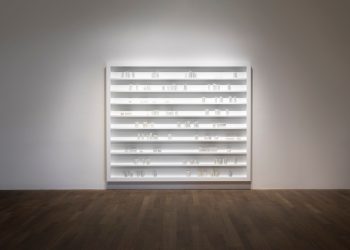
- Andile Dyalvane, 2025. Images courtesy of Hlalanathi Radebe/Southern Guild.
- Andile Dyalvane, 2025. Images courtesy of Lea Crafford/Southern Guild.
References
- Descola, Philippe. L’arte prima dell’arte. Translated by Alberto Frolin. Marsilio Arte. 2024
- Descola, Philippe. Beyond Nature and Culture. Translated by Janet Lloyd. University of Chicago Press, 2013. (Originally published in French, 2005)
- Dewey, John. Art as Experience. Perigee Books, 1934.
- Dyalvane, Andile. Interview. Conducted by Monica Monaia. Cape Town, 24 Nov. 2025.
- Nyasani, J.M. “The Ontological Significance of ‘I’ and ‘We’ in African Philosophy.” Journal of African Philosophy, vol. 12, no. 2, 2003, pp. 45–62.
- Ramose, Mogobe B. African Philosophy through Ubuntu. Harare: Mond Books, 1999.
Footnotes
- Opening ceremony ritual. Link