By Unu Sohn
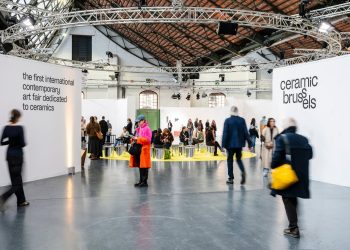
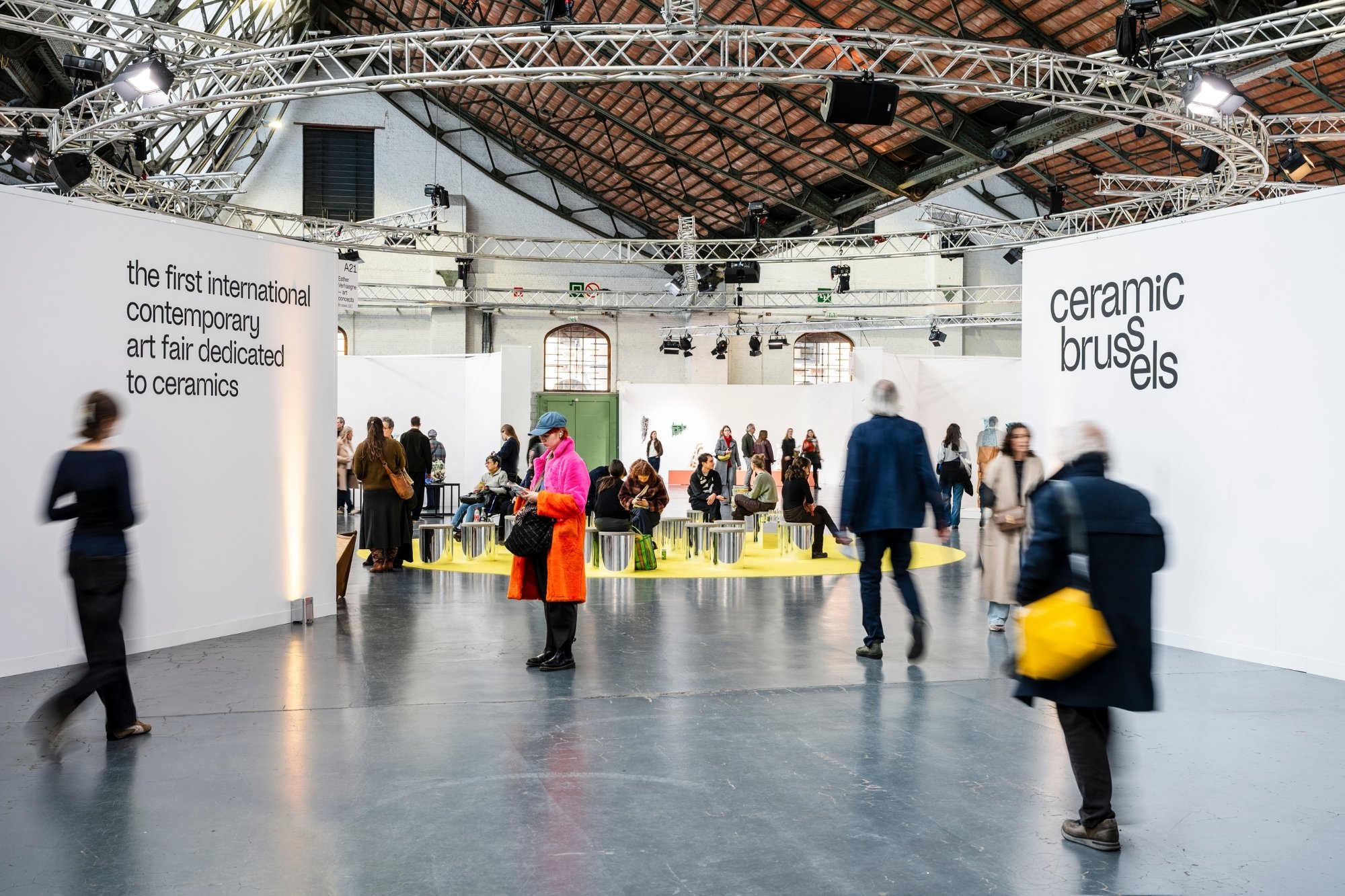
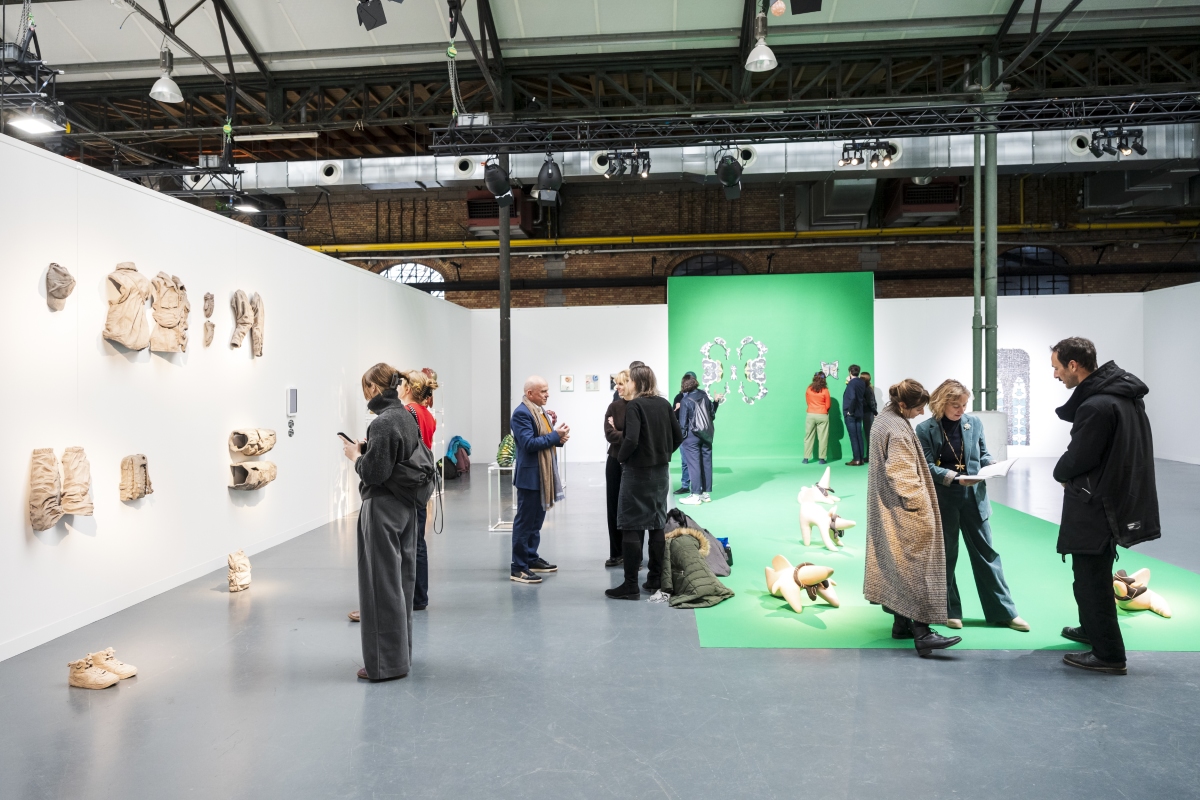
Ceramic Brussels is a contemporary art fair focused on ceramics taking place in January, which held its third edition this year. I remember eyeing it with curiosity in 2025 and, eight months later, booking an apartment in May to visit the 2026 edition. It is an exciting event and the 2026 fair brings together mostly European galleries with exceptions limited to UK-based Han Collection, Japanese YOD Gallery, and NIKA Project Space that operates between the UAE and France. This year’s fair introduced a national focus on Spain, which my colleague Katherina Perlongo has written specifically about for Ceramics Now, after last year’s focus on Norway. Like many fairs, Ceramic Brussels held an awards ceremony as well as talks and book launches throughout the fair’s duration.
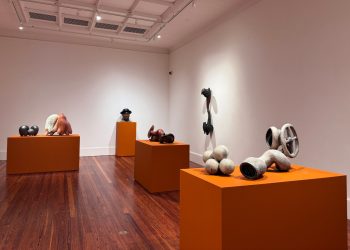
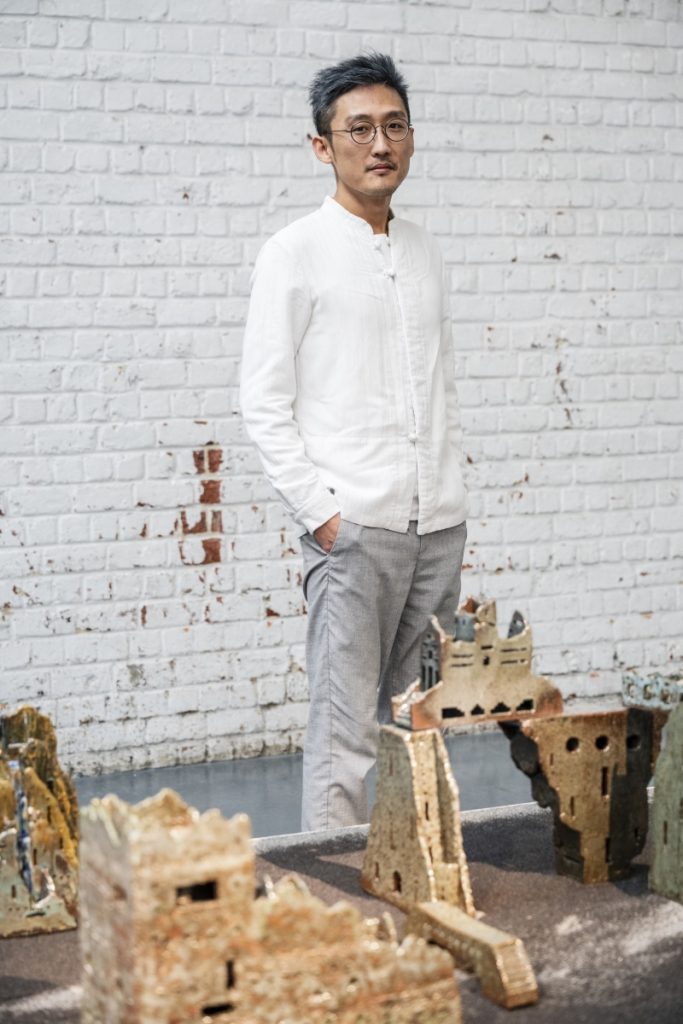
Coming from London, I was excited to see presentations by galleries I am unfamiliar with, or only connected to online, after a short two-hour train ride. The standout artists I discovered were Atsushi Mannami with local gallery Esther Verhaeghe Art Concepts and Berta-Blanca T. Ivanow with Spanish gallery Tramuntana. Mannami’s work is of course largely in clay but also includes cardboard, zipties, and paper. One work features a L-shaped PVC pipe and a staircase while others depict ambiguous structures.
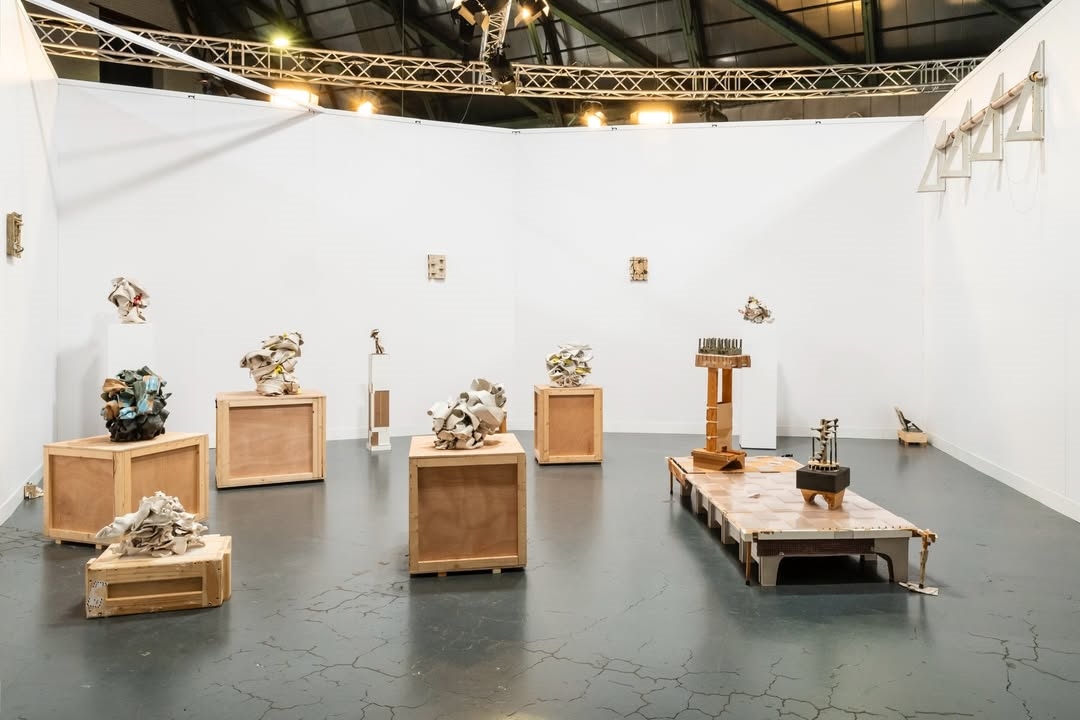
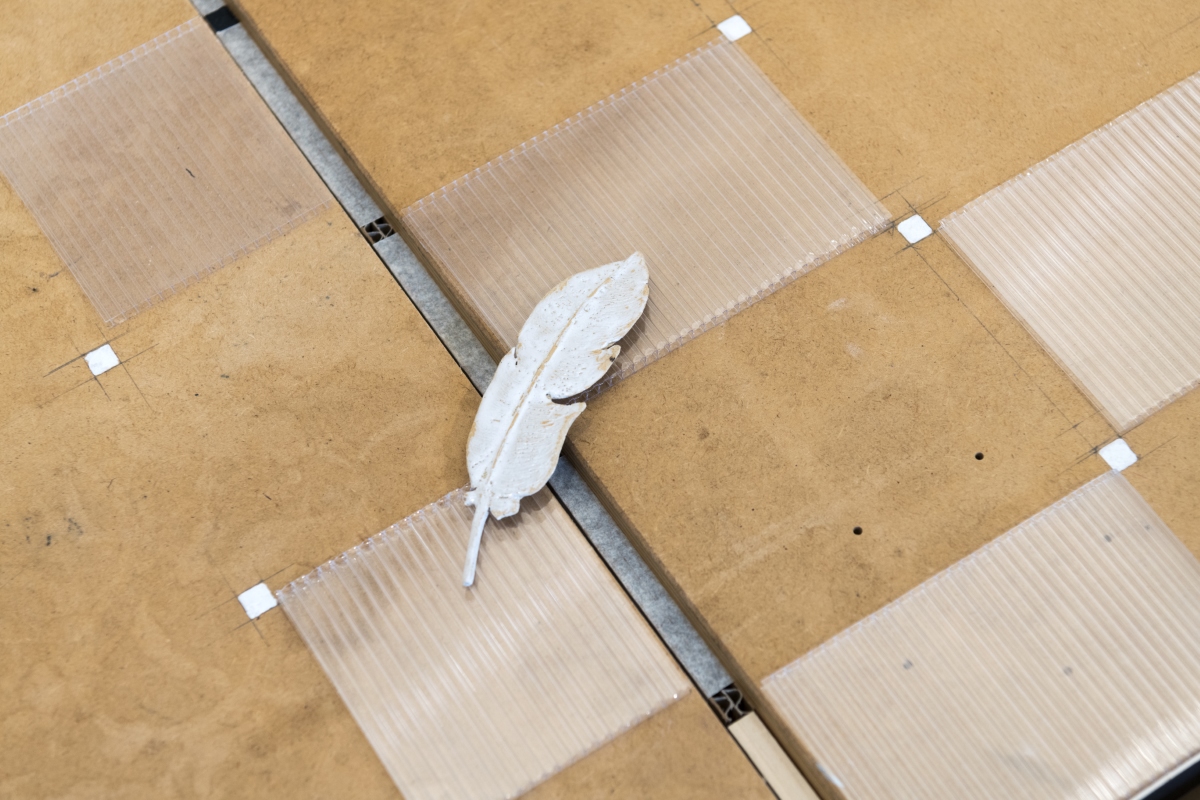
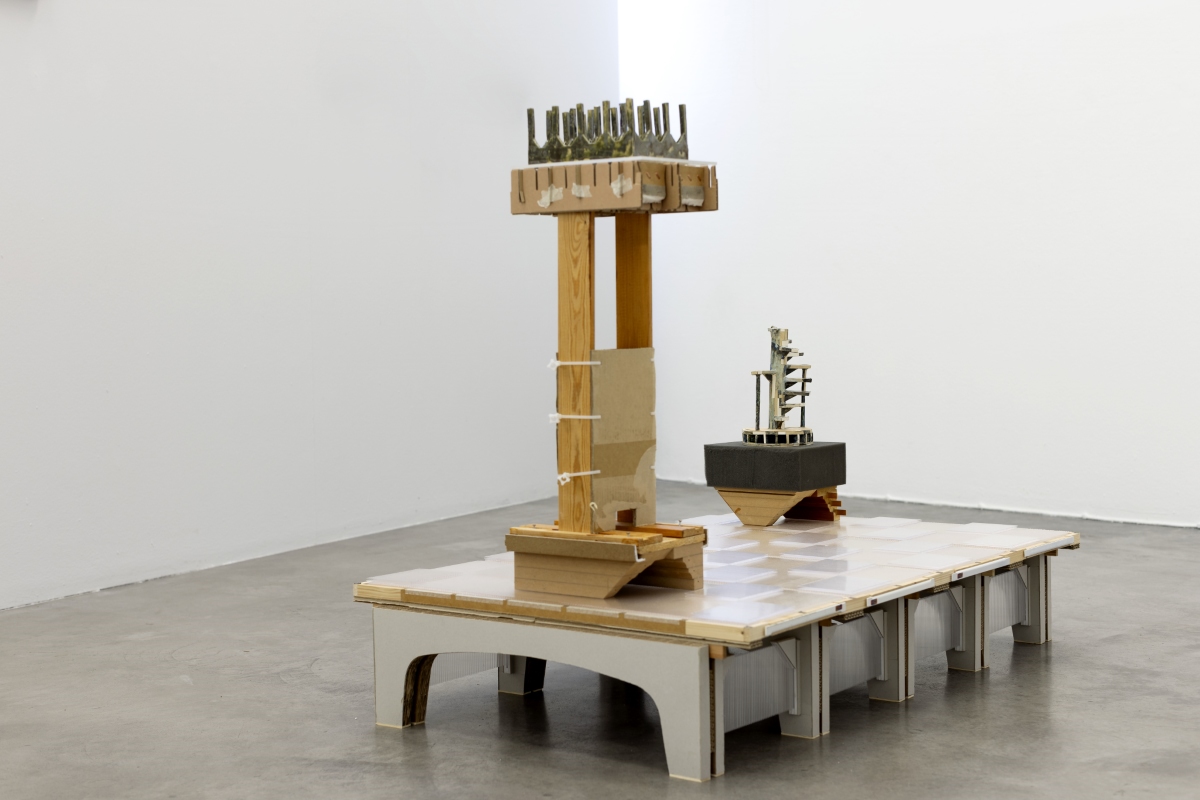
The architectural assemblages are raw and often intentionally makeshift, exemplified by Mannami’s peculiar use of paper collaged atop a glazed ceramic surface. Staples hold together some segments while others are joined with peeling tape. The artist places a thin ceramic feather propped under the wooden appendage of one installation. It recalls that table in the corner of your favorite family-owned restaurant that needs a napkin folded just so under its short leg facing the bathroom. The works are nostalgic as they use provisional techniques that invoke themes of use, necessity, and abandonment. Amongst the gorgeously glazed pots and technically precise craftsmanship, these works were a pure joy to come across. I somehow entirely missed the section this gallery was in on my first visit to the fair, even though Ceramic Brussels consists of two manageably-sized main halls, so thankfully I revisited.
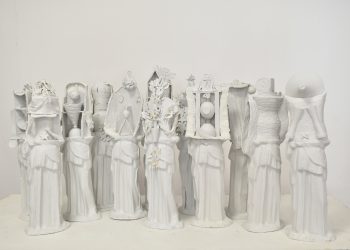
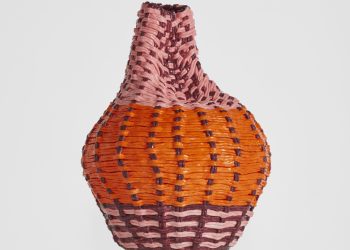
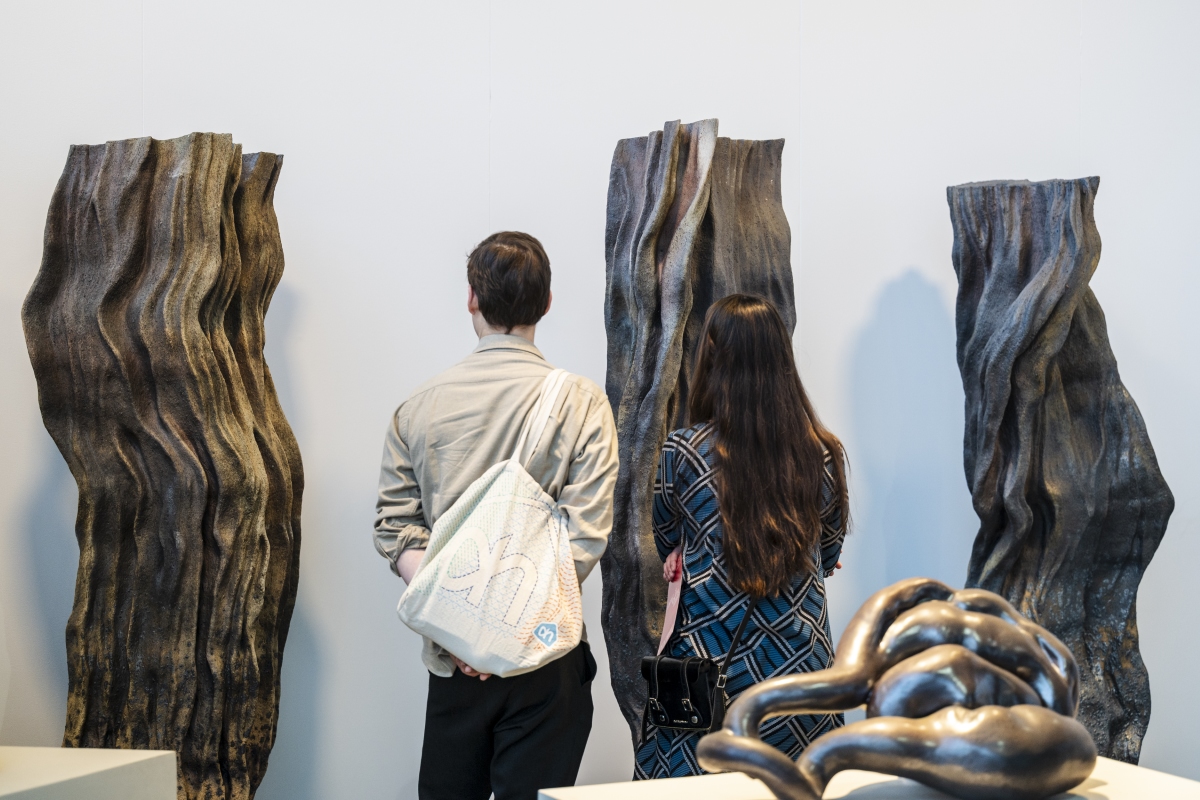
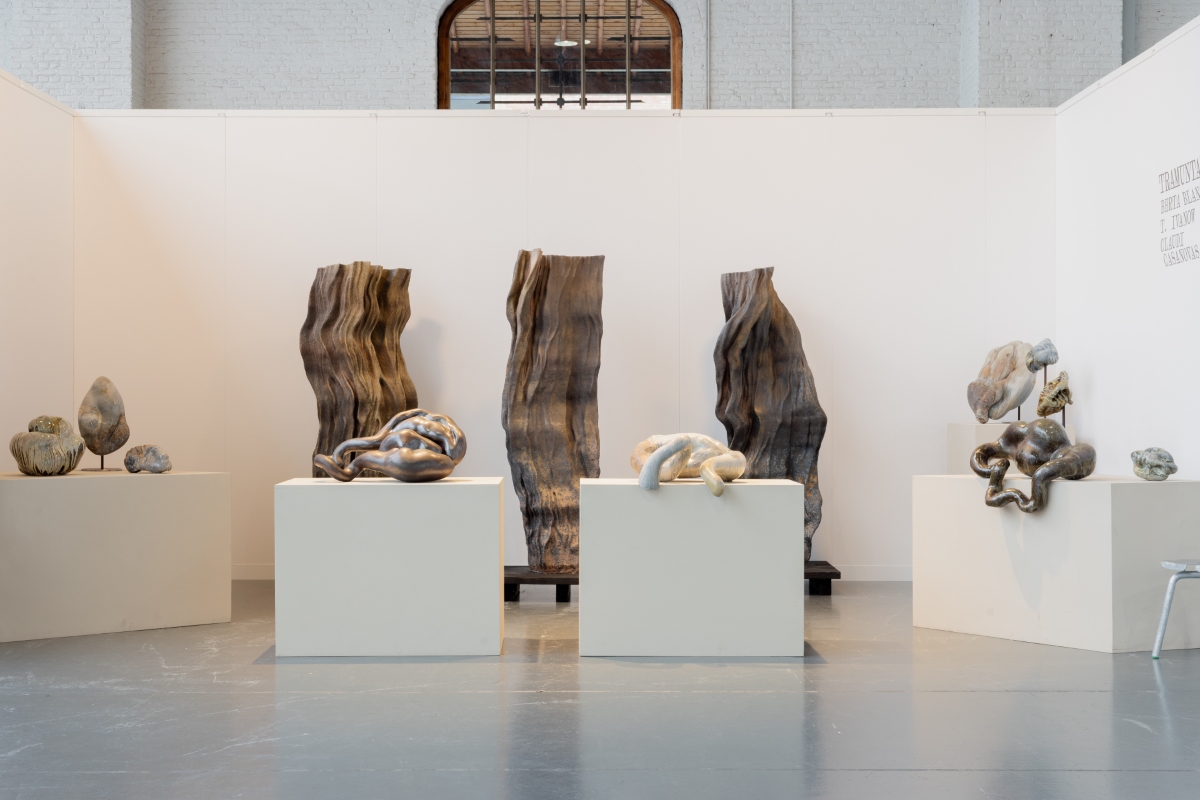
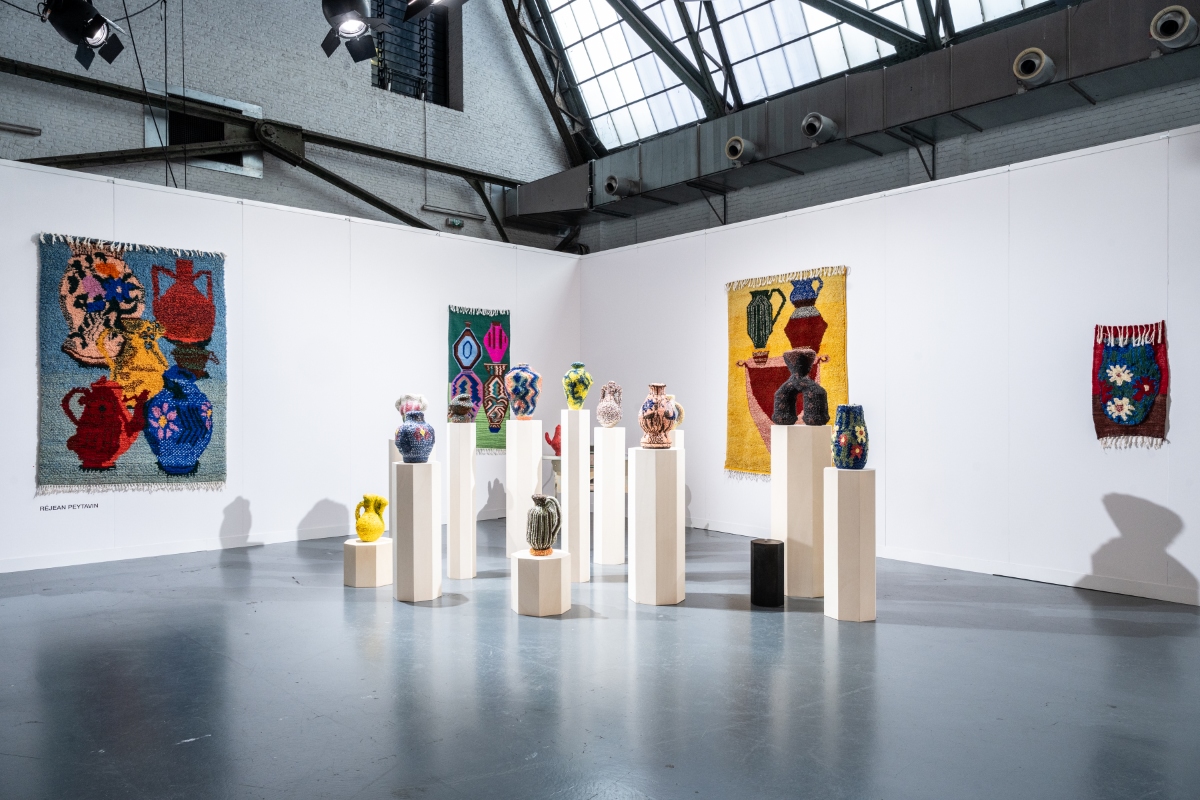
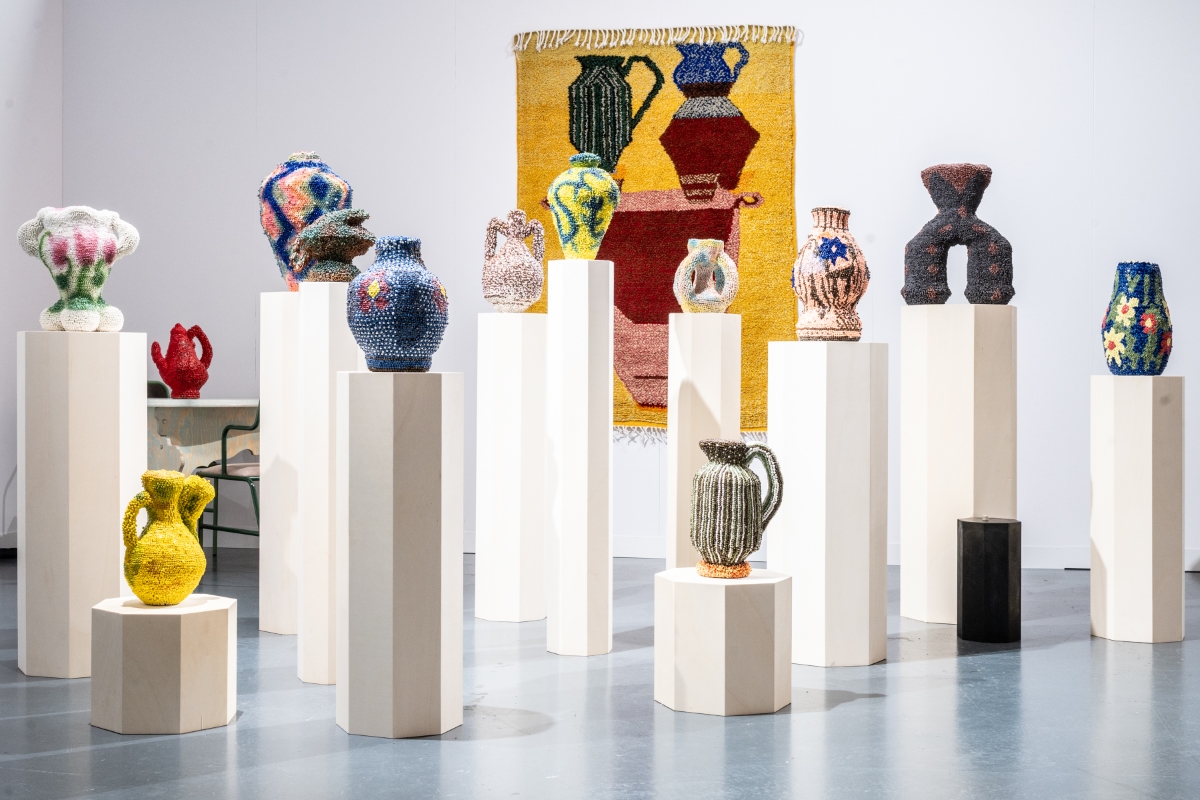
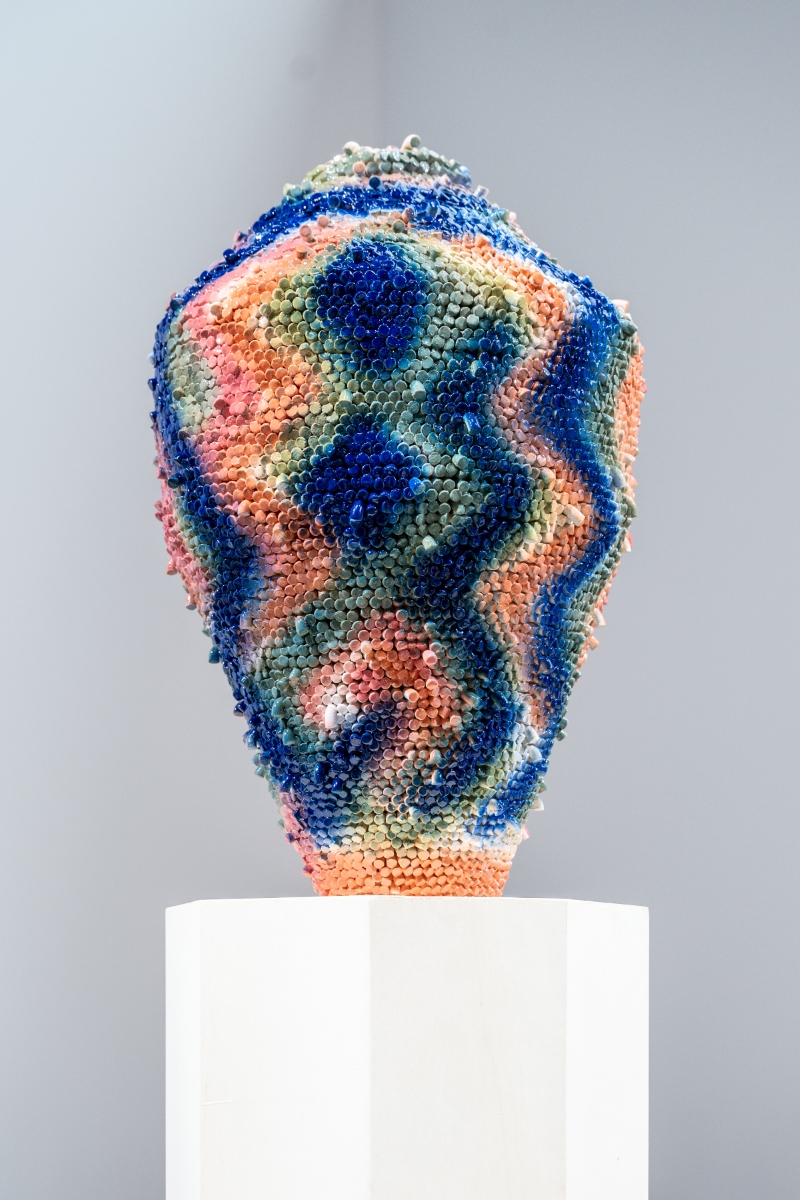
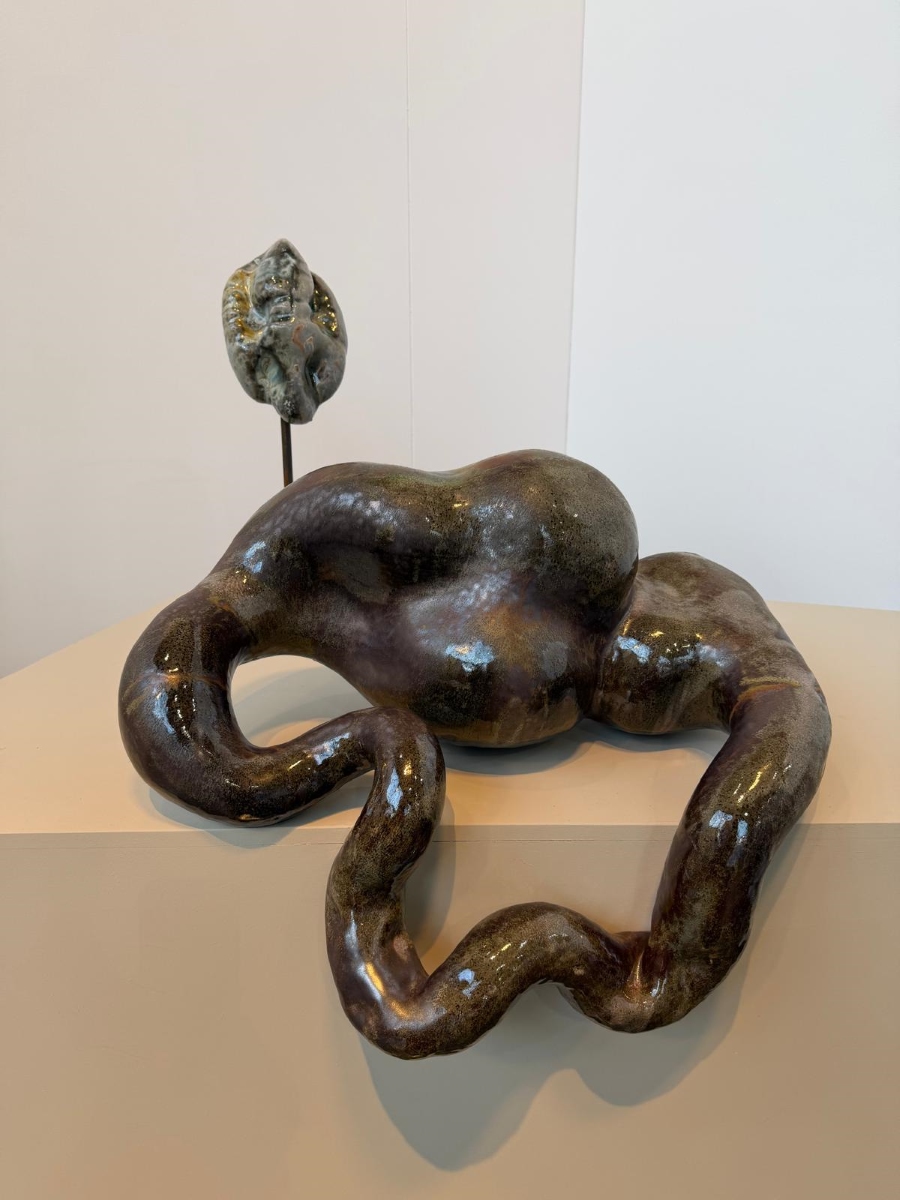
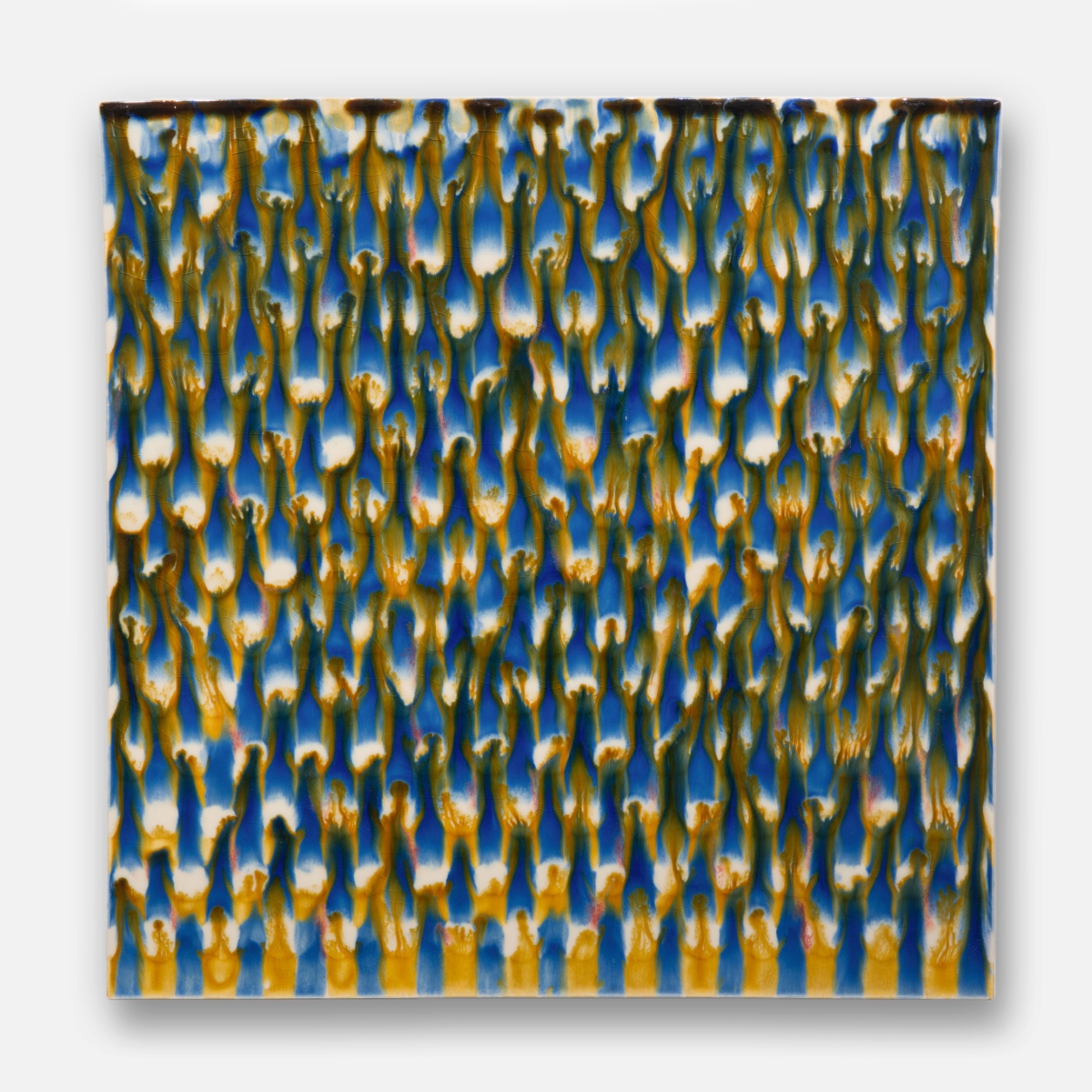
The other work I also enjoyed was by Berta-Blanca T. Ivanow shown in a duo presentation with Tramuntana Gallery. These consist of earthy sculptural forms that are organic and bulbous. The shapes feel familiar as they are like ripe fruit, protective conch shells, or majestic Greco-Roman statues. As I am looking forward to participating in a wood-firing with Oxford Kilns in March, I was particularly attracted to Ivanow’s glazes and the movement involved in the variable atmosphere of wood-fired kilns. Other personal favorites include the pairing of tufted rugs and “tufted” clay vessels by French-Swiss artist Réjean Peytavin shown with the gallery La peau de l’ours, and painterly large-scale tiles by a duo of artists Xindi Tong and Ting Shen presented by CHAxARTxRTM. The works of Peytavin and the artist duo both demonstrate mastery of their respective techniques and a precision of concept.
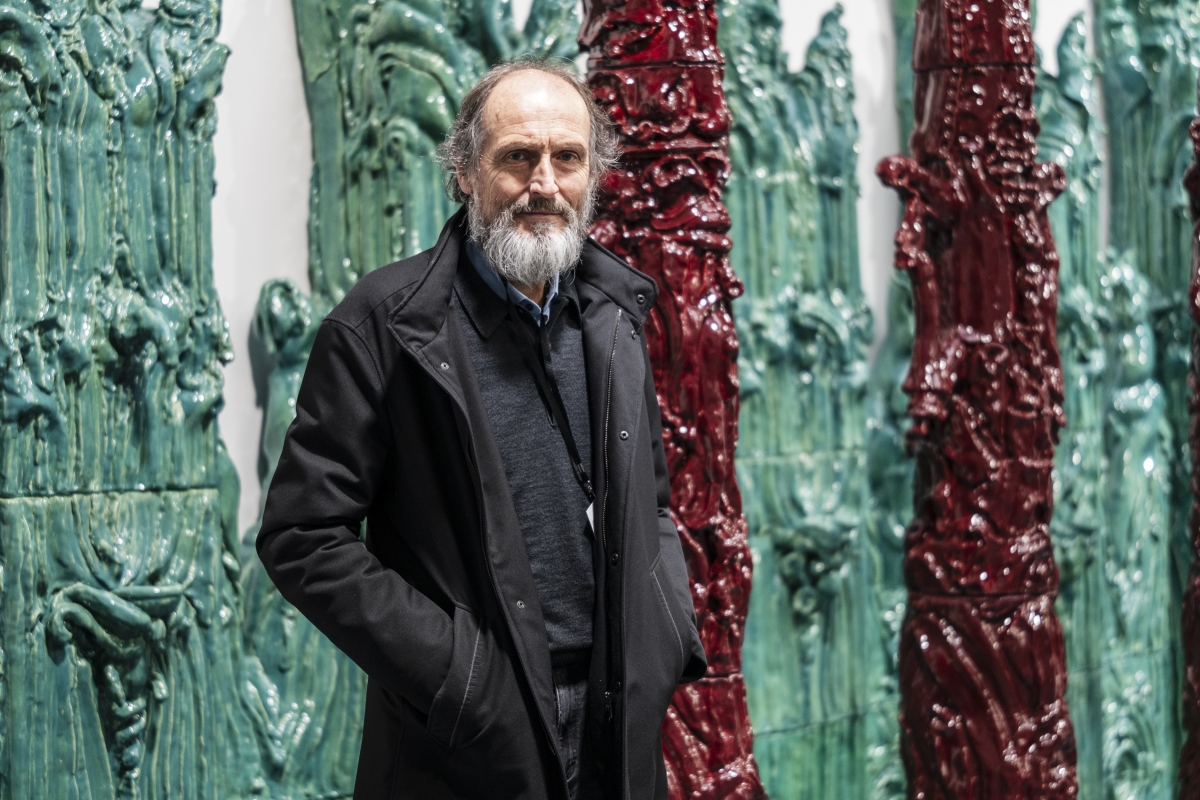
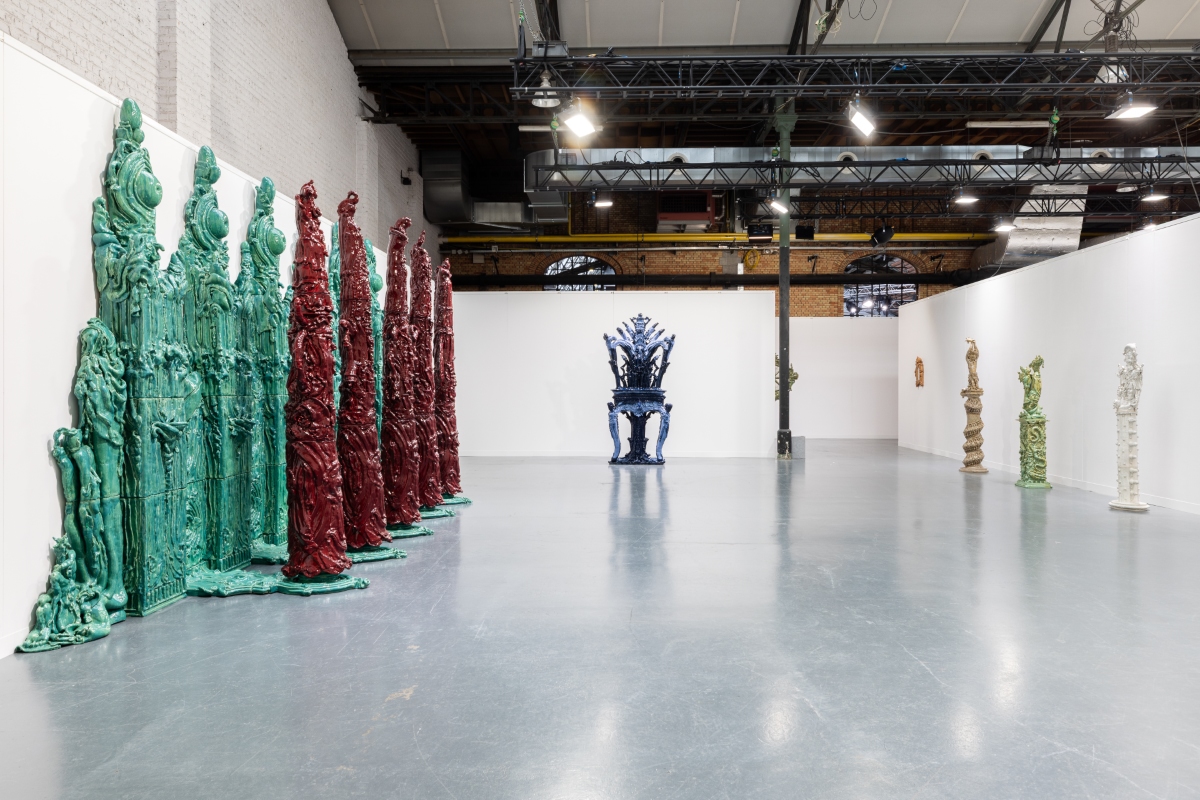
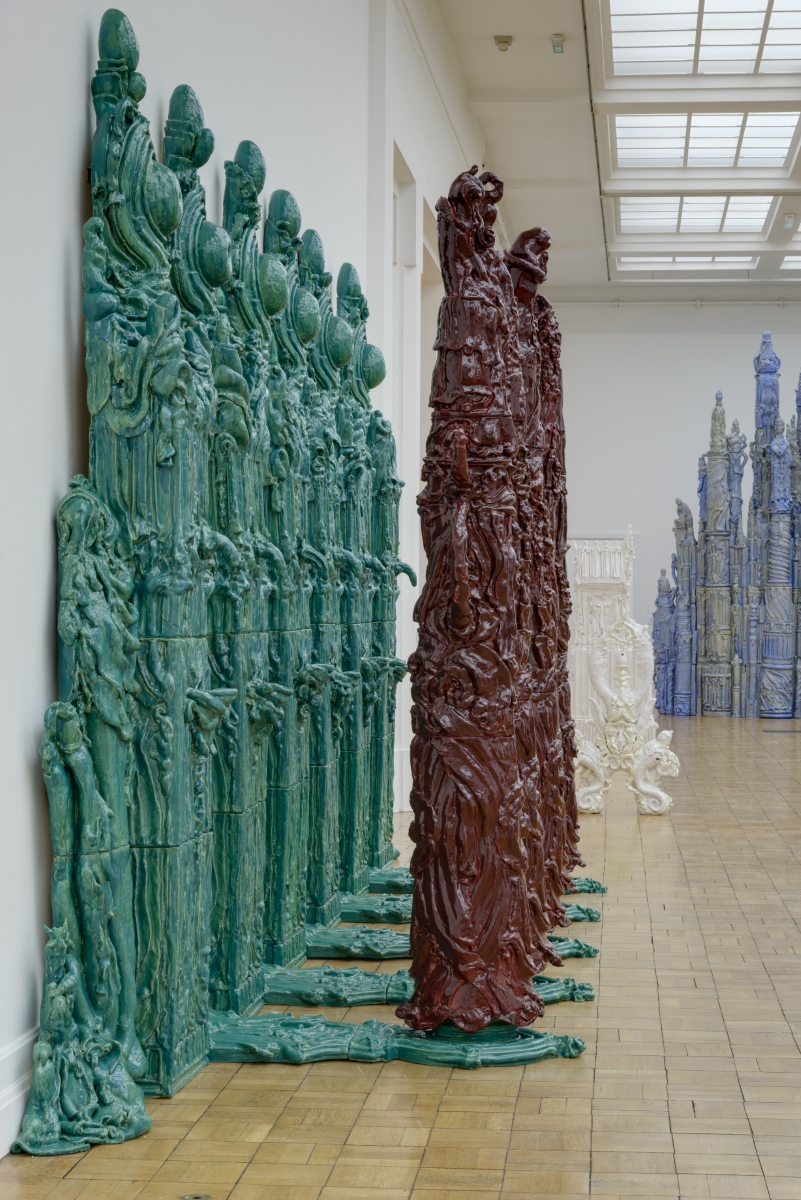
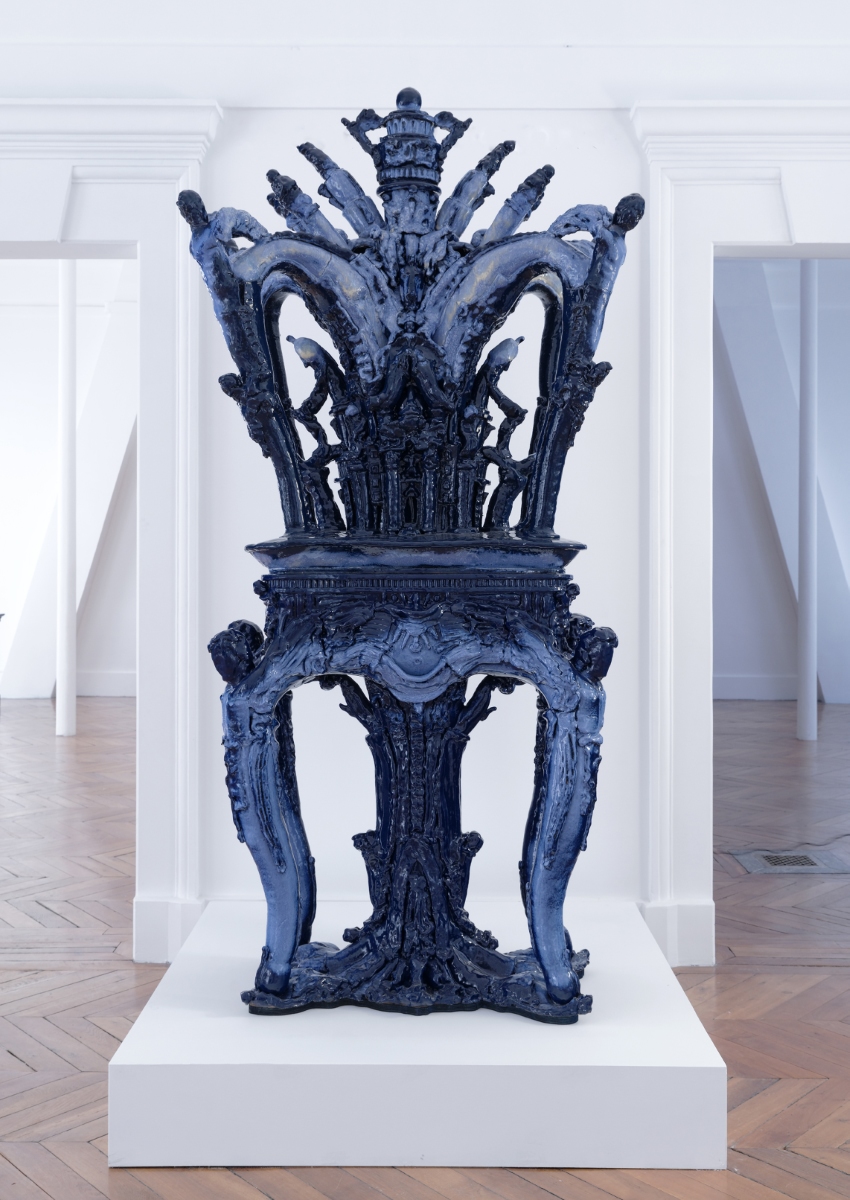
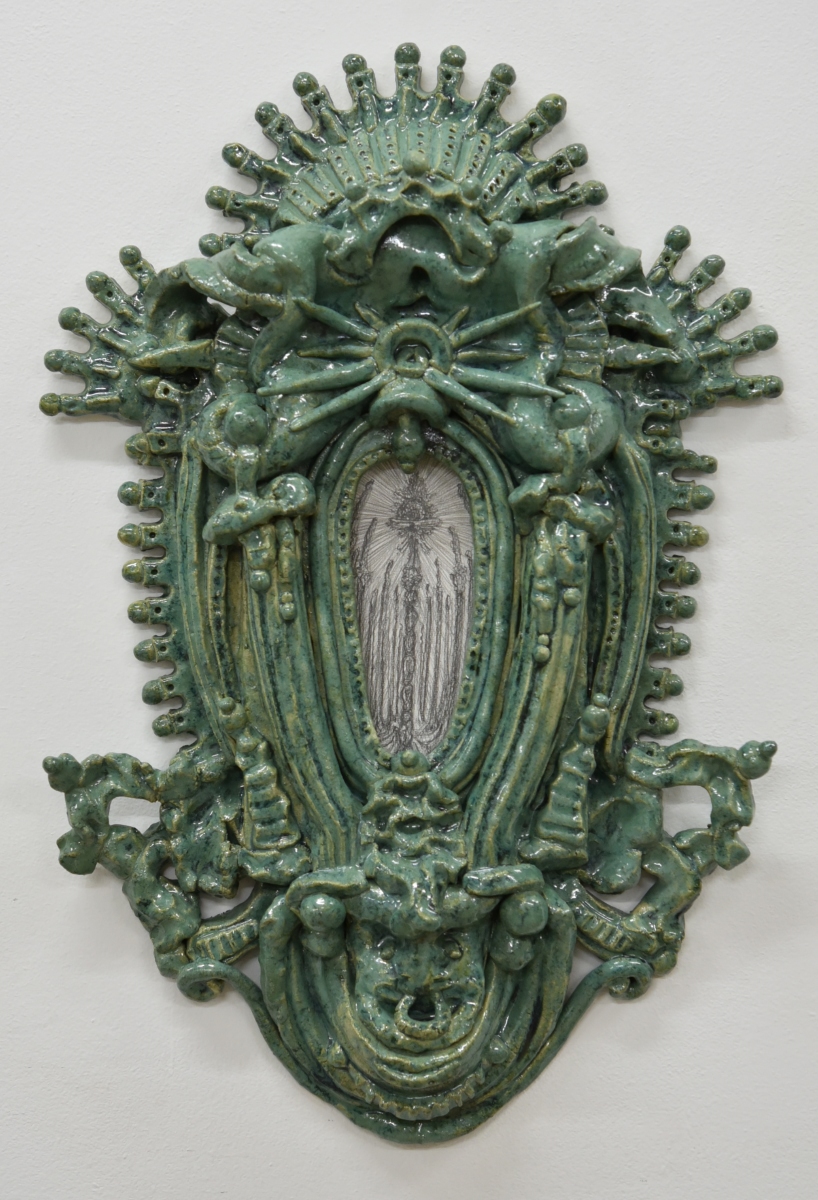
Ceramic Brussels had also invited Austrian artist Elmar Trenkwalder as its guest of honor, whose monumental works were exhibited at the entrance of the fair. The sculptures recall forms excavated from historic or religious sites with sensual and sometimes vulgar creatures hidden within these architectural forms. I particularly appreciate the use of humble pencil drawings incorporated in various wall-based structures as they serve as a harmonious contrast to the otherwise prolific works.
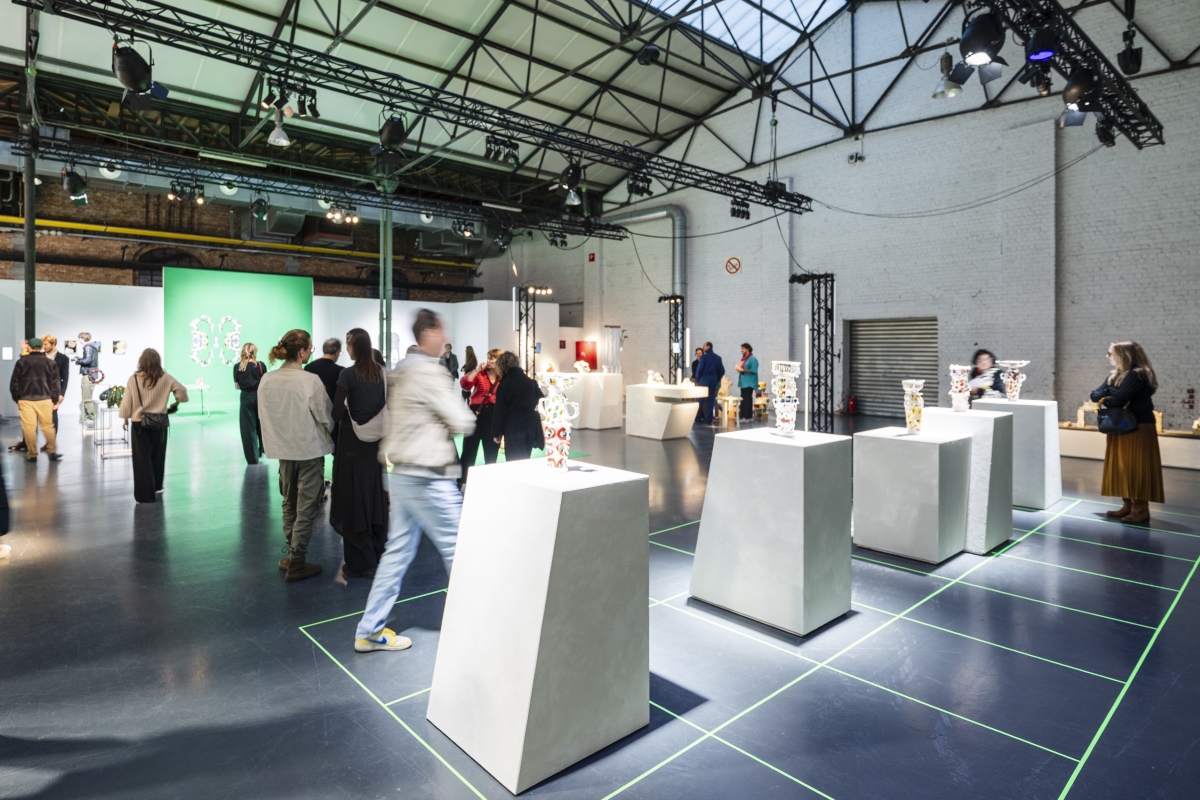
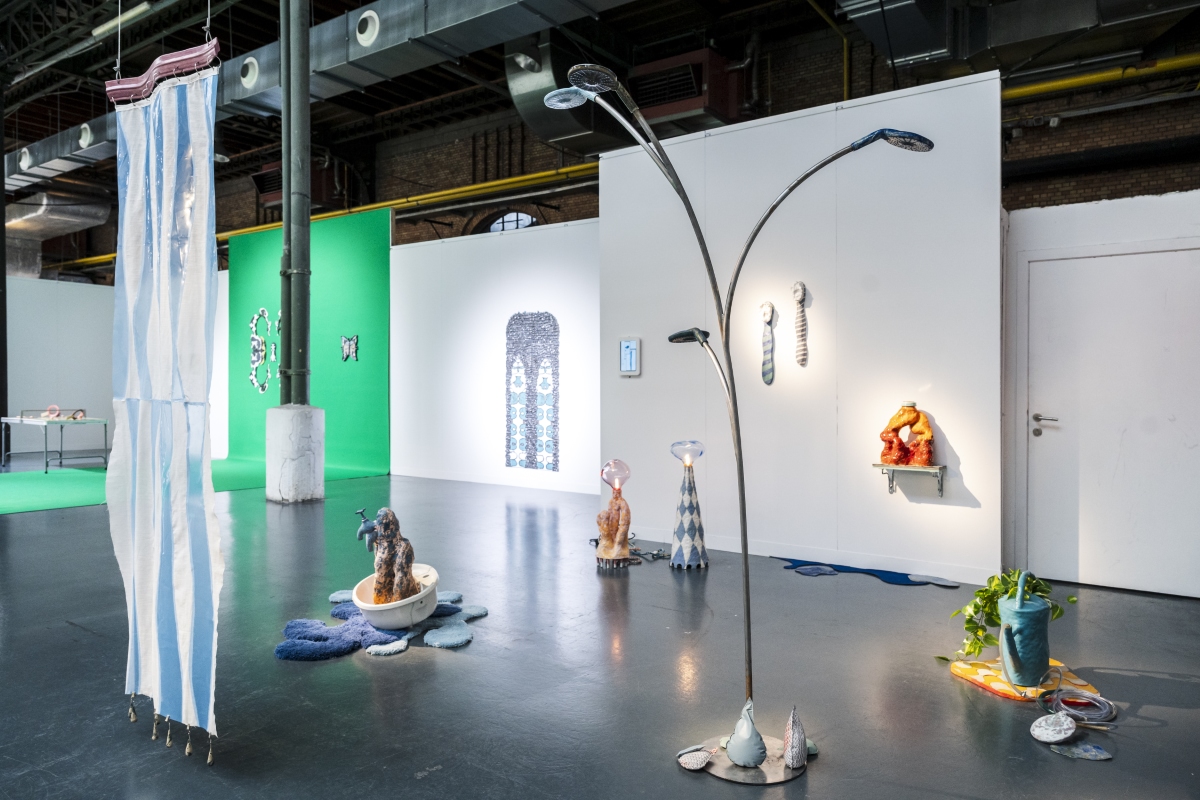
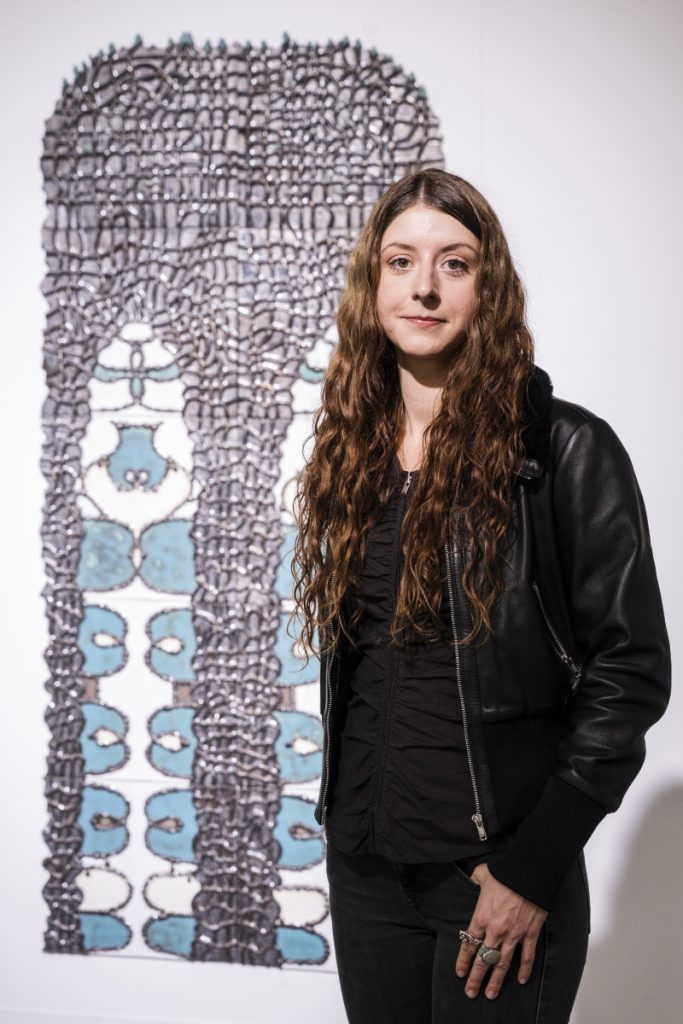
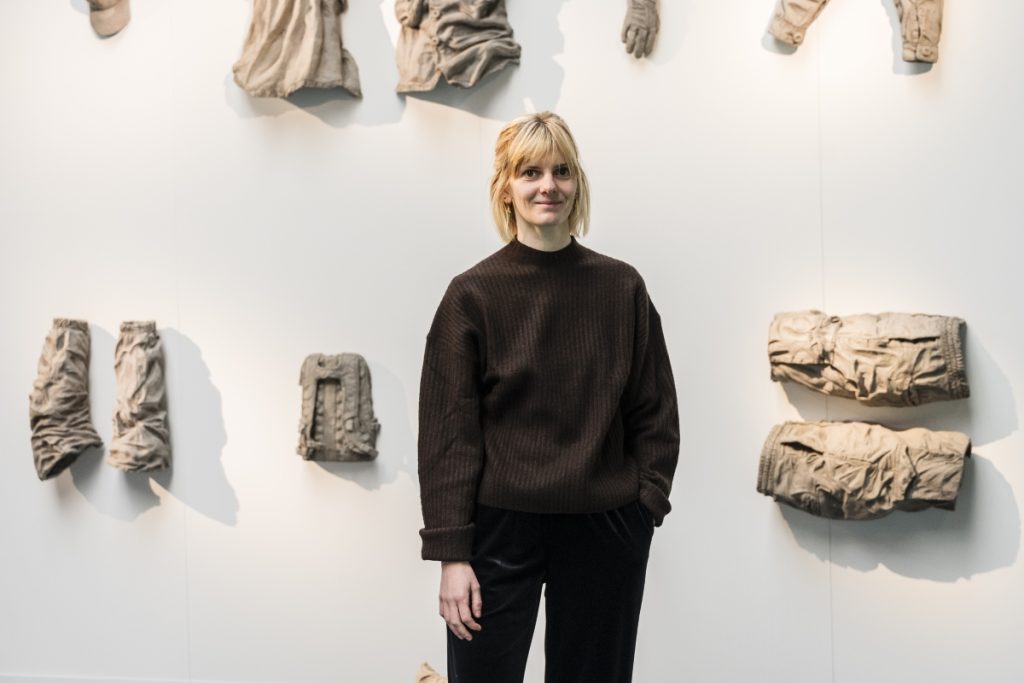
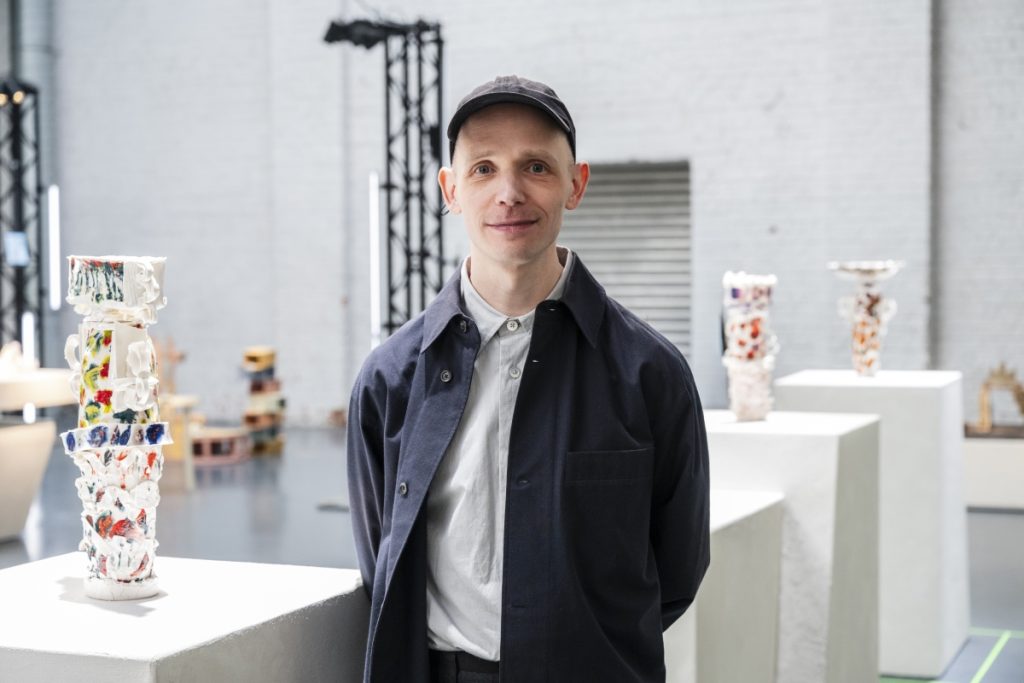
The fair also held an awards ceremony for the ceramic brussels Art Prize, in which seven prizes were awarded to young artists exhibiting in a group show selected through an open call. Of the ten young artists, three collected a majority of the prizes. Marie Pic was awarded the jury prize and will therefore present a solo exhibition at the fair next year, as well as receive a three-month residency in Yixing, China with YXCCCA. Artist Ninon Hivert was awarded three prizes: Hivert will also have a three-month residency with YXCCCA as well as participate in an a group exhibition with Centre Wallonie-Bruxelles and publish a monograph with Les Éditions de Ateliers d’Art de France due to selection by the Embassy of France in Belgium. Artist Danny Cremers will participate in a two-month residency in Orléans Forest thanks to Les Ateliers dans la Forêt, in addition to a residency and exhibition in collaboration with the Latvian Centre for Contemporary Ceramics and the Rothko Museum. Lastly, artist Walter Yu was awarded a residency at Keramis. The art prize section for the young artists was strangely placed at the exit of the fair, after the coat check collection point, but was a generously expansive booth that accommodated installation works.
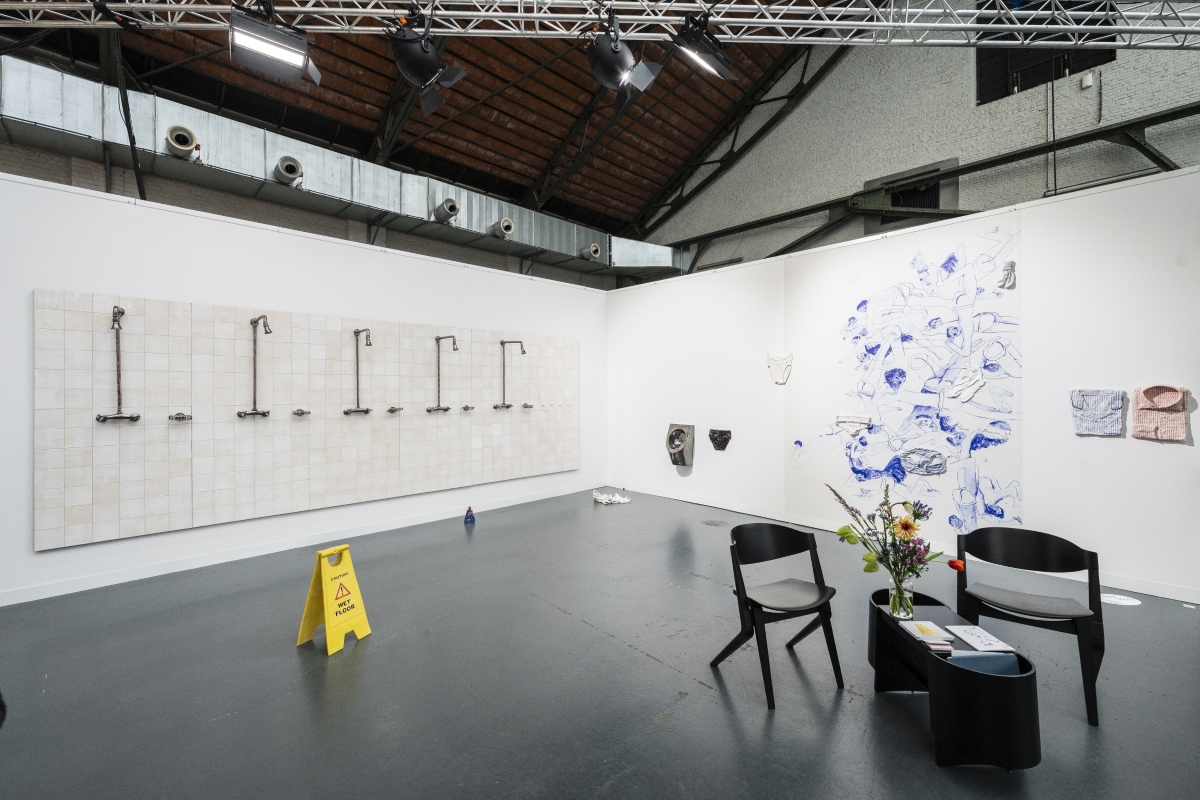
The award for best solo show was granted to SECCI gallery and artist Kevin Francis Gray. The award for best booth was given to Galerie Judith Andreae for a solo presentation of works by artist Janis Löhrer. I’m not surprised that Löhrer and his gallery were selected as the best booth because, whizzing through the fair on my way to a roundtable talk in another hall, this was the booth that stood out to me. Galerie Judith Andreae presented the most immersive booth with the installation of a communal shower featuring not only ceramic tiles but also five ceramic shower fixtures, soap holders, clothes hangers, and a yellow “CAUTION / WET FLOOR” A-frame sign. There is a silver urinal with pink cakes alongside both carelessly shedded garments and neatly folded ones sculpted in clay. Löhrer’s presentation of ceramics and drawings successfully explores queer culture, privacy, and the public eye. While ceramic tiles are an obvious choice, and the bathroom is a space strongly associated with the medium, the presentation felt cohesive and a commendable choice for exhibiting at an art fair. On Instagram, the artist reveals that the work was initially made for his first institutional exhibition, which explains the strong conceptual basis of the work.
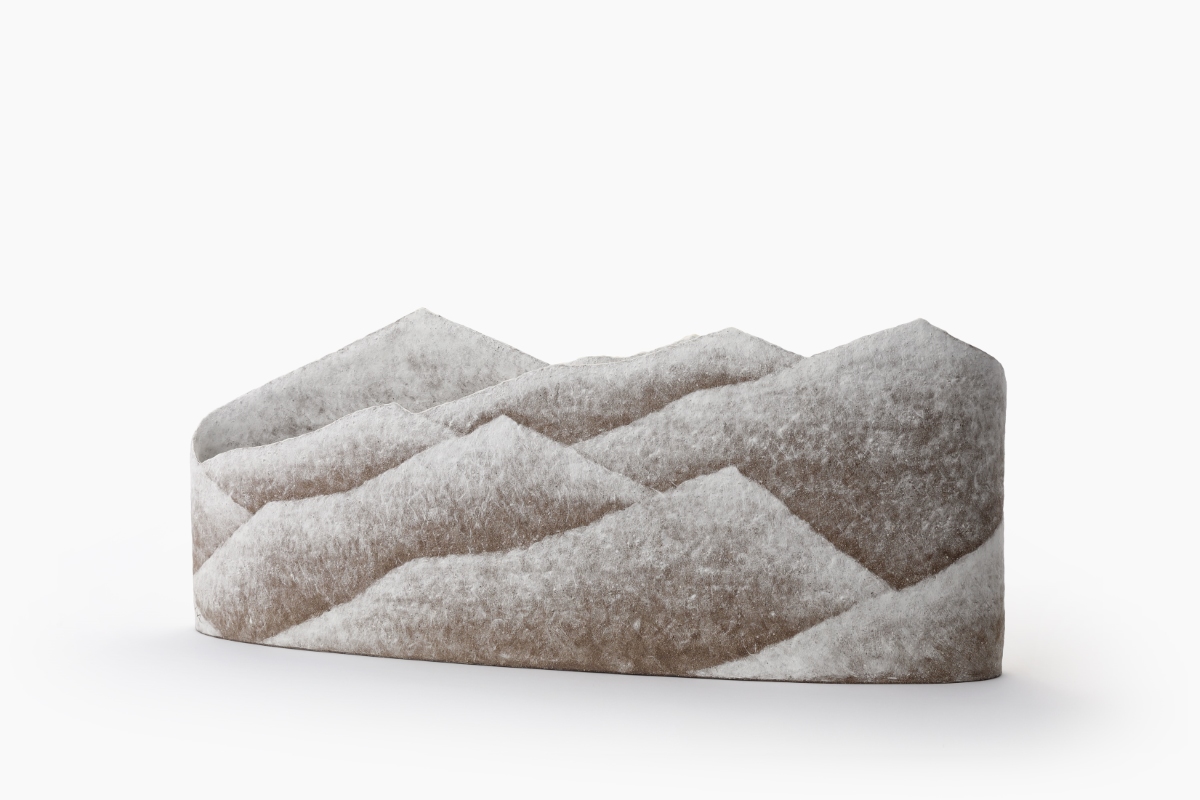
On the topic of booth presentation, many galleries carved out ample breathing room for the artworks and the venue felt spacious although it was well-attended. While some galleries were filled with works, this tended to be an intentional curatorial direction rather than an attempt to maximize the number of works and therefore sales… and as for sales, they seemed very good. I saw several price lists with red dots and overheard gallerists engaging in conversations about availability in response to inquiries. I also witnessed how galleries would re-install their booths as artworks were placed in new homes. I had a close, admiring look at some majestic vessels depicting mountainous terrain by Korean artist Su-yeon Shin on the Saturday of the fair that were gone from the Han Collection booth the next day. Perhaps it would be smart to attend the fair early in its duration to make sure you see all the offerings made by the galleries.
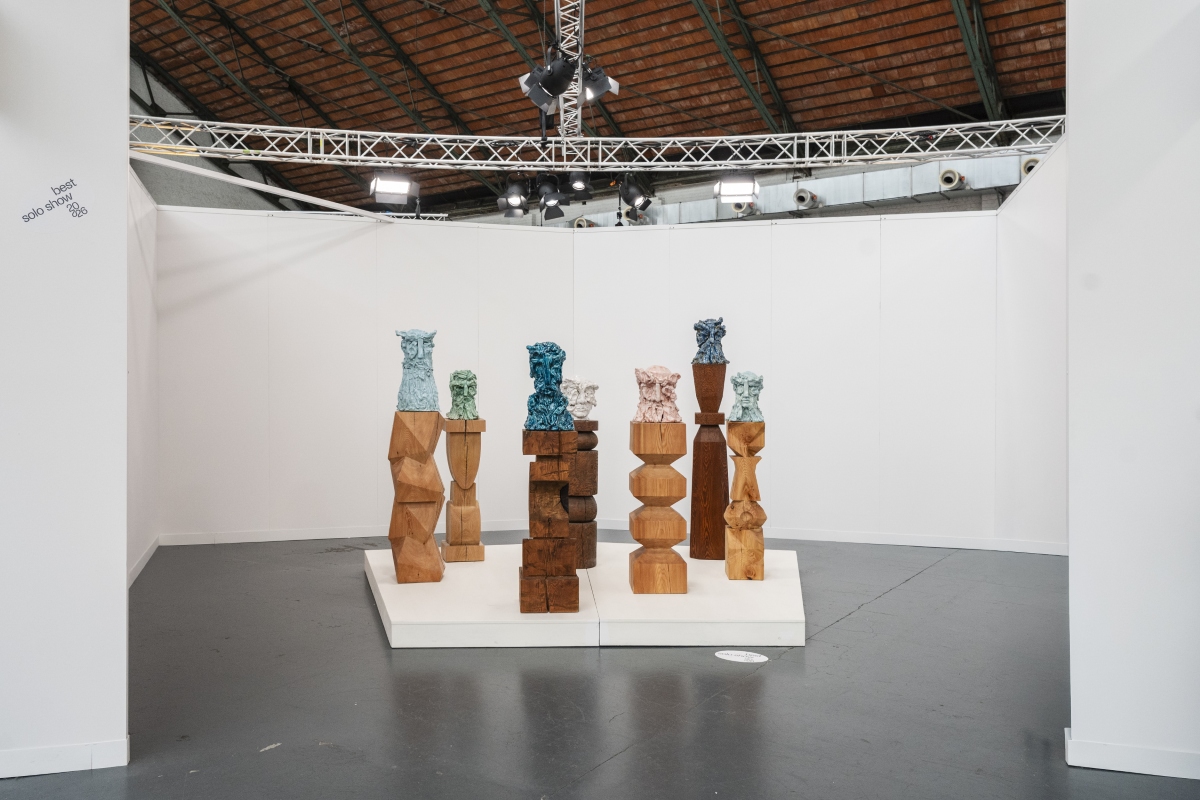
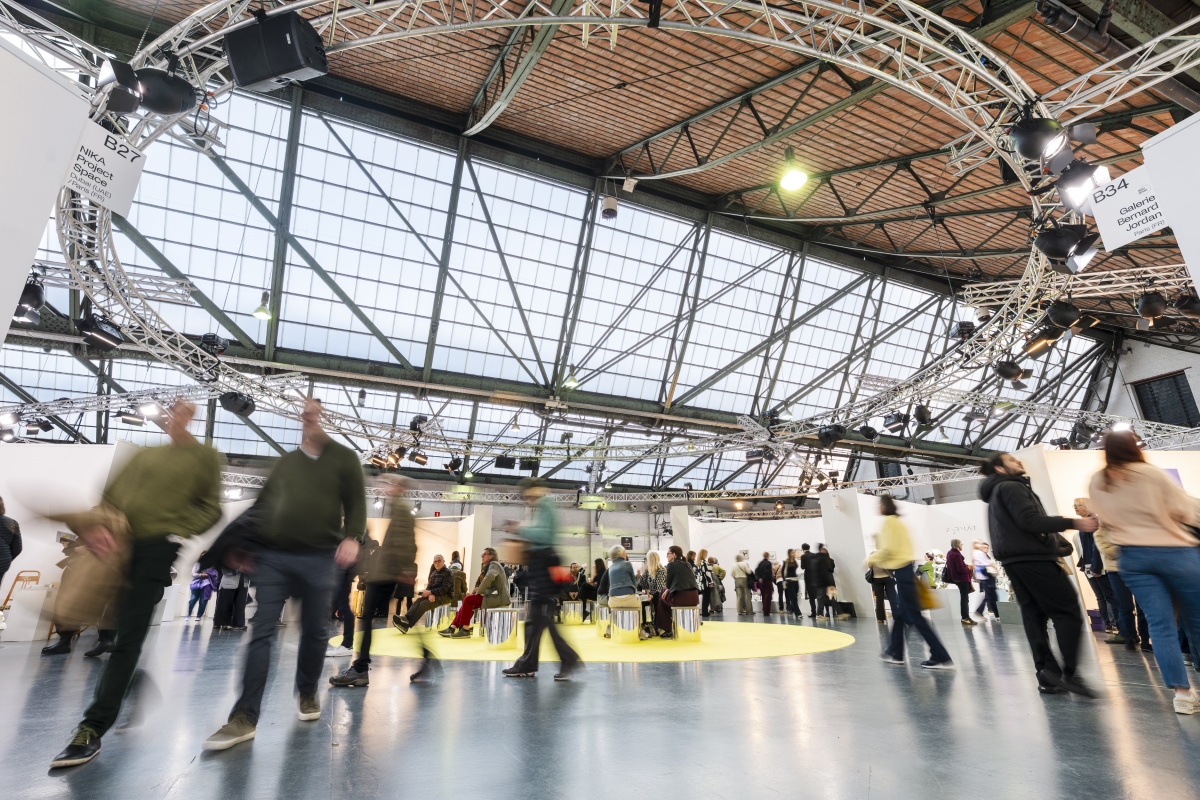
The fair itself was the perfect size with two halls filled with participating galleries and a third hall for publishers, talks, and a cafe with seating. I normally feel overwhelmed in these types of settings. In fact, my previous article for this publication described how I would disassociate nestled in amongst the booths of PAD London. I was fully prepared to experience the usual fair anxiety and overstimulation but I did not at Ceramic Brussels. It felt digestible, in the best way possible. I did, however, have trouble finding the entrance. The Tour & Taxis location turned out to be a Goliath venue containing a circus school, immersive Harry Potter experience, and spaces for activities like padel. I didn’t see any signage for the ceramics fair but luckily, the Ceramic Brussels branding (font and yellow color) is consistent because I figured out the entrance soon enough. I overheard a confused couple looking for the fair on my way out and can imagine newcomers getting lost. It felt like seeking the door to a speakeasy bar. If you know, you know.
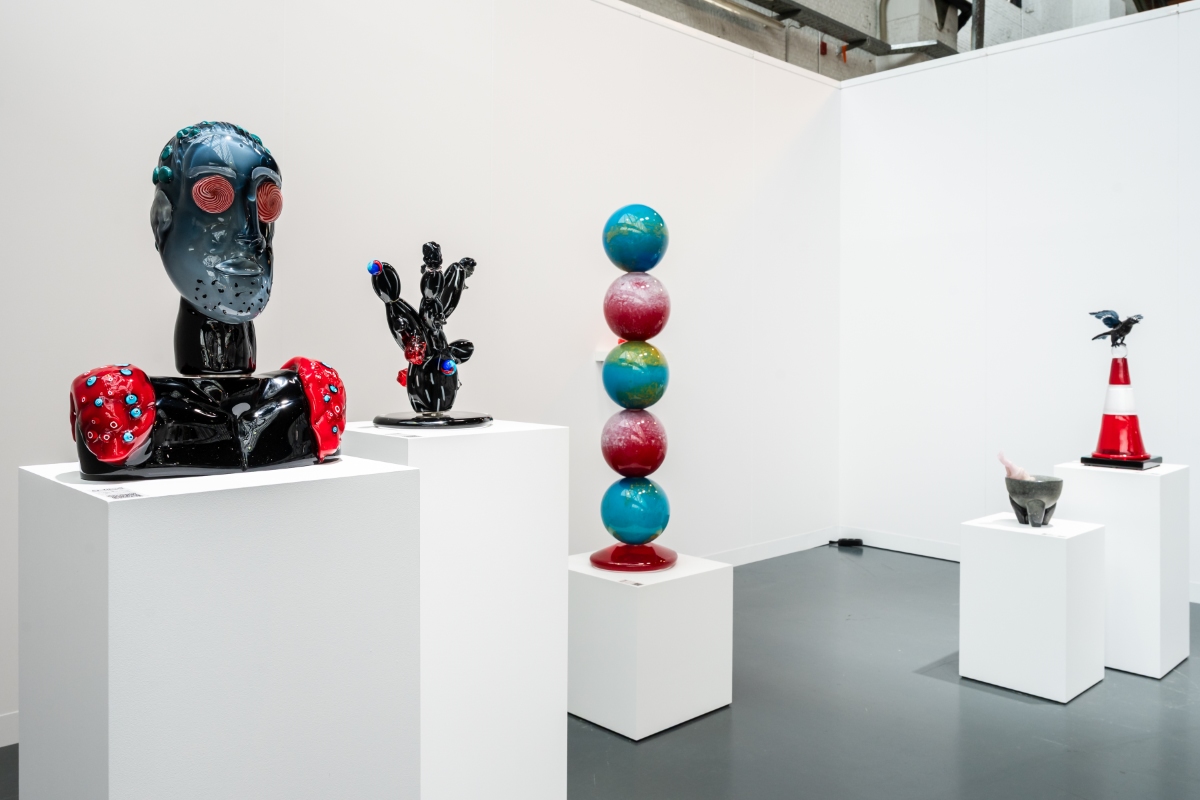
What is unique about Ceramic Brussels is that it showcases contemporary works. While other fairs largely featuring ceramic art seem to have a greater ratio of works by masters rather than living artists, the ratio seemed inverted at this fair in Brussels. There were many works by emerging and mid-career artists working in clay. Additionally, I noted that a large portion of galleries featured at Ceramic Brussels do not exclusively work with ceramicists and normally exhibit art in a variety of mediums. Compared to Collect Art Fair here in London, the participating galleries at Ceramic Brussels occupy the contemporary art and fine arts sector more than craft and design, which is exciting. Unlike Ceramic Art London or craft fairs, artists are not individually responsible for upfront costs and the presence of gallerists elevates the works on view. One question I do have is about Al-Tiba9 Gallery. Frankly, I was confused. Why were they presenting a solo exhibition of exclusively glass sculptures? Please reach out to me if you have an answer. While some galleries were also showing paintings, photographs, and textile works, this was the only gallery in which the namesake material was absent.
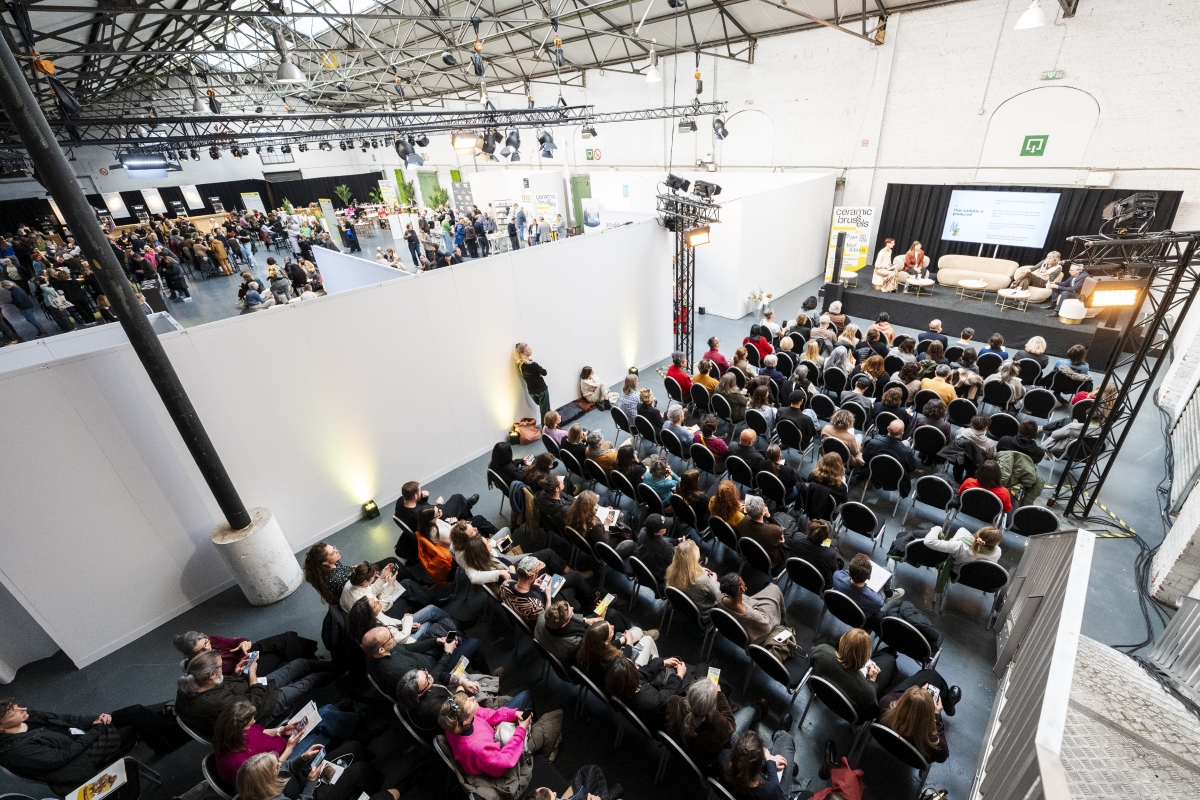
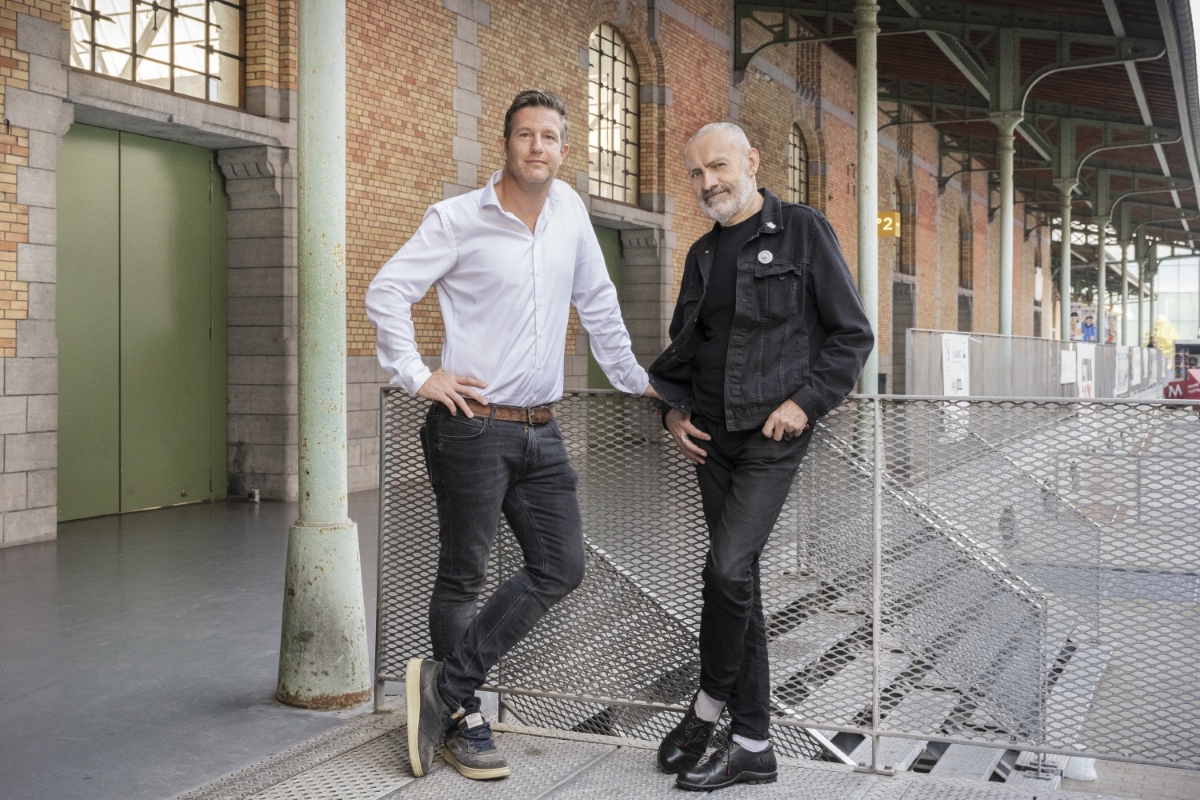
The fair is 1000% worth a visit and the location in Brussels makes it convenient for many European countries, as well as post-Brexit UK that is a short flight or train-ride away. The city is fairly walkable and cozy in wintery January, an affordable time of the year to travel, and there’s ample street food like frites and waffles. I expect more galleries from the UK and other countries beyond the EU in future editions. As someone who books holidays nearly a year in advance, I appreciate that the fair’s founders Gilles Parmentier and Jean-Marc Dimanche have already secured and announced the dates for the fourth edition: January 20-24, 2027. See you there next year.
Unu Sohn is an artist and ceramicist based in London. She holds a master’s degree in ceramics from the Royal College of Art.
Subscribe to Ceramics Now to read similar articles, essays, reviews and critical reflections on contemporary ceramics. Subscriptions enable us to feature a wider range of voices, perspectives, and expertise within the ceramics community.