By Beth Williamson
Aneta Regel was born in Silesia (largely located in southwestern Poland) in 1976, but moved with her family as an infant to Gdynia in northern Poland. The family lived in a modernist concrete tower block on the edge of the city, close to the sea and the forest. Poland was a communist country until 1989 when governmental change came and Regel was just thirteen years old at this time. From the age of 15 she attended a specialist art college and explains, “I had a need to work in three dimensions quite early on. There was a feeling of grounding myself, of grounding my world and settling down.” From 1996 to 2000, Regel studied Sculpture at the Academy of Fine Art in Gdańsk where sculpture tutor Irene Zabroka introduced her to clay as a sculptural material. It was here too that she learned to work with different materials such as wood and stone. The important thing was that she was working with natural materials. Moving to London aged twenty-five, Regel undertook further studies, graduating in Ceramics at the University of Westminster in 2003 and in Ceramics and Glass at the Royal College of Art (RCA) in 2006. Westminster’s Harrow Campus, no longer in existence, was very traditional. While not ideally suited to Regel’s interests, she says “It allowed me to just choose the ways I was interested in and wanted to learn more about certain techniques.” At the RCA she recalls things were “a bit freer, but also it gave me a platform to experiment more, especially working with Emmanuel Cooper. That was really interesting to get feedback from people who have such immense knowledge.” Working in clay and ceramics she says, “I was never interested in function. I always wanted to explore what the form does. I was always thinking of a dialogue of some sort and the process of adding different materials”. Essentially, she continued to make sculpture.
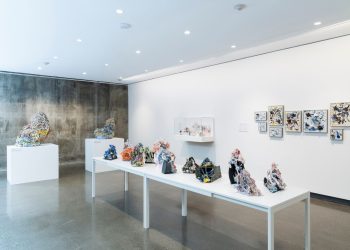
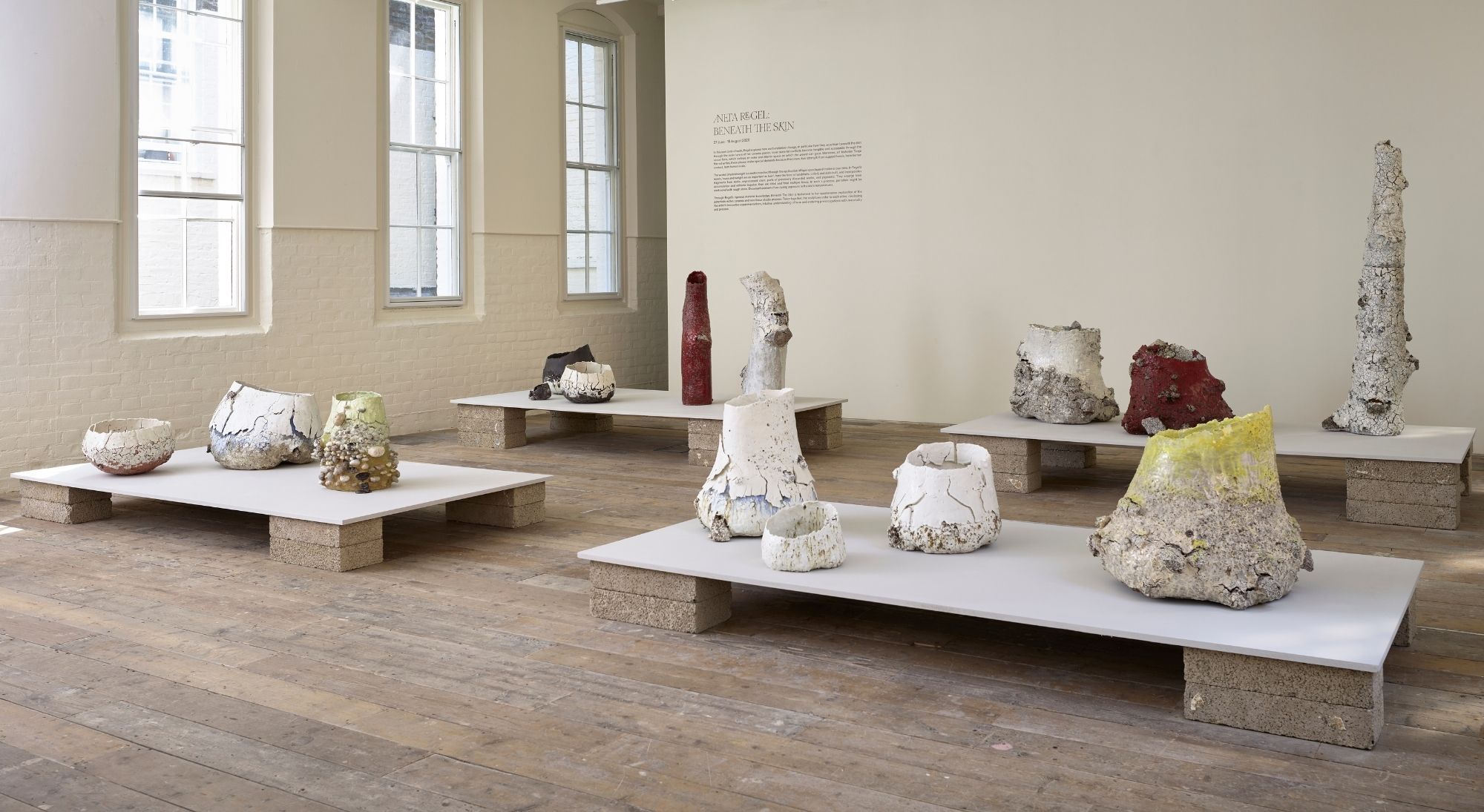
The recent exhibition Beneath the Skin at Sarah Myerscough Gallery in London (27 June – 15 August, 2026) showed twenty works by Regel that seem to recall the fissure and fragmentation of natural materials in extreme landscapes or harsh climates. Apart from being the perfect antidote to the manmade commercial environment of central London, these works, all made in 2026, also recall the rural landscape of Regel’s hometown in northern Poland. Less than a handful of the works on show follow the artist’s interest in vertical, tree-like structures – White Rhizome, Red Pien 1 and Volcanic Totem, all made this year. With just these few exceptions, all the other works are containers titled Raining stone, each with a subtitle referencing its colour. As she explains to me in her studio, she works on groups of objects at a time so there is a particular connection between those families of objects. Regel’s material interrogation of her memories of home in these highly textured containers is double-edged. Their surface and form, their material existence, sits as a physical presence in the gallery, building on the work Regel did in the 2023 exhibition Memory Landscape. On that occasion there was less focus on the vessel or container and more on totemic forms that recalled the forests and folklore of rural Poland during Regel’s childhood. Now, in Beneath the Skin, the emphasis is on the vessel as container. The title, too, directs thoughts to beneath the surface and, in this instance, to the space contained within. The artist is clear that “they are not functional containers but still reference the idea of containment”. The question, I suppose, is what that contained space might mean.
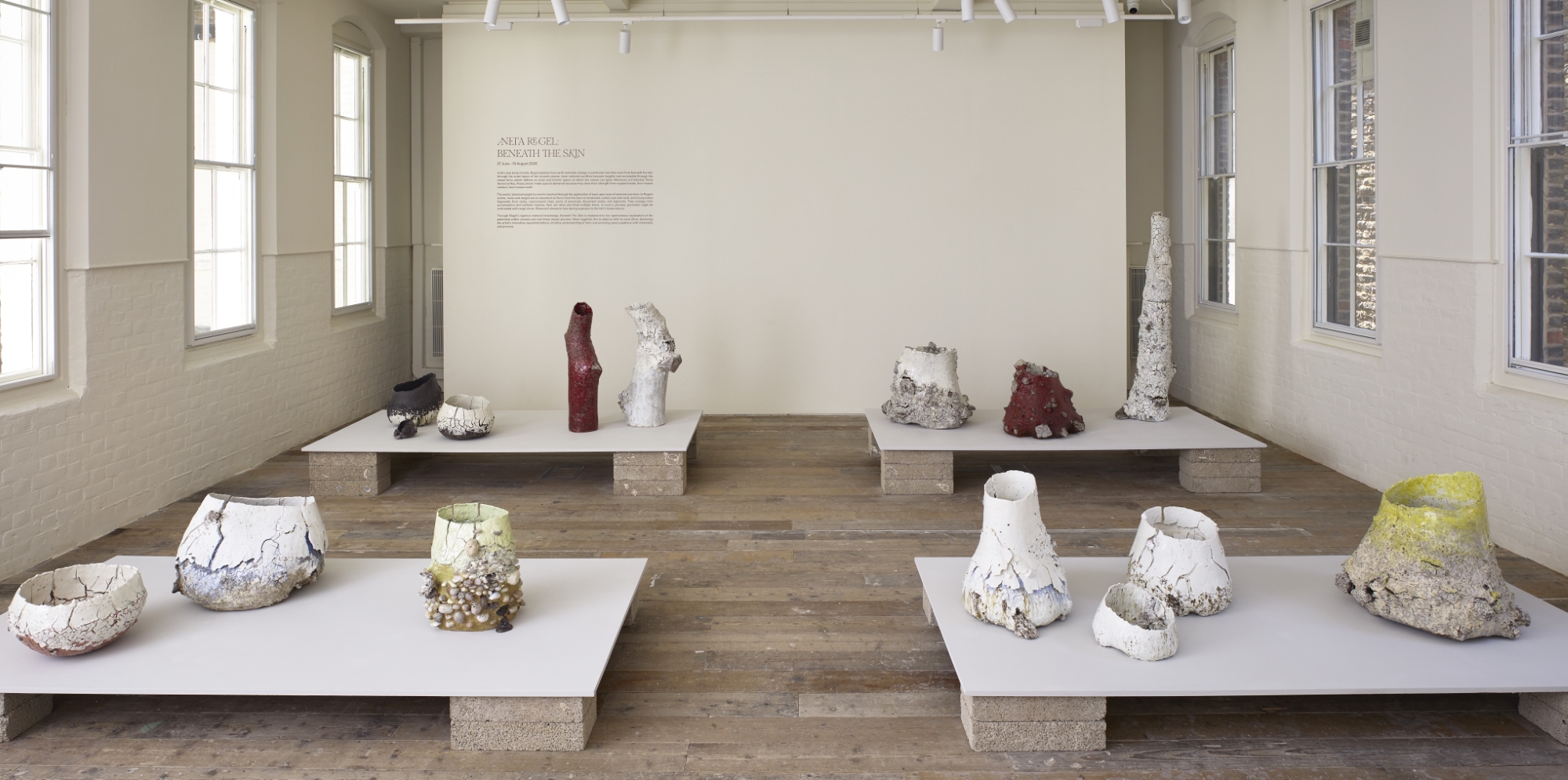
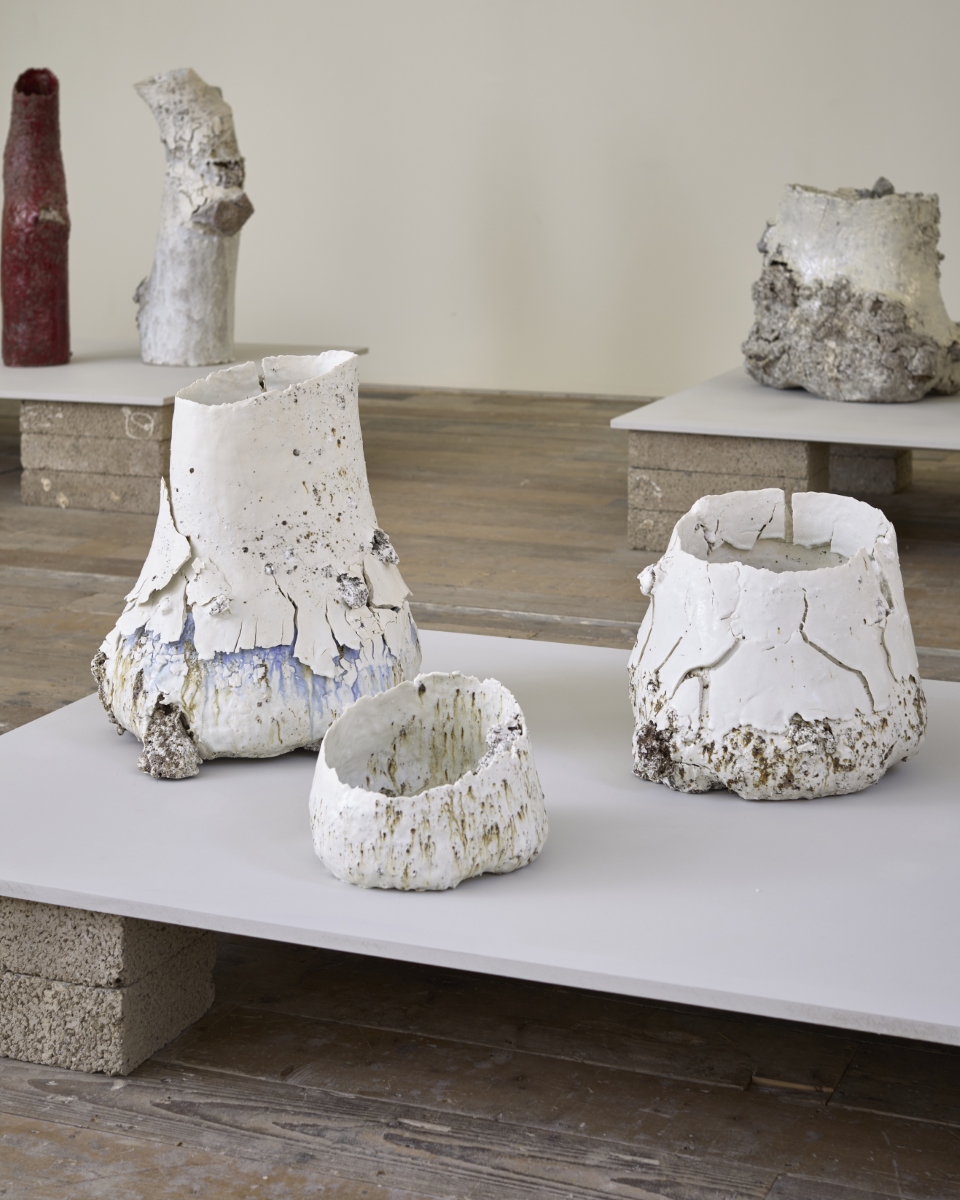
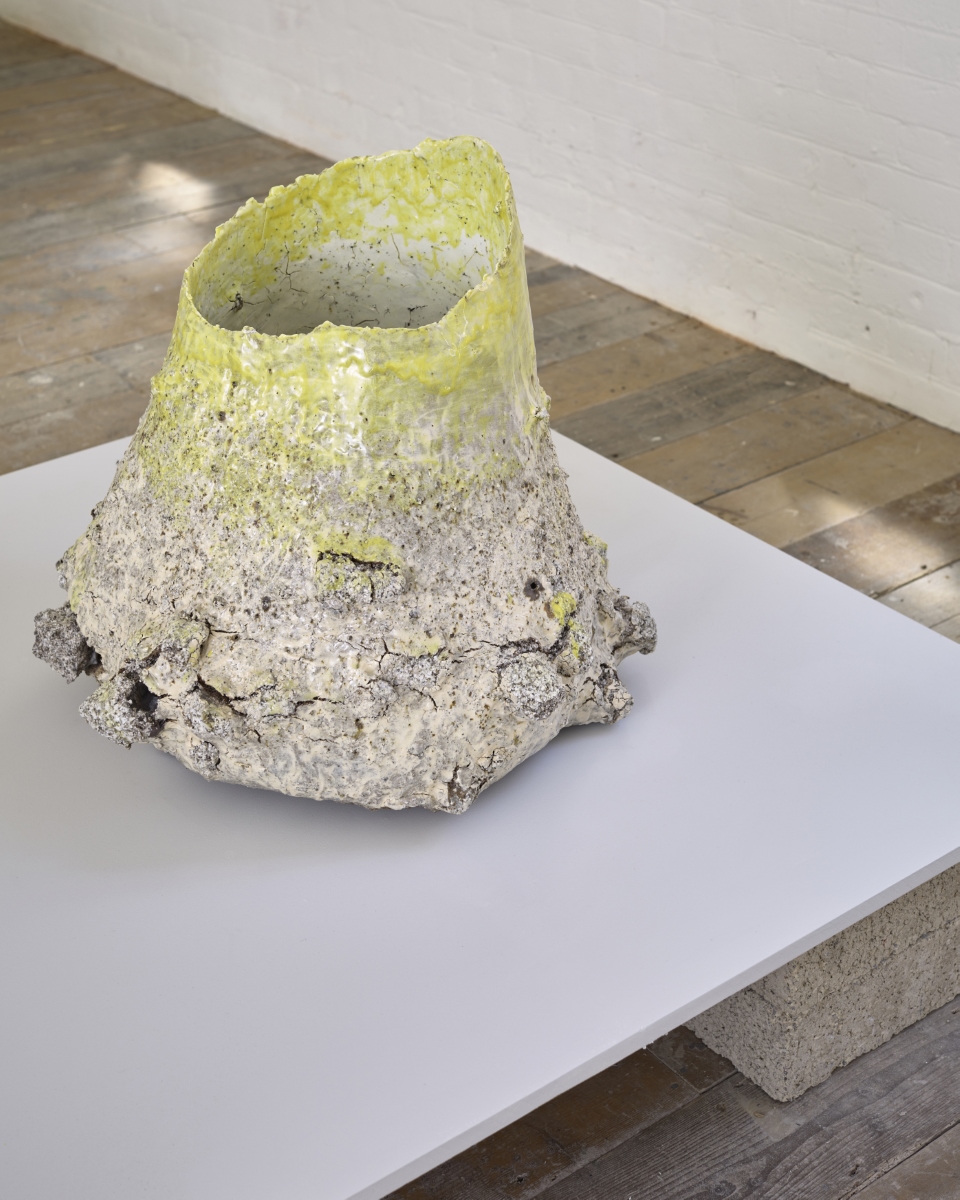
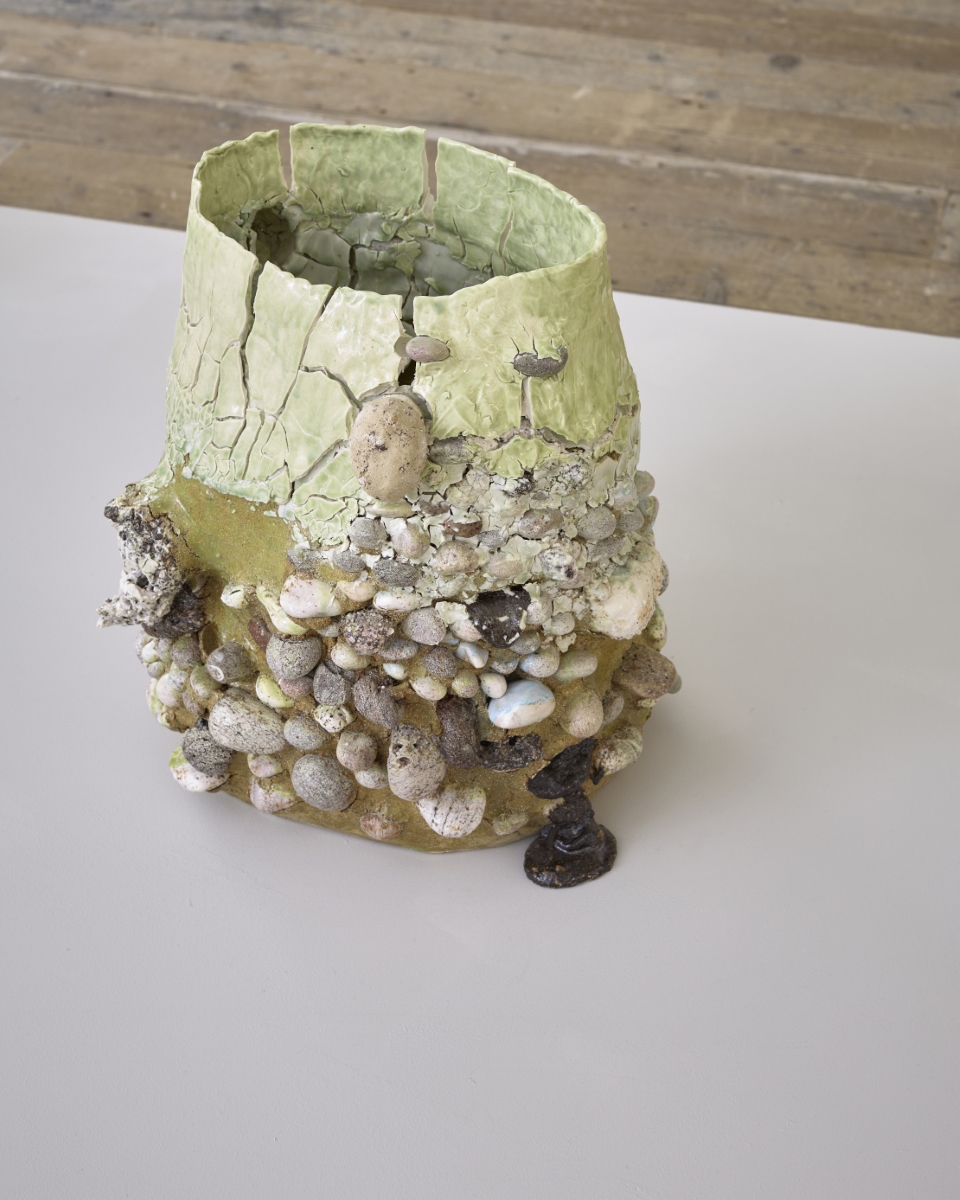
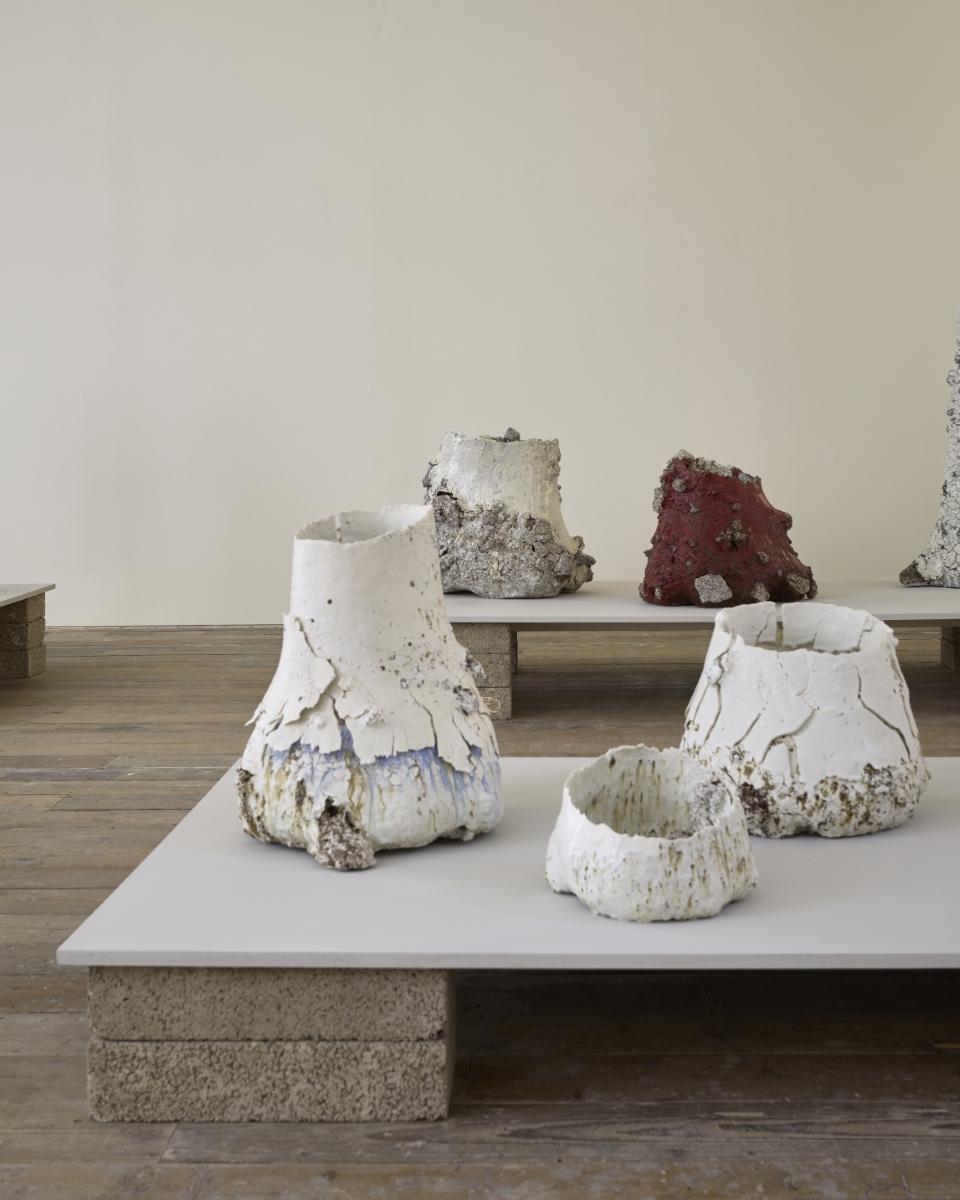
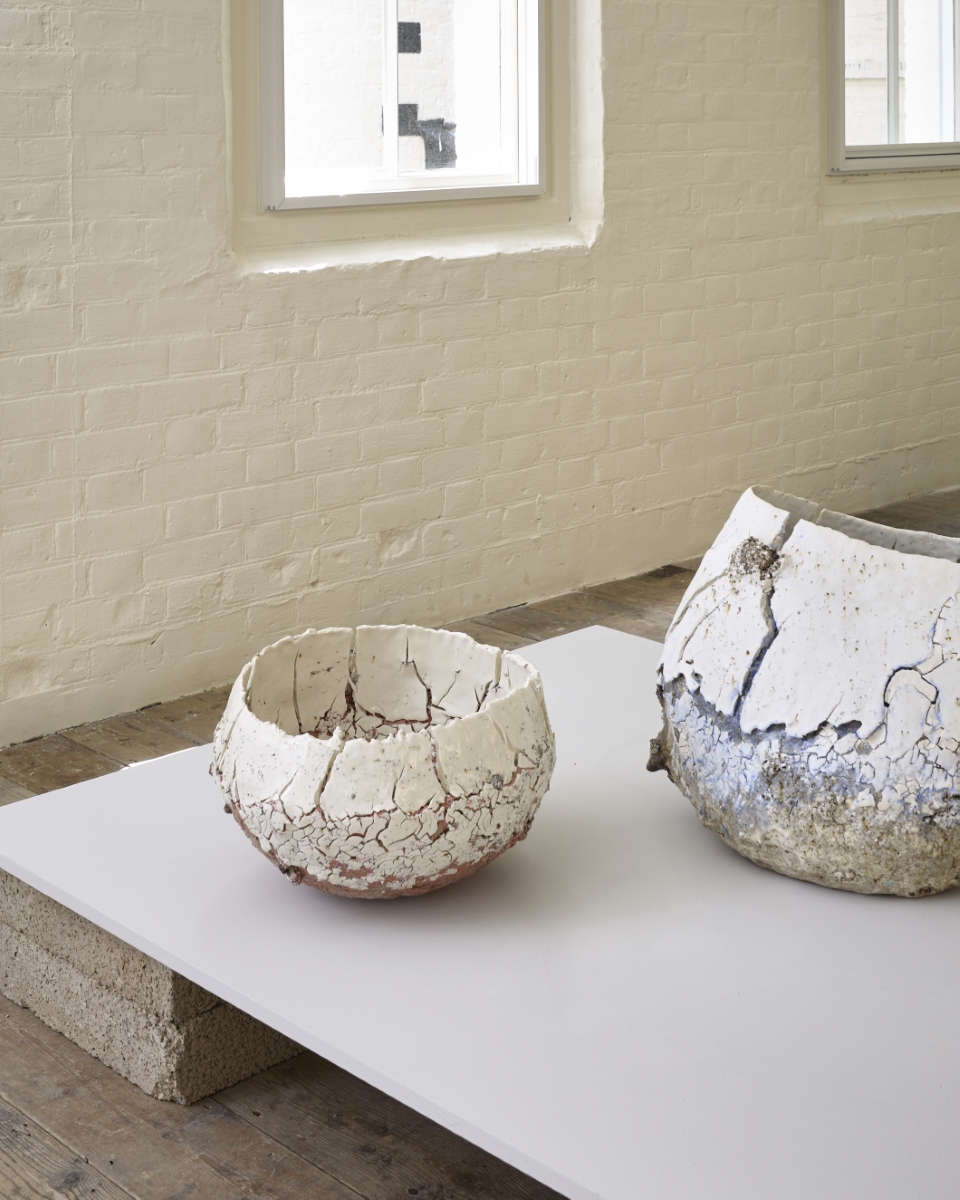
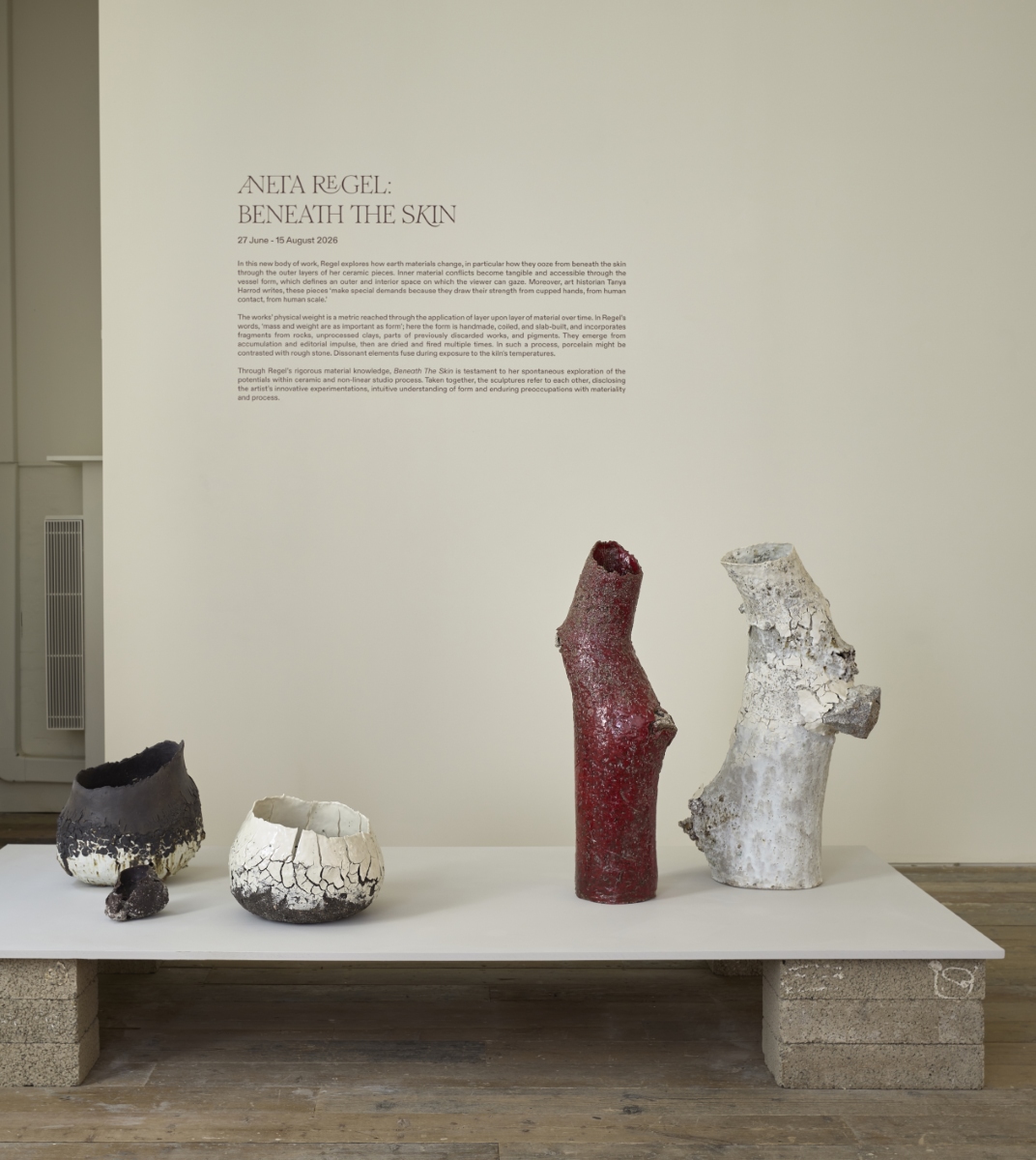
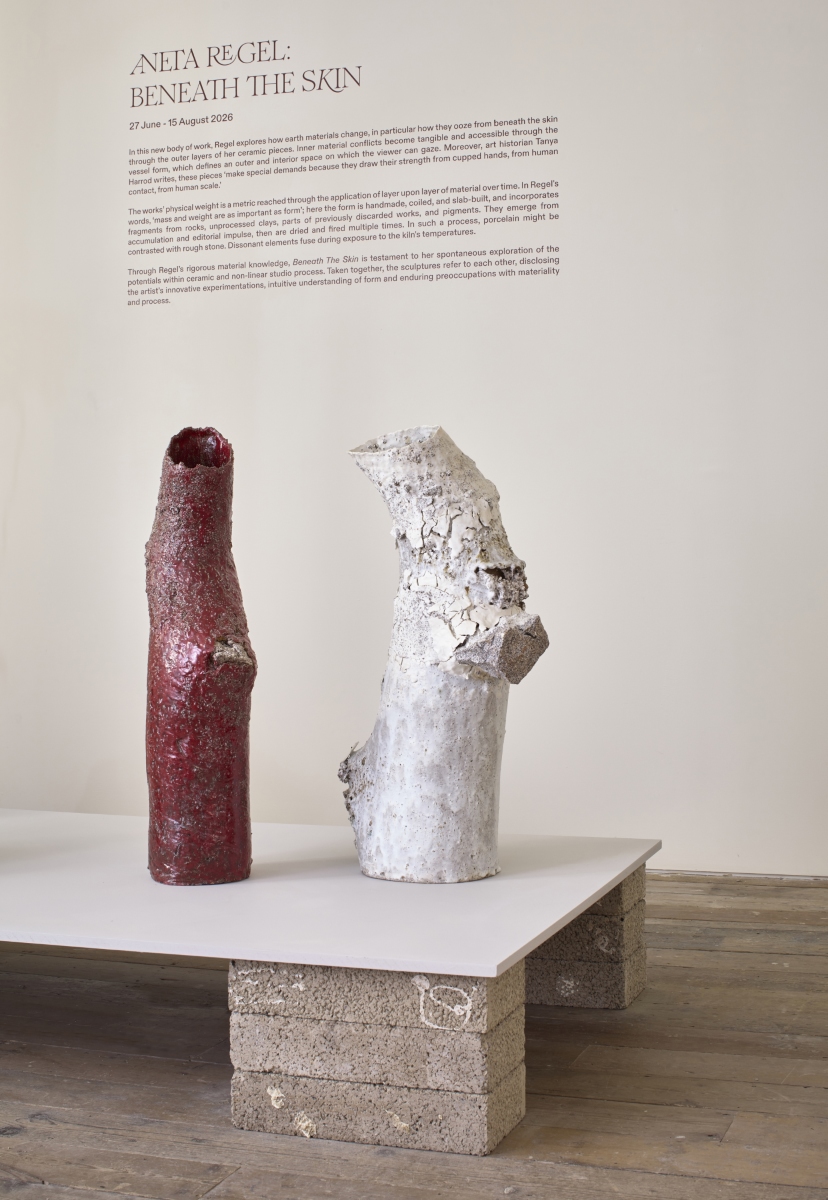
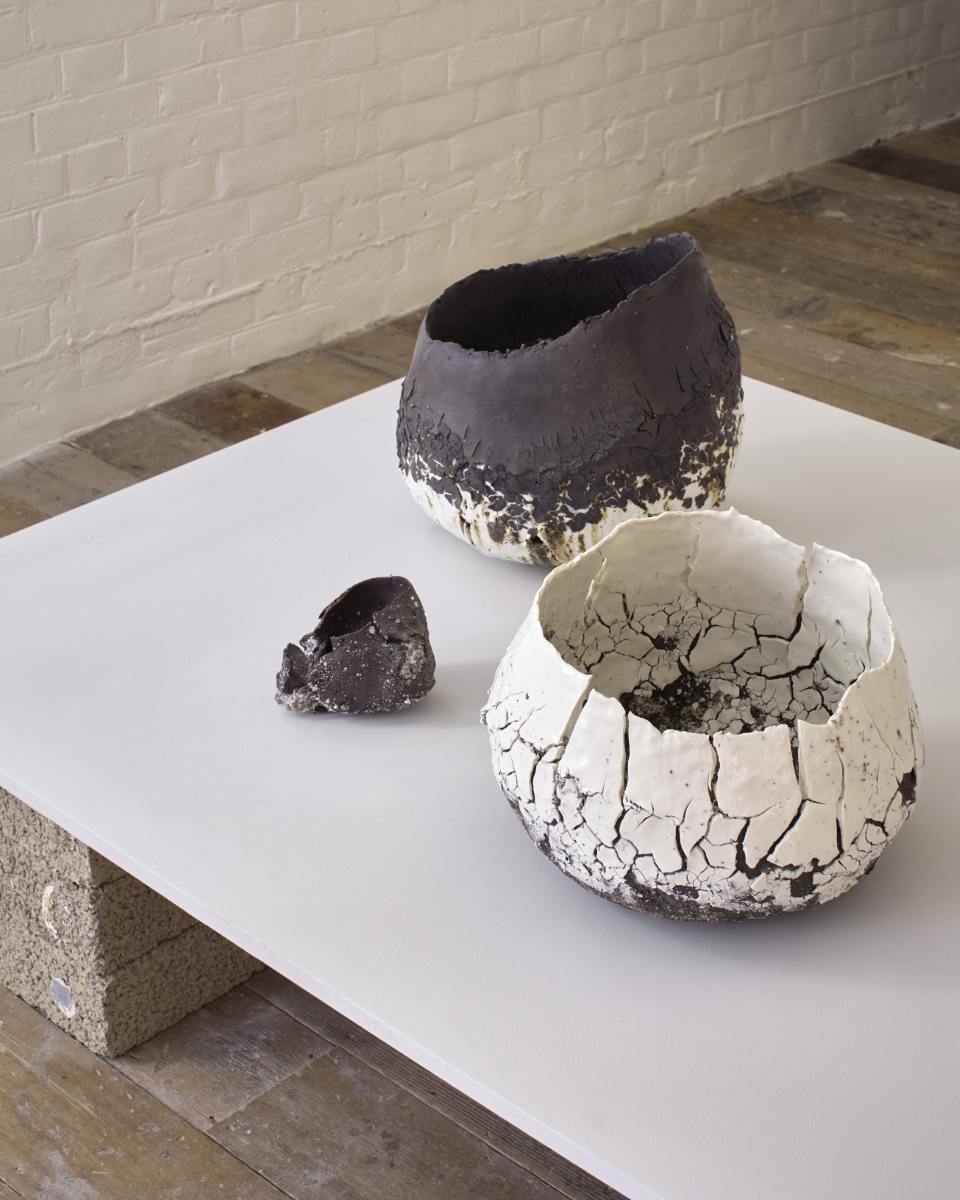
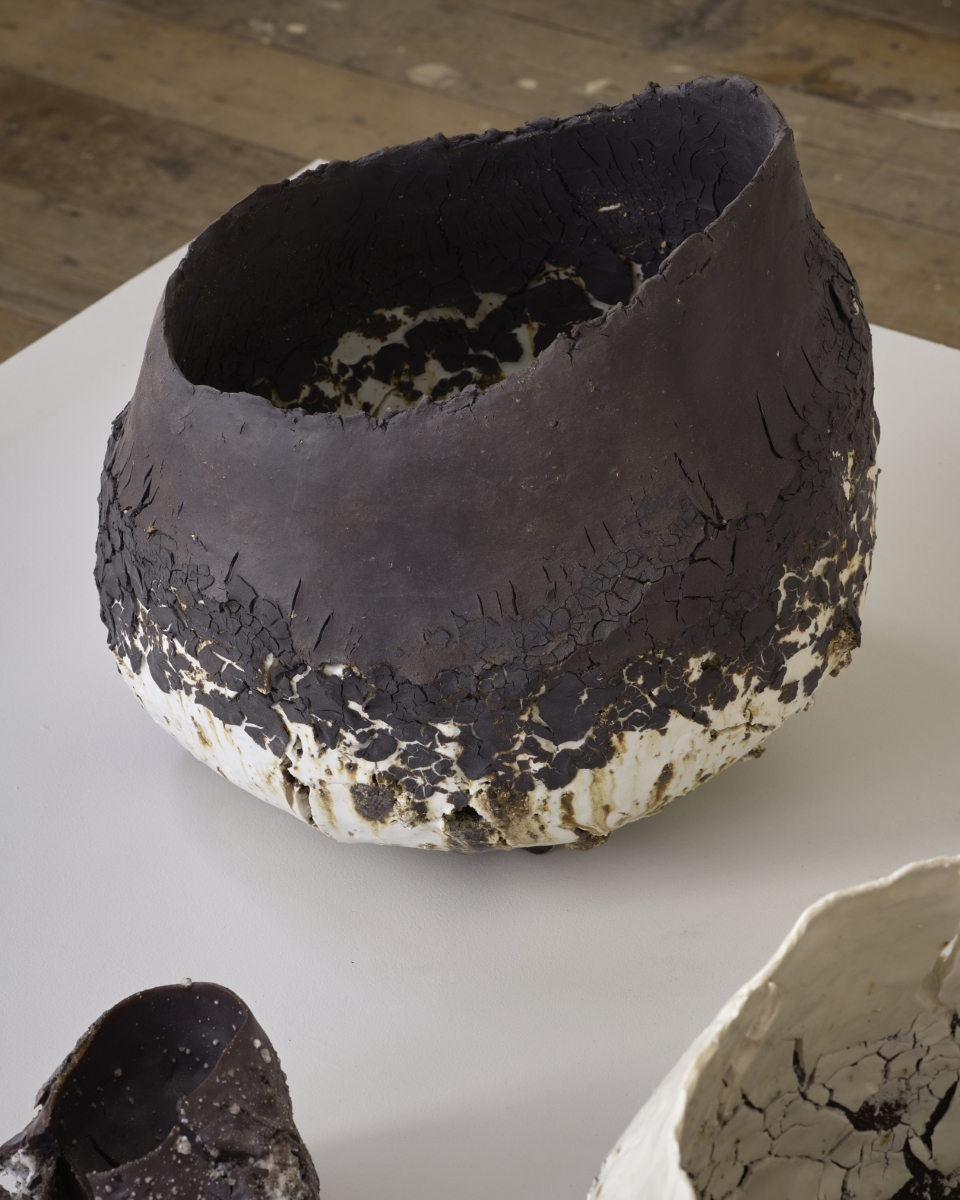
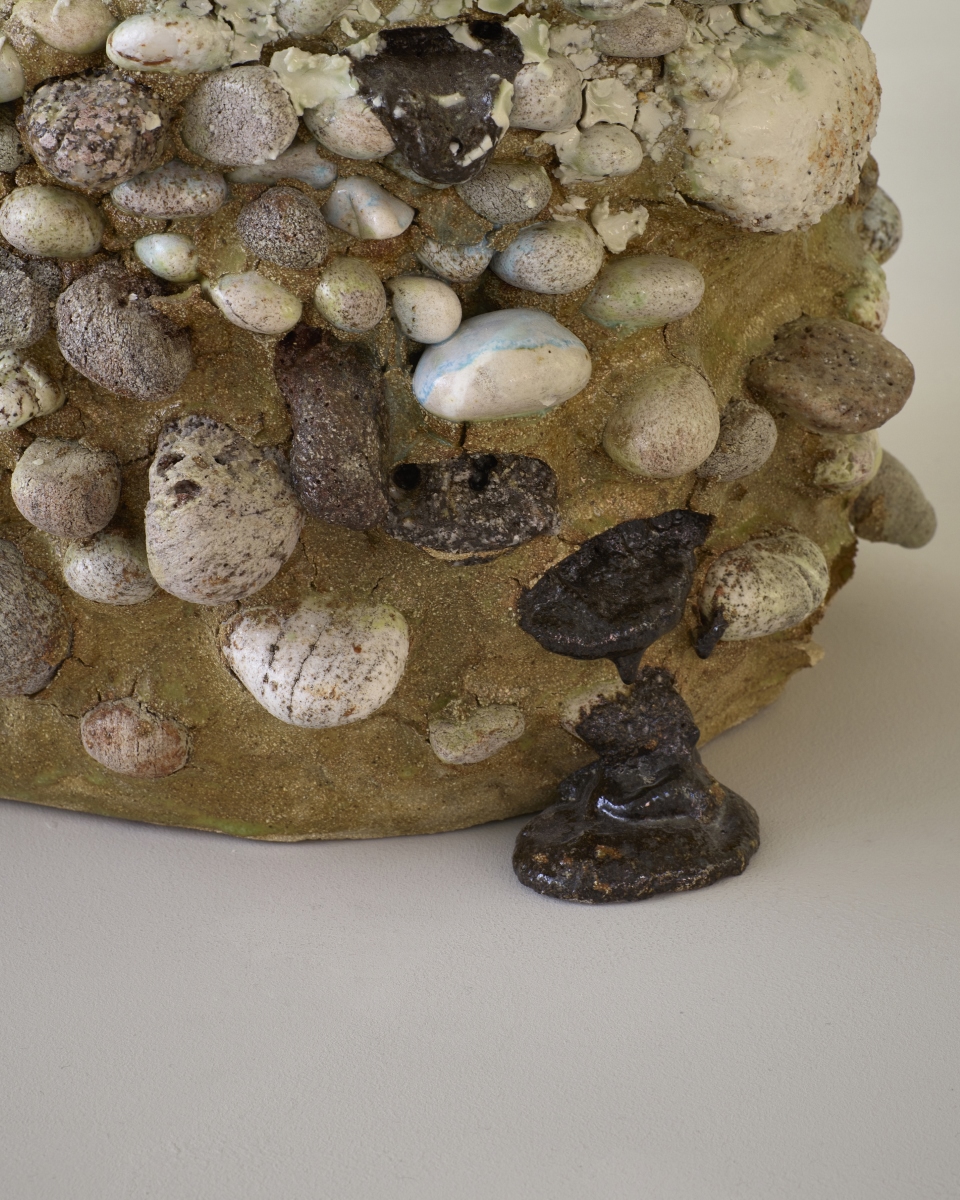
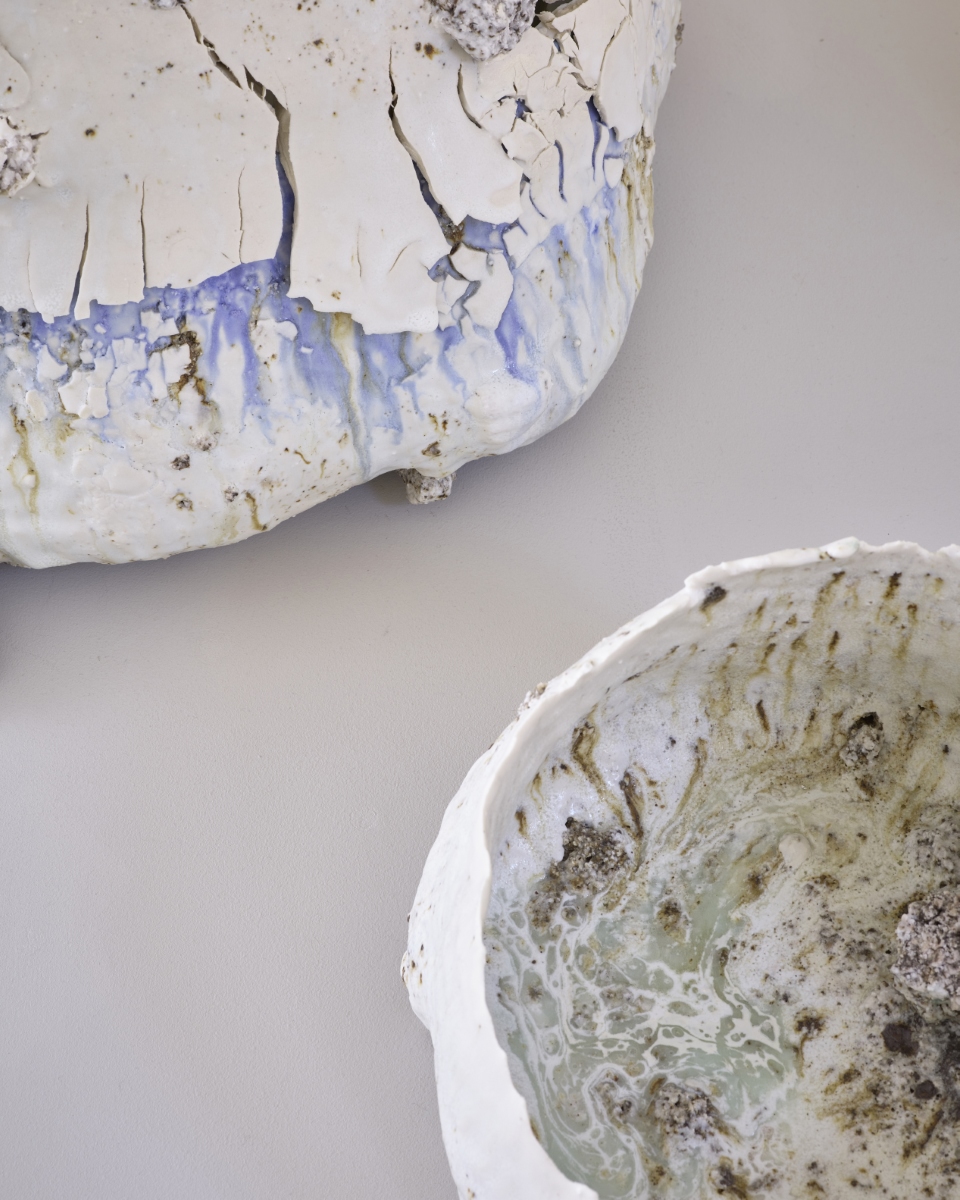
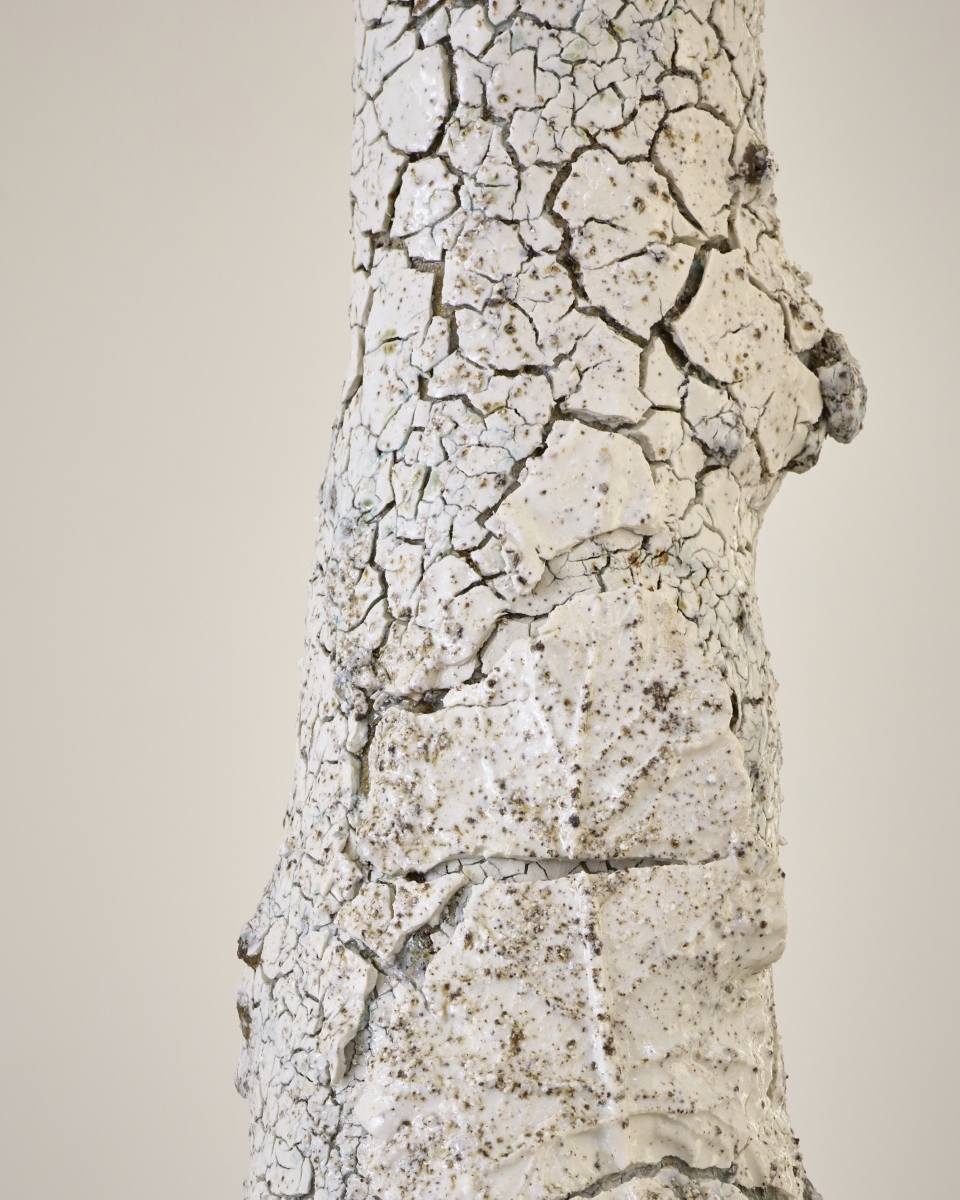
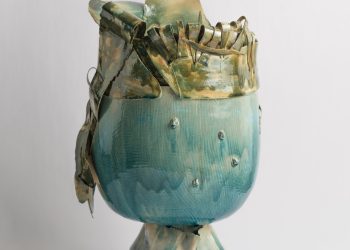
In her essay Memory Work in 2023, the art historian Tanya Harrod observed that vessels “make special demands because they draw their strength from cupped hands, from human contact, from human scale”. However, Regel’s vessels in her most recent exhibition largely exceed the scale of human hands and as she has explained, mass and weight are just as important as form. Mass and weight might be partly judged by eye and these vessels do appear heavy, replete with discordant materials and ideas. Porcelain is mixed with stoneware clay and rocks and glazed, all in a very intuitive way. Reconciling these elements and making sense of them is as much the for the viewer as the artist to do. These are hand-made objects. They emerge from a process of accretion as Regel adds stones to clay, clay to clay and mixes fired and unfired material. This includes material she finds on her way to the studio or on her travels, alongside a library of fired and discarded pieces, not quite ready to be completed. There is a long process of drying and firing that might take months. She fires her creations multiple times, covers them in thick glaze, but all in an intuitive manner. There is a degree of unpredictability. “That it is slightly unpredictable is quite refreshing. I think perhaps that is why I choose to work with materials that are alive. That’s something that sparks my imagination”.
The work, Regel says, “becomes a monolith of layers of whatever happened” in its making. So where does that leave the viewer? The rough material presence of these large vessels enacts a bodily effect that leaves us reeling. We might think of the ideas of philosopher Maurice Merleau-Ponty and his phenomenology of perception. This kind of embodied consciousness makes sense with Regel’s work as we further experience the interior spaces, peering into the shadow-spaces of these objects that quickly send us descending into our own subconscious. Curator Frederic Bodet has called Regel’s forms “powerful but troublesome” and it is their rawness that impacts upon us. This perhaps connects to Regel’s love of early Netherlandish painting. She mentions Hans Memling in particular and “the rawness of emotions” encapsulated in his painting.
If art arises to articulate something that cannot be easily verbalised, then what exactly is it that these objects say? Regel’s vessels are large, heavy, roughly finished, colourful. I say this not to criticise but to indicate that they are perhaps excessive in some way or other. This sense of excess gestures to something beyond human, a kind of convulsive metamorphosis that puts their origins in doubt. We cannot quite make sense of these seemingly primordial objects and yet they are on a human scale, one that makes us respond to them as if human, even to want to embrace them. In these works, Regel seems to distill her experience of the natural world and her memories of that experience into an intensely physical form that also contains an unspoken unconscious within. This ambiguity is underlined in the gallery’s small downstairs space where a disused, blocked staircase is closed off by iron railings. Dotted around within this space are around half a dozen of Regel’s smaller vessels. Are these somehow precious, to be revered? Perhaps they hold an ancient religious or spiritual purpose? Or are they, rather, the closed off contaminated remnants of a long-past nuclear winter? It is impossible to say.
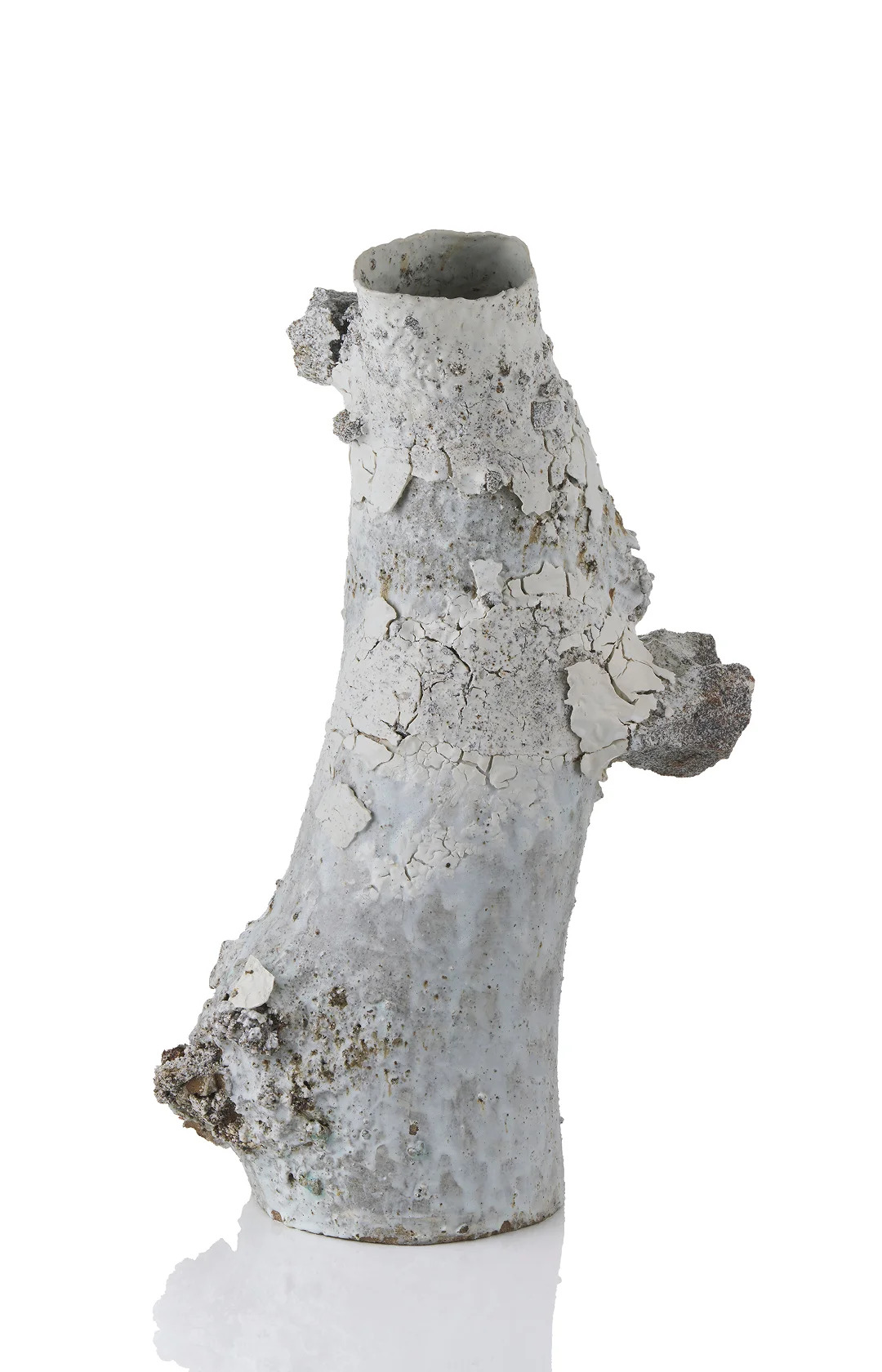
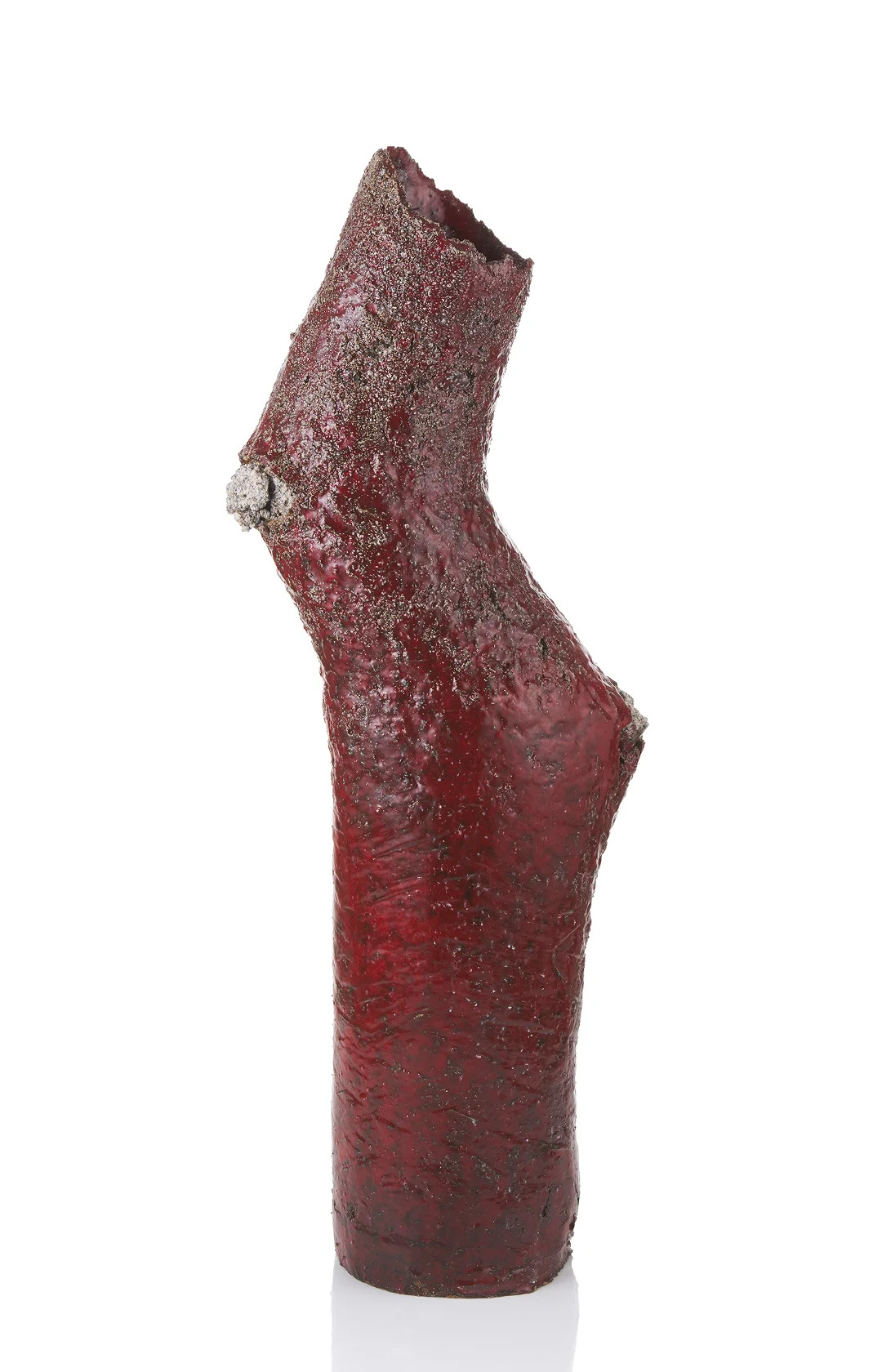
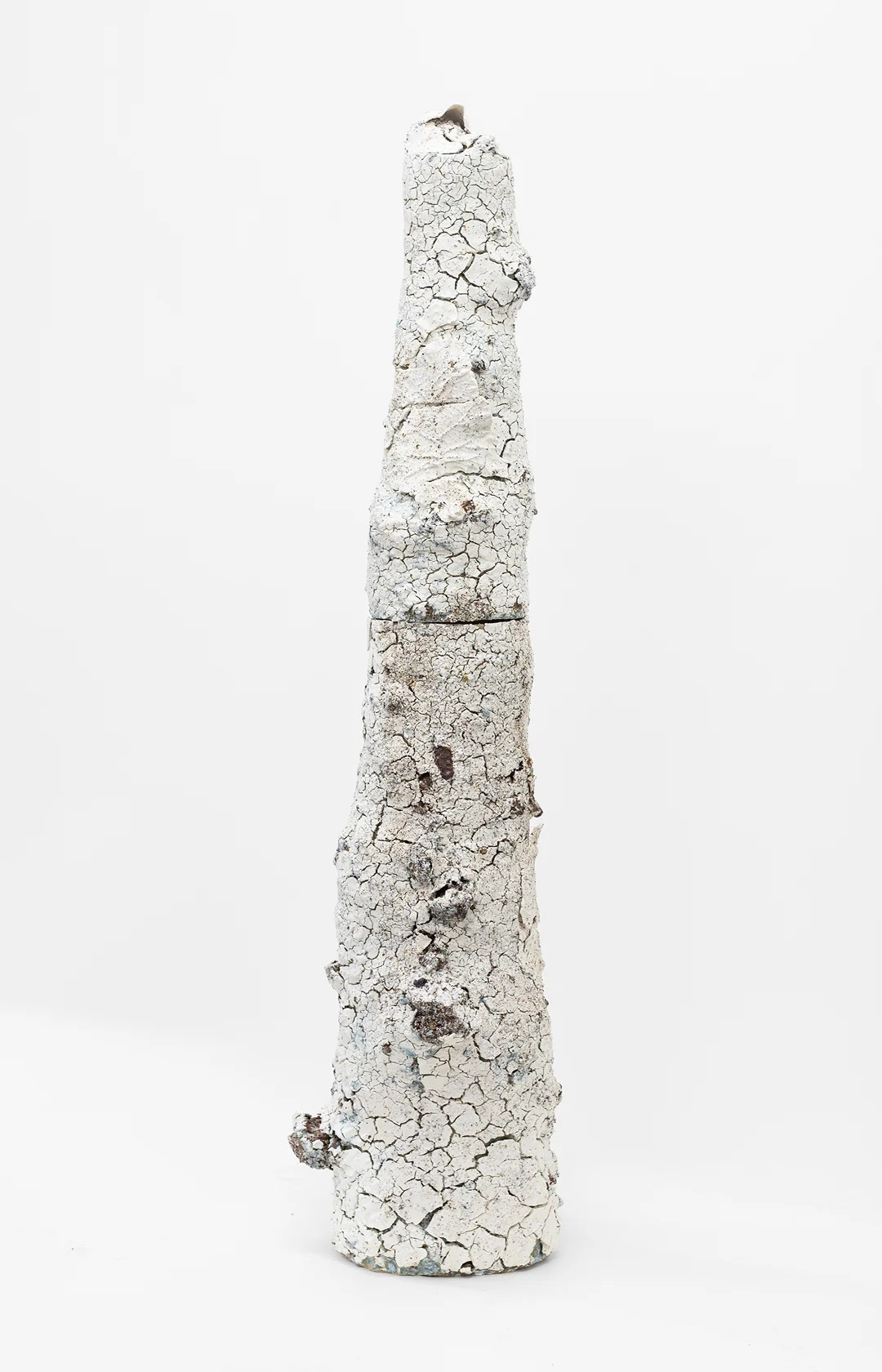
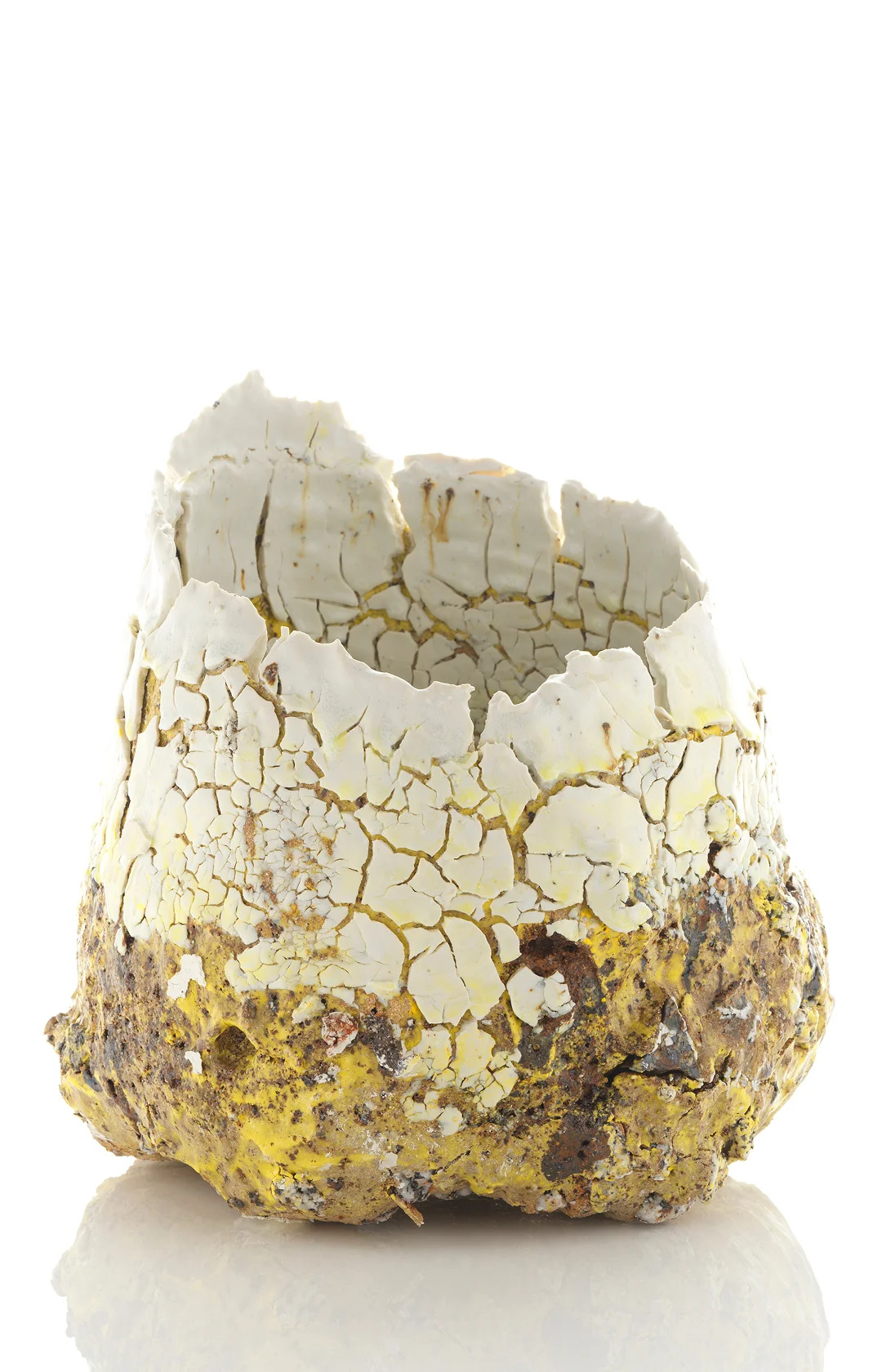
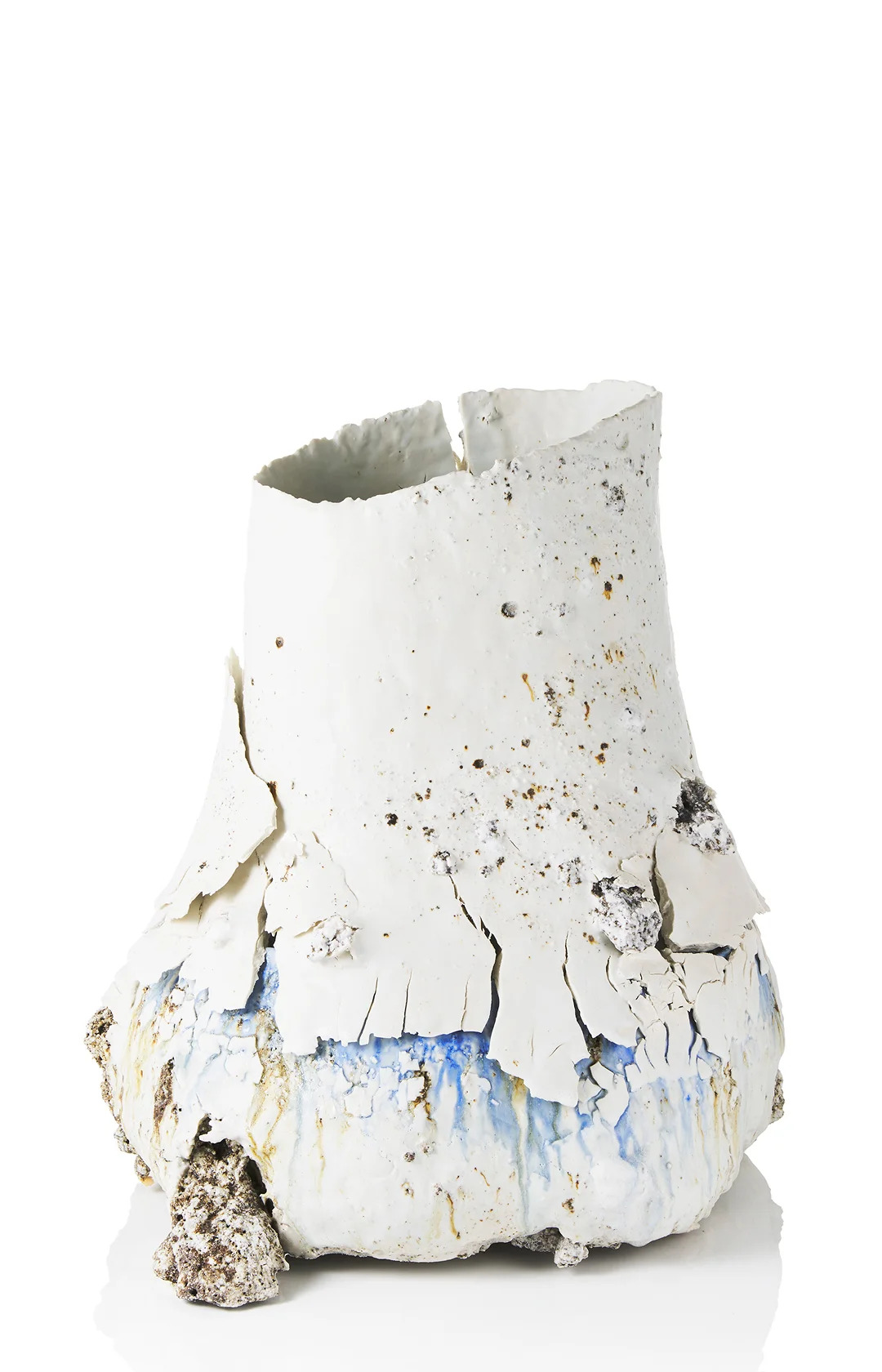
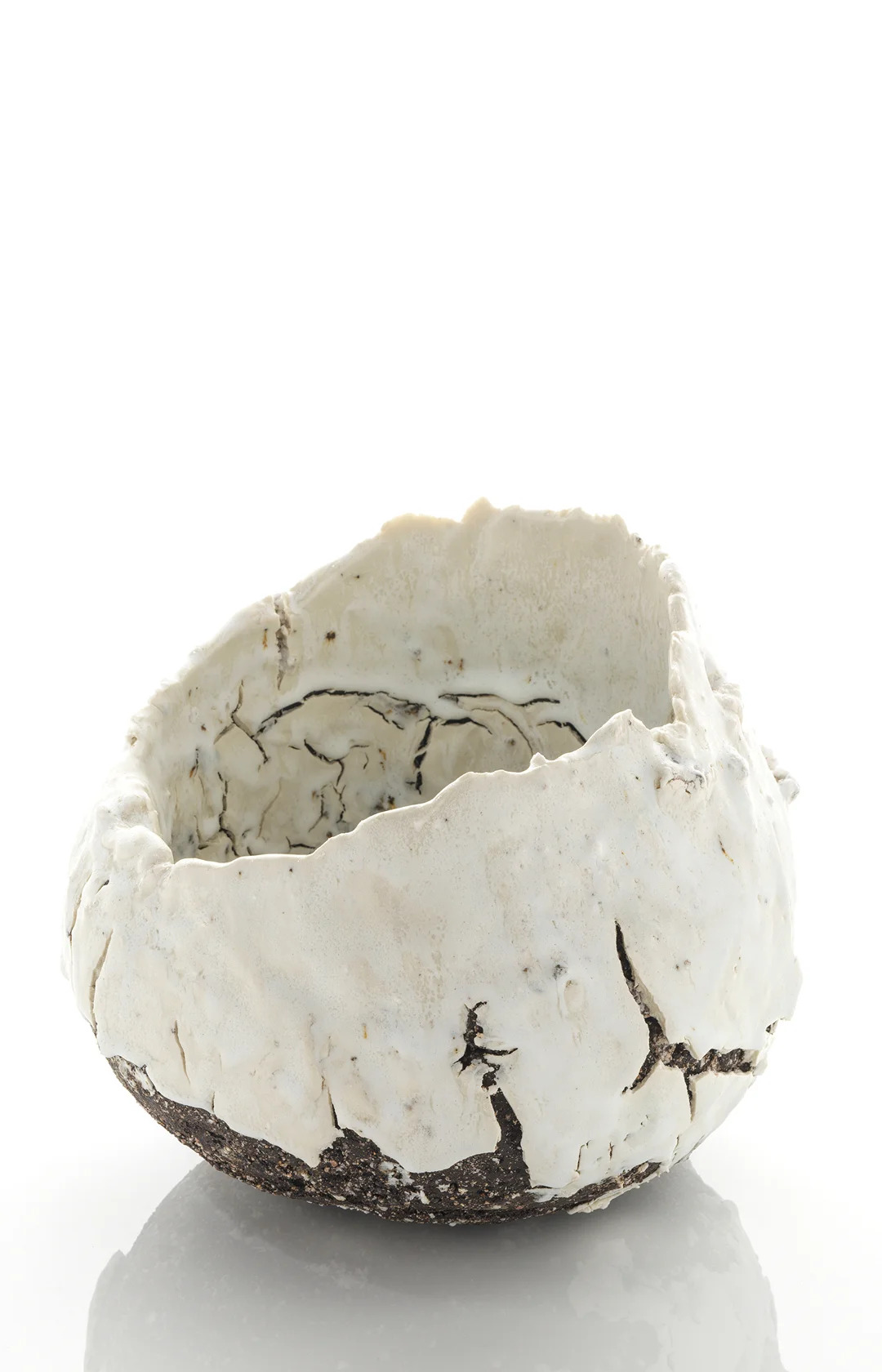
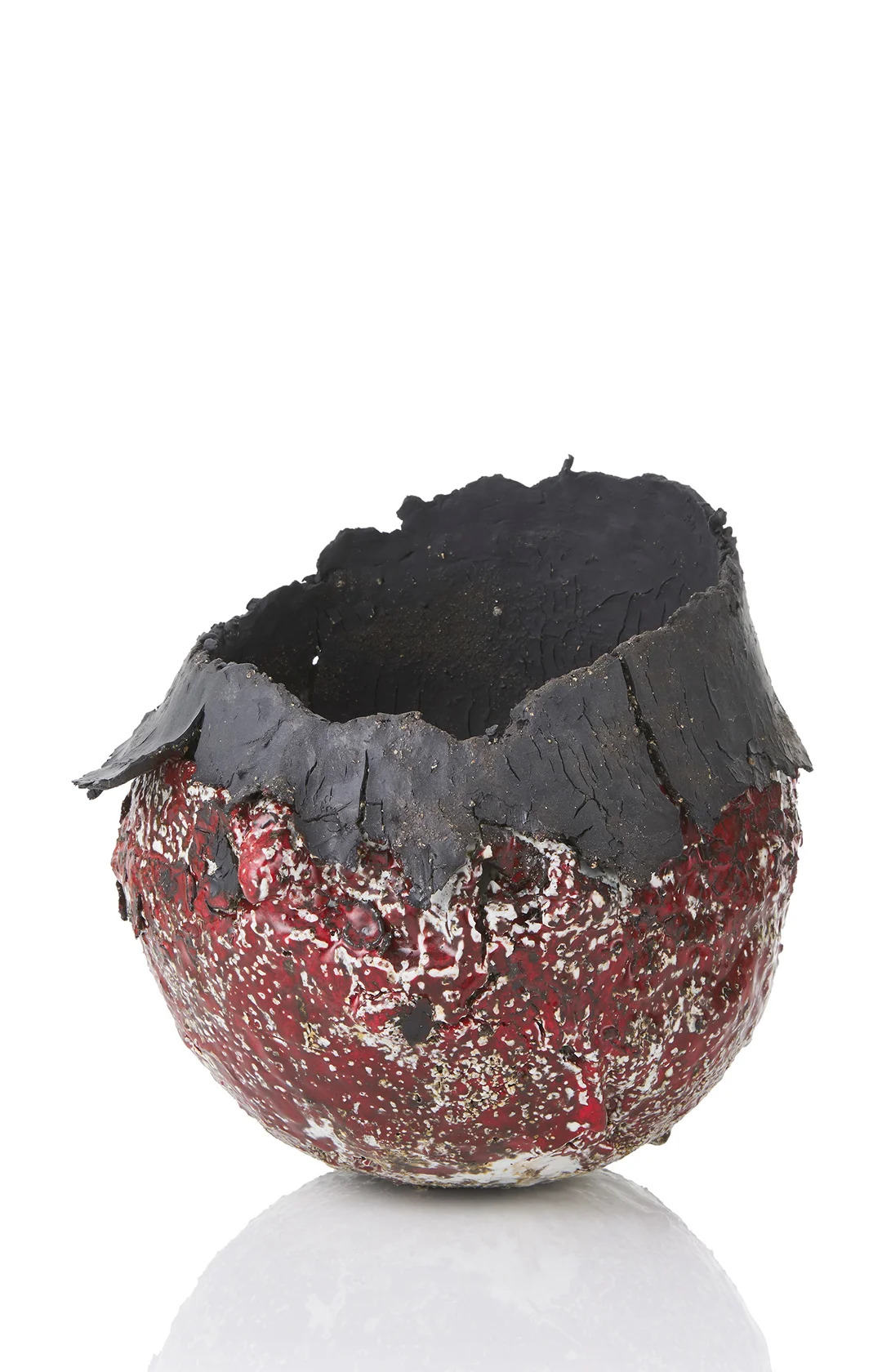
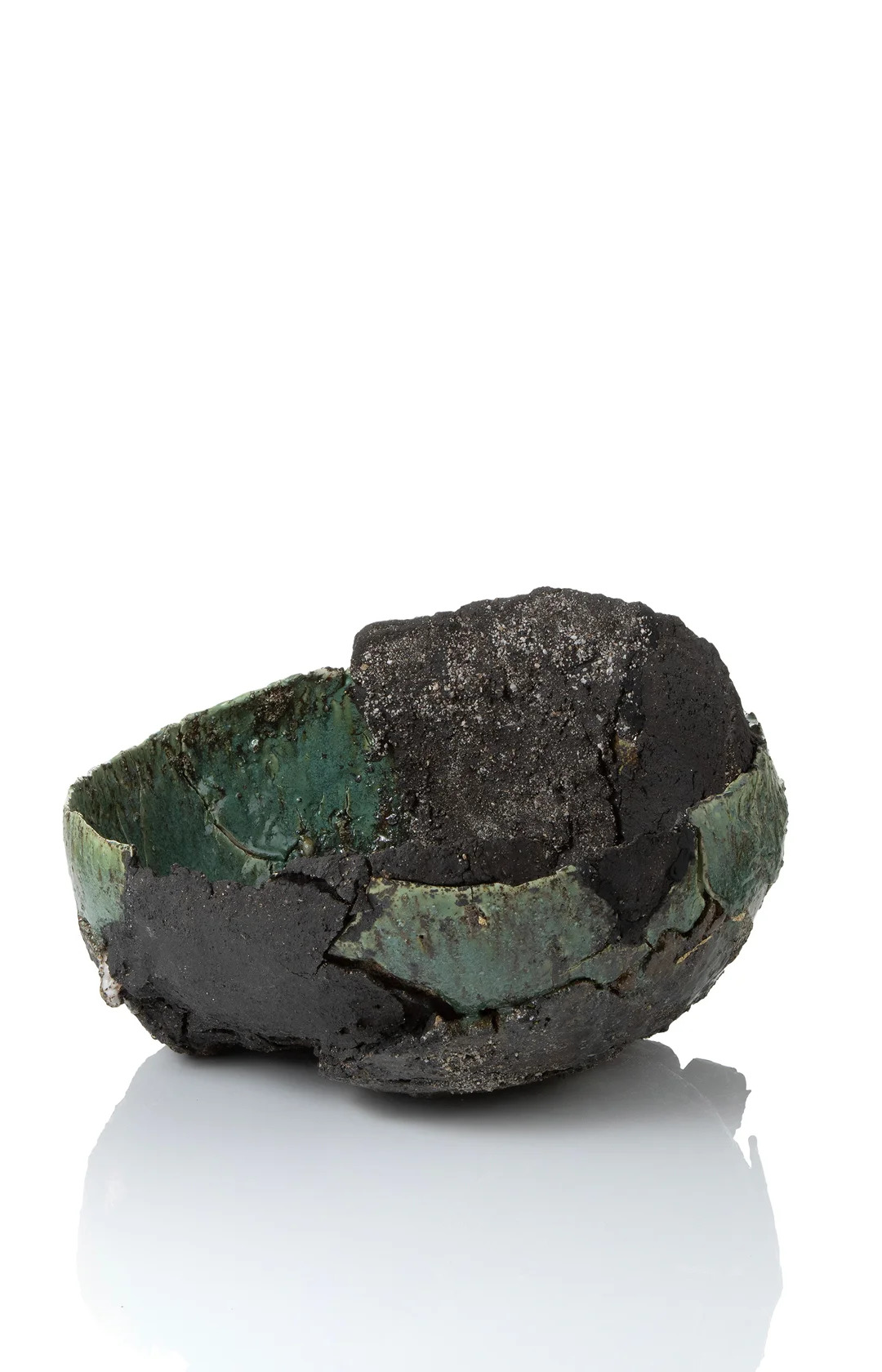
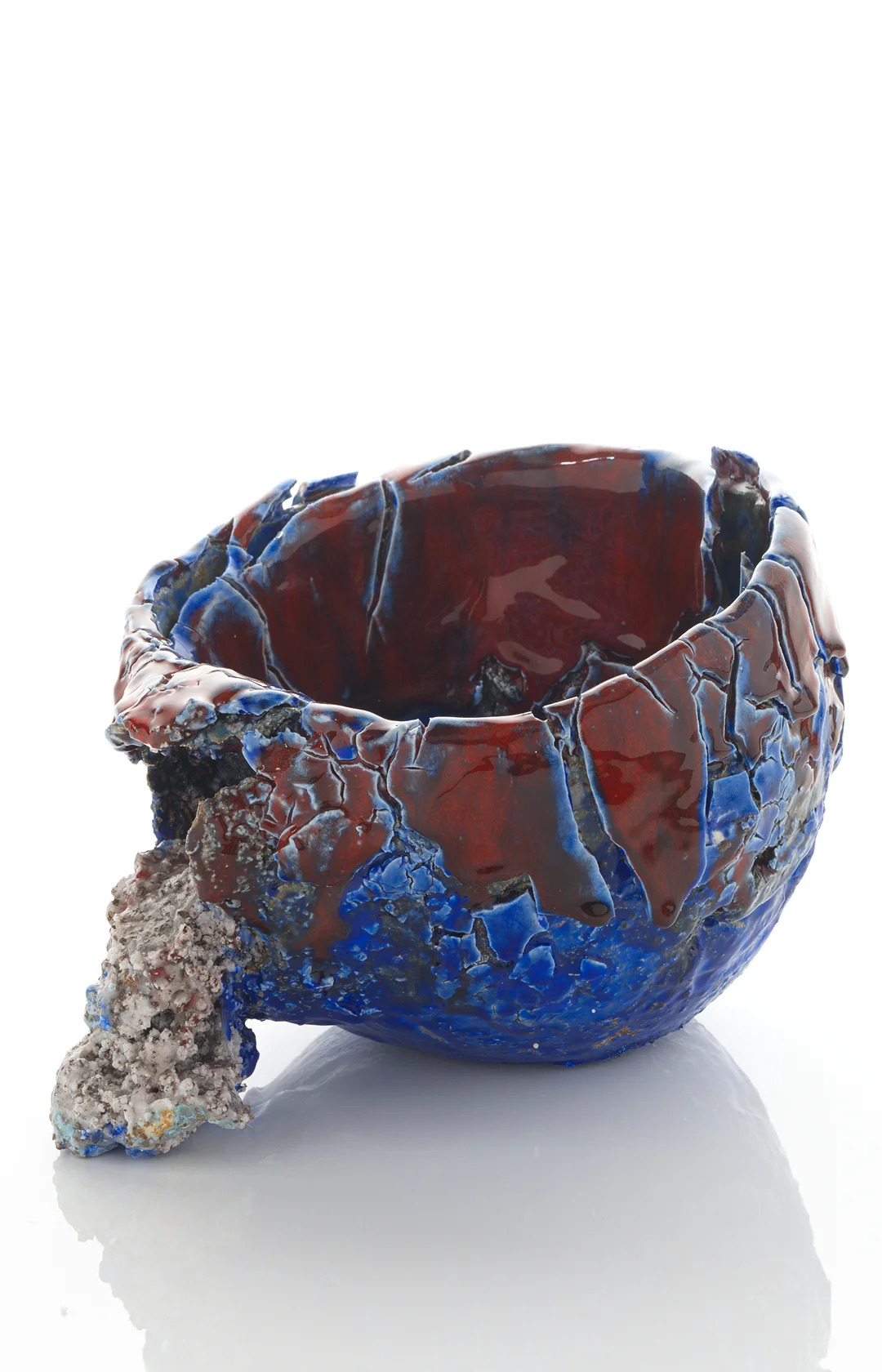
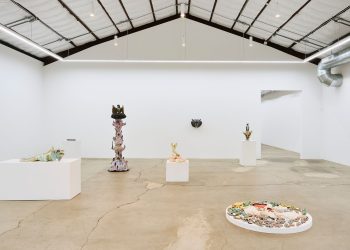
In the upstairs gallery, objects are generally grouped together upon a number of low plinths. Here the experience is more about being drawn in. Our eyes are drawn along fissures and cracks and edges that seem sharp enough to slice through skin in an instant. Rims are uneven and fractured. The glaze is animated by its runs and pours, its subtle shifts in tone and colour graduating across uneven surfaces. Thoughts run away with us across this textured terrain as its very unevenness instills a sense of unease. At points, stones burst from the clay as if being spat out and the pebbled surface texture is one that recalls the discomfort of walking barefoot on a pebbled beach, or cobbled street.
Looking down from where we stand, it is easy to peer inside the Rain stones and experience a stillness, a moment of quiet that is entirely separate from our experience of its exterior. For Regel, “exploring the interior is as important as exploring the exterior”. Contained within, and cushioned from the world by its walls, a freefall into memories and the unconscious begins before we even know it. Much like the stones that burst through the clay, the unconscious breaks through, breaching consciousness, but only for a moment. Perhaps this is how we find space to reconnect to ourselves, what Regel, in her poem, calls our core. That, I believe, is what is so compelling about Regel’s work. It is the tension between inside and outside, material surface and depth, that creates a space, or moment, for the interplay of conscious and unconscious thought and a deeper and more meaningful experience of the work and ourselves. Regel’s own understanding in the poem beneath is perhaps the closest that words can come to the powerful experience that her works instill in us.
Aneta Regel, poem on Beneath the Skin
“Winter 2026.
It was one of the harshest winters
since my childhood in Poland this year.
We said goodbye to my mum.It’s grounding to return to your birth place,
cast out into a remote landscape.
Quiet, monochrome, frozen, bright.Footsteps creaked on the snow.
You could see far; the air was sharp,
every breath clean.Even the sea was frozen, bare as bone.
I felt as if I were rediscovering life.Everything was still, quiet and slow.
In those moments,
you return to the core of yourself.Dry, hushed days piled up like layers.
Matter seemed to ooze from beneath,
reflecting on growth and decay.
A presence under the surface.Beneath the skin, feelings pressed forward,
so strong they became almost physical.Hidden, yet everywhere.”
Poem reproduced by kind permission of Aneta Regel.
Beth Williamson is an art historian and writer specialising in modern and contemporary art in Britain, with a particular interest in art education, craft, and ceramics. A former Research Fellow at Tate, she co-curated the exhibition Basic Design at Tate Britain in 2013 and has written widely on British art and pedagogy. Her essays and reviews on art, craft and ceramics have appeared in publications such as The Art Newspaper, Sculpture magazine, Studio International, and Ceramic Review.
Aneta Regel: Beneath the Skin was on view between June 27 and August 15, 2026, at Sarah Myerscough Gallery, London.
Subscribe to Ceramics Now to read similar articles, essays, reviews and critical reflections on contemporary ceramics. Subscriptions enable us to feature a wider range of voices, perspectives, and expertise within the ceramics community.
Captions
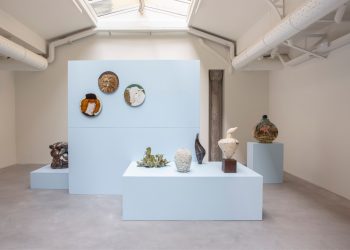
- Installation views, Aneta Regel: Beneath the Skin at Sarah Myerscough Gallery, London, 2026. Photos by Gareth Hacker
- Aneta Regel, White Rhizome, 2026, Stoneware clay, porcelain, rocks and glaze, 89 H x 45 W x 38 D cm / 35 H x 17.7 W x 15 D in
- Aneta Regel, Red Pien 1, 2026, Stoneware clay, rocks and glaze, 89 H x 35 W x 21 D cm / 35 H x 13.8 W x 8.3 D in
- Aneta Regel, Volcanic totem, 2026, Porcelain, stoneware clay, glaze and rocks, 150 H x 38 W x 26 D cm / 59.1 H x 15 W x 10.2 D in
- Aneta Regel, Raining stone (yellow & white), 2026, Stoneware clay, porcelain, rocks and glaze, 41 H x 37 dia cm / 16 H x 14.6 dia in
- Aneta Regel, Raining stone (blue & white), 2026, Porcelain, glaze and rocks, 55 H x 43 W x 47 D cm / 21.7 H x 16.9 W x 18.5 D in
- Aneta Regel, Raining stone (black & white), 2026, Porcelain, stoneware clay and glaze, 25 H x 27 dia cm / 9.8 H x 10.6 dia in
- Aneta Regel, Raining stone (black & red), 2026, Porcelain, stoneware clay and glaze, 30 H x 30 W x 33 D cm / 11.8 H x 11.8 W x 12.9 D in
- Aneta Regel, Raining stone (green & black), 2026, Stoneware clay, glaze and rocks, 32 H x 50 W x 45 D cm / 12.6 H x 19.7 W x 17.7 D in
- Aneta Regel, Raining stone (red & blue), 2026, Stoneware clay, porcelain, glaze and rocks, 18 H x 27 W x 24 D cm / 8.1 H x 10.6 W x 9.4 D in