By James Young
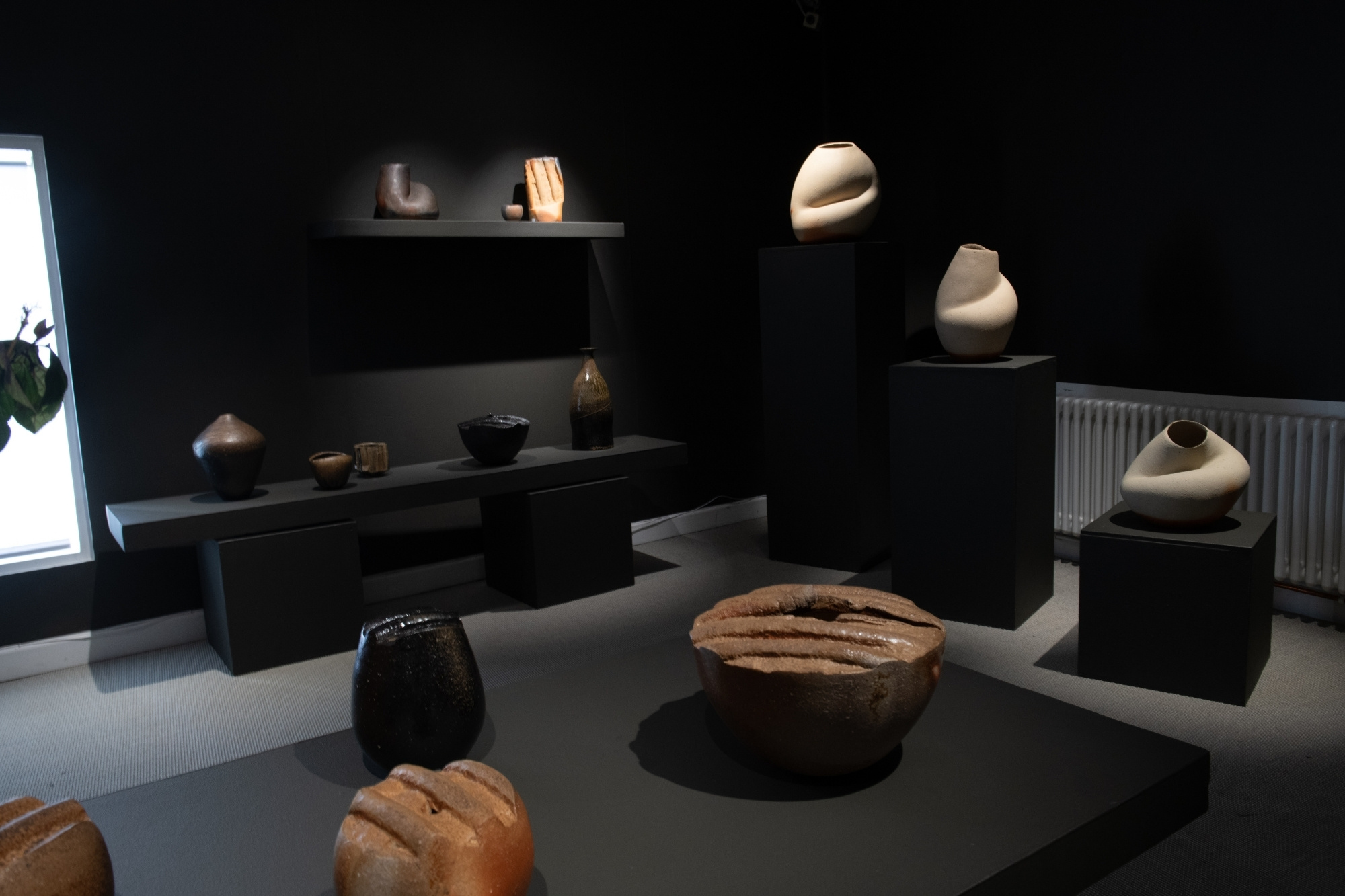
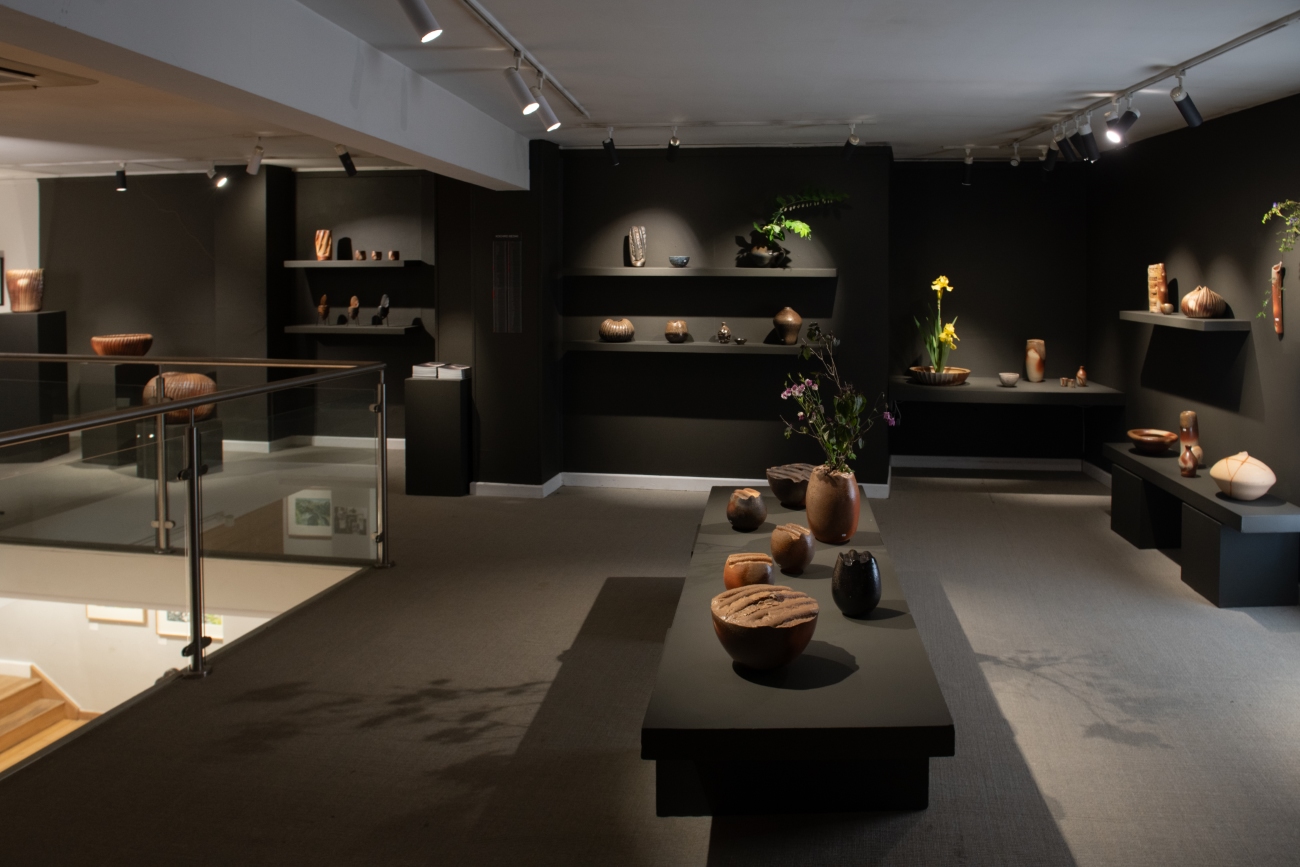
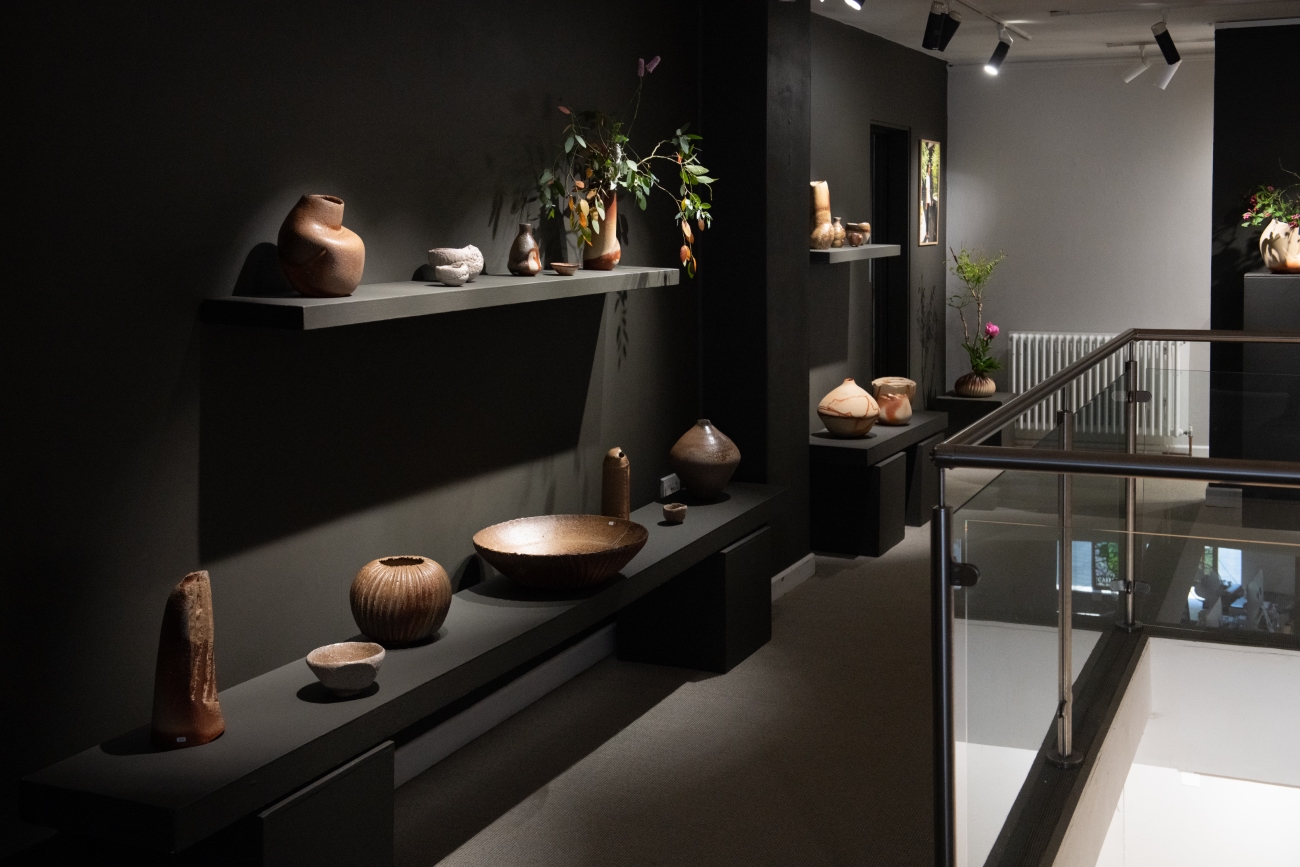
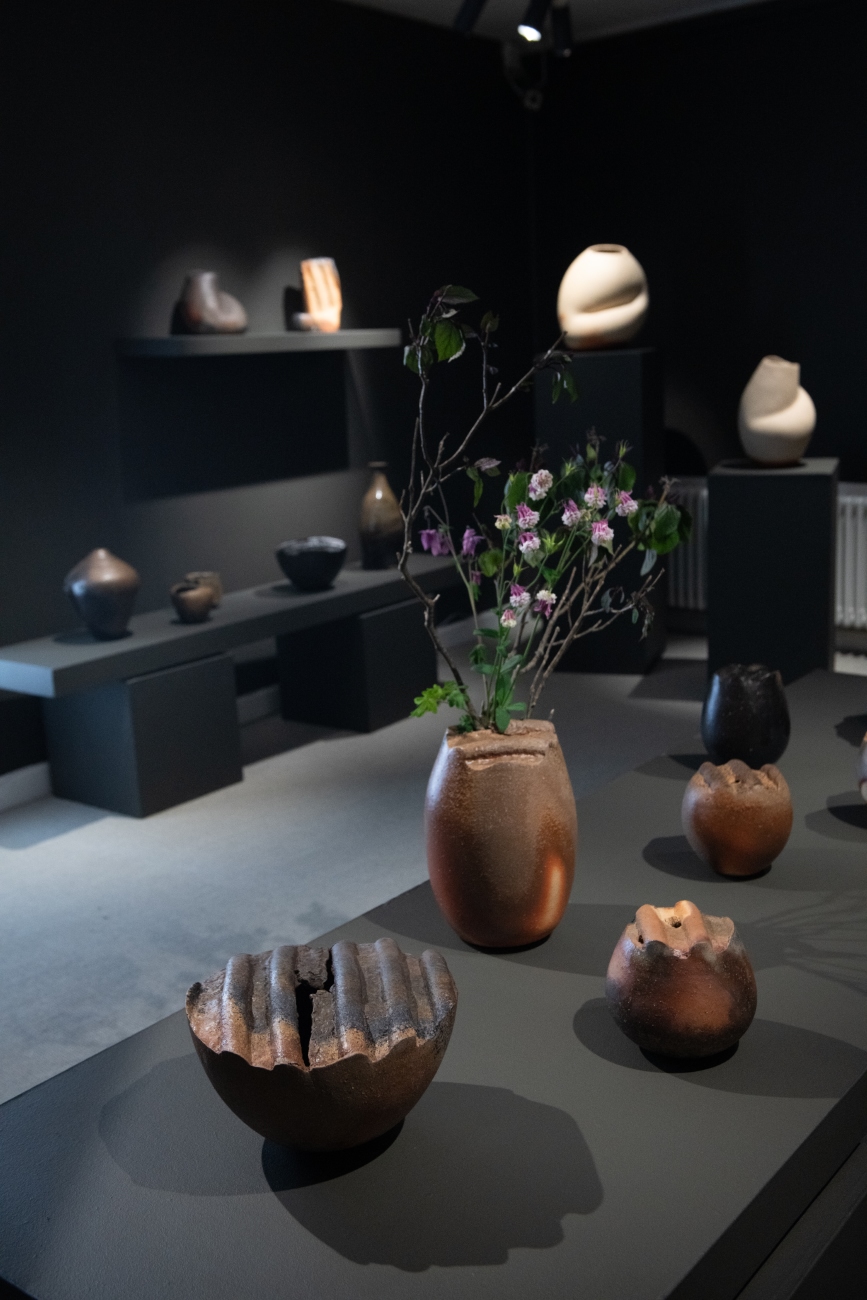
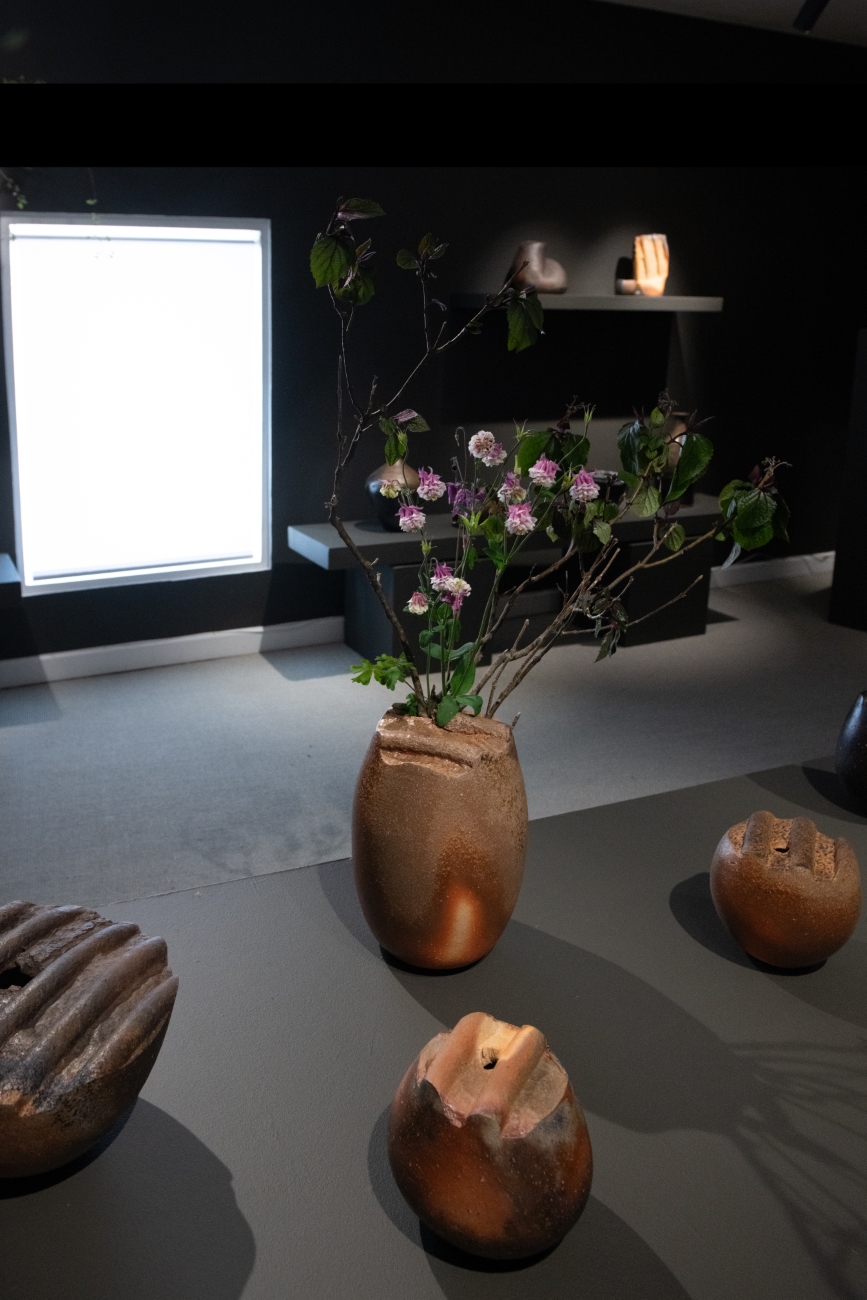
Walking up the stairs into the upper floor ceramics gallery of Goldmark, a frequent visitor might be slightly disoriented. Instead of the bright gallery space with brilliant white walls, one encounters black walls with spotlights shining on plinths, shelving and varying displays across the room. Reminiscent of the department store ceramic galleries in Tokyo, Goldmark has turned the space into an introspective, and discerningly atmospherically quiet place to view the incomparable work of Bizen potter Koichiro Isezaki. This is his second exhibition at the gallery where he is exhibiting all his wondrous forms and mastery of firing in an anagama kiln. It also comes a few years after he won the prestigious Japan Ceramic Society prize in 2022.
Much can be found online about Koichiro Isezaki, his family lineage and apprenticeships, and the history of Bizen. Sometimes it can be encumbering to have these thoughts swirling around your head whilst viewing the work of a Japanese ceramicist working in one of the ‘Six Ancient Kilns’. Trying to assess how far someone is pushing the boundaries of making a particular ceramic tradition their own, or a like-for-like comparison of whether “inspiration” may have come from their teacher or family member’s work. Yet, I will say that for me Bizen can sometimes be uncompromising with its blasted yohen effects, rage red hidasuki markings, and strong, heavy forms. In some of his pots, Koichiro has added a profound softness – I’d even say a sensuousness – to contemporary Bizen ceramics whilst still using all the traditional Bizen techniques.
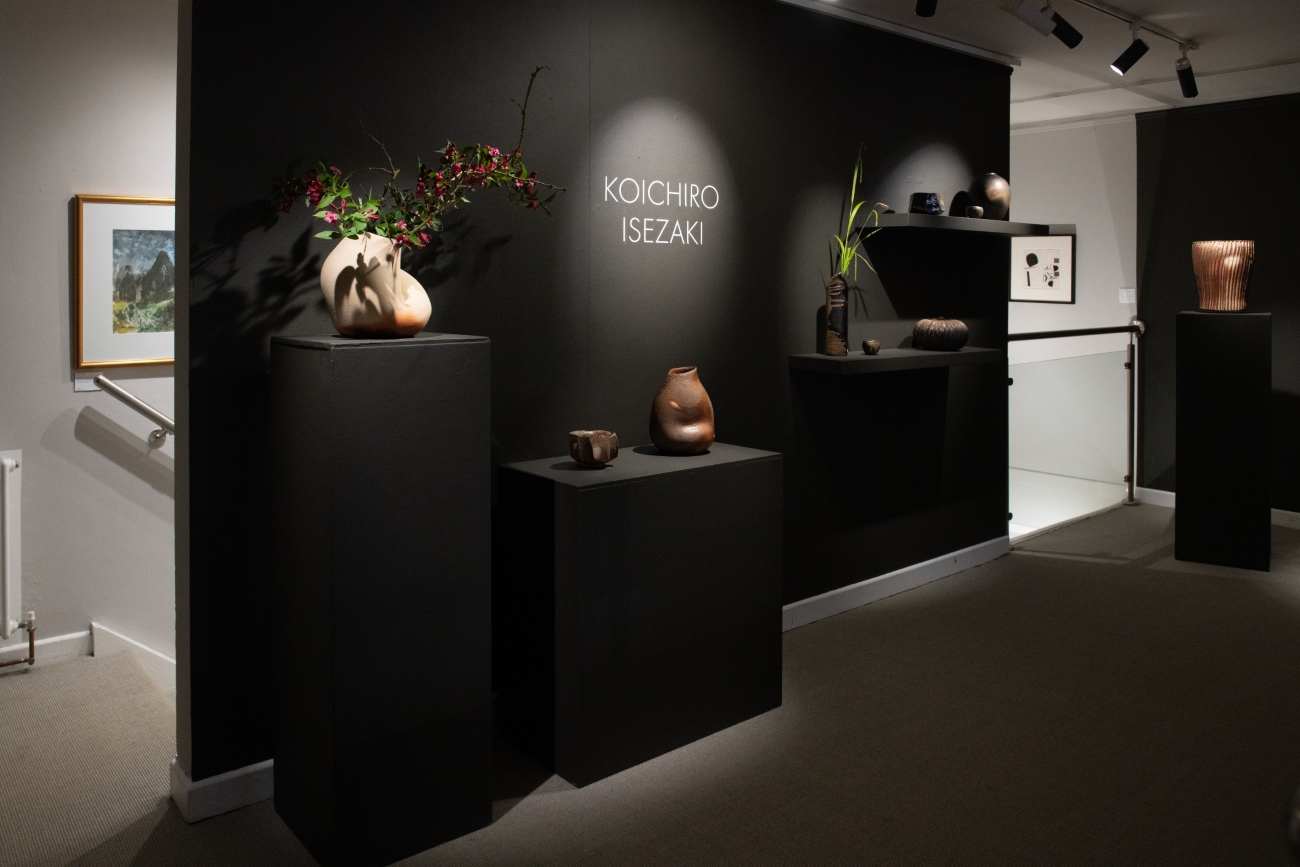
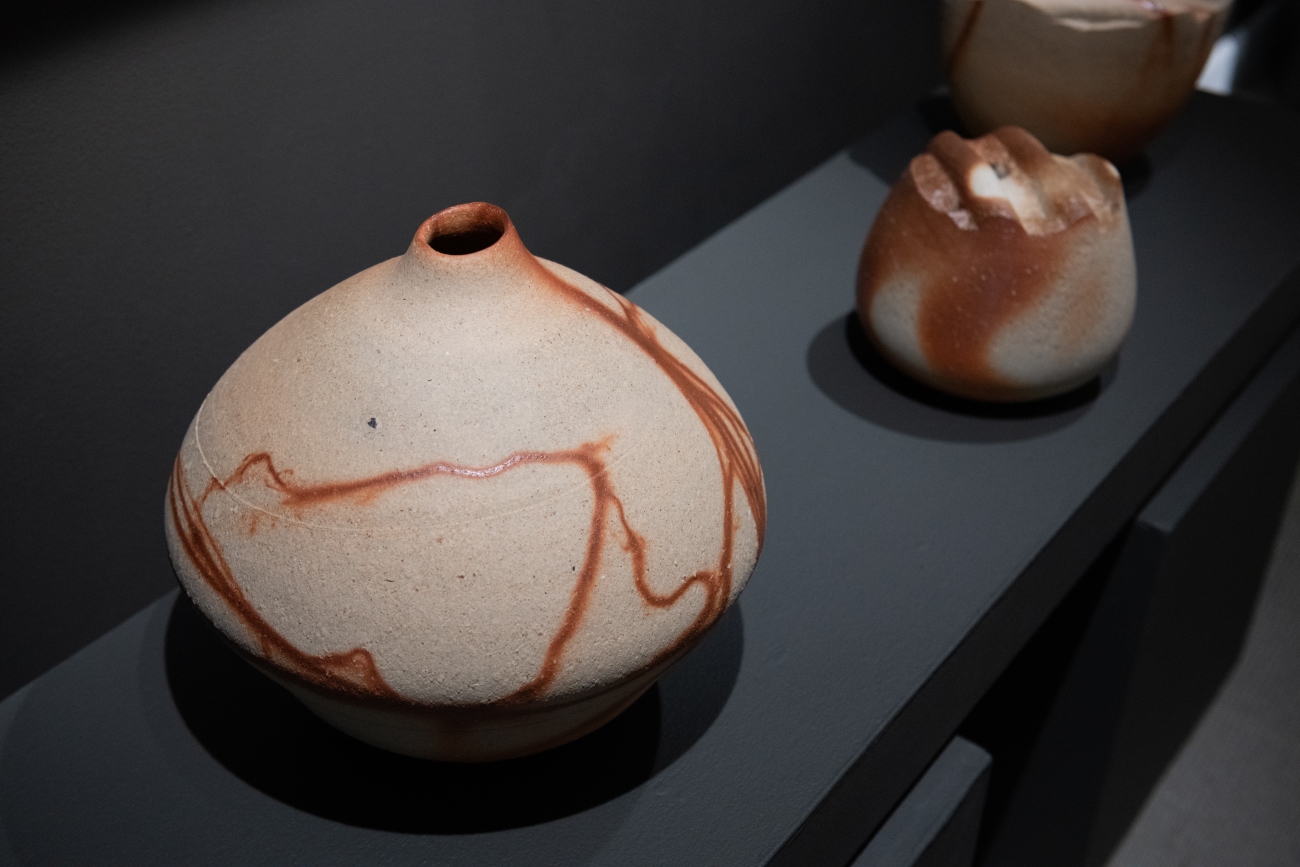
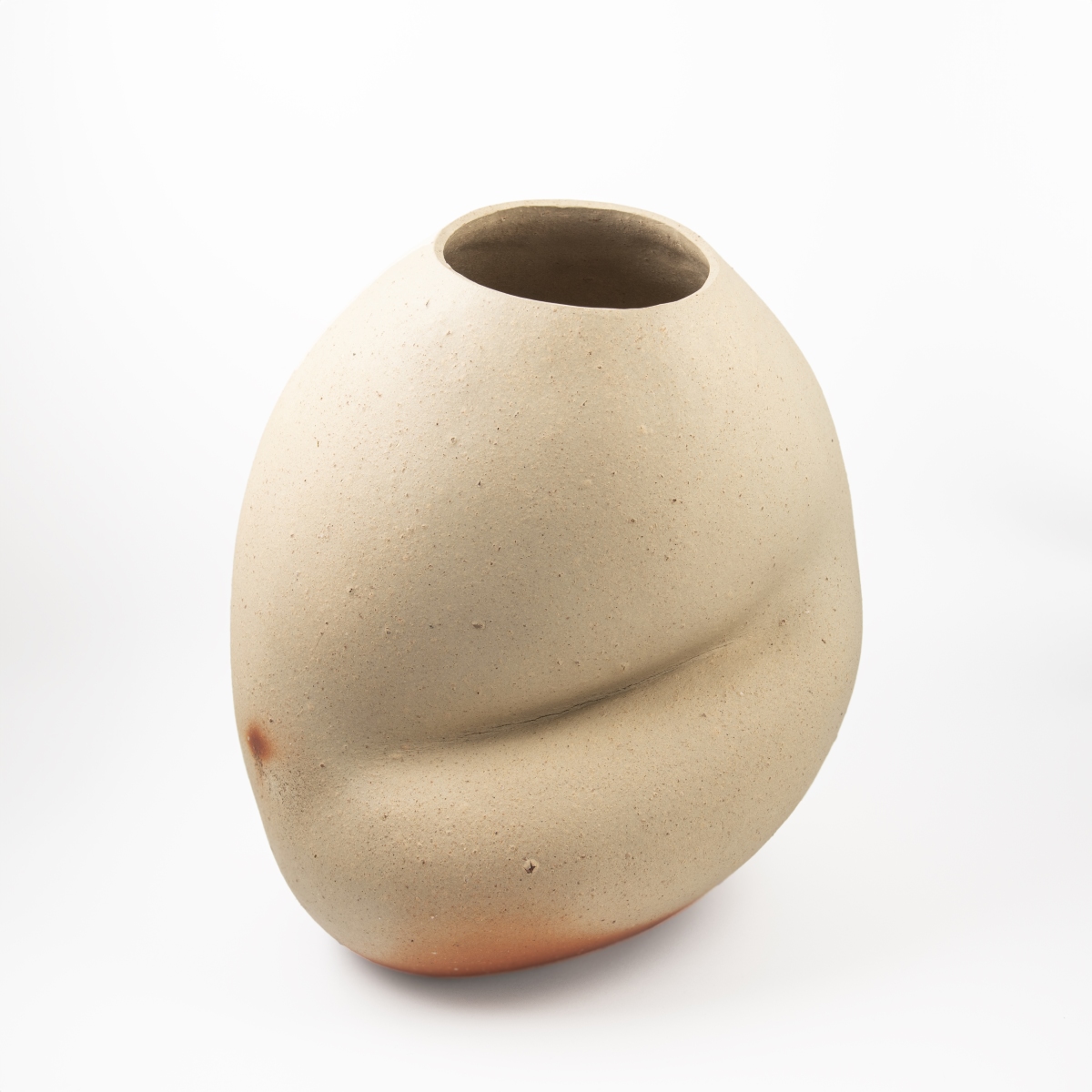
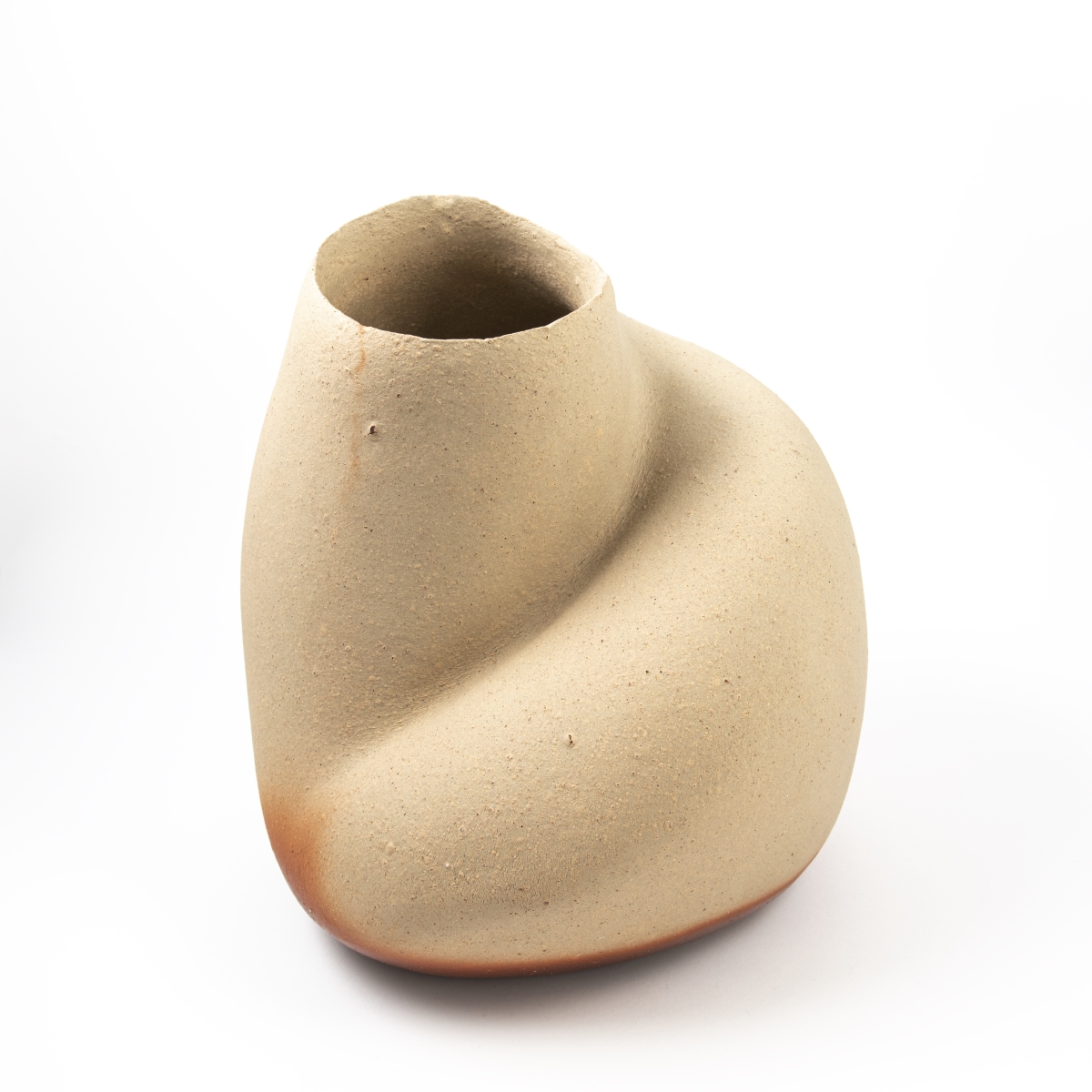
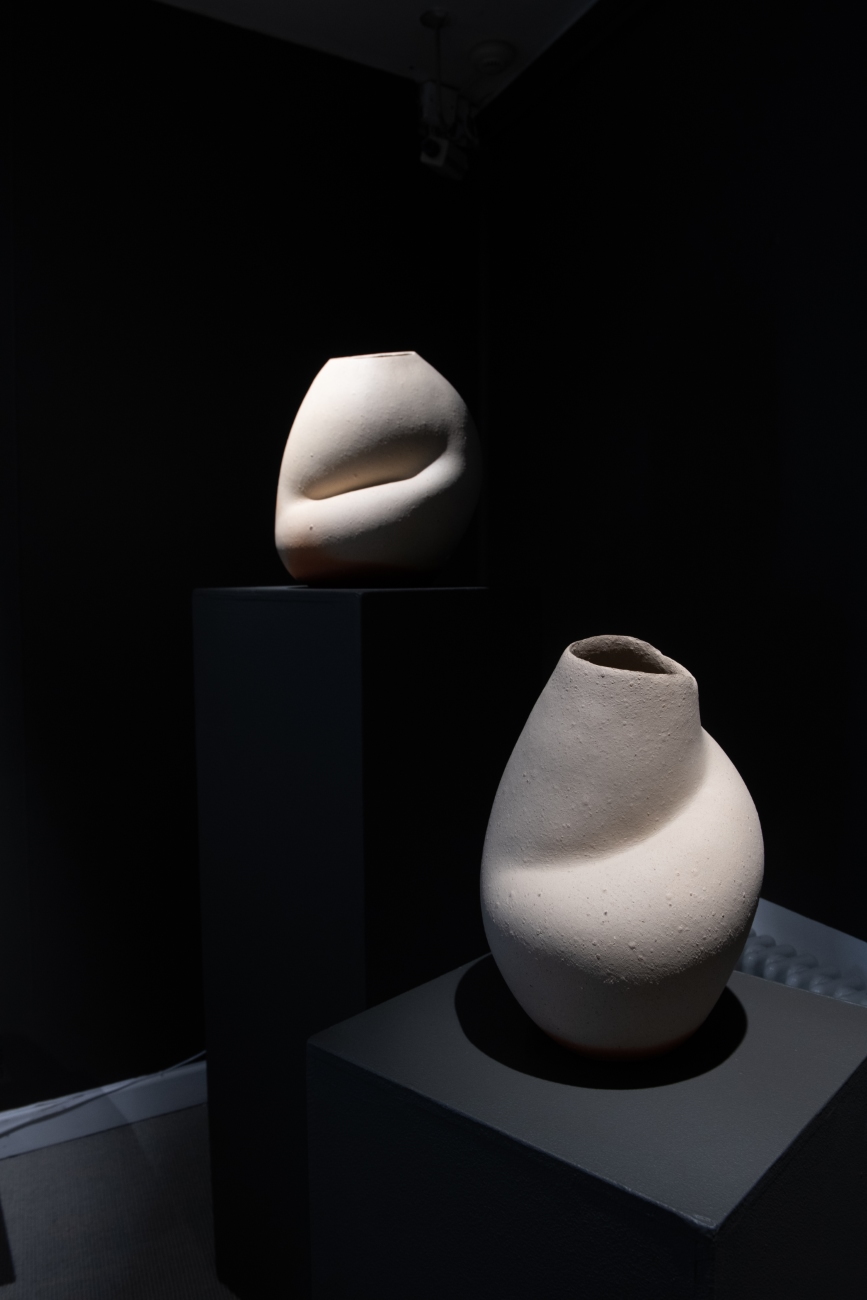
One of Koichiro’s signature ceramic series are his Yō pots. Stemming from his curiosity about the space inside and outside of the vessel, Koichiro manipulates the beautifully pale, Bizen clay through bending and squashing. Some of the Yō pieces in the exhibition are fired in a saggar to protect the clay from the swirling ash. Others are left to face the swirling red pine ash in the anagama kiln, bearing red scorch marks and delightfully textured goma. The three Yō pieces on ascending height plinths at the back of the exhibition space are in the former. They have all been moulded slightly differently but seem to be cohesive in a story of a pot opening up. From the bottom slouching pot – legs crossed, shoulders bunched over – to a ballooning and freer pot on the third highest plinth. They remind me of the physicality of Francis Bacon’s reclining figure paintings. Like the Bacon figures with the contorted jelly-like limbs, the Yō pots are surprisingly sensual.
This is furthered by the haptic nature of the brilliant white clay of the Yō pots. Something about the pureness, unadorned surfaces need to be touched – to feel the grooves, cracks and pockmarked clay surface. Luckily Goldmark allows handling of the pots. Koichiro has also placed rice straw in the bottom of the saggars – a practice known as hidasuki. During firing the rice straw reacts with the high-iron clay and burns off, leaving red “fire cord” markings. On other Bizen pots these can be violent, whereas here they leave a haloed ring at the base. The pot is subtly blushing.
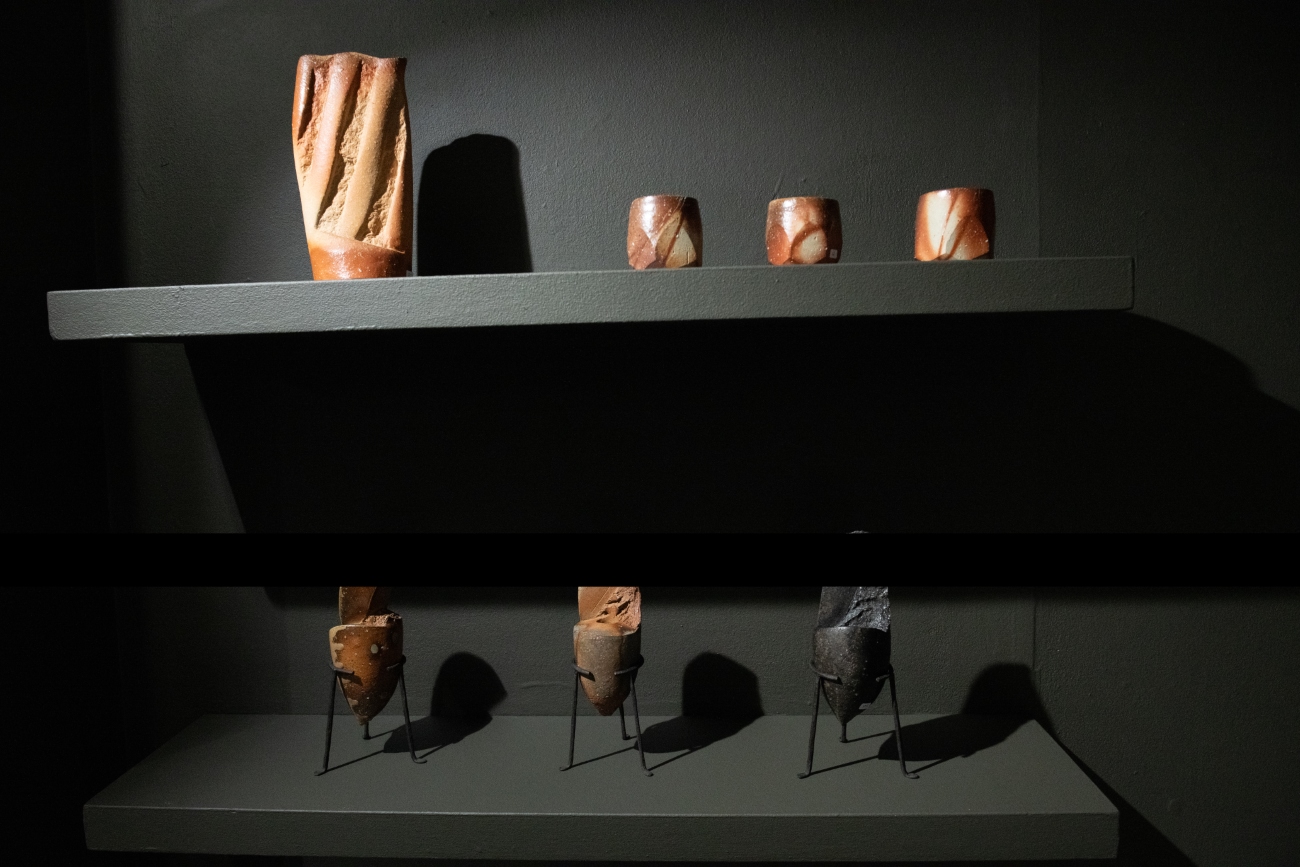
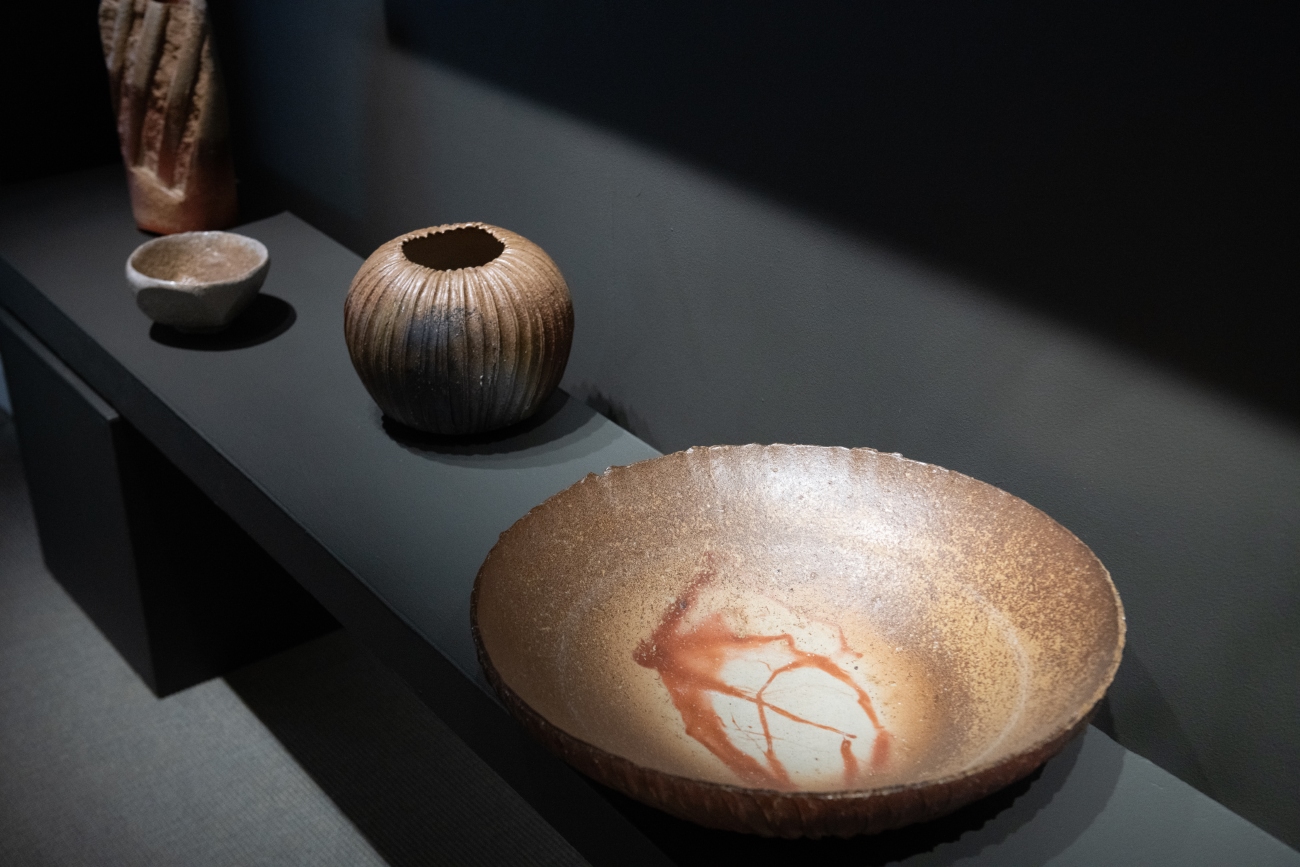
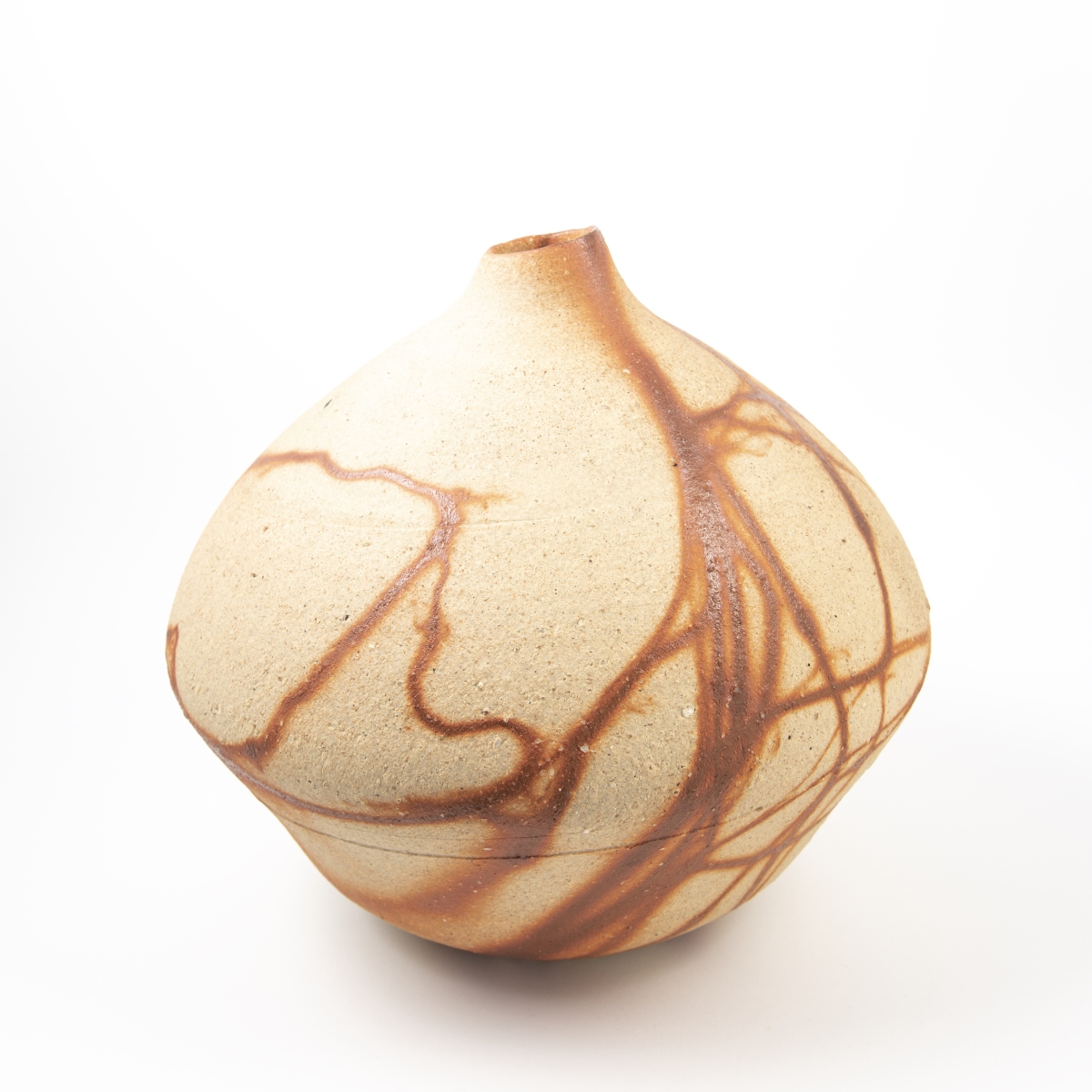
This is not to say that Koichiro’s more traditional hidasuki pieces aren’t enthralling. A rounded bellied jar on a low shelf by the stairs is awash with the lightning red markings. You can almost feel the electricity pulsing from the surface. A large carved bowl is heavily dusted with goma on the outside and inside walls, whereas the centre of the pot exposes the white clay and is surrounded – almost protected – by the hidasuki markings. Faceted guinomi and yunomi dotted around the exhibition space also carry hidasuki decoration, although it certainly feels more vibrant when there’s a larger surface to work with.
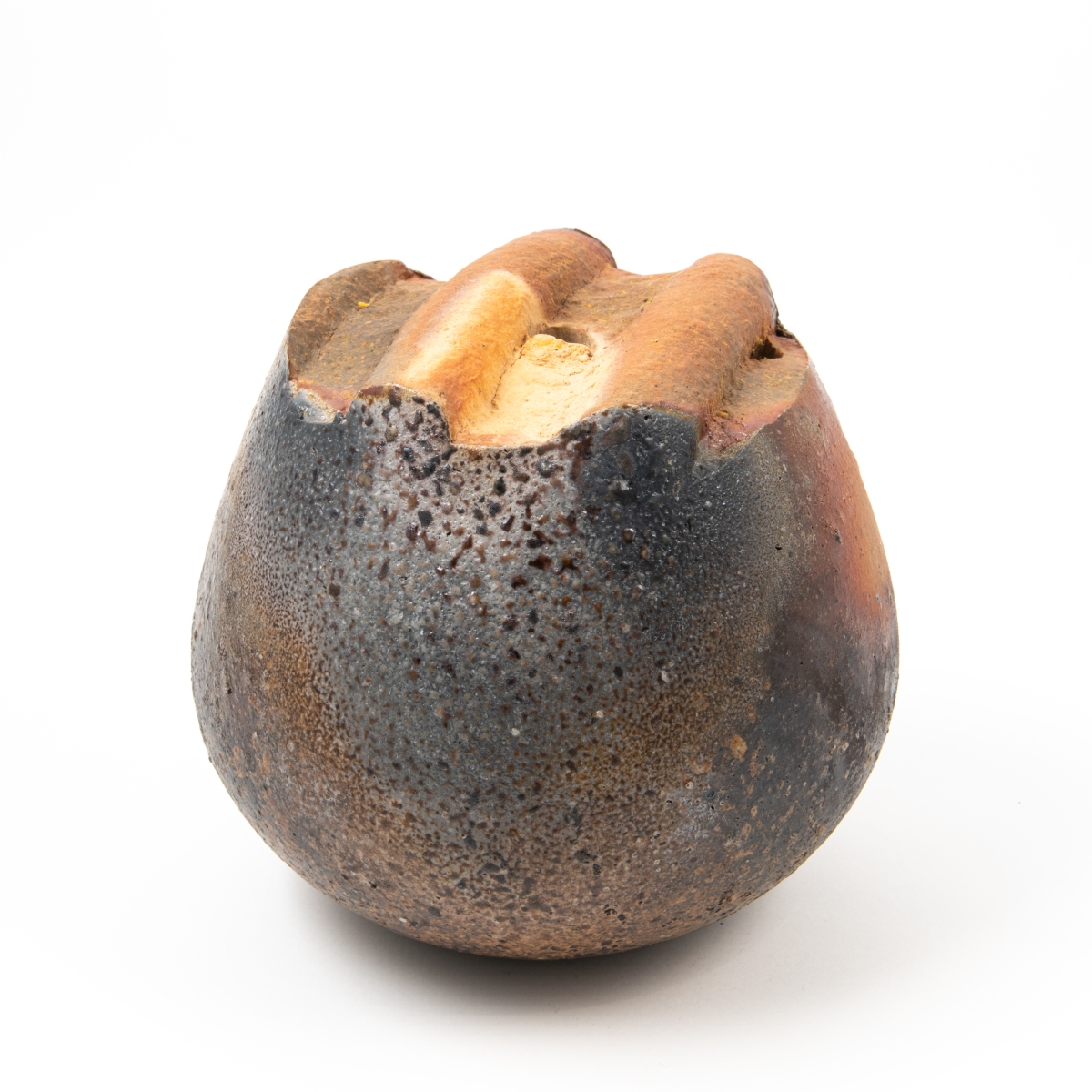
Another hallmark of Bizen firing is the yohen (‘kiln change’) effects that can occur to a pot’s surface when in the kiln. One work in the show, another new form created by Koichiro titled Damon Vase, is a stunning example of this. Situated on the rectangular low table towards the back of the gallery, it is a squat, thicker pot with a bold aura. Perhaps thrown and then paddled at the top to create an undulating surface, it almost looks immovable. You must bend or squat down to see it properly. The deference to such a powerful pot feels warranted. Across the surface are patches of rich reds, cobalt blues and golden goma. The yohen effects usually come from very heavy ashing, or an intense reduction environment whereby the oxygen has been stripped from around the pot as it is buried in charcoal and other detritus on the kiln floor. This primal transfiguration taps you deeper into the world around you. How forces and products of nature – clay, fire, wood, heat – can interact, clash and transform. This pot has been through a brutal process in the anagama kiln but has emerged triumphant. It reassures us that there is always light at the end of the tunnel, even if it may be a very long and dark one.
Speaking of darkness and blackness. Koichiro’s black (kuro) Bizen pieces in the exhibition are by far the most alluring for me. On his black pieces, Koichiro applies an iron slip – which, in his words, is made up of 99% local Bizen materials and 1% from elsewhere – over Bizen clay. They are perfect examples of Koichiro’s mastery of the anagama firing and knowing where to place his pieces for the most effective and dramatic results. Anagama kilns are front-loaded, meaning that the highest temperatures and concentration of ash will be towards the front of the kiln near the firebox. Gradually guided up the kiln through smaller openings which are filled with burning wood, the fire is coming through the kiln from a single direction. By placing his pieces in strategic locations, Koichiro invites the billowing red pine-ash to embrace and transform. A towering vase immediately to the left of entering the gallery with a strong, straight form tells this story well. Placed lying down, the ash has settled heavily on one side and aided by gravity, has flowed down towards the shelf wrapping its caramel-coloured tendrils around the body of the piece (called nagare-goma). If the piece was larger in diameter, I suspect the ash would have had a harder time. Indeed, sometimes with black Bizen pieces, the smaller the better.
On the left-hand side wall towards the back of the gallery is a small, intoxicating jewel of a pot. A black tokkuri (sake bottle), also placed lying down in the kiln, has been engulfed by ash in a thrilling display of how energetic black Bizen can be. Eased on its journey by the tokkuri’s rounded form, the ash has travelled around the small sake bottle – enveloping it from all angles – and vitrified into two beautifully distinct, blue-ish bidoro (dragonfly’s eye – also known as tombo no me). It looks too hot and alive to touch – somehow containing the kineticism and ferocity of Bizen firing. You do have to pick it up though. To turn it around and around and around again to follow the journey of every rivulet of ash. It raises my heartrate a tick handling a pot so small in stature but mighty in intent.
Another black tokkuri, tucked away in the back room of the gallery with pots that didn’t quite make it to the front-room, highlights how form can also dramatically affect the ease to which ash flows. Unlike the rounded tokkuri, this one has a faceted and squared base with a straight neck. A form much more unique to the more atypical one mentioned above. The ash has settled on one of the four faceted walls and has wrapped itself around the neck to form a large and globular bidoro on the opposite side (the side which was facing the kiln shelf). However, the faceted base has almost stopped the ash in its tracks, giving space for the bottom half of the tokkuri’s black slip to shine. Putting them side-by-side would have told an intriguing tale about form and firing in an anagama kiln – a missed opportunity perhaps. I wonder if Koichiro knew the effect the squared base would have.
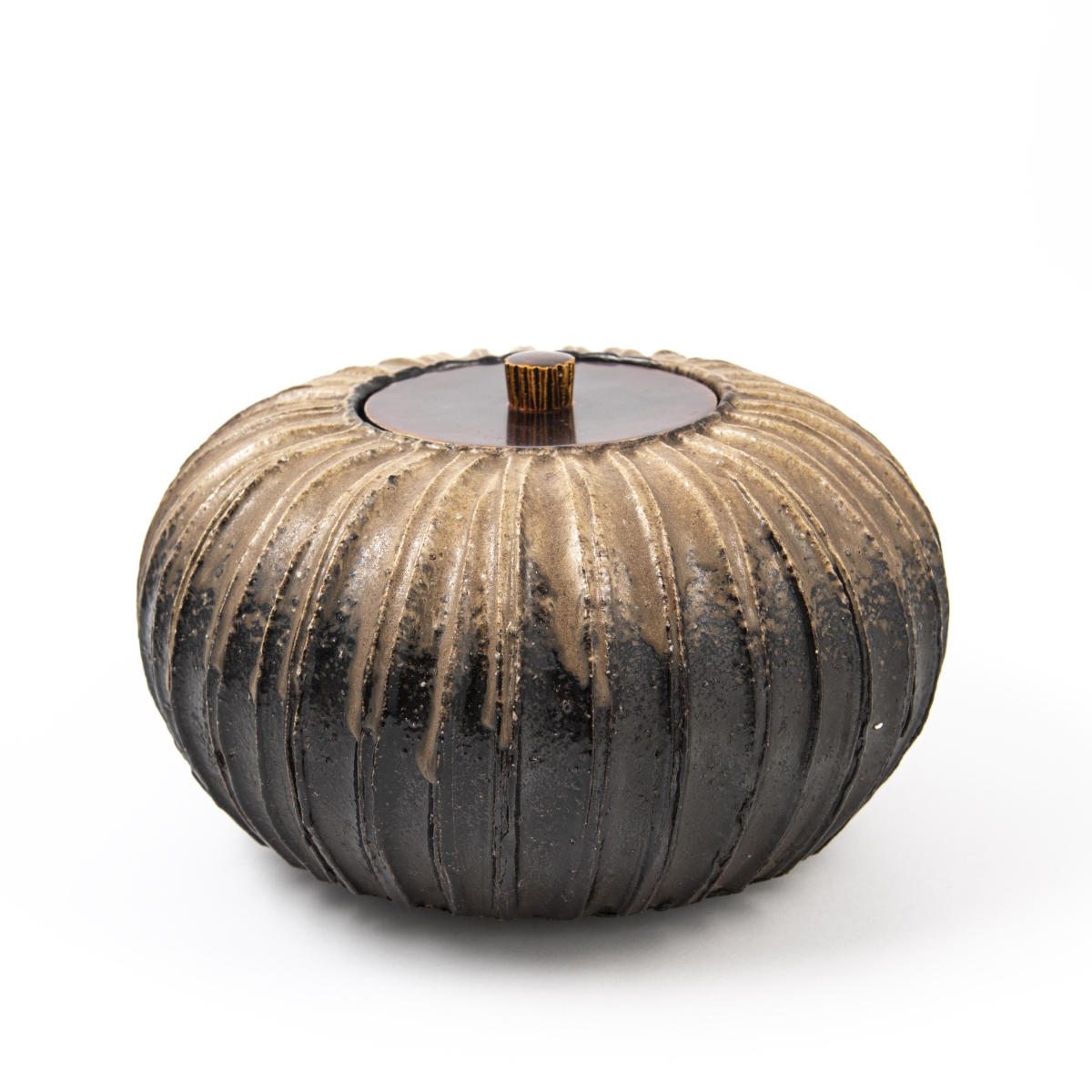
The shelf that the rounded tokkuri sits on has four other black pieces – two different style vases with forms not seen in Bizen at the moment, a guinomi, and an unetsubo (ridge jar), all with wonderful firings. The unetsubo is a quintessential Koichiro Isezaki form and is perfect for the flowing Bizen ash. Initially thrown into a cylinder and then taken off the wheel, Koichiro creates the ridges by dragging a spatula down the entirety of the outside wall. When the incisions have been made, he returns it to the wheel and throws from the inside until he gets the desired rounded shape. Very helpfully, this is shown on a documentary being screened on a loop in the gallery. The large ridges are perfect channels for the ash to surge down and accentuate the voluptuous, but slender, pumpkin-like form. You acknowledge its presence, but it has a humbleness to sit there and interact with its surroundings, rather than dominating them. I understand why Koichiro uses a similar ridged surface for the black misuzashi (water jar) in the show, which are key components of the tea ceremony. The chameleonic form reveals Koichiro’s deep understanding of the history of the Bizen tradition, whilst pushing it forward in leaps and bounds and making it utterly contemporary.
Koichiro has a stunning repertoire of his unique forms and firing techniques on display in this exhibition. It speaks for itself that I’ve neglected to mention his teabowls, sake cups, multiple style vases, white clay works. Indeed, I was reluctant to leave the blistering display of Koichiro’s artistry and the ferocious beauty that Bizen wood-firing can produce. As I walked back down the gallery stairs, a slightly colder world awaited.
James Young is a ceramics collector and works for an archaeological research publisher. He is currently studying the History of East Asian Art, with a focus on Japanese and Chinese ceramics, at SOAS, University of London.
Koichiro Isezaki opened at Goldmark Gallery (Uppingham, UK) on May 17, 2025.
Subscribe to Ceramics Now to read similar articles, essays, reviews and critical reflections on contemporary ceramics. Subscriptions enable us to feature a wider range of voices, perspectives, and expertise within the ceramics community.
Photos courtesy of Goldmark Gallery
Captions
- Koichiro Isezaki, Damon Vase, 2025, Stoneware, 16 x 17 cm
- Koichiro Isezaki, Hidasuki Jar, 2025, Stoneware, 26 x 28,5 cm.
- Koichiro Isezaki, Ridge Water Container, 2025, Stoneware, Lacquer Lid, 14 x 23 cm
- Koichiro Isezaki, Yō, 2025, Stoneware, 38 x 34 cm
- Koichiro Isezaki, Yō, 2025, Stoneware, 27 x 27 cm