By Tana West
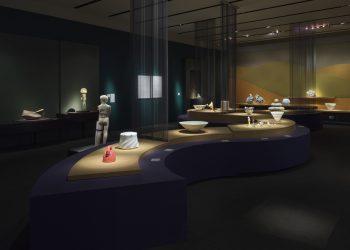
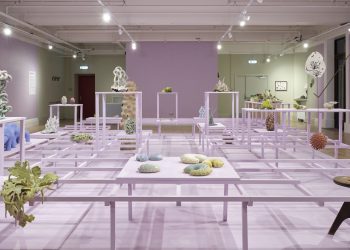
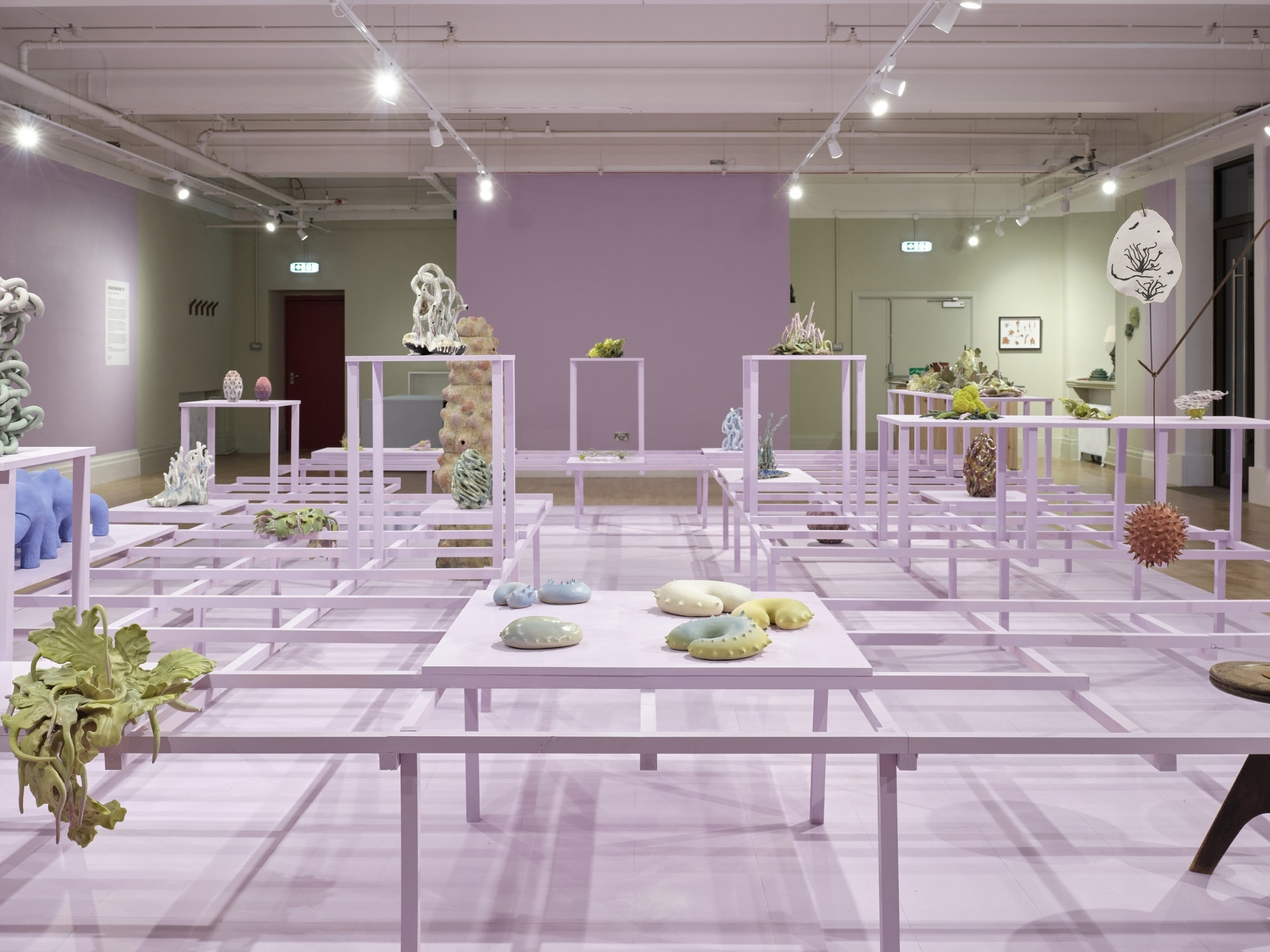
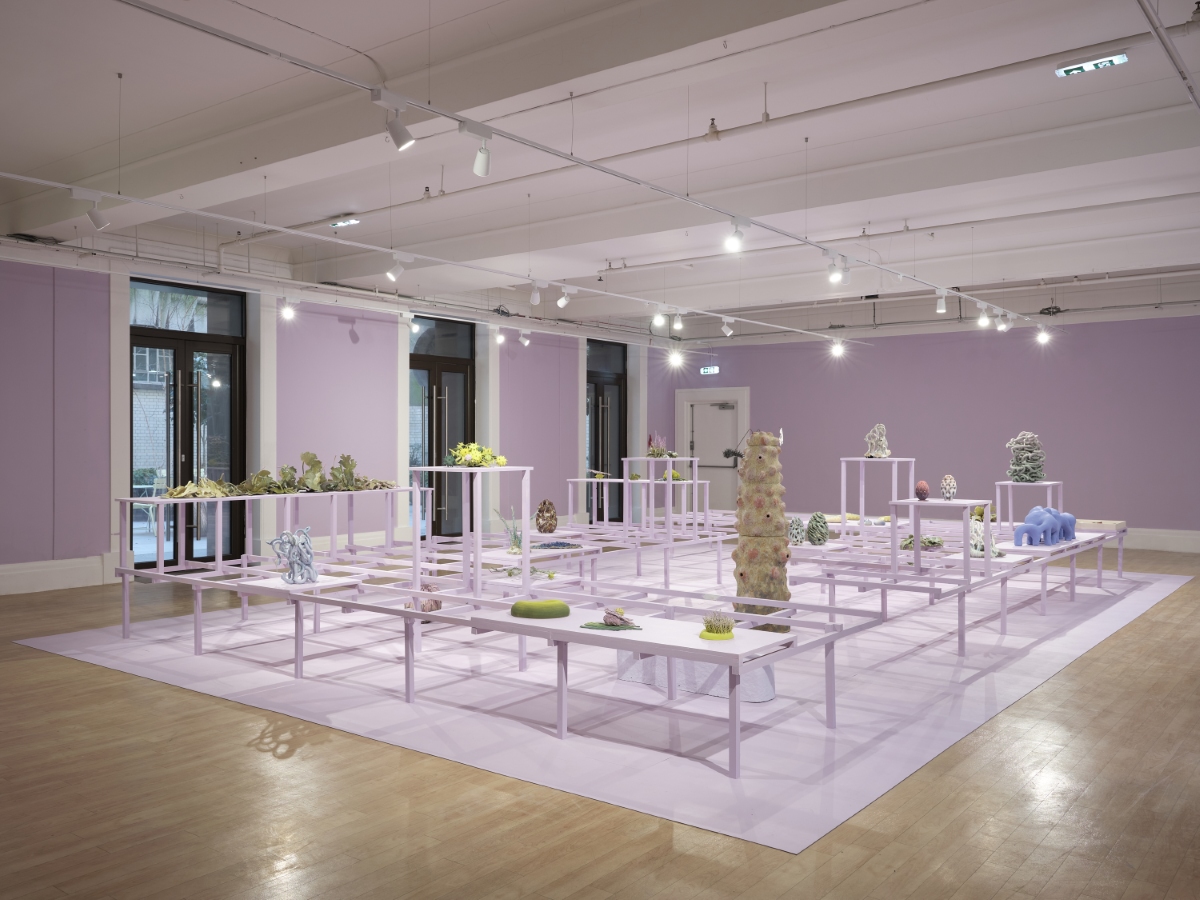
Walking into the County Hall Pottery gallery space, you are immersed in the purple haze, which sets an otherworldly chromatic tone to the exhibition. In the middle of the gallery is a lilac-coloured grid, with the floor and walls of the same colour. This contrasts with the ceramic work, which is placed on platforms within, on and under this grid. The exhibition design forces you to bend, peer, stretch and move amongst the structure to encounter the works, drawing you physically into the undergrowth. Curated by Elizabeth Jackson and Emily Stapleton Jefferis, this exhibition grows out of a mutual interest in undergrowth as both a conceptual framework and a living ecosystem, informed by speculative fiction, vegetal philosophy and embodied material knowledge.
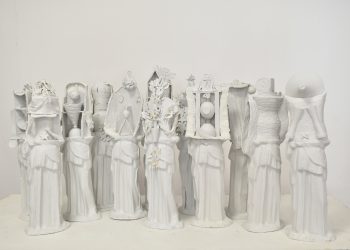
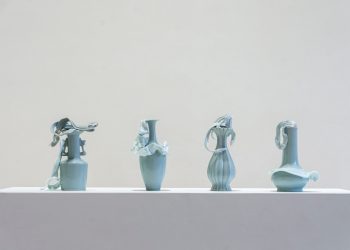
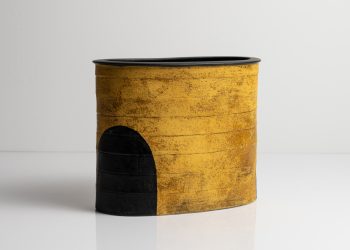
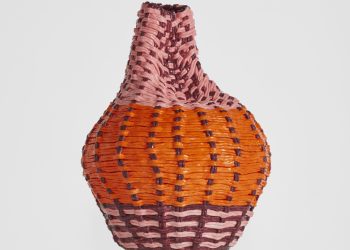
Engaging imagination and material understanding to contemporary environmental concerns, Undergrowth brings together artists who use clay to build open, associative narratives rather than straightforward representation. They exemplify the rhythms, resilience, and mutual entanglements of ceramic object making and vegetal thinking. The work in the exhibition interacts with the structured grid, the ceramic objects resist this uniformity, organic forms break free from this constraint. This is where the unseen energies of the natural world emerge as quiet, powerful presences within the gallery space.
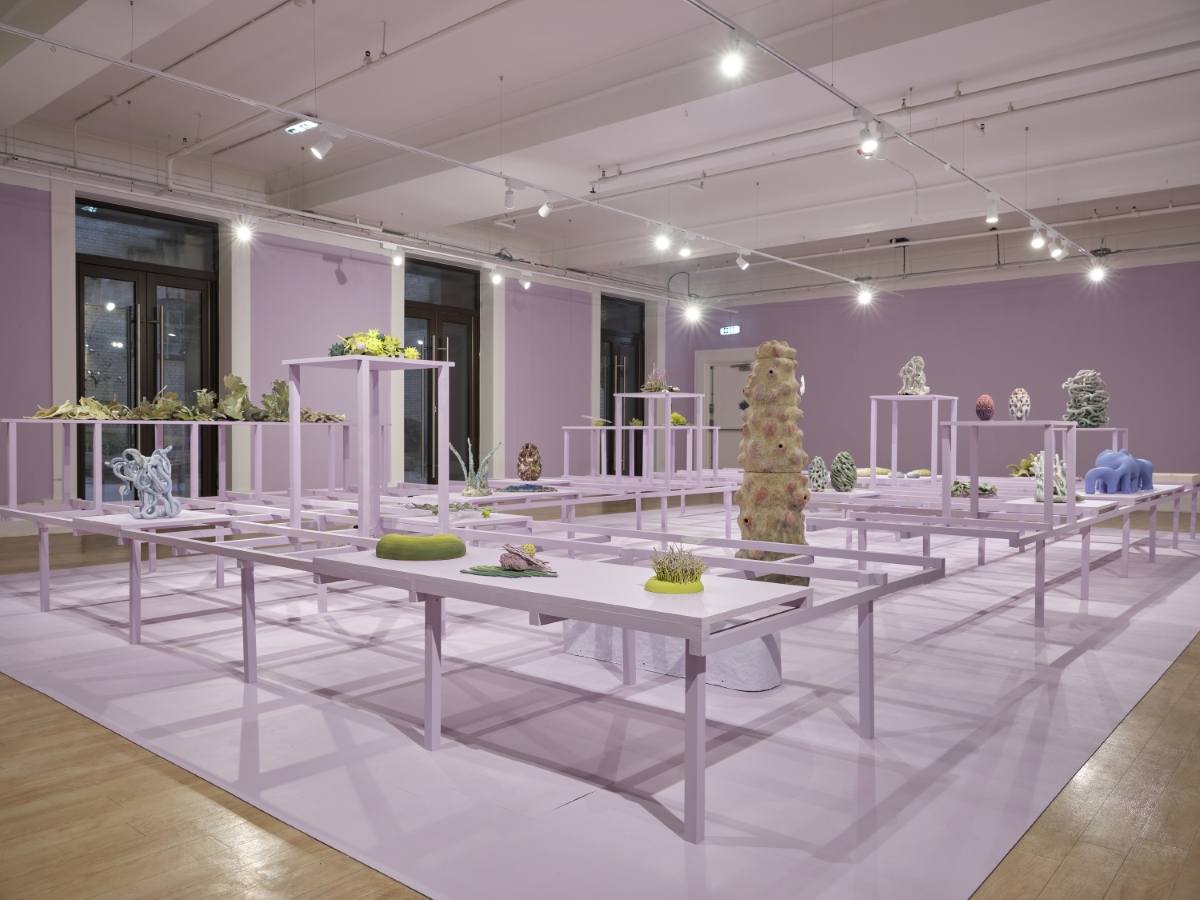
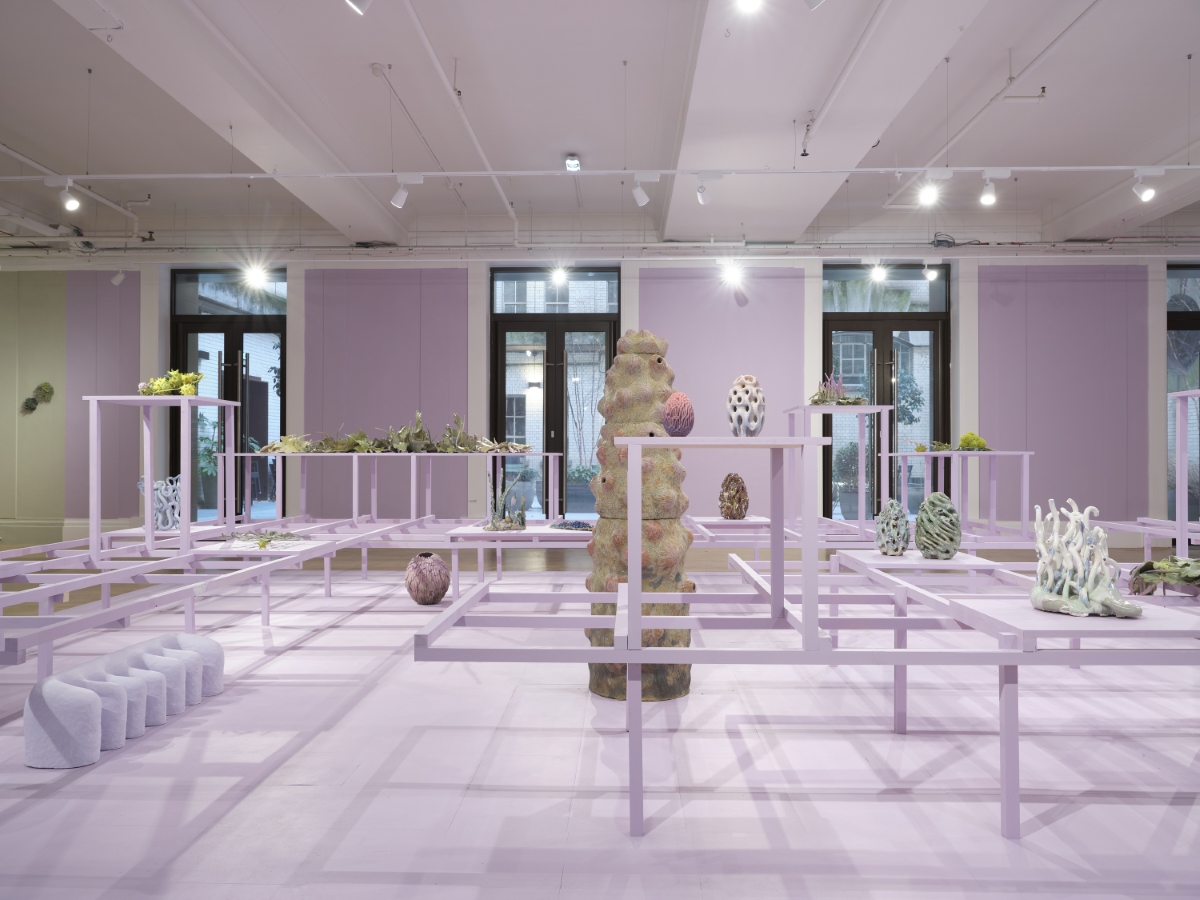
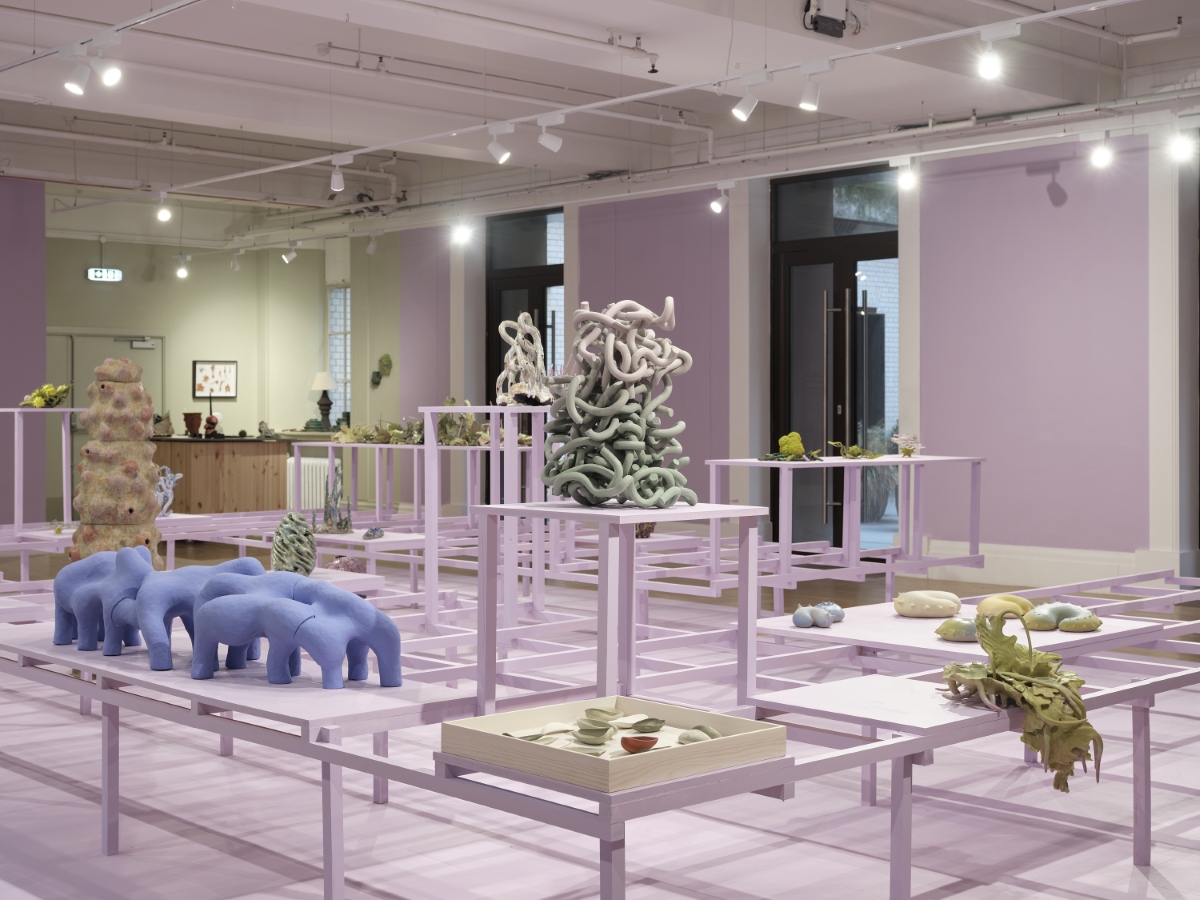
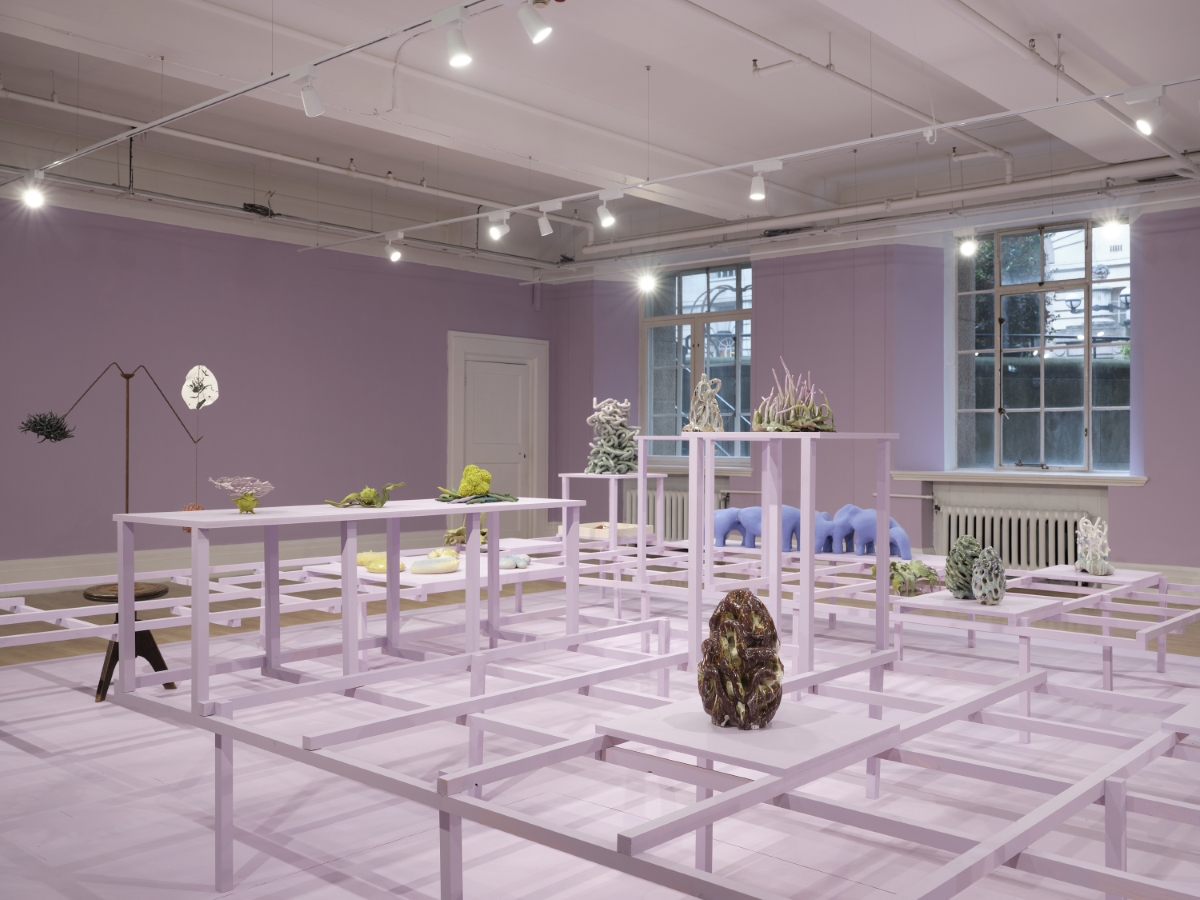
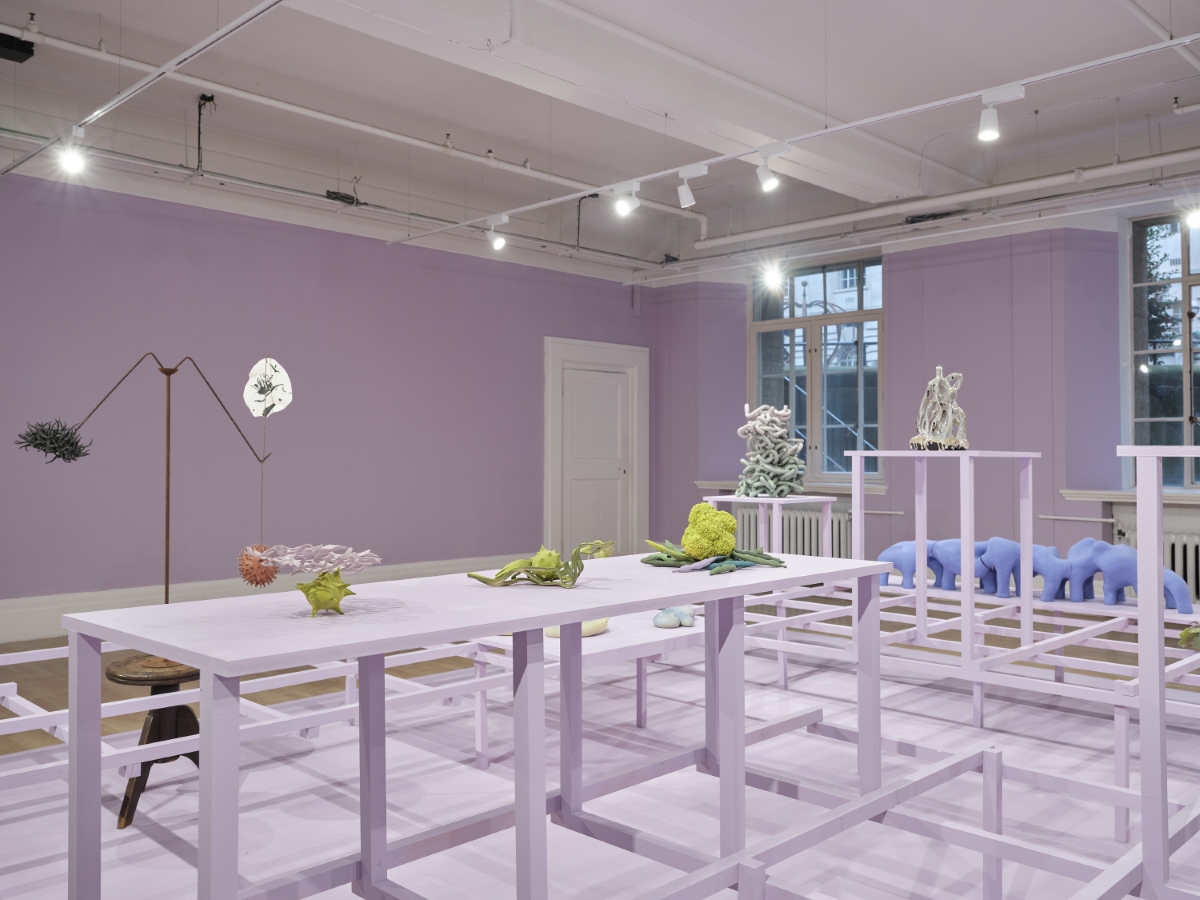
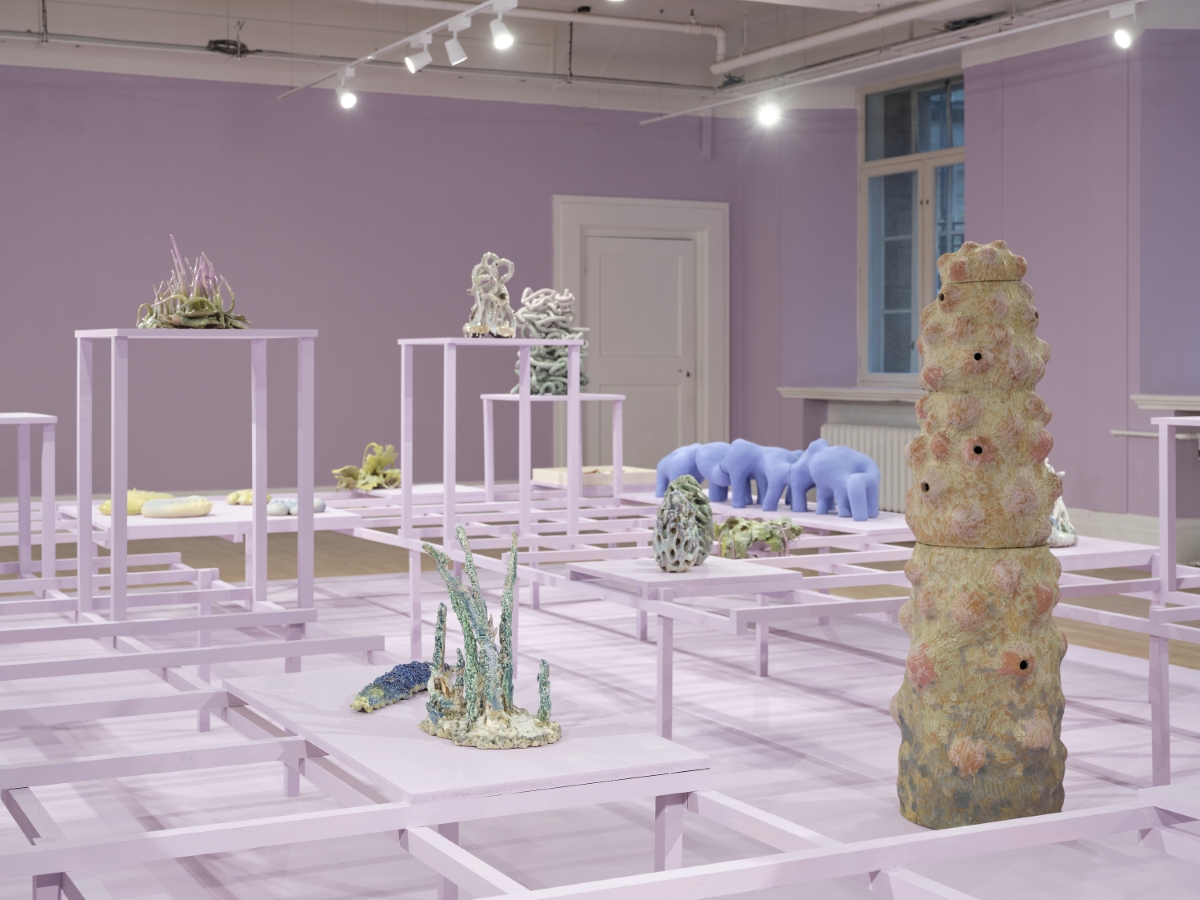
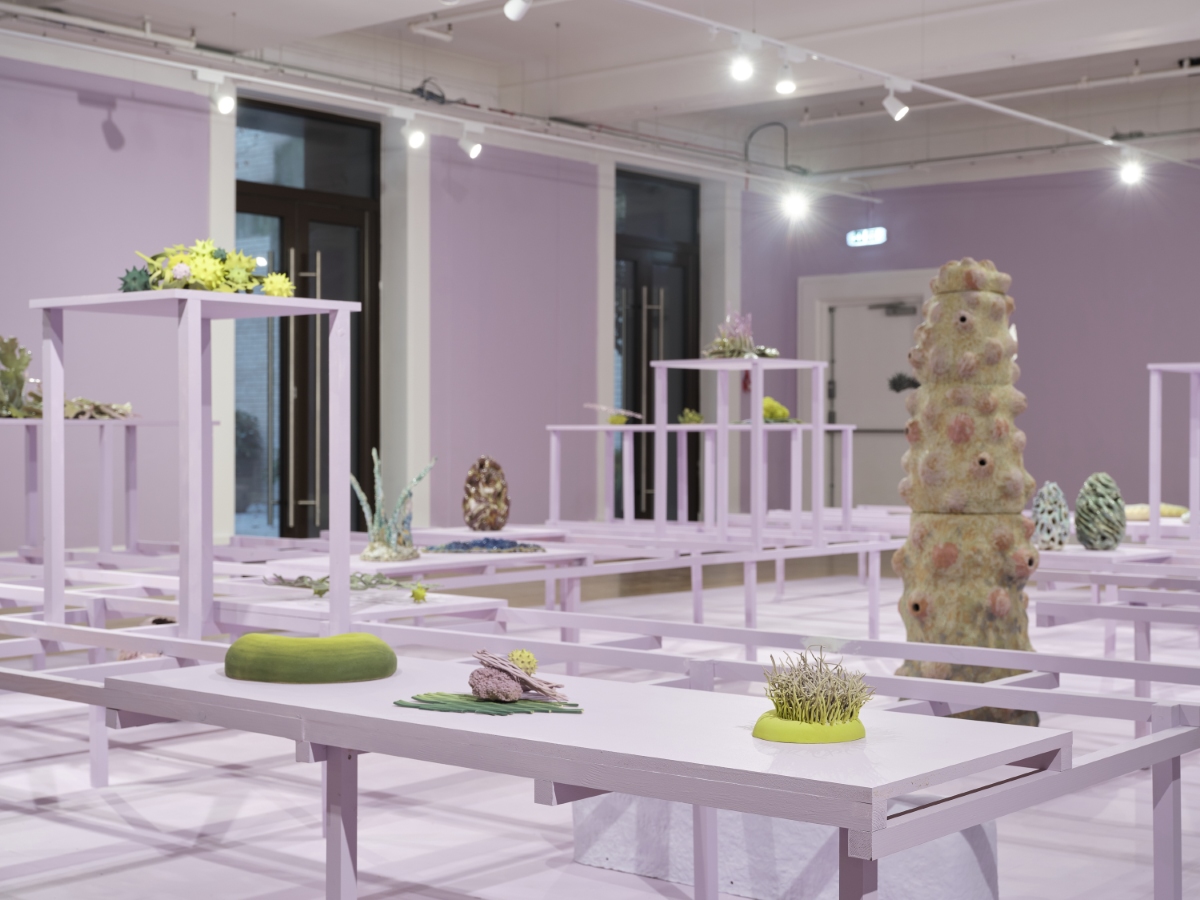
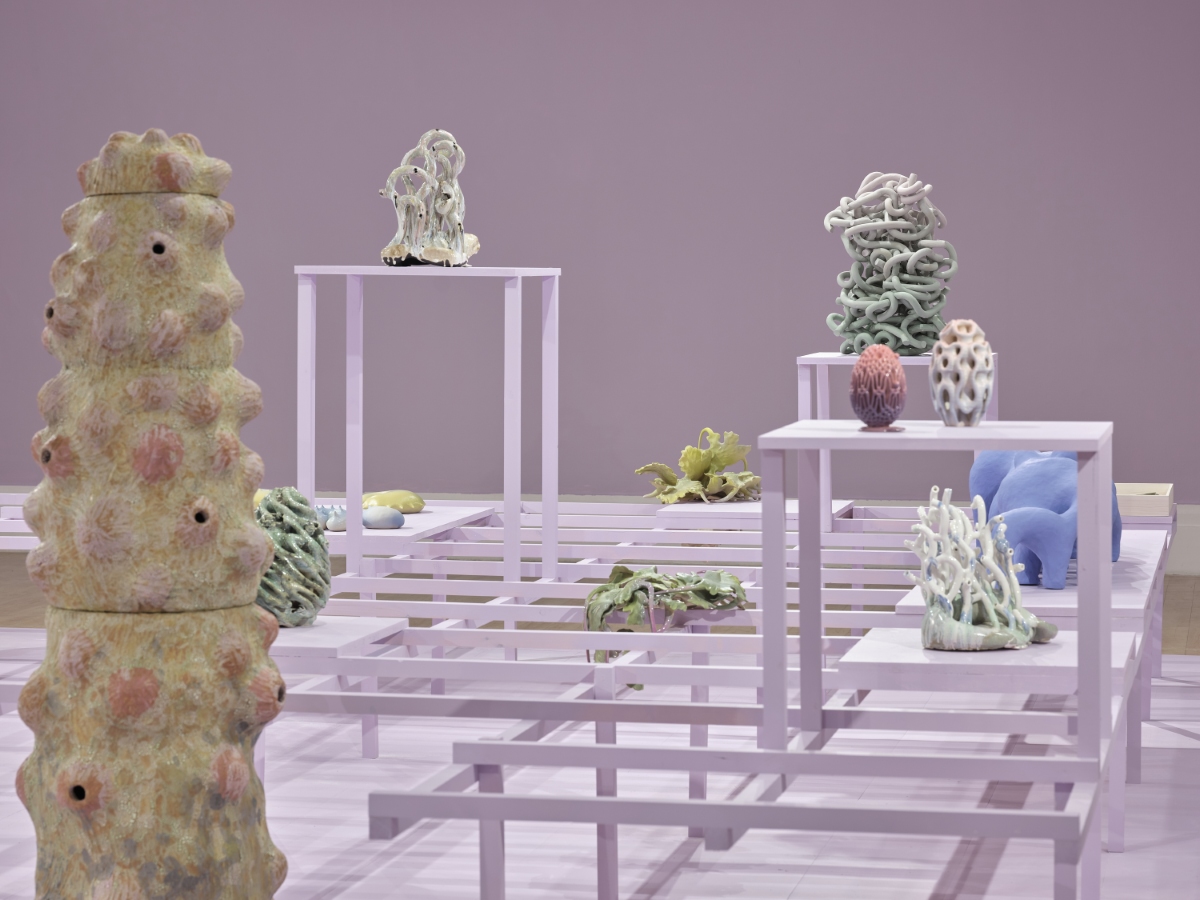
There is a strong curatorial idea in undergrowth as a concept, to create a narrative space that holds complexity and vitality, undergrowth as what persists beneath the visible structures of society. Ideas and processes create a dialogue between language, nature, and the physicality of the material at the unruly margins. We can see this reflected in the processes involved in making the ceramic sculptures. Through attentiveness to material, this sensitivity allows transformations that link the tactile process of making with ecological endurance. Ceramic processes disrupt the idea that clay and other substances are passive—there to be shaped, altered, and controlled. When you engage with ceramics, you enter into a reciprocal relationship with vibrant matter. Clay is a material that cannot be disentangled from both human narratives and nature, rooted in the deep materiality of geological time. The very act of making or remaking lends itself to thinking through speculative new ways of being in the world, of relationships with the non-human and a resistance to fixed conceptual binaries. It lingers in the in-between, literally and figuratively transforming meaning and matter.
Consideration of colour is manifest in the ceramic objects and exhibition design of Undergrowth, the palette moves from a chlorophyllic colouring through to acidic green before blending to shades of purple, the colour of protection and resilience but also of speculative futures. The artists have employed diverse ceramic techniques to evoke the full spectrum of vegetal colour. Green is the colour of growth and vitality, while the combination of green and purple have long signalled the alien and the mutated in science fiction, a chromatic shorthand for hybridity, toxicity, and speculative futures. They often signal something unfamiliar or unsettling—worlds that challenge human norms or suggest transformation. Writers such as Ursula Le Guin, Octavia E. Butler, and Margaret Atwood imagine plant worlds not merely as aesthetic backgrounds but as narrative mechanisms, where colour becomes a tool for world‑building and social speculation. The exhibition’s speculative palette connects the ceramic works in a relational system, inviting viewers to see colour as an active agent in shaping narratives between human and nonhuman worlds.
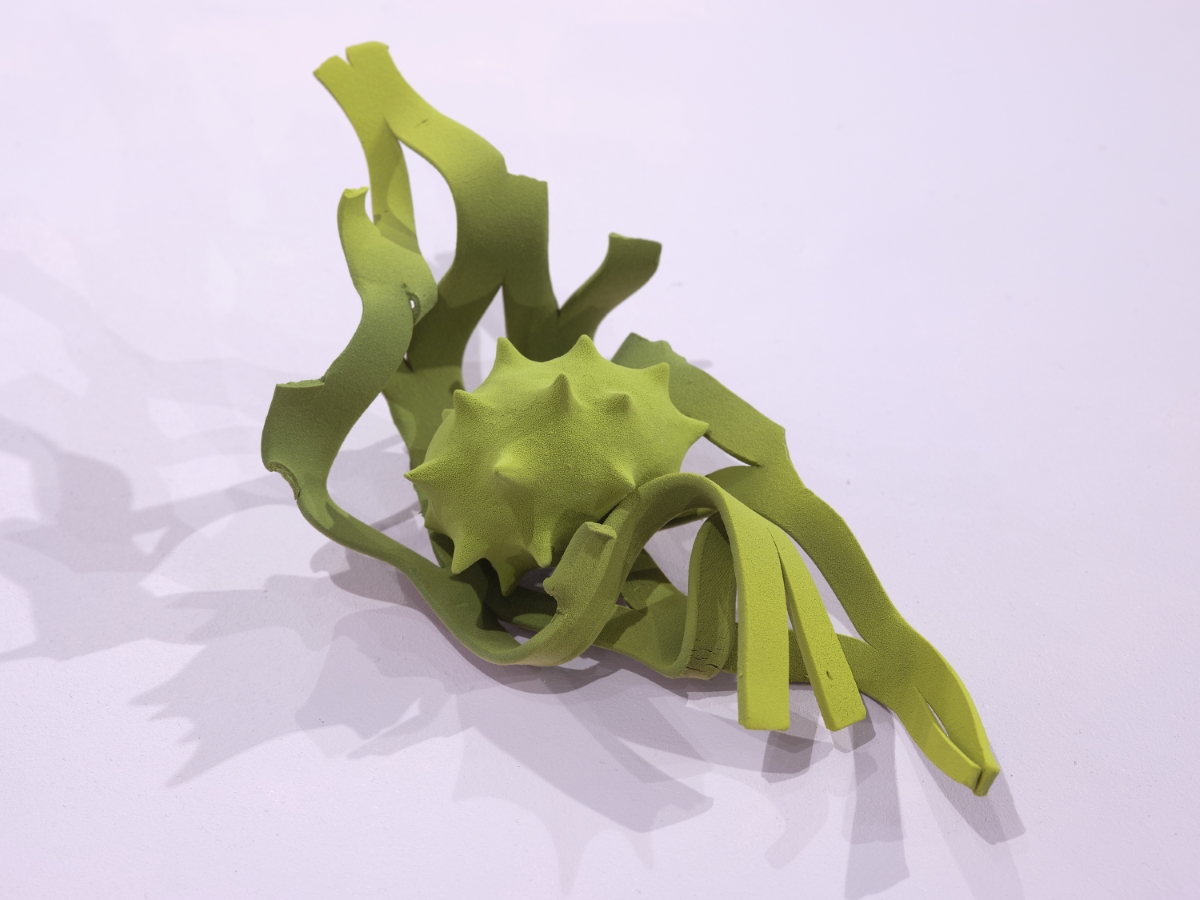
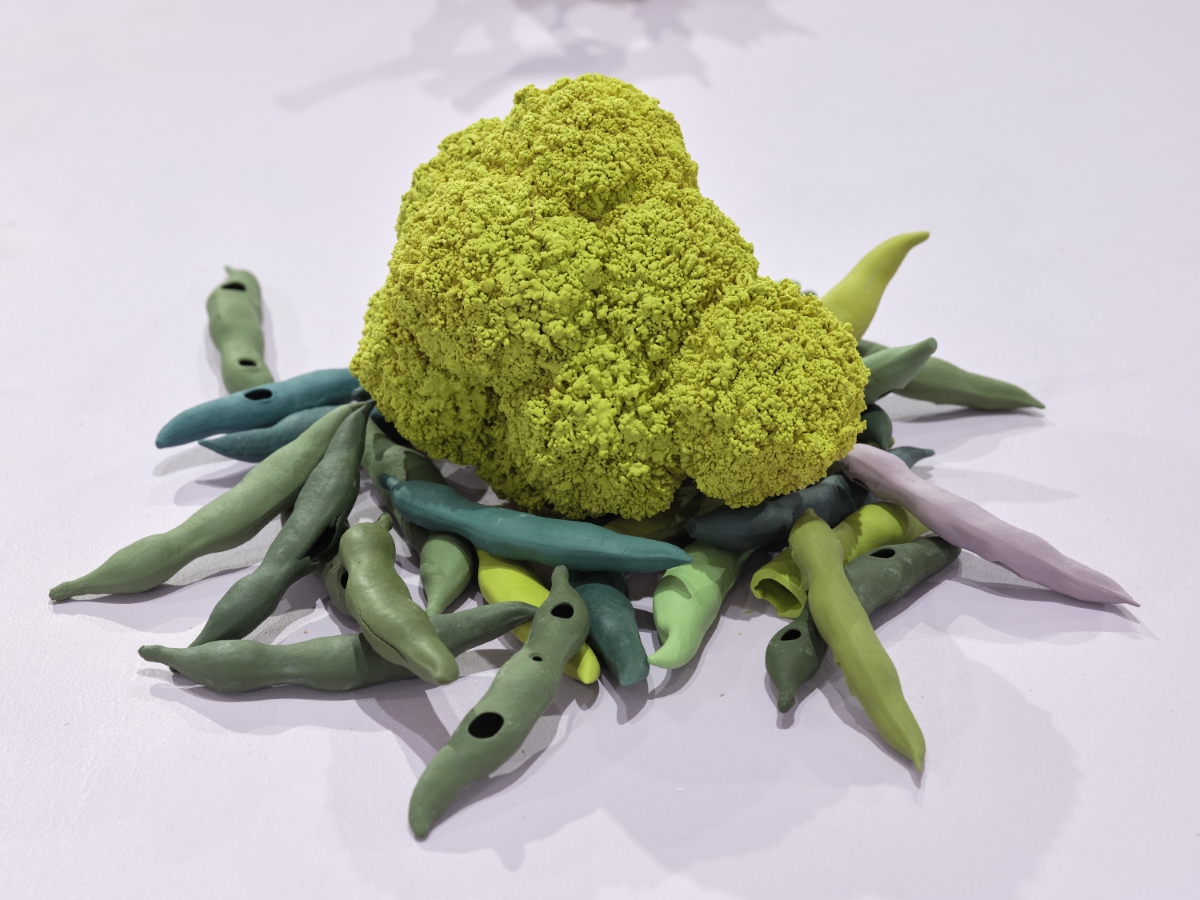
The artists in this exhibition work responsively, attending to material feedback and employ adapted strategies, creating forms that embody resilience and relational care. Elizabeth Jackson describes her making process as beginning ‘with visceral language, translating words and concepts into the tactile, embodied motion of working with clay’, within the context of the undergrowth, words like persistent, linger, flourish, energise, hide, weave. These words first emerged while Jackson tended an allotment and through reading Robin Wall Kimmerer’s book Braiding Sweetgrass1, the “Three Sisters” (companion planting of corn, beans, and squash) represent a symbiotic Indigenous gardening method that emphasises reciprocity and care. This relational dynamic will be familiar to those working with clay, that creates a dialogue between language, nature, and the physicality of the material. This responsive approach involves continuous adjustment to changing conditions and attunement to material feedback, embracing experimentation and openness to possibilities.
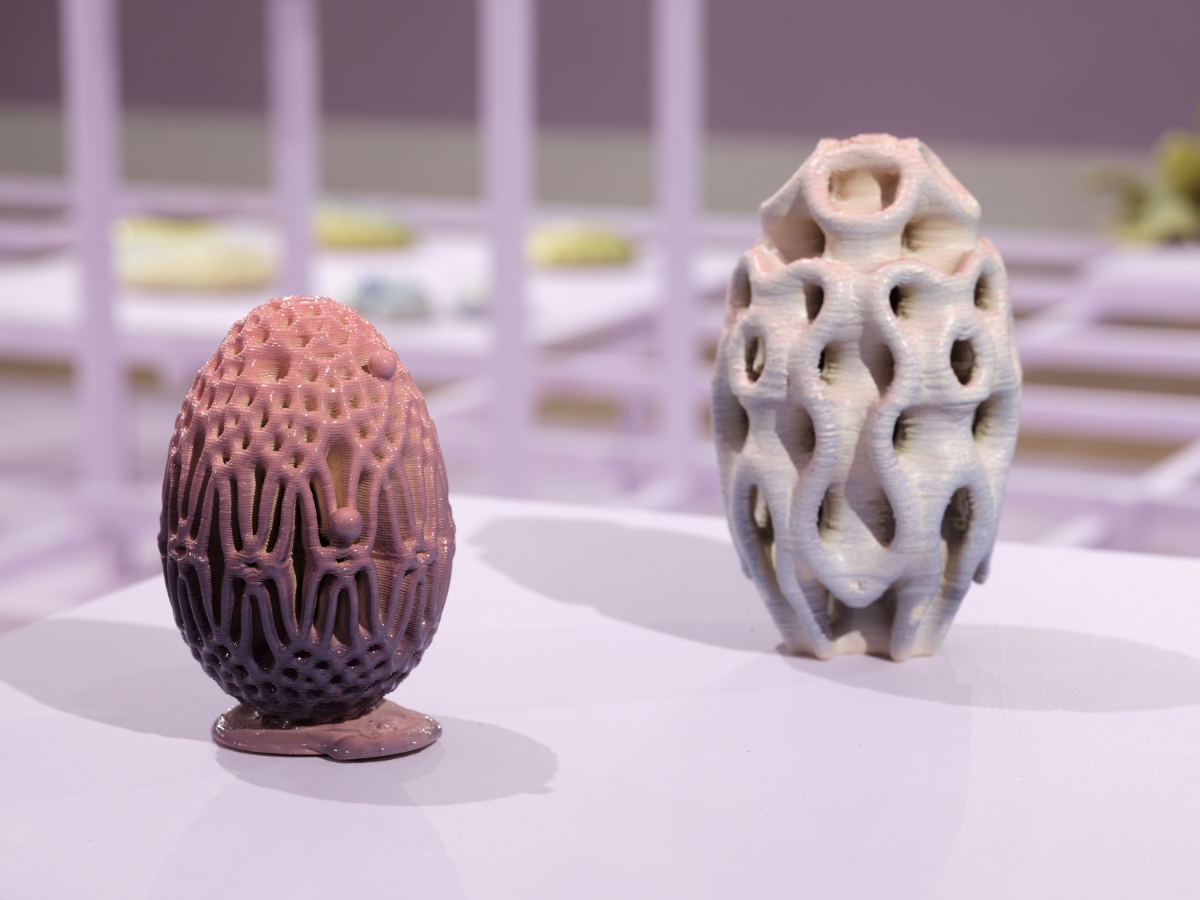
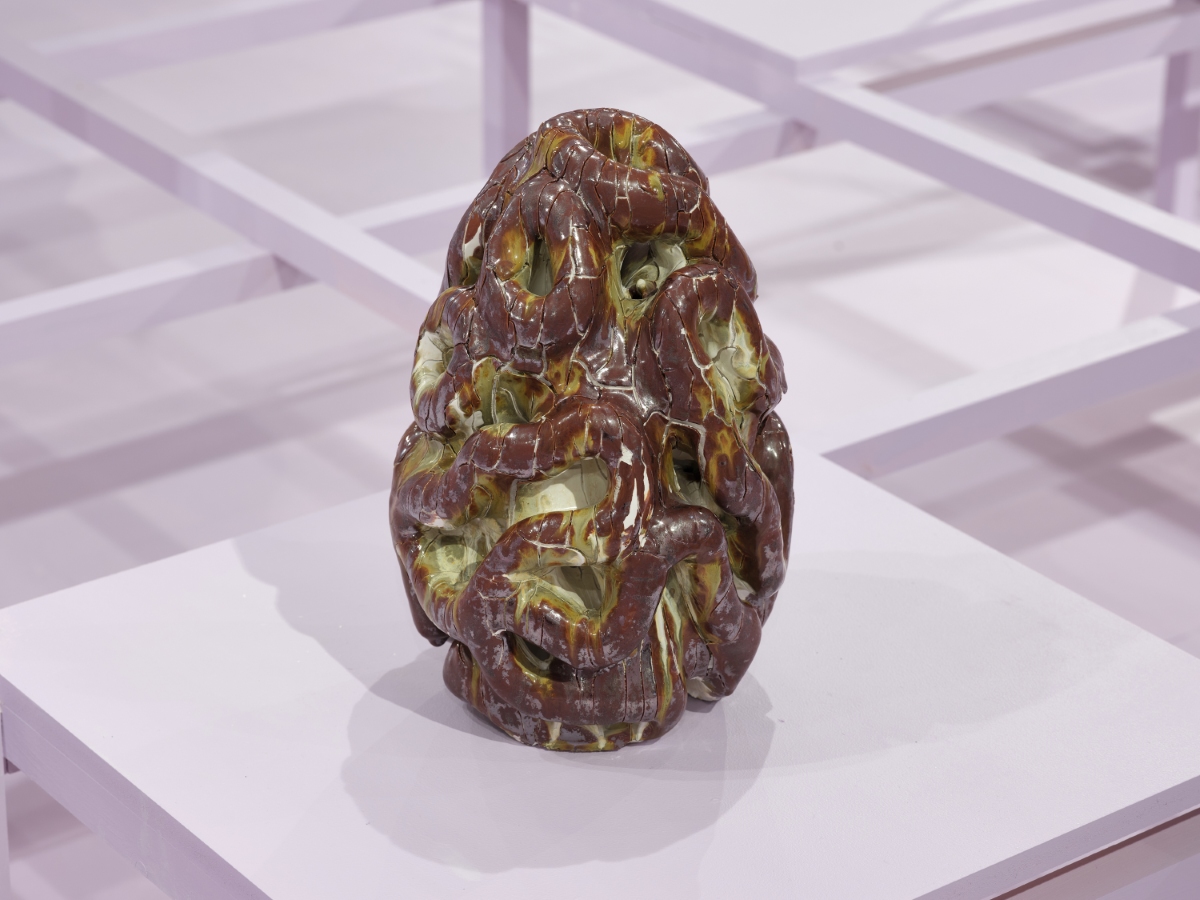
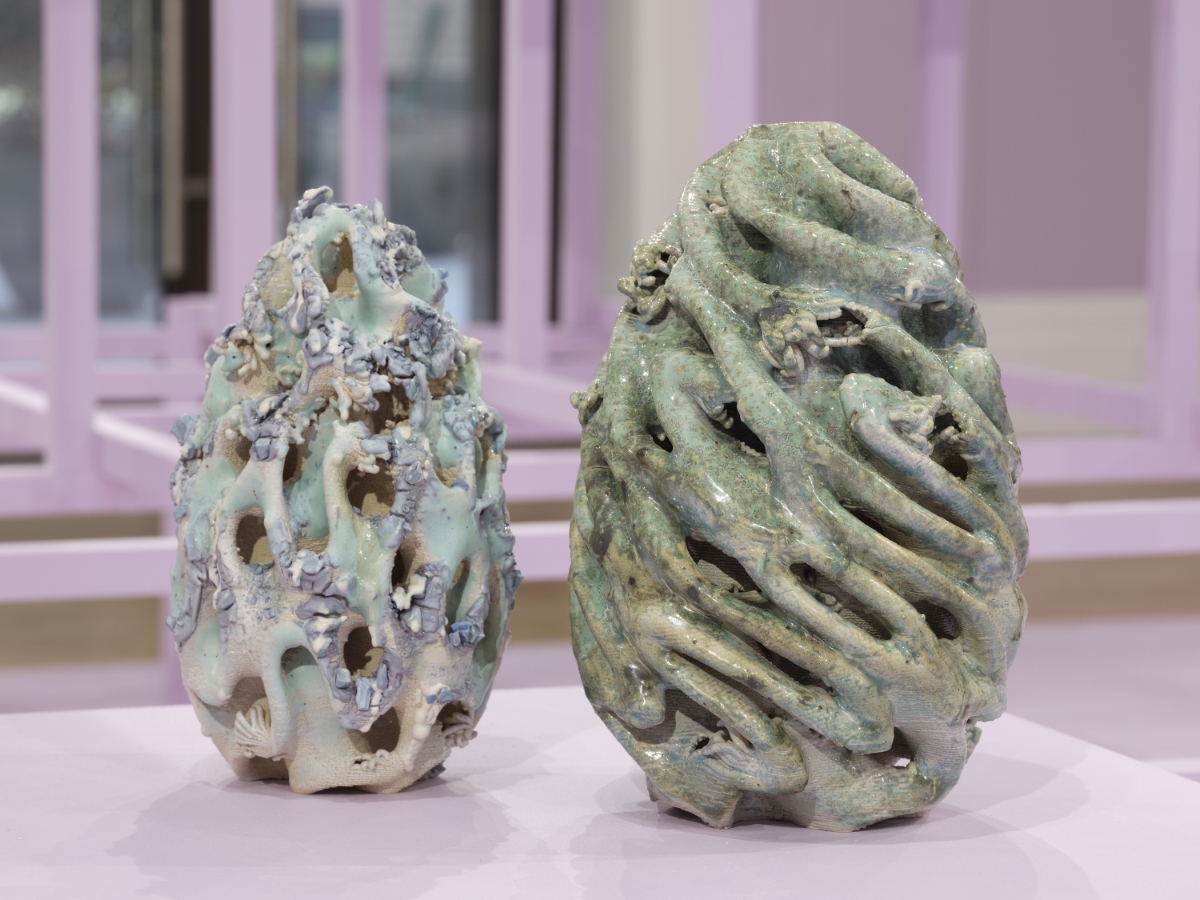
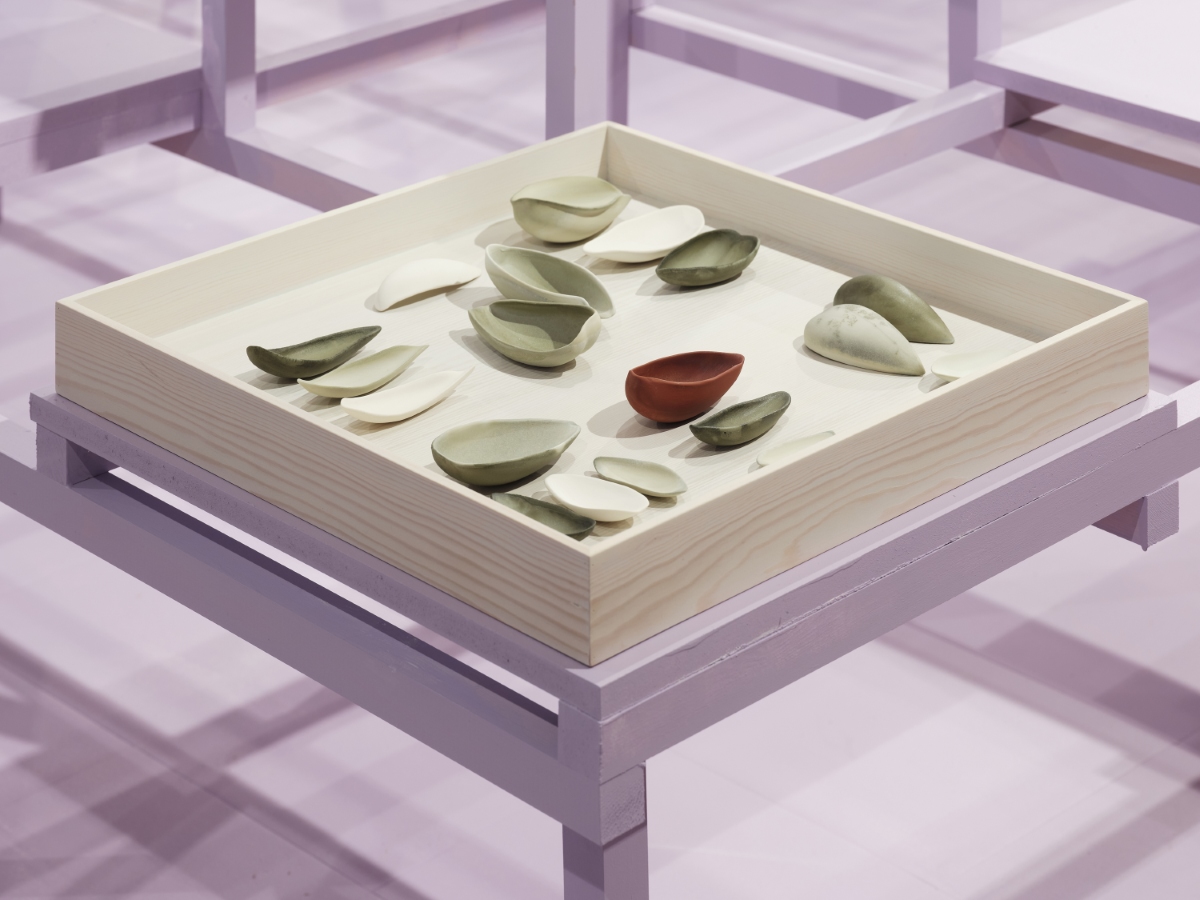
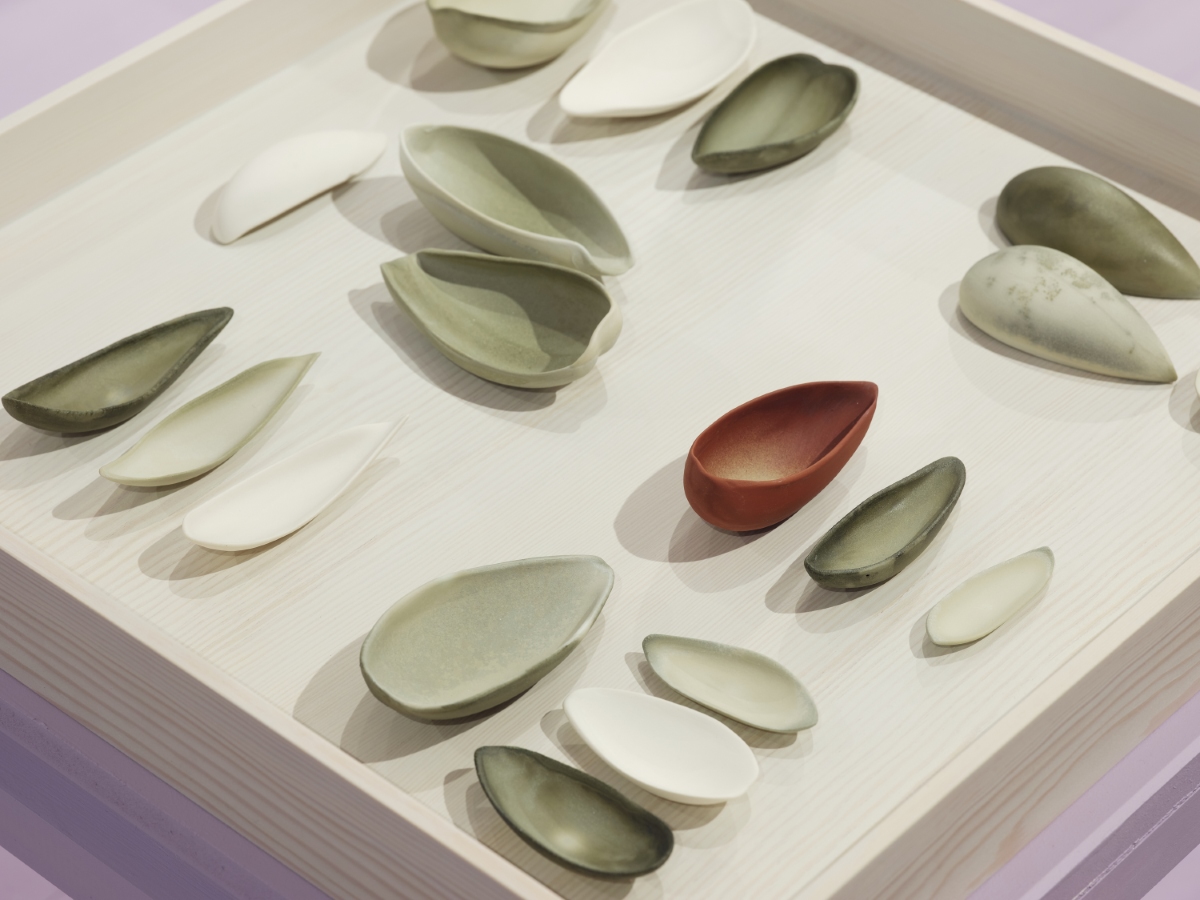
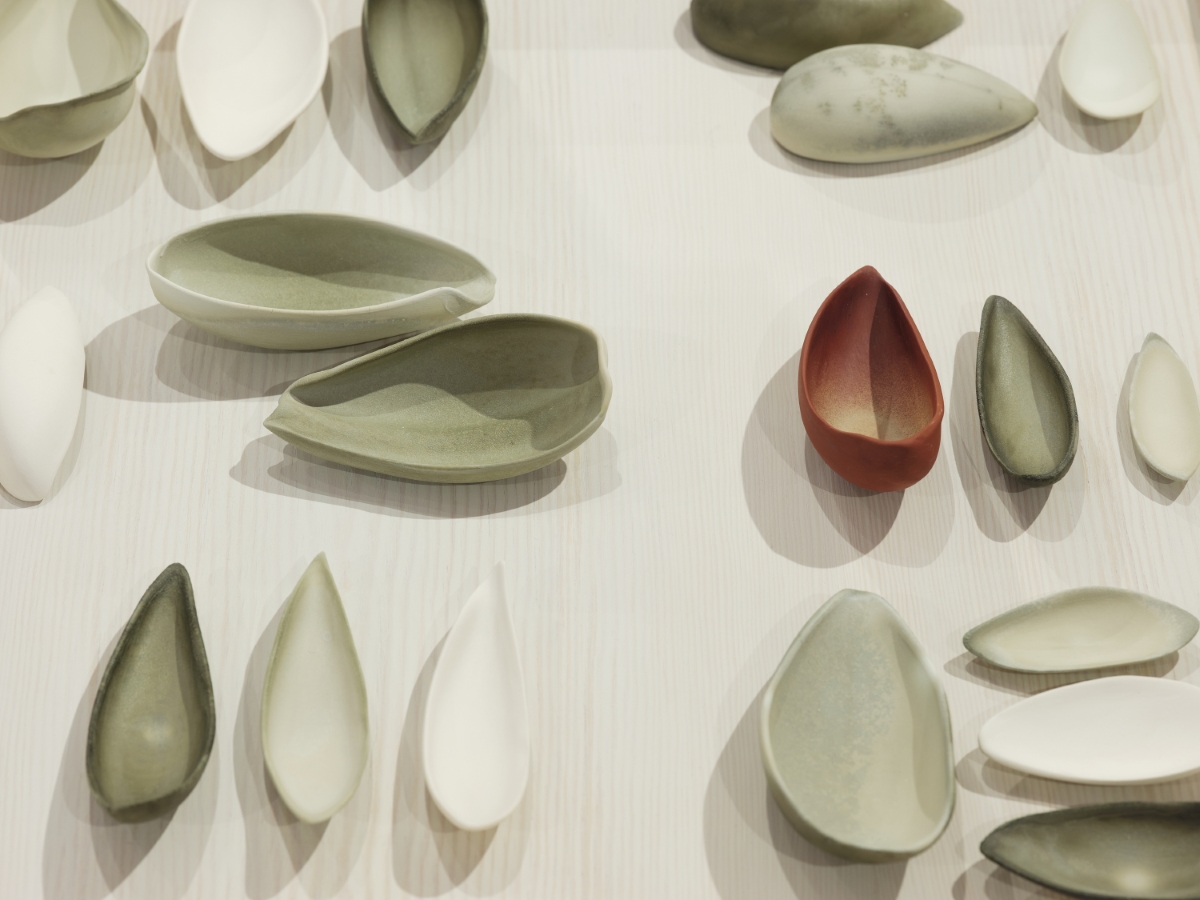
Raphaël Emine’s 3D-printed ceramic eggs are nestled within the narrative of ecological entanglement, human and nonhuman, artist and machine. His objects are designed to host insects and other living organisms. This intricate layered architecture contains tunnels and complex structures for multispecies cohabiting beyond the scale and reach of human interaction. Emine’s digital fabrication process relies on algorithmic precision and programmed sequences to build complex forms whilst externally directed by the human creator through a more open-ended development of ideas. The process of making in clay is a deeply physical, adaptive process, repeated actions and the rhythms of making become a kind of embodied code. The artist’s gestures, learned through practice, are embedded in the body as somatic memory. In a flow state, actions become second nature, allowing the artist to respond intuitively. Artist Lisa Hellrup describes her process of forming the clay, ‘I try to give shape to what feels abstract or overwhelming. My process is a form of translation: turning internal turbulence into objects that hold calm. (…) My work does not offer answers but creates space for reflection and quiet connection’, To Treasure is a collection of tactile petal-like forms that make you want to reach out and pocket for later. Safia Hijos’ work also embodies a responsive logic, where sculptural components are modular, clay elements that can be disassembled and reconfigured, interacting with the fabric of the building.
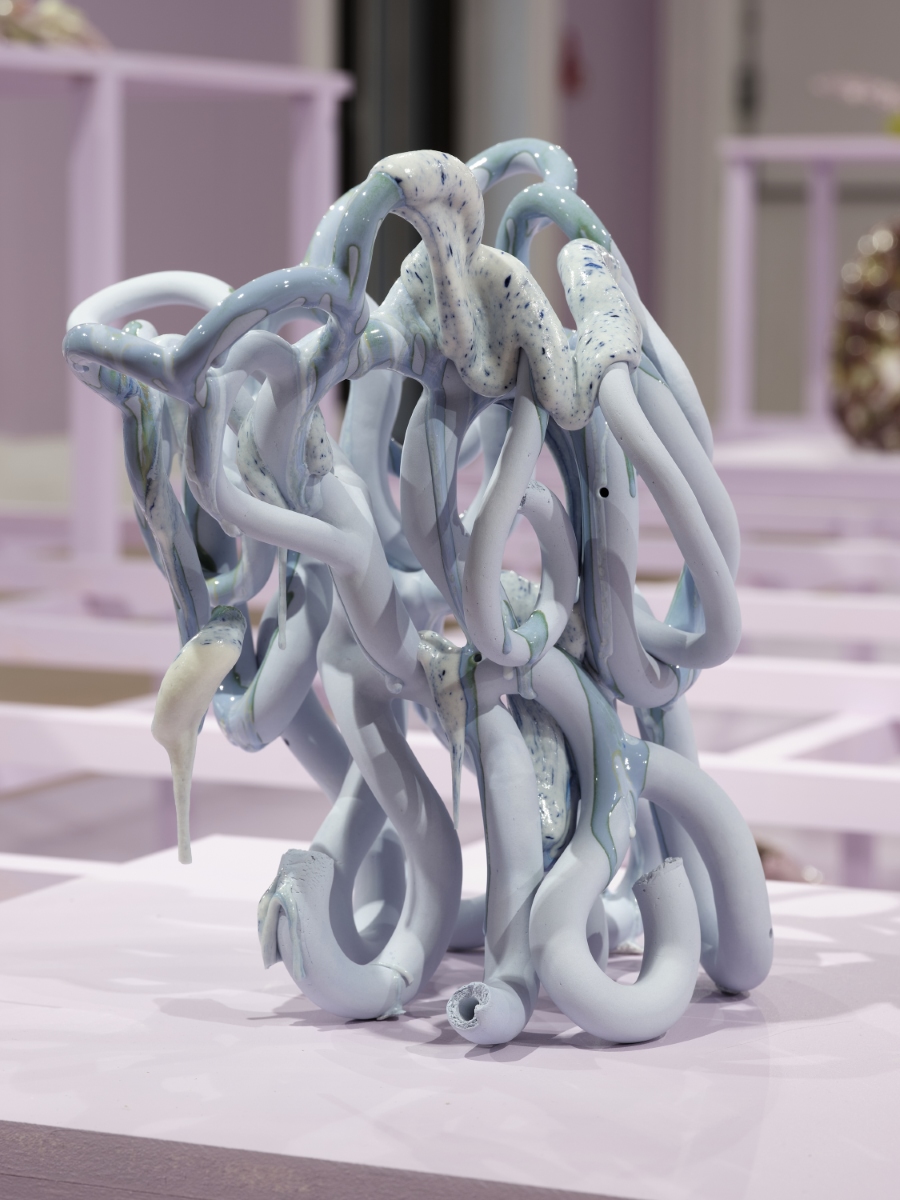
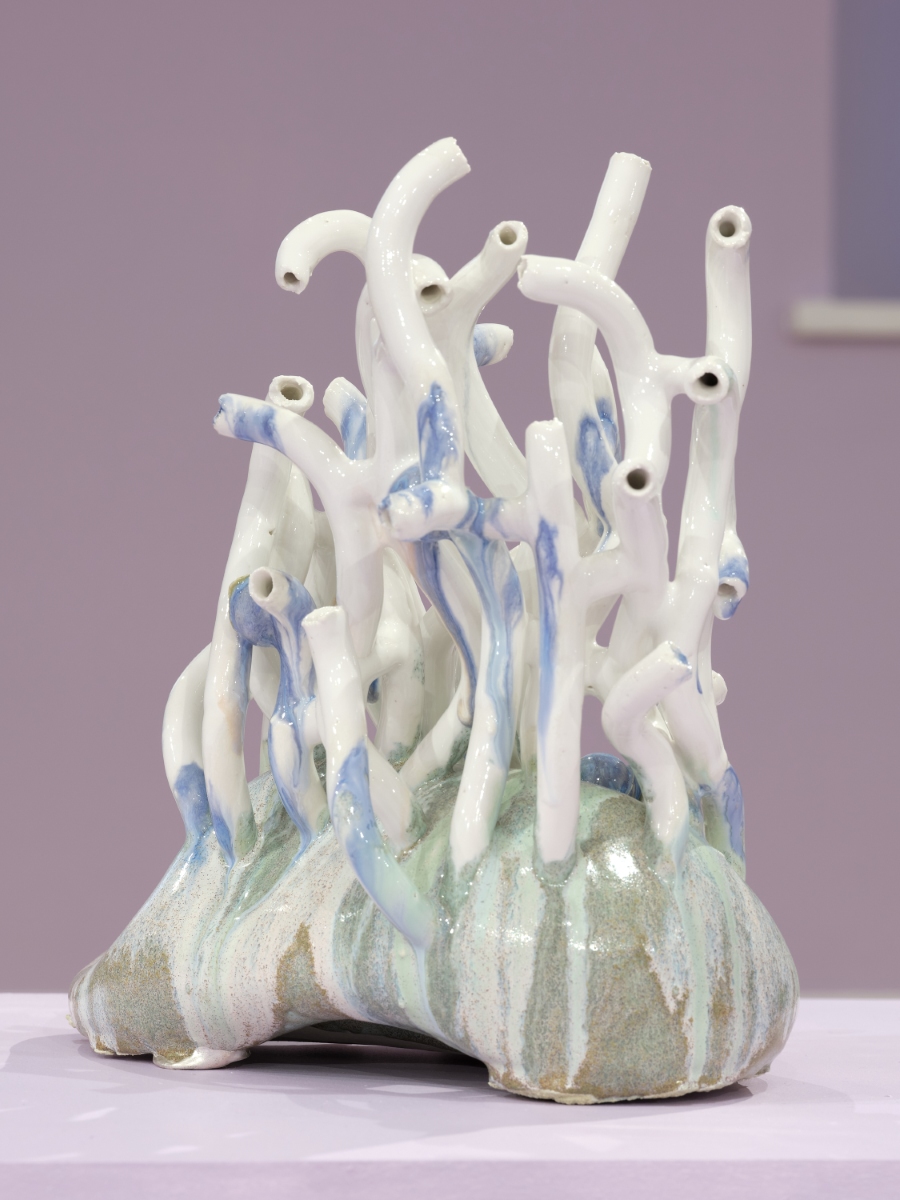
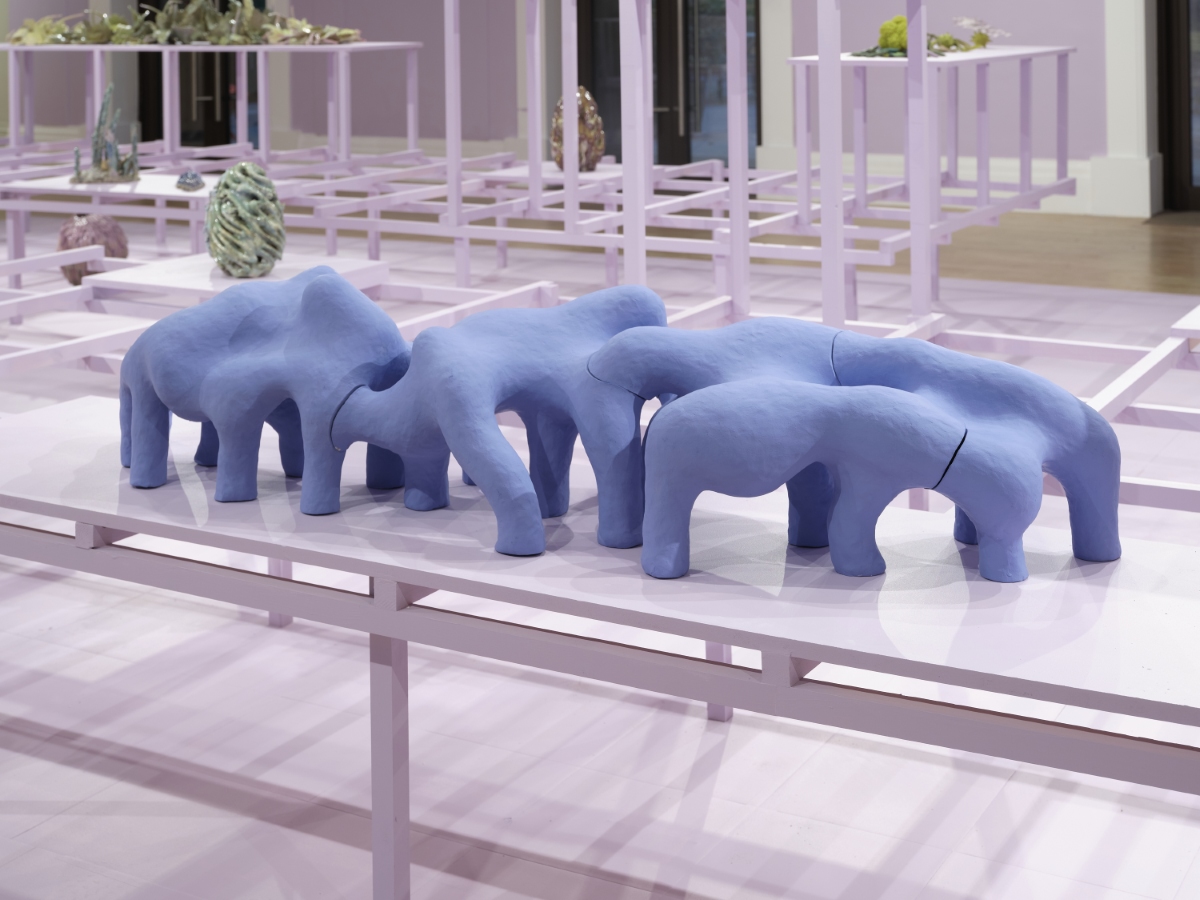
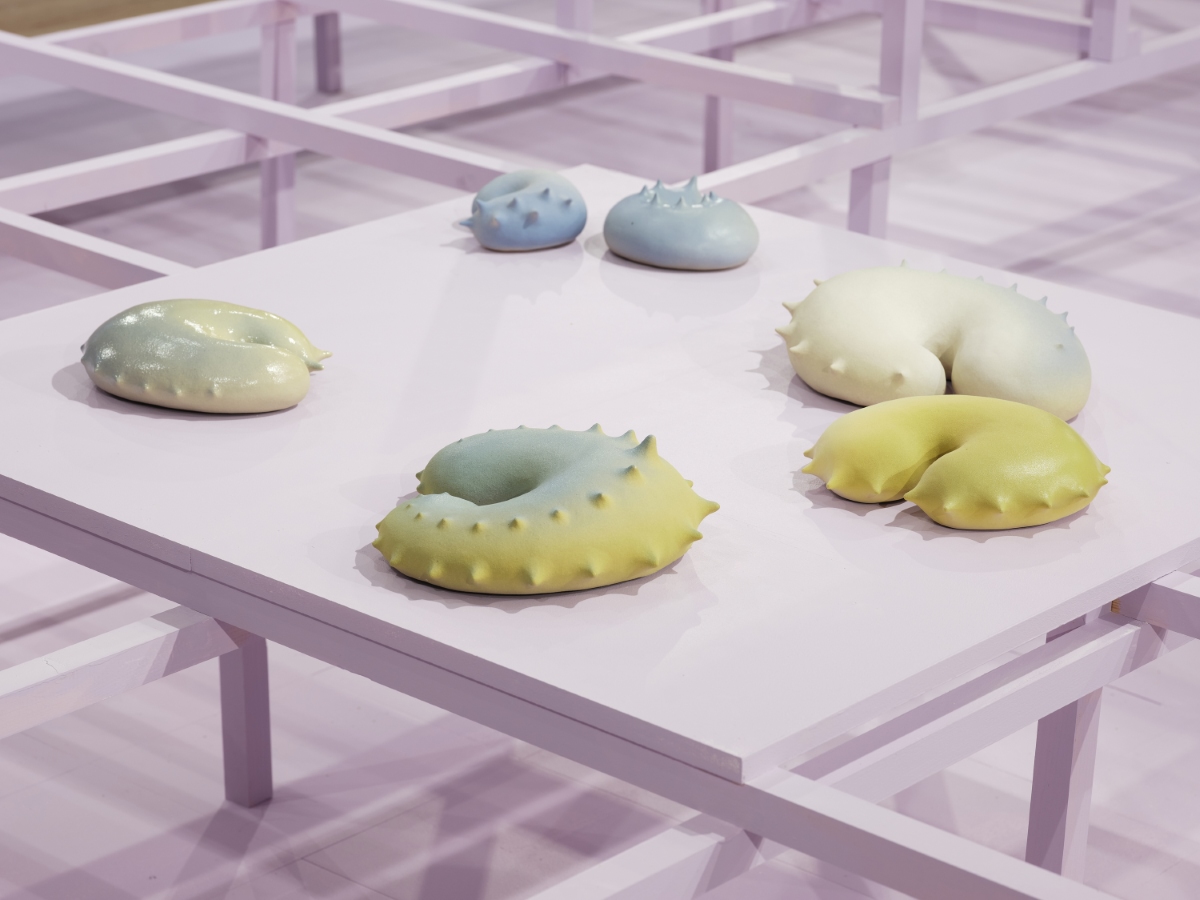
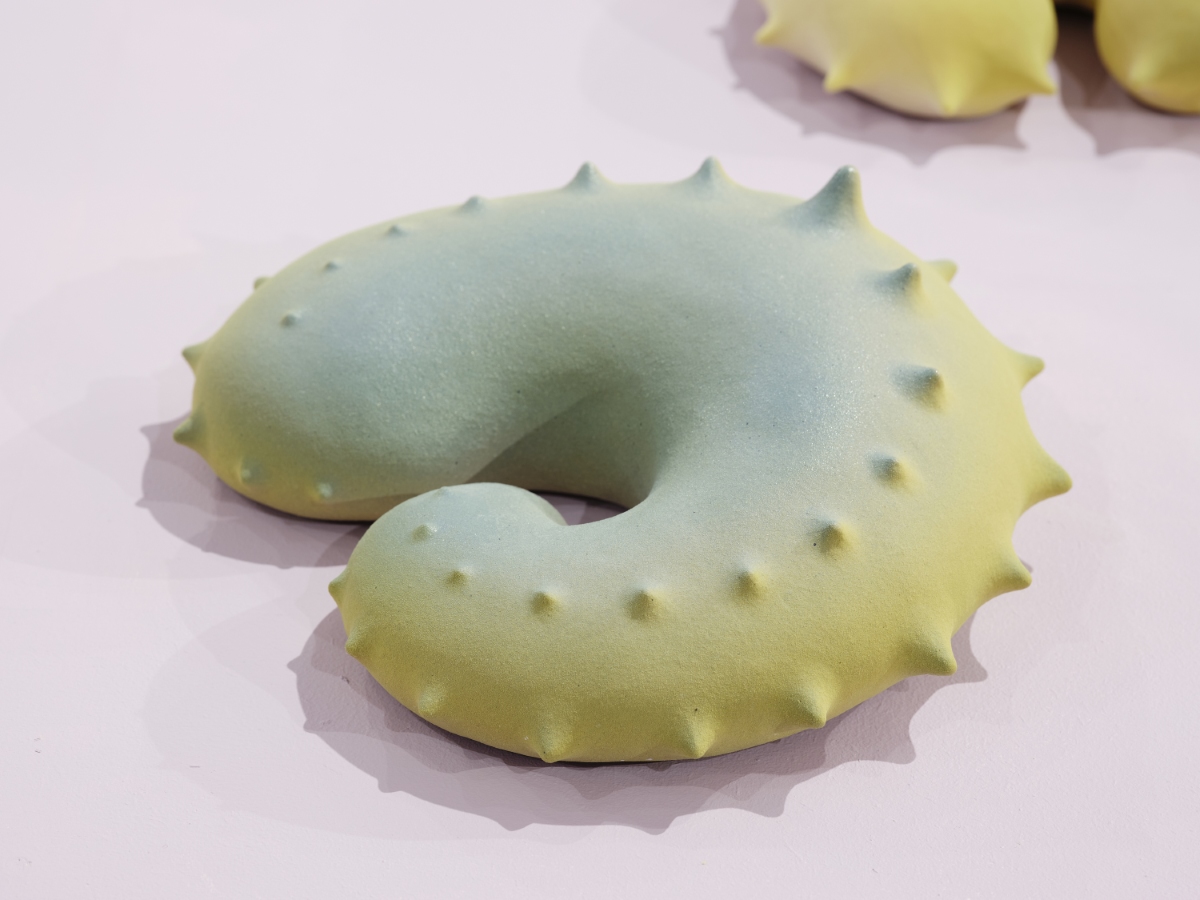
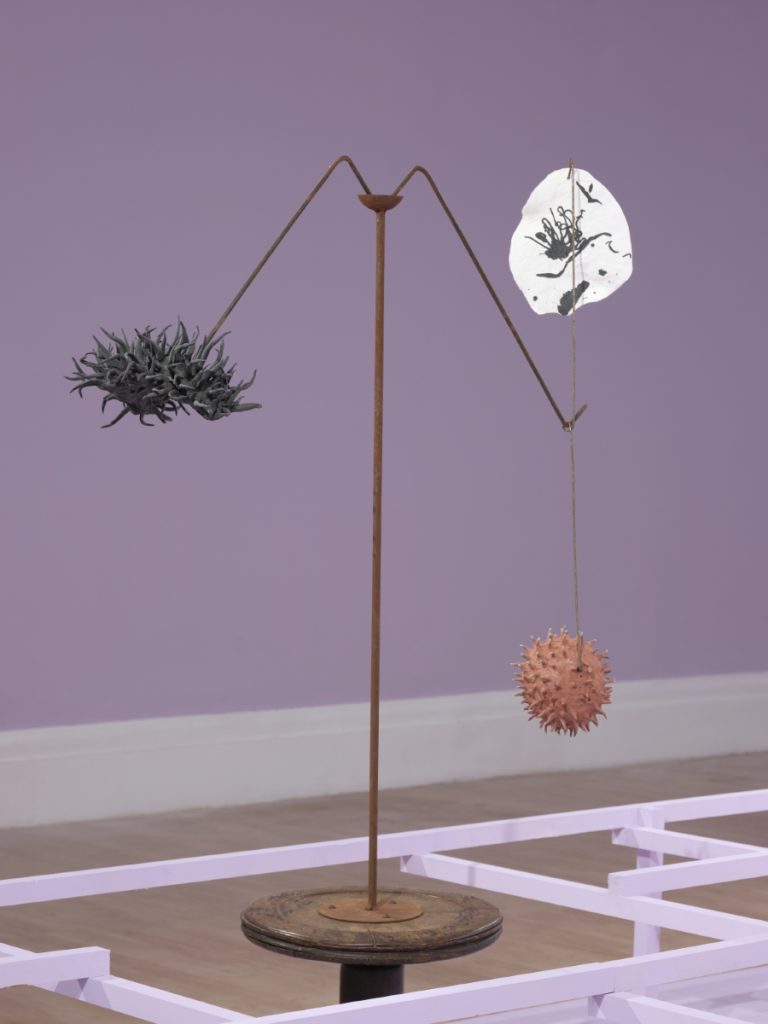
Ceramic materials are not still, they shift and transform, the inorganic is animated beyond observation, mirroring the subtle, often imperceptible movement of the vegetal. Beyond human constructs, vegetal mobility reveals methods of slow, adaptive travel that unfold across generations and terrains. Seed journeys rely on multispecies collaborations, carried by more mobile organisms. Mingshu Li has likened this to migration and cultural exchange, following the journey of the strawflower pattern on ceramics as a form of cross-pollination. Through her work, ornamental motifs become like diasporic seeds, adapting to each new context while retaining traces of their origins. Li’s ceramics evoke the vegetal logic of dispersal, patterns drift, take root, and transform. There is a similar flow of vitality within the exhibition, Sisse Holst Pedersen’s sculptures Lionsfoot and Tensilodica translate plant trophism: stretching, reaching and adjusting to environmental stimuli. Extending tendrils outward in search of new possibilities. Animating the unseen, with literal movement is Jo Pearl’s kinetic sculpture In Balance gently moves and teeters, playing with motion and scale to bring an extinct fungus back to life, and with this there is a feeling of enchantment, inviting viewers to experience wonder and curiosity about the natural world and its overlooked forms.
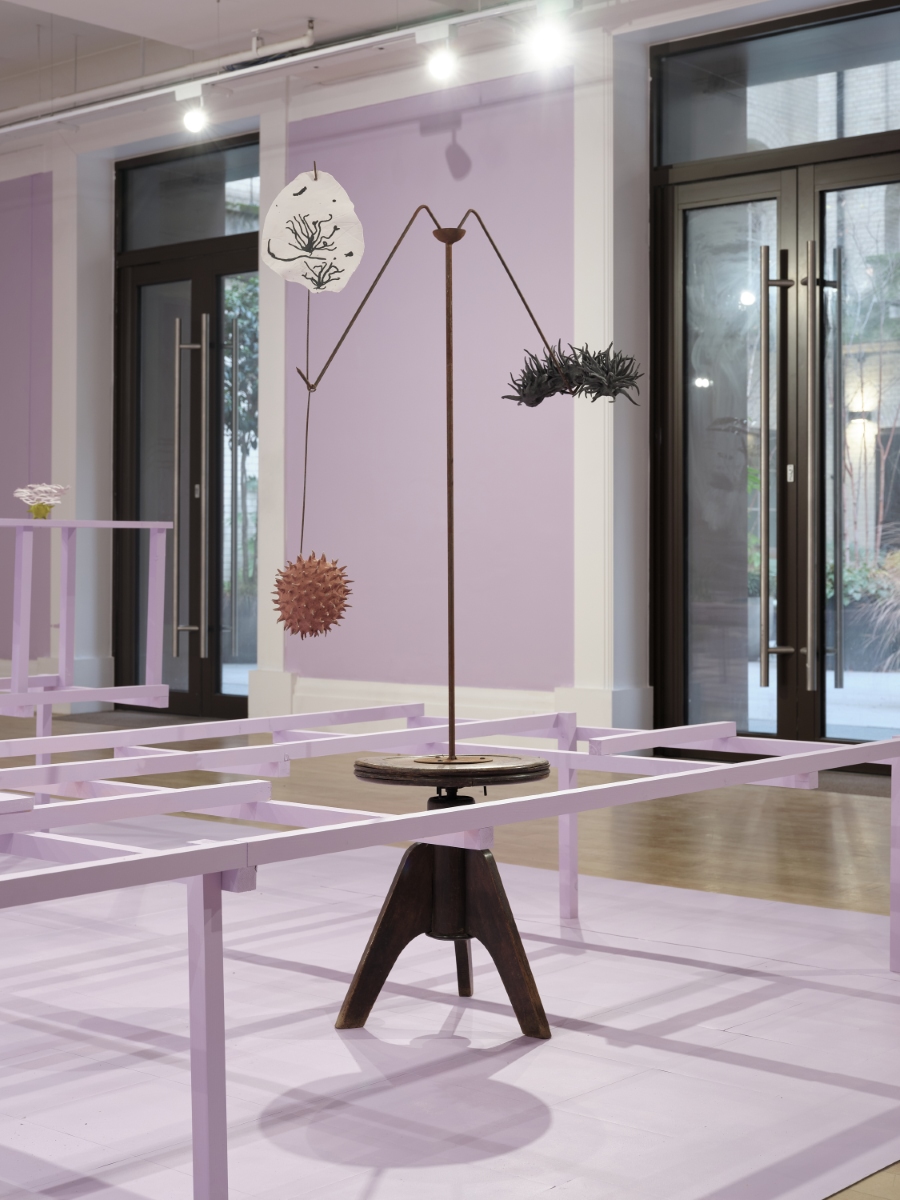
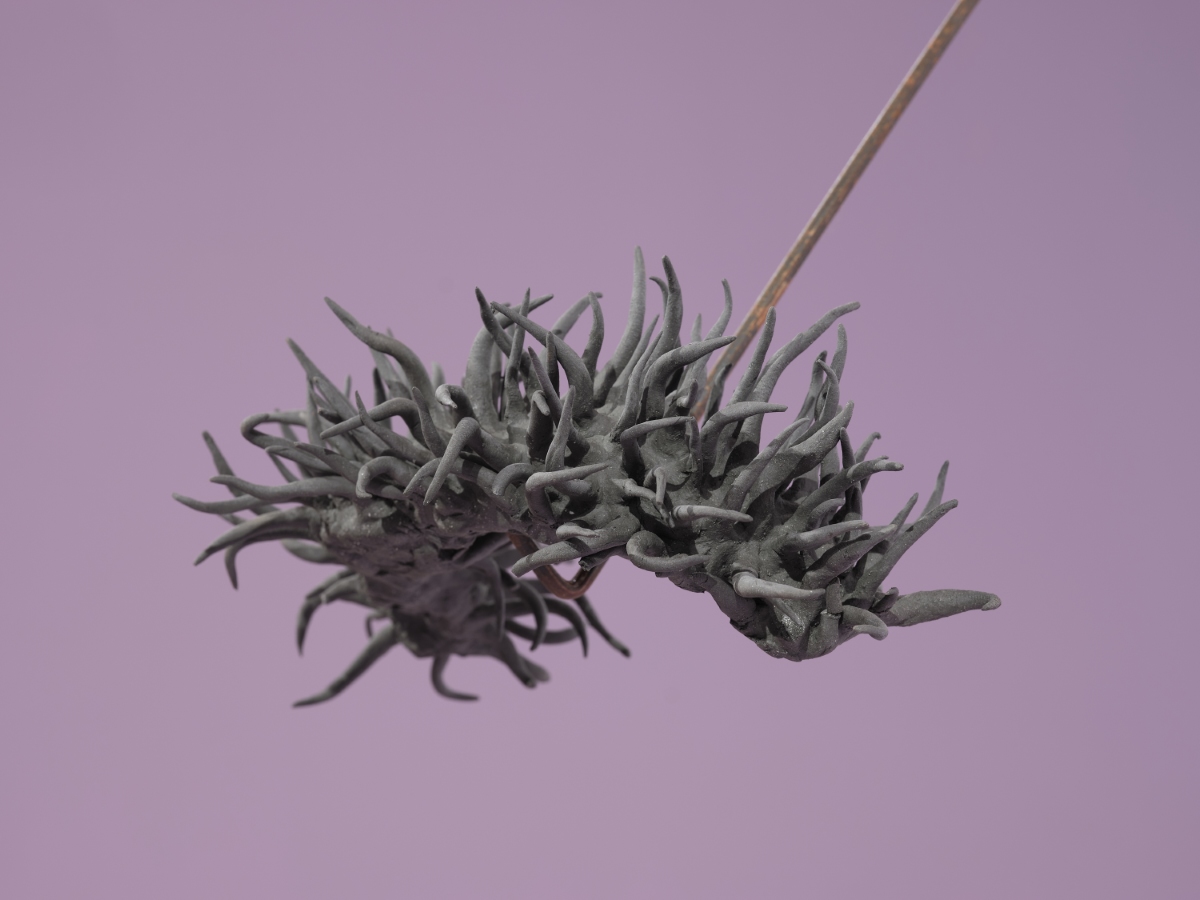
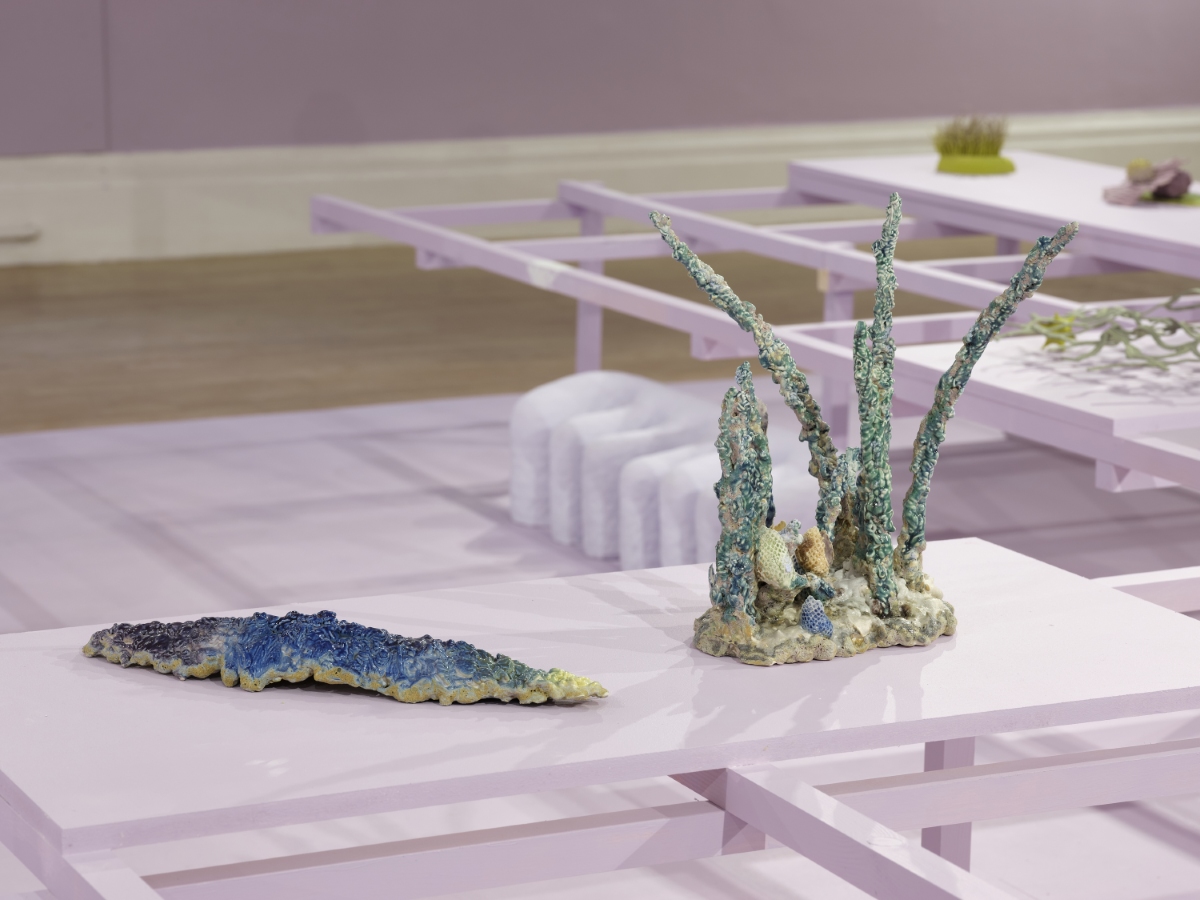
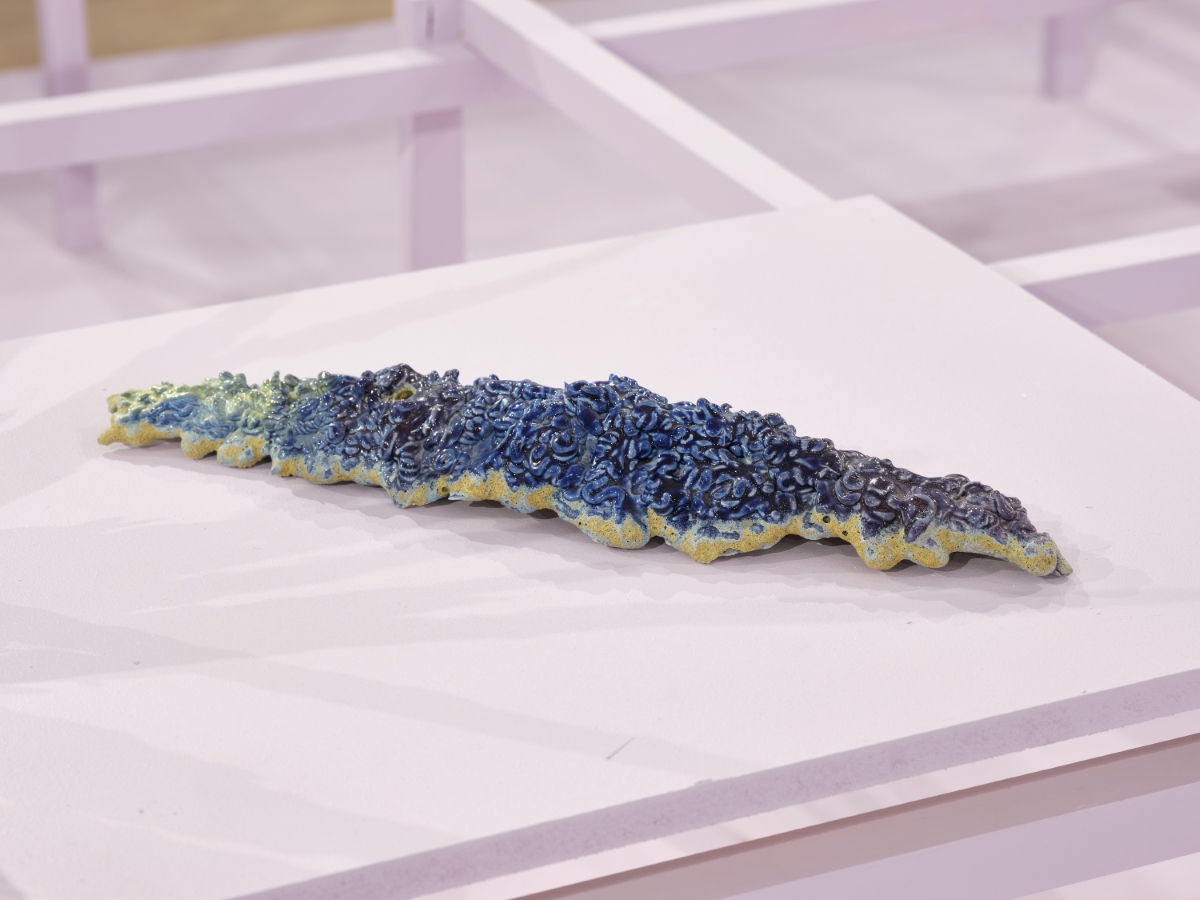
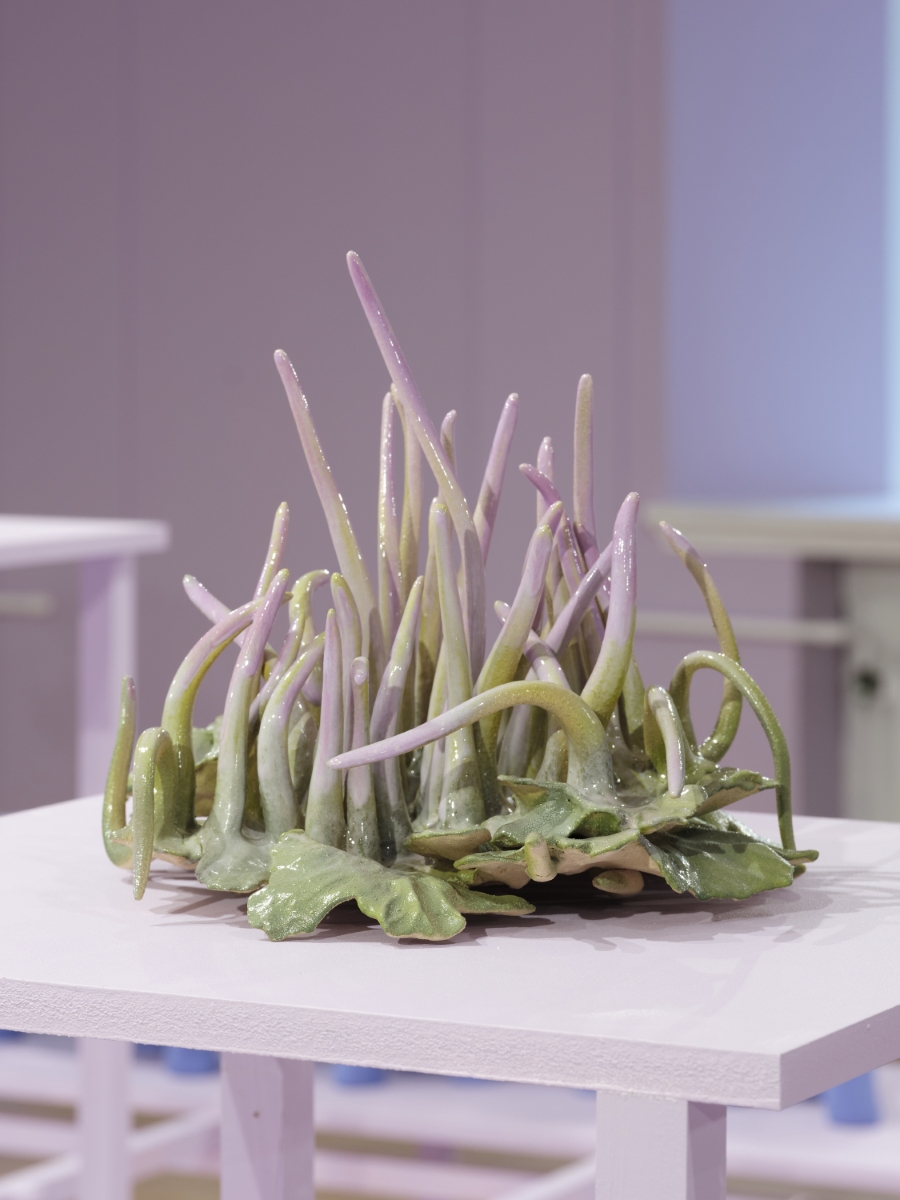
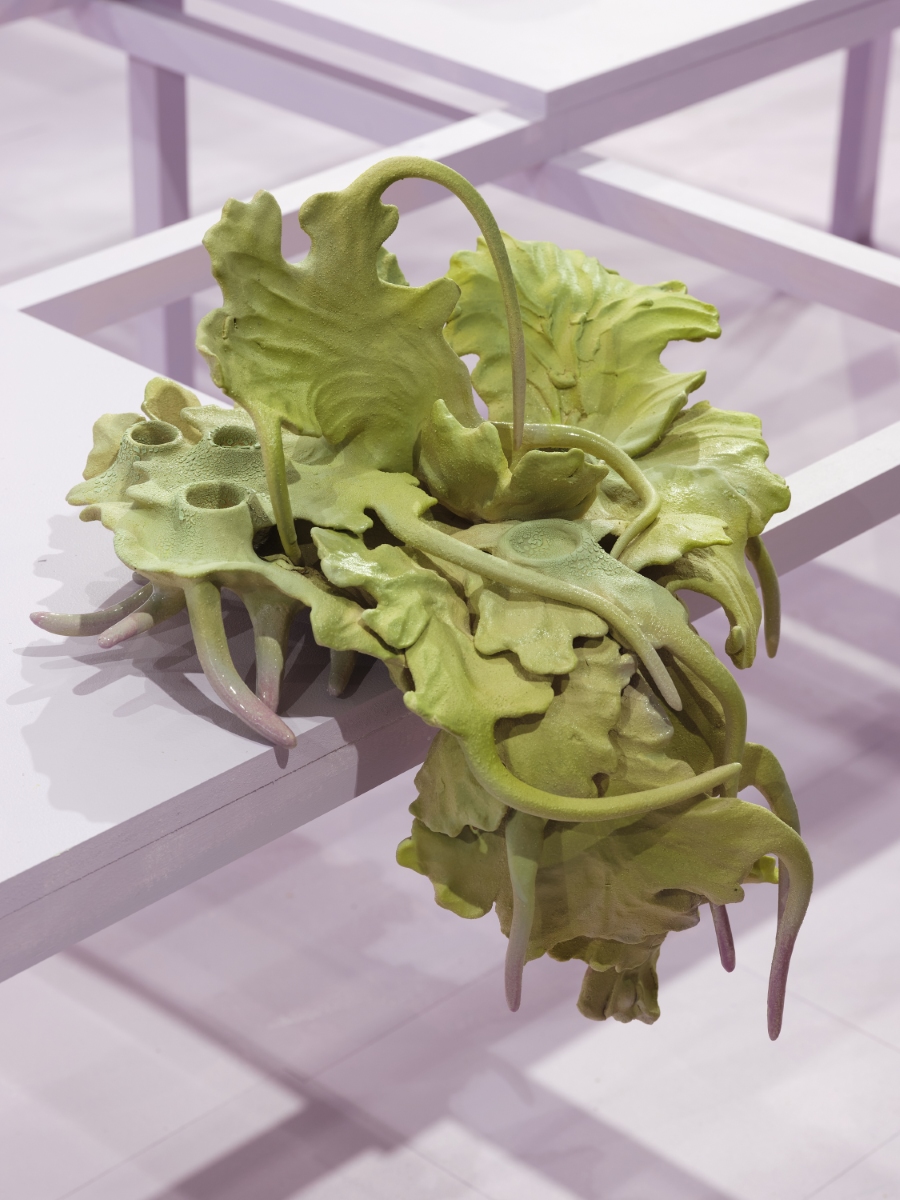
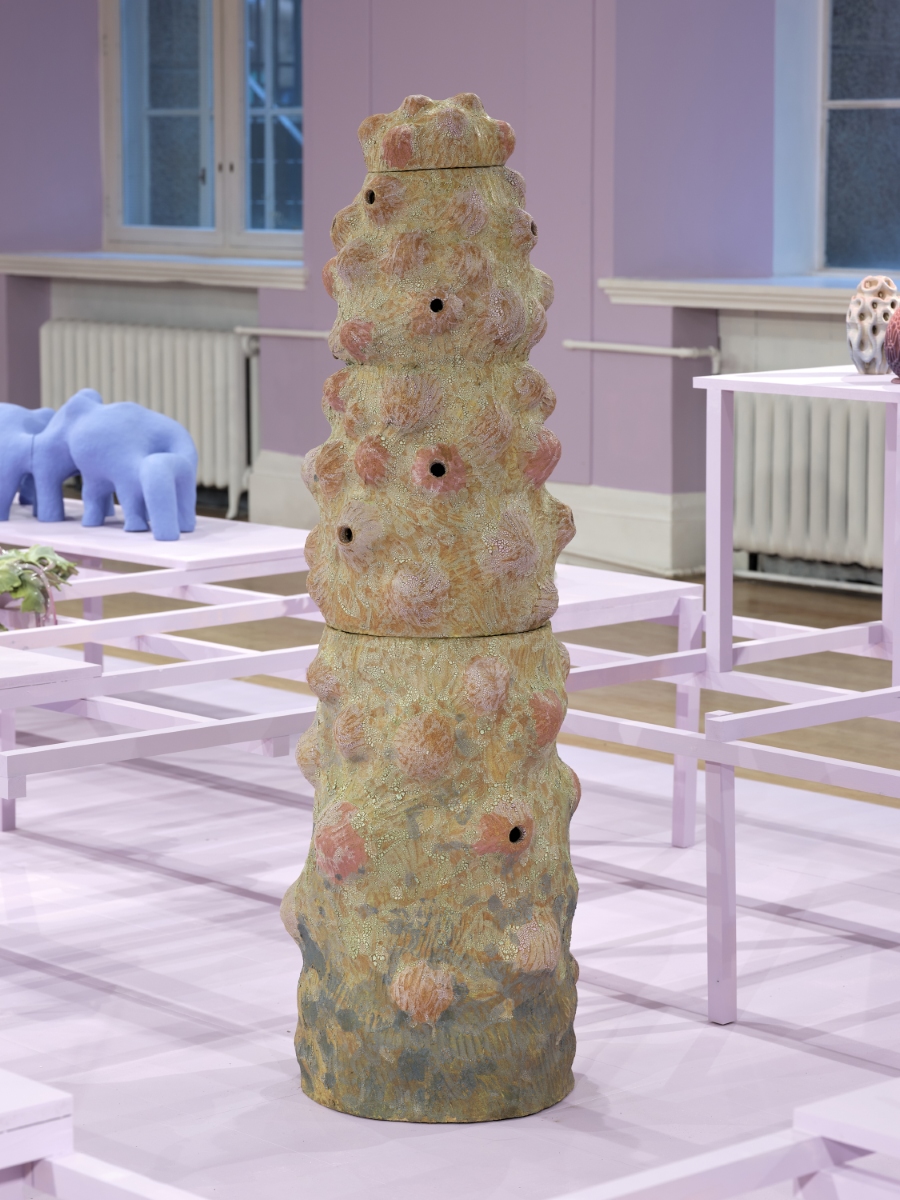
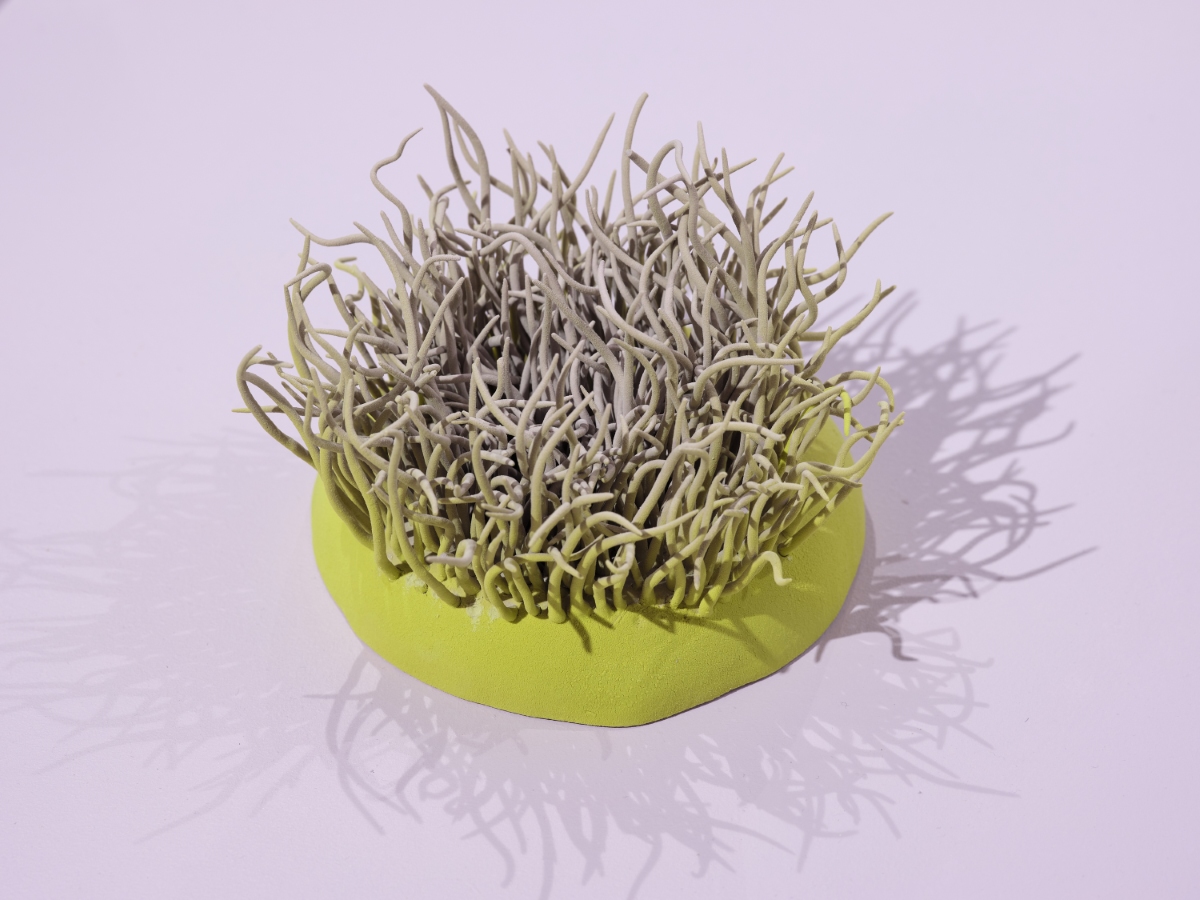
Emily Stapleton Jefferis’ enlarged lichen forms are an abstracted arrangement, an interpretation of lichen not a simulacrum. Textures, rhythms, and structures of the lichen are generated with the tactile gestures of making, the finger marks in the clay, an indexical link, transforming into sculptural forms both familiar and alien. She says, ‘I often zoom in on the overlooked or unseen, extracting the wonder, beauty, and strangeness that exists just out of sight’. The enlargement serves to distance the viewer and facilitates decentring the human from the ecological narrative, aligning with a broader exhibition theme. In the work of Meichen Chen this process does not prioritise the human either, instead she imagines emergent aggressive and mutated organisms, where nature is not benign, overturning perceived anthropocentric dominance. This is reflected in Chen’s ceramic process where she uses the liquidity of clay slip and moulds to retain recognisable textures of the physical world and assembling them into fragmented and hybrid forms.
Elizabeth Jackson and Emily Stapleton Jefferis have brought together ceramic artists that use the nonverbal languages of ceramic making and vegetal thinking to create open-ended assemblages. The exhibition is hopeful, ‘imagination is a muscle’2 it needs exercising to help us speculate alternative futures and create paradigm shifts. More than a visual experience, viewers are encouraged to see the world from a vegetal perspective, recognising it not as a field of competition, but as a dynamic, alchemical ecology where differences coexist and matter continually transforms.
Tana West works predominantly with ceramic processes, using the language of ceramic materials and object making to connect with social, political and environmental contexts. Her interdisciplinary practice is grounded in environmental research, writing and collaboration, including examining climate change narratives through the lens of materiality ‘Representing Uncertainty: The Object of Climate Change’ and investigations into apple culture, brownfield sites and water ecologies. West received the British Ceramics Biennial Award for [UN]WOVEN and has produced major commissions for Jerwood Makers Open and the Whitegold International Ceramics Prize.
Undergrowth was on view at County Hall Pottery, London, between January 13 and March 8, 2026. Exhibiting artists: Elizabeth Jackson, Emily Stapleton Jefferis, Jo Pearl, Lisa Hellrup, Meichen Chen, Mingshu Li, Raphael Emine, Safia Hijos, Sisse Holt Pedersen.
Subscribe to Ceramics Now to read similar articles, essays, reviews and critical reflections on contemporary ceramics. Subscriptions enable us to feature a wider range of voices, perspectives, and expertise within the ceramics community.