By Doug Navarra
Wayne Ngan’s ceramics resist easy categorization. Rooted in East Asian ceramic traditions and grounded in technical mastery of wheel-thrown form, his vessels elude familiar typologies: neither strictly functional, nor explicitly conceptual, nor overtly expressive. Instead, Ngan reorients the pot as a site of contemplative materialism, where clay becomes a medium not for symbolism, but for stillness and presence. His work embodies a profound attentiveness to material and process that blurs boundaries between maker, object, and viewer, inviting a mode of being that is both grounded and transcendent.
This sensibility is central to Wayne Ngan: Spirit and Form, an exhibition at James Cohan’s Viewing Room, 48 Walker Street, New York, on view from September 5 through October 4, 2025. The show assembles recent works that distill decades of devoted practice into forms as meditative as they are material.
To call Ngan’s pots an “artifice of presence” is not metaphor nor critique but one that stems from observation. My heart was thumping that morning when I was going into the gallery to preview the exhibition. Even before seeing the pots in-person, I knew beforehand that these works would hold a rare and quiet significance, an opus now complete, as Ngan’s hands were stilled in 2020. Indeed, it was as if I were stepping into a quiet sanctuary — a gallery space, poignantly lit, yet filled with a whispering presence where each vessel breathed softly in a still air. These rare and unique forms existing not merely as objects but as moments of being suspended in time.
Entering the space, I had the uncanny sensation of walking into an orchestral performance.
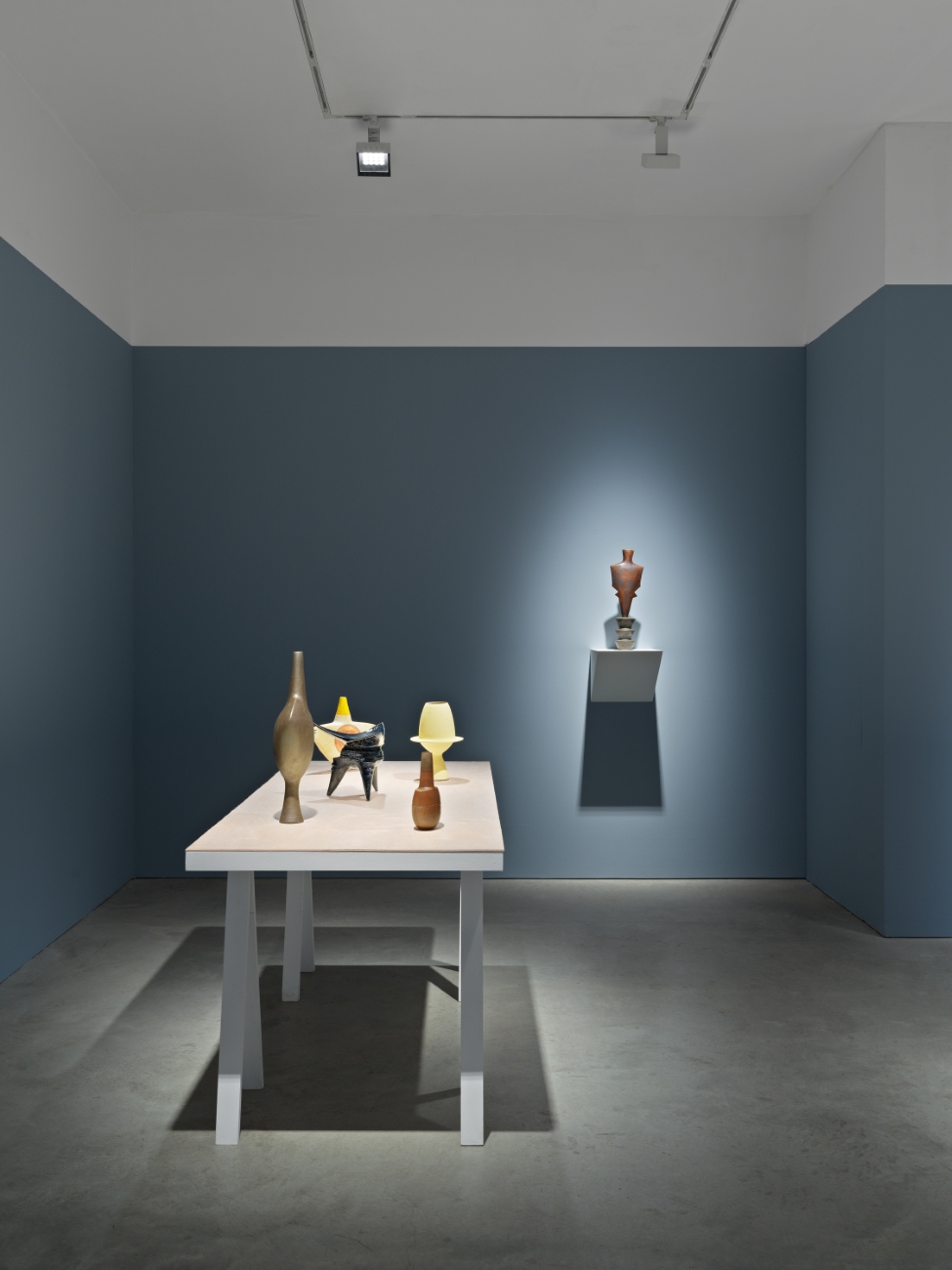
Stepping into the Viewing Room at James Cohan, I was struck by how different Ngan’s work feels in-person compared to photographs. I spent nearly two hours in the gallery on opening morning and found myself unable to leave. What surprised me most were the surfaces, details that cannot be fully captured in reproduction. Many forms carried a skin of slip, brushed back in places to create a depth of tone, almost like breath in clay. Others revealed their construction, joints smoothed into seamless transitions, leaving a trace of process without distraction. The “wild clay”, dug from the ground and tempered with sand and specks of iron, offered its own intimacy, a reminder of earth’s quiet participation in the work.
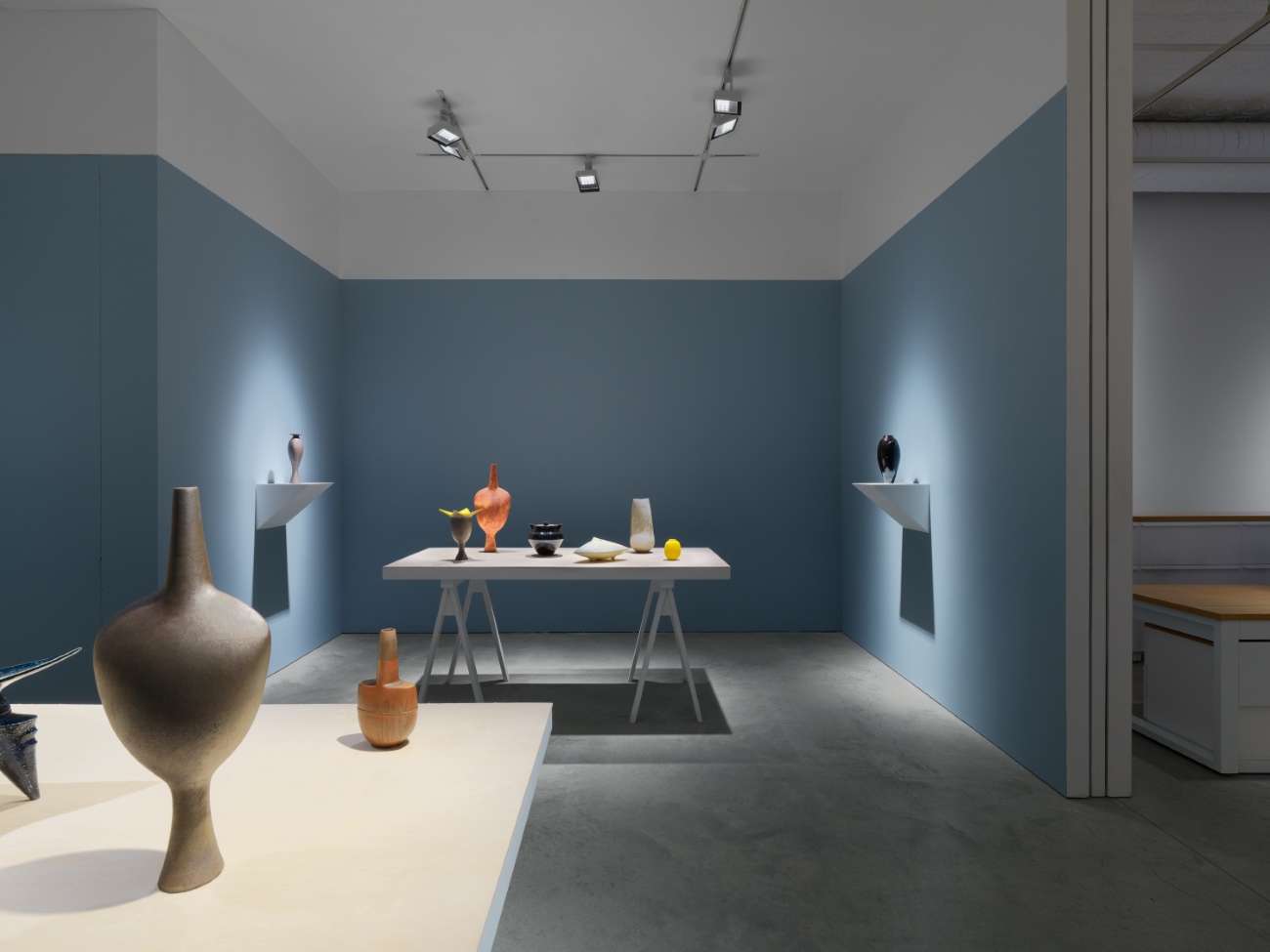
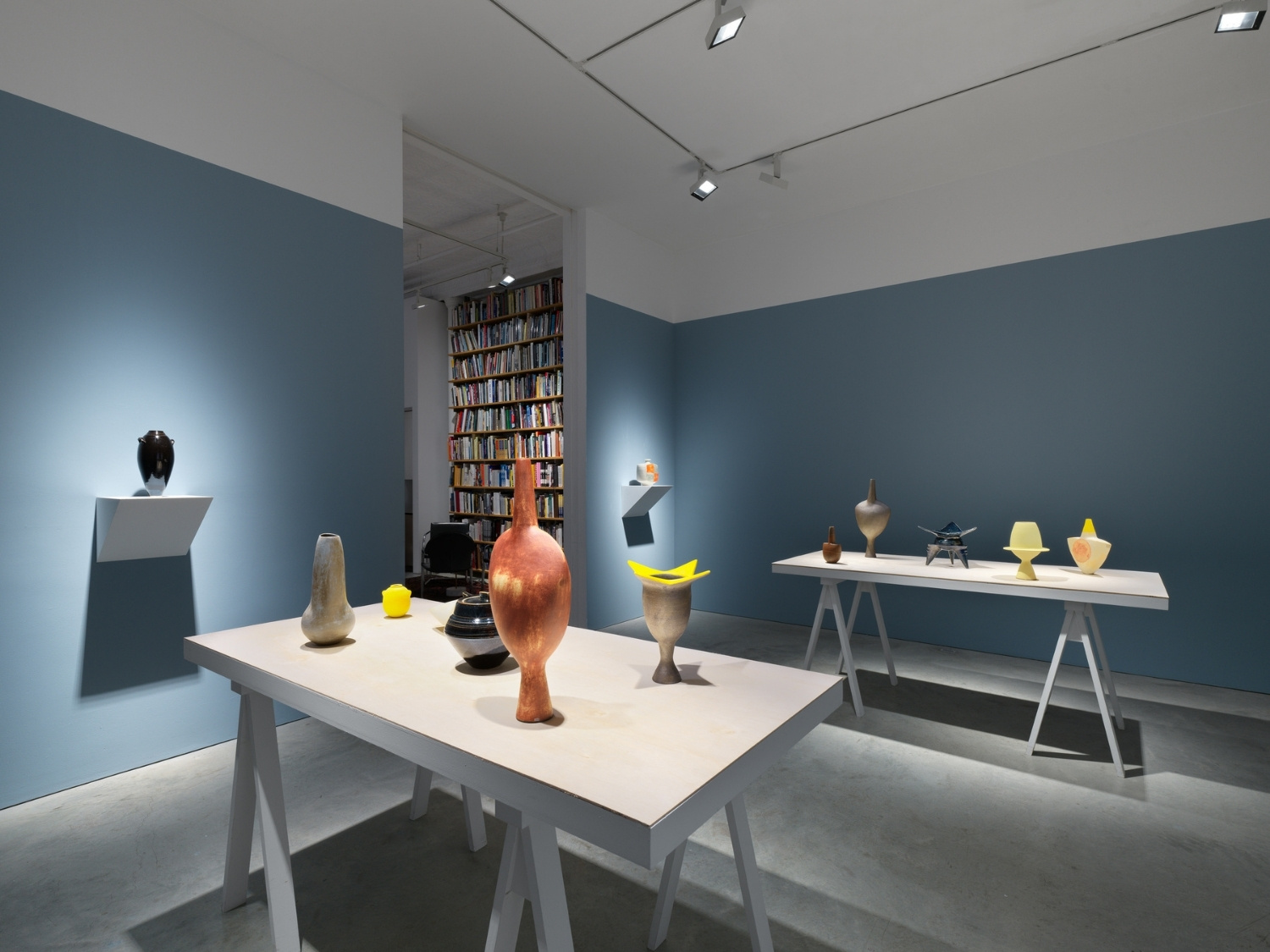
The gallery, though modest in scale, gave each pot room to breathe. Two table-like platforms held groups of vessels, while wedge-shaped wall pedestals isolated others as singular presences. Entering the space, I had the uncanny sensation of walking into an orchestral performance. Each pot seemed to sound its own note, sometimes bright, sometimes muted, and as I moved among them, the pieces answered each other in turn, a kind of call and response unfolding across the room.
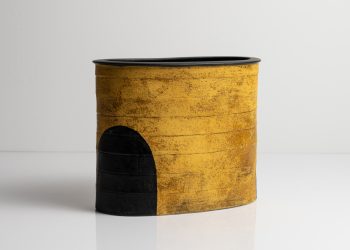
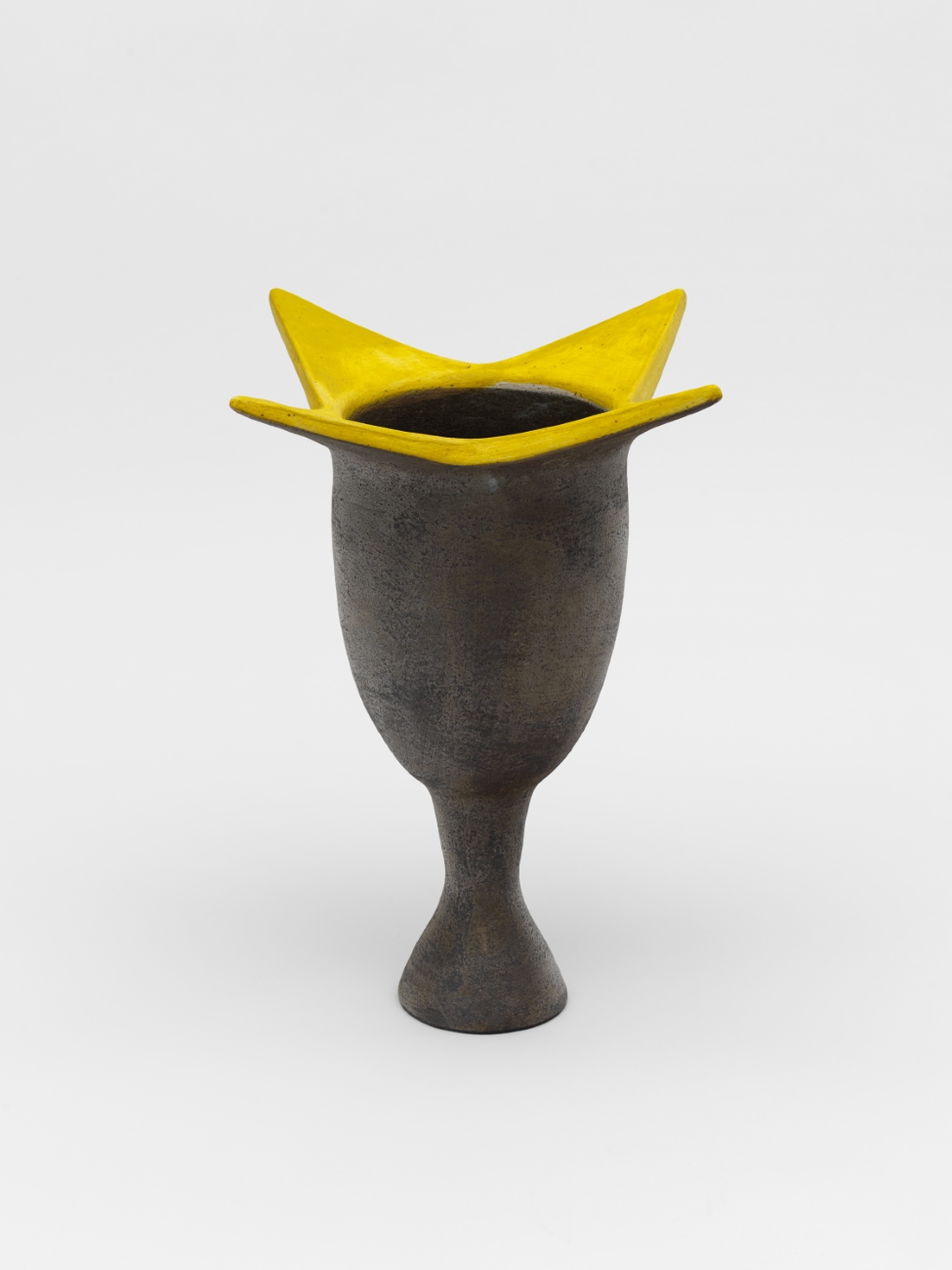
What made this orchestration so compelling was the way the works interrelated. Clam Form Vessel (2017), with its compressed organic suggestion, seemed to ground the more vertical lift of works like Rust Coloured Vase (2017). Nearby, the Yellow Vase with Lugs (2016) offered a softer, horizontal counterpoint, its matte surface diffusing light in contrast to the more angular precision of Dark Metallic Glaze with Yellow Top Seed Pod Sculptural Vase (c. 2010s). Together they created a rhythm of variation, vertical and horizontal, compressed and open, each amplifying the other’s presence. Shared surface qualities, matte glazes, brushed slips, flecks of iron, bound them together like variations within a single breath, even as each carried its own voice. Seen together, the exhibition became not a collection of objects but an orchestration of presences, a choreography of stillness and resonance.
Ngan’s vessels emerge from a process where breath, body, and material are in quiet dialogue. There is no spectacle or bravado, only distilled attentiveness that manifests materially. The finished forms do not convey narratives to decode, like one may find in the conceptual ceramic works of Mai Thu-Perret, but rather a state of being to be felt. By contrast, clay for Ngan is a medium of attunement in that he lets the pot take its own breath. The results are not works that impose performatively, but rather as spaces conveyed by receptivity, where our perception slows and presence is felt.
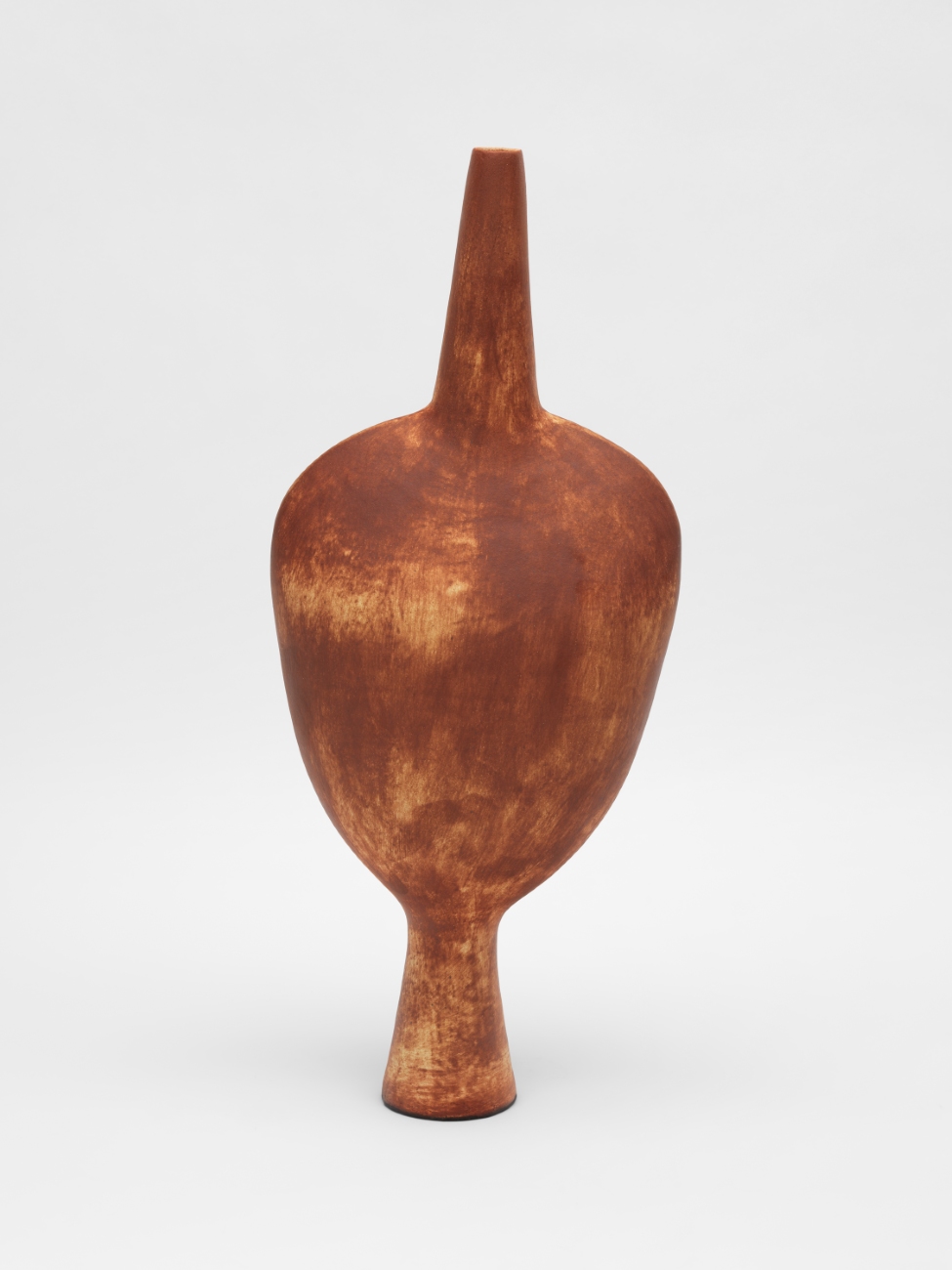
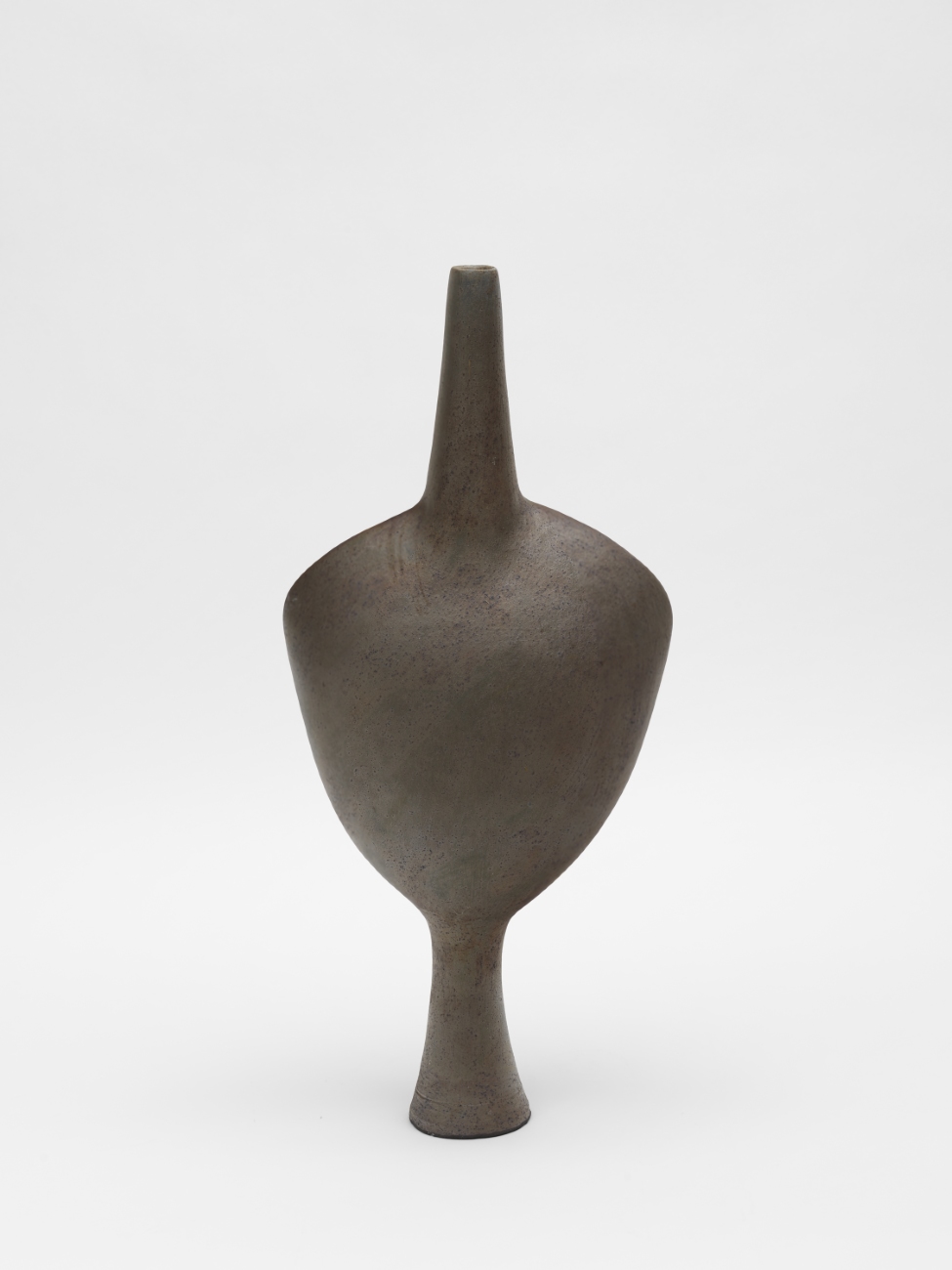
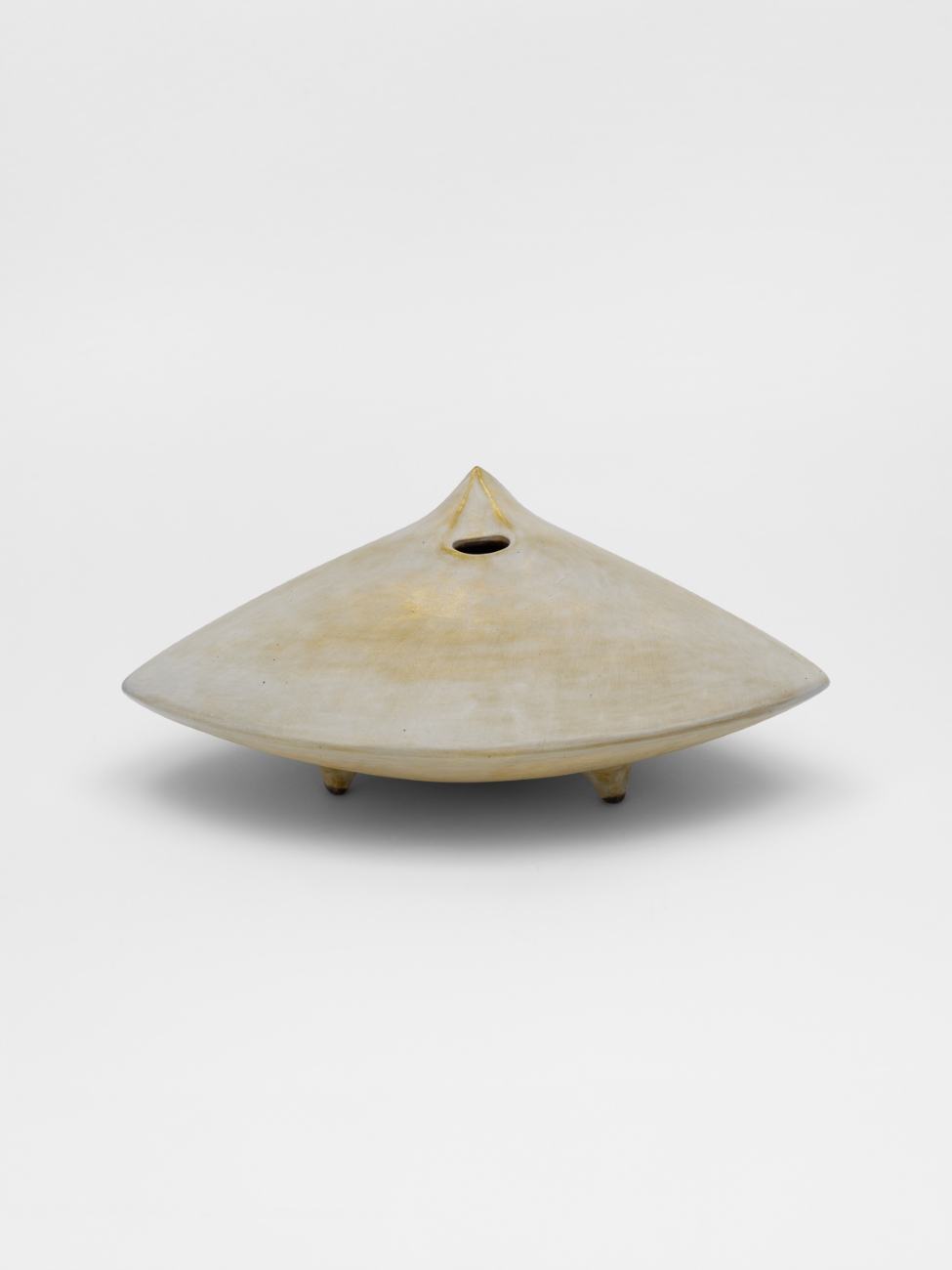
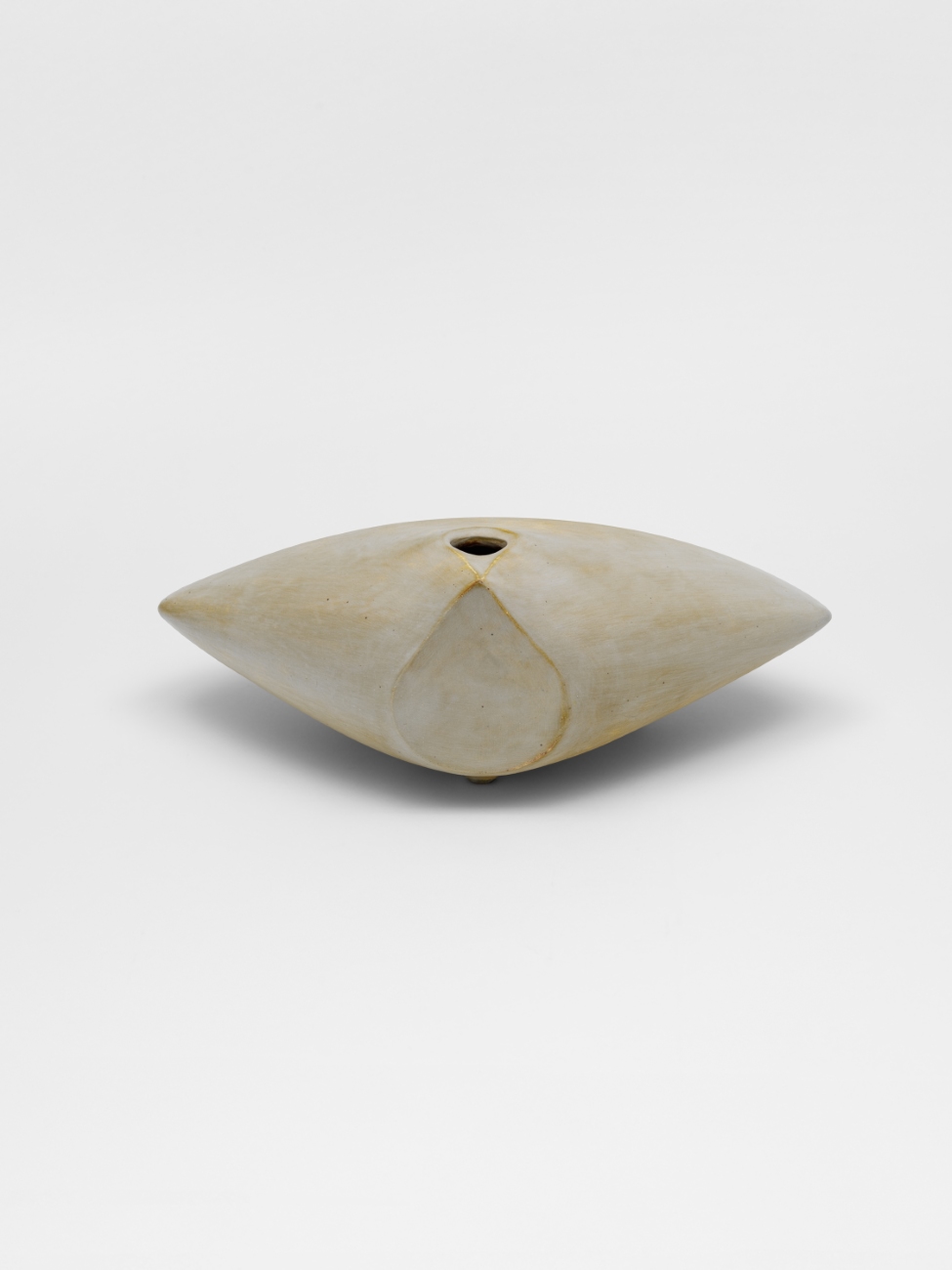
These are pots that hold space rather than demand it. Their presence is tonal rather than theatrical. These works resonate rather than declare. They do not clamor for attention but deepen it. In this, Ngan’s practice resonates less with modernist ideals of autonomy or conceptual critique, and more deeply with a Zen-inflected ethos that embraces the highest form of making through non-intervention, a Far Eastern principle known as wu wei (non-doing).1 For the sake of passion, we might call it a “spiritual ecology,” one that honors material, time, and gesture as coequal collaborators in the creative process.
Historically and spiritually, Ngan’s work also connects with the aesthetics of the Sung Dynasty, celebrated for simplicity, restraint, and poetic form.2 His affinity with the quiet grandeur of Sung ceramics as in historic celadon bowls, temmoku glazes, and subtle asymmetry, is palpable in both surface and silhouette. These resonances are not mimicry but kinship, reflecting a belief that beauty emerges from understatement and depth of spirit.
His philosophy also shares affinities with the Mingei movement, particularly the values championed by Soetsu Yanagi, Kanjiro Kawai, and Shoji Hamada: the dignity of handmade craft, the spiritual dimension of labor, and the unity of utility and beauty.3 This may be more apparent in his earlier works of the 1960’s and 70’s. Yet while not formally aligned with Mingei, Ngan’s work embodies its quiet humility and reverence.4 5 His pots offer a world where making is simultaneously every day and transcendent, where the maker’s hand is felt not as assertion but as the sensitivity of a tender touch.
Bernard Leach’s legacy is present as well, especially in Ngan’s early training and his interest in bridging Eastern and Western traditions.6 Yet where Leach often emphasized synthesis through cultural narrative, Ngan’s is an elemental synthesis: the pot as breath, its surface as sky. During his formative years in Vancouver, British Columbia, Ngan moved within a milieu that included Leach-trained potters whose presence helped shape the broader ceramic climate of the region, including such potters as John Reeve, Ian Steele, Glenn Lewis, and Mick Henry.7
Ngan’s life story actually begins with a profound migration. Born in China, he immigrated to British Columbia at the age of fourteen to live with his paternal grandfather, a relocation decided by his family elders, especially his mother. This move, from southern China to Canada’s Pacific Northwest, became a defining shift in his life. As Lois Eustis Tate recounts in Wayne Ngan, Island Potter: A Portrait by a Friend, his early years were marked by cultural dislocation, economic hardship, and the pressures of adaptation.8 These challenges forged in him a resilience and introspection that would deeply inform his studio practice. From the outset, his journey was one of translation between cultures, languages, and ways of seeing, making his eventual persistence in pottery all the more inspiring. After an early period in Vancouver’s working-class neighborhoods and then training at the Vancouver School of Art, Ngan moved to Hornby Island, a remote Gulf Island community where nature framed daily life. There, he found both a place and a mentor in Maurice Eustis, a local high school teacher and father of author Lois Eustis Tate. In Hornby’s close-knit community, Ngan gained a grounding connection that would become integral to his contemplative approach to making.
Ngan spent much of his life on Hornby Island, British Columbia, and the location could be considered foundational. Surrounded by nature and solitude, he built kilns and a studio where making became an extension of place. The tides, forests, firewood, and sea air shaped not only his materials but his practice itself. Silence, distance, and slowness infused his work. Hornby Island was not merely his home, it was the pot’s home. In that sense, it was a crucible whose atmosphere seems to be carried in every vessel.
His early foundational pots were nuanced with gestures, depicted as subtle indentations, calligraphic marks, and soft brush drags, but not expressive in a Western, psychological sense. Rather, they might better be considered gestural in a Zen sense, extensions of breath, balance, and centeredness. The vestiges of his mark-making do not impose form but reveal it. His hands follow the pot’s logic without domination. I think it’s also important to state that Ngan dissolves the heroic artist model; the pot is grounded not by projection but by a trace of equilibrium, a tactile imprint of balance achieved in the moment of making. This trace is from a fragile yet enduring personality, where act and being converge. This is Wayne Ngan, and this is how his pots take flight.
This ethos extends to the viewer, who is invited not to interpret but to attune. Ngan’s vessels do not offer symbols or narratives but require stillness. That day, spending time in the gallery, I had asked for a chair where I came to conclude that one does not simply look at these pots, but one dwells within them. Their energy is super atmospheric, it surrounds the pot, radiates a quiet charge filling the space. To spend time with a Ngan pot is to enter its rhythm, experiencing a shared silence between object and observer. It is to experience its quiet presence and the felt trace of its contemplative materialism.
More specifically, in his piece titled Light Yellow Sculptural Vase (2017), you can feel Ngan’s ease in it straight away. At first, it’s simple, two cone-like shapes joined at a slim waist, the top one inverted, but then you notice that thin, flat disc cutting across the middle, slowing the form, almost like a held breath. It is part vessel, part architecture, the kind of balance that only comes from decades of throwing until shape and proportion find their own rhythm. Measured in its composition yet emphatic in its complexity, this form embodies a silence designed and charged with unbounded depth. The yellow is soft and matte, almost powdery, like sun-bleached earth. It’s bright but quiet, modern yet rooted in natural pigment. Tiny flecks break the surface, reminding you that this is clay, not industrial paint. There’s no ornament here, nothing extraneous, and yet the piece hums with presence. While I suppose it could hold flowers, it clearly exists beyond function. This is Ngan’s “spiritual ecology” distilled: form, color, and material in quiet accord, each carrying equal weight in the whole.
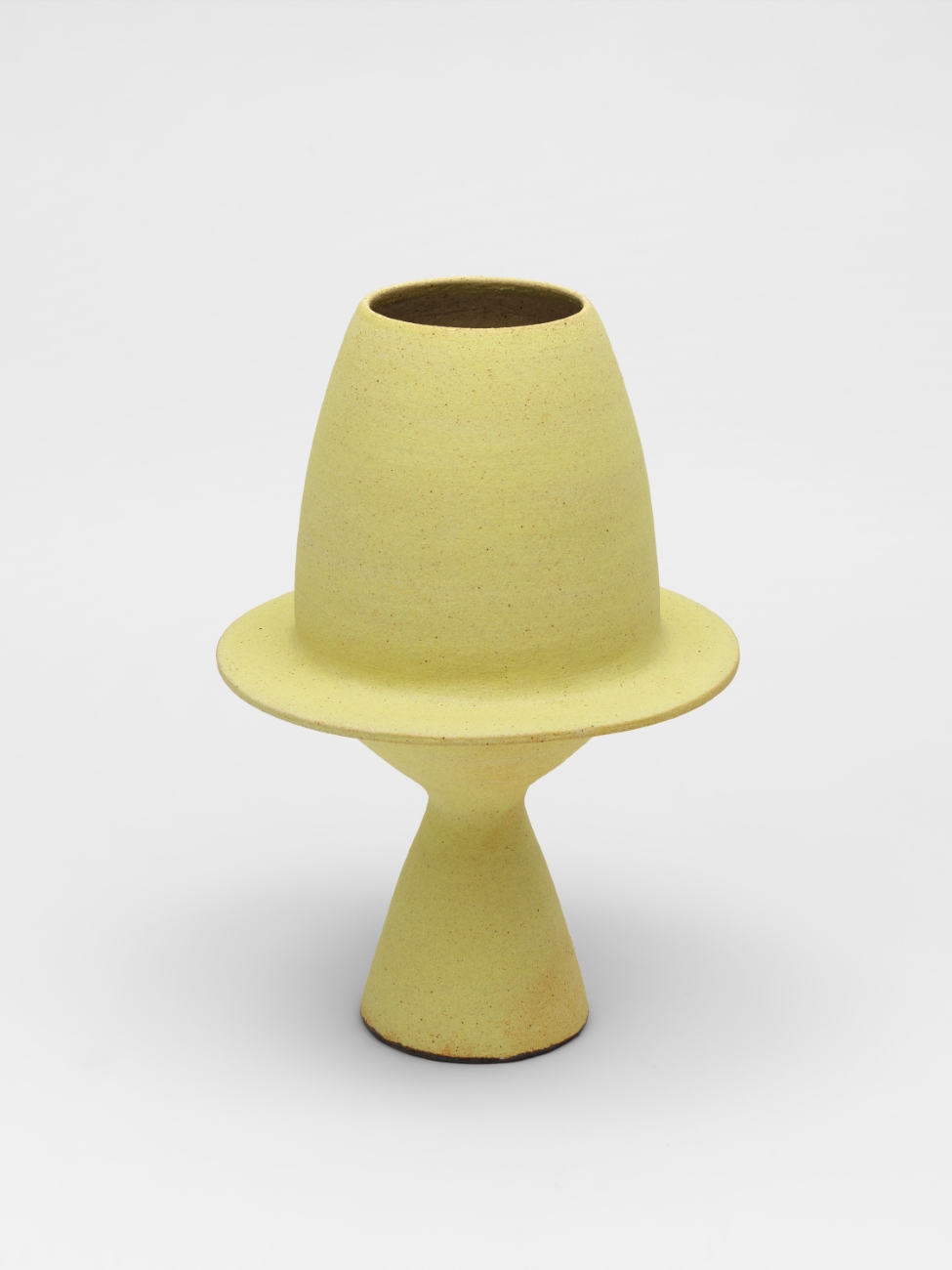


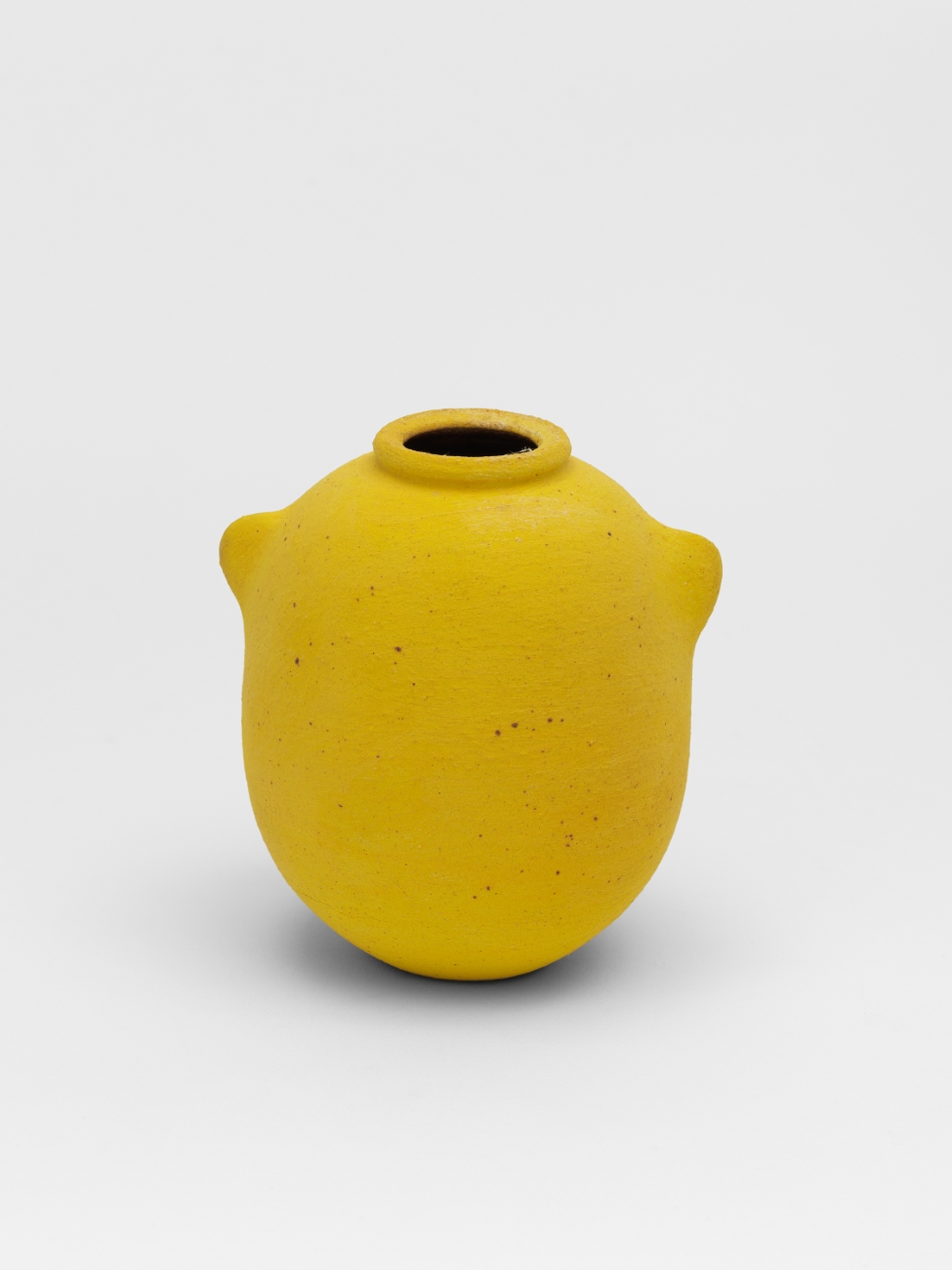
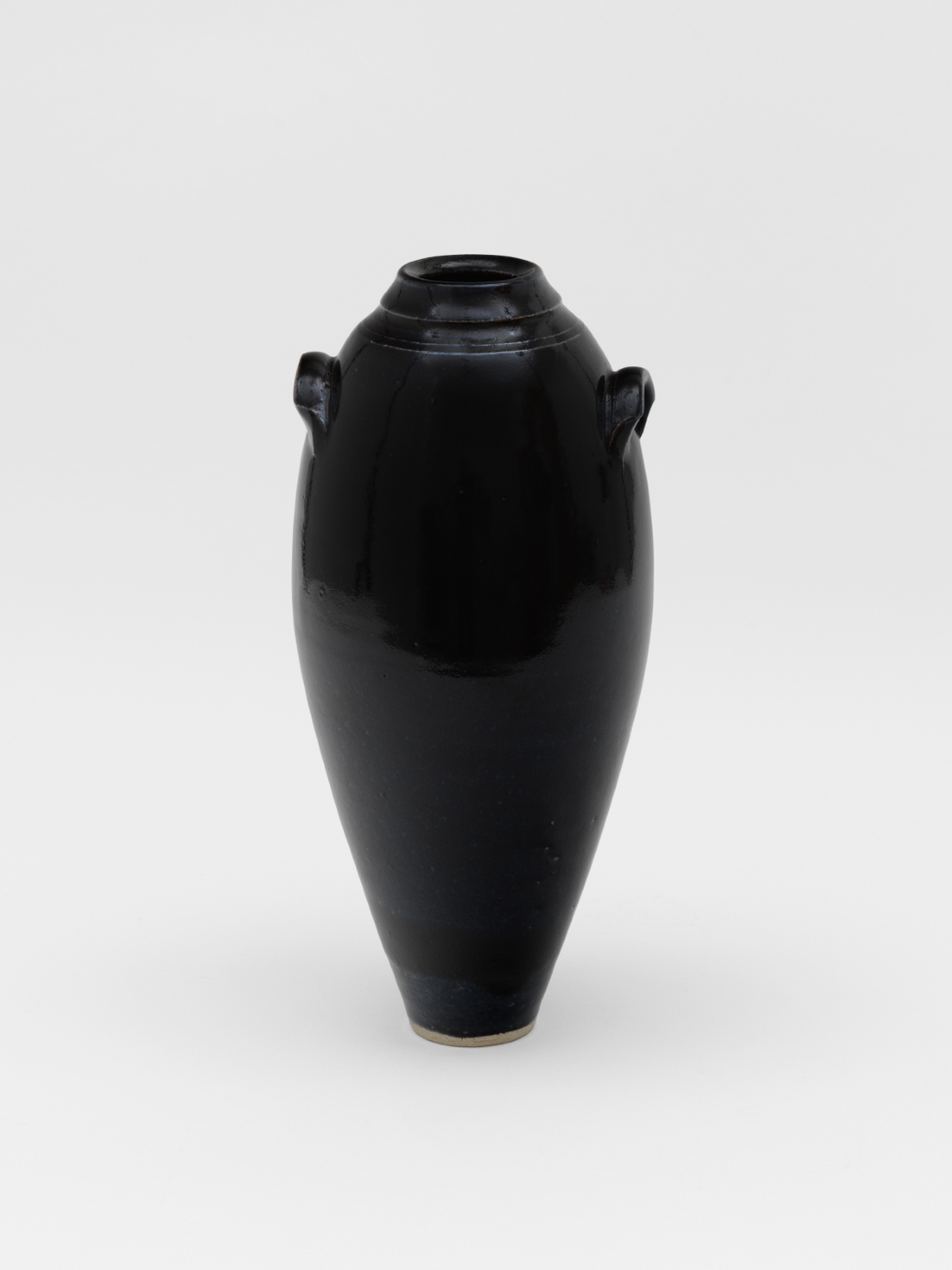
Fired in cone 10 reduction, works like this exemplify Ngan’s surfaces, finishes that favor tone over gloss, presence over shine. They draw light inward, creating a field of quiet luminosity around the form. The glaze does not decorate but envelops, functioning as an atmospheric skin that holds memory: of fire, of touch, of the slow time of making. Like the silence between musical notes that gives music its meaning, or the white space in sumi-e painting that lets a brushstroke breathe, these surfaces become vessels of stillness, amplifiers of form.
What makes this exhibition so powerful is not only the singular presence of each piece but the way they interrelate, an orchestration of presences rather than a collection of objects. Together, they propose a different mode of experience, one grounded in attentiveness and quiet attunement. In an age of media and spectacle, Ngan’s ceramics offer a radical alternative: they do not demand interpretation, they invite presence. They remind us that the vessel, freed from utility and ego, can still hold something essential,….time, breath, being itself.
Wayne Ngan’s death in 2020 marked the end of a remarkable creative journey, but Spirit and Form shows us the culmination of that life’s work. These pots are not finales in the theatrical sense; they are closures in the manner of breath, a last inhalation held in clay, both finite and enduring. To dwell with them is to encounter not only the vision of a singular artist but the possibility of clay itself as a medium for being. Fragile, ungraspable, and whole, they ask us not “what do they mean?” but “how might we be with them?” That is the quiet power of Ngan’s practice, and the lasting resonance of this exhibition.
Doug Navarra is a visual artist who has an extensive background in working with clay. He lives in New York’s Hudson Valley region.
Wayne Ngan: Spirit and Form is on view at James Cohan Gallery, New York, between September 5 and October 4, 2025.
Subscribe to Ceramics Now to read similar articles, essays, reviews and critical reflections on contemporary ceramics. Subscriptions enable us to feature a wider range of voices, perspectives, and expertise within the ceramics community.
Captions
- Installation view, Wayne Ngan: Spirit and Form at James Cohan, New York, 2025. Courtesy of James Cohan, New York. Photos by Dan Bradica.
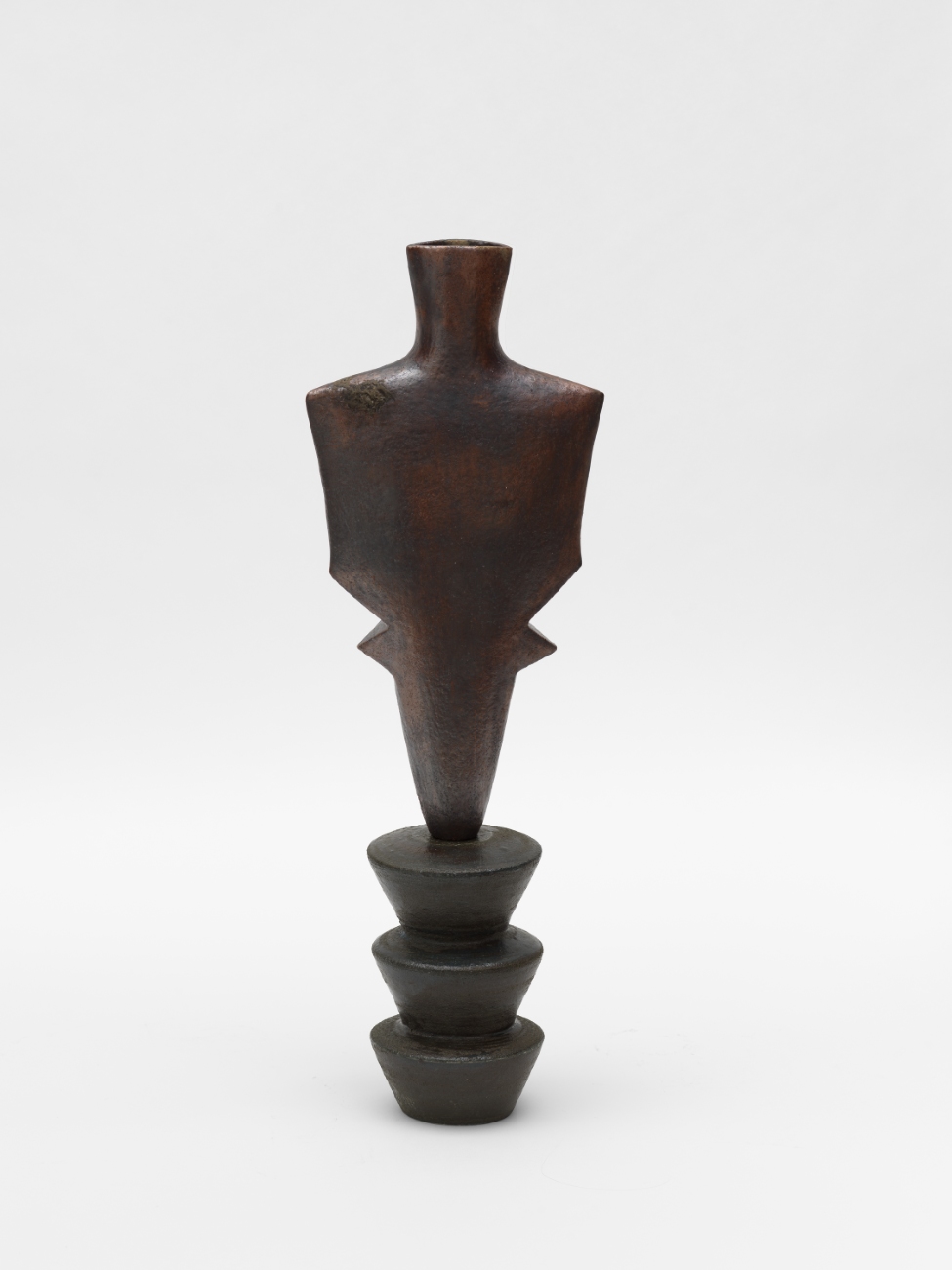
- Wayne Ngan, Abstract Figure with Brown Glaze, c. 2010, Stoneware, 15 x 7 1/2 x 2 3/4 in, 38 x 19 x 7 cm. Courtesy of Wayne Ngan, Studio and James Cohan, New York. Photo by Dan Bradica.
- Wayne Ngan, Dark Metallic Glaze with Yellow Top Seed Pod Sculptural Vase, c. 2010s, Stoneware, 12 1/4 x 10 5/8 x 10 5/8 in, 31 x 27 x 27 cm. Courtesy of Wayne Ngan, Studio and James Cohan, New York. Photo by Dan Bradica.
- Wayne Ngan, Rust Coloured Vase, 2017, Stoneware, 22 7/8 x 9 7/8 in, 58 x 25 cm. Courtesy of Wayne Ngan, Studio and James Cohan, New York. Photo by Dan Bradica.
- Wayne Ngan, Tall Bronze Sculptural Vase, 2017, Stoneware, 20 1/2 x 9 x 4 3/8 in, 52 x 23 x 11 cm. Courtesy of Wayne Ngan, Studio and James Cohan, New York. Photo by Dan Bradica.
- Wayne Ngan, Clam Form Vessel, c. 2010s, Stoneware, 5 1/8 x 13 3/4 x 8 1/4 in, 13 x 35 x 21 cm. Courtesy of Wayne Ngan, Studio and James Cohan, New York. Photo by Dan Bradica.
- Wayne Ngan, Light Yellow Sculptural Vase, 2017, Stoneware, 11 3/4 x 8 1/4 x 8 1/4 in, 30 x 21 x 21 cm. Courtesy of Wayne Ngan, Studio and James Cohan, New York. Photo by Dan Bradica.
- Wayne Ngan, Sculptural Vase with Lugs and Yellow Rim, 2010, Stoneware, 15 3/8 x 9 7/8 x 4 in, 39 x 25 x 10 cm. Courtesy of Wayne Ngan, Studio and James Cohan, New York. Photo by Dan Bradica.
- Wayne Ngan, Thin Vase with Cast Iron Glaze, 2014, Stoneware, 13 3/8 x 4 3/8 x 3 1/2 in, 34 x 11 x 9 cm. Courtesy of Wayne Ngan, Studio and James Cohan, New York. Photo by Dan Bradica.
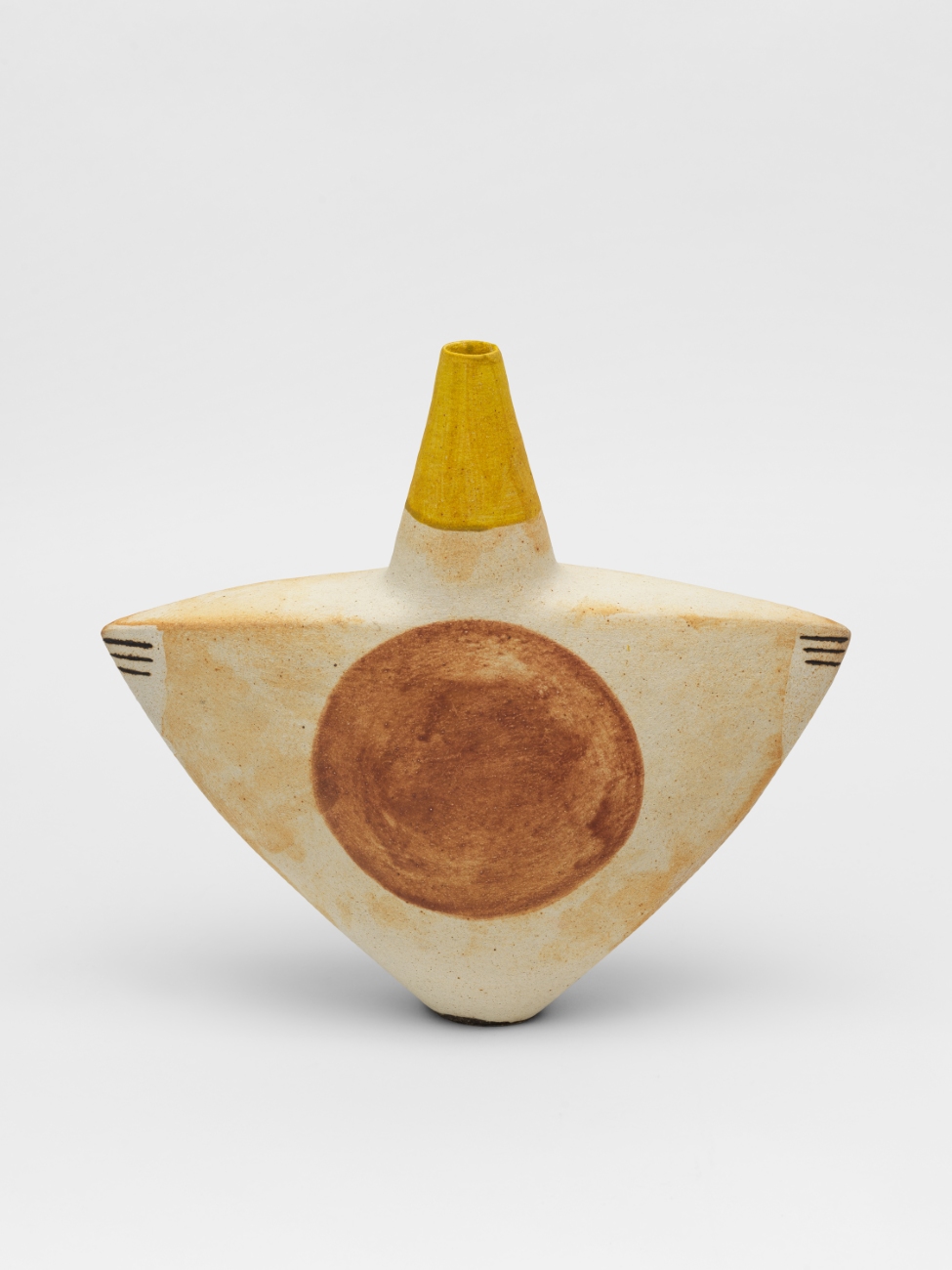
- Wayne Ngan, Vase with Rust Circular Design, 2017, Stoneware, 11 3/4 x 13 3/8 in, 30 x 34 cm. Courtesy of Wayne Ngan, Studio and James Cohan, New York. Photo by Dan Bradica.
- Wayne Ngan, Yellow Vase with Lugs, 2016, Stoneware, 4 3/4 x 4 3/8 x 3 1/2 in, 12 x 11 x 9 cm. Courtesy of Wayne Ngan, Studio and James Cohan, New York. Photo by Dan Bradica.
- Wayne Ngan, Yukon Black Vase with Lugs, c. 1990s, Stoneware, 12 1/4 x 5 7/8 x 5 7/8 in, 31 x 15 x 15 cm. Courtesy of Wayne Ngan, Studio and James Cohan, New York. Photo by Dan Bradica.
Footnotes
- Alan Watts, The Way of Zen, Pantheon Books, 1957
- Stacey Pierson, Song Ceramics: Objects of Admiration, Percival David Foundation, 2004
- Soetsu Yanagi, The Unknown Craftsman, Kodansha International, 1972
- Alexandra Lambry Clark, Translation and Appropriation : Mingei Theory, Bernard Leach and His Vancouver Apprentices (1958-1979), Phd Thesis Submssion, The University of the Arts London/ Fairmouth University, October 2019
- Vaillant, N. E. (2002). Bernard Leach and British Columbian pottery: An Historical Ethnography of a Taste Culture (Master’s thesis, University of British Columbia). University of British Columbia. Link
- Bernard Leach, A Potters Book, Faber and Faber, 1940
- Scott Watson, Thrown, British Columbia’s Apprentices of Bernard Leach and Their Contemporaries, Morris and Helen Belkin Art Gallery, University British Columbia, 2025
- Lois Eustis Tate, Wayne Ngan, Island Potter: A Portrait by a Friend, Porpoise Bay Press, 2024