A Roadmap to Stardust is on view at the Museum of Craft and Design, San Francisco
May 10 – September 14, 2025
Text by Ariel Zaccheo, Curatorial Director, Museum of Craft and Design. Additional research and input by OortCloudX
Many cultures share a creation myth in which humankind is shaped out of clay by gods.1 What new origin stories might be made if humans move beyond Earth’s soils and waters?2
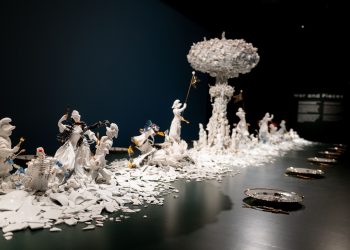
Conceived by the collaborative duo OortCloudX (Neil Forrest and John Roloff), A Roadmap to Stardust begins with the smallest building block–a speck of stardust–and expands into the history of humankind as told through ceramics. Clay is used as a lens to travel through time, searching ancient civilizations and modern culture to inform a fictional archaeology.
The Epic of Gilgamesh–the earliest known written narrative–serves as one source of inspiration.3 Discovered in Mesopotamia, the epic was recorded on clay tablets using a writing system known as cuneiform.4 A Roadmap to Stardust recasts this early use of clay in a contemporary context, blending in elements of science fiction and popular culture.5
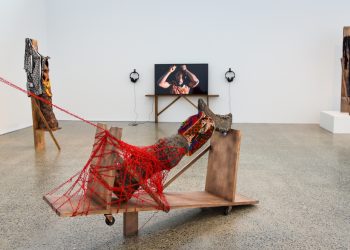
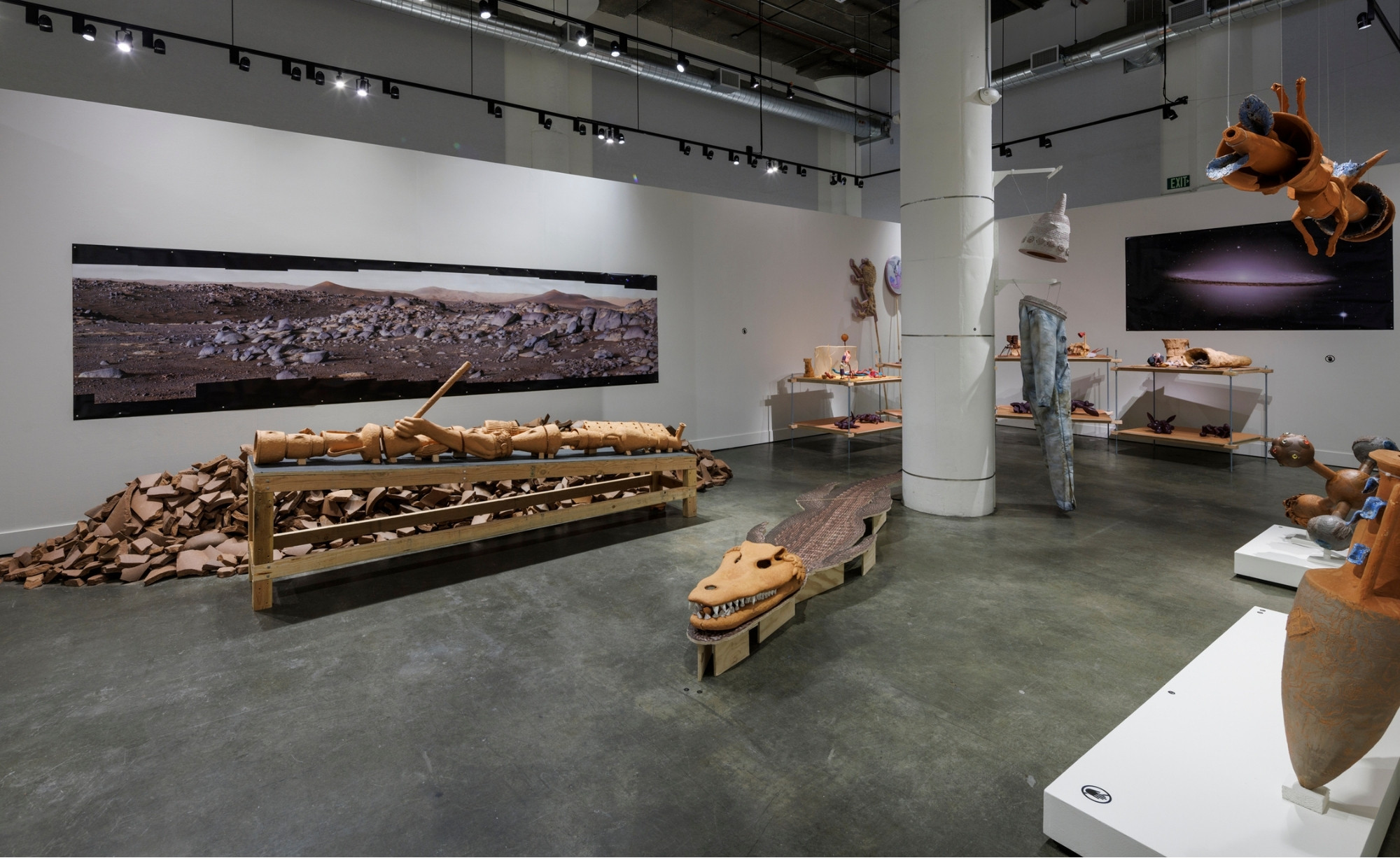
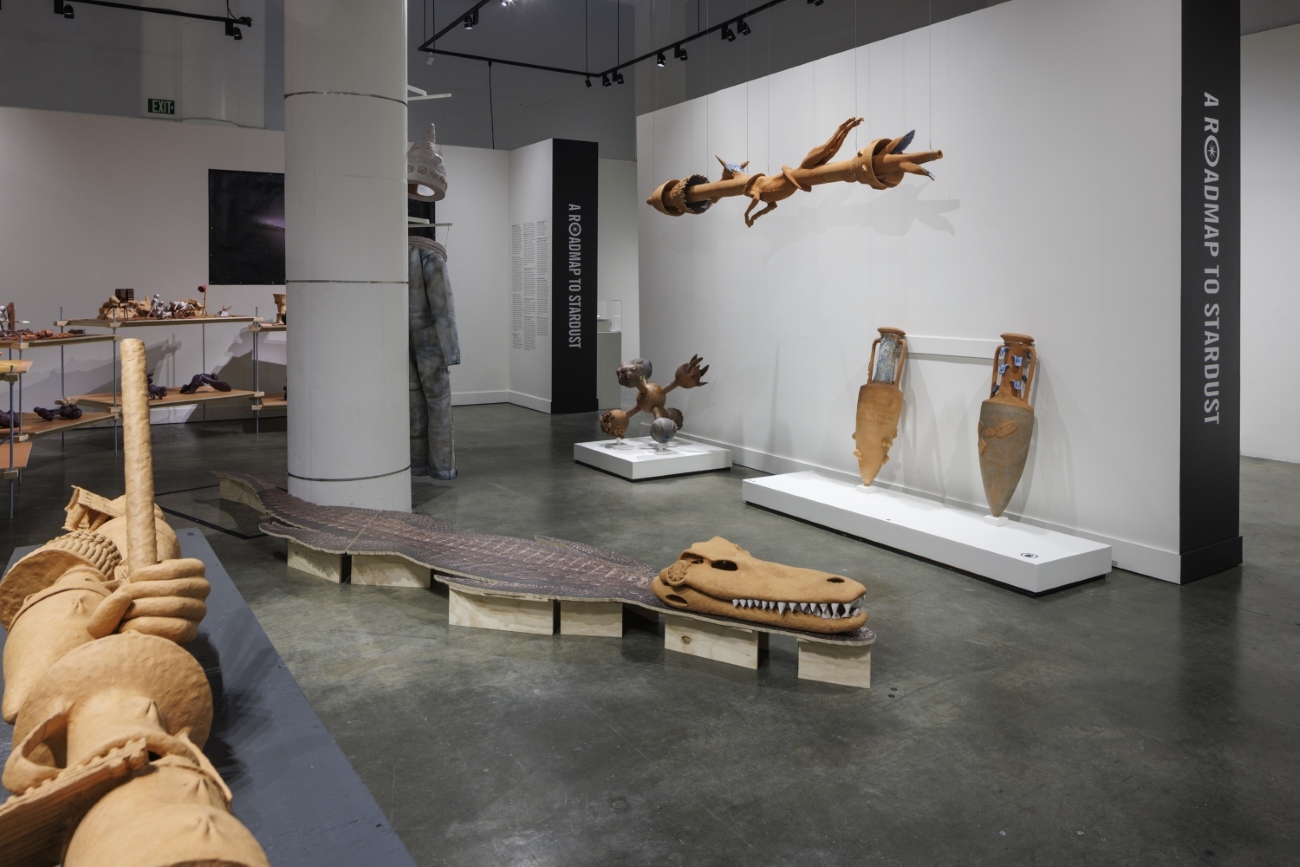
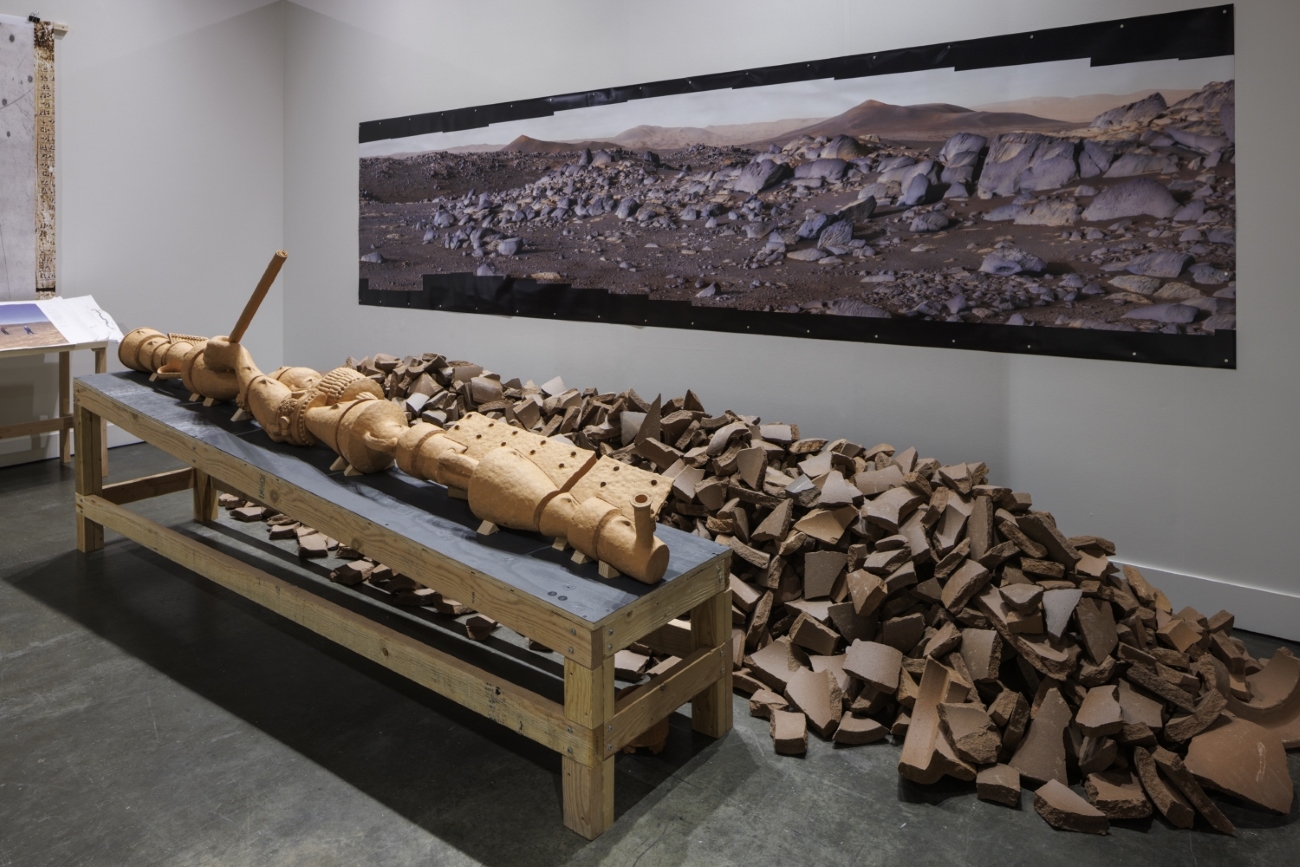
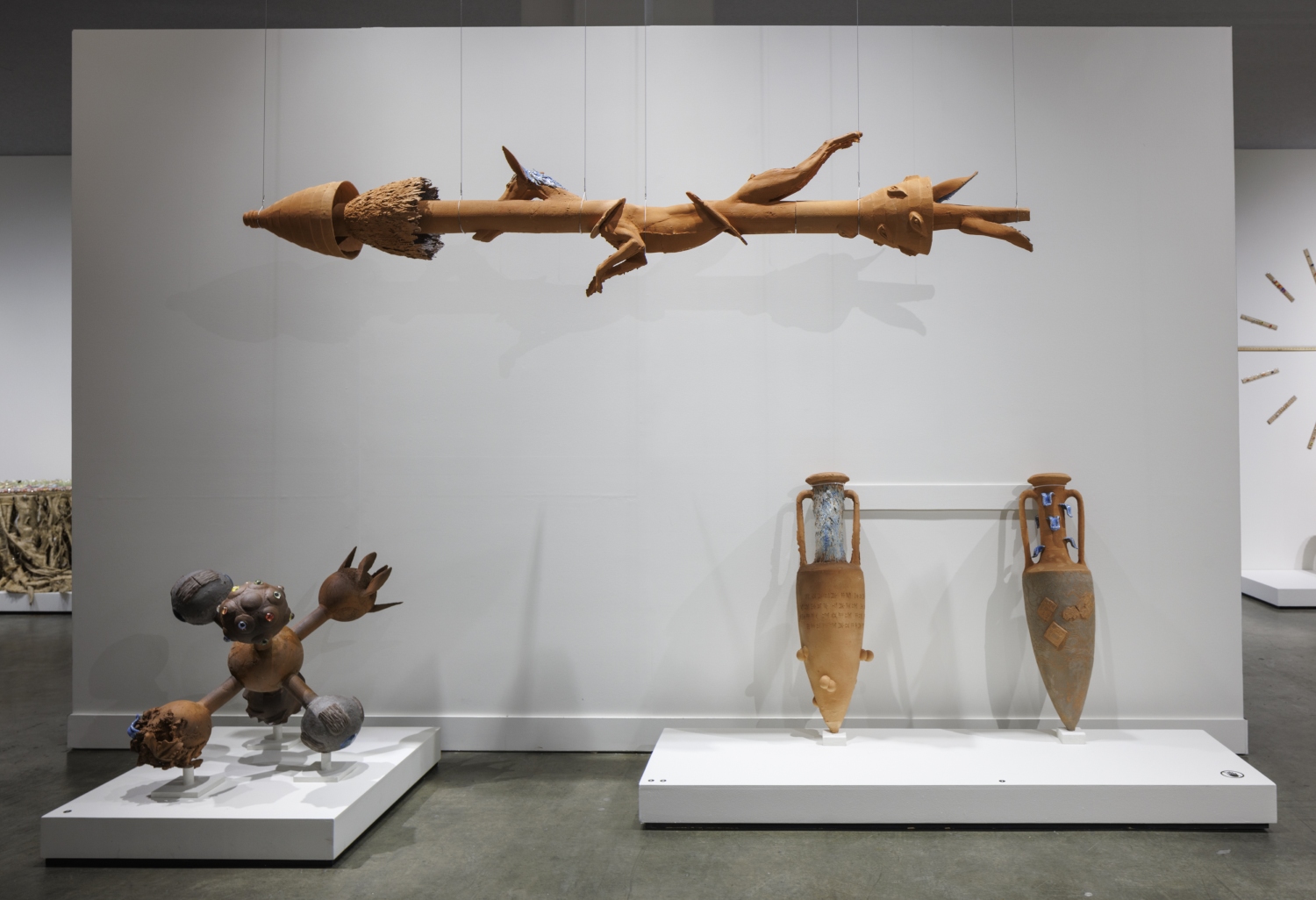
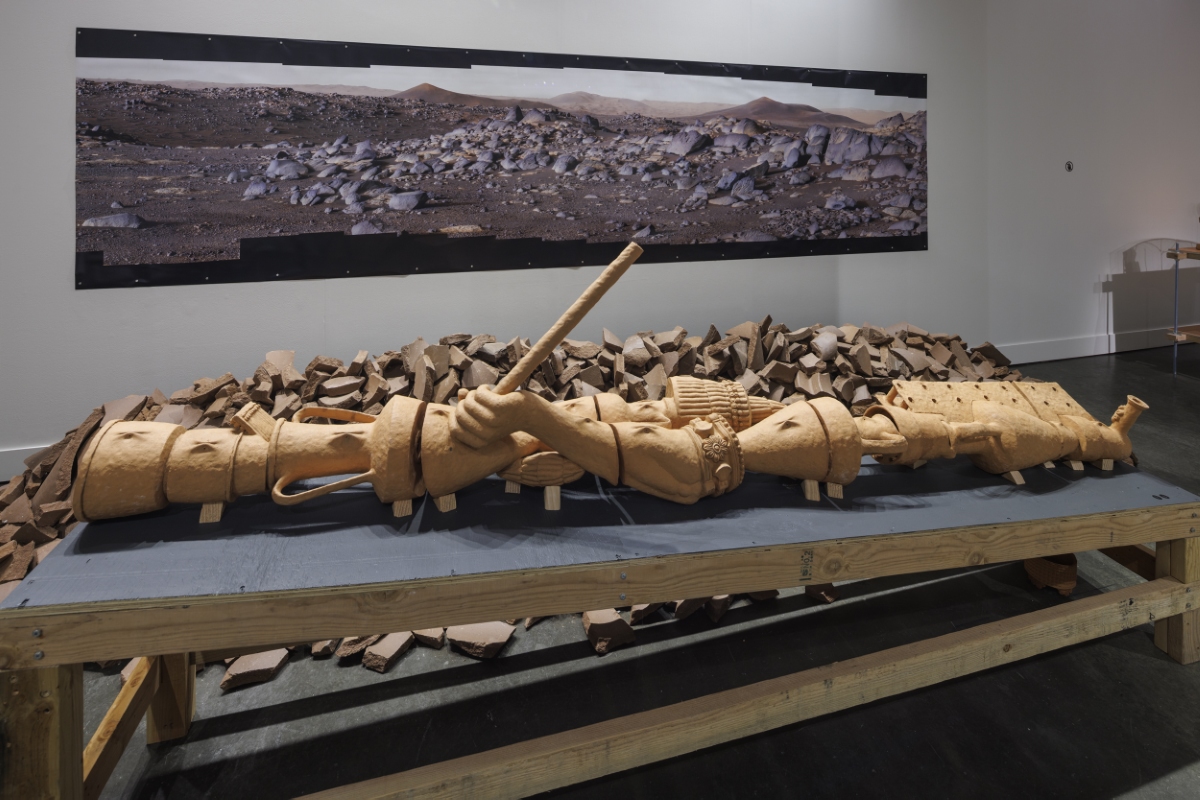
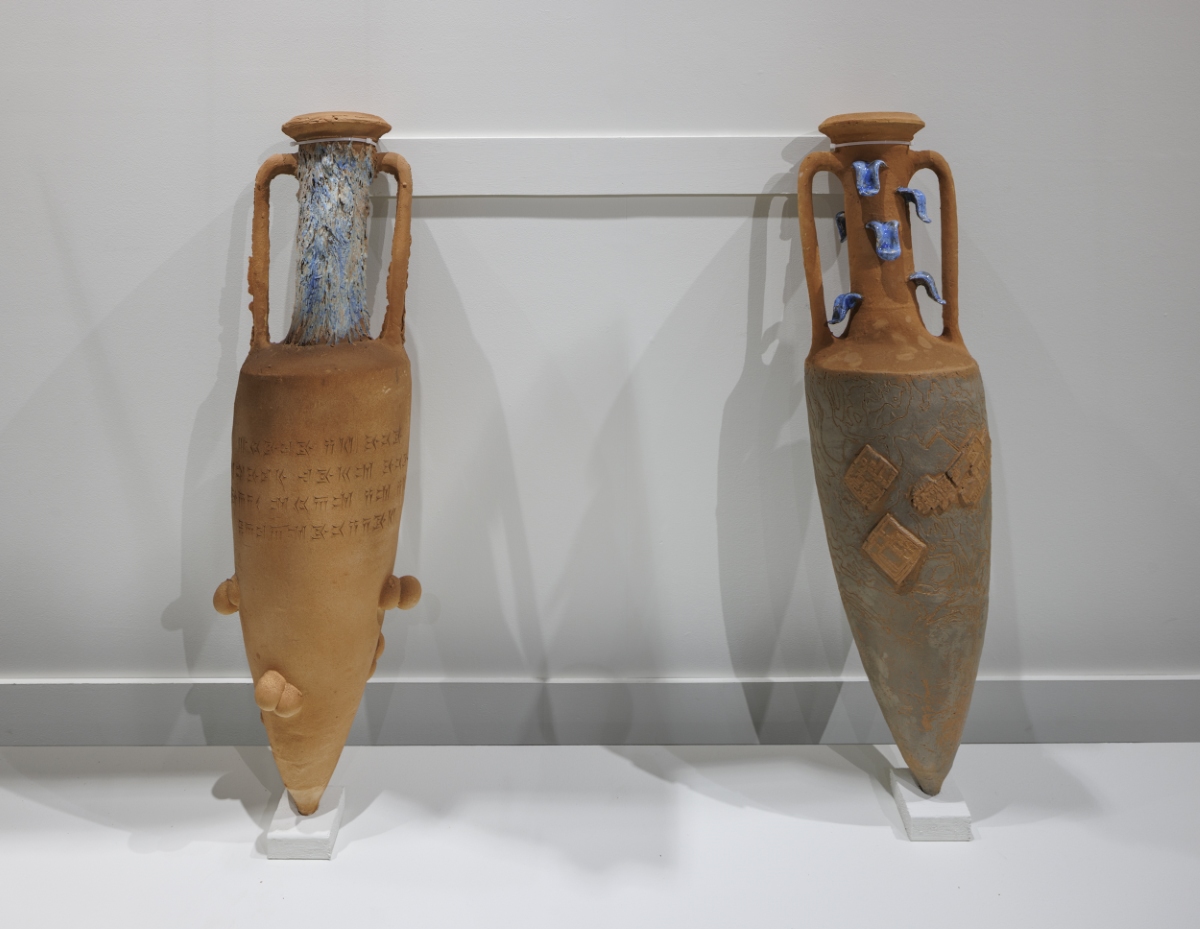
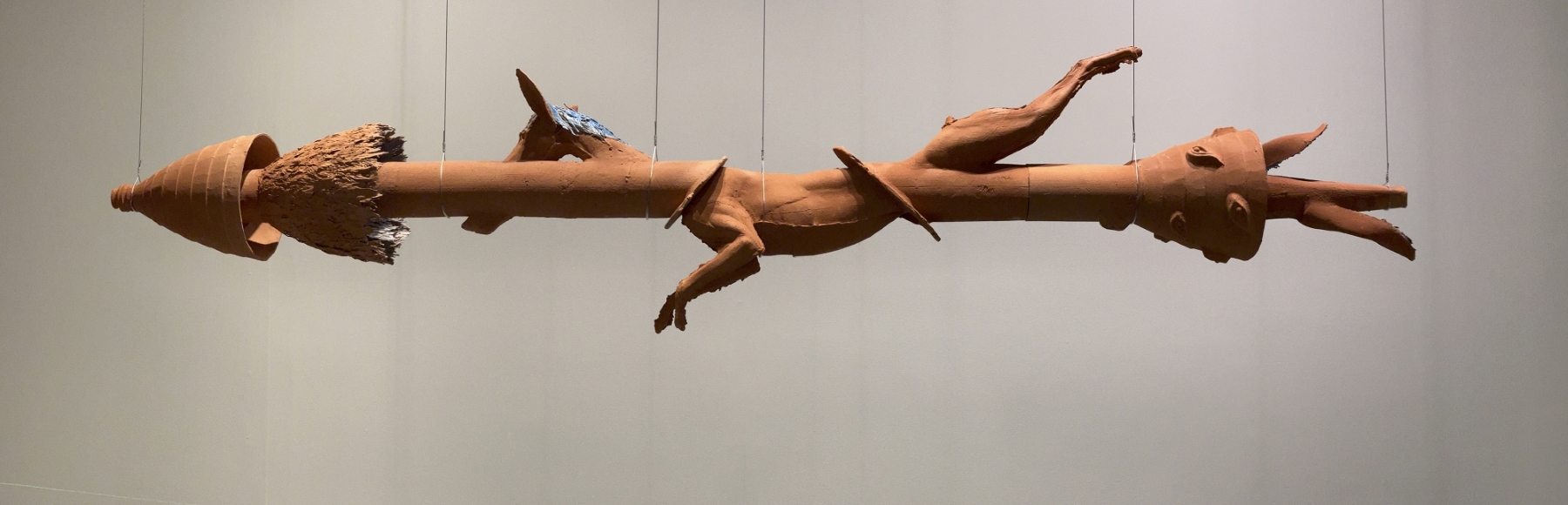
The exhibition unfolds as an archaeological dig into an imagined past. Among the excavated artifacts are an early civilization’s first attempts at creating a telescope.6 Using terra-cotta clay,7 one telescope is made from an accumulation of ancient amphorae and fractured statuary.8 A second telescope evokes a primordial connection to nature, an early indicator of man’s destruction for the natural world in the service of technology.9 The telescopes suggest that even in the earliest civilizations, the ancients looked to the heavens and were determined to go there themselves.
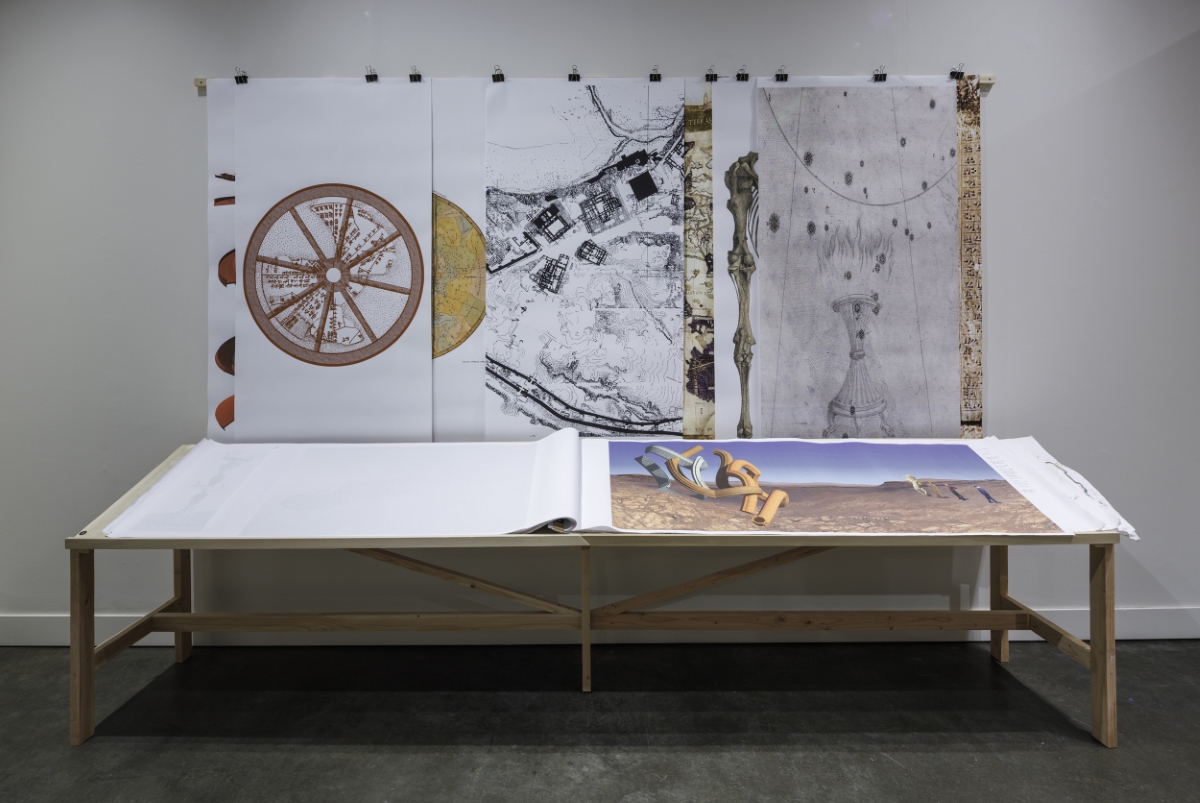
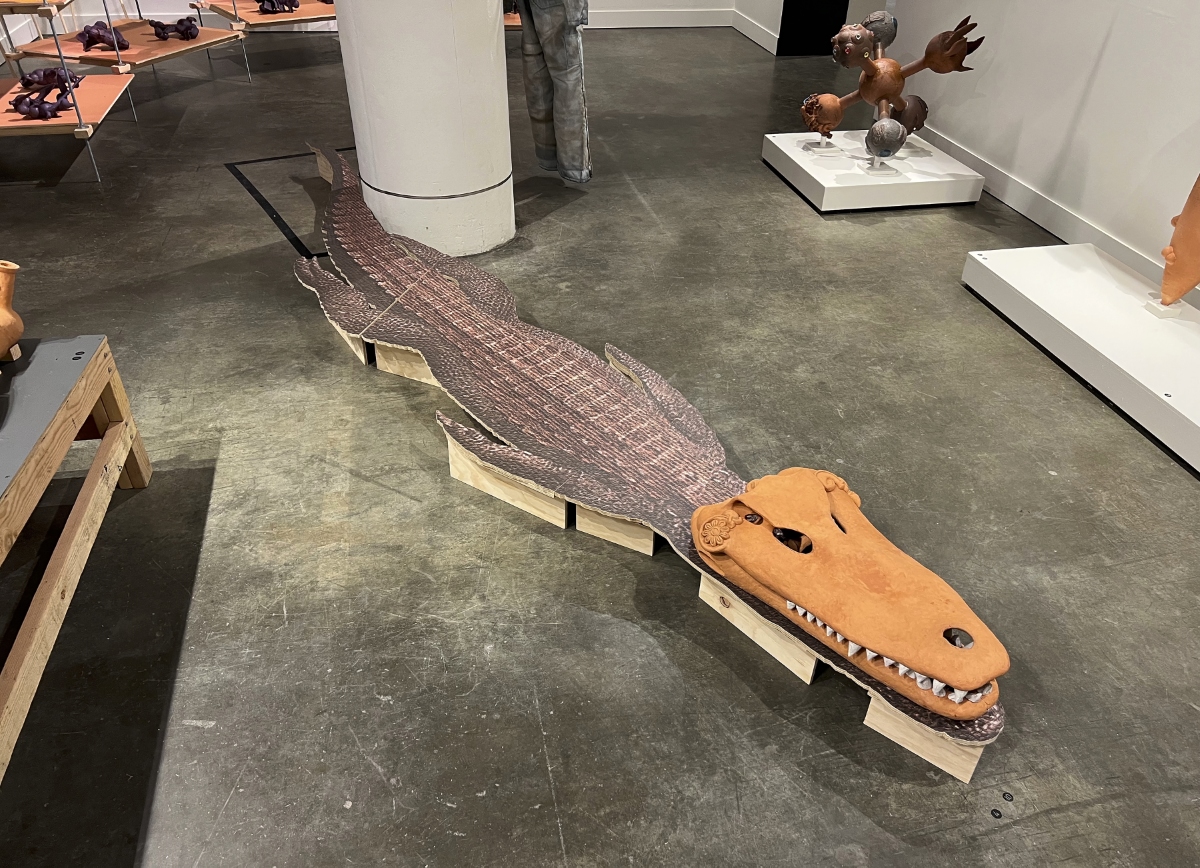
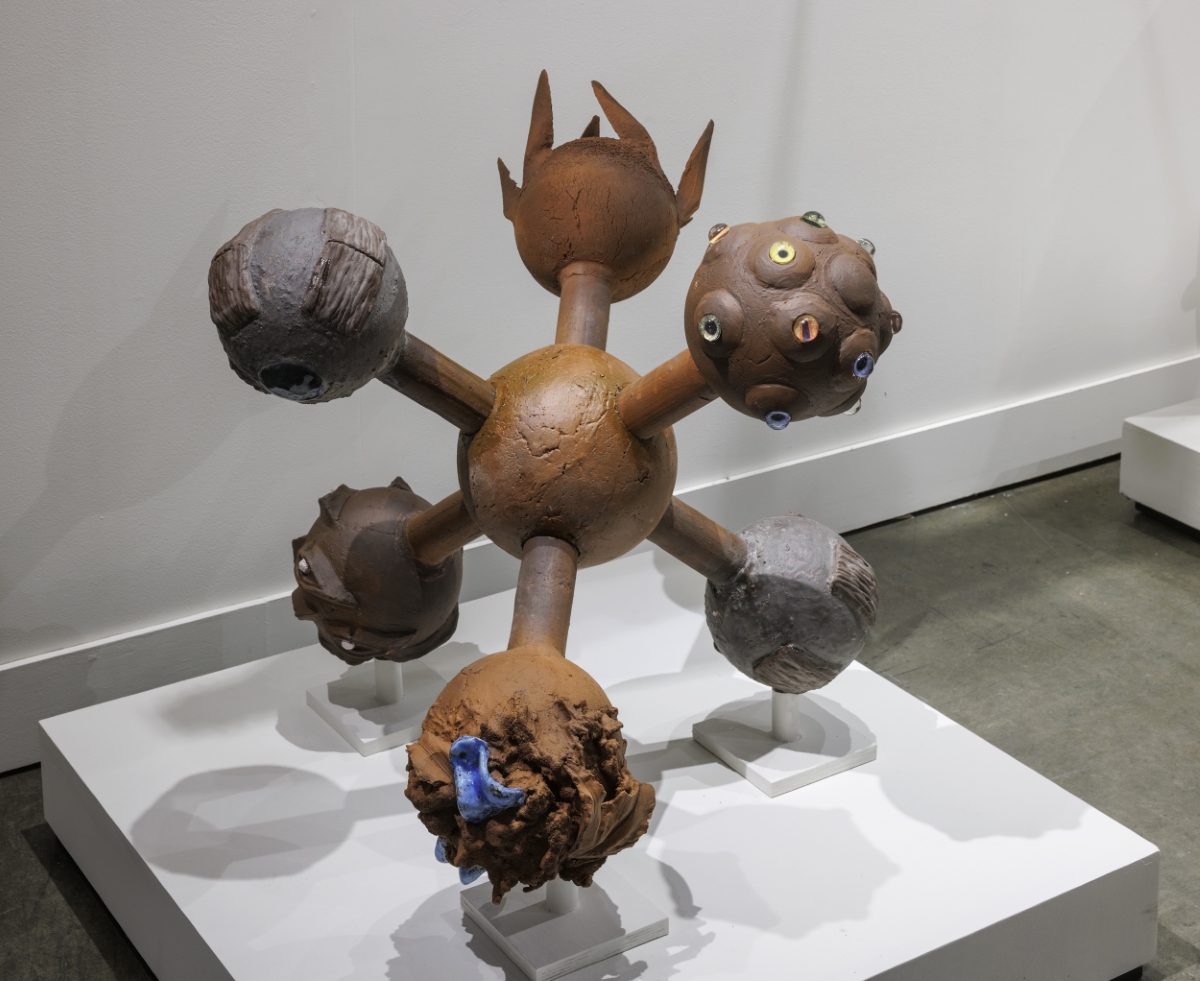
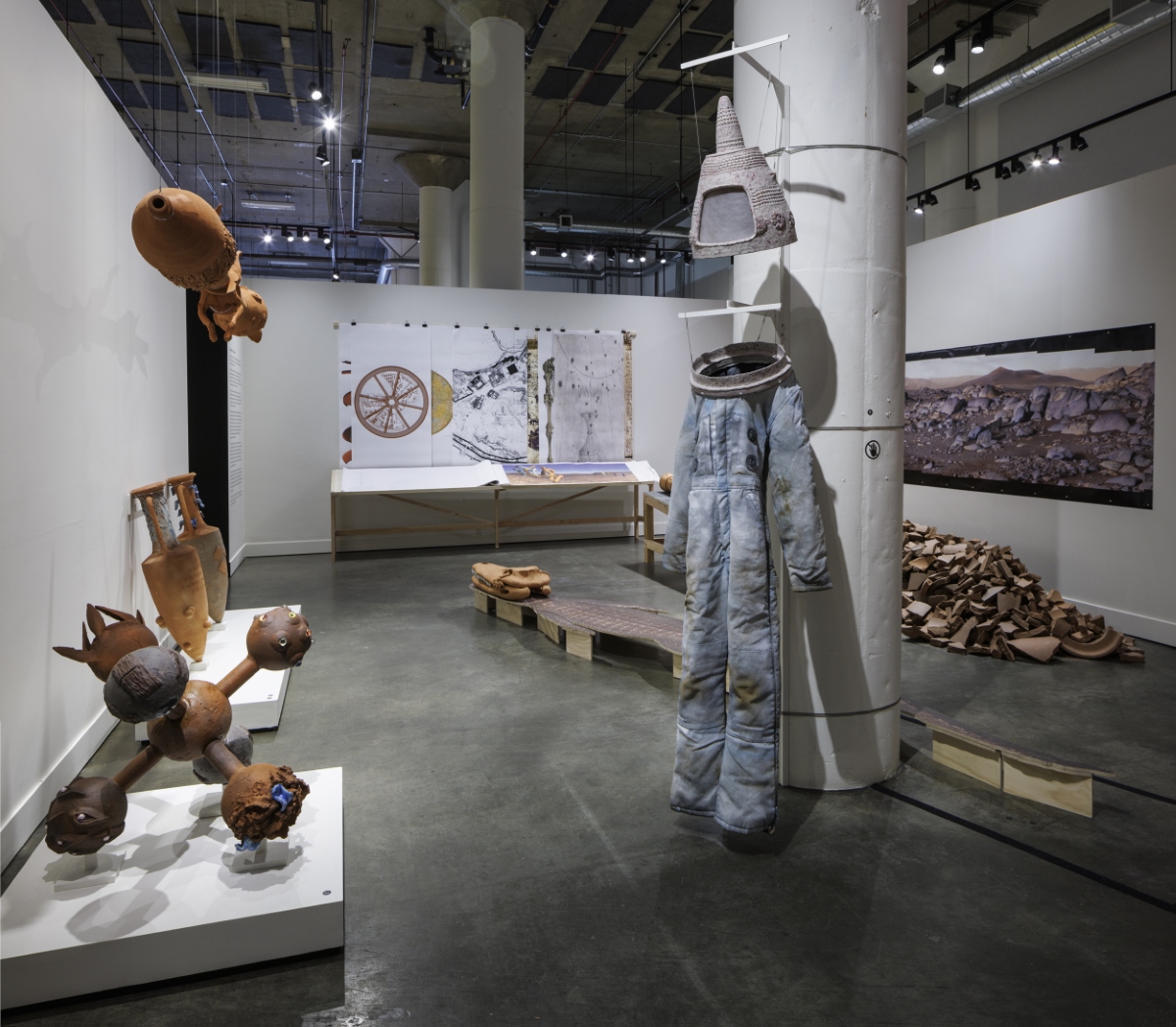
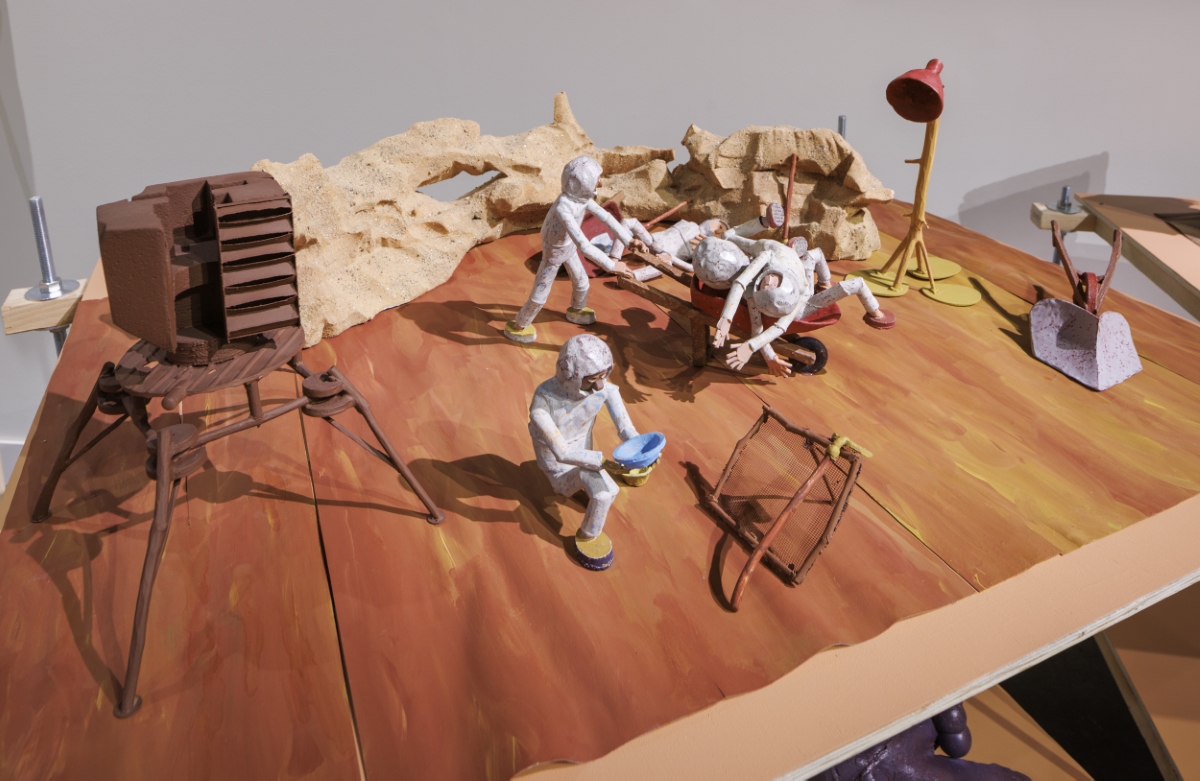
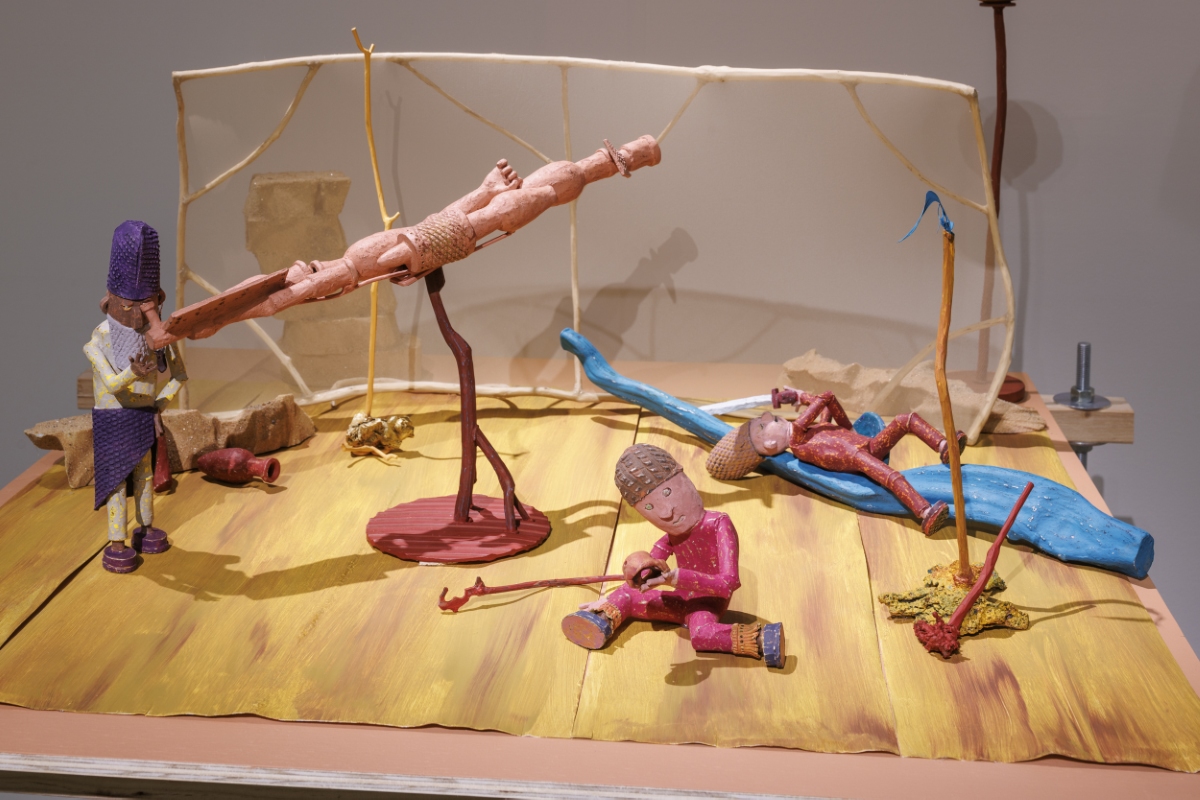
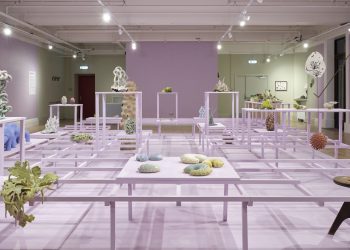
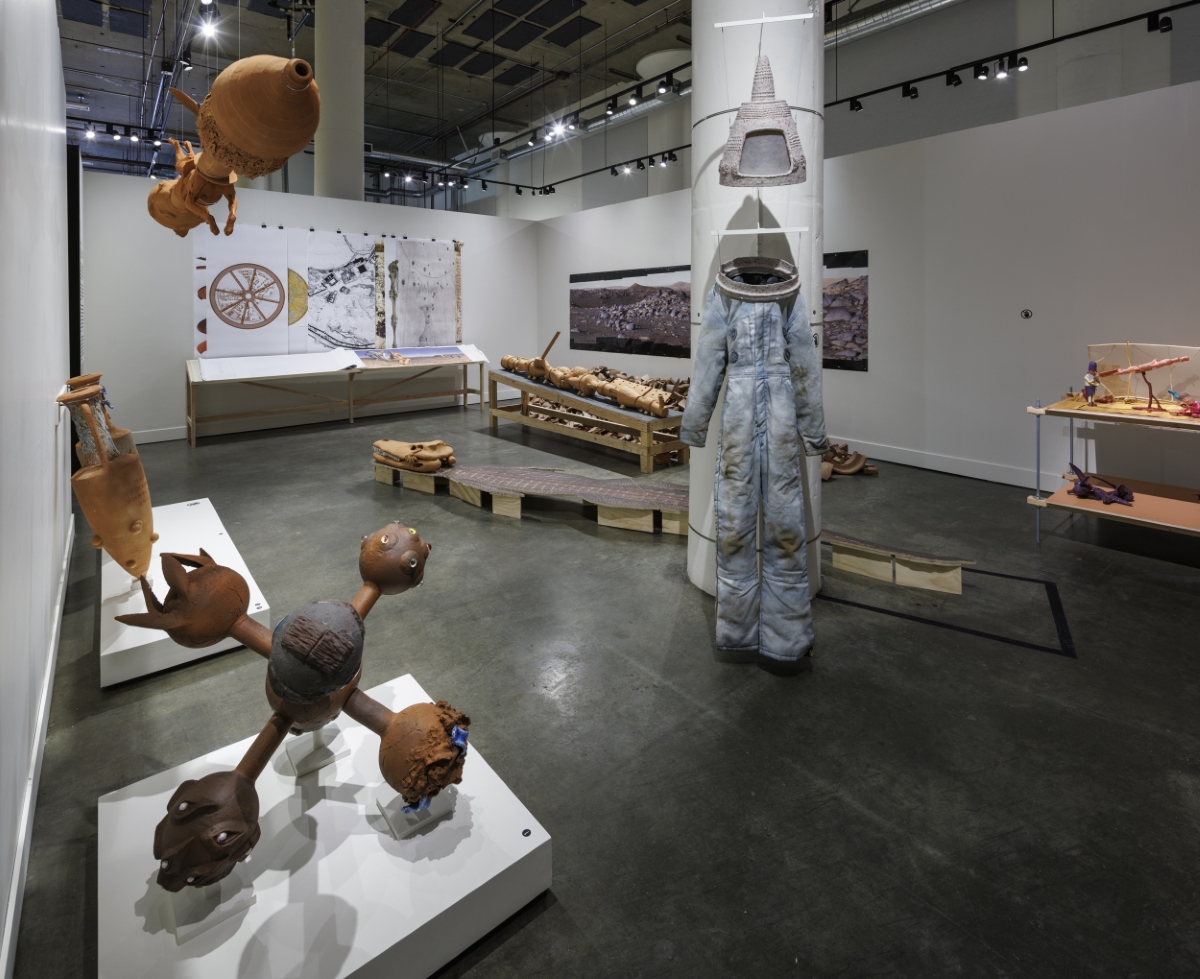
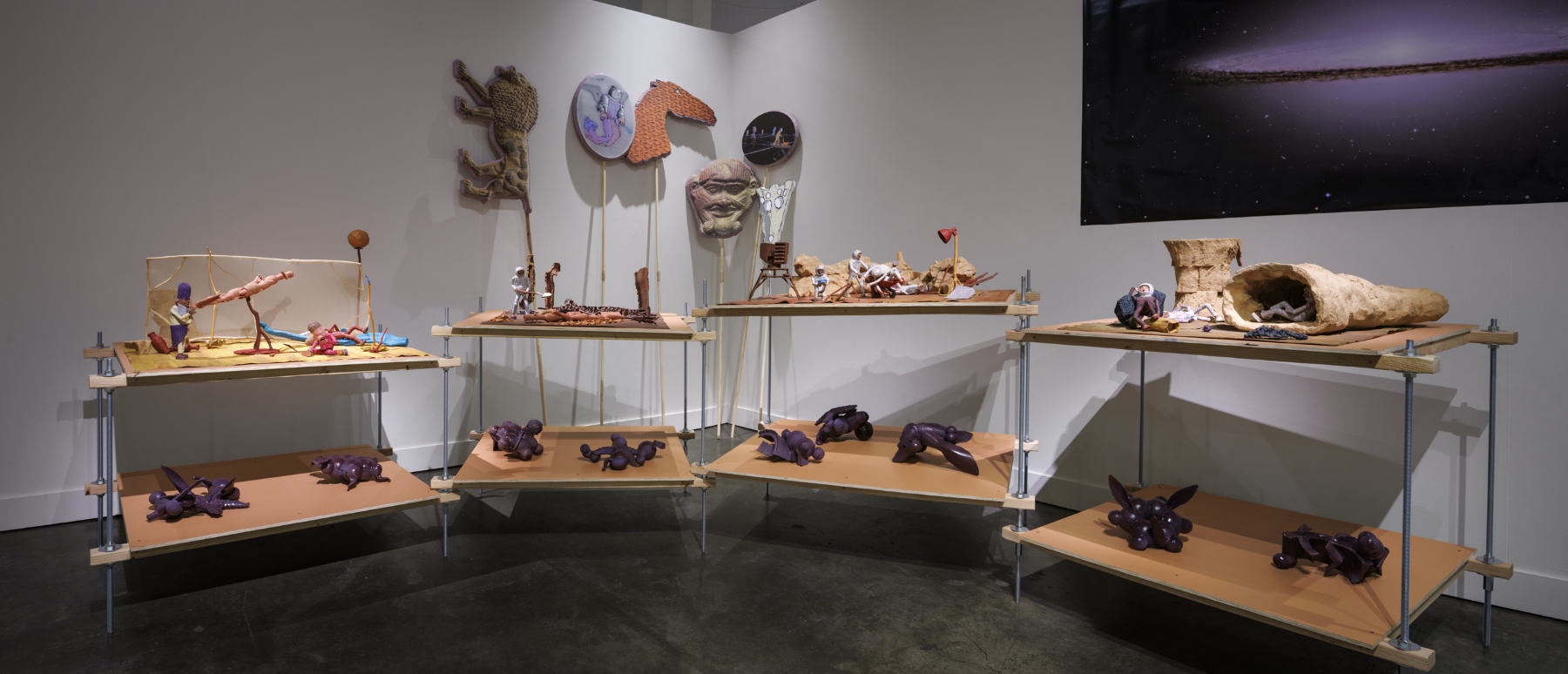
A Roadmap to Stardust implies a methodology (the “roadmap”) toward the universal and mythic (the “stardust”). In this iteration, libraries are thematically introduced as one method to catalog artifacts and circulate history and information. A crocodile, one of Earth’s oldest living species,10 appears with cuneiform embedded in its scales, carrying recorded history on its back. Elsewhere, improvised library shelving hosts vignettes of ‘astropuppets’ acting out a hero’s journey to the cosmos.
As with any myth, A Roadmap to Stardust is built upon a network of themes, inspiration, cultural references,11 and other supports. The path through these is offered by way of footnotes, which serve as navigational aids to further explore. While these are suggested directions, myths are made through retelling, interpretation, and discovery. We hope that you fill in the gaps through your own imagining.12
Museum of Craft and Design
2569 Third Street
San Francisco, CA 94107
United States
Photos © Henrik Kam, except otherwise noted
Footnotes
- Origin Device I, 2024, ceramic, glaze, mixed media. From Sumerian Gilgamesh to Greek Prometheus, Chinese Nüwa, Egyptian god Khnum, Jewish folklore’s golem, India’s Parvati, Hermes Trismegistus, Brigit of Celtic lore, the Germanic Nerthus (Terra Mater), Yoruba god Obatala, Polynesian Tane, Indigenous American Earth-maker, in the Qur’an and the Bible, the ubiquity of clay as a primordial material serves origin stories across cultures and geographies.
- A Roadmap to Stardust straddles the divide between earth and the heavens even in the title, pairing the earthbound roadmap to the celestial heavens. OortCloud X investigates clay as an earthly body during Phase I but, will suggest in Phases II-III (developed as virtual or hybrid exhibitions in 2026 and 2027 respectively) as man travels between planets, that extraterrestrial soil will serve a similar, central, role as the clay of humankind’s home planet. This cosmic geography is presaged in Phase I by images hung upon the walls, some directly referencing the link between the Martian landscape and the fertile crescent.
- The first known written poem, The Epic of Gilgamesh, was written between 2000 and 700 BCE. Despite its age, it was only recently discovered in the 19th century during archaeological excavations and included in the 30,000 clay tablets of the Library of Ashurbanipal in ancient Nineveh. The library as a laboratory for discovery, research, archiving and collation of narratives, is fundamental to the methods of OCX. It is presented in Phase I of “Stardust” in the form of a large book viewing table and a presentation structure for narrative dioramas and sky fragments.
- Enkido’s Map I, 2024, ceramic, graphic. In the fertile crescent, early civilizations kept records and inventories on tablets of clay. The writing system, and eventually the tablets themselves, came to be known as cuneiform.
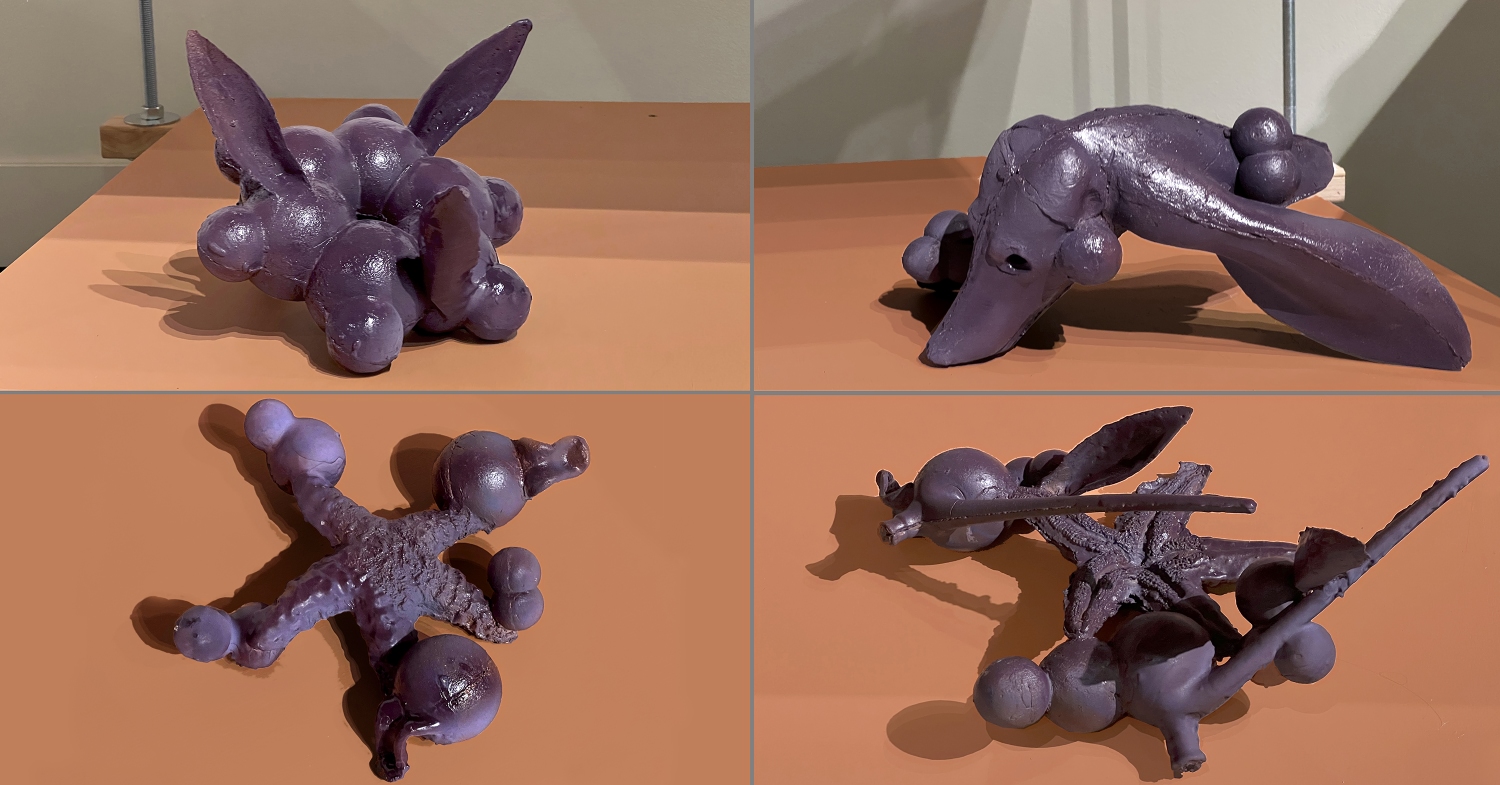
- Some of the artists’ favorite pop culture icons are referenced in A Roadmap to Stardust. For example, Prince’s signature ‘purple’ is the color of their meteorite field (Sky Fragments, 2024, ceramic, glaze, mixed media), and the counterculture cartoonist R. Crumb inspires their interpretation of astronauts working the fields of Mars. (Diorama 1: “Discovery of Telescope”; Diorama 2 “Landfall on Phobos”; Diorama 3: “Agriculture + Geology”; Diorama 4: “Travels on Elysium,” 2024, ceramic, acrylic paint, glaze, mixed media.) In particular, evidence of a theoretical rain of purple meteorites, Sky Fragments, suggest possible cosmic origins of language, perception, the zoo-biotic realms and inorganic sentience.
- Stardust Telescope I and II, 2024, ceramic, mixed media. While A Roadmap to Stardust’s “Sumerian telescopes” may be fictional, cosmology is an ancient art. The earliest confirmed celestial map is from China’s Tang dynasty (618–907). In the 1960s and 70s, Astronomer Gerald Hawkins and Archaeologist Fred Hoyle proposed the theory that Stonehenge (3100-1600 BCE) was used as an astronomical observatory tracking the sun, moon, and perhaps predicting eclipses, not unlike a telescope.
- Stardust Cistern I and II, 2024, ceramic, mixed media. Terra cotta clay is the most abundant and oldest used clay on our planet. It’s a substance essential to the telling of humanity’s material and spiritual progress, from fertility to pottery to bricks to silicon chips.
- Stardust Telescope II, 2024, ceramic, mixed media. Cedar is key in the landscape of Gilgamesh’s first quest, wherein he sets out to defeat the forest guardian Humbaba in his home on the Cedar Mountain. Gilgamesh succeeds in his quest and chops down several cedar trees to bring back to his city of Uruk. This is the earliest known commentary on man’s destruction of nature in service of technology. A reference in the telescope to an integrated jackal and related mega fauna images of earlier Eurasian landscape evoke the animus origins of gods and creation narratives of later Mesopotamia.
- Stardust Telescope I, 2024, ceramic, mixed media. Gilgamesh was written to be eleven cubits or sixteen feet tall–perhaps these massive arms are from statuary honoring King Gilgamesh.
- Enkido’s Map I, 2024, ceramic, graphic printed on plywood. Crocodiles have survived for 200 million years and populated the Euphrates river during the time of the ancient Sumerians. Enkido is a main character in The Epic of Gilgamesh. He was made out of clay by the gods to temper the young king Gilgamesh. In a more recent, but similar fashion, Peter Beard and Alistair Graham’s, Eyelids of Morning, a para-mythic, visceral treatise of photography and narrative, explores the mingled destinies humans and crocodiles of Kenya’s Lake Rudolf.
- AstroEnkiSuit, 2024, ceramic, paper, mixed media. OortCloud X is inspired by current headlines in space exploration and pop culture’s fascination with the cosmos, especially in novels, cinema and music. Georges Méliès gave us A Trip to the Moon in his 1902 film. Buck Rogers popularized space in the 1930’s. In the post war period, Ray Bradbury wrote The Martian Chronicles. Stanley Kubrick bewildered us with 2001: A Space Odyssey. Star Wars militarized space. More lyrically, Jimi Hendrix serenaded us with a psychedelic tour of Jupiter’s sulphur mines.
- Stardust Library, 2024, ceramic, glaze, mixed media. OortCloudX wants to reimagine the journey of the avatar who eternalizes the dream of “leaving, discovering, returning.” At the same time, they see the utopian and mystical together with the socially vexing, and in doing so, search to find the rapturous, the daunting, and the incongruous.