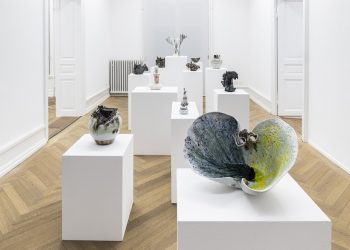
The Princessehof National Museum of Ceramics in Leeuwarden (NL) is proud to present the major retrospective exhibition UNBROKEN, dedicated to the internationally acclaimed artist Bouke de Vries. This exhibition offers a unique perspective on the work of an artist who transforms broken ceramics into new and unexpected artworks in innovative and multifaceted ways. De Vries, born in Utrecht and now based in London, was originally trained as a restorer. His craftsmanship forms the foundation of an artistic practice that centres on fragility, impermanence, sustainability, and repair.
UNBROKEN features a selection of highlights from Bouke de Vries’ career, in which he experiments with the theme of decay and repair. This retrospective includes still lifes, relics, and monumental installations: in total, some 95 objects and installations, 11 of which are new works created especially for this exhibition.
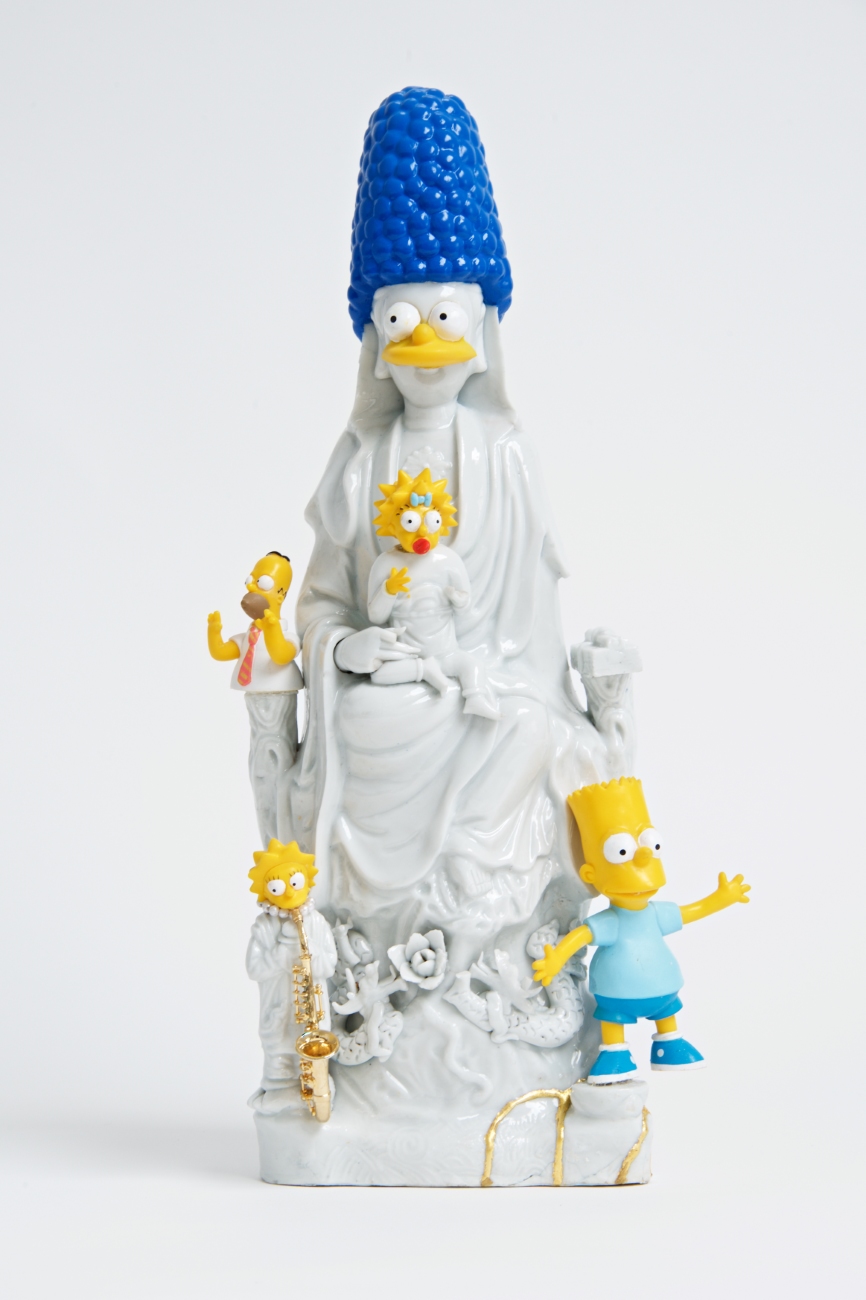
Many of the works on view are based on historical objects, yet they also engage with a wide range of contemporary cultural phenomena and elements from the artist’s personal world. Playful references, such as a porcelain sculpture of Marge Simpson as Guan Yin, and other childhood memories appear alongside tributes to the artist’s father and husband, as well as allusions to drug culture and war.
In total, the solo exhibition UNBROKEN features around 95 objects and installations, including eleven new works created especially for this show. The exhibition runs from July 5, 2025, to August 16, 2026.
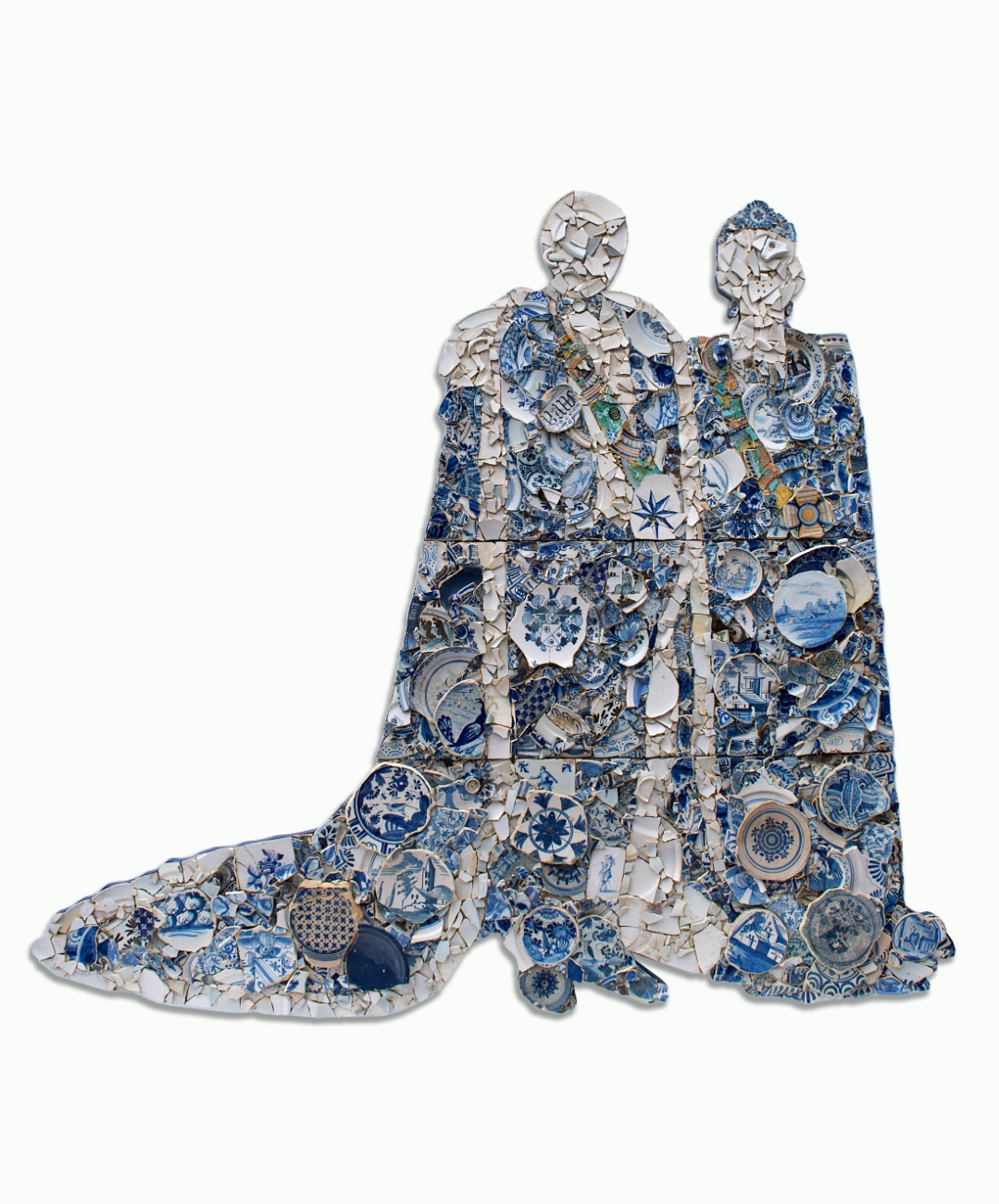
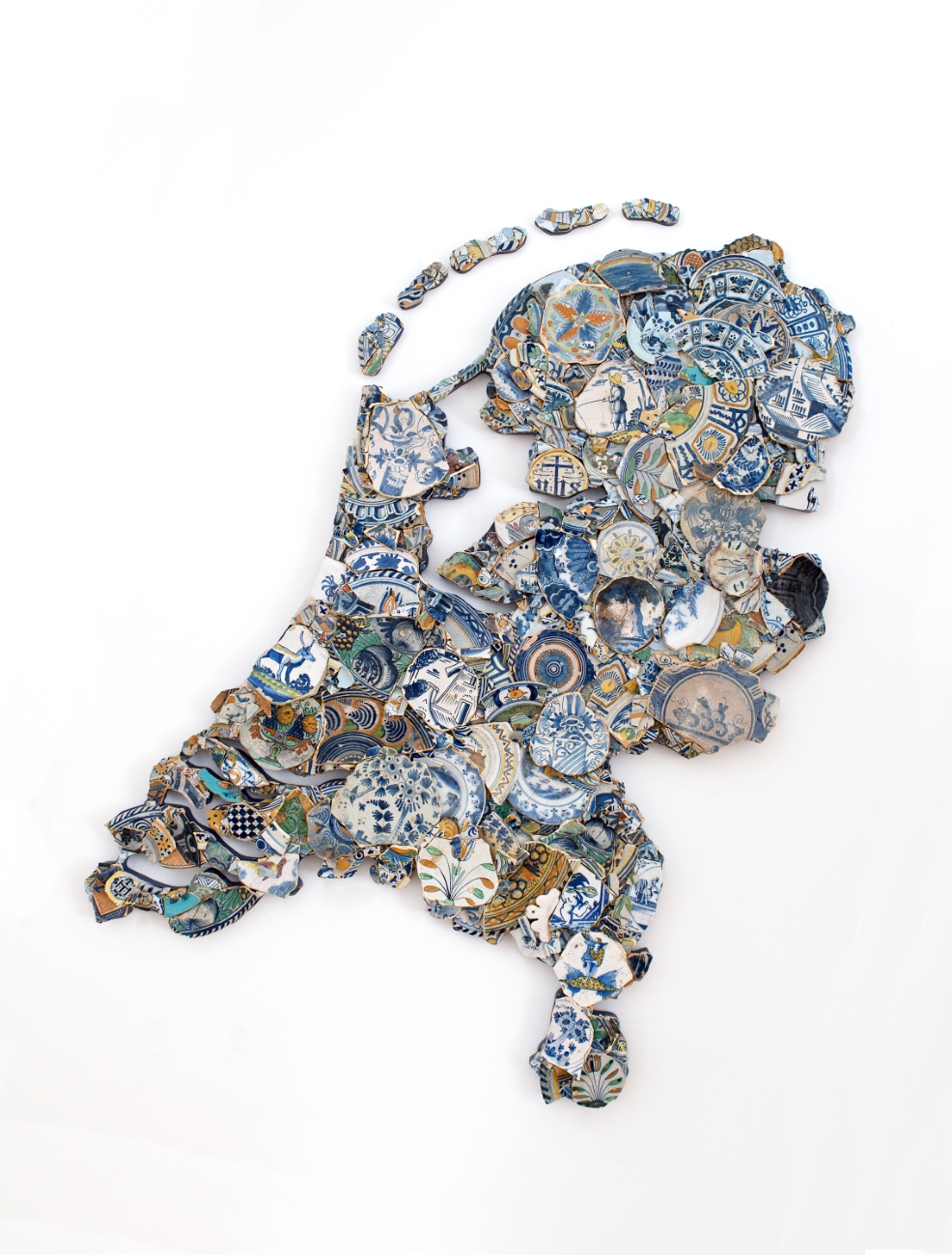
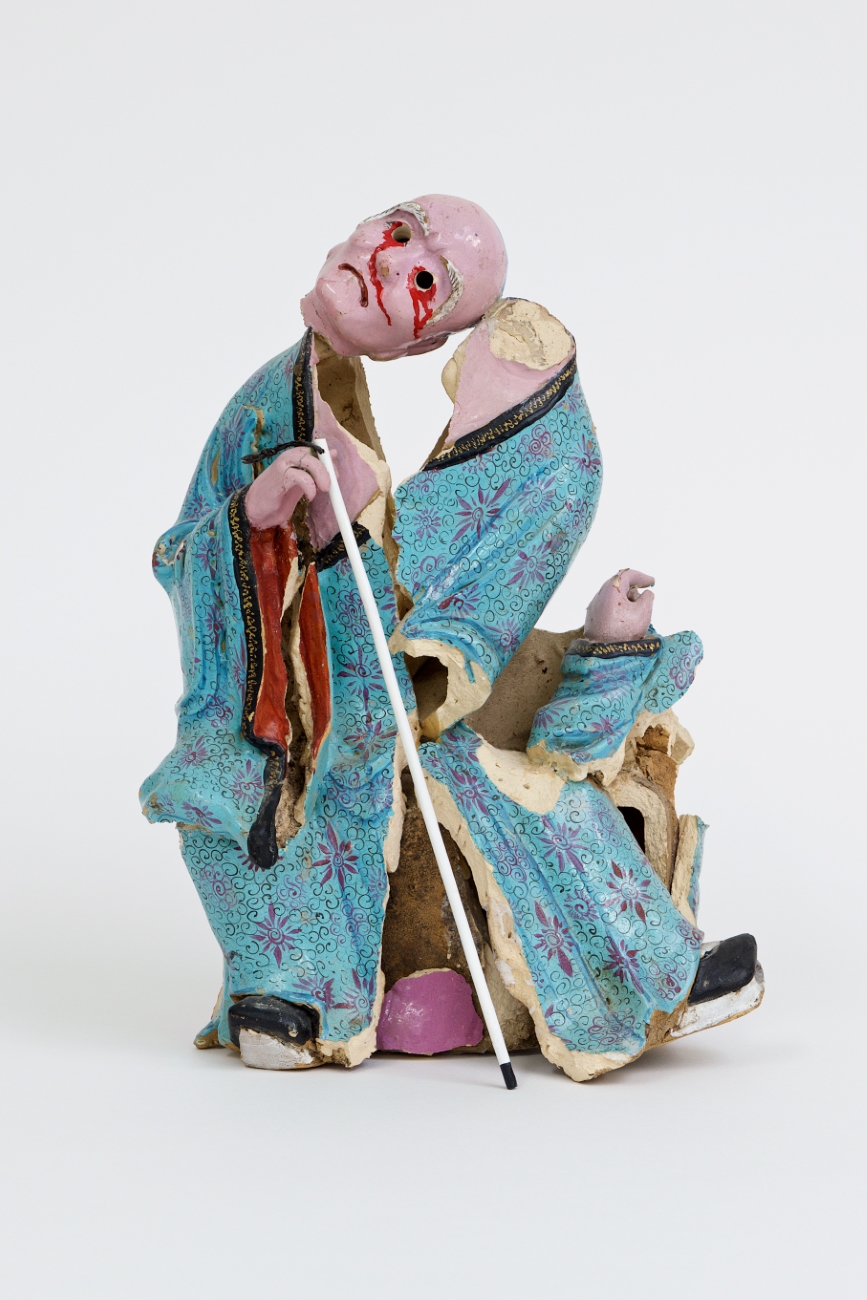
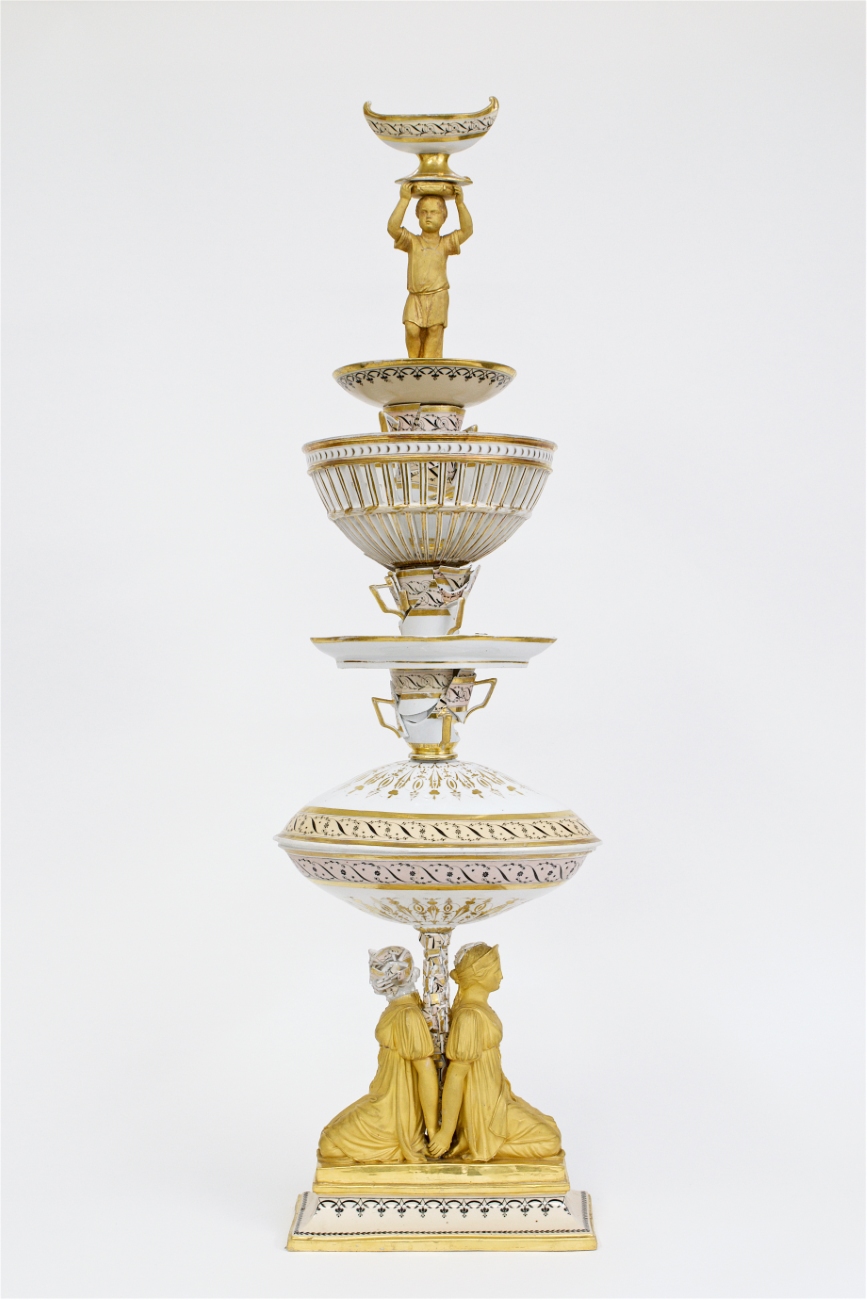
Visitors are guided through five rooms showcasing the oeuvre of Bouke de Vries. The works are displayed in thematic clusters. In Dutch Stories, De Vries’s Dutch heritage takes centre stage. Especially for this exhibition, he created a life-sized state portrait of King Willem Alexander and Queen Máxima using 17th- and 18th-century Delftware – a regal tribute and, at the same time, a playful reflection on national symbolism and ceramics as cultural heritage.
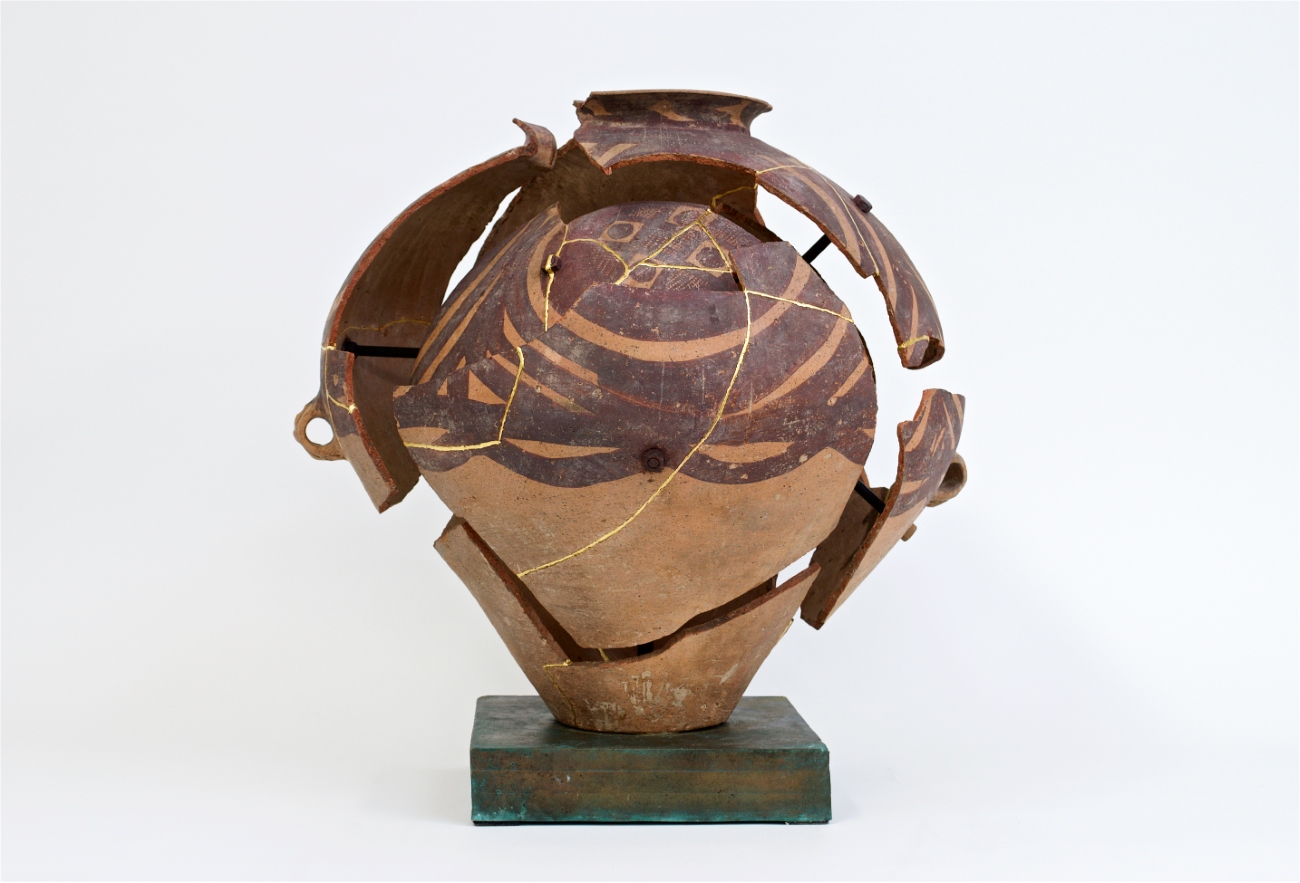
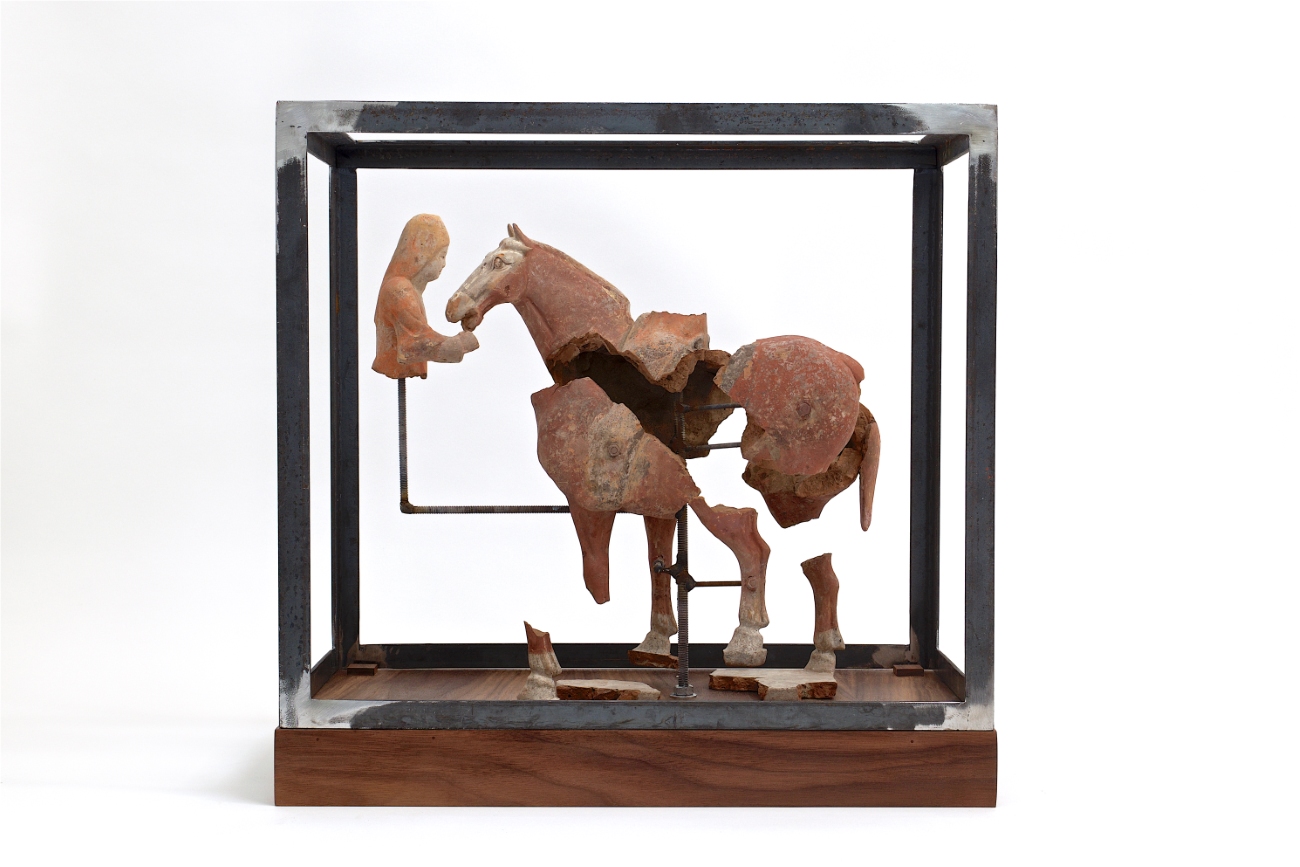
Next, Early Chinese explores Bouke de Vries’ quest for a deeper human connection with ceramics throughout history, and the prominent role ceramics play within archaeology. A striking example is his response to Ai Weiwei’s conceptual and political photo triptych ‘Dropping a Han Dynasty Urn’. De Vries responds with humour and tenderness: “I saw the photos and, in my mind, I picked up the shards and put the vase back together.” By repairing a similarly broken Han vase (dating from 206 BCE to 220 CE), he engages with the enduring value of this cultural heritage. Using the Japanese technique of Kintsugi – developed only in the late fifteenth century – he visibly mends the vase, merging ceramic traditions from different times and places.
In this space, De Vries reveals not only his fascination with the fragility of objects, but also with the fragility of context and meaning. Displayed in tall vitrines, the works evoke the atmosphere of a historical cabinet of curiosities, or Wunderkammer.
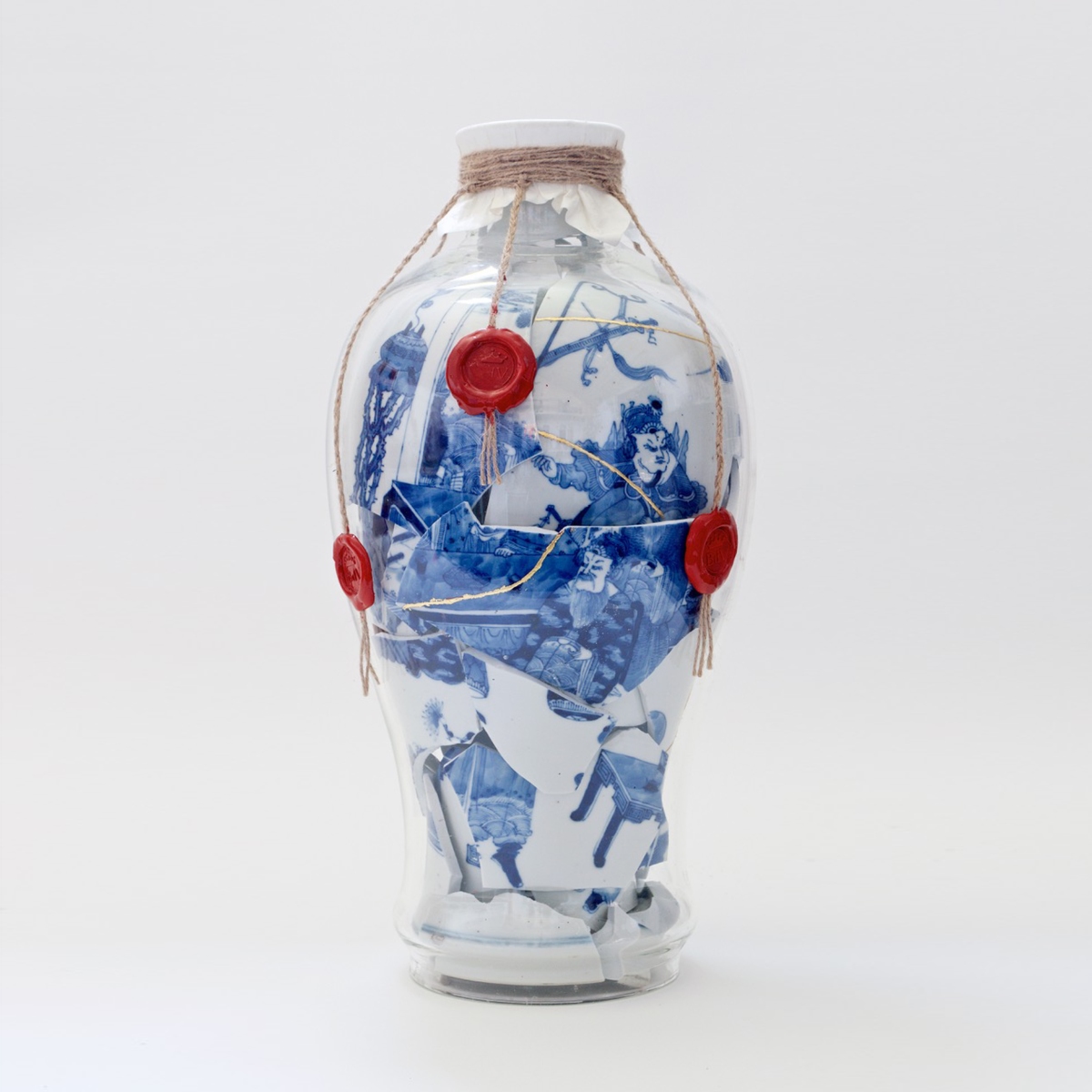
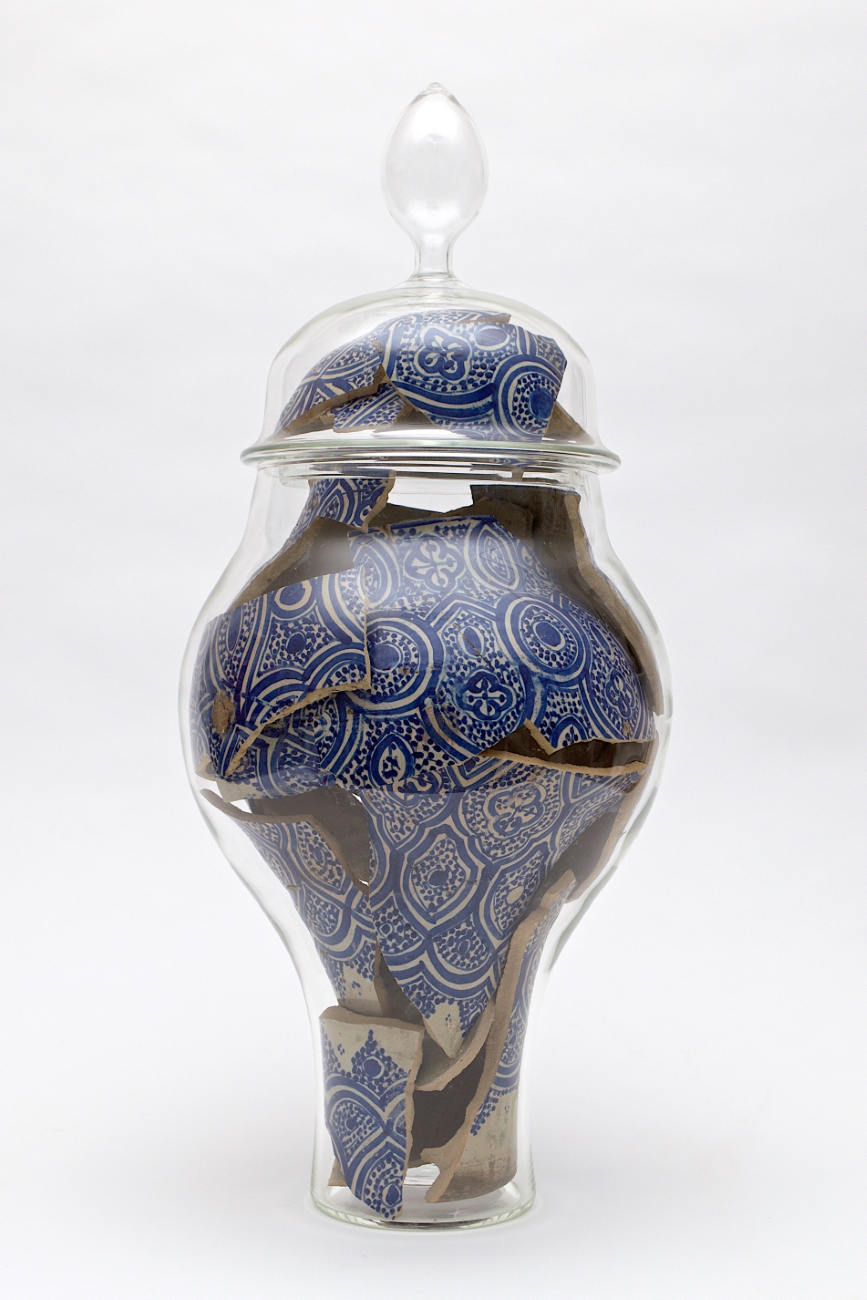
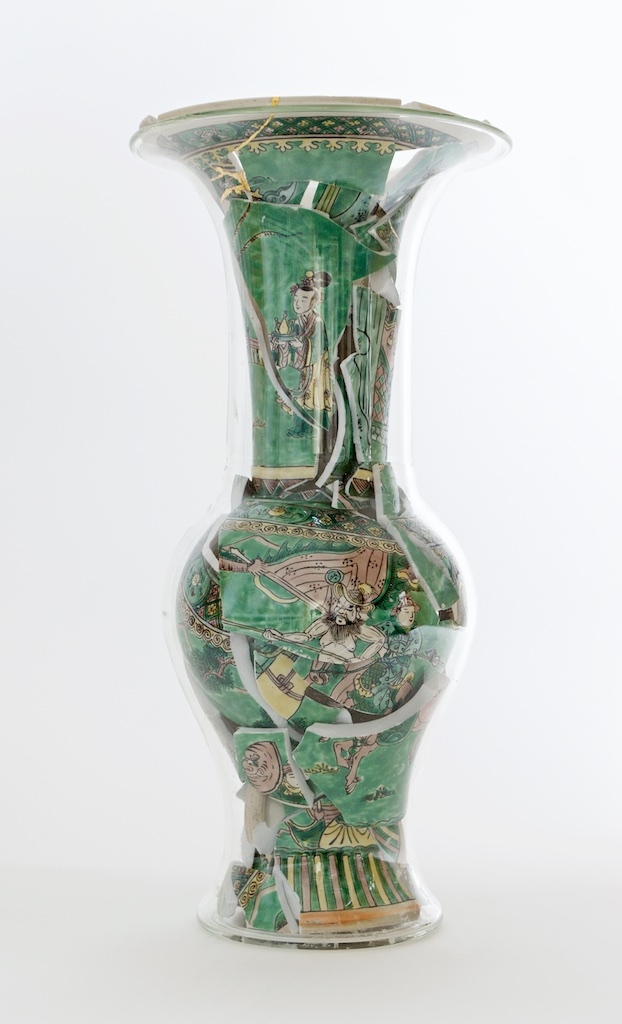
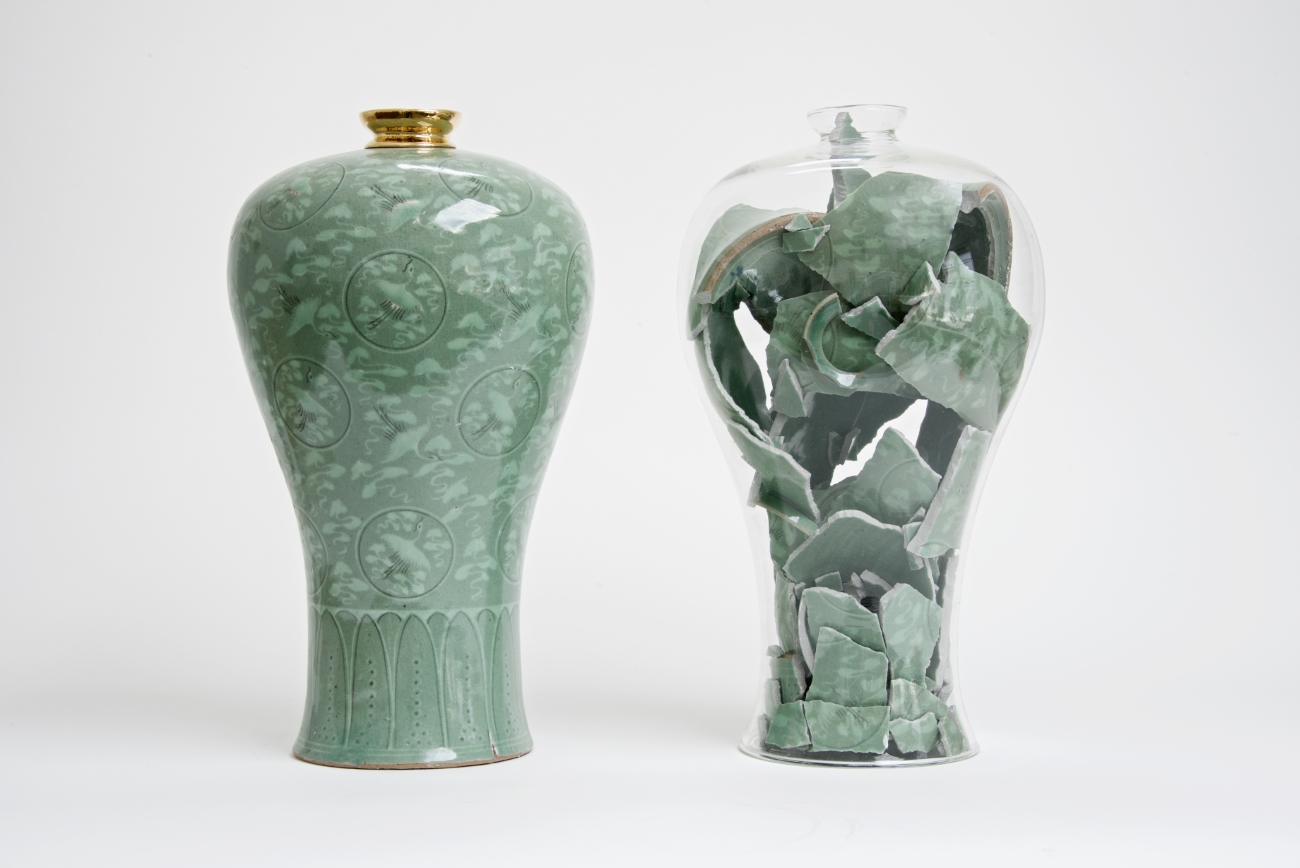
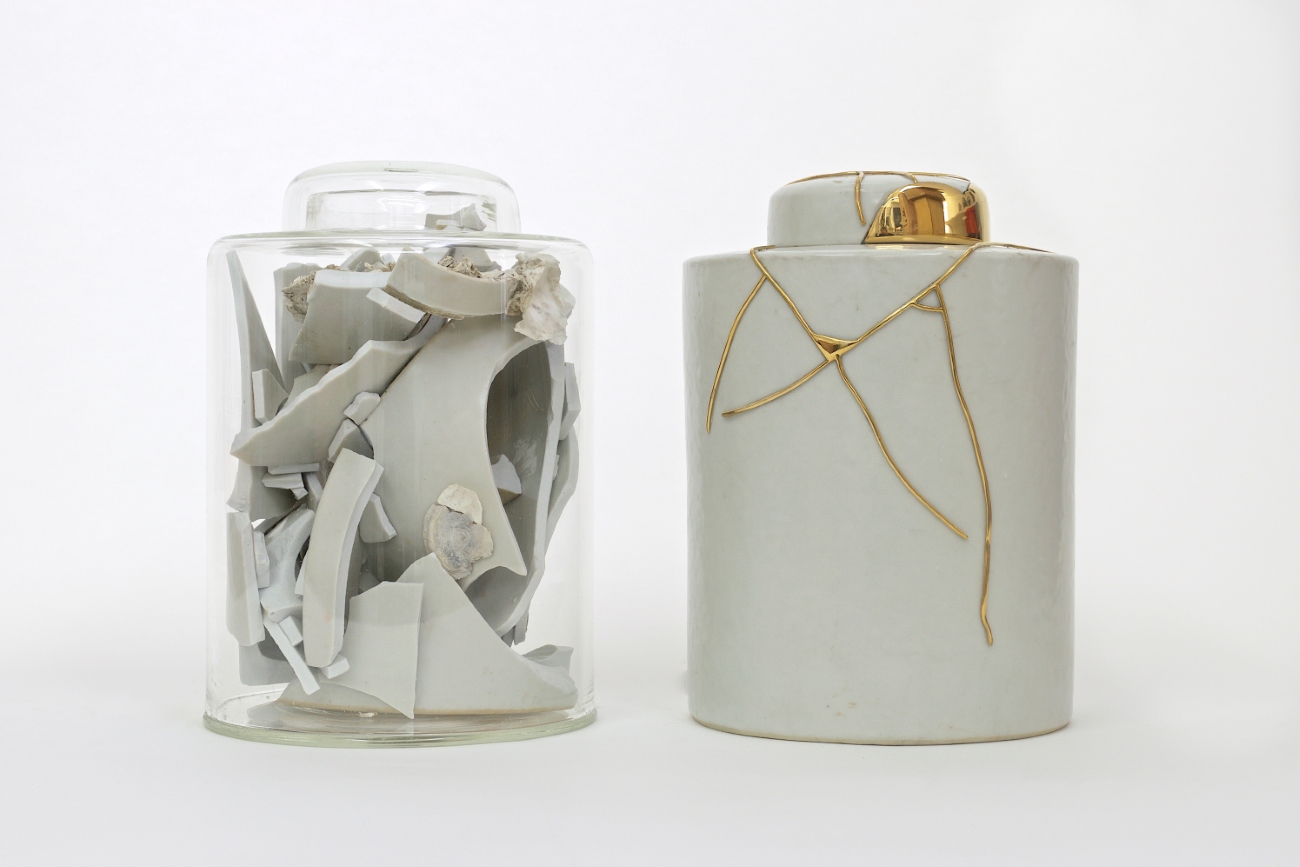
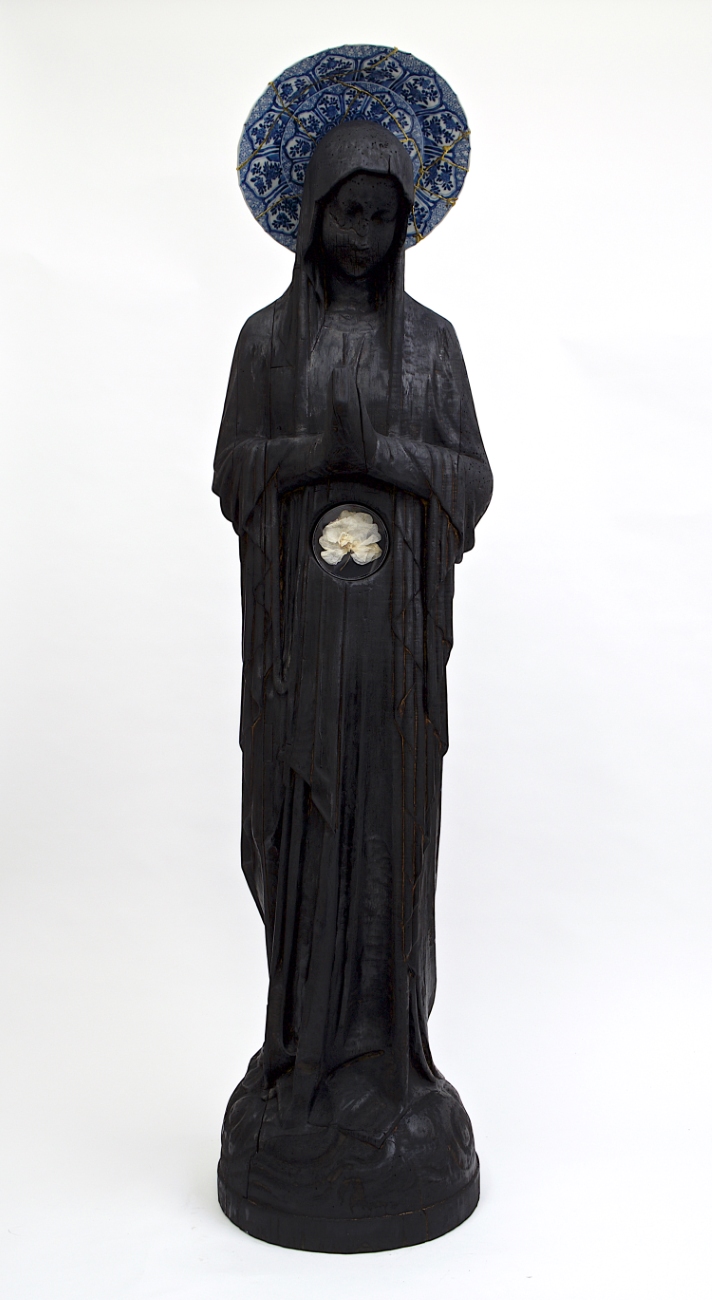
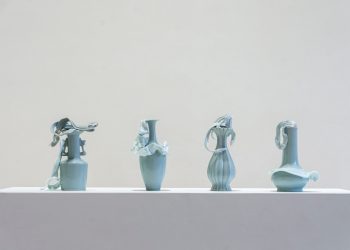
The Memory Vessels theme room displays shards of broken ceramics in glass moulds. During the COVID-19 pandemic, these Memory Vessels struck a powerful emotional chord with people. The works resonated so deeply that people around the world had them tattooed on their bodies. For this exhibition, De Vries responds to this unexpected tribute with a new series of ‘flat’ ceramic Memory Vessels, onto which a tattoo artist re-applies the original designs in ink.
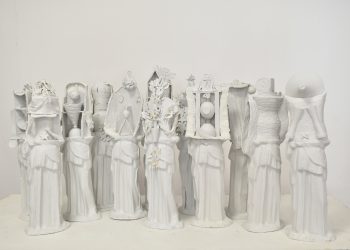
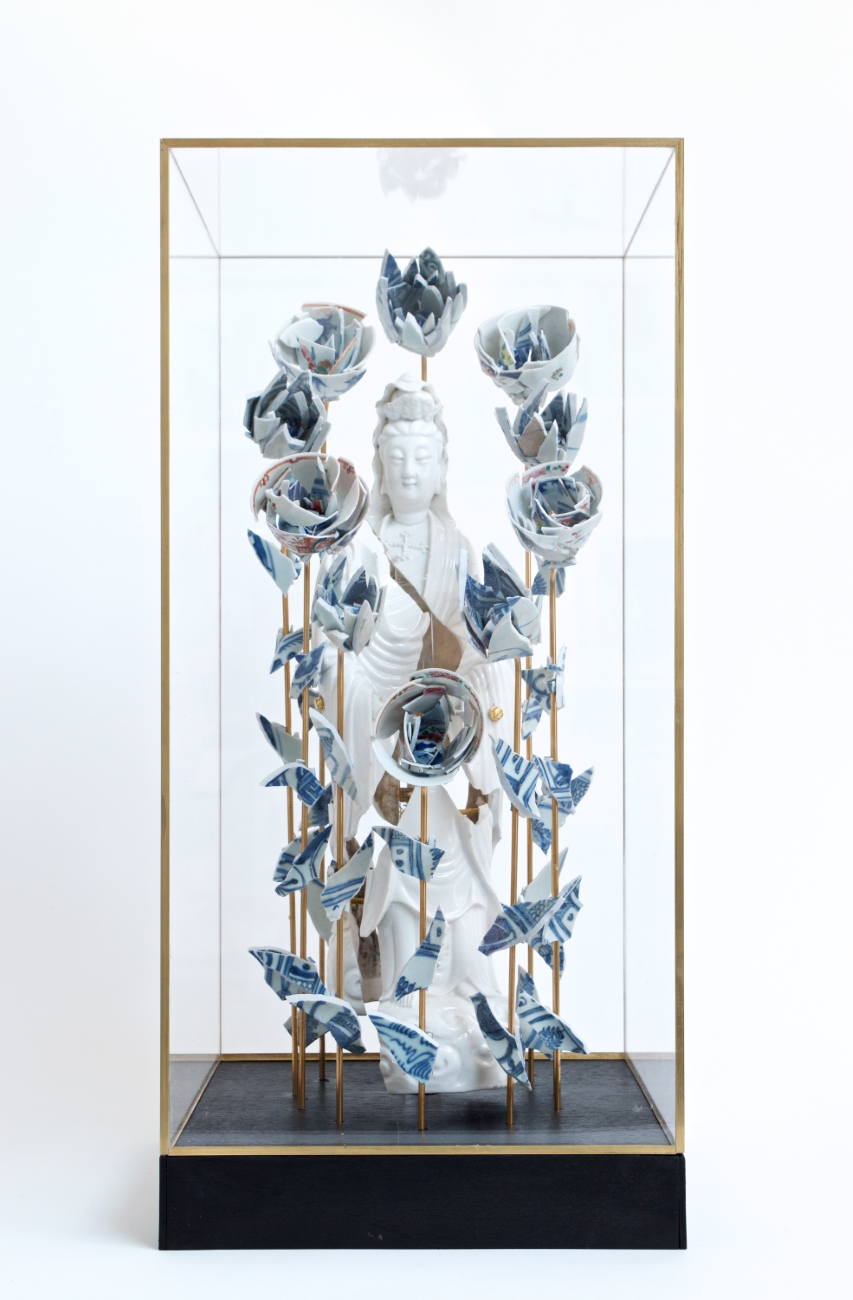
Muses brings together sculptures of De Vries’s muses – from the Virgin Mary to figures from popular culture, with a focus on contemporary themes. Highlights include his (unbroken) homage to the late Princess Diana, celebrated as an icon within the LGBTQ+ community.
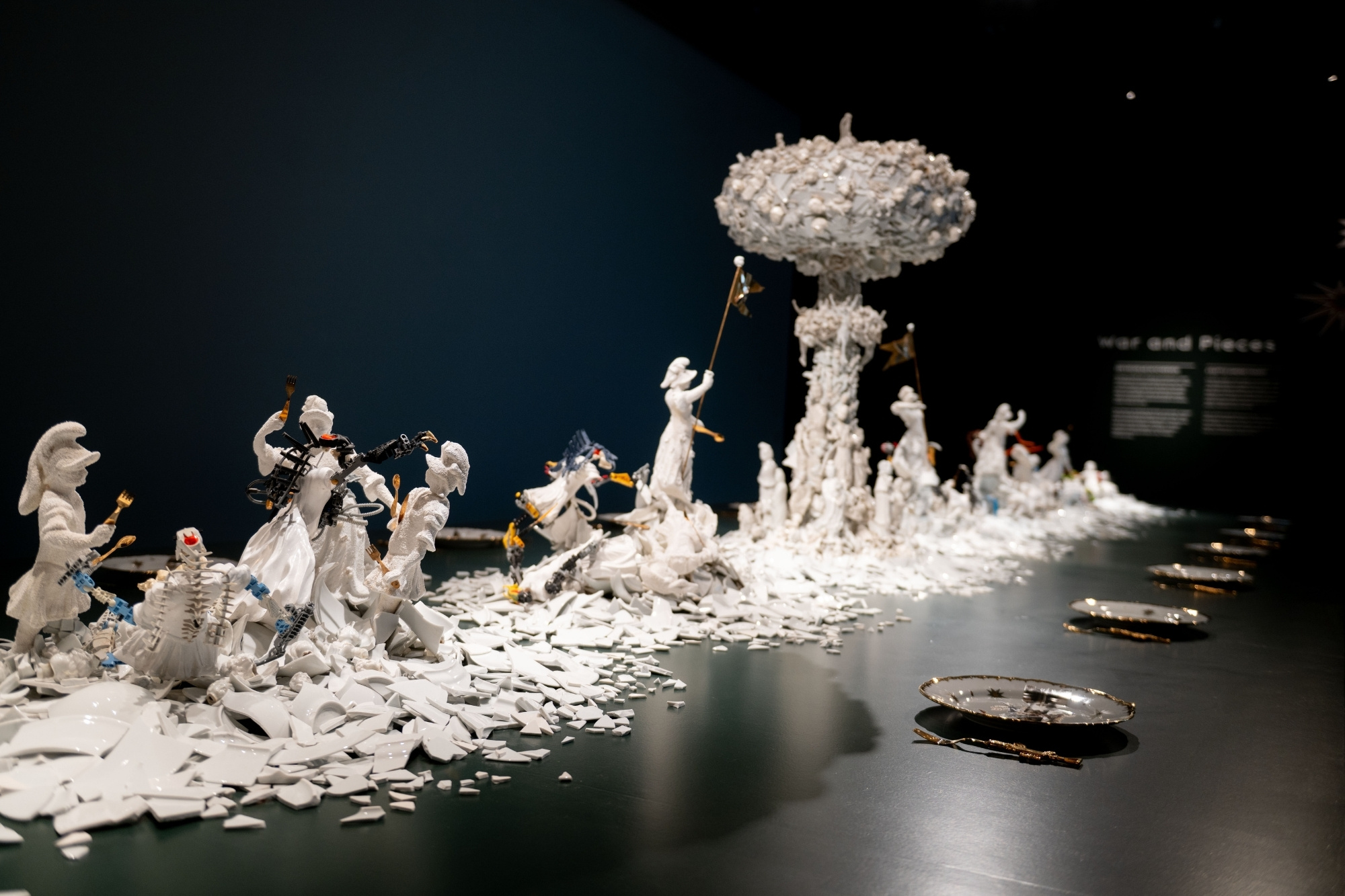
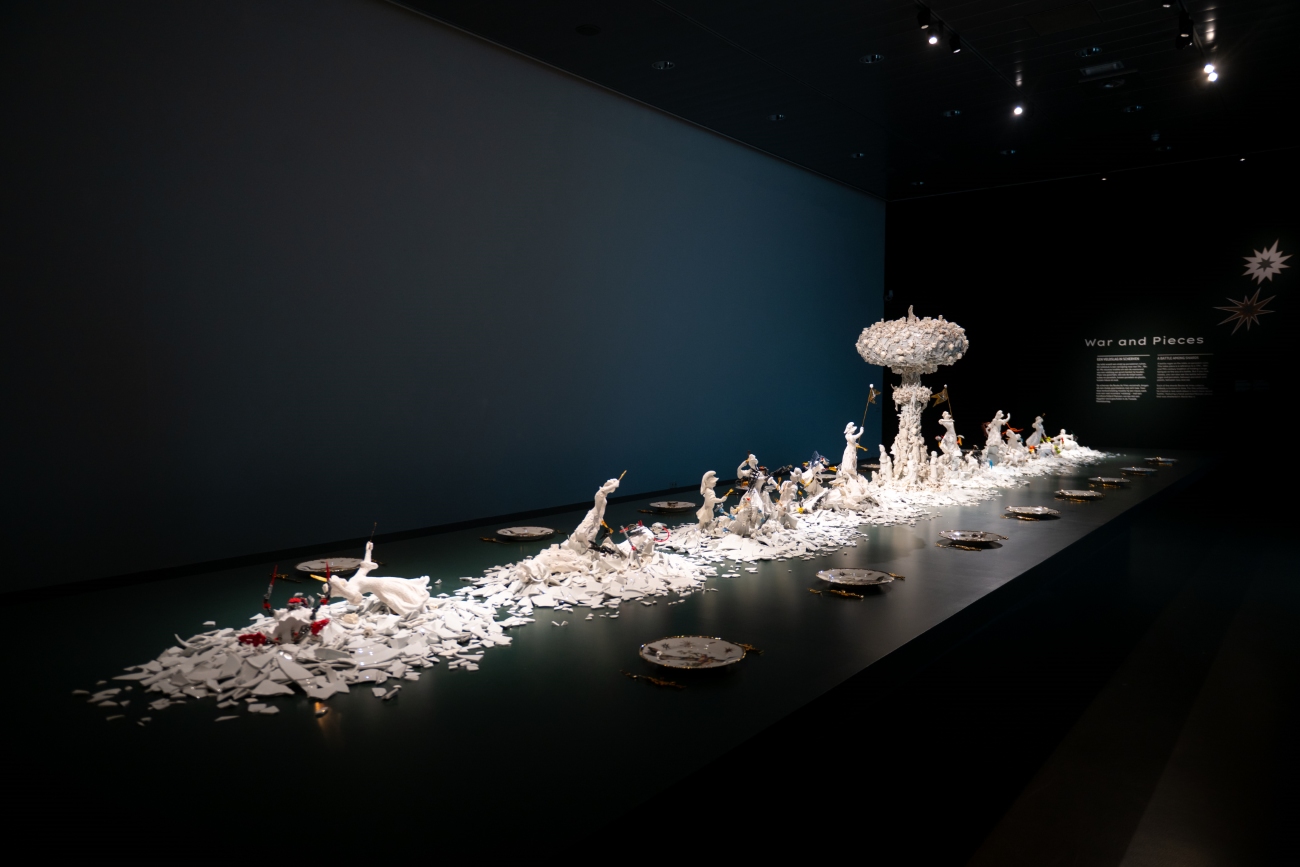
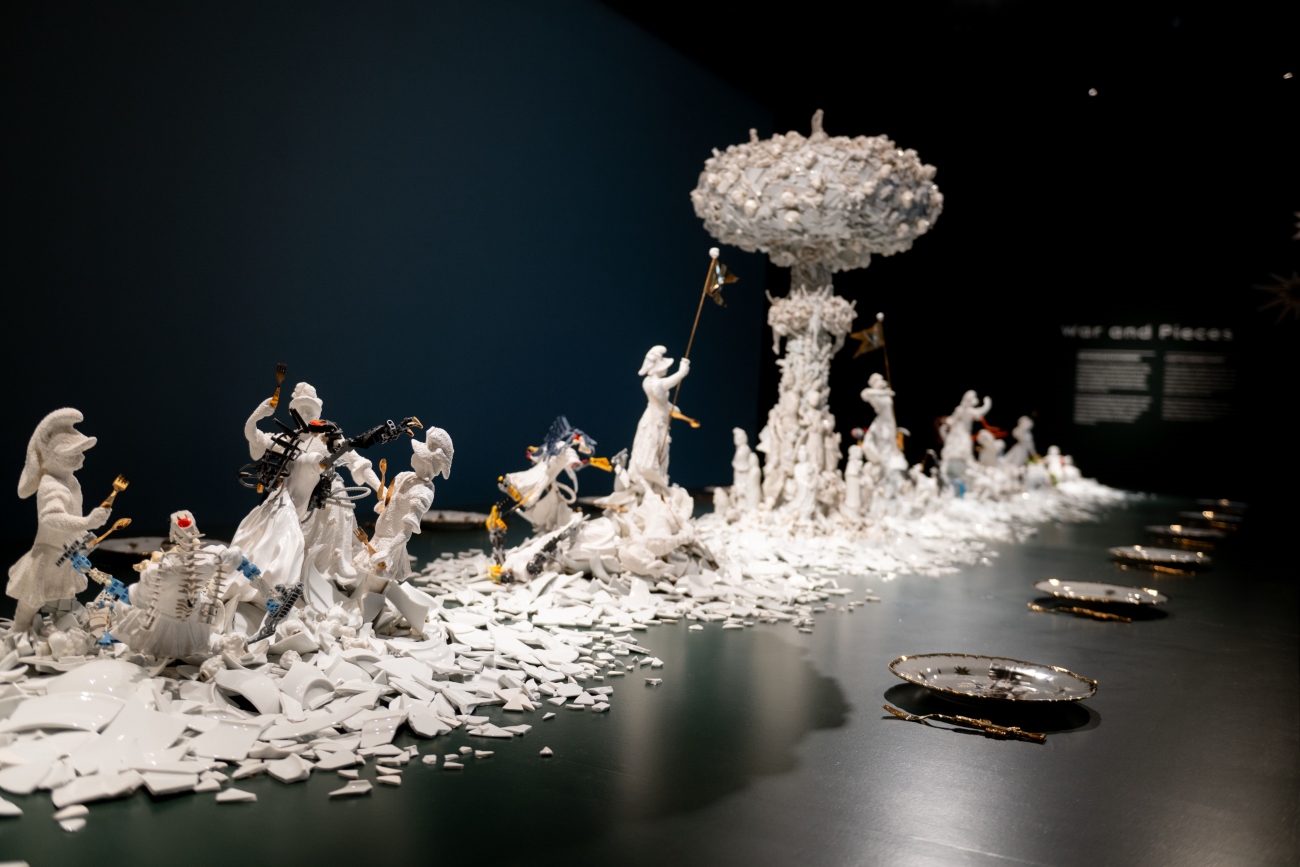
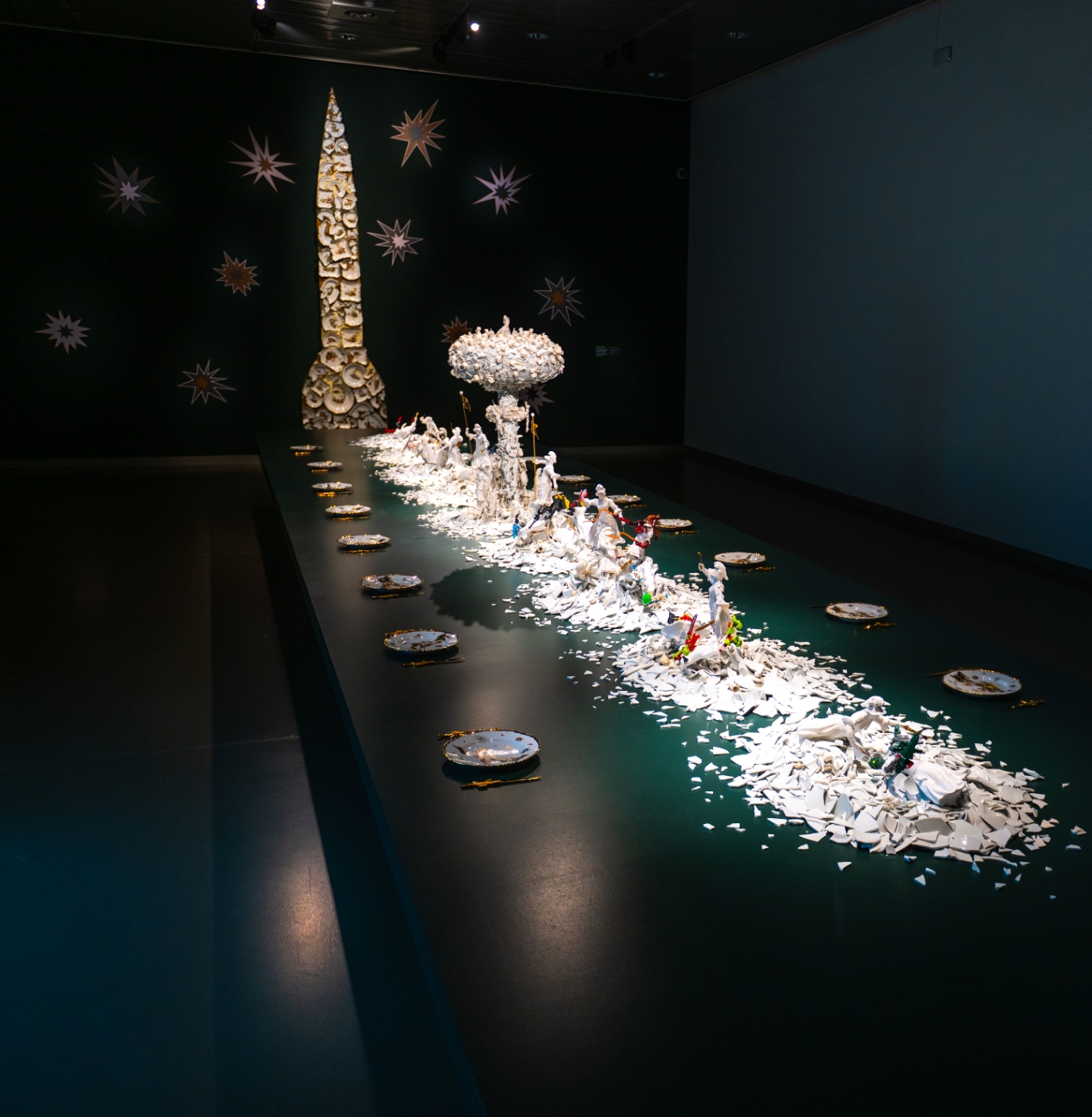
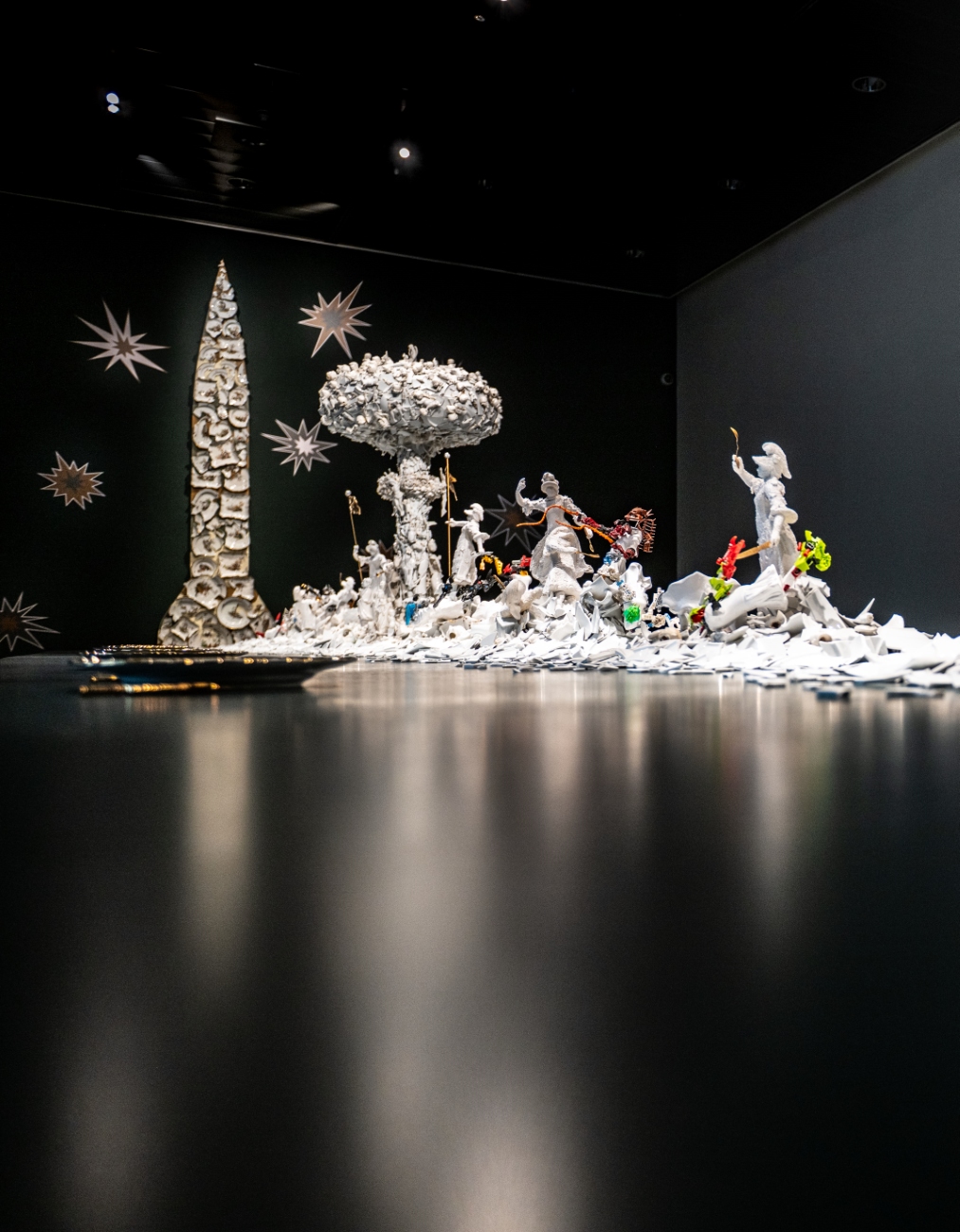
The exhibition ends grandly with War and Pieces, an eleven-metre-long installation offering a contemporary take on the opulent table centrepieces once favoured by European aristocracy in the 17th and 18th centuries.
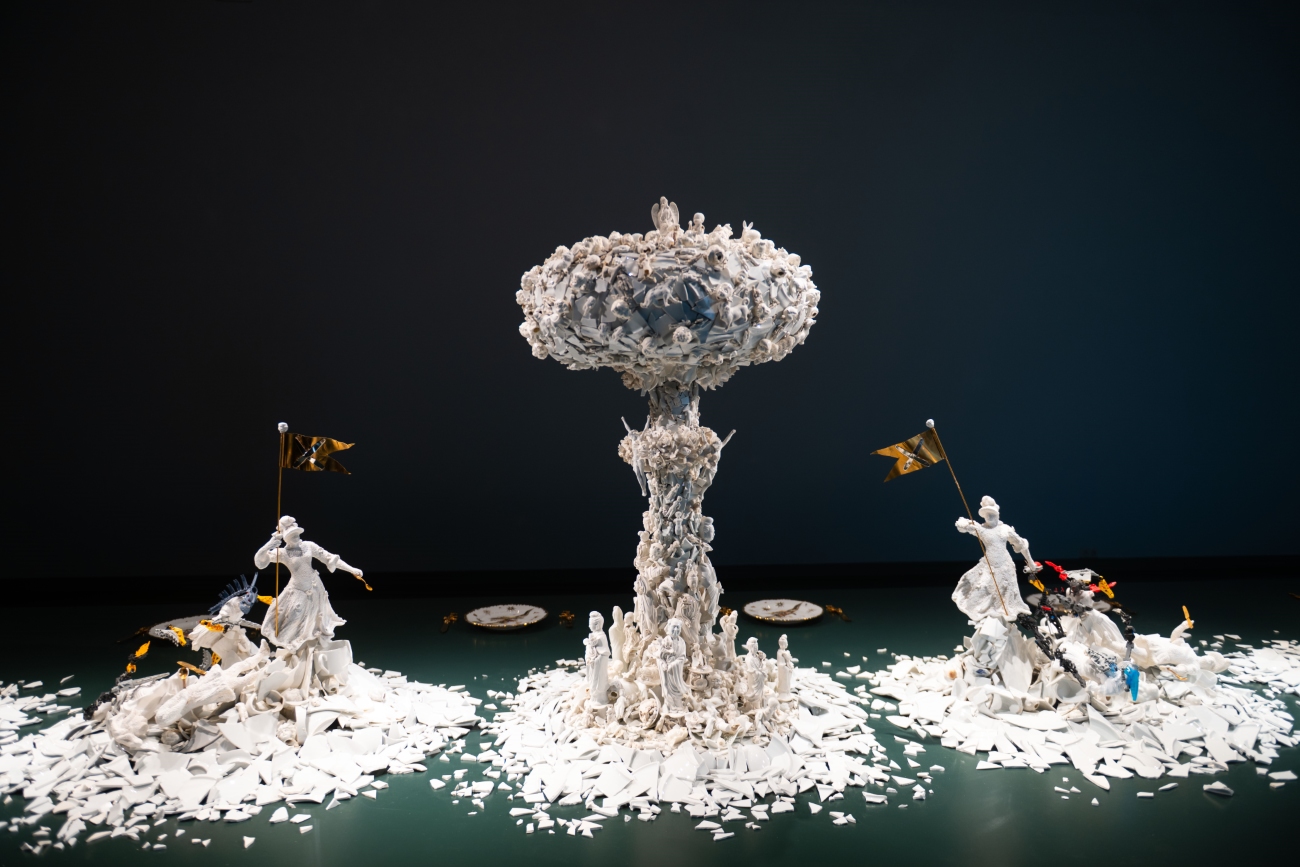
At the heart of this chaotic battlefield of shards stands a dramatic and inevitable centrepiece – the ultimate act of war: a nuclear mushroom cloud composed of countless fragments of white porcelain. The cloud is formed from ghostly cherubs, skulls, and decapitated or distorted porcelain dolls – or “Hummels gone wrong,” as De Vries calls them. Christ on the cross and Guan Yin, the Chinese goddess of compassion whose name means “One who hears the world’s cries,” witness the death and destruction; atop the cloud, an angel weeps.
In stark contrast to the whiteness of the porcelain, other figures have mutated into cyborgs, adorned with brightly coloured bionic limbs and heads fashioned from fragments of plastic toys. De Vries refers to these plastic additions as “modern invaders.” He notes: “The ever increasing ubiquity of non-biodegradable plastic, supposedly indestructible, brings the installation into our own, more toxic age.”
The work has already received significant international acclaim and powerfully captures both the fragility and resilience of ceramics. Since 2012, War and Pieces has toured across Europe, Asia and the United States, with De Vries subtly adapting the installation to each location.
Sustainable to the core
Sustainability is a thread running through both Bouke de Vries’ work and the UNBROKEN exhibition. De Vries transforms broken and discarded shards into meaningful art objects, raising questions about value, transience and reuse. Recycling is also prioritised in the construction of the UNBROKEN exhibition. For instance, existing display cases are repurposed and circular choices are made in terms of exhibition and print materials. Sustainability has long been an important pillar in the Princessehof’s programming. With exhibitions like Sustainable Ceramics#1, the first in a series on sustainability in ceramics, the museum is firmly committed to current, ecological themes within contemporary ceramics. This is also the case with solo exhibitions such as those of Yoon Seok-Hyeon (2021 to 2022), Humade (2022) and Keeley Haftner. The Princessehof intentionally features artists who have explored sustainability in ceramic production and society.
Publication
A book entitled Bouke de Vries: Unbroken (available on Bookshop.org / Amazon) was published to accompany the exhibition. Edited by Princessehof ceramics curator Wendy Gers, it features a selection of the finest works from the British-Dutch artist’s oeuvre. Internationally renowned art experts such as former Design Museum director Alice Black, gallerist Adrian Sassoon, head of applied arts at the Rijksmuseum Femke Diercks, director Xa Sturgiss of the Ashmolean Museum in Oxford and many other prominent figures have contributed essays and entries on Bouke de Vries’ art and works. Former Dutch Design Award winner Sybren Kuiper is responsible for the graphic design of this first and only overview of De Vries’ work.
Bouke de Vries: innovator in ceramics
Bouke de Vries, based in London, is known for his unique approach to ceramics. He transforms broken and discarded shards into extraordinary works of art that evoke reflections on beauty and perfection. His background in fashion and textile design, as well as his training as a ceramic restorer, make his work a joy to behold. This combination of craftsmanship and creativity makes his art both visually impressive and conceptually stimulating. De Vries’ work is included in many important international collections and is represented by leading galleries in the UK and the Netherlands.
Contact
info@princessehof.nl
Princessehof National Museum of Ceramics
Grote Kerkstraat 9
8911 DZ Leeuwarden
The Netherlands
Captions
- Featured image: War & Pieces, as displayed in the National Museum of Ceramics Princessehof (Leeuwarden, NL), Courtesy of Bouke de Vries, Galerie Ron Mandos, Amsterdam. Photo by Jacob van Essen/ Fotobureau Hoge Noorden
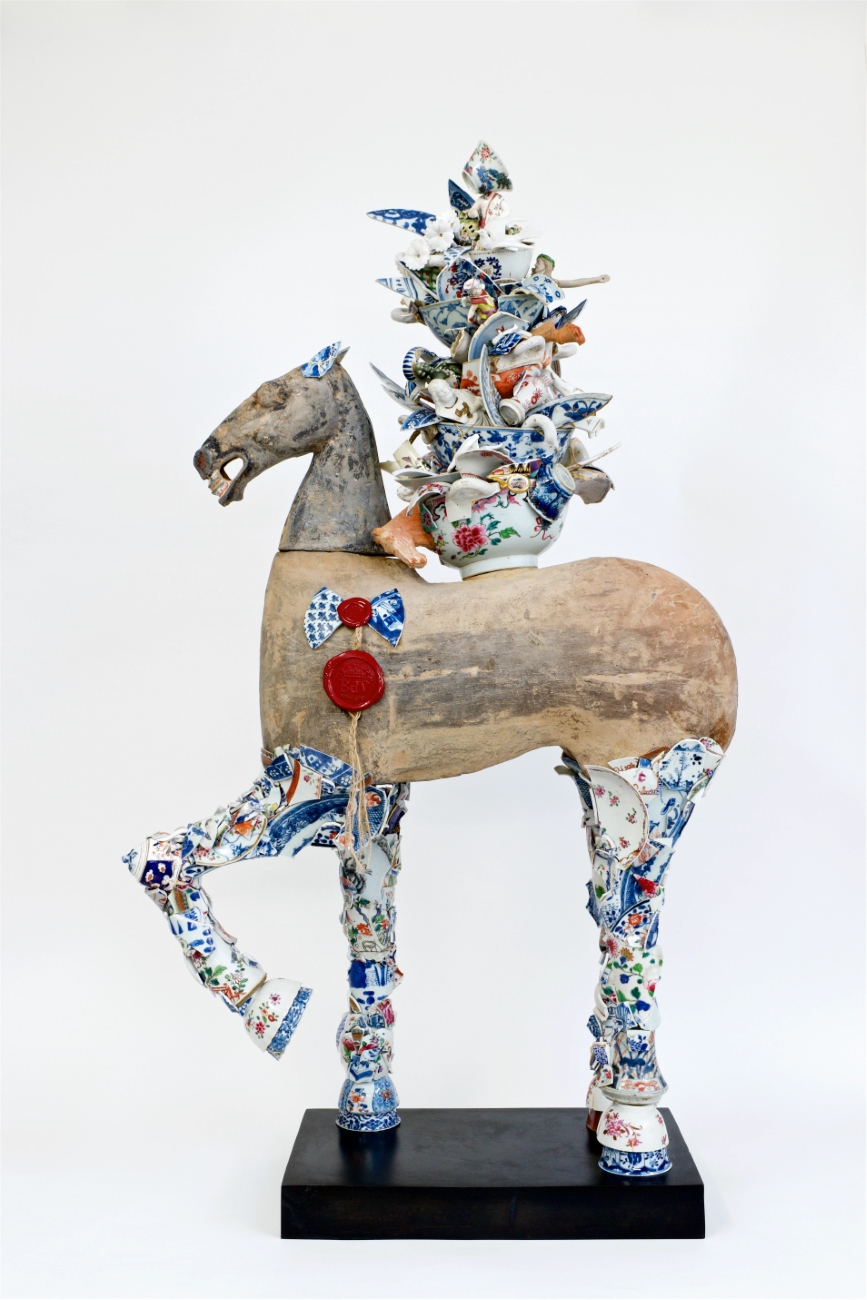
- Horsey, 2024, Bouke de Vries, 119 x 67 cm, Collection National Museum of Ceramics Princessehof, Acquired with support from Club Céramique and the Van Asperen – Van der Linden Fund.
- Majesteit, Bouke de Vries, 2024, Life-sized double portrait of King Willem-Alexander and Queen Maxima, fragments of 17th and 18th century Delftware, 183 x 204 cm, courtesy Bouke de Vries
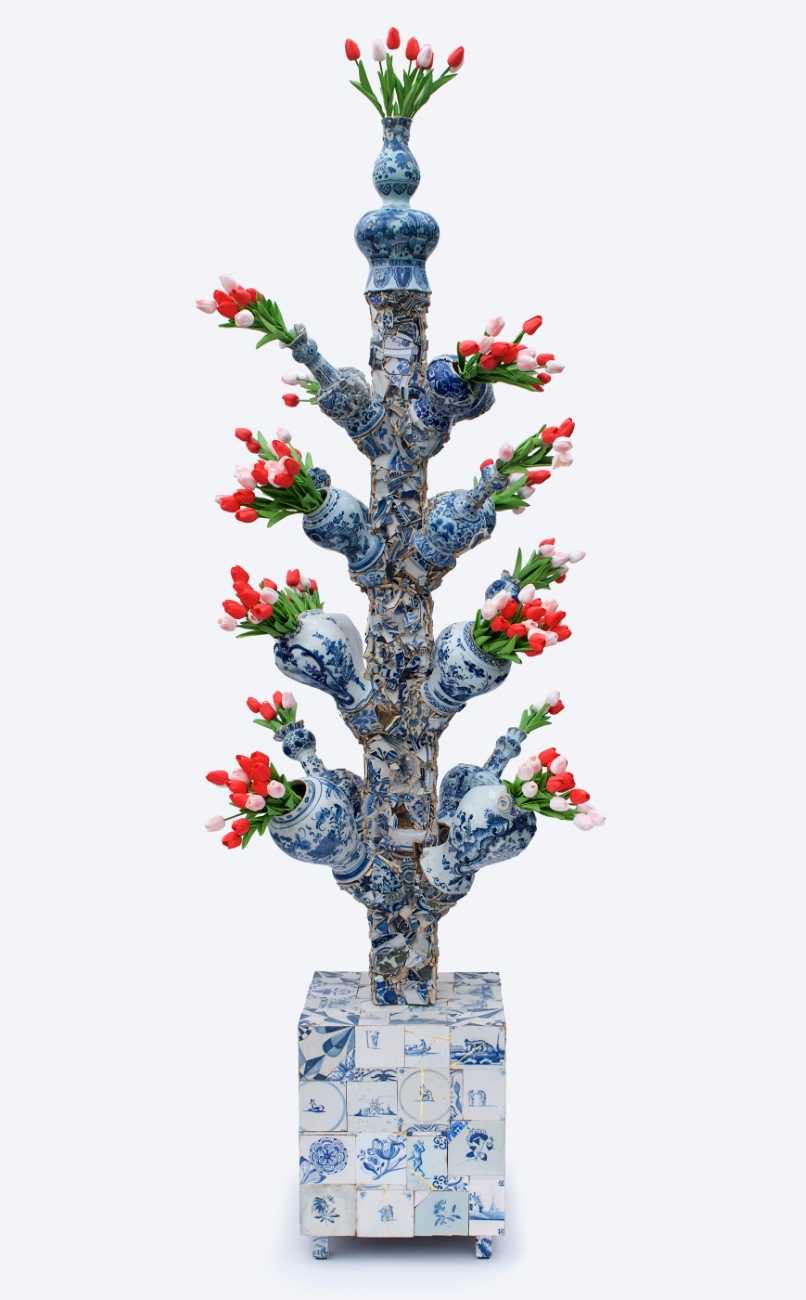
- The grande Tulipiere, 2024, Bouke de Vries, 270 x 60 cm, courtesy Bouke de Vries
- Homeland in polychrome, 2013, Bouke de Vries, 162 x 121 cm, Collection National Museum of Ceramics Princessehof
- Daddy, 2010, Bouke de Vries, 31 x 21 cm, courtesy Bouke de Vries
- Tafel stuk, 2024, Bouke de Vries, 93,5 x 29 cm, collectie Koninklijke Verzamelingen
- Deconstructed Neolithic Machang, 2019, Bouke de Vries, Neolithic (600-1000 BC) Chinese earthenware on bronze base and mixed media, 50 x 55 cm, courtesy Bouke de Vries
- The conversation 2, 2016, Bouke de Vries, 46 x 47,5 cm, courtesy Ron Mandos, Amsterdam
- Memory Vessel with wax seals, 2020, Bouke de Vries, 46 x 23,5 cm, private collection
- Memory Vessel 51, 2017, Bouke de Vries, 68 x 30 cm, courtesy Laurence Rundell
- Green Memory Vessel, 2021, Bouke de Vries, 47 x 22,5 cm, courtesy Ron Mandos, Amsterdam
- Memory Vessel/pair 4, 2015, Bouke de Vries, 41 x 23 cm, courtesy Ron Mandos, Amsterdam
- Marine Memory Vessel, 2016, Bouke de Vries, 27 x 19,5 cm, courtesy Ron Mandos, Amsterdam
- Marge Simpson as Guan Yin goddess of compassion, 2014, Bouke de Vries, 42 x 23 cm, courtesy Bouke de Vries.
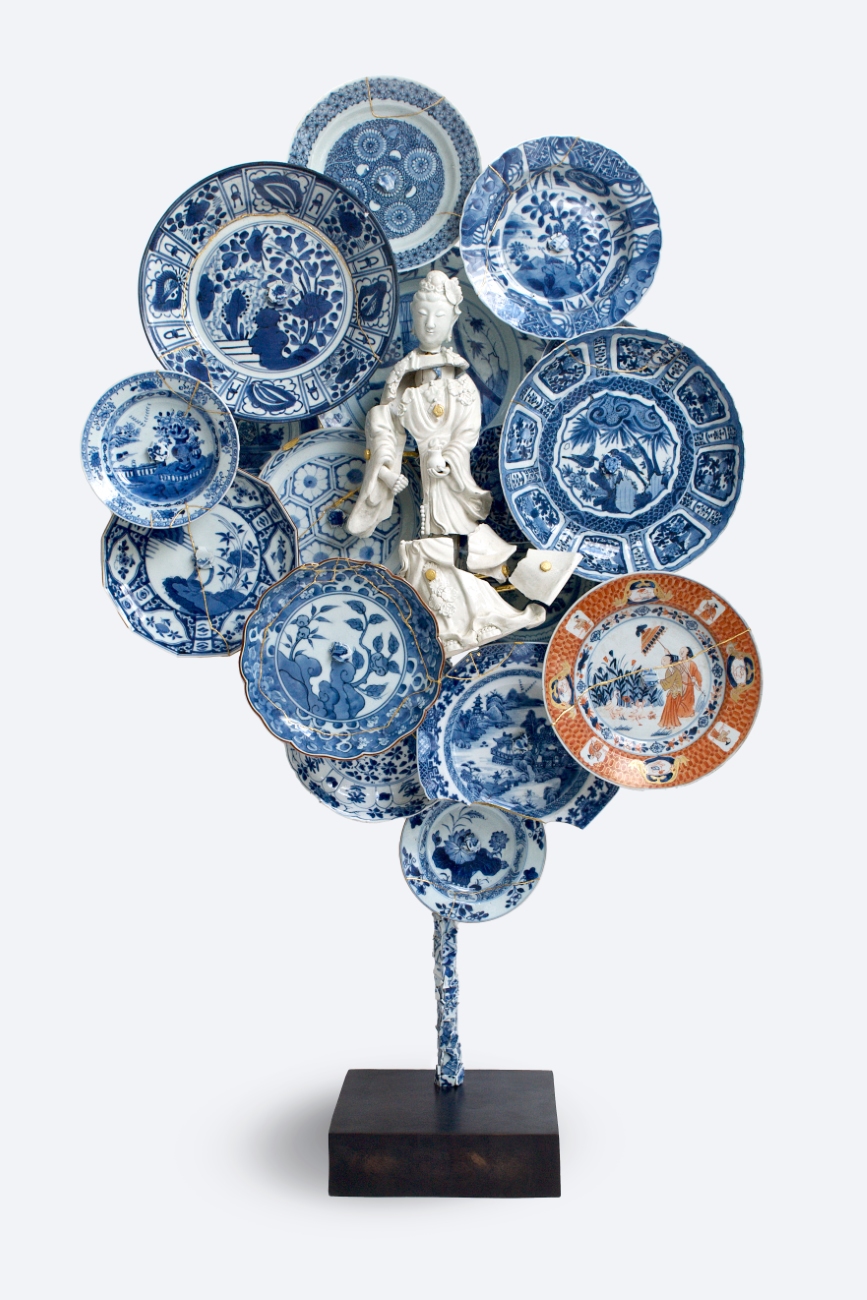
- Guan Yin with a ‘Pronk’ plate, 2024, Bouke de Vries, 117 x 69 cm, courtesy Bouke de Vries.
- Life is a mystery, 2017, Bouke de Vries, 141 x 39 cm, courtesy private collection
- Guan Yin in a cloud of shards, 2019, Bouke de Vries, 77 x 27 cm, courtesy Bouke de Vries.
- War & Pieces, as displayed in the National Museum of Ceramics Princessehof (Leeuwarden, NL), Courtesy of Bouke de Vries, Galerie Ron Mandos, Amsterdam. Photo by Jacob van Essen/ Fotobureau Hoge Noorden
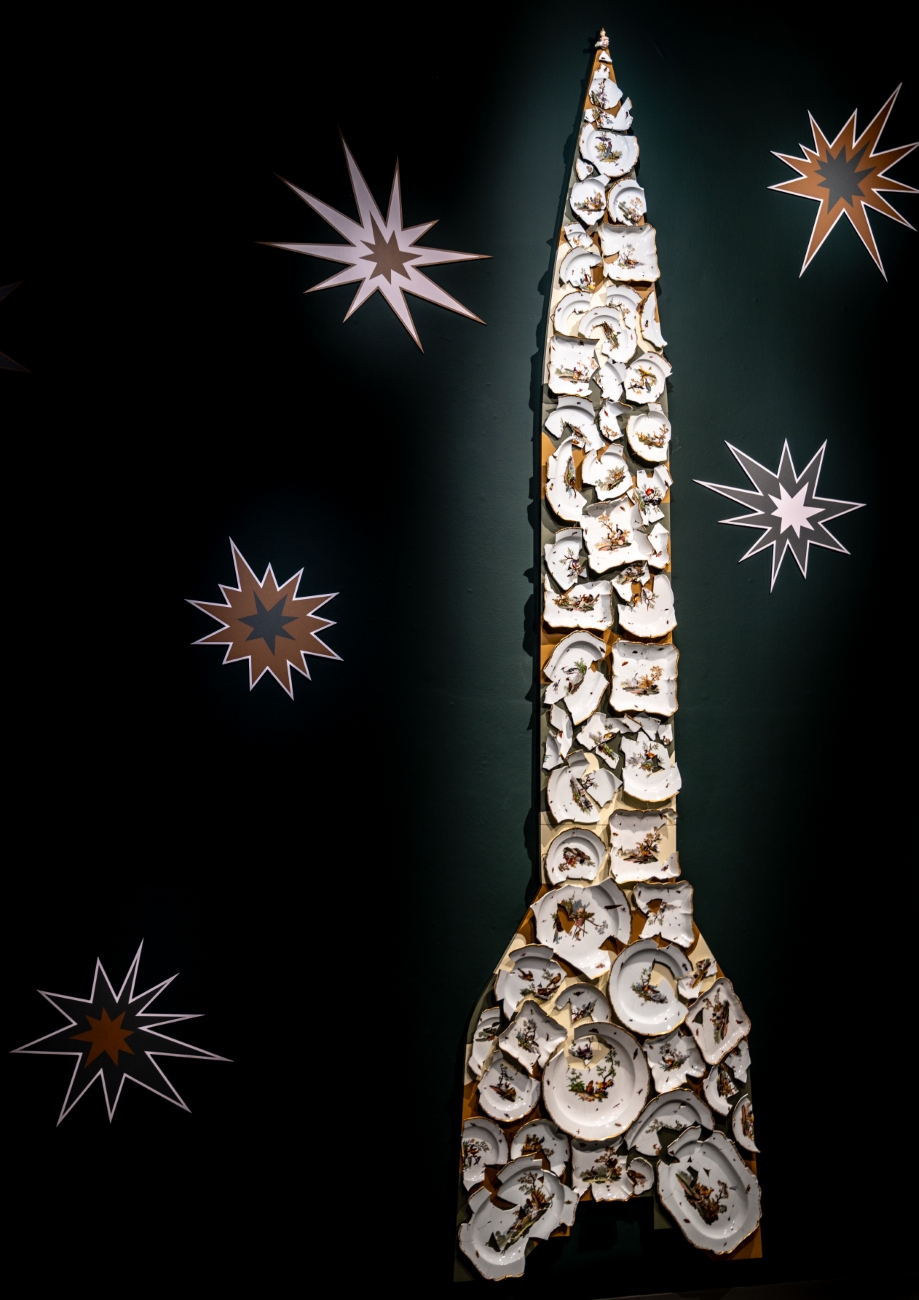
- Porcelain Vengeance (V2 Rocket), 2024, 18e-eeuws Meissen-porselein, messing, gemengd materiaal, as displayed in the National Museum of Ceramics Princessehof (Leeuwarden, NL), Courtesy of Bouke de Vries, Galerie Ron Mandos, Amsterdam. Photo by Jacob van Essen/ Fotobureau Hoge Noorden