
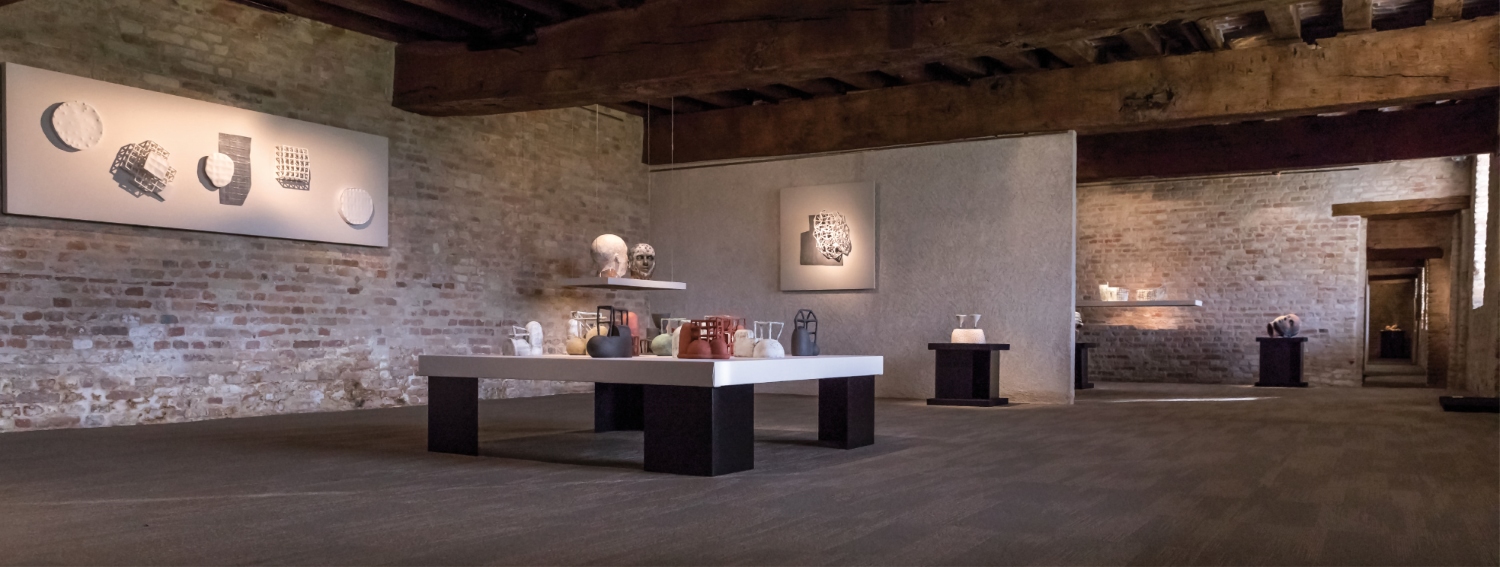
Daphne Corregan: Three places and between at Galerie Capazza, Nançay
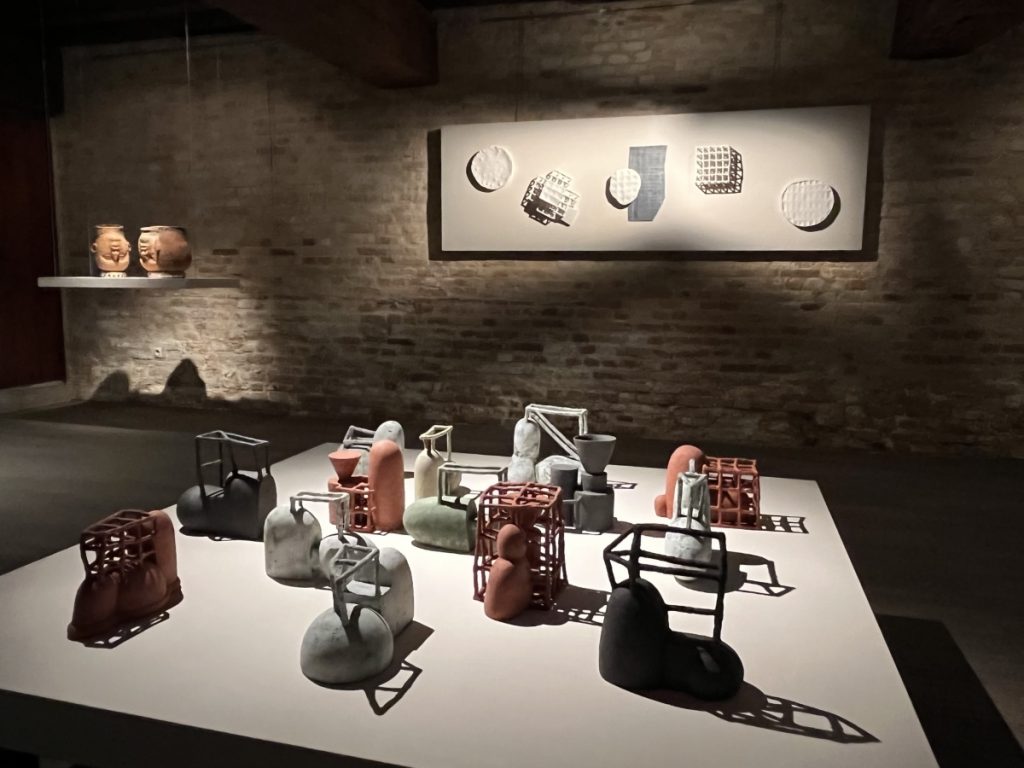
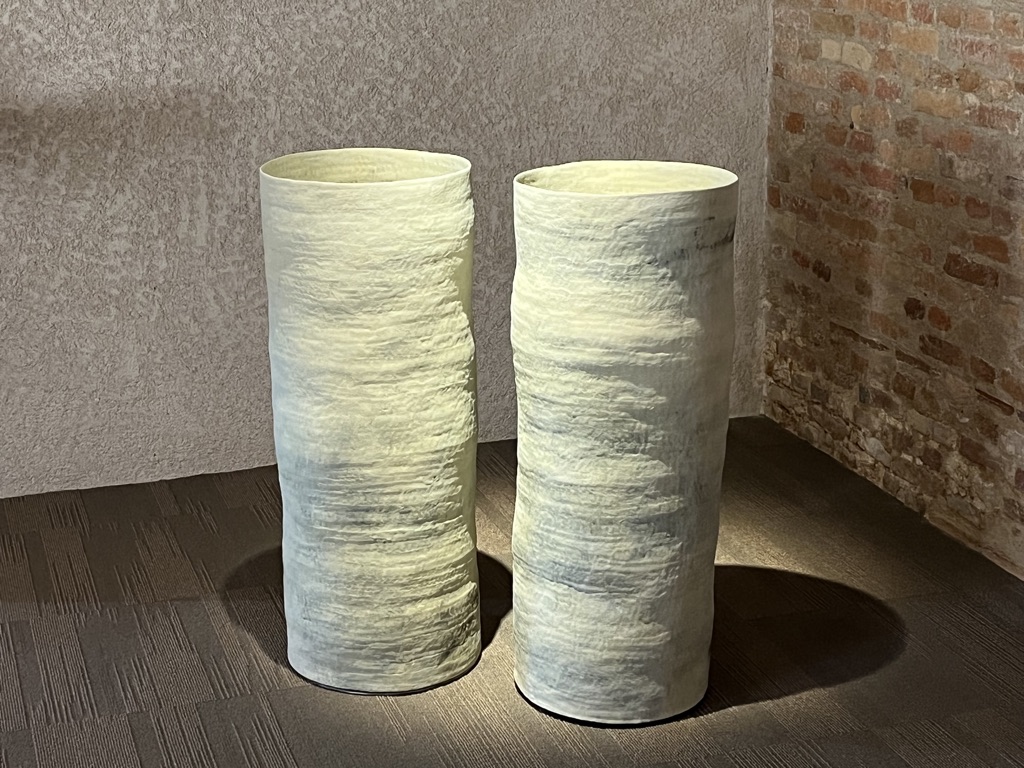
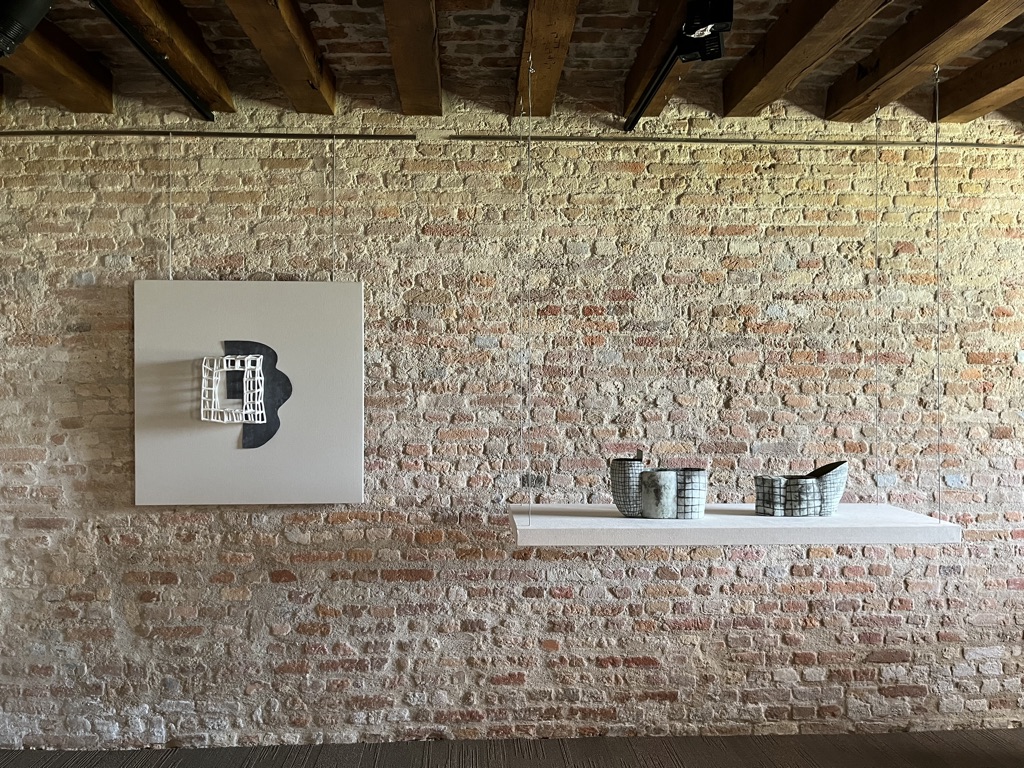
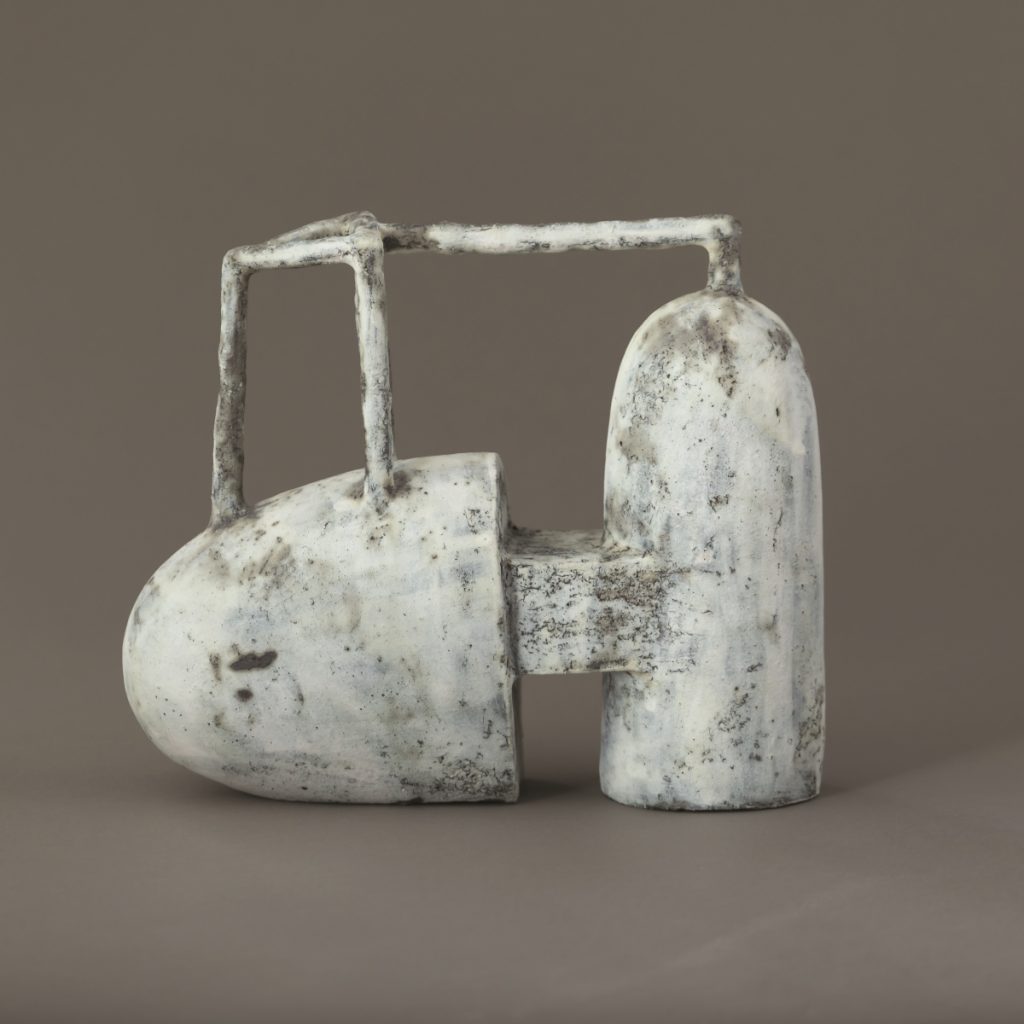
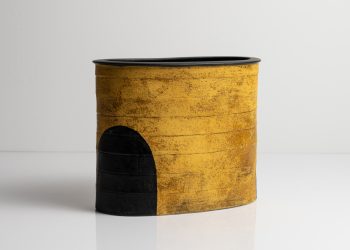
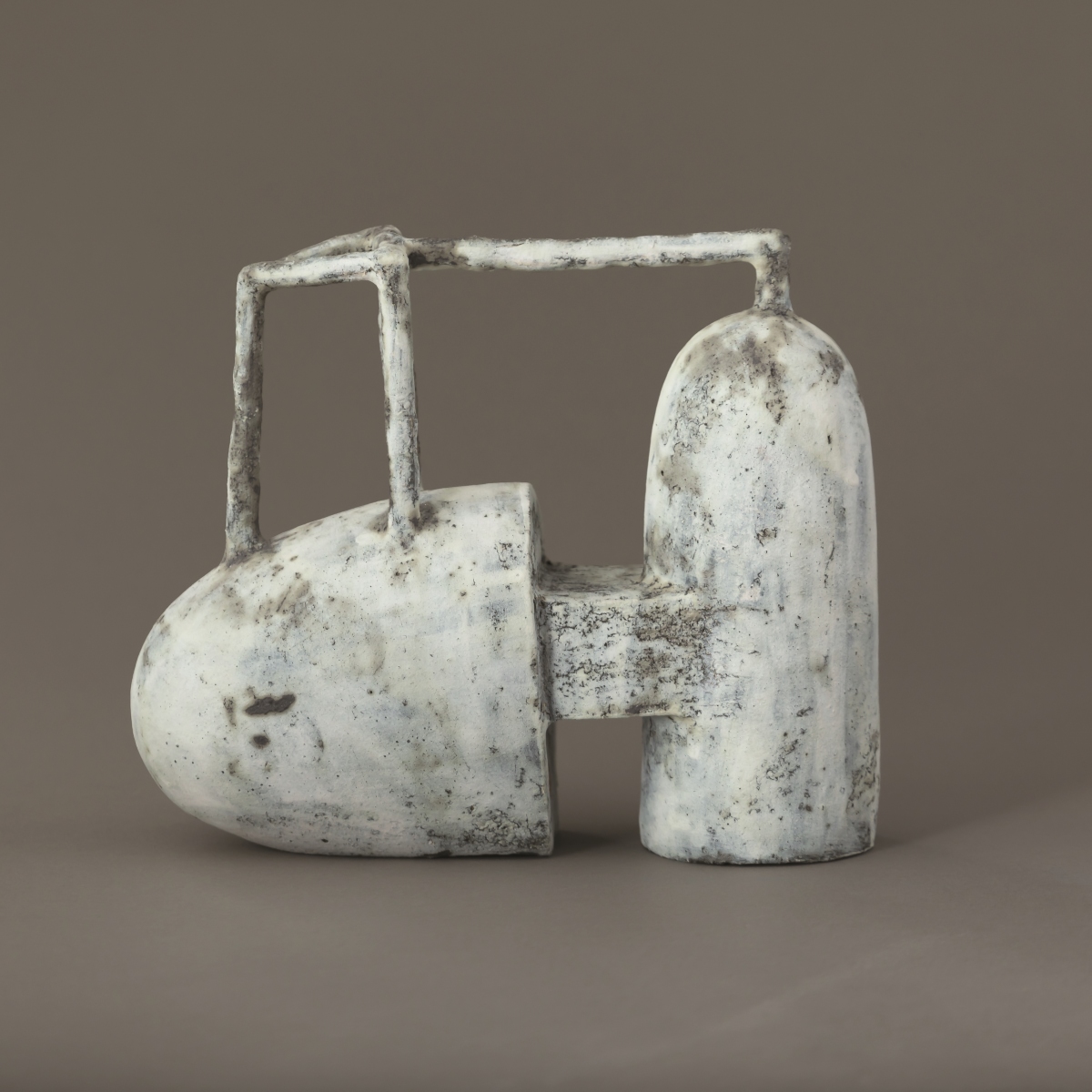
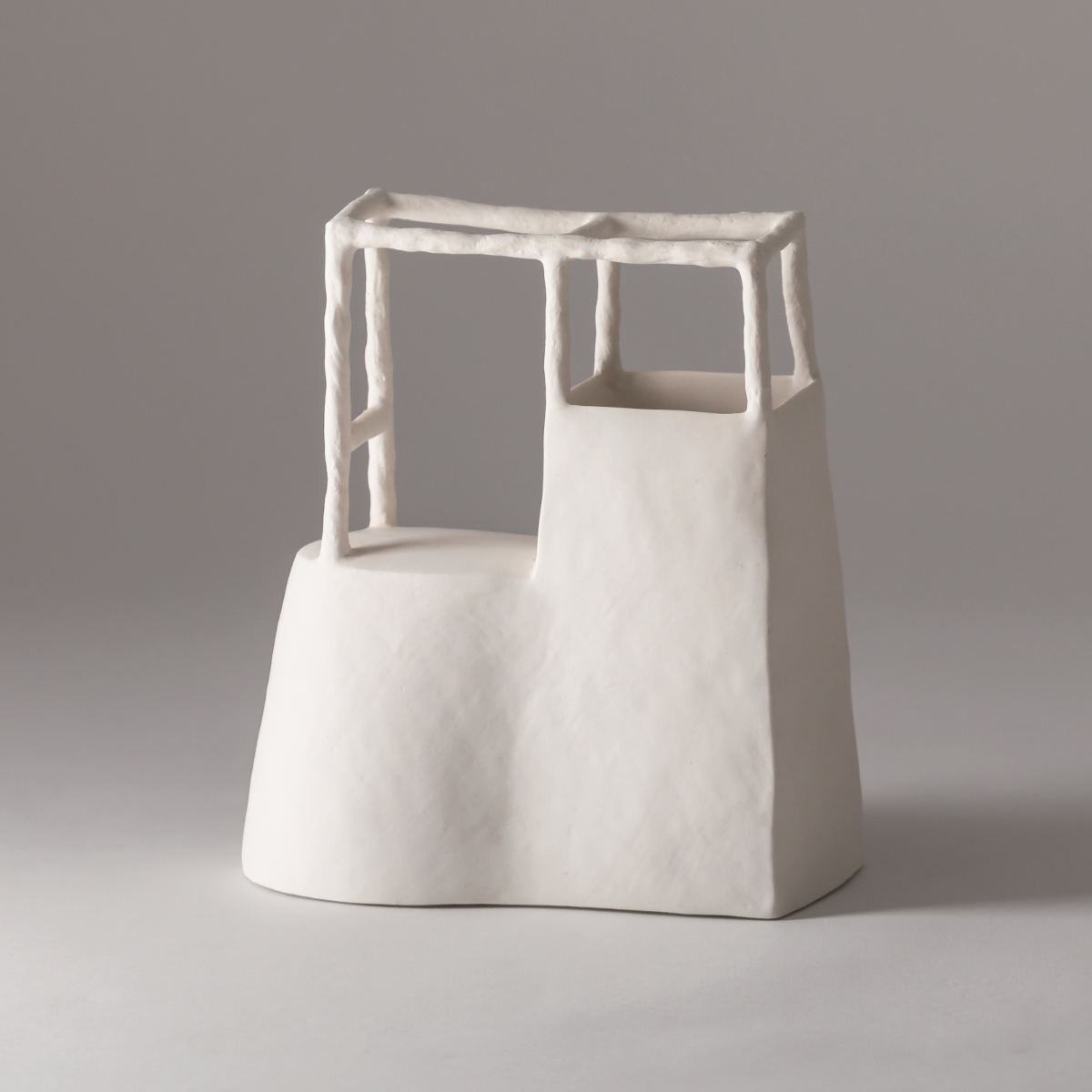
Architecture, 2019, stoneware, 19 x 22 x 8 cm 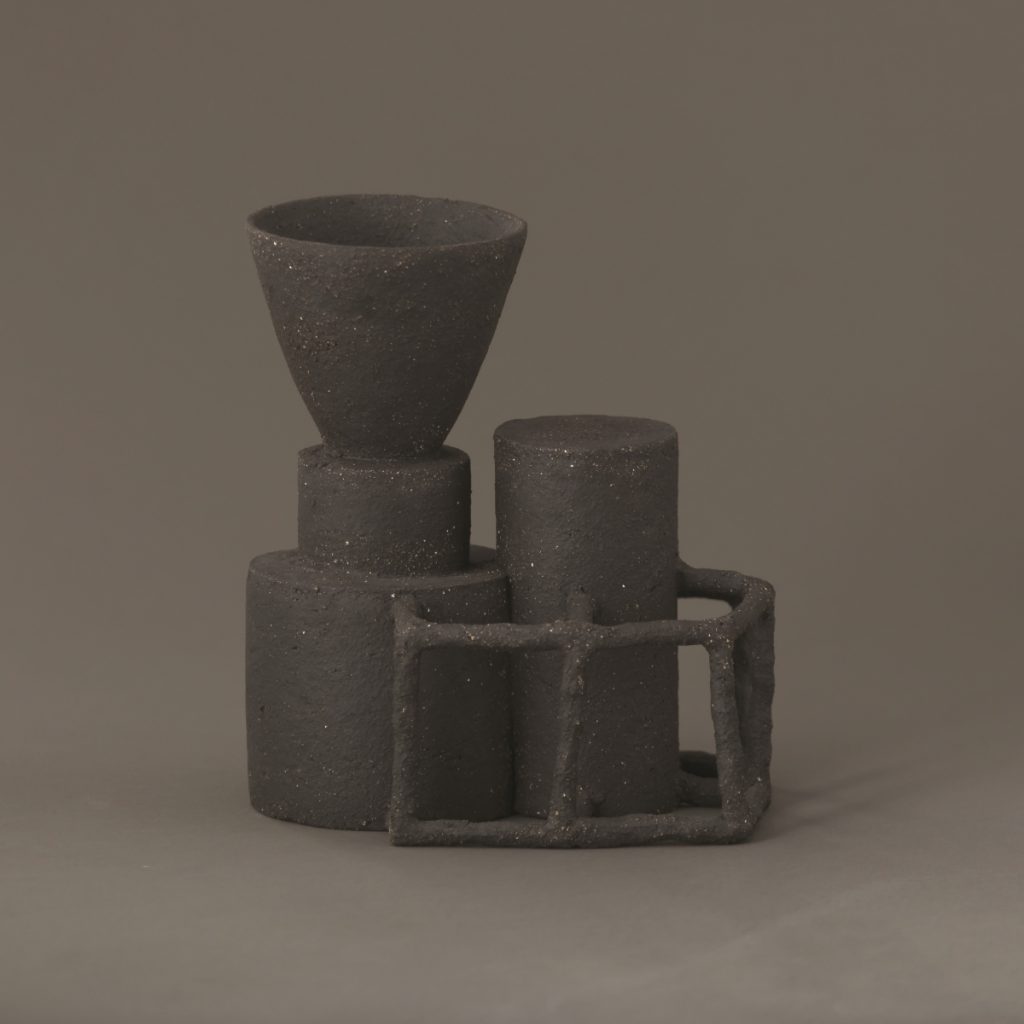
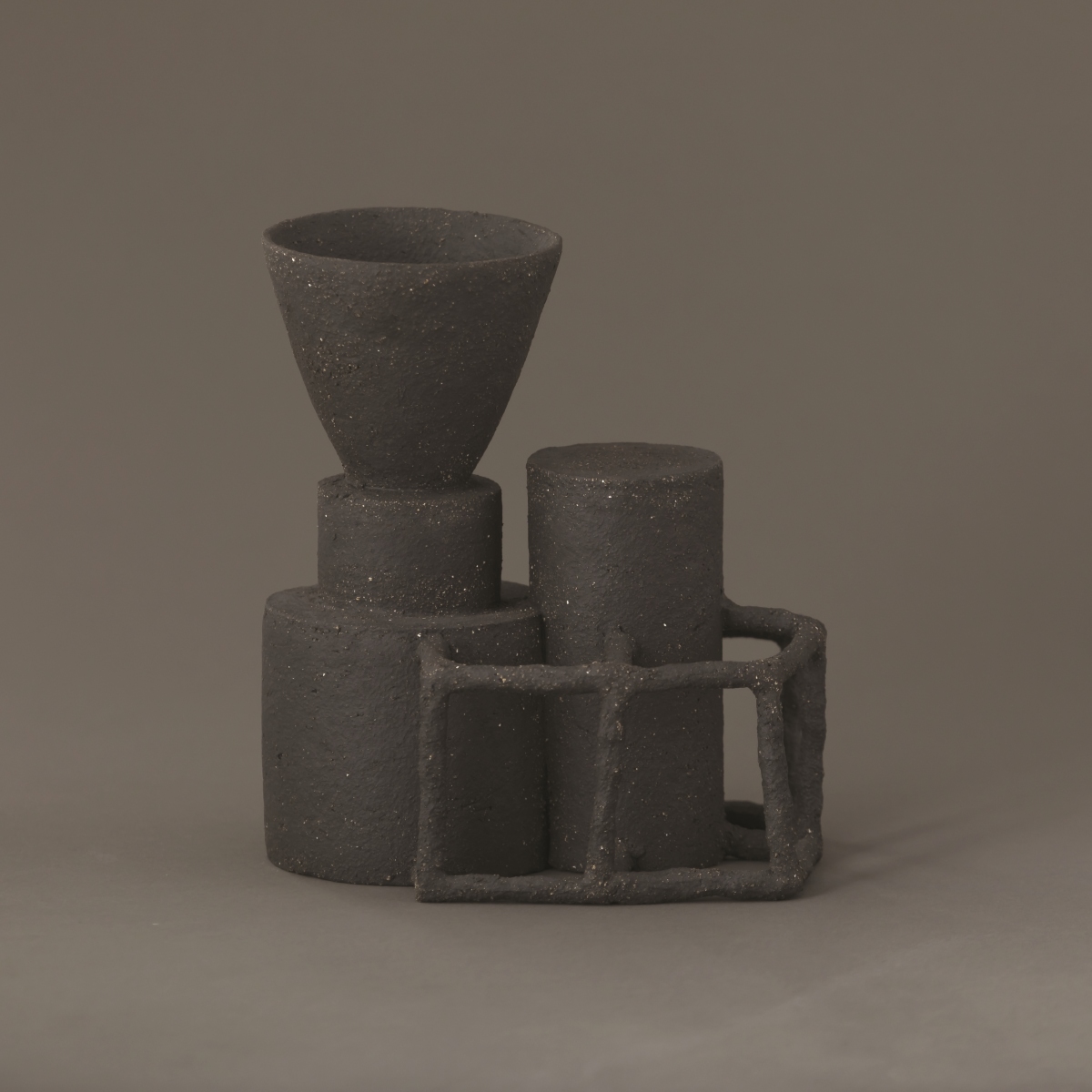
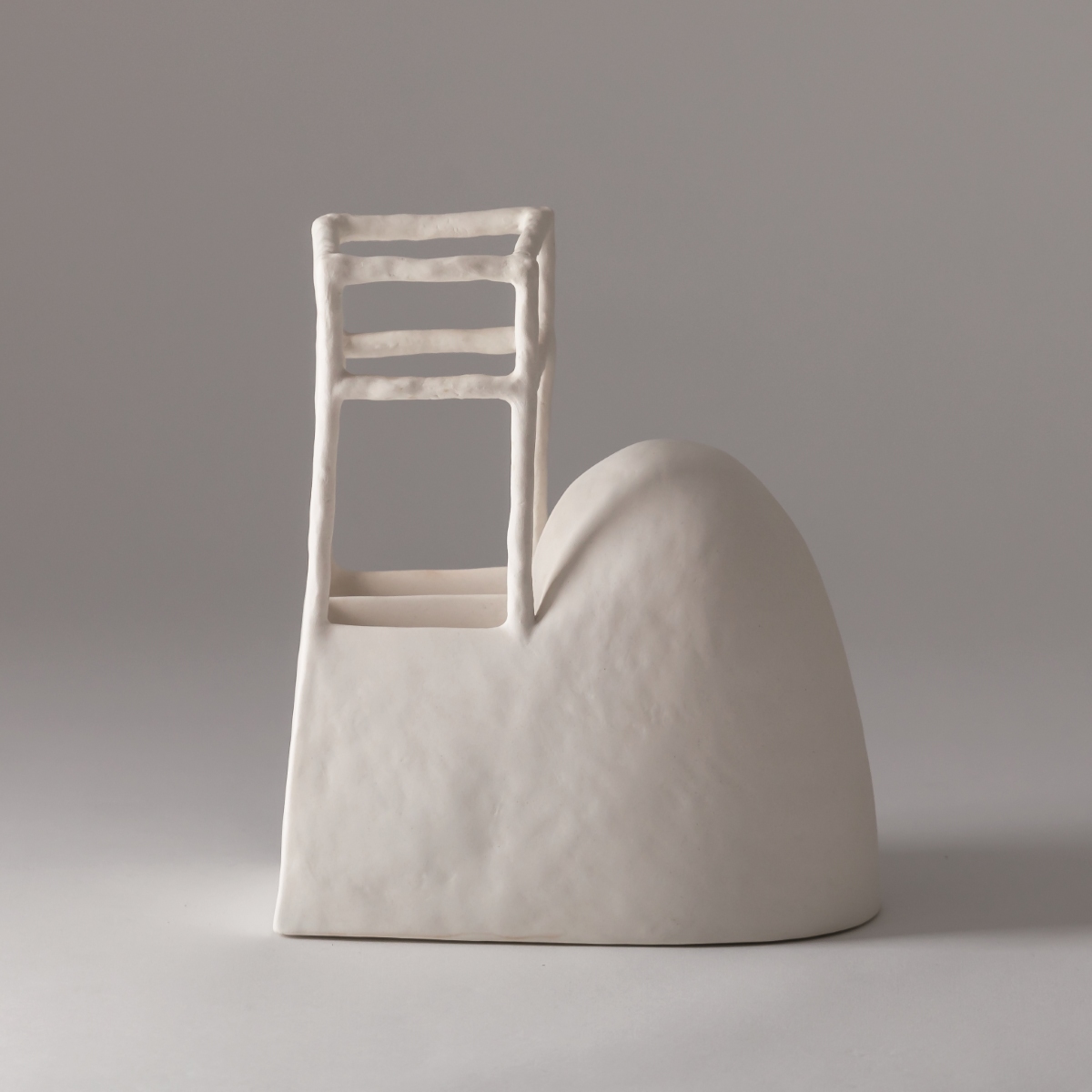
Architecture, 2019, black stoneware, 20 x 17,5 x 14,5 cm 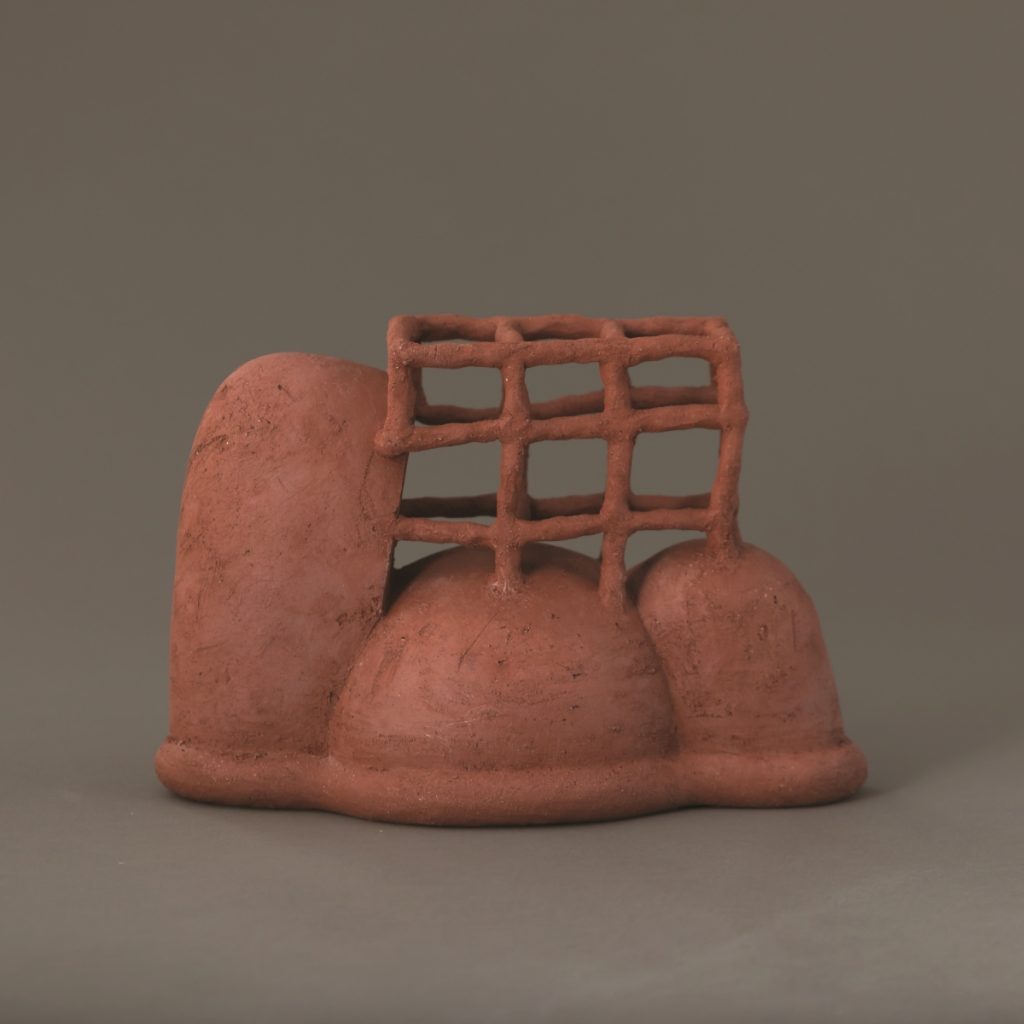
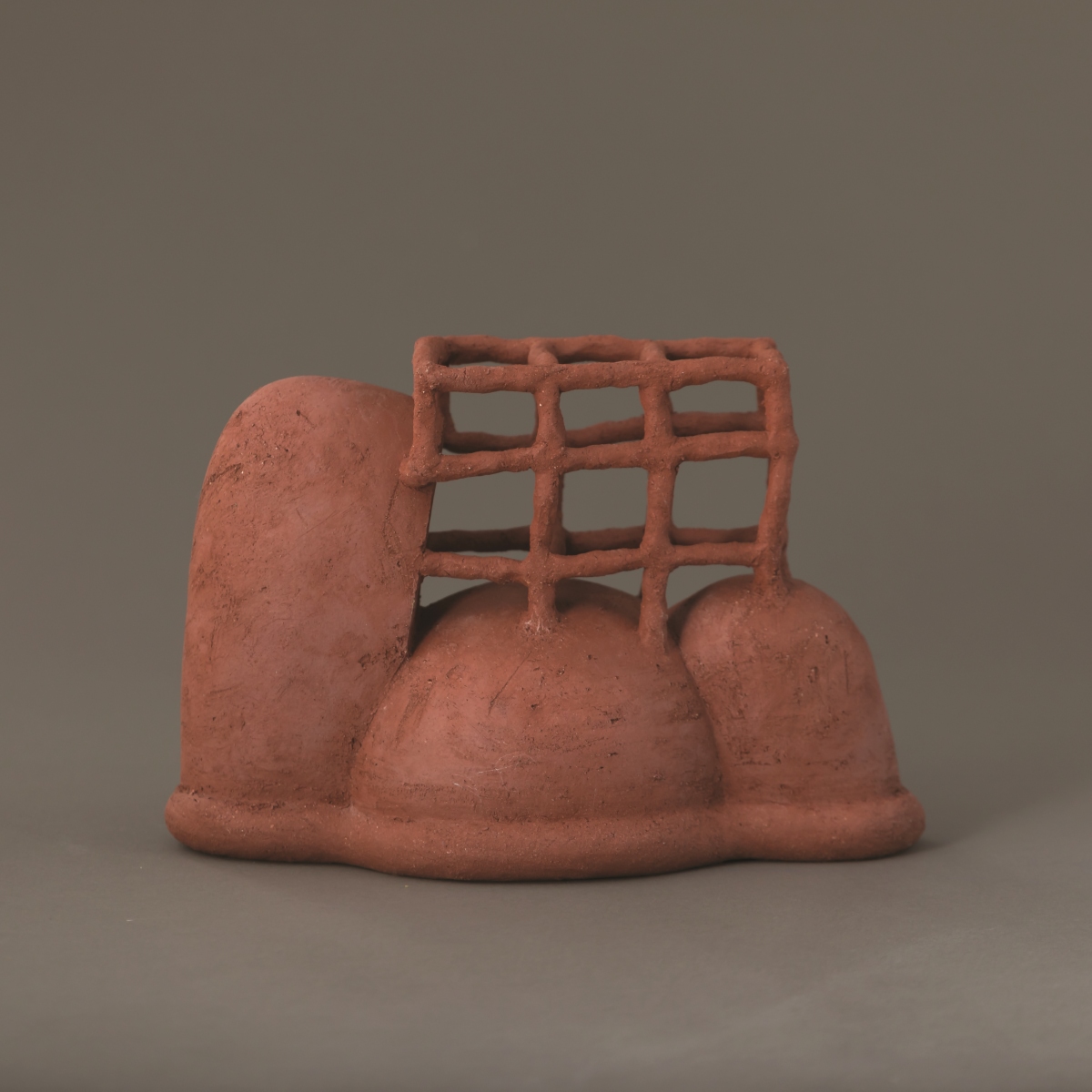
Architecture, 2019, terracotta, 16 x 22 x 11 cm 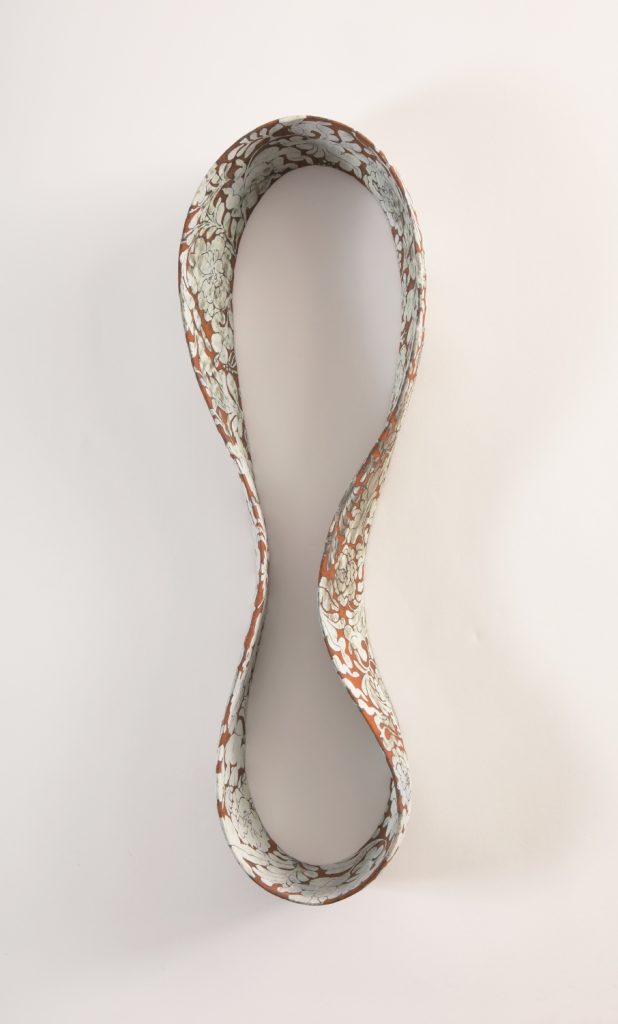
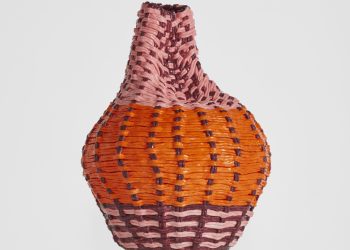
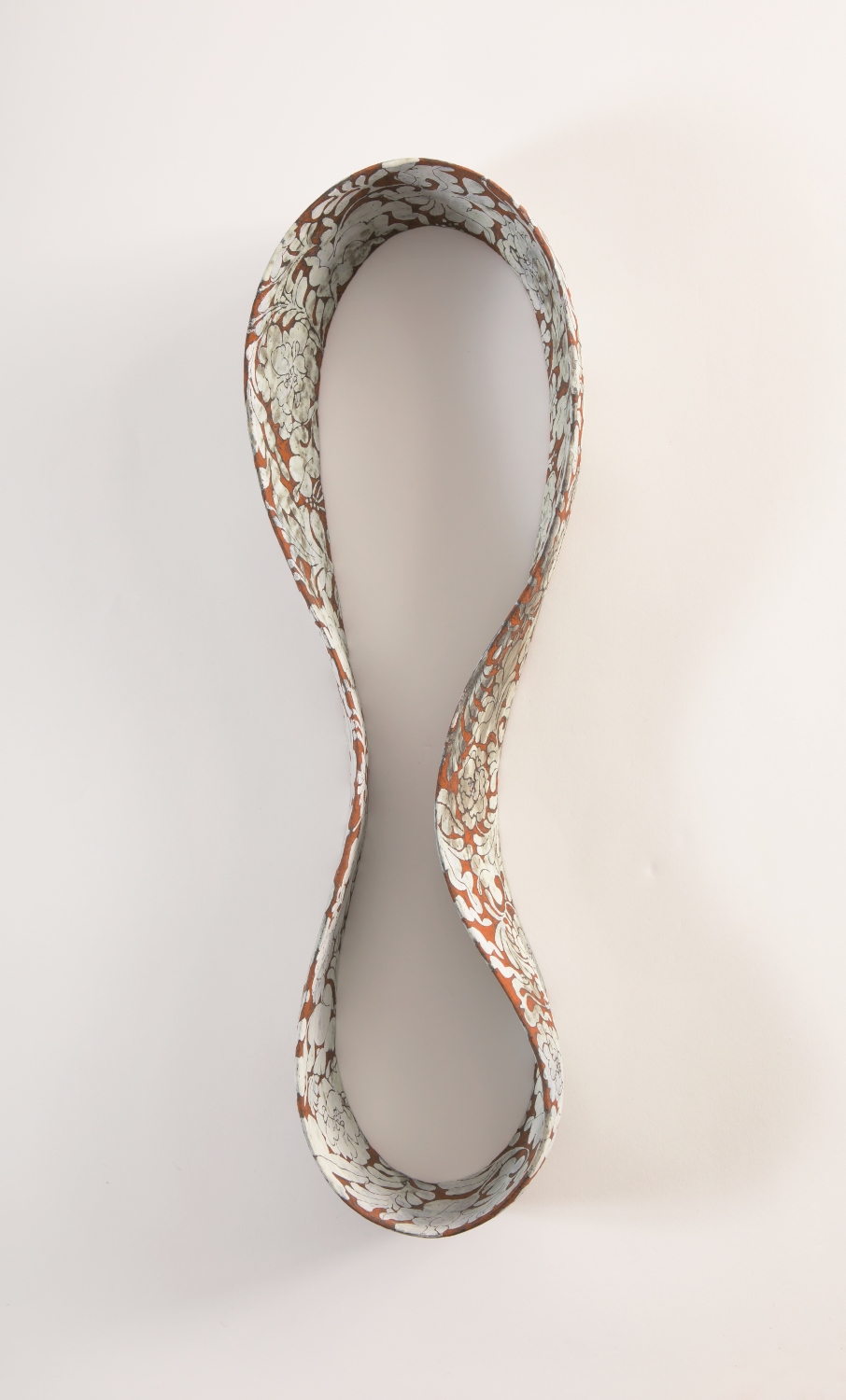
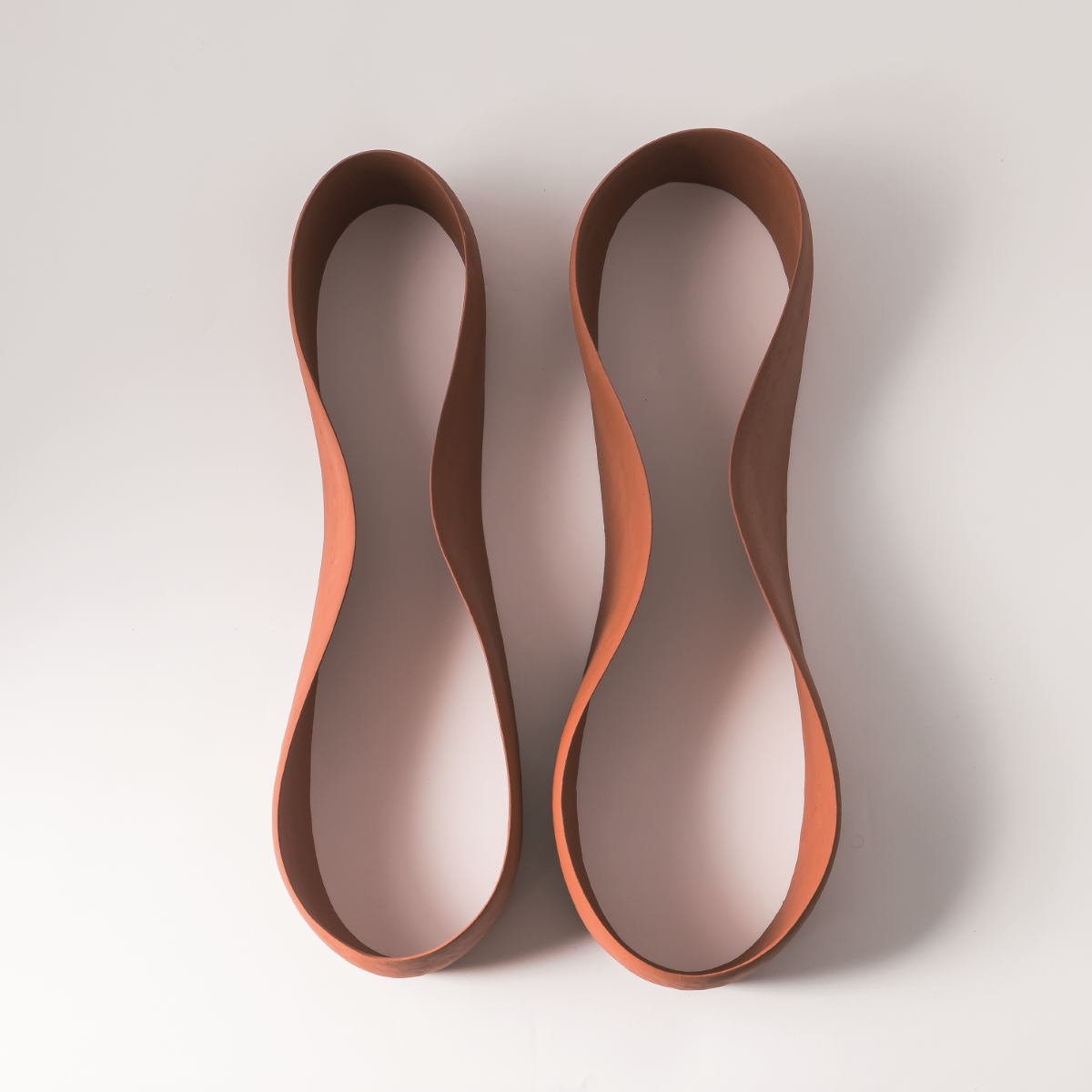
Elastic gravé, 2021, terracotta, 58,5 x 18,5 x 7,5 cm 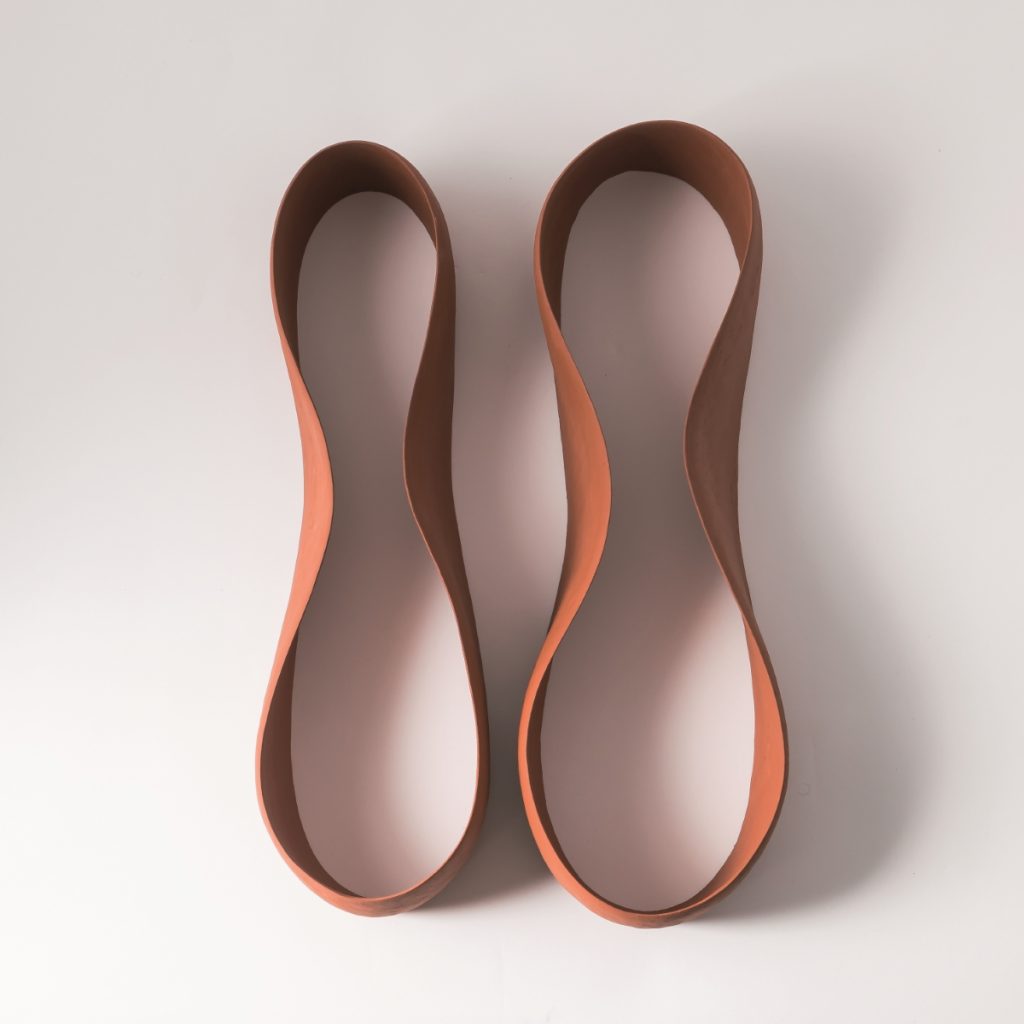
Elastics, 2021, terracotta, 59 x 39 x 11 cm 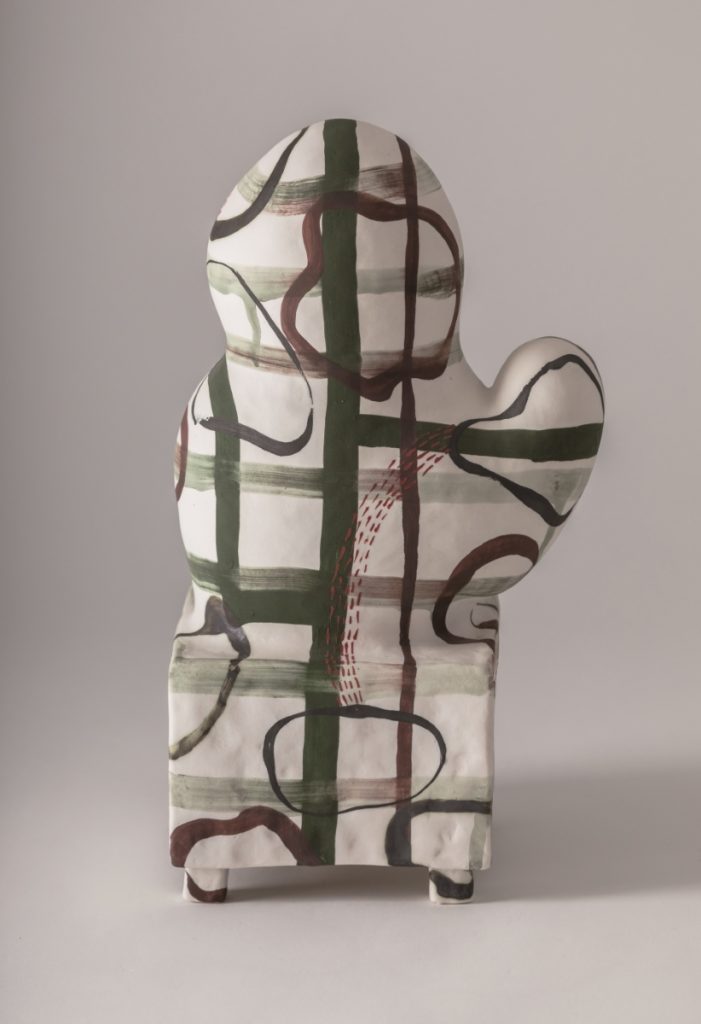
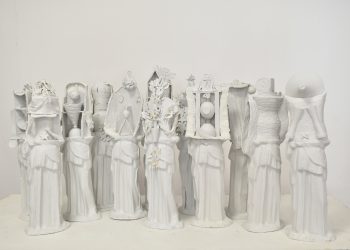
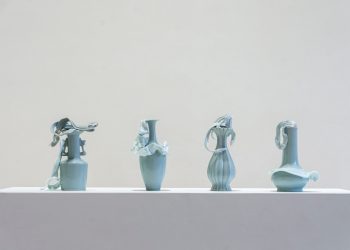
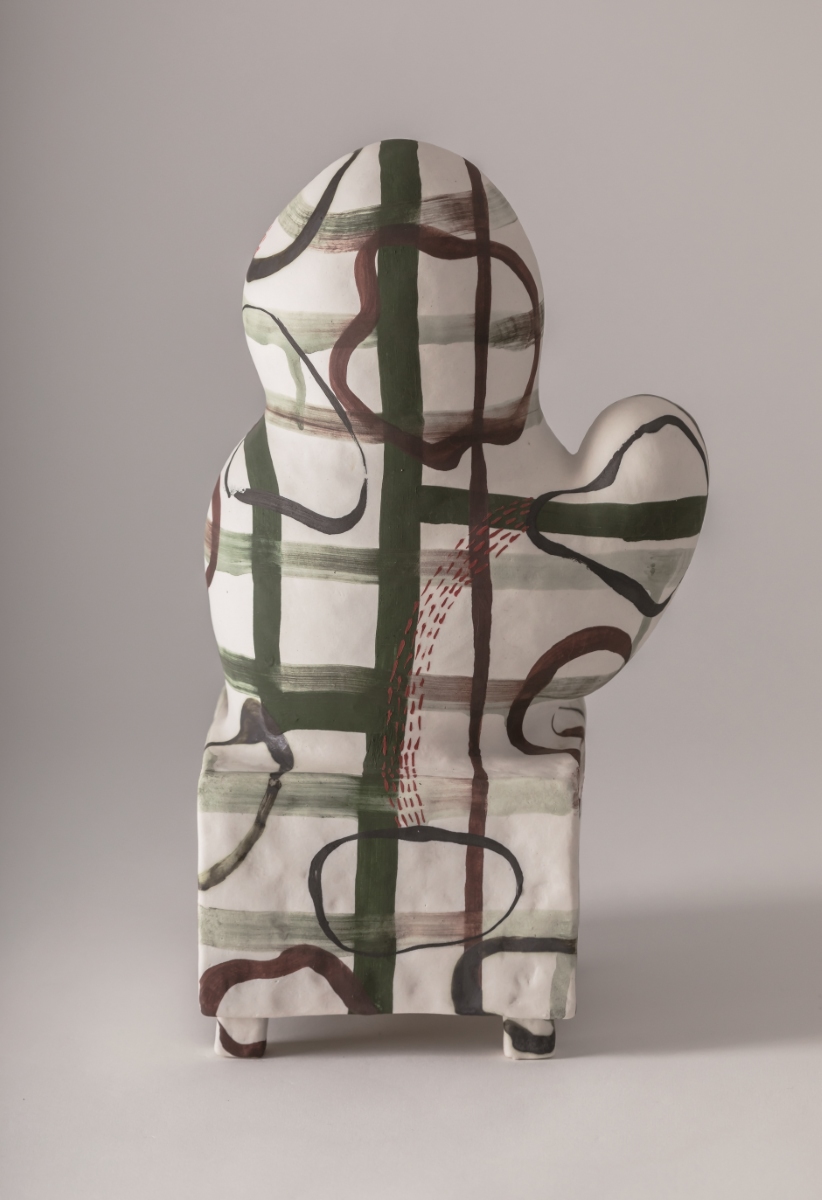
Guardian 4, 2018, porcelain, 33 x 14 x 18 cm 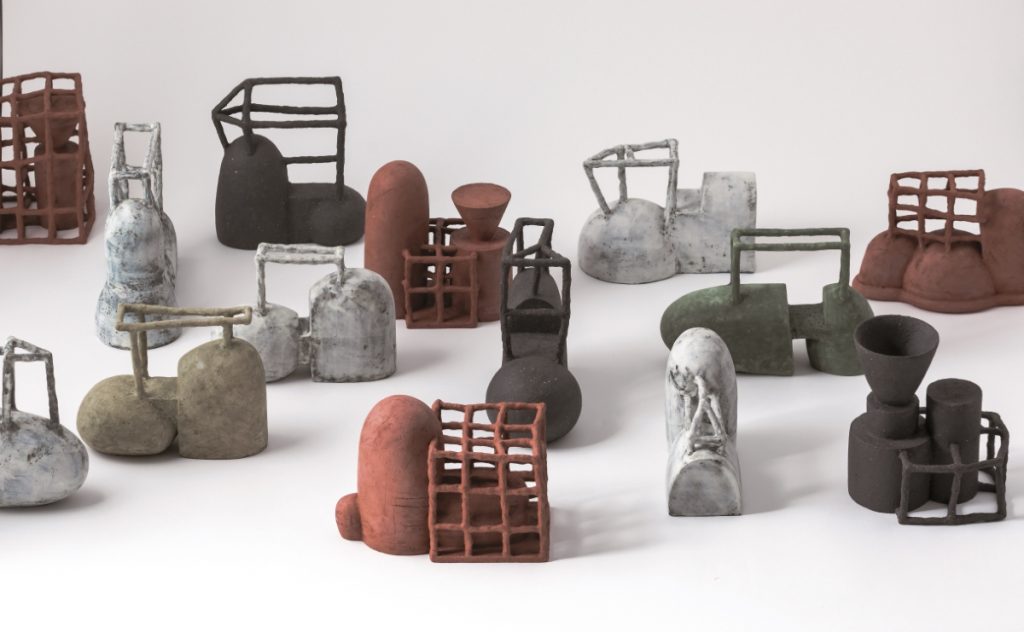
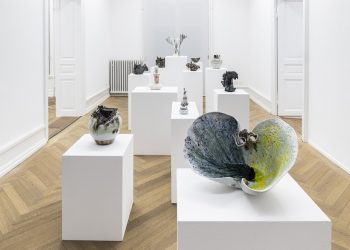
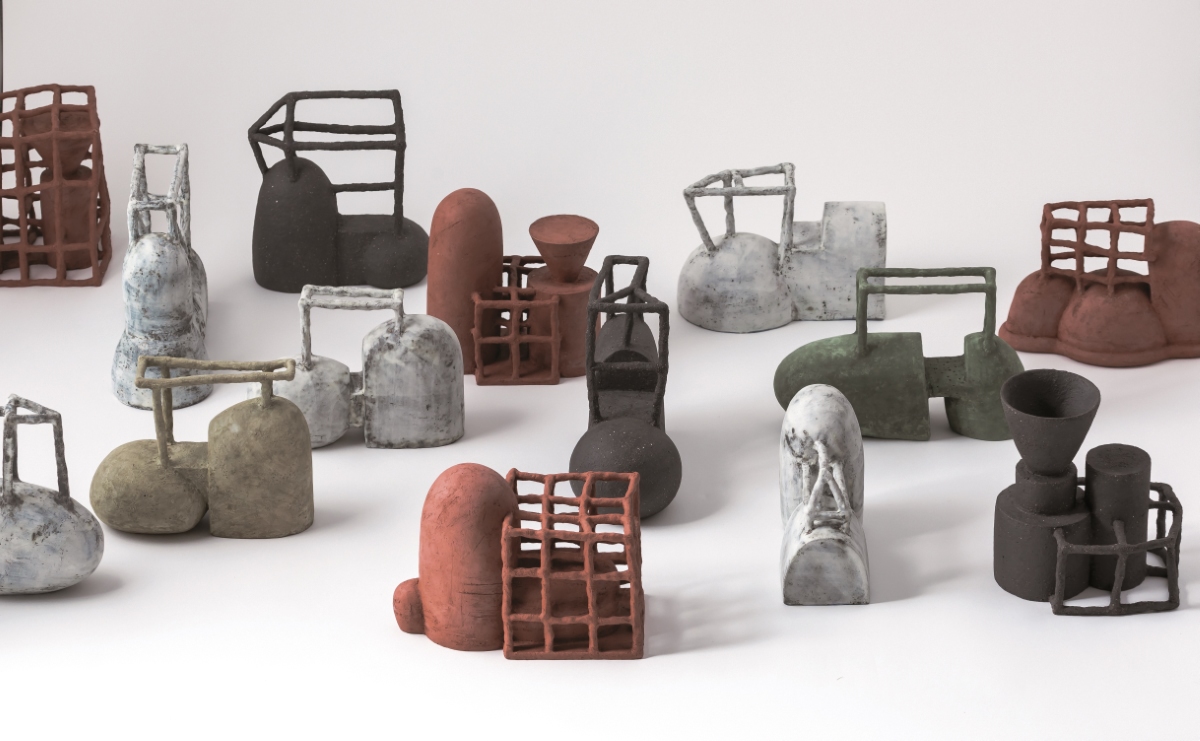
Architectures (s), 2019, terracotta, max H 22 cm 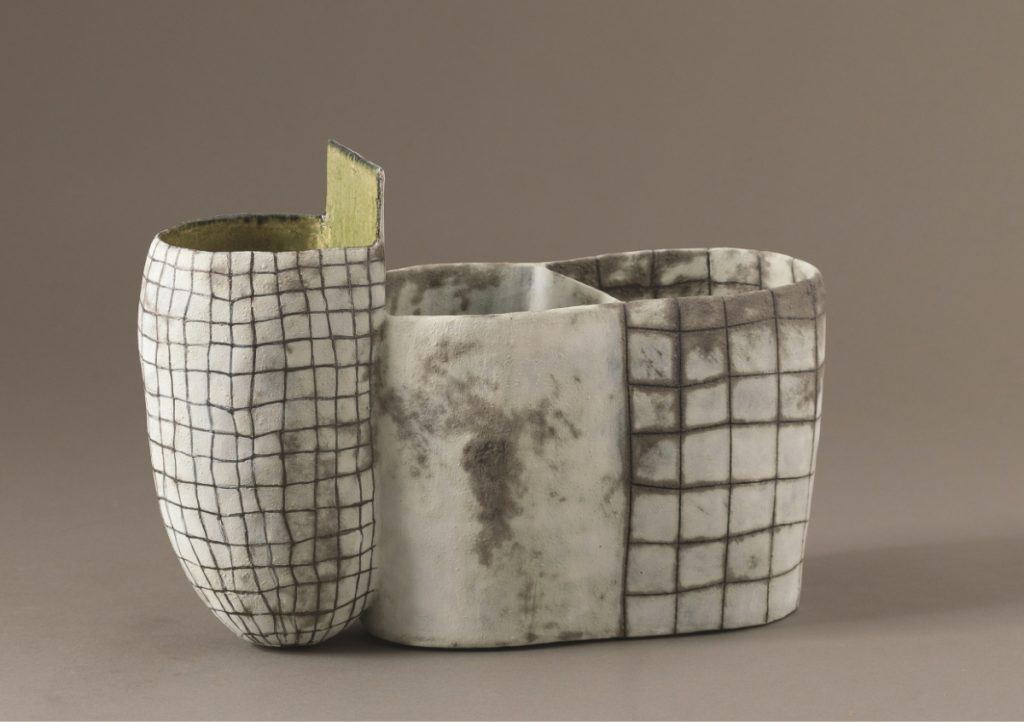
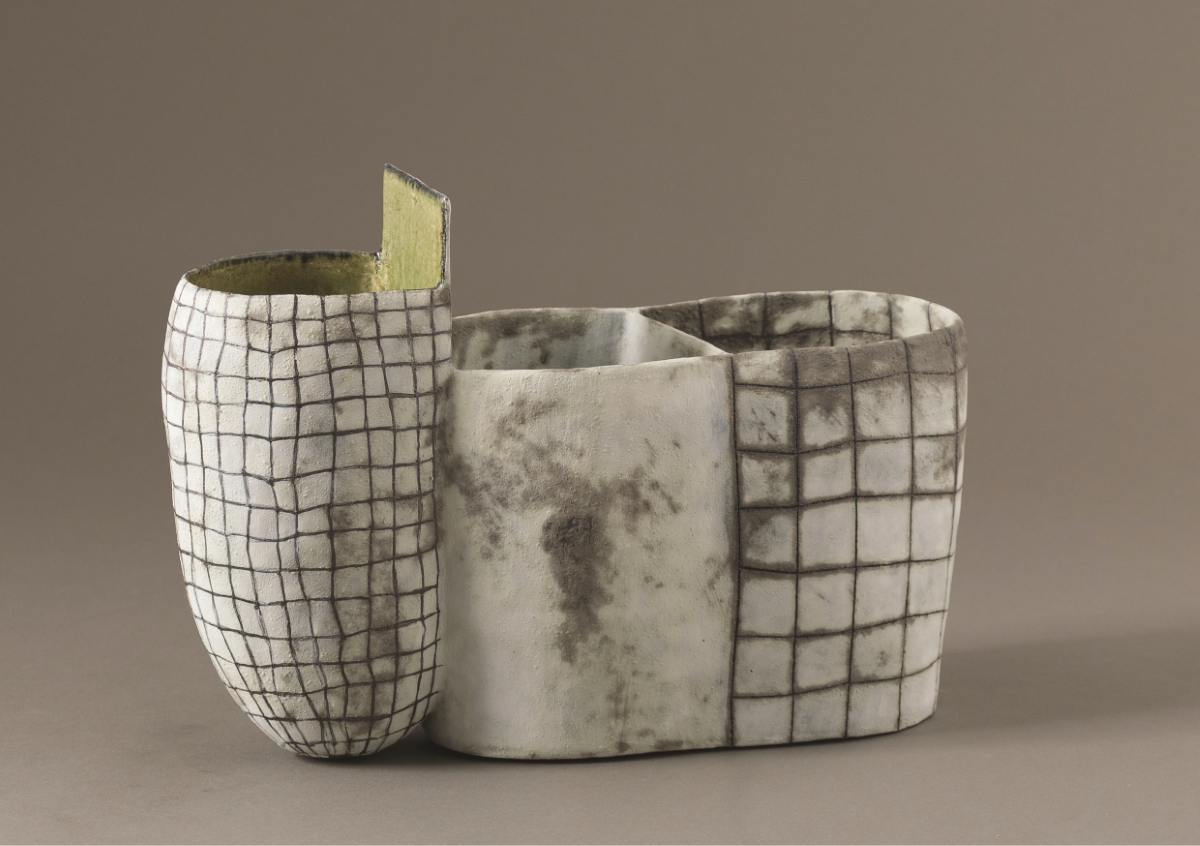
Gridded spaces, 2019, stoneware, 24 x 31 x 12 cm 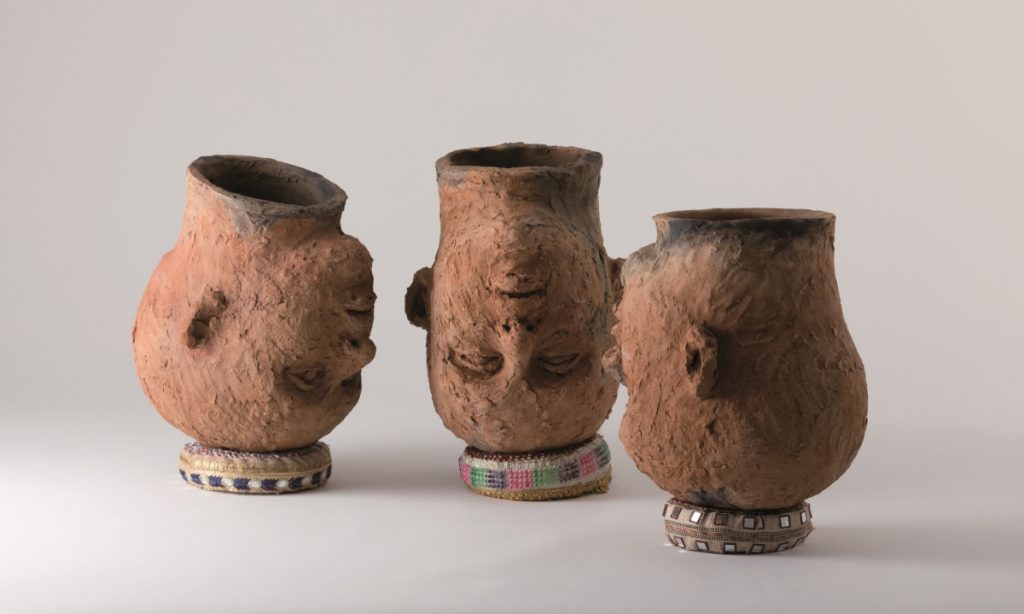
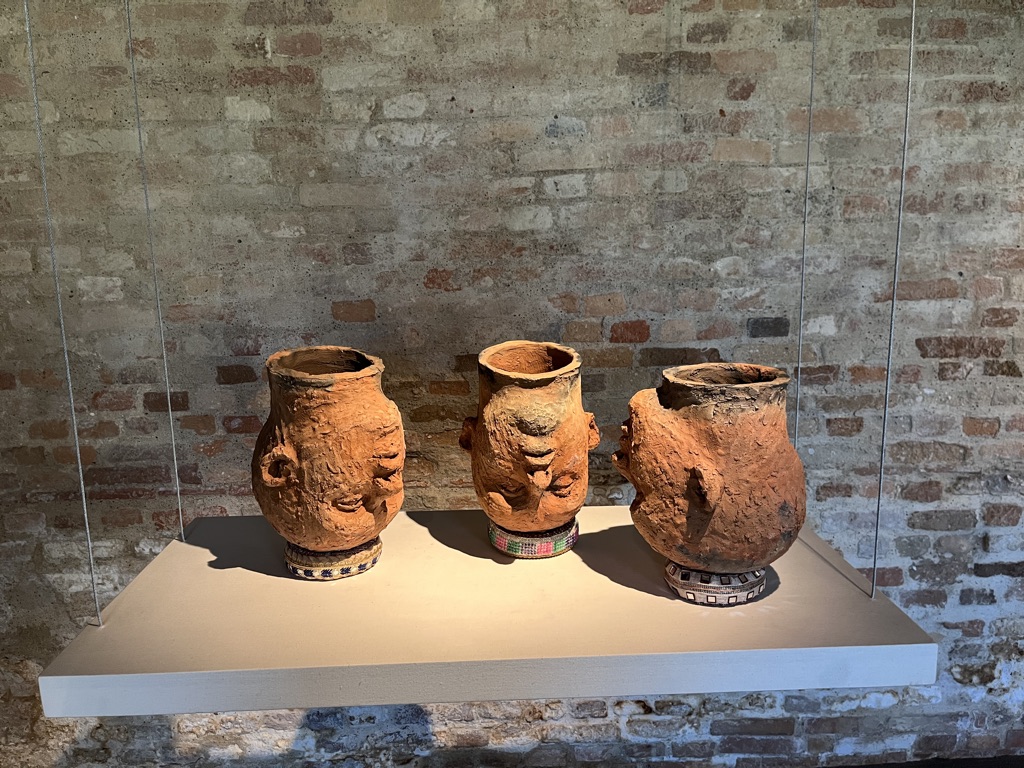
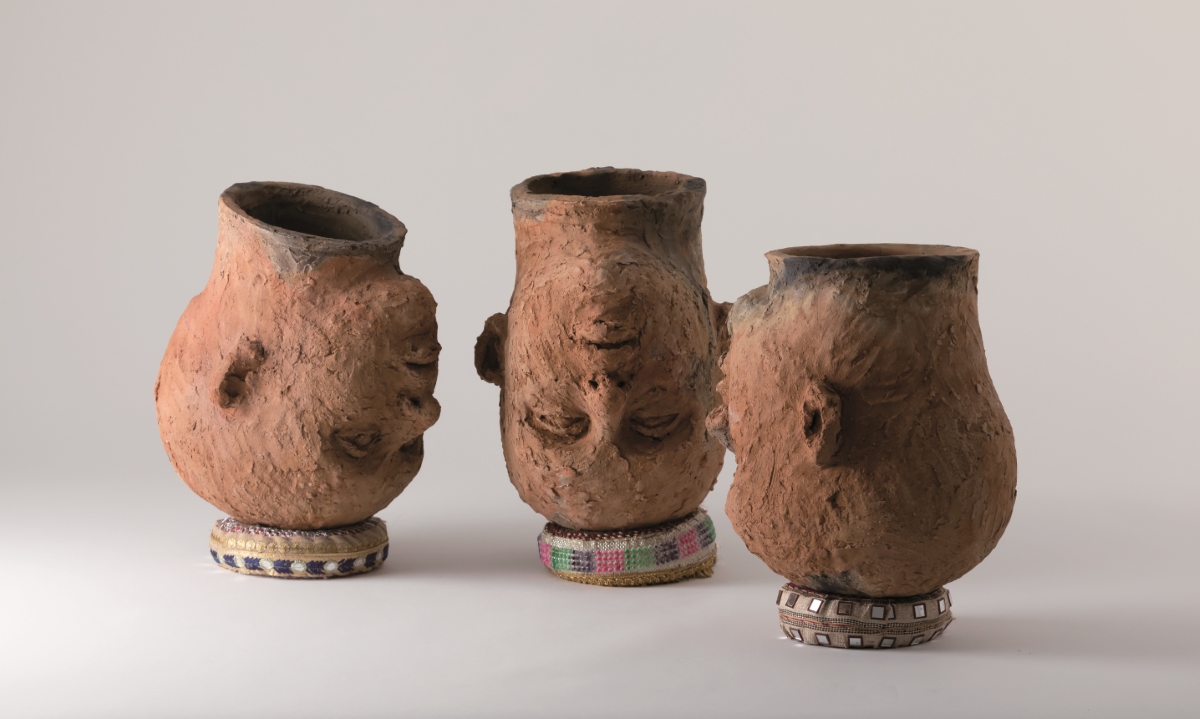
Tête(s) indienne(s), 2020, terracotta, each 32 x 25 x 22 cm 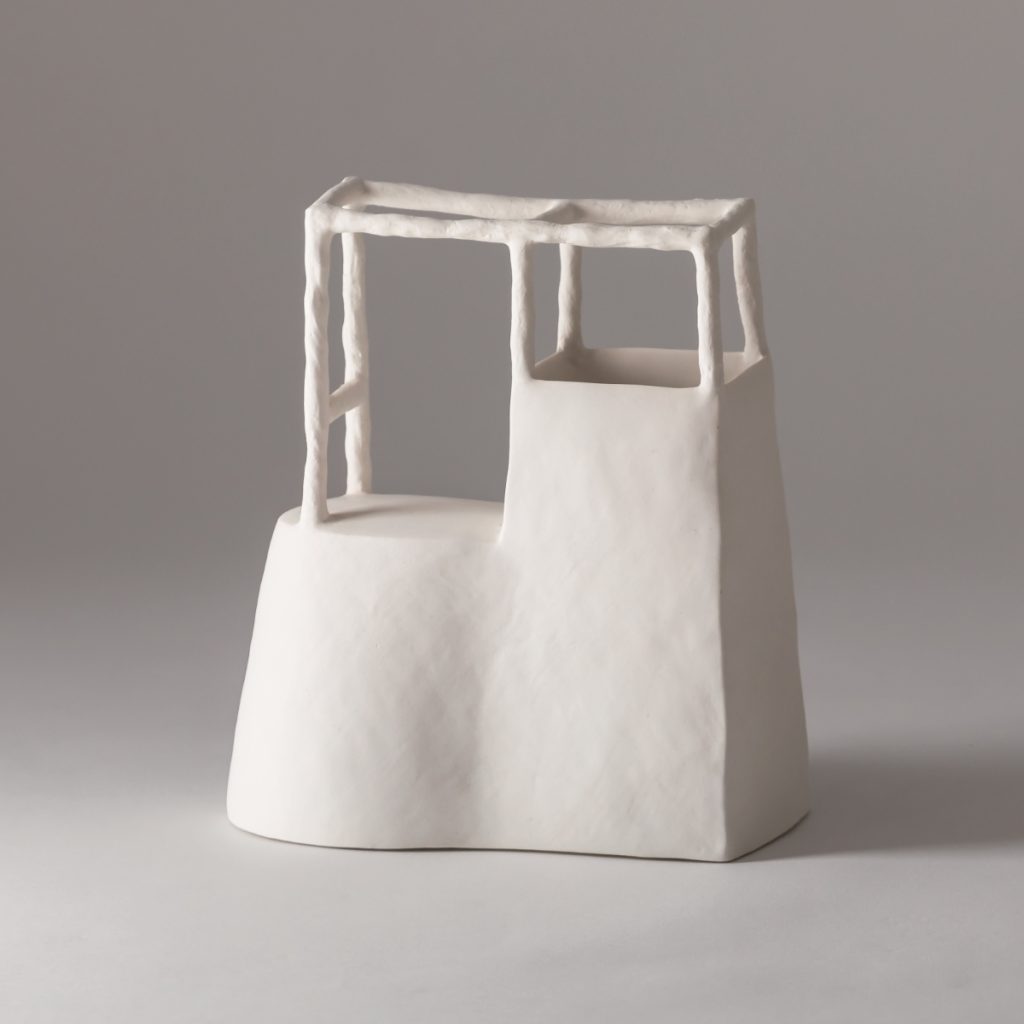
Sans titre, 2020, porcelain, 23 x 20 x 11 cm 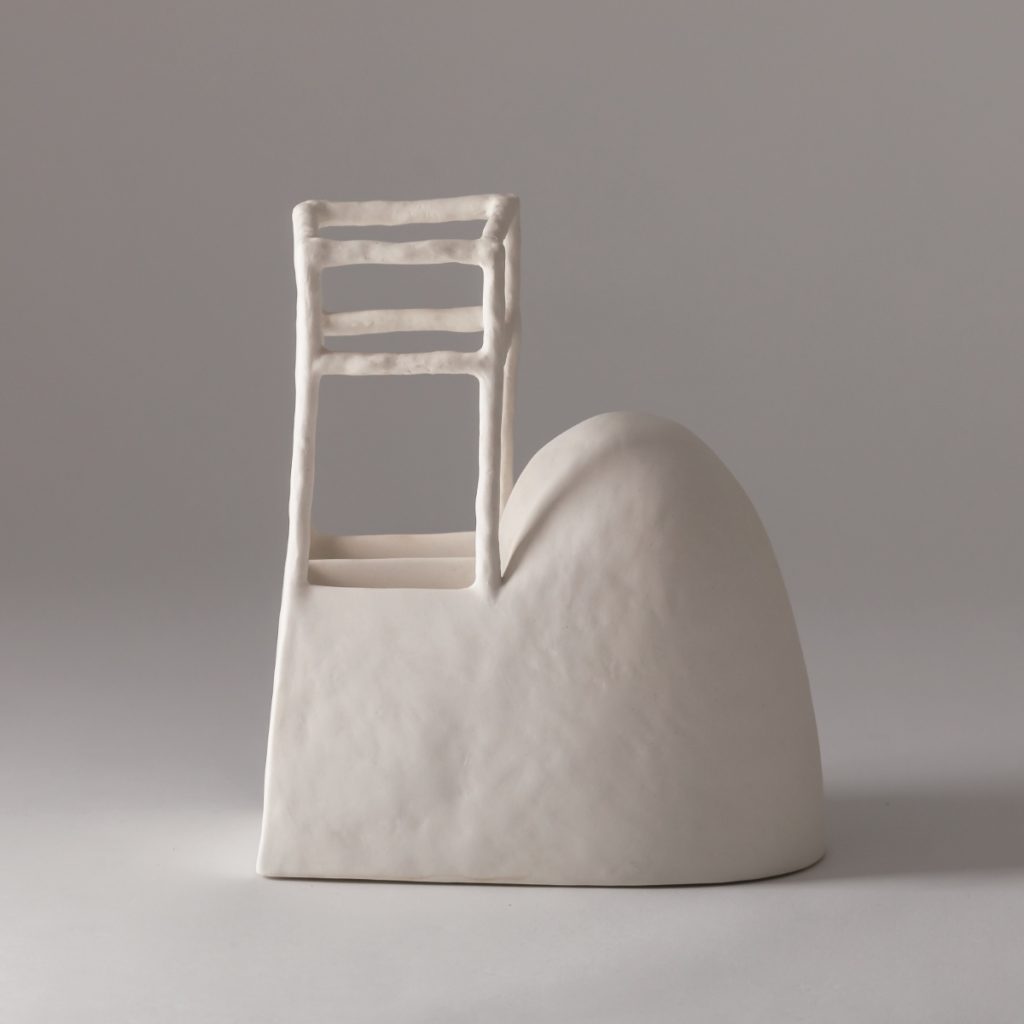
Sans titre, 2020, porcelain, 23 x 20 x 12 cm 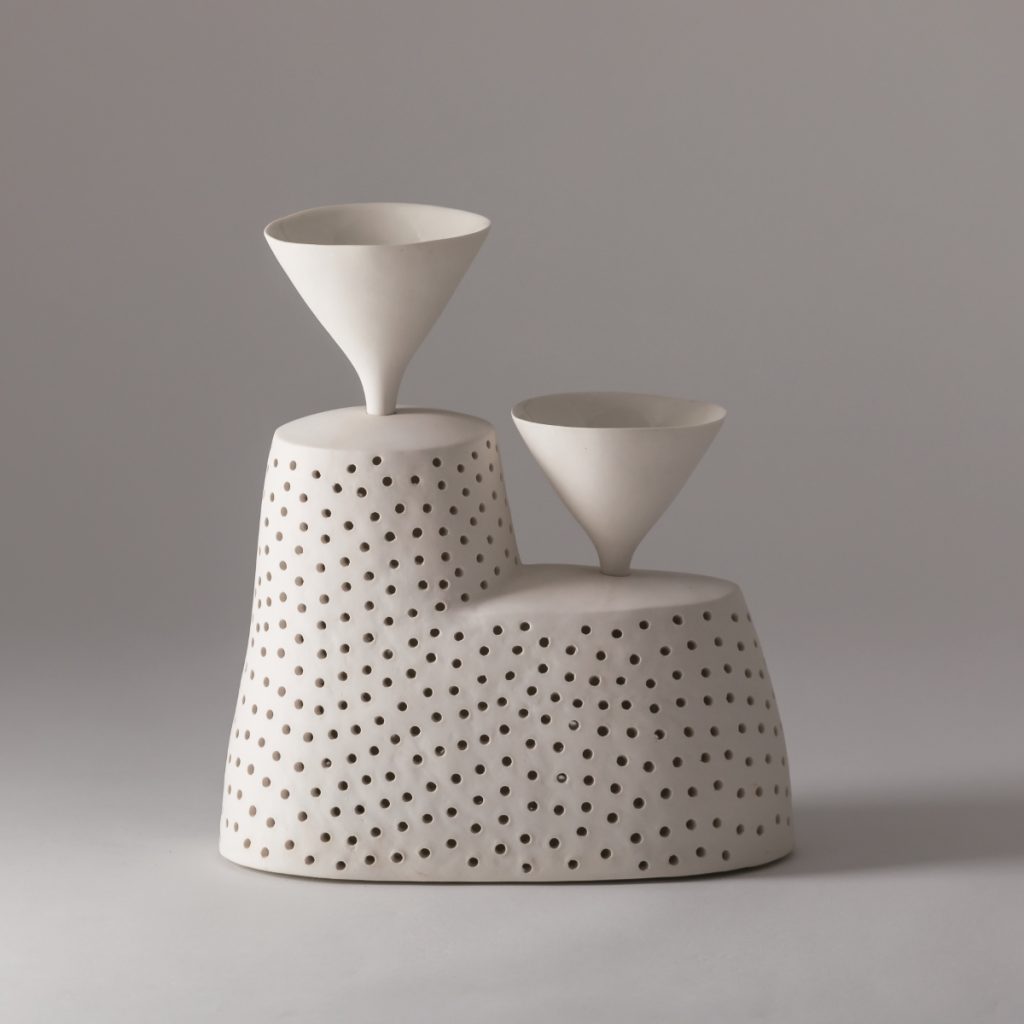
Sans titre, 2020, porcelain, 27 x 24 x 12 cm 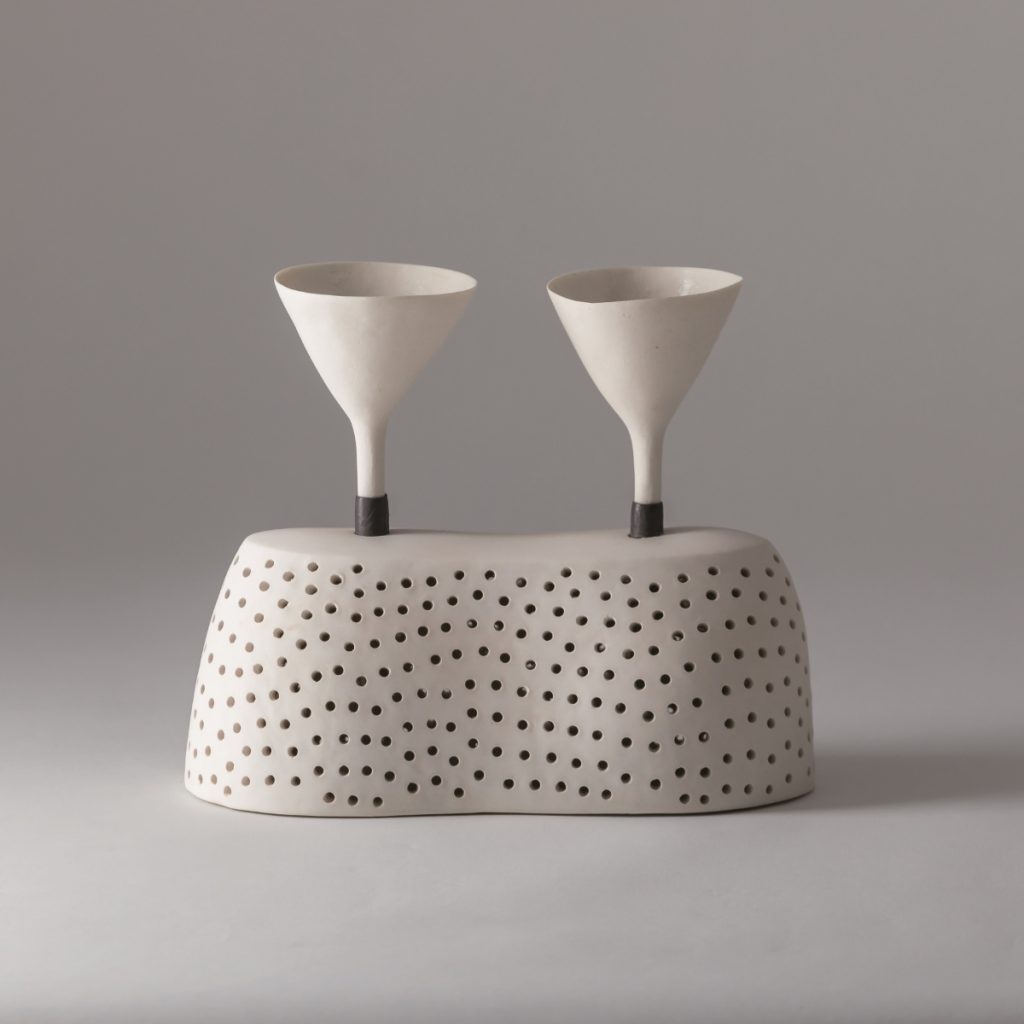
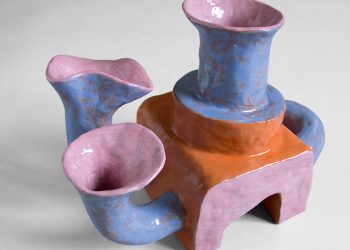
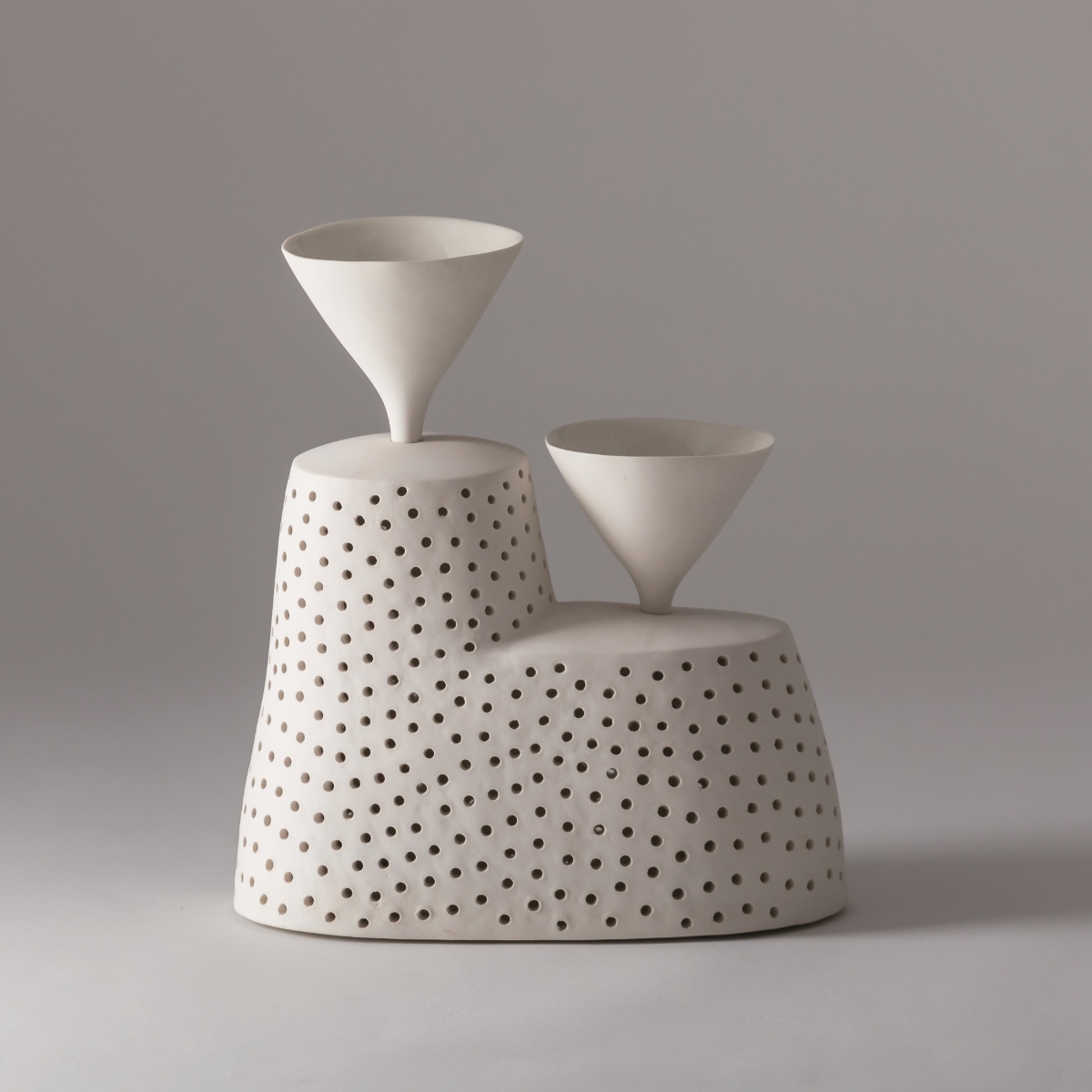
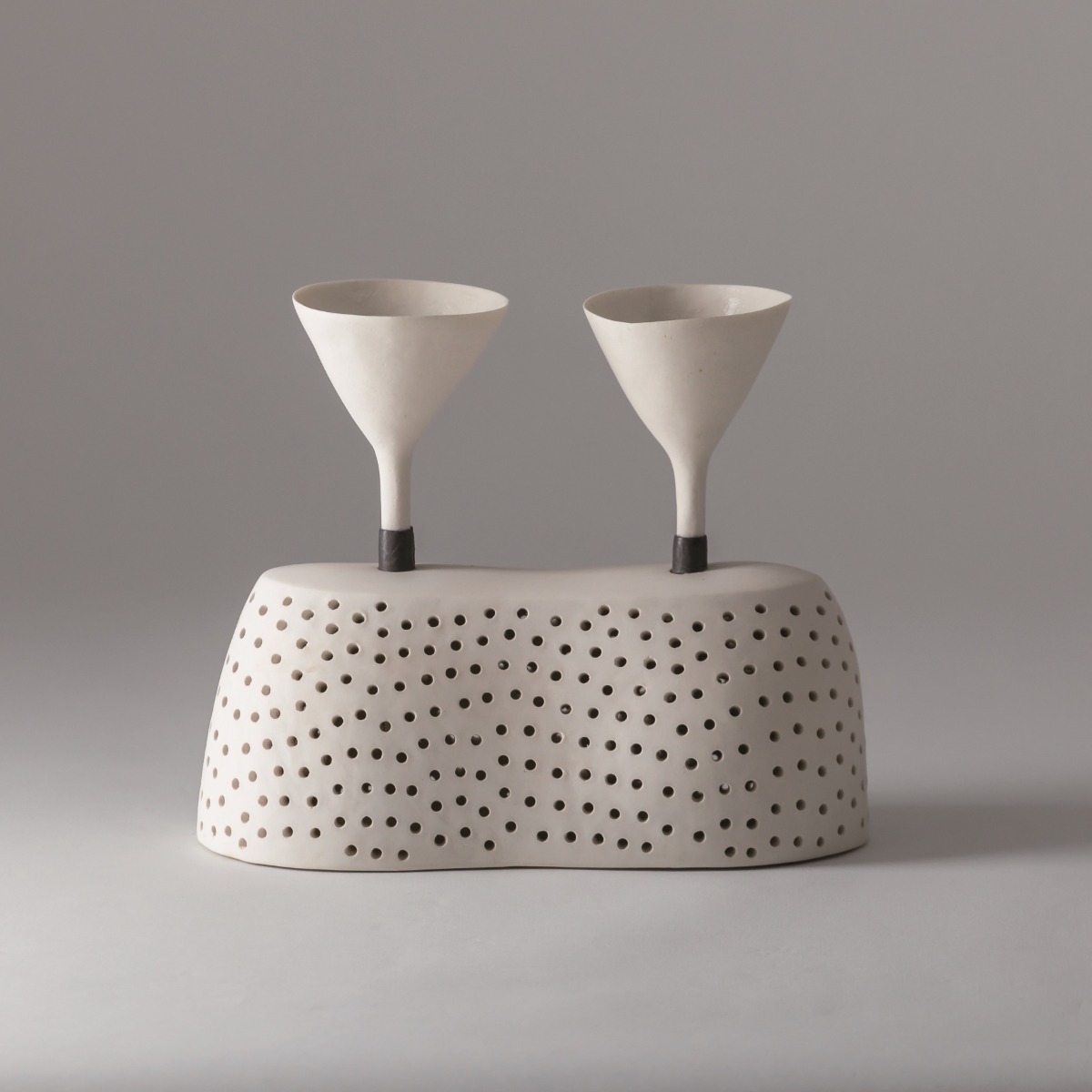
Two funnels, 2020, porcelaie, 21 x 25 x 10 cm 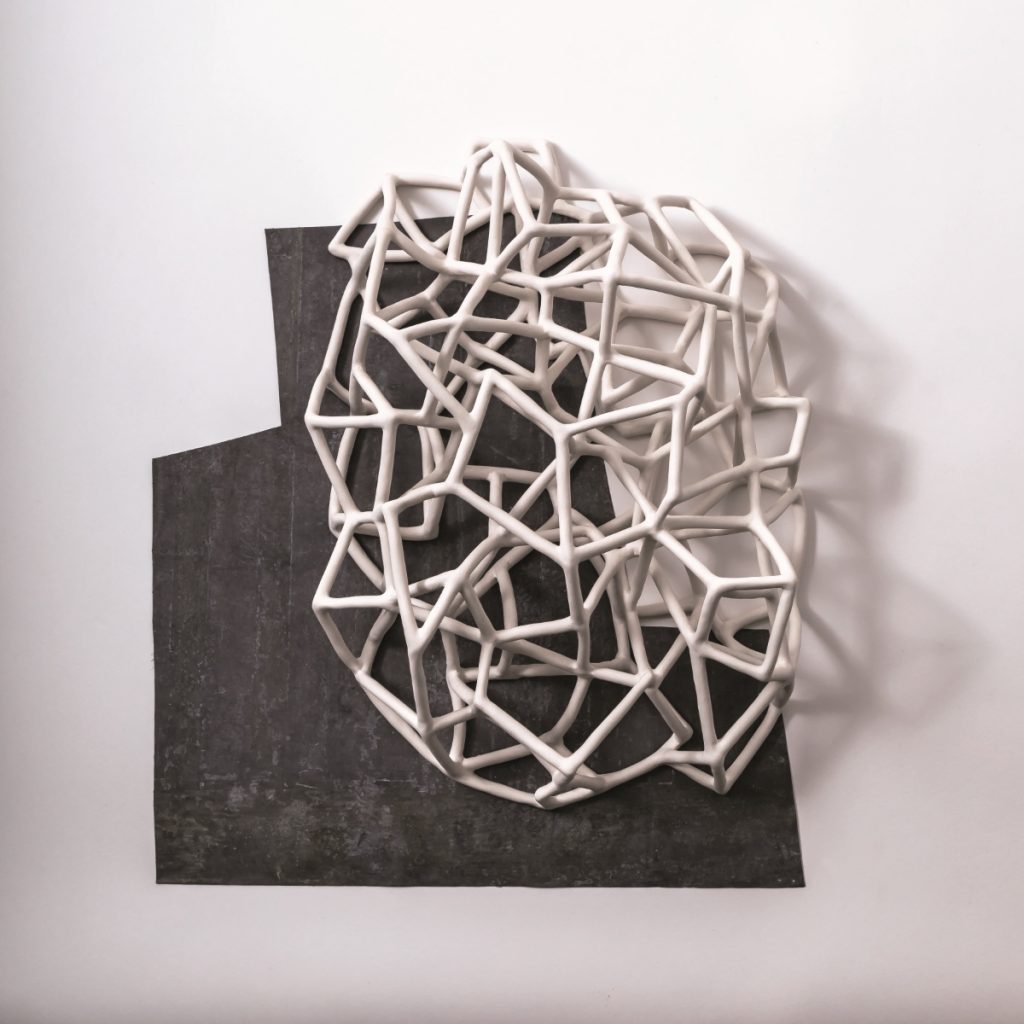
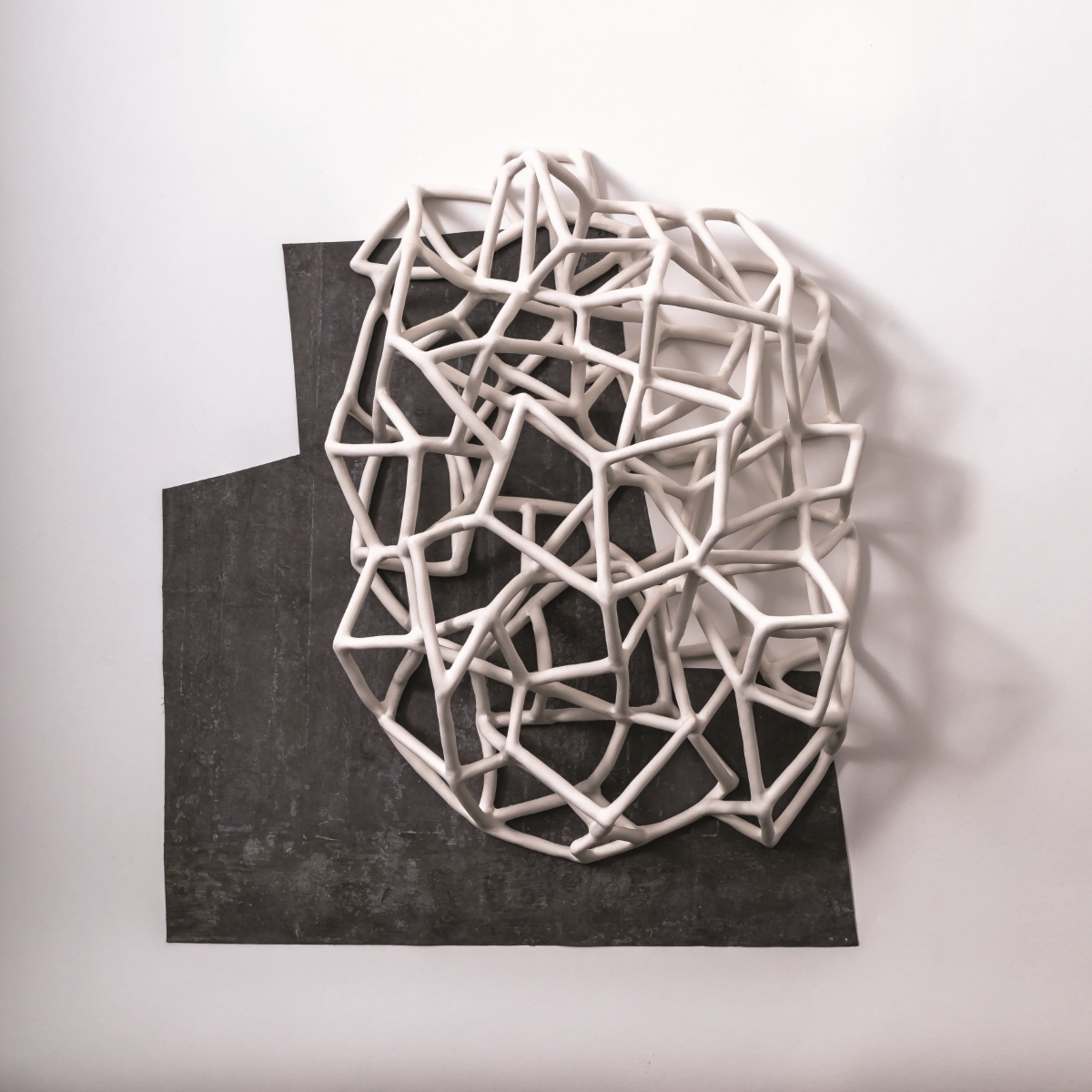
Scribble, 2019, porcelain and lead, 47 x 41 x 12 cm 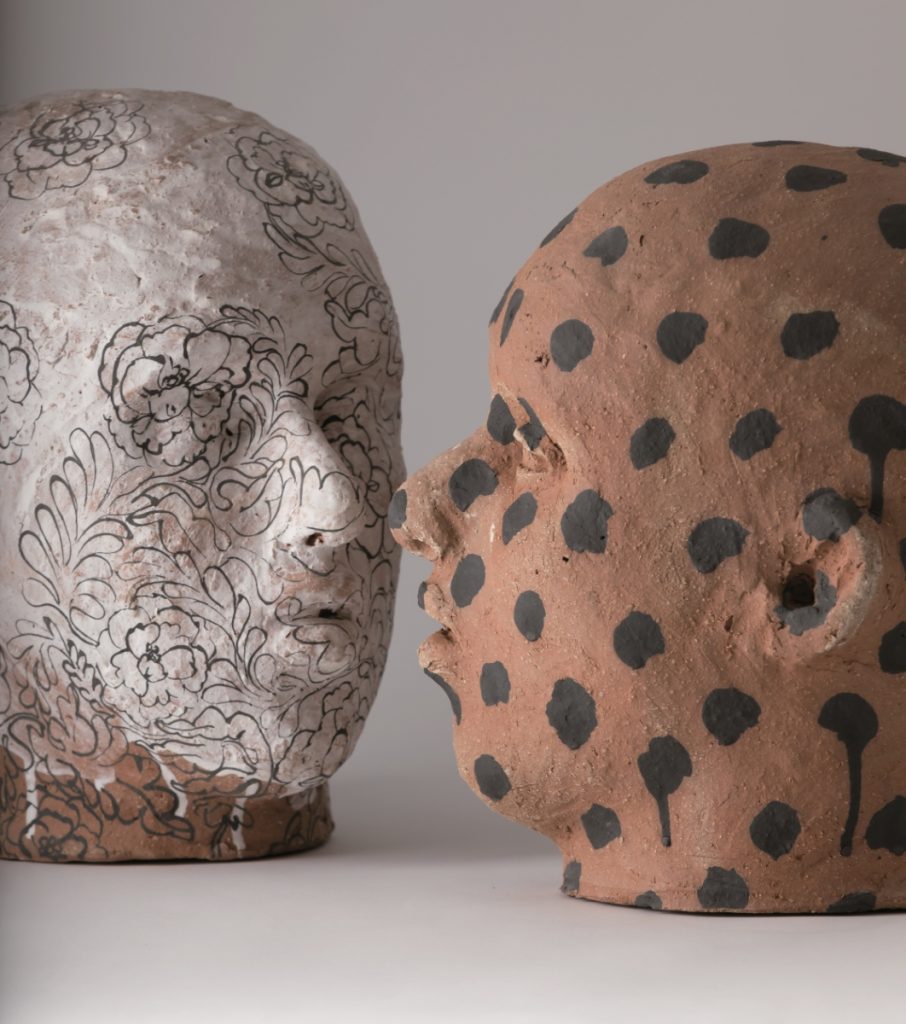
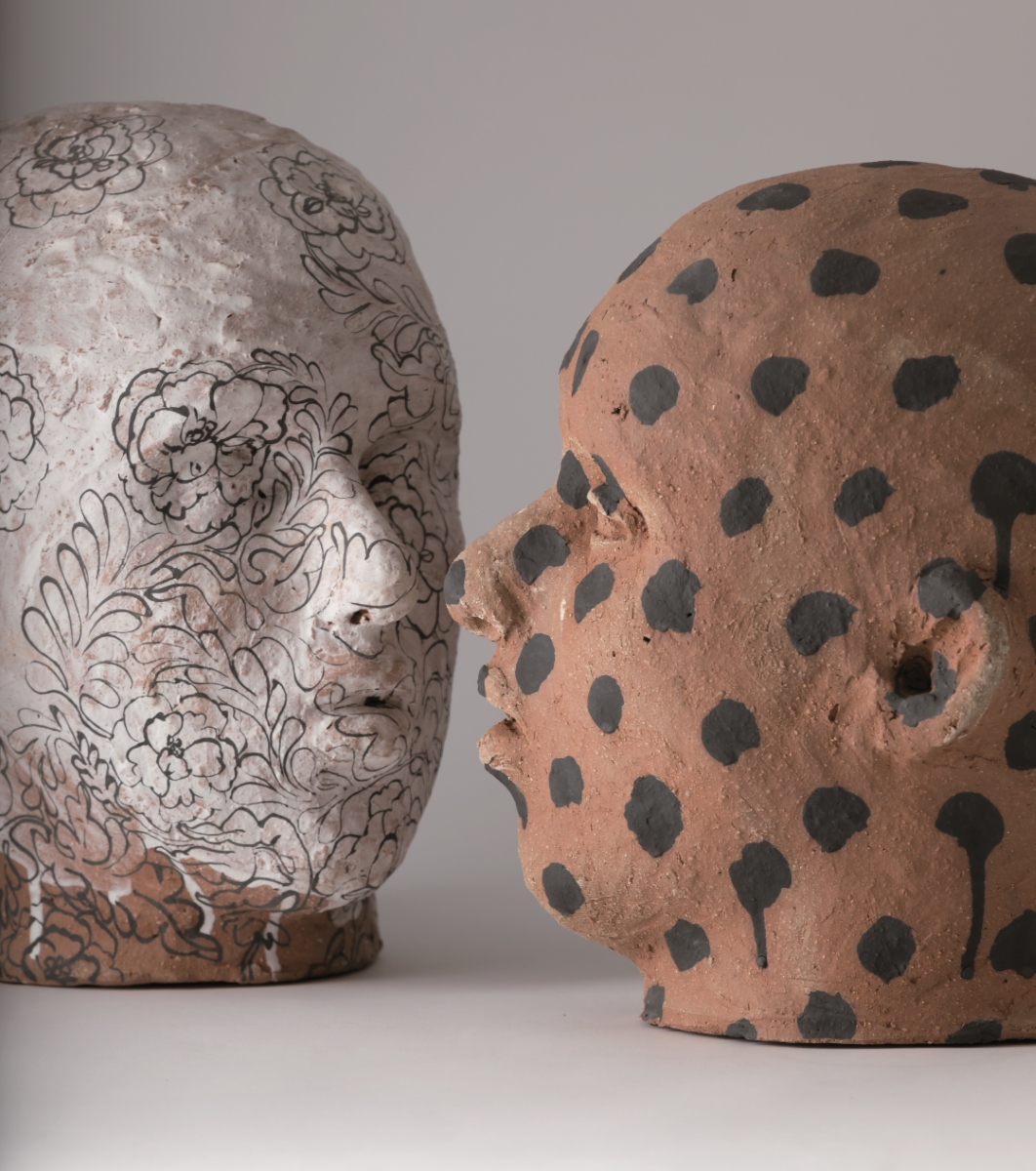
Tête pivoine, 2018, 34 x 32 x 24 cm & Tête brute, 2018, 32 x 33 x 24 cm – terracotta
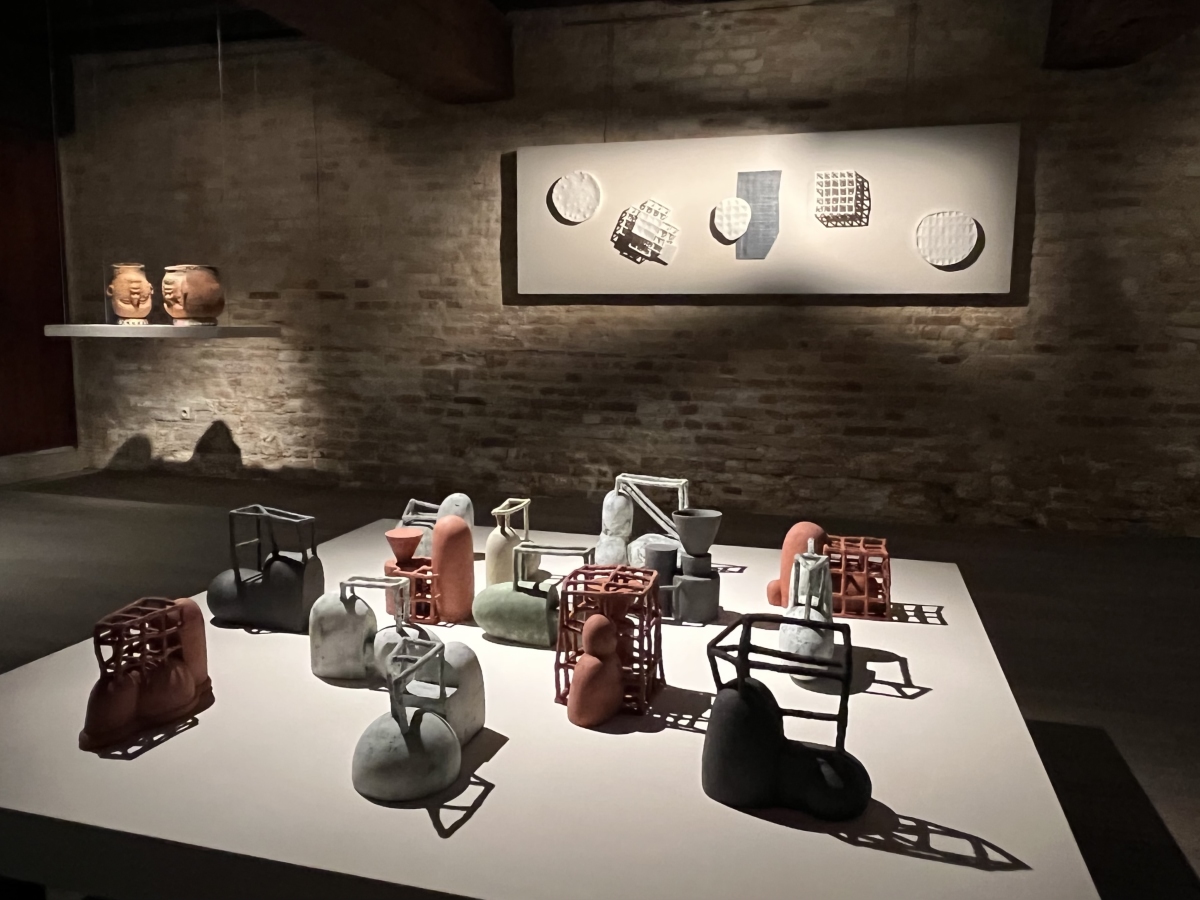
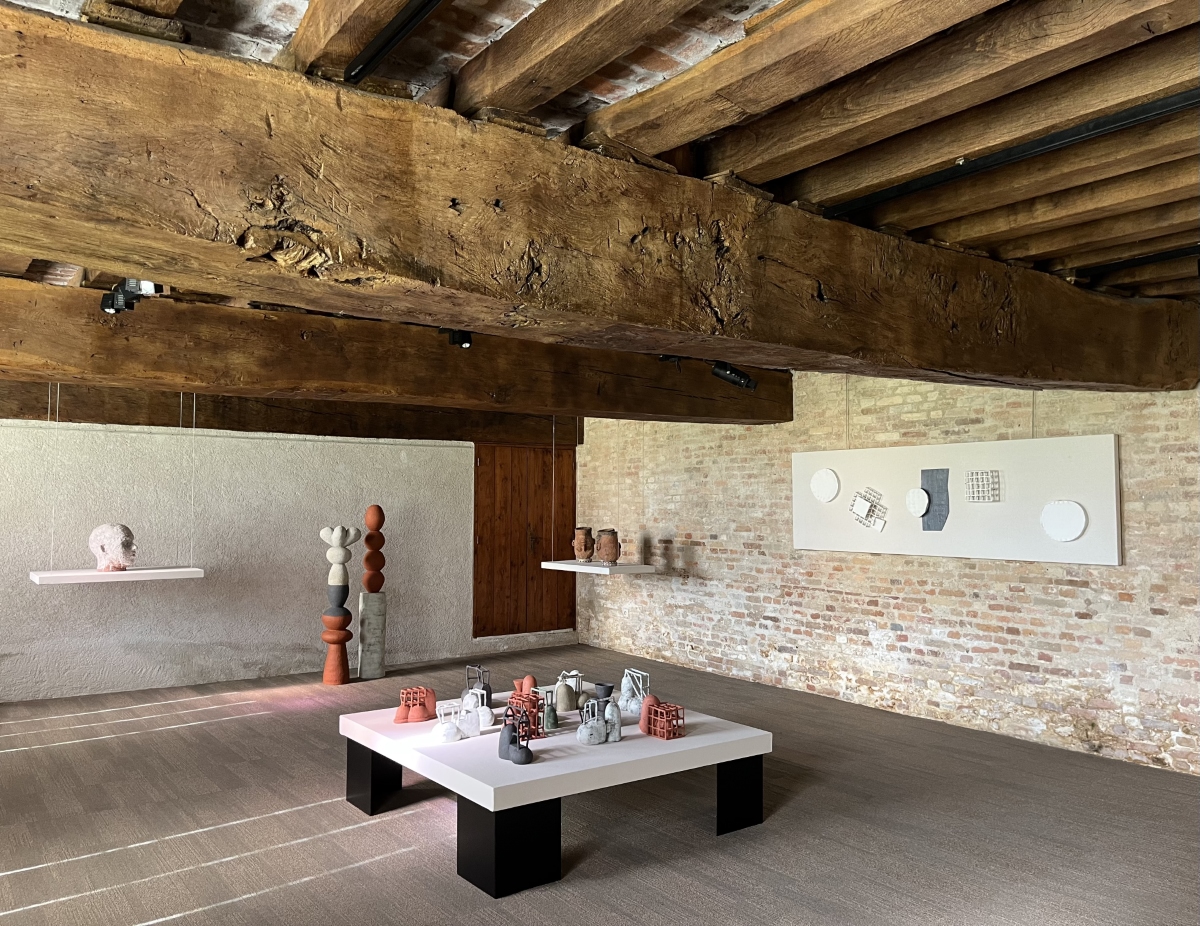
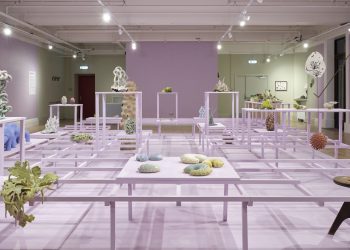
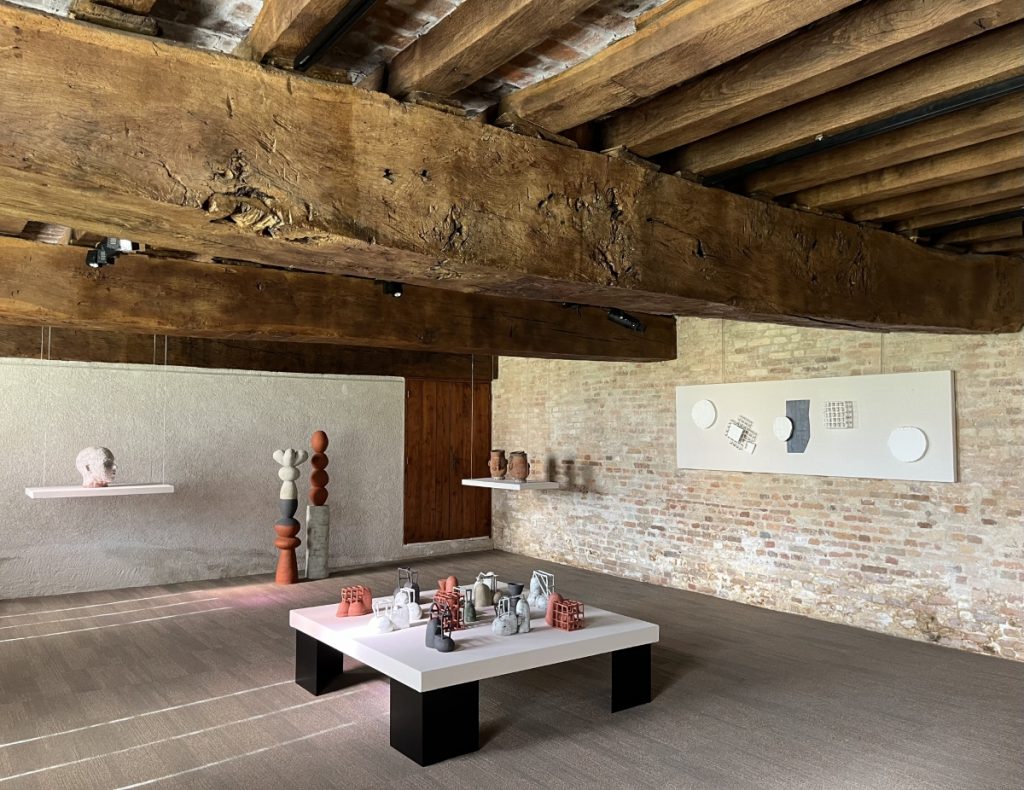
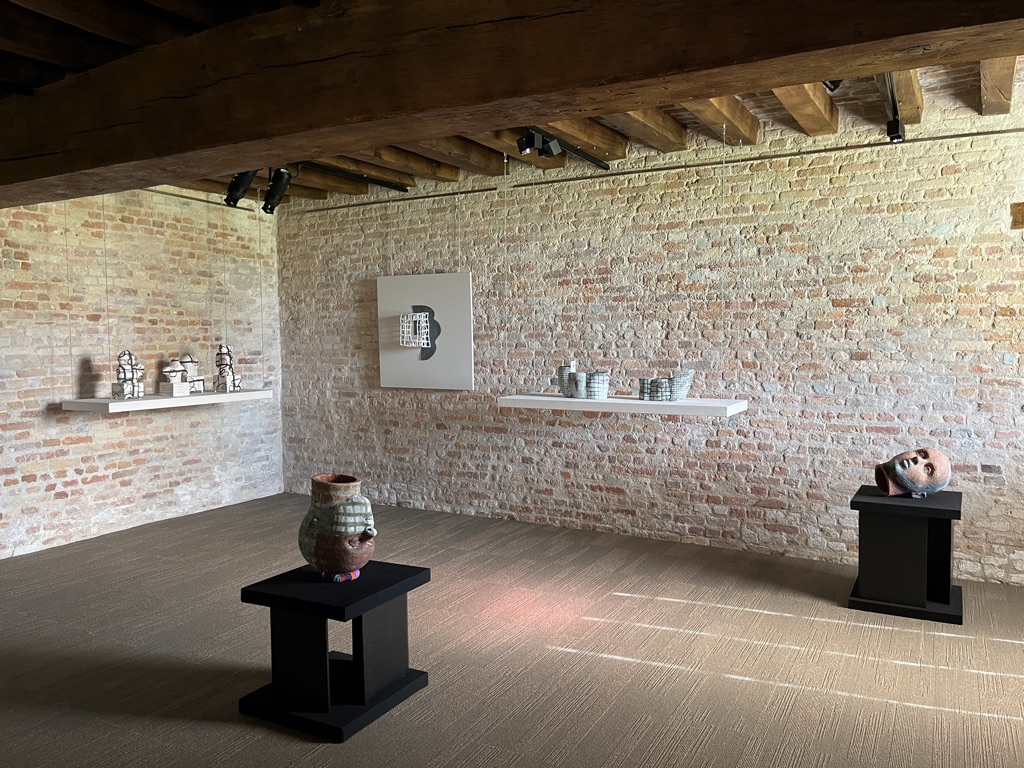
Daphne Corregan: Three places and between is on view at Galerie Capazza, Nançay
October 9 – December 5, 2021
Tinkering around the edges
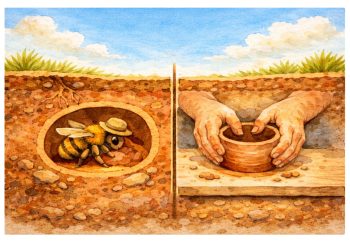
Clay is the material shared by ceramicists and potters alike. Throughout her career as a ceramic artist, Daphne Corregan has paid tribute to pottery.
Pots, or rather images of pots, are a part of her work. The image is not reduced to the object to which it refers, it’s something else. It highlights the gap between its own essentially visual presence and the practical use of the pot, as aesthetic as it may be. Within this difference lies the dividing line. So, working with clay connects as much as it distinguishes potters from ceramists.
Daphne Corregan makes vessels whose «raison d’être» is not containing. They are recognized ceramic sculptures.
If clay both connects and separates potters and ceramists, so does the empty space. In this case, it structures the space and also enables the clay to withstand the trial of firing.
In order to make her pieces and bring them to life, Daphne Corregan alternates two processes, coiling and slabs. The first for its modeled effect, softness and vibration, the second for its smoothness and tautness. The use of these techniques, on and around the empty space, creates a particularity: the solid is the wall, the surface line which borders it and that actually designs the work; this is what gives importance to this container without contents, the full and the empty are each other their own limits.
This consideration of technical constraints makes the empty space exist without seeking to avoid it; it sublimates it and sets out the specificity of the ceramic sculptor.
Three rhizomatic axes structured by the idea of the vessel without content characterize her work: the image of pots (pitchers, bowls, cylinders…), anthropomorphic figures (heads, hands, feet, skulls…), and finally a multitude of incongruous objects (clouds, architectures, houses, elastic tension, rings…). Her series are often infused with anecdotes, feelings or events.
And so, her work is not only formal, it also draws on the imagination. She has developed a true personal alphabet of forms, textures and graphic elements enriched over the years. Her taste and curiosity for tools, travel, ethnology, reading and various artistic practices have made her plastic vocabulary more extensive.
Corregan has freed herself from the never ending debate between abstraction and figuration: following her instincts and her motivations have enabled her to give greater amplitude to her forms and their expression.
This position is particularly noticeable in the treatment of her anthropomorphic figures, heads and skulls. The heads, built with large coils like a pot, are always realistic, even when the faces are smeared with colors, spots and dots. The technical difficulty of building around an empty space is particularly visible in their making. The modeling of the faces is an example. She often adds clay to form a proper nose or ears and then removes the excess clay from the inside to obtain a regular thickness. This technique is essential in order to avoid the piece breaking during firing .
These hieratic and oversized faces are painted with oxides before firing. Placed on pedestals structured in raw wood, so as to dominate the assembly, they gaze impassively and protectively over the spectators.
On the other side, the skulls, the heads without faces are more abstract than realistic, more disturbing. Some are perforated with small holes and let us perceive their insides, testifying to the specificity of this approach.These generally deformed skulls, of anthracite or red ocher color, evoke the voluntarily elongated heads of tribes of first peoples.
On the ground or placed on a base, some even have a handle…But of course, they are pots! Technically speaking, they’re images of pots.
The interpretation depends on our imagination. The pots are sometimes truly what they appear to be (22 red pots, 2014), other times images (the huge black pitchers from the 90’s) or something else (Dancers 2019). Our perception is blurred. Her double pieces create a disturbance, especially when they show little realism (Black twins, Listen, Connected Vessels…). Her work is not linear, it is sinuous, generous and poetic.
Over time, her interest in textiles, painting and her increasingly present practice of drawing have given her work a more linear direction. Her work has always been strengthened by her preparatory sketches and her own drawing practice. Corregan uses partial or total overlapping graphics, alternating figurative patterns (Flowers, Black Twins), abstract motifs, lines, grids, dots, holes, (Listen, Gridbowls) and various interlacing (Guardians).
However some objects such as Souffles, Clouds and Constructions have no graphic or decorative contribution, they remain monochrome, black or white. Likewise, we find this tendency in the latest creations with Petites Architectures, which are composed of a compact block in opposition to a more aerial structure (grids or scaffolding).
A recent series of murals in high relief confronts clay with sheets of lead; their frontality makes them look more pictorial. The use of materials such as lead, iron, and glass appears regularly in Daphne Corregan’s work. The multiplication of display devices attests her roots in contemporary creation.
The converging lines, the interplay of weaving, of twists and turns, of combinations, endlessly multiply the arrangements, diversify the horizons, explode the meanings. This polysemous profusion that this work generates offers more poetry, more evocative power so that we brush the surface, we caress the meaning without ever reaching it. In fact, Daphne Corregan’s art is an art of «intimidity», an oxymoric contraction of timid and intimate*, an art of the veiled / unveiled, the hidden / the shown, opacity / transparency, an in-between, an interval between a strategy to seduce and the desire to be sincere.
Contrary to the widespread idea that the style is the obsessive propensity of repeating the same, Daphne Corregan’s style, through its diversity, exploration, research, and the lack of interest in creating one, is closer to what Daniel Arasse in his book Le Sujet dans le Tableau quoting Roland Barthes tells us « style is the result of an eruption, not of an intention ». And we can add to that; the style is what’s left when you’re not paying attention to it.
Text by André Debono, painter. © Galerie Capazza
* Here, intimate as in a shared interiority
Contact
contact@galerie-capazza.com
Galerie Capazza
1, Rue des Faubourgs
Grenier de Villâtre
18330 Nançay
France
Photos of individual works © Galerie Capazza, Denis Durand.