
Kentaro Kawabata: By Heart is on view at Mai 36 Galerie, Zurich
January 23 – March 28, 2026
Mai 36 Galerie is pleased to present By Heart, the gallery’s first solo exhibition with Kentaro Kawabata (*1976, Saitama, Japan). Kentaro Kawabata graduated from the Tajimi City Pottery Design and Technical Center in 2000. He received multiple awards, including the Kamoda Shoji Award in 2004 and the Paramita Museum Ceramic Award in 2007. His work has been subject of numerous solo and group exhibitions in esteemed ceramic institutions, such as the Ibaraki Ceramic Art Museum and the Museum of Modern Ceramic Art, Gifu.
Recent solo exhibitions include Butterfly Joint, Mendez Wood, São Paulo (2023), Yours Truly, High Art, Paris (2022); 凸凹 Bumpy, Nonaka-Hill, Los Angeles (2021); ishoken gallery vol.10: Kentaro Kawabata, ishoken gallery, Gifu (2020); Inside out, Silver Shell, Tokyo (2018). Group exhibitions include KENTARO KAWABATA / BRUCE NAUMAN, Nonaka-Hill, Los Angeles (2024); an arena, Barbati Gallery, Venice Italy (2024); Le Biscuit à Soupe, High Art, Arles (2022); Push + Pull, Mai 36, Zurich (2022); Gyeonggi International Ceramic Biennale, Icheon (2017); PUNK, Rakusuitei Museum of Art, Toyama, Japan (2016).
His works are held in major institutional collections including the Gifu Contemporary Ceramics Museum, the Minneapolis Institute of Arts, the National Museum of Asian Art, Berlin, and M+, Hong Kong, among others.
Cristate Ceramics. An Essay by Minoru Shimizu
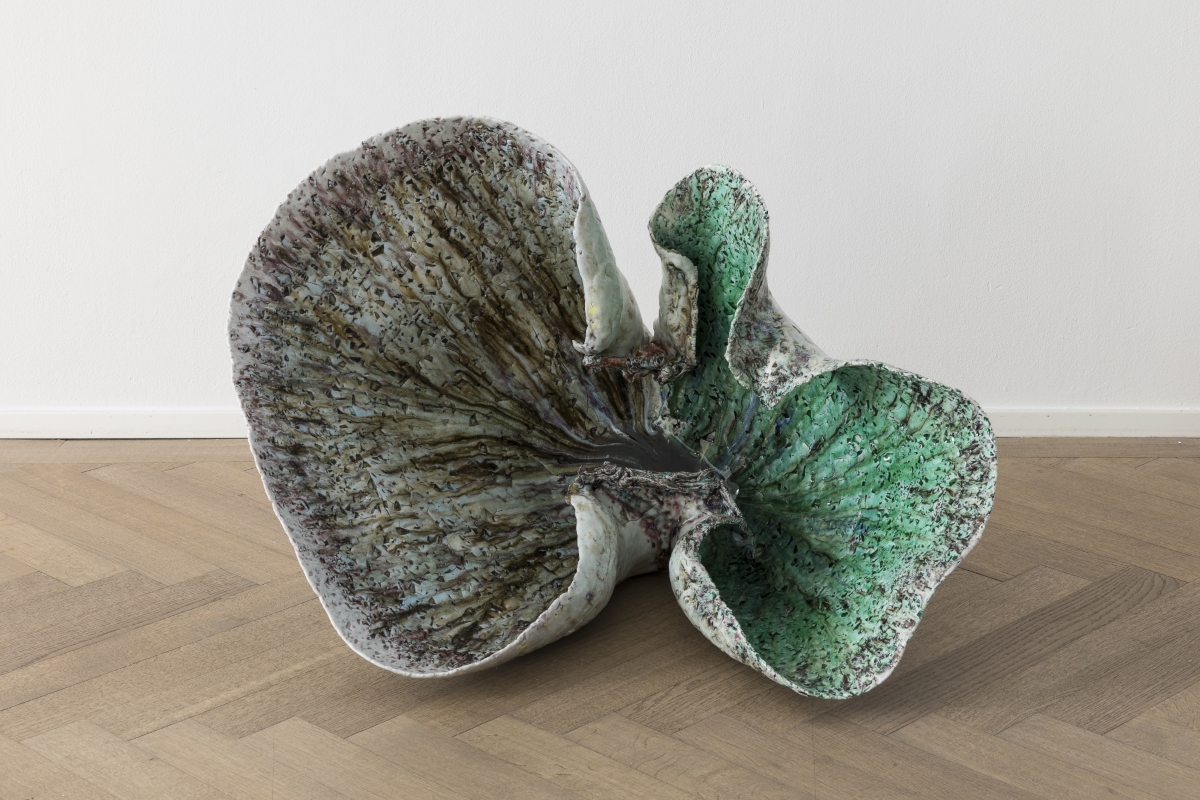
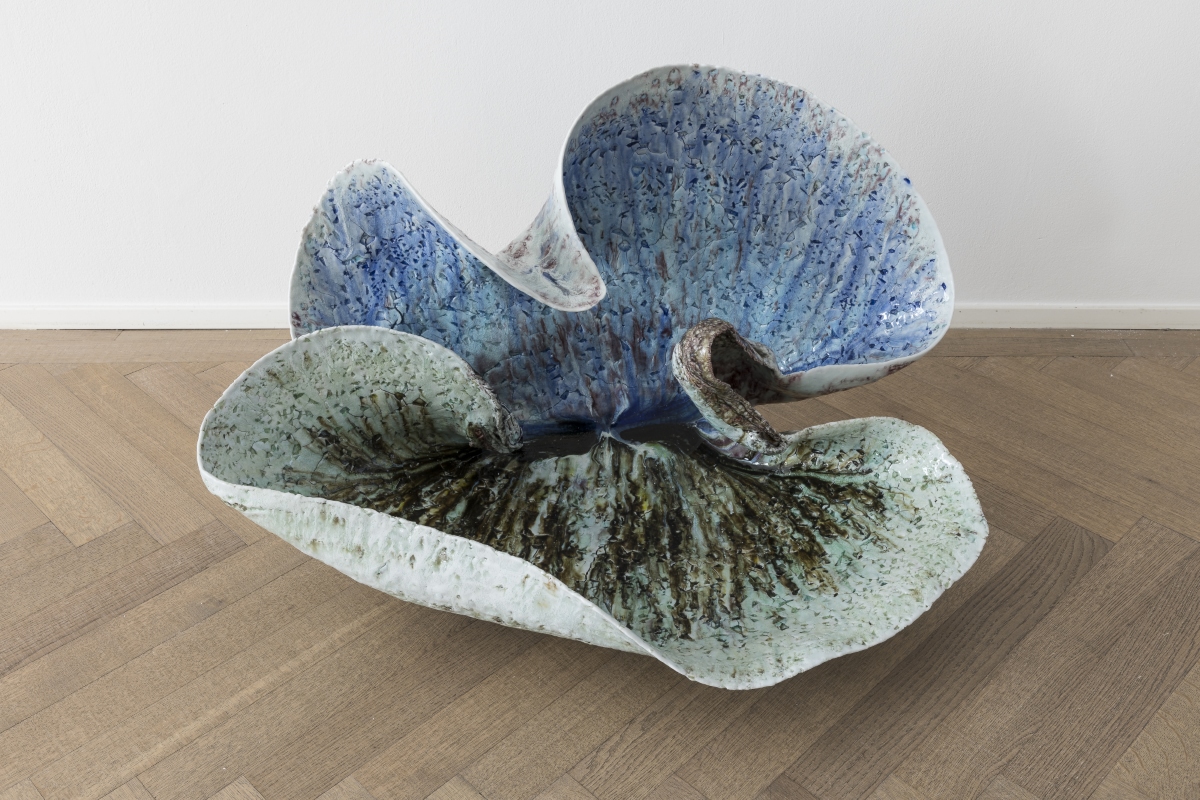
It is said that On Kawara invariably advised collectors who asked him, “How can I acquire outstanding contemporary art?”, by telling them to buy works that they could not comprehend aesthetically, and which indeed aroused discomfort. According to this standard, Kentaro Kawabata is undoubtedly a ‘buy’. For instance, anyone encountering his ‘cristate’ tea bowl (undulating series) for the first time would likely feel a kind of visceral revulsion at its wildly exaggerated form. Only those who have overcome the initial shock realize that these strange vessels, reminiscent of Jōmon flame patterned pottery from long ago, are in fact thinly crafted, surprisingly lightweight porcelain. Upon closer inspection, one discovers numerous points of interest born from their delicate and astonishing craftsmanship.
The extraordinary wrinkles and folds achieved through thinly rolled porcelain clay, precarious glass inlay on delicate vessel bodies, acrobatic forms defying expectations of coiling techniques, calculated marbled glaze mixtures and drips, a dyeing technique involving applying silver sulfide to the base or
overglaze to induce discoloration, overglaze decoration in platinum, sharp ridges and shaving, meticulous foot rim treatment in silver… and so forth.
“Cristate / cristation” means an abnormality in the meristem of a plant. Plants naturally grow in one direction from one growing point. However, if multiple growing points develop in a band-like pattern that resembles a cock’s comb, growth occurs in overlapping folds. When growth point abnormalities occur not in bands but across the entire surface, resulting in a lumpy mass, this is termed fasciation or petrification. This term is particularly prized in the world of cacti and euphorbias and denotes a specimen with distinctive features. More specifically, it refers to specimens in which multiple growth points have developed simultaneously in different directions. This causes the original form to break down from within, resulting in an intriguing appearance.
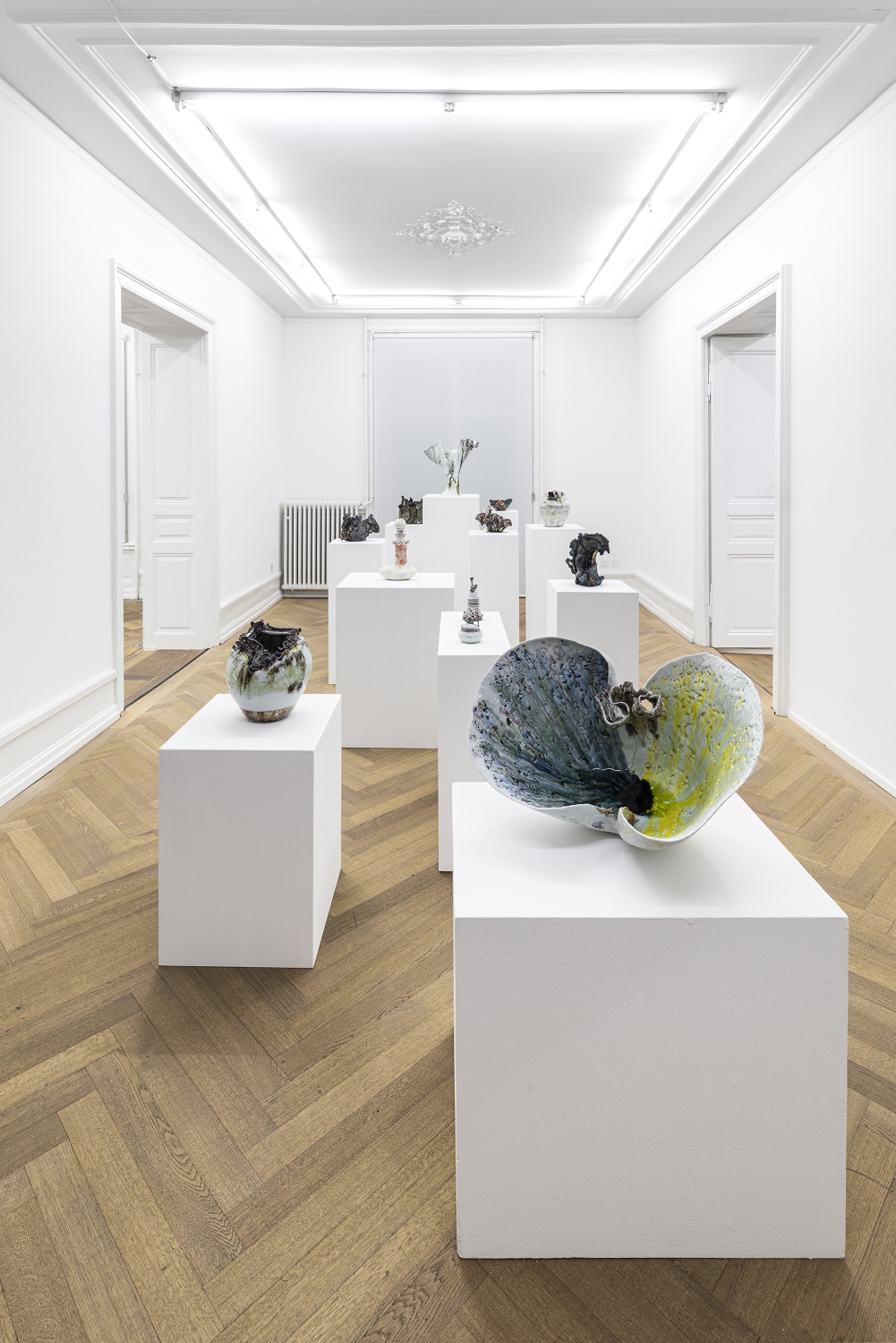
‘Cristation’ aptly captures the essence of Kawabata’s ceramics. It is the cristation of ceramics, particularly of its decorative elements (overglaze painting, glaze layering, appliqué, inlay, etc.). If you seek the “growing point” in pottery, look to the wheel throwing. Two hands draw the clay upwards to raise a single form. Under equal pressure from both sides, the very apex of the clay is stretched upwards (like a plant’s stem growing), which can be called the growing point of pottery. From a certain point onwards, the apex is then pushed inwards. As this happens, the rounded rim of the vessel grows outwards, much like a corolla expanding, thus forming a hollow vessel. At Kawabata’s ceramics, it is these “points” and “rims” that trigger the process of cristation. Consequently, hand-building rather than the potter’s wheel becomes fundamental. One might say that ten fingers generate ten growth points, from which ten forms unfold multi-directionally.
The forms born from this sensual relationship with materials, mediated through the fingertips, are often overflowing with eros. This is particularly evident in pleated forms that resemble internal mucous membranes or soft protuberances. Examples include lidded vessels where the handle extends from the lid and falls into a hole, as well as forms created by fingering the rim of the vessel around the “hole.” Tubular vessels and vessels shaped like rods or spiral shells, such as turban shells, take phallic and vaginal forms.
Kawabata transforms traditional ceramic ornamentation into ‘cristation’. This means that the ornamentation breaks free from its subordinate role as mere “adornment” and develops independently. Rather than attaching frills to a skirt to decorate it, the frills themselves form the skirt. Thus, a tea bowl made solely of frills — a cristate tea bowl — is created. Cristation is a process that diversifies the world of porcelain, opening it up to realms such as art, sculpture, goldsmithing, handicrafts, and patisserie.
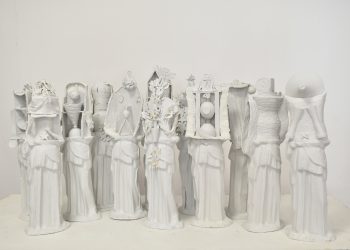
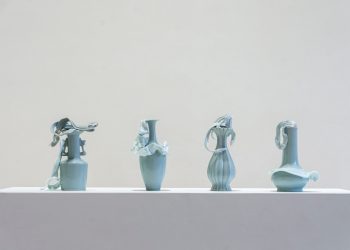
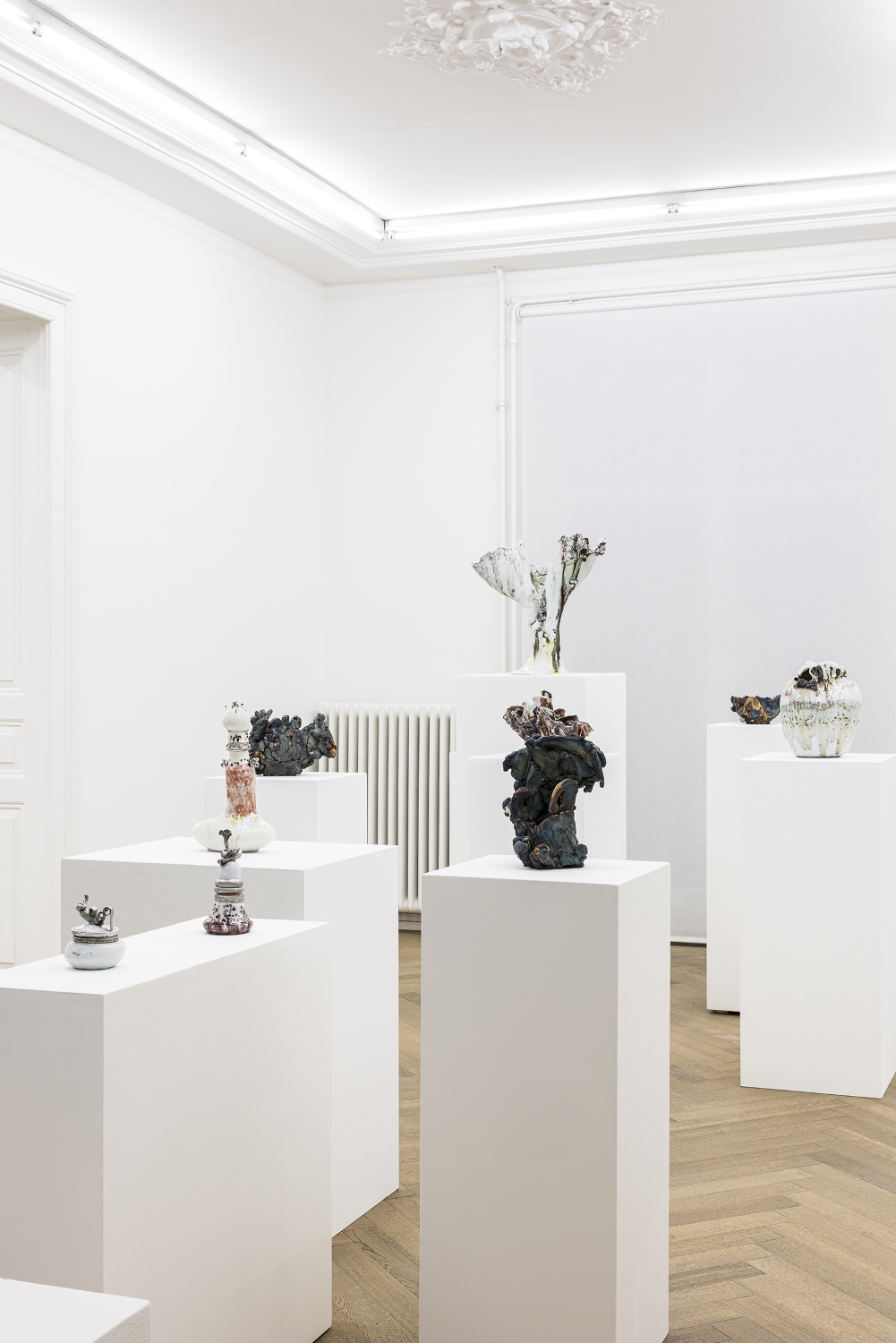
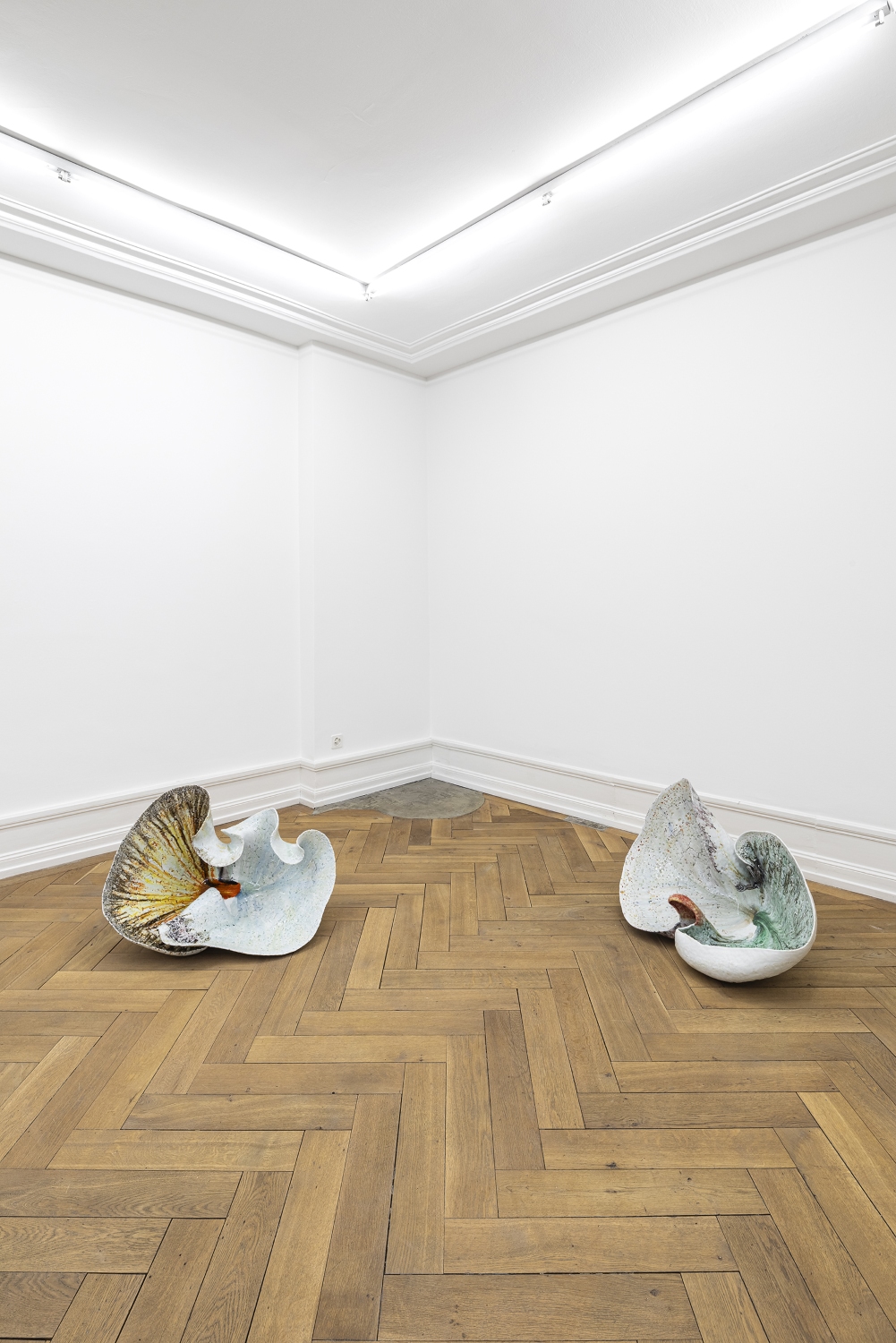
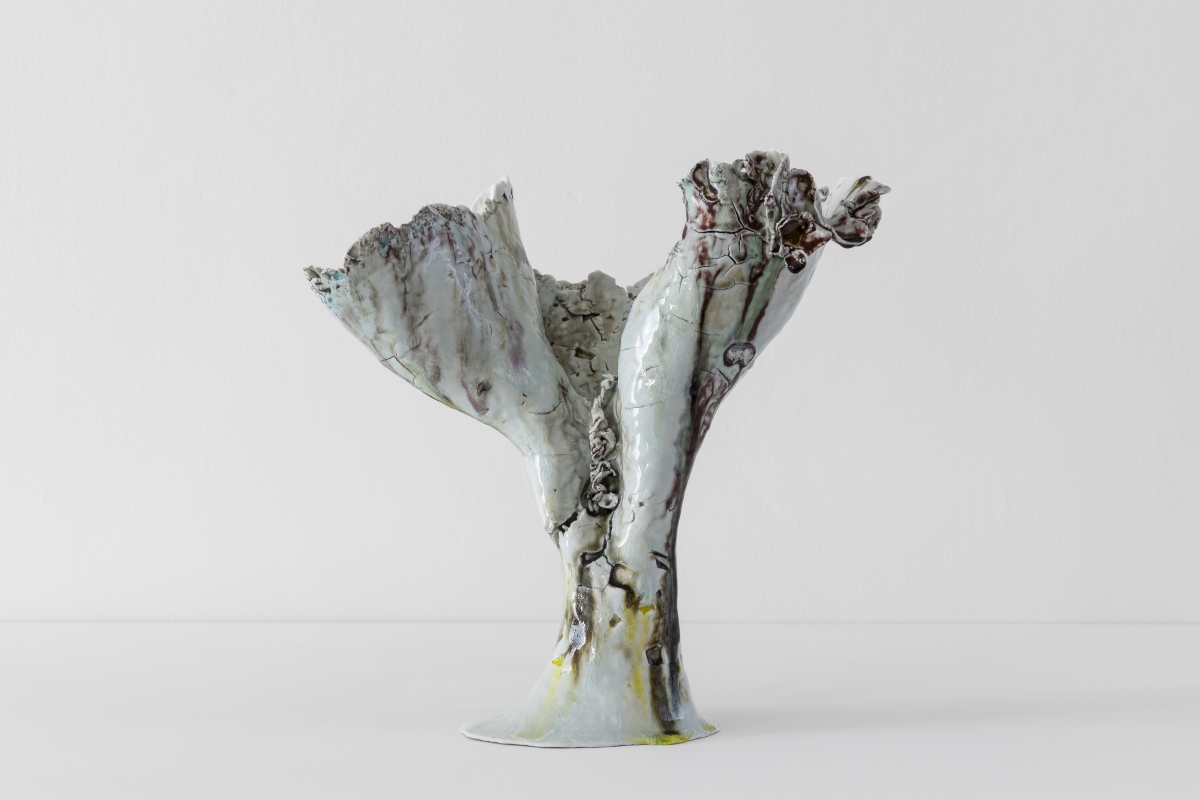
Broadly speaking, Kawabata’s works comprise two types: white pieces made from porcelain clay kneaded with glass granules, and blue-green pieces where silver glaze is sulfurized to produce color. The former are composed of continuously rising curved surfaces formed by coil-building, while the latter take the form of small fragments coalescing together.
Alongside these typical works (Batista and Soos), Mask and Calyx represent an evolution of his signature style. By applying frontality and symmetry to the principles of cristate ornamentation, he produced shapes that are reminiscent of Gigaku and Commedia dell’arte masks. The symmetry that first appeared in Kawabata’s ceramics, inspired by the vitality of nature, represents another facet of nature: the initial expression of geometric order. This marks the beginning of Thanatos-inspired forms alongside his former Eros-inspired sculpting.
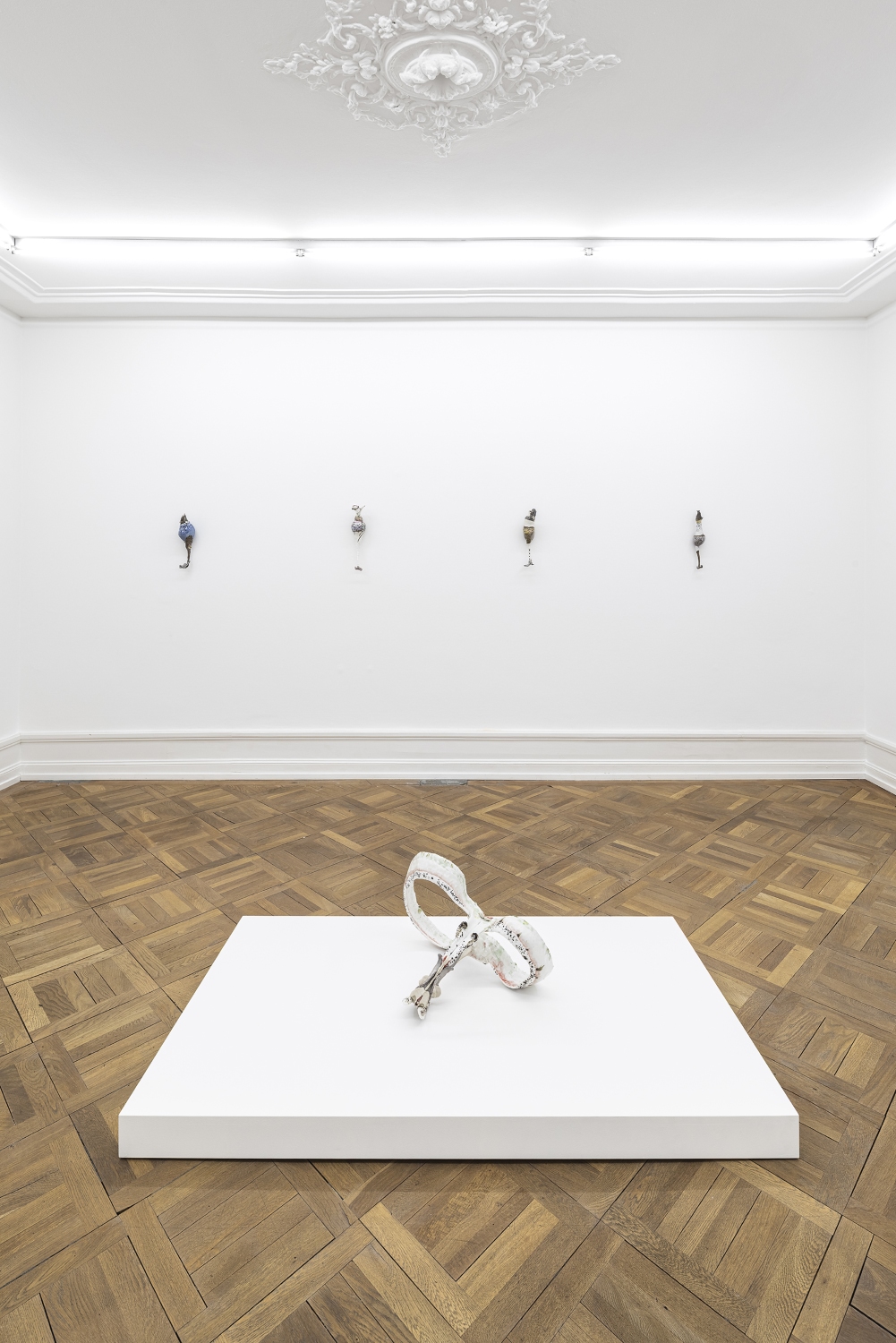
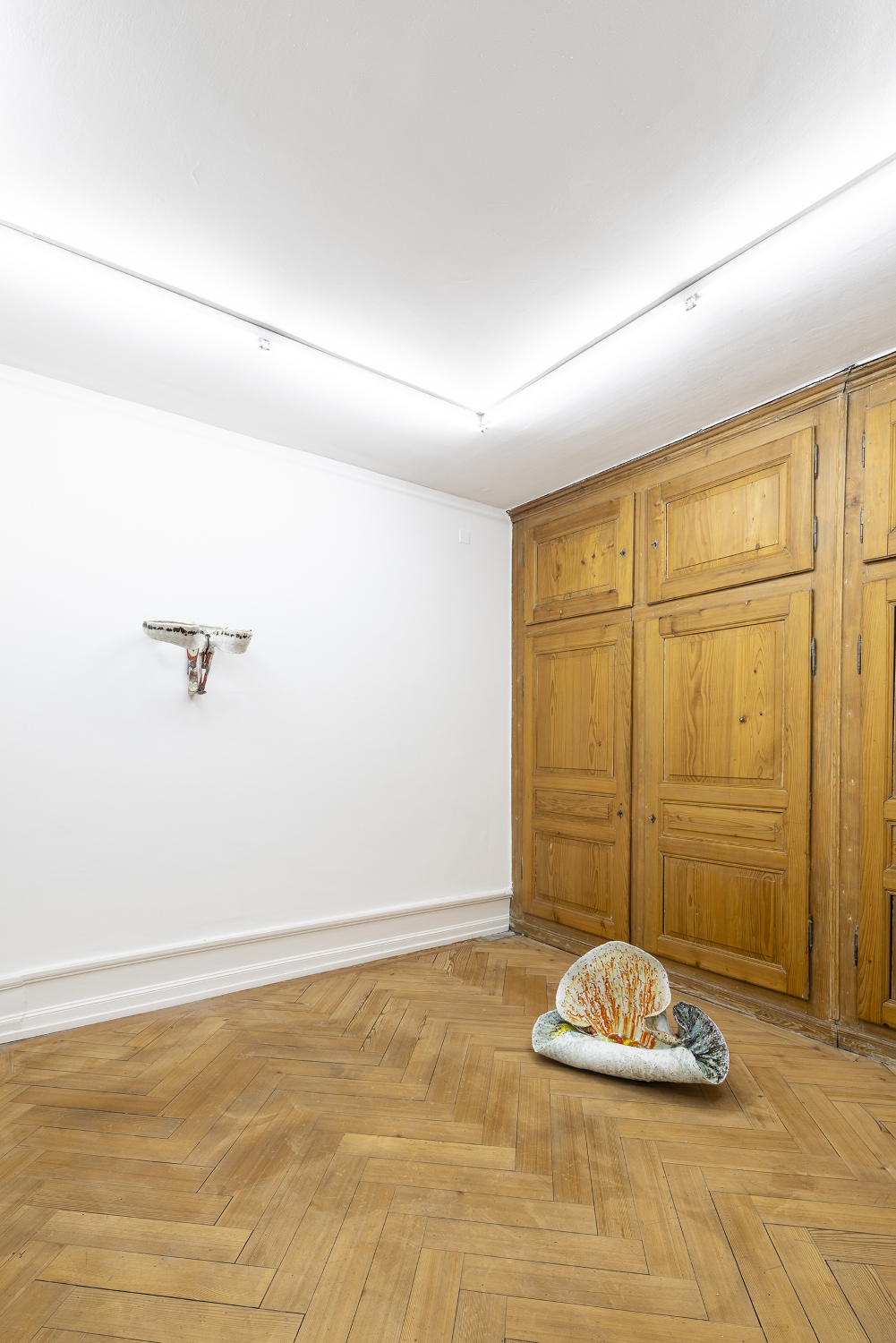
In Calyx, the dual representation of life and death unfolds with greater depth. It is not symmetry, but rather the bone within the body — the bone as the sustaining core of life and as something that endures beyond death. The Calyx series incorporates accidental forms created when complex, convoluted curved surfaces resembling coiled shells or vessels split into multiple parts midways during firing. These forms are then re-fired. Resembling crushed shells, these works derive their form from the fragility of the material. The density of the glass particles kneaded into the clay cord creates varying degrees of vulnerability within the robust porcelain, making fragility a fundamental aspect of their construction. The works, re-fired as shattered bones, crystallize the fragility and precariousness of life.
To describe Kawabata’s art in a single phrase, it is “a cristate natural growth”. The cristate ceramics achieve their original, unprecedented forms by breaking the inherent shape from within. His talent flourishes not when form merely follows ornamentation, but when it arises from the principle of ornamentation itself.
Contact
mail@mai36.com
Mai 36 Galerie
Raemistrasse 37
8001 Zurich
Switzerland
Captions
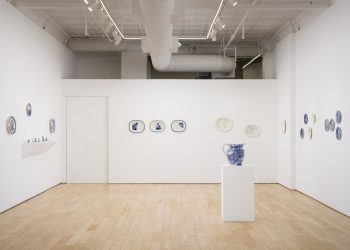
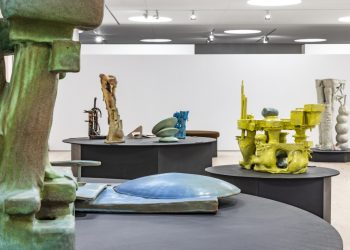
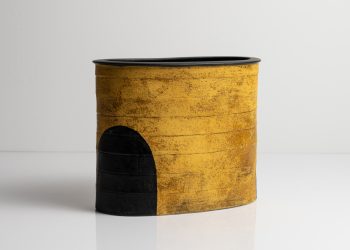
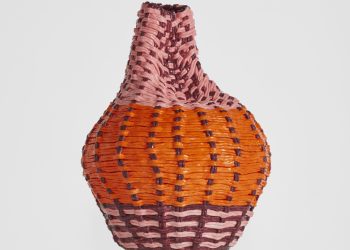
- Installation views, Kentaro Kawabata: By Heart at Mai 36 Galerie, Zurich. Photos by Peter Baracchi
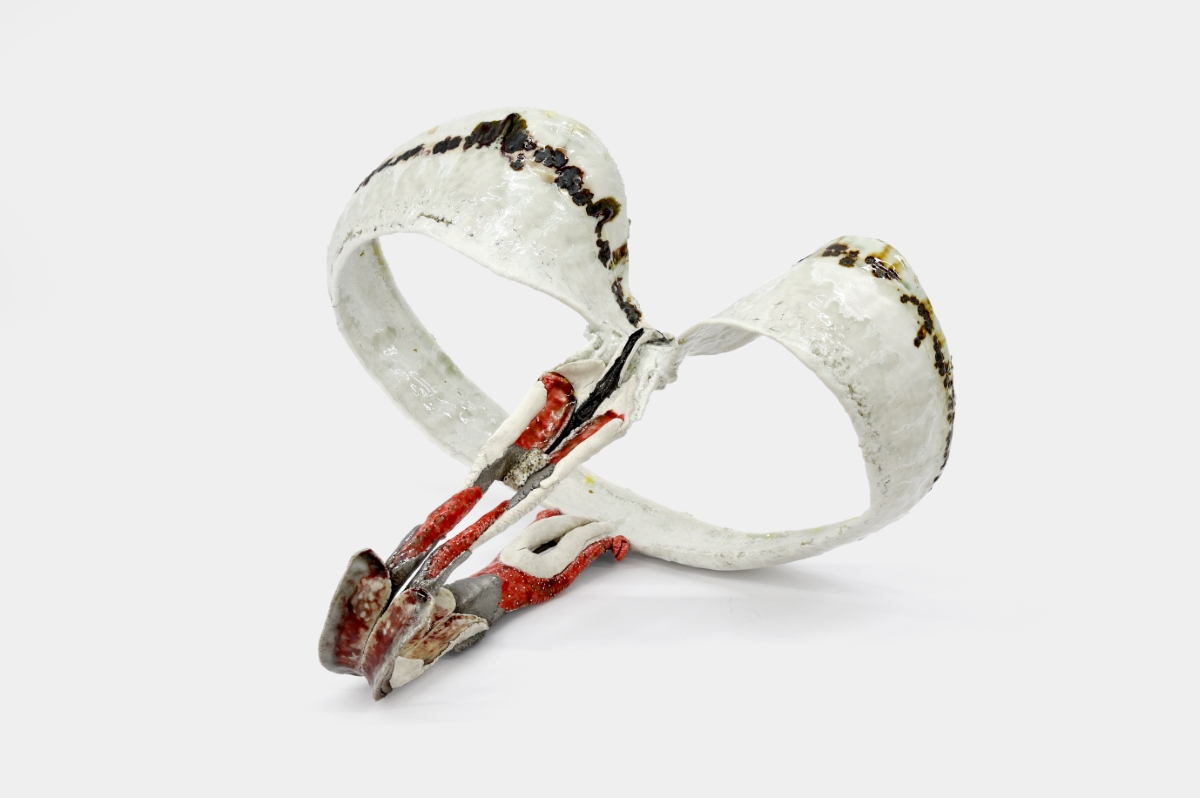
- Kentaro Kawabata, Abandonment, 2025, porcelain, glass, slag, silver, platinum, 35 x 51 x 38 cm (13 3/4 x 20 1/8 x 15 in). Courtesy the Artist & Mai 36 Galerie
- Kentaro Kawabata, Calyx, 2025, porcelain, glass, slag, epoxy, silver leaf, 45 x 45 x 28 cm (17 3/4 x 17 3/4 x 11 in). Courtesy the Artist & Mai 36 Galerie
- Kentaro Kawabata, Batista, 2025, porcelain, glass, 89 x 56 x 57 cm (35 x 22 x 22 1/2 in). Courtesy the Artist & Mai 36 Galerie
- Kentaro Kawabata, Batista, 2025, porcelain, glass, 91 x 60 x 56 cm (35 7/8 x 23 5/8 x 22 in). Courtesy the Artist & Mai 36 Galerie