By Heidi McKenzie
In the spring of 2020, my mother casually mentioned that my father had been involved in the Sir George Williams Affair. At the time, she was living in long-term care. It was COVID, and we were visiting on FaceTime. I had been reading some of my reflections on mine and my late father’s lived experience of race. My mother interrupted my monologue, “…of course there’s the time when your father was interviewed about his relationship with Perry over that race thing by Readers’ Digest …” My mother passed a few months later, but not before I was able to bring her my father’s photo albums and she identified a photograph of Perry Anderson with my father, emphasizing that they had been “thick as thieves” during their PhD studies in Biology at Western University in the early 1960s.
I hadn’t known about the Sir George Williams race protests of 1969. I knew about Malcolm X, Martin Luther King Junior, Smokey Carmichael, the Black Panthers… But nothing of Canada and its reckoning with anti-Black racism.
I was born in May of 1968 in Fredericton, New Brunswick. My mother was white, born and raised on a farm in Ohio. My father’s biological mother is mythologized as being adopted from Ceylon by French missionaries, his father a descendant of Indo-indentured workers. I pass for Indian. My father’s genes dominated my DNA. He was a dark-skinned, Indo-Trinidadian, double diaspora’d into Canada at the age of 23. He came to study at McMaster University in Hamilton in 1953. By the time I was born, he was a tenure-track Biology professor at the University of New Brunswick. In 1969, my father was 39 years old. He and my mother had fled Sudbury from his first teaching post early in 1968, as my father’s lab had been burned to the ground, and bricks thrown through their windows – an attempt to run the threat of the “other” out of town. These are facts that were never mentioned to me when I was growing up – in fact never mentioned at all, until after my father had retired, and was able to unpack his memories with the expansiveness of time, so necessary to heal the depth of racially-motivated trauma.
In 2023, I was invited to create a solo exhibition for Le centre céramique Bonsecours, part of the ceramics CEGEP in old Montreal. After grappling for some time, I realized that the story I had to tell in Montreal, for Montreal, was this story of systemic racism within a Canadian academic institution in Montreal in the late 1960s; the story of young people of every colour standing up for Black equality in Canada; the story of allyship, of other West Indians of Indian descent taking a stand for their Black colleagues; my father’s story, that portrays him as an immigrant of colour supporting his white friend whose overt anti-Blackness sparked unprecedented violence; the story of decades of racial tension between West Indians of African descent and West Indians of South Asian descent that underpinned my father’s story.
I struggled to render my destabilization into art in the studio. I had first proposed loose figurative works in different clay bodies, ostensibly representing different races, but this quickly felt like too simplistic an allegory. As someone who generally works in abstraction, or with archival photography on ceramics, I found myself unable to translate these thoughts into physical expression. I tried different clay bodies at different temperatures, made test tiles, and assessed their qualities adjacent to each other: unglazed, raw, with or without slip, visceral. It was only after months that I realized that I cannot make art that reflects in any way, didactically or literally, in abstraction or figuratively, the individuals or groups of individuals that were players in the Sir George Williams Incident: I can only make art that tumbles out of the turmoil and complexity of my feelings – my feelings about my father, about the growing hurt and disappointment that he never told me about his involvement with the race protest, despite the fact that we were, as adults, atypically close friends as father and daughter.
My father had shared much of his past, his activism as a pacifist during the Vietnam War; his proactive pro-union engagement with the labour movement; his support of and counselling with closeted gay students; the violence that seeped into his core doled out at the hands of his schoolteachers and most viscously, his father. He had understood my deeply rooted passion for meaning-making through the colour of our skin. He had read my MFA thesis on the inter-subjectivity of mixed-race identity and the Caribbean identity. On the subject of Canada’s largest race protest, he had been silent.
I began to journal. This was not premeditated writing, it was an exercise designed to enable free-flow, where you simply write to write, to fill up three pages, no matter what, every day, and see what happens. I wrote about systems and structure, not about individuals. I wrote about how I ‘felt’ the pain of students pushed into corners. I let go of my struggle to represent the human body. And so, I began to understand that the churn I felt was larger than any few individuals, it felt larger than any one academic institution, it felt systemic, it felt structural: it felt intimately linked to the shame invoked by racism and the clash between a collective voice attempting to claim a place of contestation, faced with a collective establishment, attempting to quell these voices and maintain the status quo.
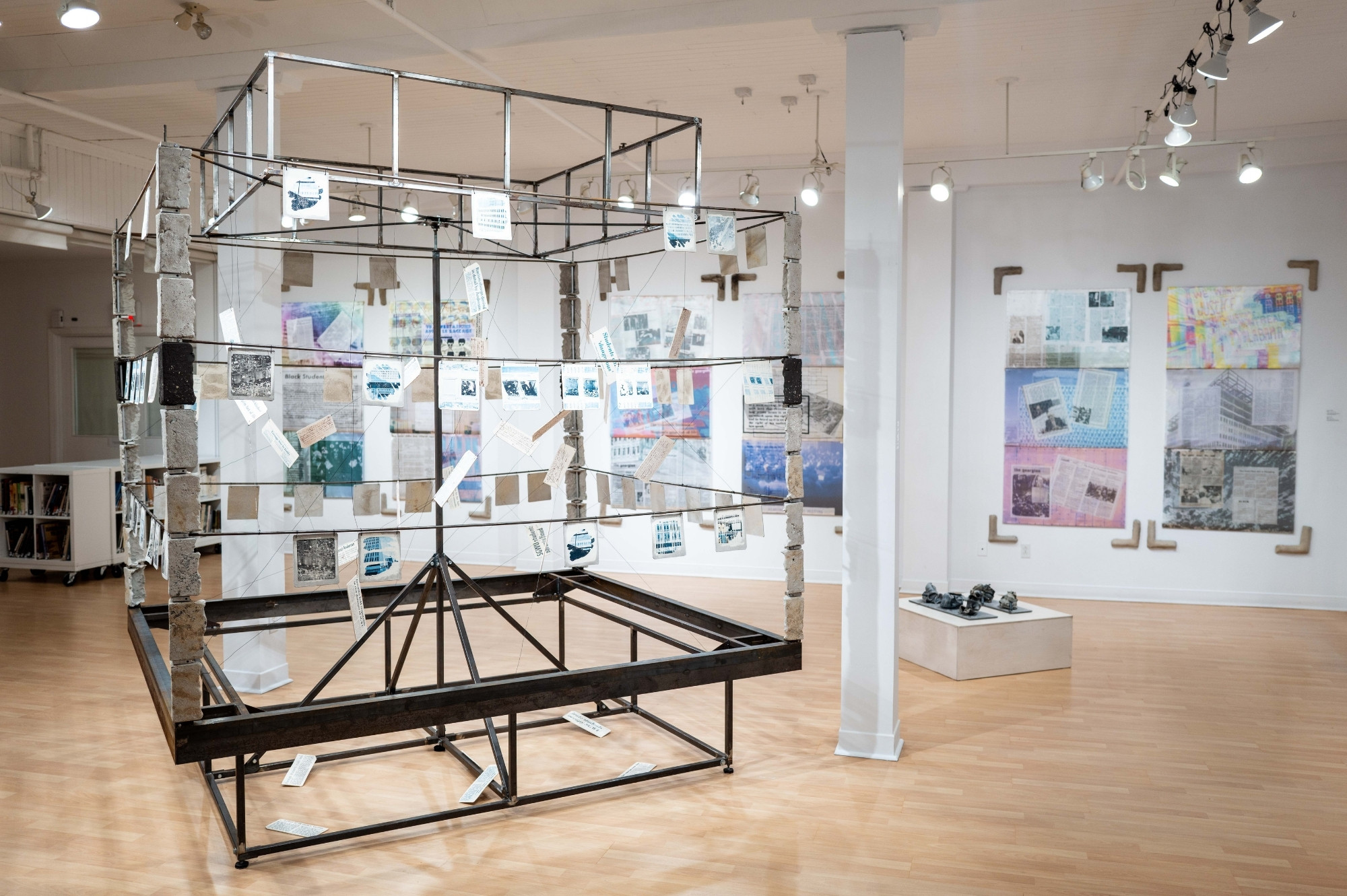
I decided to center my attention on the Henry F. Hall Building, the building that the students occupied for 12 days over five decades ago. The building itself, a physical witness to history that offered no answers; like my late father, it is forever silent. The building was built by the very system that the Black students attempted to expose and challenge. System as structure, is the nucleus of my installation. Power Structure is the pivotal piece in the exhibition. It begins with the ‘feelings’ of being pushed into corners. I physically pushed my fists and my knuckles into plaster corners, thirty-six times: nine levels in each of four corners show the oppression of being pushed against a wall, into a corner. The corners frame a hollow steel structure that evokes the Hall Building, while at the same time lays bare the hidden reinforced steel which form the skeletal frame of the brutalist concrete architecture designed by Ross, Fish, Duschenes and Barrett, one of the white, male, hetero led premiere national architectural firms of the day.
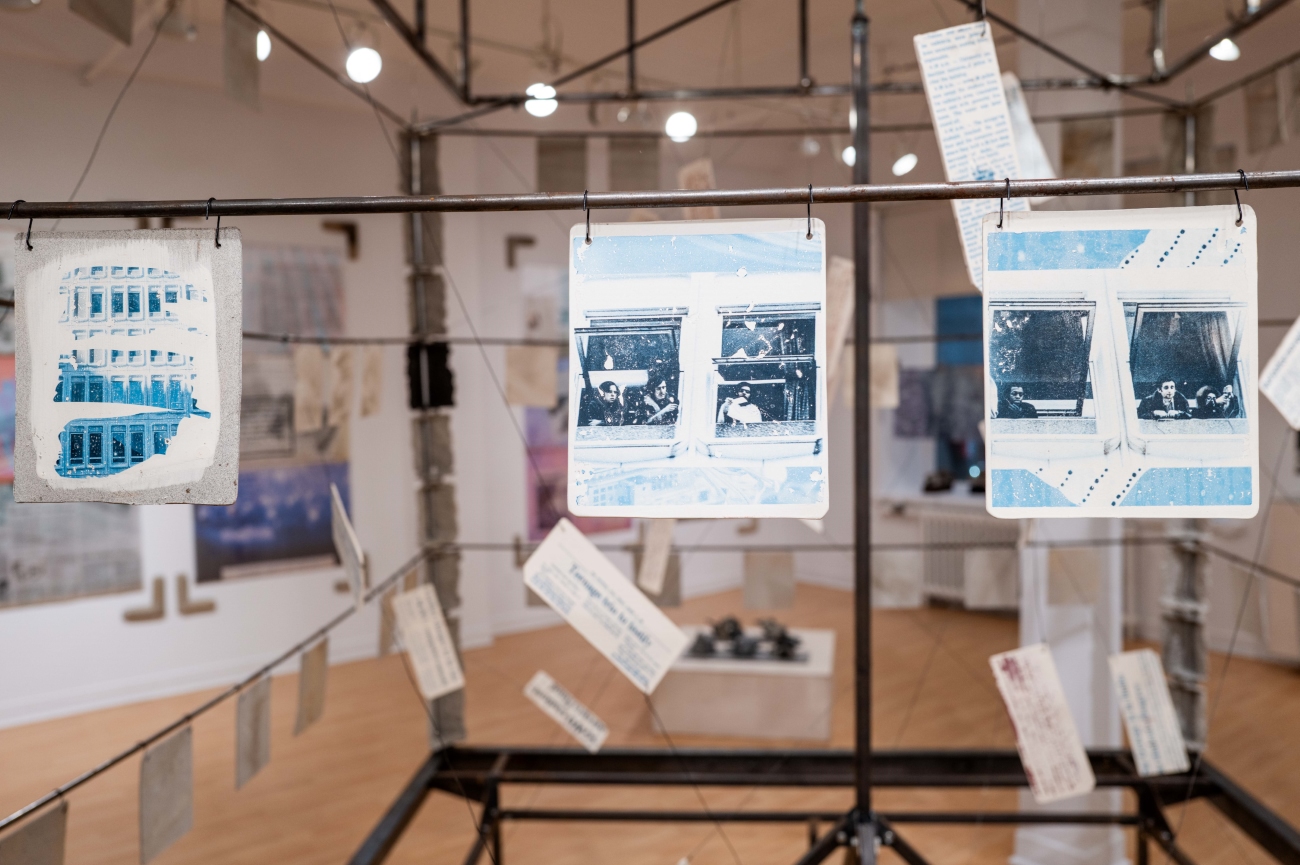
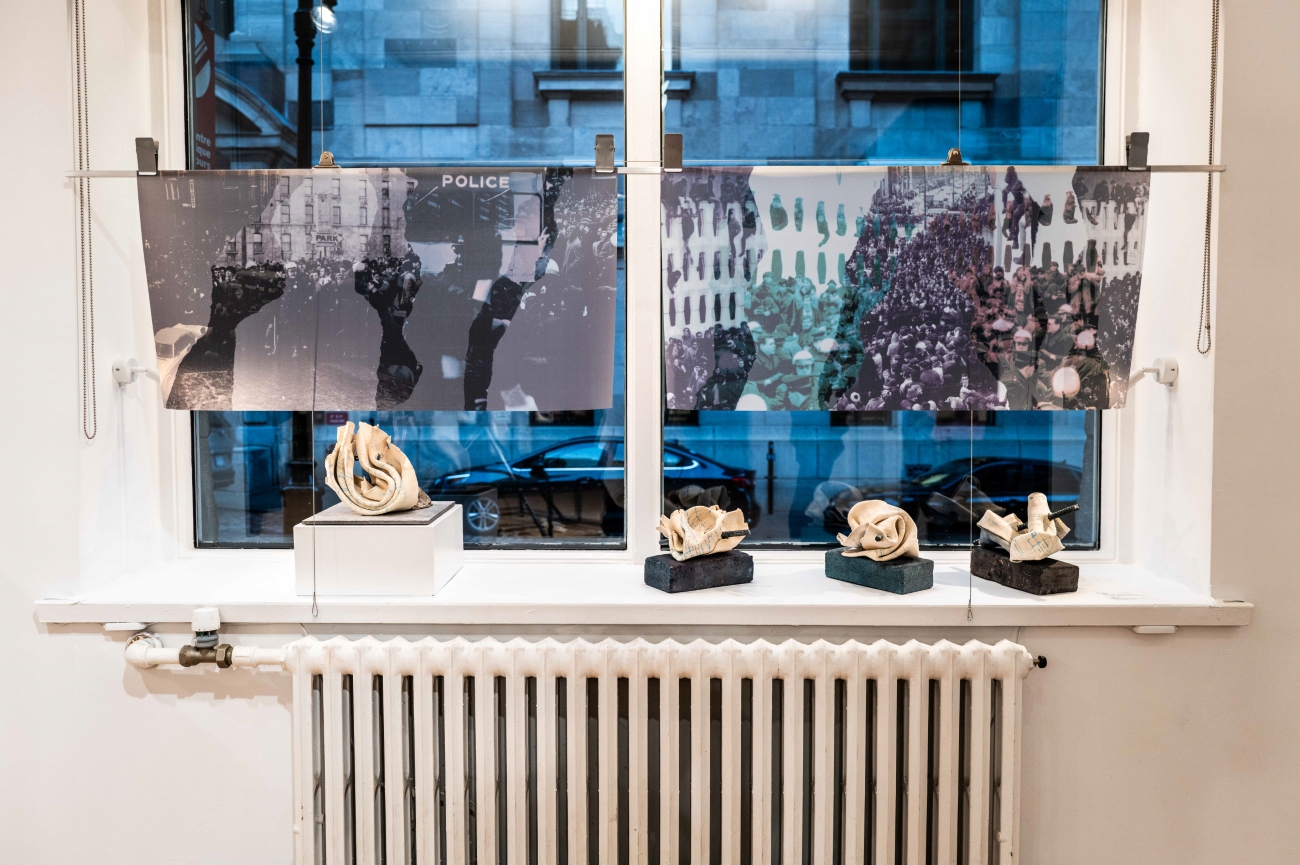
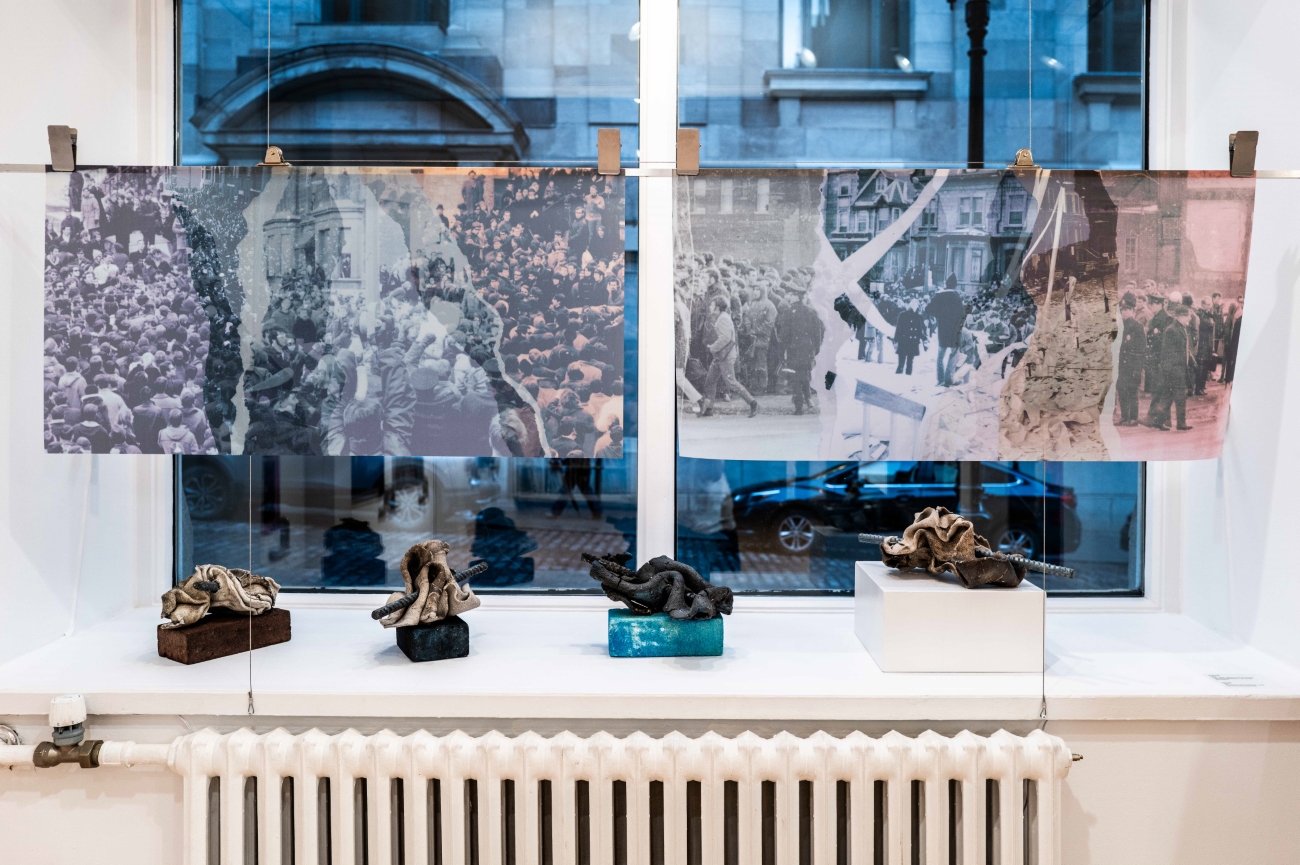
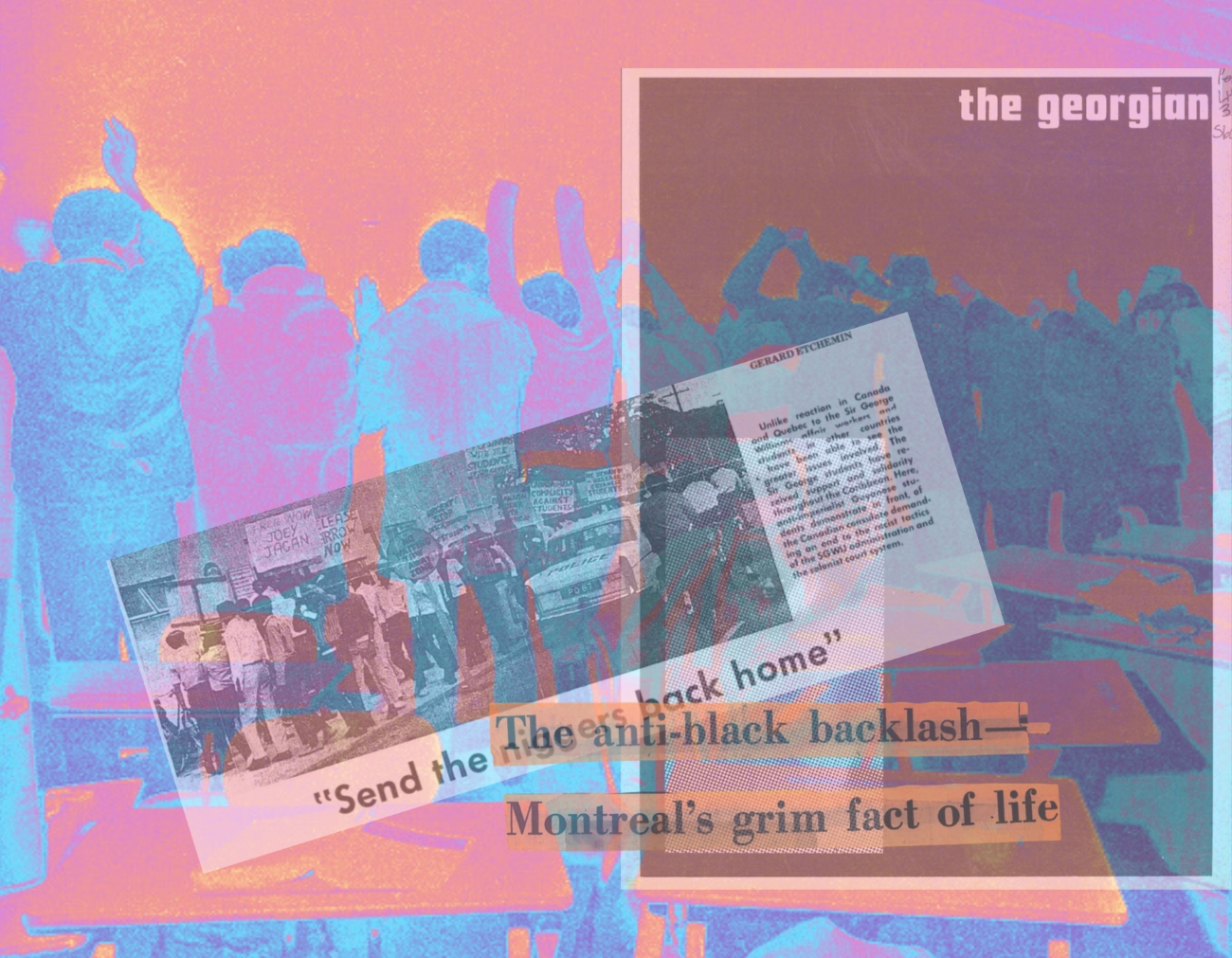
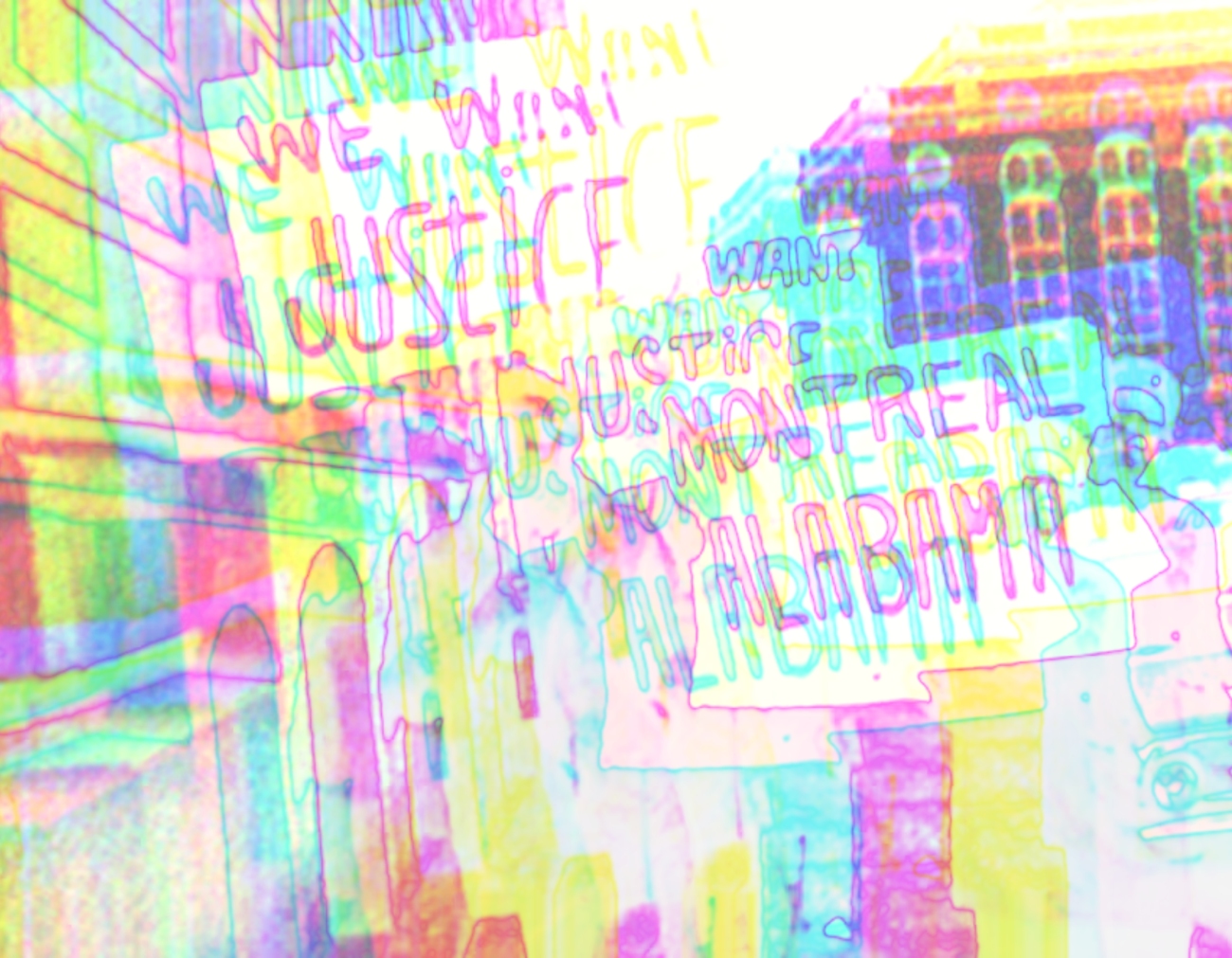
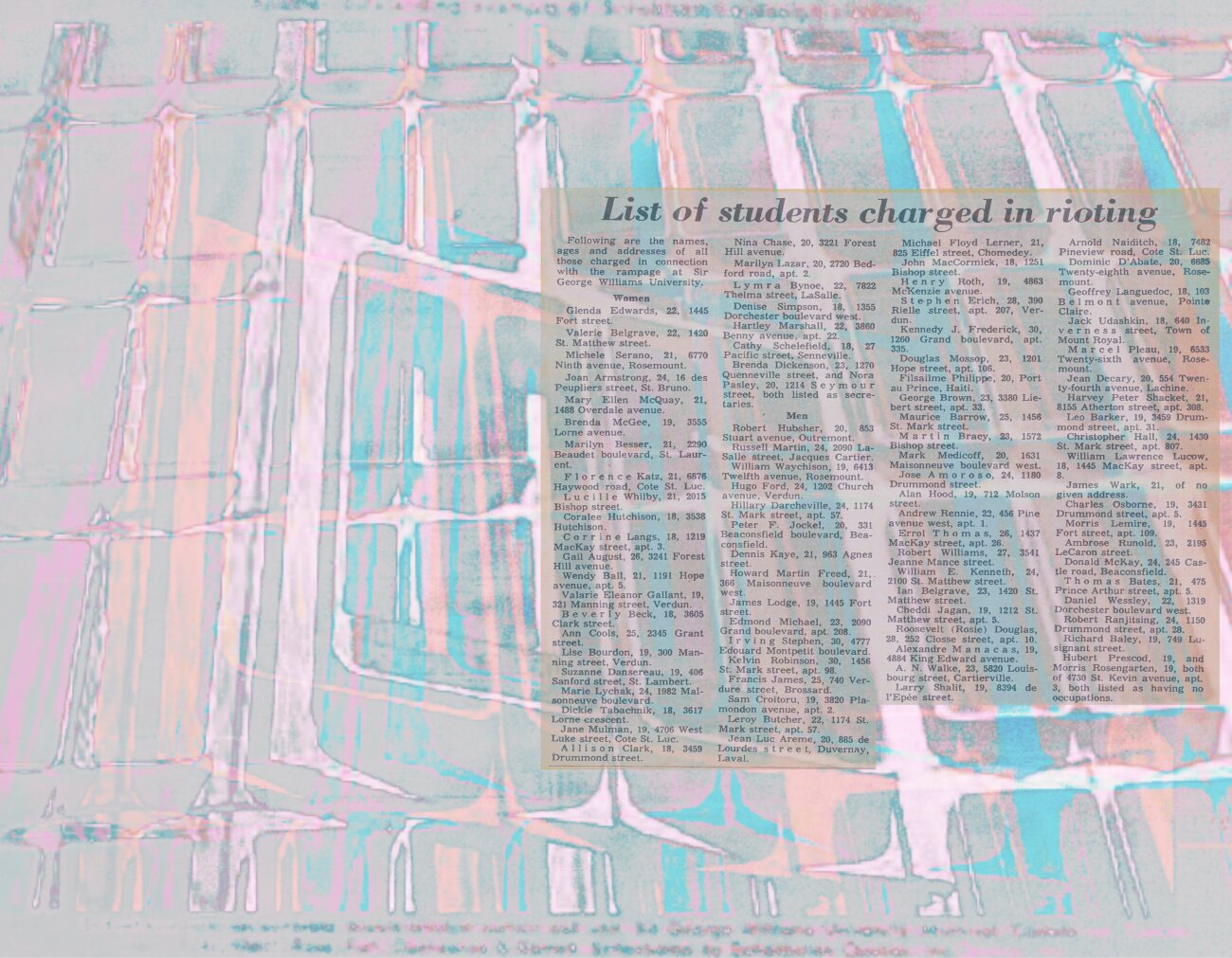
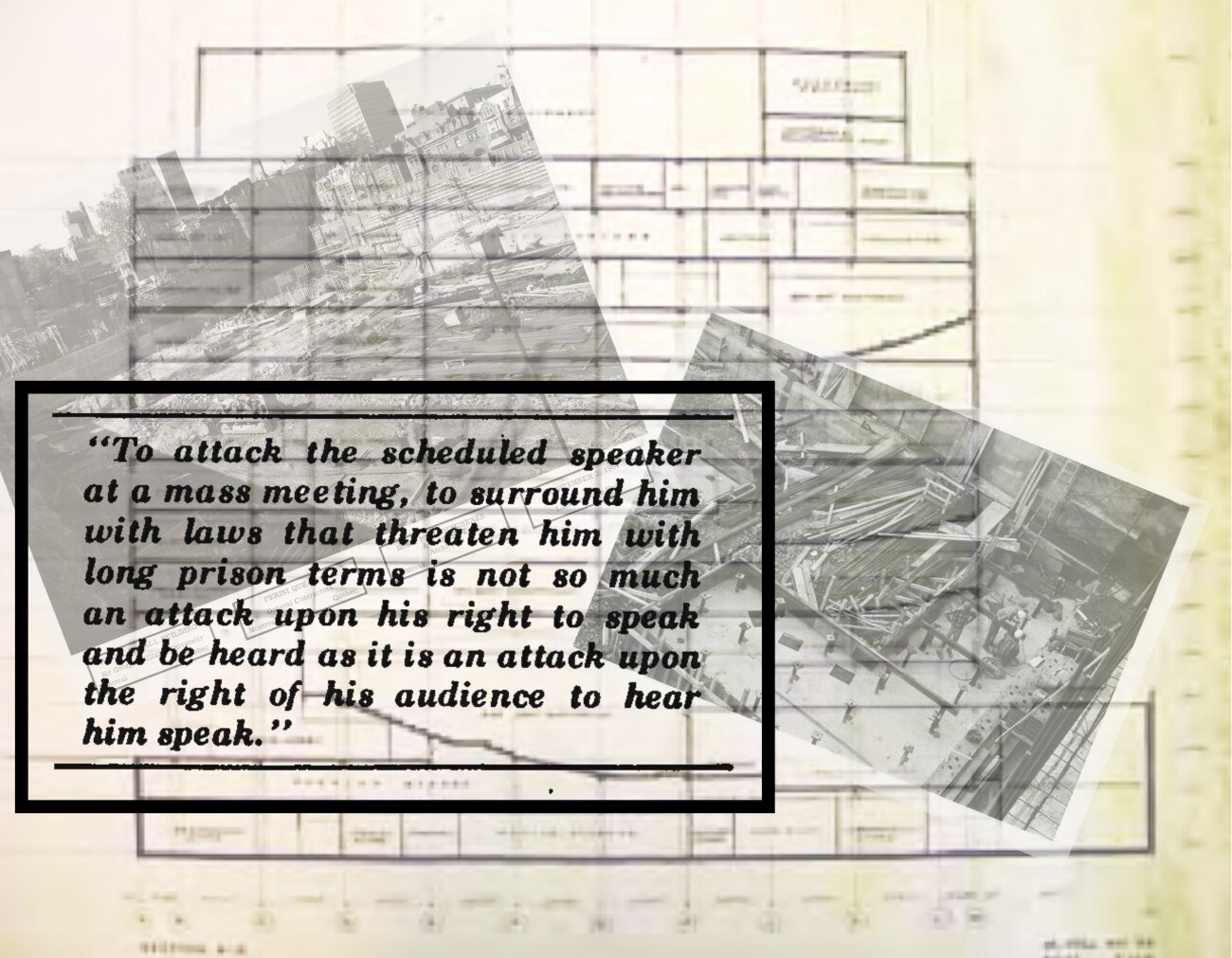
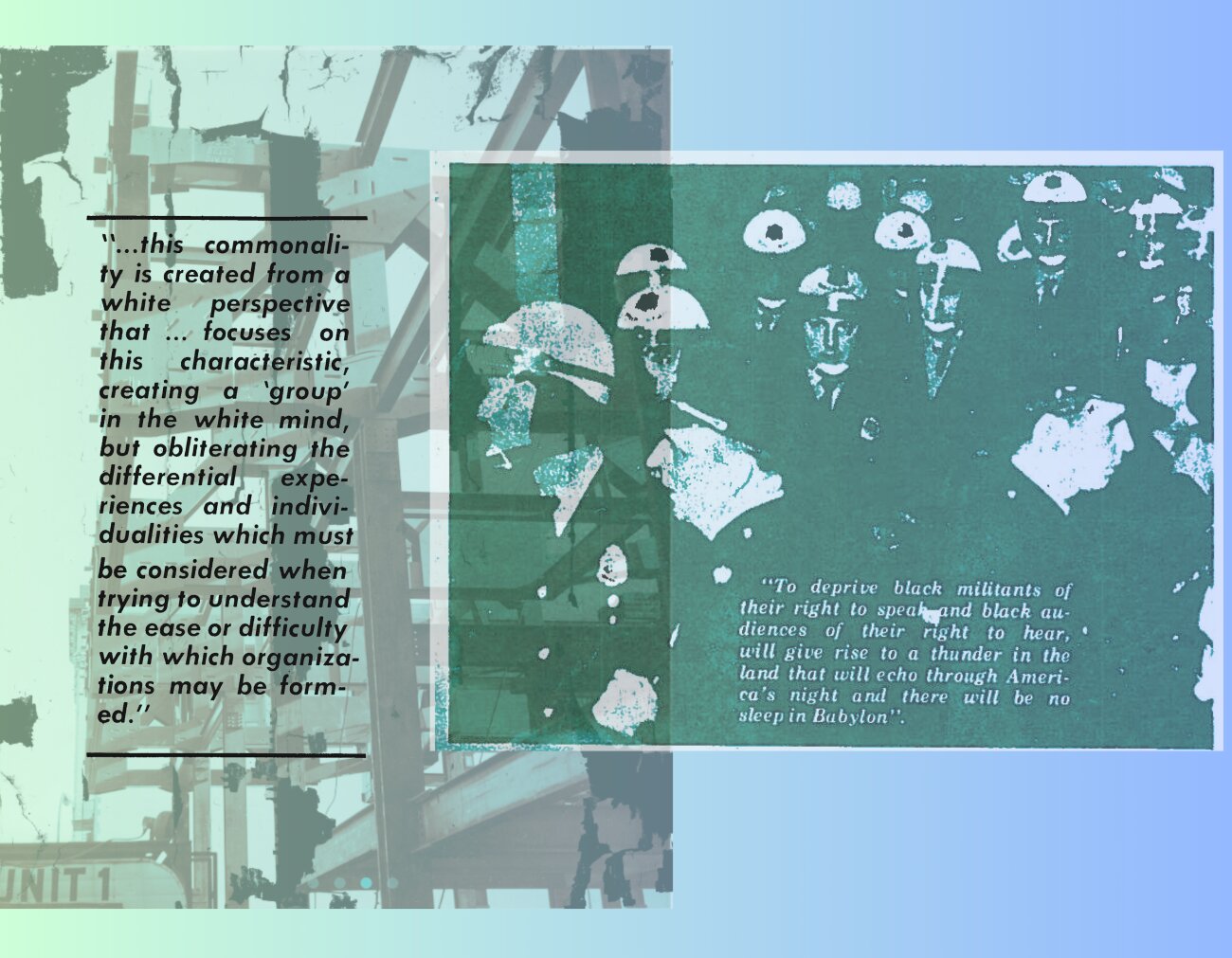
I have stacked the corners of the Power Structure on steel rods, and populated the grid-like space with suggestions, possibilities, and enigmatic visual triggers, fired onto a granite clay body, that when underfired, resembles concrete. The images on the tiles are distorted by the firing process, a metaphor for the distortion of truth surrounding the fire that was the disastrous culmination of the police raid and arrests on the sit in. The definitive truth of the incident has been so distorted through the media, through the passage of time, and through the necessarily transfigurative retelling of story. I rely on archive, and yet I also see the events through my own lens – that of a racialized artist, trying to find meaning in my country’s checkered past and my own mixed heritage.
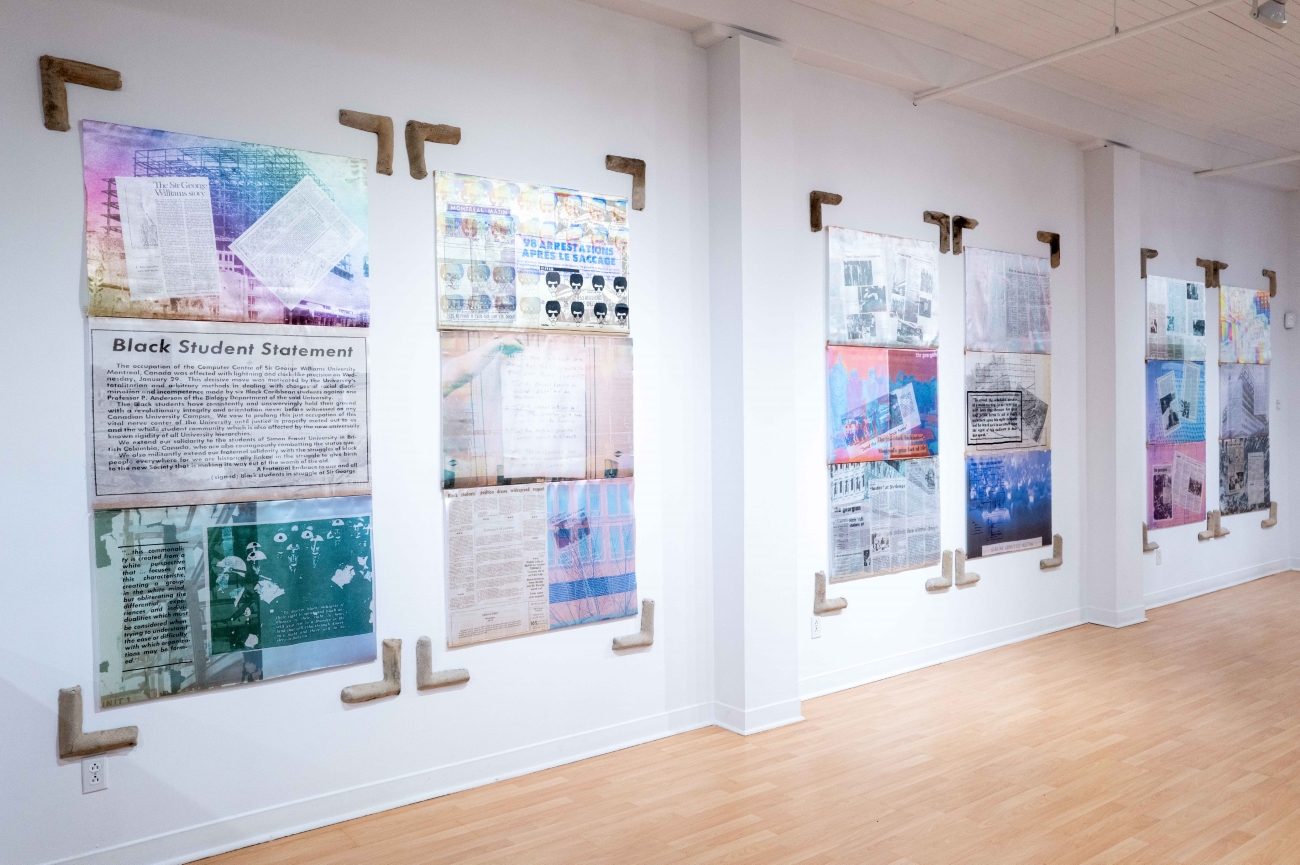
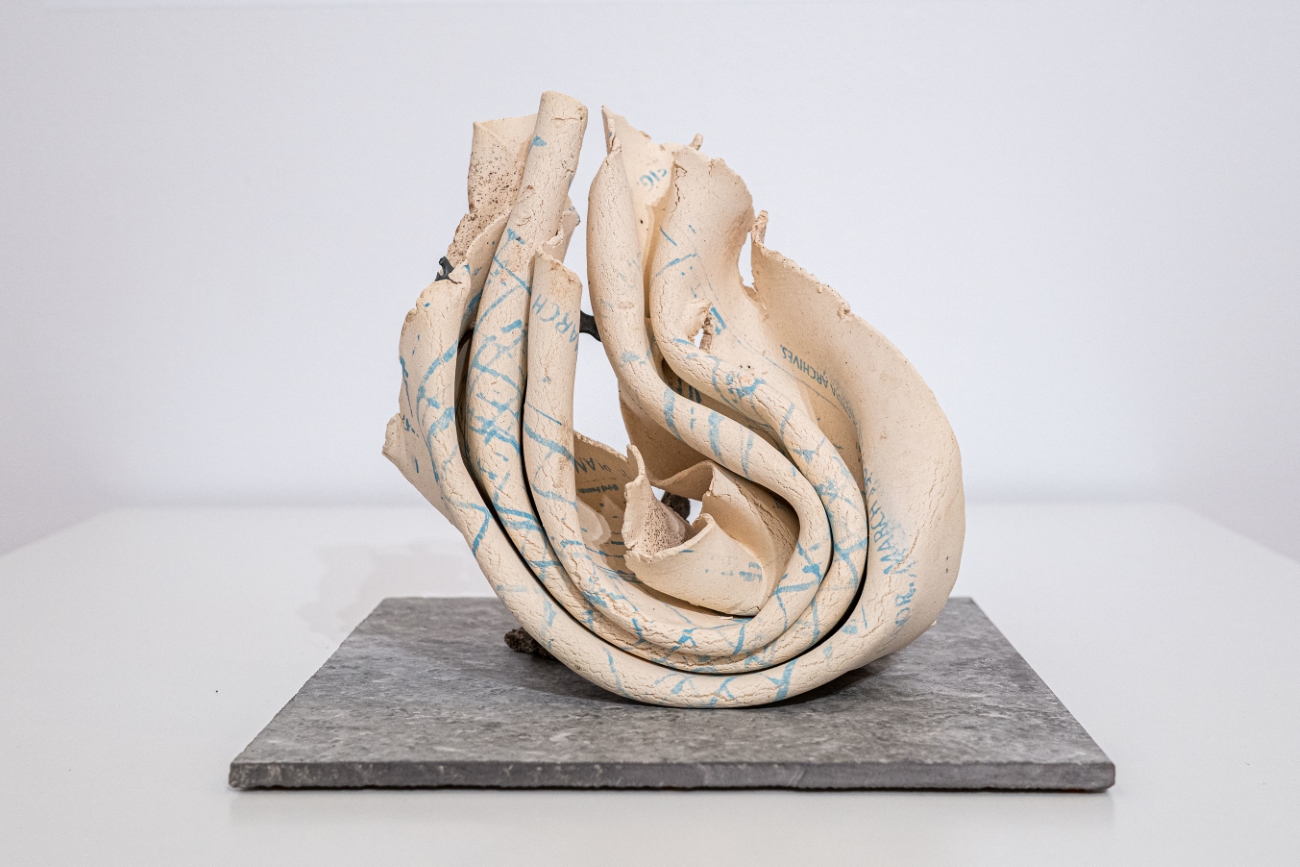
I swept the actual salted stone and grit from the sidewalks along Mackay Street in the winter of 2024, and pressed it into the creases of the stacked corners. The clay crumbled from the salt after sitting for several weeks. Another metaphor. I mixed the clay with cement – clay and cement being familiarly acquainted through the silicone arts. I ‘slapped’ the clay onto the floor, strewn with pebbles and post-firing debris. I hung ceramic fragments with photographic glimpses of the past, headlines, news clippings, pixelated black and white photography – the charged racial politics of the time. I scattered ceramic computer cards on the ground and suspended them within Power Structure, reminiscent of the rainfall of computer punch cards, that fluttered from the ninth floor in silent protest onto the streets. Perhaps the most iconic image of the protest – the ‘rain’ of paper cards.
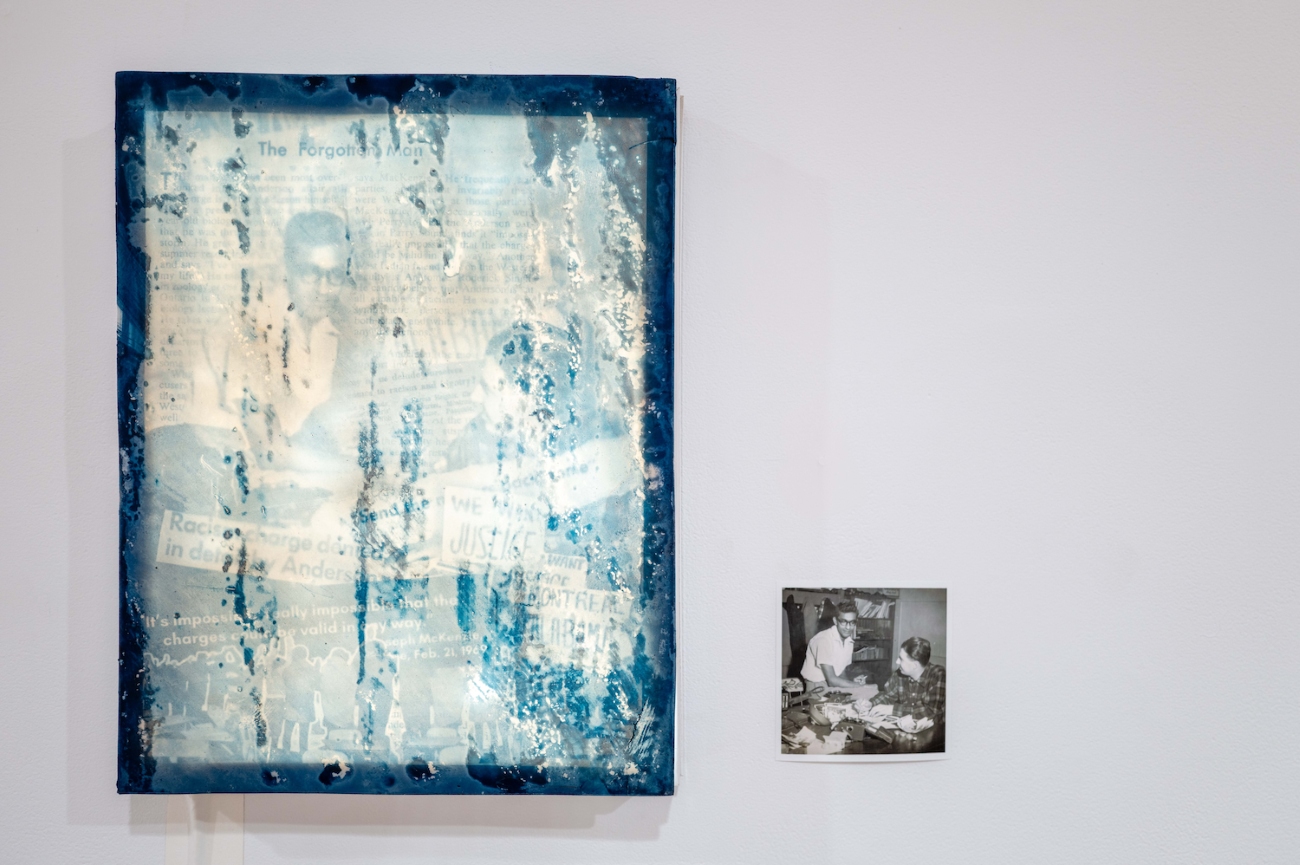
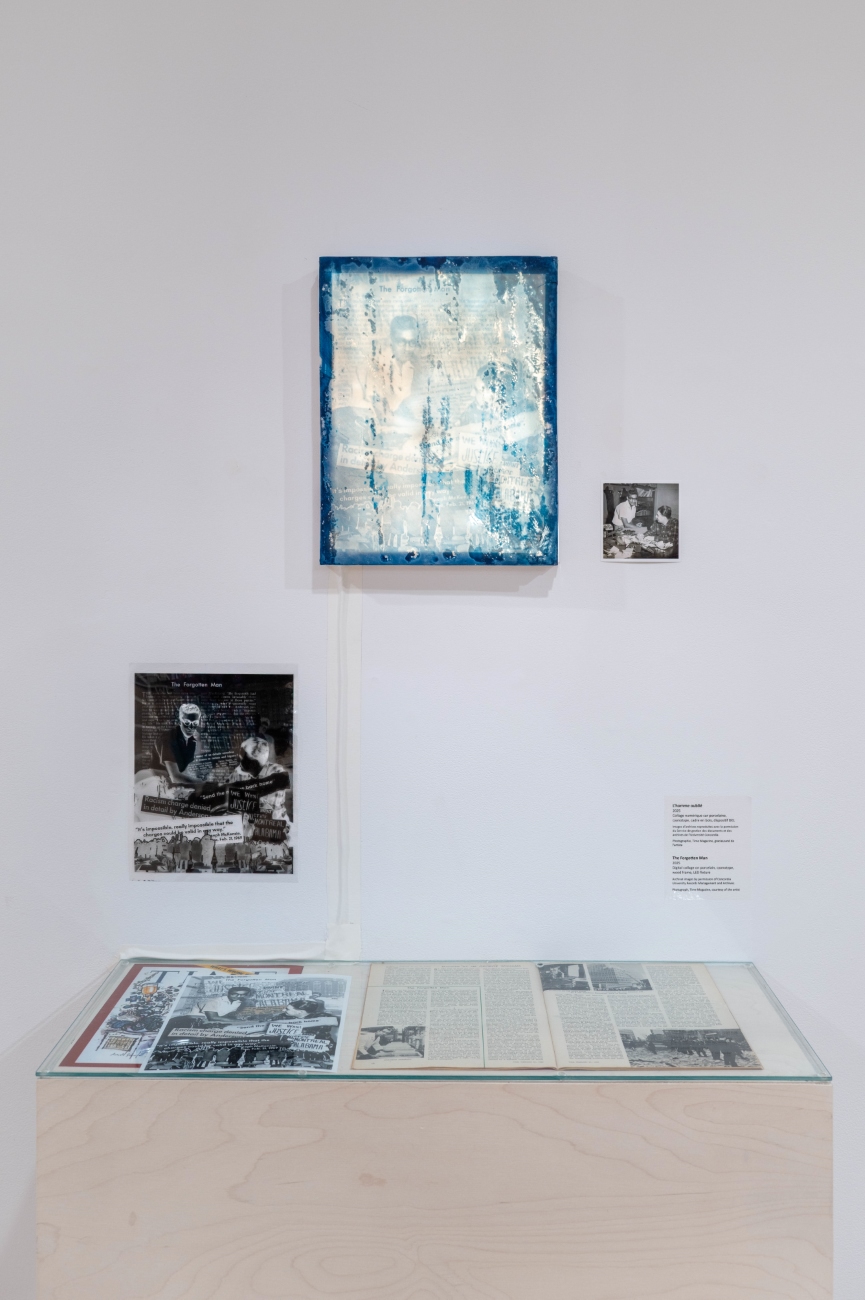
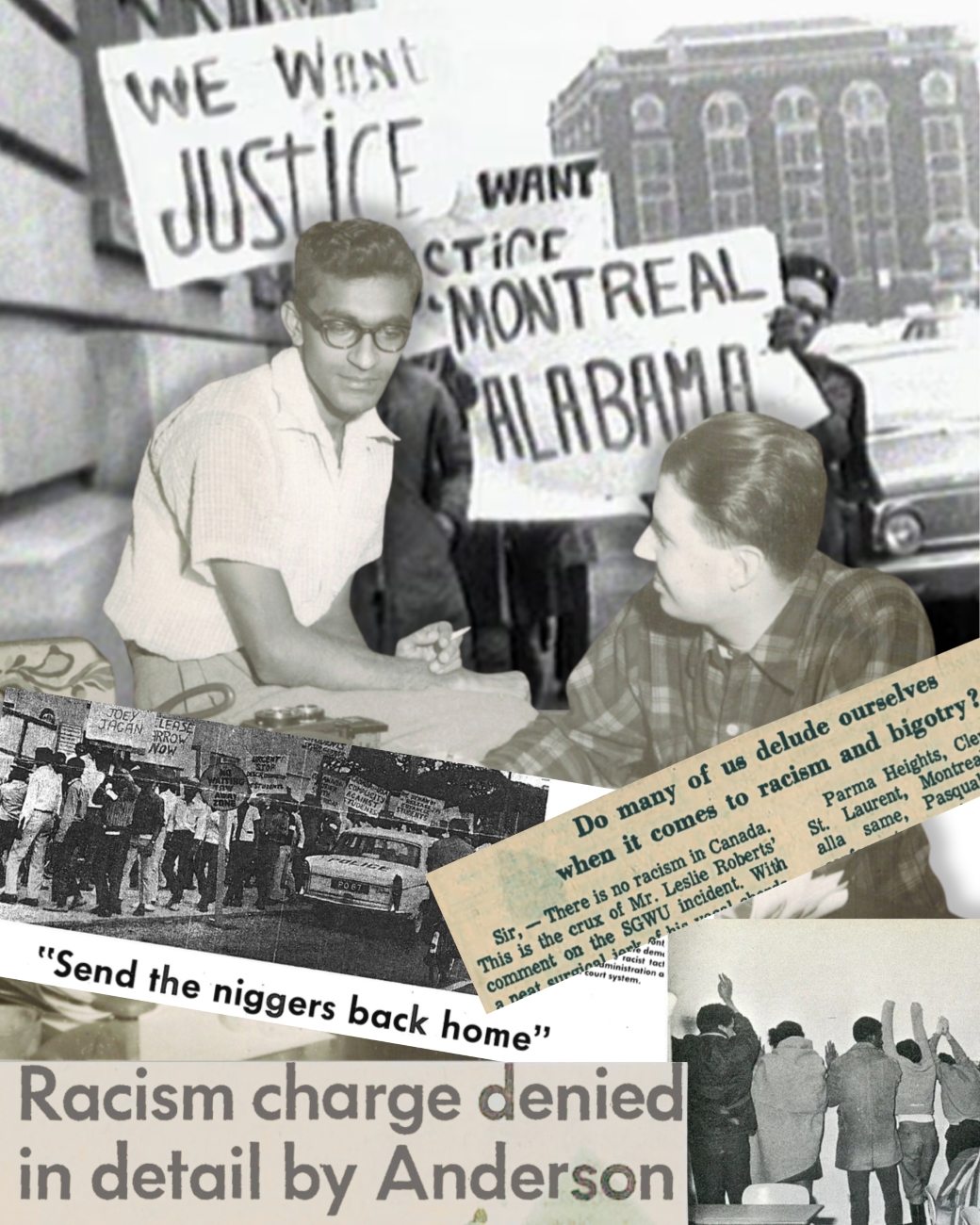
In the spring, as I was testing different clay bodies for punch cards, serendipity startled me with a life-altering intervention. I had had five pages of newspaper clippings from the several hundred I had reviewed from the Concordia Archives printed in black and white on decal paper to use as tests. I cut up sections of the pages and applied them to different unglazed vitrified ceramic surfaces. I was hoping to use paper-clay, its pinkness and relative weightlessness mimics the stiff thin card paper of the punch cards from the late 1960’s that I remember using in our family as grocery shopping lists for years after they became obsolete. One of the tests simply wouldn’t stick to the tile. I tried and tried. Exasperated, I pulled out the Elmer’s white glue, and as the decal refused to be placed, I noticed in small print, at the top of a column, the name ‘MacKenzie.’ Then on the previous column, at the bottom, ‘Joseph.’ Then I read the descriptor, ‘West Indian’ then the word ‘Trinidad’ , and I instantly knew I had been gifted the certitude of my mother’s claim that my father had been interviewed about Perry and the Sir George Williams. I traced the excerpt to an article published on February 22 in Times Magazine. Her memory had distorted the source, but there was my father’s character witness in black and white in an article entitled, “The Forgotten Man.”
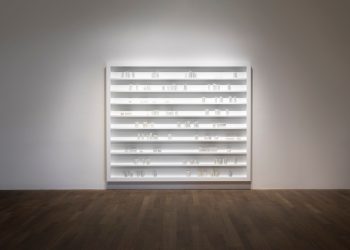
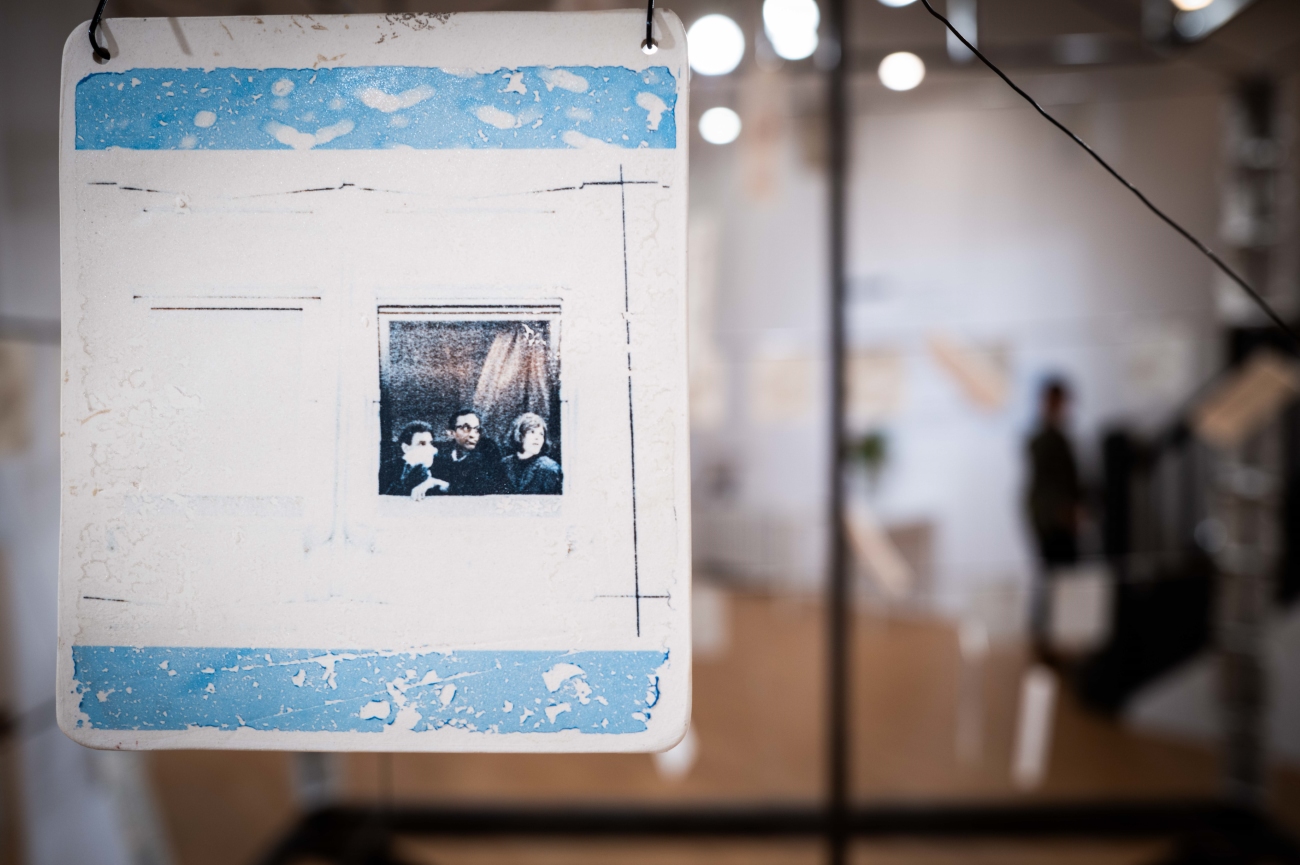
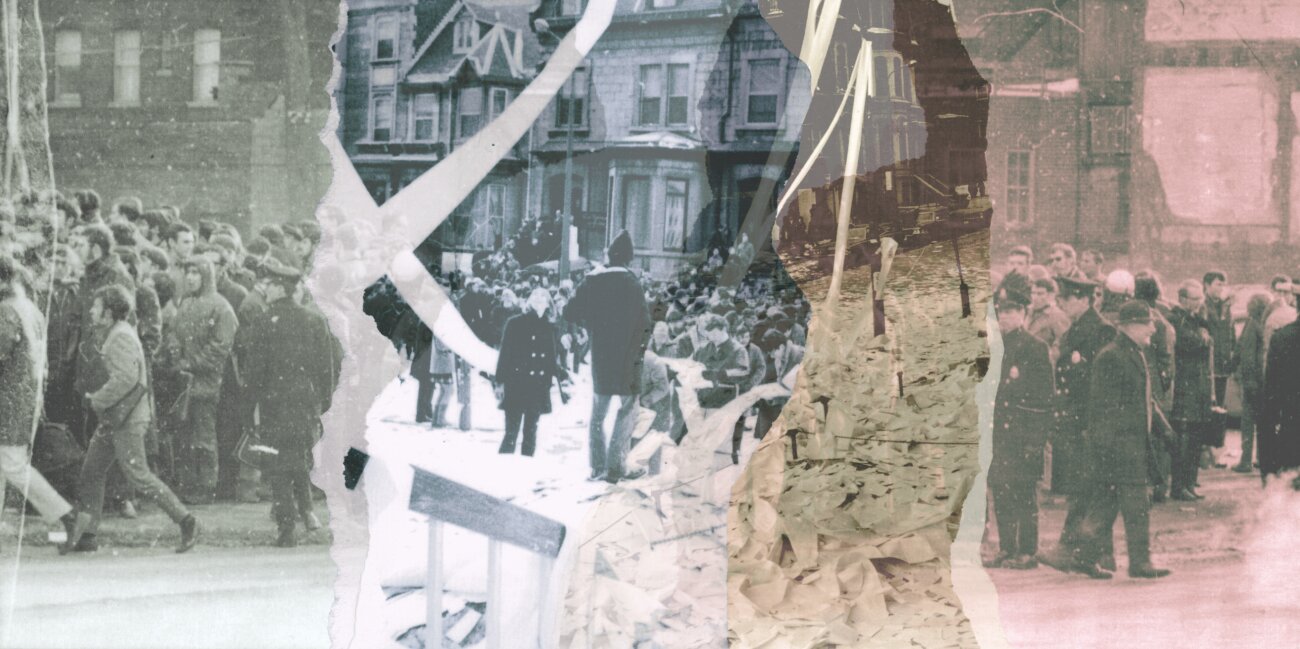
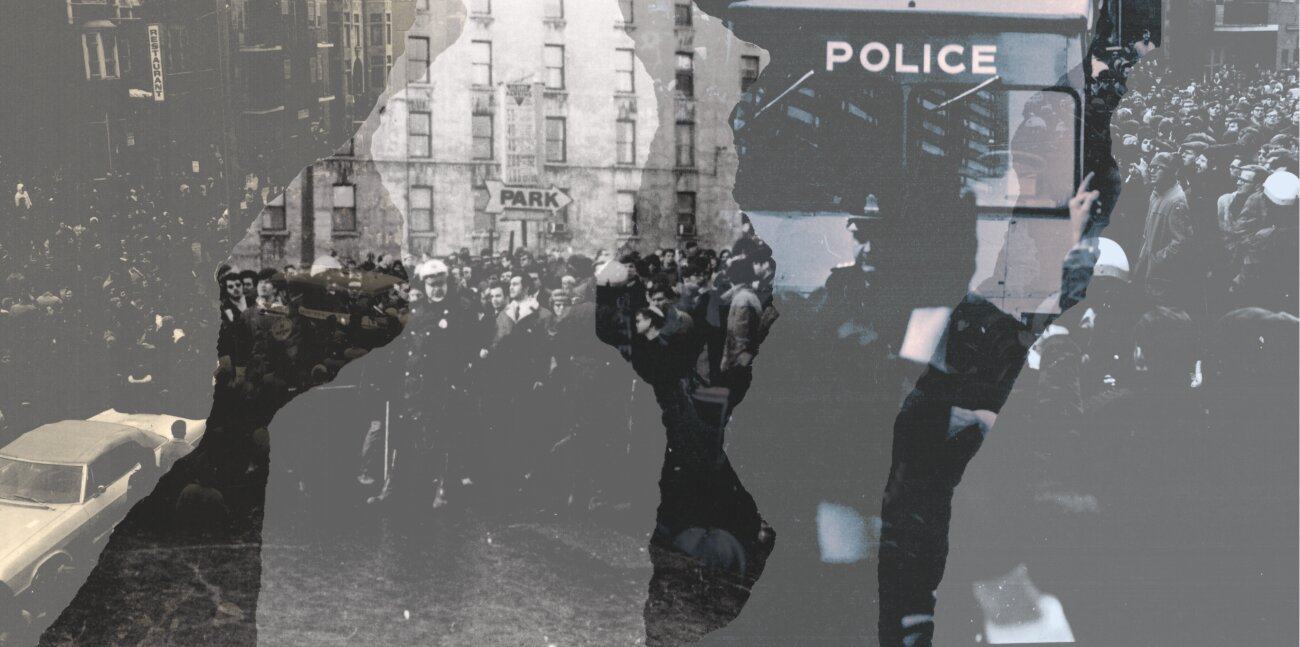
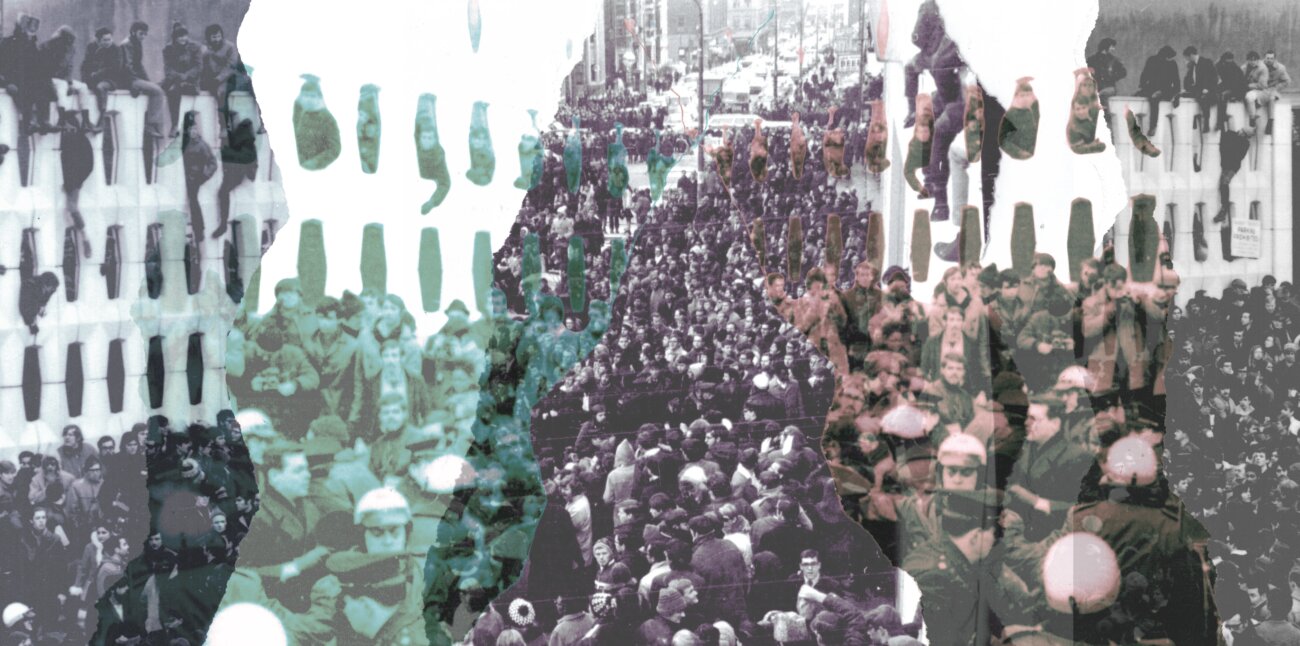
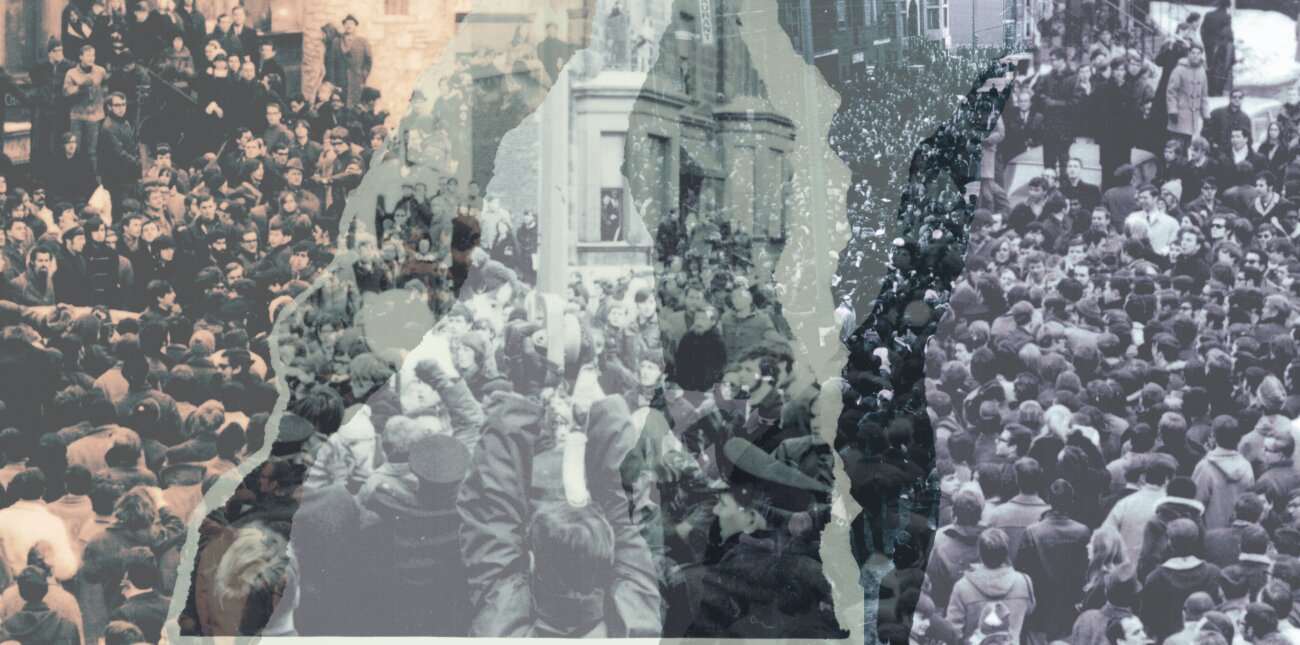
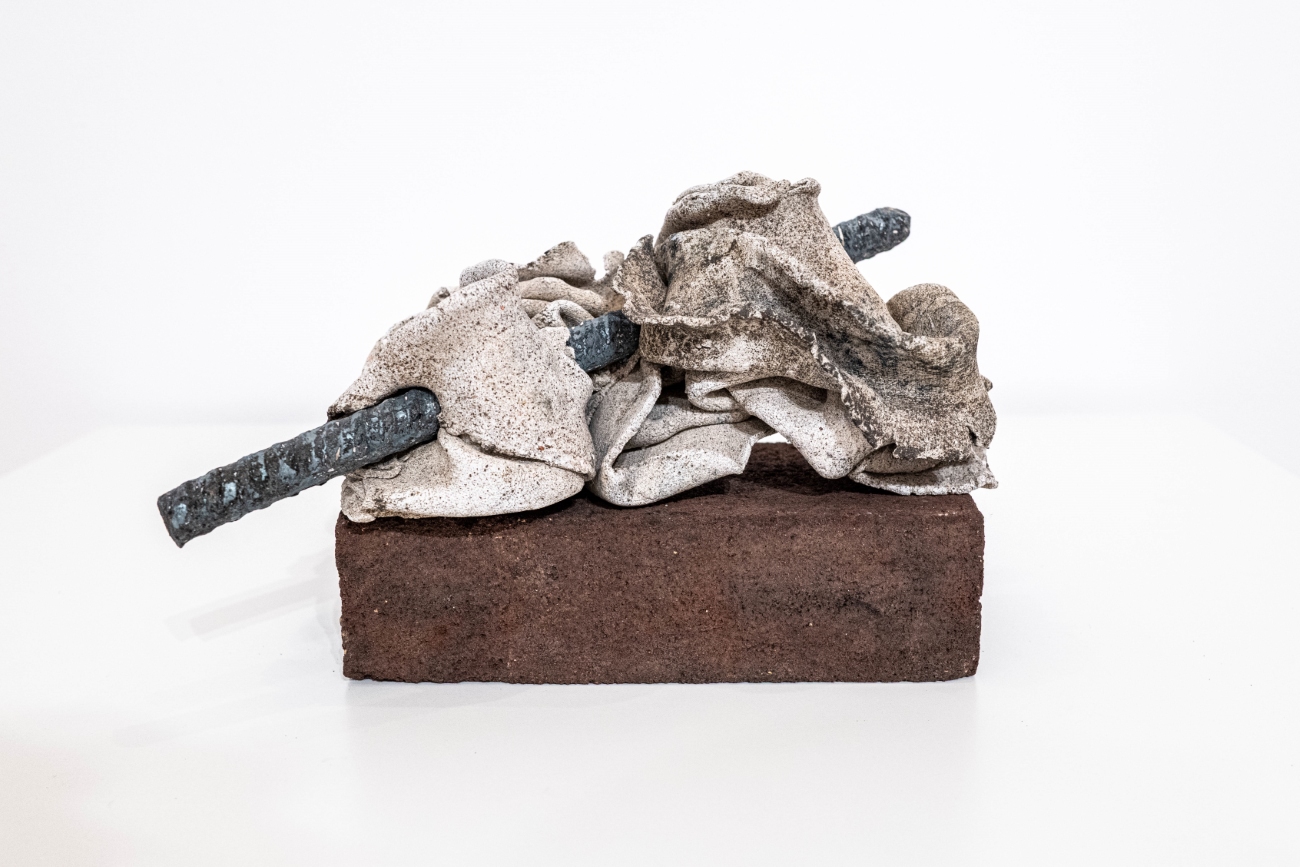
The title seemed to define the exhibition, and it stuck. I created a digital collage featuring a photo of Perry and my father, the headlines from the day and the Times article as a backdrop. I pulled a cyanotype print on porcelain, backlit it, and set up the ephemera and art in the gallery. The rest of the installations came easily, fast and furiously. I found a blueprint of the 7th floor of the Hall Building in a 1976 published PhD paper, and used it to screenprint onto paper-clay, then crumpled the clay and pierced the objects with rebar. I wedged cyanotype blue pigments into concrete-like clay and did likewise. I ripped the street scenes of the protest into pieces and recomposed them digitally and output them as semi-transparent ‘smoke screens’ on mylar and hung them in the windows.
I designed six life-sized windows, each 3′ x 6′ comprised of three tableaux of archival digital collage: bold colours, disturbing photographs, newspaper pages of unsettling echoes from this near-forgotten past. Somehow, I begin to reckon with the past, its ghosts and its reverberations. Perhaps most importantly, I purposefully nudge my generation and the next generation off of our fulcrums, out of complacency, and into a portal of curiosity in order to seek our own truths, find our own meanings, assess our own values and beliefs with regard to what was, and what might be.
Heidi McKenzie is a ceramic artist and arts journalist based in Toronto, Canada. She completed her MFA at OCADU in 2014. Working across ceramics, photography, digital media, and archive, her practice draws on her Indo-Trinidadian and Irish-American heritage to explore ancestry, race, migration, colonization, and healing.
L’homme oublié : tenir compte de l’affaire Sir George Williams, 1969 was on view between October and November 2025 at Centre de céramique Bonsecours, Montréal.
Subscribe to Ceramics Now to read similar articles, essays, reviews and critical reflections on contemporary ceramics. Subscriptions enable us to feature a wider range of voices, perspectives, and expertise within the ceramics community.
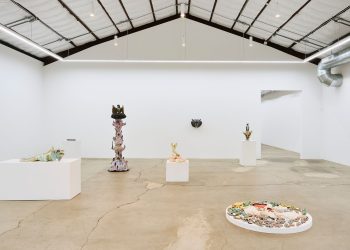
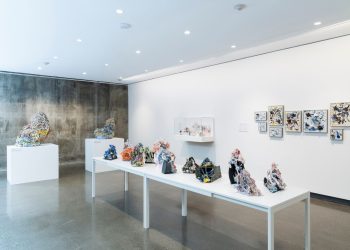
Installation views by Olivier Lamarre.
Archival images courtesy of Library and Archives, Concordia University.