By Heather Jo Davis
You’re at a party, or some similar gathering that mixes old friends with strangers, and one of the new people finds out that you are an artist. Their face lights up, and they ask, “Oh! What kind of art do you do?” … What do you say?
Do you say, “I am a painter,” or “I am a sculptor,” affixing your identity to the type of work that you make? Do you say shyly that you “work with” plaster or found objects, transferring the focus of the conversation to your favorite media, making it the star? Maybe you feel more like a craftsman and you answer that you’re a potter or a carpenter. Does your answer change depending on who’s at the party and who’s asking the question? Maybe you’re in a room full of academics, professional “philosophizers,” and you take a more appropriately philosophical approach. You say, in earnest seriousness, “I investigate the meaning of life and what it means to be human through material exploration.” Wow, what a grad school answer.
As we grow as artists, as we explore and learn more about ourselves and about the world, how do our answers change over time? How do our answers change as we change?
I fell in love with clay my last semester of undergrad as an art student. Photography, which was the focus of my major, was fun, quick and mechanical. Painting required patience, and, as many painters will relate, many times I would pass the threshold of diminishing returns to the point of ruining what was a perfectly good painting half an hour ago. Working with clay was satisfyingly difficult, and I was satisfyingly good at it. Clay is needy, tempermental, requires hand/eye coordination, mind/body connection and a deep technical and material knowledge to become a master. Unlike painting, clay has a limit and is only workable within a predictable time frame. Clay also requires a stubborn, never quit personality, which I have in spades.
My thirst for knowledge led me to develop my own glazes and clay bodies, and for a long time, I was almost more interested in the chemistry of ceramics than the forms I was making. However, I loved making pots designed for specific uses: a short, fat whiskey tumbler, a tall graceful lemonade pitcher, a casserole, a teapot. I was deeply invested in function and had many competitive studio conversations about the perfect handle, the perfect lip, the perfect glaze.
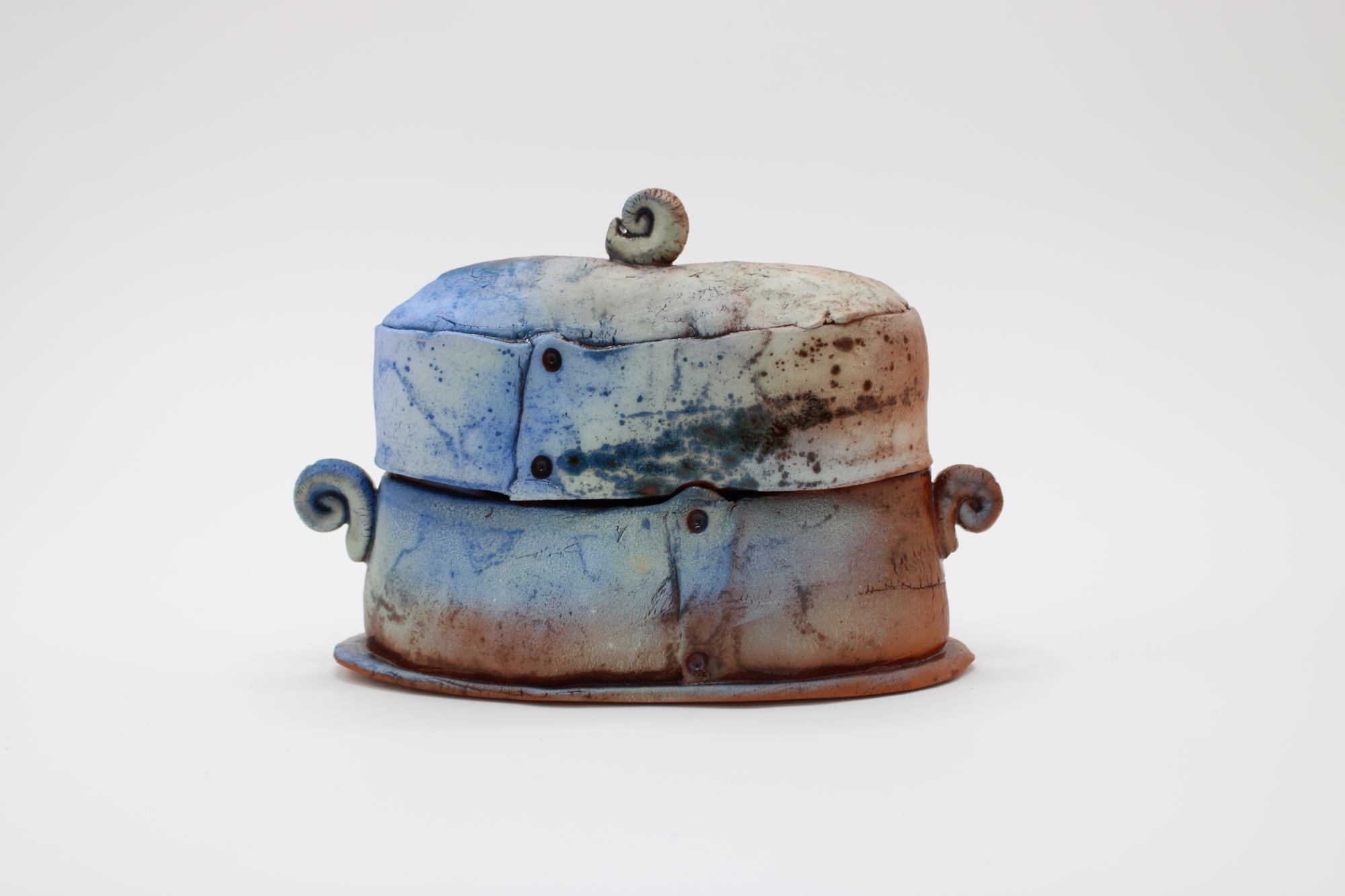
There is a blue collar pride common amongst potters, even those who climbed the ivory tower of academia. This pride seems eerily similar to that of doctors who, in their confidence, know that their vocation contributes value to the community. Potters make objects that become an integral part of another person’s life, the object through which one is able to nourish themselves or their loved ones. Interestingly, there is a common phenomenon that potters who go to grad school will evolve into conceptual artists to the chagrin of their studio friends and community members. Many of us succumb, myself included.
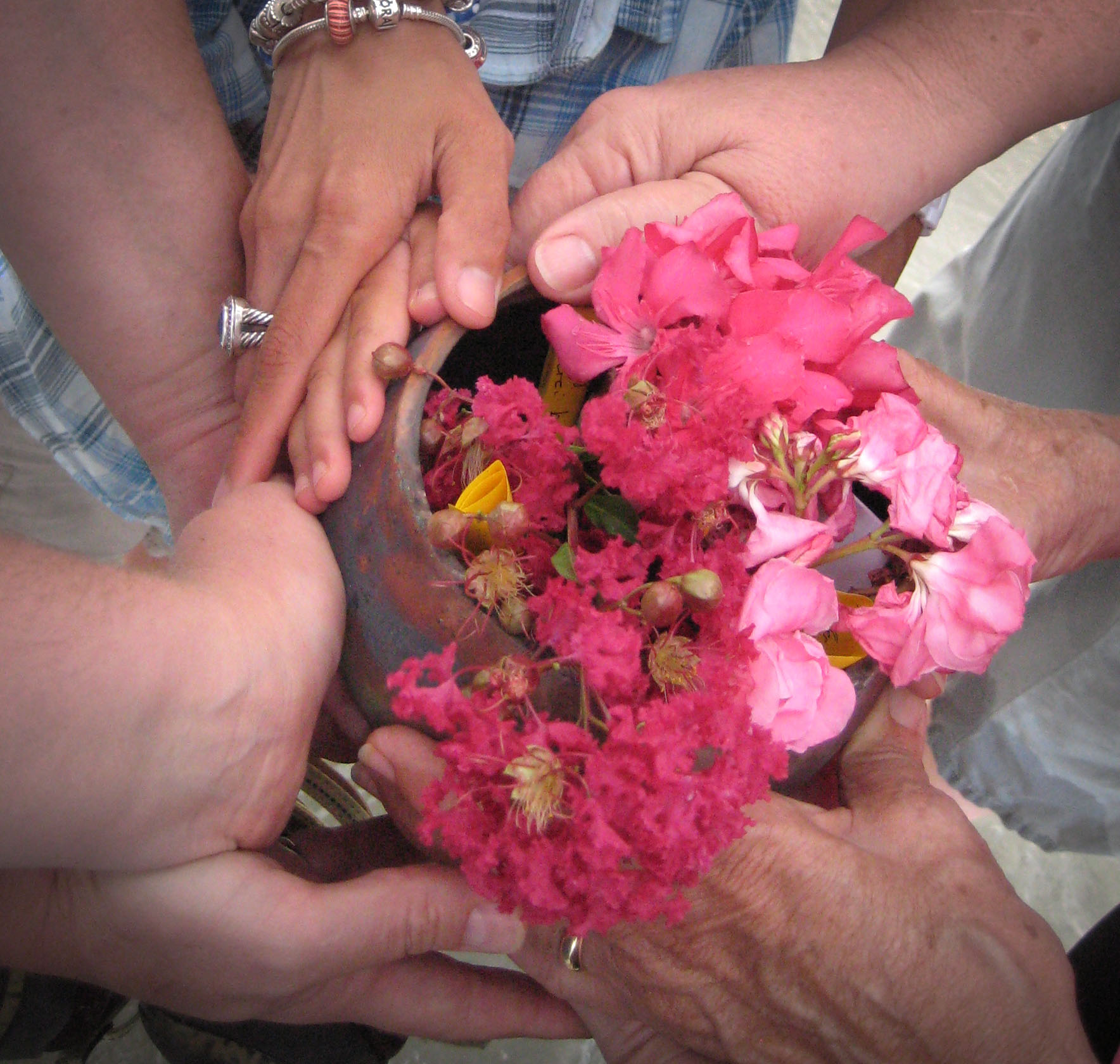
Early in my first graduate experience in an integrated arts program, (a program where students choose two or more media for the focus of their thesis), I was meeting with my ceramics advisor, finding narrative threads in work made prior to grad school, and I showed her something that I called Of ering Bowl. When I was in my late 20’s, amongst my extended family, we lost five dear loved ones within five years. Understandably, we were hurting. One summer at the end of this dark period, the family gathered for a healing reunion at a beach off the coast of Georgia. The week before the trip, I made a large pinched bowl out of a single lump of clay, burnished the surface smooth, and pit fired the bowl so that the outside was softly gleaming with smokey patterns of maroon and rich charcoal black. After joining my family at the beach, on one hot afternoon, we gathered in the living room of the cabin, and wrote notes to our dear departed, selected flowers, and placed the notes and flowers as gifts into the bowl. We drove to the beach and stood in a circle, all holding the bowl, our hands overlapping, and then someone, I don’t remember who, said a prayer. Then we walked, as a processional, down to the ocean where we released the bowl with its gifts into the waves.
The physical object, the bowl and its gifts, have probably by now been pummelled to powder by the waves and the abrasive sand. I like to think that particles of the bowl have reached distant shores, and something that I labored lovingly over has been dispersed across the globe. All that is left is a series of photographs that I took on the day, documenting the experience.
My advisor recognized Offering Bowl as more than a simple pit-fired pinched bowl. This, she said, was performance art. While I agree with her insight that the piece is more than its physical construct, I disagree with her categorization. Looking back, I see this work as a grief ritual, and my mind places it separately from my art practice. However, her observation opened my eyes that I could belong to a world of art beyond the functional ceramic vessel, and made me realize that I had already been exploring that world unknowingly.
The first time video entered my work was in the year before I started that grad program – within the year before this conversation. I collaborated with a studio neighbor for a group show, “The Art of Tea.” Potters absolutely love tea accessories. We love teapots and teabowls seemingly more than tea itself. For the show, a studio mate made an enormous teacup sculpture, the size of a large punch bowl, filled it with water and placed a goldfish inside. (The goldfish was only present for the duration of the opening reception, then it went back to its aquarium home.) I made a black and white video to accompany the teacup. Against a black backdrop, I recorded a teapot pouring steaming hot water into a glass bowl. When projected, the bottom of the video, the water pouring into the bowl, landed on the surface of the water in the teacup. The rest of the video, the teapot pouring its long stream of water from above, landed on the wall behind. Rising steam filled the frame. The sound of making tea was played from a speaker nearby.
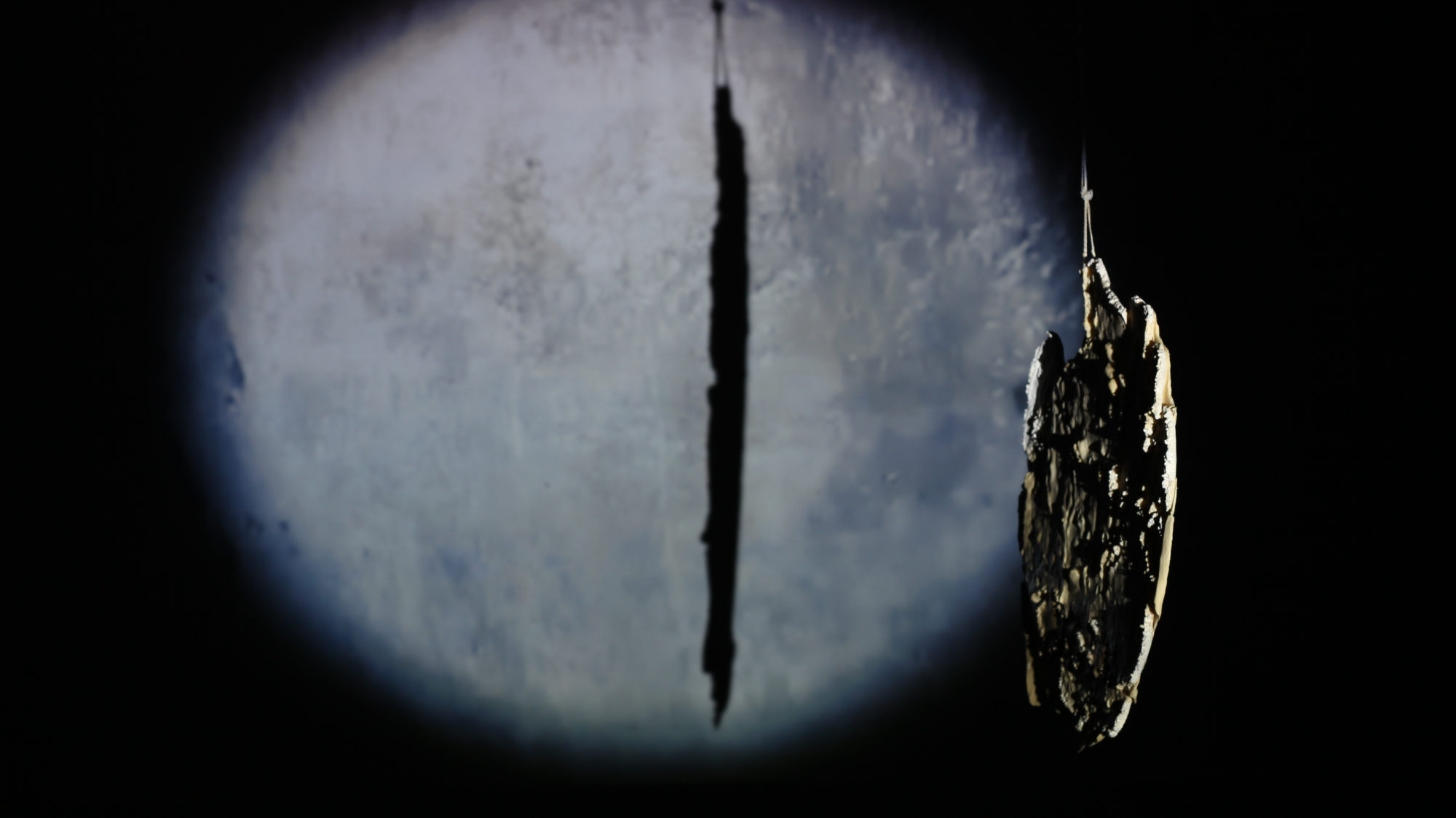
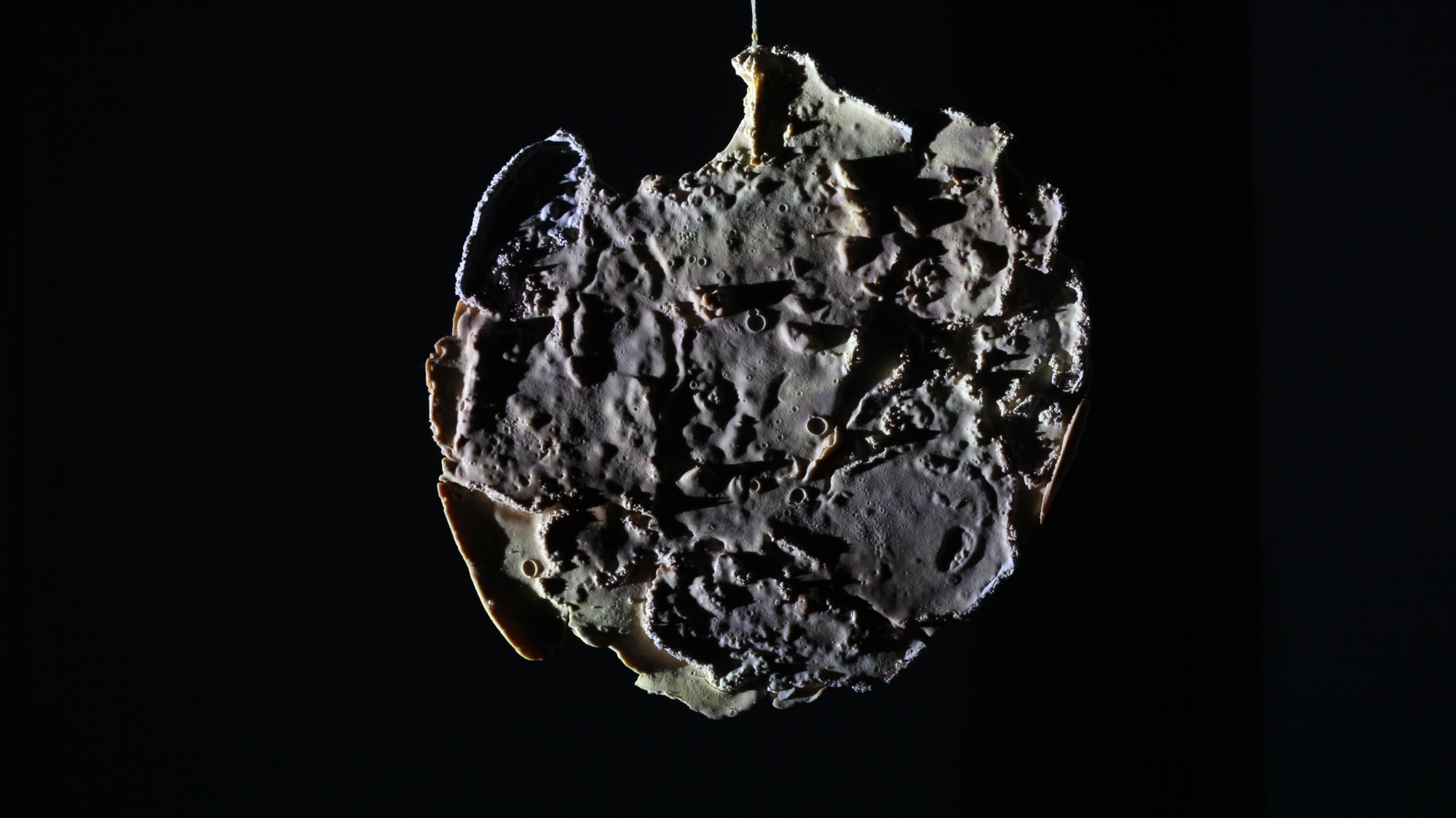
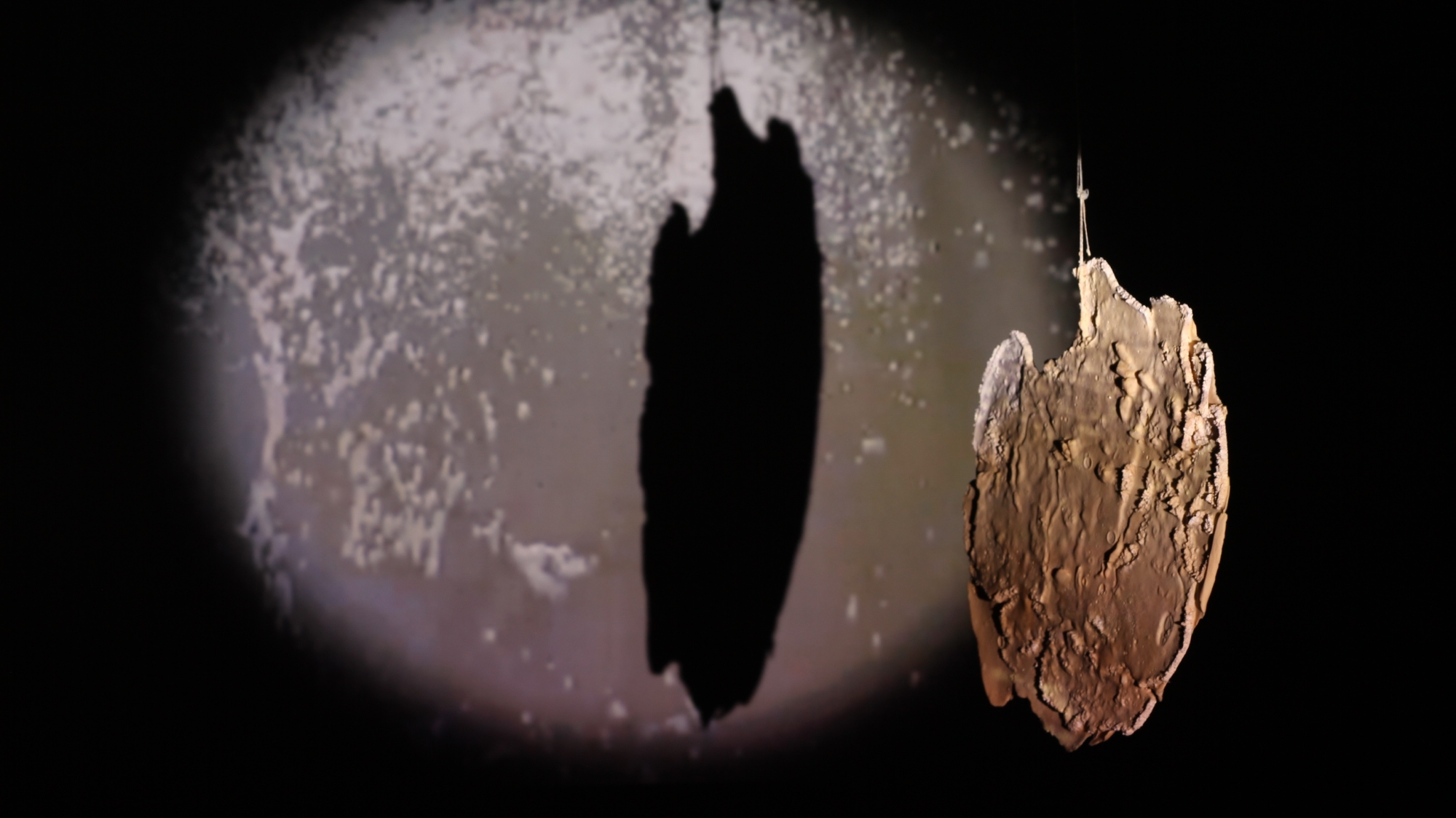
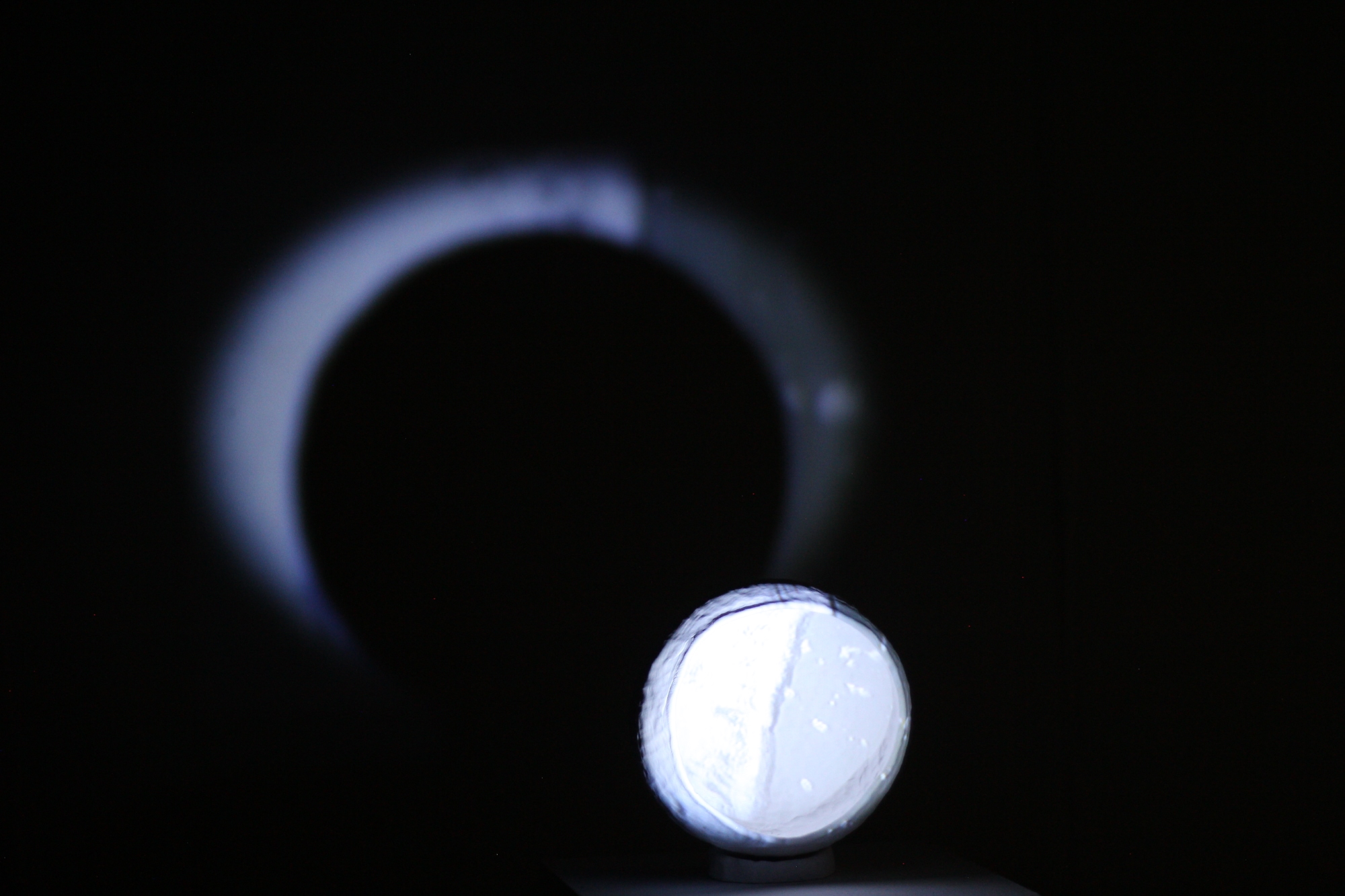
The moving image of the steam and the splashing water in the video reflecting on the surface of the water in the teacup created a bouncing, layered, mesmerizing visual phenomena in the gallery space. This sparked an excitement to play with projecting video onto translucent materials and changing the atmosphere of the gallery space with steam or fog. And yet, I still considered myself a potter.
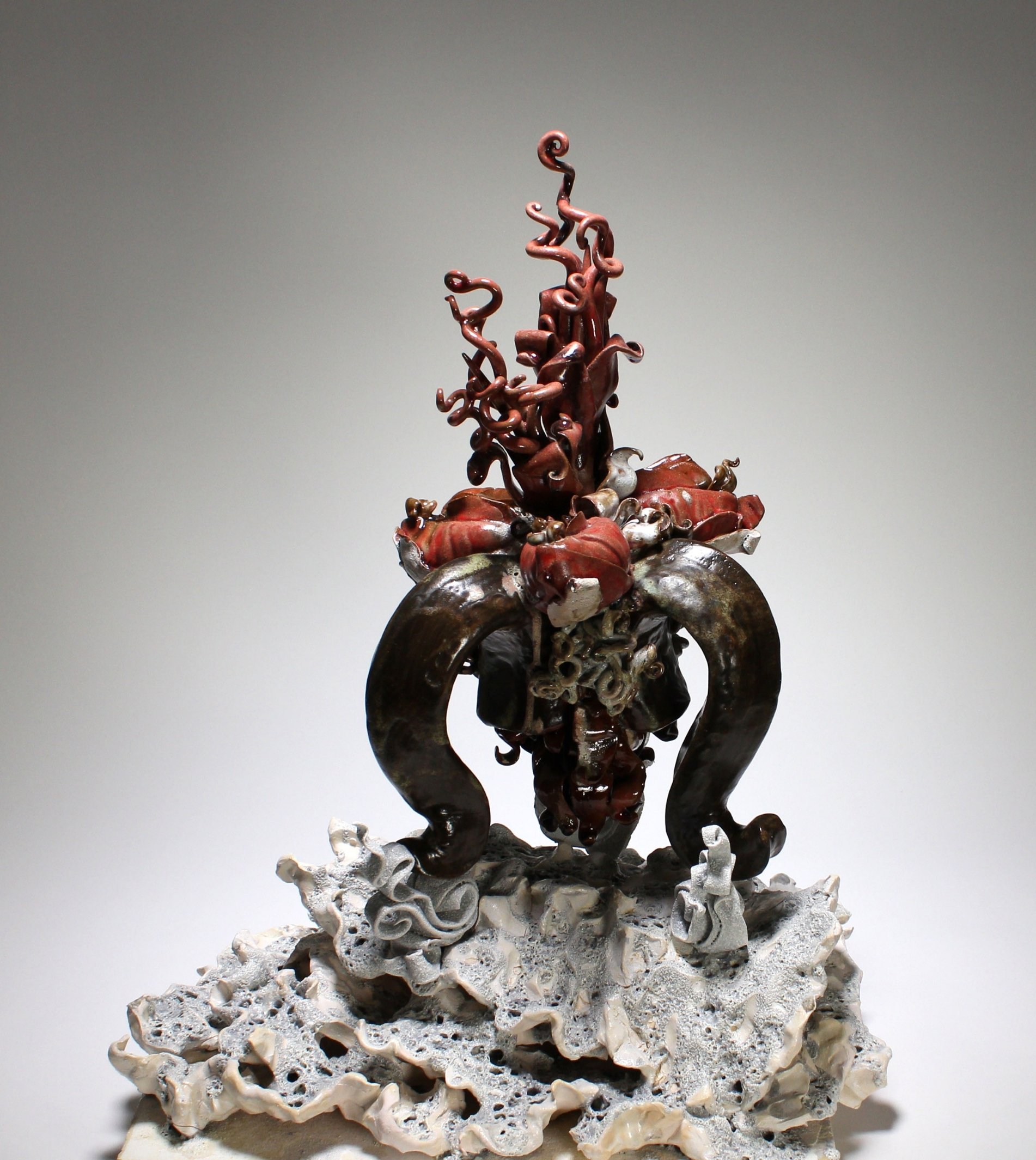
Over the intervening years, I made many video+object installations, some with multiple projectors and videos, some incorporating fired and unfired clay, some with natural materials, some with translucent materials, but all of them incorporated some functional ceramic item: pinched bowls strewn on the floor, cracked bowls dripping from melting ice, unfired earthenware bowls disintegrating under water drops. My making seemed to grow out of a need to share and nourish others. The pinched bowl represents this concept in its most basic form.
Within this integrated grad program, I was able to follow that altogether human innate, insatiable curiosity that led me to experiment with ceramic figure sculpture, lithography, fabric installation, and combining traditional with digital photographic processes. This varied experience has led to success in the highly competitive and volatile academic job market, and I’ve been able to swerve into unexpected roles, teaching a range of topics from ceramics to photography, sculpture to lithography, video and sound production to life drawing. Sharing my enthusiasm for all of these media with students has been some of the best experiences of my life.
Before completing this program, however, I transferred to a larger ceramics-specific program, where I was encouraged to de-center the pinched bowl from my work. My new advisor considered the addition of the functional object to an installation an unnecessary crutch, as if I was fearful of digging into a deeper layer of meaning. This encouragement opened my imagination to different forms, and for the forms to be inspired by the videos that I was recording as I wandered the wild areas of coastal Massachusetts, my camera, tripod and sound recorder strapped in a pack on my back.
As installation art is temporary, like Offering Bowl, after the work is taken down, it only exists as it is documented. I began making photographs and videos of these installations, adding production qualities to the videos, and posting them to the digital world, considering the photos and videos themselves as separate art pieces, and as such, they became more and more sophisticated. This led to unexpected directing/producing opportunities. Lately, I have begun winning grant awards for film proposals.
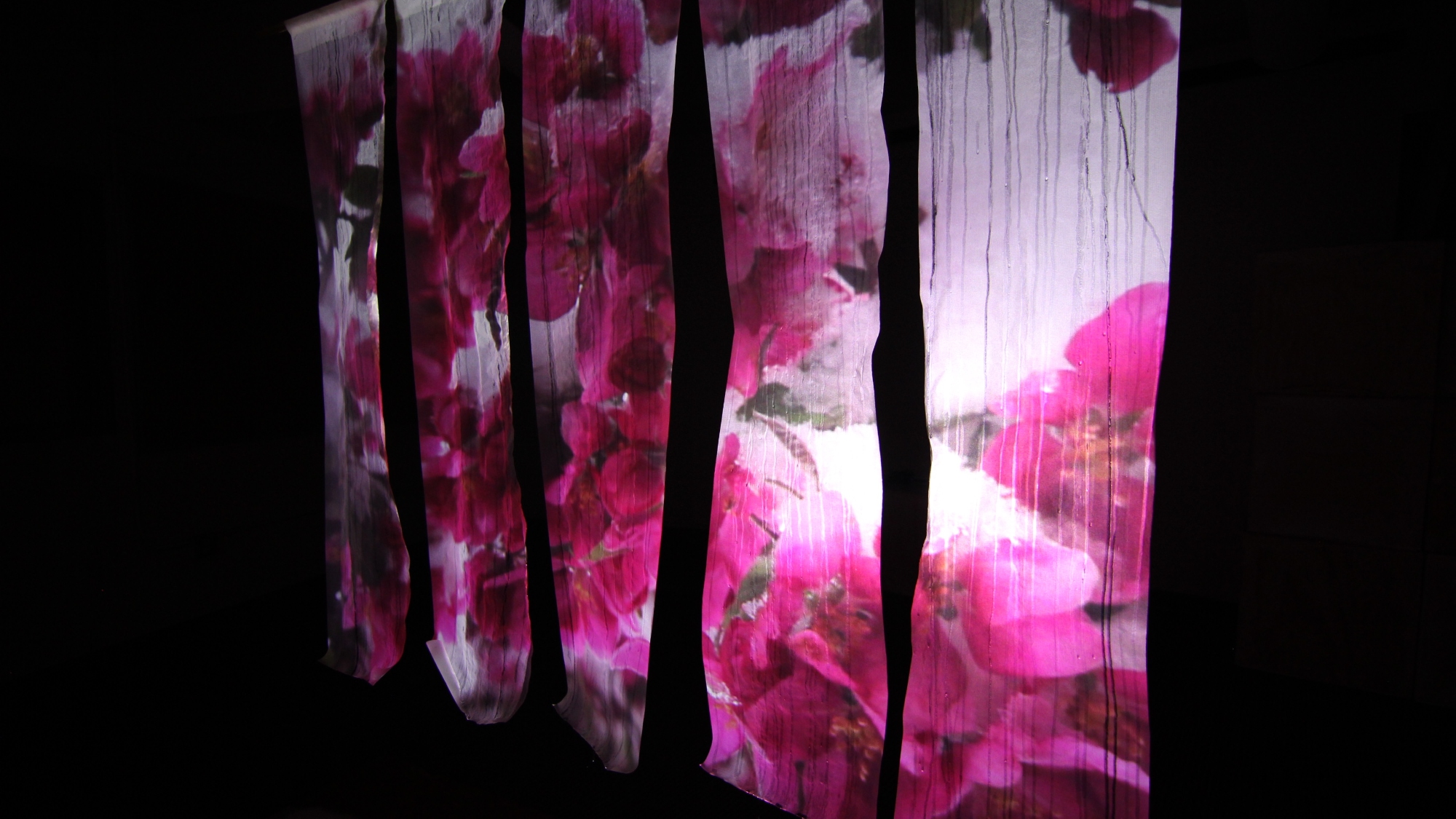
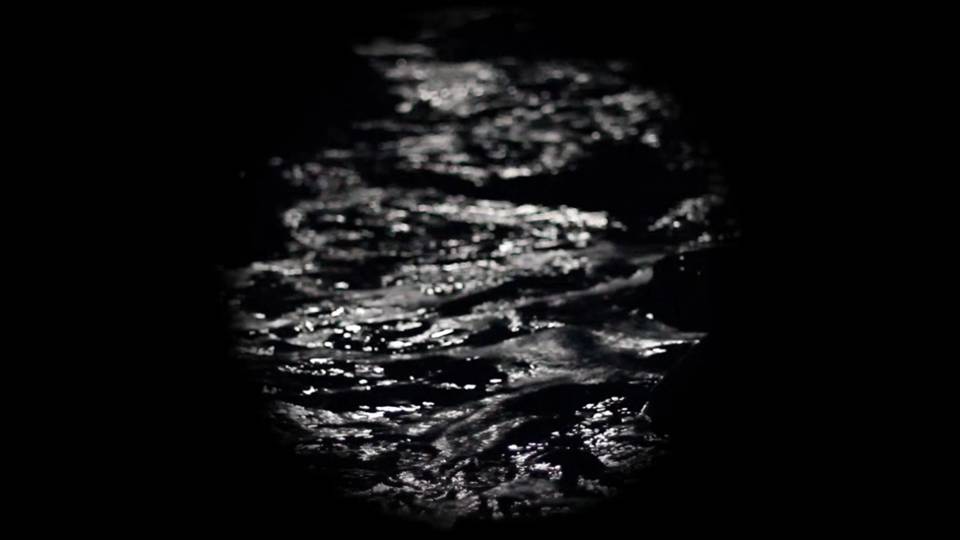
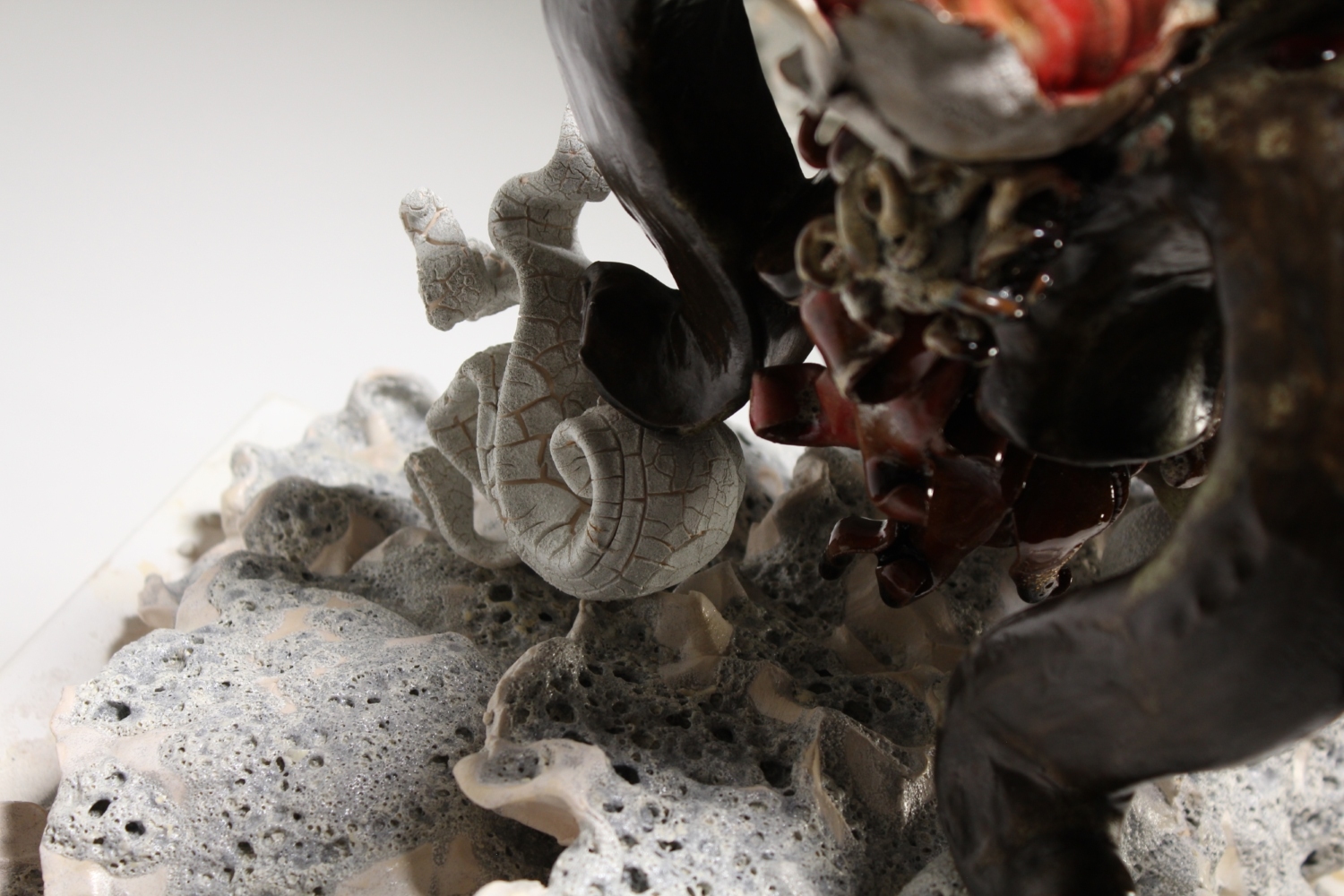
Frankly, this blows my mind a bit. Little by little, I have begun to allow my film work to stand on its own, separate from the making of an object, but this has not been easy. This month, at a screening, I handed each person a small earthenware pinched bowl filled with salt water as they entered the viewing space. Some viewers got it, some didn’t. It was a nice touch, but it wasn’t necessary. The viewers who didn’t understand were a bit stressed by this puzzle, and I began to ask myself, why did I feel that these little bowls were so necessary to their experience. For some, being handed a little bowl was a personal, intimate surprise that connected them physically to what was being shown on the screen. To others, the confusion detracted from the experience. Were the bowls a crutch, as my advisor indicated years ago? Or are they an integral part of my artistic psyche, unable to be suppressed?
This summer, a ceramics colleague requested help making a documentary video of his art and practice, and when editing the credits at the end of the film, I had to think long and hard about how to title myself. “Ceramicist” didn’t seem appropriate since my role in the collaboration was to direct and produce. But trying out every other title, like “video artist” or “director,” seemed too limiting to the rest of my studio research, and left out my experience with clay.
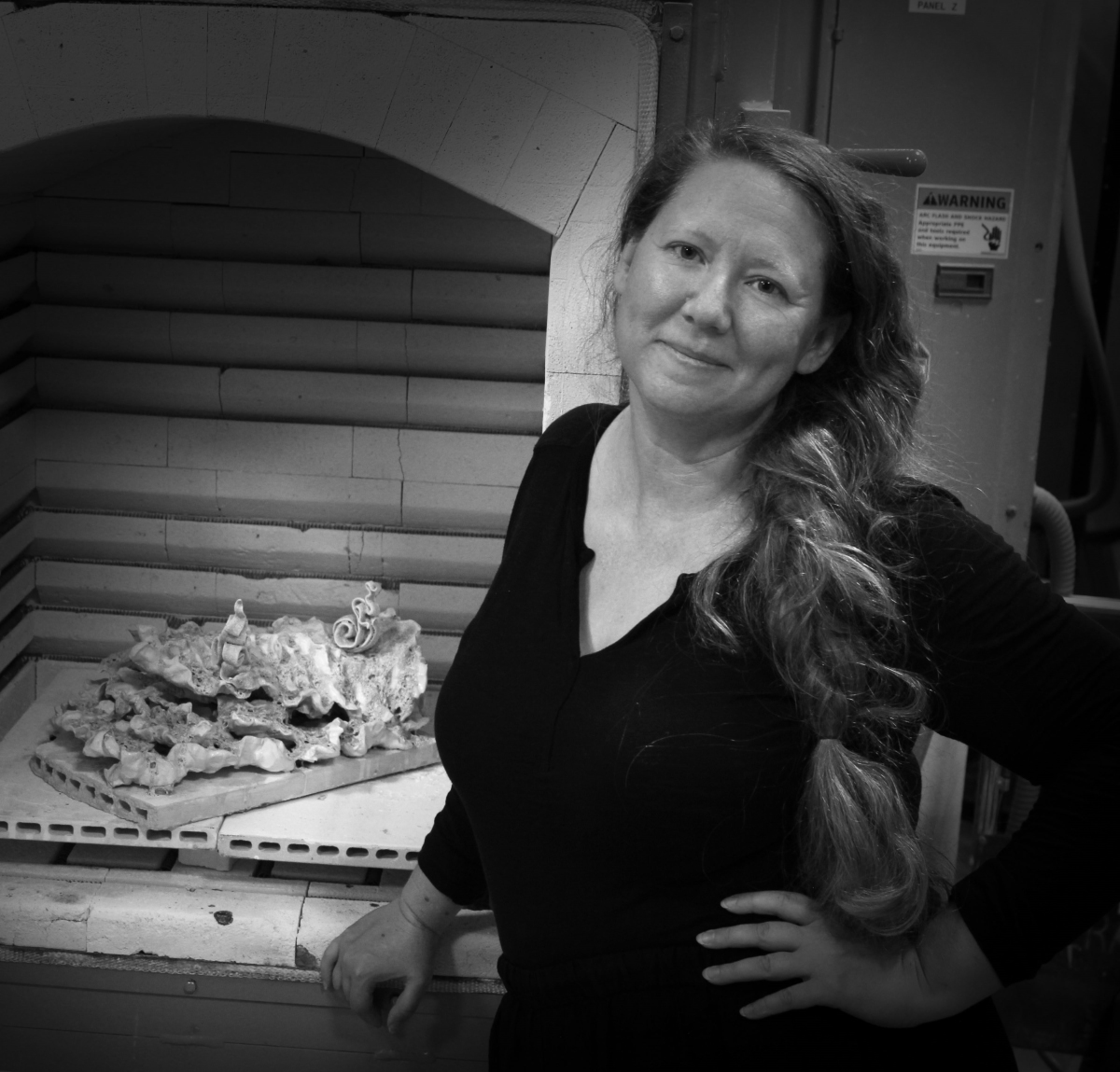
There seems to be a common pride amongst all ceramicists, both functional and sculptural, in the ability to succeed with such a demanding material. Like a cowboy on the trail, we brag: “I had to baby a gas kiln all night and didn’t get any sleep.” “I’m formulating a glaze that runs a little bit but not too much and doesn’t clump at the bottom of the bucket.” “I like to stoke my anagama wood kiln with both oak and pine every three minutes for a full five days.” (All of these quotes are paraphrased from real, recent conversations.) Some potters relish in tossing their discards onto a “cry pile” out by the woods for some archeologist in the distant future to discover.
I think this is why I’m so averse to disavowing my ceramics background. It’s a matter of wounded pride – we earn our stripes every time a piece busts in the kiln, or days into building a carefully balanced sculpture, we bump the table and it falls over and either squishes or shatters, depending on long its been out of the plastic, or when we absolutely love the form we just made but the choice of the wrong glaze ruins it and now we hate it. Just so earned is the satisfaction when the glaze comes out of the re-fire just right, you start again and the new sculpture is even more elegant than the previous one, and you take those busted pieces out of the kiln and make a kick-ass avant garde base for your next juicy piece.
So how do I answer the question now when I’m asked, “what kind of art do you do?” Well, you can find my pots in galleries around the country. You can find me cracking jokes at the local university’s figure drawing club most Friday nights, india ink and bamboo brush in hand. You can find me in the woods recording the rain dripping off of the leaves as they change color this fall, and you can find me in the university’s kiln room, glowing with pride and red-faced from the heat as I pull out a juicy, luscious thrice-fired sculpture from the too hot kiln a little too early.
What I’m saying is, find me at the party, stranger, and I’ll tell you.
Heather Jo Davis is an artist, educator and author working in upstate New York.
Subscribe to Ceramics Now to read similar articles, essays, reviews and critical reflections on contemporary ceramics. Subscriptions enable us to feature a wider range of voices, perspectives, and expertise within the ceramics community.