By Bronaċ Ferran
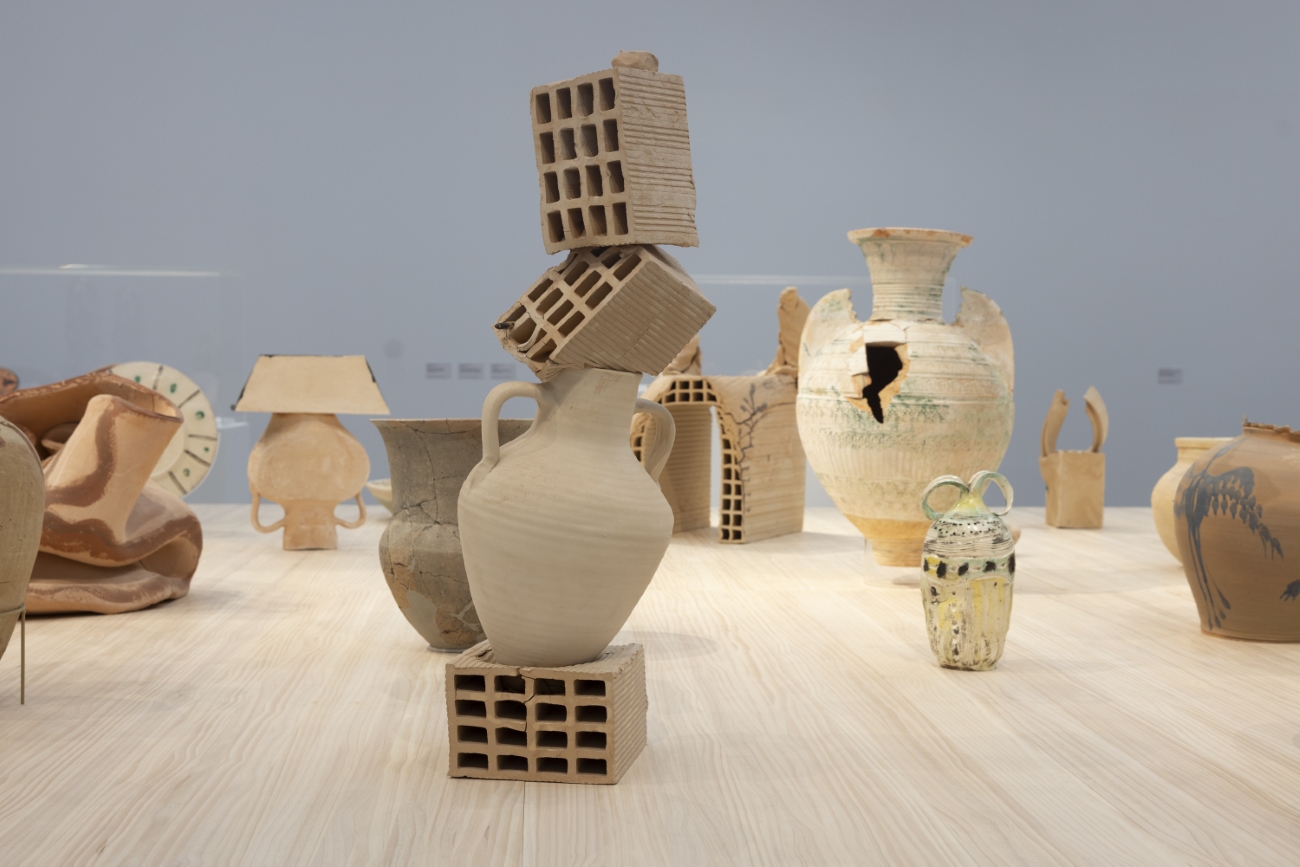
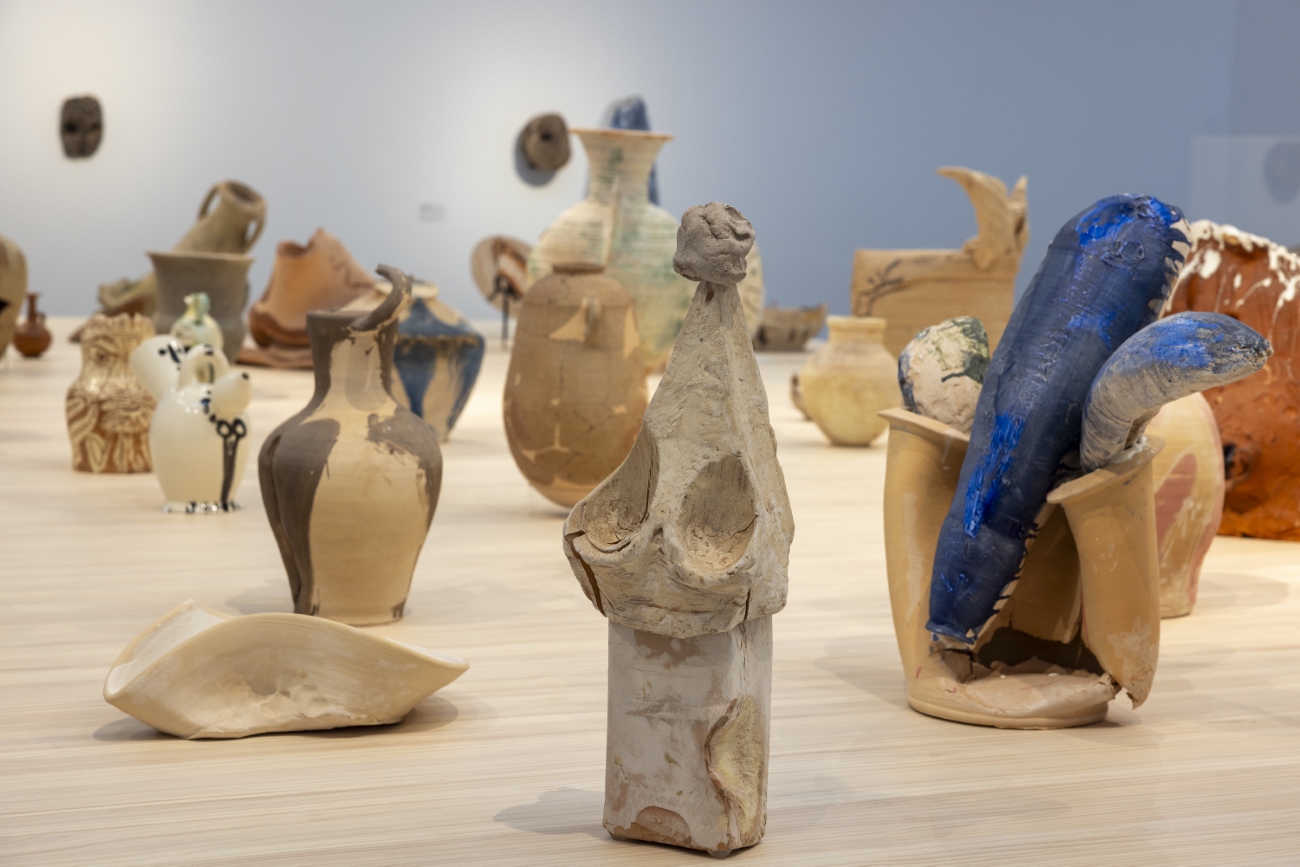
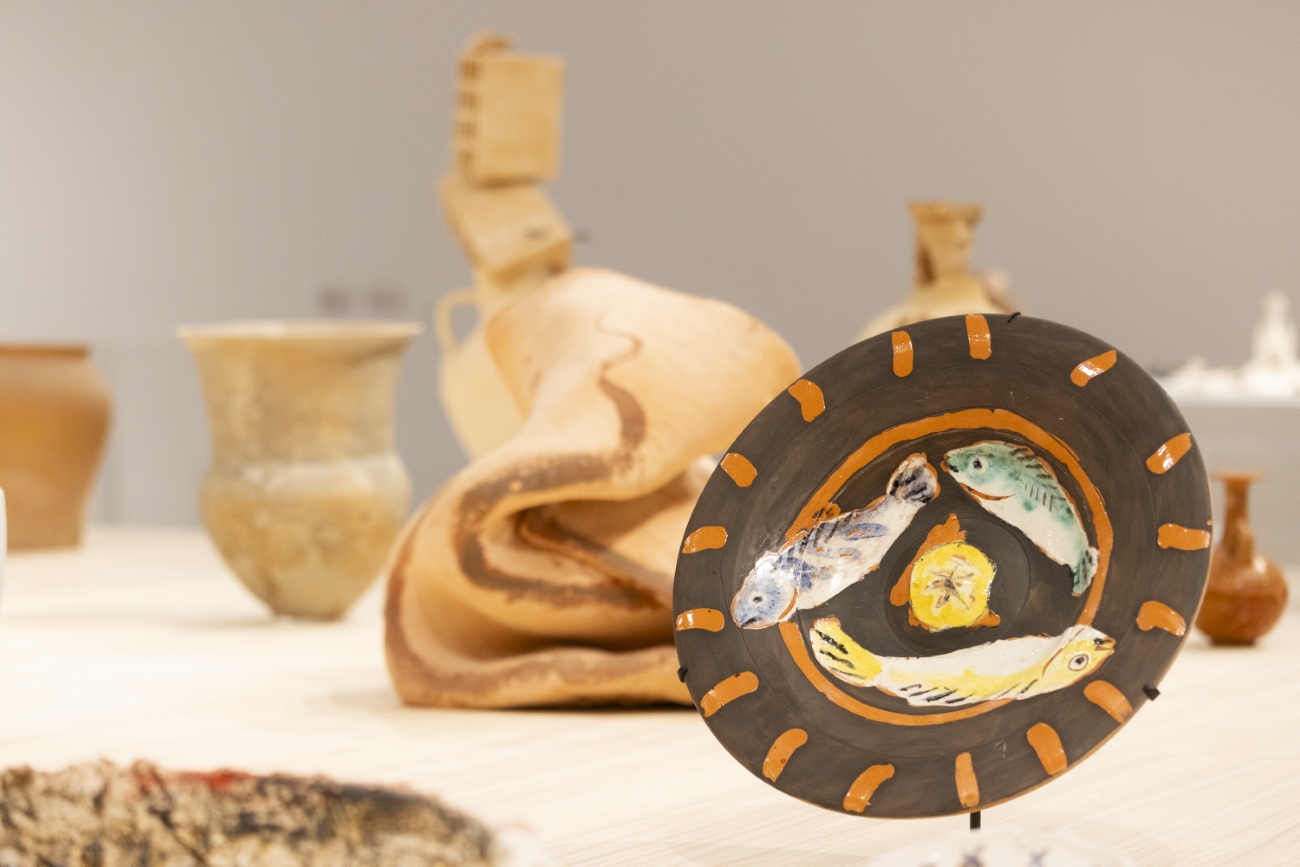
I have come to Andalucia to visit a stunningly visual exhibition, that combines ceramic works by two of Spain’s most eminent modern and contemporary artists — Pablo Picasso and Miquel Barceló — together with a selection of pottery from the archaeological collections of the Museo de Almería and the Museo de Cádiz. It opened in Almería, a Mediterranean city, in December last year and has now moved west, to Cádiz, a historical gateway to the Atlantic Ocean. Those lucky enough to visit this exhibition encounter an assemblage of clay-based pieces in which forces of continuity between past and present are mutually enveloped. Its co-curator, Miquel López-Ramiro, Artistic Director of the Museo Picasso in Málaga, has described to me how the exhibition “approaches ceramics not as an object but as a medium that traverses time. From Neolithic pieces to Picasso and Barceló, clay emerges as a material that preserves memory, gesture, and transformation.” Indeed, unlayering past into present, and memory into a rounded contingency with that which remains unfinished, this is an edgy, raw exhibition that communicates how clay, and its working, lies at the centre of human existence.
As a project it extends an idea first introduced by López-Ramiro and his colleagues at Museo Picasso in 2024, when works by Picasso were paired with those of Jeff Koons (link), in the context of the Alhambra Palace in Grenada. In this latest instantiation or ‘dialogic pairing’, the process of ‘reflection’ is brought to life in a multiplicity of ways, including adaptations in the display of the material in the venues, with López-Ramiro co-curating the exhibition together with Tania Fábrega, director, Museo de Almería; and Laura Esparragosa, director, Museo de Cádiz. As López-Ramiro has stated, the movement between venues facilitated:
a change in the interpretation of the project: from the stratigraphic depths of the Mediterranean to the openness of the Atlantic as a space of circulation and encounter. In Almería, the Mediterranean appears as a space of cultural sedimentation, of continuity In Cádiz, the Atlantic introduces notions of openness, displacement, and crossing. Two geographies, two ways of relating to material, that allow us to understand ceramics not only as origin, but also as transit.
In this way, the exhibition is configured as a system of reflections, not in the sense of reproduction but as a movement of repetition and difference, where past, present and possible futures come together on a single surface. In Almeria the relationship with a depth of time was fundamental, but in Cádiz, the interpretive axis shifts. It moves not so much toward origins as toward transit. Ceramics cease to function merely as vestiges and become objects in motion. The exhibition does not change in its conceptual core, but its breathing does.
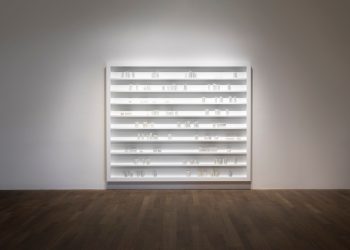
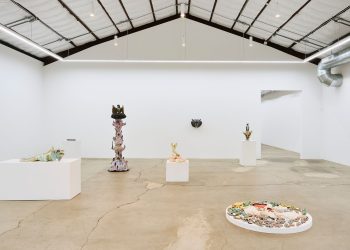
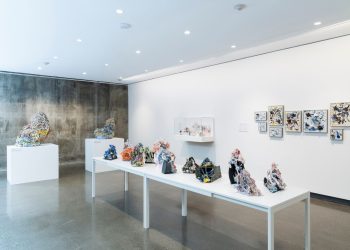
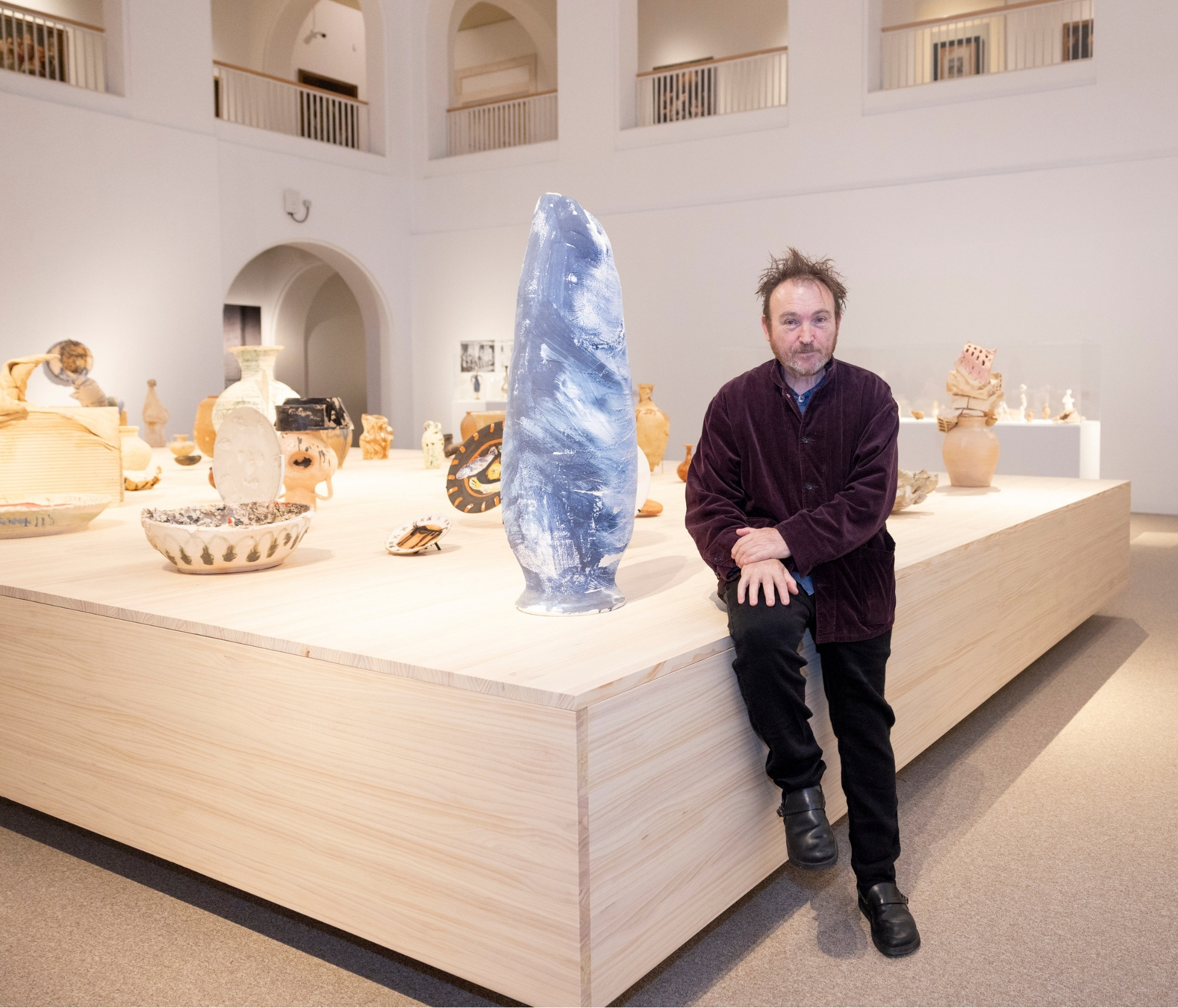
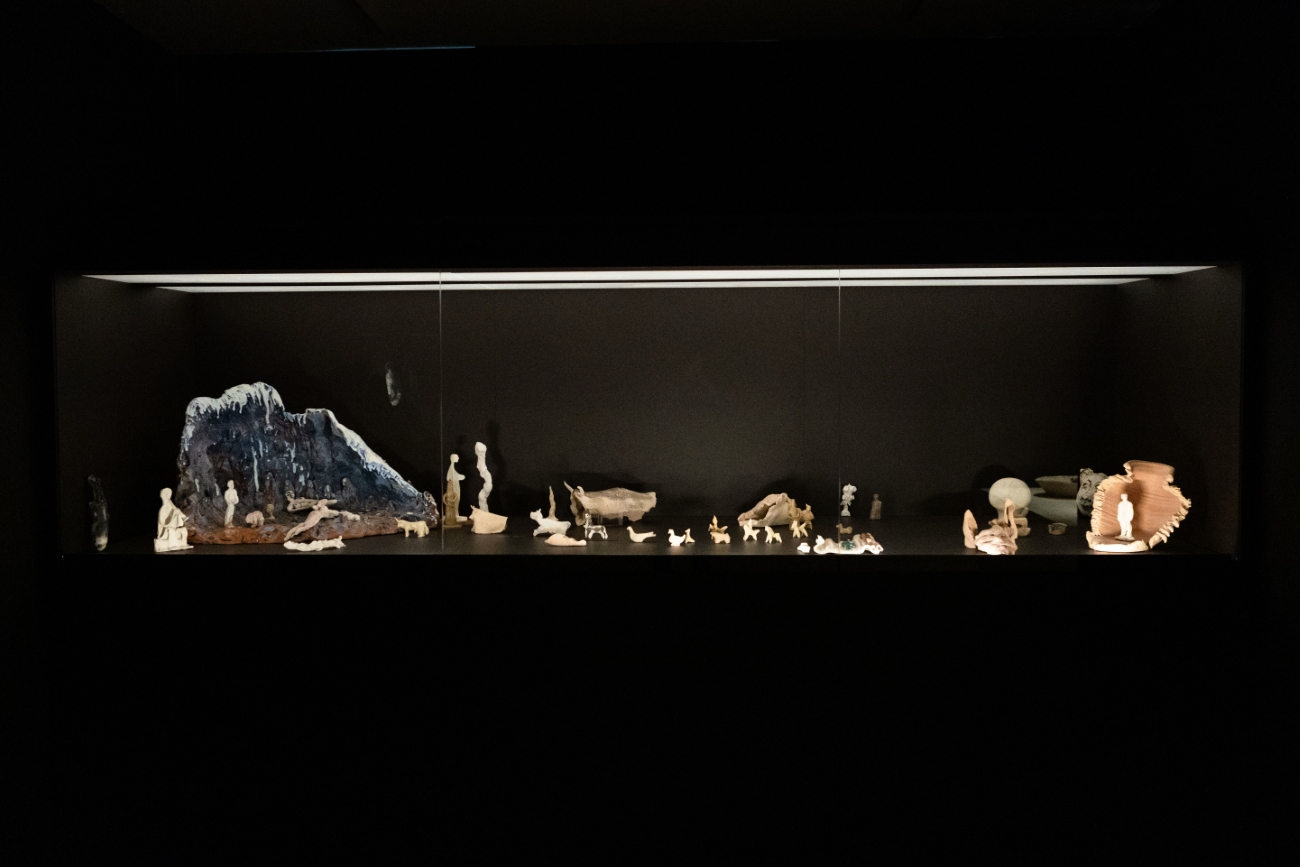
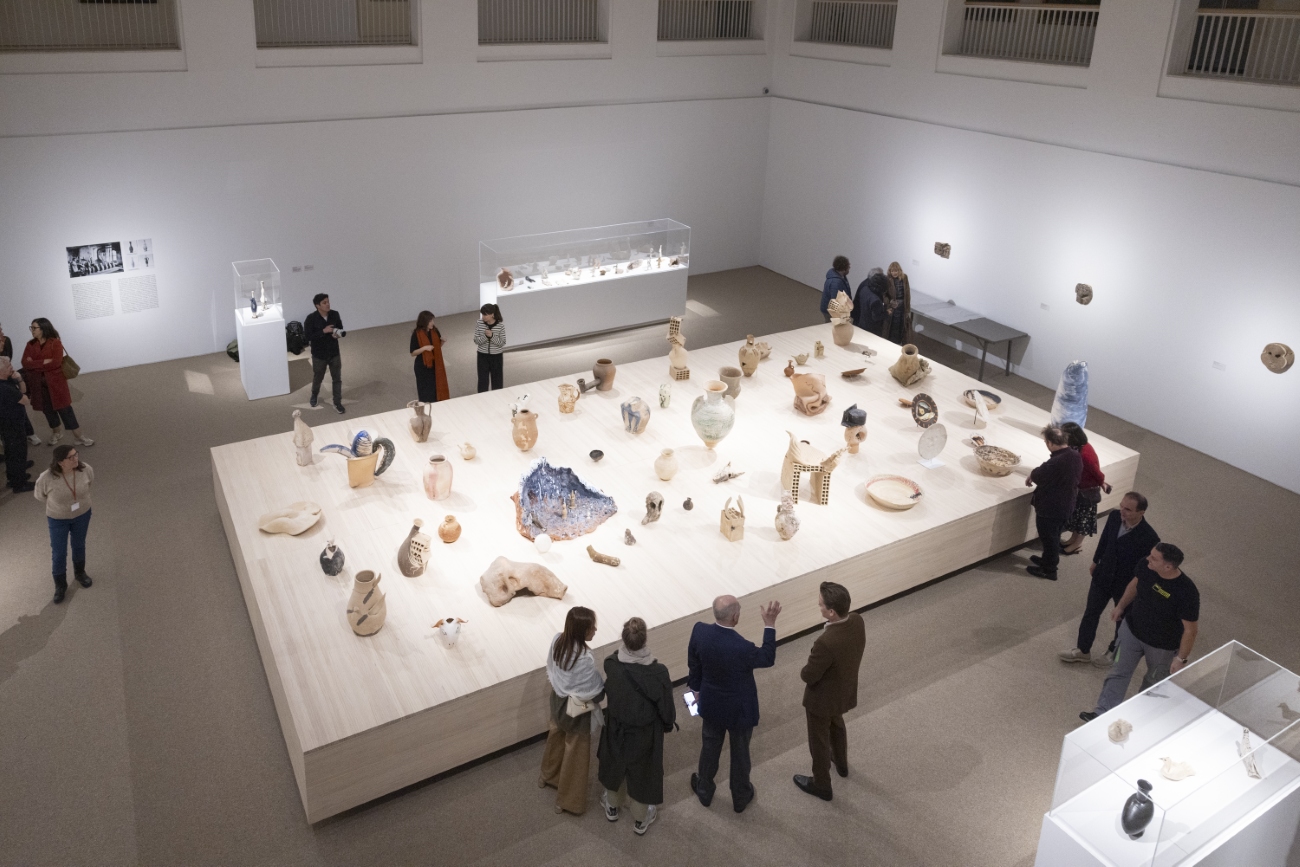
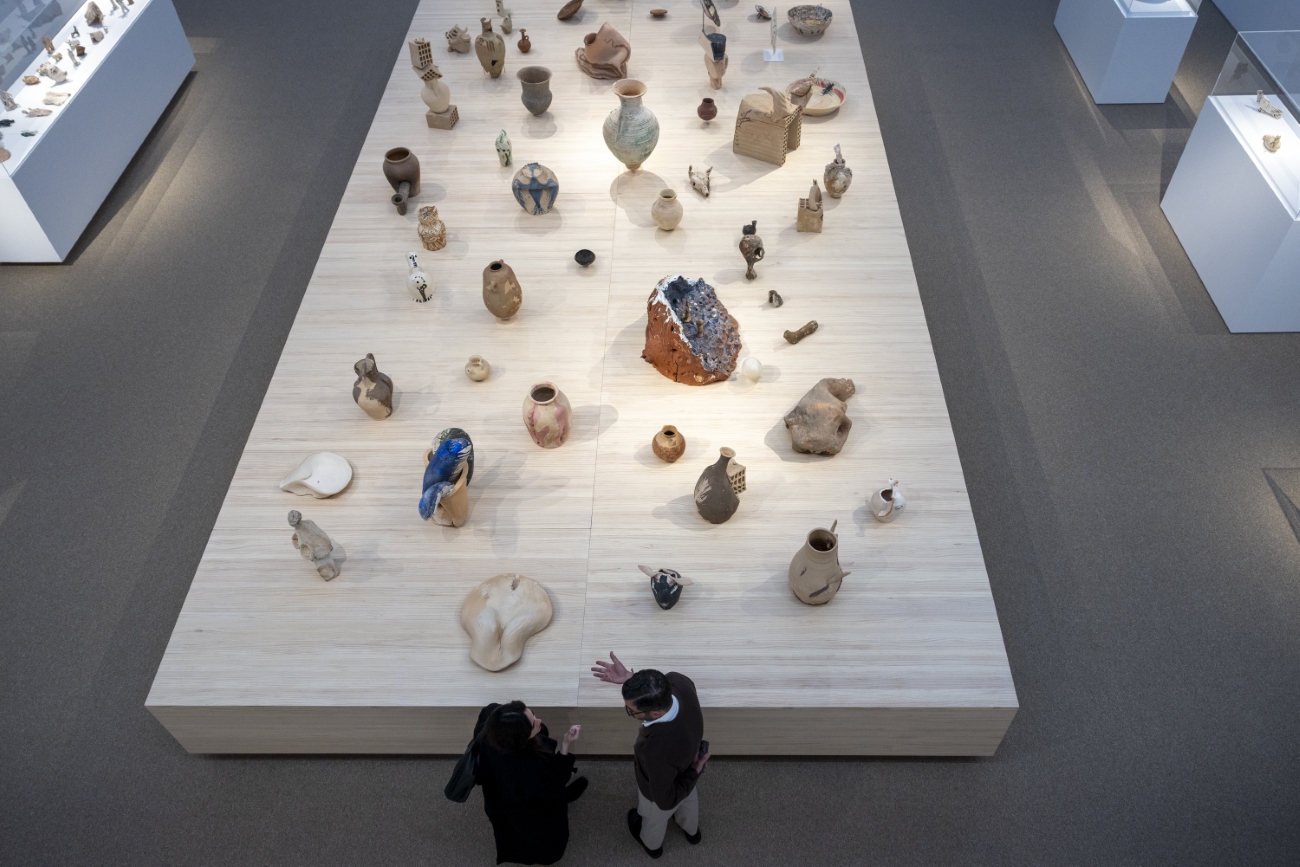
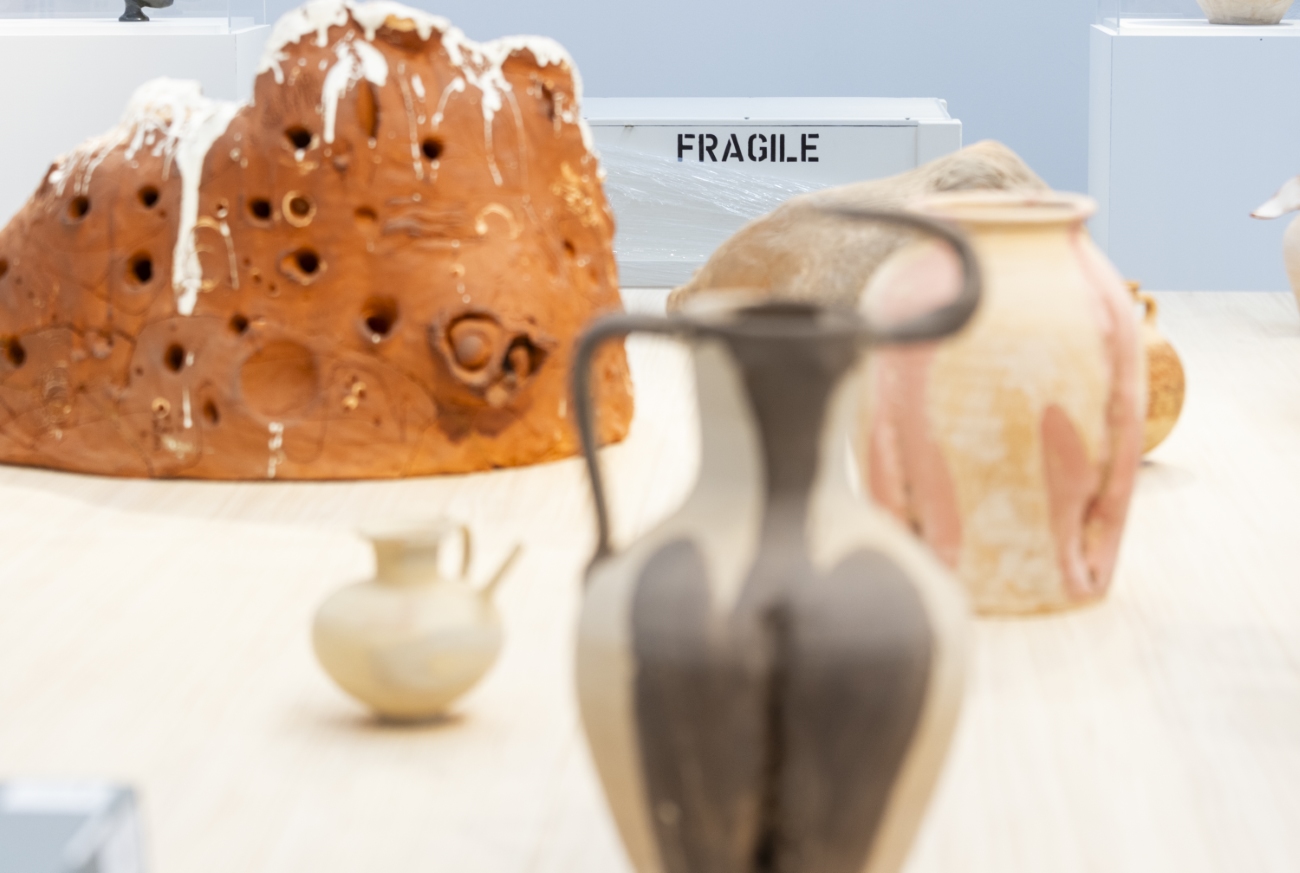
Meanwhile, both museums have each contributed ten works shown in each venue, respectively, contributing to the sense of difference with repetition to which López-Ramiro is referring. In Almería, deft use of light and shadow amplified a sense of epiphaneous interplay between the exhibition’s different elements, that appeared to rise up in front of the exhibition viewer like a dramatis personae. The presentation in Cádiz invites us primarily to look down, as if giving us a historical overview of the interconnections between ceramics from very different periods; Ramiro speaks of the lower, large table, there as being like a shoreline, on which various objects have been stranded.
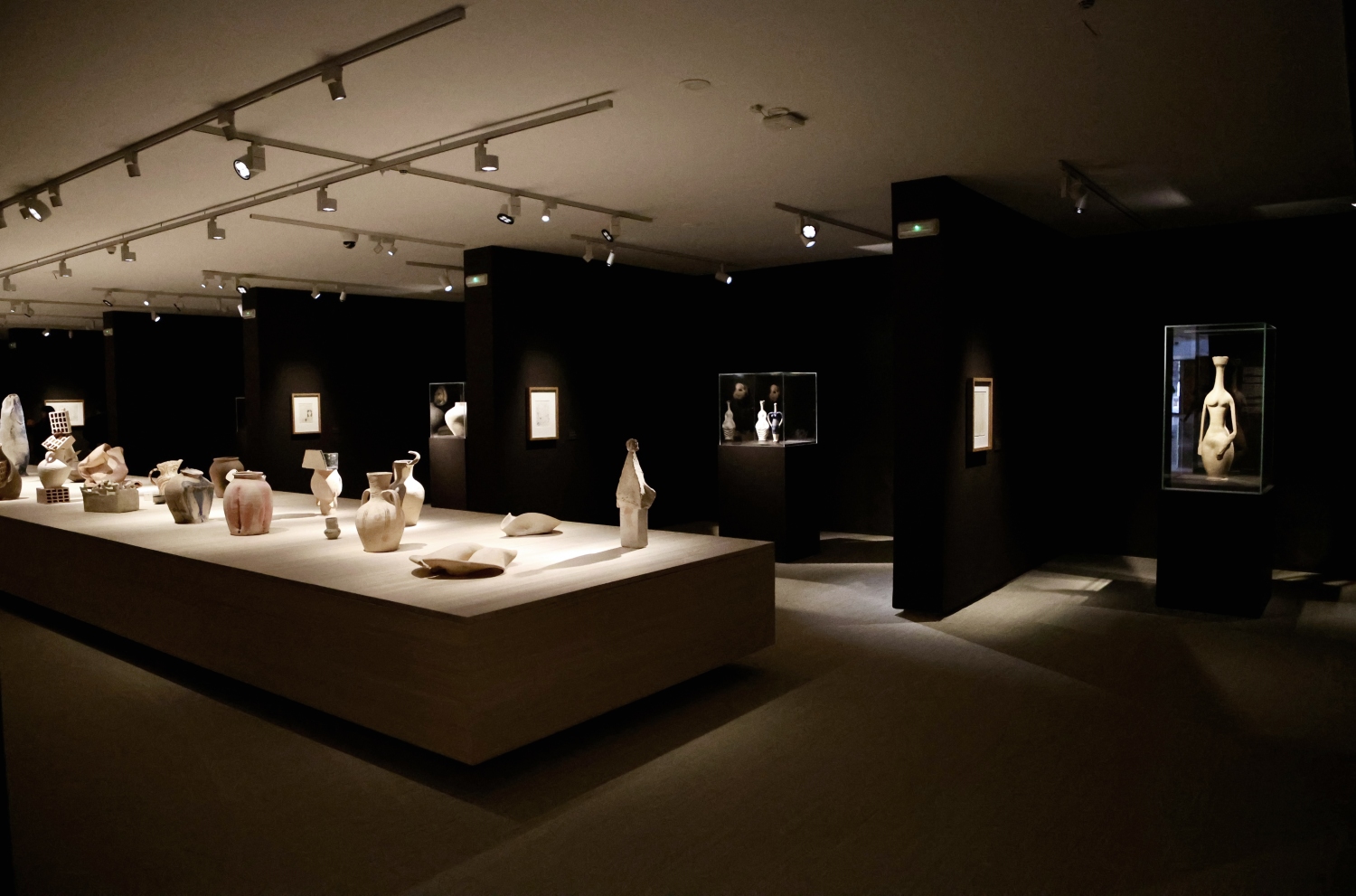
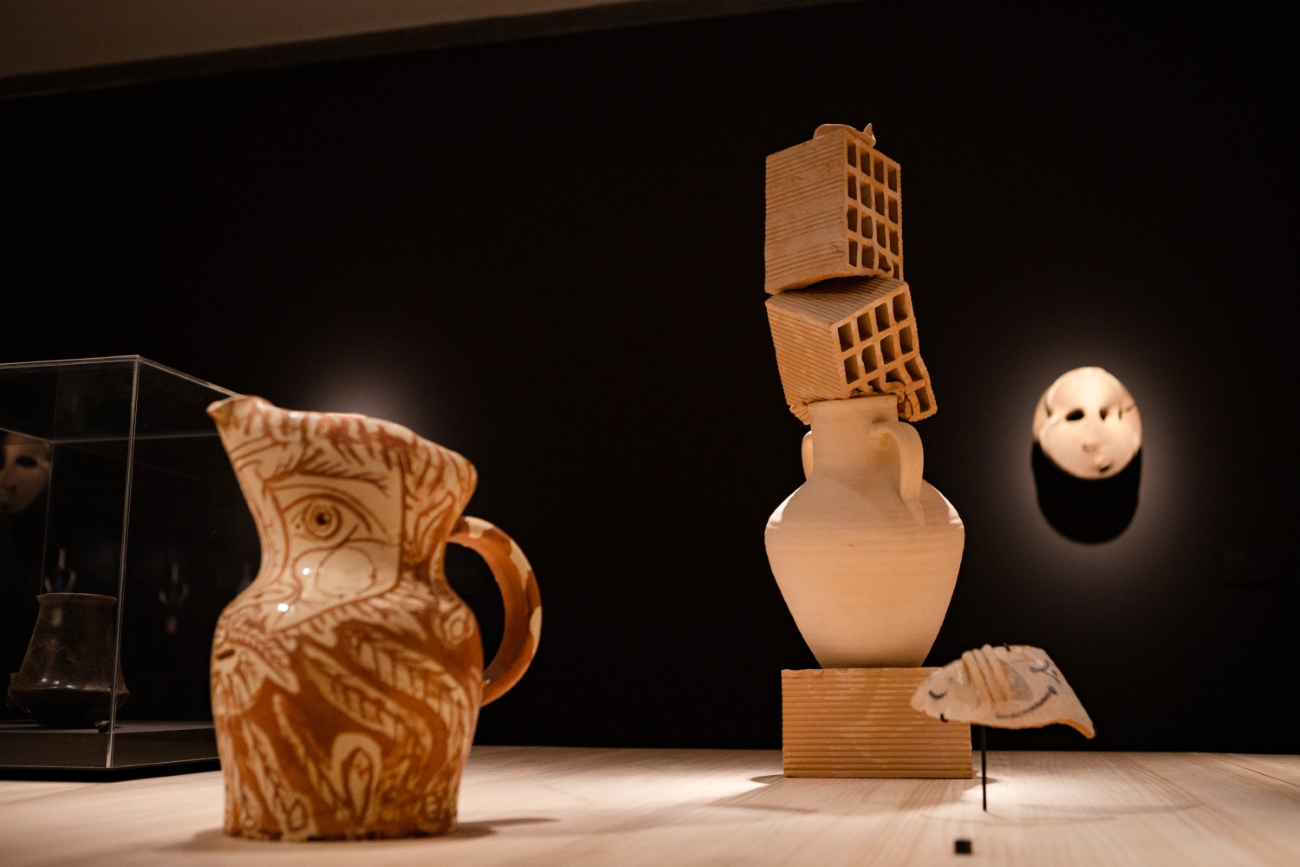
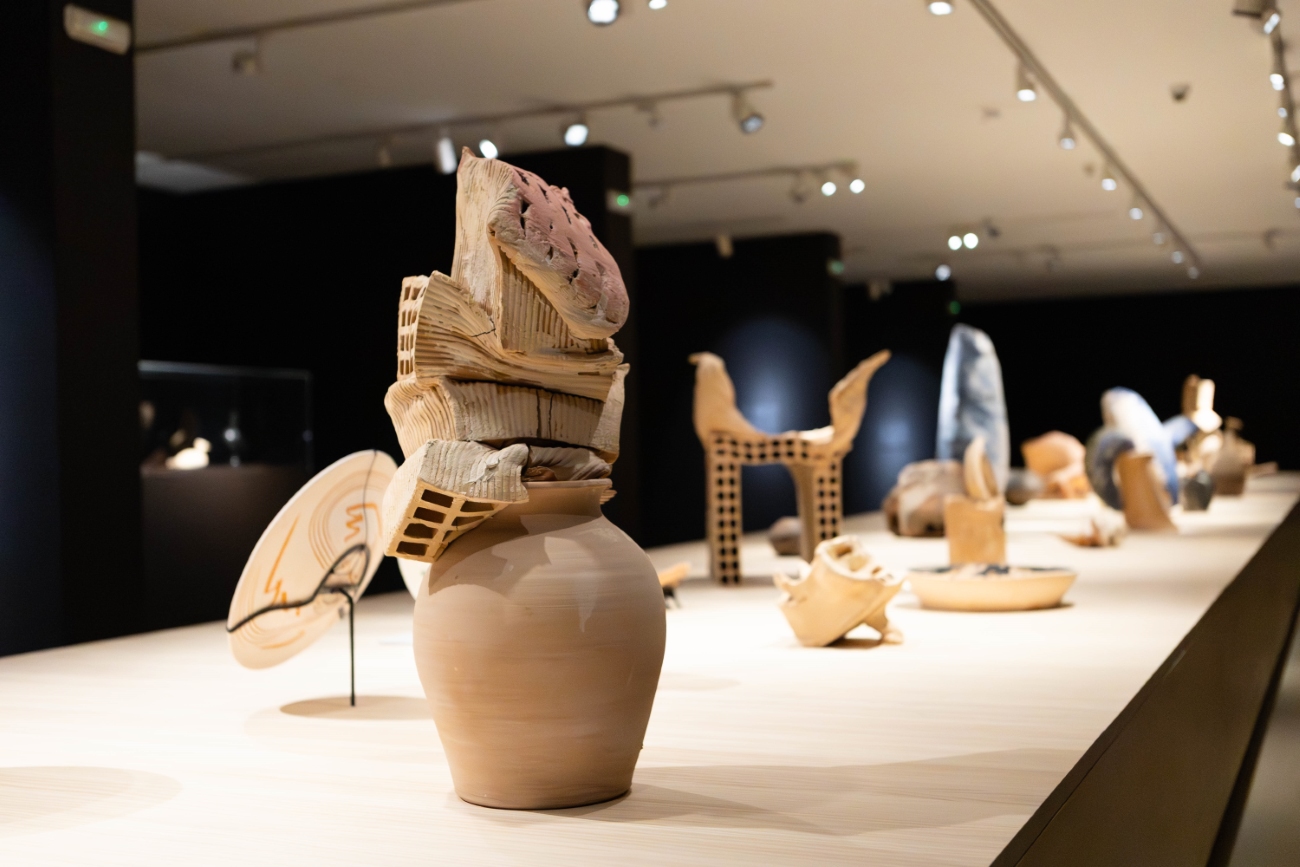
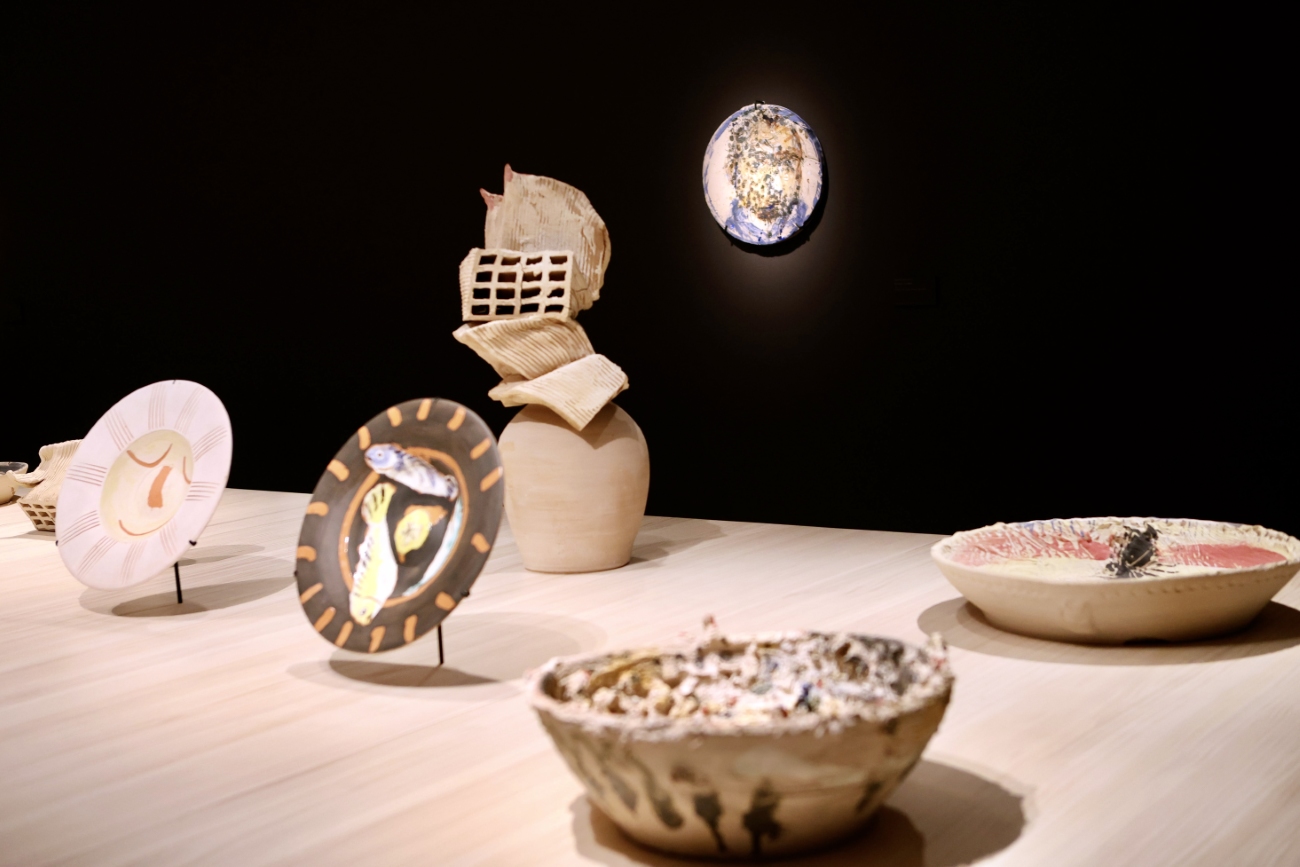
Of over a hundred objects on display, fifty-eight are by Barceló and thirty-eight are by Picasso. Several of the latter are rarely-seen items from the personal collection of Bernard Ruiz-Picasso, whose Foundation (link) has been a key supporter of the ‘Reflections’ series. He tells us at the preview of the residual force of influence on his grandfather throughout his life of his exposure in boyhood to a Mediterranean cultural iconography. Picasso lived from his birth in Málaga in 1881 until the age of ten.
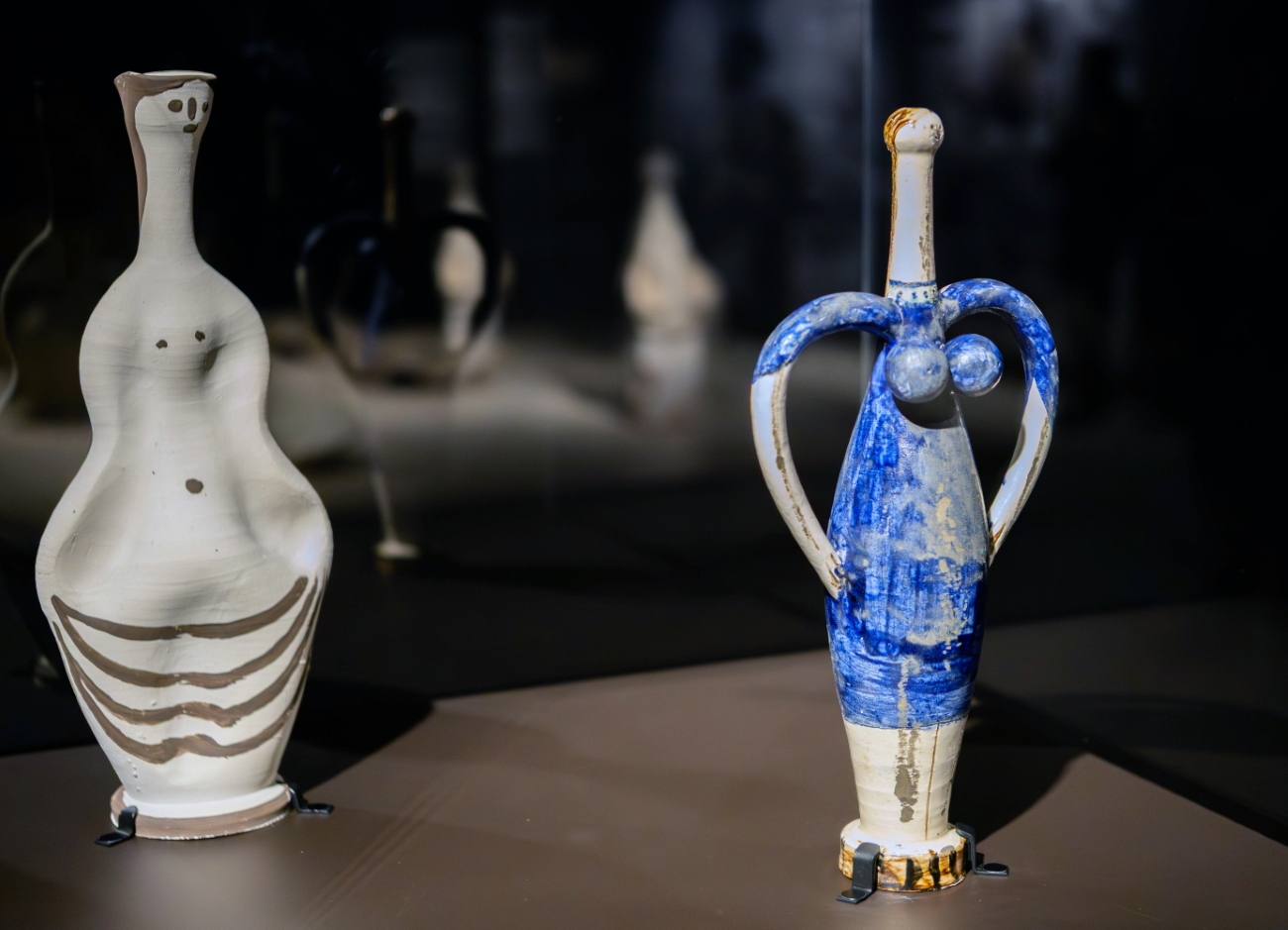
The thirty seven works by Picasso in the exhibition were made at the Madoura Pottery in Vallauris in the south of France the 1950s and 1960s. He created thousands of works there from the mid-1940s onwards, glazing and painting both on standardised forms on fragments of pottery discarded in the workshop. This sense of playful discovery and a levelling out beyond high art to something more collectivist, finds its way also into how the exhibition display in both Almería and Cadiz museums is organised.
Linking things together, moreover, is a sense of liveness infusing Barceló’s practice. His works here, as the co-curators observe, “bear the marks of the physical process, becoming living surfaces that retain the energy of the moment”.
“I was a young artist and my work for many years had been ignored”. He draws a parallel with ceramics, that for a long time were viewed “as not fancy at all” but have recently come into fashion. At the same time, as Barceló tells me, ceramics “have always been there”.
Born in Mallorca, in 1957, Barceló is an artist whose works generally have a heightened contemporaneity, combined with an elemental earthiness, evident in works in various media, from performance to painting, from sculptural installations to a style of ceramics that conveys a sense of disrupted interference with notions of finitude or completion. This is here brought into exciting juxtaposition both with lesser-known aspects of Picasso’s postwar ceramics and with astonishing examples of works from the Phoenician, Bronze, Iron, Roman and Middle Ages, all held together with a curatorial vision that celebrates –- in anti-hierarchical fashion — the powerful intimacies of relation that the practice of pottery has carried over generations.
López-Ramiro has commented also on why it seemed appropriate to bring these two artists together, speaking of their meeting point in the finding “in ceramics a space of freedom. For Picasso, it is a domain where painting, sculpture, and object come together. For Barceló, it is a physical, almost corporeal territory, where gesture becomes inscribed in the material itself. What they share is a direct relationship with matter—clay as language—and a capacity to transform the everyday into the symbolic.”
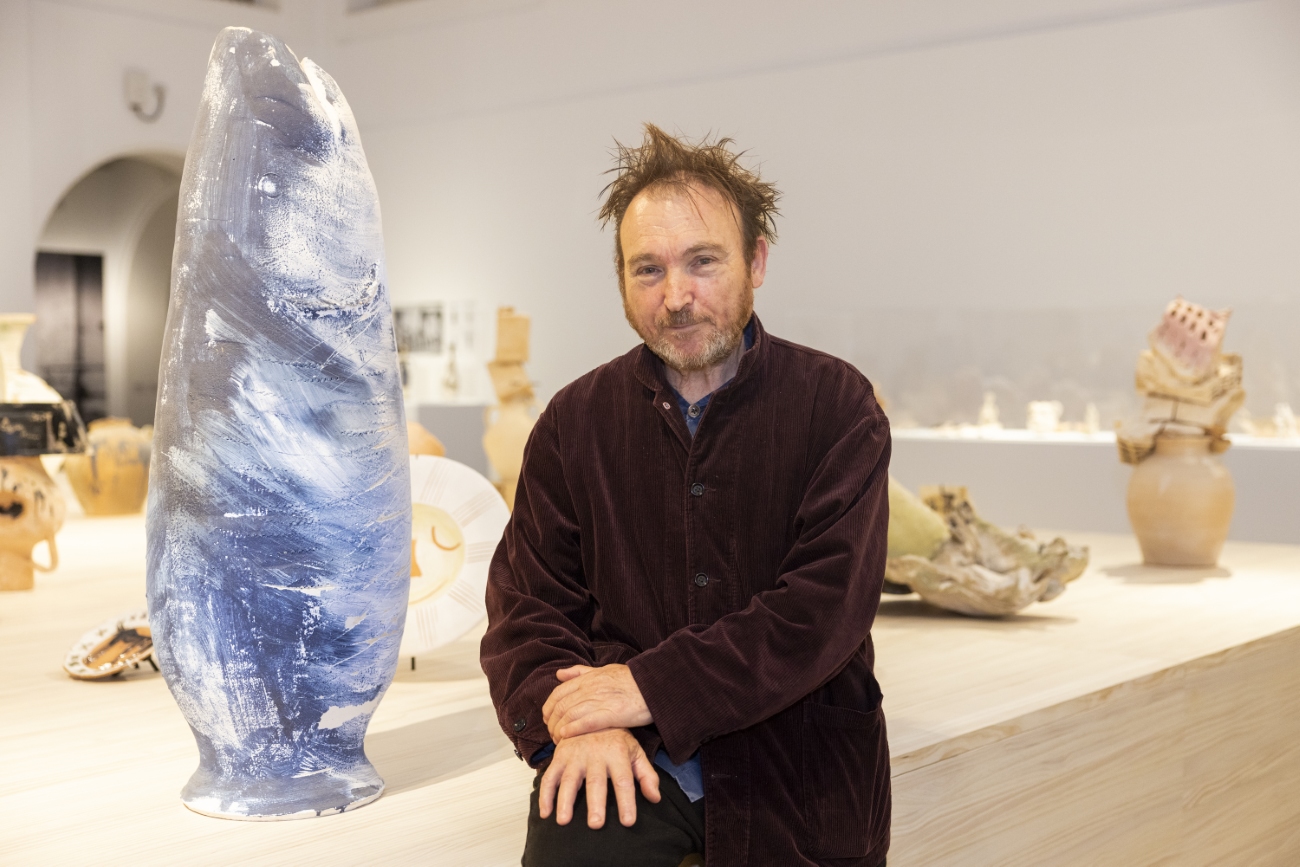
On the eve of the exhibition opening at the Museo de Almería, I sit down with Barceló, who first gained international attention when included in the Biennal in São Paulo in 1981, as well as in documenta 7 in Kassel in the following year. Whilst this drew him out of the shadows, he recalls in our interview, “I was a young artist and my work for many years had been ignored”. He draws a parallel with ceramics, that for a long time were viewed “as not fancy at all” but have recently come into fashion. At the same time, as Barceló tells me, ceramics “have always been there”.
From the 1980s into the 1990s, Barceló became known for his cultural nomadism, moving to live in various different places, whilst retaining homes in Mallorca and Paris, absorbing different landscapes and diverse cultural influences. He was at the same time morphing these together with his own engrained sense of relation to elemental dimensions of his Mallorcan childhood as well as a sense of relation to the longer history of Spanish figurative painting.
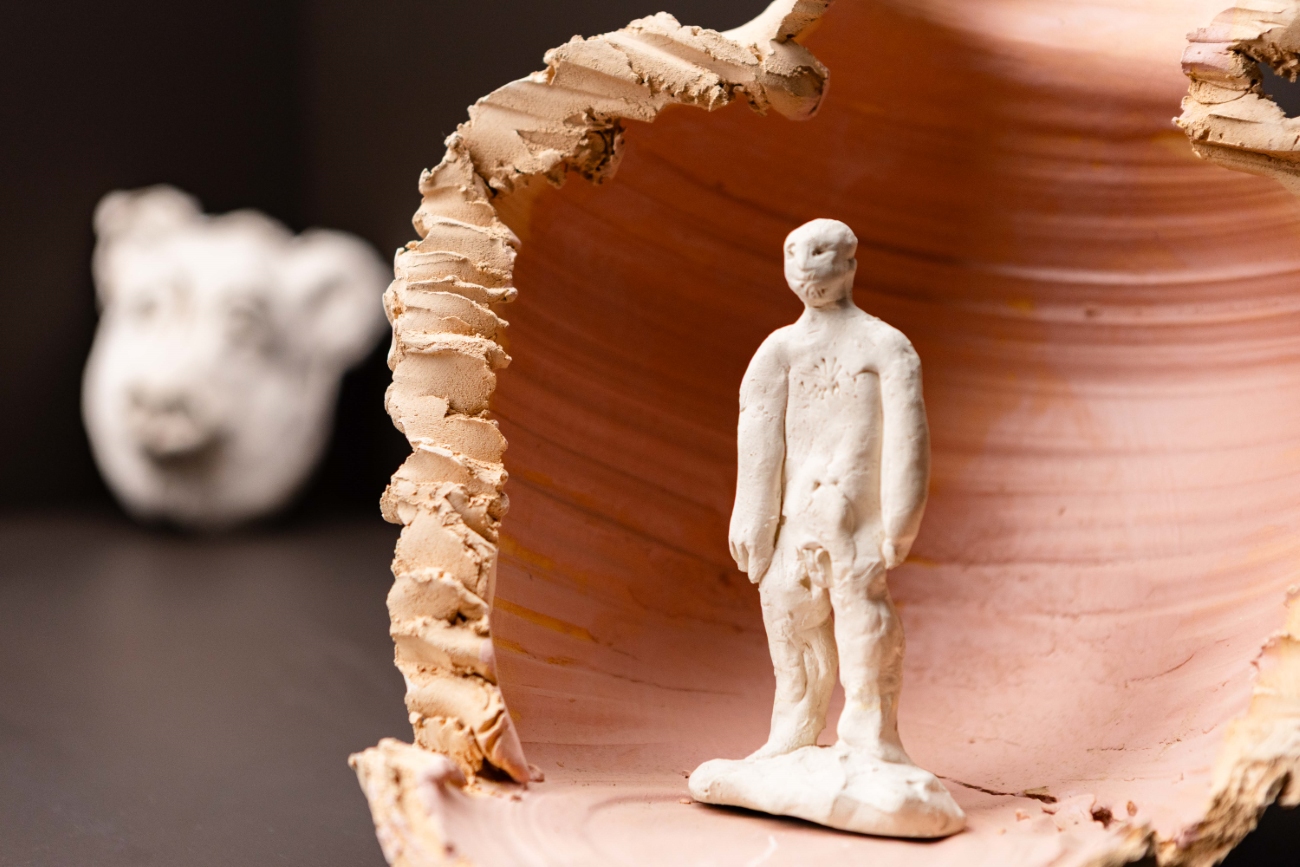
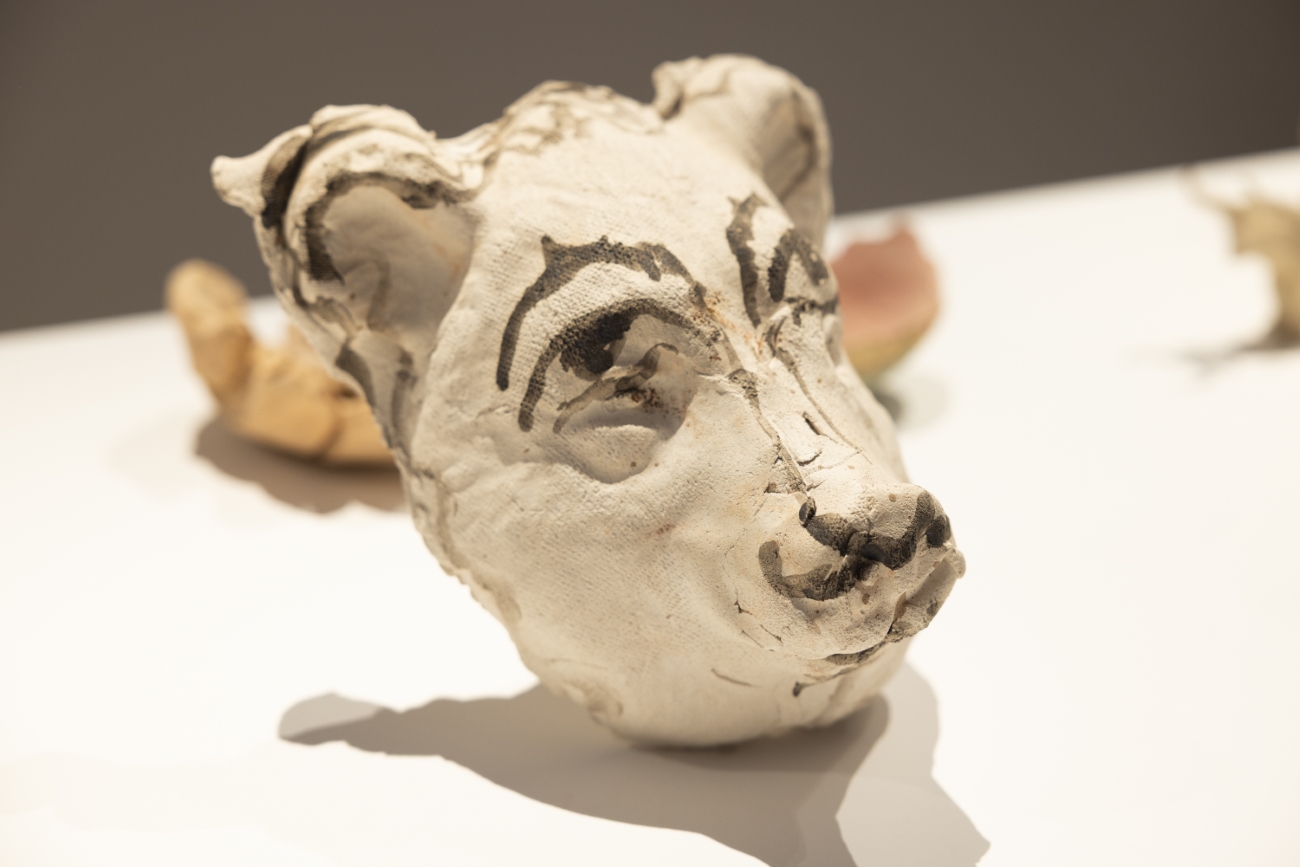
Melding all of this together into an original metier, Barceló’s practice is characterised by a sense of provisionality and openness and with tactility of texture. These too are qualities that find various forms in what is on show in both venues, where human images reduced to the bare essentials of mask-like forms are aligned with 3D constructs that lack specific functional uses, being distorted with respect to lines and angles.
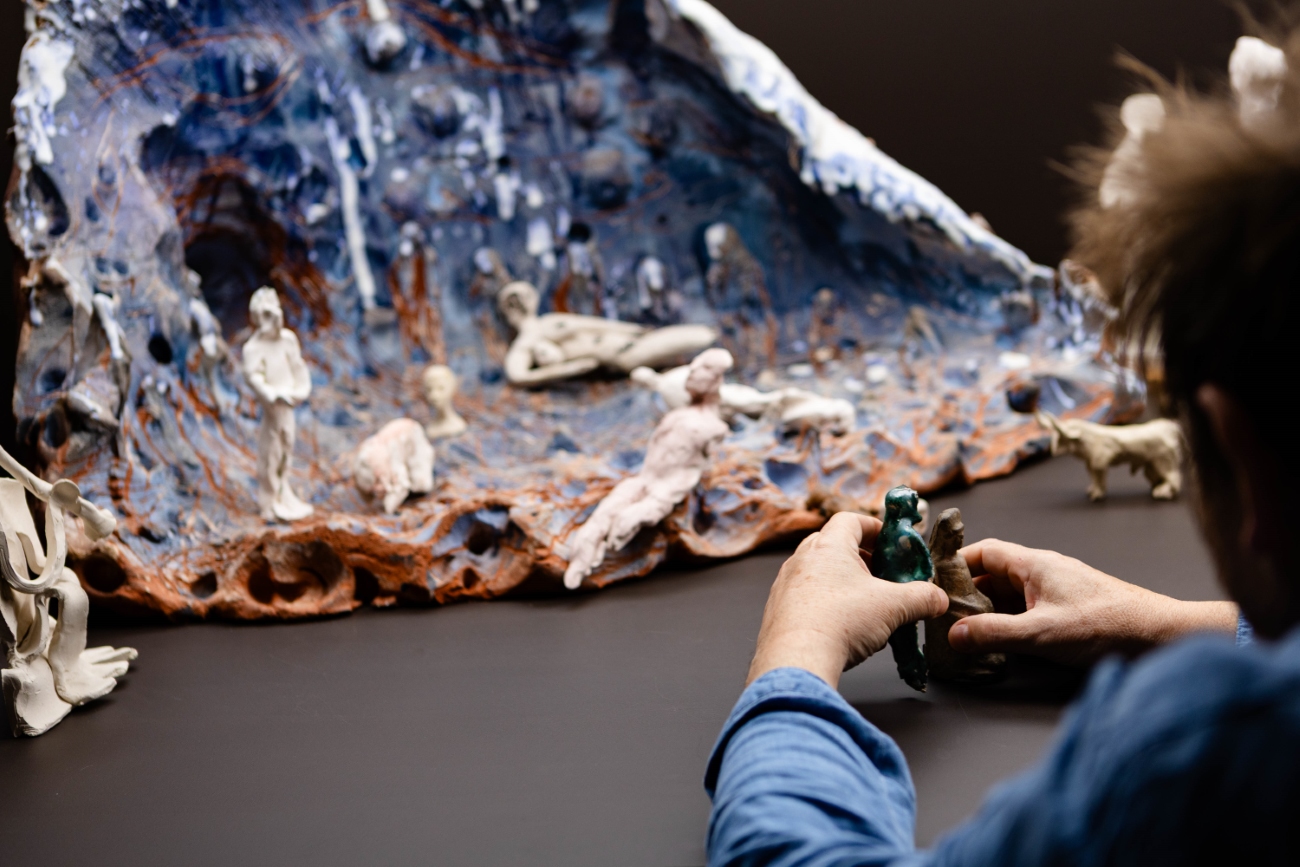
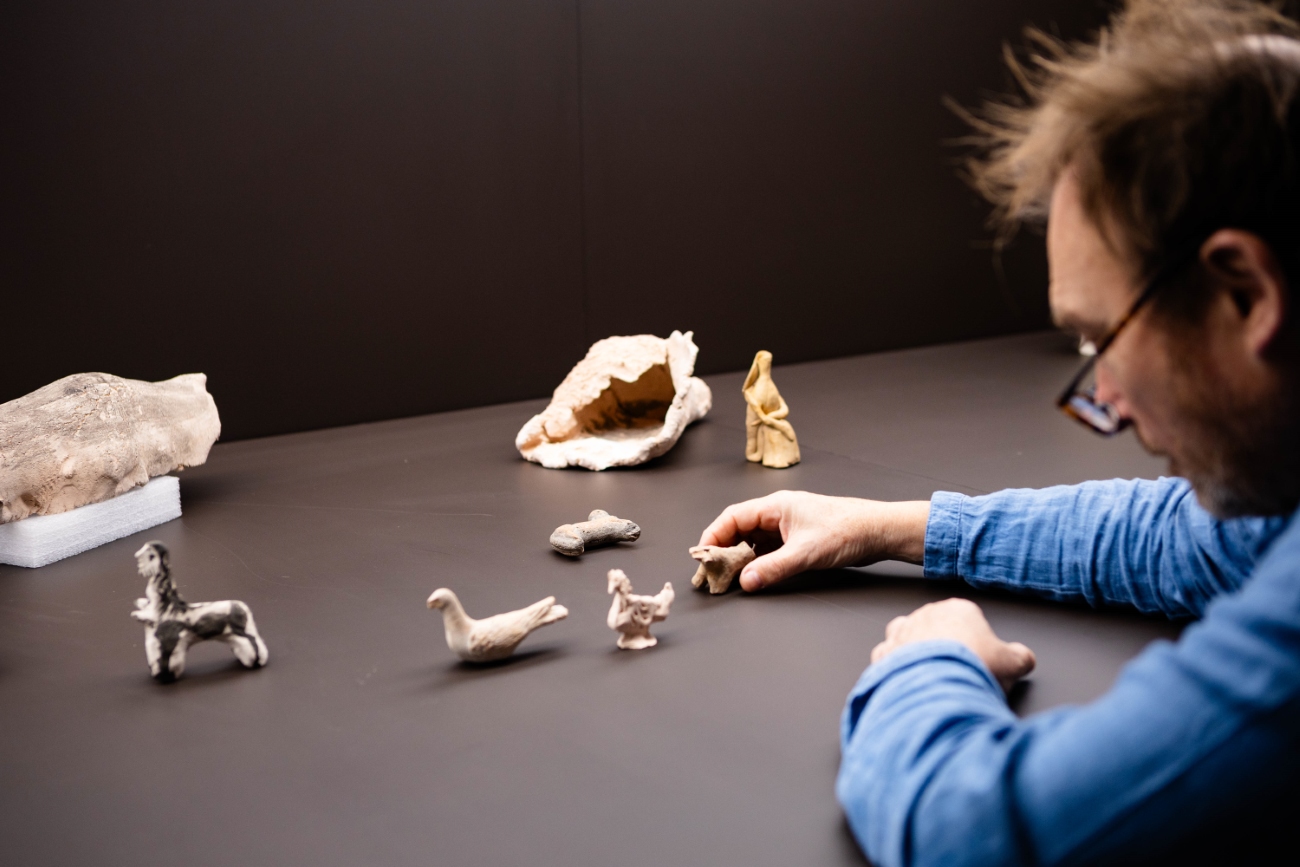
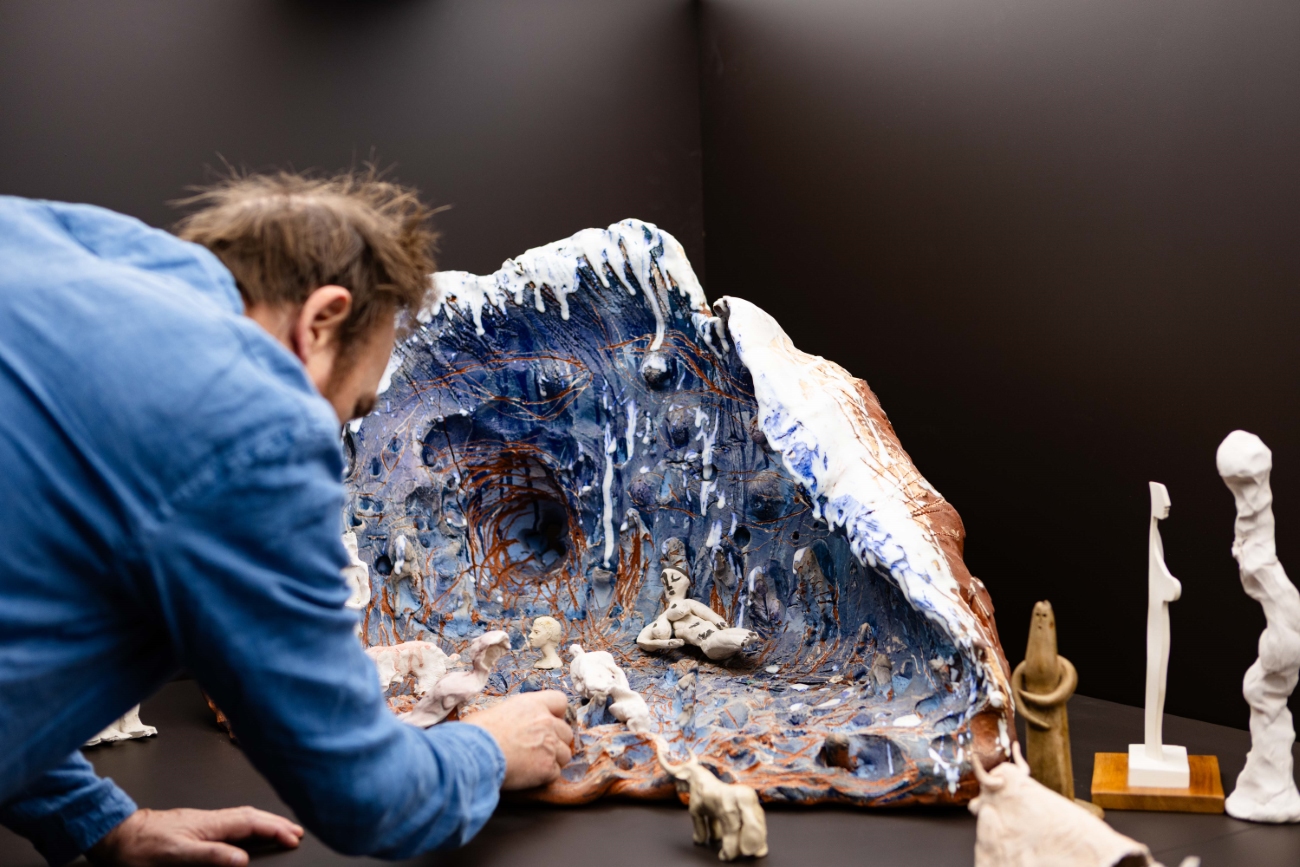
The first word that Barceló uses when we commence our interview is ‘fragments”. He notes too that for him, “ceramics is transversal”. He then tells me hat during the process of the installation of the exhibition at the Museo de Almería, they had extemporised the creation of a Nativity scene from gathering together pieces found within the museum’s basement storehouse of archaeological artefacts and linking this to a series of fragments and small works of his own (many of which he had fired in the previous week), whilst adding also into this scenography some small pieces by Picasso. What came out of this was an assemblage speaking directly to an important moment in the Andalucian cultural and liturgical calendar. Barceló refers to the ‘crib’ installation with its emphasis on birth, as setting the thematic scene for the exhibition more broadly.
He points too to the congruence in style and symbol of three bulls that appear in the installation, one is from the 5th century, another was made by Picasso in 1957, and a third, was made by Barceló in 2009. He observes “each look like a variation of the same thing, but there are five thousand years of difference between them”. He describes the “same process”, of “hand, fingers and clay” at work in all three and speculates on what might happen if “a volcano” suddenly occurred and then someone in five thousand years’ time found these pieces all together. Might they then seem to have made by the same artist? And what of ideas of modernity then? The clay fragments might survive but what of notions of singular artistic identity?
Barceló’s initiation into working with clay is critical to this sensibility. He was first introduced when living in Mali in West Africa in the early 1990s: “I began to do ceramics for the first time there. It was fascinating. In the beginning it was for me something new, the clay, because I was a painter. But I couldn’t work outdoors because of the wind which was there every day during the Harmattan season”.
Instead, he was invited by female members of the local Dogon community to learn the low-fired, unglazed, hand-coiled methods they use in the production of earthenware pottery, carrying on traditional techniques honed over centuries. He tells me how:
Three generations of women showed me the processes, the grandmother, the mother and the daughters. They showed me first how to choose the clay from the right place, which was very far away; it was not easy to walk to the right place, and there were three different types, including yellow and white. And they showed me how to prepare the clay, it was a long process and then how to ‘cook’ it. Even now, I remember all the names in Dogon. I was shown also how to polish until it is glossy. It was fascinating. For me in the beginning it was something new….I was a painter, but I realised that the clay was the key to something.
When I eventually came back to Europe, I was in my village in Mallorca, it was still the beginning of the 1990s. I realised that there was an old man still working in a pottery studio there, in the same way as they had in the old days, in the 1950s. It was the last of that generation and so I worked with him for a year. After the Dogon, it was actually like modernity, we were working with electricity, we had an electric oven.
I observe that I find it fascinating that the wind was in a sense the force behind this shift in his own direction, as his paintings from before the 1990s appear to me convey a sense of the wind blowing through them:
Yes I think it is the same mood, impulse, probably. I have felt like I wanted to work directly with the earth and to give this volume. Something metaphysical. I was invited around the turn of the century to develop a major work for the Cathedral in Palma (link), and I realized that, for me, it is always about a desire to work both from the inside and the outside together. I began to imagine big walls in clay that I could then work behind, which is something I could not do with painting. I discovered a young ceramicist in Italy who could do this work with me (link). It was very exciting. It allowed me to work at a larger scale, where I am still doing the same thing, but projects are bigger whilst the technicity is getting better because the projects are larger. At the moment I am I am discussing taking on a commission to do something related, which would be a gigantic ceramic. I think probably it would be ten years work at least.
Meanwhile, all the recent works being shown by Barceló in the exhibitions are ‘sem titulo’, a factor that he attributes, when I ask him, to their having been recently made: “Yes, all my new works are untitled, because they just new, it is too much work to also put titles. I just add titles when the work goes to the gallery, or to the market”.
I then ask Barceló about something I heard him say in an interview with a German magazine in 2024, to the effect that in terms of his process, he takes the view that ‘knowledge’ can only come afterwards. I wanted to know more:
Yes, of course, well I always have the feeling that I have to find the technique for the precise thing that I might be about to take on. The more you know the more you can do things. It is a kind of invention. It is a thing I have never done before. I remember during the 1980s Documenta everything seemed very very new but now people are turning back to the pre-historic, to me there seems to be a big excitement around the big caves.
So do you think that the old is now the new new?
I have this feeling very much. For me the biggest excitement in art is connected to this sense in which we are becoming more aware of what has gone before. I am increasingly astonished by this. I think I didn’t see this earlier, or I was not able to absorb. Now I can see. It is like a humility, right? We always believe we are the first until we realise we are part of something else. Even our own histories.
Might it be something to do with a feeling like we are living in an Artificial Age and we are all possibly feeling the need for stone again?
Probably yes, and ceramics, the clay, it is in the Bible, humans were made with clay. I think nothing is more human than the clay. When I was in China, or Japan, or Africa, it was there, the clay is everywhere. I went to spend time in the Himalayas, ten or fifteen years ago, as it was becoming difficult politically to go to Mali, and I wanted to try to something with the intensity of the Dogon, and I was in the monastery and I was asking questions of the monk. He told me it was or is the same thing to paint or to pray, the root of the word is the same, so too to make a poem, it has the same spirit. I understand that.
I also realise that everything I am doing now I tried before, when I was ten or twelve years old, when I was just a little boy. I think this exhibition is very much about Andalucia, it is very Iberic, very local in a way. We are also very local. Picasso was very universal but I think the roots of what he was doing are very much in Andalucia. I think you can find them all around. I think it is cultural identity. It is not the purpose of the exhibition, but I have realized, talking to you, that this is, in the end, what the exhibition is telling us.
Bronaċ Ferran is an art writer, curator, and Research Associate at NCACE, School of Advanced Study, University of London.
Reflections. Picasso × Barceló forms part of the series of exhibitions by Museo Picasso Málaga, in collaboration with Fundación Almine y Bernard Ruiz-Picasso (FABA) and the Andalusian Regional Government. After its presentation at the Museo de Almería between December 2025 and March 2026, the exhibition is on view at Museo de Cádiz through June 28, 2026.
Subscribe to Ceramics Now to read similar articles, essays, reviews and critical reflections on contemporary ceramics. Subscriptions enable us to feature a wider range of voices, perspectives, and expertise within the ceramics community.
A previous version of this article incorrectly mentioned that Cádiz was the capital of Andalucia.