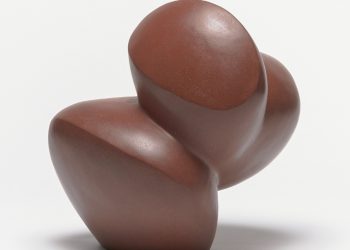
By Alice Fyles
As you arrive at the door you hope this is finally the right one. The ground up the drive is covered in mud. Your poor white sneakers have seen better days. Is this what an entrance to a pottery studio looks like? It doesn’t feel anything like the workshop in Hackney. The large windows, green plants, light wooden furniture and Scandinavian ambiance feel distant as you observe the spades and buckets scattered up the driveway.
The evening pottery class, which eventually had turned into three, was addictive. You couldn’t get enough. There was no space at home, your partner was not keen on bringing dirt inside, and the place in Hackney only allowed a few items to be fired a month. You needed somewhere to branch out.
You emailed a few studios, all full. The yummy mummies and professionals had taken those places. This was the last one, but the studio manager insisted you meet in person. You knock on the door and take a last peek at the poorly written directions in the email. Hopefully this isn’t the fifth wrong door today.
door swings open
Oh hello! Welcome to the studio!
I’m glad you made it.
We spoke online. You’re looking for a place, right?
you nod
Please come in.
ushers you inside
The Kitchen
This is the kitchen, I thought we could start the tour here.
Please have a seat.
Would you like a cup of tea? I’ve only got Lipton.
Ah yes, I thought you might.
kettle begins boiling
Do you take milk? Unlike the leaves, I’ve got all different kinds: almond, oat, cow, coconut, soy, rice. You name it, I got it.
Oh! But before you choose, let me ask you something whilst we wait for the kettle to boil.
kettle continues to boil
Have you ever thought about how your choice of milk makes the tea taste different?
Yes, I know it sounds like a daft question. I mean, how do we pick our milk? How do we know how much milk we want? How do our choices affect the taste of our tea?
Bear with me.
For instance, on rainy days when the milk is running low, I will use much less milk than ideal to squeeze out enough cups for the day. The taste isn’t fantastic, it could be much better. However, it’s fine because I know I can drink tea with milk all day (albeit, much less). Not an ideal solution, but better than venturing out to the shops in the rain.
Sometimes I choose to use a certain type of milk because of past experiences. I once had a friend who treated me to a delicious peppermint tea with almond milk. Now I always pair peppermint tea with almond milk and enjoy every sip of it.
Once I had a friend who was vegan and got served tea with cowmilk by mistake. She spat and swore, screaming “This is sooo dank and slimy! Cow milk! Disgusting!”. She set the drink aside and muttered to herself to never come back to this “no good, overpriced, bad excuse for a café”.
What I’m trying to get at is; your choice of milk alters your experience of the tea. Your choice is a product of past and present circumstances. Whether it be the weather, a fond memory of a friend’s gesture or a moral dietary decision. Your experience is the result of you interacting with the ingredients, ranging from pleasant sips to angry exclamations.
I think about this quite a bit. Not always in terms of tea. But more about how our individual understanding and choice of materials affect what we make and how we interact with it. What affects my material choice? To what extent do my materials influence what and how I choose to make ceramics?
Let’s think about how this may play out in the studio.
Much like how our individual choice of milk affects our experience with tea drinking, our choice of ceramic materials affects what, how and why we make ceramics. For instance, some makers in here argue that our present use of industry developed materials is influencing ceramic making, creating homogenous and predetermined ceramic expressions.
You see, “For hundreds of years generations of potters used the materials close to home and experimented with the idiosyncrasies of local materials, leading to a rich diversity of regional styles and techniques. Although commercial production has now brought a certain uniformity to the material available.” (Sentance 2004, p. 26). This uniform material is developed primarily by and for industrial ceramics. Nevertheless, most present-day ceramicists work with this ready-to-use clay and glaze, and unlike their ancestral colleagues, they have little to no knowledge of the material’s basic ingredients (Forrest 2013, p.10). Instead, the material supplier informs the maker of the ready-to-use clay’s expected properties and applications.
For example, on material supplier Cebex’s website they inform the buyer that Porcelain Clay CS970 White “is easy to throw and has good transparency. […] When throwing, the clay is smooth, comfortable and pliable.” (Cebex Keramikexperterna AB 2024). Before we touch the clay Cebex has briefed us on how we ought to work with the material and what qualities we should be looking for. This description can be helpful, however it’s important to note that it’s shaped by industrial values. Porcelain Clay CS970 White is a good and easy throwing clay for creating the forms and expressions implied by industry.
However, what about the characteristics which are not sought after by industry? What about warping and cracks? What about unexpected violent behaviour on the wheel? What about a rugged surface? What about uneven colour? What about not throwing vessels? These features are not easily created with a “good throwing clay” as the material doesn’t lend to those expressions. A “good throwing clay” much easier becomes objects with thin walls, objects which centre well, objects which are sensitive to the makers touch, objects which are white, objects which pair well with most ready-to-buy surface glazes. Consequently, you might question to what extent the qualities of industry-developed materials influence what and how we make?
I have some pictures on the fridge which I would like to show you.
points to pictures on fridge
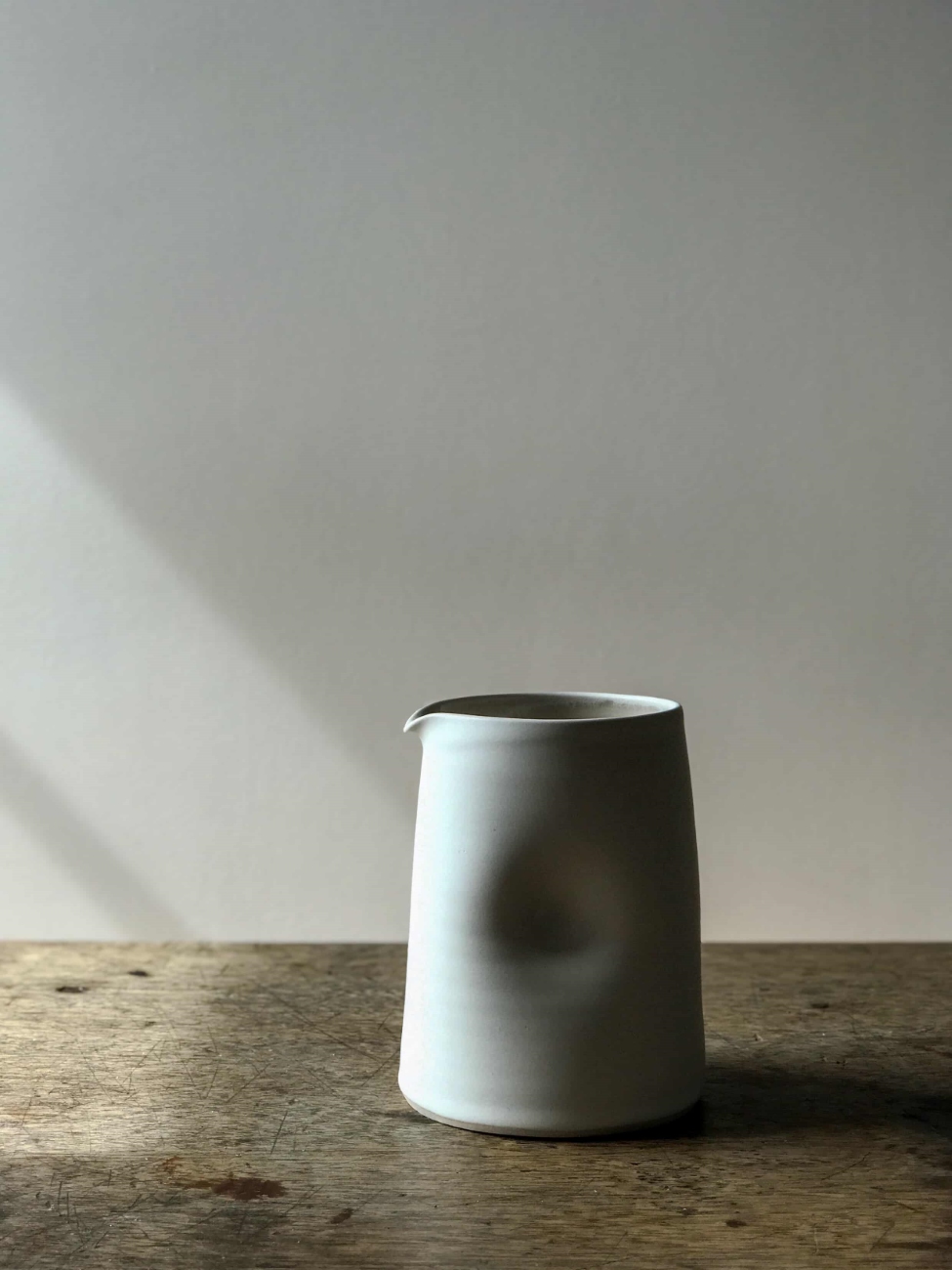
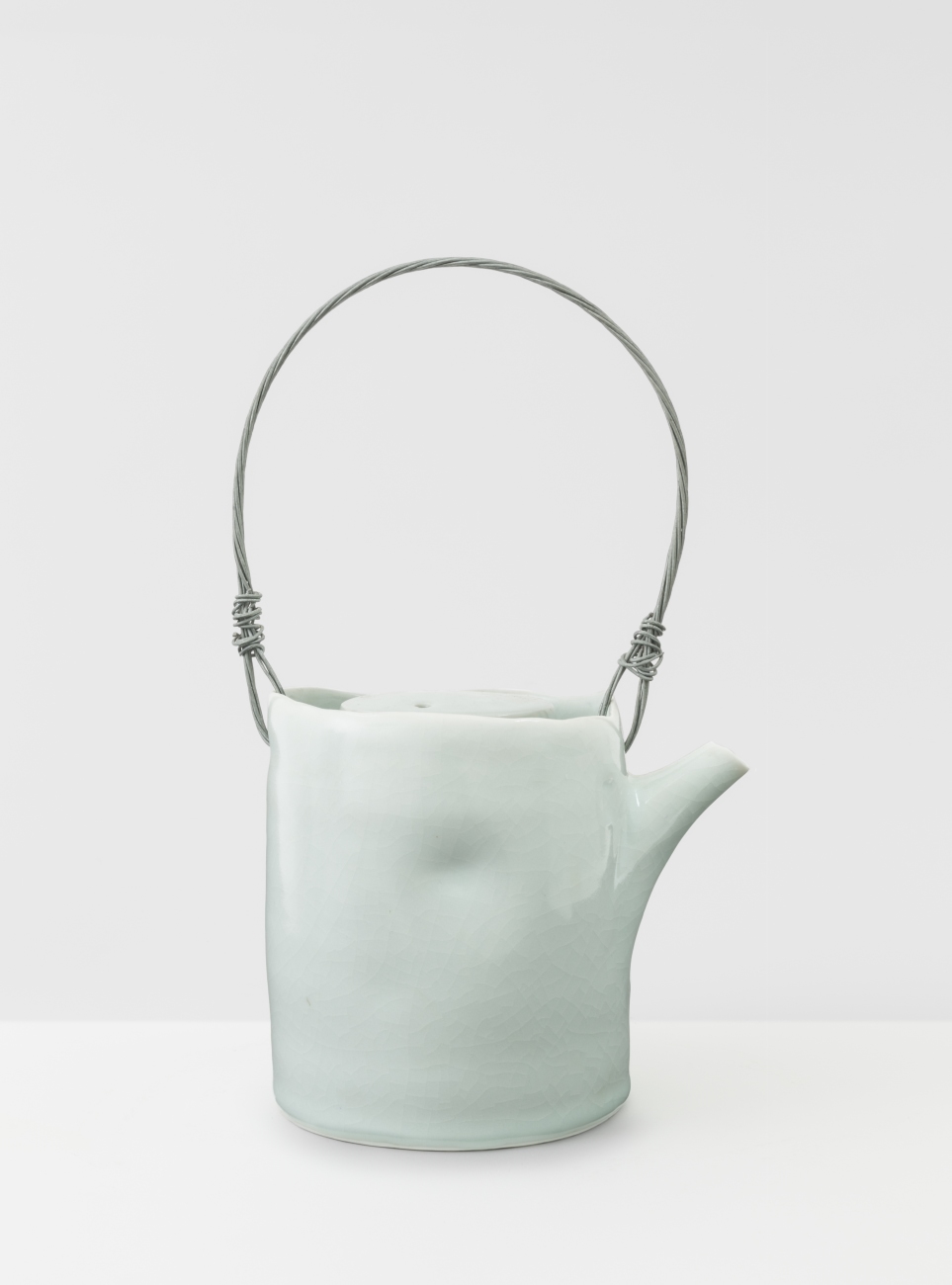
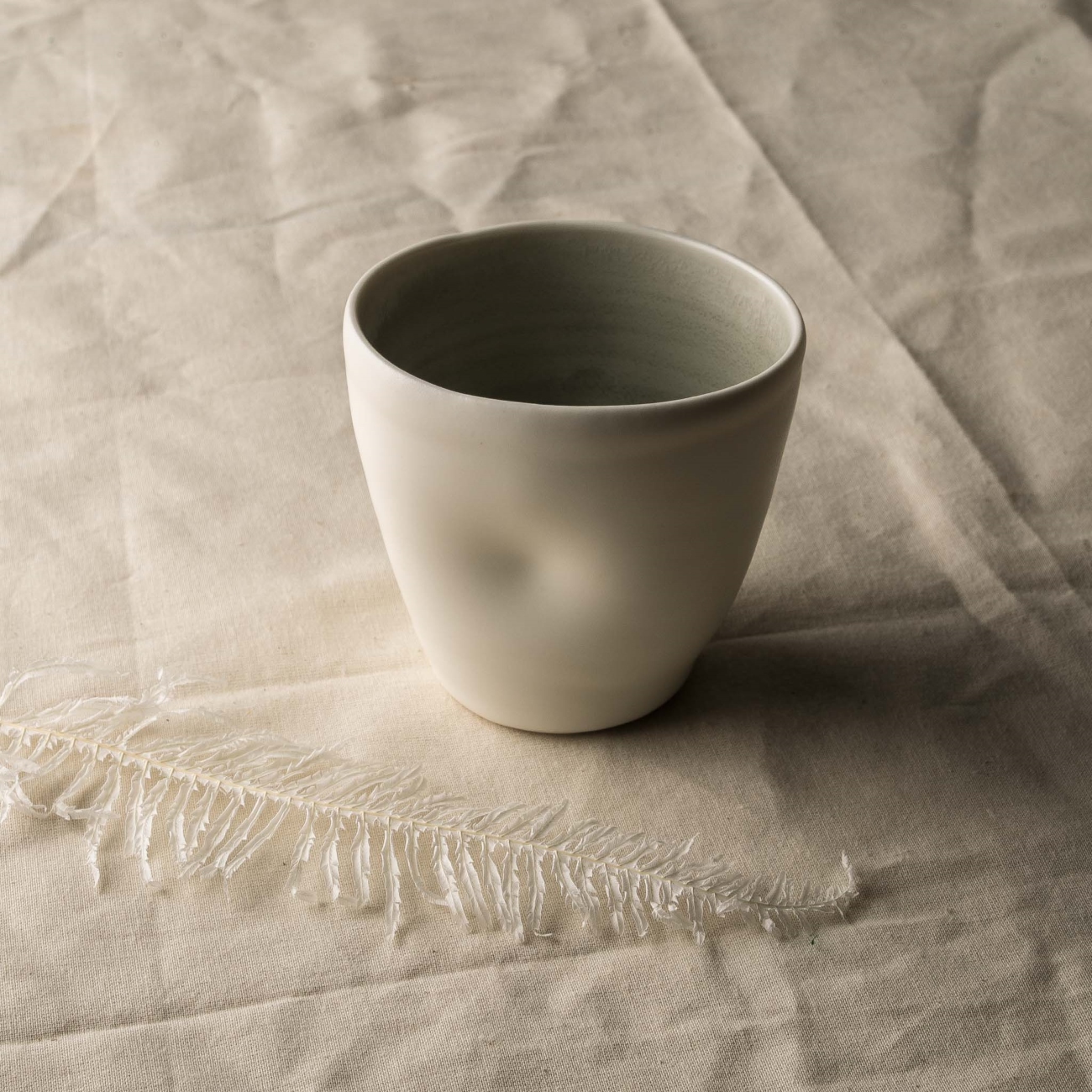
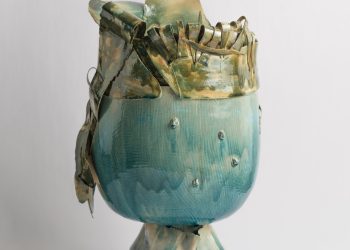
These works are created by ceramic designer Emma Lacey, artist Edmund de Waal, and potter Linda Bloomfield. Although they come from different backgrounds and occupations, they are brought together by a shared visual language: thin, lightly coloured thrown forms marked by a dimple. Why do these works appear so similar? To what extent is their making influenced by material choice, and by the narratives of the ceramic industry itself?
On the other hand, are these practitioners making informed decisions regardless of the material? Or are they choosing the material because they desire this expression?
Even so, where do these decisions come from and how do our practitioners relate to the key player, the material?
kettle stops boiling
Oh, the water is ready. What milk do you want?
No milk? You sure?
Ok, let’s move on. Feel free to take your cup with you.
The Studio
So, this is the main studio space.
As you see there’s a lot of light, plenty of space, a couple of wheels, kilns, slab roller, plaster room. I’ve even got my own desk. Well, everyone does.
Ah that?
That´s our noticeboard. People put up flyers for exhibitions, open calls, grants, all sorts.
Oh, yes, the big glaring text? Those are the rules and advice here in the ceramic world. They aren’t official, but they have been passed down from teacher to student for generations, so they are hard to ignore. And they can be helpful. Like these ones.
points to text
DO NOT SAND BONE DRY CLAY!
Close the door to the kiln room as much as possible.
They relate to health and safety. I’m not a big fan of contracting silicosis or dying from carbon monoxide poisoning.
But there are some rules which I think you can take with a pinch of salt. Like this one.
points to text
Do NOT mix earthenware & stoneware clays.
I think it’s a bit misleading. You see, earthenware and stoneware do not exist. Don’t get me wrong, the terms earthenware and stoneware do exist, most ceramicists use them all the time. But that’s what they are, widely used terms, terms which simplify the reality of materials. Online source Pottery Crafters describes the terms as “The main difference between Stoneware and Earthenware is the firing temperature. Stoneware clay can be fired at temperatures up to (1,285°C) Cone 10, while Earthenware clay is fired at lower temperatures around (1,063°C) Cone 04.” (Pottery Crafters 2022).
These terms are useful for determining at what temperature a clay achieves a durable and stable body, which is standard and desirable when creating functional ceramic ware. However, the terms earthenware and stoneware limit our understanding of clay and its behaviour at different temperatures. The truth is not as simple as stoneware clay fires to 1285°C and earthenware clay to 1063°C. Clays can be fired to any temperature, 2000°C, 1000°C or even 50°C. However, depending on the ingredients in the clay, the clay responds differently to the temperatures. I have some samples here that we can look at.
places hand in trouser pocket and pulls out two objects
Look at this brown and bubbly sludge.
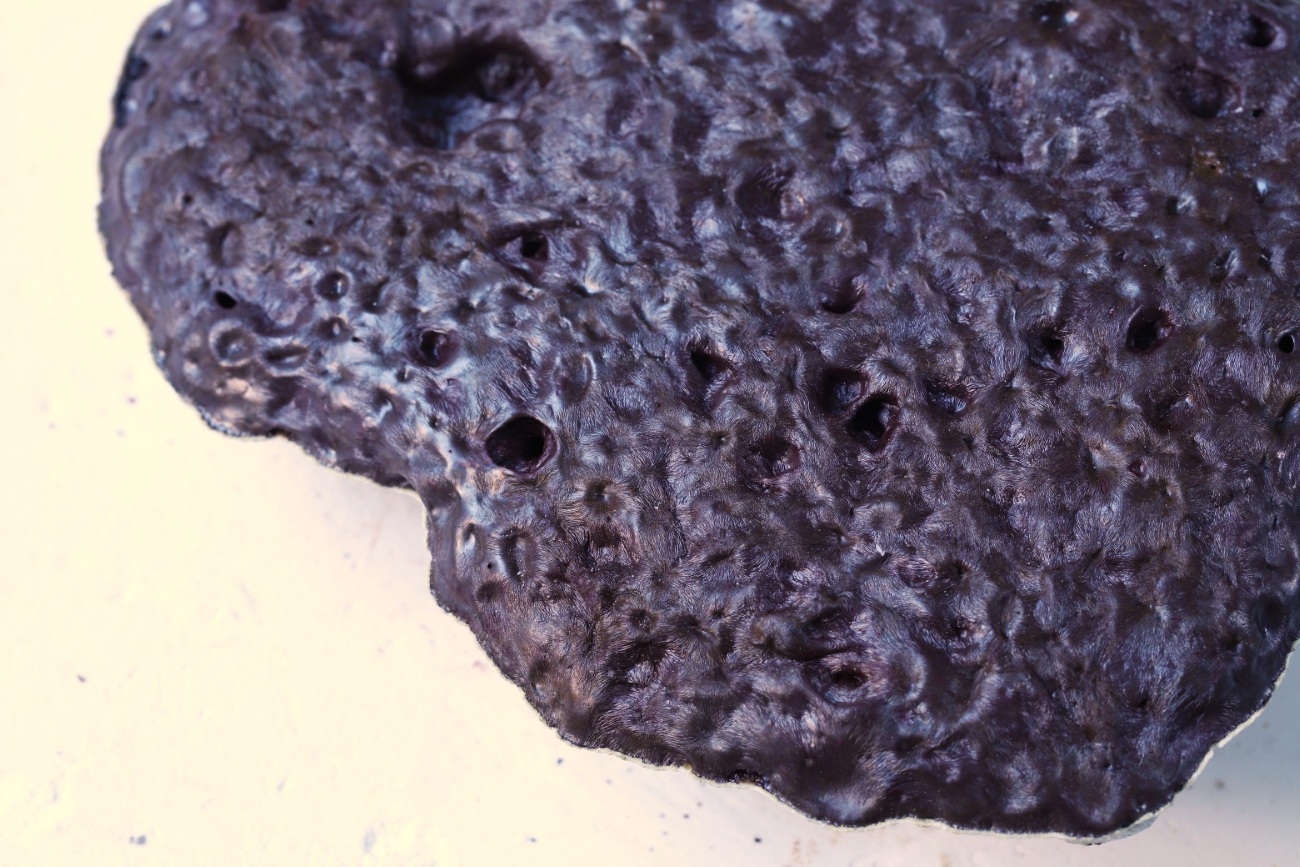
This clay has a lot of flux in it and would normally be classified as an earthenware clay. I have fired it to 1200°C. As you see it has boiled and become more fluid, I think it resembles a glaze.
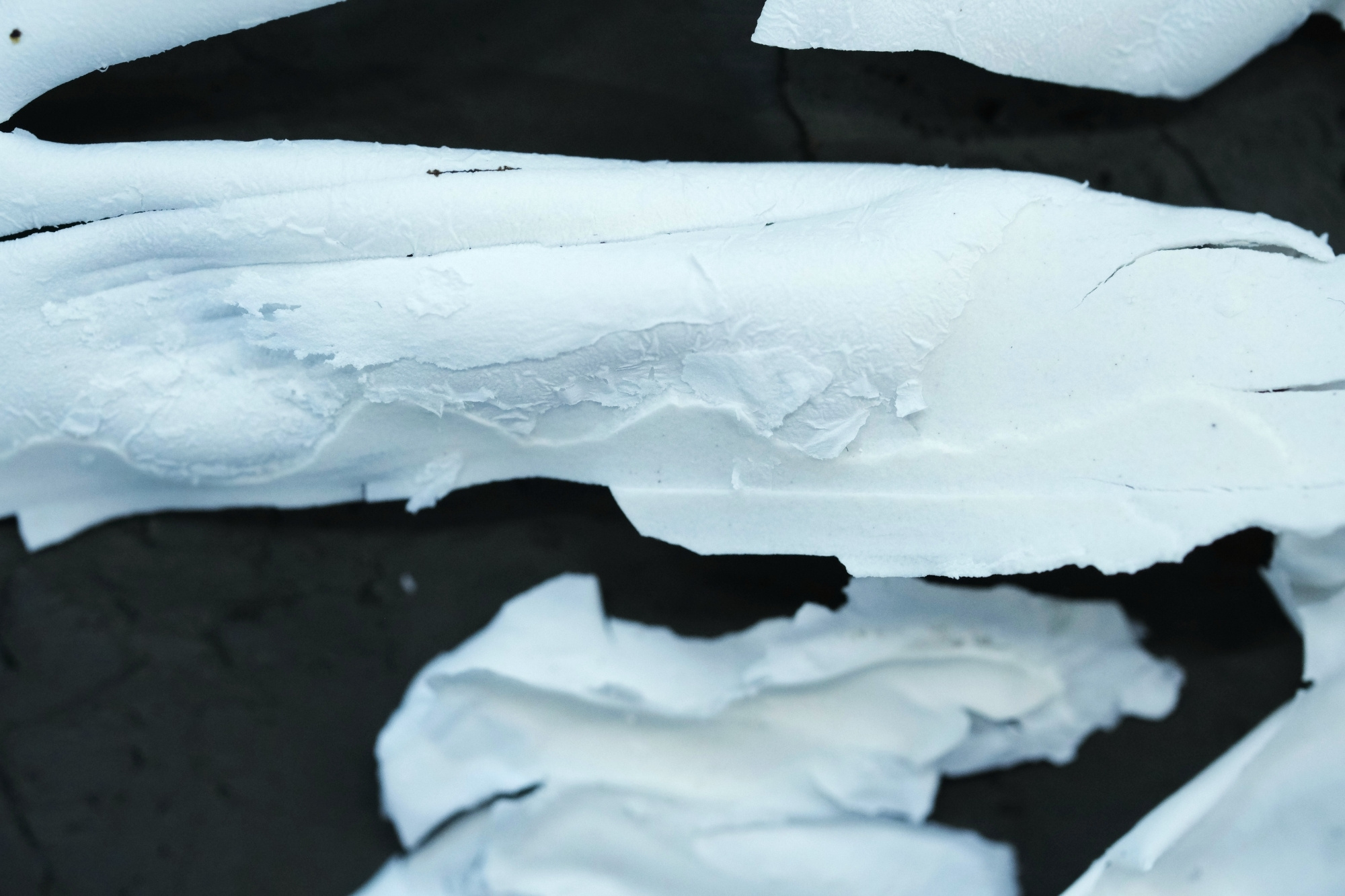
On the other hand, let’s have look at this crisp white sample.
This is a clay which is classified as a stoneware clay. I have fired it to the same temperature as the other sample, 1200°C. As you can see the body is brittle and flaky, it does not contain nearly as much flux as the other clay.
A few makers in here don’t think of ceramic materials in the terms of earthenware and stoneware because they want to explore the qualities beyond their expected temperature. Let’s find their desks so I can show you what I mean.
wanders over to a desk in the corner of the room
Ah, look here!
This is Brown’s work. By challenging the terms stoneware and earthenware he unlocks different qualities, expressions and roles for ceramic materials. As we can see here, he doesn’t limit glaze to surface, he lets it act as the body of the piece.
moves over to another desk
And over here we have some of Kuwata’s work.
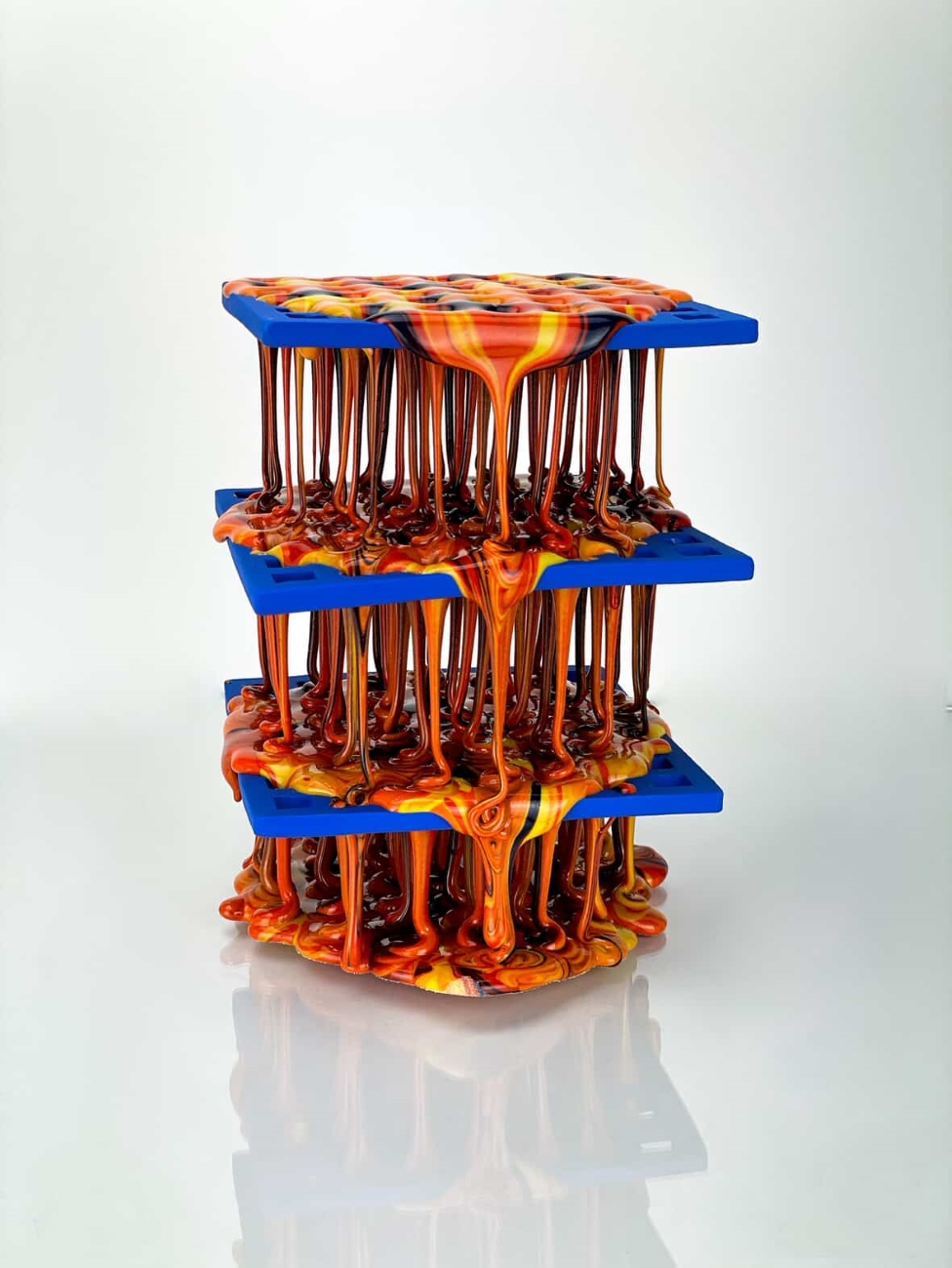
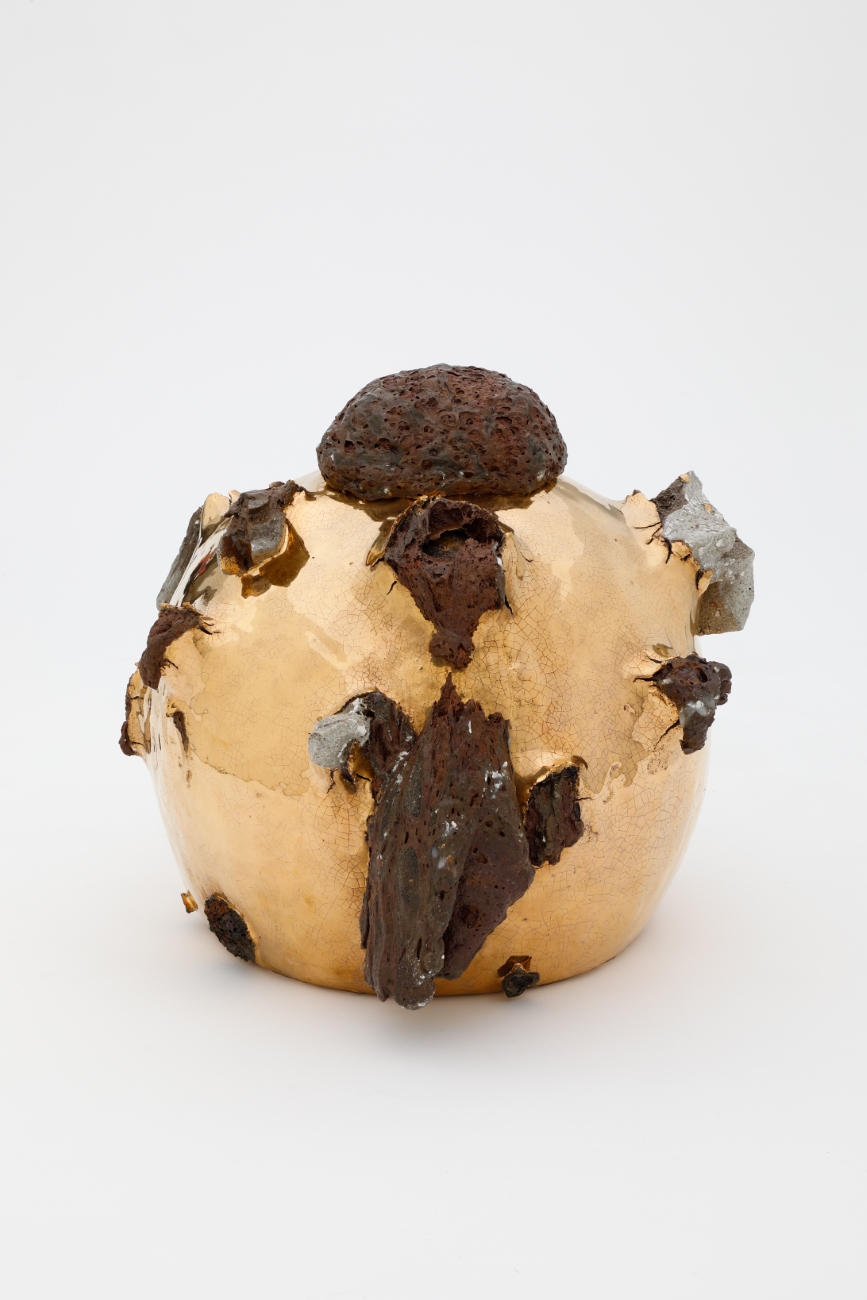
As you see here, clay doesn’t always have to be a static body which you dress in glaze, it can be dynamic, unpredictable, swell and push on other materials.
Isn’t it exciting?
walks over to the noticeboard again
Another rule which I wouldn’t think too much about is this one.
points to text
Do NOT fire plaster with clay, it will EXPLODE!
It’s not as dramatic as it sounds. “The issue is lime popping, calcium sulphate particles in the plaster slowly absorb water from the air in the kiln. If these particles are inside a clay body, they expand, but the clay around shrinks. This causes tension and can lead to cracks, popping and breakage.” (bciskepottery 2011). But it doesn’t always make the pottery break, or as stated, explode.
However, if you fire plaster with clay to high enough temperatures it turns into a light-green sludge with hints of brown. I have a sample here in my pocket.
takes out sample from pocket
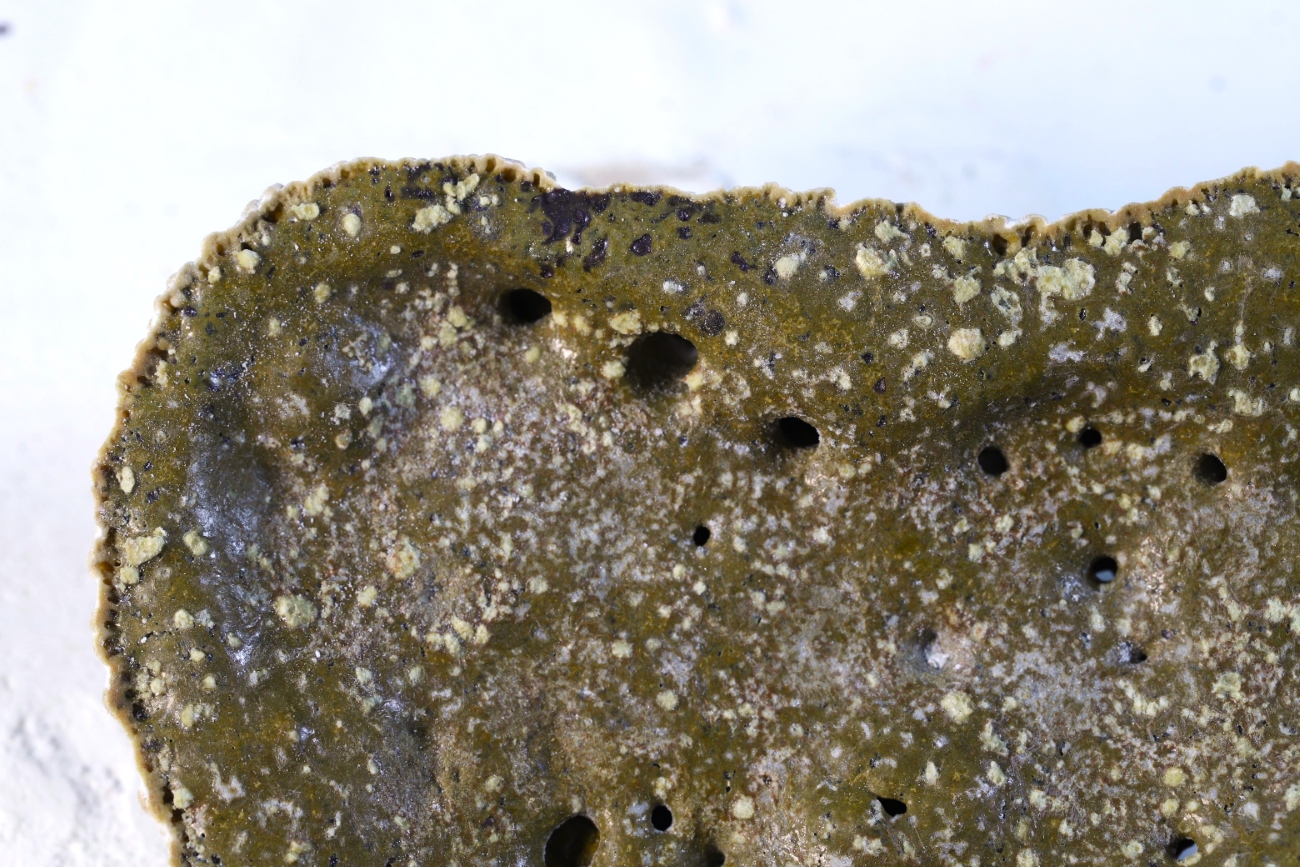
If I would have followed this rule, this object here and the knowledge it gives me wouldn’t exist.
Not all ceramicists agree with me when it comes to questioning rules and advice. I mean, the notes have been put up for a reason. Still, I think it’s essential to keep asking questions if ceramic art and craft are to continue developing. This includes questioning the expectations that shape how we make ceramics. Come, I can show you what I mean.
takes you further into the studio space
I think Keith Harrison’s “Last supper” is here somewhere.
Yes, there, look!
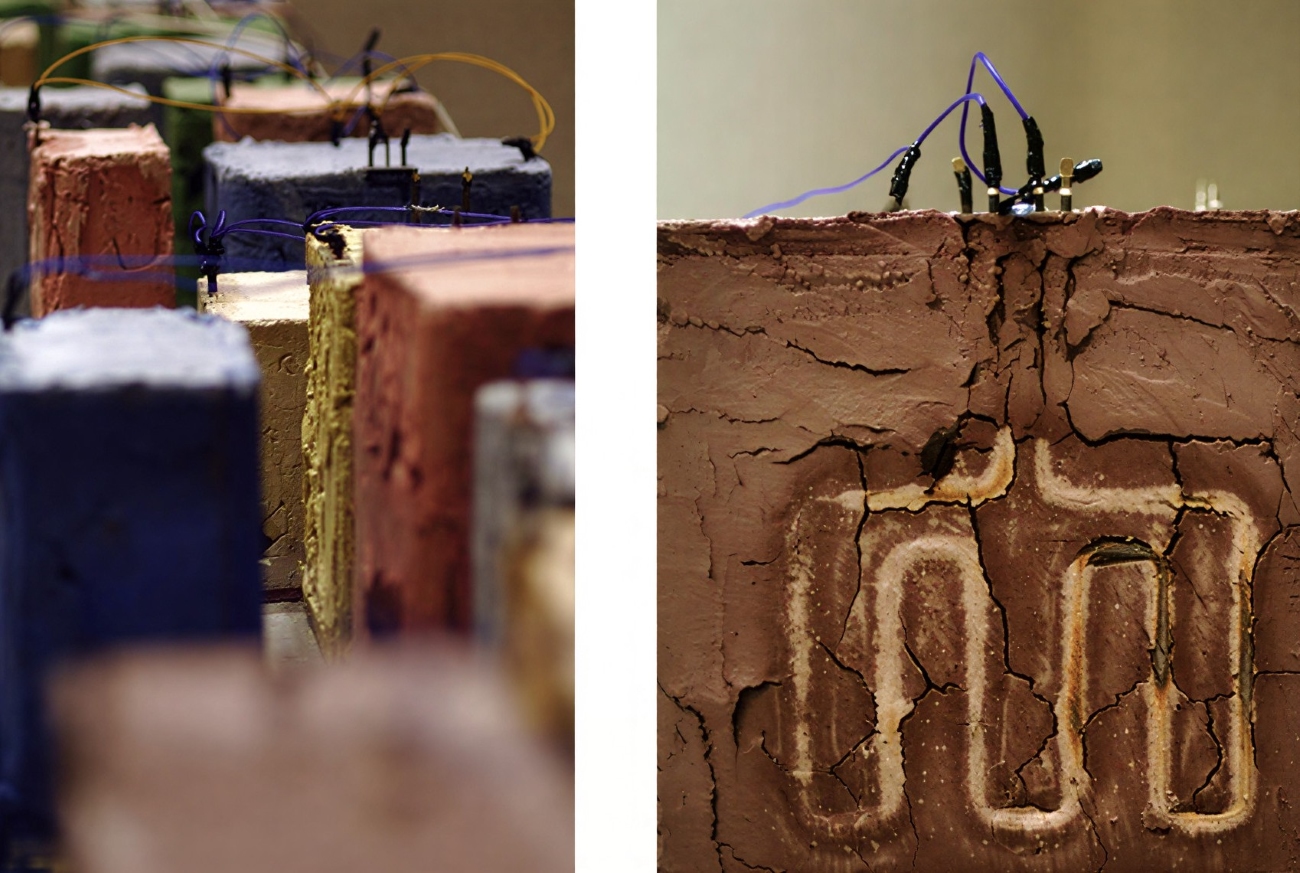
Harrison has embedded conductive wire in the raw clay body and is running a current through it.
clay body pops
See, that’s the clay being fired. We are witnessing a performative firing. The firing isn’t merely a process for creating ceramics, Harrison is making the action an artistic piece.
And have a look over here.
moves over to yet another desk
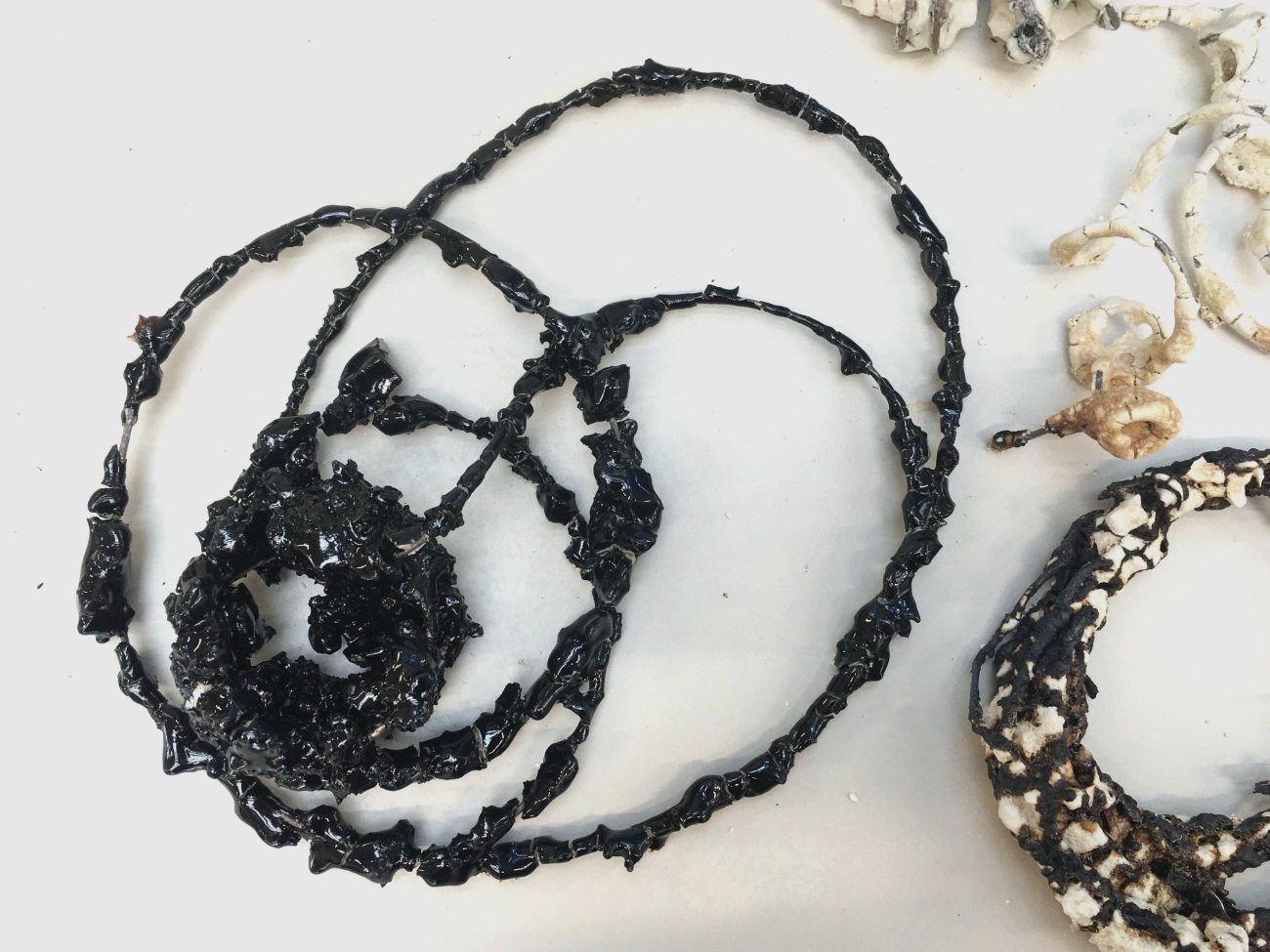
Look here. Ceramicist Malin Uhlén has coated kiln elements in glaze, using them as a sculptural body rather than as a structural part of the kiln. She’s giving the material an artistic role rather than a practical one.
Oh, and look over here!
drags you along to yet another desk
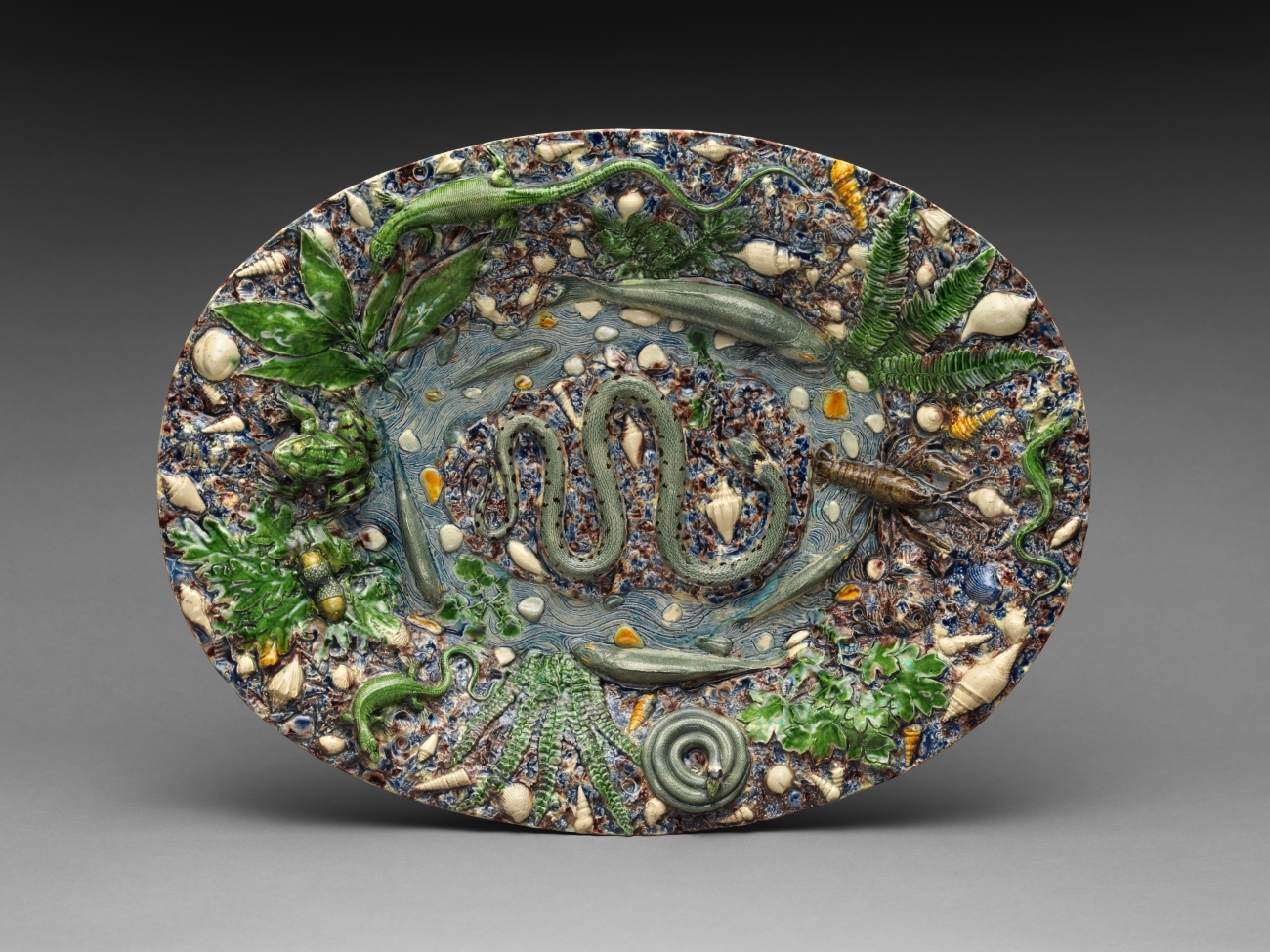
This is a platter made by a follower of Bernard Palissy, a 16th Century renaissance man. Work in the spirit of Palissy is not for the faint-hearted. You see the snake, it’s created through life-casting. This technique is uncommon today, given that we now have a different view of what’s right and wrong when it comes to using animals in artistic practices. But this work breaks our contemporary expectations of how a ceramic maker can operate and it produces unique pieces.
you arrive at an empty desk
The rules and advice of the ceramic world, as well as our relationship to materials, inevitably shape how we understand what ceramics is and can be. However, the work in this studio shows what can happen when some rules are broken. As you can imagine, questioning widely accepted knowledge is a path full of tension and raised eyebrows, but an exciting one where we uncover unexplored territories, expressions and insights. After all, isn’t that what creative making is all about?
Anyhow! I’m such a blabbermouth!
I’m sure you have some opinions on the matters yourself.
This is your desk.
gestures to the empty desk deep in the studio
Do you want it?
Alice Fyles (b. 1996, Limerick, Ireland, raised in Norrtälje, Sweden) is a ceramic artist and researcher based in the United Kingdom. She holds a bachelor’s degree in Ceramic Design from Central St. Martins and a MFA in Ceramics and Glass from Konstfack. Fyles’ practice explores the origins, nature and relationships of ceramic materials. Her work involves foraging geological materials, extensive material experimentation, and documentation using objects, text and photography.
Subscribe to Ceramics Now to read similar articles, essays, reviews and critical reflections on contemporary ceramics. Subscriptions enable us to feature a wider range of voices, perspectives, and expertise within the ceramics community.
Reference List
- bciskepottery (2011) Why is plaster the enemy of clay? Ceramic Arts Network Community Forum. Available at: https://community.ceramicartsdaily.org/topic/1517-why-is-plaster-the-enemy-of-clay/ (Accessed: 18 January 2024).
- Cebex Keramikexperterna AB (2024) Porcelain clay CS970 white 12.5 kg. Available at: https://www.cebex.se/porslinsleracs970125kg-p-859.html?language=en&cPath=60_59_190 (Accessed: 18 January 2024).
- Forrest, M. (2013) Natural glazes: collecting and making. Great Britain: Herbert Press.
- Pottery Crafters (2022) What is the difference between stoneware and earthenware clay. Available at: https://potterycrafters.com/what-is-the-difference-between-stoneware-and-earthenware-clay/ (Accessed: 18 January 2024).
- Sentance, B. (2004) Ceramics: a world guide to traditional techniques. London: Thames & Hudson.
Captions
- Image 1: Everyday Milk Jug (Emma Lacey 2017). Photograph by Fiona Reid (2017). © Emma Lacey (artwork); © Fiona Reid (photograph).
- Image 2: Teapot (Edmund de Waal 1997). Courtesy of the artist © Edmund de Waal.
- Image 3: Handmade dimpled cup (Linda Bloomfield 2023). Courtesy of the artist and Goldfinger © Linda Bloomfield.
- Image 4: Ljung 1200 °C (Alice Fyles 2023). © Alice Fyles.
- Image 5: White flake 1200°C (Alice Fyles 2024). © Alice Fyles.
- Image 6: Glaze Tower (Cory Brown 2021). Courtesy of the artist © Cory Brown.
- Image 7: Untitled (Takuro Kuwata 2021). Courtesy of the artist and Salon 94 © Takuro Kuwata.
- Image 8: Plaster and Ljung 1260°C (Alice Fyles 2023). © Alice Fyles.
- Image 9: Last Supper (Keith Harrison 2006). Courtesy of the artist © Keith Harrison.
- Image 10: Metallexperiment (Malin Uhlén 2023). Courtesy of the artist © Malin Uhlén.
- Image 11: Platter (Follower of Bernard Palissy 1510–1590). Courtesy of the Met’s Open Access Policy.
Image References
- Bloomfield, L. (2023) Handmade dimpled cup [Ceramic]. Available at: https://www.goldfinger.design/products/linda-bloomfield-handmade-dimpled-cups (Accessed: 19 January 2024).
- Brown, C. (2021) Glaze Tower [Ceramic]. Available at: https://www.instagram.com/p/CTYBOuvLst4/ (Accessed: 19 January 2024).
- De Waal, E. (1997) Teapot [Ceramic]. Available at: https://commons.wikimedia.org/wiki/File:Porcelain_teapot.jpg (Accessed: 3 February 2026).
- Follower of B. Palissy (1510–1590) Platter [Ceramic, lead-glazed earthenware]. The Metropolitan Museum of Art, New York.
- Fyles, A. (2023) Ljung 1200°C [Ceramic]. Unpublished work. Photograph by the author.
- Fyles, A. (2024) White flake 1200°C [Ceramic]. Unpublished work. Photograph by the author.
- Fyles, A. (2023) Plaster and Ljung 1260°C [Ceramic]. Unpublished work. Photograph by the author.
- Harrison, K. (2006) Last Supper [Ceramic performance]. Available at: http://www.keith-harrison.info/works/lastsupper.html (Accessed: 19 January 2024).
- Kuwata, T. (2021) Untitled [Ceramic]. Available at: https://salon94.com/artists/takuro-kuwata/artworks/untitled-TK593 (Accessed: 3 February 2026).
- Reid, F. (2017) Photograph of Everyday Milk Jug by E. Lacey. Unpublished photograph. Used with permission.
- Uhlén, M. (2023) Metallexperiment [Ceramic]. Unpublished work. Supplied by the artist.