By Ashley Thorpe
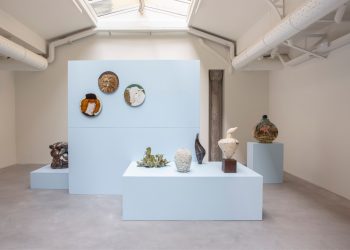
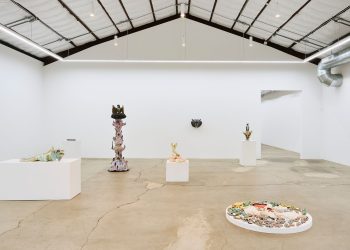
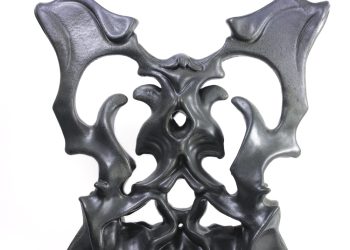
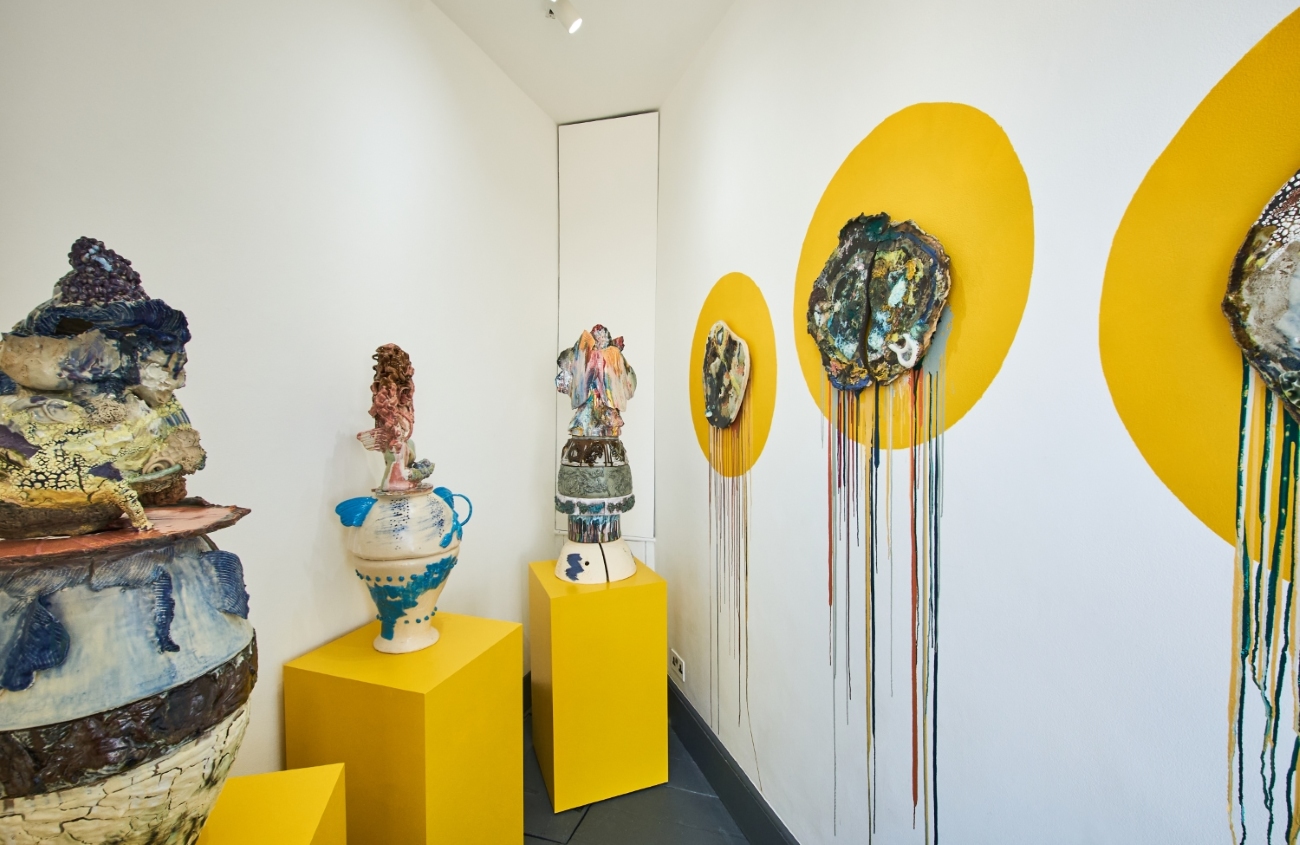
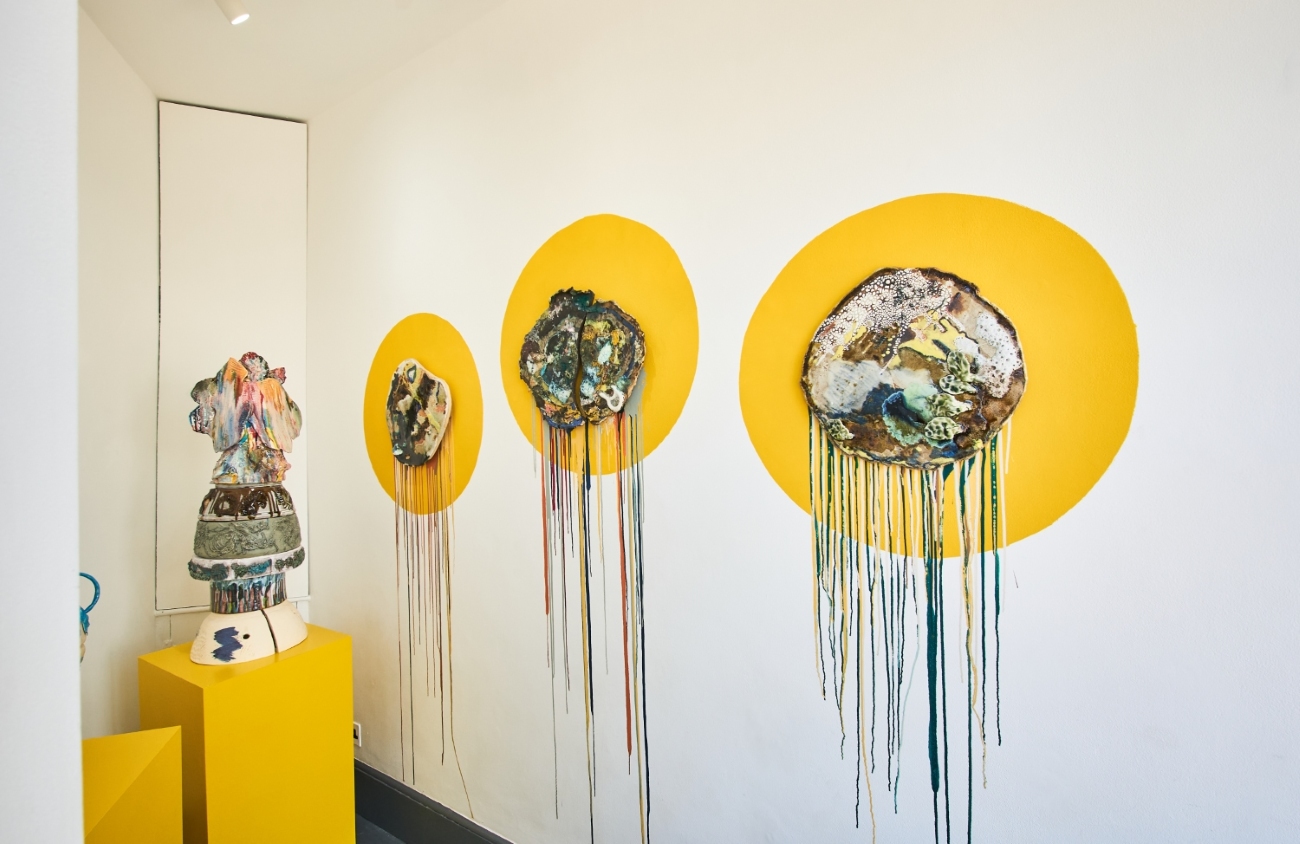
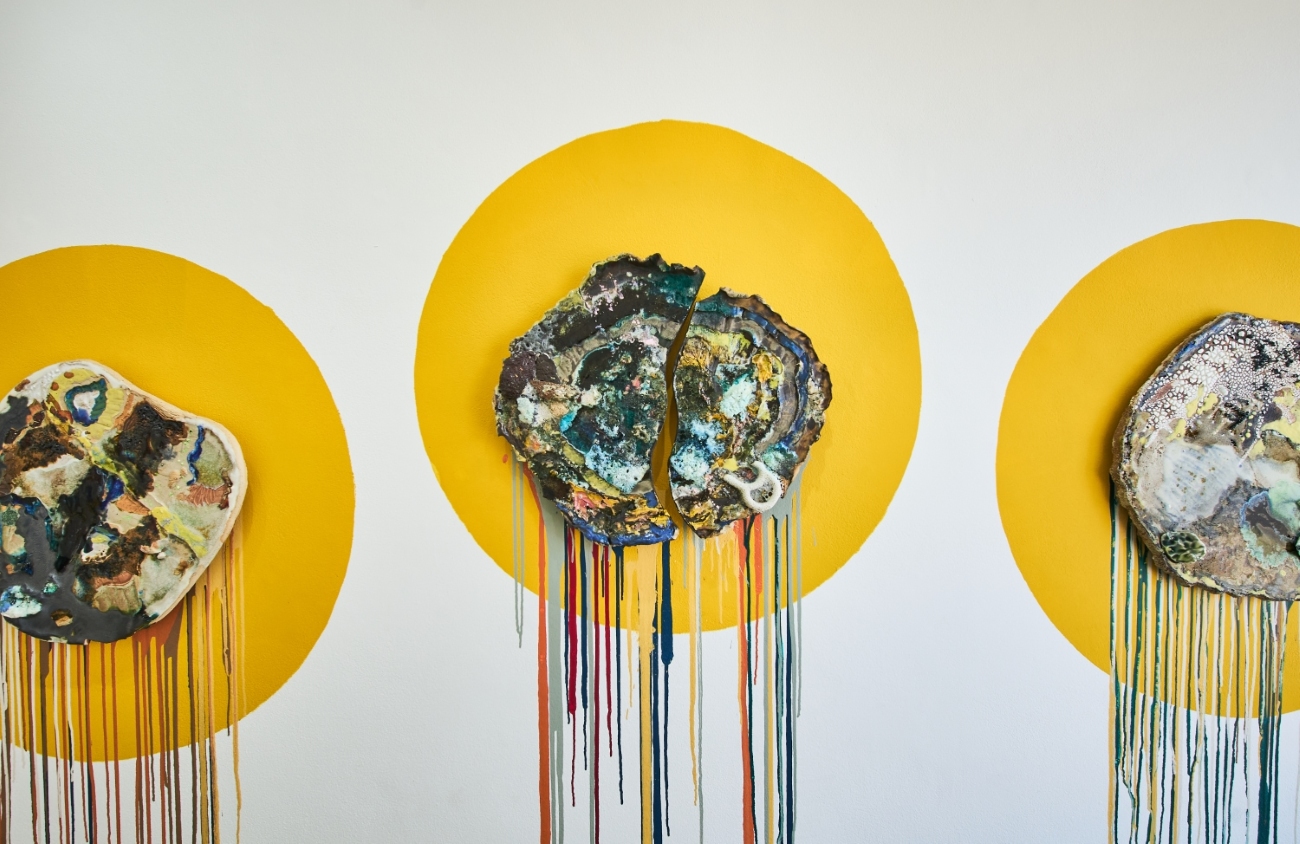
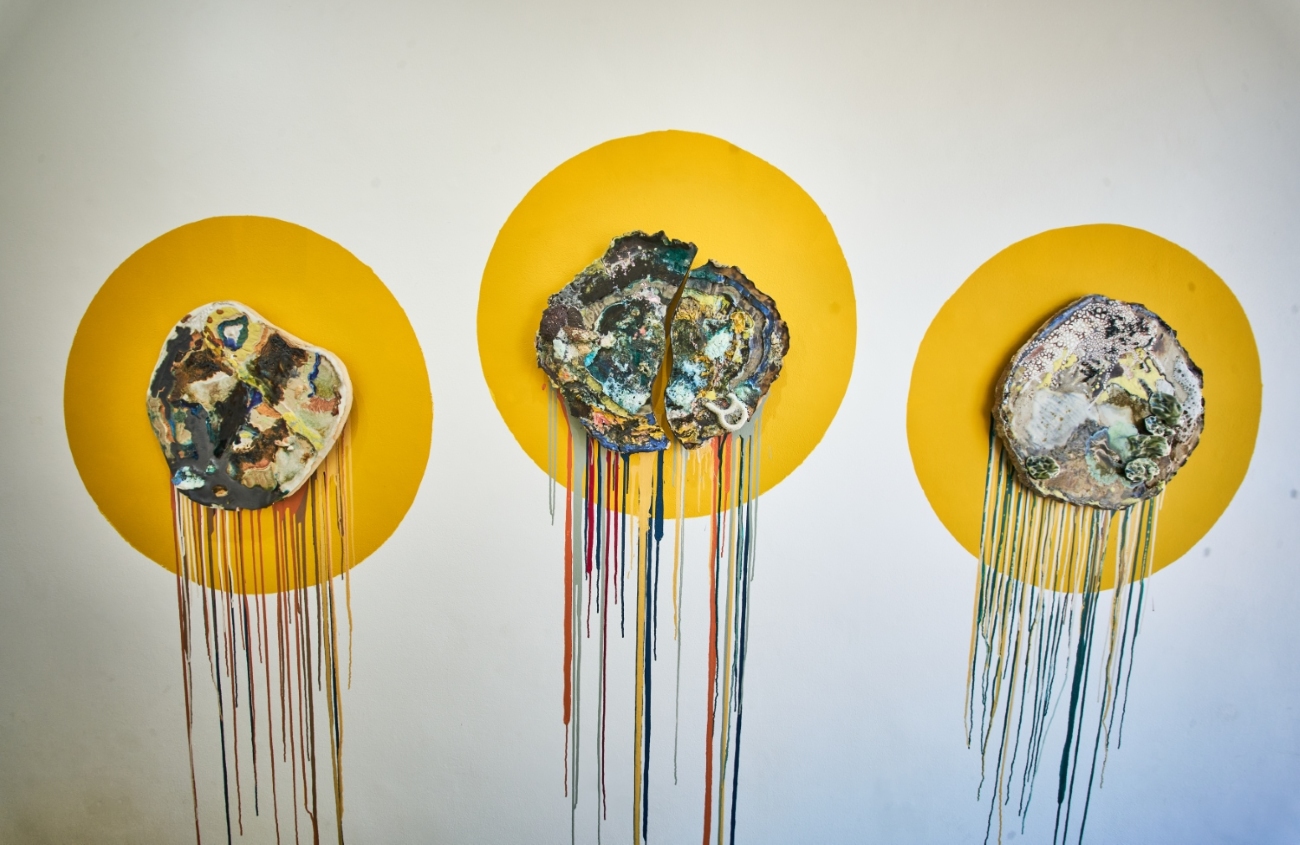
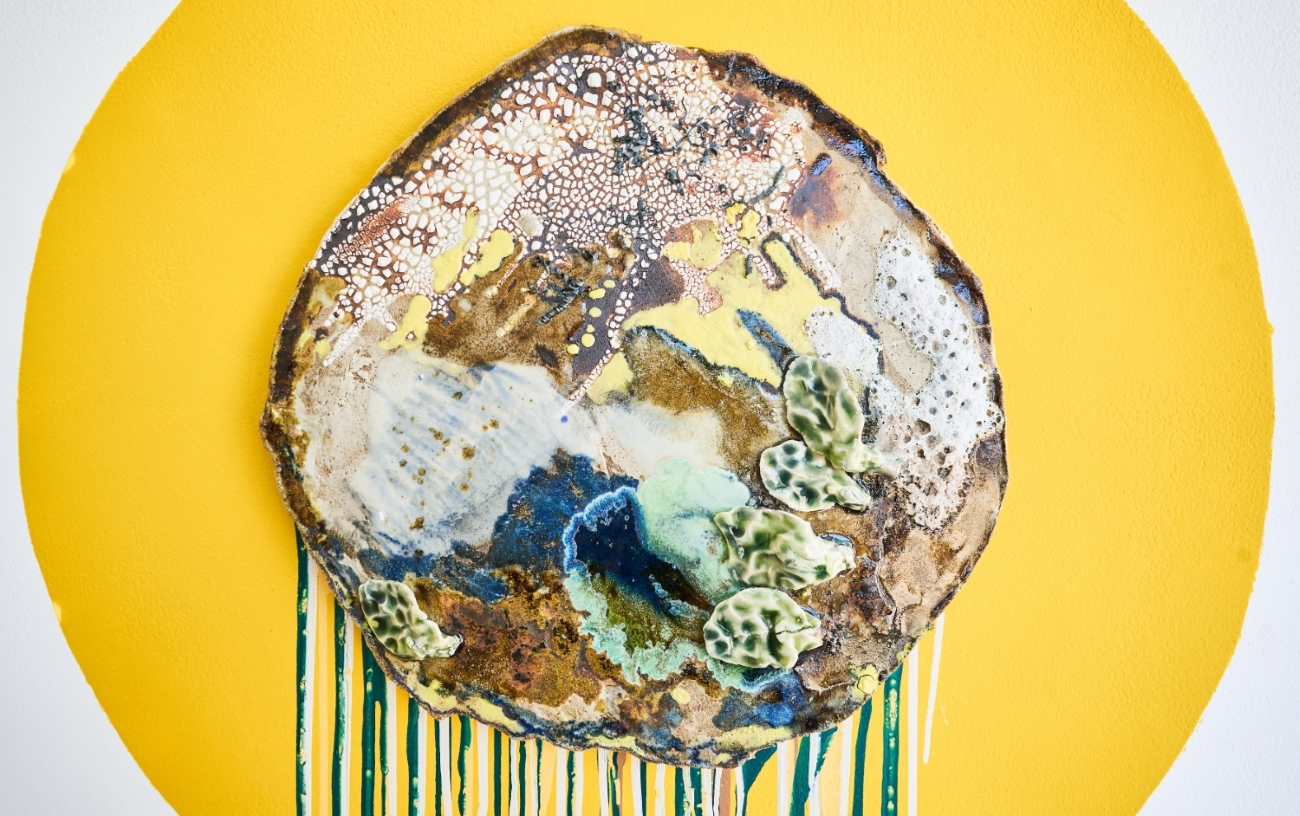
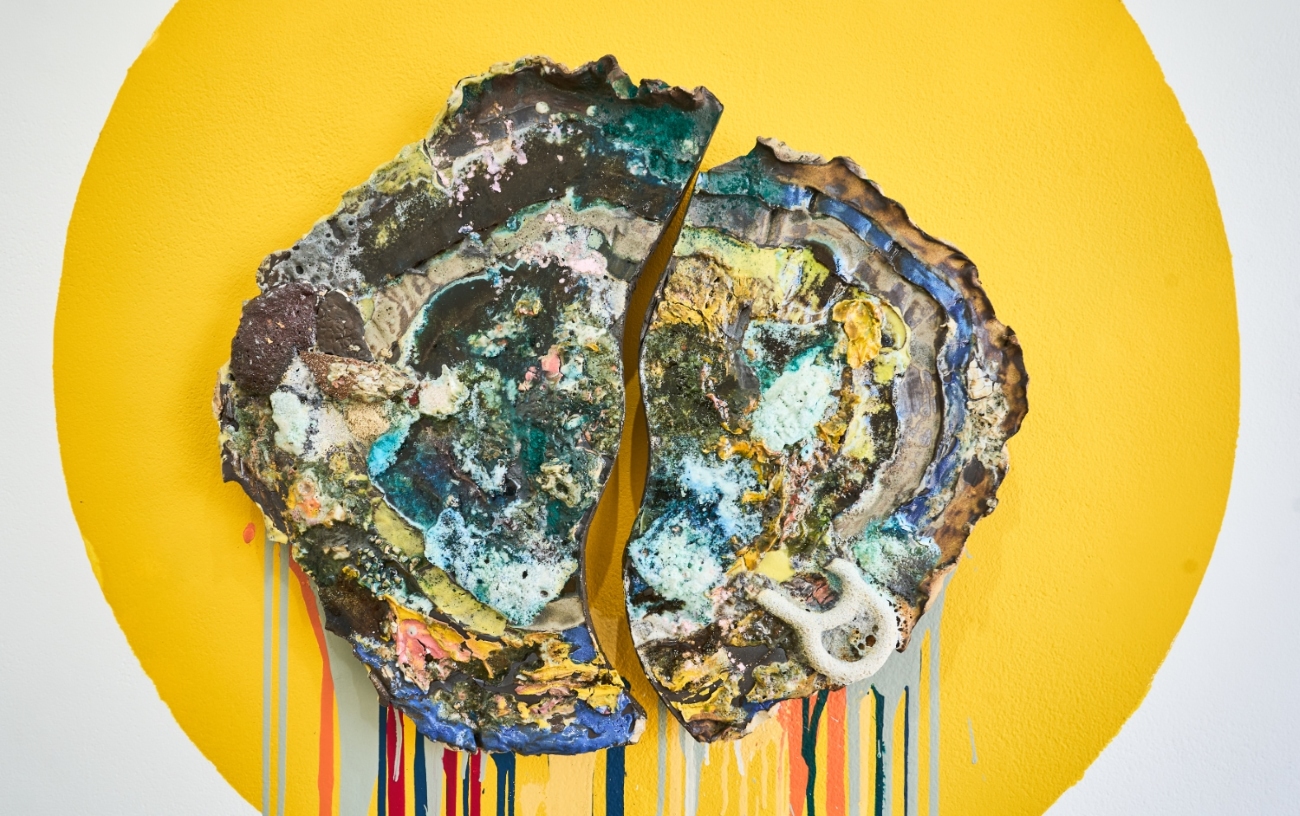
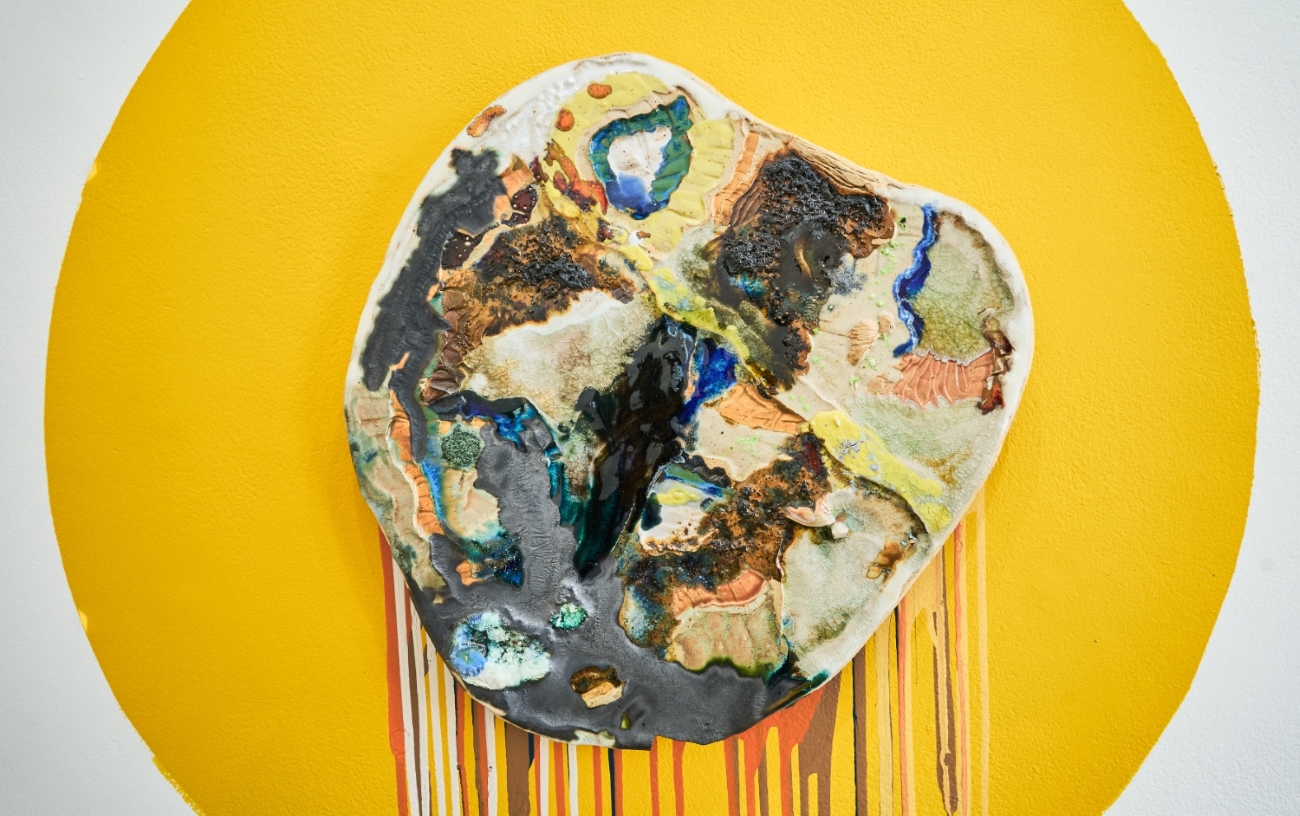
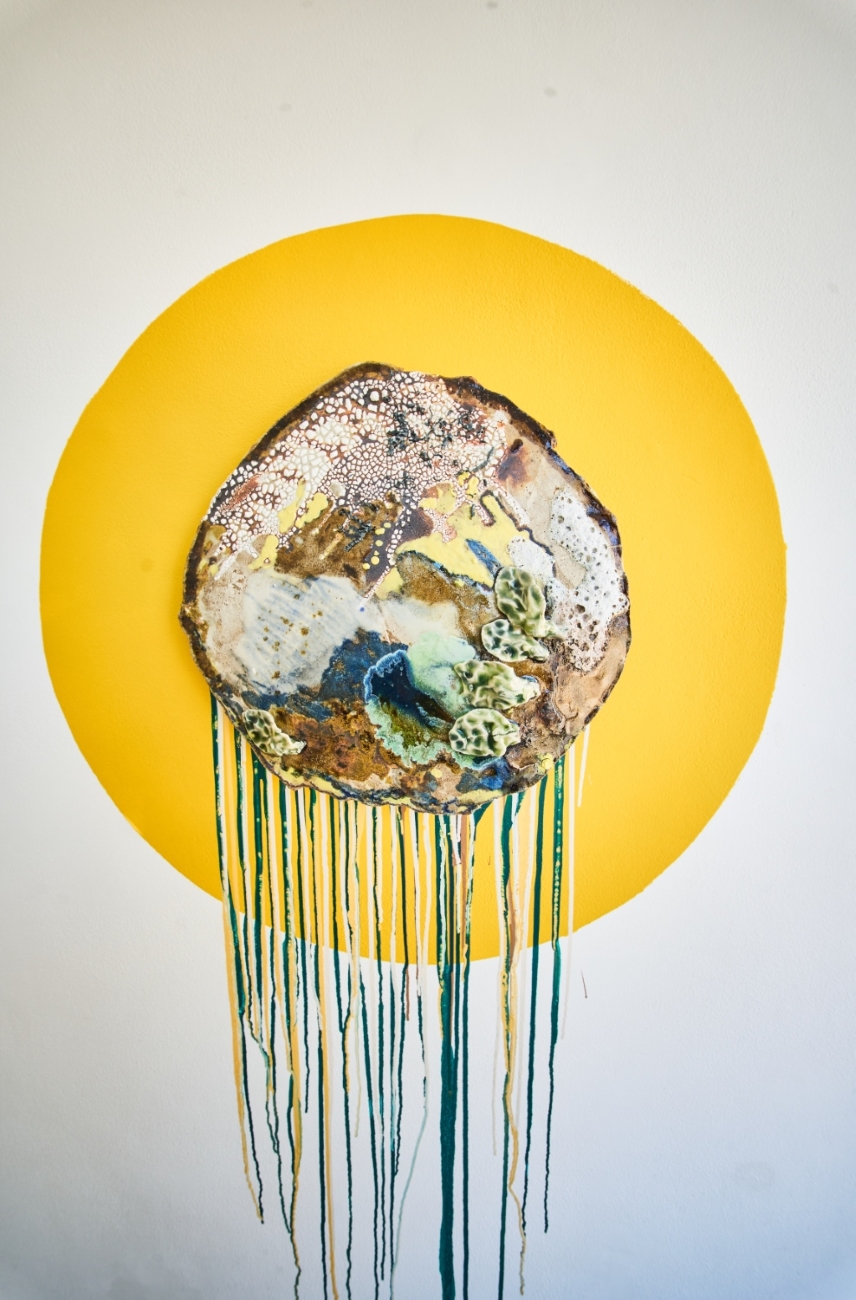
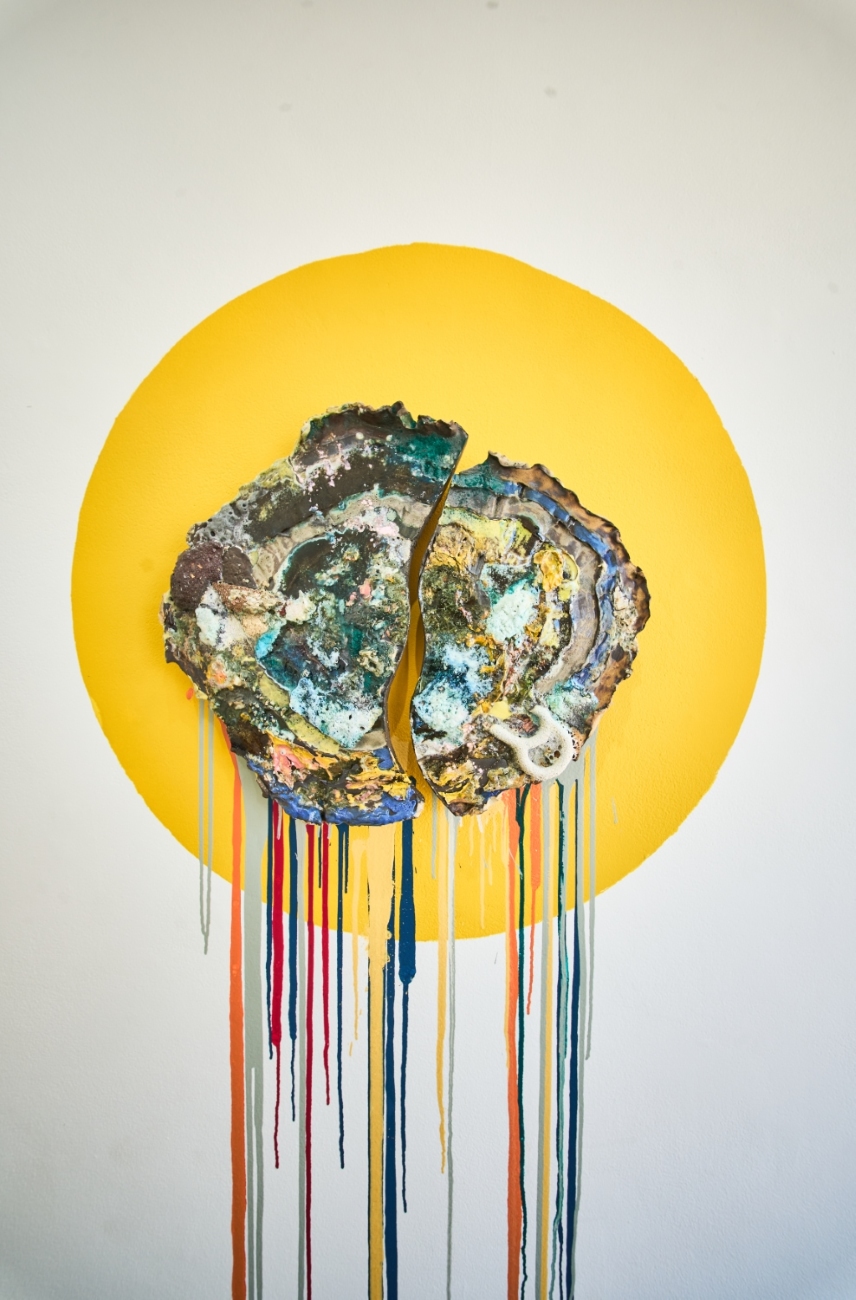
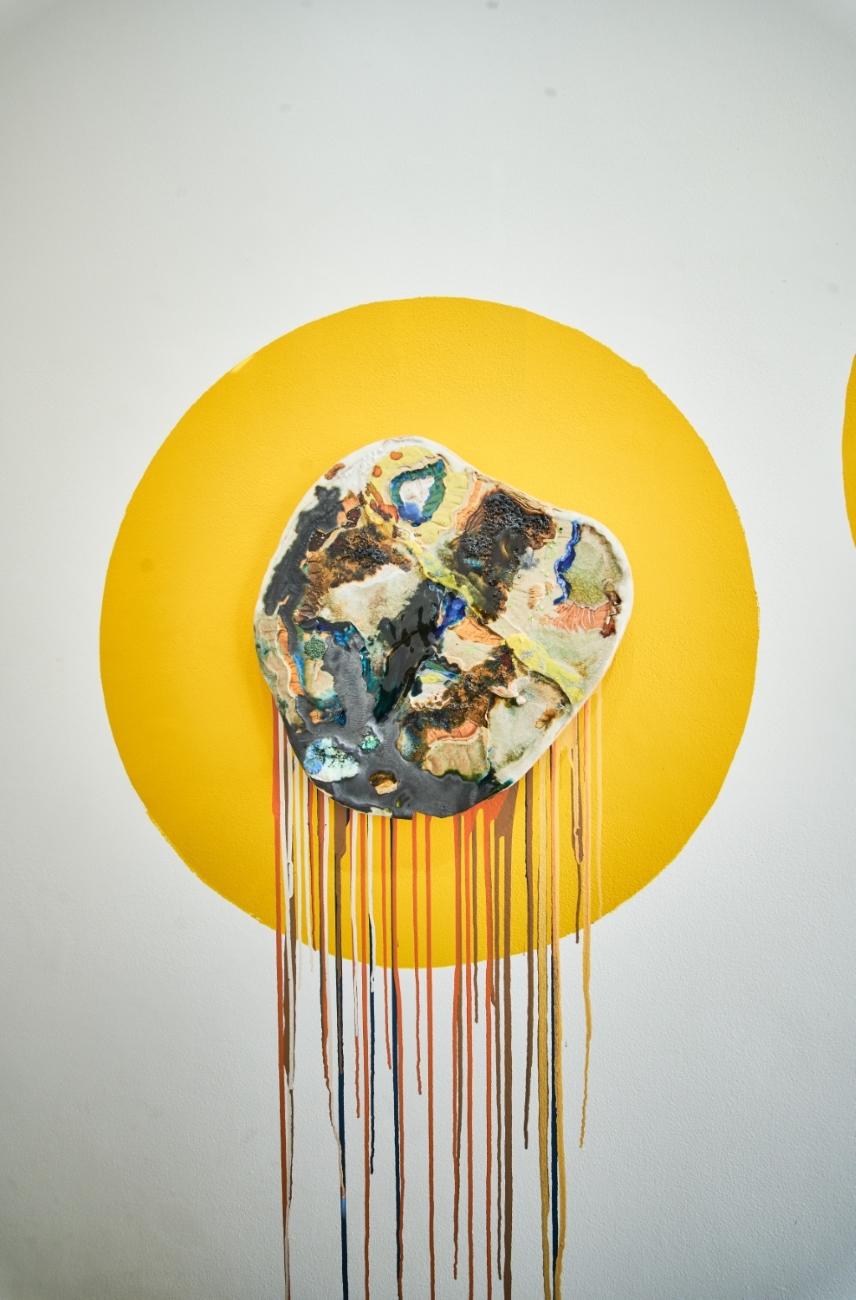
Julia Ellen Lancaster has become highly regarded for creating clay sculptures that are as complex as they are intuitive. For Phantasms and Frequencies, a solo exhibition held from 18 June – 5 July 2026 at the Liminal Gallery in Margate, UK, she created a painterly series of free-standing and wall-based sculptures that revel in the material possibilities of clay. These ceramic collages are produced out of free association: relationships between different recycled materials are realized in the process of creating each work. These discoveries suggest form which, in turn, encourage narrative. But what is the story that Ellen Lancaster is trying to tell?
For me, it is a story of both art history and technical process. Collage and free association are perhaps antithetical to ceramic practices which, usually, demand a rigorous testing of materials so that the final work can be somewhat anticipated. Yet, chance does exist in contemporary British ceramic practice, not least in works by male artists such as Gareth Mason and Nao Matsunaga. However, Ellen Lancaster’s formal vocabulary and use of material differ considerably from her male counterparts. This difference partly emerges from the foregrounding of a female corporeality, not to inscribe gender norms, but to assert a gendered subjectivity that resists subordination to patriarchal categories.
Situating Ellen Lancaster within a male history of art might begin with the modernist collages of Kurt Schwitters (1887-1948), whose merz works brought new kinds of found materials together in the creation of sculpture. Finding a genealogical relationship between Kurt Schwitters and British studio ceramic practices is not as fanciful as it might first seem. Schwitters escaped Nazi Germany to Britain via Norway, arriving in Leith in Edinburgh in 1940, being released from internment in 1941. He spent the last seven years of his life first in London, and then in the Lake District. His impact on British art during this time was limited but definite. Eduardo Palozzi (1924-2005) made no secret about his appreciation of Schwitters whilst he was at the Slade in 1946. As he later remarked:
Schwitters made his collages (most likely) according to the laws of chance – very much part of recent art history. Although one must retain the image of raw material – rejected rubbish such as used bus tokens – the dynamic part is the commitment of finally sticking down the objects. The excitement truly comes when the artist at that moment actually goes beyond his own preconceptions and aspirations.1
Paolozzi, already a collagist when he became an art student in London in 1946, had become interested in Surrealism when he visited Paris in 19472. By the 1950s, he was making assemblages of objects, and by the 1960s, assemblages that included reference to both mechanised and everyday objects. By 1968, Paolozzi was teaching Ceramics at the Royal College of Art (RCA) at the behest of his close friend David Queenbury (Head of Ceramics,1959-1983) to position ceramics education beyond industrial design. Queensbury observed that Paolozzi:
wouldn’t give traditional advice. He wouldn’t say ‘Why does the handle on that cup have such a pedestrian angle?’ Instead he’d ask ‘Why do you need a handle on a cup at all? The Japanese don’t.’ He’d bring in portfolios full of the collage material he’d been working with, and hand it out to people. He could be very, very good for certain students, he was like a conjurer, he could pull a rabbit out of a hat.
Paolozzi’s years of teaching at the RCA did indeed widen out the frame of reference for studio ceramics, leading to a whole generation of artists, such as Alison Britton, Elizabeth Fritsch, Carol McNicoll (who collaged together moulded ceramic objects, often taken from everyday life), Magdalene Odundo, and Jacqueline Poncelet, who expanded pottery into the spheres of architecture, music, sculpture, and collage. Perhaps Ellen Lancaster’s work might be regarded as extending this lineage of innovative female ceramic artists from the 1970s into the twenty-first century. In some ways it does: after all, her approach follows the same ethos of ceramic interdisciplinarity that Queensbury instigated via Paolozzi.
However, there is an alternative narrative in Ellen Lancaster’s work that foregrounds how, in the twenty-first century, and in a reversal of the 1970s ethos at the RCA, fine art practices have extended into ceramics. Ellen Lancaster studied Environmental Media at the RCA, a course that connected choices of media with form, but which sat slightly apart from other courses in fine art and ceramics. Although some technical training came from attending evening classes at City Lit. in London, most of her techniques have been self-taught. This has not been a hinderance: Ellen Lancaster has participated in artist residencies in Tokyo (2017, 2018), followed by several more at the Leach Pottery in St Ives (2020, 2021), and then in Australia (2024). The emphasis on self-led technical discovery has produced a personal aesthetic which, like her educational experience, stands apart from those of her peers.
Furthermore, Ellen Lancaster’s background in fine art gallery management exposed her to a variety of artistic practices over a relatively long period. This has enabled her to locate her approach amidst the legacies of important twentieth-century female artists. Influences include the US-based artist Lynda Benglis, who has foregrounded the female body as a means to challenge patriarchy, automatism in the work of the under-appreciated British surrealist painter Ithell Colquhoun (1906-1988), and the German-born American sculptor Eva Hesse (1936-1970), who pioneered the use of new materials in her work, such as plastic and fiberglass. The assembling – collaging – of such influences enables Ellen Lancaster to position her practice as between two bodies of pioneering female artists: fine artists who have drawn upon surrealism, the body, and innovative materials, and the innovative generation of female ceramic artists who emerged from the RCA in the 1970s to embrace postmodernism and redefine ceramic form.
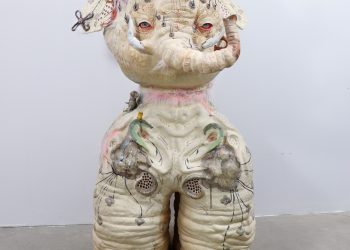
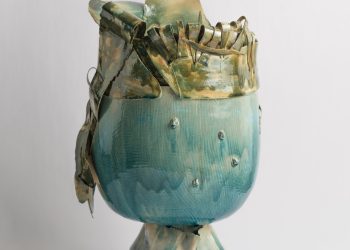
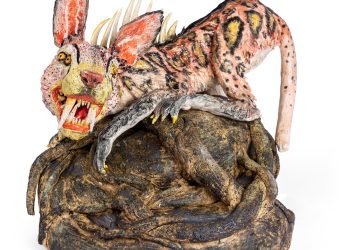
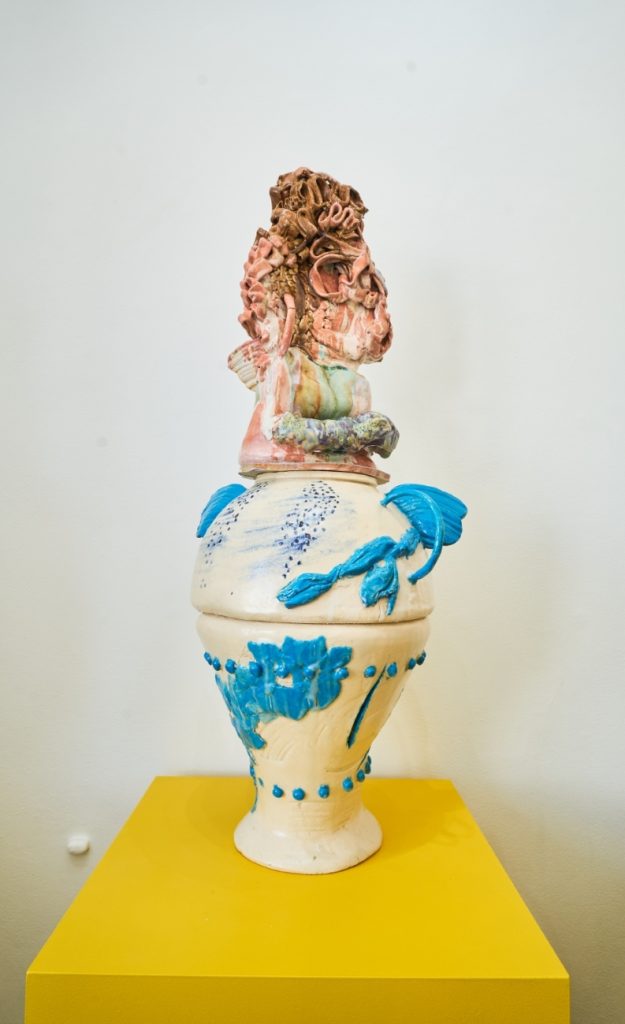
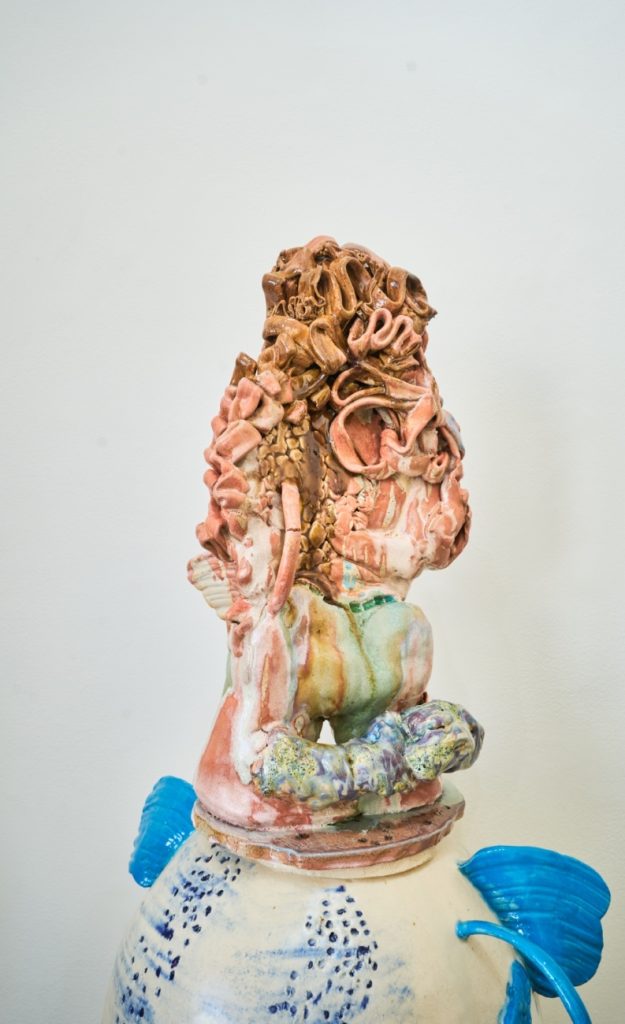
This somewhat paradoxical location of being neither in nor out of the worlds of fine art and ceramics allows Ellen Lancaster to turn things on their head. This is perhaps most obvious in the series of free-standing sculptures in Phantasms and Frequencies that use the form of the pot – either a vase or a bowl – as the basis for sculpture. This inversion of ceramic emphasis – where the pot is the starting point rather than the ending – allows the accumulation of clays and glazes to suggest new formal structures that are produced by the behaviour of material as well as the choices made by the artist. These forms are not pre-planned, but neither are they serendipitous; they are discovered in the collaging together of material, association, and expressive capacity, all of which are deployed according to the artist’s own feelings. Comprised of segments, the sculptures can be remixed by exchanging elements between them, or by the creation of new additional sections. This means that her sculptures retain an element of ‘liveness’, for they can be transformed into different versions at the whim of the artist. These works are indeed phantasms: fleeting personal experiences are caught in the solidity of clay but can be transformed at any moment.
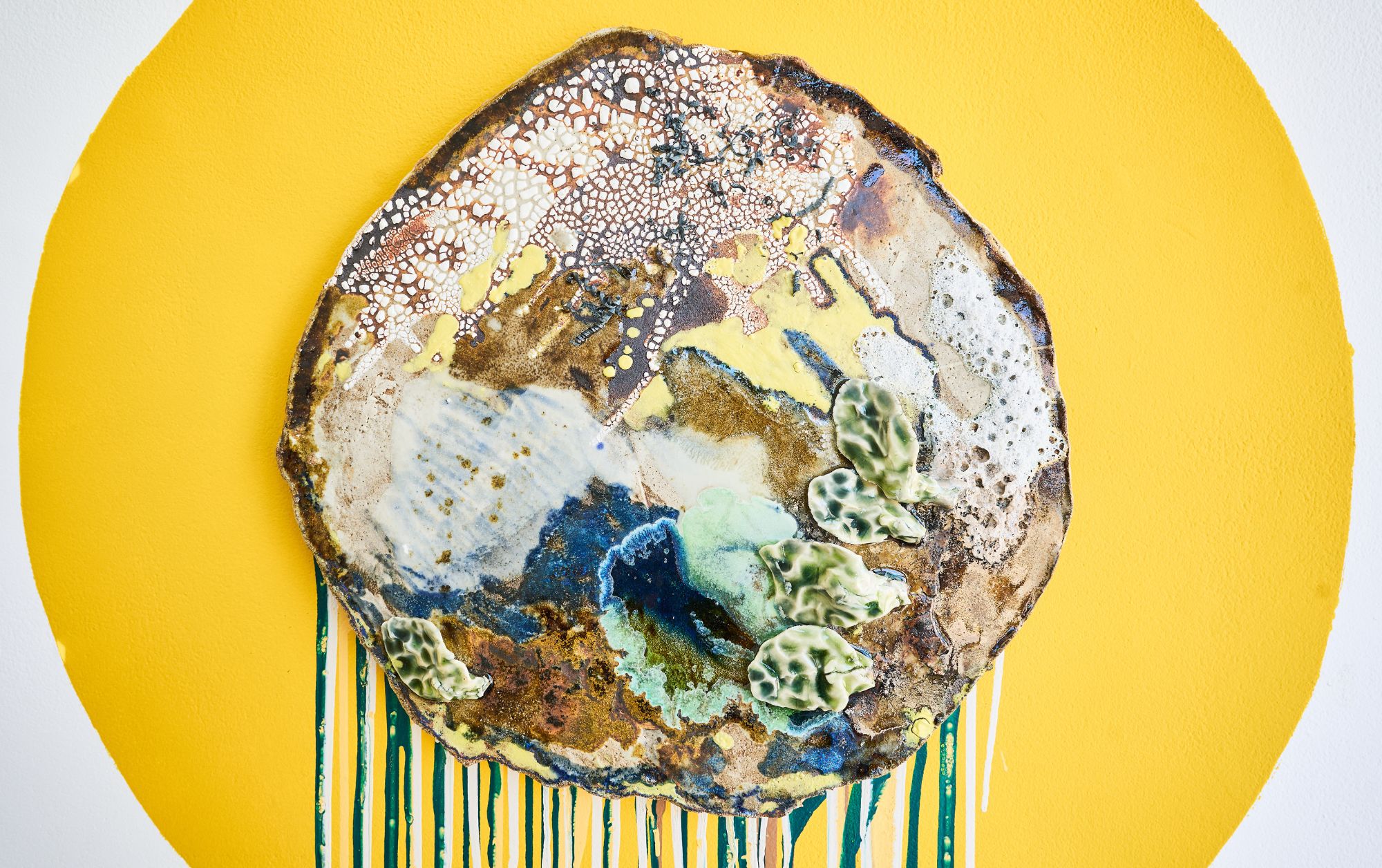
Phantasms are also figments of the imagination, the illusion of order where there is none. In this respect, Ellen Lancaster explodes the phantasms of art categories which, although many might regard as redundant, nevertheless continue to reverberate around the politic of ceramic exhibition. The placement of ceramic works on the wall always invites a comparison with fine art, as though the dictum that craft is made for the table and fine art is made for the wall still holds true. Ellen Lancaster challenges such parochialism. It is as if the bleeding colours from sculptures such as Flare Field Frequency No. 176 are trying to escape the narrow conceptual art categories some might wish to accord to them.
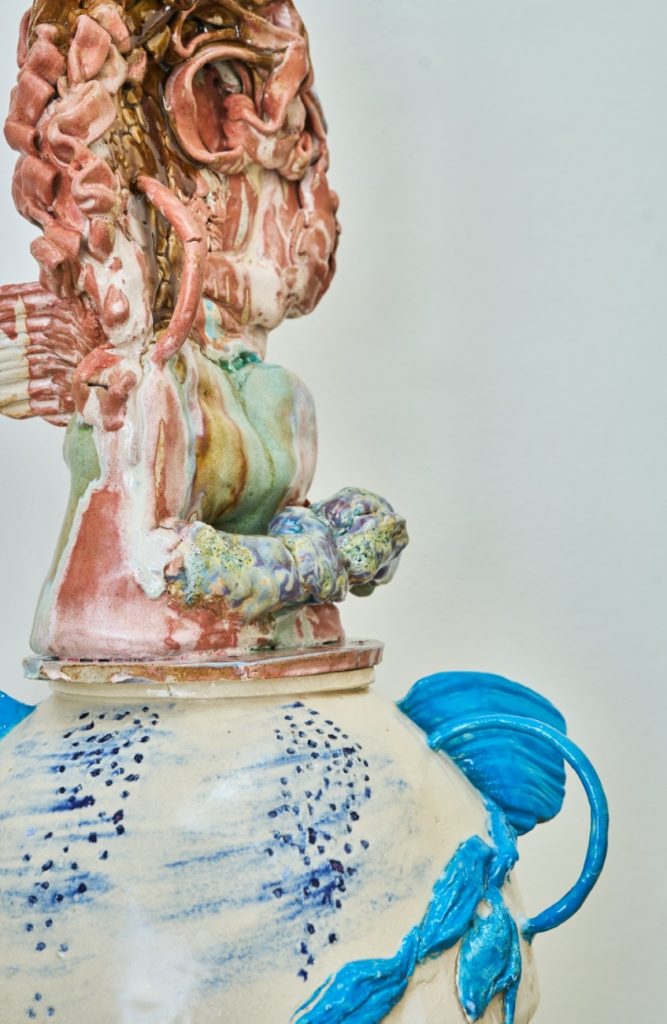
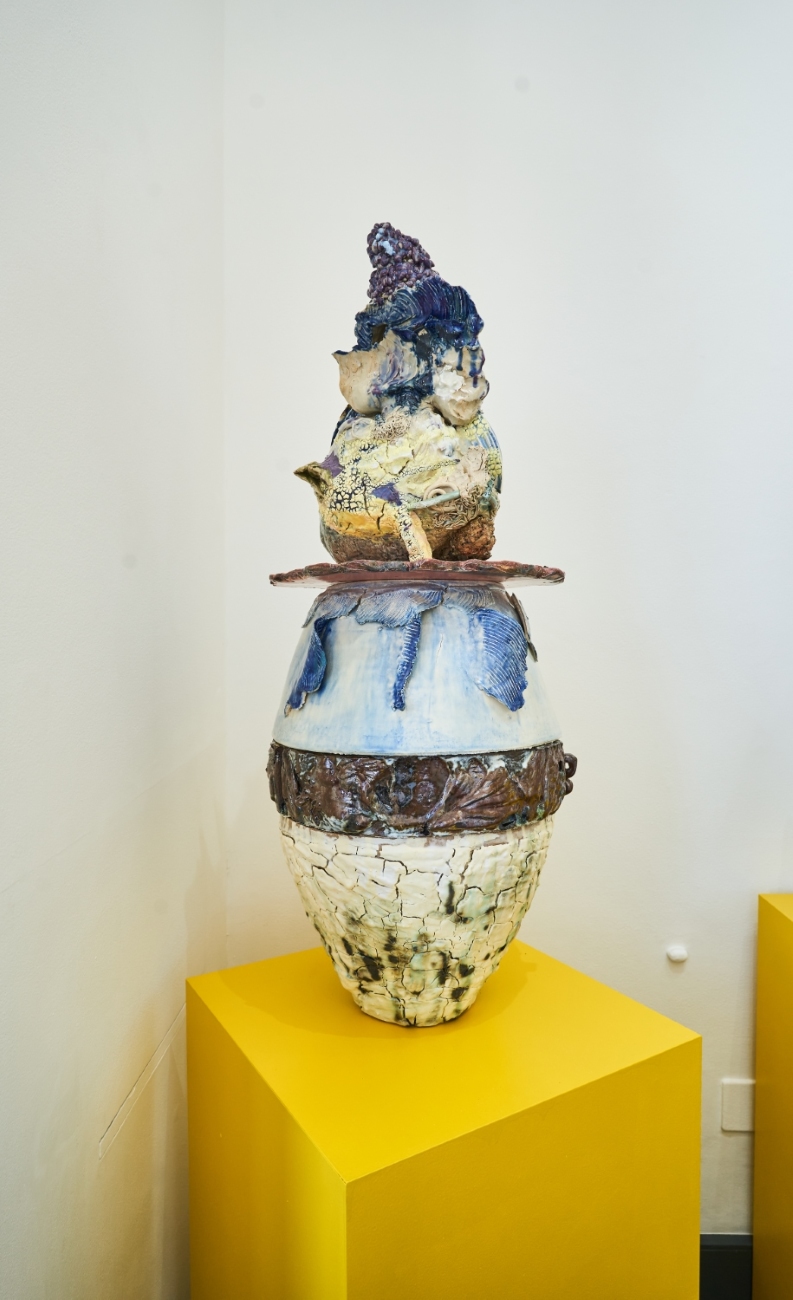
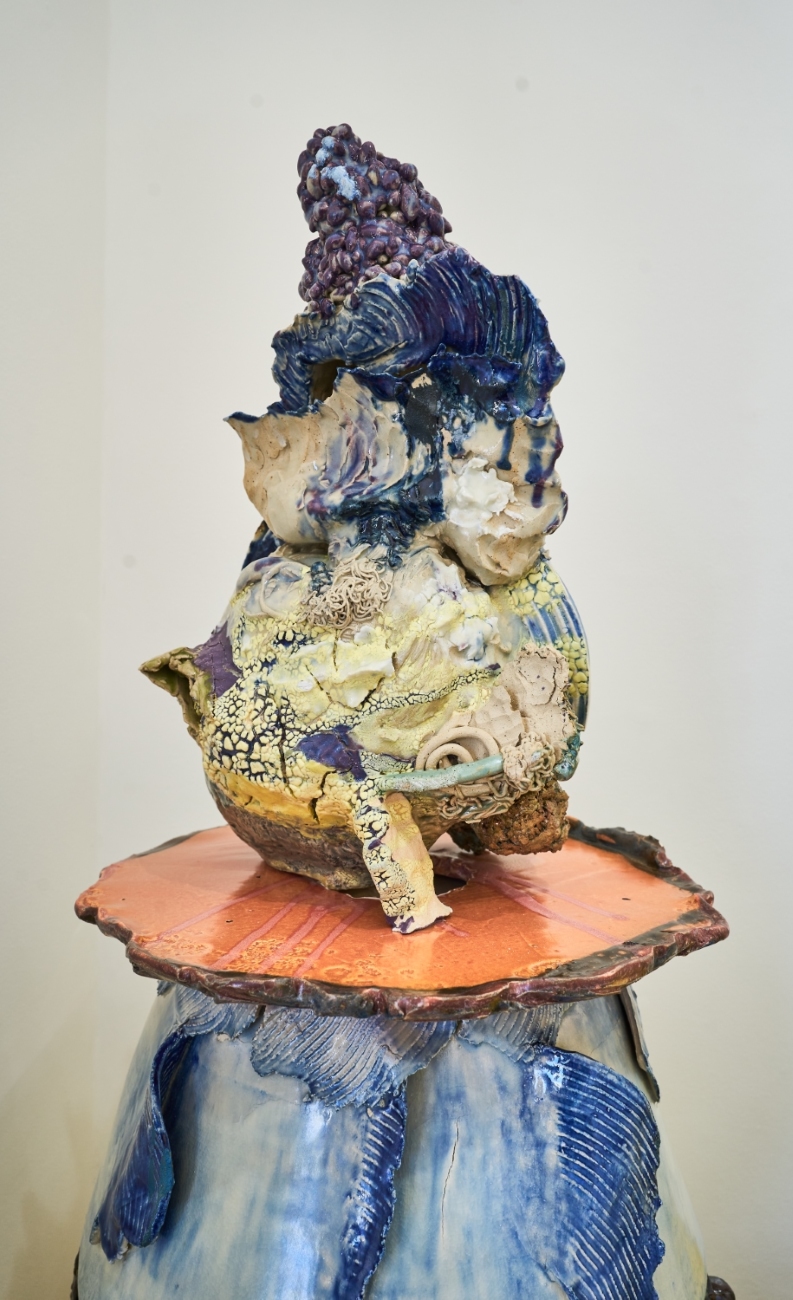
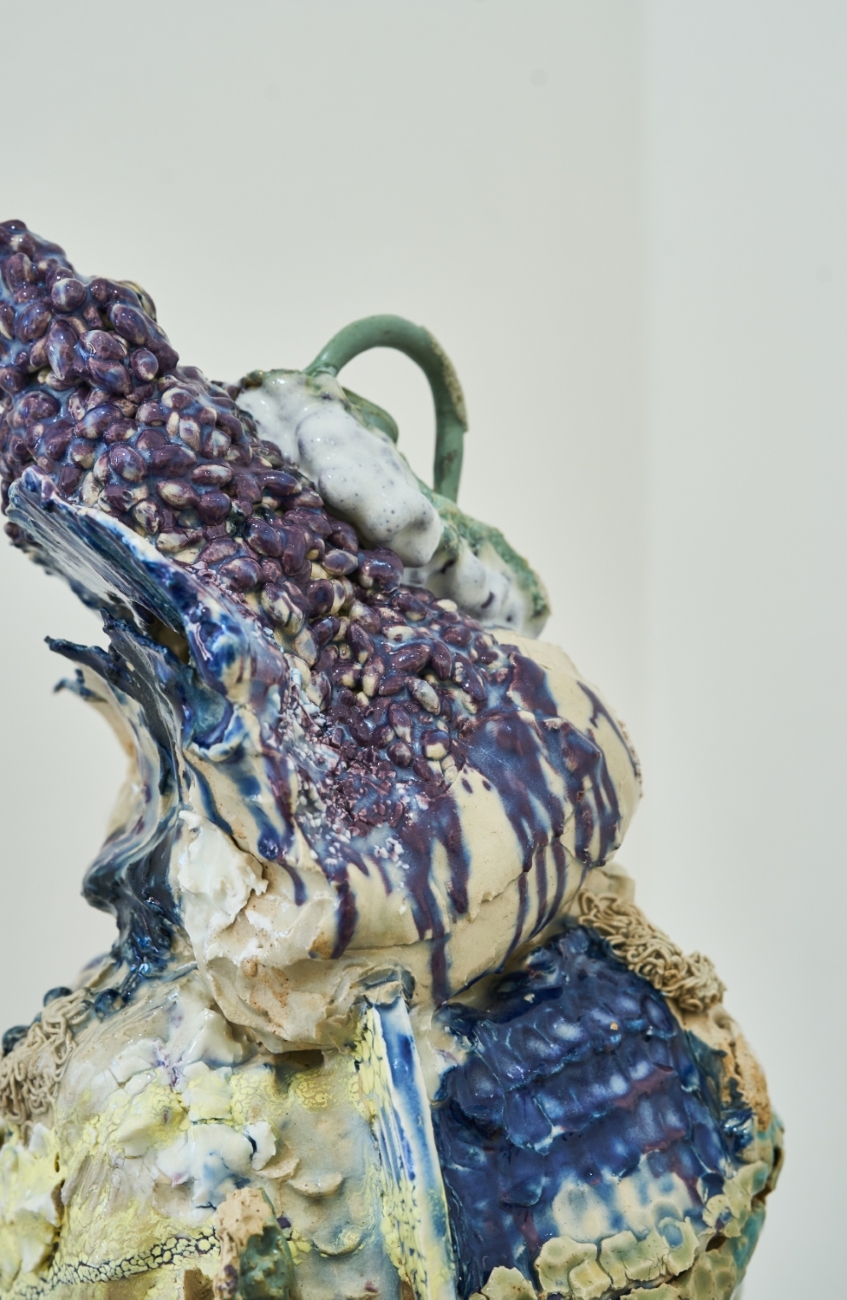
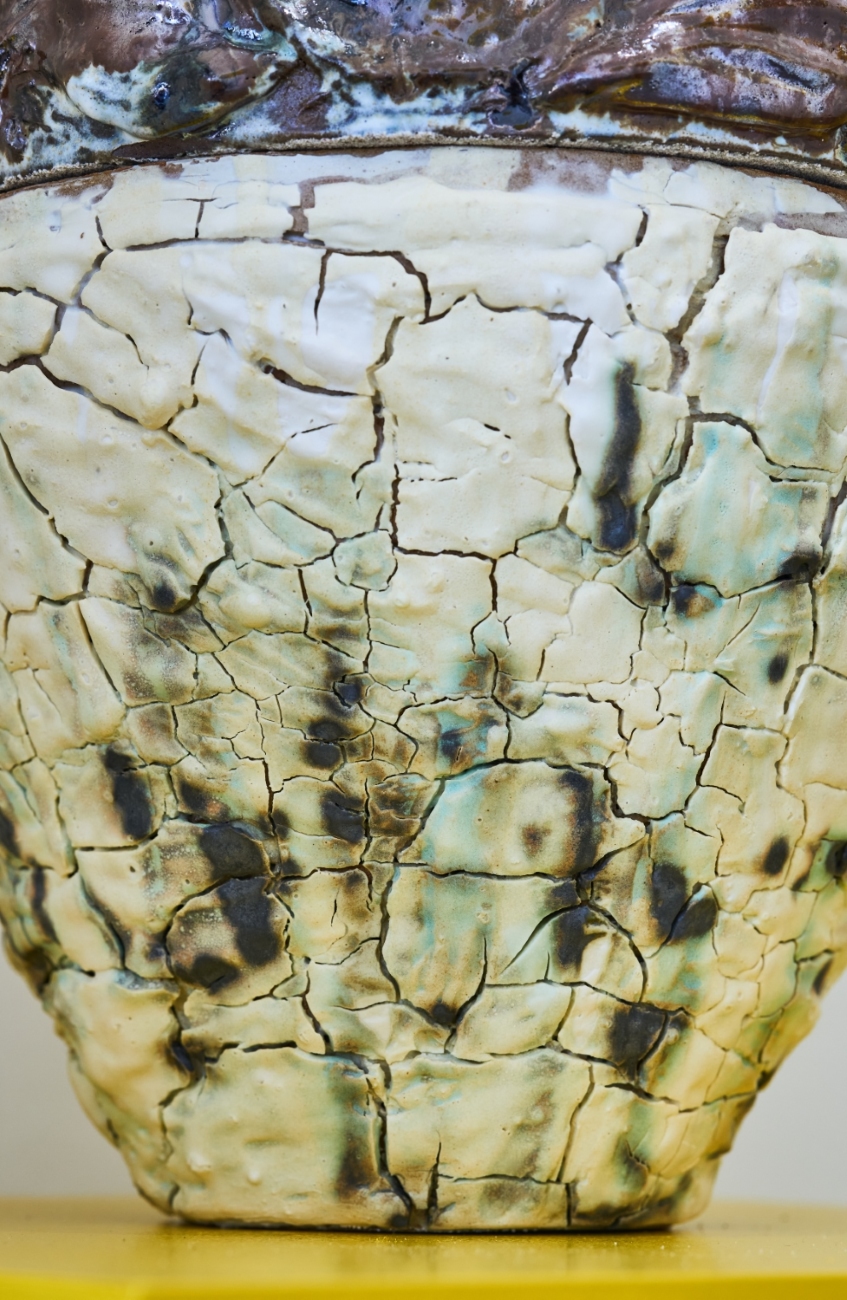
However, frequencies are concerned with cyclical repetition, an important politic behind her work. Ellen Lancaster’s practice makes use of reclaimed glazes and recycled clays, an approach that minimises waste and contributes towards ecological sustainability. The redeployment of material is not only a technical choice, but a politic that can be read as contributing to the narratives of the work. If colour repetition equates to the recurrence of emotional states, and the recycling of material relates to the environment, then each work is an ecology that connects material to repetitions in nature, the seasons, and by extension, the cycles of the female body. Each sculpture expresses to us our own vantage points on and in the world. Divergent emotions are captured in the fabric of the ground we stand on: clay.
It is remarkably apt that Phantasms and Frequencies is being shown in the Liminal Gallery, for Ellen Lancaster’s works are themselves liminal. They oscillate between notions of place and location – geography, environment, the physical body, embodied sensation, technical logic, the material of clay – and the unfathomable unconscious – fleeting sensations, the unexplainable and unplanned, even the impossibility of fully comprehending the sensations that others feel in their bodies. These oppositions are connected by a further paradox: the artist’s decision to capture the transience of thought in the permanence of ceramics via works that can be made to change shape. Although the longevity of fired clay as a material means that these works will last, like any historical narrative, ceramics can be pulled apart and disrupted. The power of the work in Phantasms and Frequencies is that they have the capacity to politicise material. Ellen Lancaster’s sculptures tell a story of resistance to patriarchal categorisation and linear narrative.
Yet, the works will, and should, tell different stories to different people, even if I find that they assert a feminist take on art history and its relationship to the contemporary. Perhaps her work reveals that phantasms are all around us, and that we must challenge received interpretation. Naturally, this extends to the words I have written here. She demands that you look, and discover what can be seen, for yourself.
Ashley Thorpe is a writer, academic, and collector of studio ceramics.
Subscribe to Ceramics Now to read similar articles, essays, reviews and critical reflections on contemporary ceramics. Subscriptions help us feature a wider range of voices, perspectives, and expertise in the ceramics community.
Photo credit: Monwar Hussain, @_studiomon
Footnotes
- Michael Spens, “Schwitters in Britain,” studiointernational.com. Link. Date accessed: 15 June 2026.
- Diane Kirkpatrick, Eduardo Paolozzi (London: Studio Vista,1970), 11-12.