By Elodie Antoine
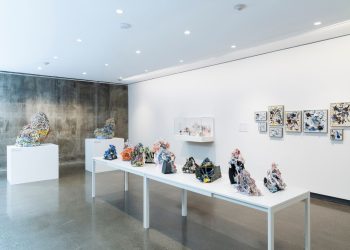
To mark its reopening, the MADD1 in Bordeaux launched an exhibition dedicated to ceramics titled “Ceramics, Sensitive Bodies,” which explores the metaphor of the body. The vocabulary used to describe the various components of a vase, jug, or amphora draws heavily on the body, borrowing terms from human anatomy, as well as animal morphology.
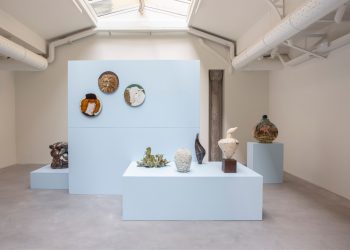
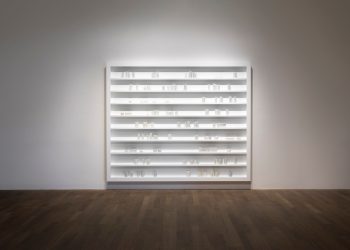
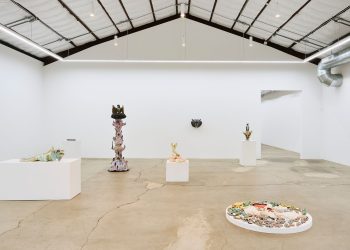
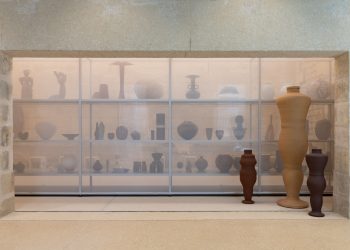
The exhibition unfolds, on the one hand, across the three floors of a vast library that extends almost from floor to ceiling and, on the other, throughout the space, with works installed in the corners of the room. Videos complement the presentation, giving viewers the opportunity to better understand various ceramic techniques.
Located in the Galerie des savoir-faire, the exhibition embraces its educational dimension right from the entrance. A video screen shows short films depicting the techniques of ceramicists, artisans, and artists from around the world. While the exhibition begins with a journey through the world of clay, it is, above all, a journey through time. Spanning three floors, a five-meter-long display case unfolds four thousand years of ceramic history. From Inca statuettes and an Etruscan canopic jar to an open vase from the Nagada period (3900–3600 BCE) and recent works such as Colin Chudyk’s Pentalobe (2024), the ambitious exhibition Ceramics, Sensitive Bodies, on view through January 4, 2028, invites us to journey across territories, centuries, methods, craftsmanship, techniques, and traditions.
How can you navigate the exhibition?
In two ways. First, through the video montages, which explore wheel-throwing, firing, modelling, and other ceramic techniques. Second, through the objects themselves, arranged not chronologically but through dialogues of colour, material, and form. You can discover a variety of techniques, ranging from traditional European kilns—both closed and electric—to Japanese raku firing, as well as other production processes. Visitors can explore the workshop of La Borne (La Borne Contemporary Ceramics Center) as well as those of artisans and artists in Japan and Korea.
The exhibition thus highlights the renewed enthusiasm for ceramics in contemporary art, after a long period in which the medium was largely associated with, or even confined to, the decorative arts. This enthusiasm was already clearly demonstrated by the exhibition Les Flammes. The Age of Ceramics, presented at the Musée d’Art Moderne de la Ville de Paris in 2021 and curated by Anne Dressen.
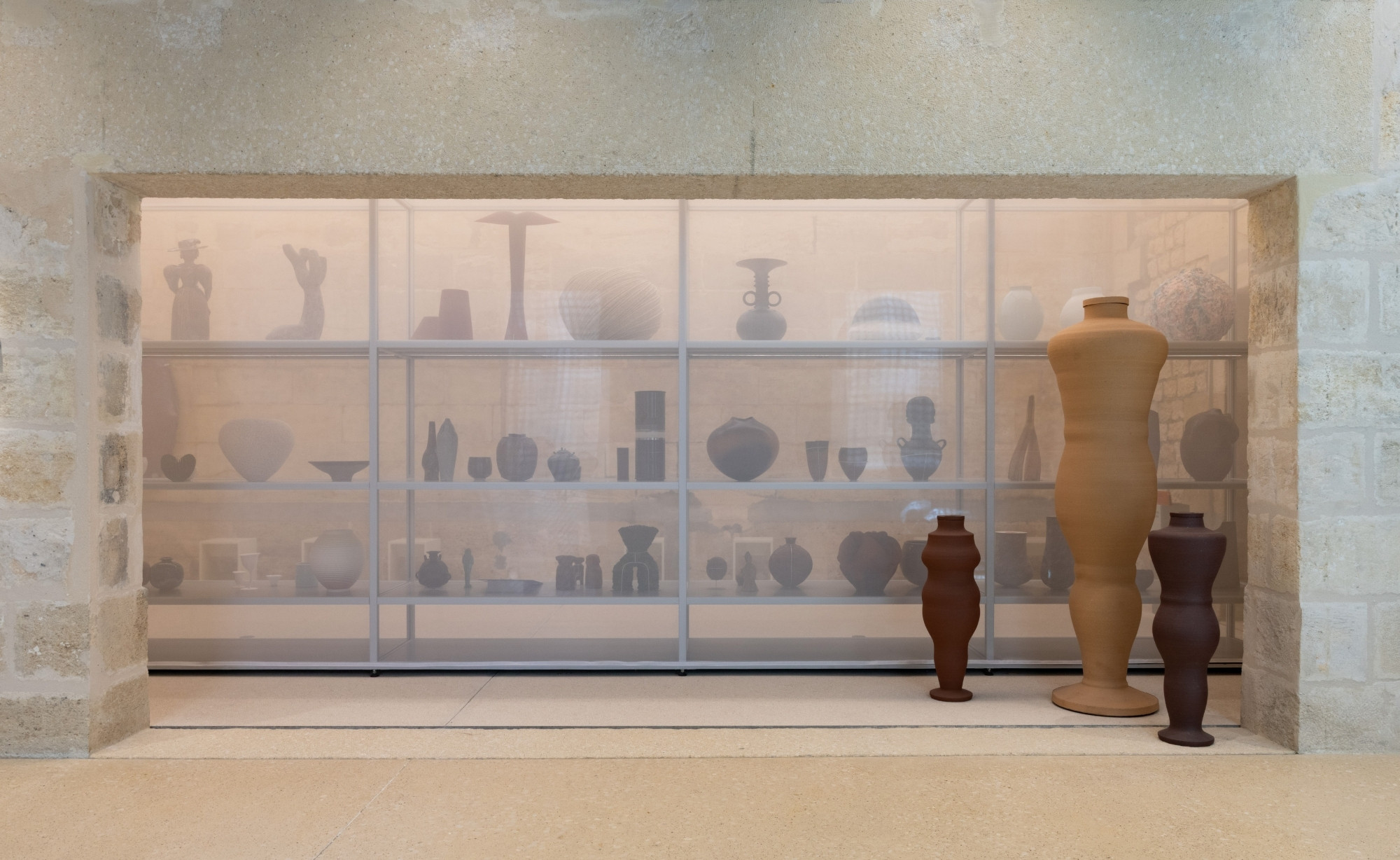
In postwar Europe, artists including Valentine Schlegel helped expand the possibilities of ceramics beyond its conventional associations with functional pottery and craft. From the late 1980s, Belgian artist Johan Creten became a key figure in the renewed presence of ceramics within contemporary art, using the medium at a time when it remained marginal within much of the institutional art world. His career included a period at the Villa Arson in Nice in the late 1980s (at the invitation of Christian Bernard2), followed by a residency at the Villa Medici in Rome in 1996 and later work at La Borne.
Creten’s recent exhibition Pavlov’s Dogs at Perrotin in Paris demonstrated how ceramics now occupies the contemporary art field. Other artists have similarly brought ceramic practice into broader installation and social contexts. In Min | Mon at LUMA Arles in 2023, Theaster Gates presented ceramic works made in Japan and Arles, some of which were used by visitors to drink sake within a specially designed music lounge.
In Bordeaux, the exhibition takes a scholarly approach, bringing together in a single space pieces created at different times and in contrasting—yet not contradictory—geographical contexts. Many are displayed behind glass, protected from clumsy and sometimes somewhat kleptomaniacal hands, especially as the market value of ceramics has risen over the past few decades. How can one make sense of works that may sit comfortably together for a discerning connoisseur but remain unfamiliar to many visitors?
A publicly available guide provides an informative description of each piece. Its author is Bérengère Bussioz, the exhibition’s curator and a great lover of ceramics. The display plays as much on colors as on materials and forms, creating formal rather than temporal dialogues. The presentation is therefore not chronological, but rather formalist and, more often than not, sensitive. Among the examples, one group compares the Nested Boxes (1997) by Yagi Akira (b. 1955), which are housed at the Musée de Sèvres, the OPot Moon Jar (2024) by Jin Eui Kim (b. 1997), Andrea Branzi’s (1938–2023) Corolle pied haut and Corolle pied bas (2010), as well as a bowl from the Kangxi period (1662–1722) from the Musée national des arts asiatiques-Guimet in Paris.
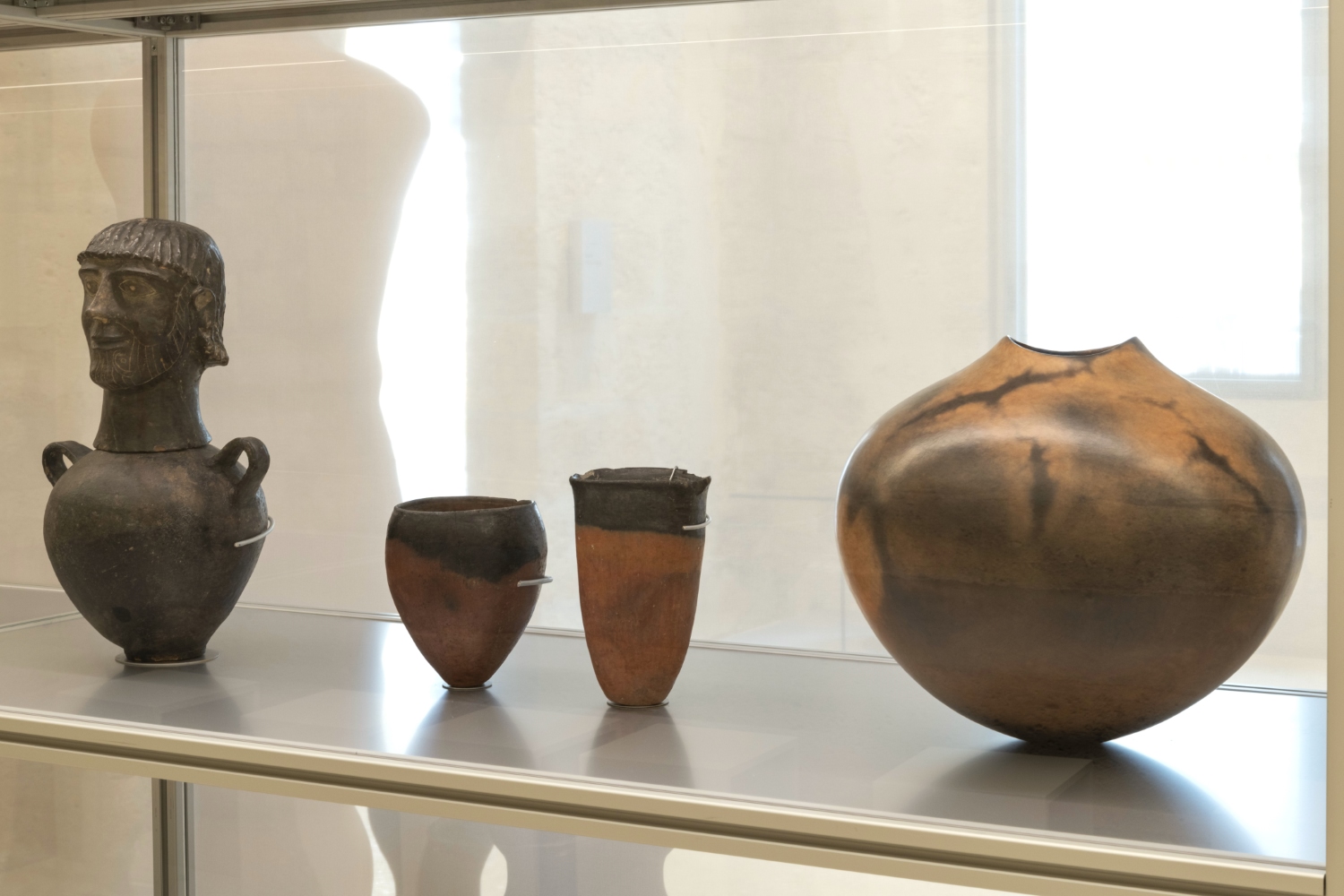
A little further on, an Etruscan canopic jar—a coated and engraved terracotta piece from the collections of the Louvre—faces another terracotta object, an open vase from the Nagada period (3900–3600 BCE). Two distinct continents and two distinct eras, yet a shared interest in unglazed red clay. The first is a cinerary urn, intended to hold the ashes of the deceased after cremation. Adorned with two handles and a head, it is anthropomorphic: the handles suggest arms, while the head is likely that of the deceased, rendered in a stylized manner—that is, capturing the essence without being overly precise. As the guide explains, “These are not portraits, but rather stereotypical representations imbued with gender-specific traits—earrings for women, beards for men.” The vase is covered with a black slip to imitate the bucchero technique: “This type of ceramic is dark and smooth, onto which motifs and figures are engraved or stamped.”
Opposite it, the Nagada vessel is plain, tall, and narrow, flaring at the top and devoid of decoration or artifice. The comparison between these two objects highlights distinct ritual practices in different places and at different times. Terracotta is shared, but it is used and shaped in very different ways. They thus fall under what is known as tekne in Greek—that is, they do not belong to the realm of the arts, but rather to that of everyday and ritual objects. It was not until the Renaissance—and the emergence of the concept of the “artist”—that these clay objects attained the status of works of art. At that time, artists were either painters or sculptors and rarely used raw clay as a medium. They preferred marble and/or pigments and turpentine, which they applied to wooden panels rather than linen canvas.
You could say this exhibition traces the entire history of art. From the earliest ceramics to the modern era of their recognition as art, Ceramics, Sensitive Bodies makes us aware of this evolution.
Among the other objects on display is a necklace, part of a set of jewelry from the Roman period (332–395), which catches our attention. In the curator’s words: “This set of jewelry illustrates the importance placed on the body in Egyptian civilization. Considered the most tangible component of the individual, the body is the object of care and symbolic enhancement. Body ornaments fit into the holistic Egyptian conception of the self and thus play a full part in the body’s adornment, expressing beauty, status, and protection.” This set, made of so-called “Egyptian” faience—”a type of terracotta with a higher silica content, giving it a glassy appearance, with a glaze known as ‘blue frit’—the vividness of which varies depending on the quality of the pigments”—is reminiscent of Native American necklaces featuring animal motifs carved from stone, often fish and birds. They, too, served to protect the souls of those who wore them.
Alongside this piece is an ushetbi of Hor-em-akhbit, dating from the 26th Dynasty (approximately 680–526 BCE). This ancient Egyptian artifact depicts a funerary servant accompanying the deceased into the afterlife. The curator notes: “Like the figures painted on the walls of the richest tombs, these servants take the place of their mistress or master in the agricultural and domestic tasks commanded by Osiris, the male deity who reigns over the afterlife, the world of the dead.” The connection between the two objects is clearly linked to ritual functions, but it is also aesthetic and technical: both are made of a siliceous clay whose appearance more closely resembles glass paste than conventional ceramics. Coated with a blue or green glaze, known as frit, they also share a color: the softness of a green-blue monochrome.
Among these objects are also a bottle from the Nazca culture (350 B.C.–650 A.D.), late style, 300–400, made in Peru and housed at the Musée des Confluences, and an anthropomorphic vase from the Chimu-Inca culture, also Peruvian. Through their color, shape, and surface, these objects seem to stand in contrast to their neighbors. Their remarkably polished surfaces and vibrant colors—achieved through the application of engobes before firing—differ from the nearly celadon-colored ritual objects. These vessels—the first featuring a double spout, the second a single spout and two handles—fall within the anthropomorphic style. “Intended for the elite, these ceramics were used as offerings during funeral rituals.”
On the floor and walls
Right at the entrance to the exhibition, a work by Jonas Moënne (born in 1952) greets us: Potter Wasp Jars, part of the “Daughters of Tara” project (four pieces from France, Cameroon, Panama, and Singapore), ongoing since 2007. According to the curator: “These small jars have been made for 250 million years by ‘potter wasps,’ members of the Eumeninae tribe. These pots are essential for the development of the larvae, which, once they become wasps, produce these cocoons in turn.” Presented in a transparent glass receptacle, as if supported by an arm, the work appears to us as a tiny, barely perceptible offering.
We could have started there. But we could just as well have begun with one of Lucio Fontana’s ceramics, which also greets us: Concetto spaziale, Natura (56-60-N.36), 1959–1960 (terracotta).
Ceramics is not dead. Quite the contrary—it has managed to rise from its ashes over the centuries. The films present ceramics as a very much living practice, where earth and fire perform a dance—not a macabre one, but a vibrant one, full of fascinating vitality. More than the object’s physical form, this exhibition focuses on the maker—the one who knows clay and its firing, its limits and possibilities. A tribute to craftsmanship and its transmission.
Elodie Antoine is a writer and curator based between Nice and Paris.
Ceramics, sensitive bodies is on view between April 22, 2026 and January 4, 2028 at MADD – Musée des Arts décoratifs et du Design de Bordeaux, Bordeaux.
Subscribe to Ceramics Now to read similar articles, essays, reviews and critical reflections on contemporary ceramics. Subscriptions help us feature a wider range of voices, perspectives, and expertise in the ceramics community.
Captions
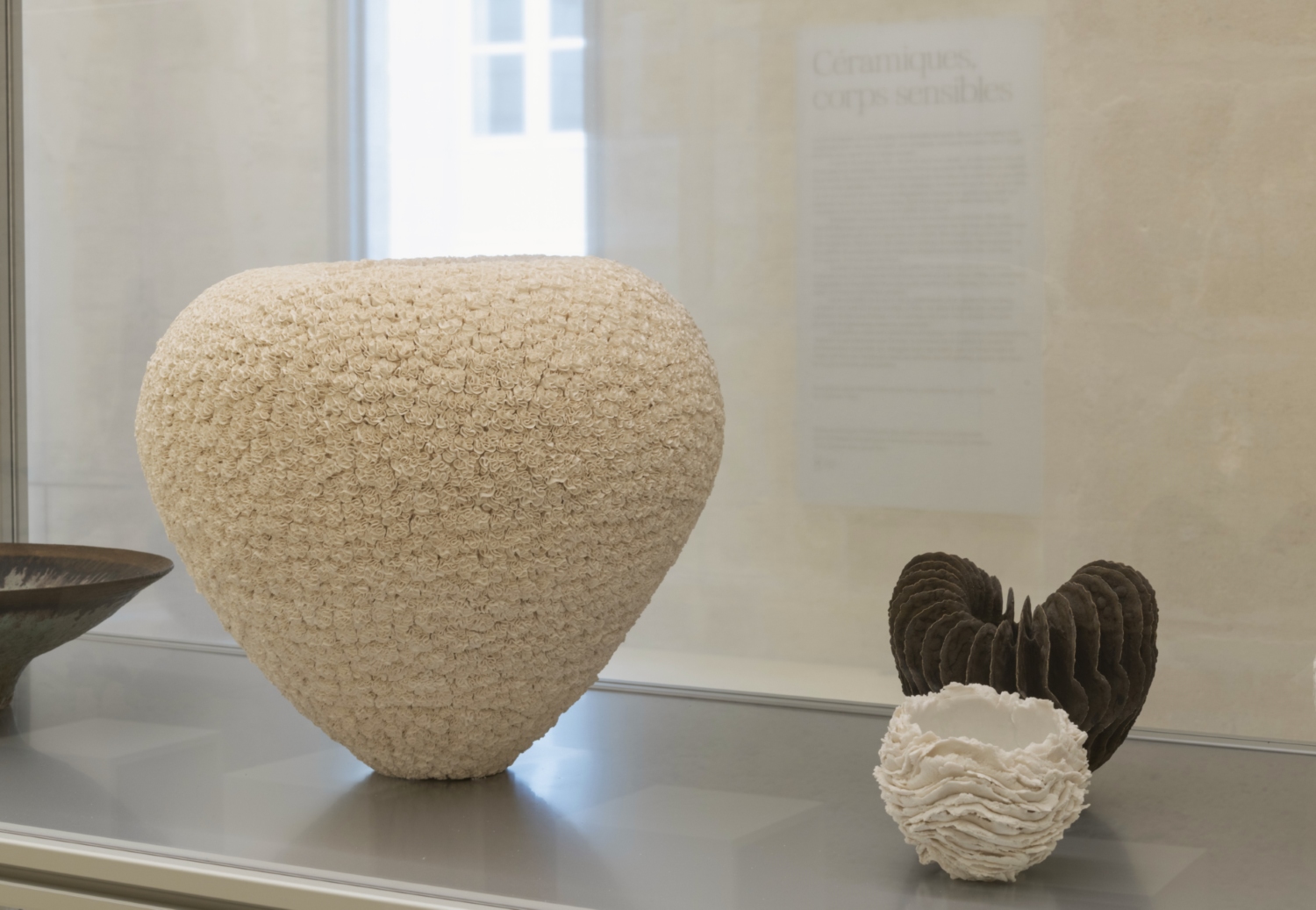
- Installation view #1 « Céramiques, corps sensibles » – Galerie des savoir-faire, MADD Bordeaux, 2026 © MADD Bordeaux – Lysiane Gauthier
- Installation view #2 « Céramiques, corps sensibles » – Galerie des savoir-faire, MADD Bordeaux, 2026. From left to right: Vase Canope, antiquité grecque, étrusque ou romaine, Musée du Louvre ; Vases, période Nagada I (4000-3600 avant notre ère), Egypte, Musée des Confluences, Lyon ; Gabriele Koch, vase, 2001, Musée national Adrien Dubouché, Limoges© MADD Bordeaux – Lysiane Gauthier
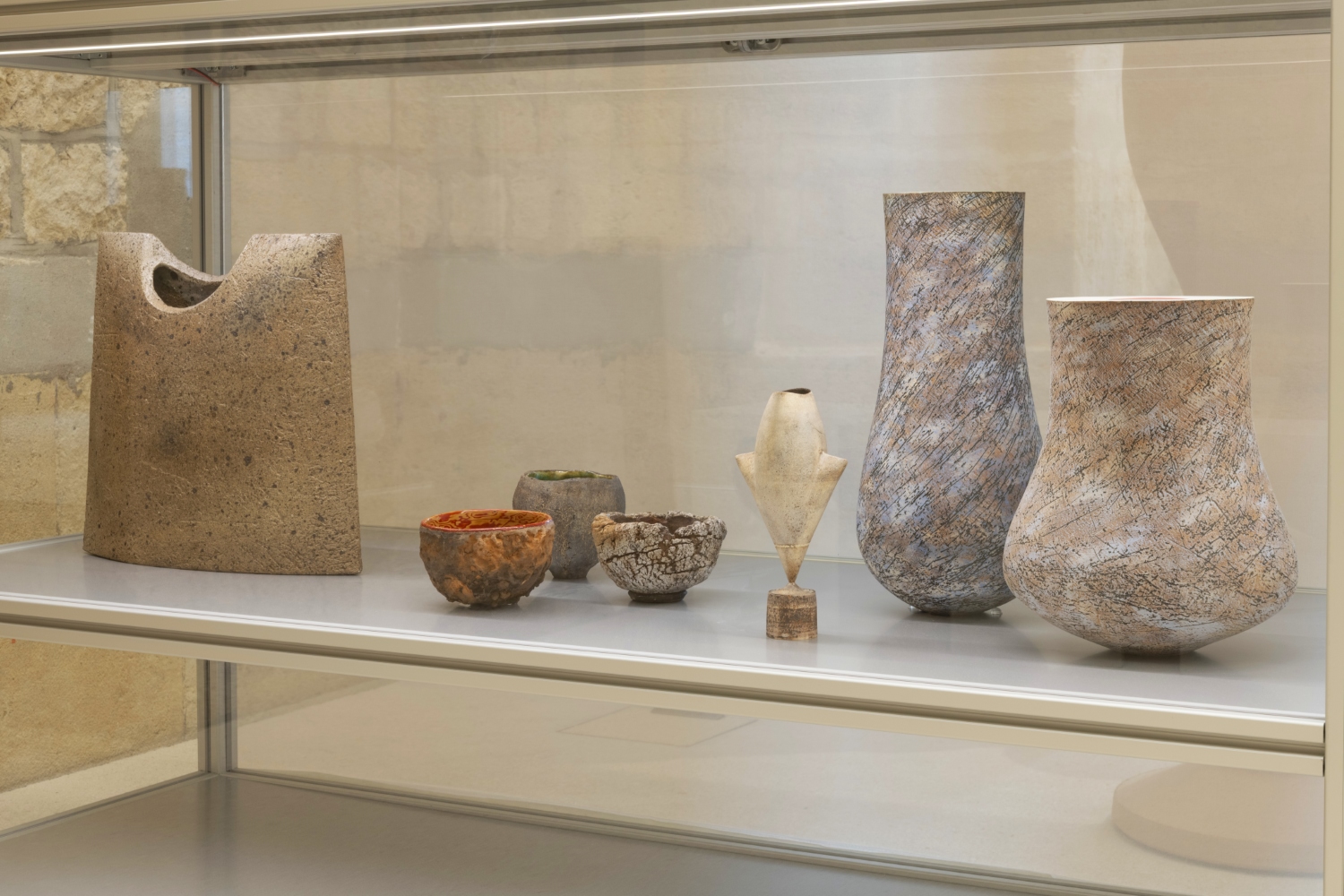
- Installation view #3 « Céramiques, corps sensibles » – Galerie des savoir-faire, MADD Bordeaux, 2026. From left to right: Vase de Robert Deblander, vers 1975, Bol de Toshio Matsui, 2015, Bol de Gisèle Buthod Garçon, 2010, Bol de Seung-Ho Yang, vers 2002, Musée des Beaux-Arts de Lyon ; Vase Cyclades d’Hans Copper, 1975, Musée Ariana, Genève ; Kristin McKirdy, Sans titre, 2021, Galerie Pierre-Marie Giraud© MADD Bordeaux – Lysiane Gauthier
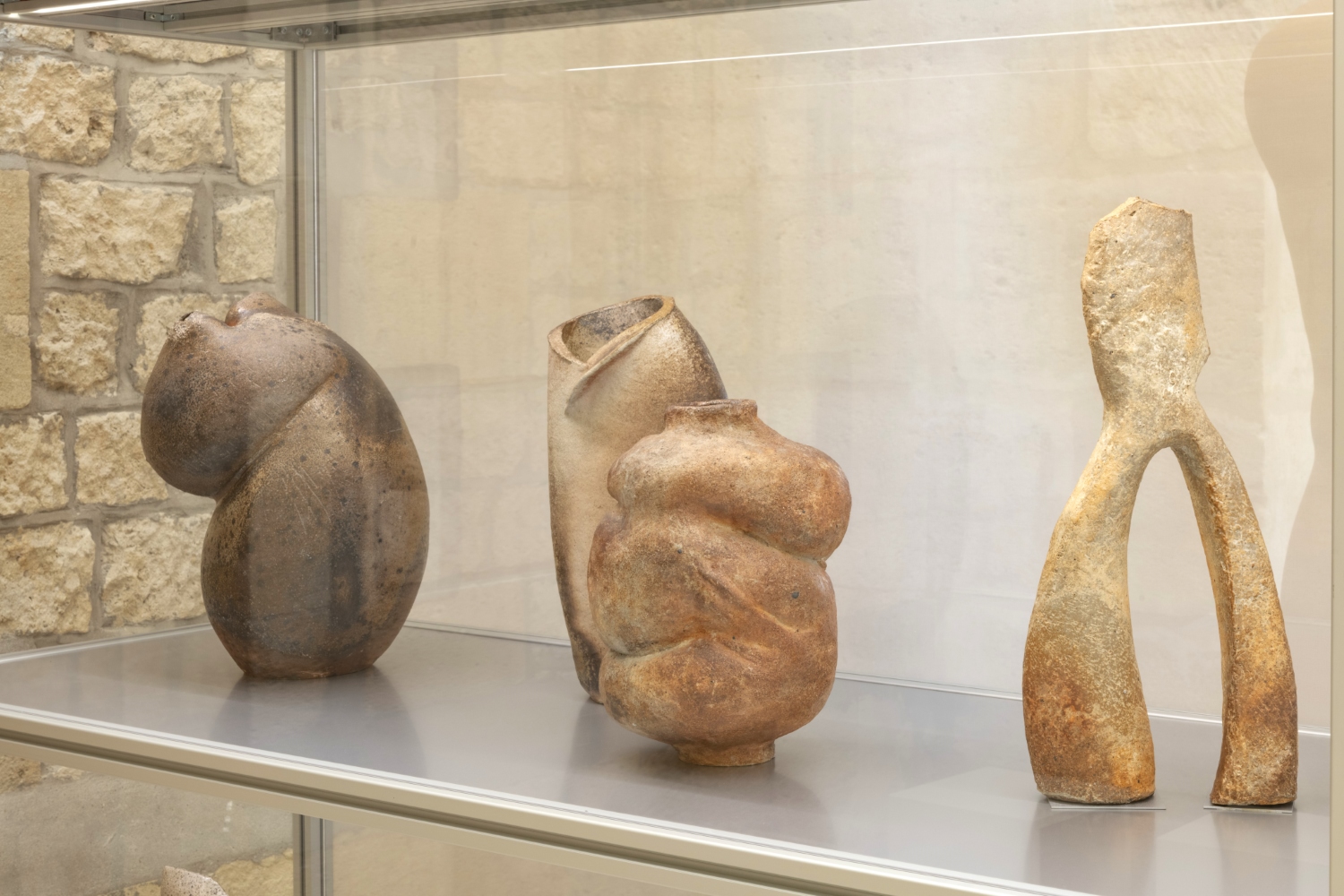
- Installation view #4 « Céramiques, corps sensibles » – Galerie des savoir-faire, MADD Bordeaux, 2026. From left to right: Vase d’Elisabeth Joulia, 1973, Musée Ariana, Genève ; Vase d’Elisabeth Joulia, 1978, Musée national Adrien Dubouché, Limoges ; Vase de Jean Lerat, vers 1960, Musée des Beaux-Arts, Lyon ; Equilibre de Jacqueline Lerat, 2006, Musée Ariana, Genève© MADD Bordeaux – Lysiane Gauthier
- Installation view #5 « Céramiques, corps sensibles » – Galerie des savoir-faire, MADD Bordeaux, 2026. From left to right: Vase d’Hattori Makiko, 2025, MADD Bordeaux ; Bol d’Hélène Leclerq, 2015, Musée des Beaux-Arts de Lyon ; Brown Curyy Heart Form d’Ursula Morley-Price, 2010, Musée des Beaux-Arts de Lyon © MADD Bordeaux – Lysiane Gauthier
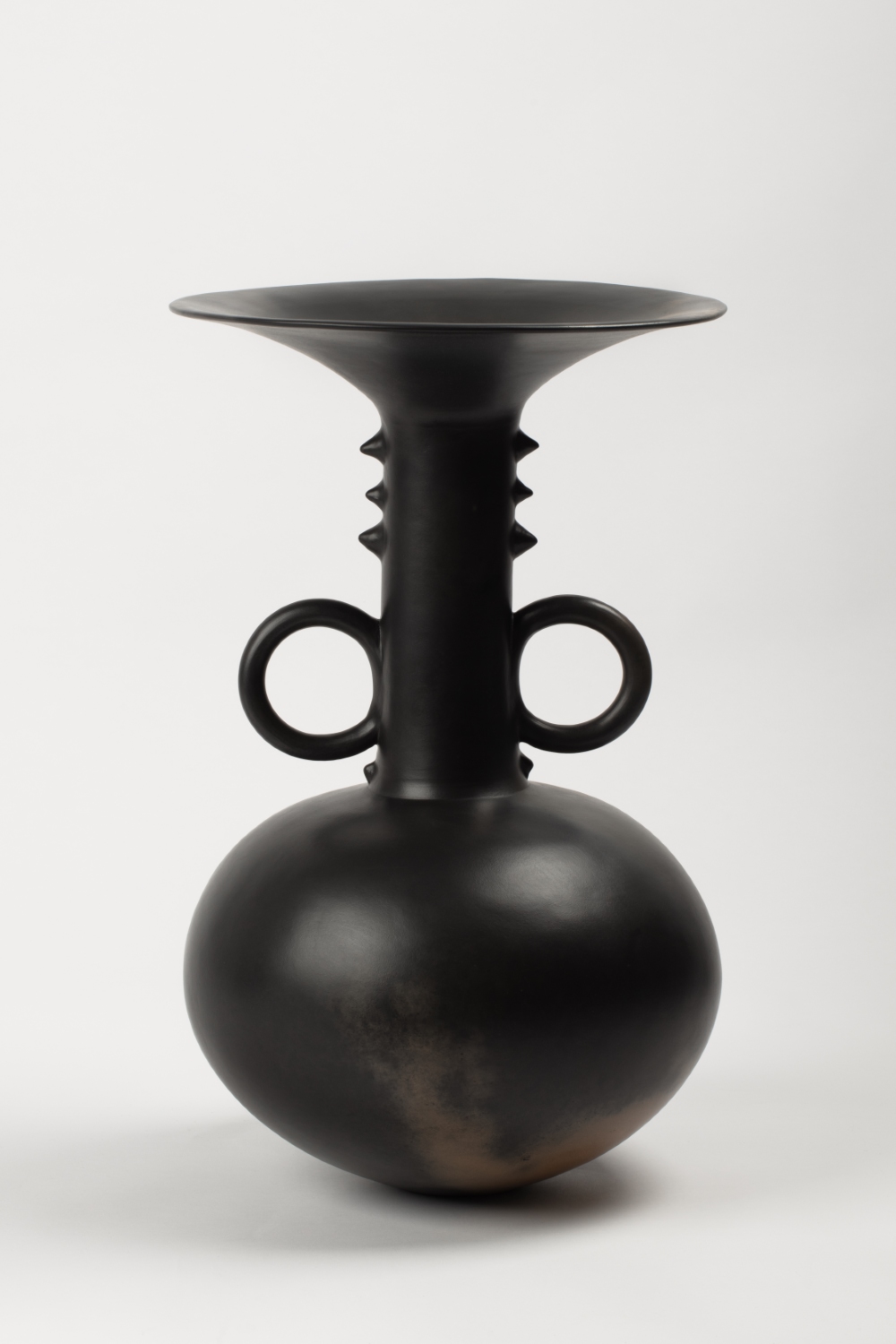
- Magdalene Odundo, Vessel, 1994, Design Museum Den Bosh, ‘s-Hertogenbosch (Pays-Bas) © Photo Sander Vermeer / Magdalene Odundo. All rights reserved, ACS 2026.
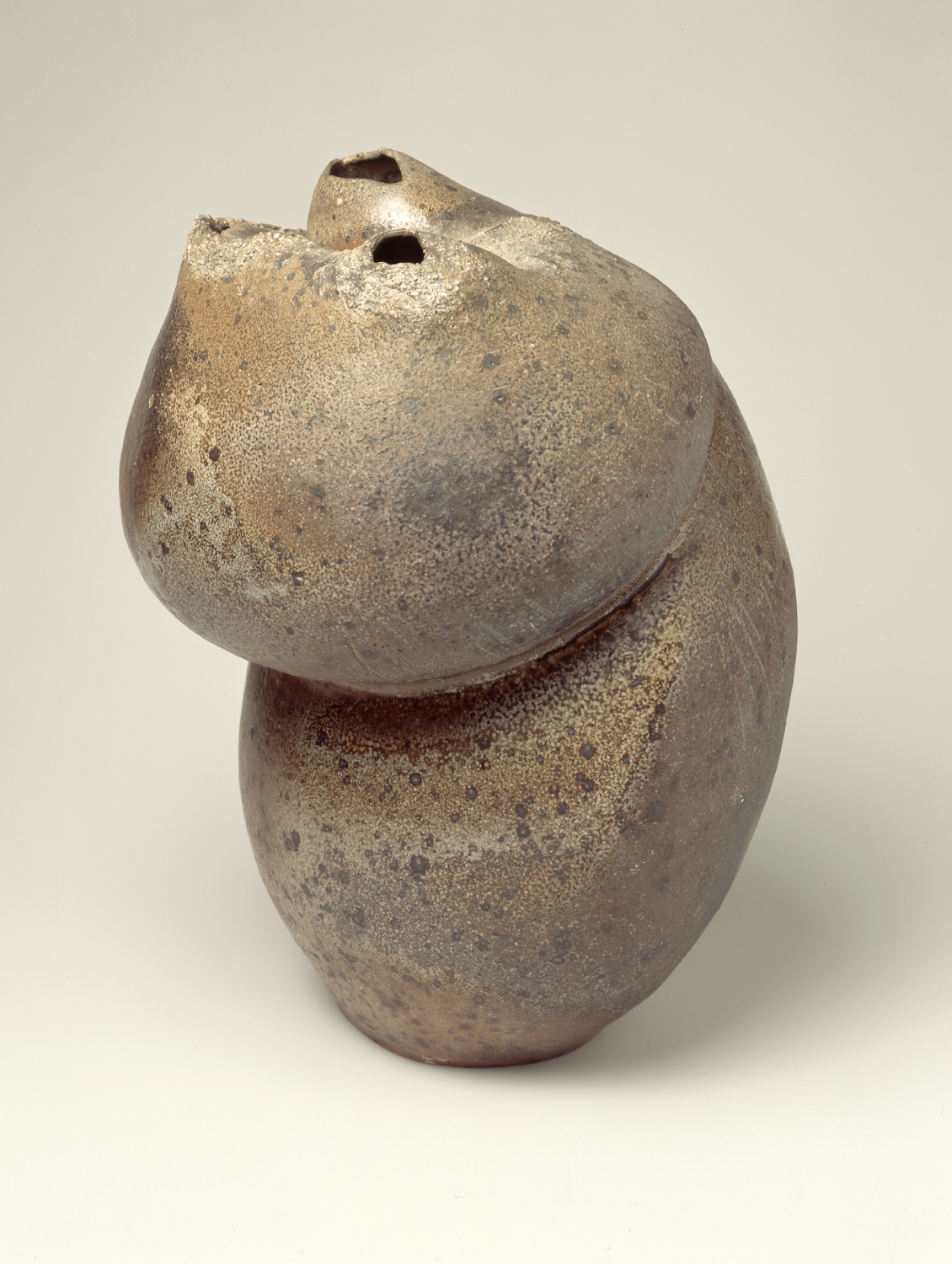
- Elisabeth Joulia, Vase, 1973, Musée Ariana, Genève © Photo Gomes dos Santos / Elisabeth Joulia. Adagp, Paris
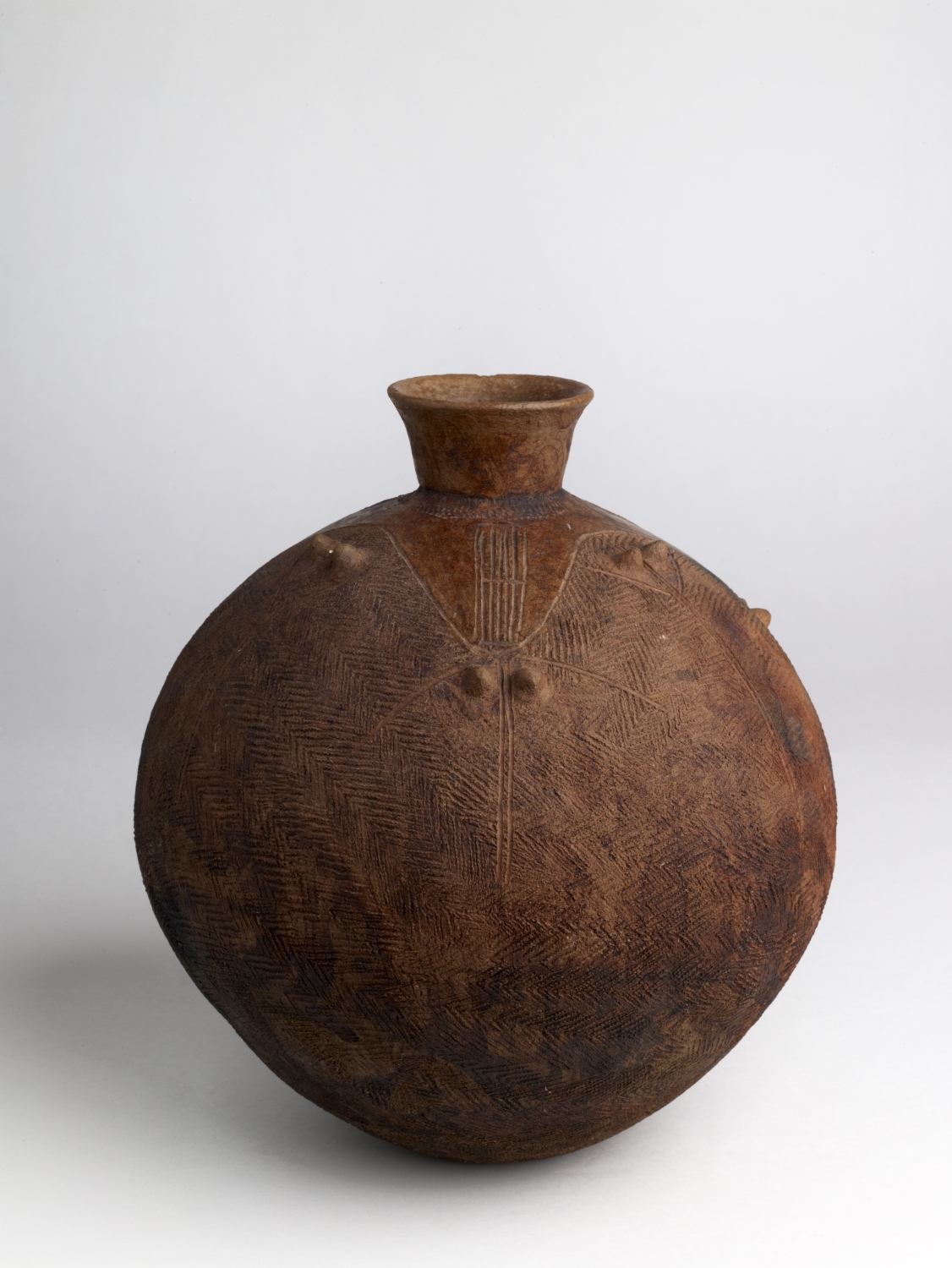
- Ton Myriam, Contenant “canari”, 1993, Musée des Confluences, Lyon © Pierre-Olivier Deschamps – Agence VU
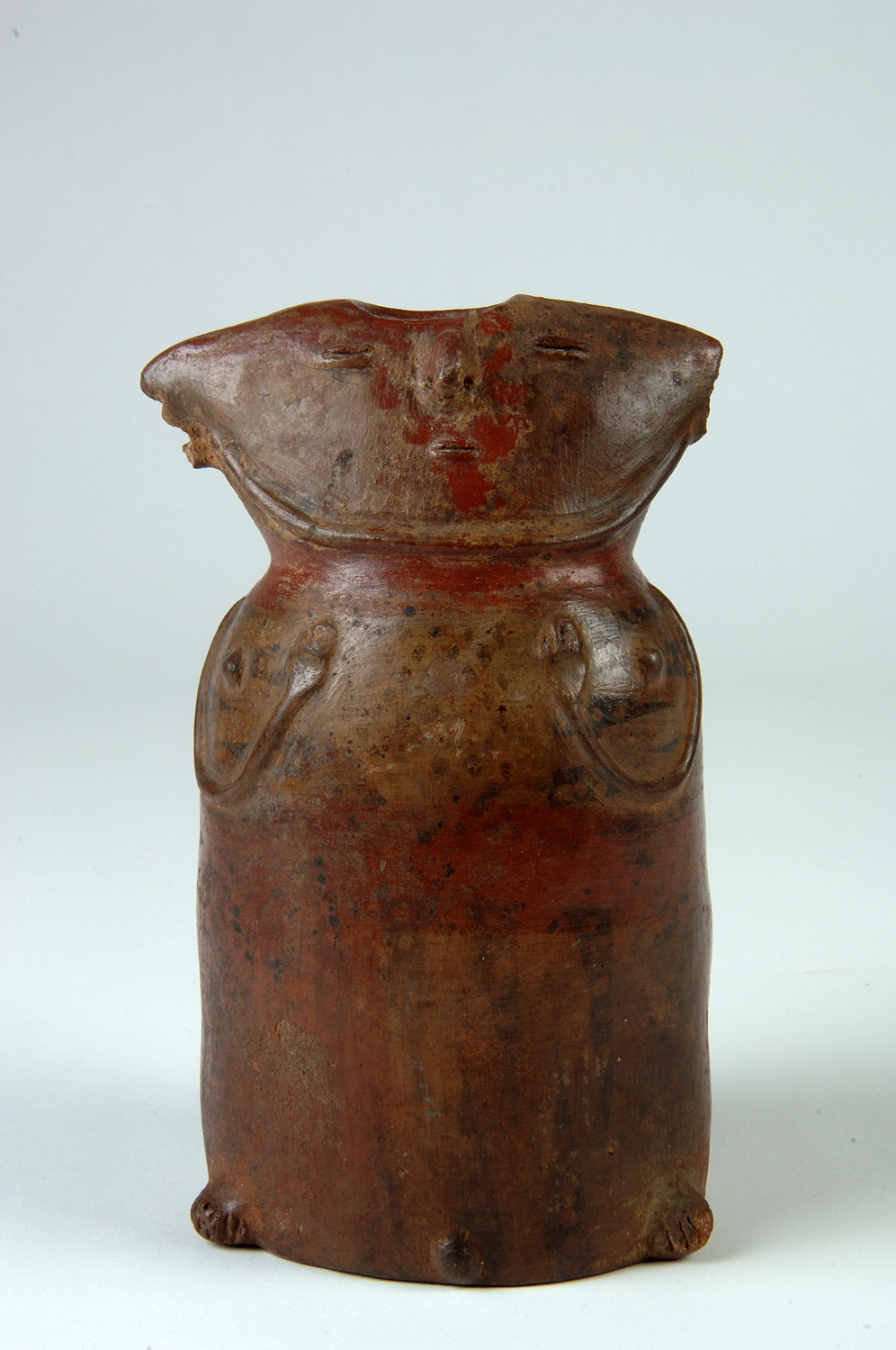
- Vase anthropomorphe, Production Quimbaya, culture Caldas (1200-1400), Colombie, Musée des Confluences, Lyon © Musée des Confluences
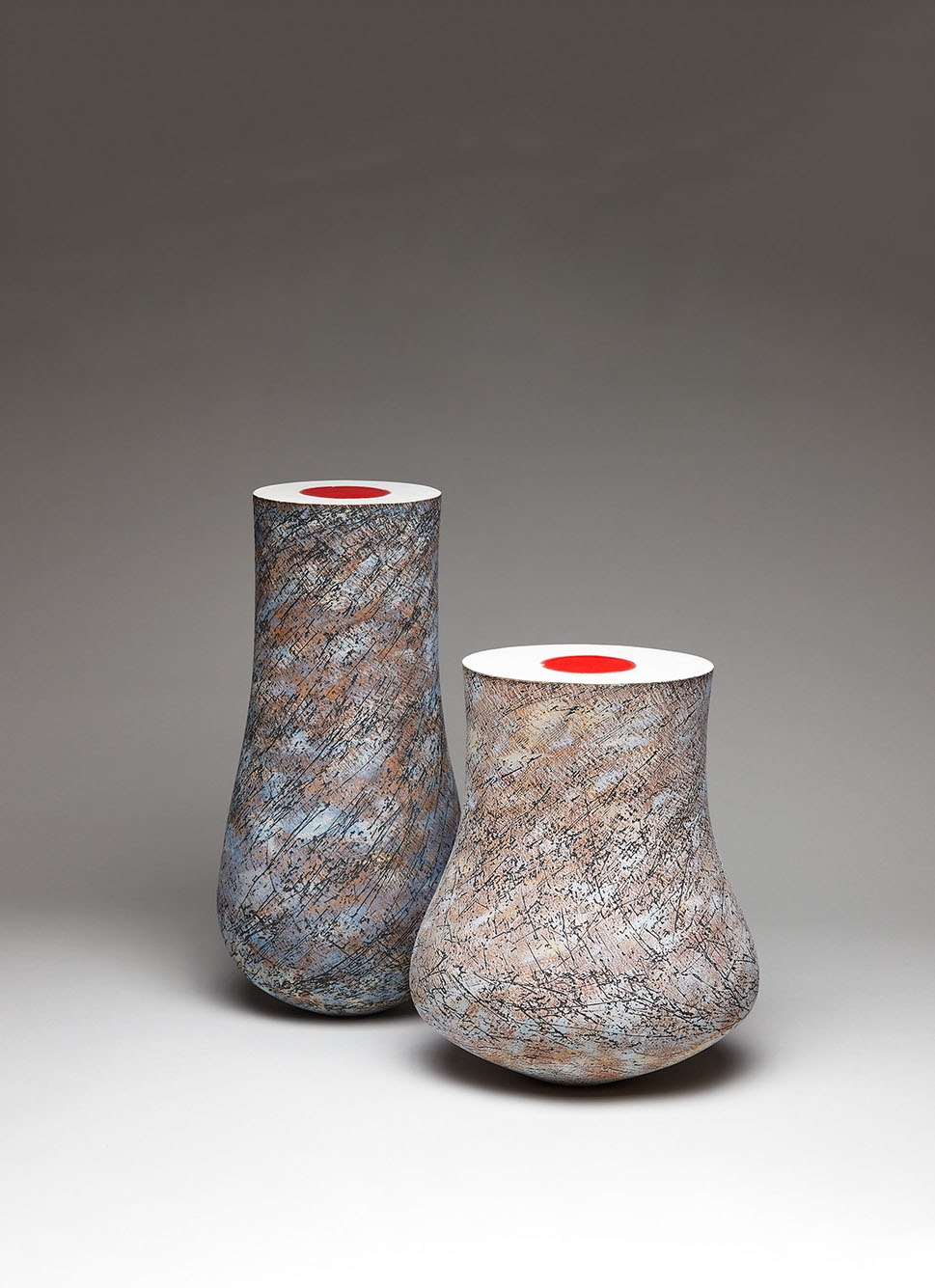
- Kristin McKirdy, Sans titre, 2021, Galerie Pierre Marie Giraud, Bruxelles © Pierre Marie Giraud / Kristin McKirdy. Adagp, Paris
- Takayuki Sakiyama, Sans titre, 2021, Galerie Pierre Marie Giraud, Bruxelles © Pierre Marie Giraud
Footnotes
- The Musée des Arts décoratifs de Bordeaux has undergone a restoration campaign in recent years. Partially reopened in April 2026, it will be fully reopened by spring 2027.
- Christian Bernard (1956-2026) was the most important Villa Arson’s director (1986-1994). In 1994, he founded the MAMCO in Genève (Switzerland).