By Christina Rauh Oxbøll
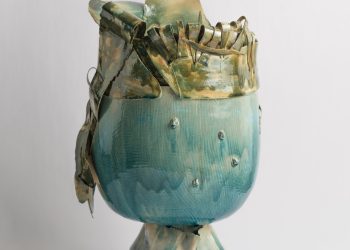
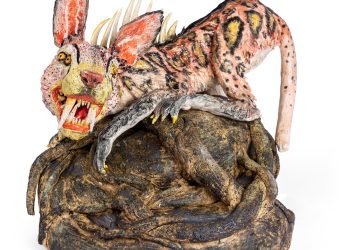
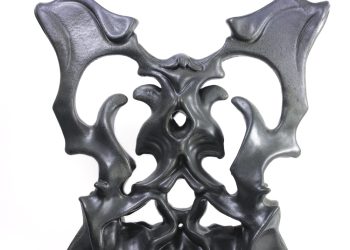
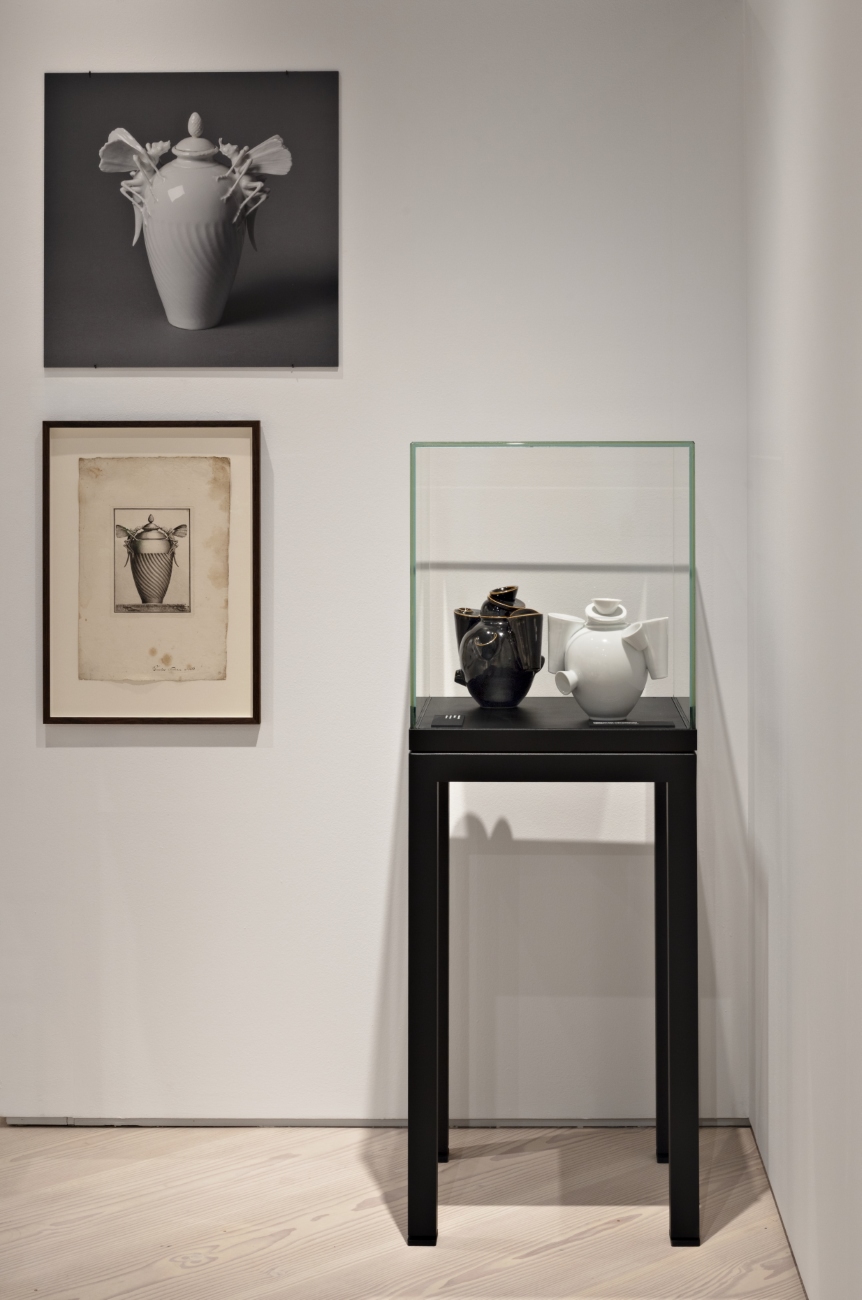
As the Royal Copenhagen Porcelain Factory celebrates its 250th anniversary this year, it remains an active player on both the domestic and international markets. As home to the historical Royal Copenhagen Collection, which was donated to CLAY Museum of Ceramic Art Denmark in 2010 by the factory, it is only natural for the museum to mark this impressive historical milestone. To do so, the museum invited the potter, designer and ceramic artist, Michael Geertsen, to create an exhibition that stages a dialogue between his own works of ceramic art and selected historical pieces from the factory. As an artist, who has been equally fascinated and repelled by some of the most opulent works produced at the factory, Michael Geertsen has taken on the challenge. In ten curated tableaux, the old pieces are staged next to Geertsen’s own works and cast new light on the long history of Royal Copenhagen.
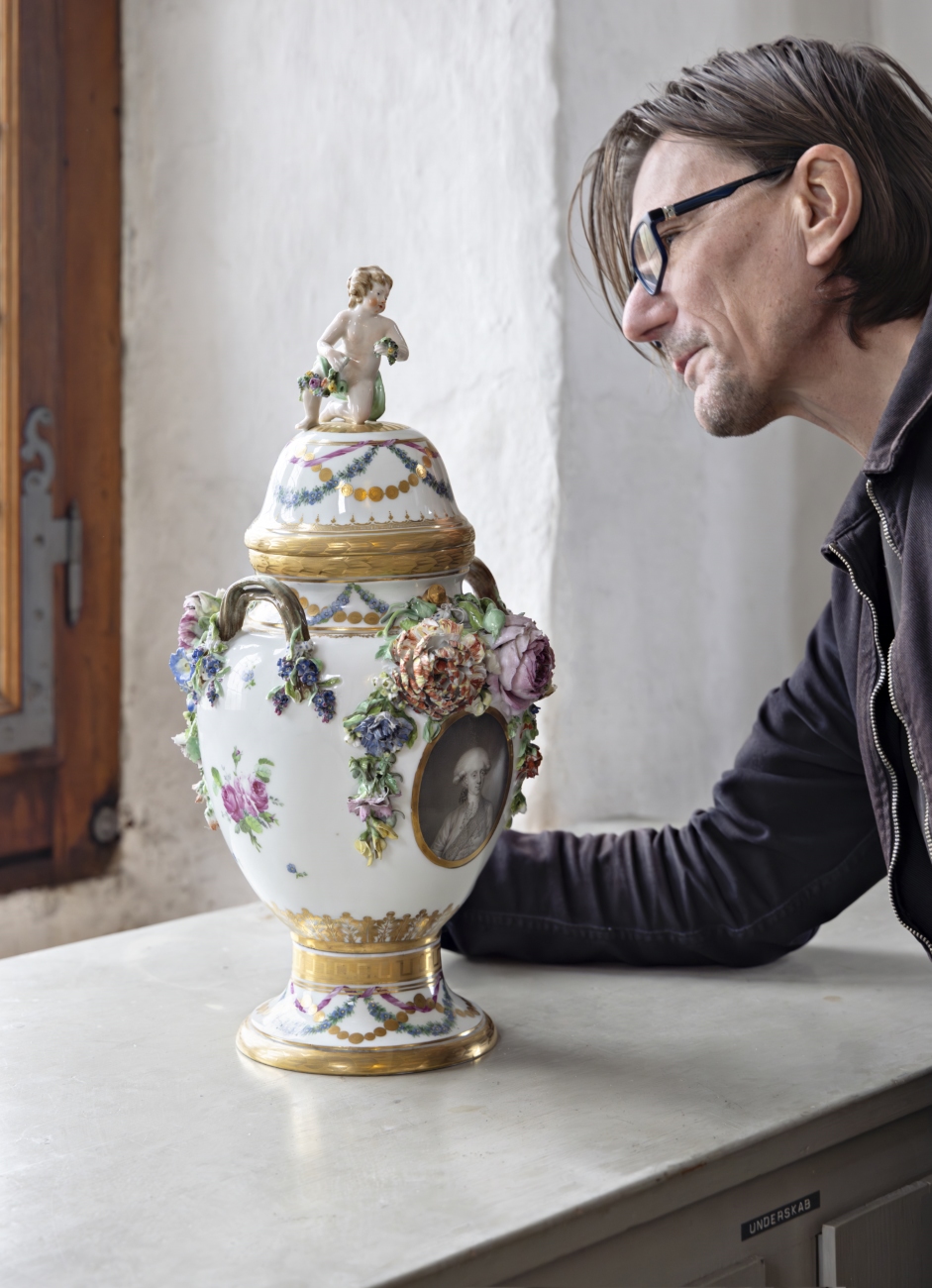
The Royal Porcelain Manufactory which was established in 1775 by the pharmacist Frantz Heinrich Müller (1732–1820) under the patronage of Queen Dowager Juliane Marie (1729–1796). In this exhibition, Geertsen addresses some of the earliest ornamental pieces from the factory’s production. These vessels demonstrate how the skilled employees of the factory soon mastered the techniques involved and the tricky porcelain clay. One of these pieces, Ornamental vase with two Fama figures, was purchased by Crown Prince Frederik (VI) as a birthday gift for himself in 1790. It was the factory’s largest and most expensive piece to date and received coverage in newspapers throughout the kingdom. The vase with the Fama figures has been in the possession of the Danish royal family ever since. In the late 1780s it was placed at Rosenborg Castle in Copenhagen, and now, for the first time since then, it has left the castle to be displayed alongside Michael Geertsen’s modern reinterpretation.
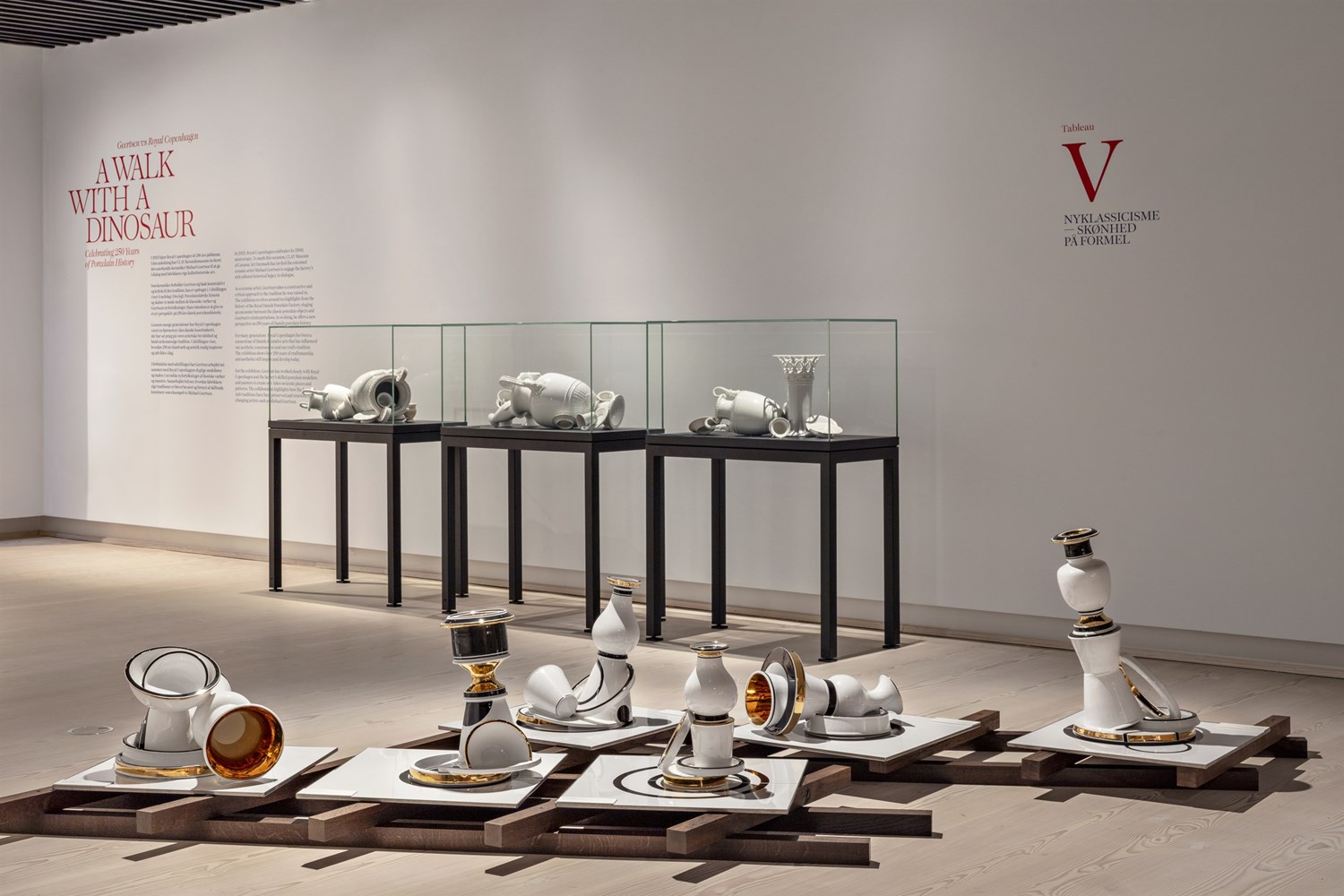
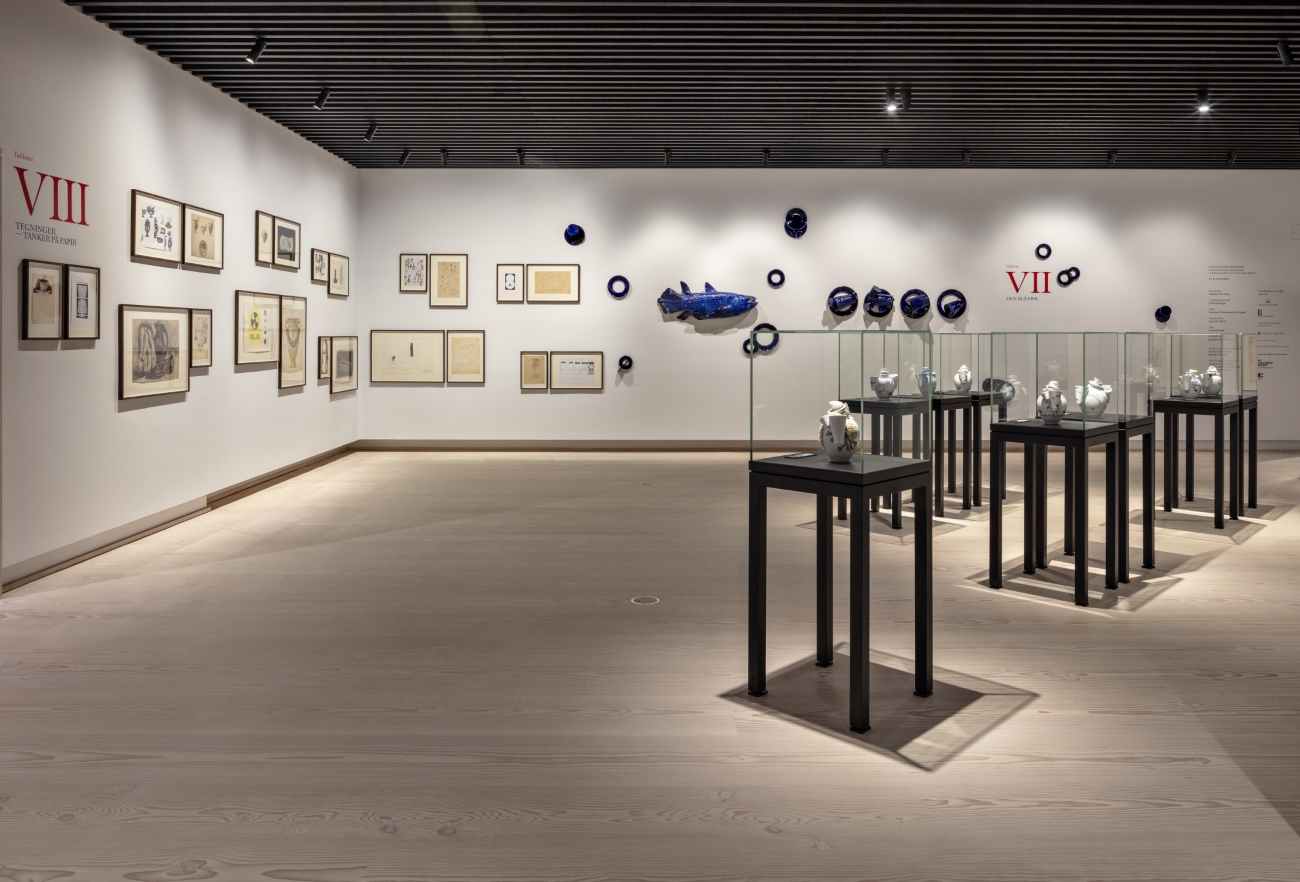
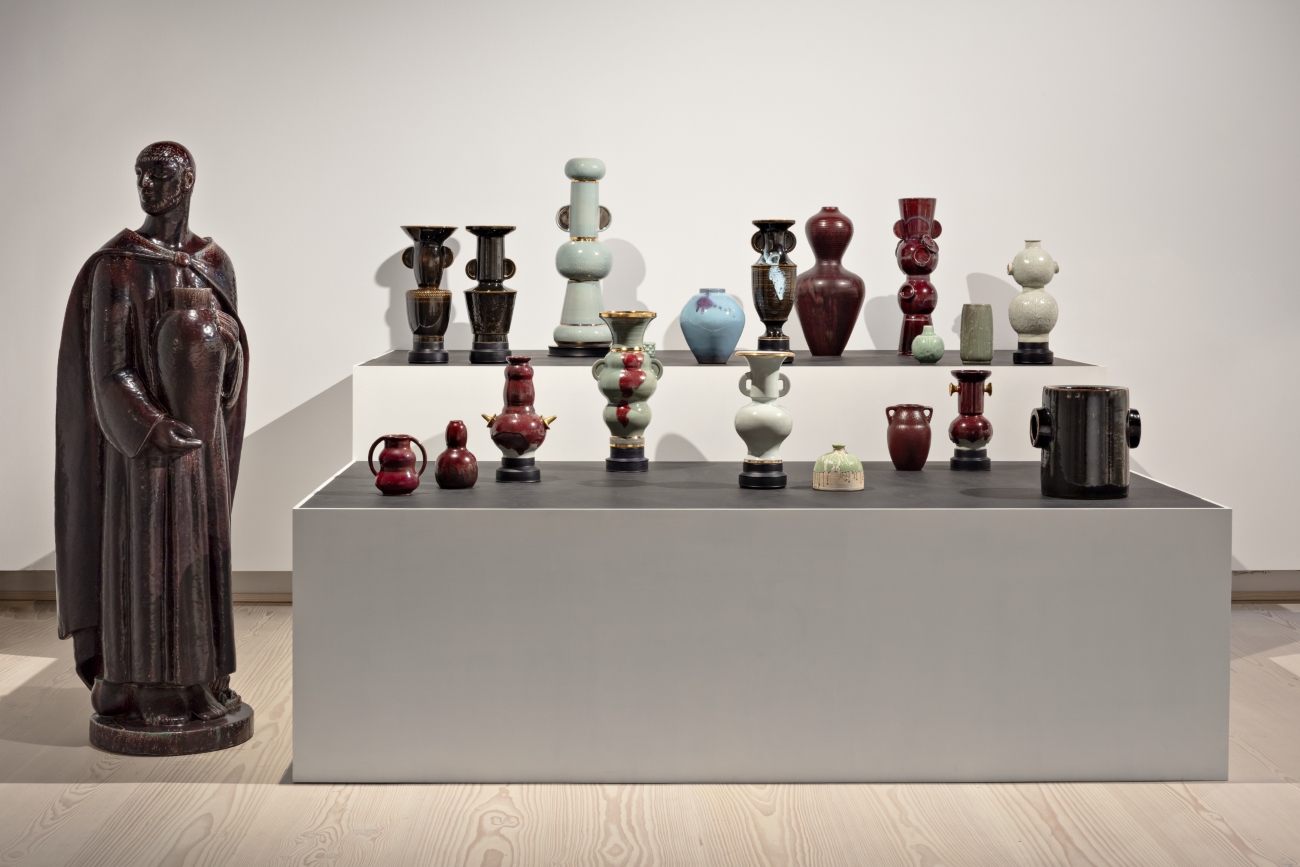
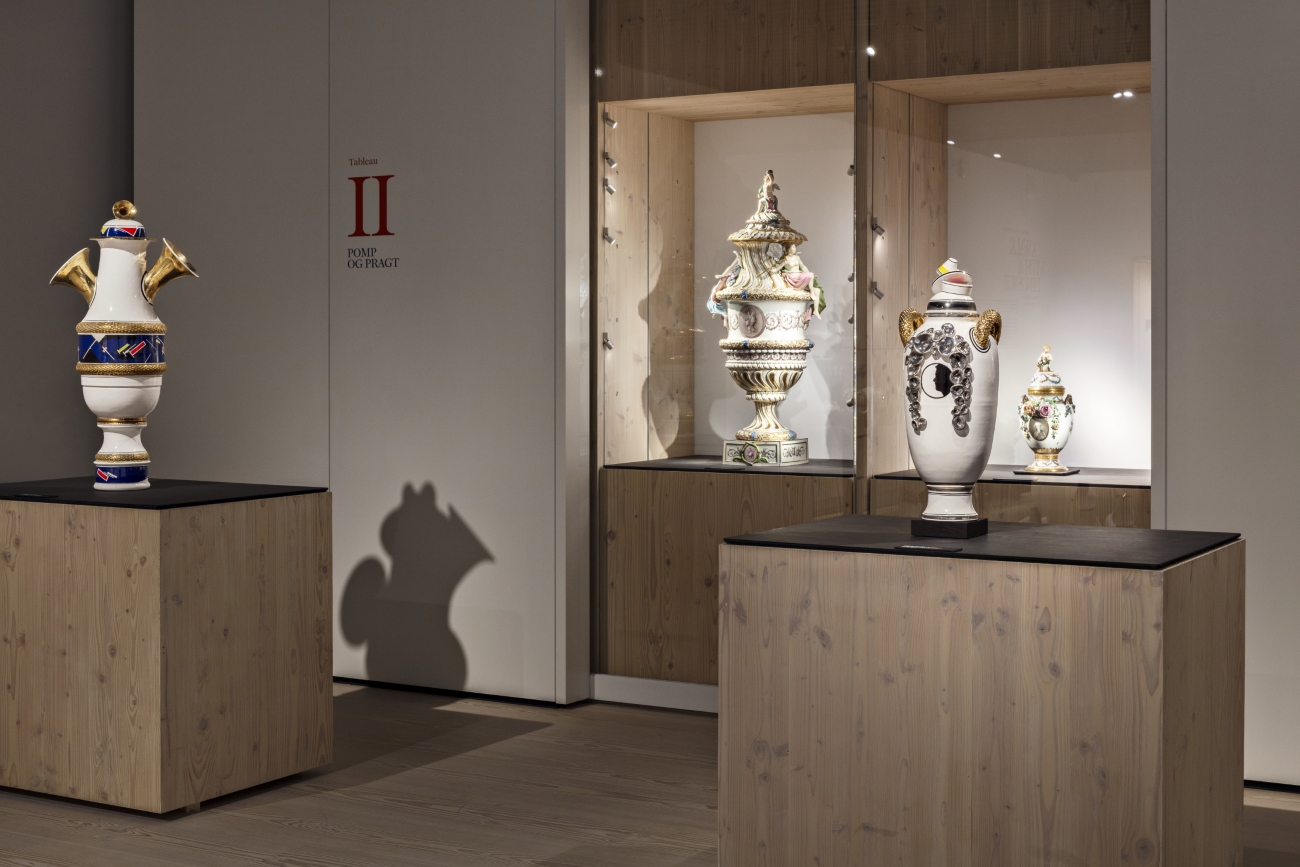
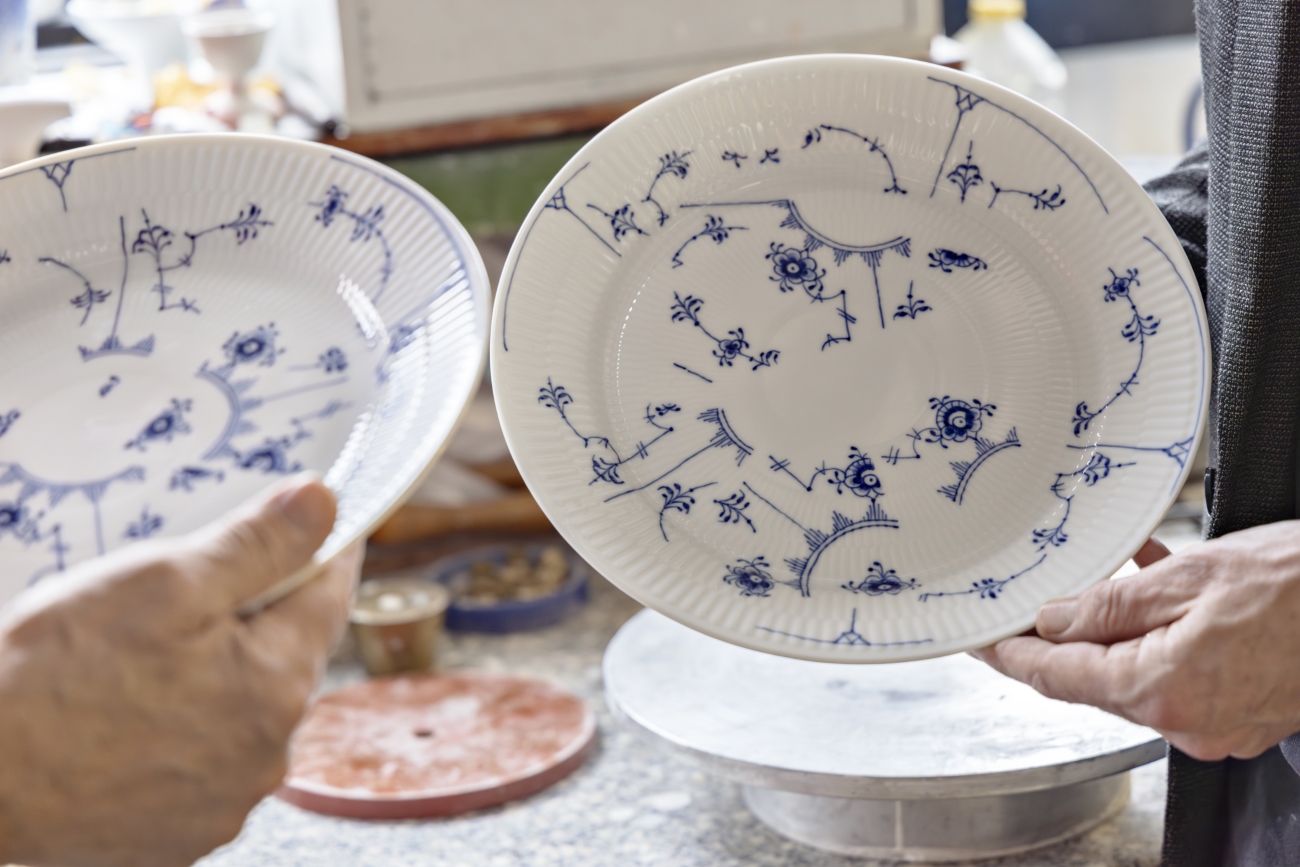
Dealing with 250 years of porcelain history there are plenty of topics to address. There is the story of porcelain, also known as ‘white gold’, which once was reserved for the wealthy elite but now is considered an everyday commodity. Or the story of the Blue Fluted pattern, the factory’s first design presented in 1793 which had transformed from an original Chinese design via German porcelain painters into a special Danish variation – today almost iconic for Danish porcelain, and particularly for Royal Copenhagen. The Blue Fluted has since been the subject of several reinterpretations. One example is Karen Kjeldgård-Larsen’s Blue Fluted Mega, a design that revitalised the historic pattern around the turn of the last millennium.
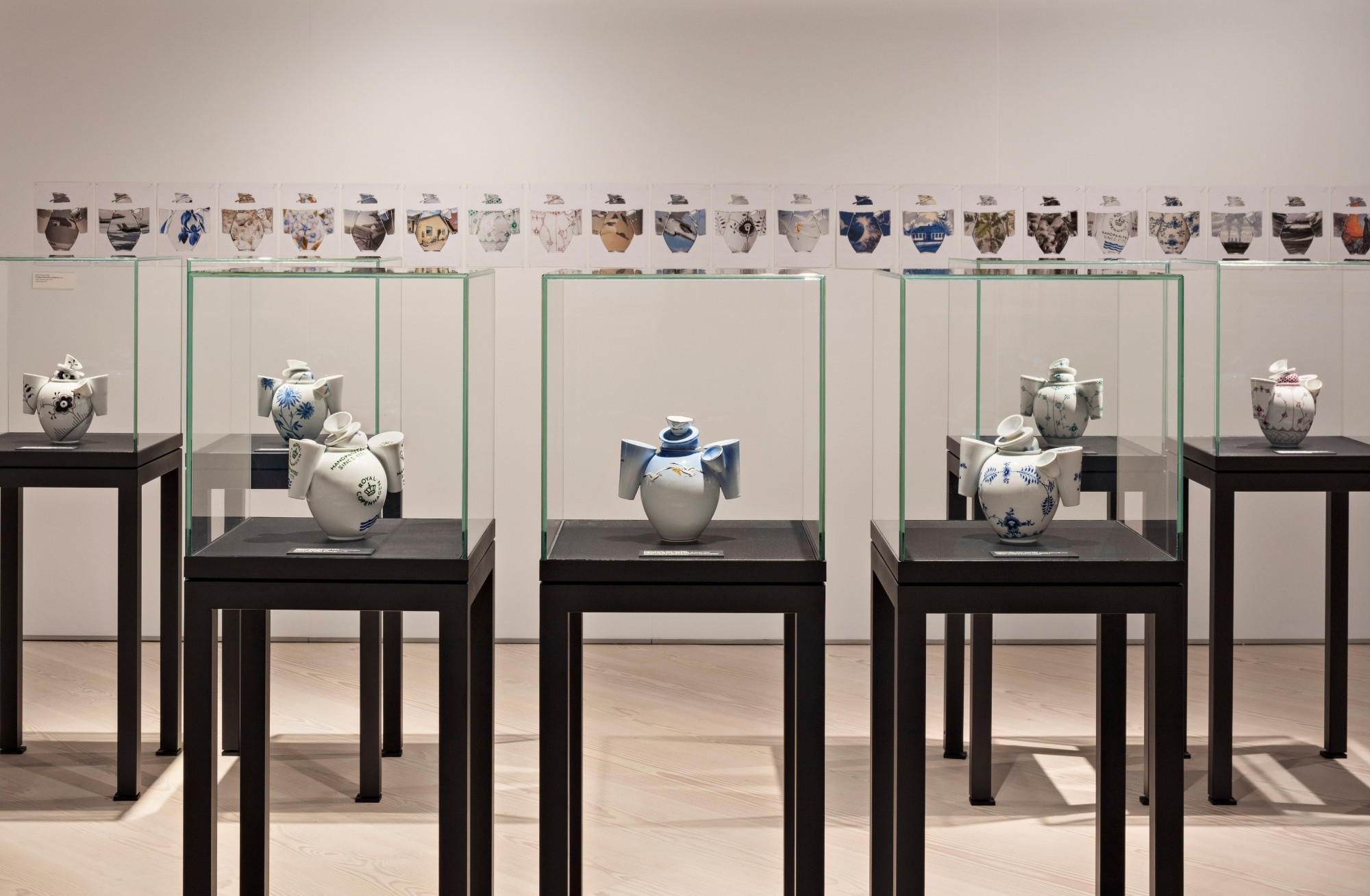
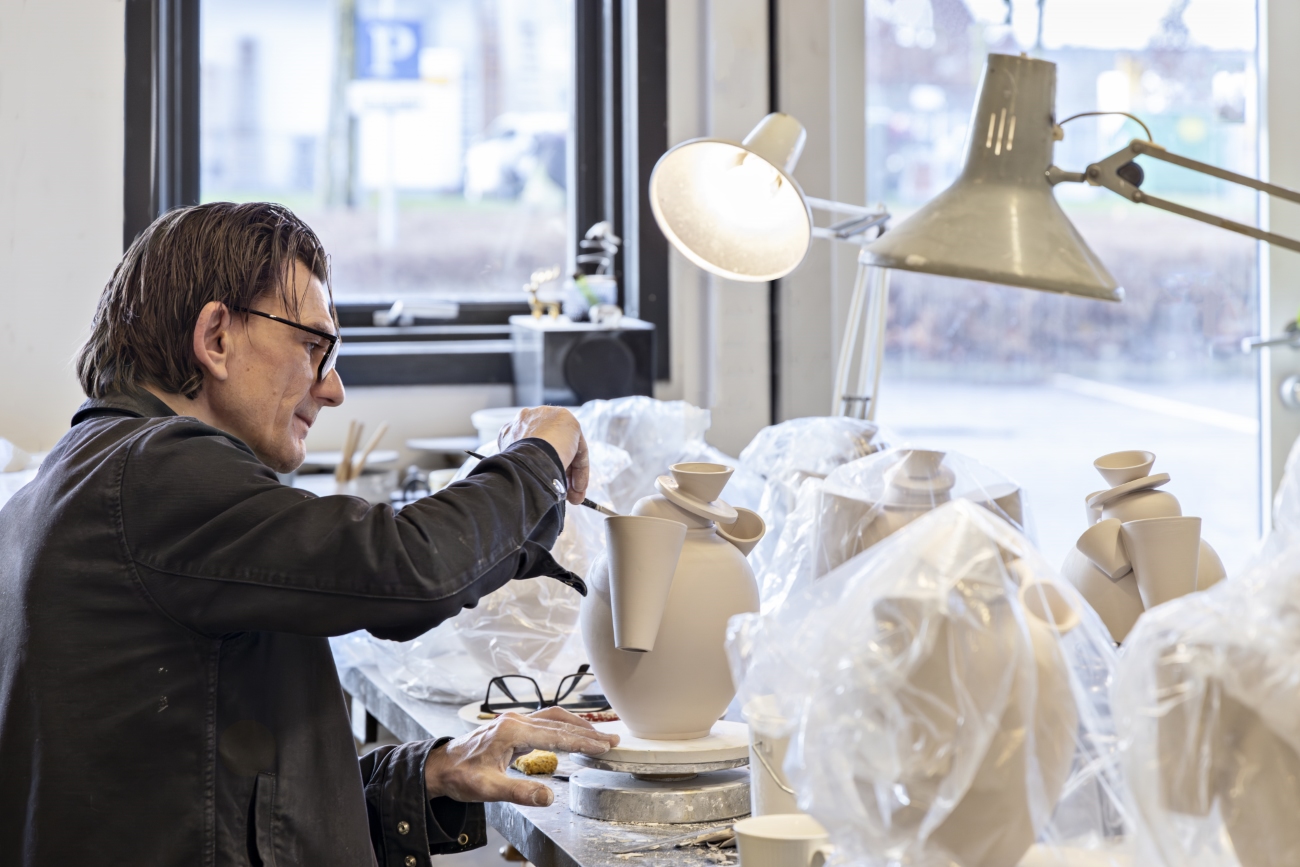
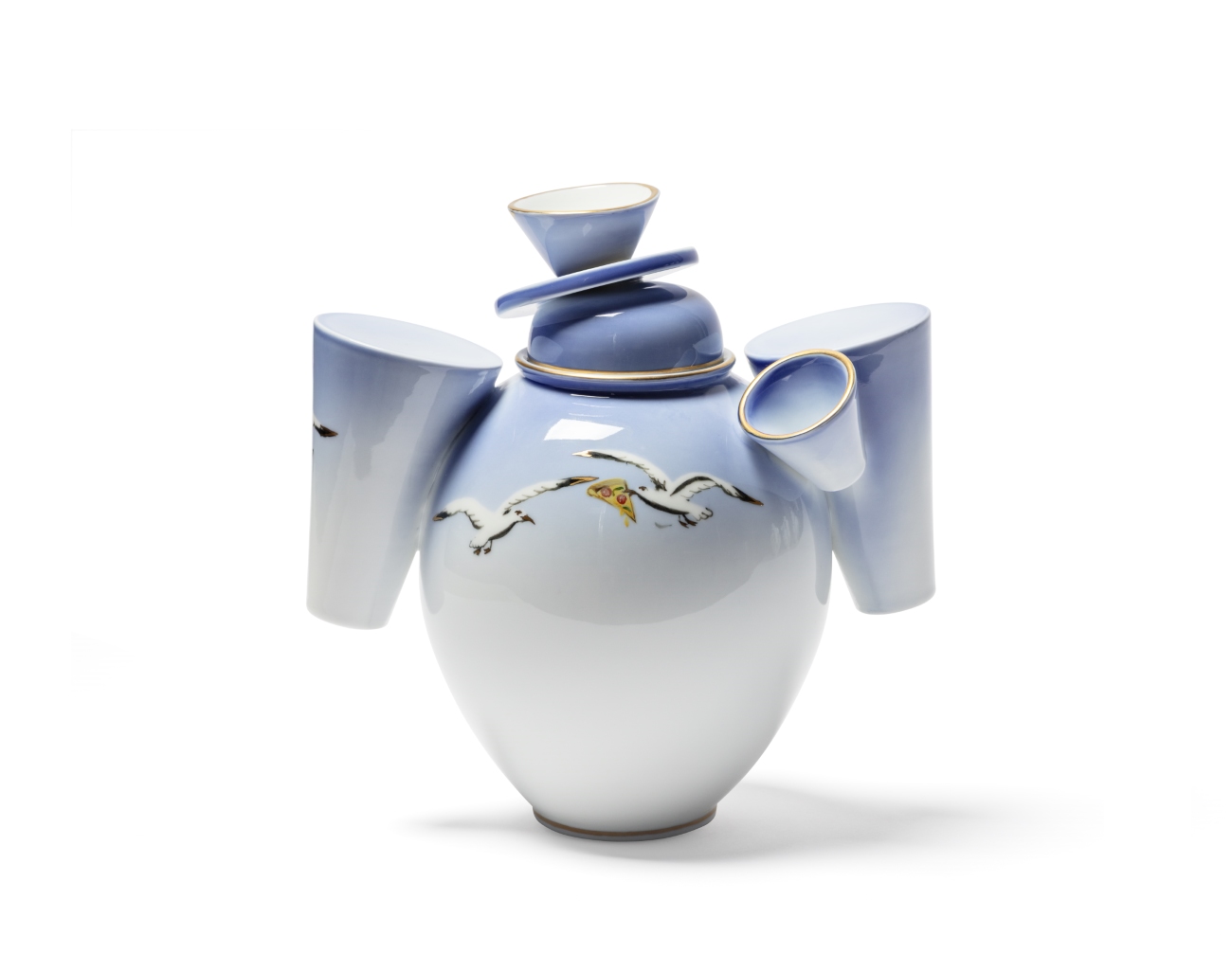
This has resulted in a series of ten lidded vases, the shape inspired by a small, delicate vase created by Pietro Krohn (1840-1905) in 1888 for the competitive porcelain factory Bing & Grøndahl. In Gertsen’s version the shape has been reinterpreted, cut and reassembled according to his typical deconstructive method in stoneware, then converted into a mold and cast in porcelain at Royal Copenhagen. Finally, the skilled porcelain painters have decorated the complex vase form with traditional patterns such as the Blue Fluted, the Seagull and Flora Danica.
As a ceramic artist, Geertsen takes a constructive and critical approach to the tradition he was raised in. And he is both bold and respectful in his dialogue with this cornerstone of Danish decorative arts, which for generations has influenced the aesthetic consciousness and the crafts tradition in Denmark. Though the dialogue between the old masterpieces and his own works Geertsen offers the viewer a new perspective of 250 years of Danish porcelain history and communicates the importance of Royal Copenhagen as a – very vibrant – dinosaur in Danish cultural history.
Michael Geertsen (b. 1966) completed his training as a potter in 1988 and graduated from the Danish Design School, Department of Industrial Design, in Copenhagen in 1993. He exhibited both in Denmark and abroad and is represented in the collections of museums around the world, including the Metropolitan Museum, Cooper Hewitt National Design Museum and MAD/Museum of Arts and Design in New York. In 2011, he created a permanent installation at the Victoria and Albert Museum in London.
About Royal Copenhagen
The Danish Porcelain Factory was founded in 1775 in Købmagergade in Copenhagen by pharmacist Frantz Heinrich Müller under the patronage of Queen Dowager Juliane Marie. The factory’s characteristic mark with the three waves represents Denmark’s three main waterways: the Sound, the Great Belt and the Little Belt. In 1779, the factory was taken over by Christian VII and renamed the Royal Danish Porcelain Factory.
In 1885, Arnold Krog is appointed as artistic director of the factory. He renews the Blue Fluted pattern and develops underglaze decorations with inspiration from Japan. The factory’s products attract attention at the 1889 Paris Exposition. In reflection of this international success, ‘Royal Copenhagen’ is included as part of the factory’s mark from the 1890s. Today, the company is owned by the Finnish Fiskars group.
About the Royal Copenhagen Collection at CLAY Museum of Ceramic Art Denmark
In 2010, Royal Scandinavia A/S, the then owner of Royal Copenhagen, donated the entire collection of the Royal Danish Porcelain Factory, Bing & Grøndahl and Aluminia to CLAY Museum of Ceramic Art Denmark. With this donation, the museum received close to 55,000 ceramic objects in faience, stoneware and porcelain. The collection also includes thousands of sketches, technical drawings and other documents, all of which help tell the story of 250 years of Danish design history.
Christina Rauh Oxbøll, who holds an MA in Art History, is a curator at CLAY Museum of Ceramic Art Denmark.
A Walk with a Dinosaur – Michael Geertsen vs Royal Copenhagen is on view between April 27 and December 30, 2025, at the CLAY Museum of Ceramic Art Denmark, Middelfart.
Photos by Dorte Krogh
Captions
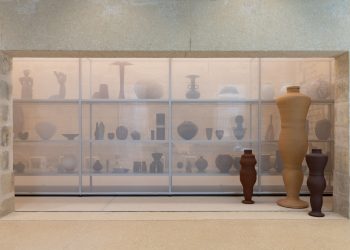
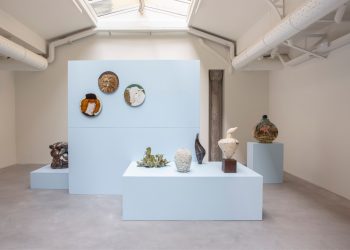
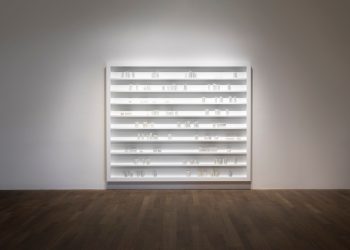
- Installation views, A Walk with a Dinosaur – Michael Geertsen vs Royal Copenhagen, CLAY Museum of Ceramic Art Denmark, Middelfart, 2025.
- Michael Geertsen inspects a lidded base at Rosenborg Castle. Lidded vase with a portrait of Crown Prince Frederik VI. The Royal Porcelain Factory, 1984-86.
- Michael Geertsen and Bo Jørgensen at Royal Copenhagen in Glostrup. Viewing blue plates designed by Michael Geertsen.
- Michael Geertsen working on a series of new jars produced for the exhibition at Royal Copenhagen in Glostrup.
- Michael Geertsen, Lidded porcelain vase with Seagull and pizza slice decoration, 2025. Underglaze decoration by Bente Petersen. Overglaze decoration by Marlene Jørgensen. Courtesy of Michael Geertsen/Royal Copenhagen
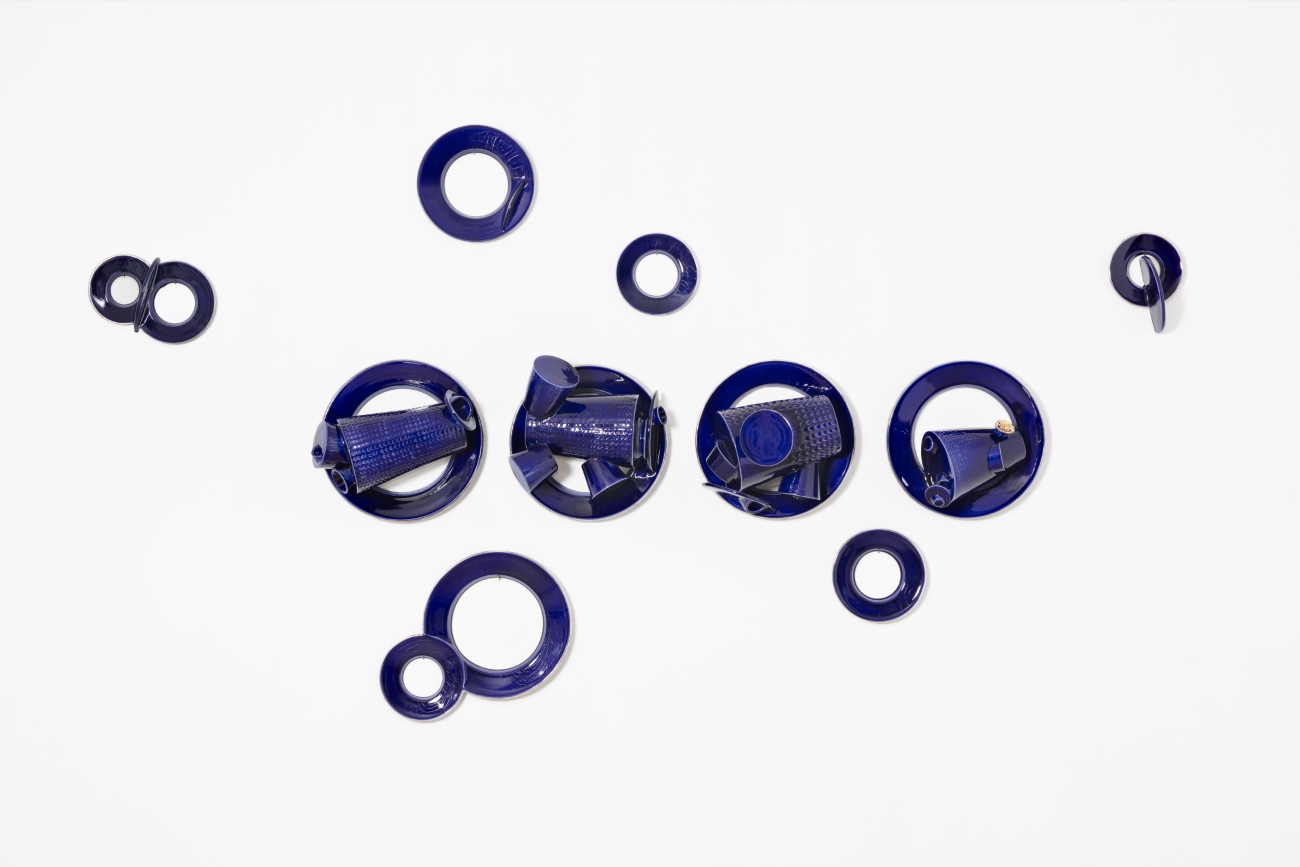
- Michael Geertsen, Blue Bubbles, 2025, 15 parts, earthenware with blue glaze and platinum lustre, ~17-32 cm.
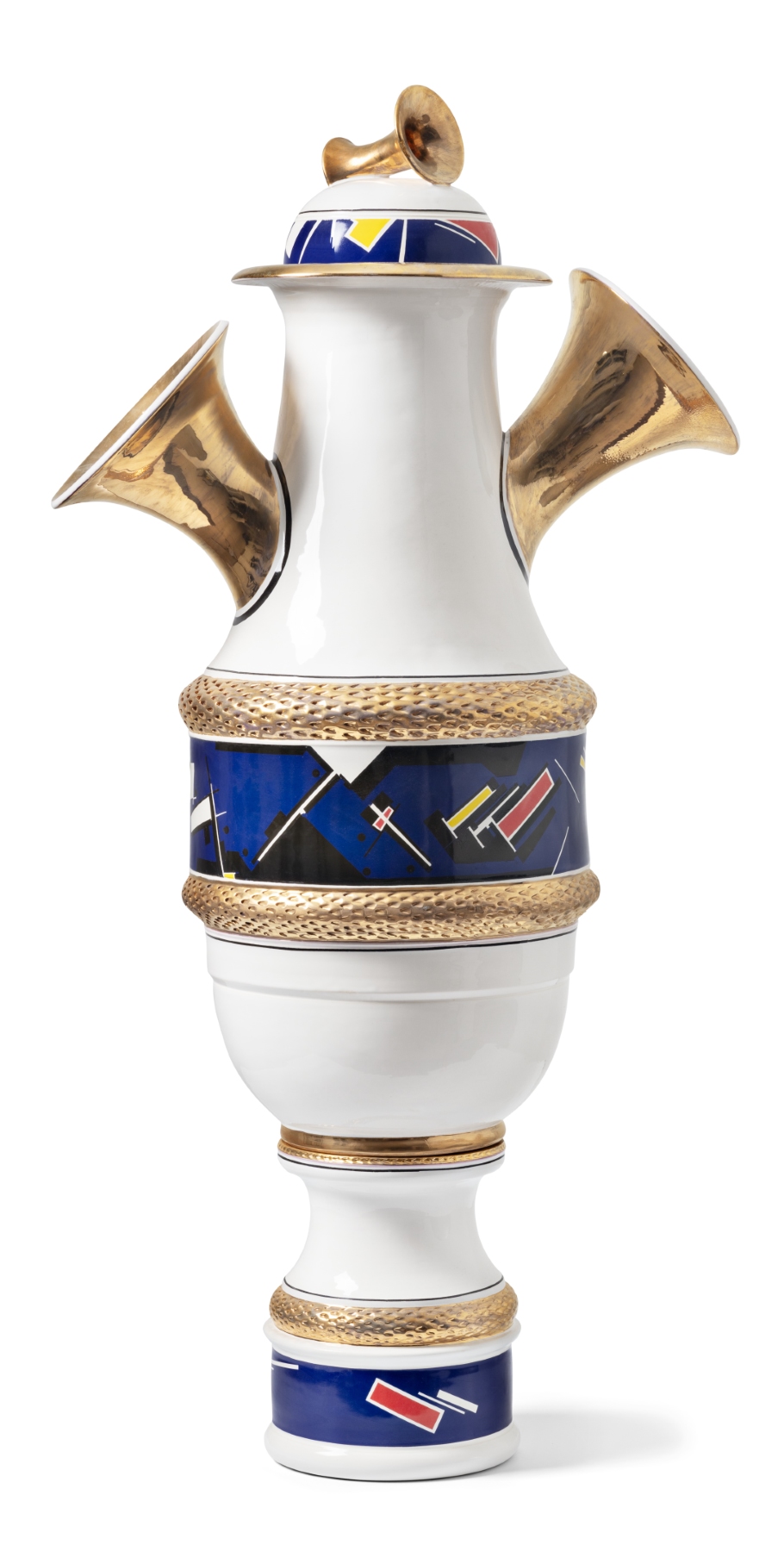
- Michael Geertsen, Ornamental vase with trumpets, 2024, Earthenware with white glaze, decals, and gold with platinum lustre, H 98 cm.