By Katherina Perlongo
With Ceramics un-limited world, the Südtiroler Künstlerbund opened the doors of its exhibition space SKB Artes in Bolzano to a vibrant exploration of clay in all its forms. On view from August 29 to November 7, 2025, the show brought together a carefully curated selection of artists whose works highlight the boundless potential of the material. Ceramics un-limited world invited visitors to reflect on clay’s enduring presence in art and culture, tracing its meanings from ancient traditions to contemporary interpretations and into the future.
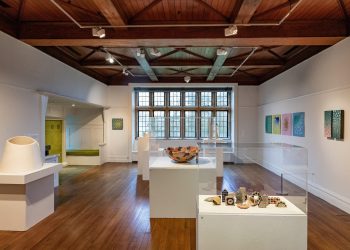
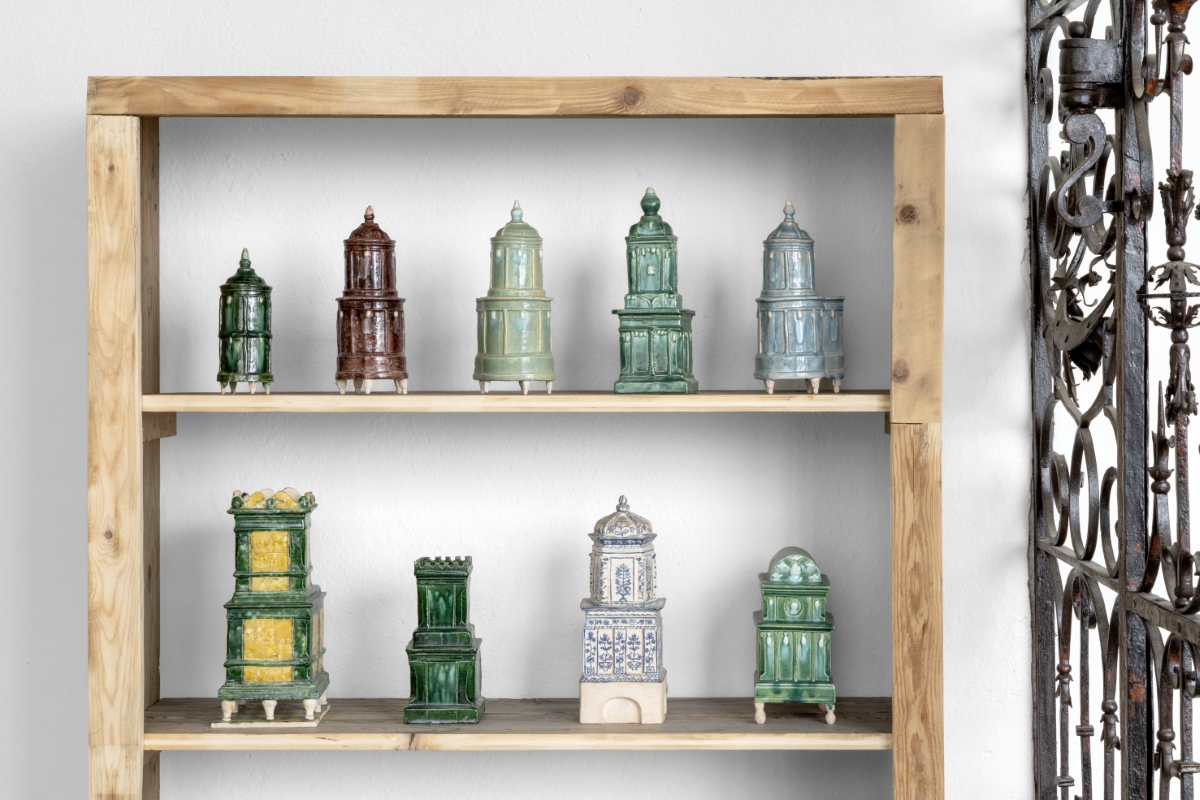
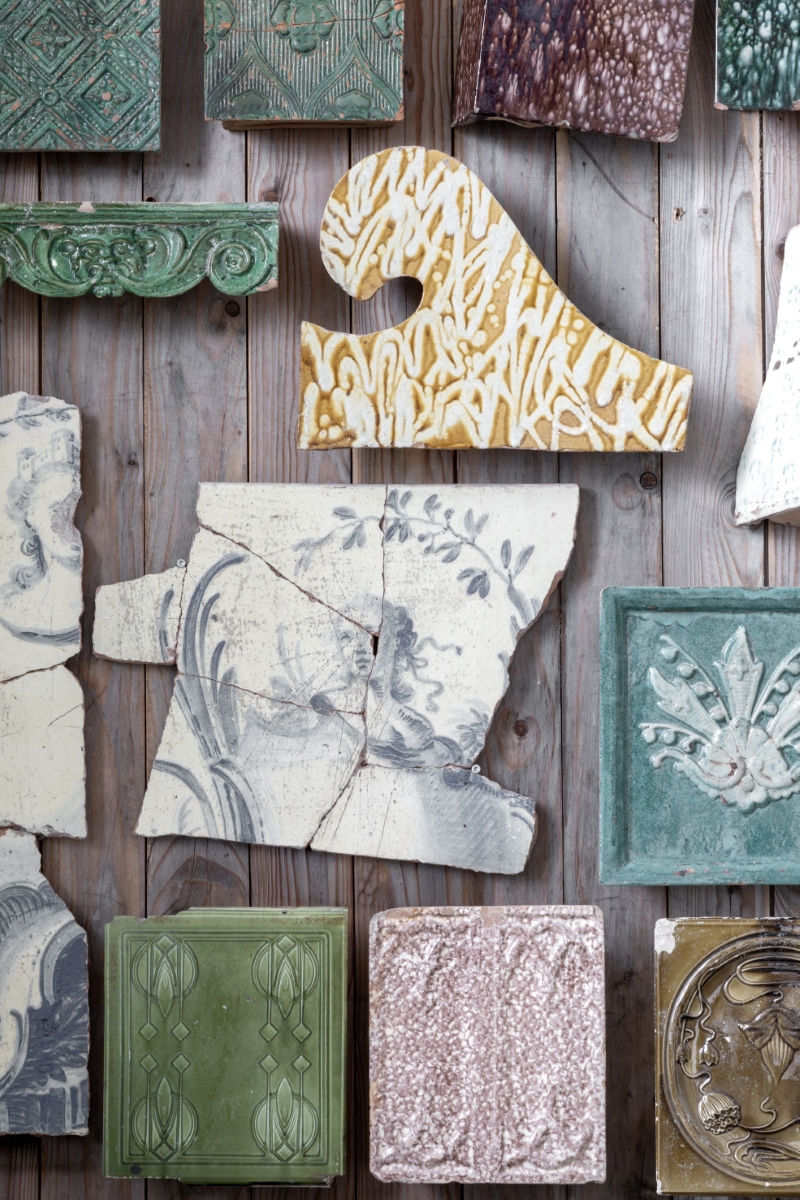
To reach the exhibition, visitors passed through a courtyard and ascended a staircase before entering the historical rooms. In this transitional outdoor space stood a white-glazed Rococo tile stove, a technical and artisanal masterpiece long retired from its original function. Gracefully positioned in the courtyard, it set the tone for the exhibition by evoking our most immediate associations with clay – the domestic, the functional, the everyday object. The stove also served as the site of an intervention by artist and stove builder Peter Chiusole (*1958), who transformed the area into a small working and advisory studio during the run of the exhibition. On a wooden shelf, he combined historical fragments with his own handcrafted pieces – glazed roof tiles, shards of architectural ceramics, vases, and miniature models of tiled stoves – while a small replica of the Rococo stove joined the display. Once a week, he guided visitors through the construction, use, and artistic design of historical and contemporary tiled stoves, offering insights, demonstrations, and personal stories that connected the objects to Alpine craftsmanship and cultural history.
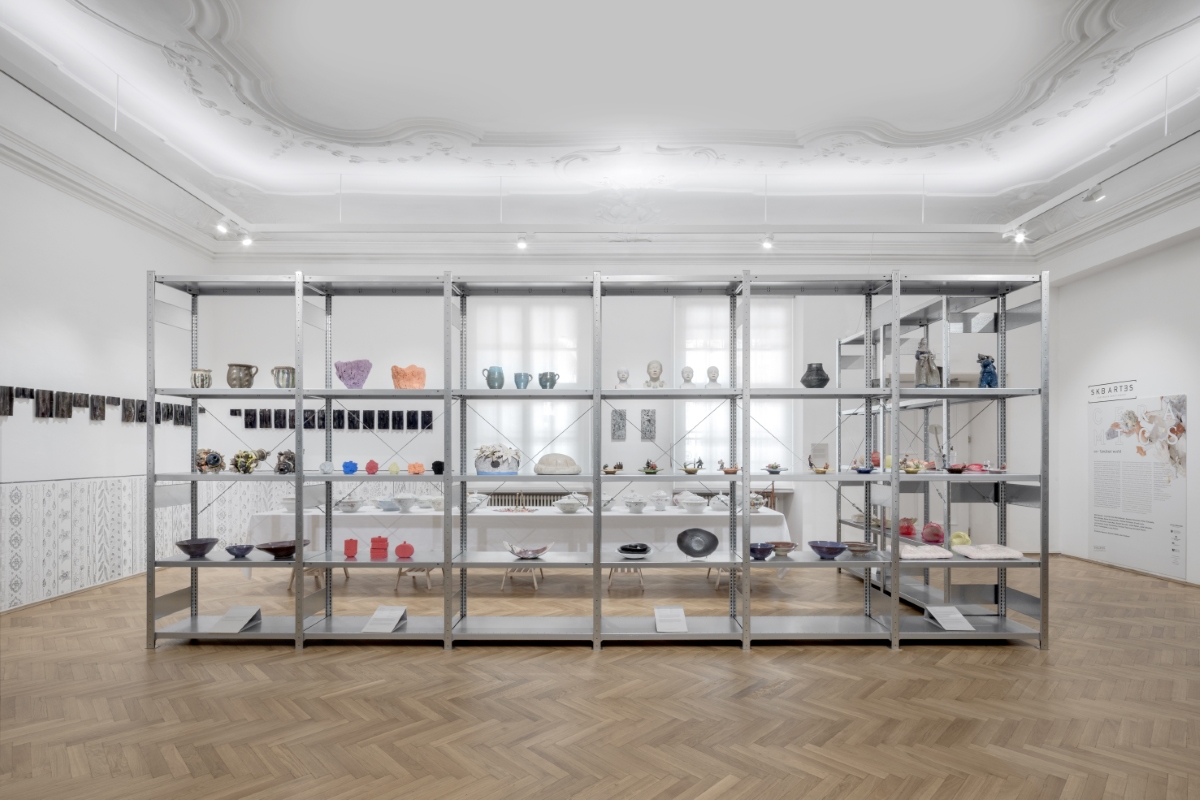
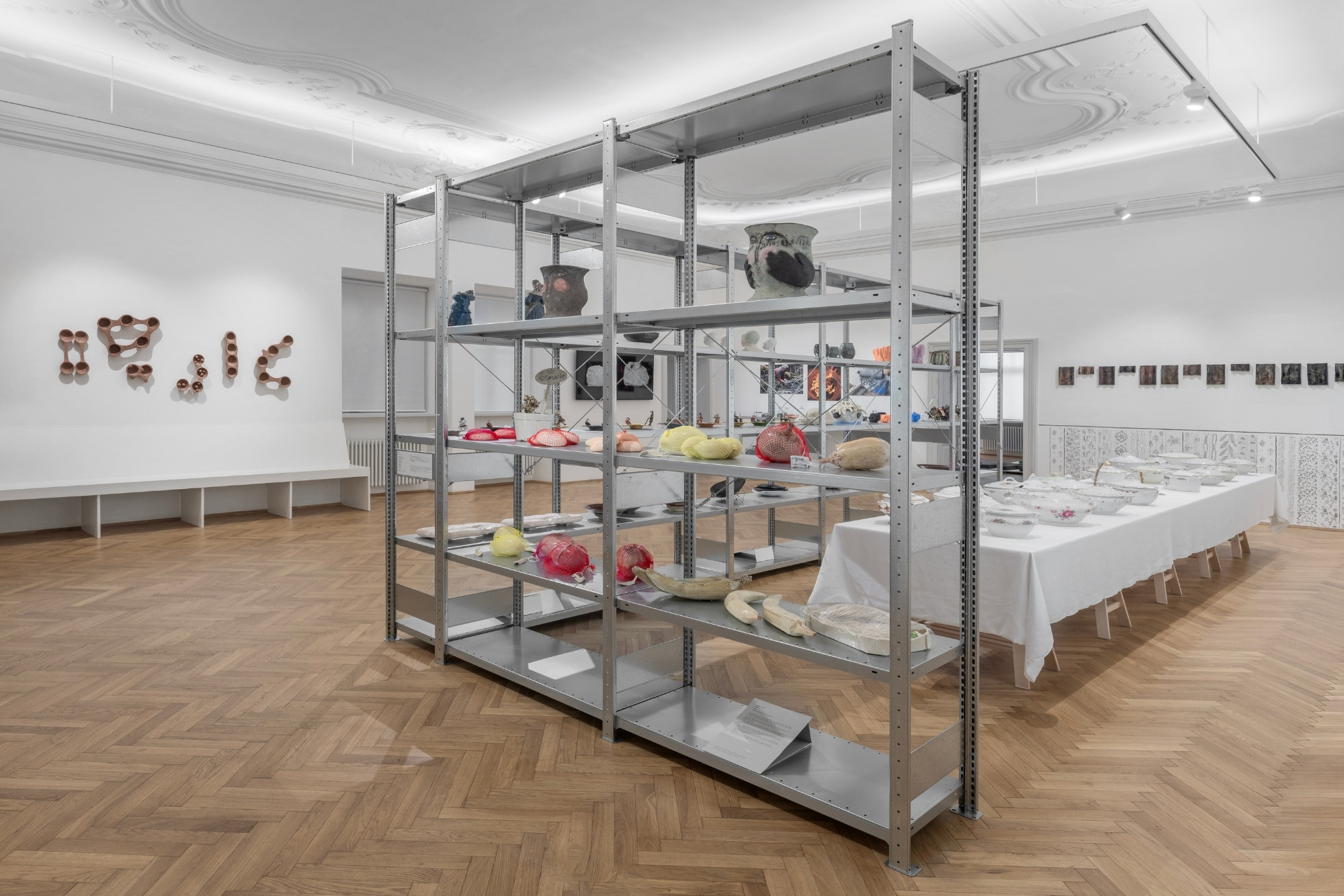
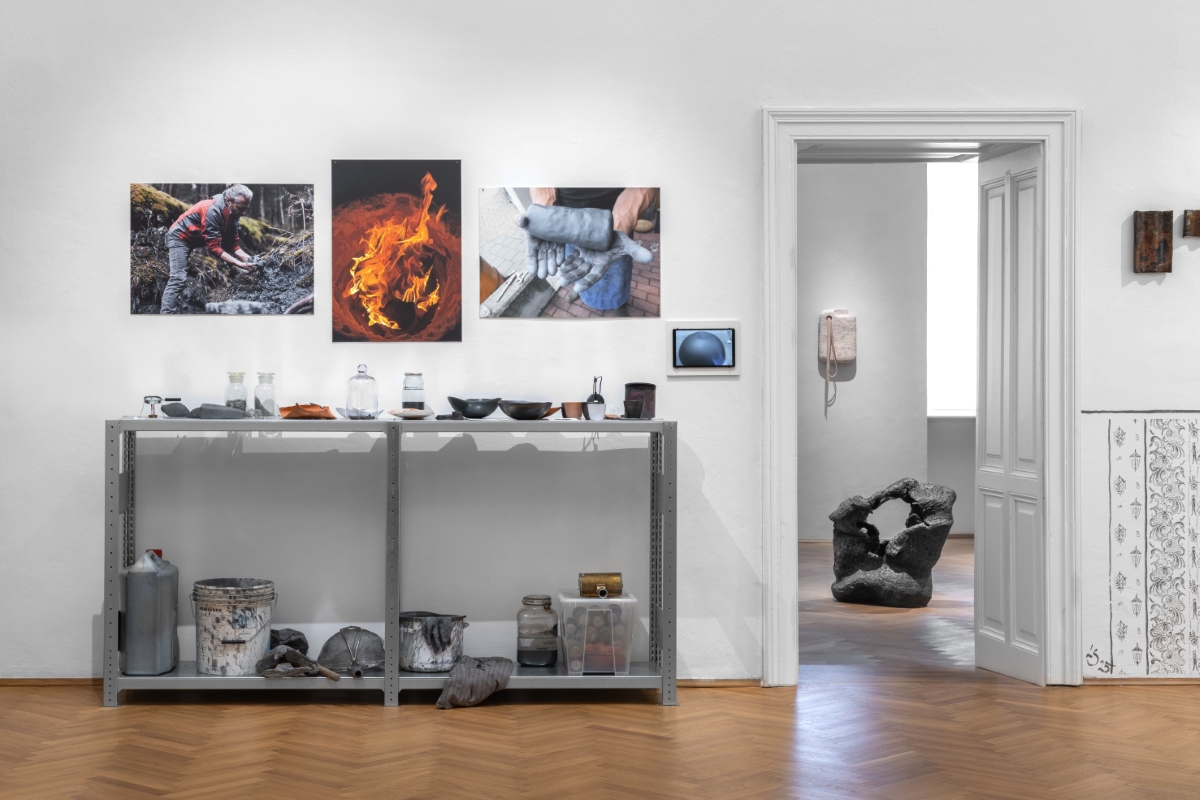
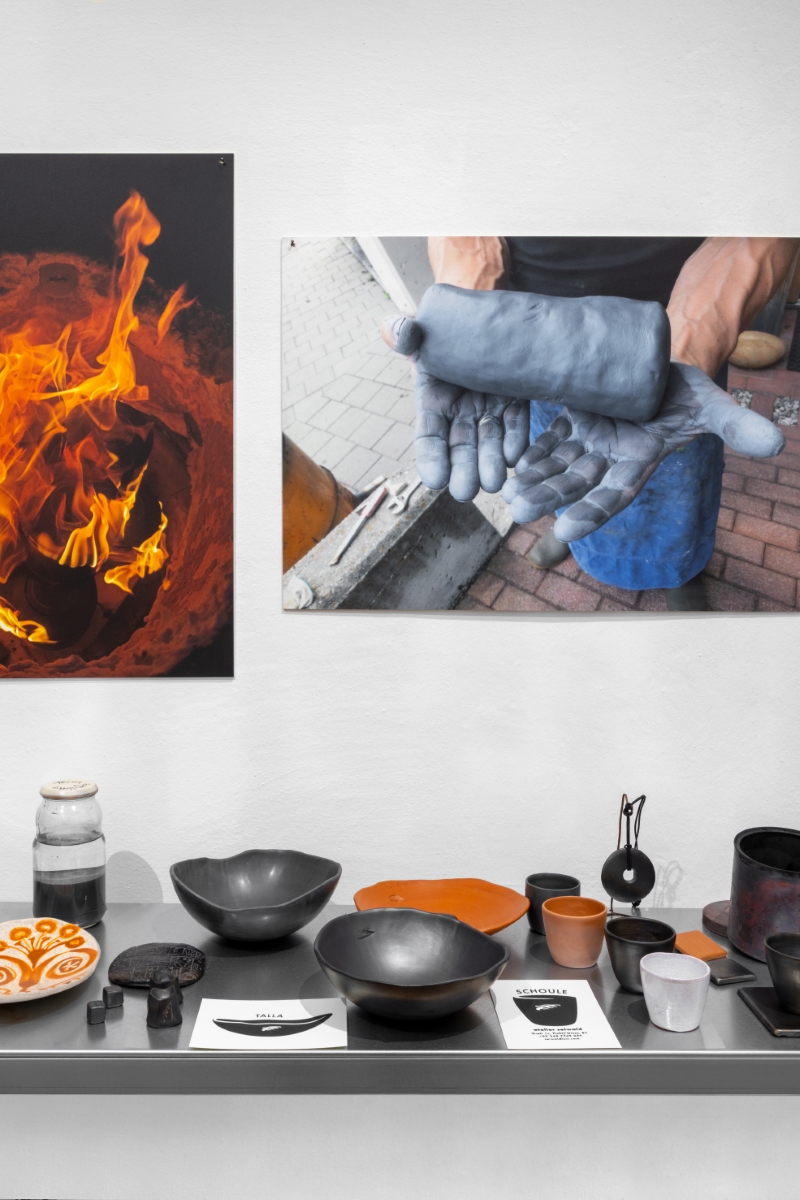
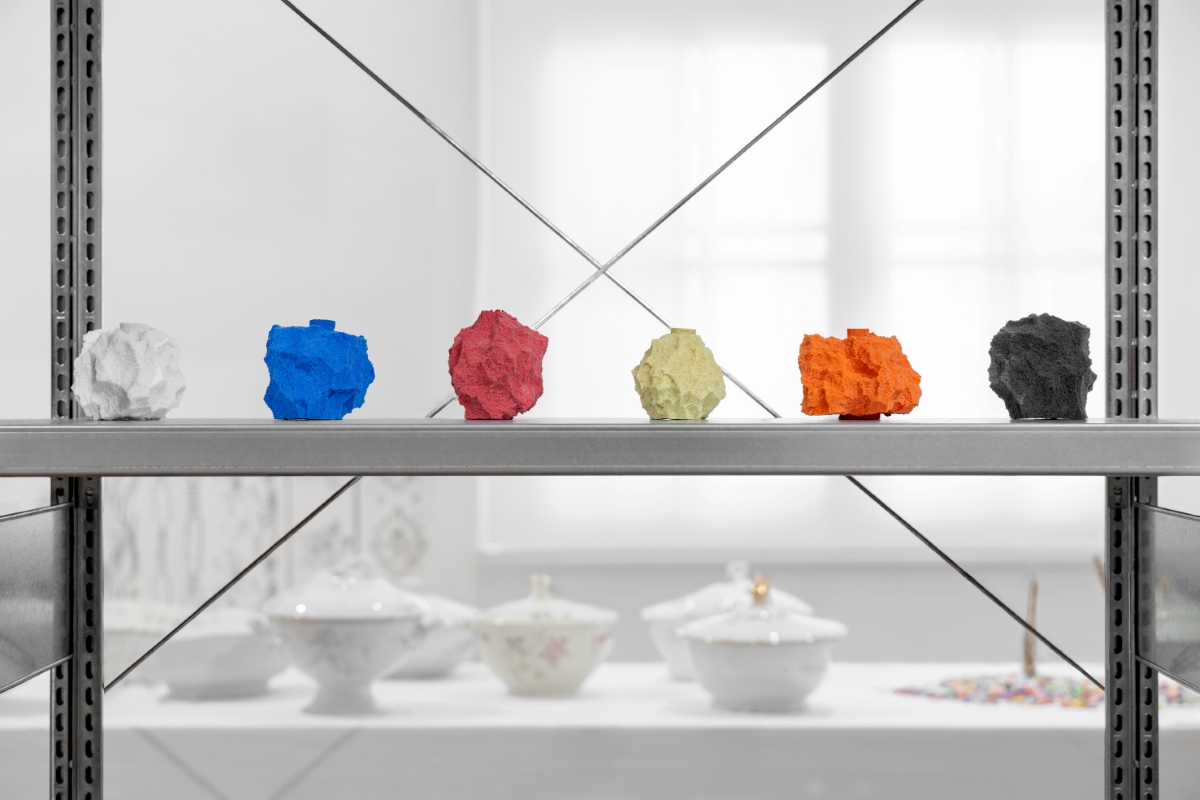
Upon entering the exhibition rooms, visitors were greeted by a shelving unit filled with small sculptures and vessels by various artists, showcasing the diversity of the ceramic medium – and, just beside it, a festively set table. The 25 soup bowls drawn from a private collection subtly referenced another familiar aspect of ceramics: their presence in daily life and domestic rituals. This intimate scene was complemented by wall decorations created with patterned rollers by Luis Seiwald (*1969). For these, he used terra sigillata that he had personally extracted from a clay quarry in the Valle di Casies in Northern Italy. In this first room, Seiwald also set up a small production area where visitors could follow the process step by step – from collecting clay in the quarry to the countless stages in between. His practice illustrates how a raw material becomes a finished ceramic object through skill, time, and meticulous refinement.
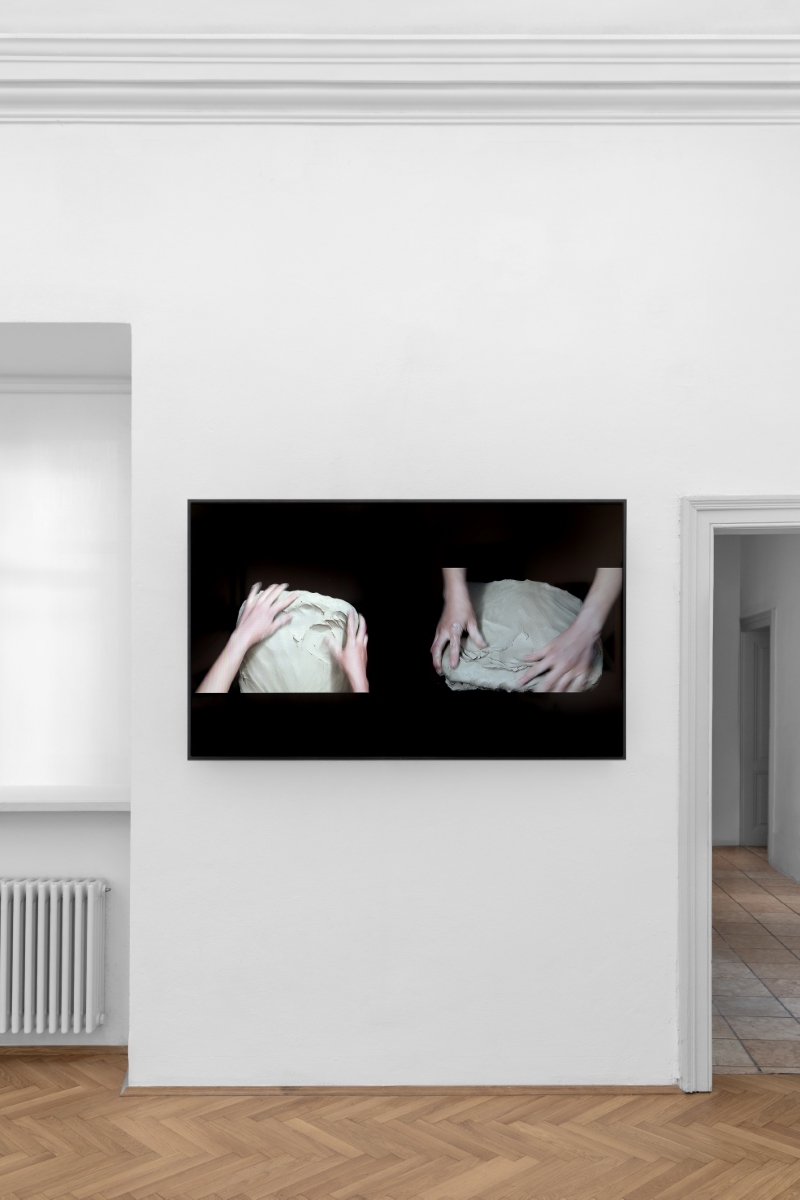
Following Seiwald’s exploration of transformation, Julia Schuster‘s (*1989) contribution shifted the focus from process to sensation, emphasizing the intimate physical engagement with the material. Her video-documented performance LONGING (2026) shows the artist’s hands shaping and kneading raw clay. The work becomes a metaphor for sensuality and for the traces left by the human body in the act of forming, inviting viewers into a tactile experience that foregrounds how we perceive the world through touch. It is astonishing how a material so soft and malleable can acquire a solid and lasting presence – one of the many wonders of ceramics. Another of Schuster’s works, FOLDING (2016), charmingly demonstrates this transformation: the wall-mounted piece appears to crystallize the intuitive shaping process. The impressions of the artist’s hands remain inscribed in the form, telling the story of her movements, with a fleeting gesture made permanent through firing and a white glaze.
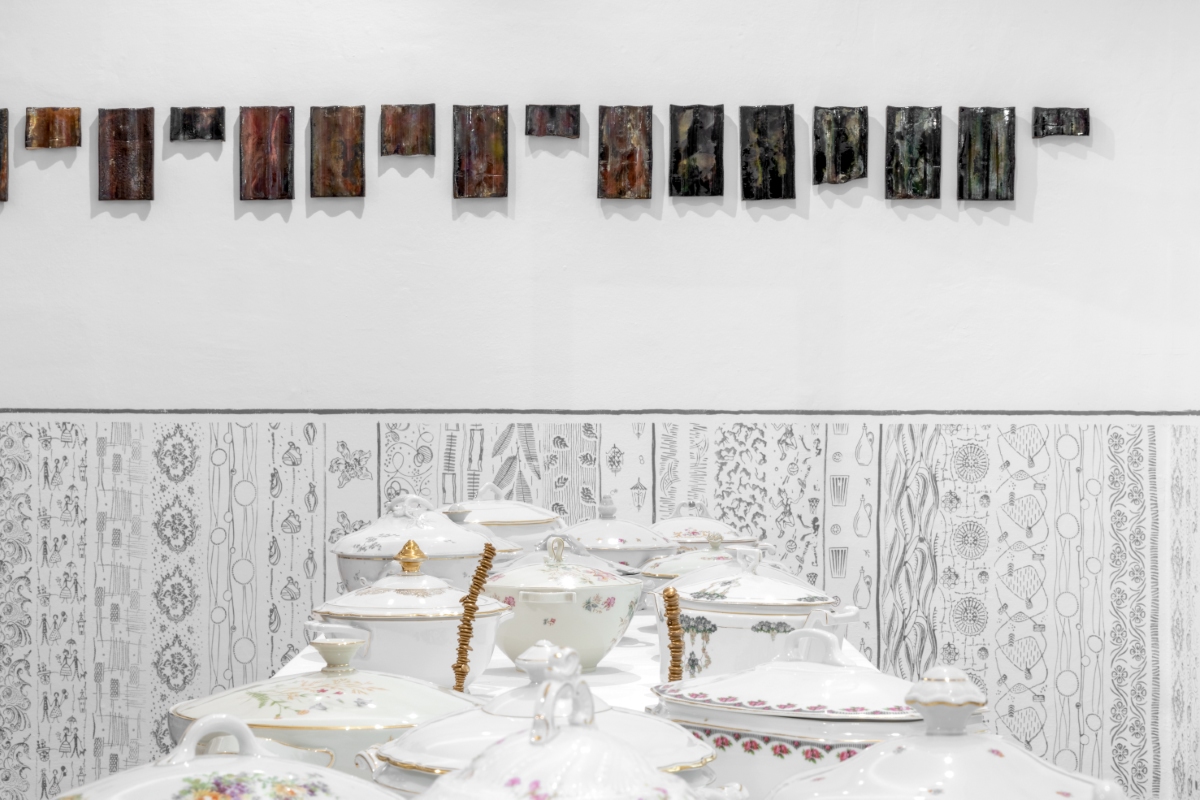
Just as other forces act on clay beyond the shaping hand, Julian Burchia‘s (*1989) Bewegtes Blau (Blue in Motion) (2018) explores how time and chemical processes leave their mark. The work consists of 30 individual impressions of roof tiles, their colors shifting from shimmering copper to deep luminous blue – the result of oxidation in the Raku technique, in which the firing time of each object was deliberately extended by ten seconds. Hung in a row, the tiles evoke the changing hues of the horizon during the “blue hour,” when the sky transforms from moment to moment. The controlled timing in the firing process produces similarly subtle variations, creating a dialogue between natural and technical rhythms.
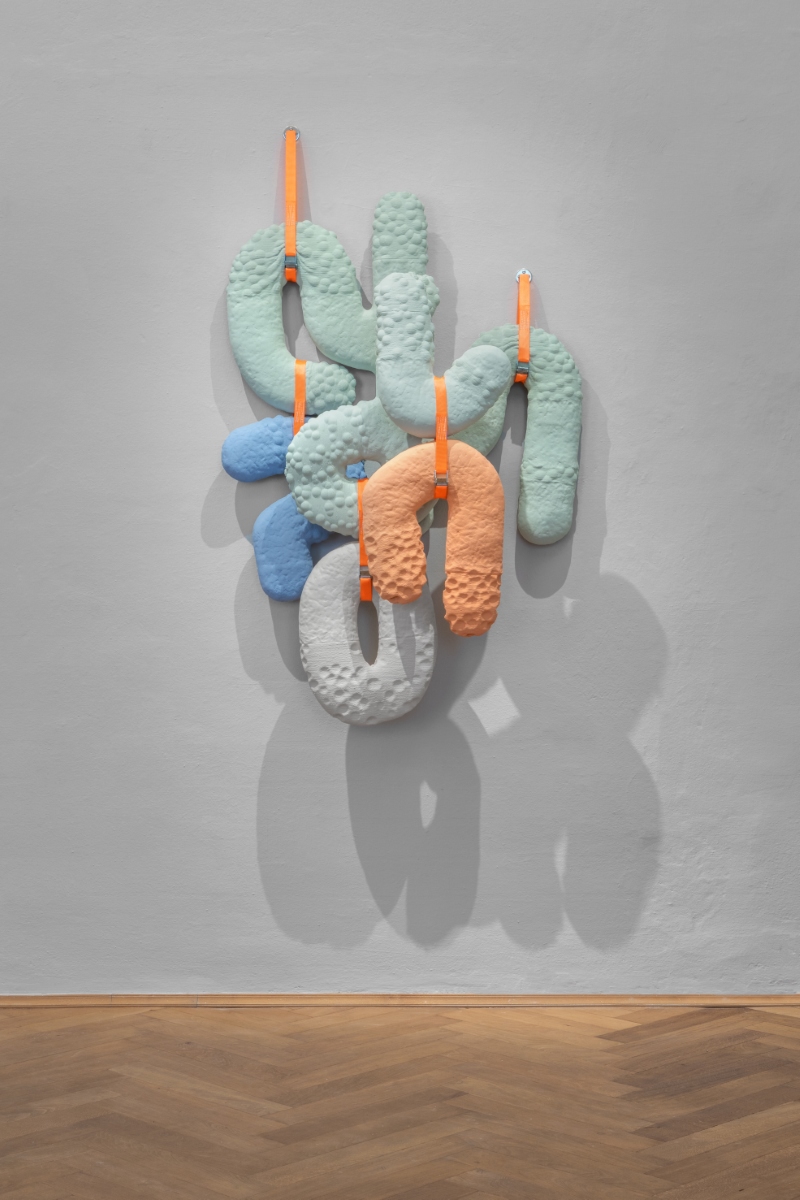
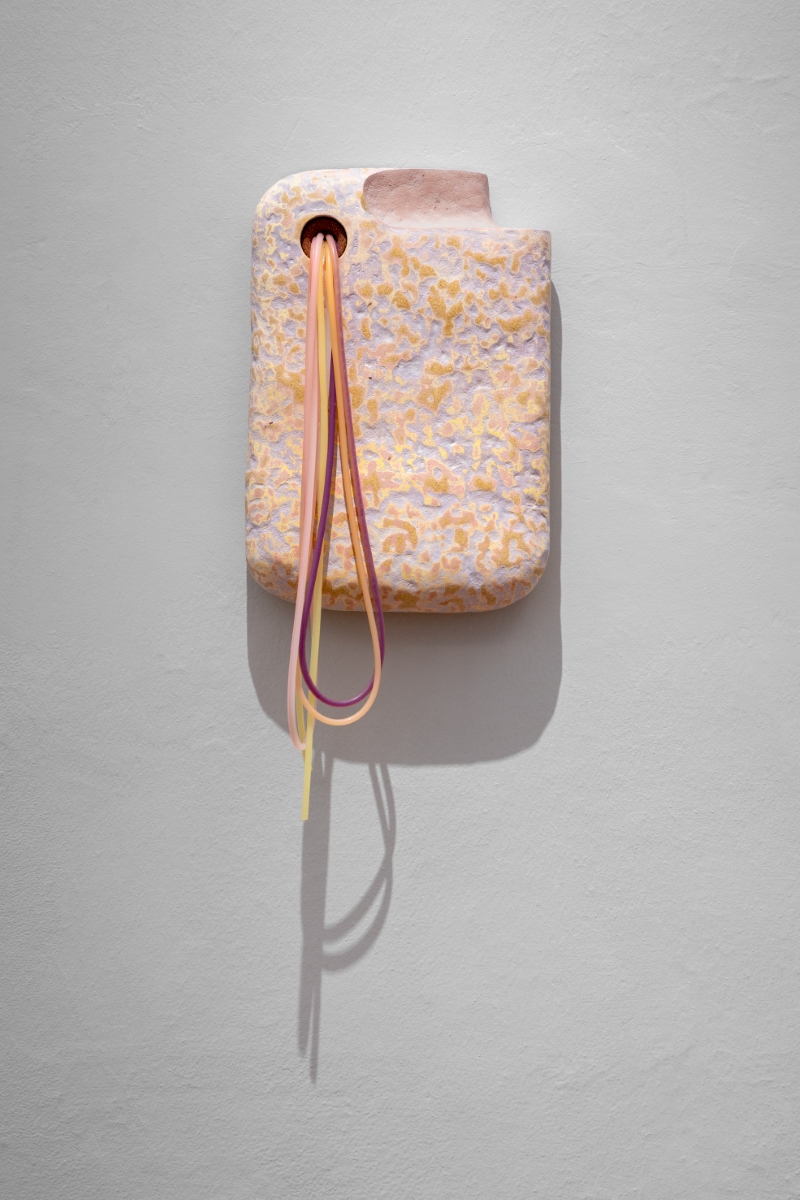
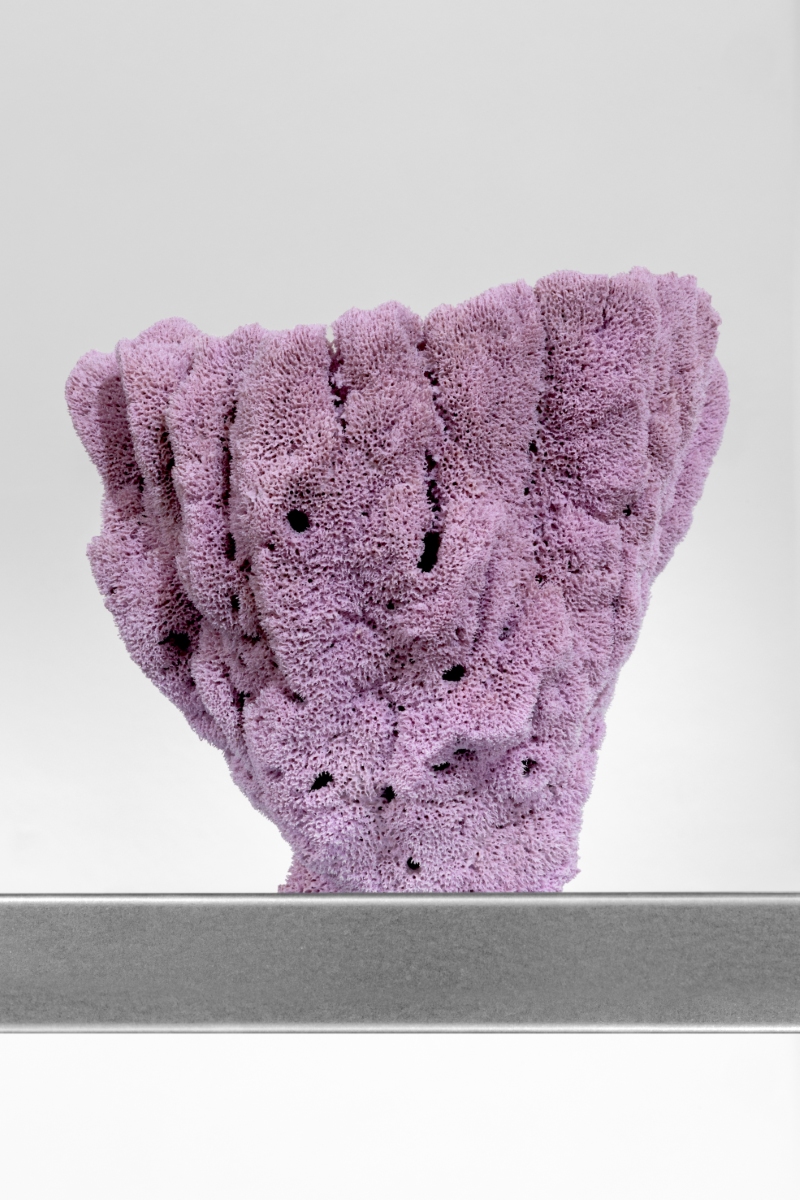
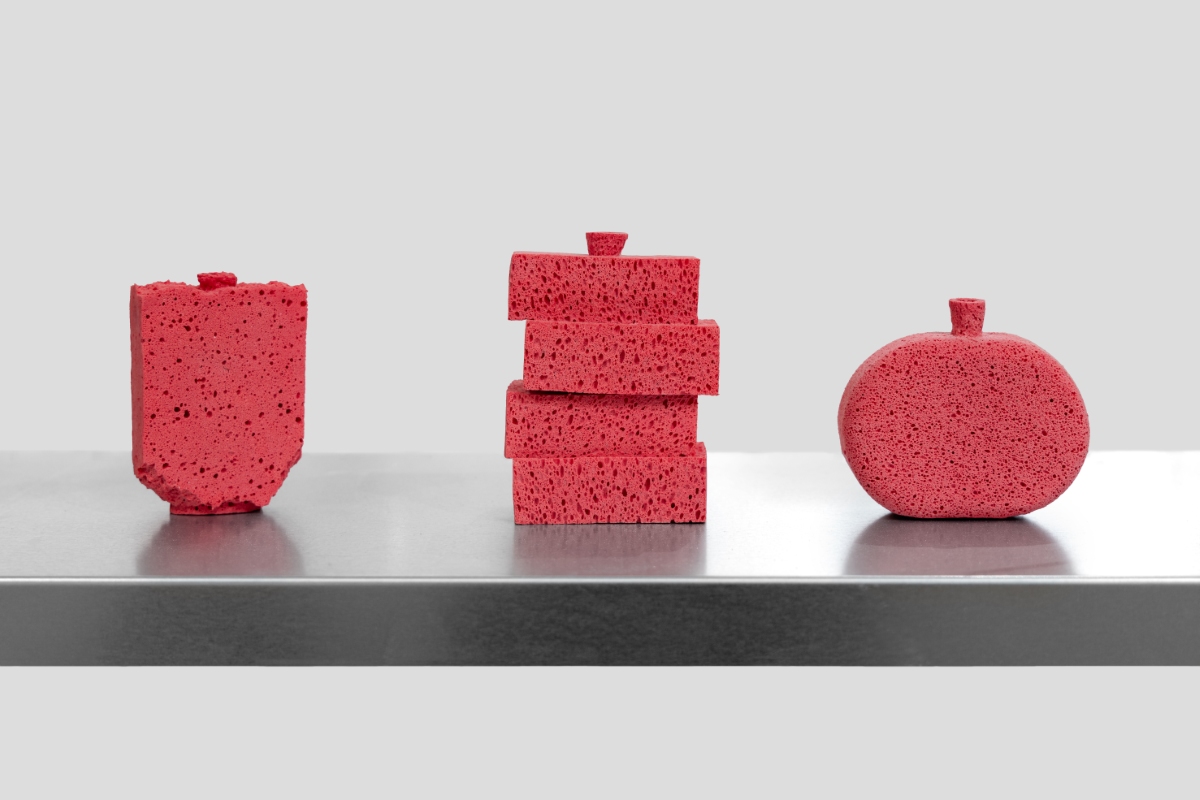
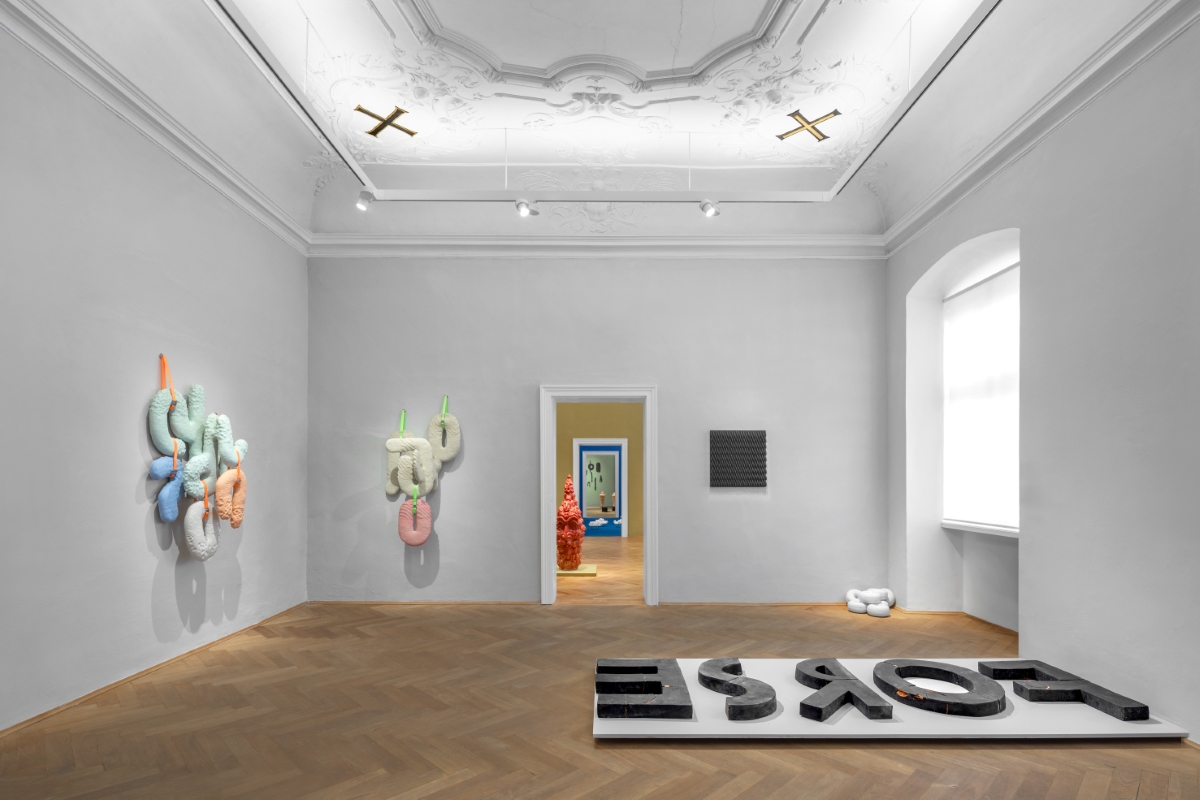
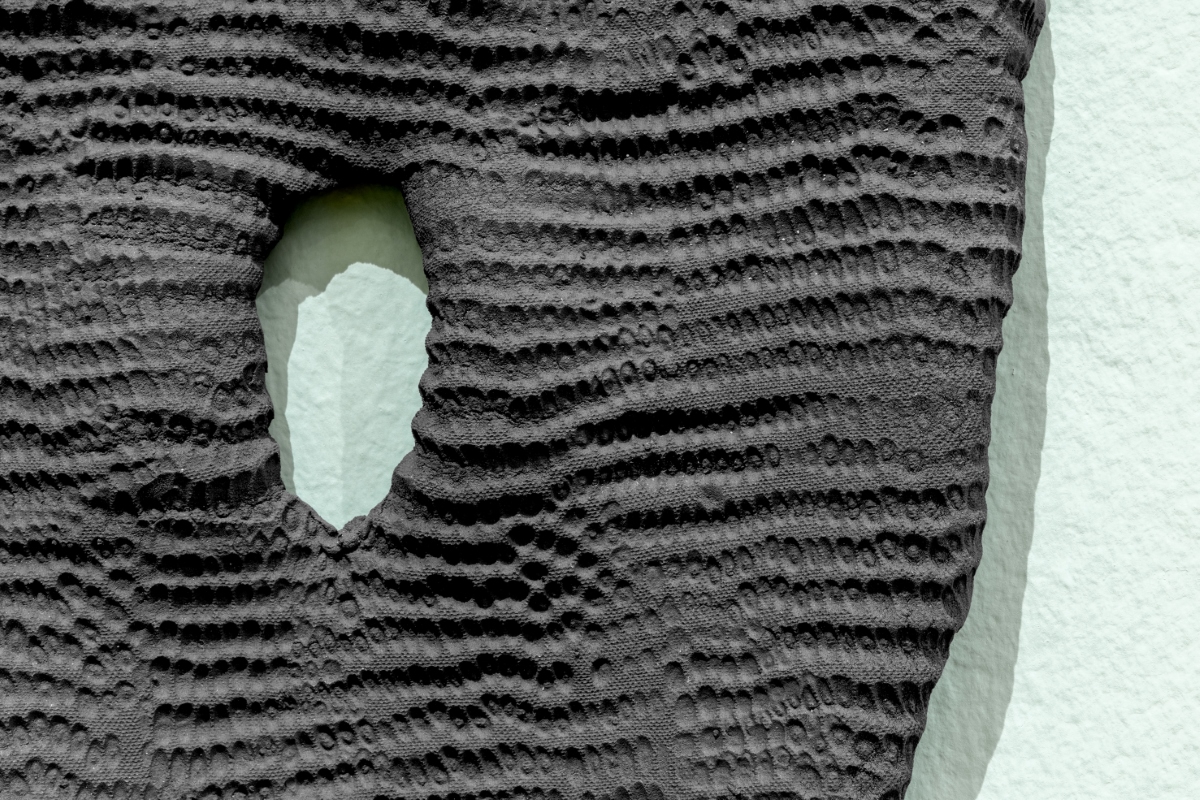
In the following rooms, the exhibition revealed how contemporary ceramics deliberately challenge and subvert expectations of materiality. Beate Gatschelhofer (*1994) created large-scale wall compositions that merge hand-building techniques with 3D printing. The pastel-colored forms of her series Verzögerung als schlechter Zeitvertreib (2023, 2024), connected by neon straps, point to non-linearity and to processes in which progress unfolds through detours, pauses, and repetitions. The forms appear to sink into the straps, giving an impression of softness despite their ceramic material. Helene Kirchmair (*1981) likewise plays with this shift in perception, transforming what is originally soft and pliable into its opposite. Her Salvagente (2018), a group of small porcelain lifebuoys stacked in a corner, turns a rubbery object into something solid, fragile, and unexpectedly delicate. In her wall piece Velvet (2018), Kirchmair continues this exploration of material confusion: arranged into a pictorial object, cup handles evoke a textile structure, deceiving the eye and reimagining what ceramics can be.
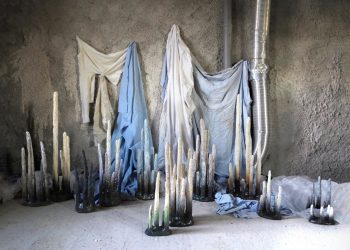
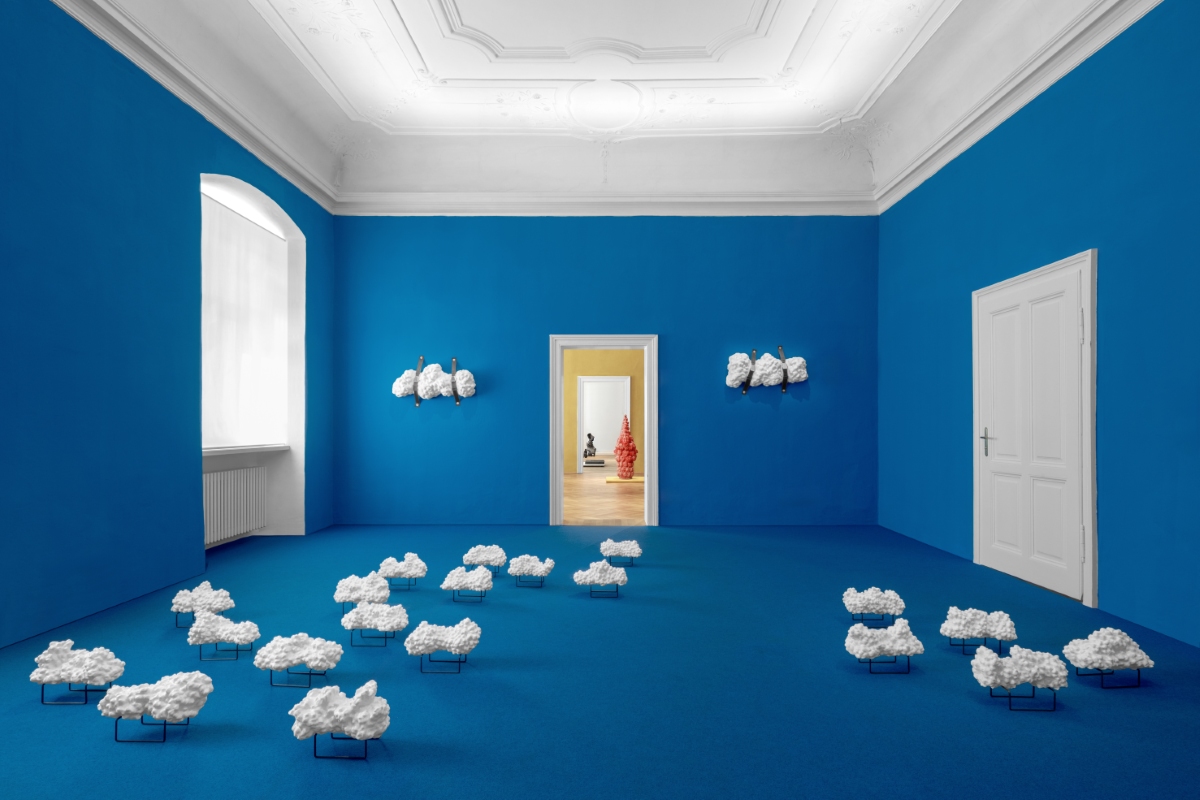
The exhibition returned to the theme of material instability with Frank Louis‘ (*1966) works Cumulus humilis (2017) and Cumulus mediocris (2015). Entering a room painted deep blue, visitors found themselves among a field of small clouds perched on fine steel structures. Clouds are long-standing symbols of imagination and projection; everyone knows the experience of watching formations shift from animals to fantastical beings in seconds. They stand for transience, yet Louis renders them solid and fixed, playing with this contradiction. And clouds, one might think, should float – but here they rest on the ground, further destabilizing expectations. In German, the expression “Schäfchenwolken” links sheep and clouds, and indeed these ceramic cloudlets could almost be read as a small herd. Each cloud bears the name of the high-pressure system that passed over Austria, Louis’ home country, during its creation, tying each one – Ingrid, Kathrin, Britta – to a specific moment in time. Additional clouds hang on the walls, strapped down by safety belts. With gentle humor, the work restrains a symbol of freedom, hinting at the human desire to grasp the ungraspable, to preserve the transient, to resist nature’s fundamental truth: that everything is in flux.
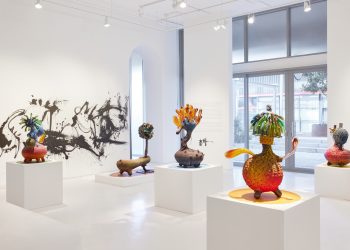
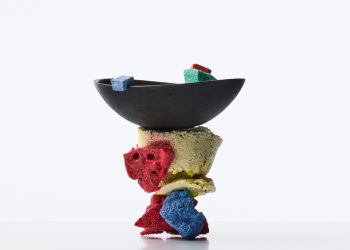
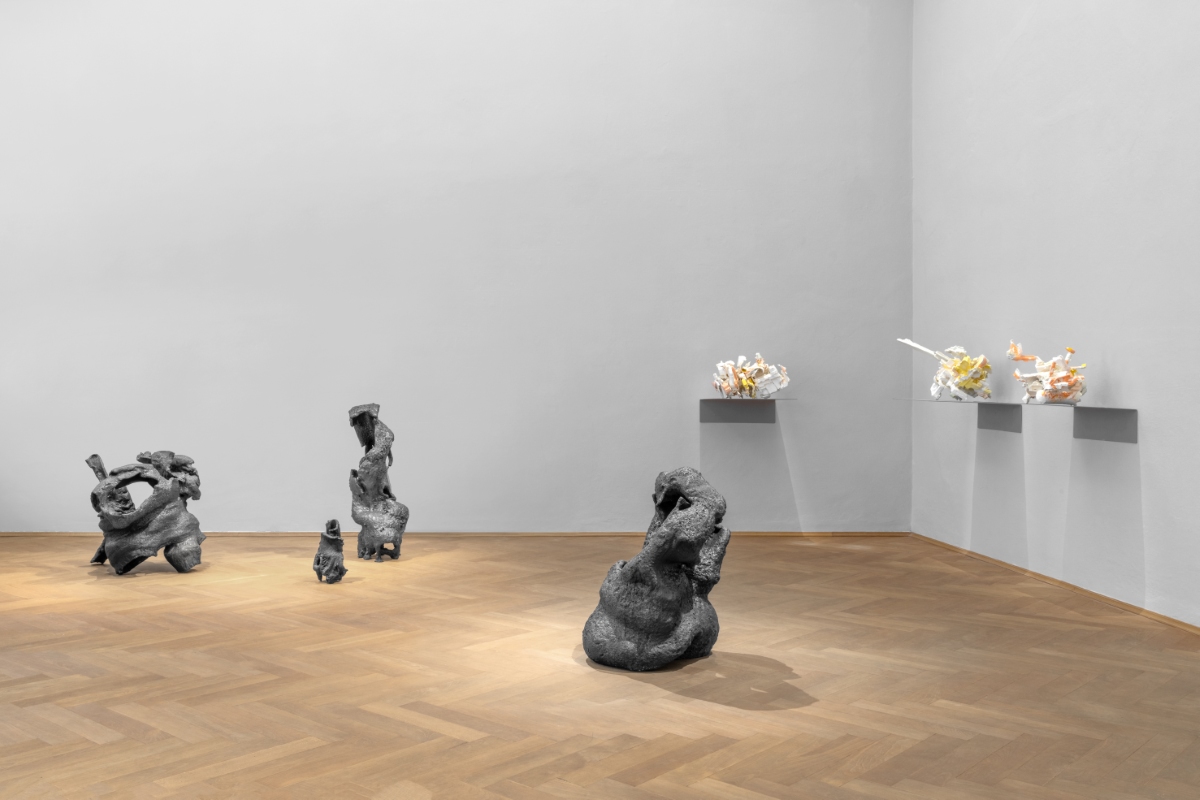
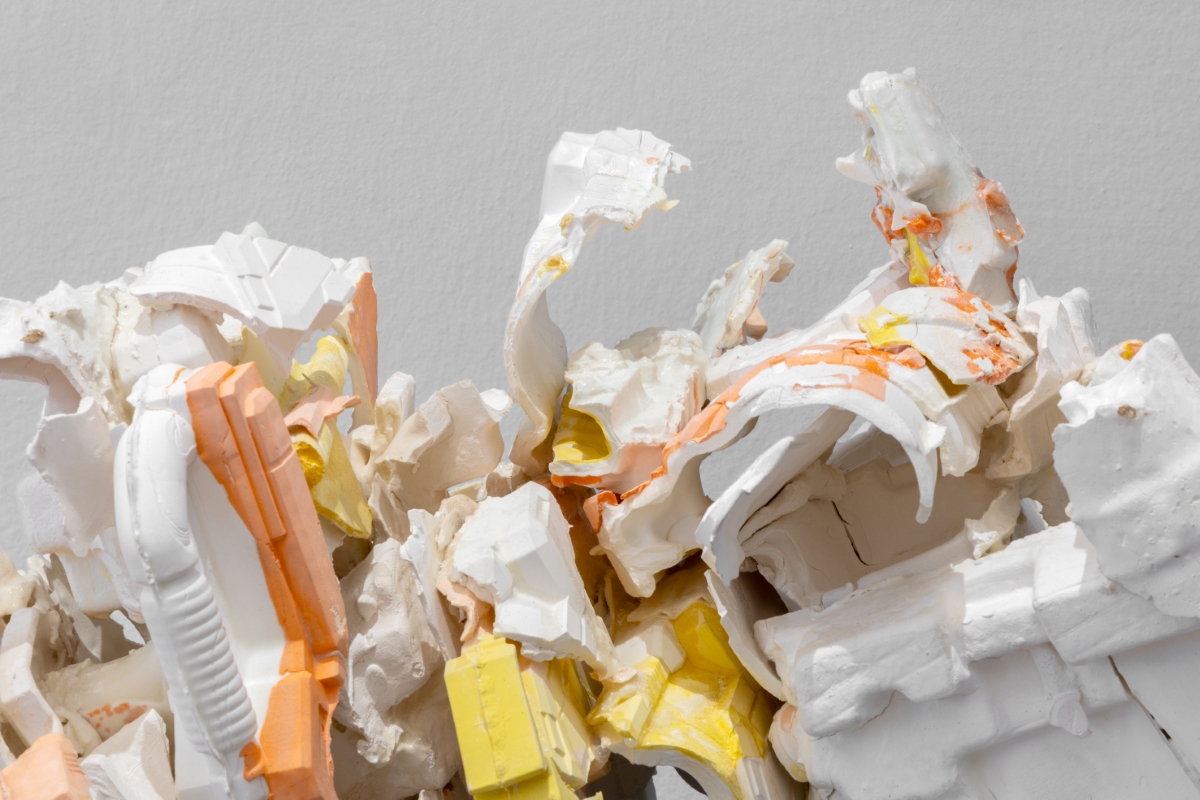
This notion of continual transformation also resonates with Tom Marseiler‘s (*1989) porcelain sculptures from the neophyt nectar series (2025). These constructed assemblages carry within them the processes of joining, breaking, and reordering. They are animated by contrasts – fine and coarse structures, colorless and pastel elements – revealing moments of experiment and inquiry. Rather than mastering the clay, the works expose its shifting potential. They evoke transformation and ephemerality, reminiscent of futuristic organisms that might begin to move at any moment. A similar creatureliness inhabits Marseiler’s Bandits (2022–25), dark stoneware sculptures whose rough, almost volcanic surfaces evoke a primordial materiality. Positioned directly on the floor, they require visitors to bend down to meet them at eye level; their presence is archaic, intimate, and quietly affecting. These sculptures formed one of the many highlights of the exhibition.

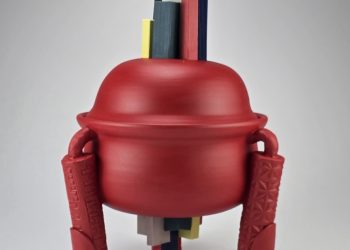
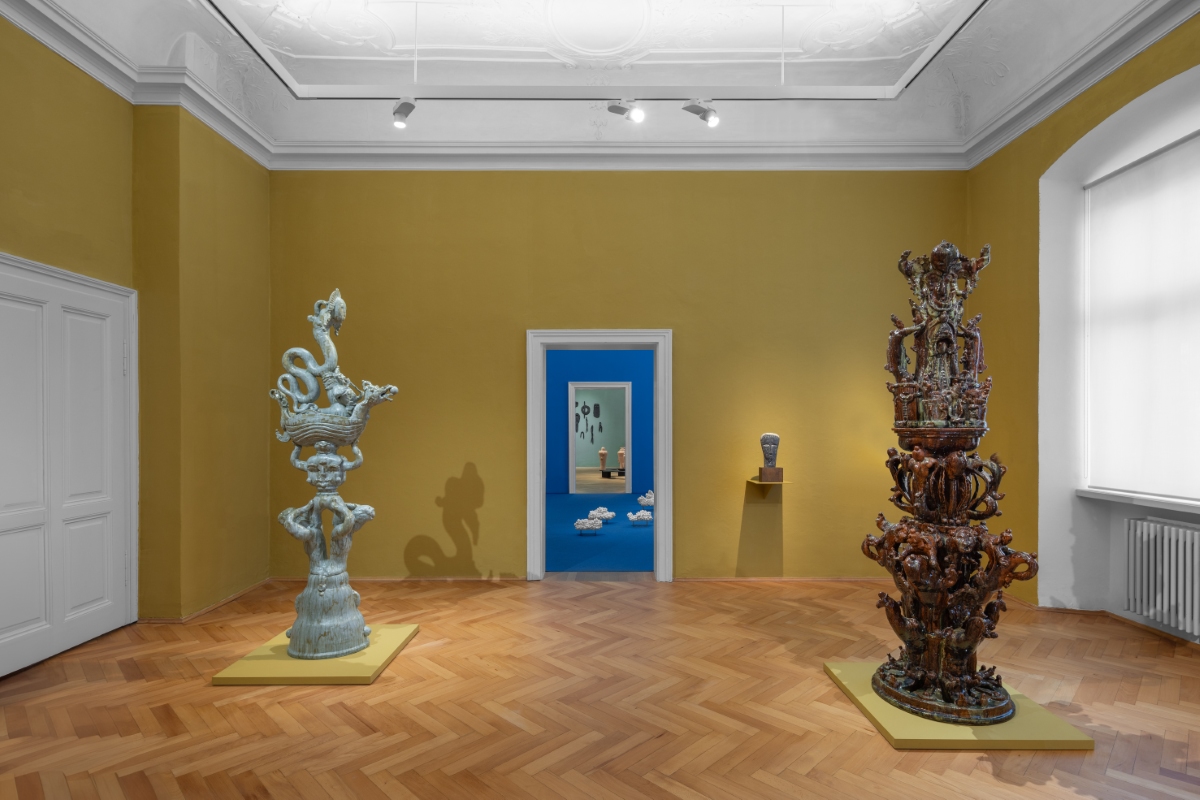
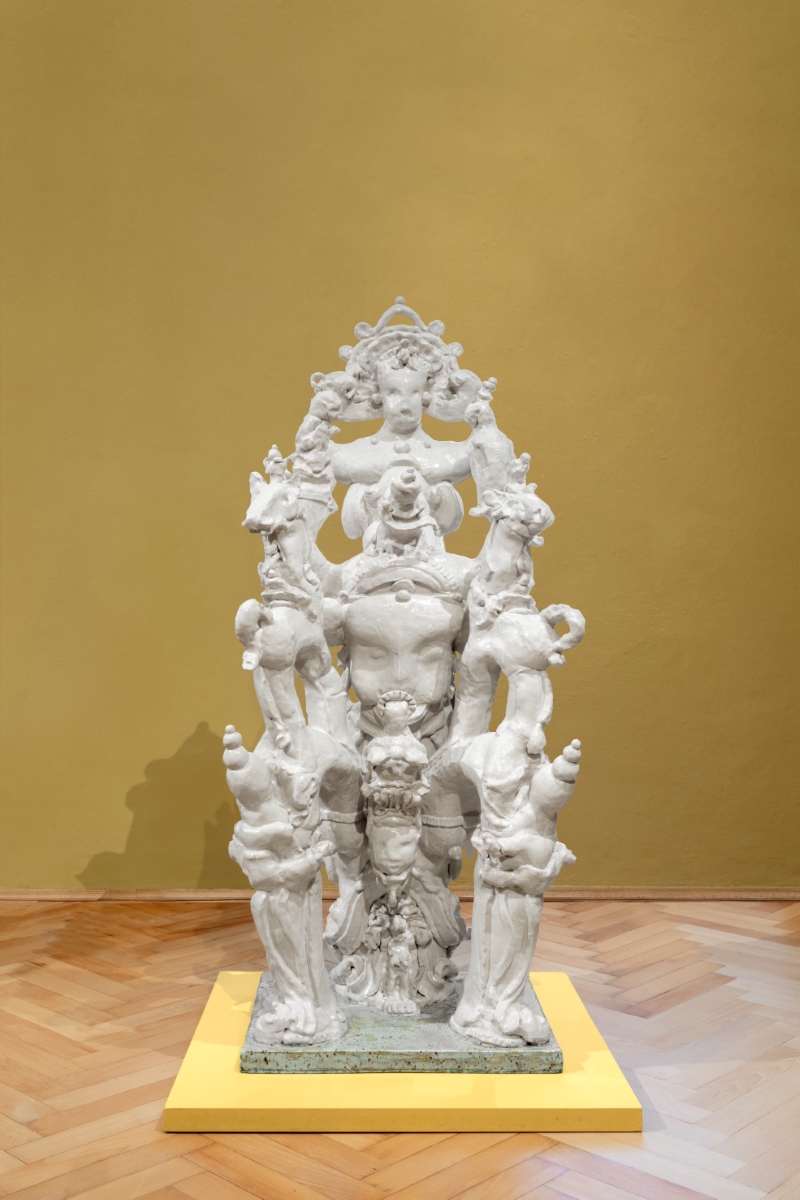
Another major focal point was the work of Elmar Trenkwalder (*1959). His vertically striving ceramic structures exceed the dimensions of conventional kilns and evoke the ornamental richness of Asian temples as well as the exuberance of Baroque basilicas. In the catalogue, they are described as “baroque fusions of thought” brought by the artist to “mental vividness.” Even the smaller-scale pieces shown here inspire awe: layer upon layer reveals extraordinary technical mastery and an imaginative choreography of beings and ornaments. Biomorphic shapes merge with architectural elements; everything grows together. The glaze reinforces this cohesion, making the sculptures appear as if poured in a single gesture and heightening their vitality. Diverse cultural influences, memories, mythical creatures, animal forms, and ornamental motifs blend into a single entity, prompting reflections on origins, interconnectedness, and the idea that we are part of a vast whole composed of countless long-preceding elements. The experience recalls standing before historical architectural masterpieces – temples or cathedrals – marveling at human imagination and craftsmanship.
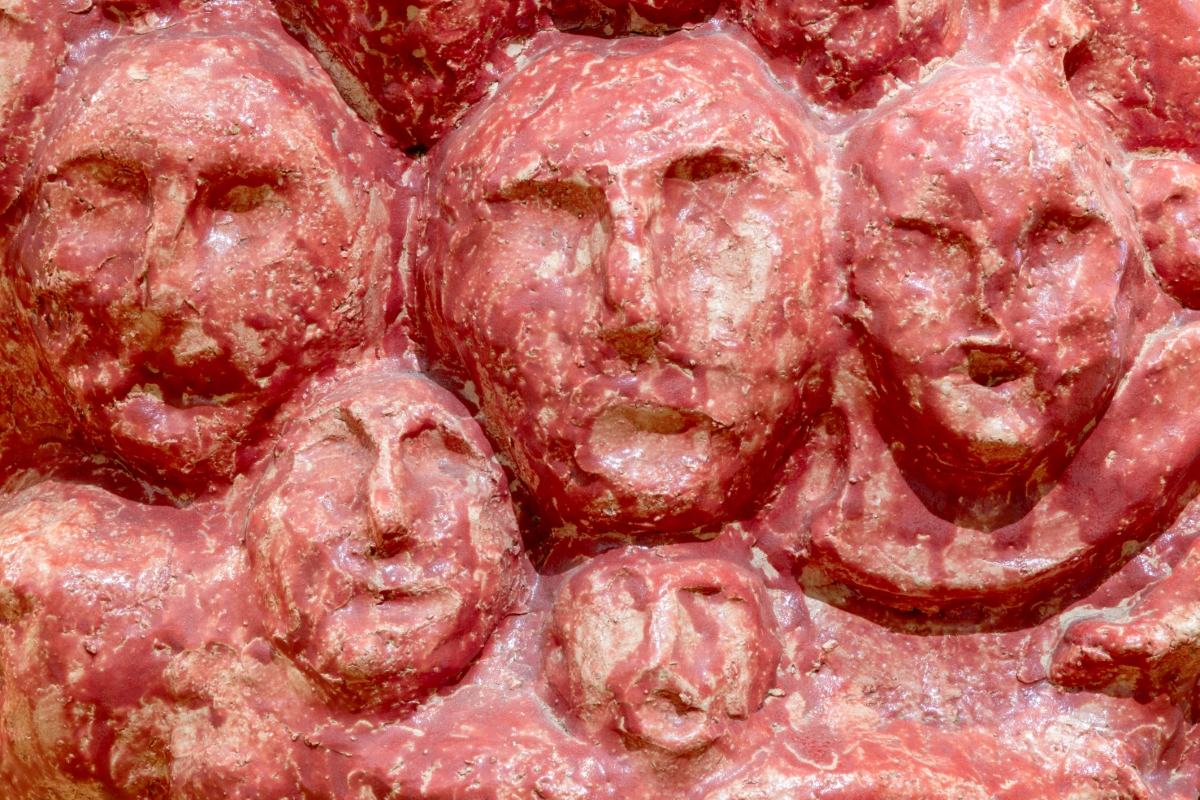


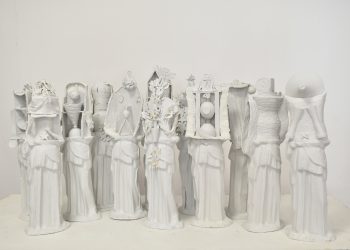
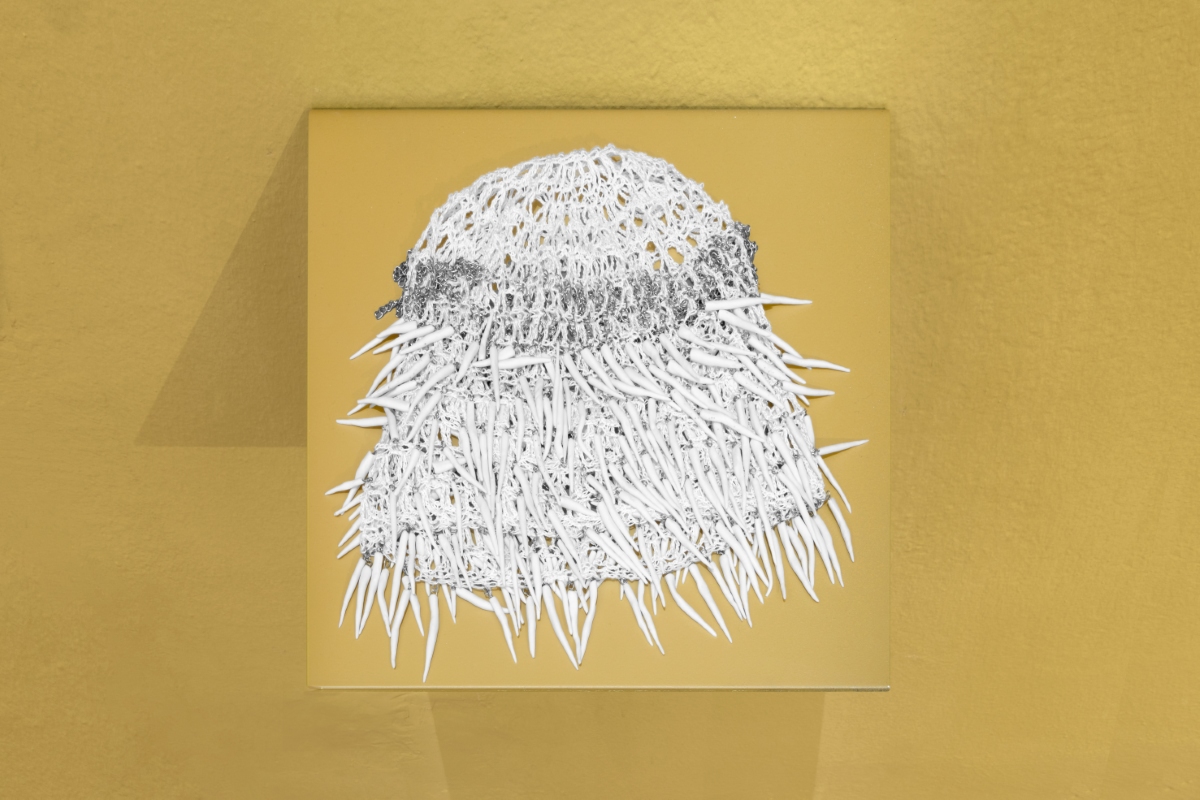
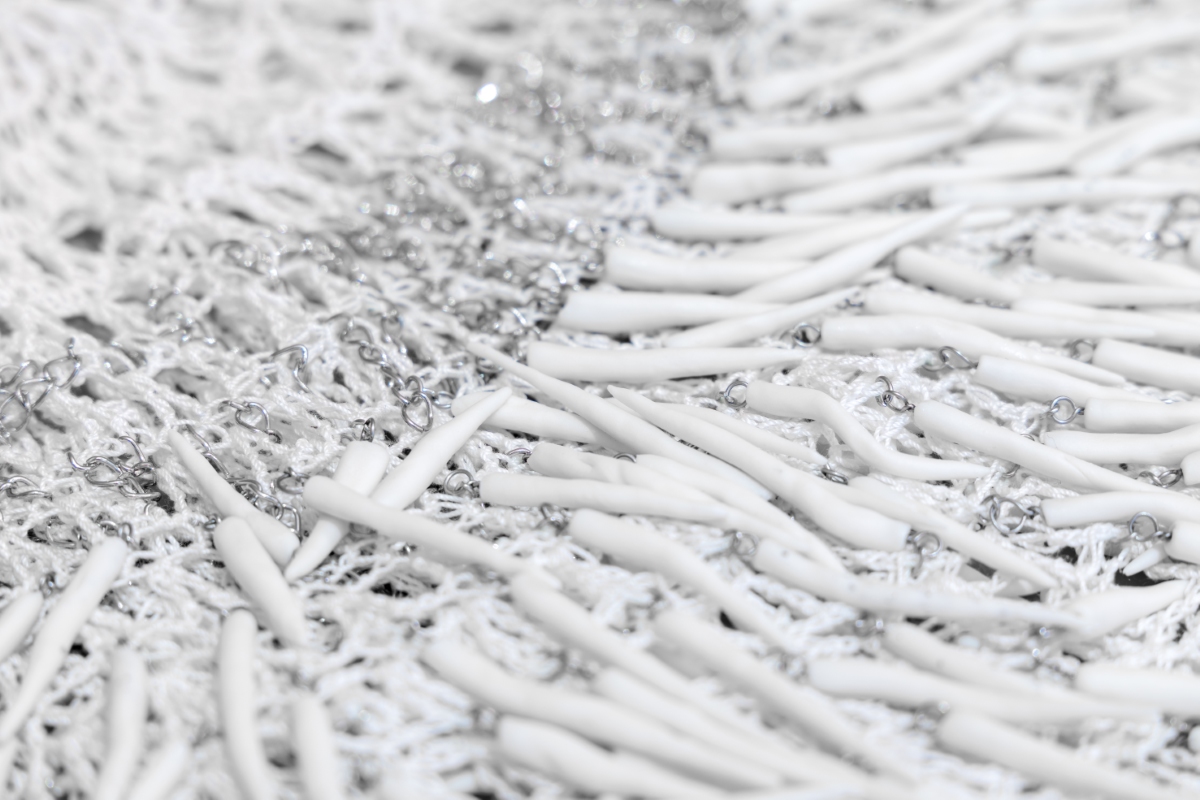
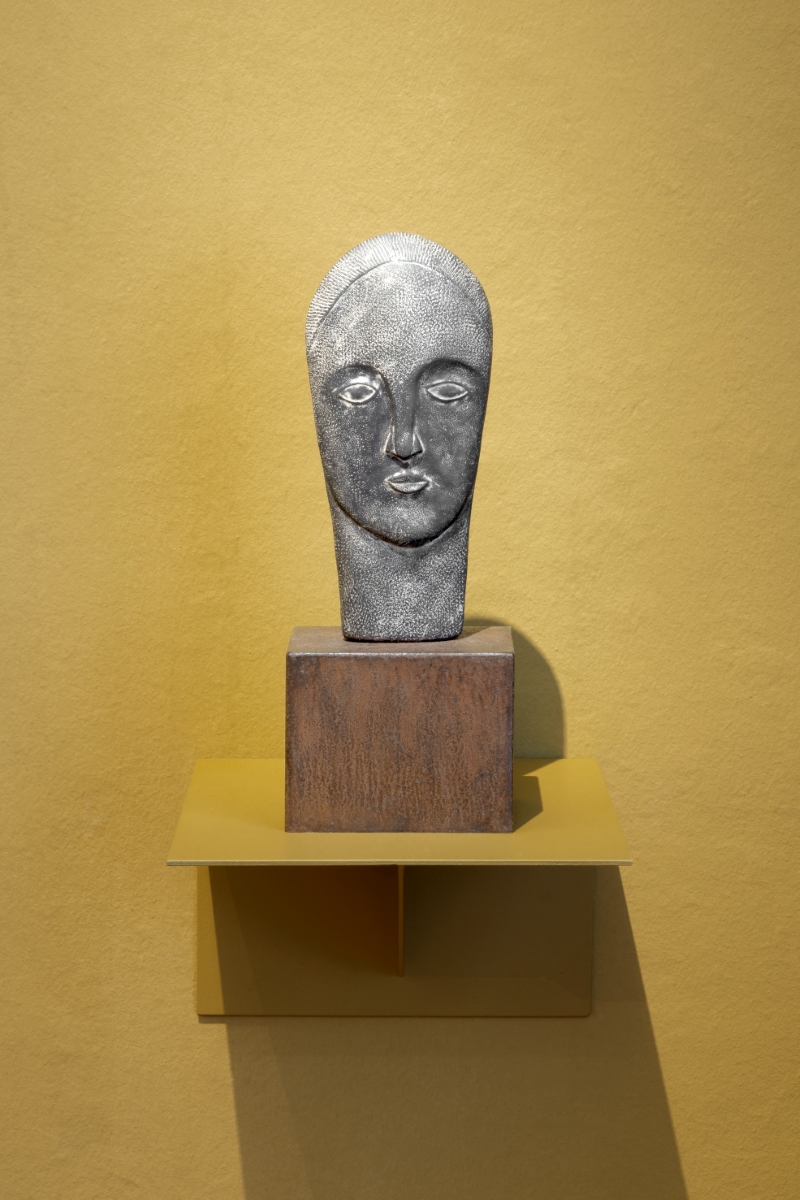
In contrast to Trenkwalder’s imposing ceramic towers stood the work of Edith Berger (*1997). Here, wonder arose not from scale but from dedication to the small. Ab-wesen (2024) consists of a delicately hand-crocheted headpiece into which tiny wedge-shaped porcelain elements are integrated. It forms a fragile mesh of yarn, wire, and porcelain, quietly asserting its presence on a small wall-mounted shelf. The piece recalls forms of head adornment found across many cultures. The head sculptures Frauenkopf (2023) by Sergio Sommavilla (*1951), similarly modest in scale, also possess a distilled expressiveness. They evoke the character of archaic artifacts encountered in ethnological displays. Sommavilla’s faces feel classical and timeless, their reduction lending them an elemental, ever-present quality. Traces of modeling animate their surfaces, while layers of engobe add further depth.
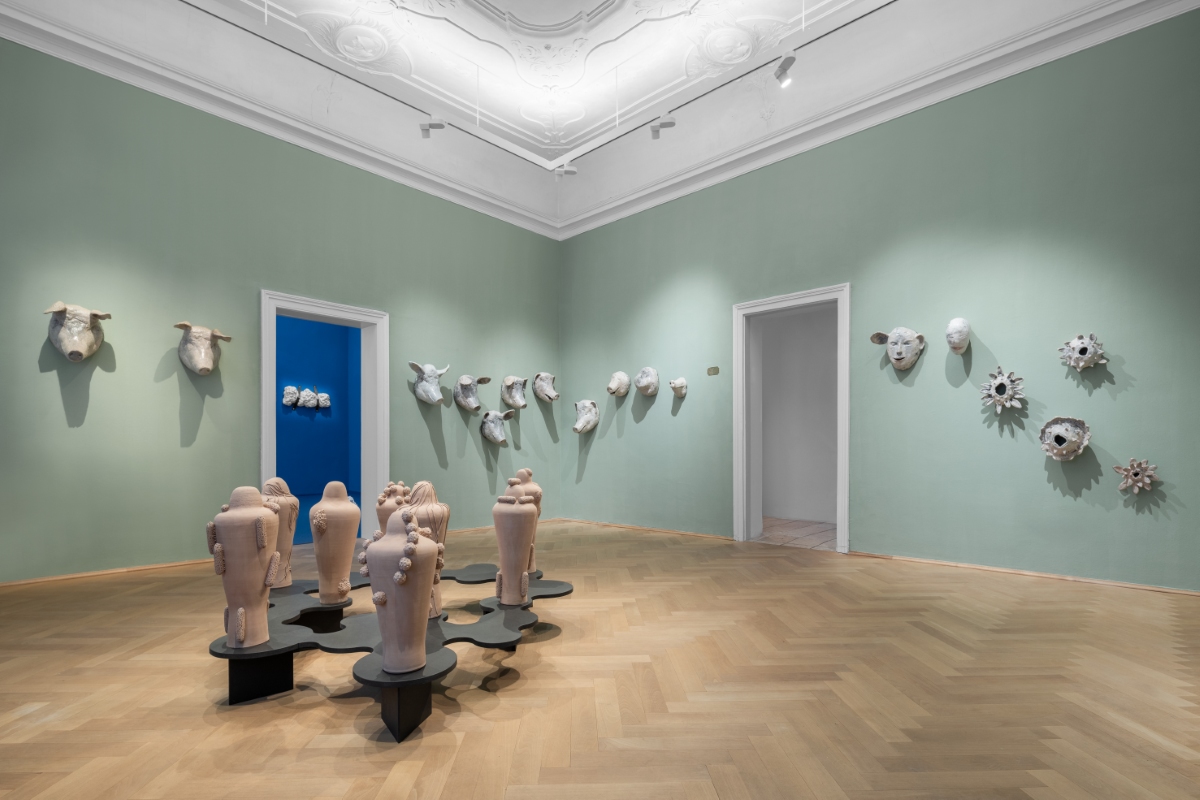
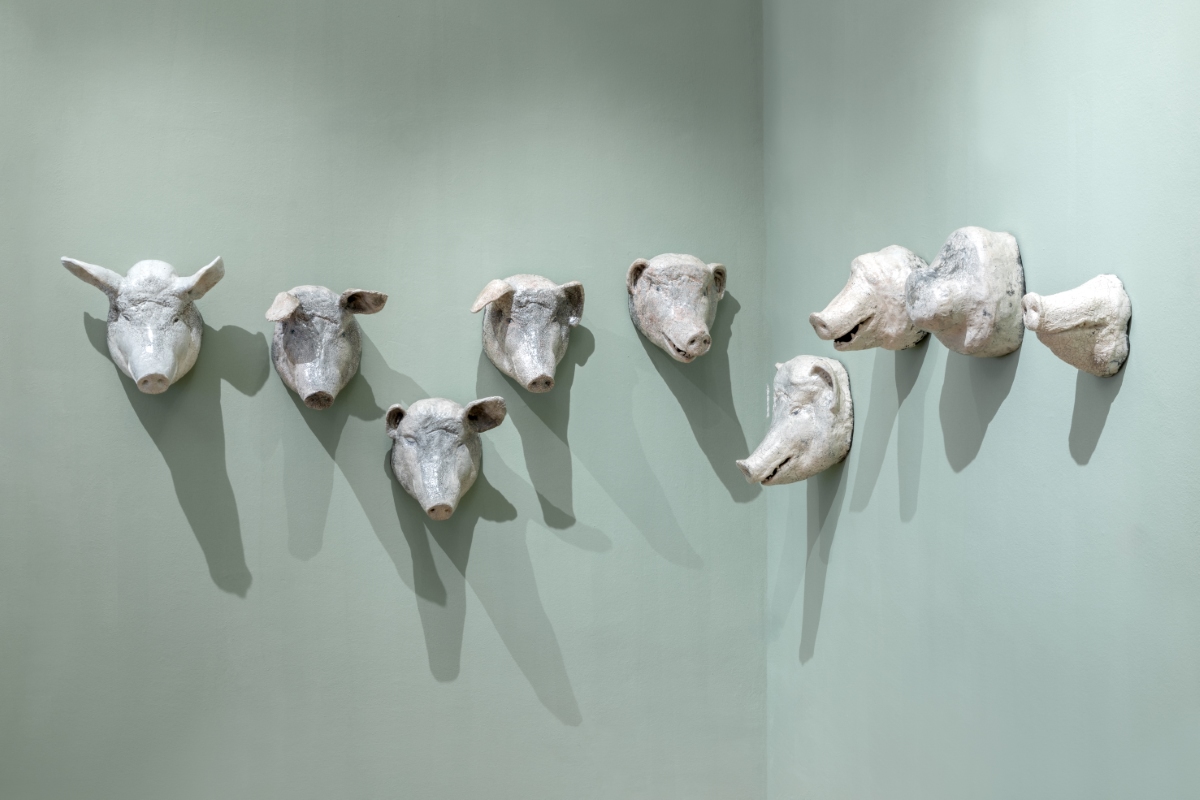
This reduction and careful modeling found a different expression in the work of Clara Mayr (*1993). Her plaster casts of pigs undergo subtle transformations, shifting from animal to human forms. The pig heads of Fockenkopf (2025) derive from casts taken from the two sows with whom the artist lived for several years. The heads reproduce the animals’ features with exact fidelity. Fired using the Raku technique, their surfaces bear cracks, scorch marks, and irregular glazes, giving them a vivid, almost living presence. In the subsequent wall pieces, subtle changes appear: the shape of the ears shifts, eyelashes emerge, a gentle smile spreads across the faces – gradually giving the heads a distinct expression that hints at emerging human features. As the series Mutationen (2025) progresses, these mutations continue until the heads take on floral or seed-like forms, merging natural and human elements in uncanny yet poetic ways.
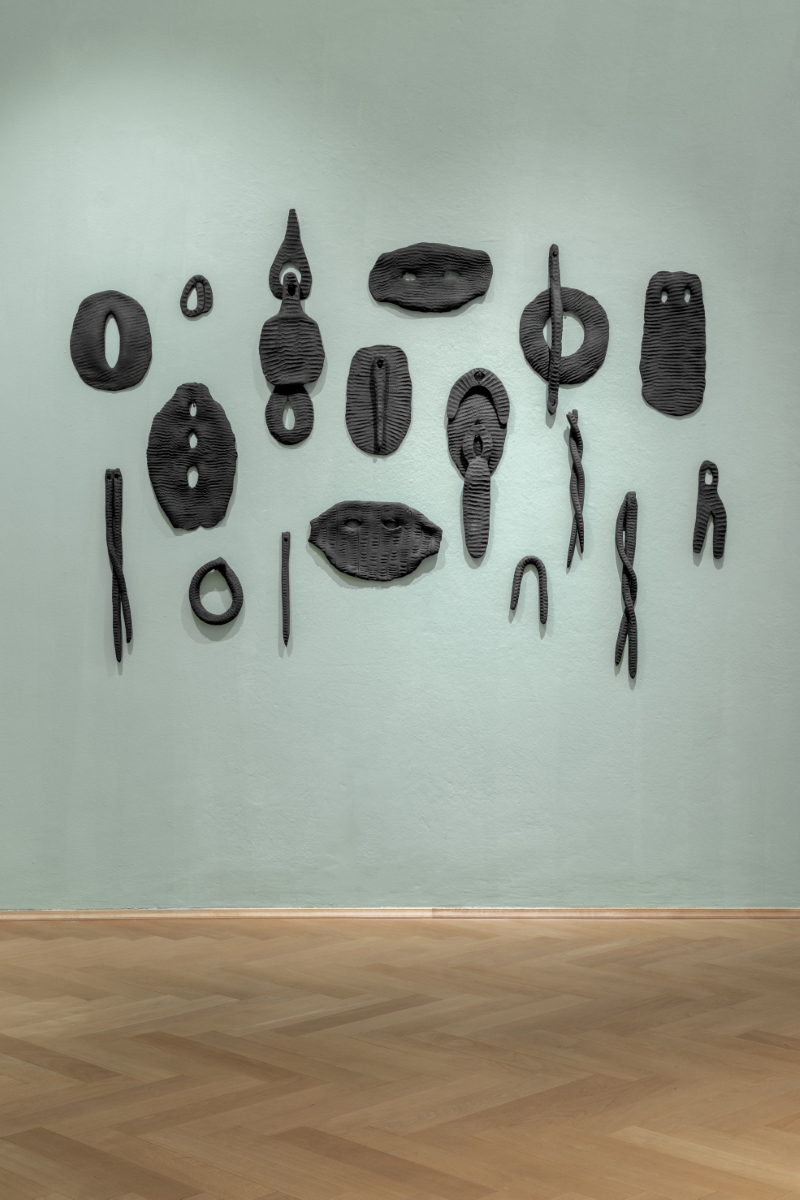
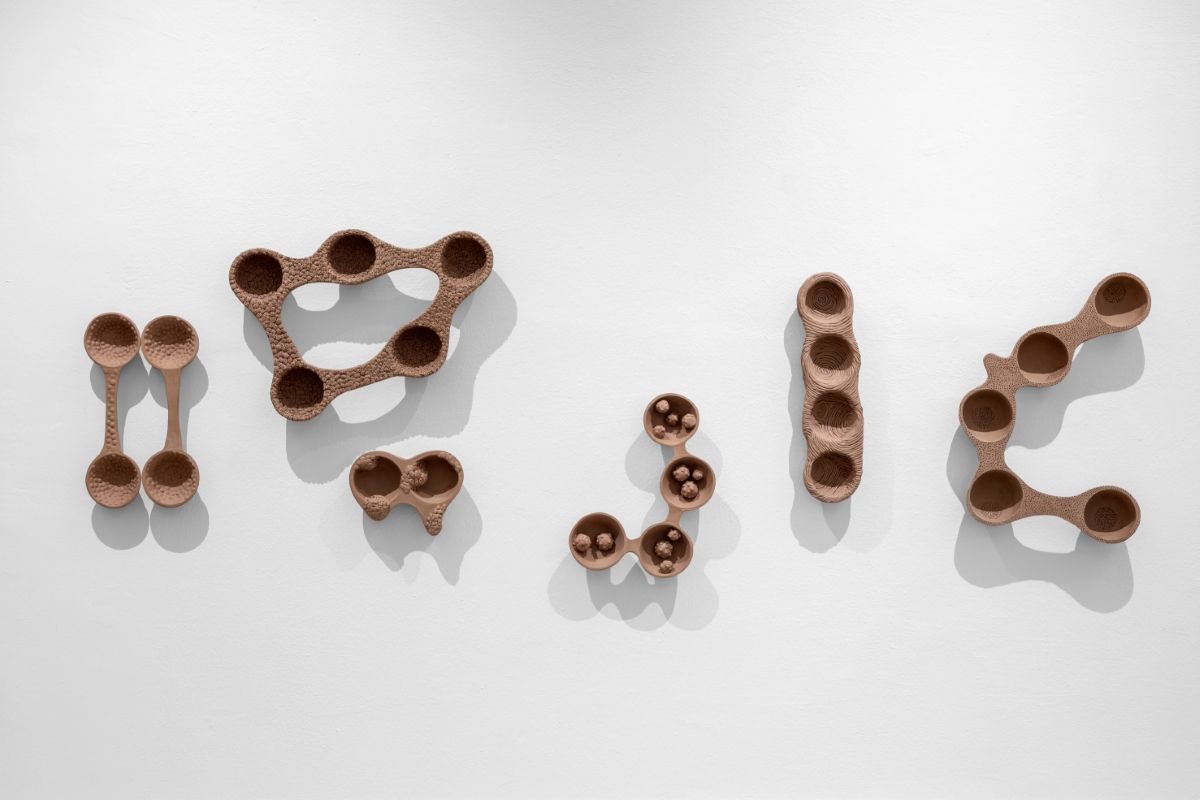
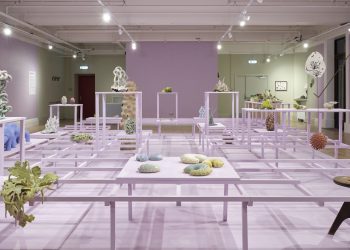
Formally, these evolving shapes almost segue into the work of Lucia Pizzani (*1975), although her material and visual language clearly diverge from Mayr’s. In Pizzani’s wall installation Escritura (2020), some forms recall the floral realm or leaf-like structures, while others evoke tools or masks. Their surfaces carry the imprint of dried corncobs. Playful and archaic at once, the composition brings together shapes drawn from nature and culture – forms become signs, and signs become carriers of meaning, even as their significance remains open. A comparable openness characterizes Die Wege entstehen im Gehen (2025) by Veronika Thurin (*1964). The eight sculptures displayed on a wooden platform share a similar overall structure, yet each is distinguished by unique surface decorations and applications. Some of these additions subtly resemble microbial, fungal, or bacterial growth spreading across a terrain, creating a quiet resonance with the nature-inspired forms elsewhere in the room. The sculptures exude an air of mystery, as if bearing secret messages that resist deciphering.
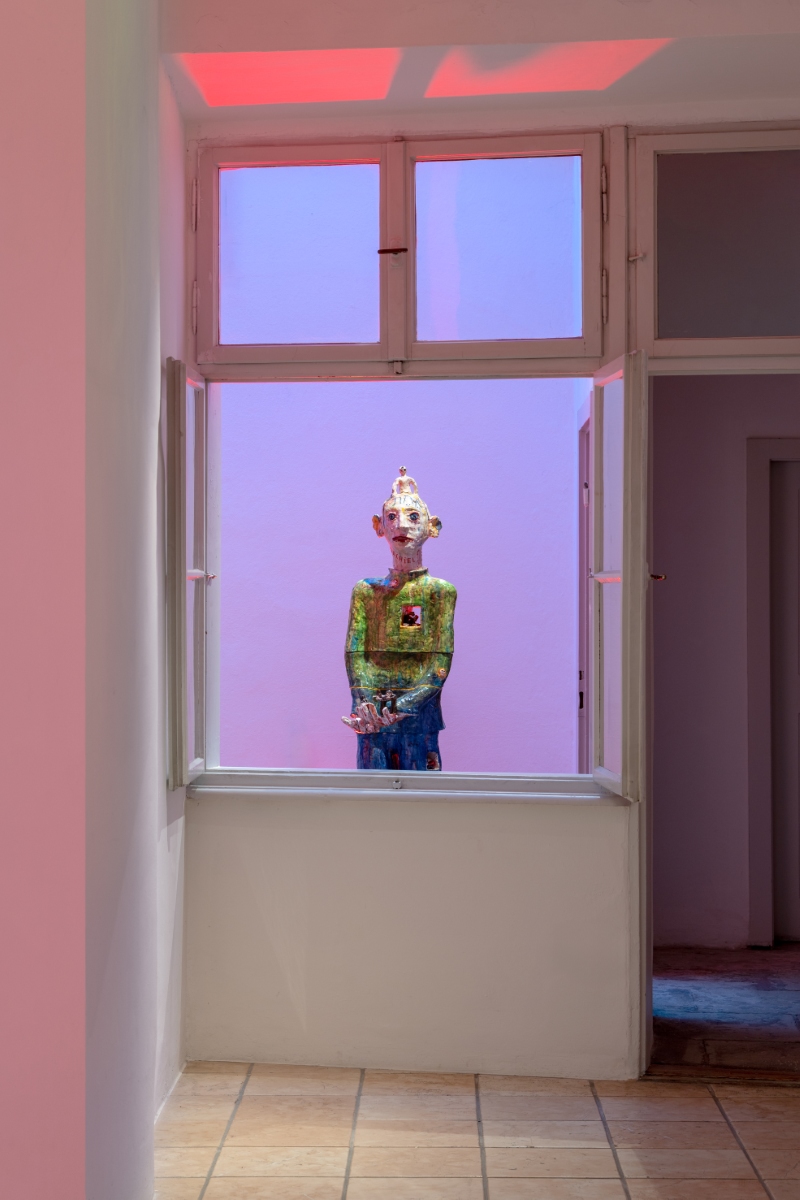
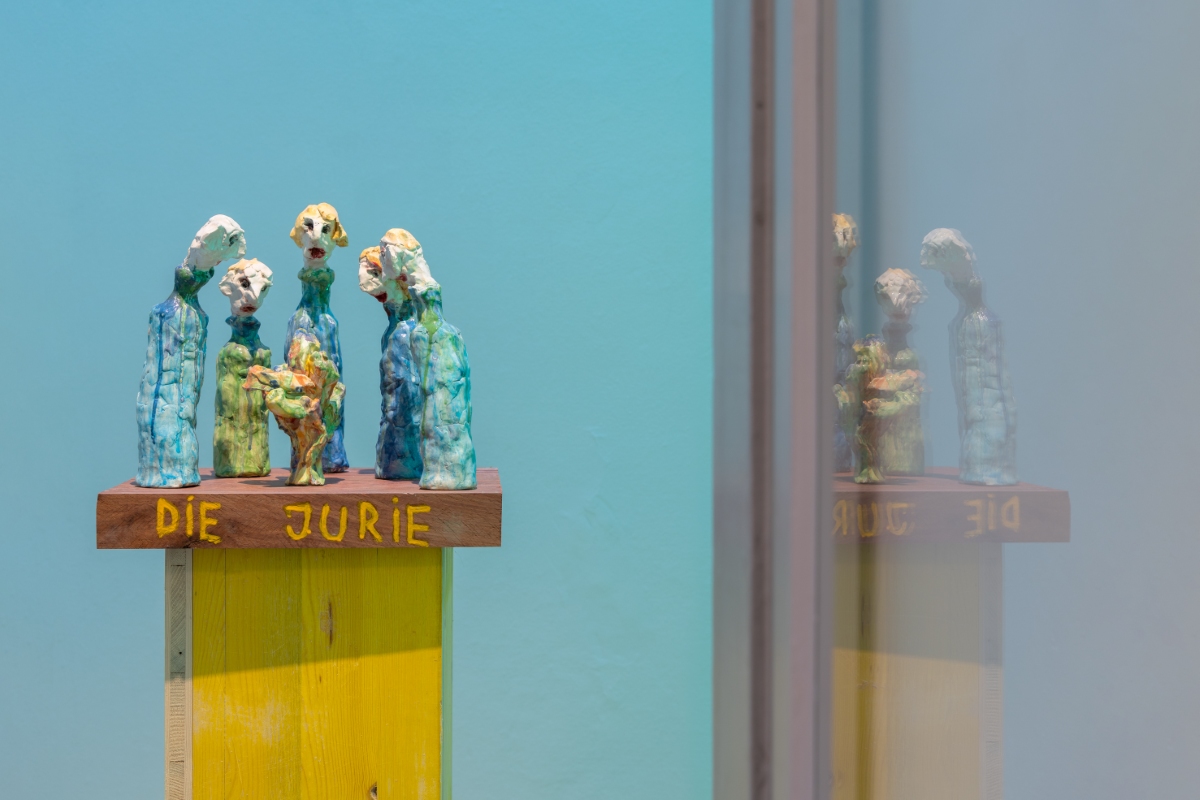
As the exhibition drew to a close, the note of humor and irony that had been present from the beginning came to the fore in the work of Josef Rainer (*1970). In the shelving display at the start of the exhibition, visitors encountered the playful series My private art history: Klein Josef bestaunt ein Werk von… (2024–25), in which Rainer engages wittily with art history. A miniature “little Josef” sits opposite towering figures of contemporary art – such as Sarah Lucas, Thomas Schütte, or Antony Gormley – marveling at their works, setting the tone for the light-hearted commentary that threads through Rainer’s practice. This humorous approach culminates in Die Jury (2023), presented as the final work in the exhibition, inside a cabinet illuminated by rhythmically changing colored lights. Five bottle-shaped figures, formed in Rainer’s unmistakable style, gather in a semicircle, scrutinizing a central abstract sculpture with quiet, comic seriousness. Their verdict remains open, playfully reflecting the decision-making processes of the art world and raising the perennial question of how objective such judgments can truly be. This playful scenario resonates with the exhibition itself: just as Rainer’s jury deliberates, the curators faced the challenge of selecting works from a vast field of possibilities. Their choices – evident in the rich diversity on display and the meaningful dialogues between works – speak for themselves. The exhibition not only highlighted the versatility of the ceramic medium but also demonstrated a refined curatorial sensibility. It presented a rich and well-balanced overview of contemporary ceramic practice – carefully assembled, engaging, and resonant.
Artists: Edith Berger, Julian Burchia, Maria Burger, Daniela Chinellato, Peter Chiusole, Maria Delago, Beate Gatschelhofer, Helene Kirchmair, Frank Louis, Tom Marseiler, Clara Mayr, Josef Rainer, Julia Schuster, Luis Seiwald, Sergio Sommavilla, Corinna Theuring, Veronika Thurin, Elmar Trenkwalder, Lucia Pizzini
Curators: Eva Gratl, Eleonora Klauser Soldá, Lisa Trockner
Katherina Perlongo (b. 1989 in Bolzano, Italy, lives in Berlin) is Curator at the KINDL – Centre for Contemporary Art in Berlin and co-founder of the curatorial collective CUCO – curatorial concepts berlin. Most recently, she was Director ad Interim and Curator of Outreach at Georg Kolbe Museum. Currently, she is researching topics at the intersection of contemporary art, craft and design.
Ceramics un-limited world was on view between August 29 and November 7, 2025, at Südtiroler Künstlerbund’s SKB Artes space in Bolzano, Italy.
Subscribe to Ceramics Now to read similar articles, essays, reviews and critical reflections on contemporary ceramics. Subscriptions help us feature a wider range of voices, perspectives, and expertise in the ceramics community.
Photos by Gustav Willeit