Anna Milczanowska: Blooming. A Story About Earth is on view at Craftica Gallery, Warsaw
June 24 – August 5, 2026
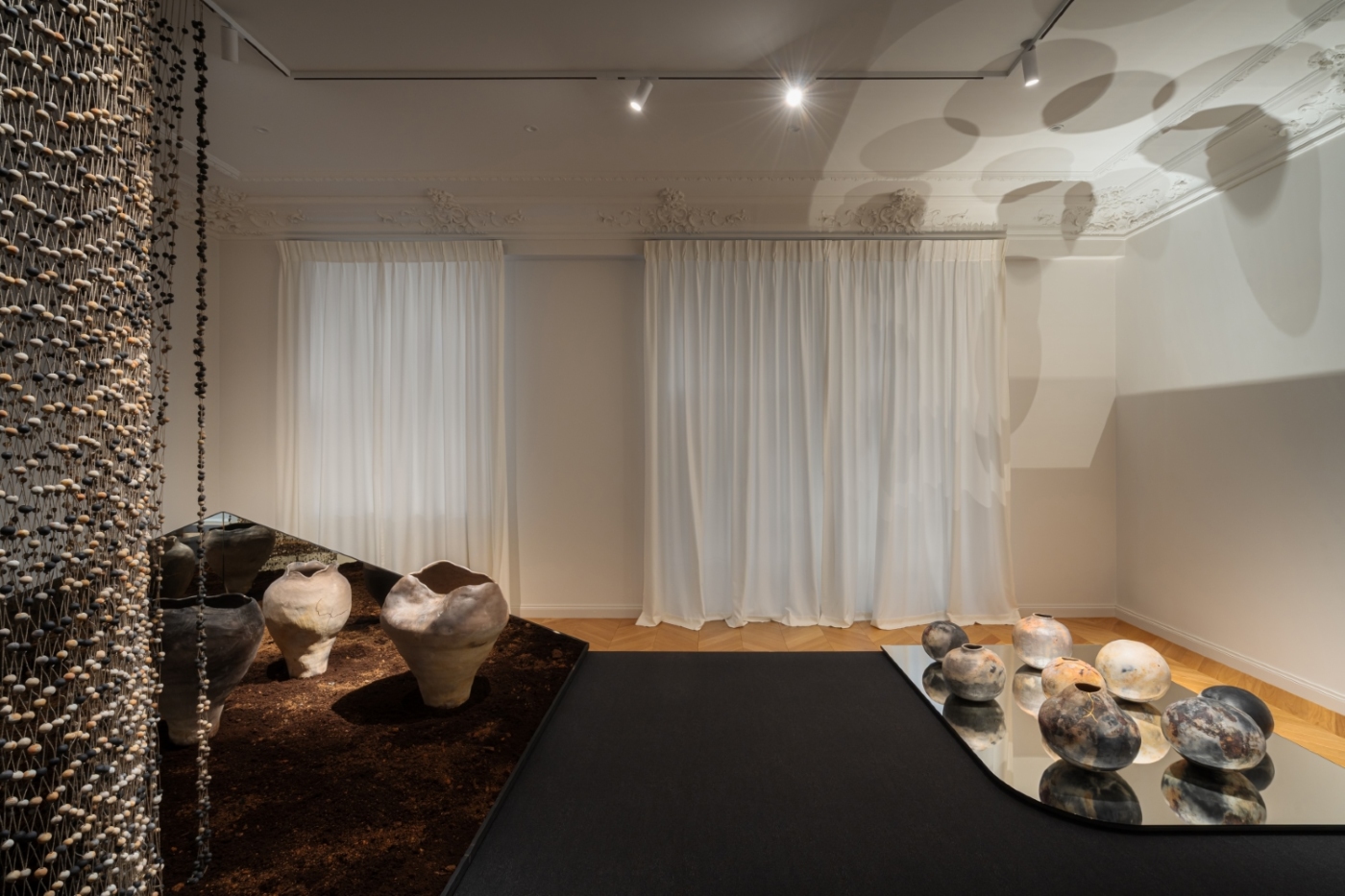
Craftica Gallery is pleased to present Blooming. A Story About Earth, a solo exhibition by Anna Milczanowska, whose pit-fired ceramic sculptures explore questions of growth, transformation, and material memory. Bringing together a new body of ceramic forms alongside a large-scale suspended installation, the exhibition considers “blooming” not as a fleeting moment of fulfillment but as a continuous condition of becoming.
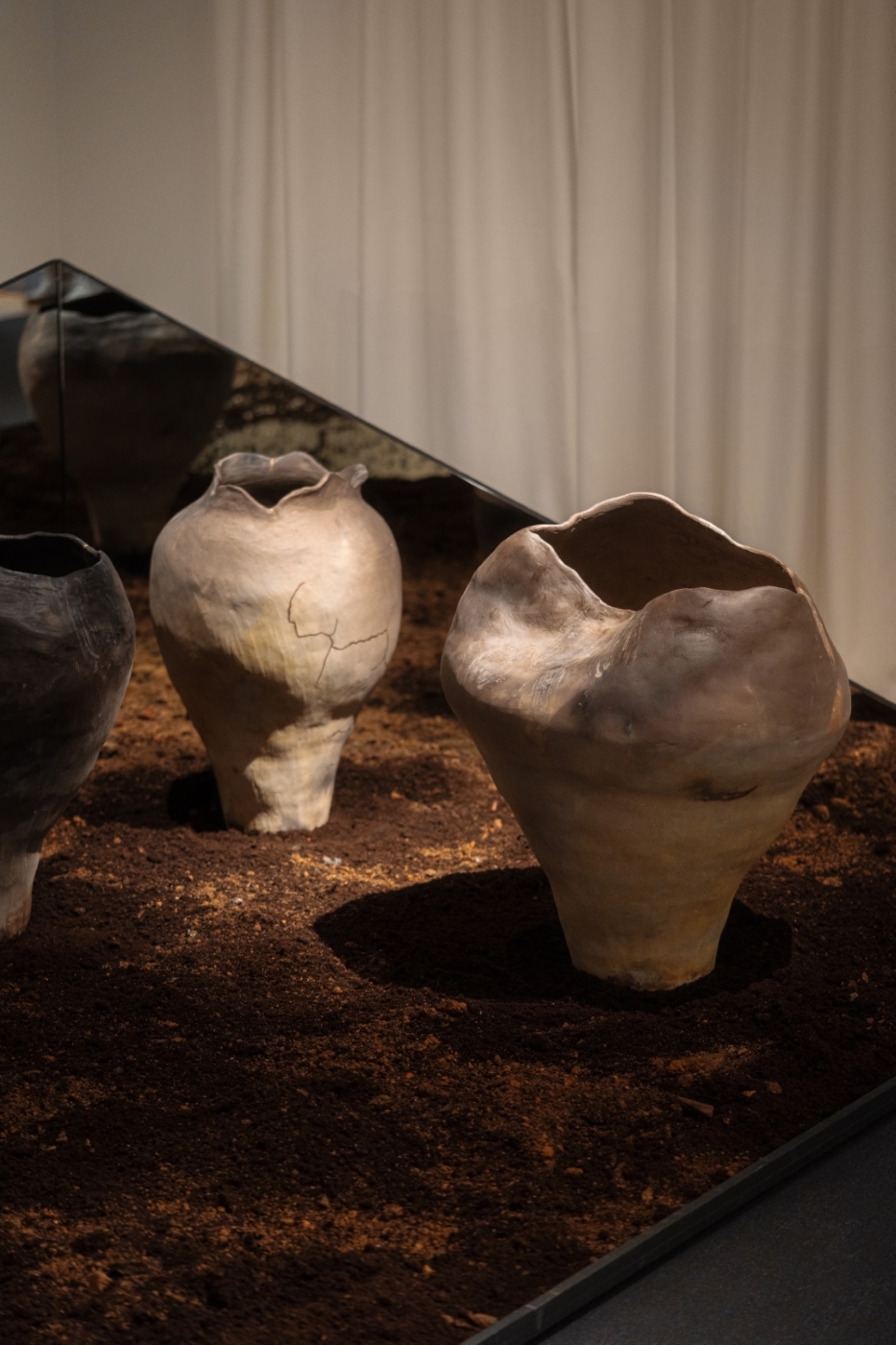
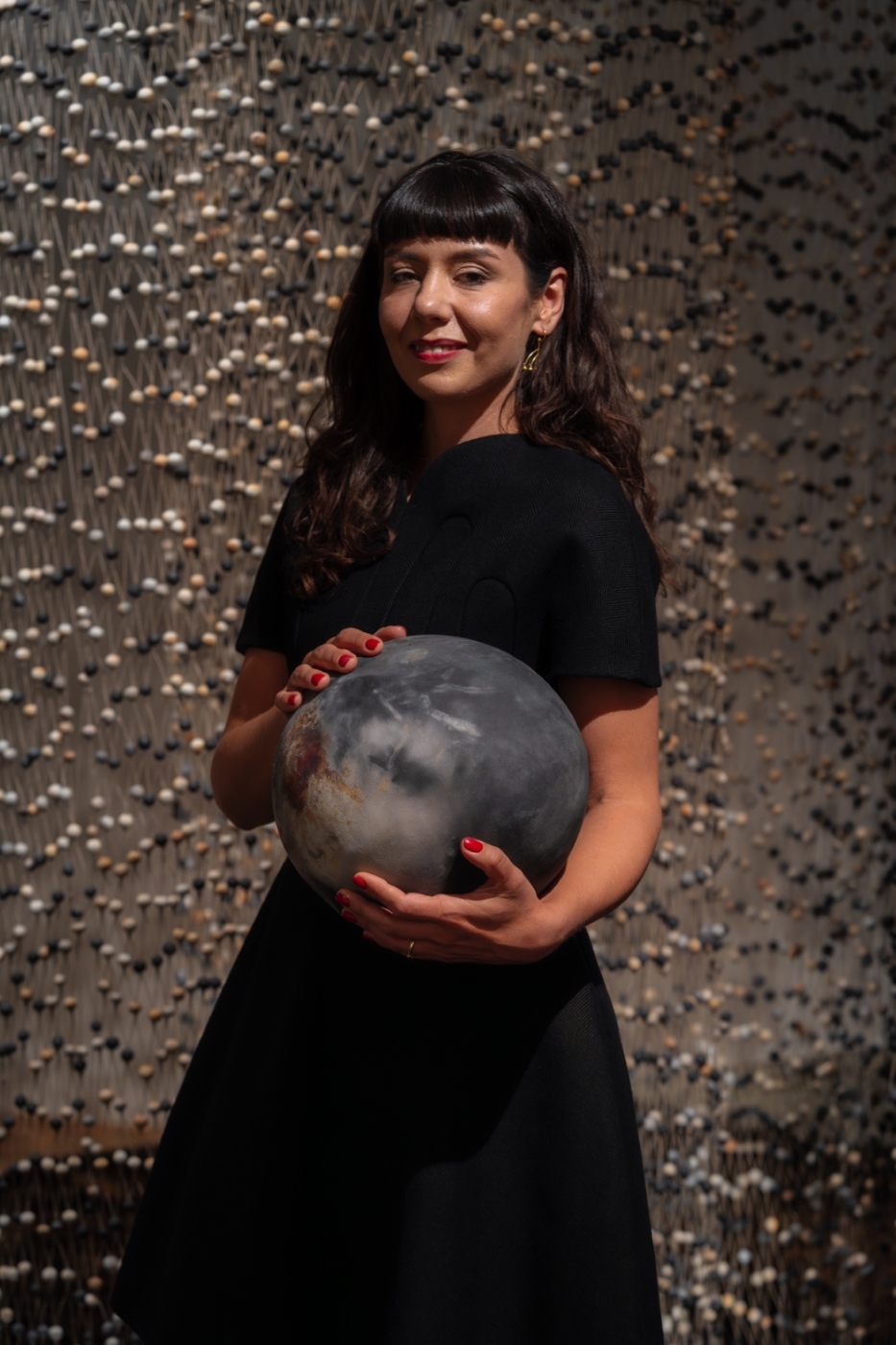
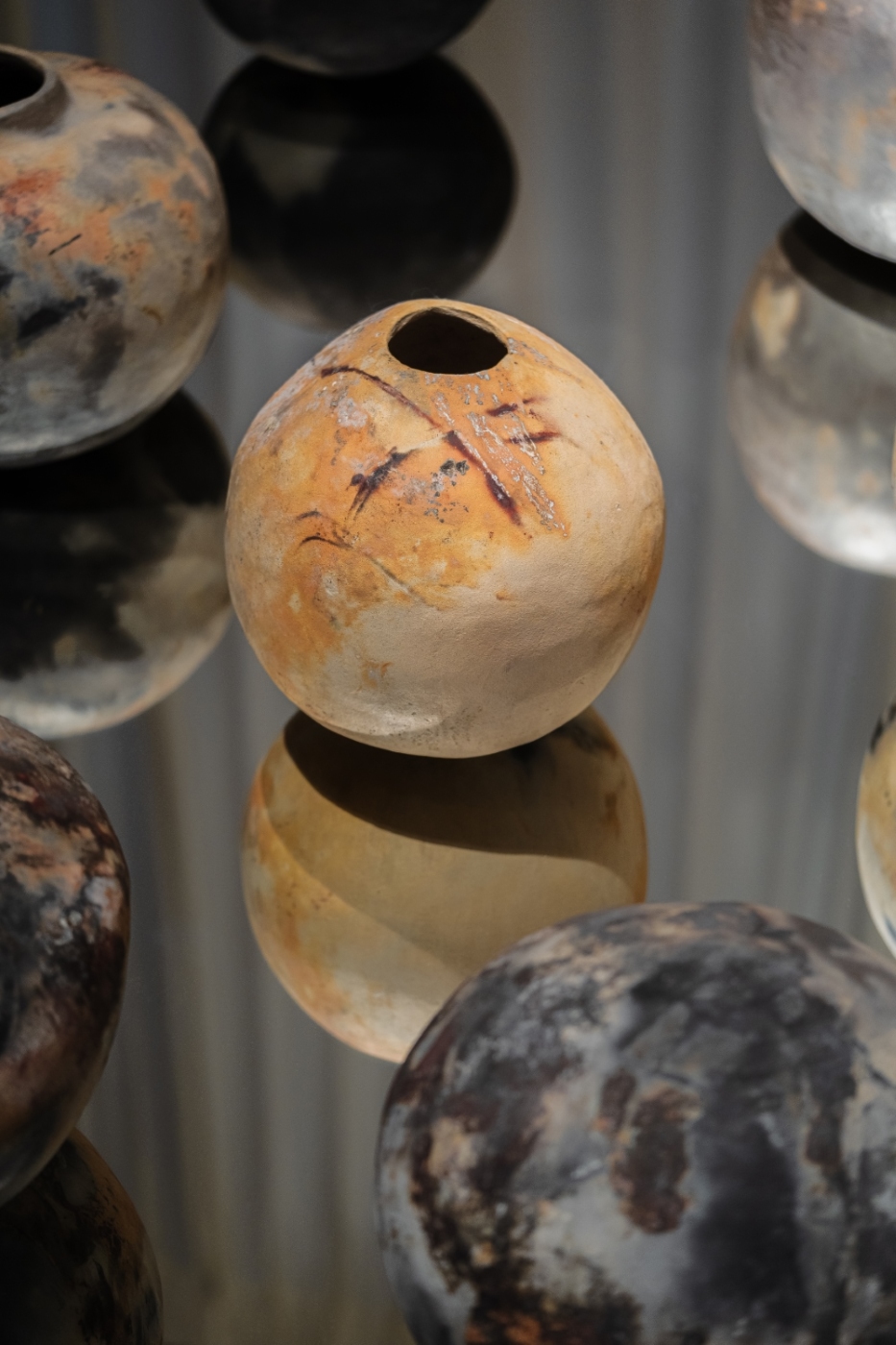
Trained as an art historian before turning toward artistic practice, Milczanowska approaches ceramics not primarily as craft but as a sculptural language through which questions of embodiment, temporality, and ecological interdependence may be addressed. Working with clay sourced from Silesia and firing her works in earth pits near her hometown of Pszczyna, the artist treats earth and fire as active collaborators. The resulting objects bear the traces of elemental processes: markings left by combustion, mineral variation, and plant matter become part of their final surfaces, rendering each work singular.
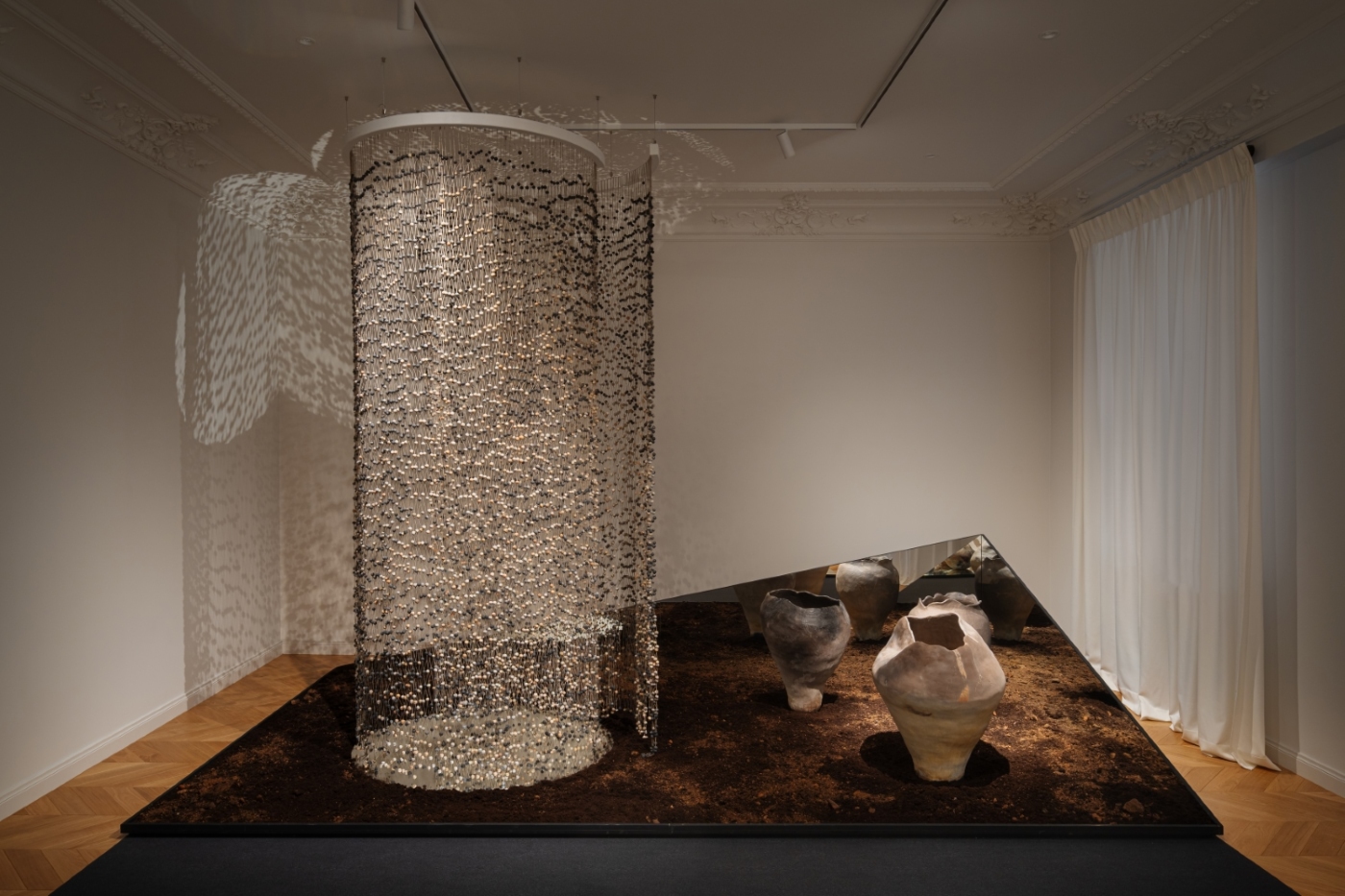
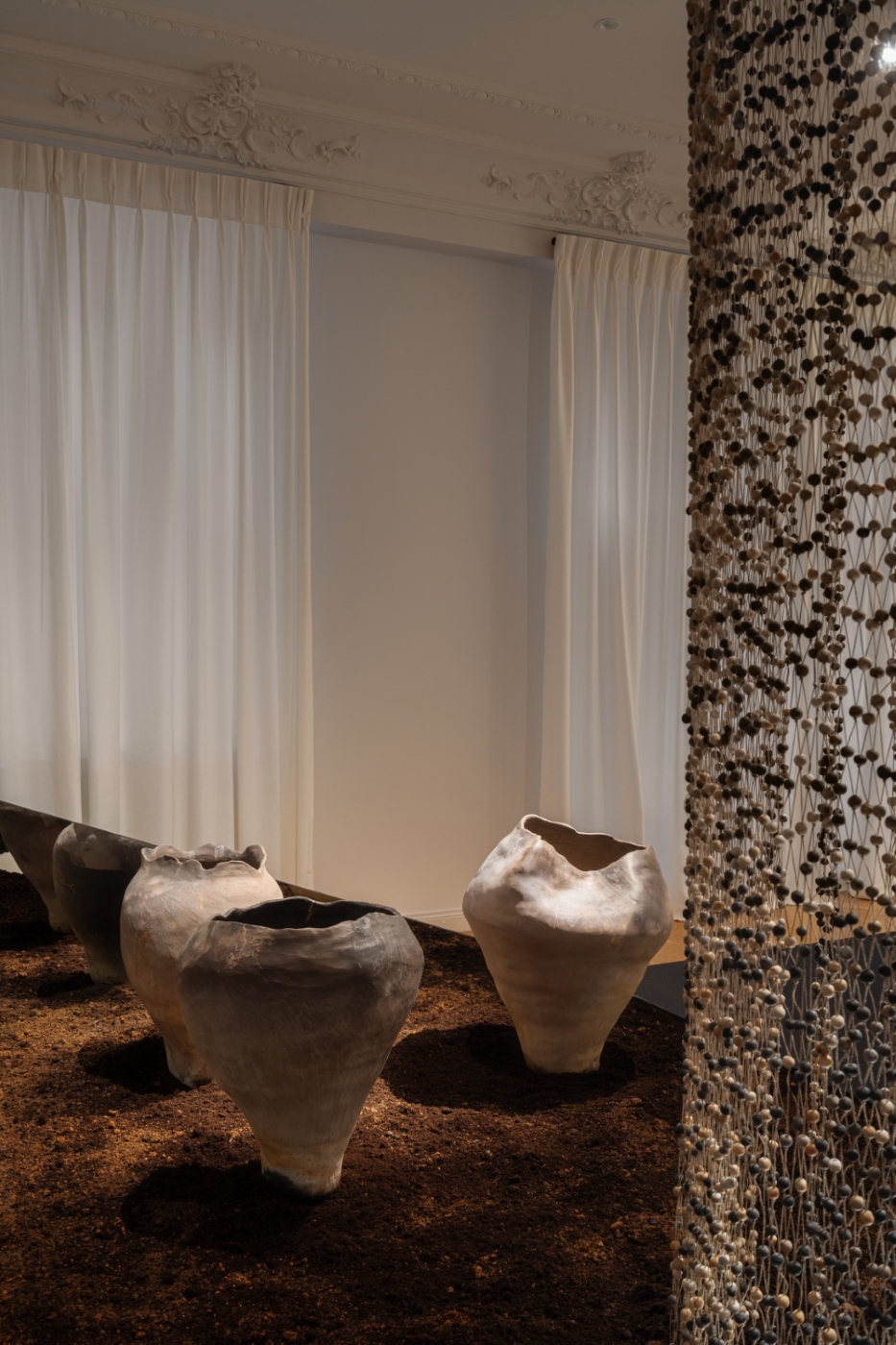
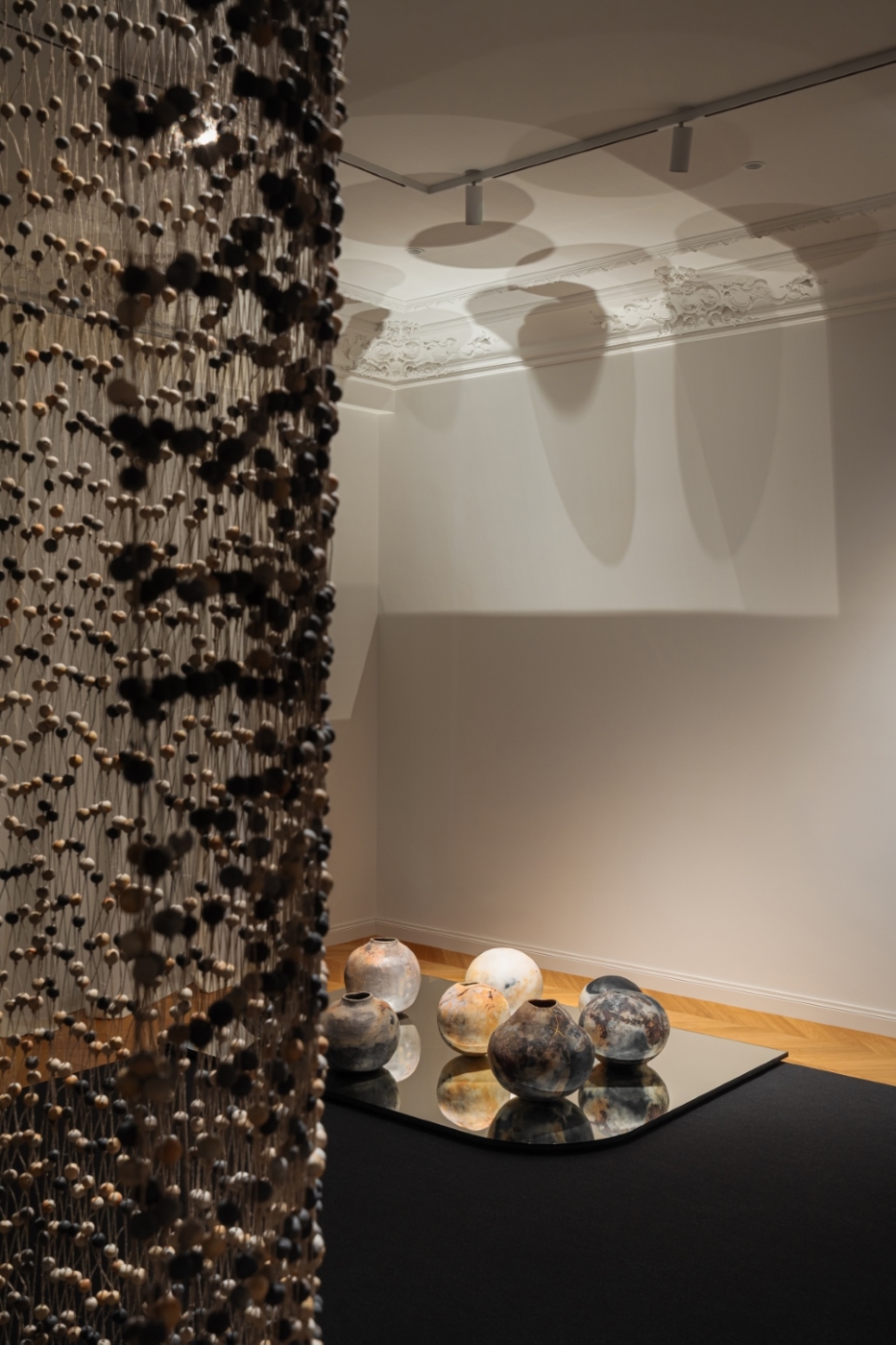
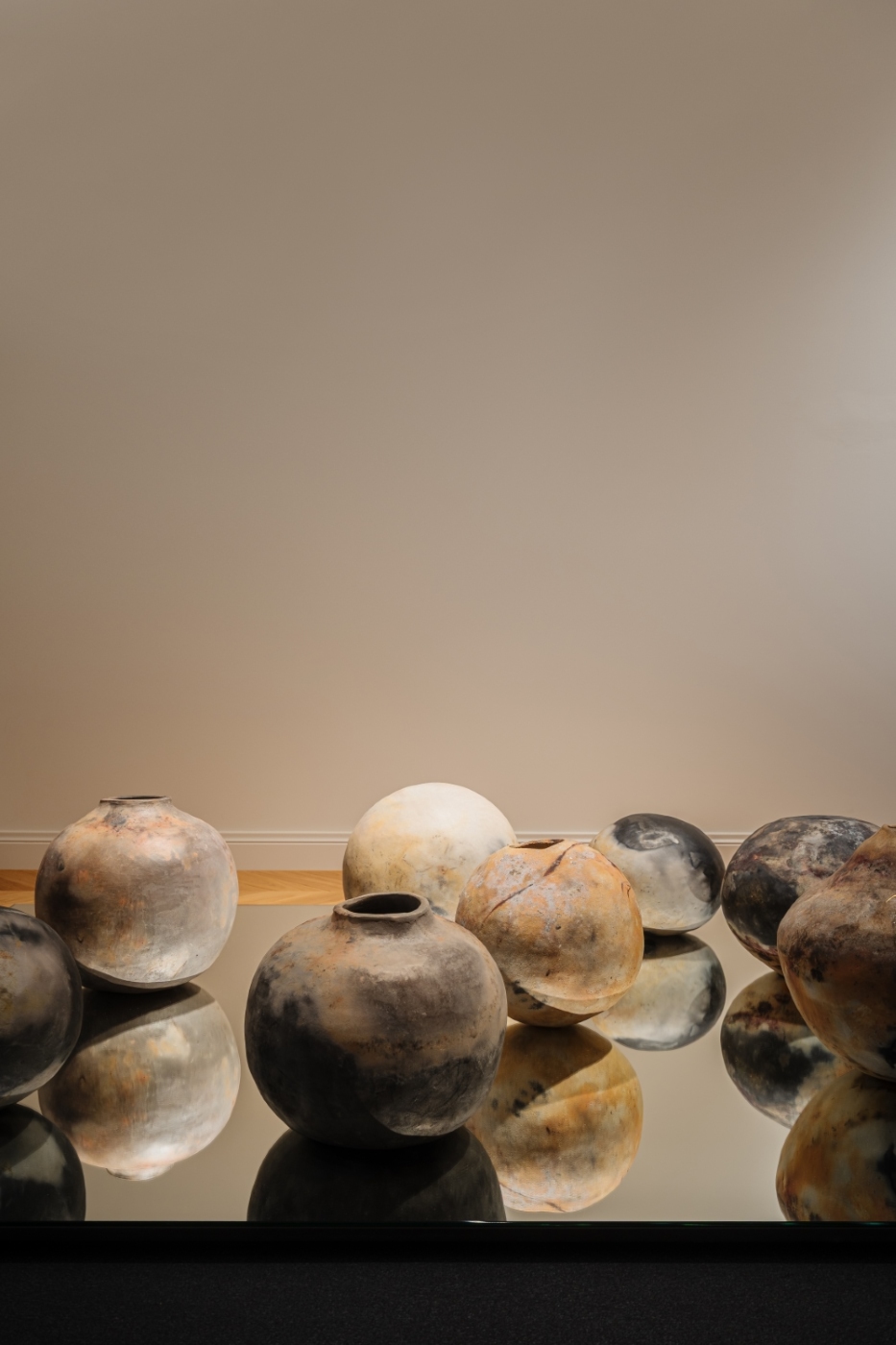
The exhibition centers on a series of large approximately seventy centimeters high, these forms maintain a scale that remains close to the body–present yet never overwhelming. Their unglazed surfaces reveal the structure of the clay and preserve the evidence of touch, allowing the material to retain both its physical immediacy and the memory of its making.
At the heart of the exhibition lies a reflection on the very notion of blooming. The metaphor of a flower is often used to describe the successive stages of a woman’s life: growth, blossoming, maturity, and decline. Yet what takes place in the natural world does not easily translate into human experience. Blooming is a stage of growth suspended somewhere between beginning and end. The sequence of events contained within the word itself carries distinctly positive connotations.
In Milczanowska’s work, blooming is not a singular moment but an ongoing process of transformation. A flower may bloom only once, yet a person remains in a constant state of becoming. Growth, fulfillment, and renewal do not occur just once; they return in different forms throughout life.
A woman remains in a state of continuous transformation;
blooming and bearing fruit are not the culmination of her journey,
but merely one of its stages.1
The subtitle, A Story About Earth, refers both to the material substance of the works and to the place from which they emerge. Earth appears here not as a passive resource but as an active participant in the creative process. It receives fire, retains heat, and returns these encounters as traces inscribed across the surfaces of the sculptures. Milczanowska approaches figures such as earth, mother, and woman not as fixed symbols but as relational and processual forms through which interconnectedness may be understood. Earth becomes a metaphor for continuity, transformation, and mutual dependence rather than for linear narratives of origin and decay.
The theme of growth also extends to the artist’s own practice. The works emerge from a sustained process of creating space for artistic work, confronting material limitations, and committing to a path that often requires perseverance. The upward-opening forms can be understood as records of this experience -manifestations of maturation not as movement toward completion but as a condition of ongoing development.
Milczanowska constructs her sculptures using the coil-building technique, which she continues to develop at an increasingly ambitious scale. The largest forms weigh approximately fifty kilograms and require careful negotiation between gravity, structure, and drying time. Once completed, the pieces are fired in deep pits excavated in the earth. During firing, plant matter is placed over the surfaces, leaving unpredictable marks, tonal transitions, and discolorations as it burns. The final appearance of each work remains partially beyond the artist’s control, preserving a dialogue between intention, material, and environment.
The firing process itself forms an important part of the work. Family and friends regularly gather around the fire, often tending to it throughout the night. These communal encounters evoke older traditions in which labor and social life were closely intertwined.
Gatherings around the fire form an essential and inseparable
part of the creative process.2
The works therefore carry traces not only of earth and fire but also of the relationships and shared experiences that accompany their making.
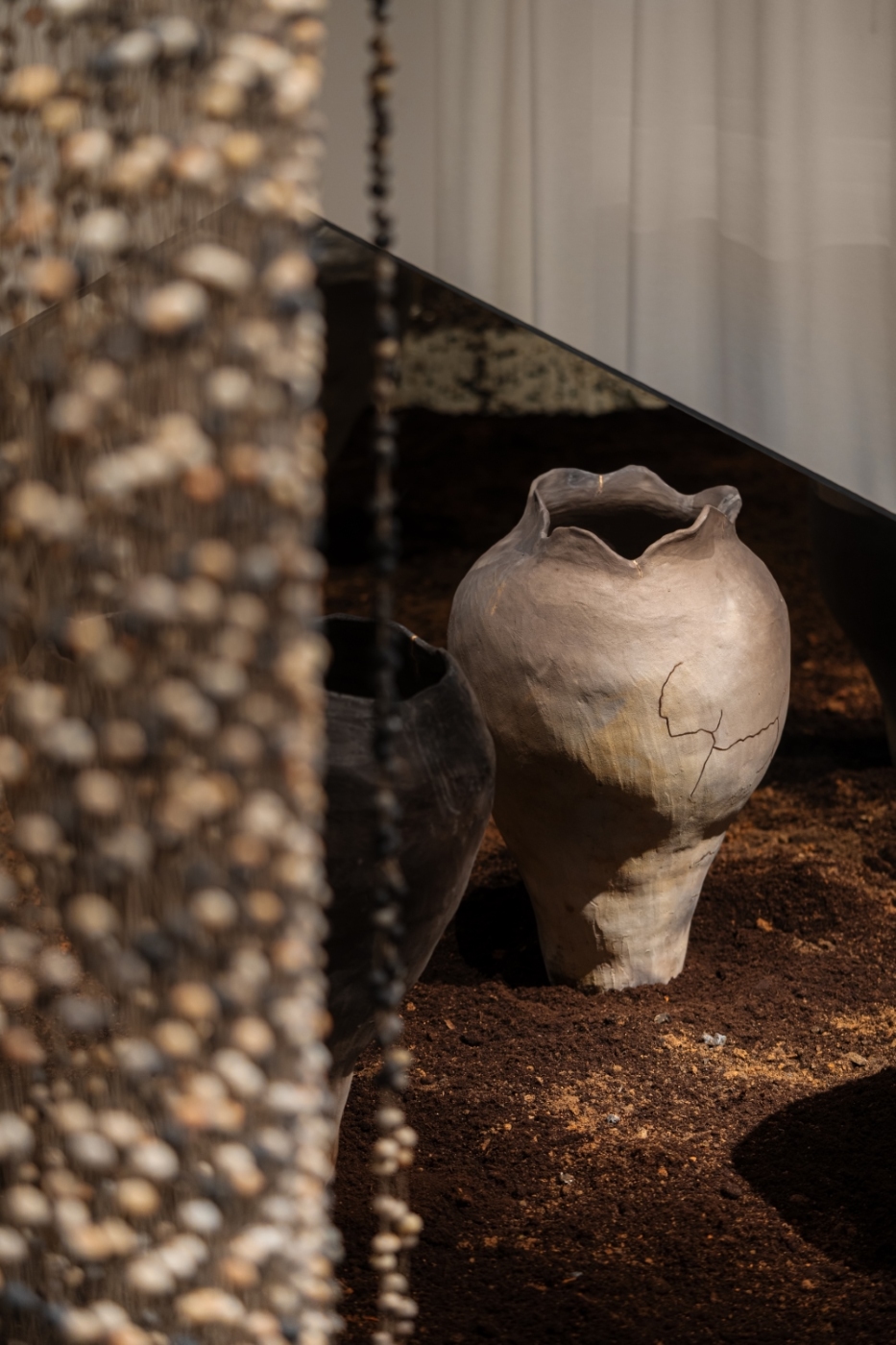
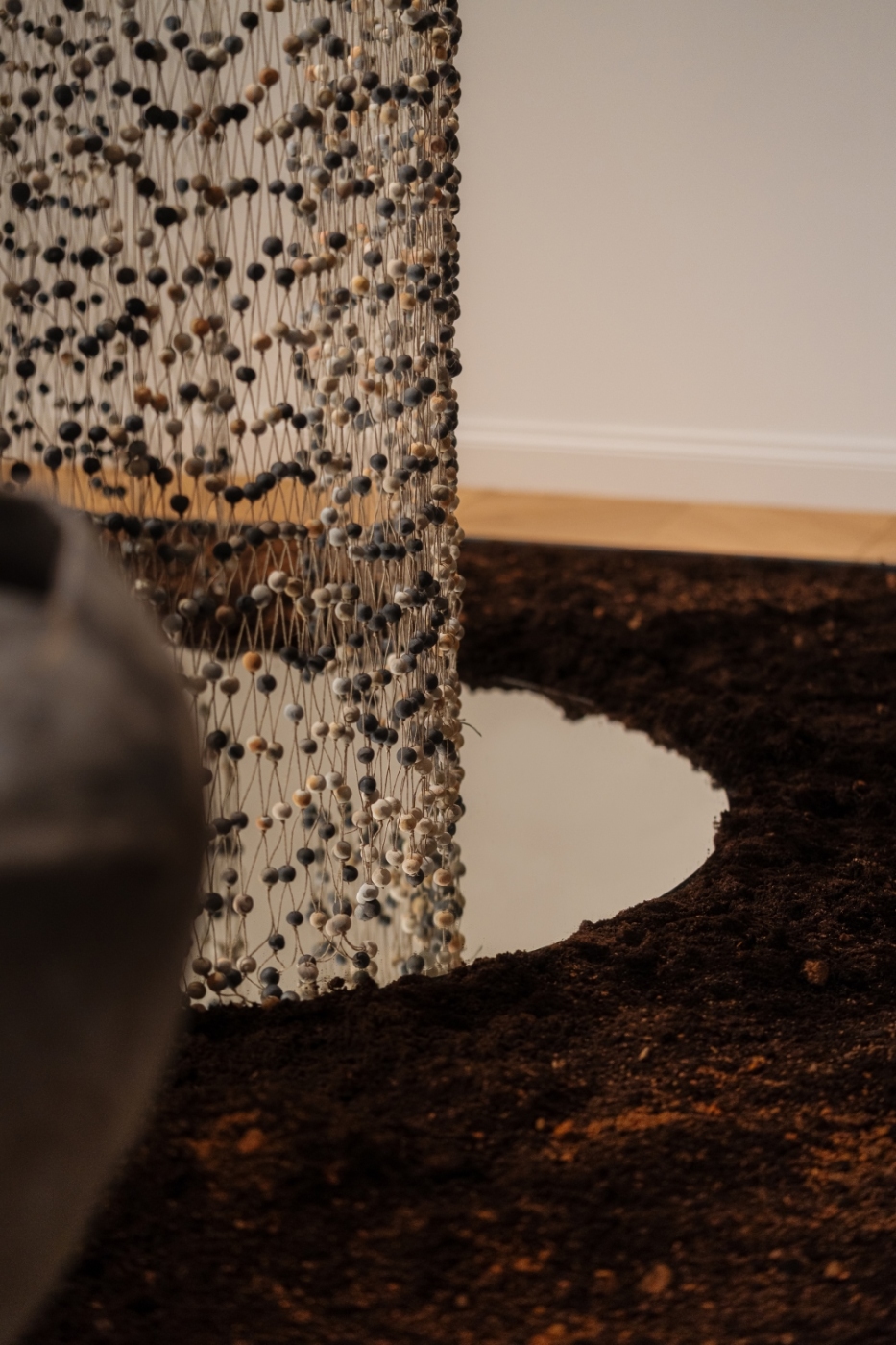
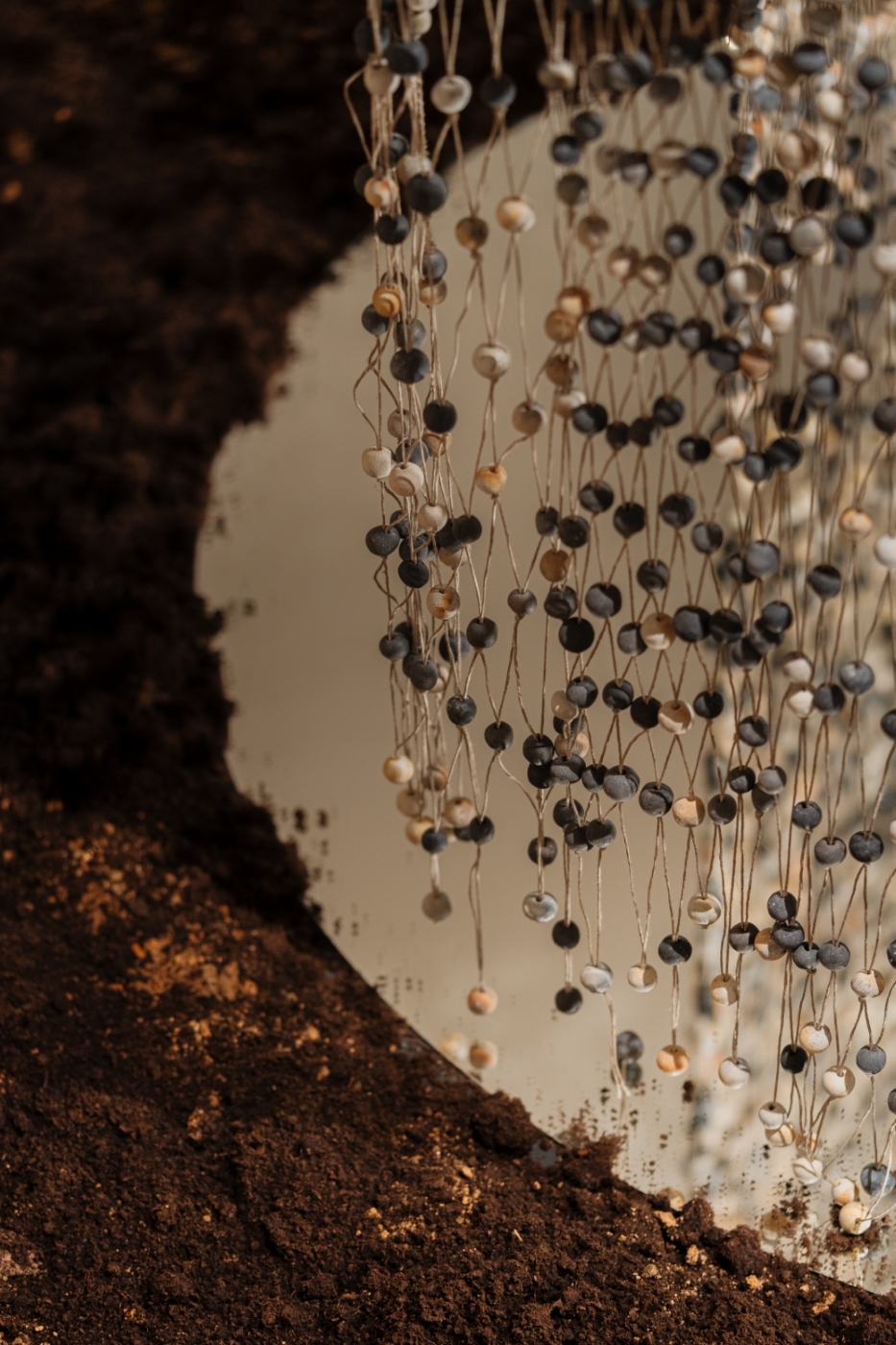
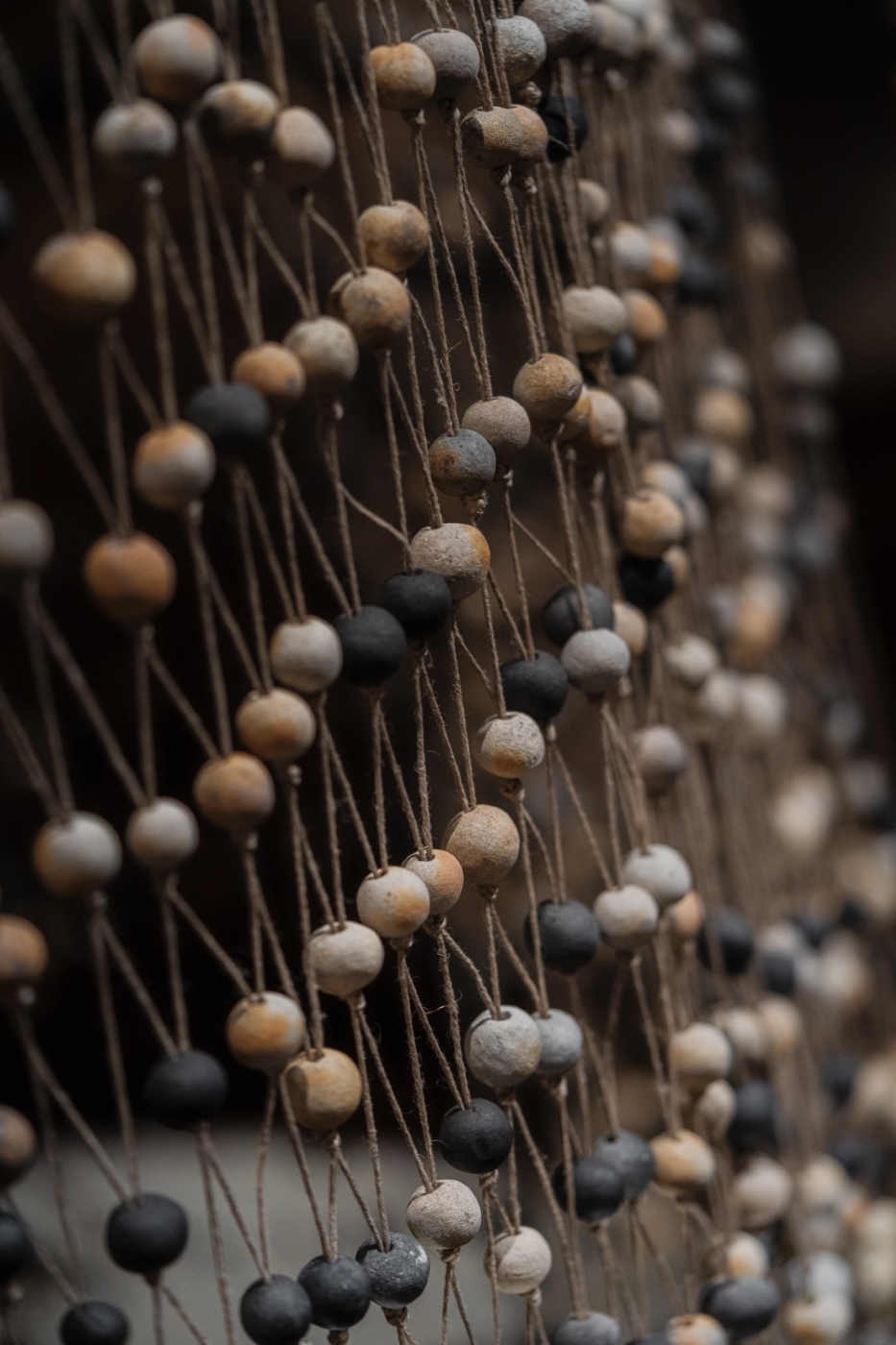
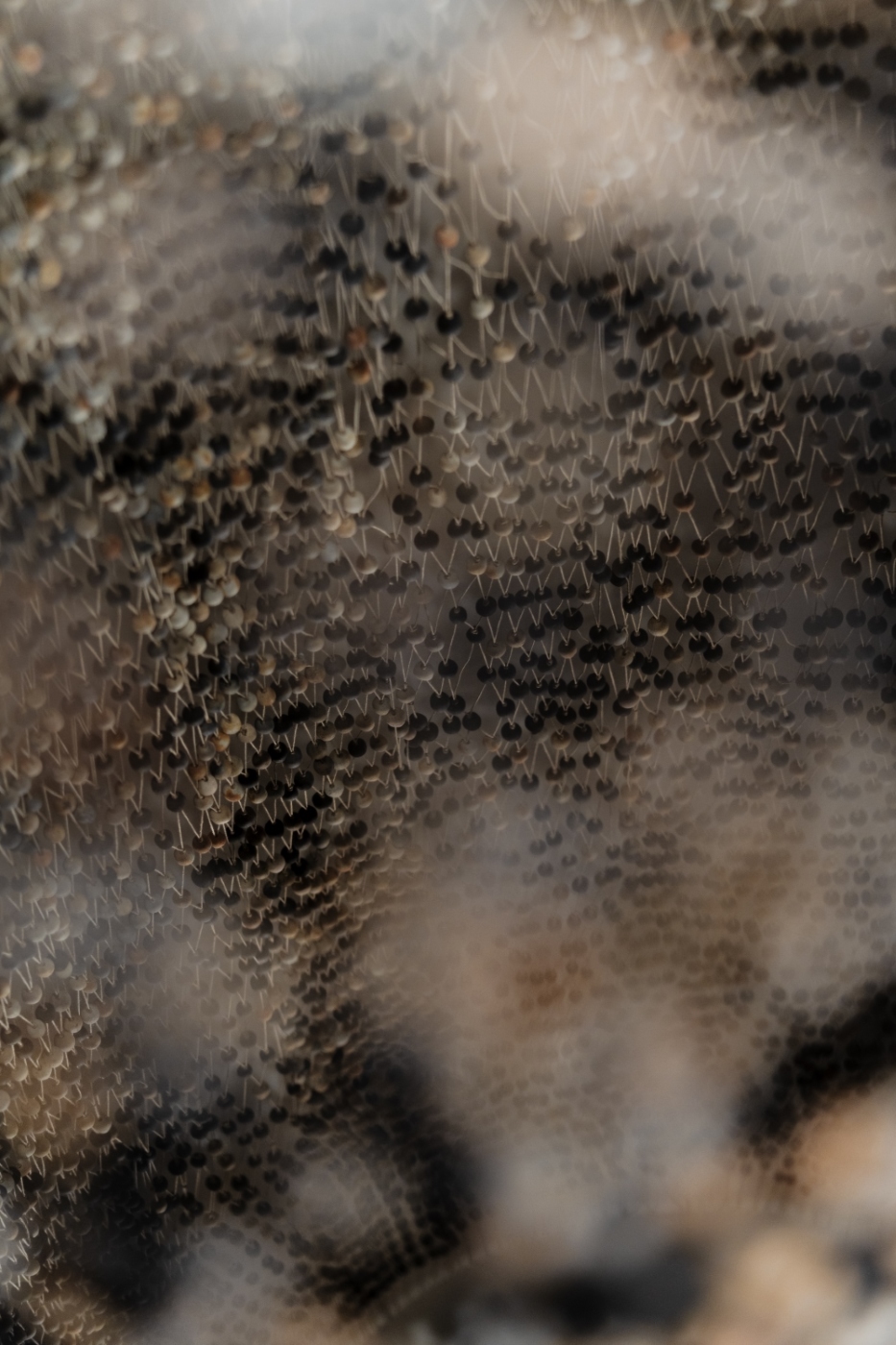
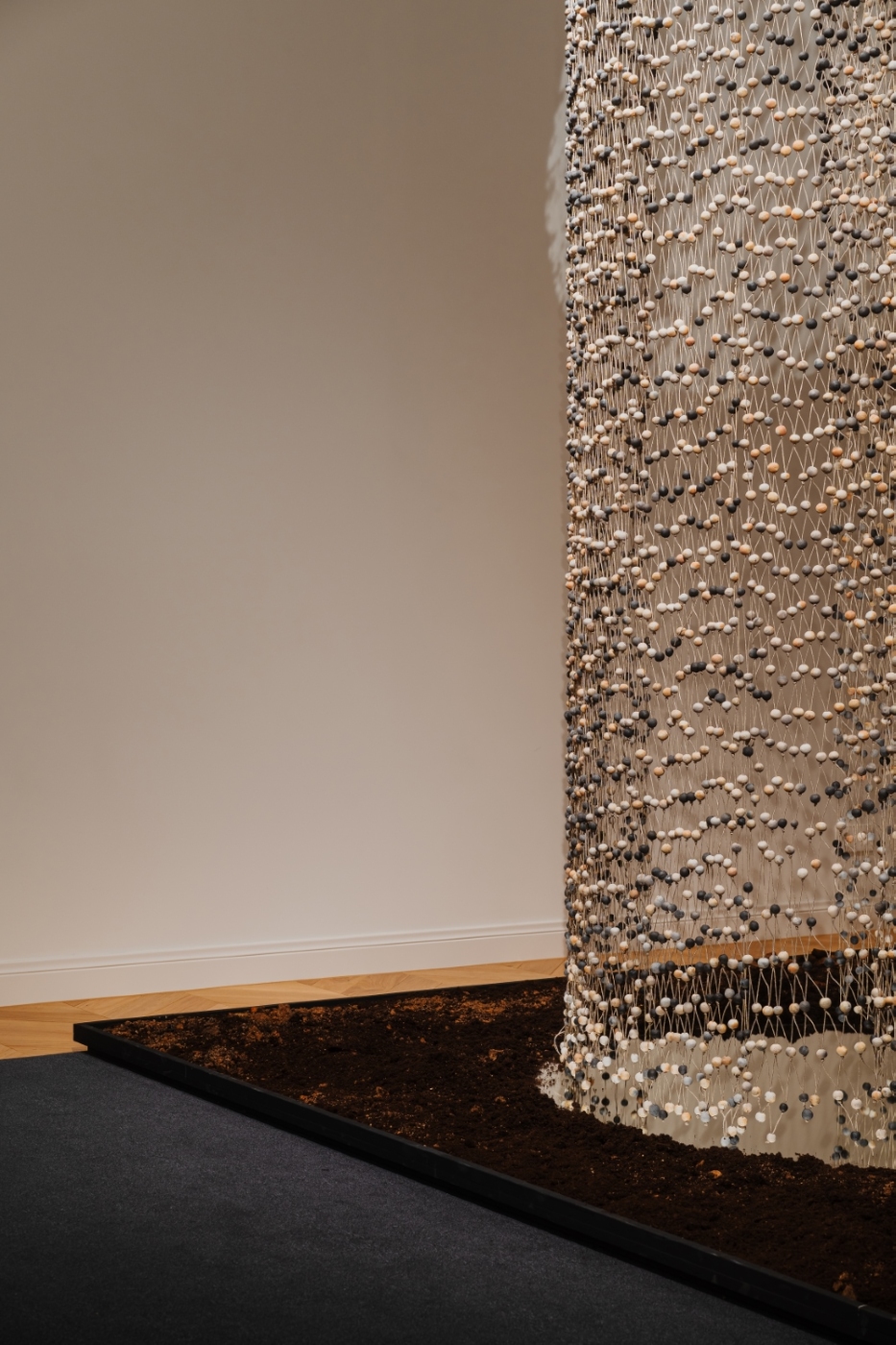
An integral component of the exhibition is Rosa (Dew), a large suspended installation composed of thousands of hand-formed clay beads. Fired using the same pit-firing process as the vessels, the beads range in tone from pale whites to deep blacks and are connected by hand into a vast woven structure inspired by traditional net-making techniques. Many of the beads were created not only by the artist but also by family members and friends invited to participate in the process, extending the collaborative spirit of the firings into the exhibition itself.
Suspended on linen and transparent filaments, the structure descends through the gallery in soft cascading formations. From a distance it appears almost weightless; up close, the density of its ceramic elements becomes apparent. Evoking root systems, hanging vegetation, and organic networks, the installation transforms the gallery into an environment shaped by accumulation, interdependence, and growth.
Together, the sculptural vessels and suspended installation form a meditation on growth, transformation, and the enduring relationship between body, material, and environment. Through Blooming. A Story About Earth, Anna Milczanowska proposes a vision of blooming not as a temporary state but as a continuous mode of existence.
The exhibition will be accompanied by a curatorial text by Maria Cristina Didero, an internationally acclaimed curator, author, and design scholar. Former Curatorial Director of Design Miami–the first Italian curator to hold the position–Didero is recognized for her research-driven approach to contemporary design and her ability to situate emerging practices within broader cultural and intellectual contexts. Her contribution to Blooming. A Story About Earth offers an additional perspective on Milczanowska’s exploration of materiality, transformation, and contemporary notions of growth.
Biography
Anna Milczanowska (b. 1985, Poland) is an art historian turned artist whose practice centers on pit-fired ceramic sculpture. Characterized by the use of natural materials and a deep engagement with every stage of production, her work explores the relationship between material process, environmental consciousness, and sculptural form. Working in accordance with zero-waste principles, she approaches earth and fire as co-creators, allowing elemental forces to participate directly in the formation of each object. Her works are distinguished by their austerity, primal simplicity, and the rich tonal qualities of the clay from which they are made.
Anna Milczanowska’s works were presented at the Salon Art + Design fair in New York in November 2025. Her practice continues to expand the boundaries of contemporary ceramics, positioning the medium as a site where material experimentation, ecological awareness, and sculptural inquiry converge.
Contact
contact@craftica.gallery
Craftica Gallery
Ordynacka 11
00369 Warsaw
Poland
Photos courtesy of the artist and Craftica Gallery
Curatorial text by Maria Cristina Didero / Graphics by Lange & Lange / Scenography by Wojciech Cichecki / Photography by Mood Authors / Text edits & works production by Mania Zyzak