By Tana West
The latest exhibition at County Hall Pottery draws attention to the figurative turn in contemporary ceramics, not just a return to representational forms but a recognition that ceramic materials and processes themselves generate new figurative possibilities. The works in the exhibition reimagine, reshape, and reuse the language of figuration to destabilise ideas of identity, power, and permanence. The exhibiting artists are Claire Curneen, Fernanda Cortes, Jessica Harrison, and John Rainey.
Canonically within the Western sculptural tradition, ceramics occupies an outsider position. Clay was long treated as a preparatory medium, a material for sketching, modelling, or “roughing out” forms before they were realised in the more ‘noble’ materials of bronze, wood, or stone. This relegation positioned ceramics as ancillary to sculpture rather than a sculptural medium in its own right. Yet clay has always carried forms of human presence, mythic, classical, and domestic that are anything but neutral. The recognisable bodies and iconography that emerge from ceramic traditions hold meanings that are deeply culturally specific, shaped by the contexts in which they were made and used. They resist the fantasy of universality that has long underpinned Western art history.
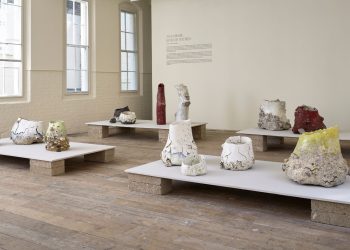
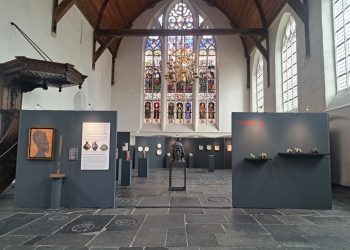
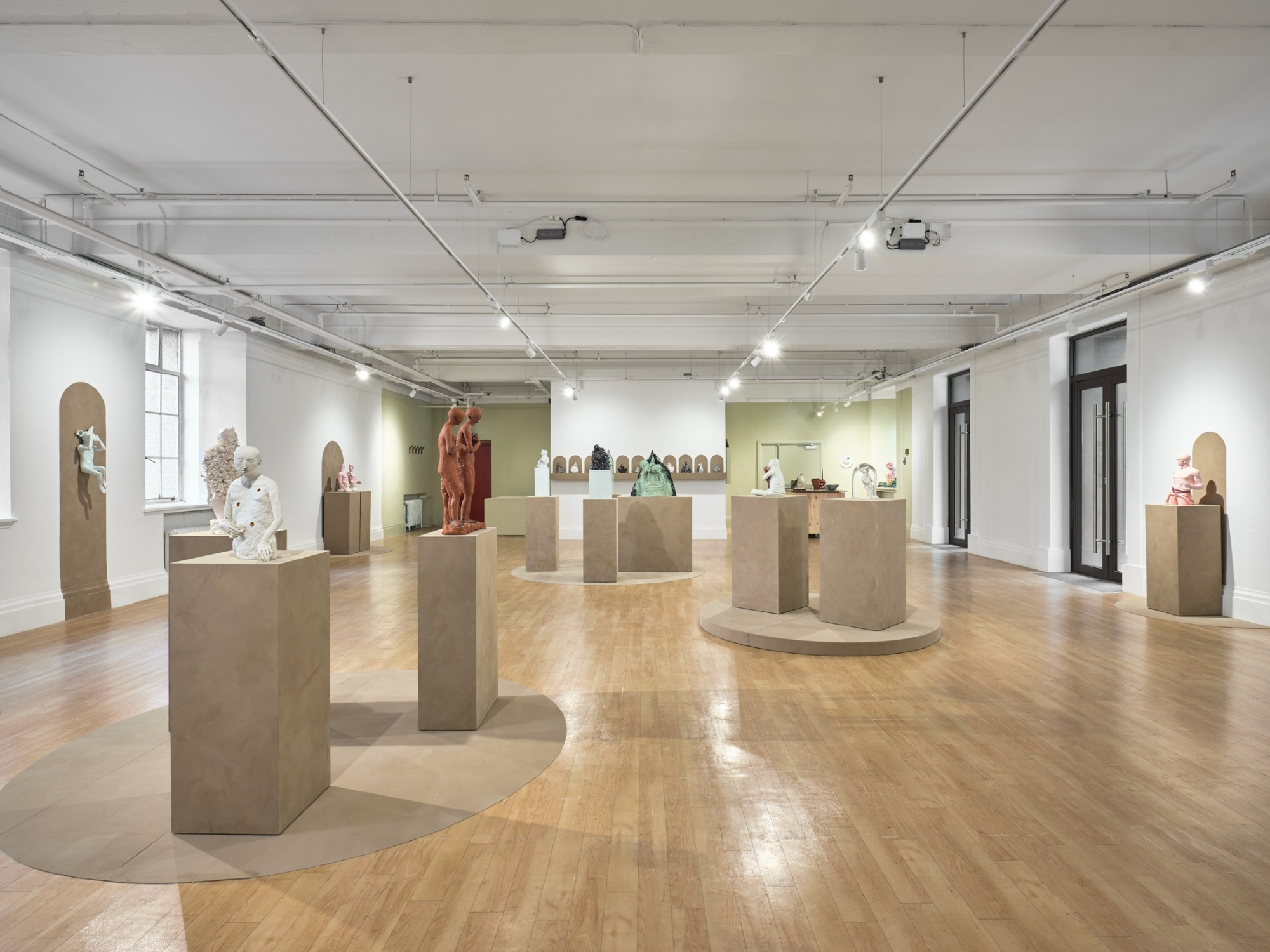
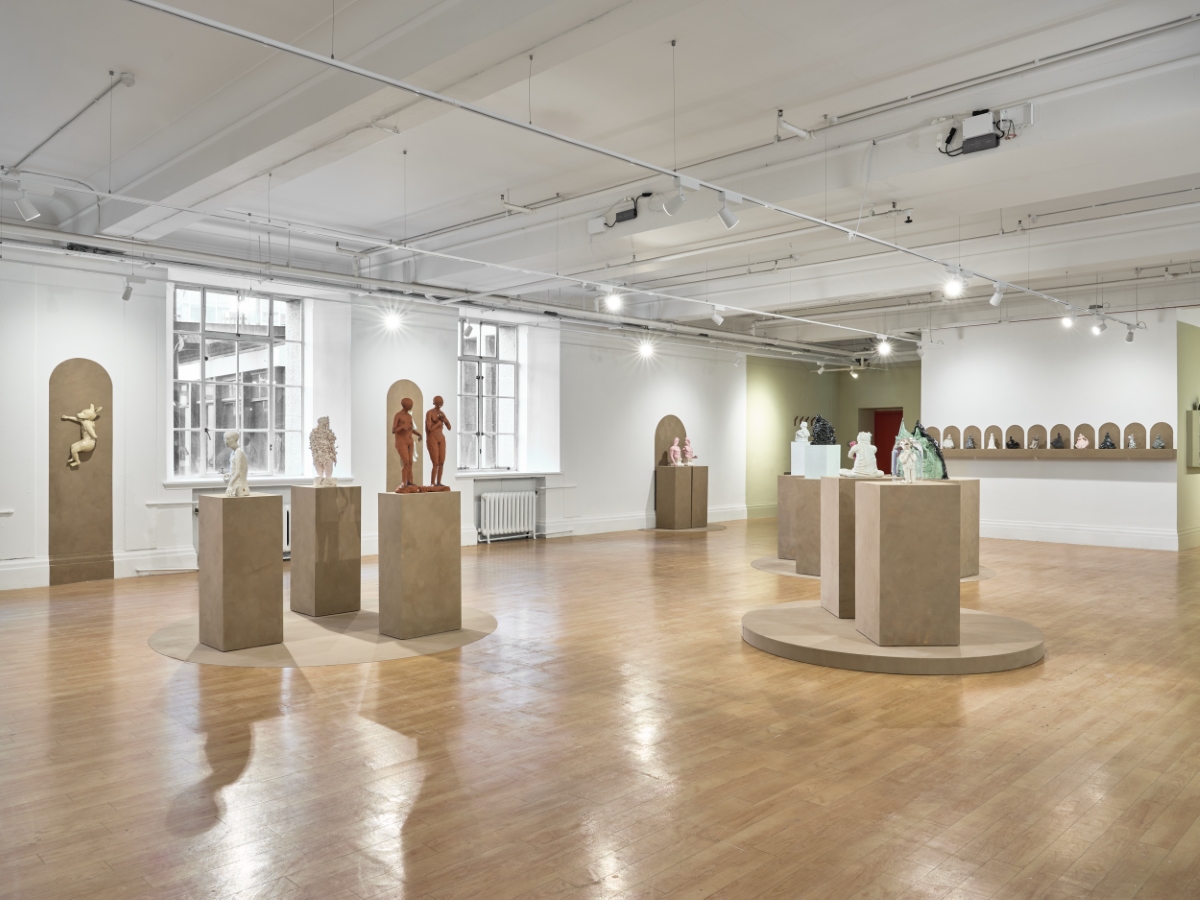
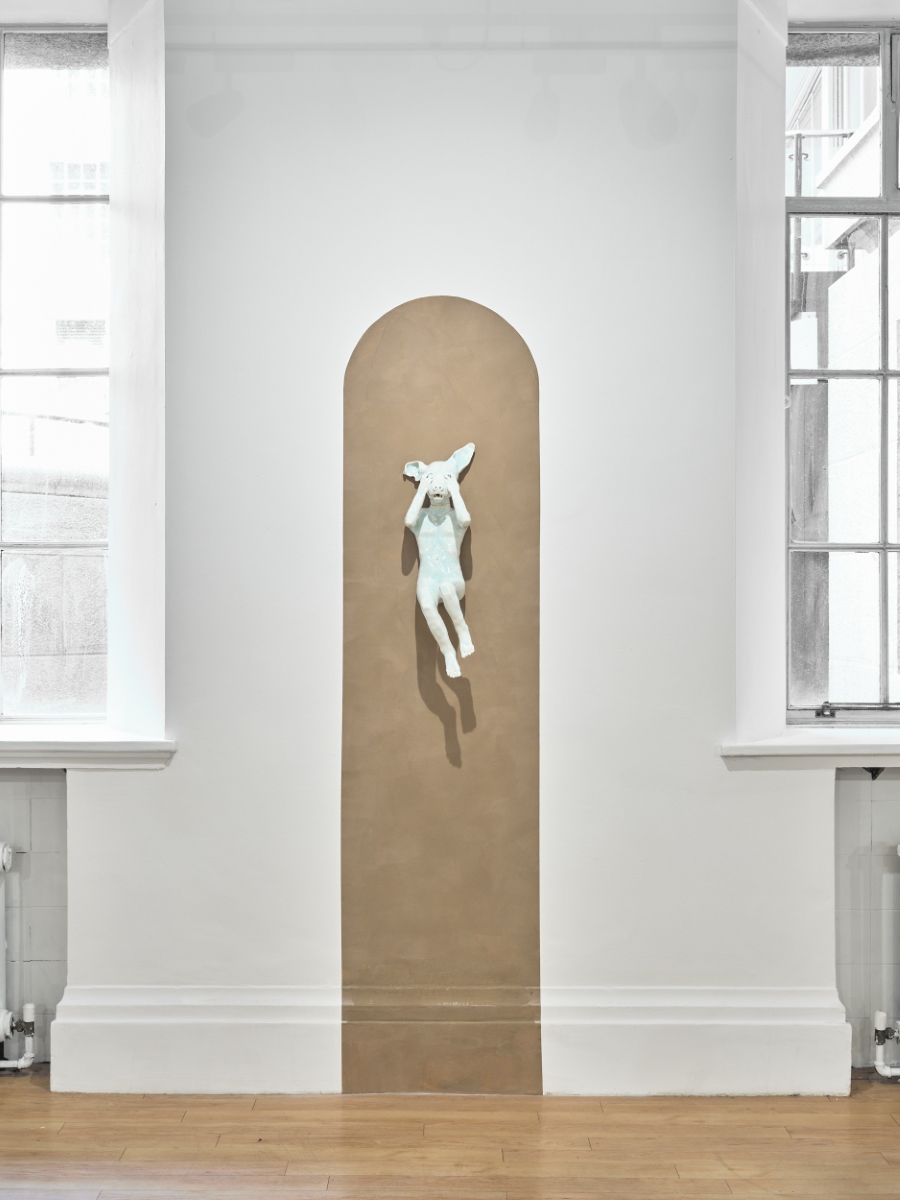
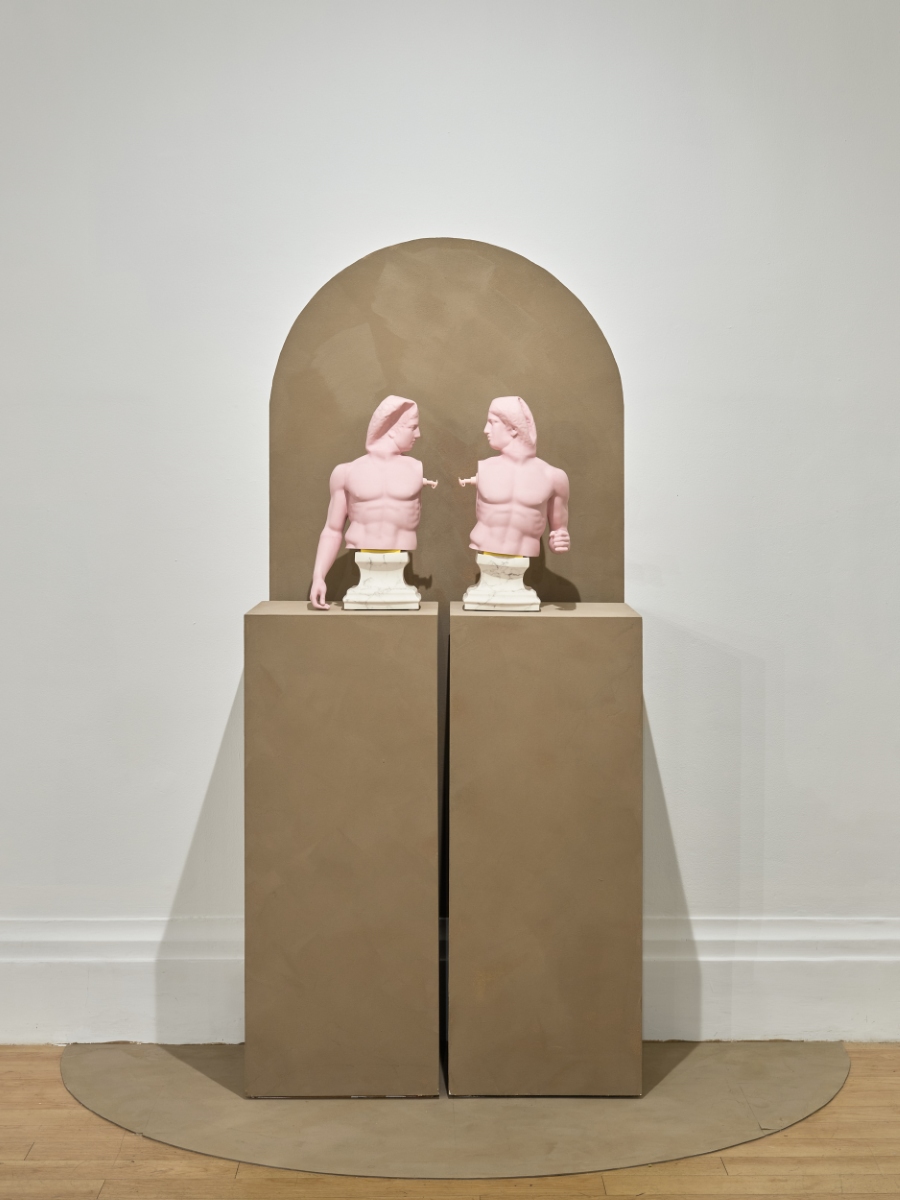
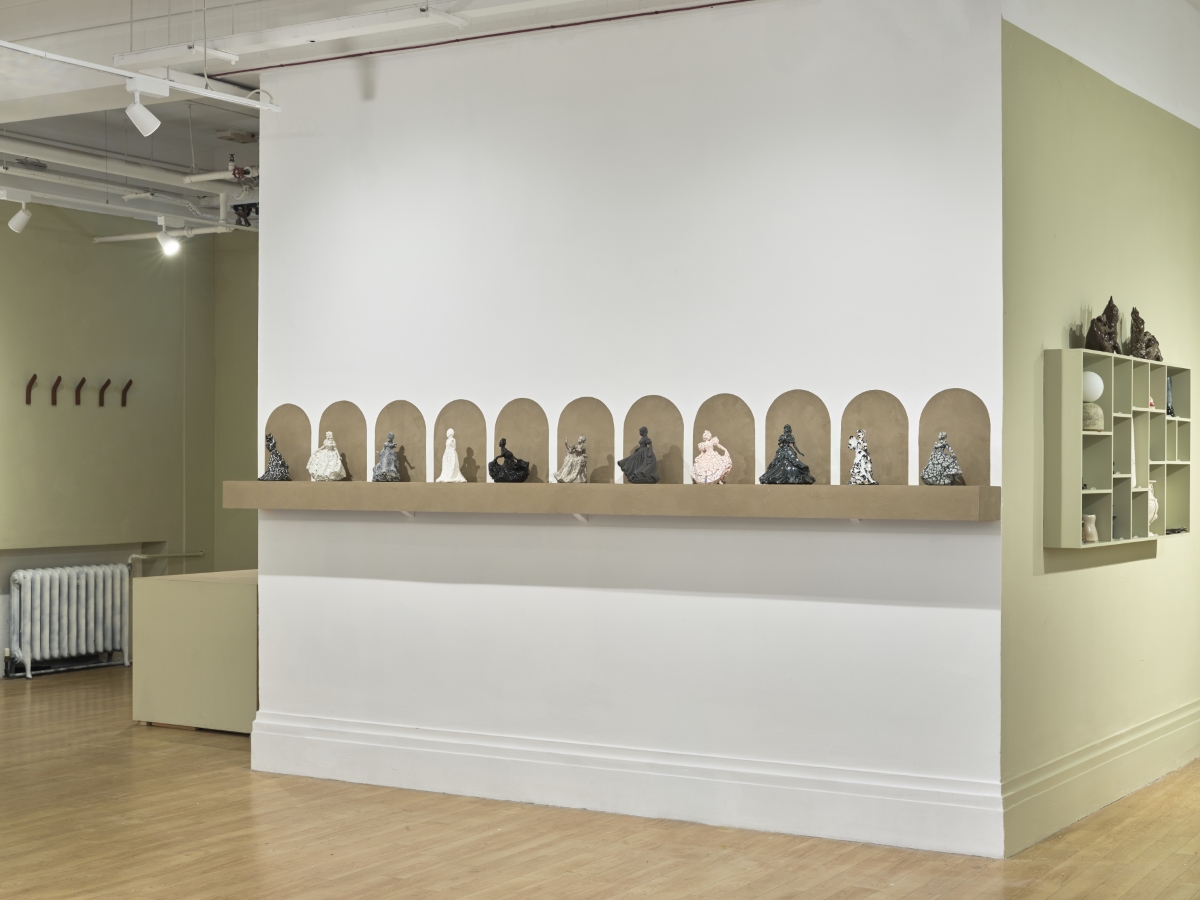
The design of the exhibition space sets the scene by mimicking the institutional framework of 19th century museum cast courts and sculptural displays, adopting their visual language, plinths, painted alcoves, and calibrated colour schemes. The artists in Refigured have made use of the visual and material language of monumental, religious, and classical statuary and figurines as well as of their copies, casts, and reproductions. Mixing up this sculptural syntax and subverting conventions using approaches such as fragmentation, shifts in scale and material specificity. In doing so, the artists expose the constructed nature of these sculptural traditions and open them up to reinterpretation. Their works reveal that the authority of classical and religious statuary is not fixed, but something that can be reworked, questioned, and refigured.
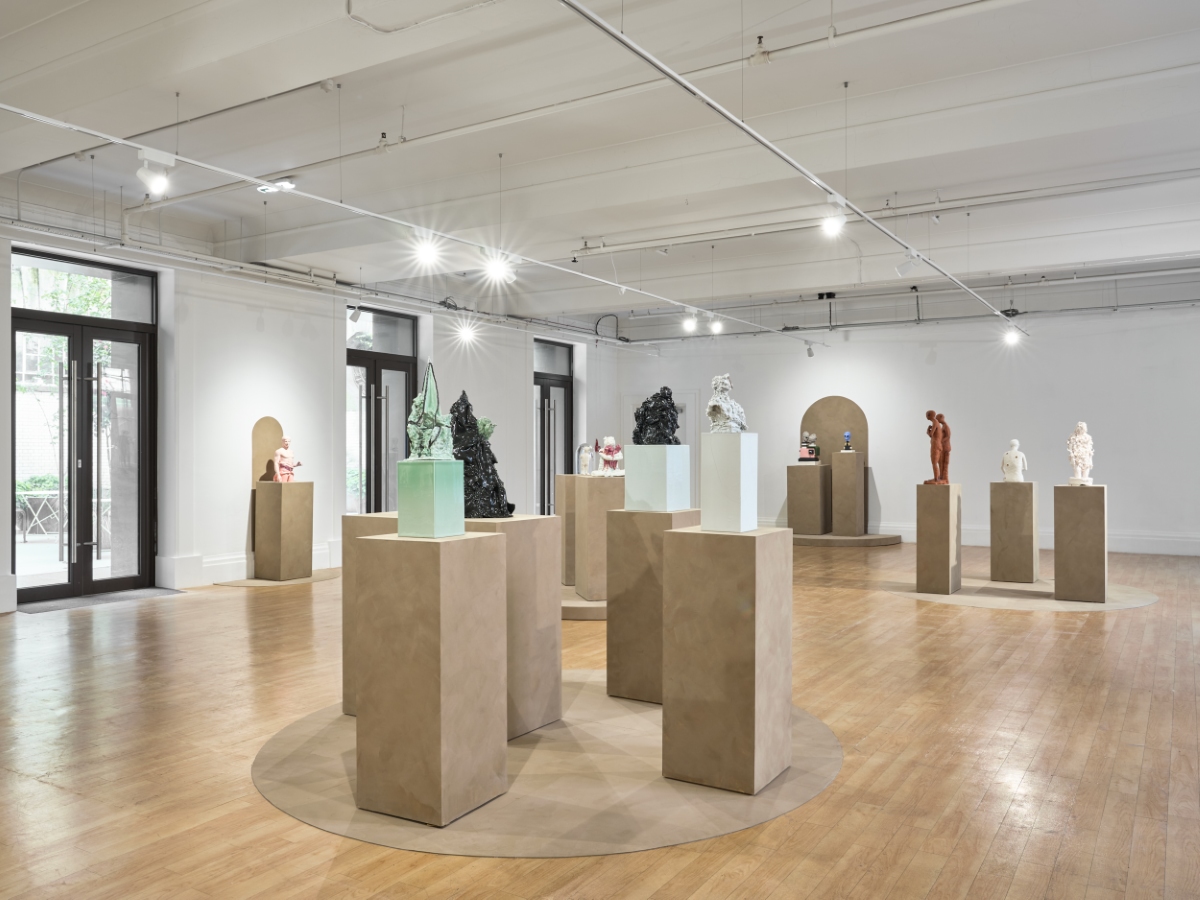
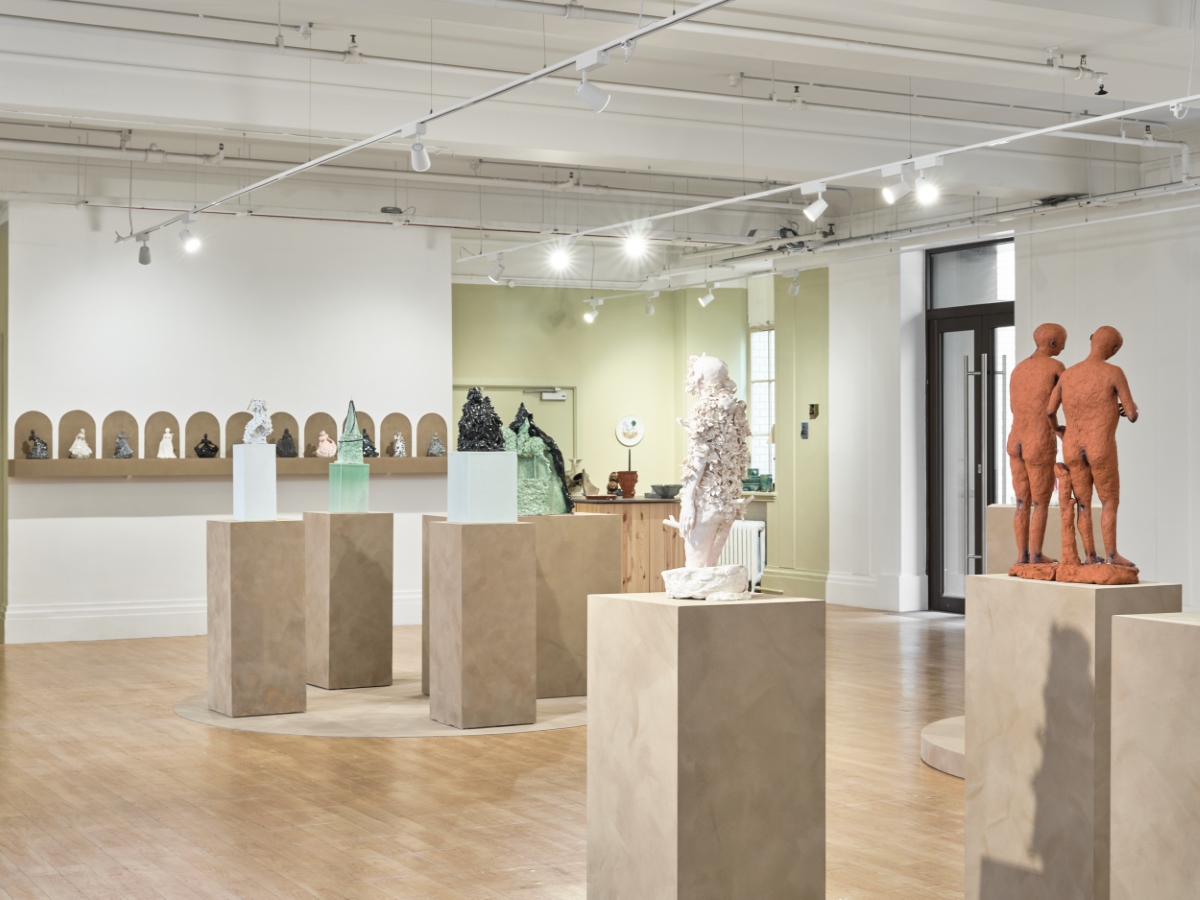
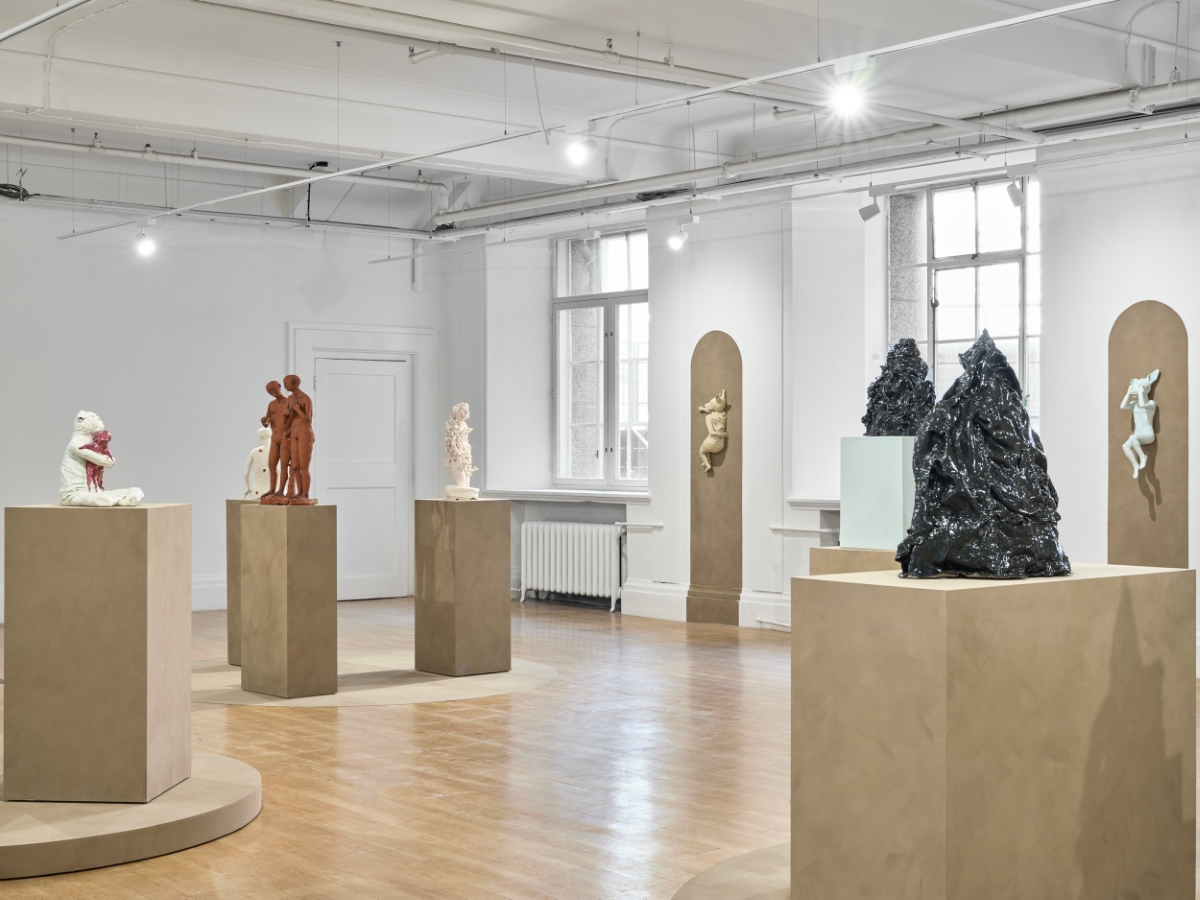
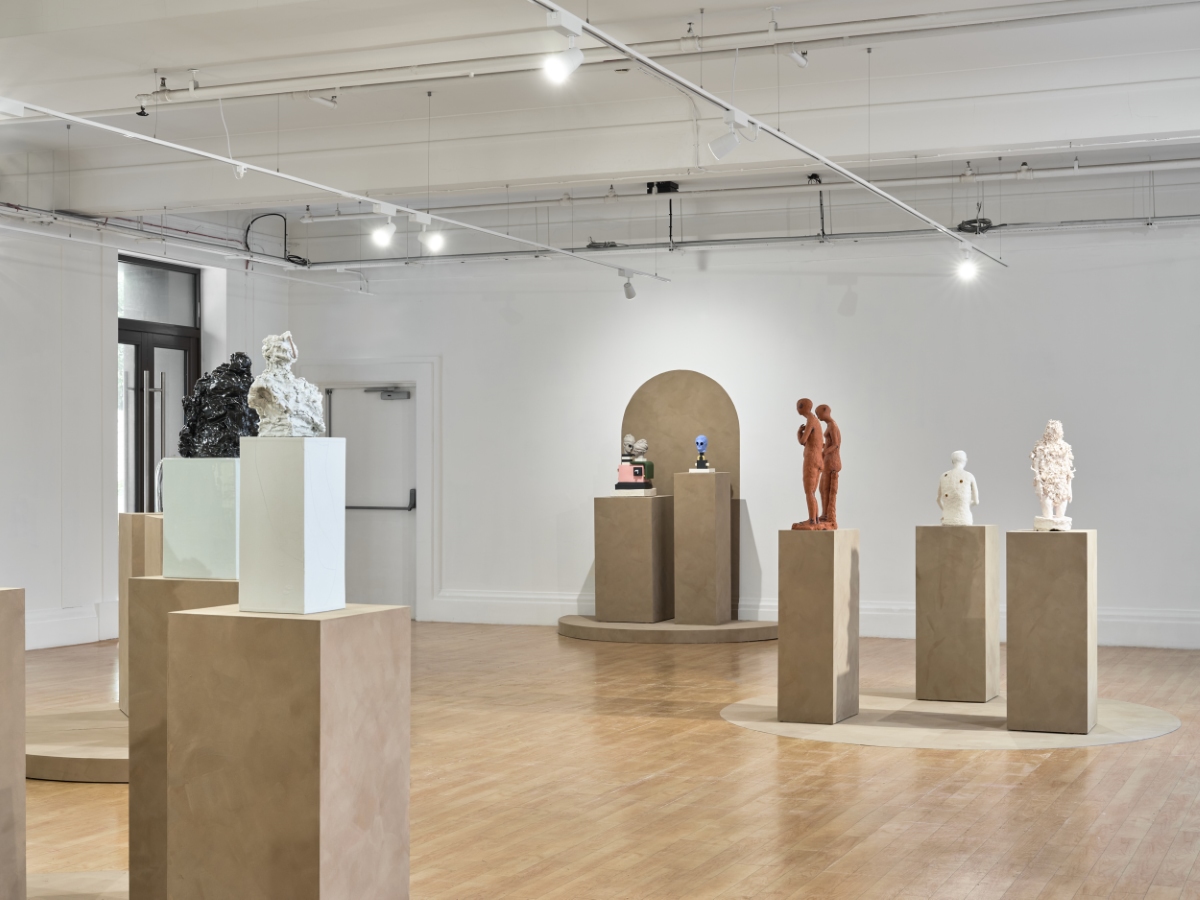
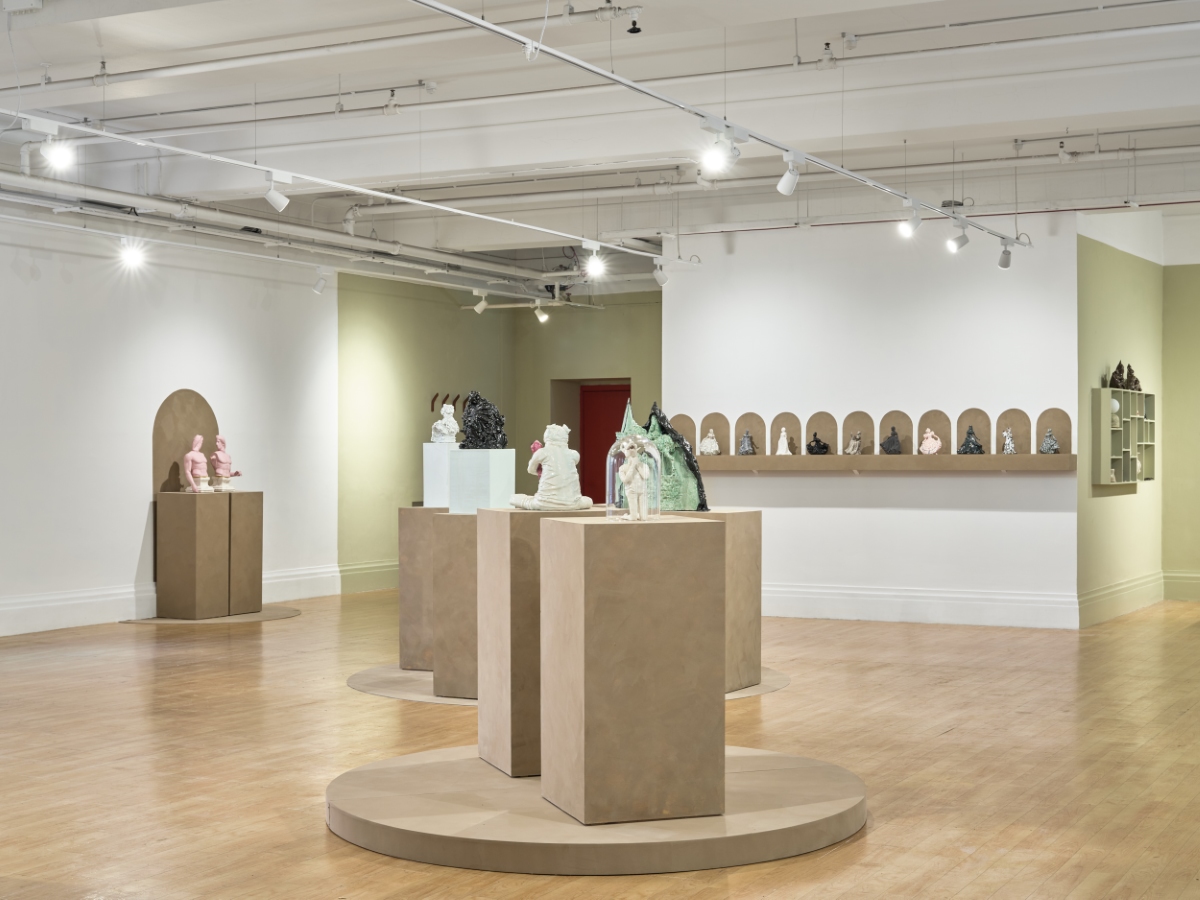
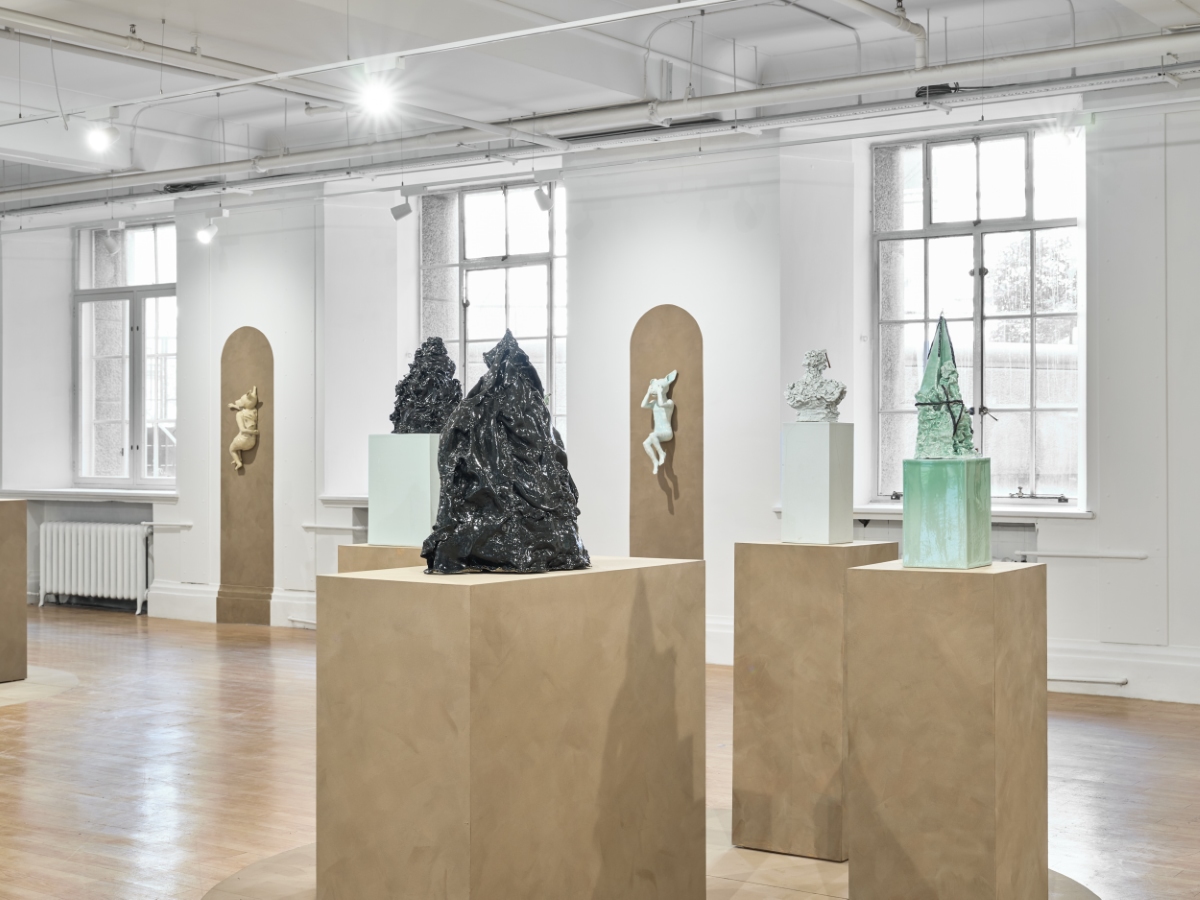
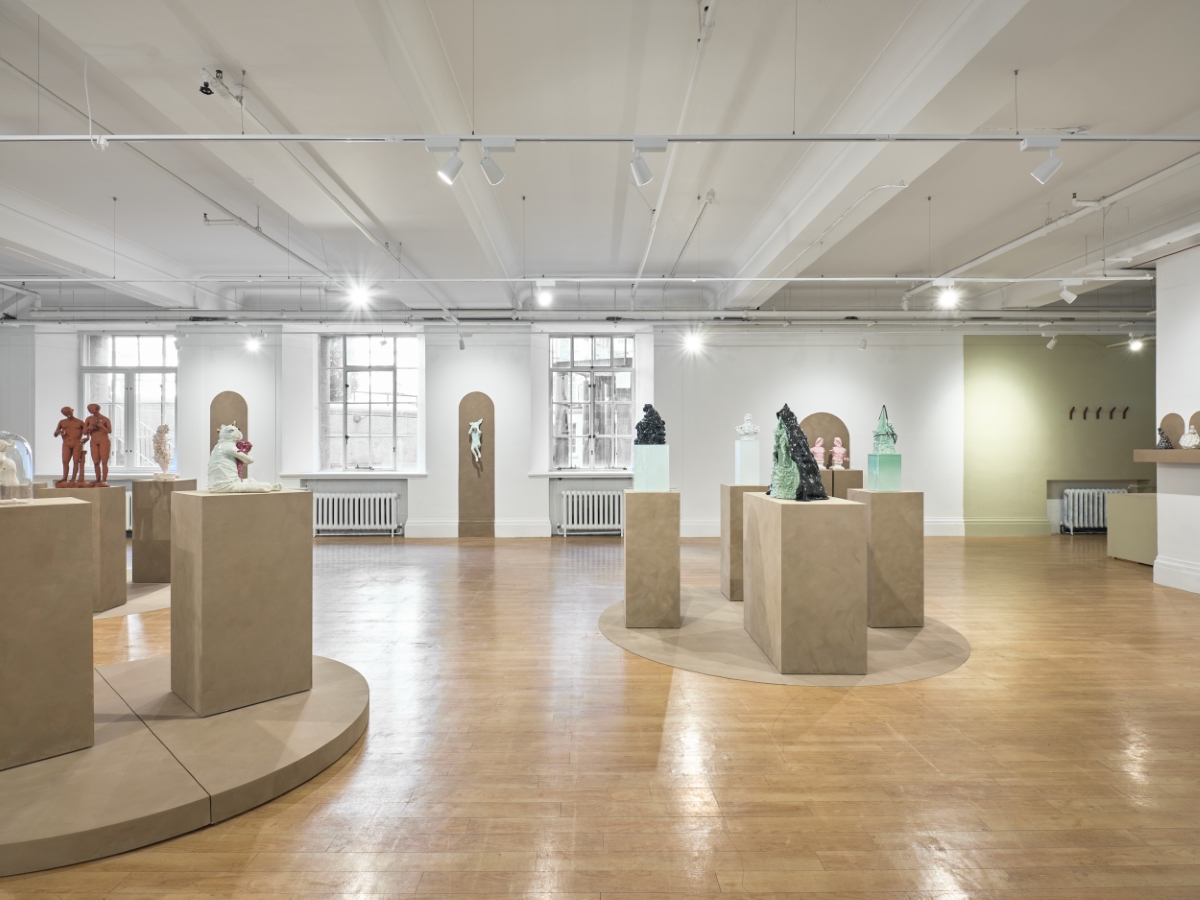
Humans are intrinsically wired to perceive and connect through embodied cues like gestures and facial expressions. However, from a neurodiverse perspective, this recognition is often highly individualised, some people read emotional states through gestures, others through pattern, narrative, or symbolic association. Figurative sculpture works on multiple registers, psychological, spiritual and material, to access what is not directly visible, mediating between inner and outer worlds.
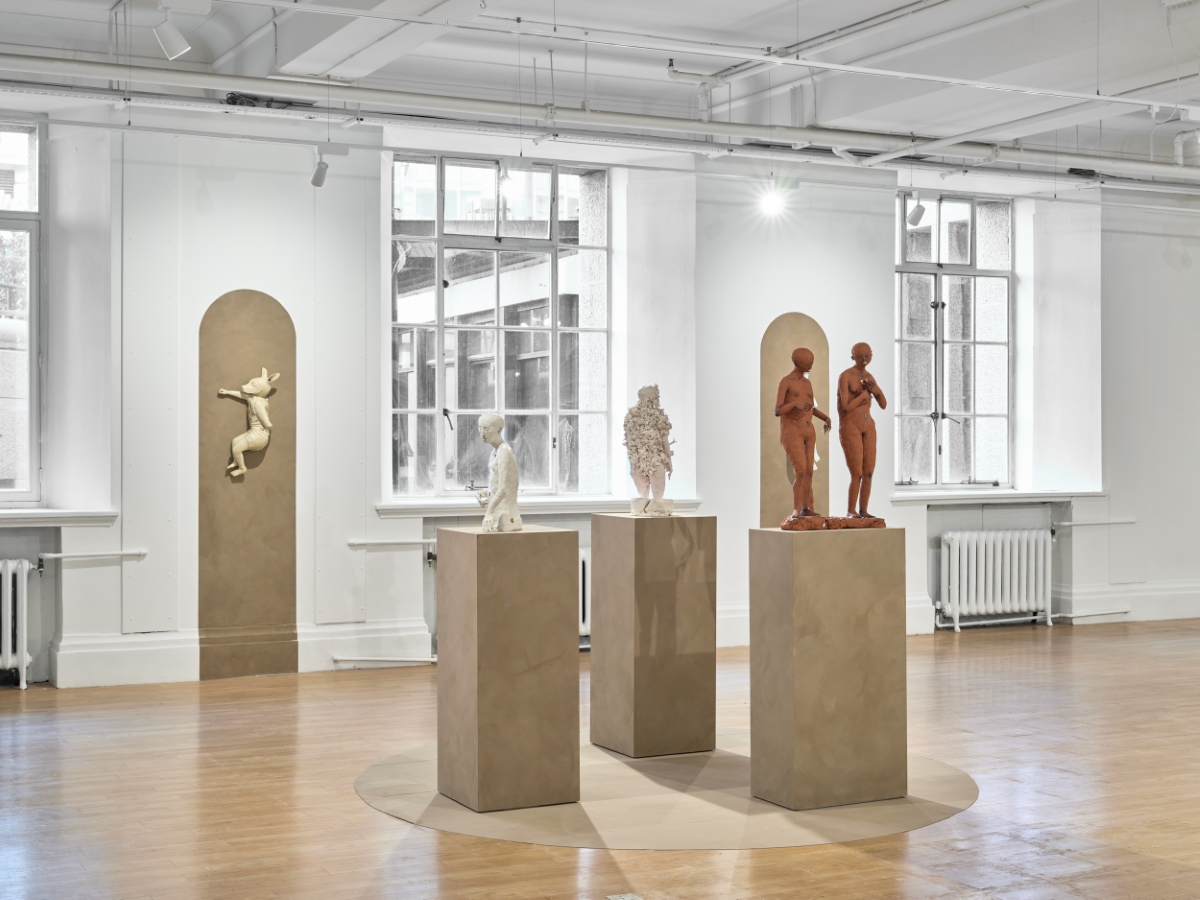
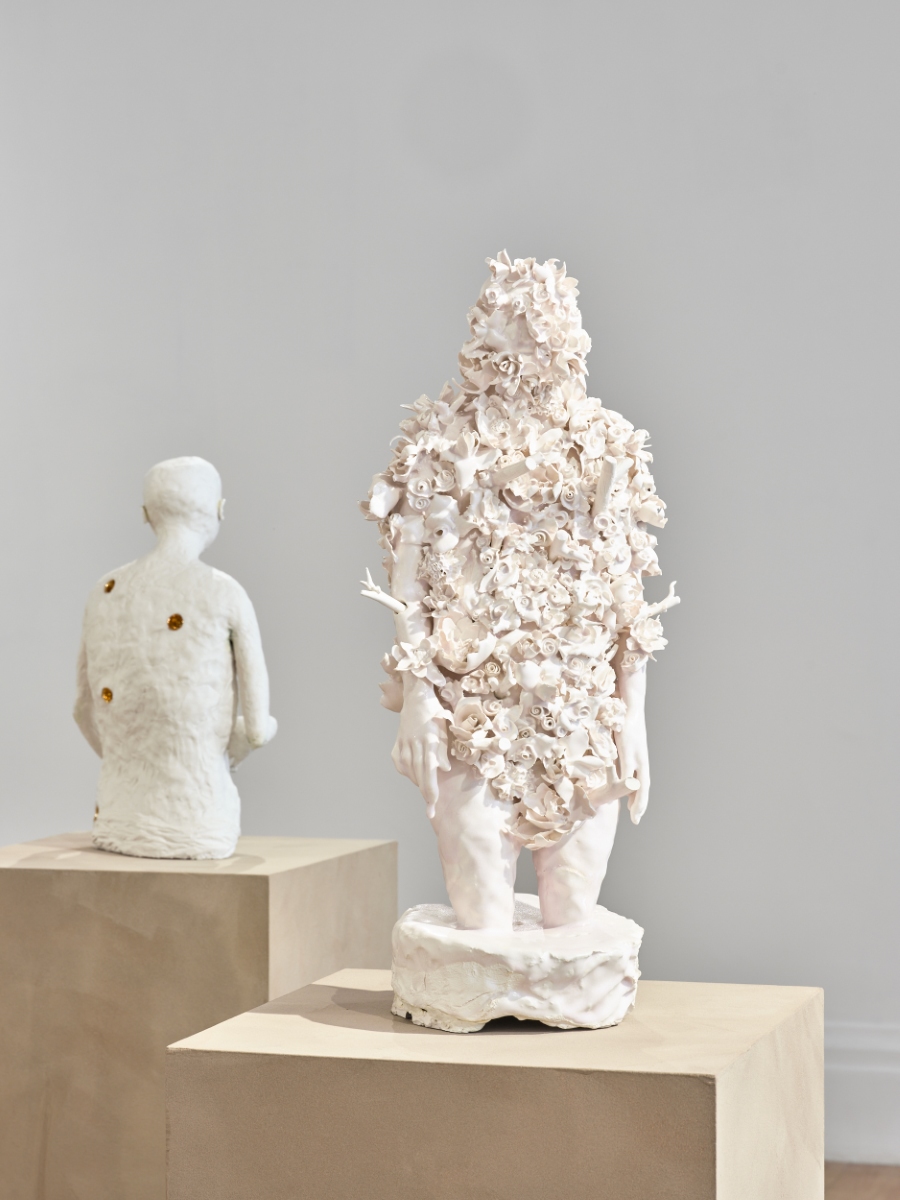
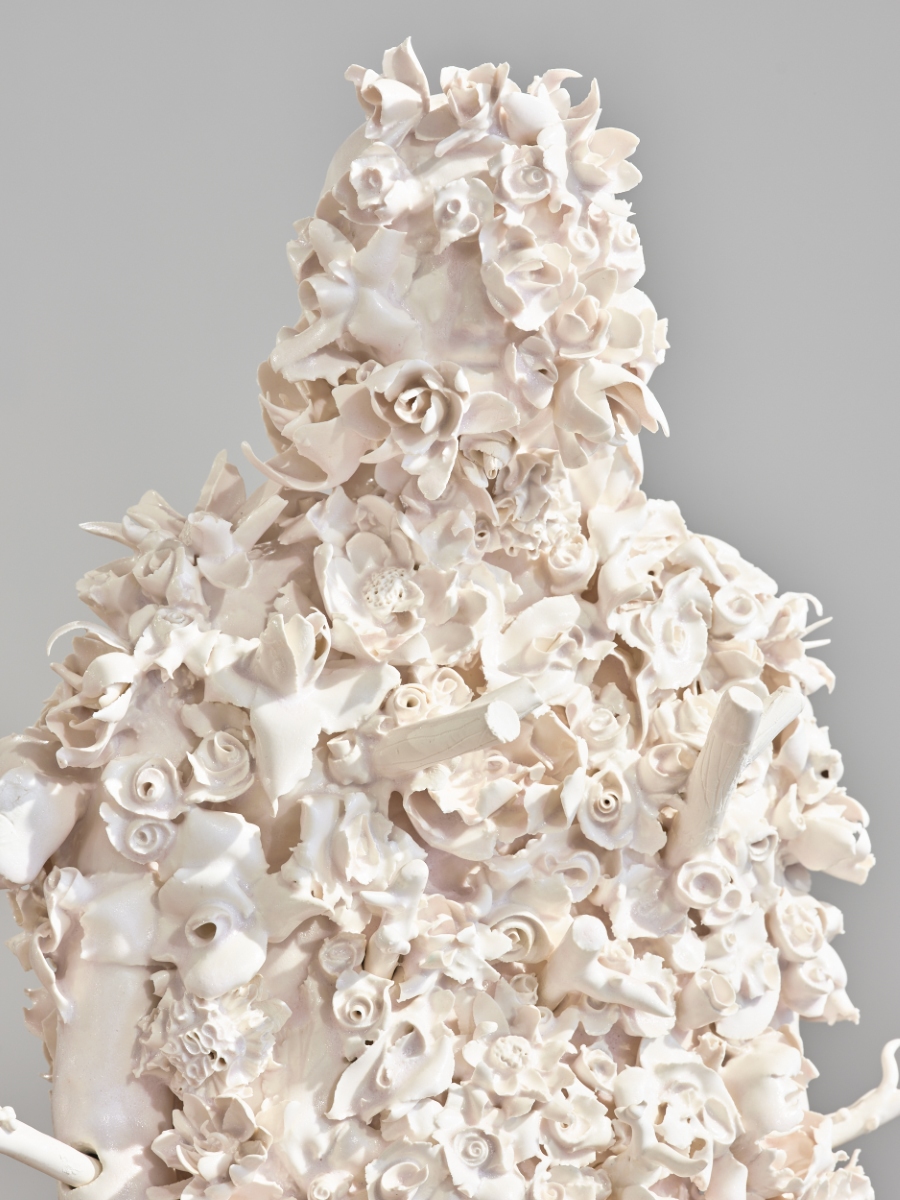
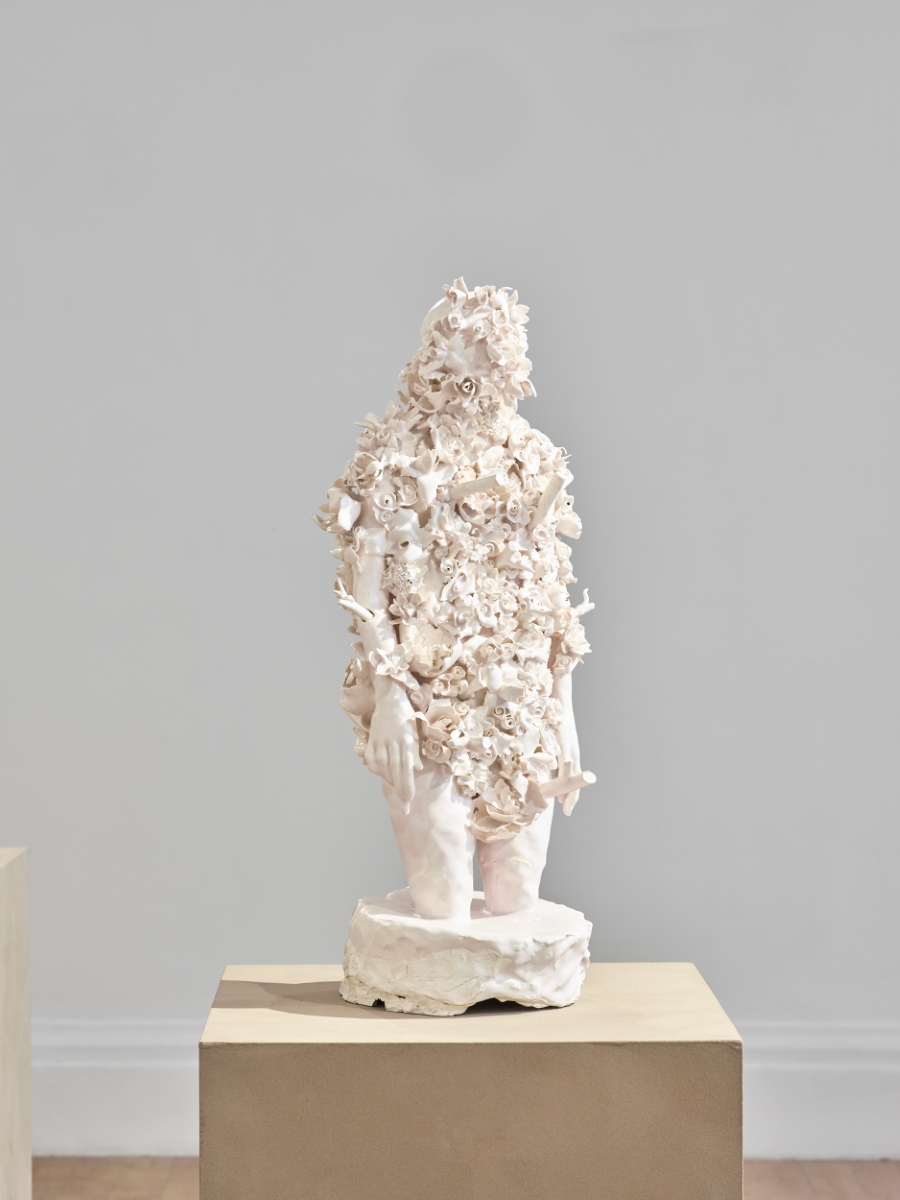
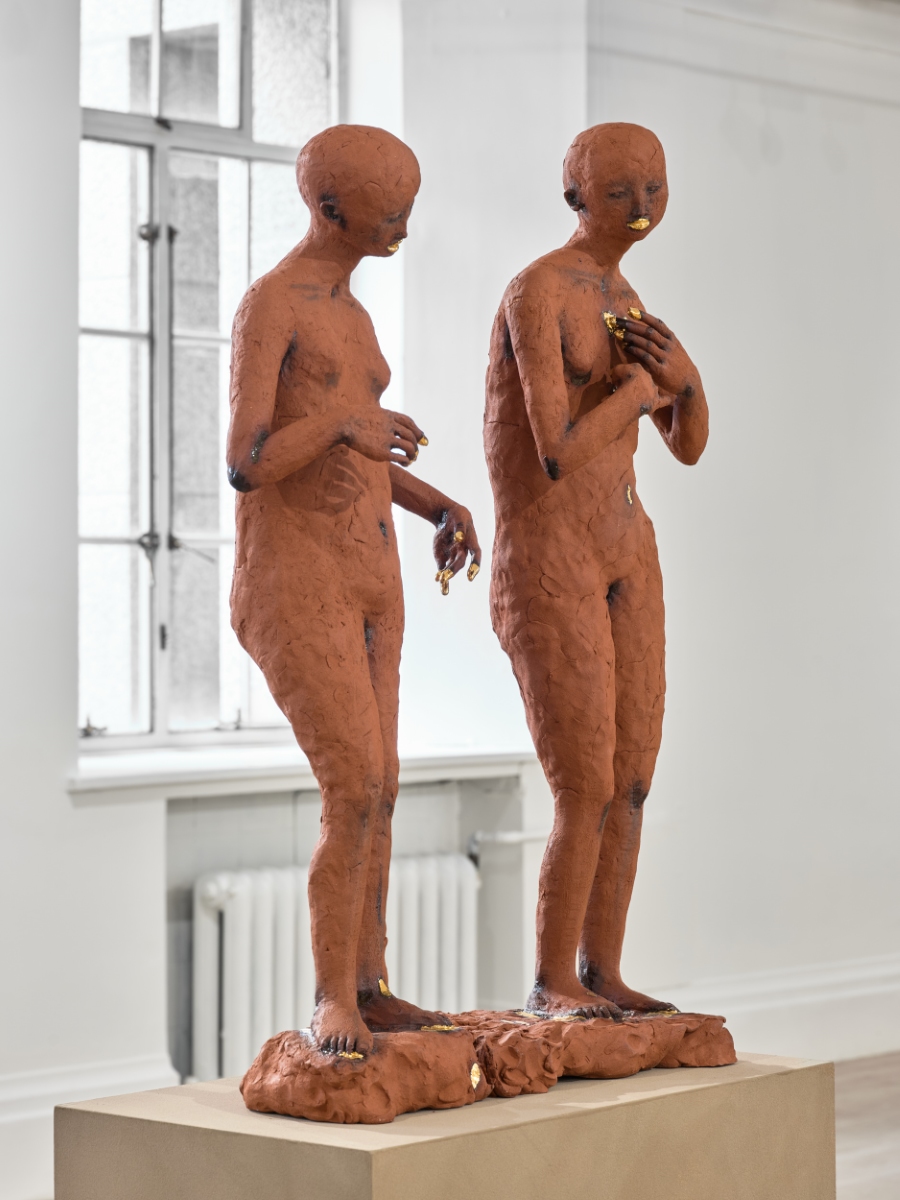
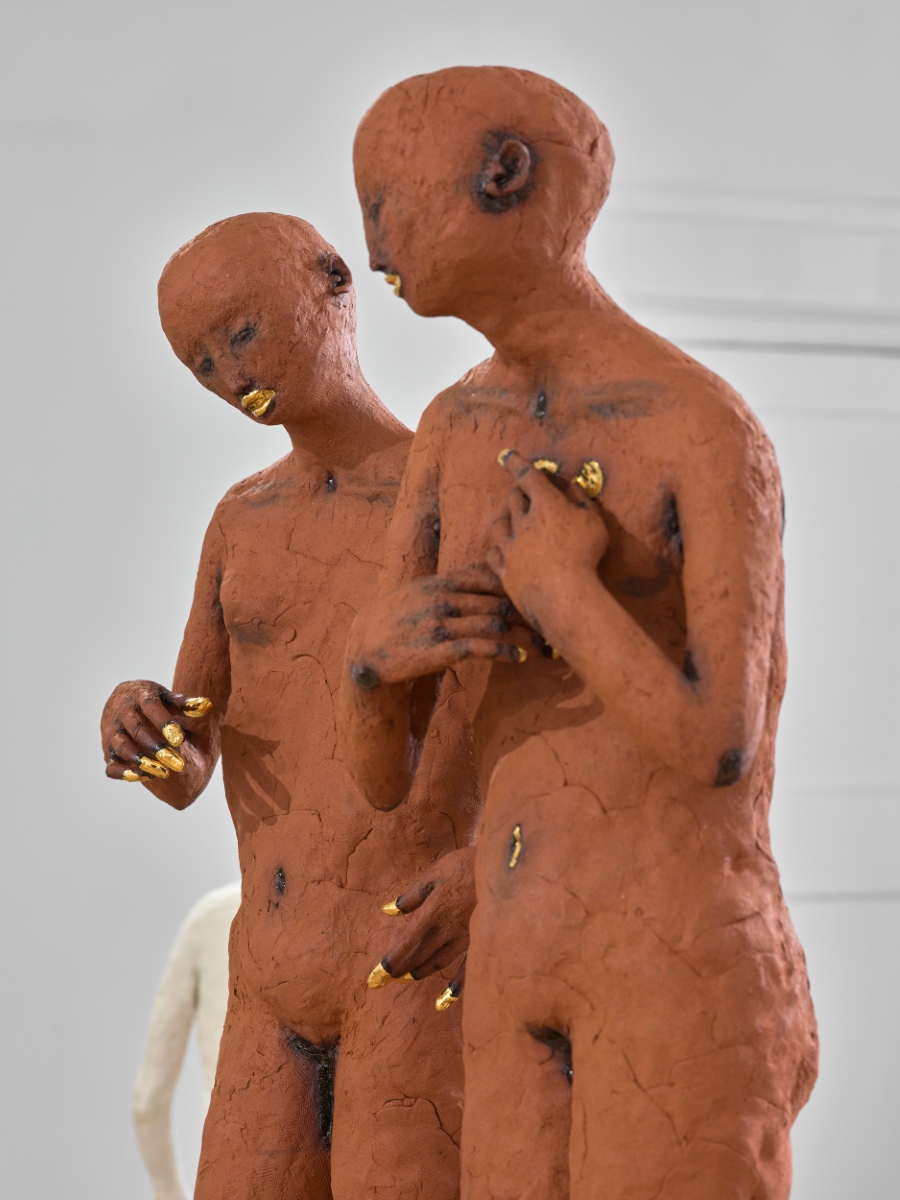
In Italian renaissance art, thresholds refer to the physical and symbolic boundaries between the secular world and the sacred. Claire Curneen’s figures have retained clear vestiges of the sacred, with reference to Catholic iconography, mythological archetypes, and an animistic understanding of matter. Curneen uses this liminal register in her work to highlight that which is most human, doubt, hesitation, grief, ecstasy, resilience, and vulnerability. The first thing I am drawn to in the work is the hands, with their slightly exaggerated proportion and elongated fingers, they do the heavy lifting of conveying the underlying feeling of a piece. What you also notice is the finger marks across the figures surface, visible signs of them having been hand-built from clay pressed into the palm of the artist’s hand, an intimate touch, and joined together to make the sculpture, this is what Claire Curneen has described as ‘spectacle of making’. In ‘Flower Figure’ we see a closer association with Renaissance ceramics particularly the glazed terracottas of the Della Robbia workshop. The use of tin white glaze situates this work within that lineage, but Curneen pushes the material beyond its historical connection. The figure is overwhelmed with foliage, partially hidden from view, its chromatic instability mirroring emotional uncertainty, as if the figure’s inner state is made visible through the unpredictable nature of the ceramic materials, the tin having been tinged pink in the presence of chrome in the kiln.
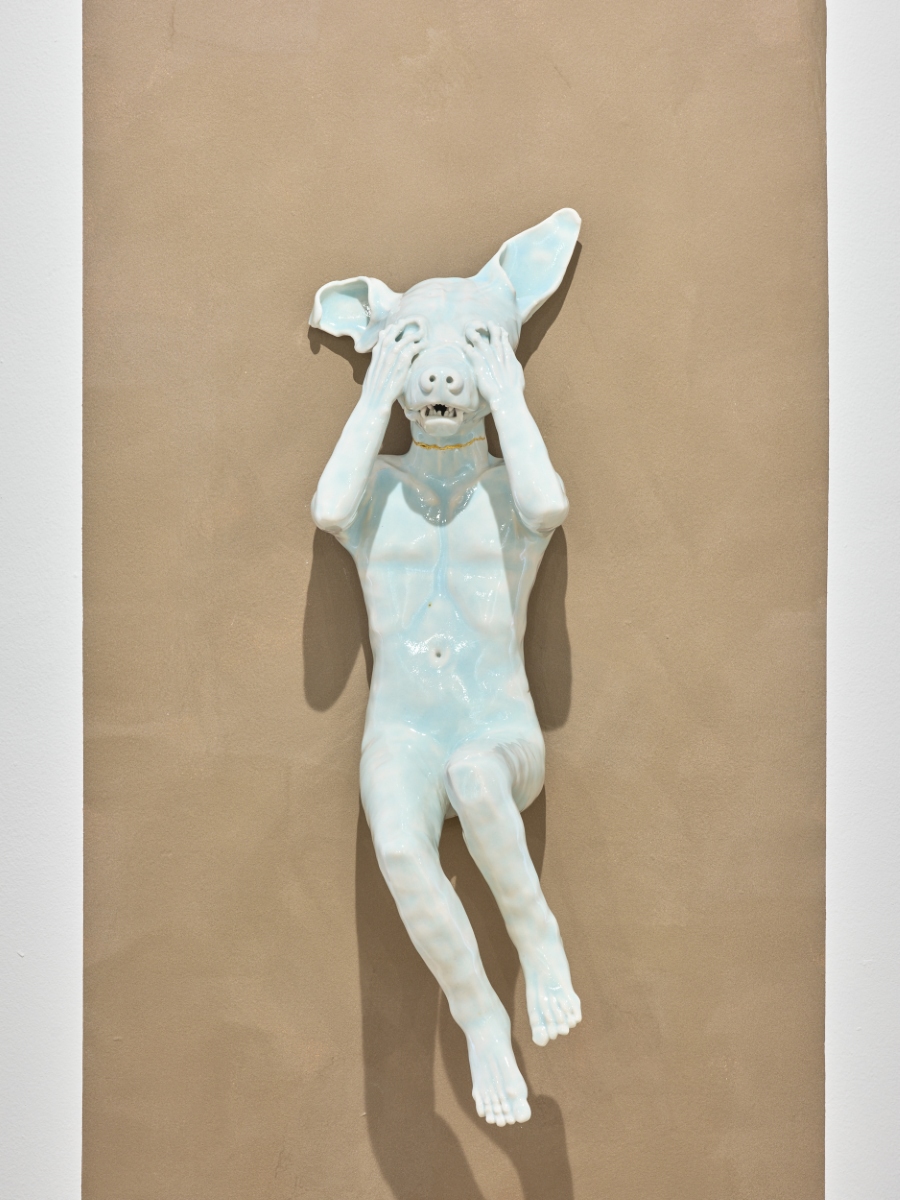
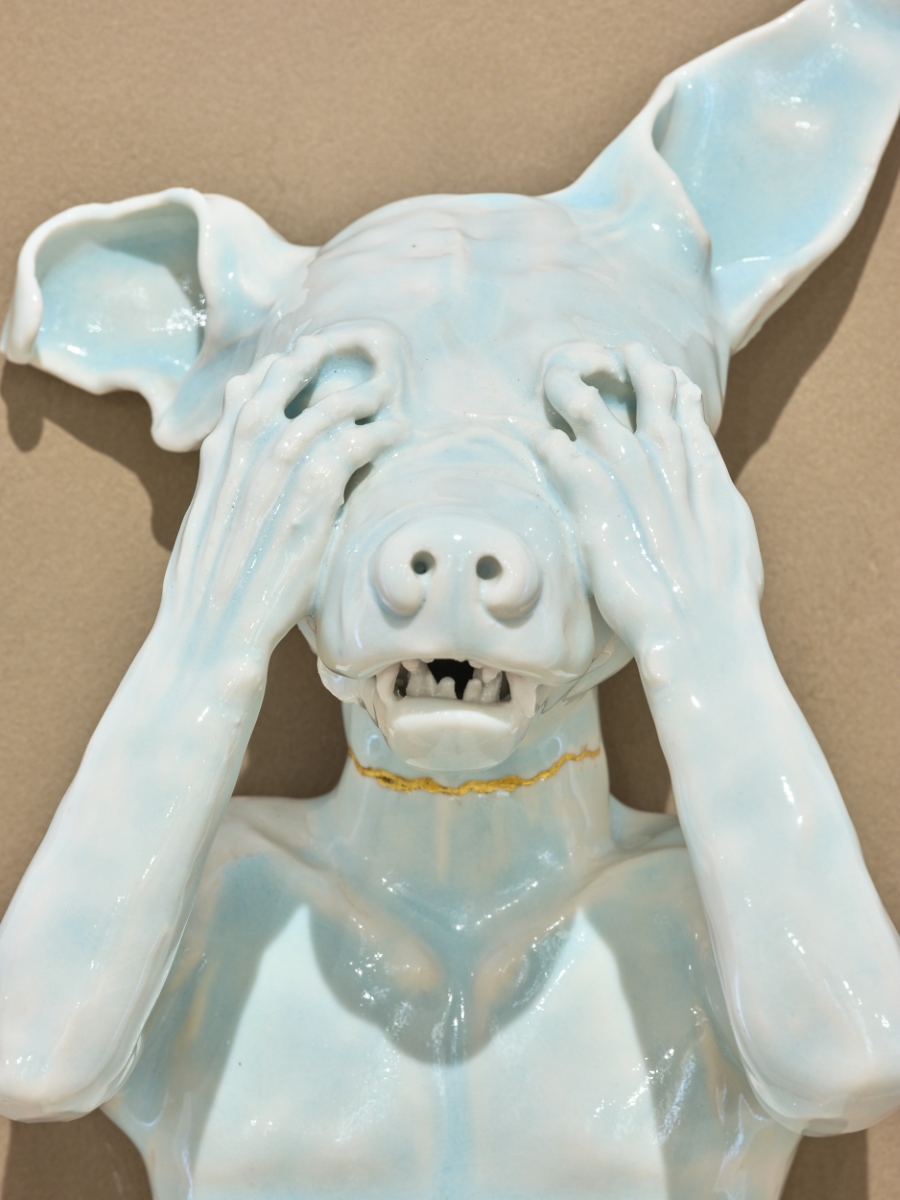
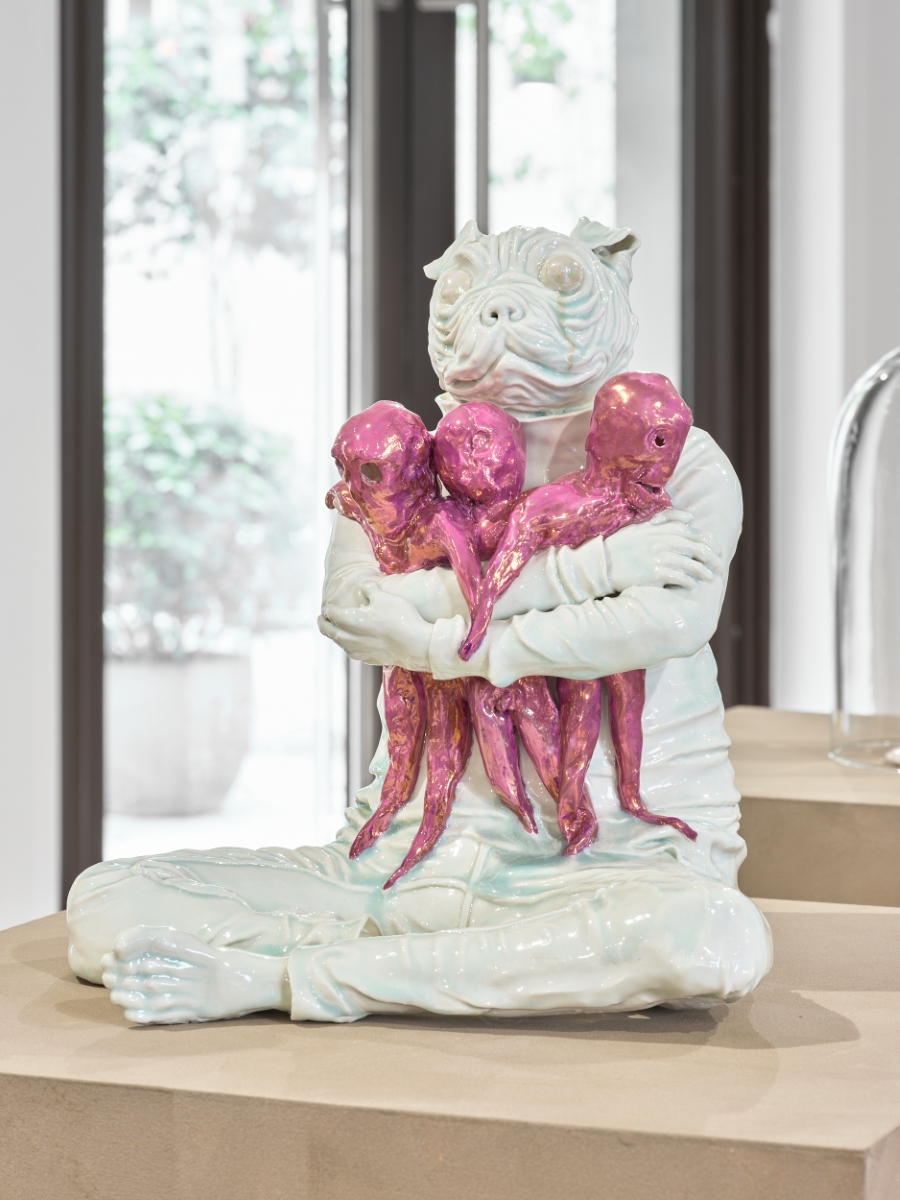
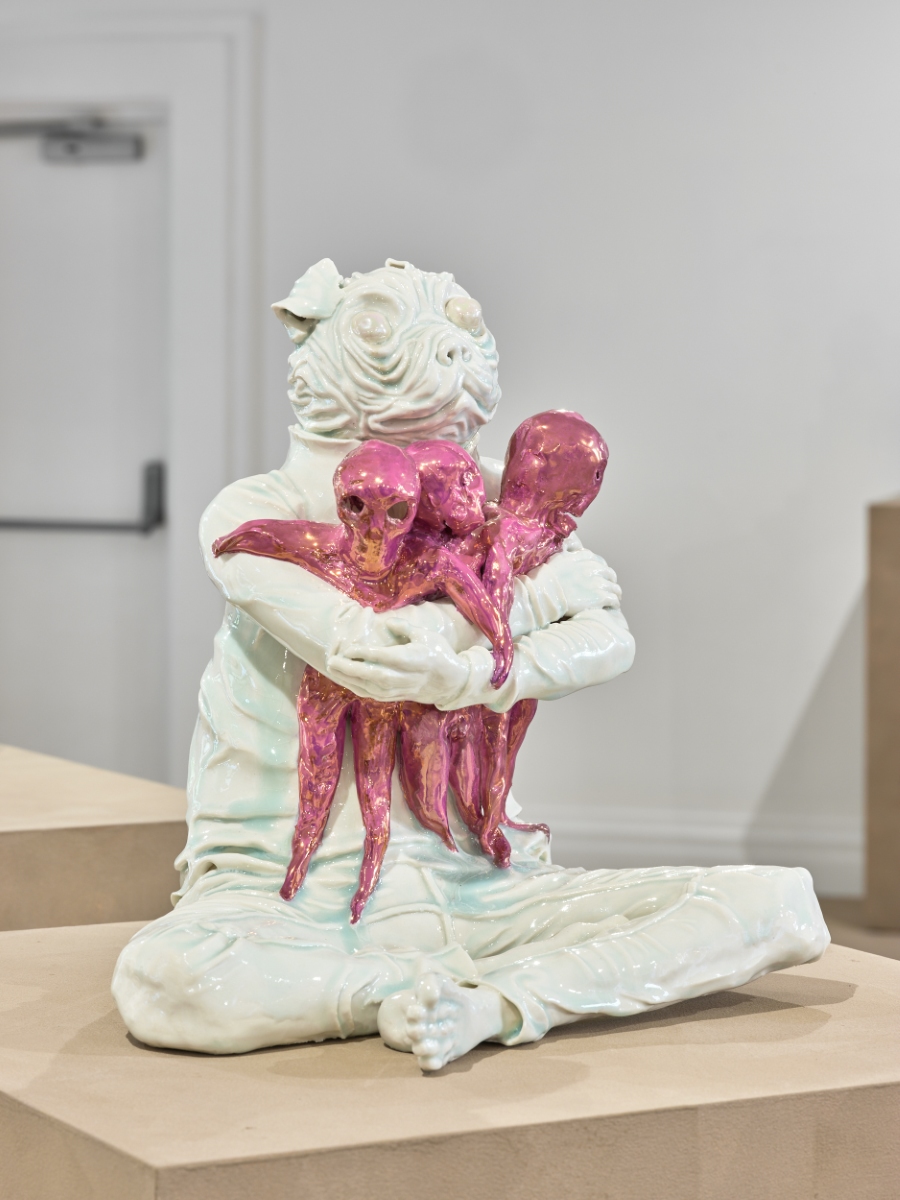
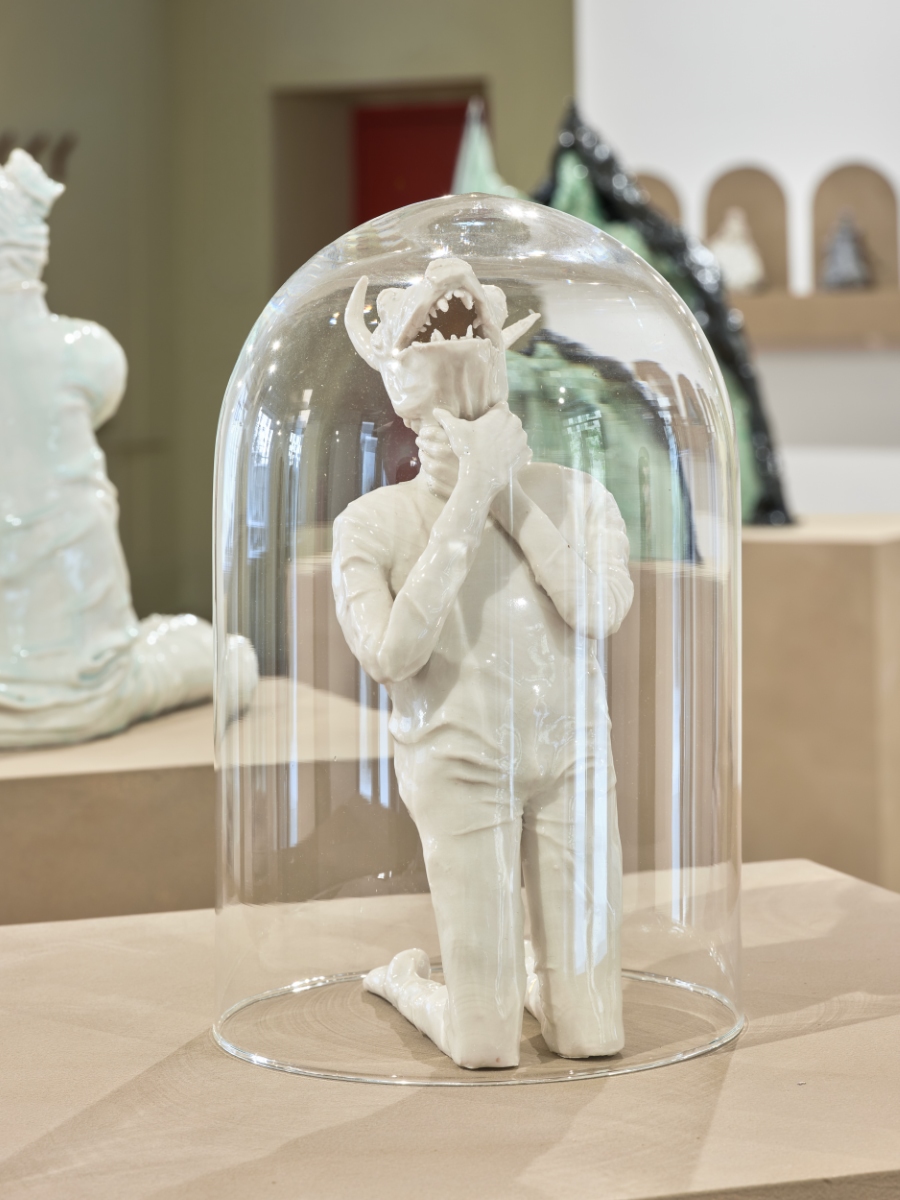
Fernanda Cortés is another artist in this exhibition whose figures feel present but not fully of this world, translating abstract psychological states into tangible hand‑built animal–human hybrids that occupy the border territory of the human and non-human. Cortes’ ceramic figures have detailed backstories, fleshed out narratives accompany the sculptures, resisting dehumanisation. Stories restore complexities to bodies that might otherwise be read through reductive frames, insisting on interiority, memory, and lived experience. Cortes has said that her family’s dogs have been a great source for her work and she ‘always felt more accompanied and loved in their presence’. In Mesoamerican folklore, dogs are often liminal beings, creatures that straddle the threshold between the living and the dead, the human and the divine, and the civilised and the wild. These emotional thresholds are present in the work ‘Bad Friendships’, sat cross-legged, the pug faced figure clings tightly to grotesque pink lustred babies. From its glassy eyes, pearlescent tears flow down in torrents, staining the white stoneware body. The ‘otherness’ of animal-human hybrids allows a fraction of distance to safely examine dense emotions like grief, resilience, loneliness without being too literal or personally exposed.
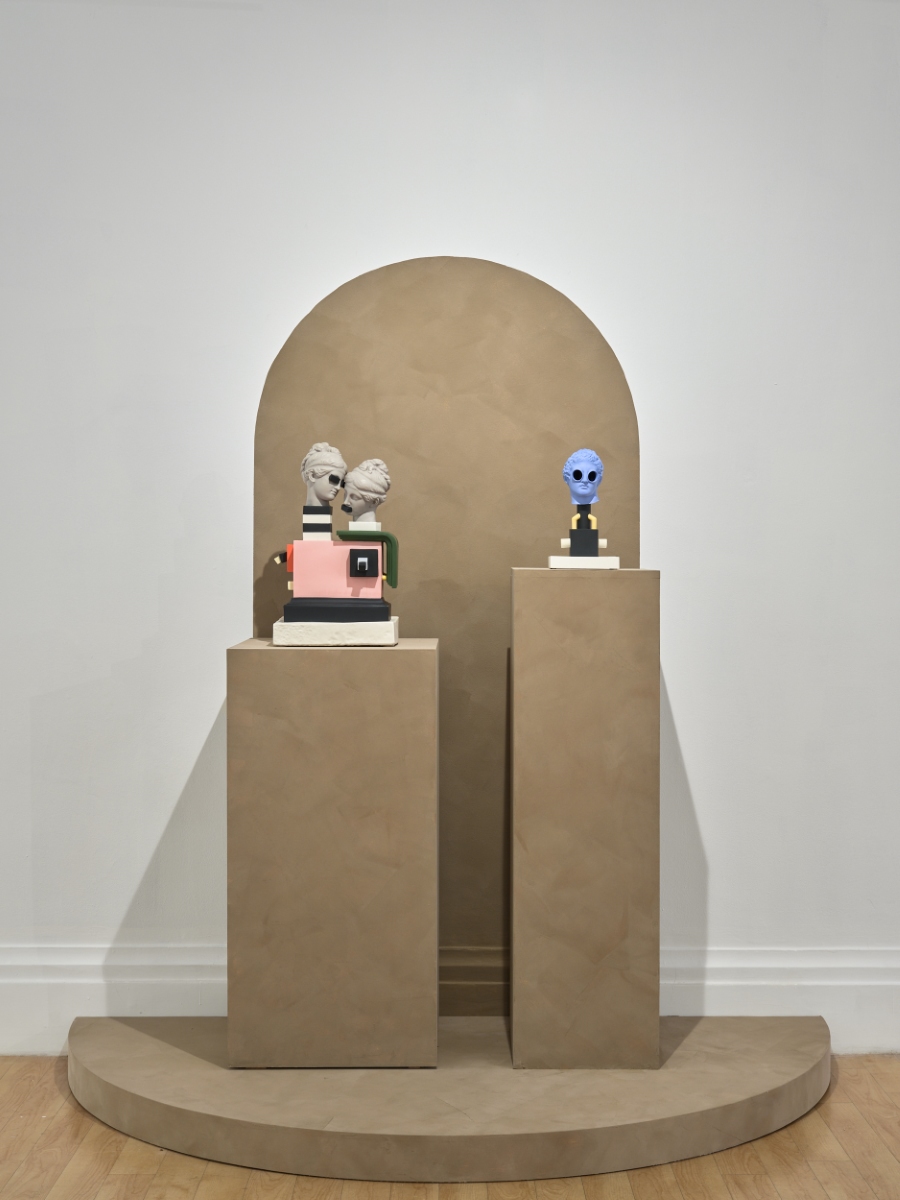
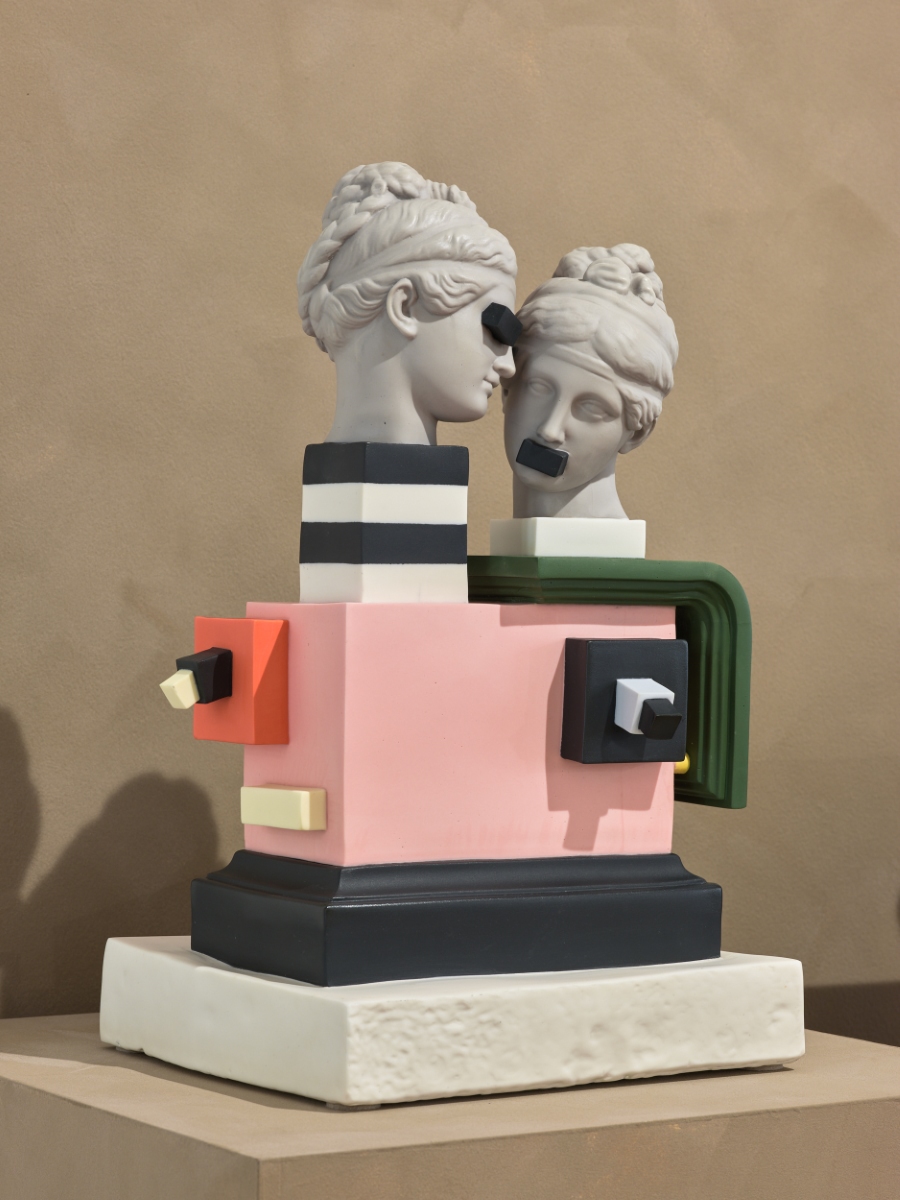
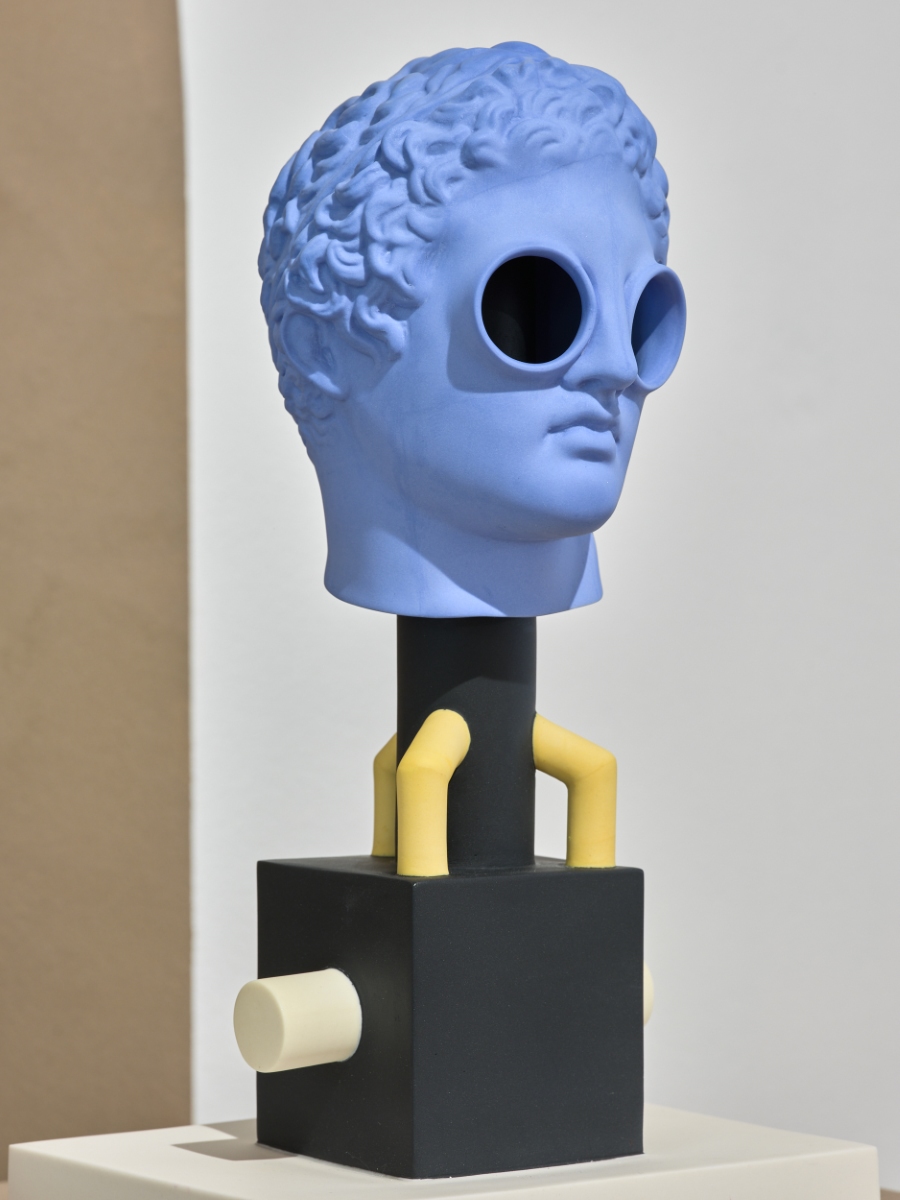
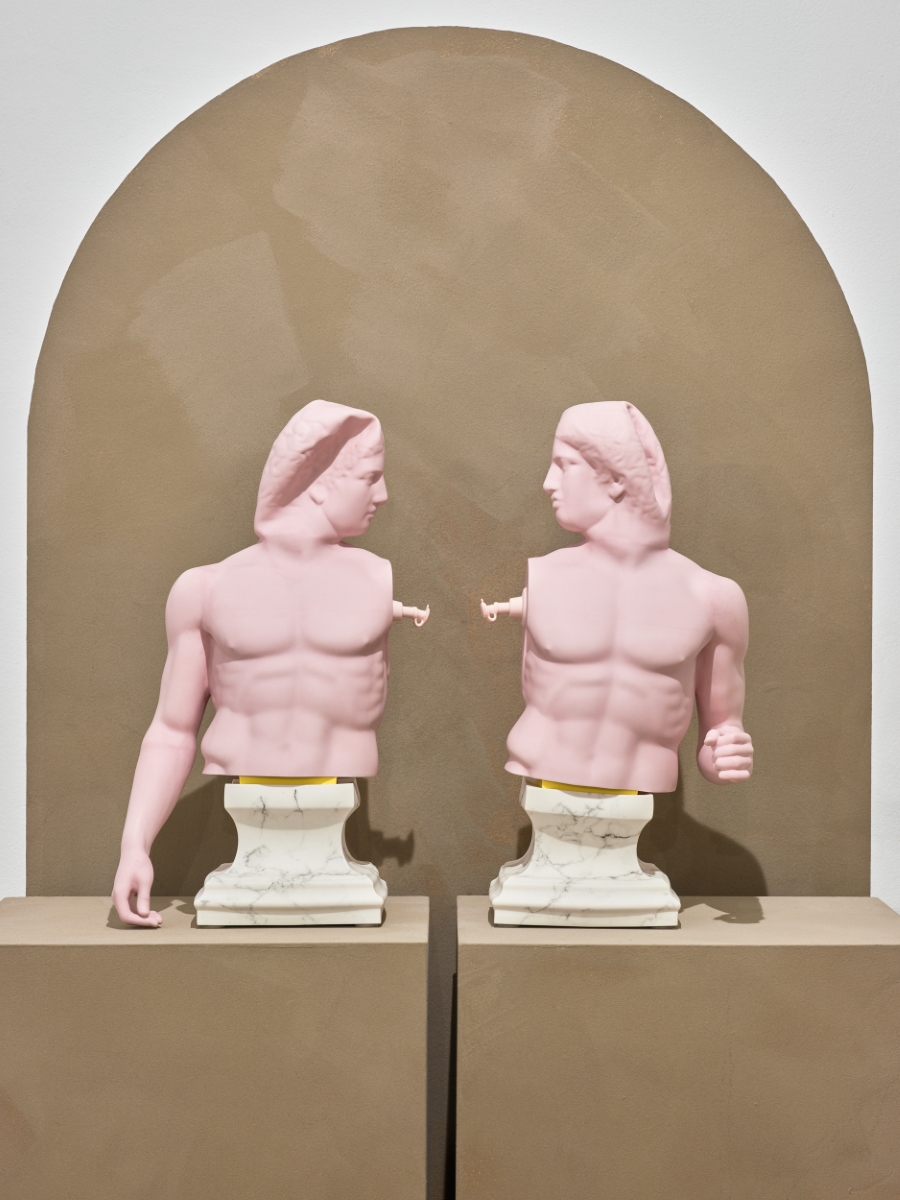
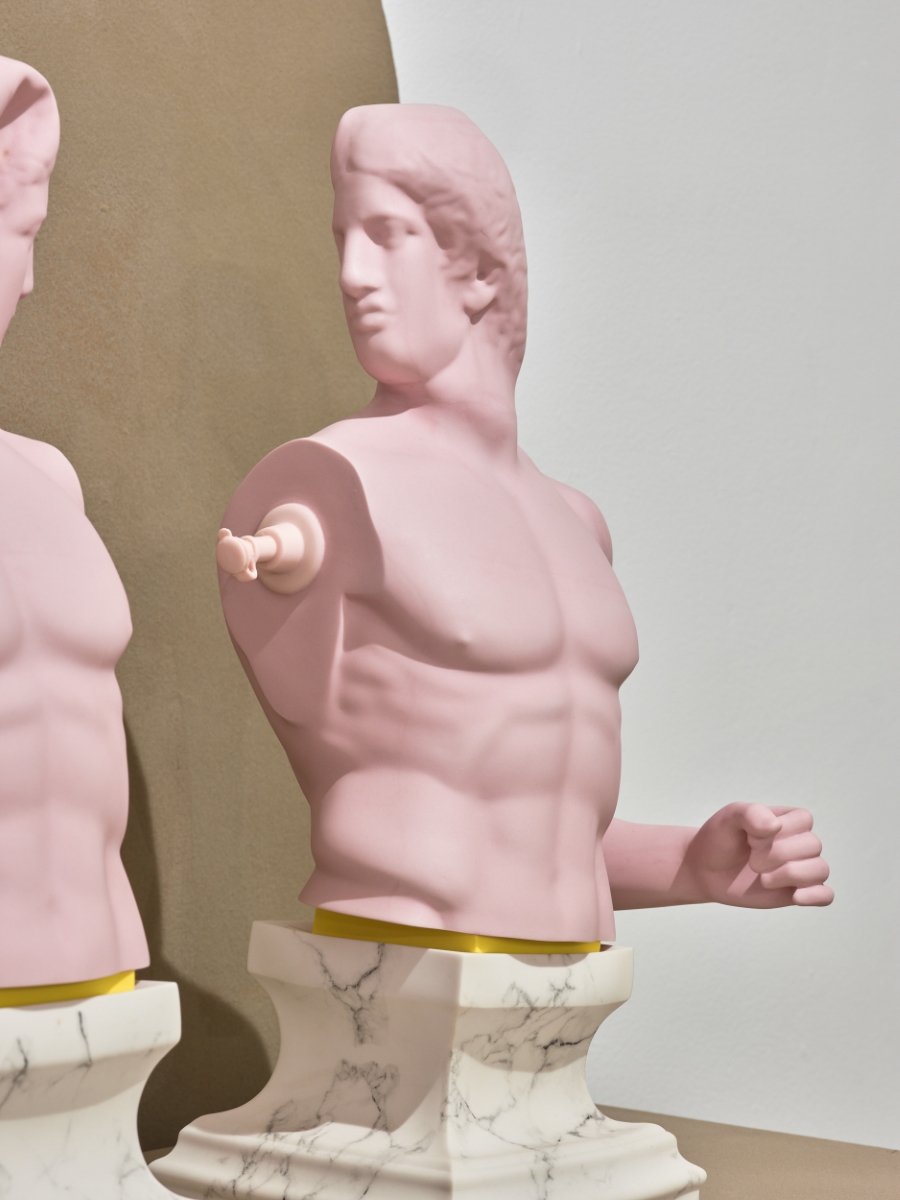
Both Cortes and Curneen use figuration to access interior states and in this, clay and ceramic processes become mediators between inner and outer worlds. John Rainey extends the exhibition’s concern with figuration into post-digital space, where bodies are endlessly reproduced and altered and traditional figuration thresholds breakdown. Using the language of classical sculpture, Rainey reveals the plasticity of digital culture and the fragmentation of identity that is constructed, performed, and disseminated. Using creative commons-scans of classical sculptures, Rainey re-mixes the sculptural lexicon, tapping into a history of reproductions, from Roman copies of Greek statues to reflections of nationalistic propaganda. Disrupting classical sculptures’ emphasis on bodily ideas, gendered expectations and whiteness. Rainey combines digital fabrication and traditional casting techniques using parian porcelain, a material developed in the 19th century to mass produce domestic scale copies of classical sculptures, to make ‘Relics from an alternative reality’. He has exploited Parian’s material behaviour, both through the casting process and how it slumps at high temperatures, ‘The Deflatables’ is two partially deflated pink bodied torsos with air valves are on marbled pedestals, not quite mirror images of themselves. Colour, artifice and humour are wielded throughout Rainey’s work and is extended to ‘A Peeling’ where the classical sculpture has had its marbled skin pulled back like a latex suit, its edges wrinkled up, to reveal a fleshy interior. This follows illusionistic sculptural traditions of replicating fabric folds in stone but has camped it up, the interior is a fake, a digital surface that is our mediated reality.
Jessica Harrison’s work also operates within this mediated reality, using online platforms and the proliferation of images to generate the ‘Vandalised Sculptures’ series. She has used internet searches of the same phrase to find images capturing the moment contested public sculptures have been torn down or defaced. Harrison has turned these into work that resemble artists scaled-down maquettes for monumental sculptures. Public statues are not neutral, they are inherently performative, designed to project power, authority, and a static universality. This apparent permanence masks more complex histories and privileges certain bodies, and values while marginalising others. Public statues become points of action and Harrison’s work captures the pomposity of public statues, knocked off their pedestals, these public figures have complicated legacies that may continue to cause harm. Defacing statues and other forms of public figuration is not simply an act of vandalism but a visible assertion of competing tastes, values, and historical interpretations. The act of defacement reveals the instability of figuration, it is complex, plastic and defined as much by what is removed or obscured as by what remains. In Harrison’s ‘found figurines’ series, mass produced ‘Pretty Ladies’ figurines, sourced from online auction sites have been encased in thick fragmentary glazes through multiple firings, covering up the kitch. In both bodies of work, circulation, whether through viral images or auction listings, becomes a mechanism through which figuration is re-authored. Harrison retains in the titles of each piece the wording of the original listings, including typos, errors, and seductive sales descriptions, this individualises the figures and the collectors who presented them. Harrison’s work reveals that figuration, especially public statuary, is not fixed but continually renegotiated through acts of circulation, damage, and reinterpretation.
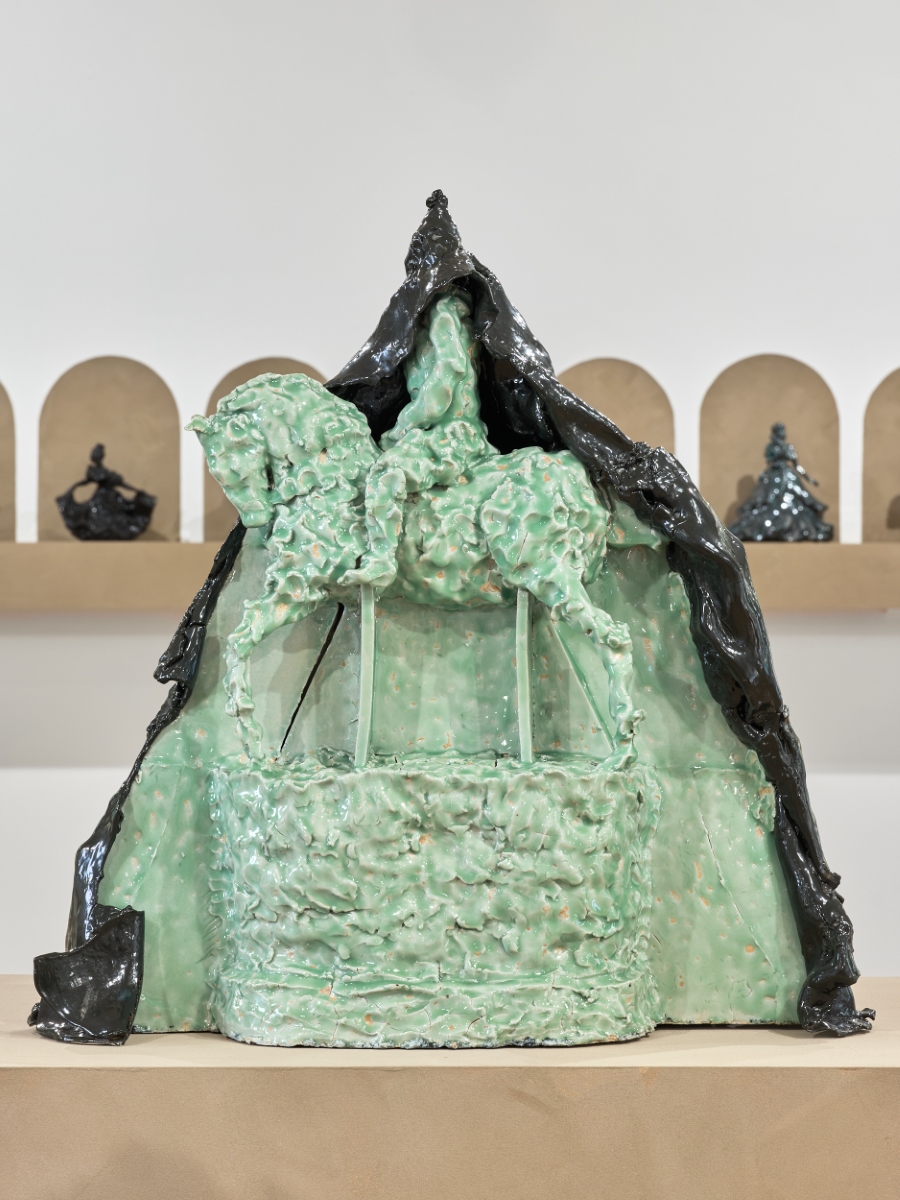
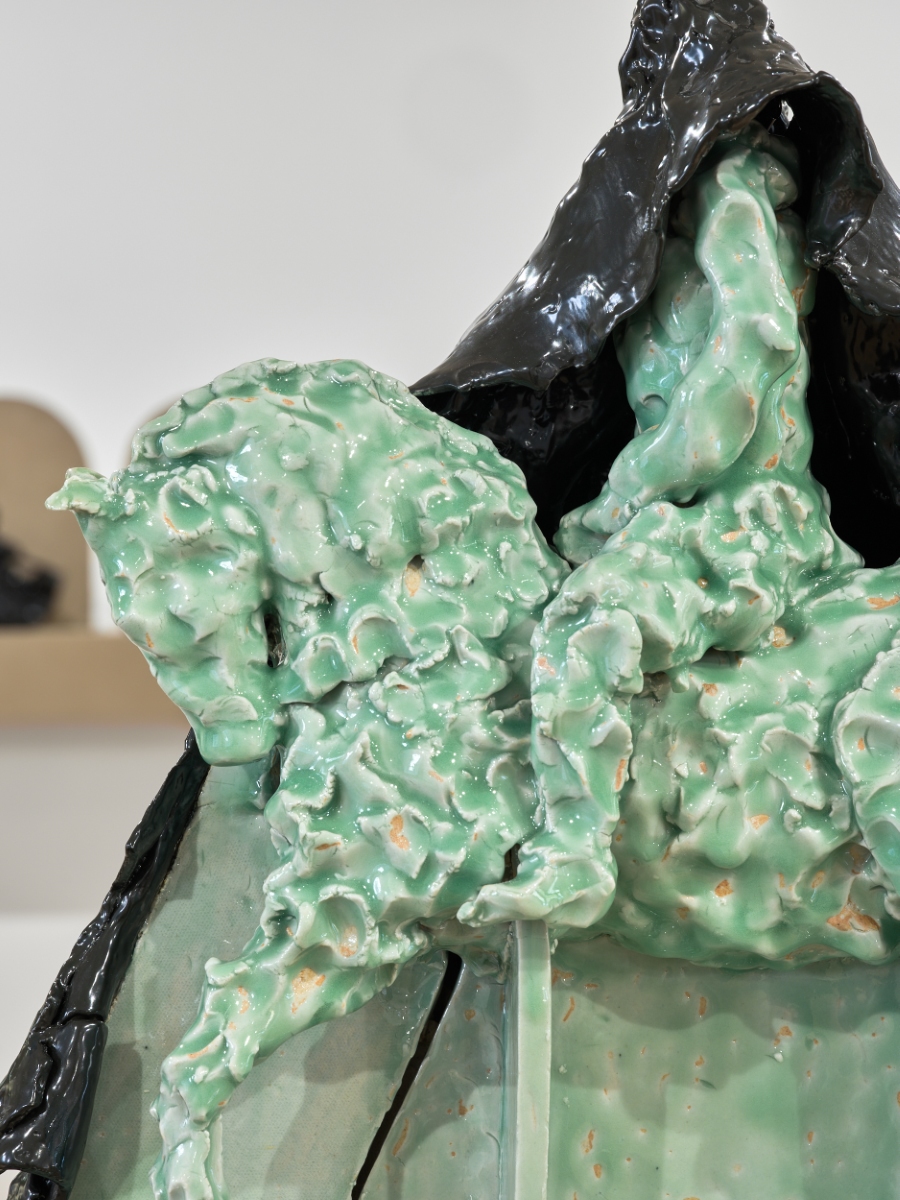
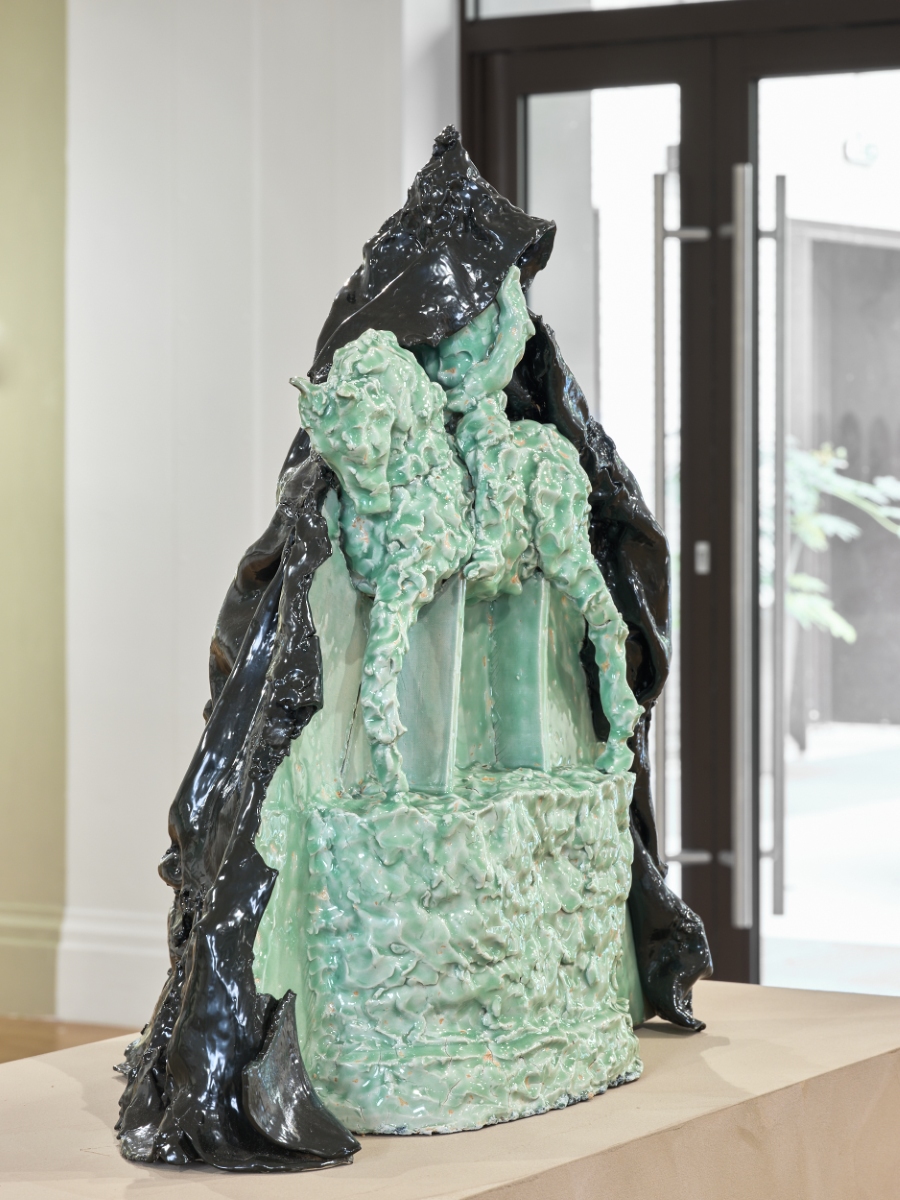
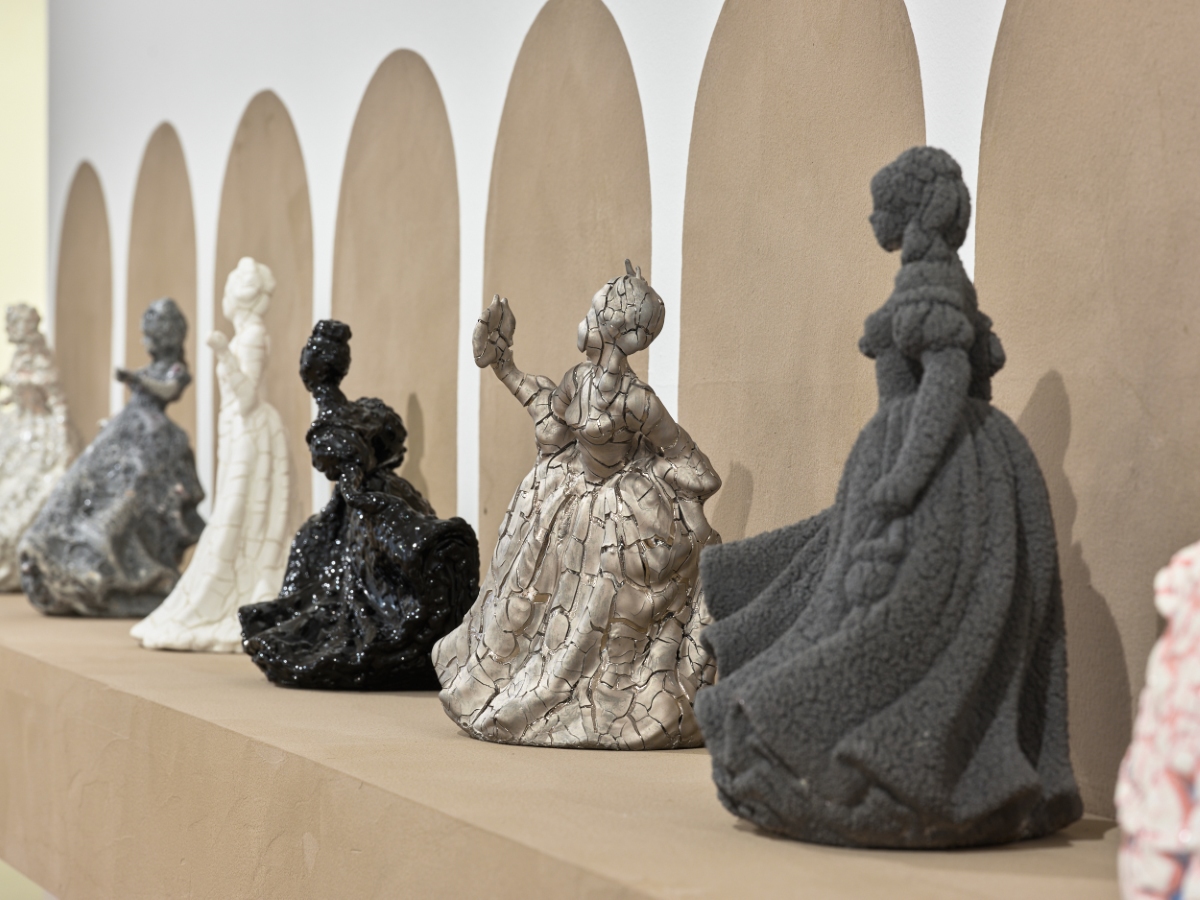
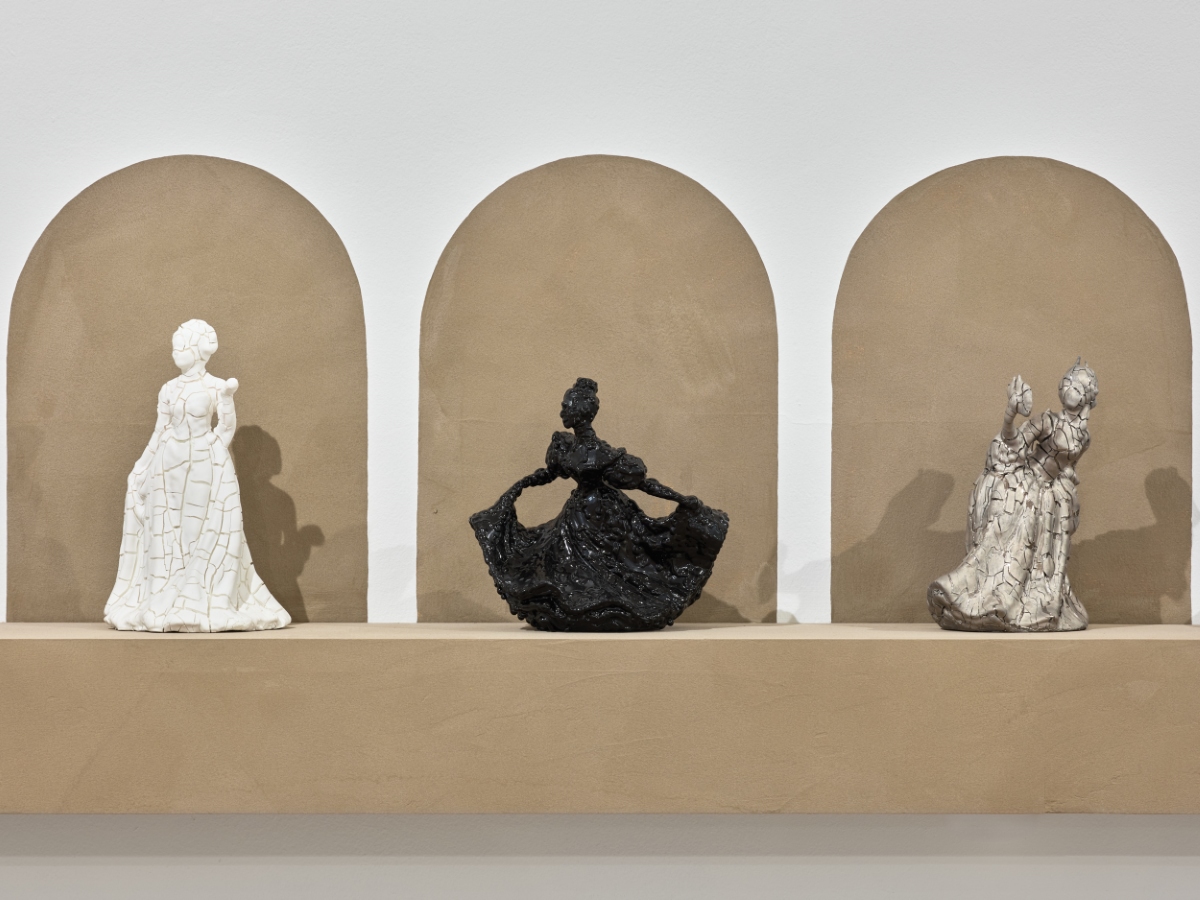
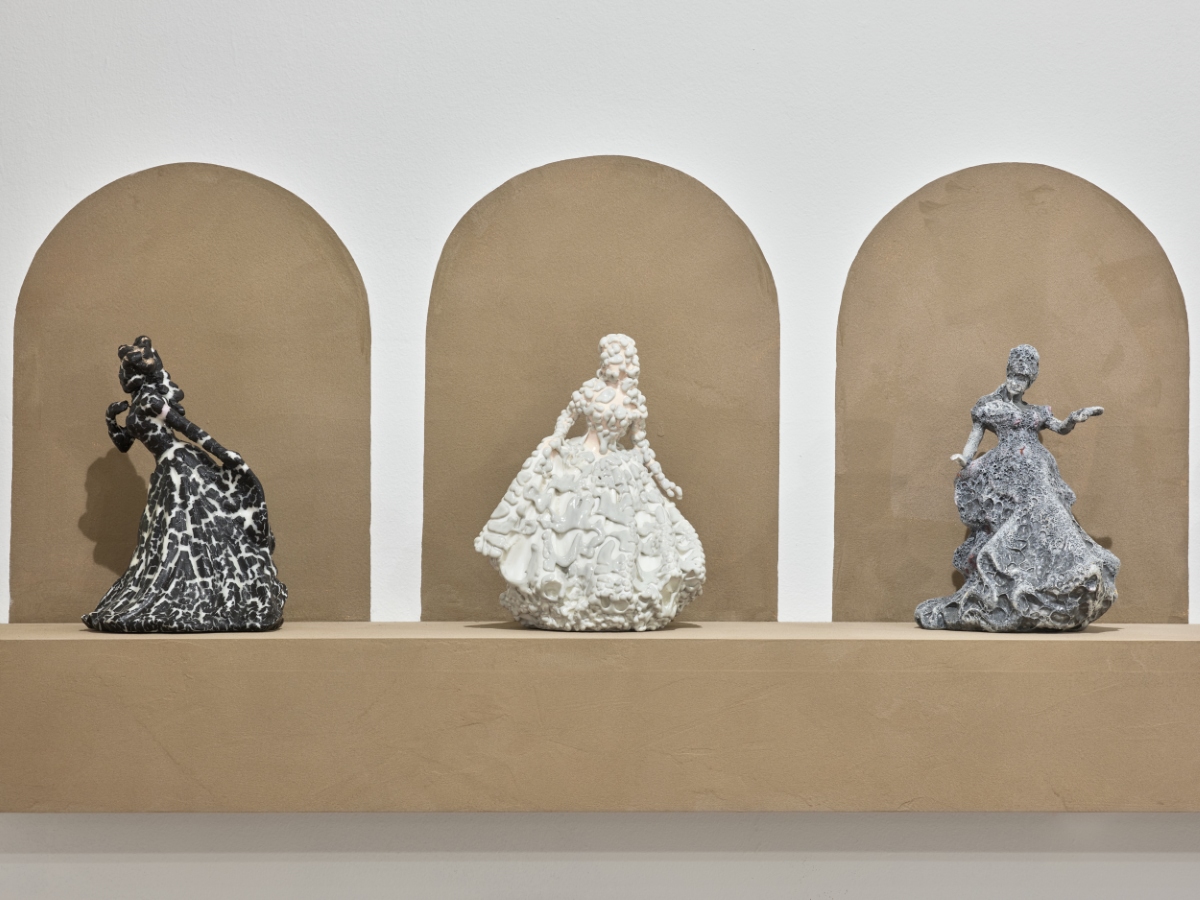
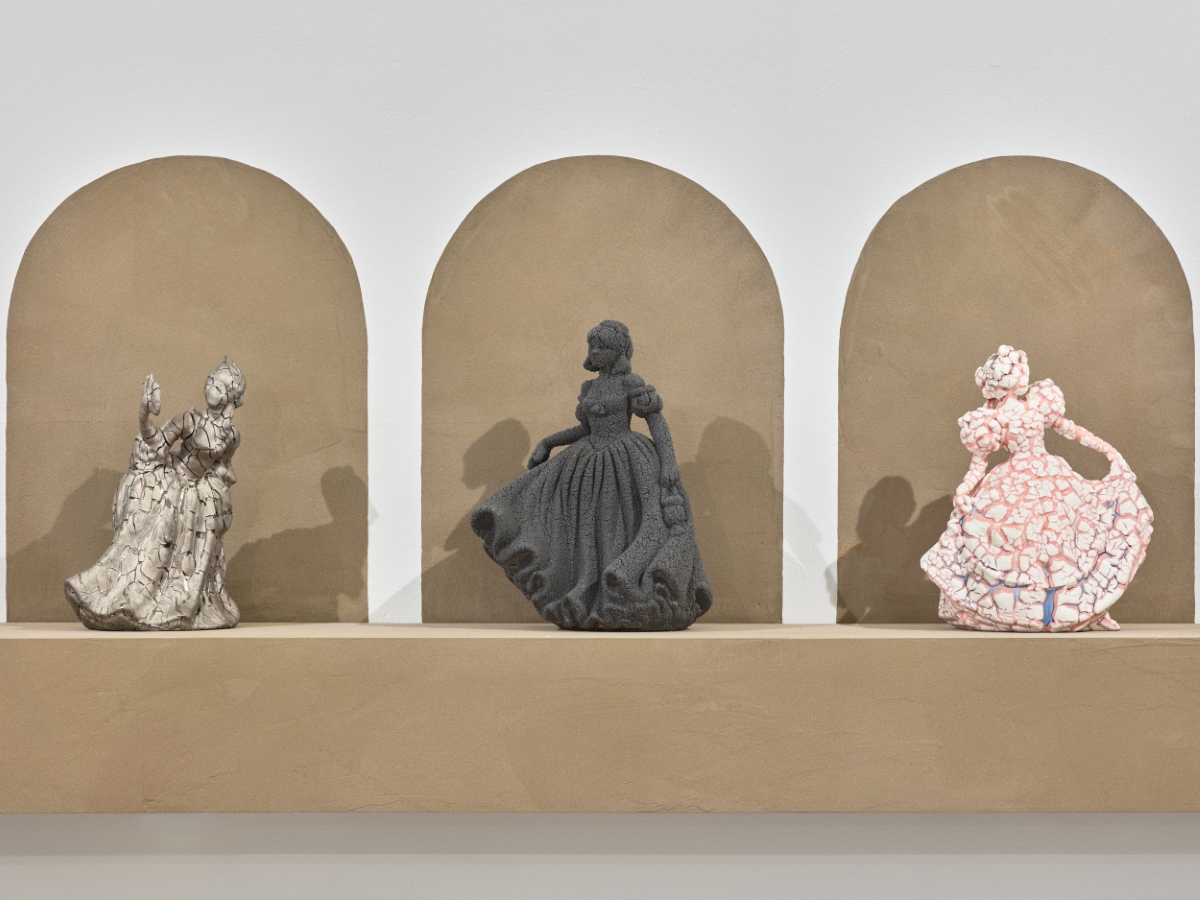
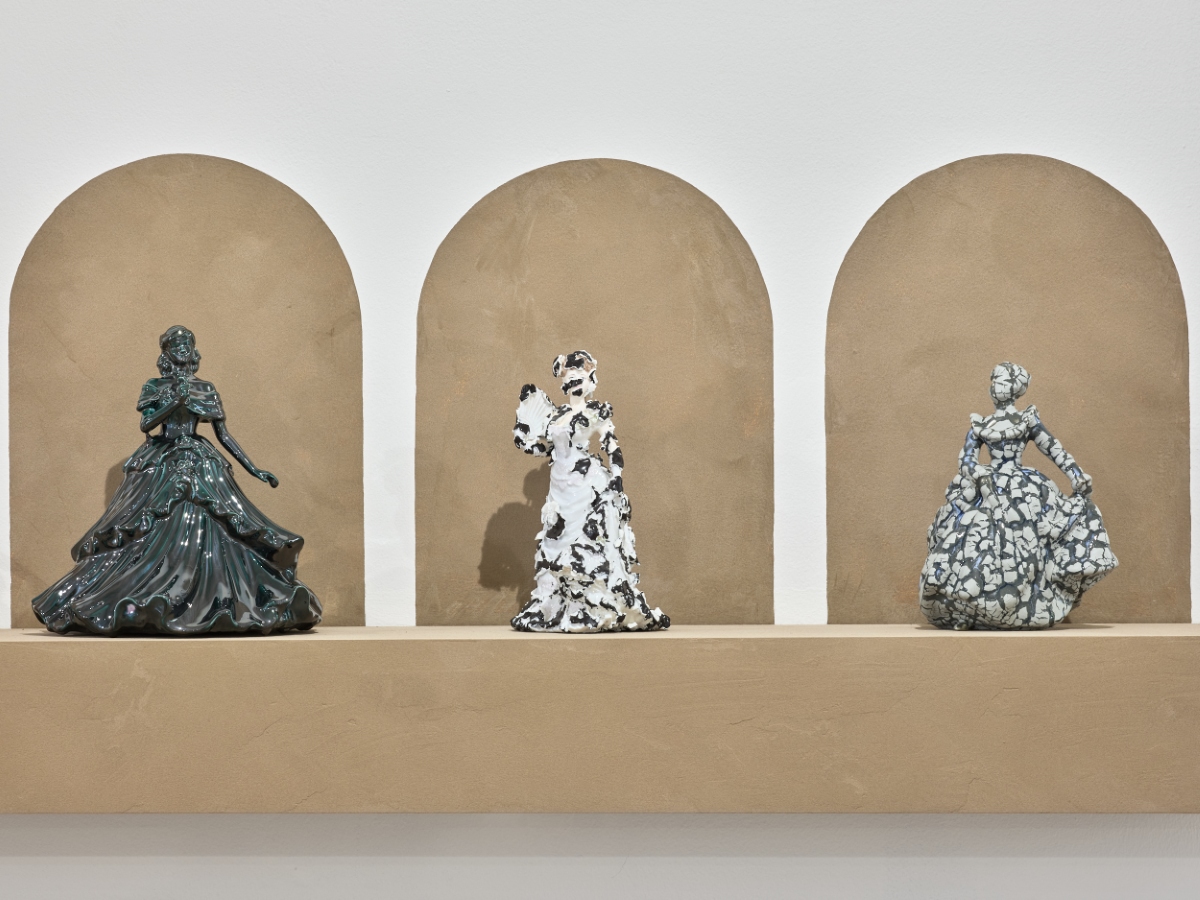
What the exhibition ultimately proposes is a mode of figuration grounded in relation rather than representation. Bodies are not presented as coherent or complete, but as porous, mediated, and in flux. Meaning does not reside solely in the image of the figure, but in the processes that produce, alter, and circulate it. Curneen shows how the figure becomes a site where spiritual authority and emotional certainty unravel. Her sculptures fragment inherited sacred codes, allowing vulnerability, hesitation, and material instability to erode the hierarchies embedded in classical and religious statuary. Cortes mobilises hybrid, narrative‑laden bodies to challenge the boundaries that define who is recognised as fully human, using folklore and emotional storytelling to unsettle normative frames. Rainey exposes the fragility of the authority of canonical figuration, showing how identity is continually reassembled through technological reproduction and material slippage and lastly Harrison turns to toppled monuments and over‑fired figurines to reveal how public and domestic bodies accrue meaning through circulation, damage, and contestation. By re‑authoring these forms, she collapses the hierarchy between monumental and kitsch, demonstrating that figuration’s power is always provisional and open to renegotiation.
The exhibition’s staging within the visual language of the cast court is central to this reading. By invoking the authority of 19th-century sculptural display, Refigured situates itself within a lineage that has long privileged permanence, monumentality, and idealised form. The works resist the fixity implied by their surroundings, instead revealing the extent to which these traditions are themselves constructed, contingent, and open to revision. The cast court becomes less a site of preservation than one of interrogation, where inherited sculptural languages are reworked and destabilised.
Within this context, ceramics emerges not as peripheral to sculpture but as a critical medium through which to rethink it. Historically positioned as subordinate, clay here demonstrates its capacity to hold complexity, contradiction, and transformation. Its responsiveness to touch, its susceptibility to change, and its capacity to register process make it uniquely equipped to articulate a form of figuration that is fluid rather than fixed. Refigured is not an exhibition of figurative ceramics, but instead how figuration is understood and produced in contemporary ceramics. The artists use the figurative as a site of negotiation, mobilising the materials and visual codes of canonical sculpture precisely to expose the authority those traditions claim. Bodies are fragmented, power is undermined, and historic and material hierarchies are collapsed.
Tana West works predominantly with ceramic processes, using the language of ceramic materials and object making to connect with social, political and environmental contexts. Her interdisciplinary practice is grounded in environmental research, writing and collaboration, including examining climate change narratives through the lens of materiality ‘Representing Uncertainty: The Object of Climate Change’ and investigations into apple culture, brownfield sites and water ecologies. West received the British Ceramics Biennial Award for [UN]WOVEN and has produced major commissions for Jerwood Makers Open and the Whitegold International Ceramics Prize.
Refigured is on view between May 12 and June 21 at County Hall Pottery, London.
Subscribe to Ceramics Now to read similar articles, essays, reviews and critical reflections on contemporary ceramics. Subscriptions enable us to feature a wider range of voices, perspectives, and expertise within the ceramics community.
Photos © Reinis Lismanis