Resident Artist Exhibitions: Akiko Jackson, Minah Kim, and Kevin Snipes are on view at The Clay Studio, Philadelphia
July 10 – September 7, 2025
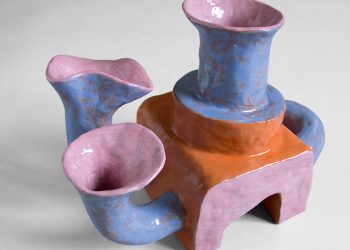
The three solo exhibitions currently on view at The Clay Studio: Center for Innovation in Ceramic Art highlight the work of current and recent Resident Artists: Akiko Jackson, Minah Kim, and Kevin Snipes. Each artist engages the body—its presence, memory, and limitations—as a tool for navigating complex emotional and cultural landscapes. Jackson weaves maternal history and care into large-scale ceramic forms. Kim’s sculptures reflect on shared and inaccessible pain through posture and surface. Snipes’ drawings create speculative spaces that challenge fixed narratives of Black identity. Across their practices, material becomes a vessel for empathy, reflection, and transformation.
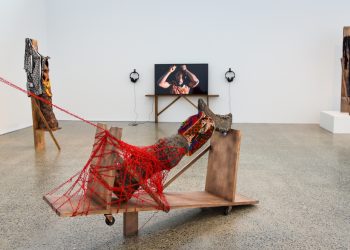
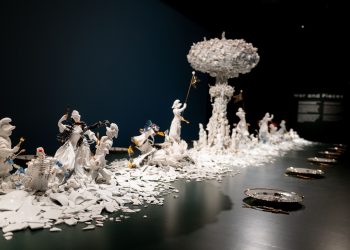
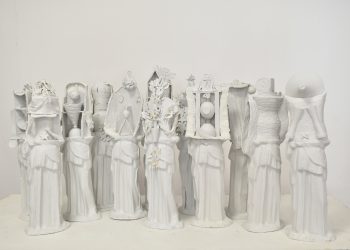
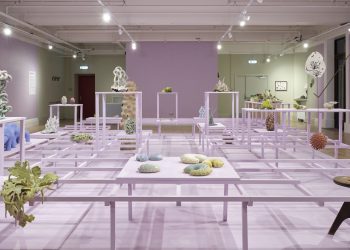
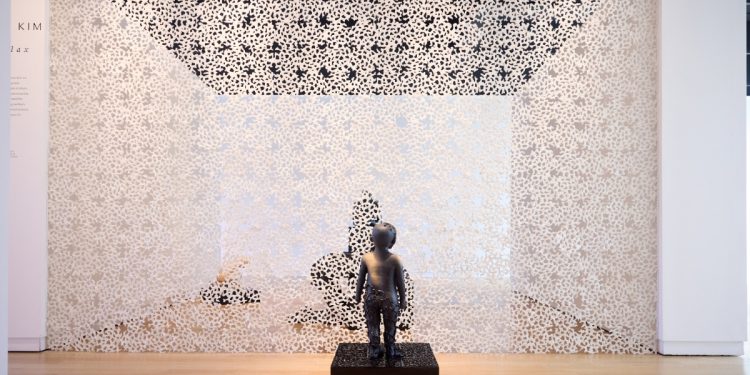
Minah Kim’s Parallax follows the shifting perception of human presence—how subtle, organic gestures can evoke deep empathy and draw us closer. Yet these gestures also reveal an unbridgeable distance: the impossibility of fully inhabiting another’s pain. The exhibition features a group of figurative sculptures and 3D-printed architectural components arranged across a partially divided exhibition space. Kim uses clay, charred wood, plastic, acrylic, and modular ceramic textures shaped through repetitive pinching, to build tactile surfaces that slow the viewer’s gaze and invite contemplation. Her figures, posed in states of mourning, observation, and withdrawal, inhabit liminal zones where nearness and absence converge.
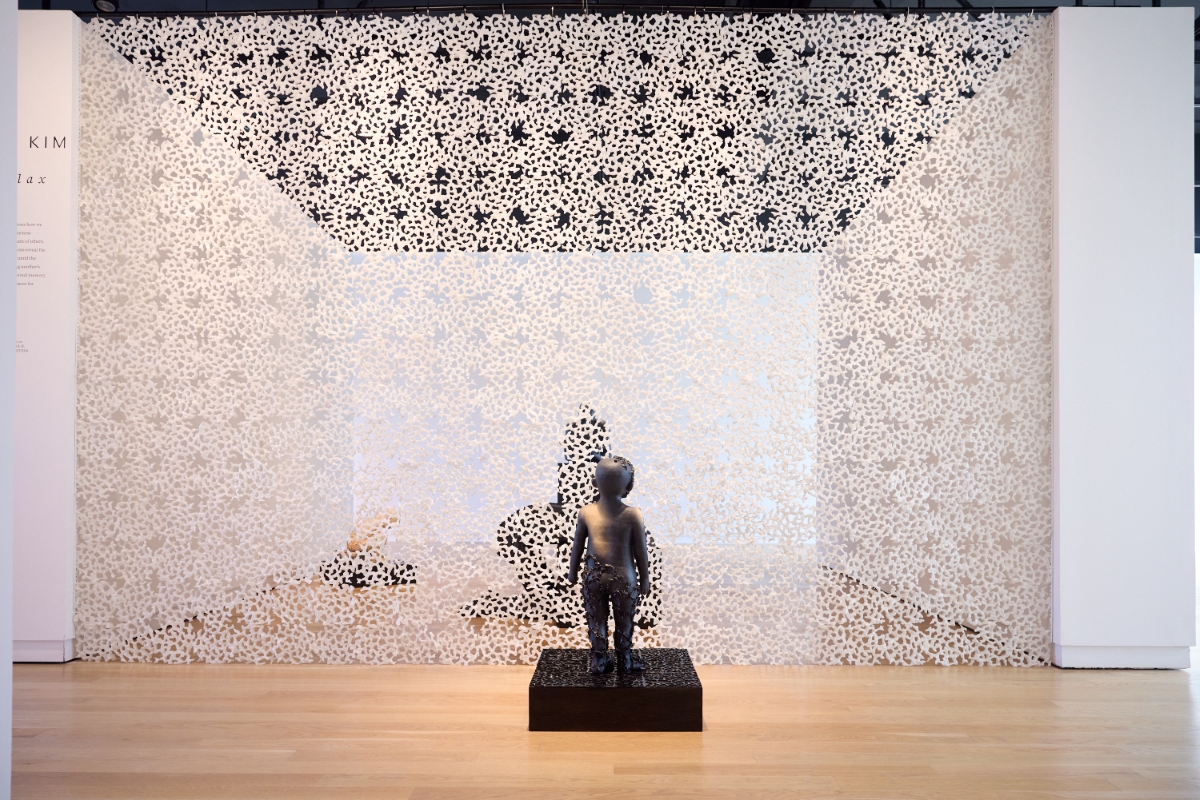
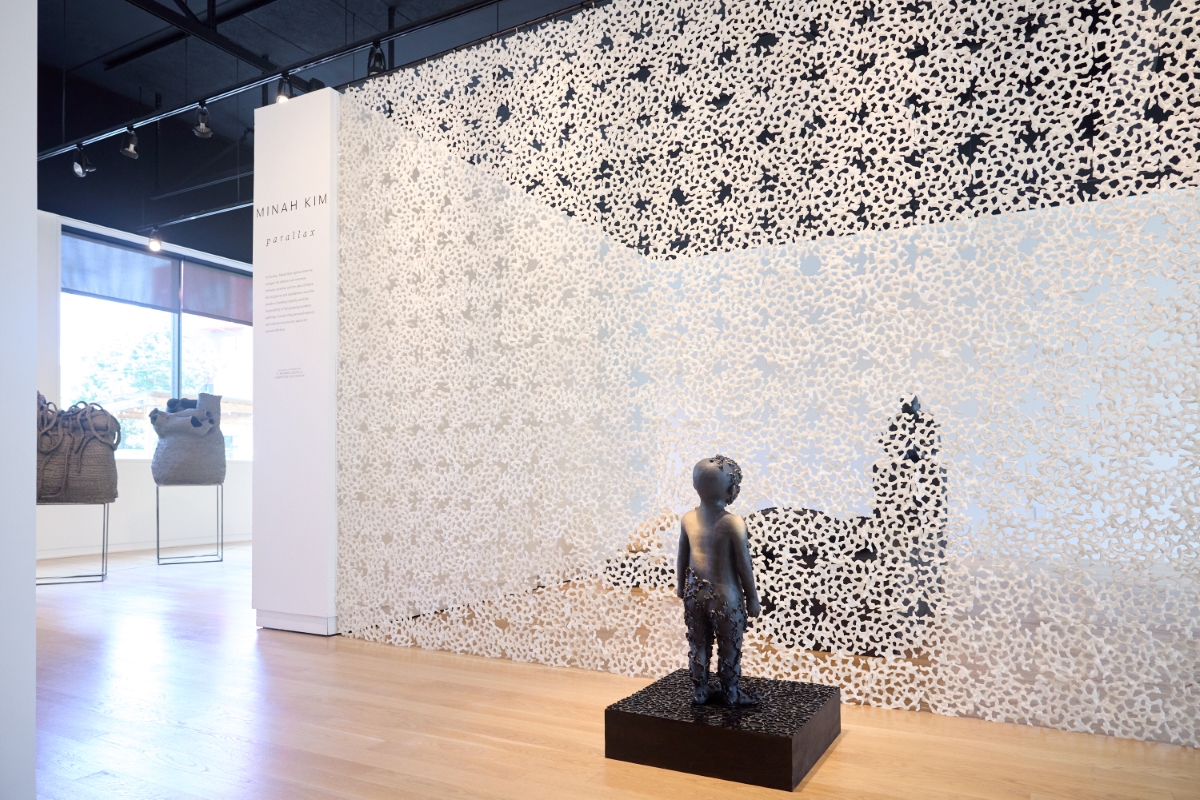
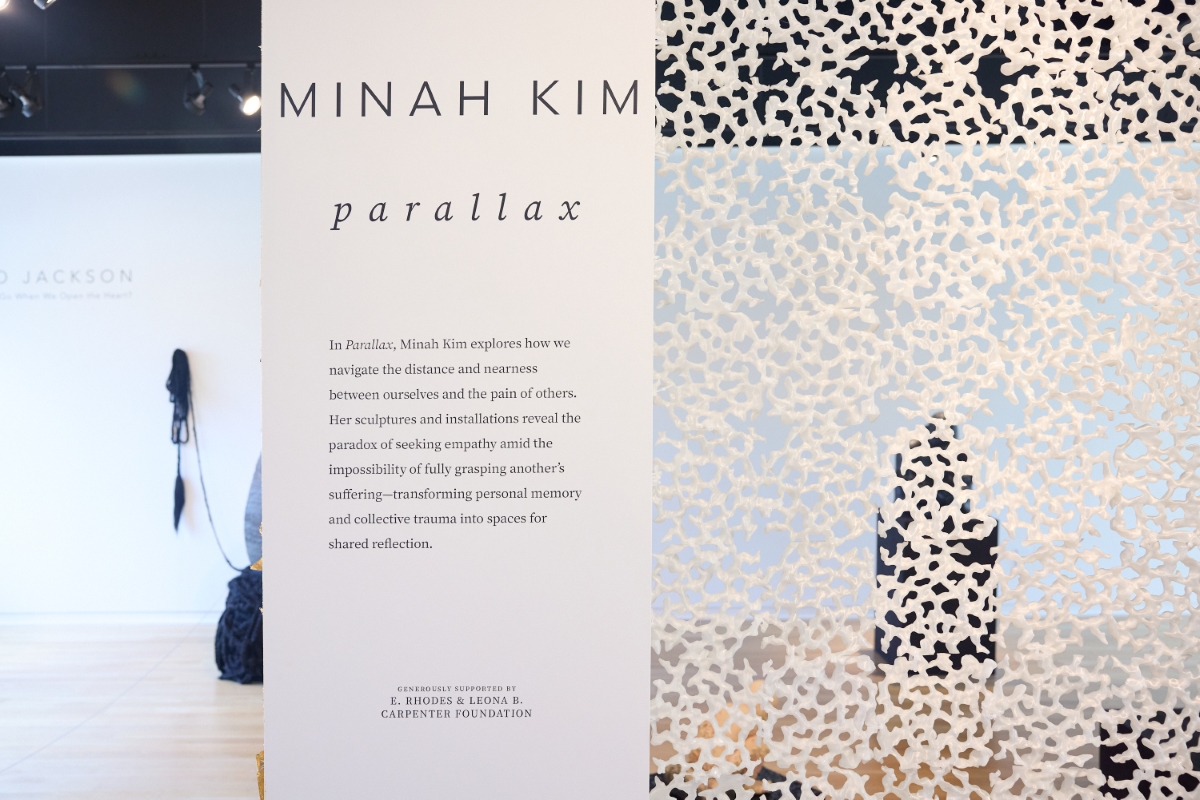
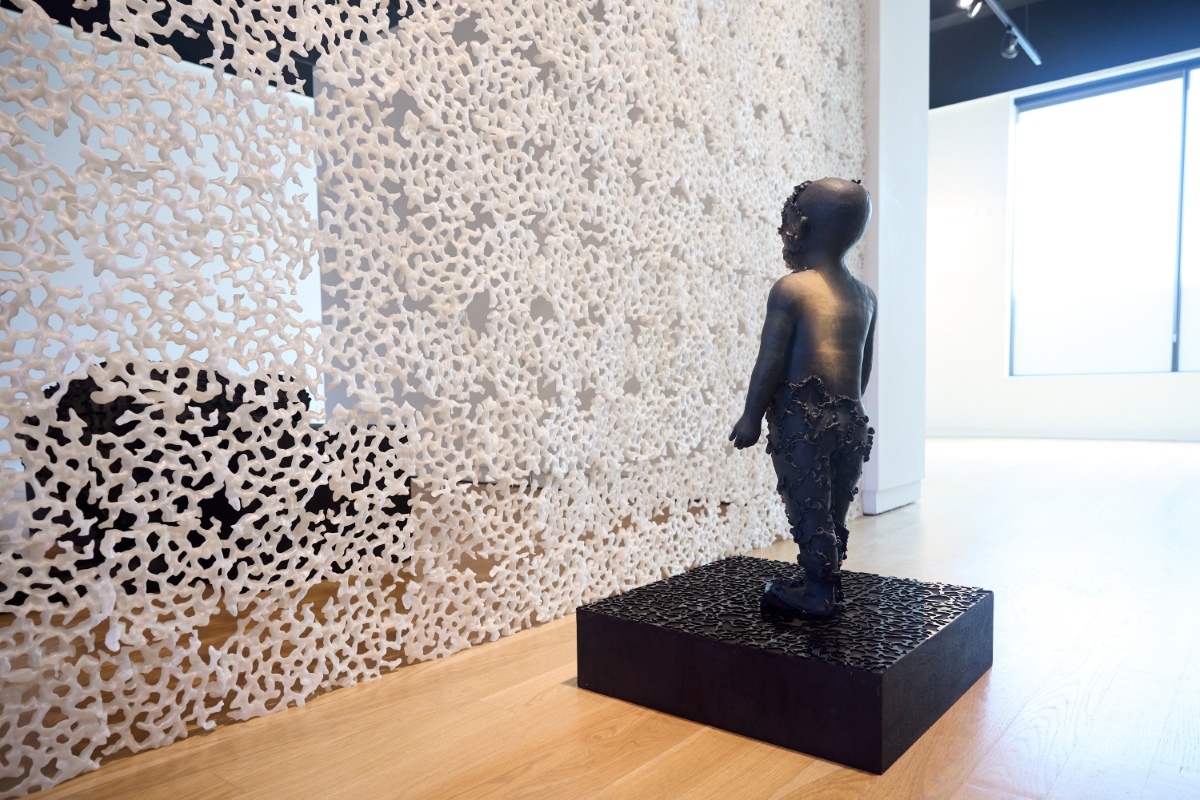
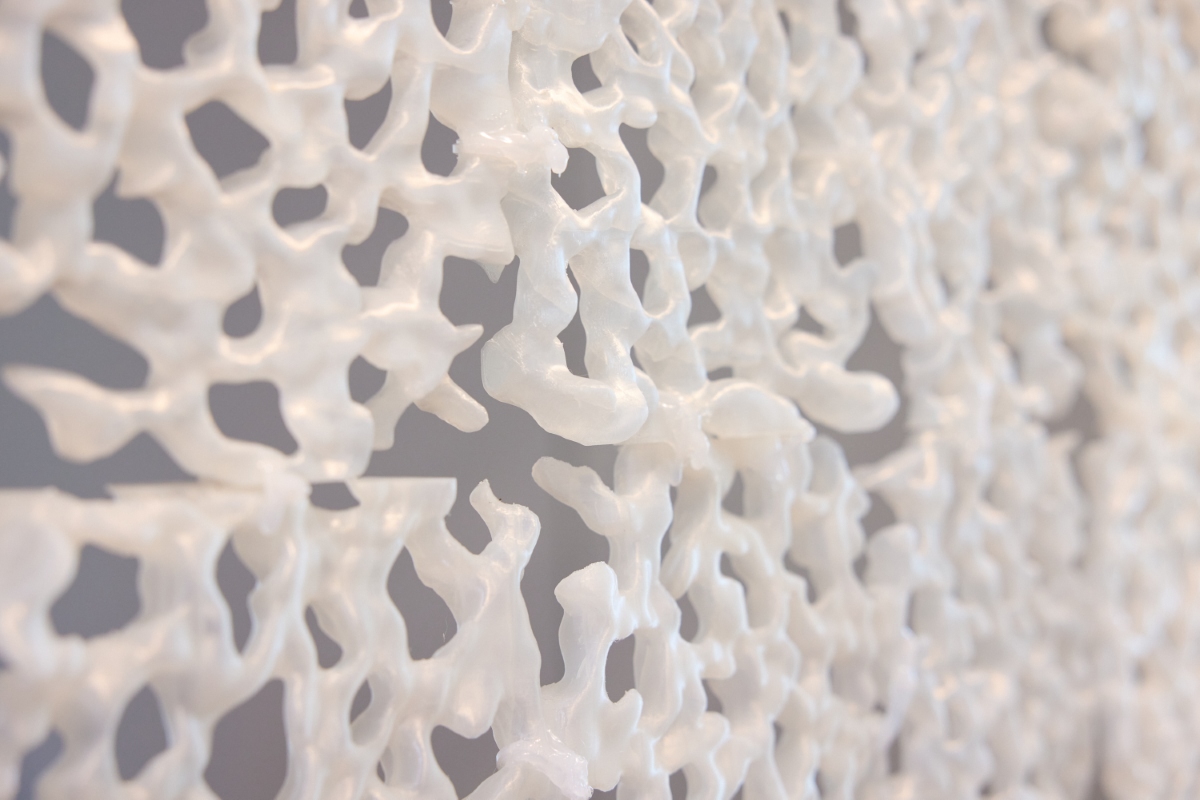
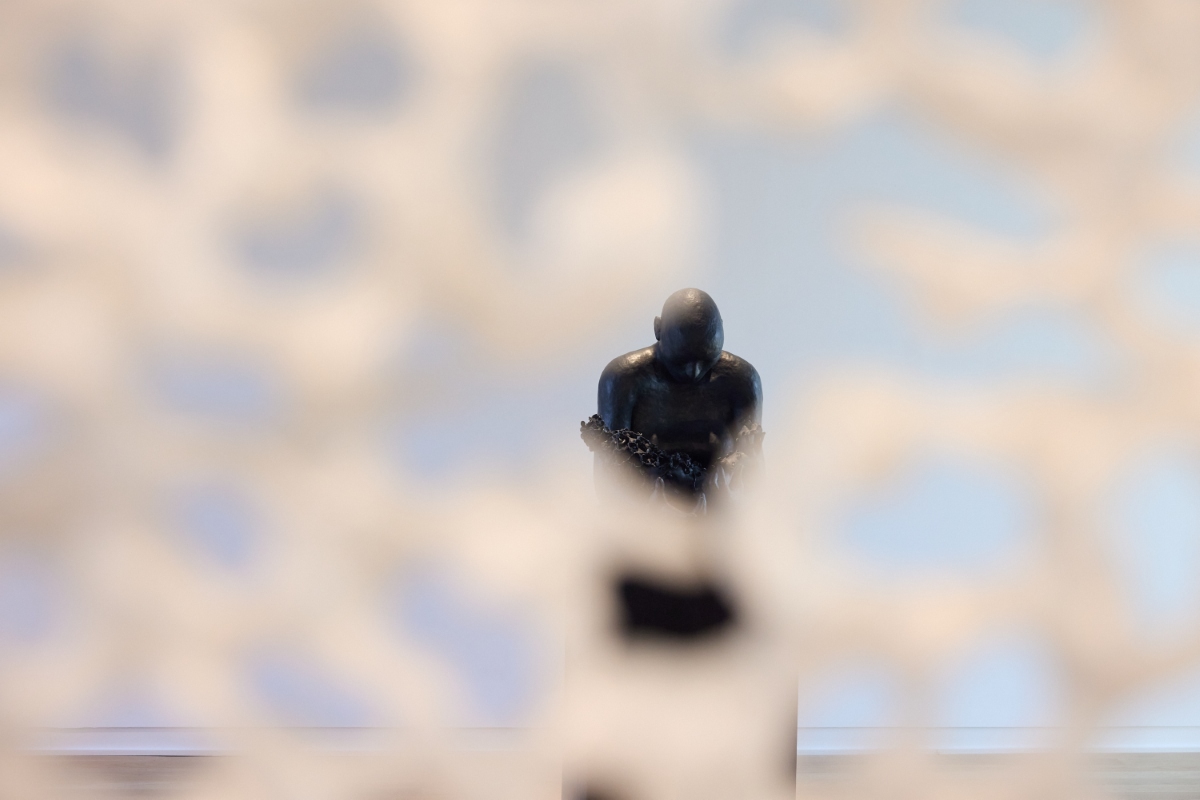
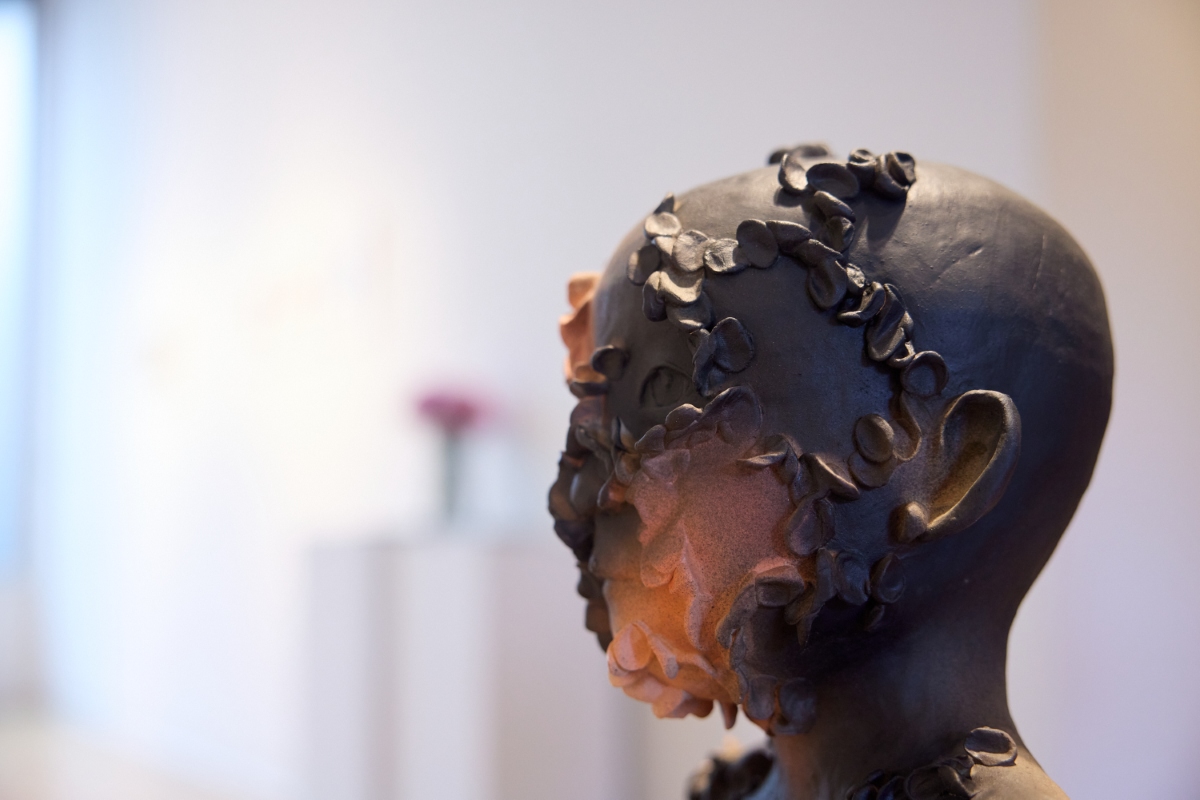
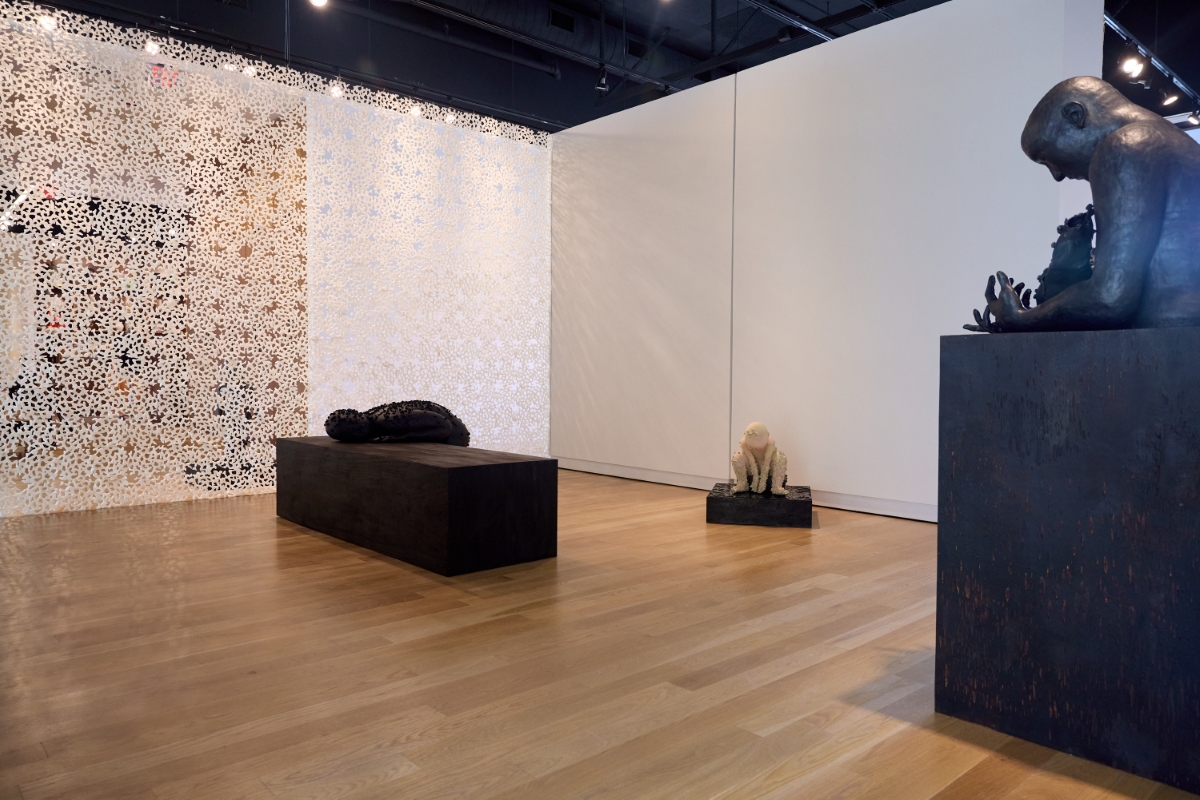
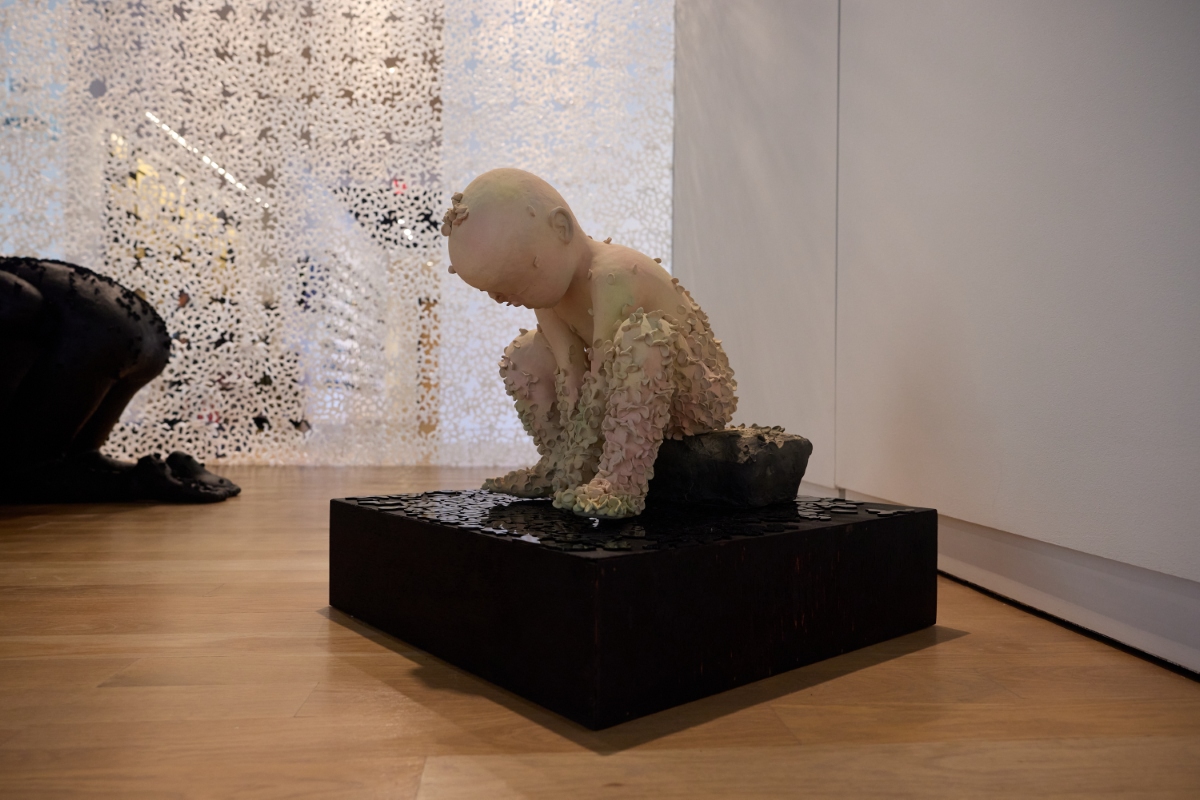
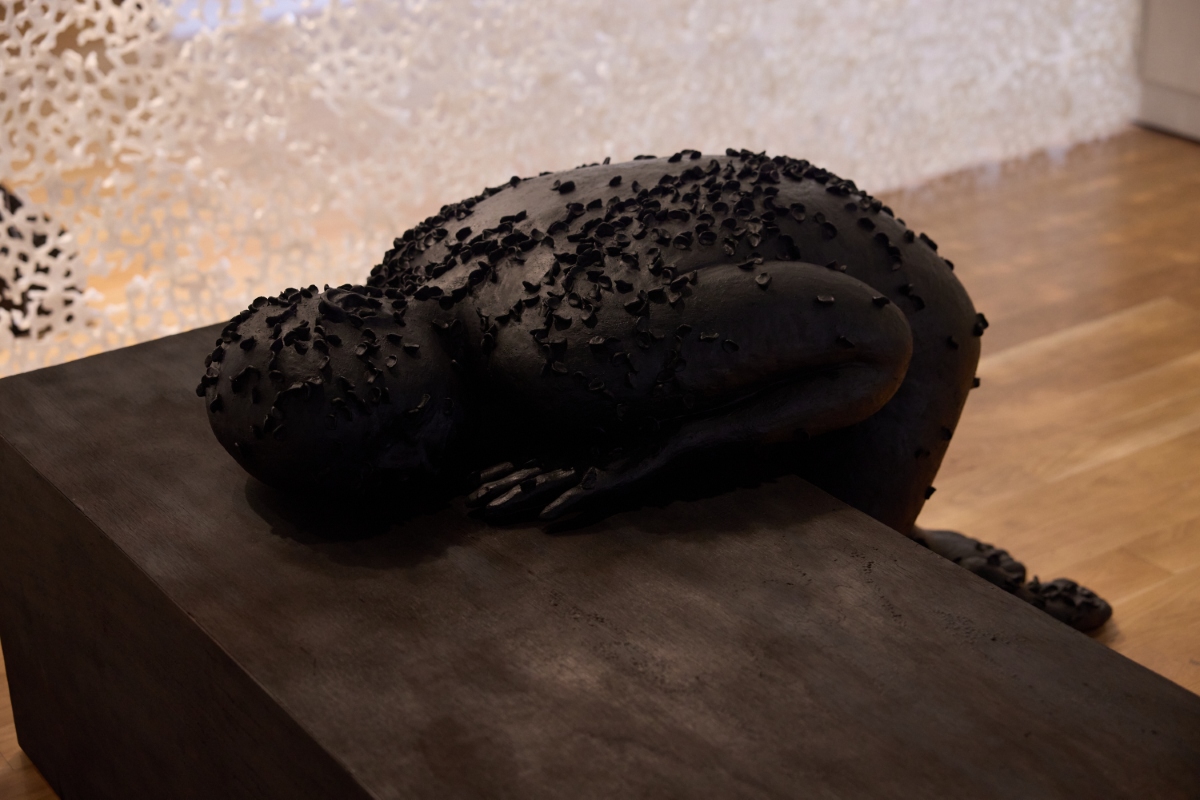
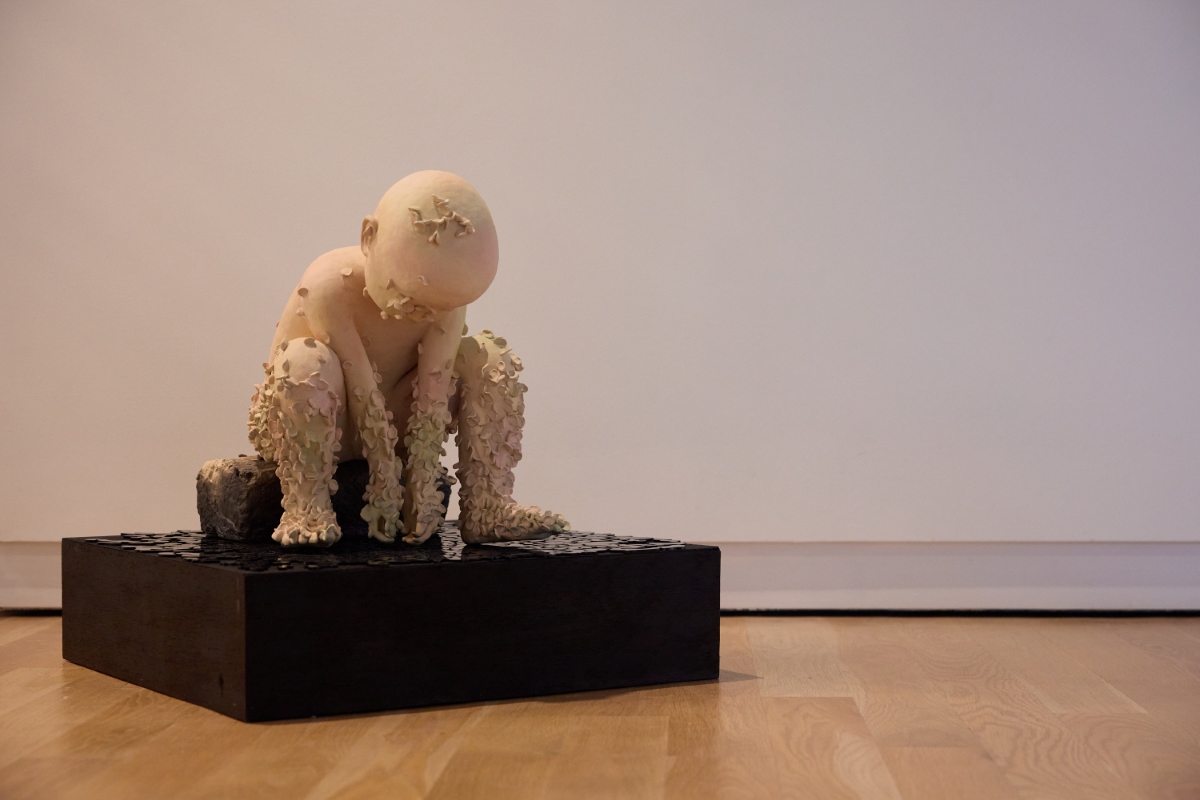
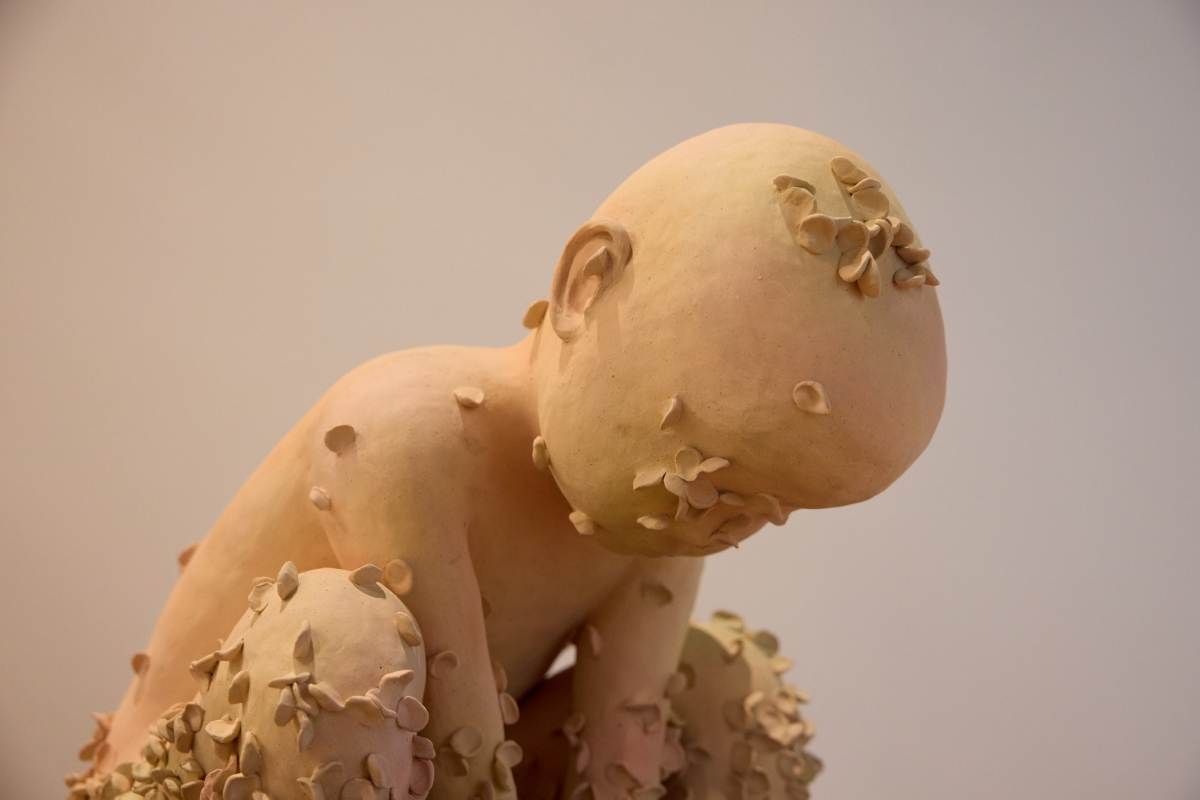
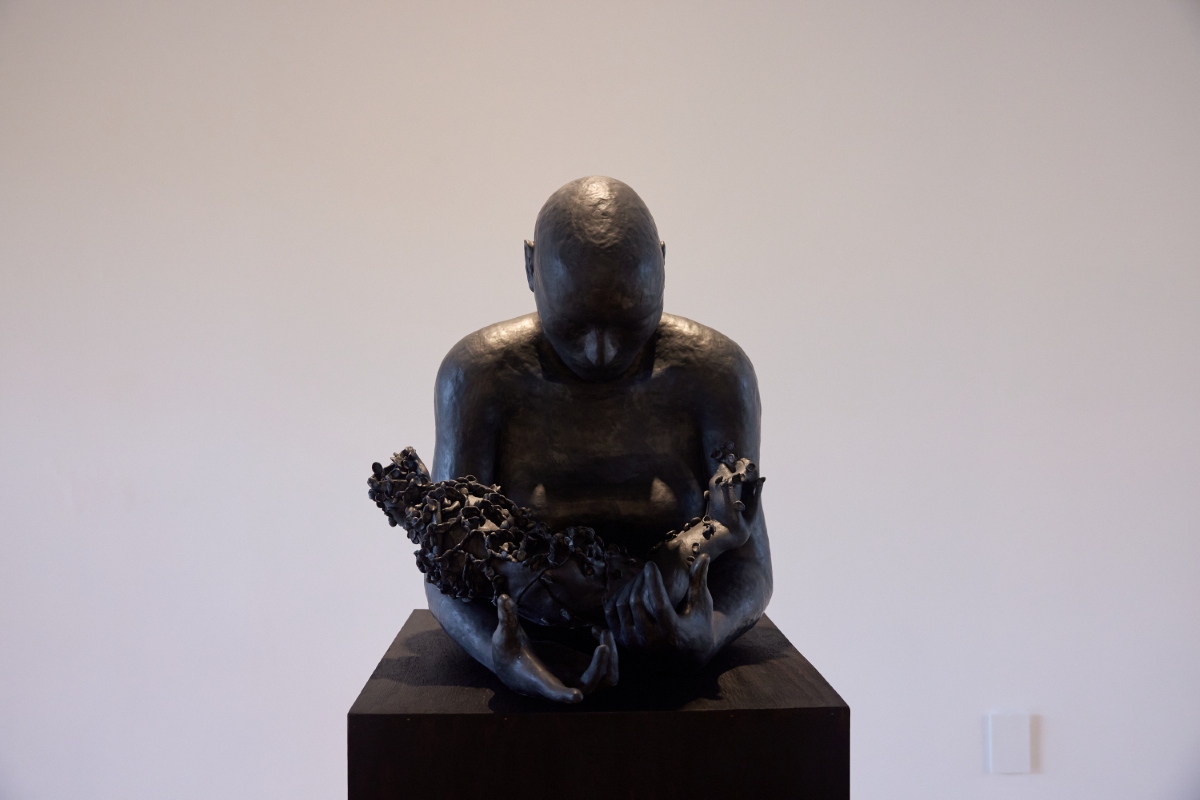
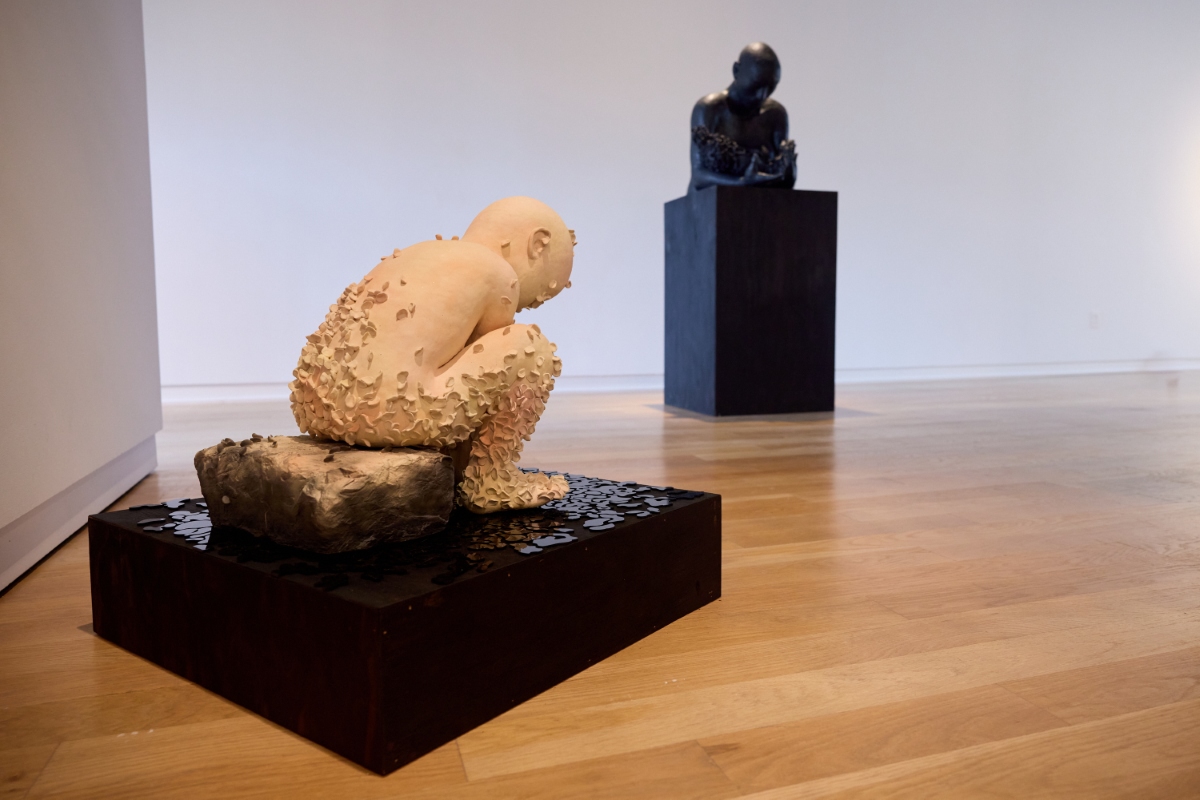
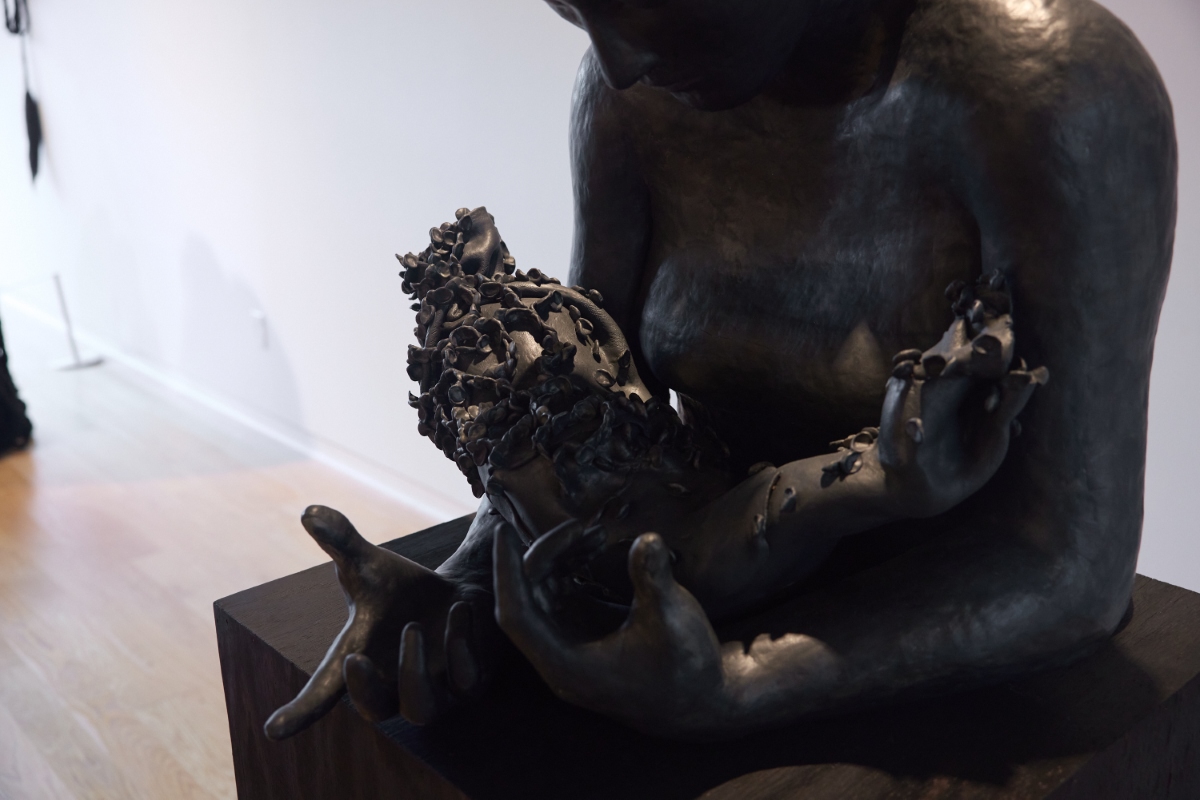
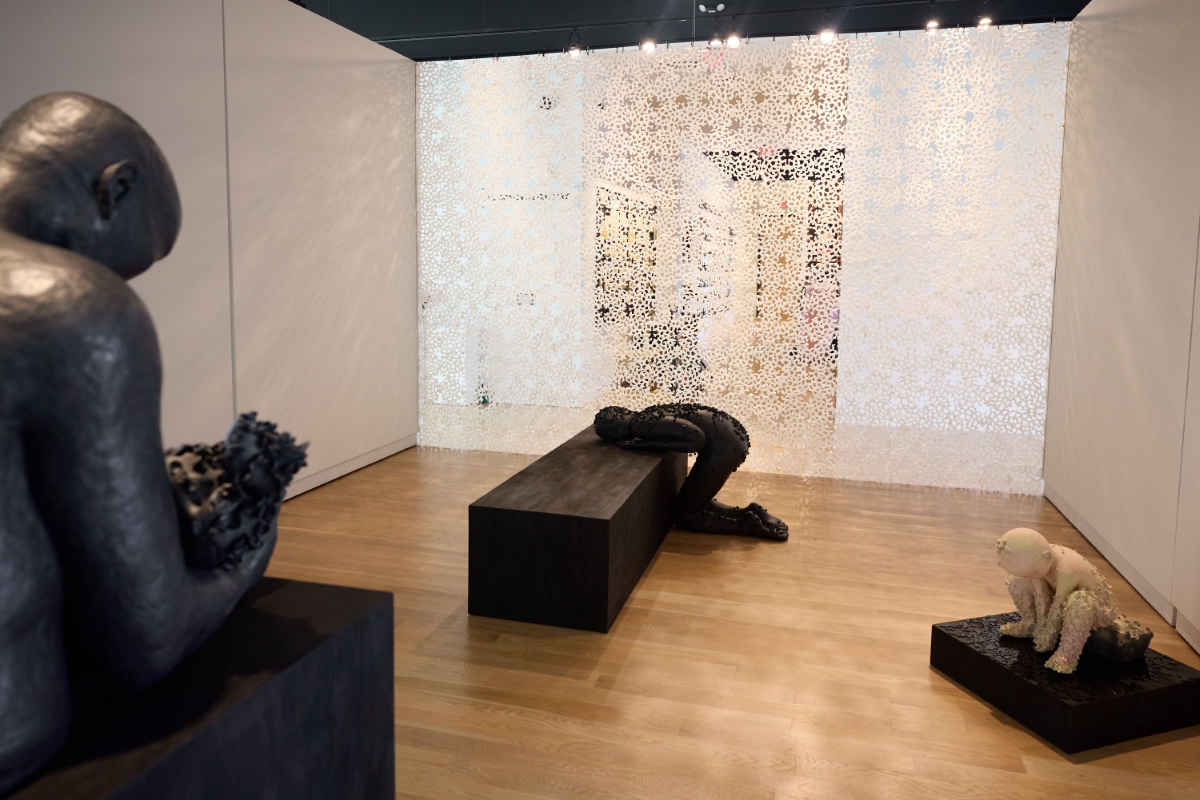
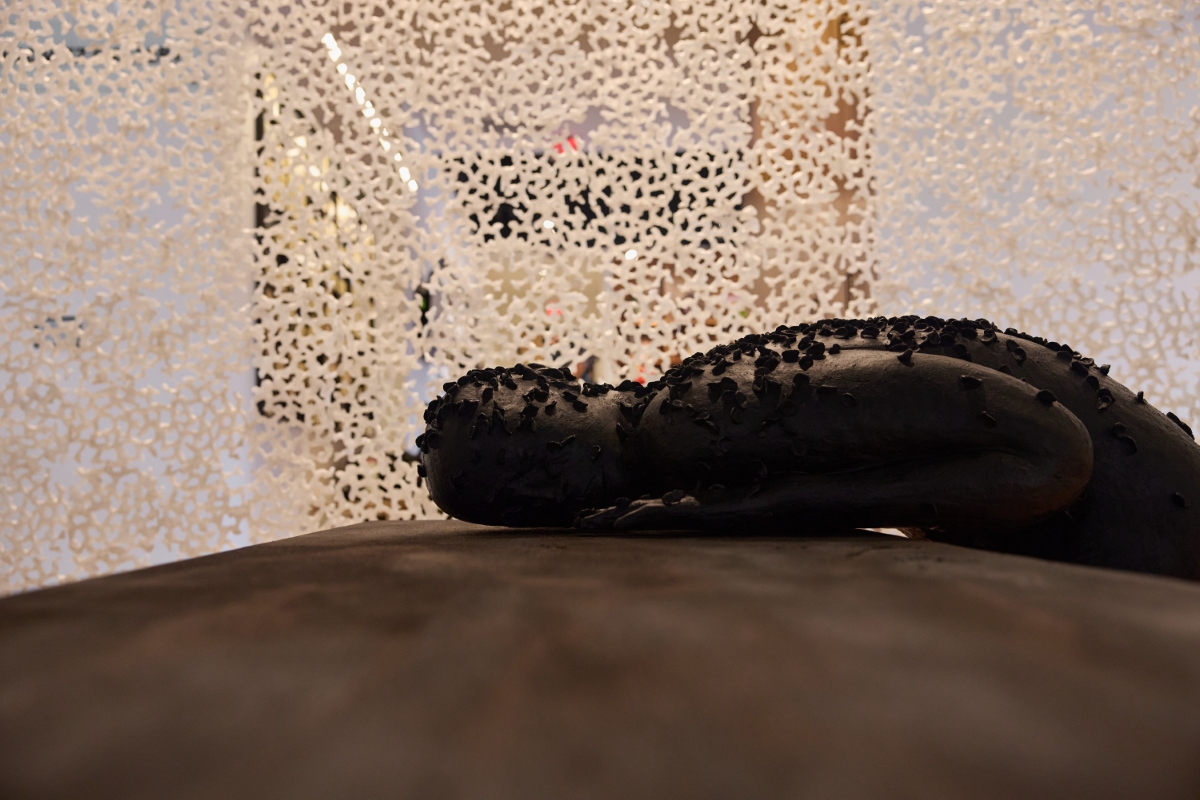

The installation also aligns Slavoj Žižek’s concept of the parallax view. When a single object is seen from two incompatible perspectives, meaning arises within the distance between them. Kim poses questions of “what is it that stirs us to reach across that divide? What compels us to care, despite knowing we cannot truly feel what others endure?”. This contradiction sits at the core of her exhibition. Her sculptures arise from this unresolved yearning: the instinct to respond, the impulse to connect, even when connection seems out of reach.
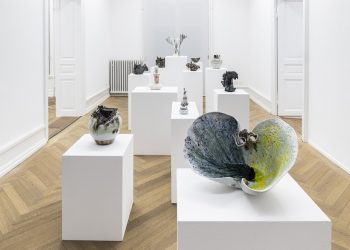
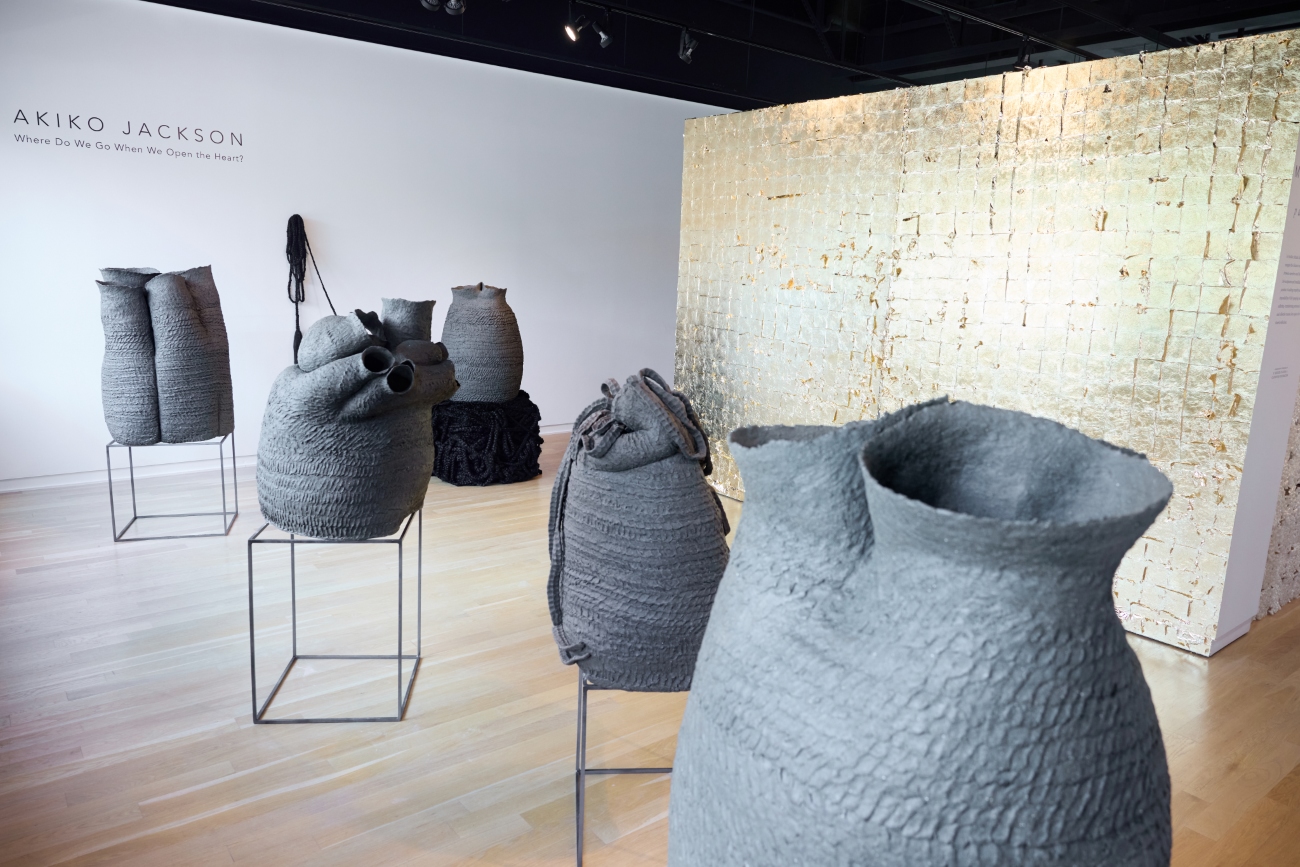
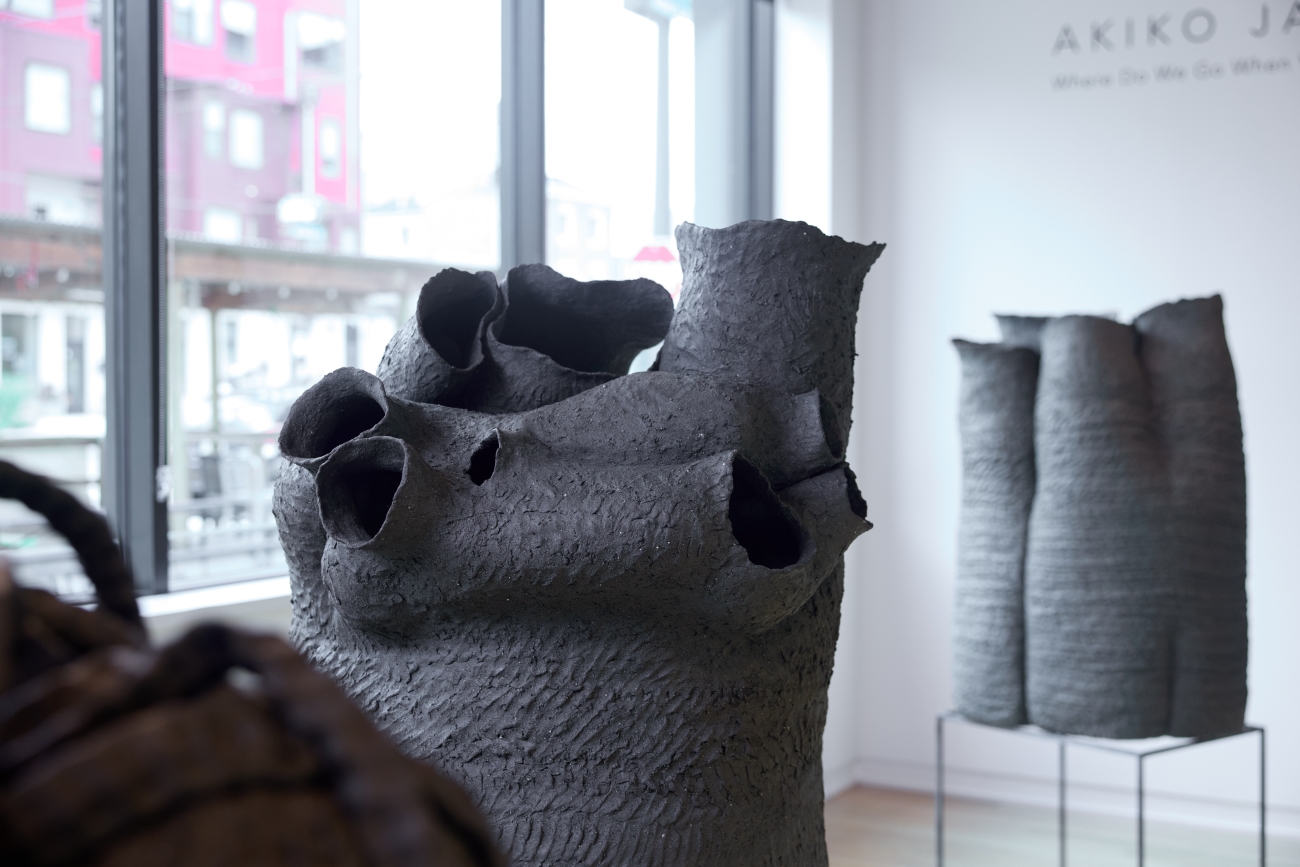
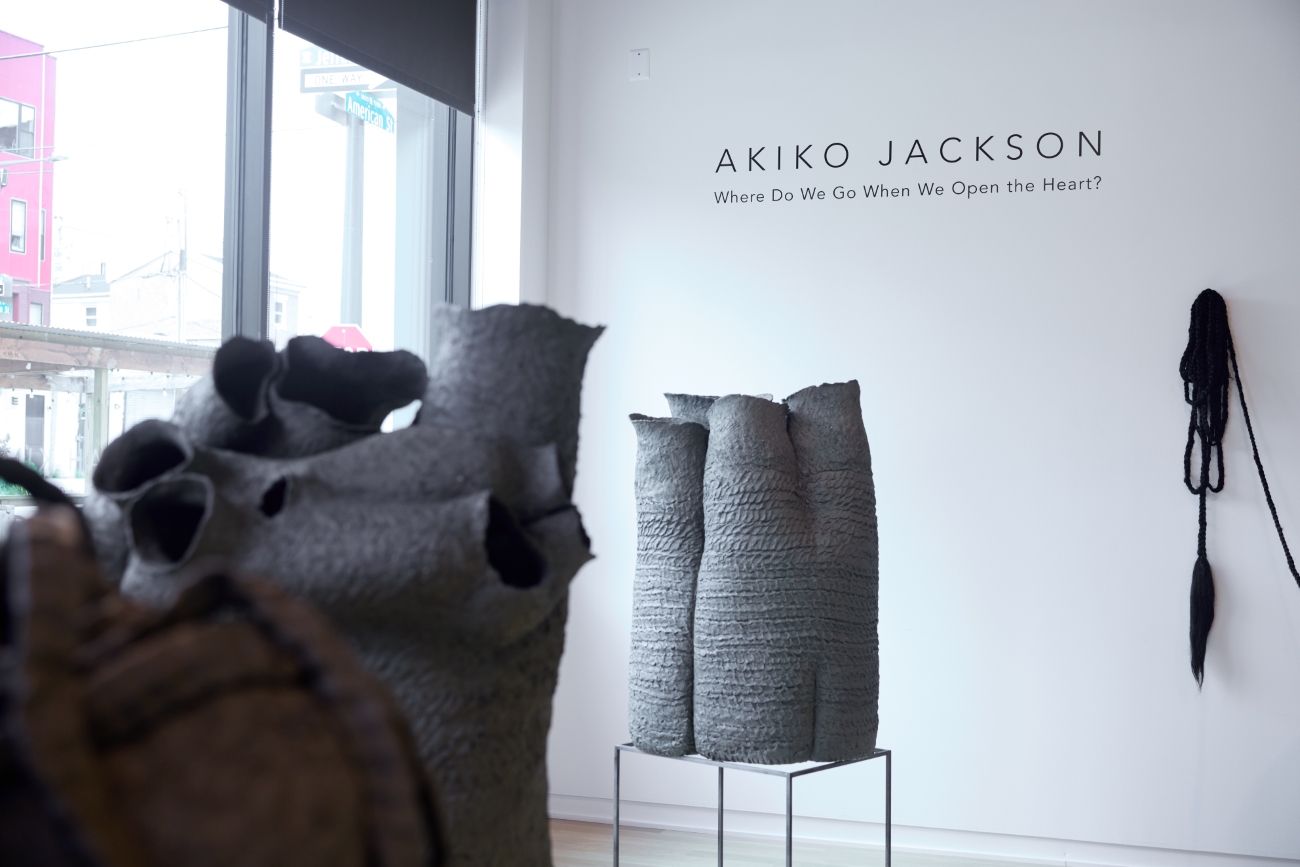
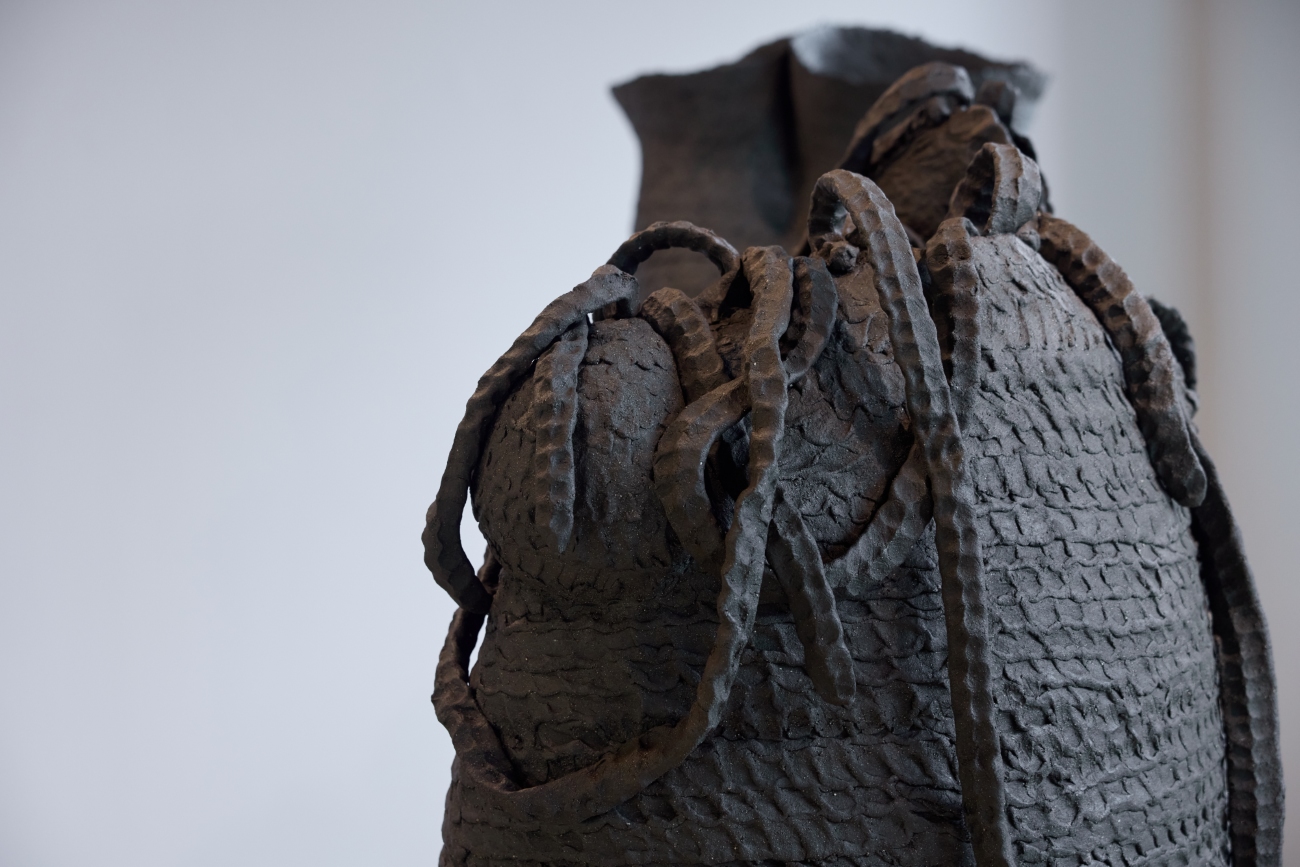
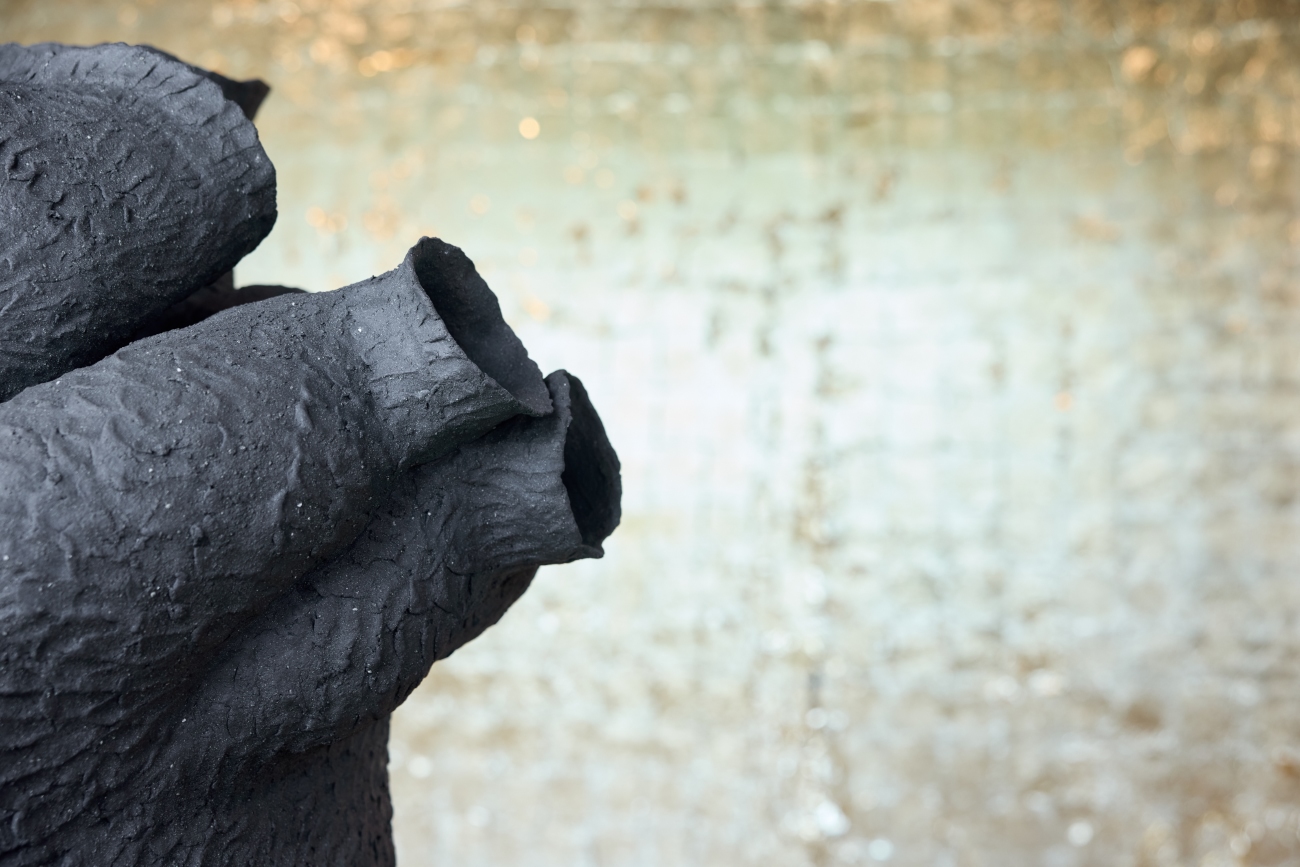
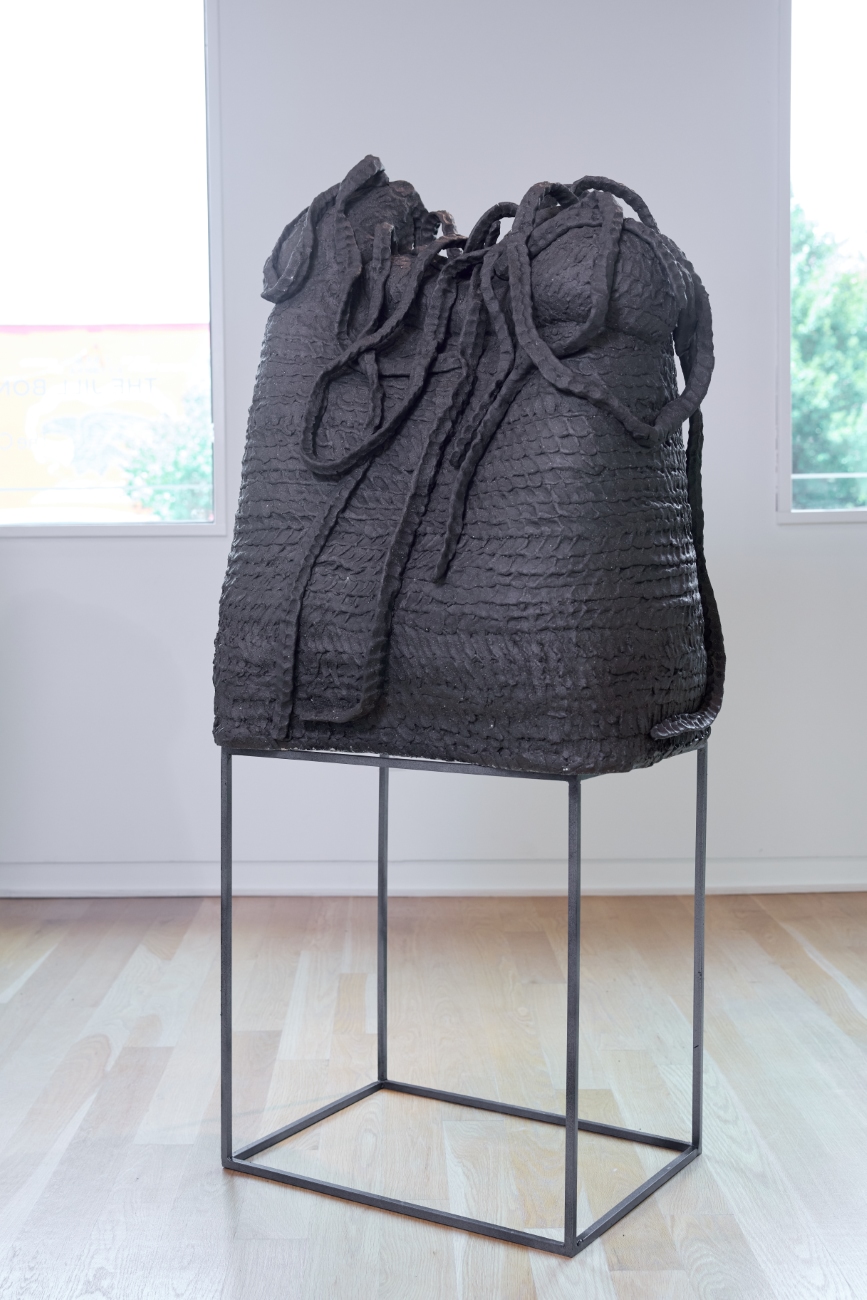
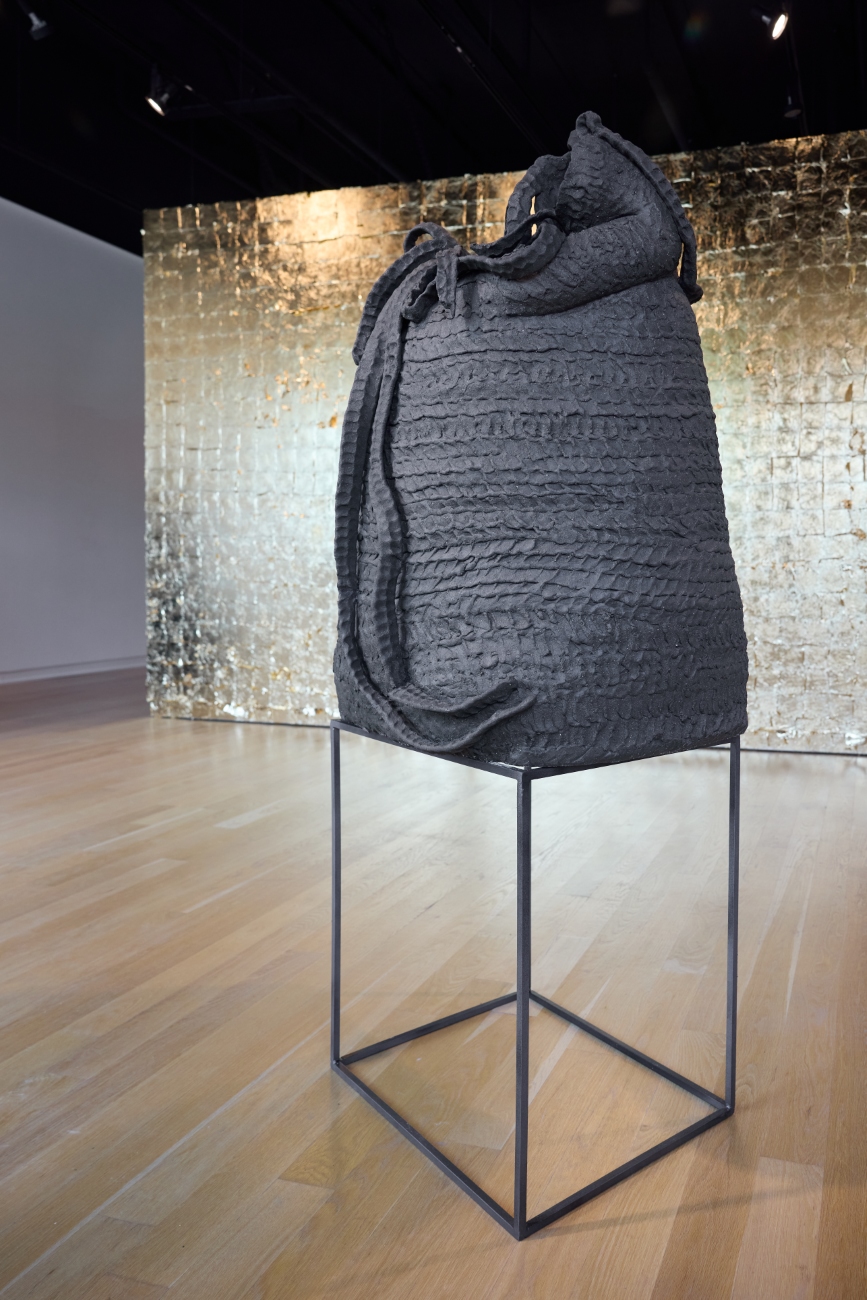
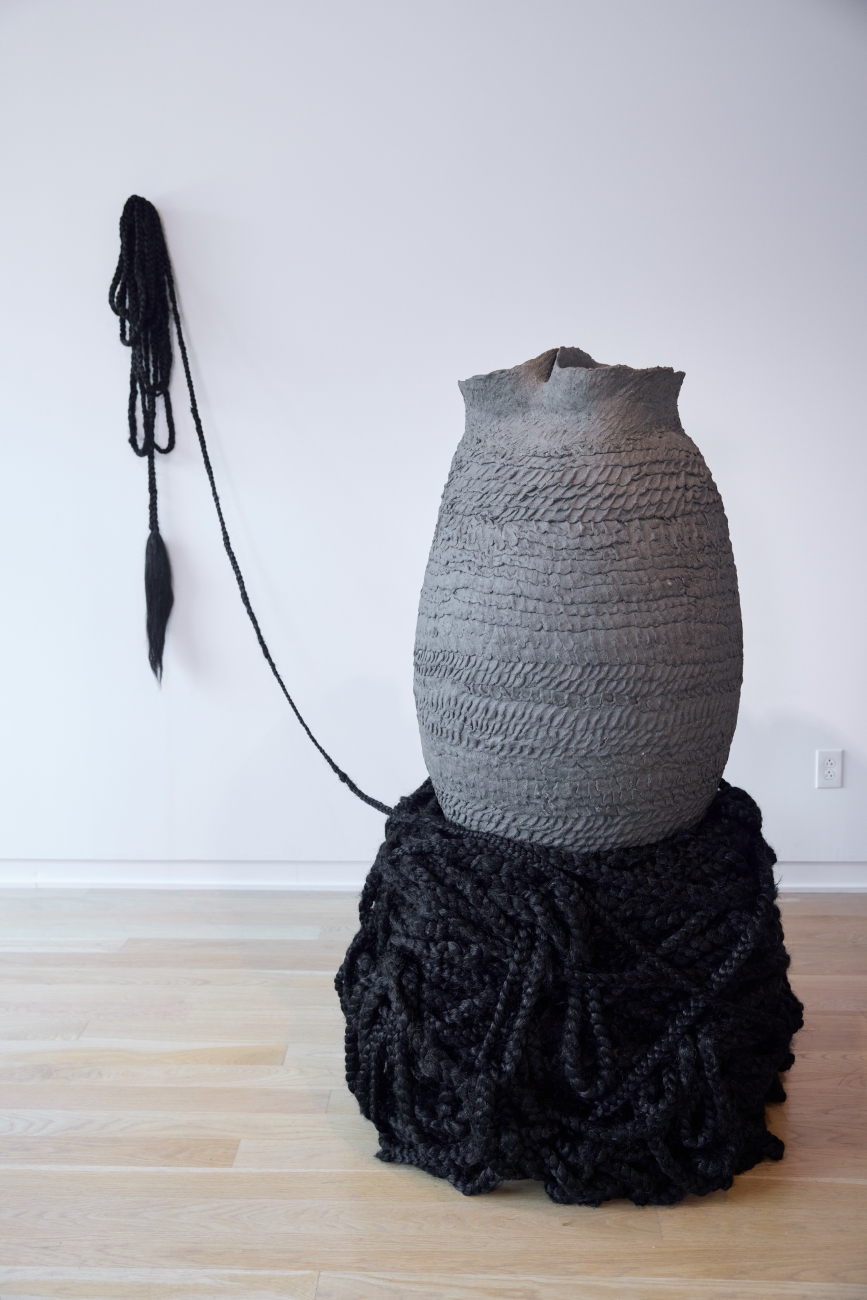
Akiko Jackson’s Where Do We Go When We Open the Heart? is a meditation on grief, love, and the complexities of vulnerability. Through her use of dense black clay, Jackson creates long coils that evoke braided hair—a symbol of maternal lineage and intimacy. These sculptures serve as a tactile archive of memory, each fingerprint marking a silent gesture of remembrance and resilience. The work embraces the tension of building upward despite gravity, reflecting the emotional labor of remaining open in a world that often demands closure.
Jackson describes her process as an act of slow and careful tending: “I try to let myself be held by something ancient and slow—like memory braided through clay.”
Anchored by a gilded accent wall inspired by the Japanese tradition of kintsugi, the work invites viewers to consider how we confront brokenness without idealizing pain, and whether love can gather in the cracks of imperfection. The exhibition asks a profound question: When we open the heart, where do we go? Jackson suggests we remain—suspended in the breath between breaking and being held—inviting us into a space of quiet reflection and shared vulnerability.



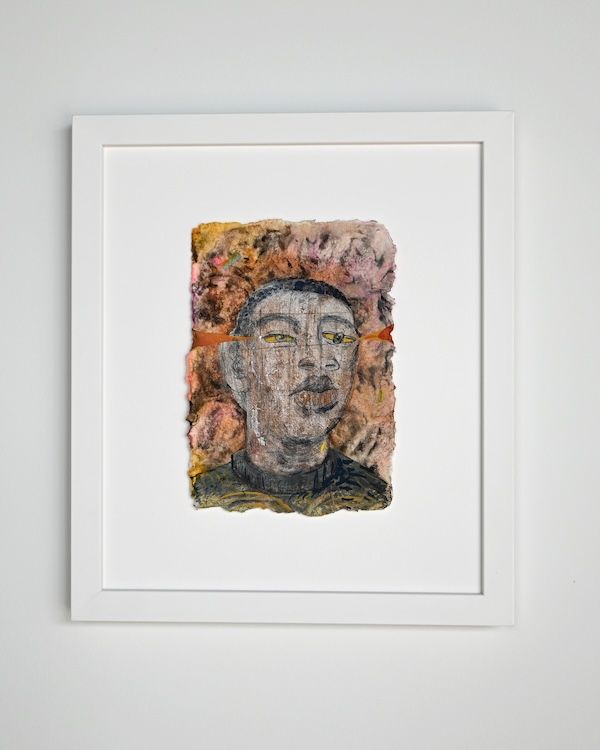
Emerging from a period of stillness, Kevin Snipes’ a cure for pain presents a contemplative exploration of identity, race, and the human condition. Rooted in a broad and interconnected understanding of culture, Snipes rejects narrow definitions in favor of complexity and multiplicity. He writes, “Engaging with the complexity of the human condition, rather than limiting it to a single narrative, offers another meaningful way to explore race-consciousness in art.” His drawings serve as a space where the dissonance between how one is perceived and how one truly feels is both acknowledged and transcended. Through this work, Snipes imagines futures that honor ancestral memory while pushing beyond constraints, creating a visual language that navigates the fragile terrain of otherness, belonging, and transformation.
“At times, I feel confined by stereotypes, navigating the disconnect between how I am perceived by others and how I truly feel. This tension—between external perception and inner reality—resonates deeply with the essence of my artistic practice, reflecting the universal struggle to convey the complexities of identity beyond surface labels. My work engages that liminal space, where past, present, and imagined futures coexist.
Snipes goes on to say that Black representation is quietly but powerfully embedded in these narratives. The characters reflect aspects of his own lived experience, and elements like posture, hair, gesture, or even their navigation of unfamiliar spaces subtly signal Blackness. Rather than portraying overt visual tropes, Snipes engages in speculative storytelling—where Black figures move through surreal, nonlinear worlds that reframe identity and refuse the constraints of colonial perception. These quiet signifiers serve as a reimagining of Black presence—unbound by time, geography, or expectation.
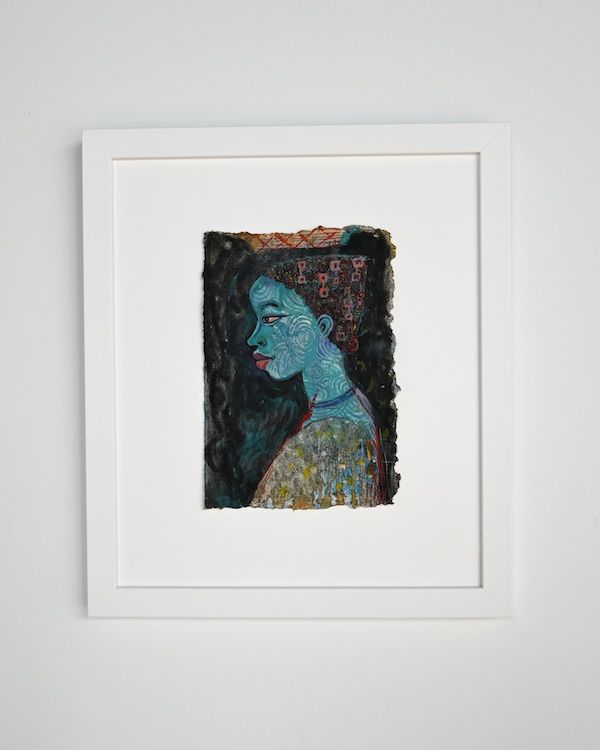
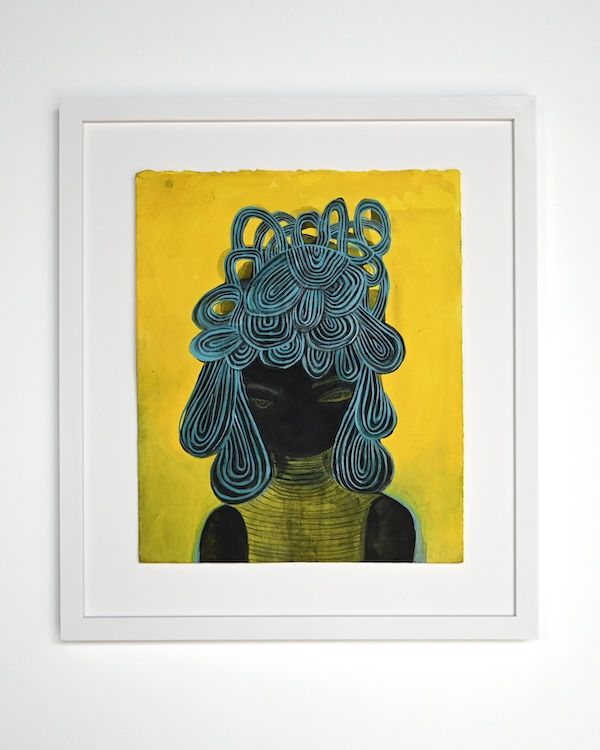
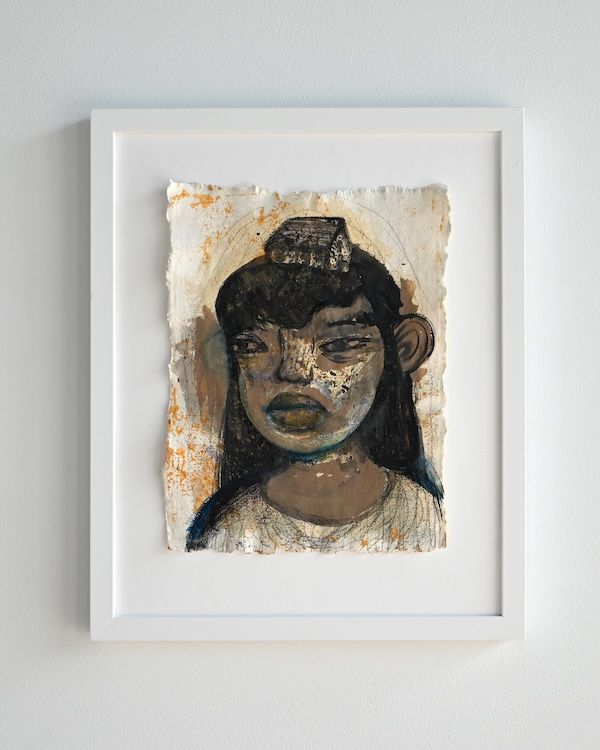
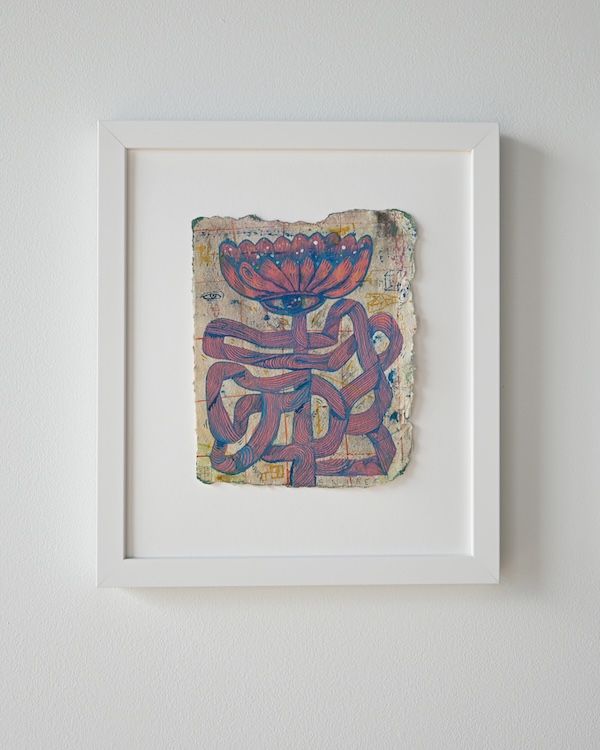
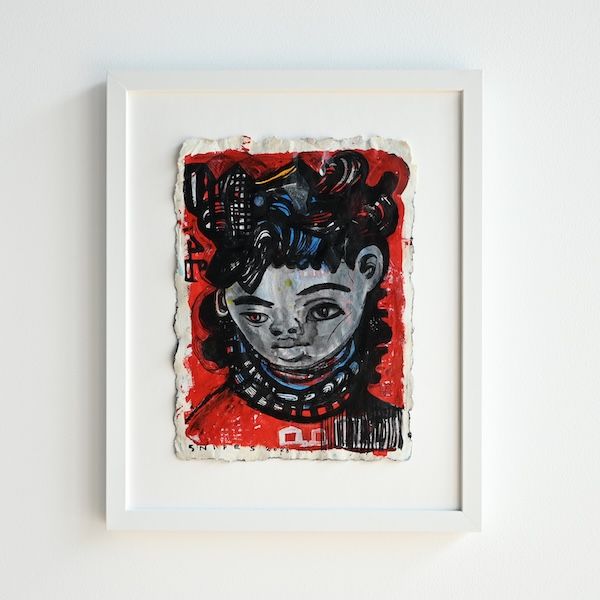
“In this way, my work speaks to a broader AfroFuturist impulse: not just to critique the present or reclaim the past, but to dream forward—to imagine a future where Black identity is expansive, complex, and fully human.”
Together, these three exhibitions present a powerful reflection on grief, identity, and what it means to be human. Walking through each gallery provides visitors the time and space for quiet contemplation about their own relationship to these deeply felt concepts. Jackson, Kim, and Snipes invite us to experience these shared emotions using the metaphorical weight of clay as a material to emphasize our connection to the earth and to each other.
Contact
info@theclaystudio.org
The Clay Studio: Center for Innovation in Ceramic Art
1425 N American Street
Philadelphia, PA 19122
United States