By Anne-Marie Dehon
“The things we want are transformative, and we don’t know or only think we know what is on the other side of the transformation”.1
R. Solnit
Introduction
I am fascinated by stories that melt in the kiln with minerals and metal oxides in the thick viscosity of ceramic glazes and remain for centuries after cooling.
Since I started working in ceramics eighteen years ago, glaze has been at the heart of my practice. I have been interested in both the process of making it – learning to predict and influence the result – and the significance of the color of this vessel’s outer layer.
Ceramics has historically been woven as craft, with narratives about industry, technology, and nature. This triangle draws my attention because it conveys a romantic image of craftspeople resisting industry and healing the scars left by large-scale production on the environment. For my own reasons, I both submit to this romantic idea while at the same time, I strive to keep a peripheral and critical perspective on the ceramics of today’s reality. I think both those stories of resistance and critical perspectives are important to be told and re-told today.
My curious and creative investigations of nature/industry/technology triangle through ground minerals have intensified through the years of practice and teaching. It fostered both my deep knowledge of the matter and my writing practice. In my glaze and writing, I strive to maintain a close relationship with both the materials I work with and the stories I encounter along the way.
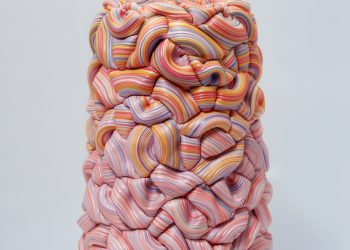
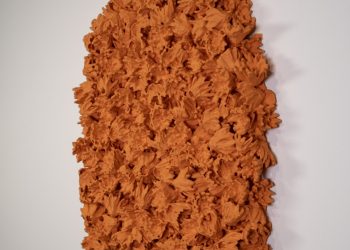
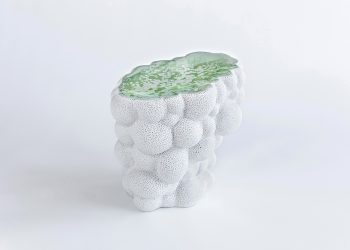
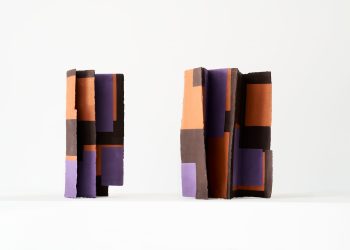
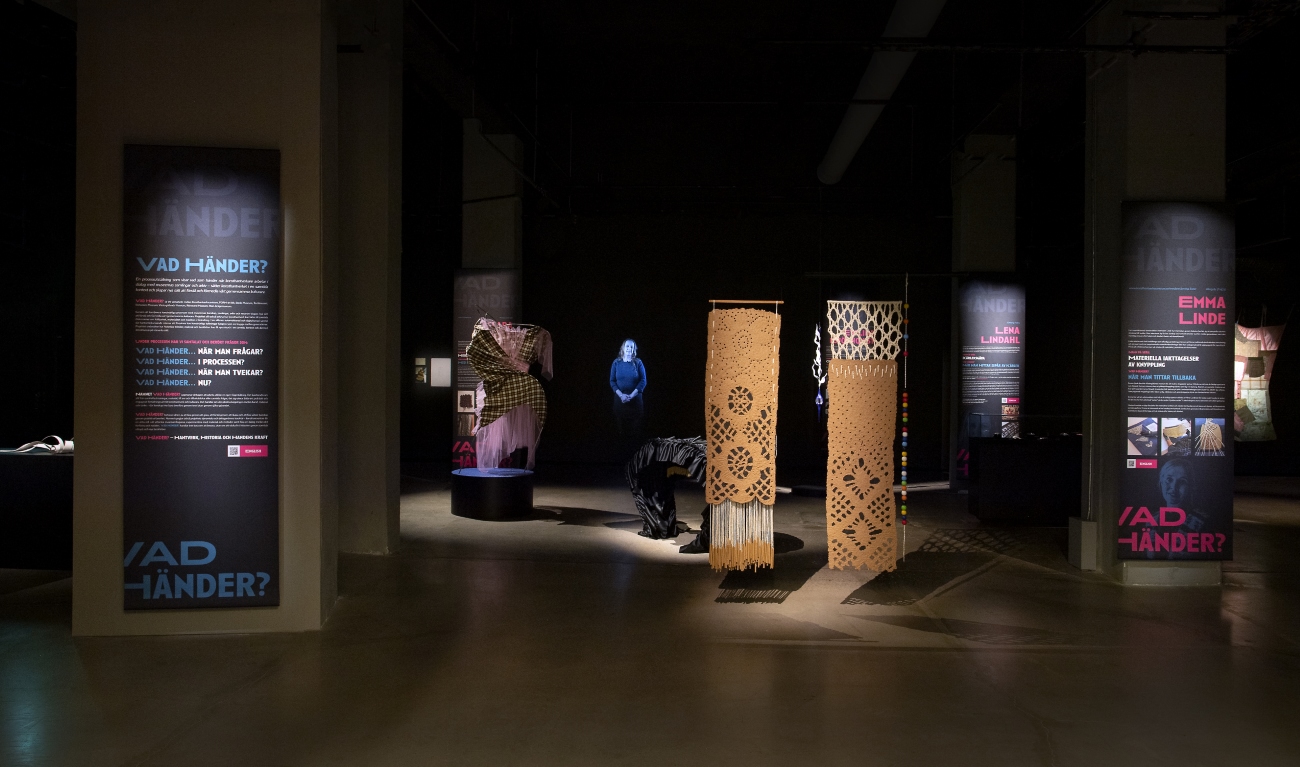
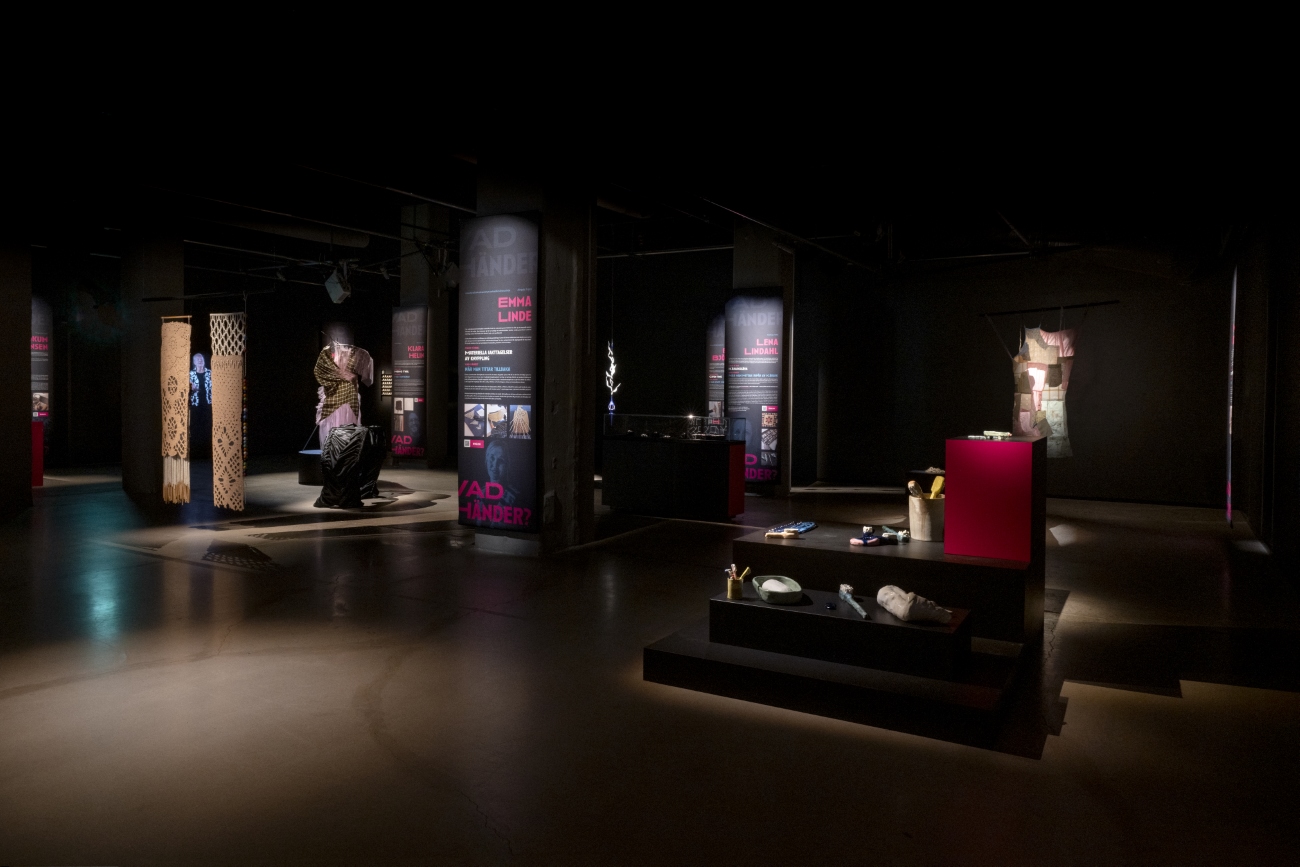
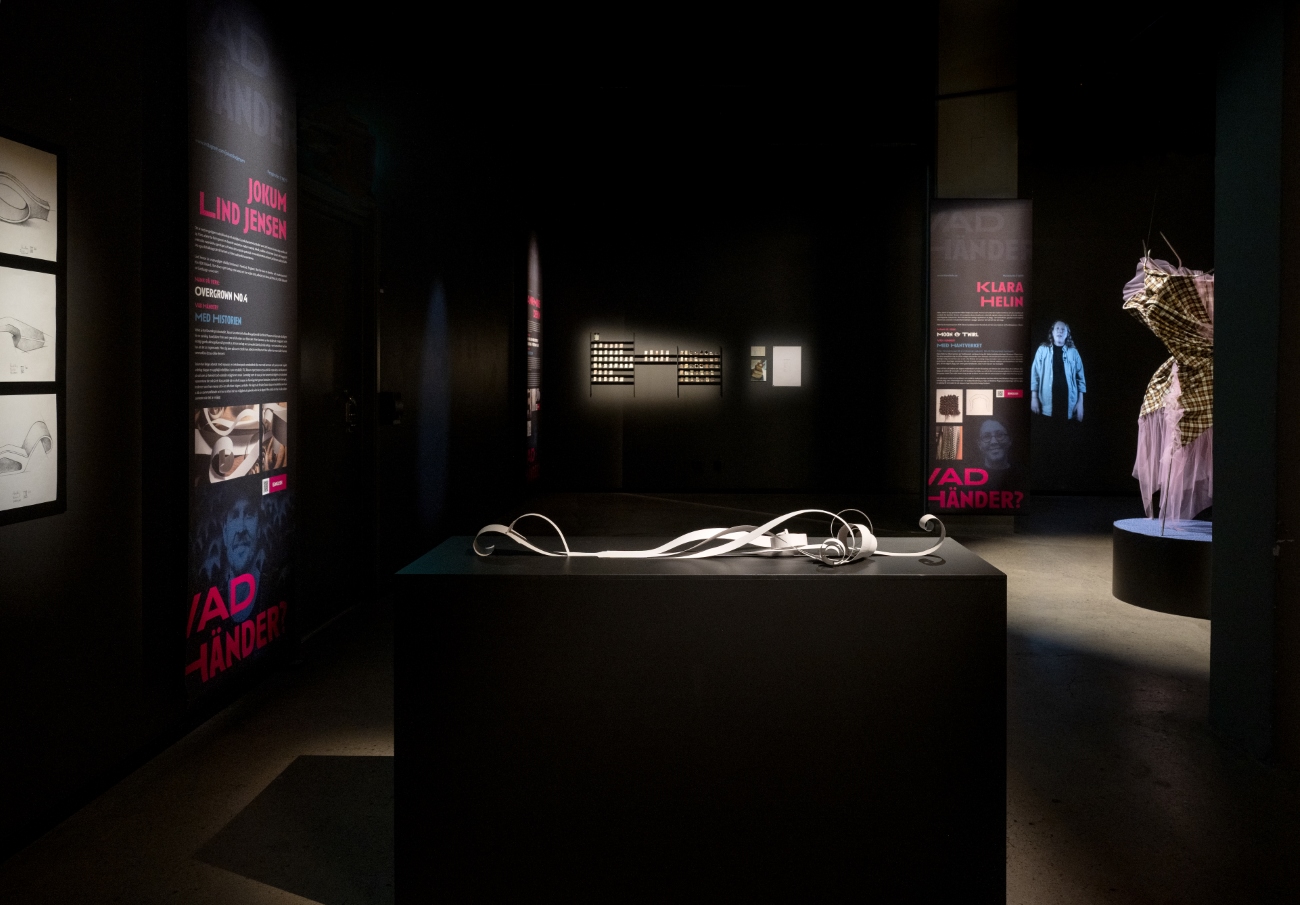
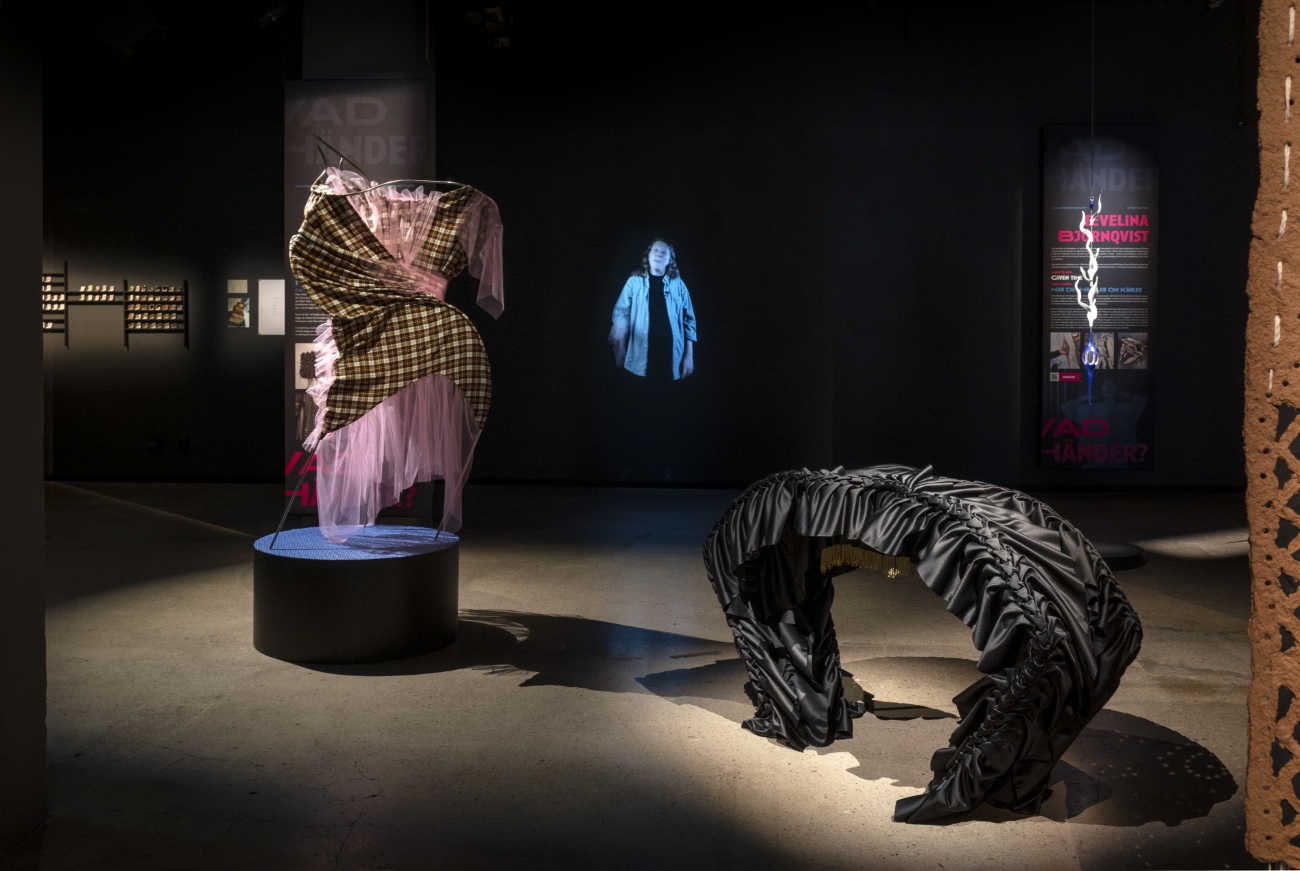
A year ago, I was selected for the project Vad Händer? (What is happening?) run by Folk&Form and the Konsthantverkcentrum. Each of the ten selected artists was invited to explore the archive of one museum in the region Västragötaland in Sweden and see what happens then.
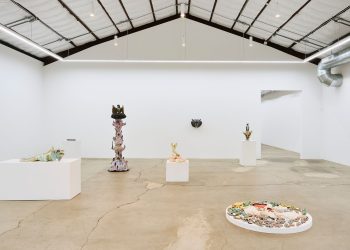
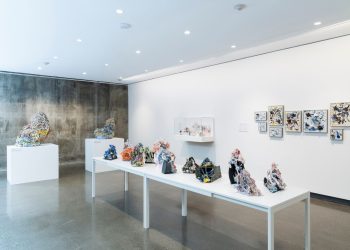
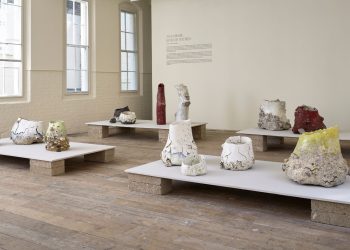
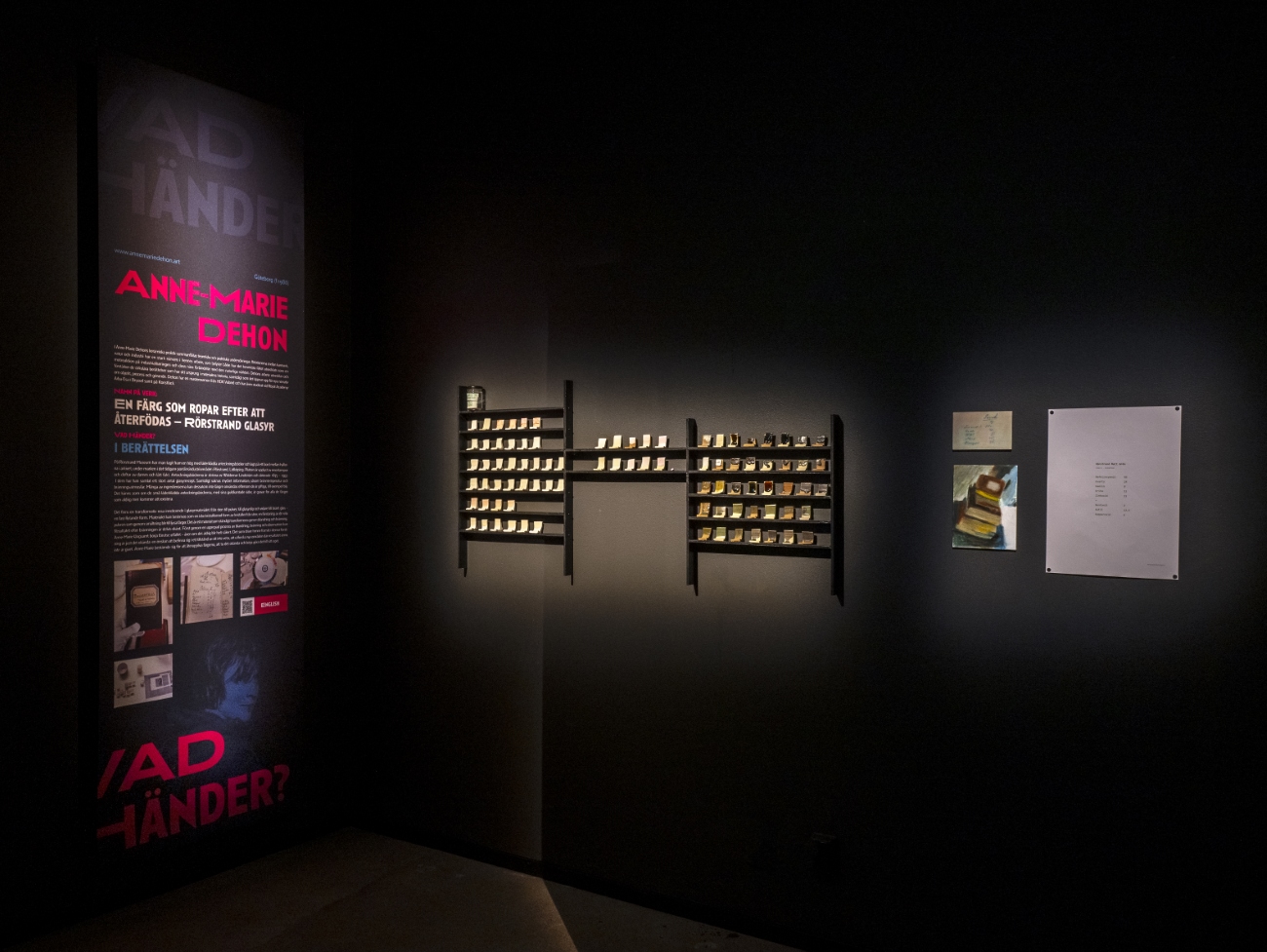
The creative process of the ten craft artists selected for the project Vad Händer was on display at the Textile Museum of Borås (Sweden) until the 15th of March 2026.
In the list of the proposed museums to collaborate with in the project Vad Händer?, I was chosen to work with the Rörstrand Museum in Lidköping. Rörstrand is a Swedish porcelain factory. It started in 1726 in Stockholm before moving to Göteborg in 1926. It later moved to Lidköping, where production moved to Sri Lanka in 2007, leaving behind empty buildings, a museum, and its archives.
Chapter 1. When a color is dead.
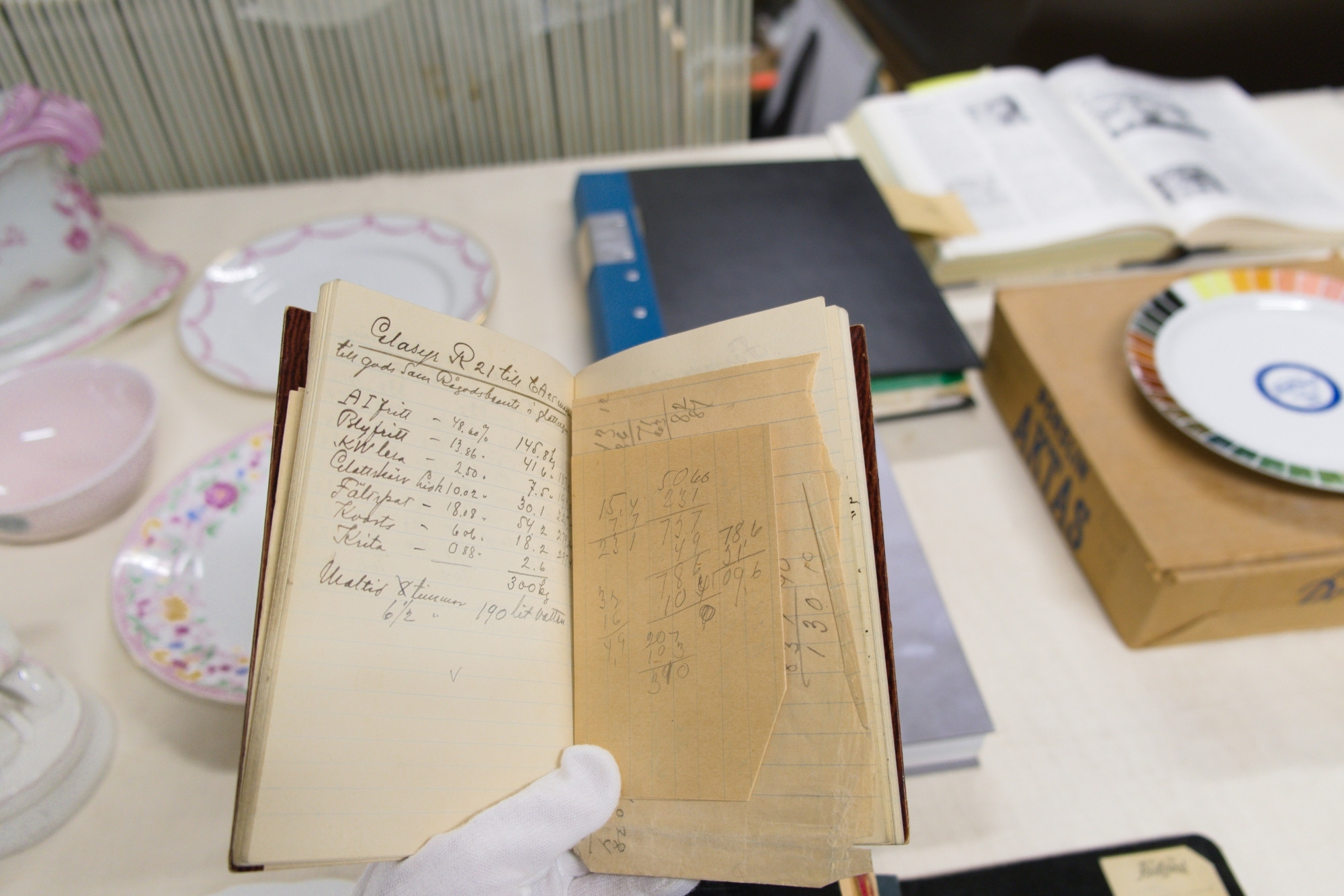
Jenny, the curator of Rörstrand museum, has taken out a pile of notebooks. The small leather-covered books are displayed on a table in between the shelves of the archive, under the ground of the former porcelain factory area of Rörstrand in Lidköping. Neon bulbs lighten the place; it smells a mix of dust and light humidity.
With white cotton gloves, I quickly open one book and read through the pages. They are filled with handwritten recipes of glazes. All the recipes have titles like Grön matt; Glasyr J; Glasyr B; Tobakburk; Pink4, etc. Sometimes there are notes in the margins. Under the title, I can quickly recognize the familiar names of ingredients like Flusspat; Kaolin; Kvartz.
As Jenny told us that we would not stay long in the archive, I hastily took pictures of all the recipes I found interesting and that could potentially interest me in the future: the rose colors and several bases. Having securely saved the pictures on my camera, I leave the archive without yet knowing what I will do with them.
Some days later, looking back at my pictures, I notice that the notebooks have been written by the same man, Waldemar Lindström, from 1875 to 1937. W. Lindström has been the chief of the ceramic workshop at the Rörstrand factory in Göteborg.
The other thing I notice is the name of the ingredients: many glazes contain lead. This poisonous material was commonly used in glazes to produce vivid colors and transparent, shiny glazes. Some other poisonous materials are also mentioned, like Uranium or Kalium dichromate (K2Cr207). Fortunately, it is no longer used, but it makes most of the recipes I recorded unusable.
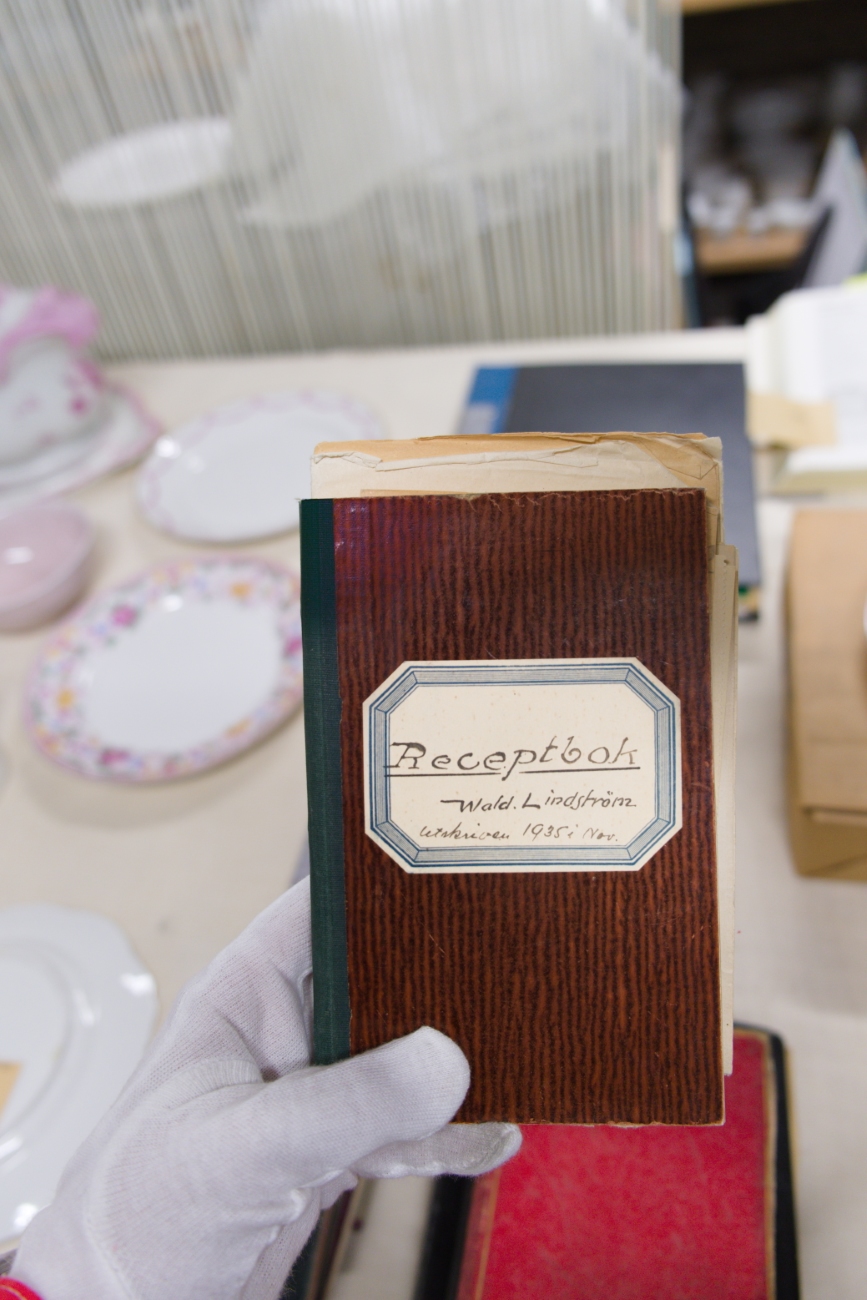
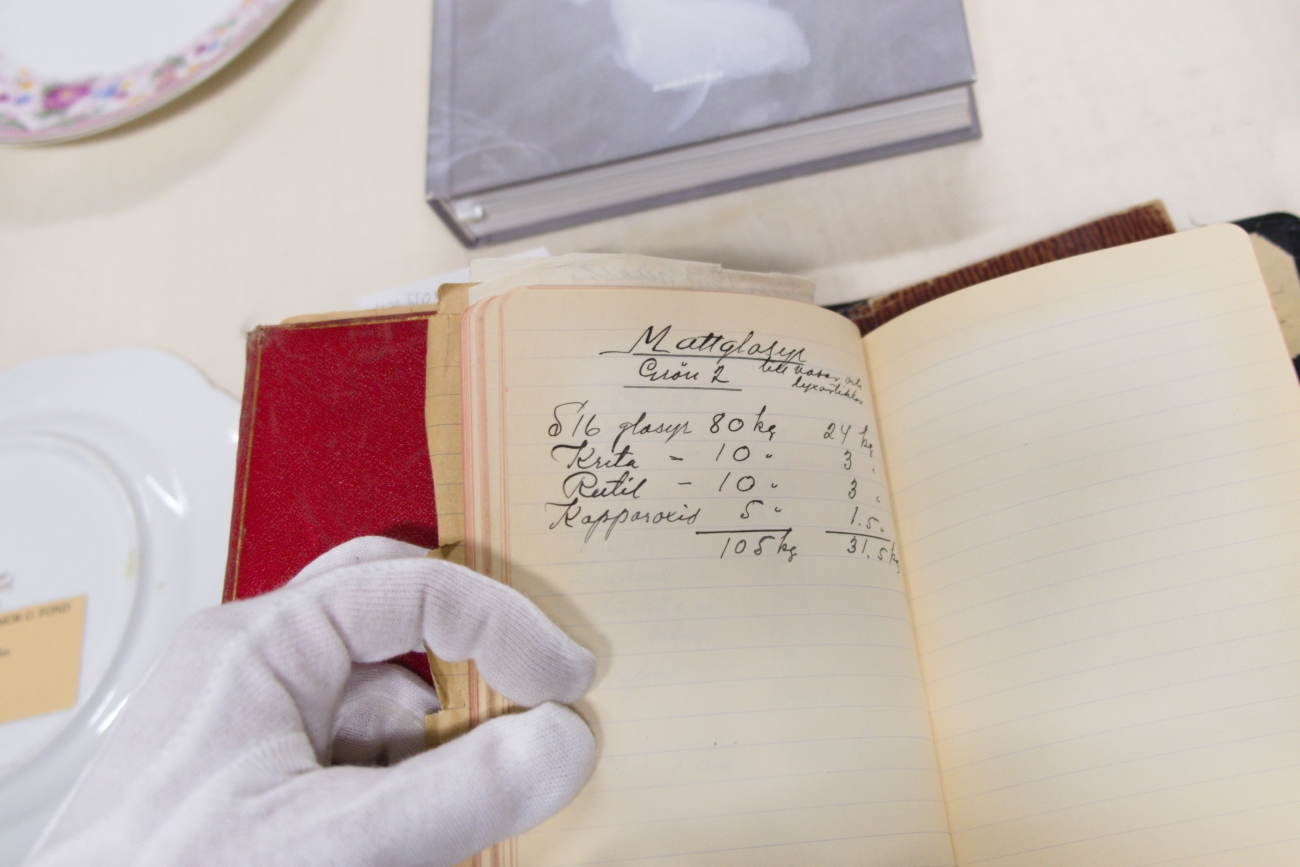
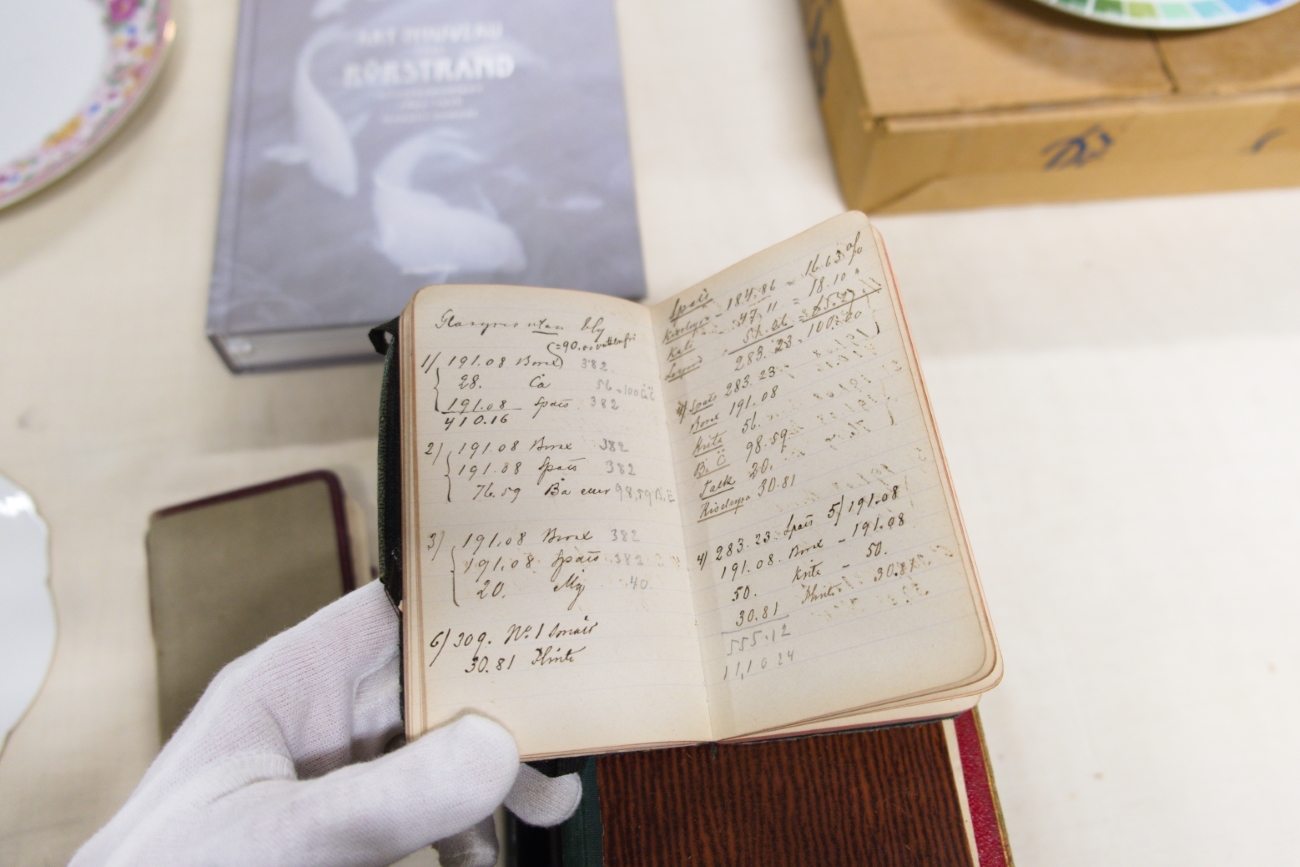
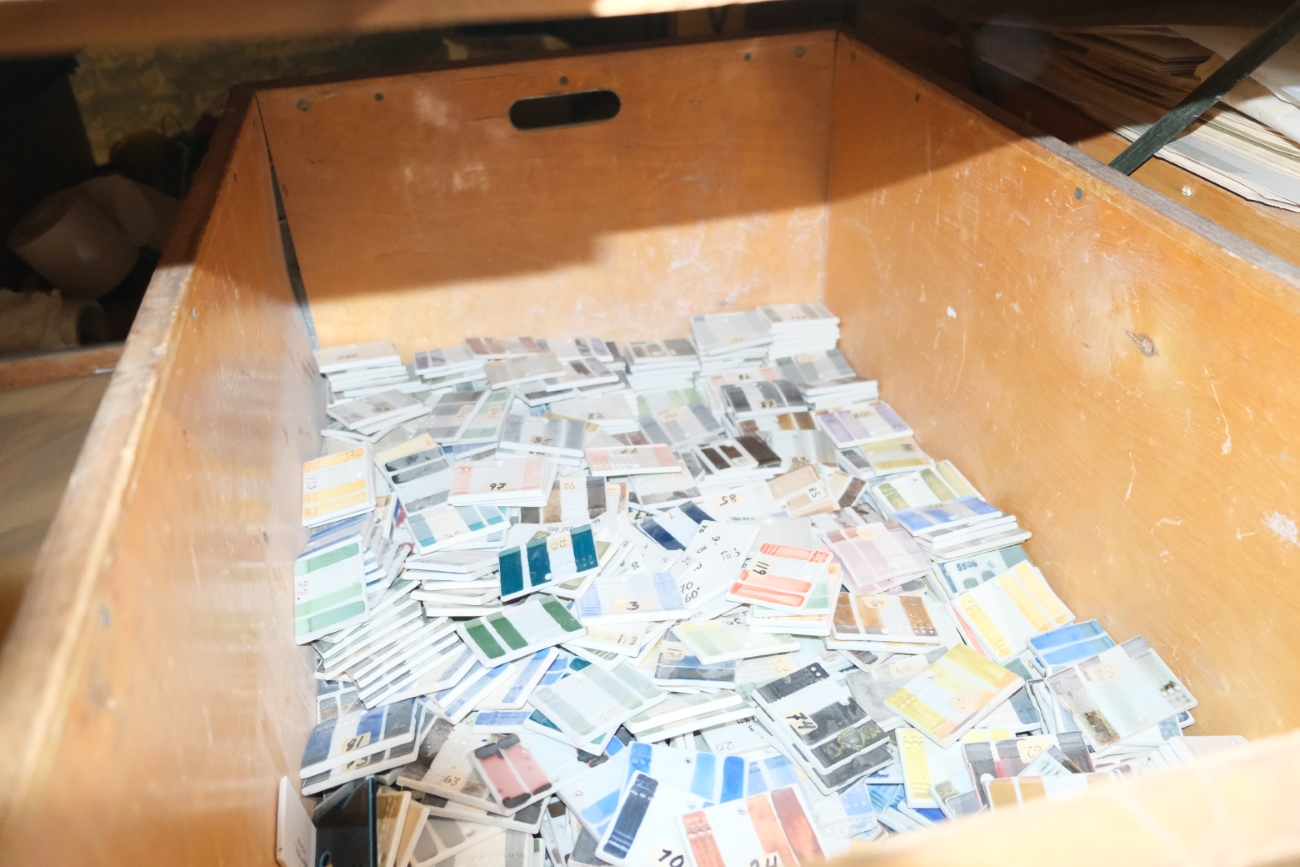
At this point, it sounds like none of the recipes can be used today. The knowledge and craftsmanship developed by this man, and for sure by a team of people working together at Rörstrand, seems to be lost: not usable anymore, and maybe for the best of our health, never again. It seems like the small leather notebooks golden at the edges of the pages are like graves for all those colors that will never exist anymore.
When is a glaze recipe lost? Were the recipes lost before I found them?
As Rebecca Solnit describes it2, loss is a transformative journey: a before, when you know, and an after, when you don’t know. It is a state of mind in which you suddenly know you are lost: emptiness, loneliness, a need to find your way.
Those recipes have already made a journey from being used in a factory to being an archive in a cellar. Lost?
Chapter 2. When a color is calling to be reborn.
Can one say that being alive is changing and moving? The recipes recorded in the book have been moving and changing, maybe exchanged before being archived. Where are the bases J, S, B from? They certainly have been adapted, variated, and tested before being rewritten several times in the notebooks.
And then suddenly, the recipes were stuck. They stopped to change and to be exchanged. They are like lying in the notebook in the silence of death in the archive.
There is a transformative journey intrinsic to the glaze material from rocks to powders, and to glazeslip, and then to fired glass – a solid-liquid as it can be described; a non-crystallized form of crystals of rocks; a magnification of the white powders melted into bright colors. It is a matter that is transformed through mixing and firing. The result after firing is partially unknown, as I can only slowly, through a repeated process of mixing, firing, and observing, predict the results, even if never entirely.
What drives me forward in this research is precisely the unknown: the wish to find this state of not knowing, the wish to explore new areas where I don’t yet know the results, the wish to be lost so I can find new ways.
It was the same desire that pushed me to enter the archive of the Rörstrand factory: to enter an unknown place, be in this state of being lost, where I don’t know where I am and what I see, where to look. And then, eventually find my way, develop my own tools of finding in the labyrinth of archives.
I feel an urge to recompose myself and get out of a state of being lost. It is a matter of survival; no creation seems possible without knowing that I am lost.
The glaze is recomposing itself through the firing process; it is finding its own balance in between the material of the recipe: in the oxidation reaction that characterizes the type of firing I am driving in my studio, some atoms lose oxygen and because of this unbalanced state, they recompose with others to find a new balance. In this way, they reconnect with each other in new constellations and create texture, thickness, and colors. It is the trace of this intrinsic movement that is visible after the quick cooling down of the glaze after the end of the firing.
Chapter 3. When the color is reborn.
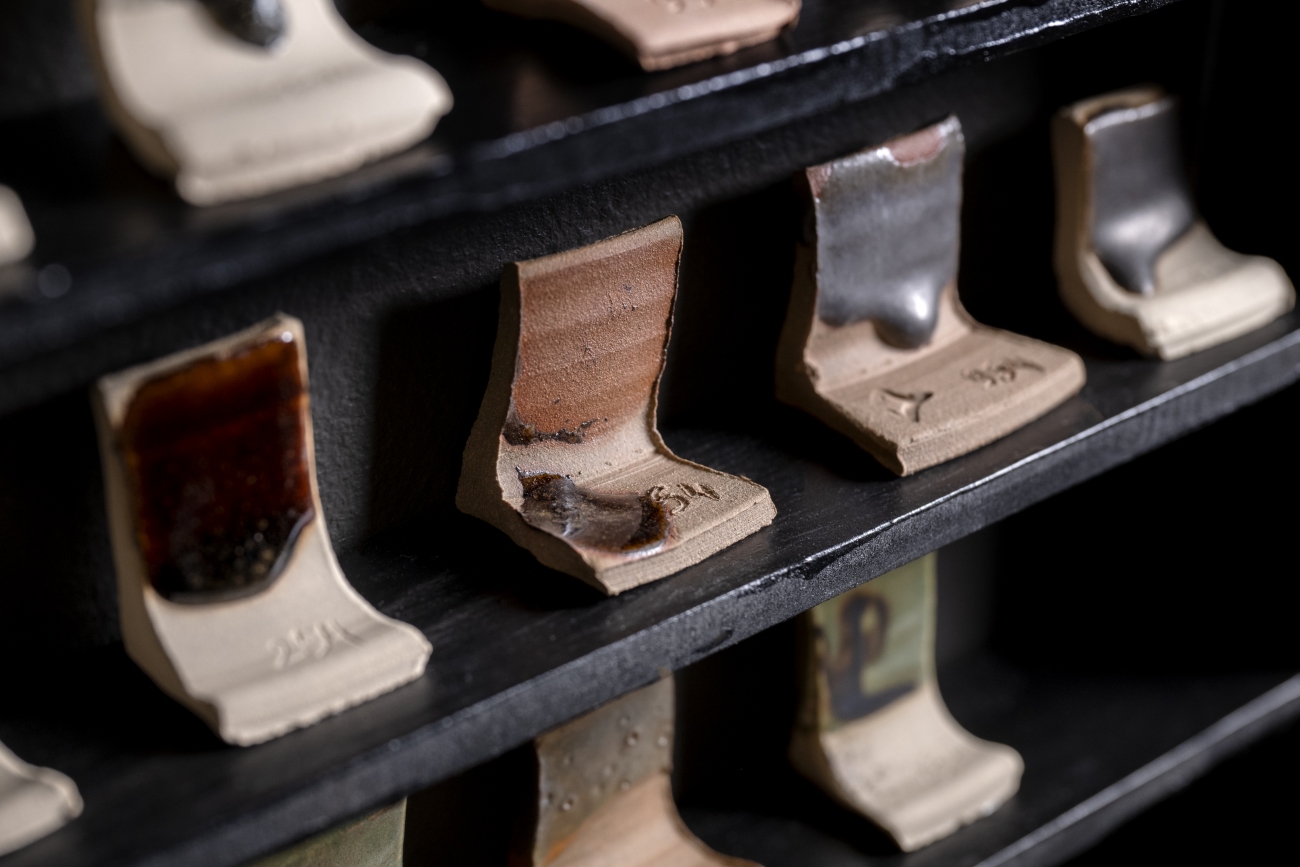
I designed a GlazeLab several years ago. It is a ceramic class for adults where, step by step, participants learn how to start mixing glaze. By mixing, observing, and analyzing together, they are learning from each other and beginning to find their own way in glaze creation.
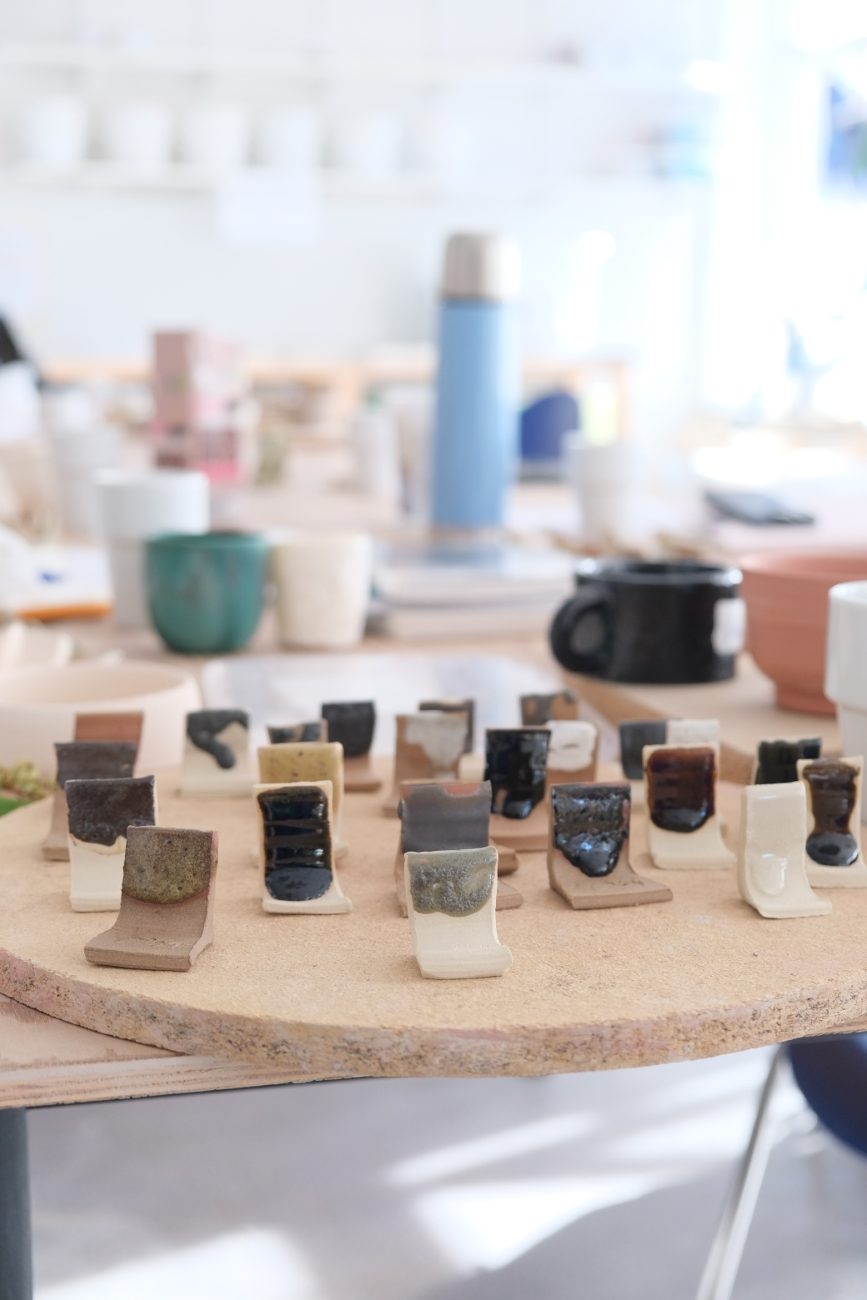
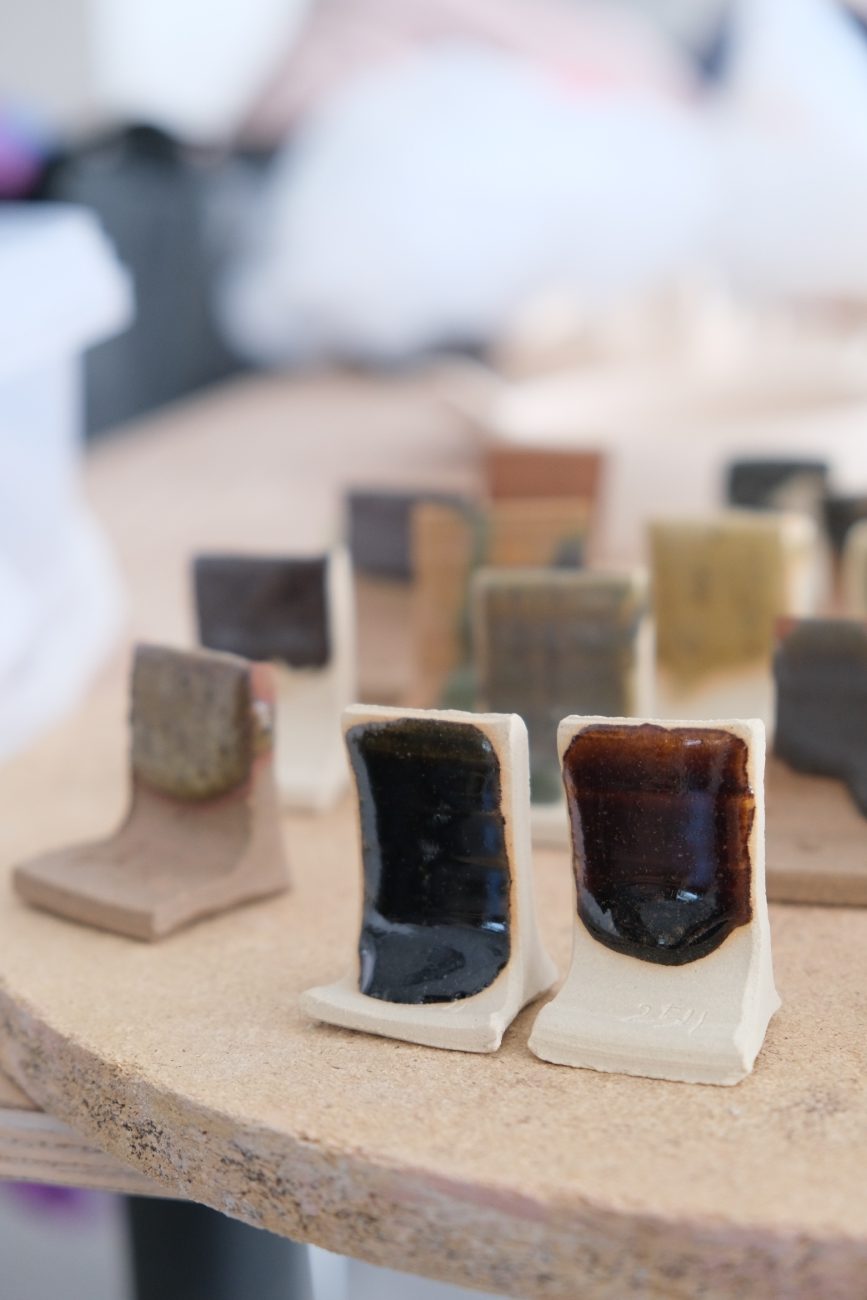
In the GlazeLab I held during autumn 2025, I proposed that participants test together several recipes from W. Lindström’s book: I chose a few that did not include lead or other poisonous materials. We mixed several bases from the notebooks of W. Lindström (S, J, and B) with several oxide mixtures. After we got those first firing results, observed and analyzed them, we chose to continue with this recipe: J Matt Grön 4.
From this recipe, what I know is the title and a list of ingredients. What I don’t know is the firing temperature and firing atmosphere. Those are two essential elements of the glazes that can impact the results. (But how does it matter anyway, as I have no idea of the expected result of this recipe?) Something I do not know either is the expected result by W.Lindström. The only thing that helps me guess is the title of the glaze, which means “Green mat glaze” in Swedish. Lost in the unknown, we are like blind persons, cautiously going in the dark.
We decided with the participants to slightly adapt the recipe, decrease the amount of copper oxide to make it less metallic. The results of this second test have the lab participants enthusiastic. The glaze covers the piece well, does not run down onto the kiln and has a beautiful leopard dark marble surface on the green matt background. With one of the participants, we decided to mix a larger amount into 3 kilograms to glaze larger pieces.
Nevertheless, the first test of the larger amount of glazeslip is way less convincing. We are all tremendously disappointed. The green is pale, transparent, and full of many pinholes. At several places, there are large brown mat surfaces, as if all the copper oxide had fallen there. After reading some books and discussing with ceramicist colleagues, the dark spots seem to be due to the copper oxide, which tends to run down too quickly from the bucket when we dip the bisque-fired piece in it. This can be due to a lack of clay in the recipe. Those conclusions led to a series of new tests with deflocculant and bentonite.
As those tests are still on their way. From one firing to the next, with the participants in the lab, we are going through disappointment, curiosity, and discouragement, and gaining a better understanding of the material we use. Through this process, we are learning to make it our own: reach the desired color, learn how thick to apply it to the piece, maybe with other glazes on top, and how to make it fit the condition of the collective shared space of a school.
Each participant makes their own way to use it, to look at it.
Chapter 4. When a color is alive.
Glaze colors are calling to be born. Inside me, this creative impulse feels the right and only way to be followed.
Glaze recipes are, in themselves, collaborative creations. They come from a potter who received them from another potter (with varying degrees of consent). You got it, maybe, from someone else who did the same. Each person in this transmission chain has had the chance to adapt the recipe, maybe give it a new name.
The J base glaze from Rörstrand is made from a mix of quartz, kaolin, feldspar, chalk, and zinc oxide. This recipe is not unique. You can find those materials gathered in many other recipes in different balances. It means that it has been spread out from somewhere, transmitted, developed, created, re-created, until it has been archived underground at the former Rörstrand factory. Even in the book by W. Lindström, you can find this recipe rewritten several times, as if it needed to be recorded to continue being used.
Glaze recipes are alive when they change, when they are used, recreated and reimagined. They are alive when their colors become meaningful to someone’s creative desire. It feels strongly alive when, during the glazelab, it triggers happiness, curiosity, surprise, or disappointment. It feels alive when it cooperates or resists to fit the requirements of a given environment.
While mixing this recipe with the other people of the Glazelab, we were giving life back to a craftsman’s desire to create this recipe, a desire that had long been dormant. By adapting and recreating this recipe, it becomes possible for it to continue to be used, carrying its title and its history, and all the craft persons who have been collaborating through generations in its never-ending re-creation.
Anne-Marie Dehon is a ceramic artist based in Sweden, originally from Belgium. After earning a degree in political science, she studied ceramics with F. Urrejola (Lodève, FR) and painting at the Royal Academy of Fine Arts (Brussels, BE). She worked as an artist in Brussels between 2012 and 2020, before moving to Sweden in 2020. She graduated from Hdk-Valand (Gothenburg, SE) in ceramic art and more recently from the Research Lab at Konstfack (Stockholm, SE). She is one of the co-founders of the Kollektiv Tontouristen.
Subscribe to Ceramics Now to read similar articles, essays, reviews and critical reflections on contemporary ceramics. Subscriptions enable us to feature a wider range of voices, perspectives, and expertise within the ceramics community.
Captions
- Rorstrand archive. Photos © Anne-Marie Dehon
- Vad Händer at the Textile Museum of Borås, Sweden, 2026. Photos © Anna Sigge