By Unu Sohn
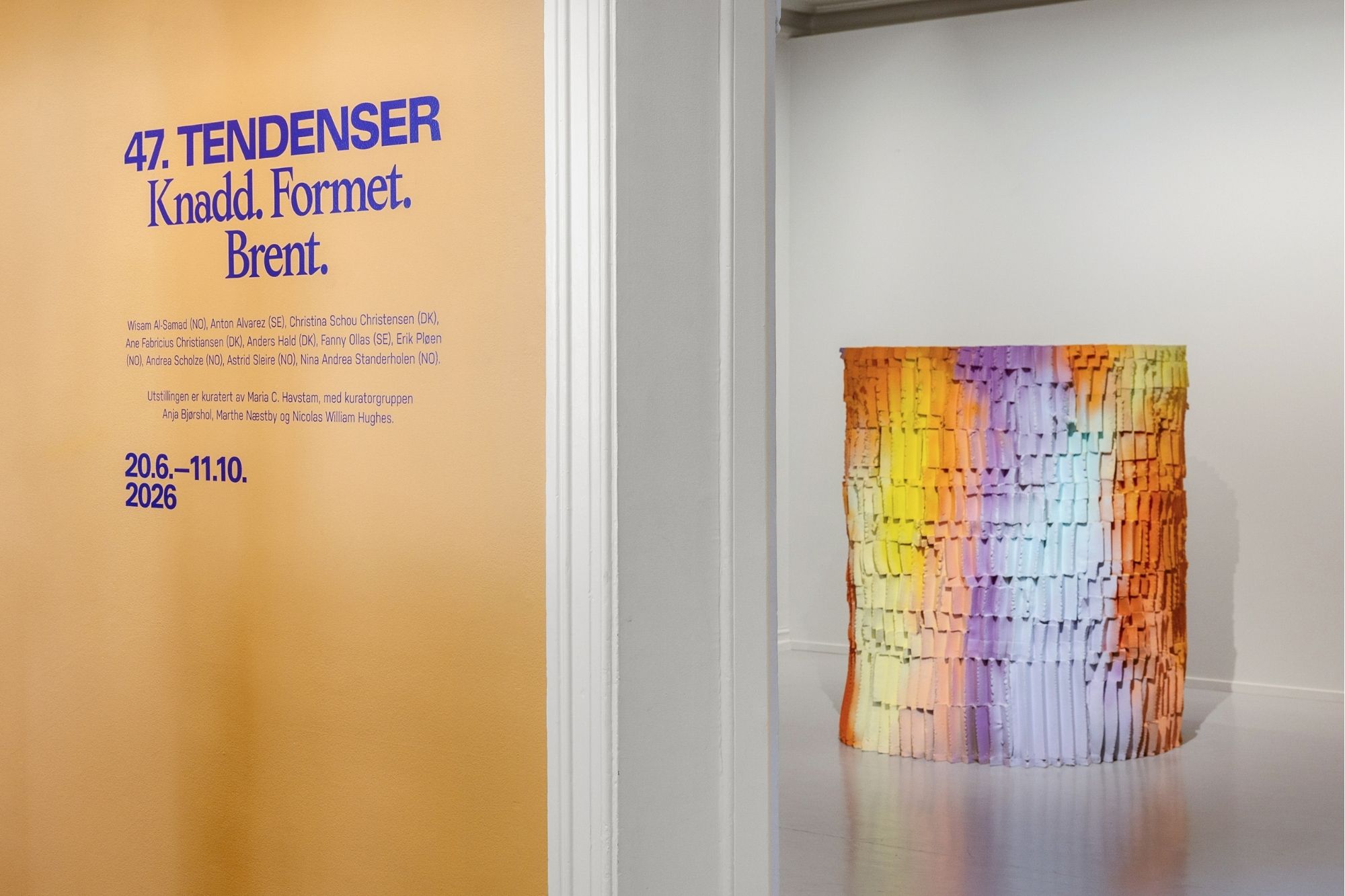
The 2026 Tendencies exhibition is the 47th edition of a series of annual presentations that began in 1970, when Norwegian artist Erik Pløen proposed a yearly craft exhibition to Galleri F 15’s then-director, Lars Brandstrup. The exhibition is on view June 20th through October 11th at Galleri F 15 in Moss, a quick forty-minute train ride from Oslo. This year’s show is special as it features work by Pløen himself. In honor of his artistic development, it focuses on the medium of ceramics through a balance of more traditional craftsmanship with experimental techniques and concept-driven works.
The ten Nordic artists exhibiting include Anders Hald, Andrea Scholze, Ane Fabricius Christiansen, Anton Alvarez, Astrid Sleire, Christina Schou Christensen, Erik Pløen, Fanny Ollas, Nina Andrea Standerholen, and Wisam Al-Samad. Titled Kneaded. Shaped. Fired. because of the focus on ceramics, the show is curated by Maria C. Havstam who is the Head of the Art Department and Interim Director of Galleri F 15. Havstam also cites the “mad potter” George Ohr for the curatorial direction focused on the material’s ability to engage the head, heart, hand, and soul.
Knead, shape, fire, head, heart, hand, soul. There are a lot of ideas being thrown around so the theme may feel muddled. Luckily, this is the basis for an art exhibition and not an important safety announcement. The title is a misnomer as some work is a mixture of unwedged slip or free-flowing glaze, while other works are unfired clay sculptures made in-situ. That being said, the Tendencies exhibition does reflect the array of contemporary ceramic practices that have grown out of studio pottery.
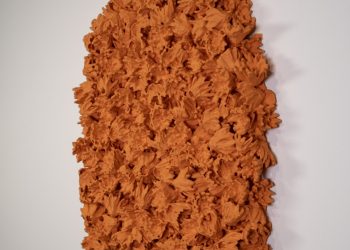
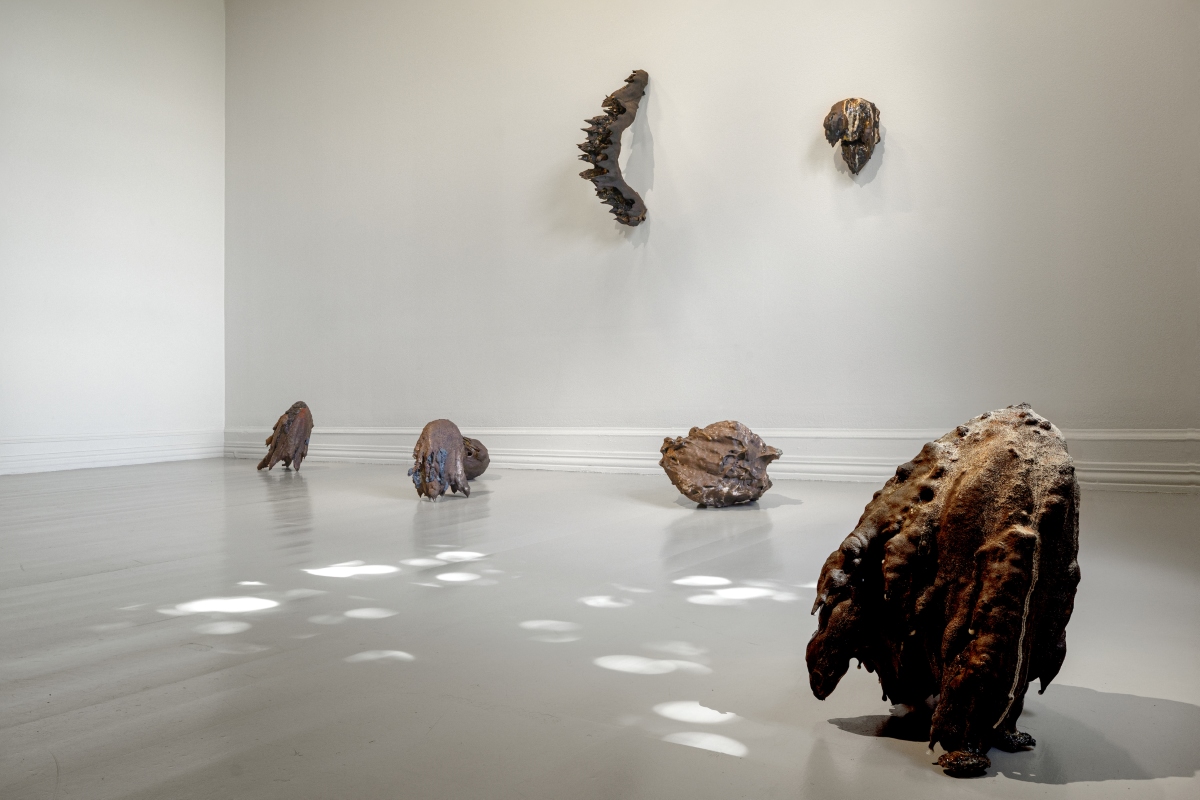
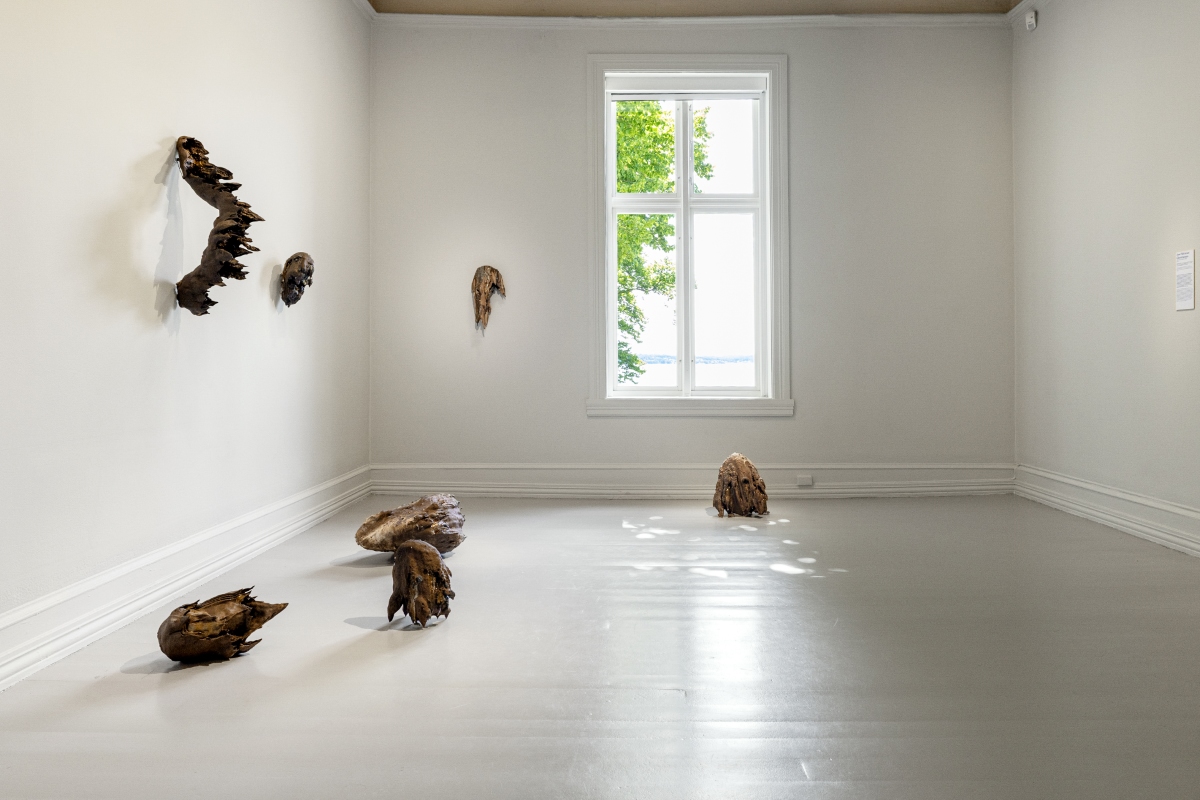
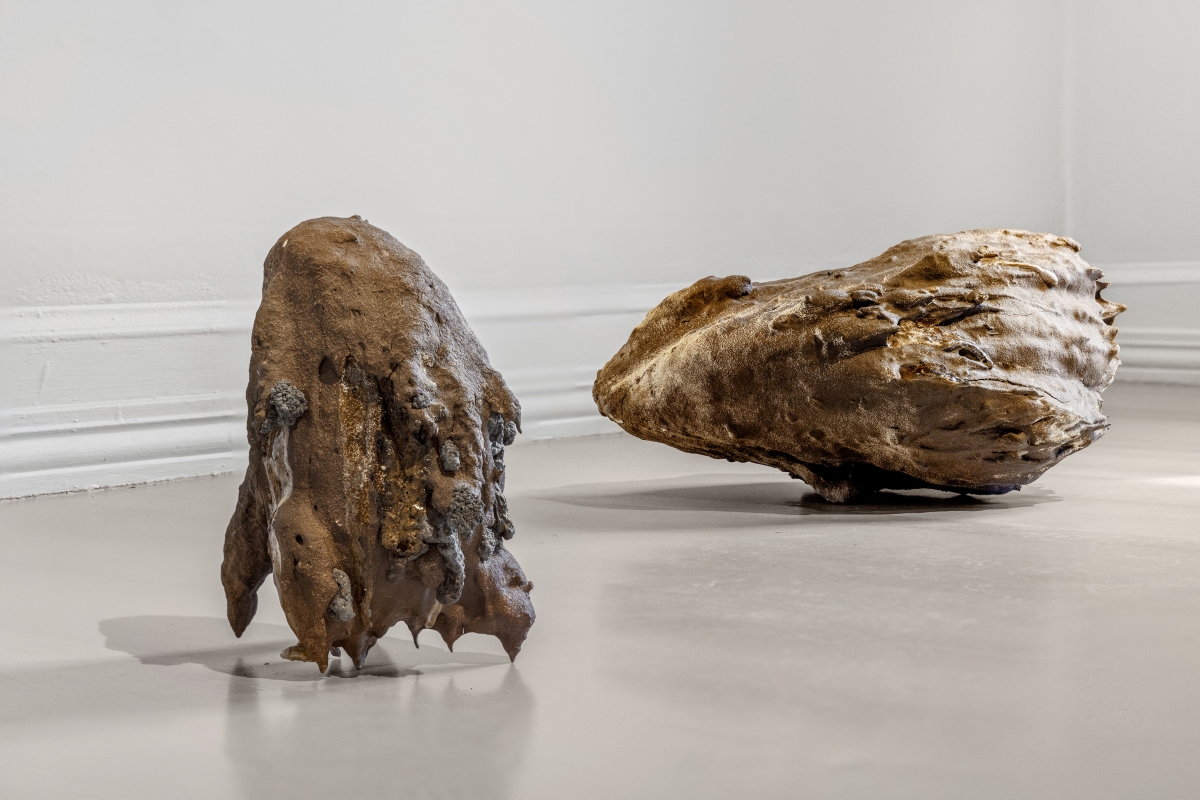
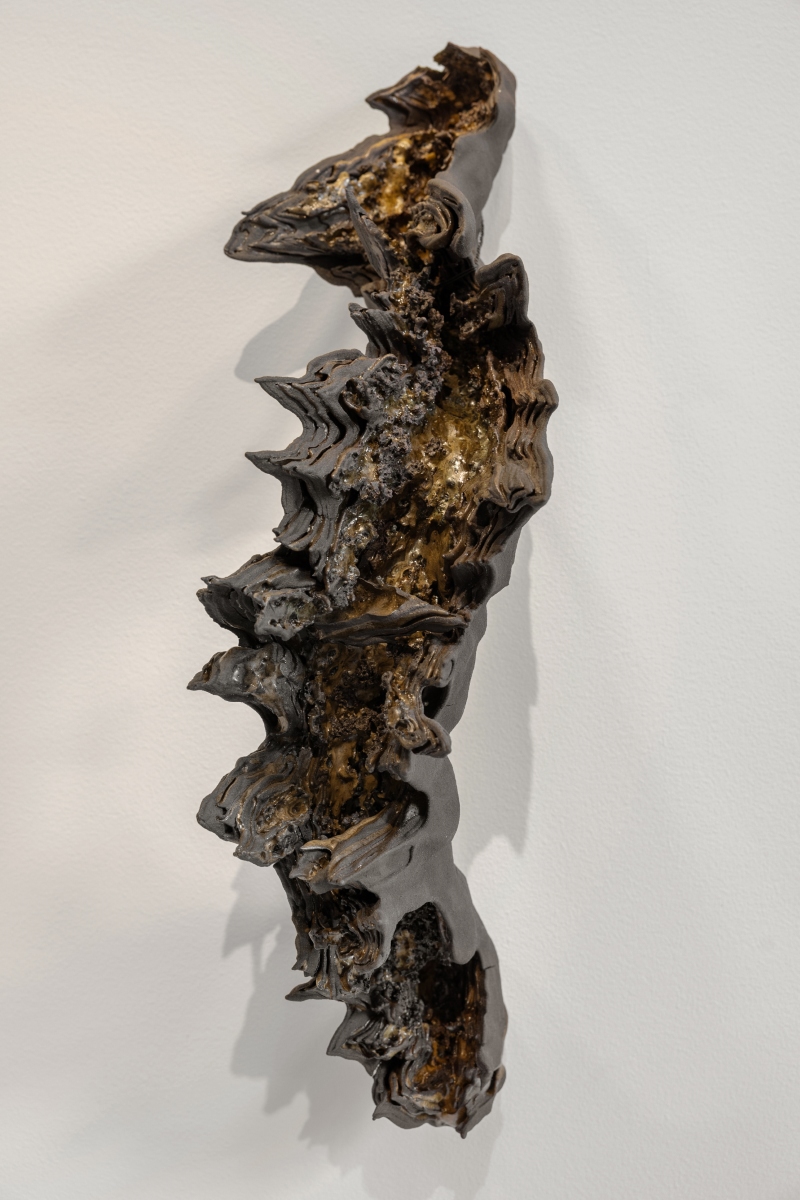
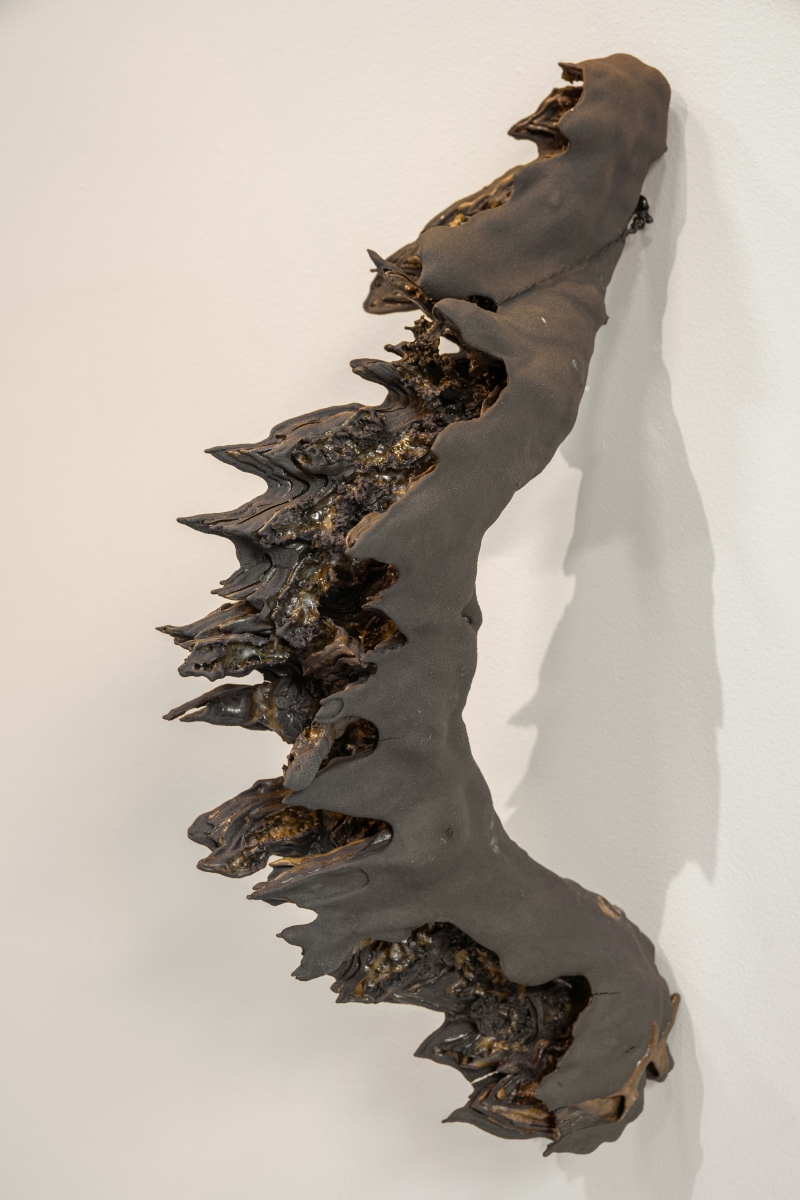
Ceramics is a funny medium because it teeters between truth to material and immaculate illusion. The works of Christina Schou Christensen and Ane Fabricius Christiansen both quintessentially define the material’s paradoxes, utilizing its ability to freeze time and gravity. In the works exhibited with Galleri F 15, Ane Fabricius Christiansen casts metal directly onto the clay within the kiln. Her works appear geological, perhaps even extraterrestrial. Upon the wall is a petrified spine consisting of several layers of once molten strata. It is alchemical, drawing a parallel between the earthly remains of humanity and the awe-inspiring stalactites and stalagmites deep within untouched caves, both made of the mineral calcium.
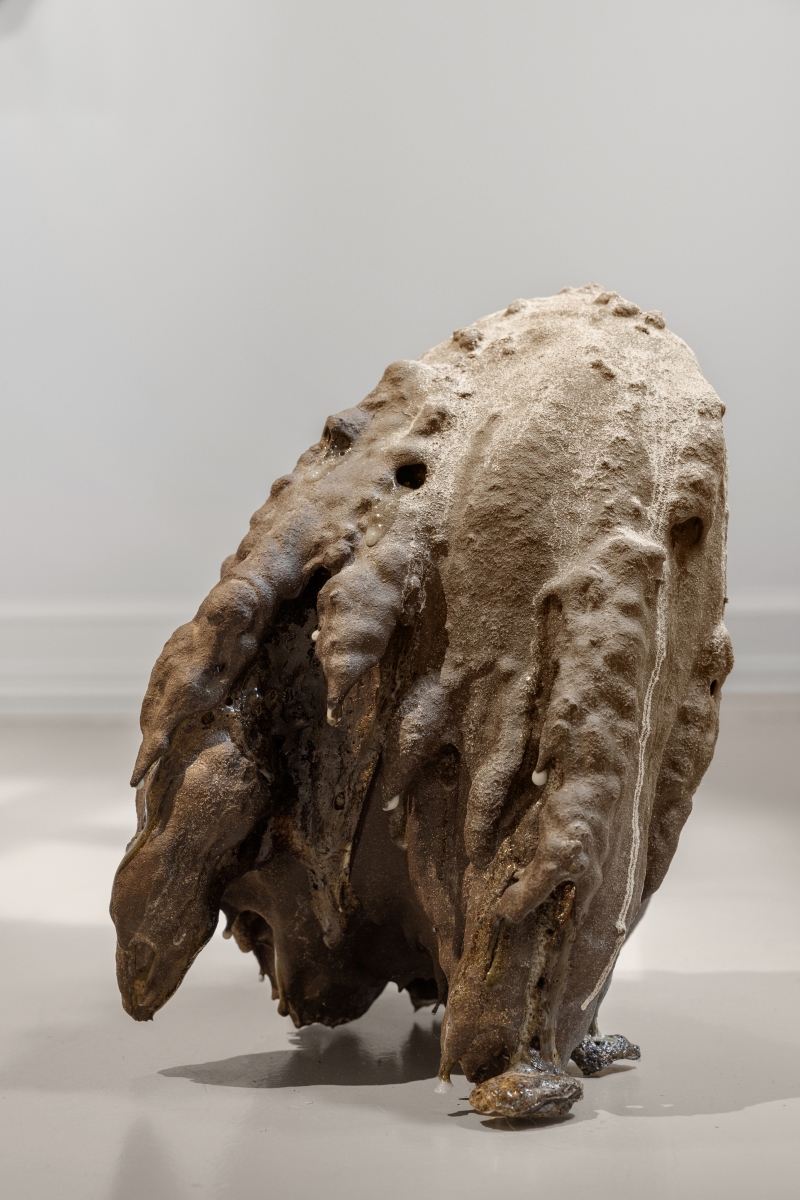
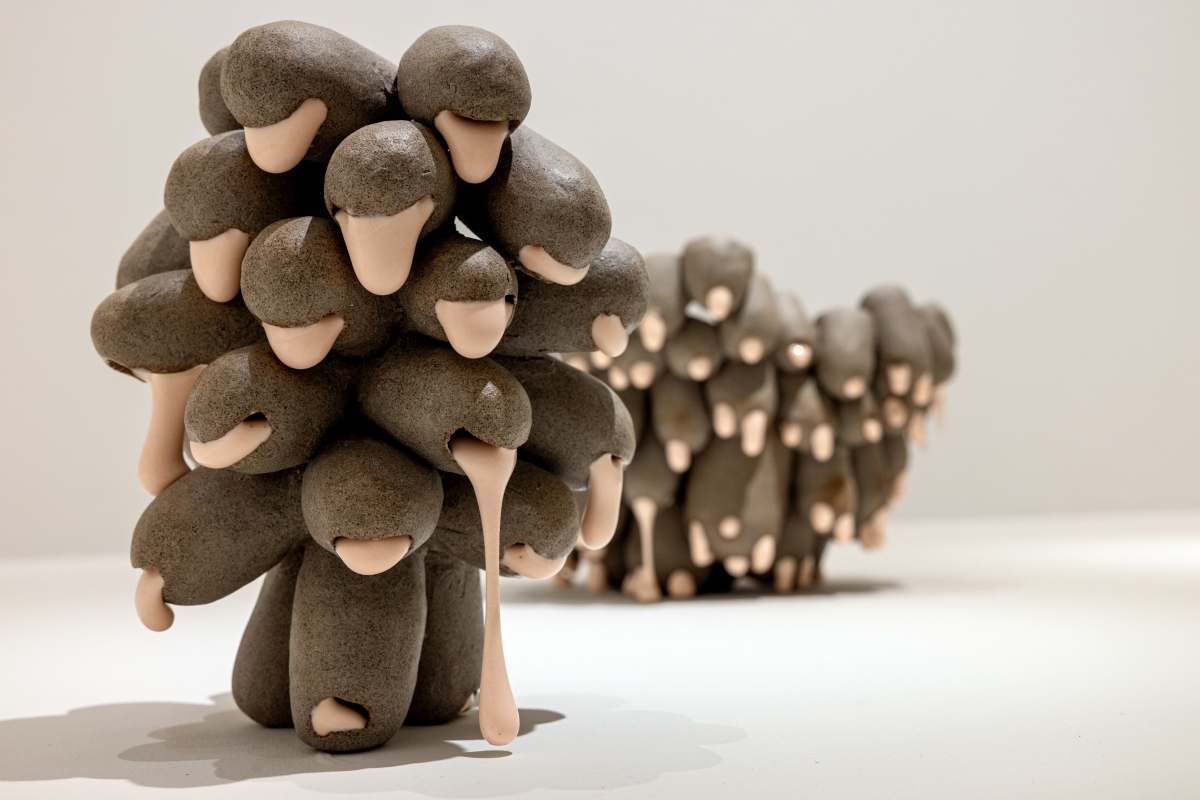
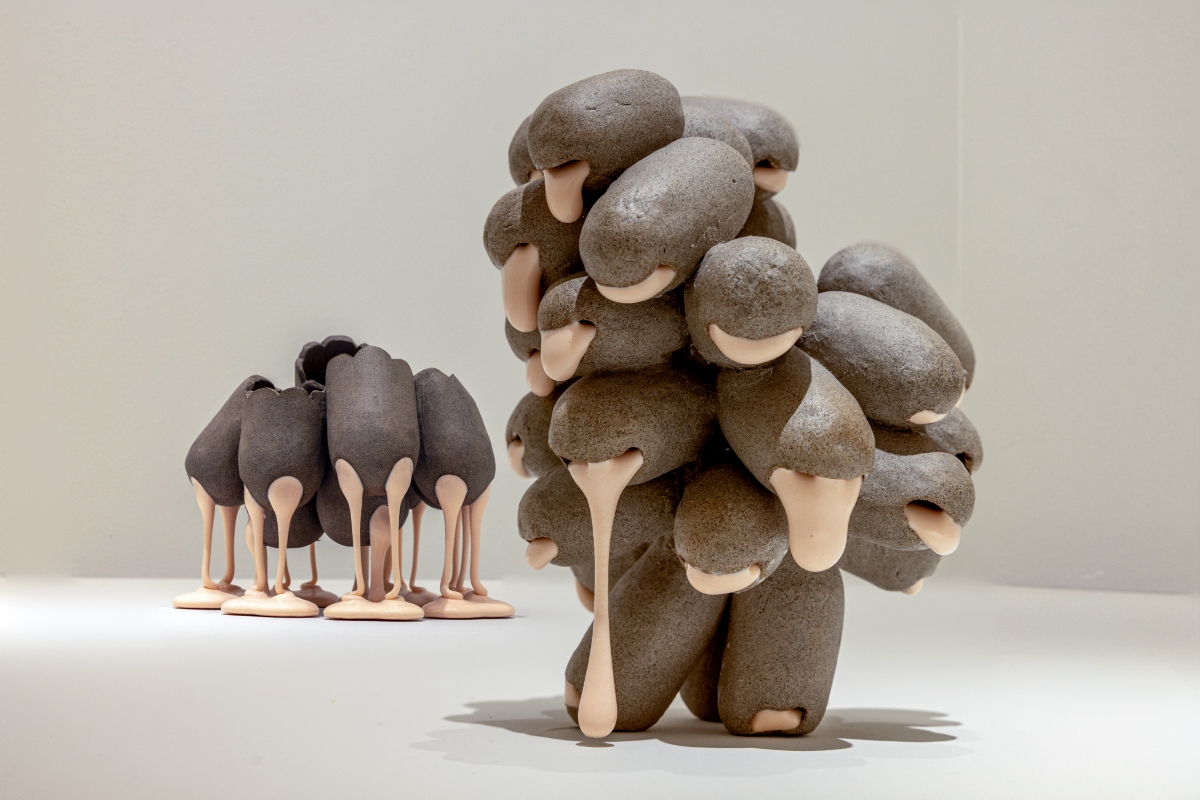
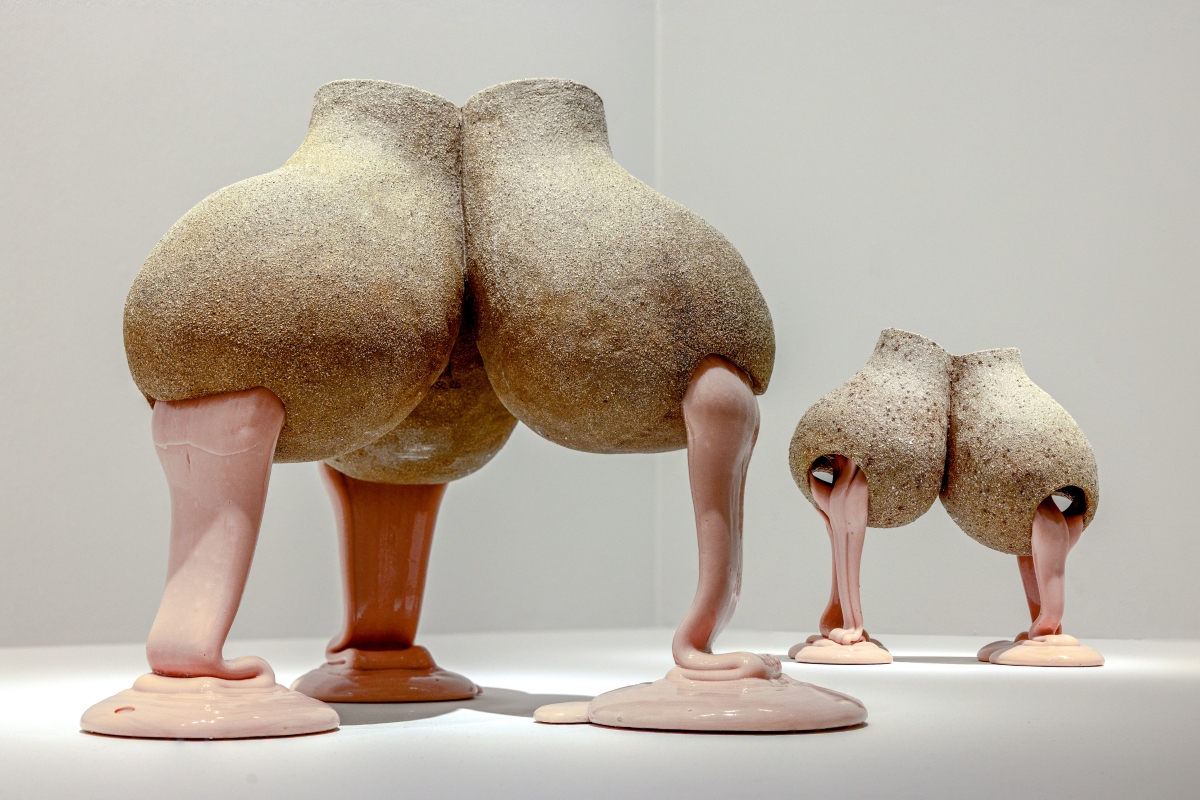
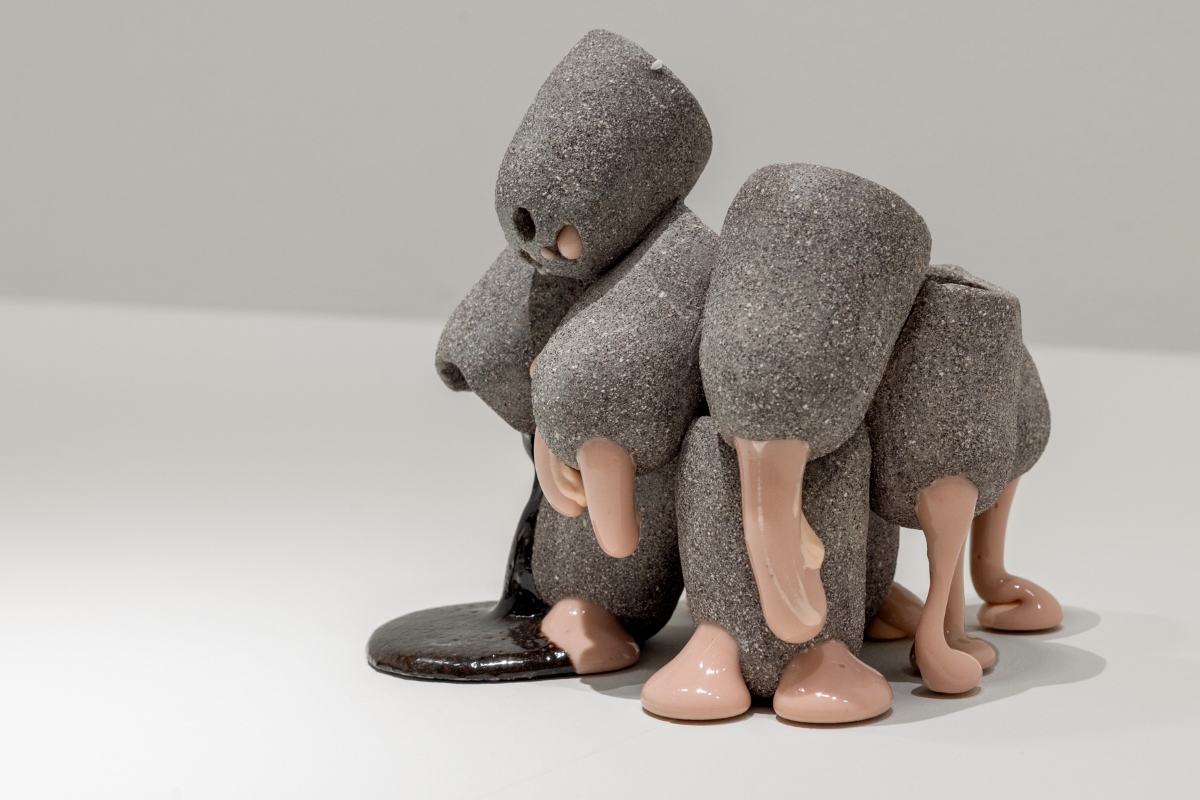
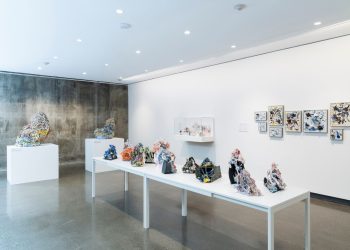
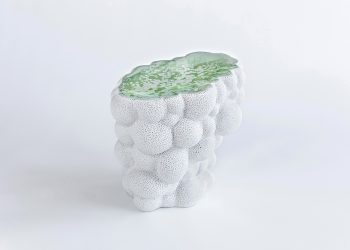
Artist Christina Schou Christensen also uses the fluidity of ceramic materials to explore corporeality but in a playful manner. Like many artists working in relation to clay, I am very much familiar with her gloopy colors dripping and pooling out of bulbous sockets. The artist says audience responses vary from miming vomiting to expressing a desire to eat the works. There is something sickening and yet innately animal about this, like the scavenging instinct of a creature eating feces that contains undigested fats and proteins. My metaphor is fitting considering Christensen’s work incorporates reused fired clay and waste materials such as medical glass. It is poetic how the larger sculptures require internal scaffolding to mitigate tension and prevent the thick glaze or clay body from shattering, which in turn creates layered pools of glaze.The interior is externalized and a purely practical technique develops the work’s formal complexity.
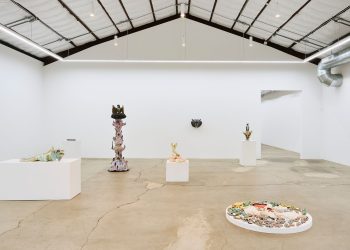
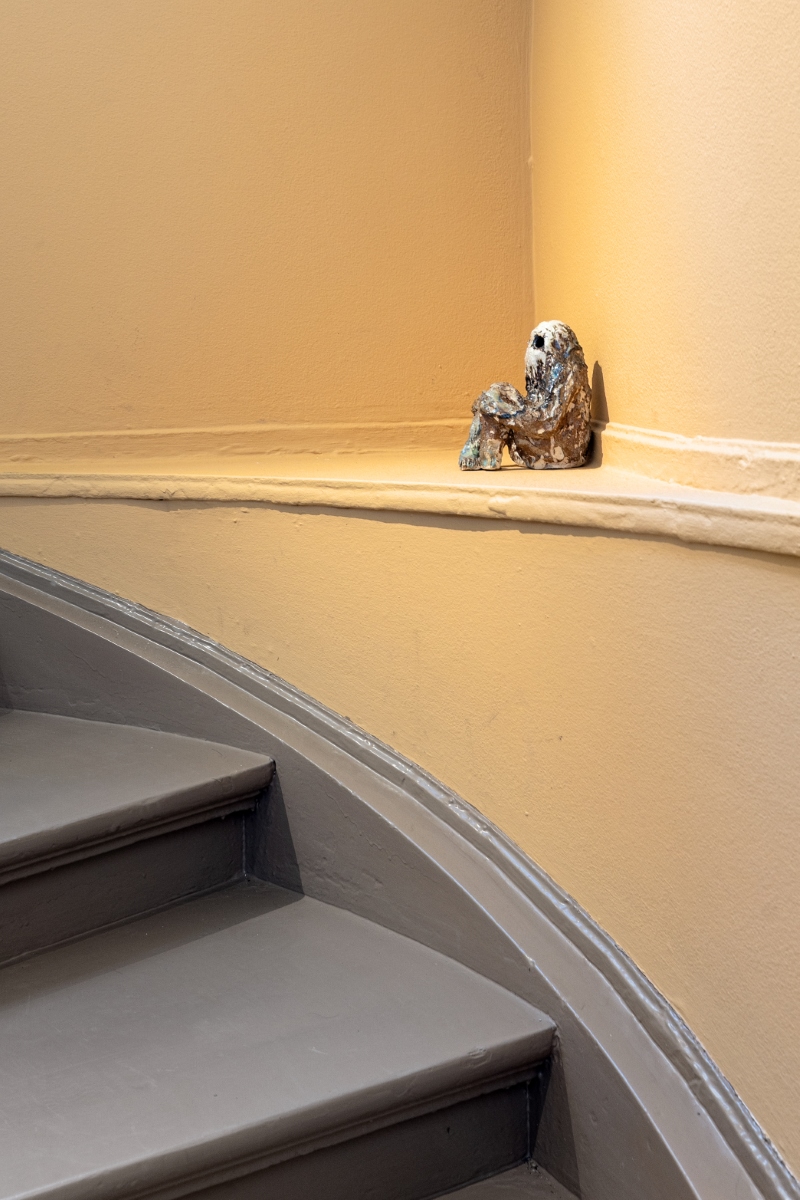
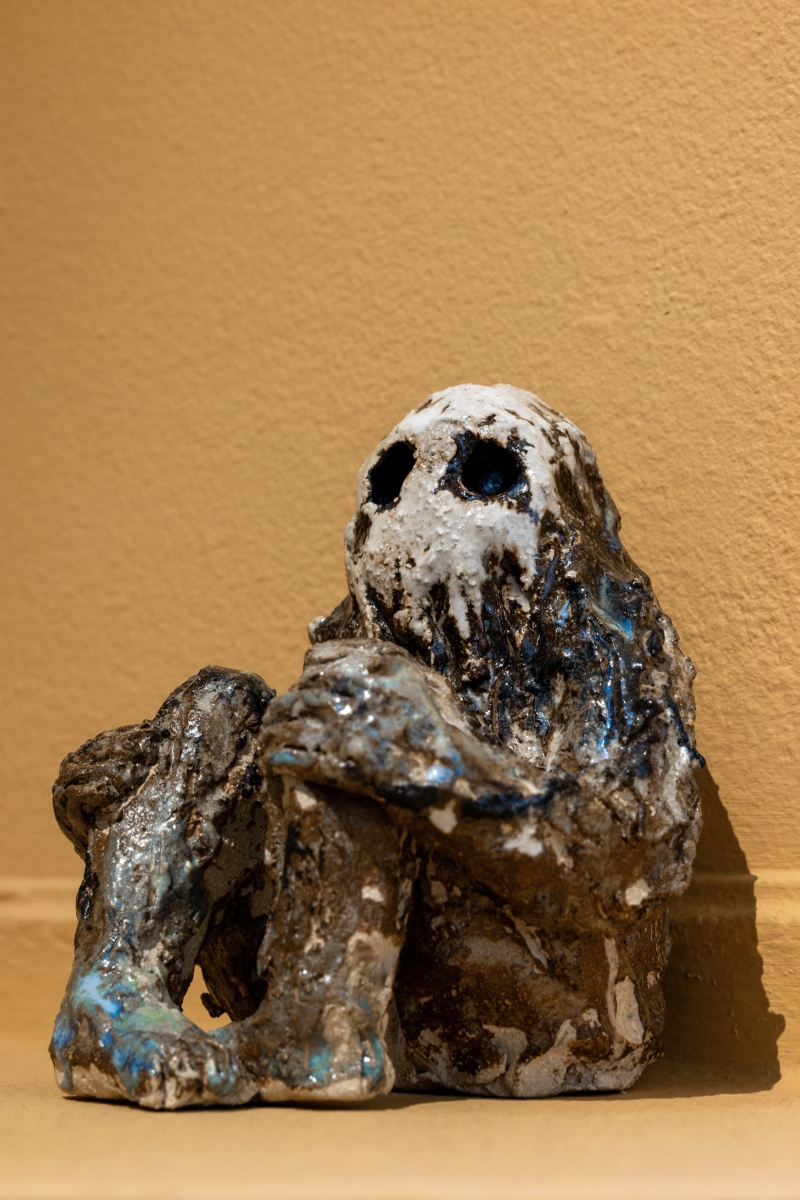
Christensen is motivated by a desire for child-like fun and humor continues as a theme within the exhibited works of Andrea Scholze and Fanny Ollas. Ollas anthropomorphizes traditional vases into confident and sassy characters with hands on their hips while Scholze’s humans and animals are vulnerable, lonely, and lifeless—in a funny way. For the opening, Scholze installed a huddled up sculpture in the driver’s seat of her own Pontiac. Is he psyching himself up to leave this party full of strangers or to drive to a meeting with his manager in which they are almost certainly not going to fire him? I remember seeing Scholze’s work at Ceramics Brussels in her solo booth with Oslo-based QB Gallery but did not know that even Scholze’s largest works are raw glazed. The holes punctuating many of her large forms help to shape the creatures in the making process and also reveal the material to viewers through the unglazed surface within.
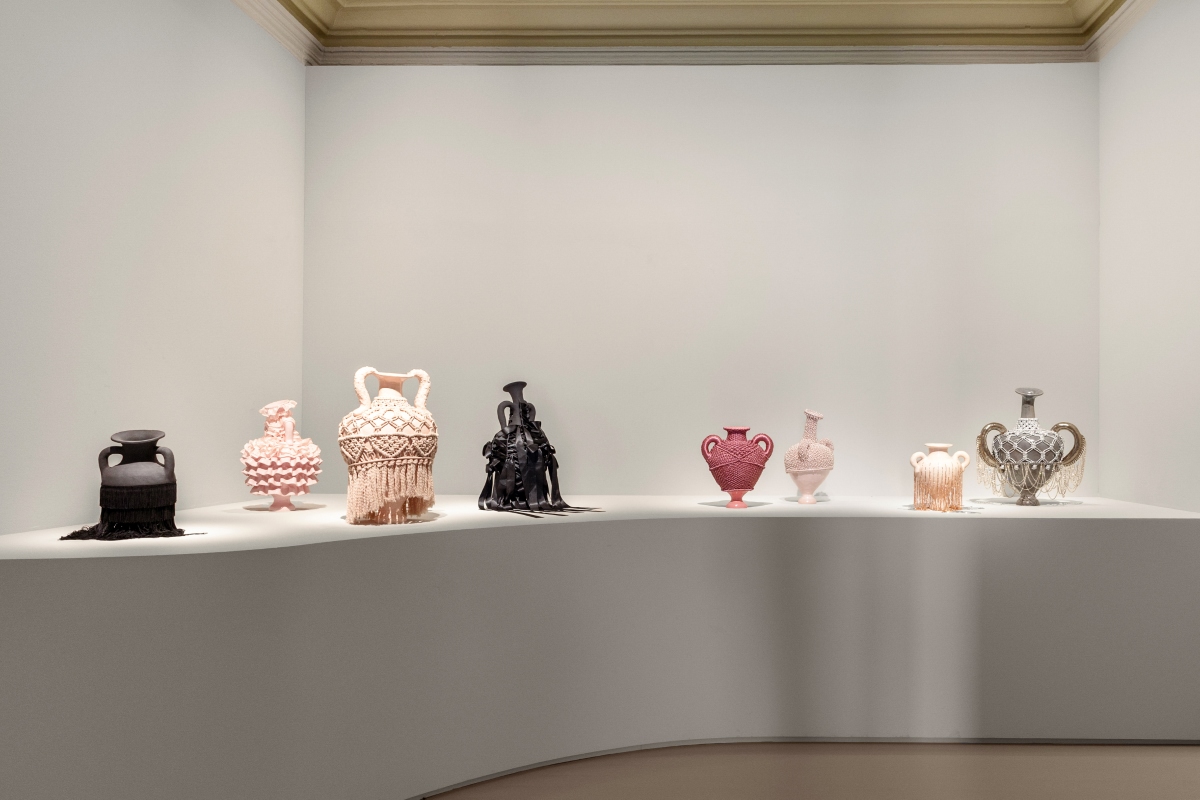
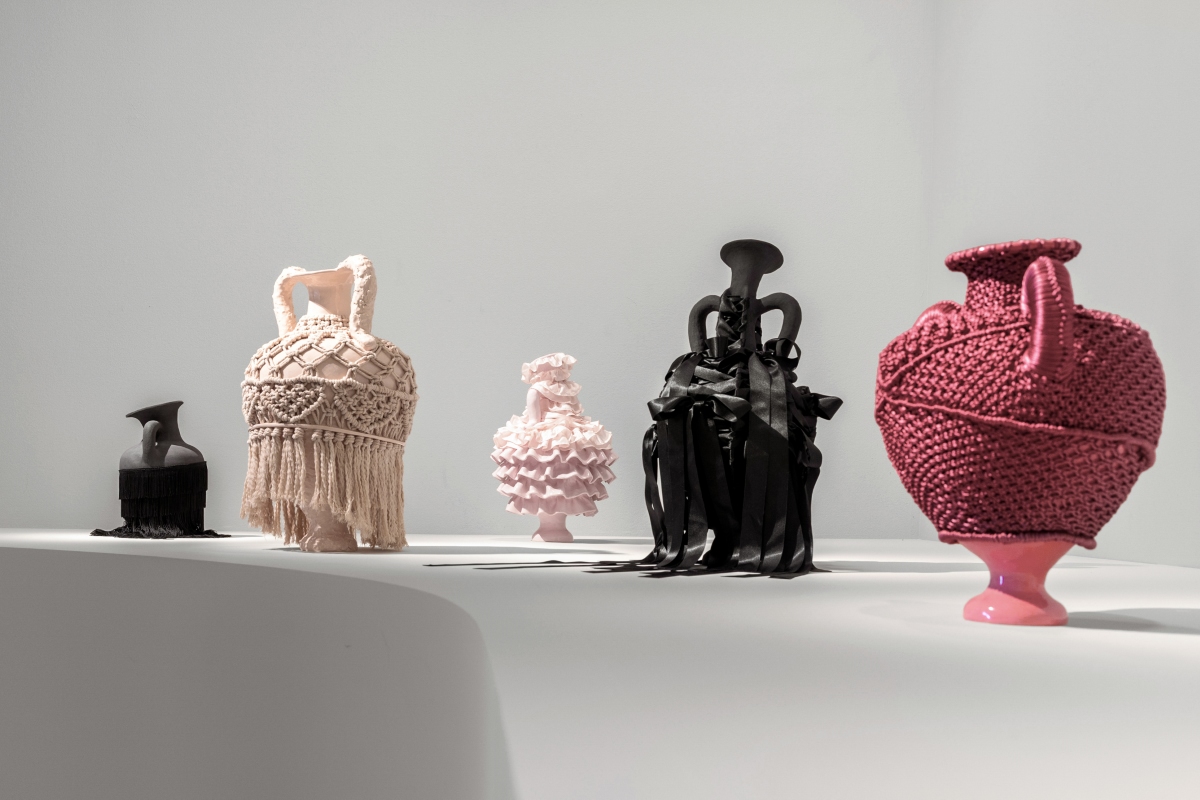
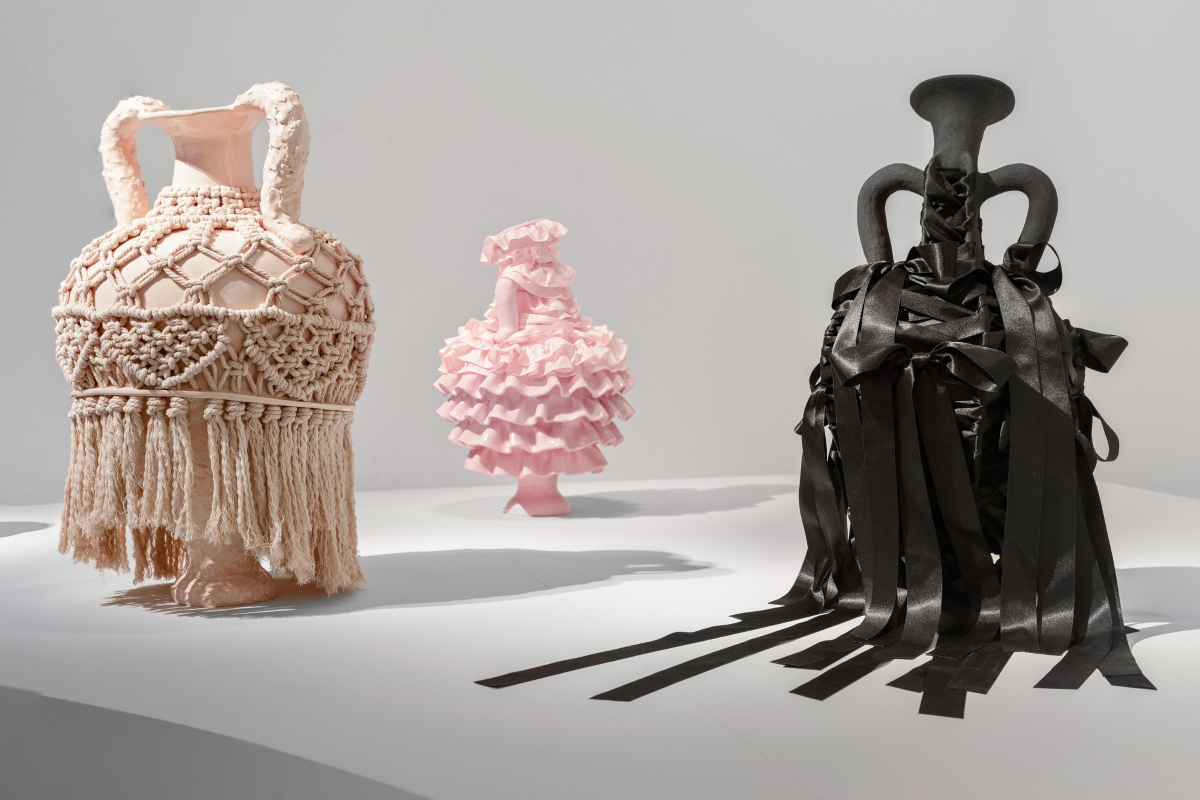
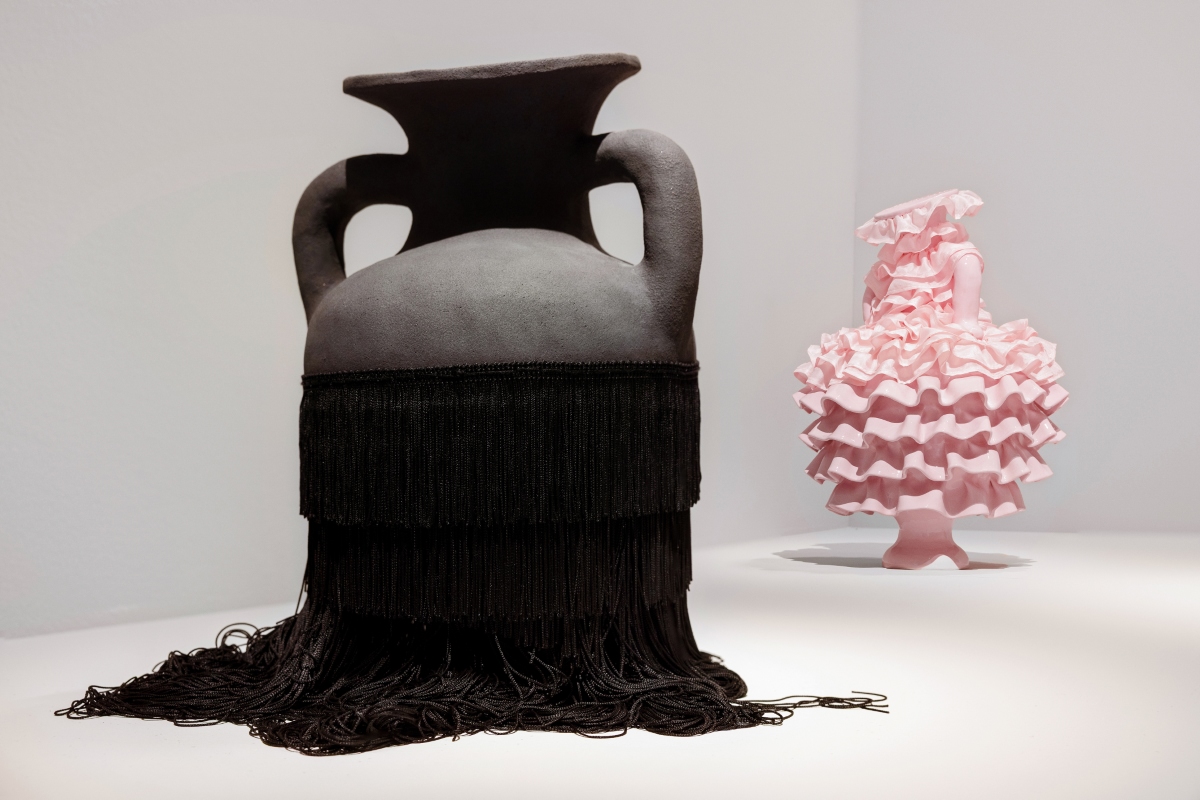
In contrast to the rough ceramic surface of Scholze’s works, Fanny Ollas’ ceramic forms are pristine. Her vase sculptures would be almost too well-behaved if they weren’t cocking their necks at an angle as though I asked a very dumb question. The sculptures hold Wonder Woman power poses, dressed in couture designs thanks to Ollas’ background in fashion. Pink Trophy features a macramé rope outfit with a high-low skirt to show that this trophy is a glamorous yet free-spirited gal. Her sculptures have Mean Girls Regina George energy which feels aligned with contemporary culture while also recalling traditional vase forms and the crafts ethos of the original Tendencies exhibitions.
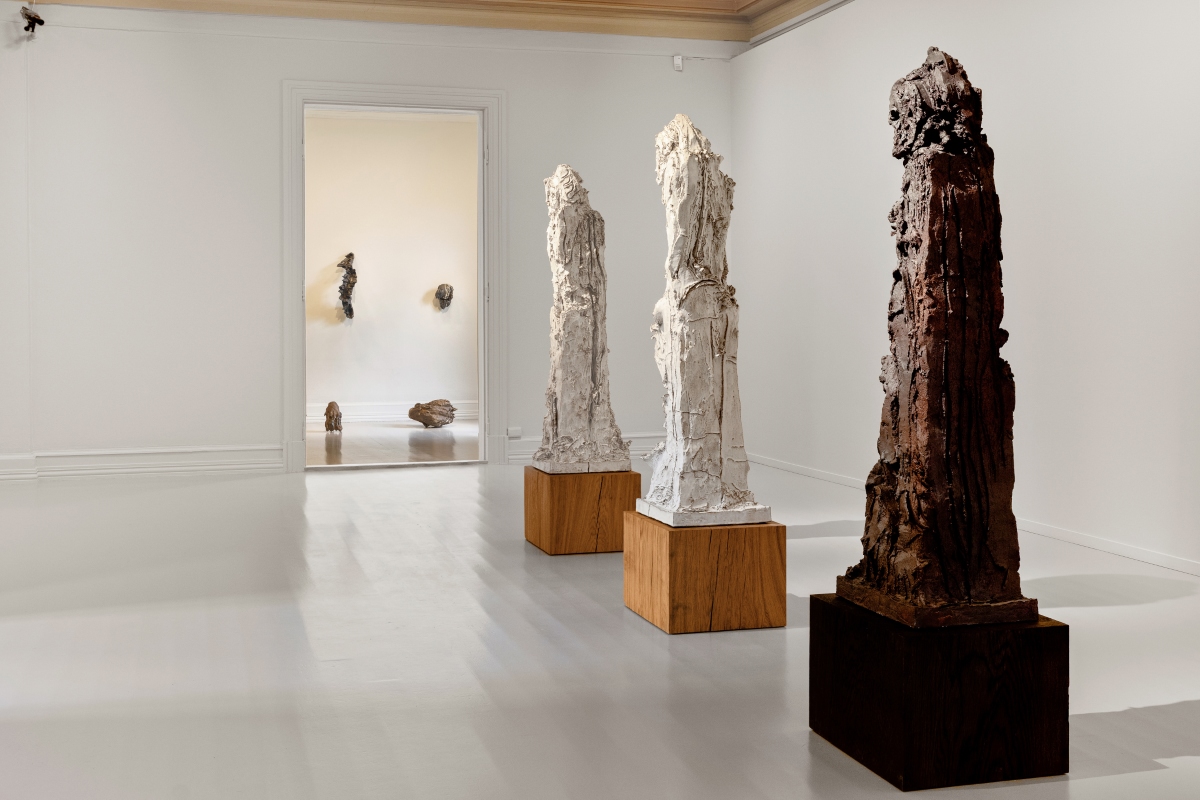
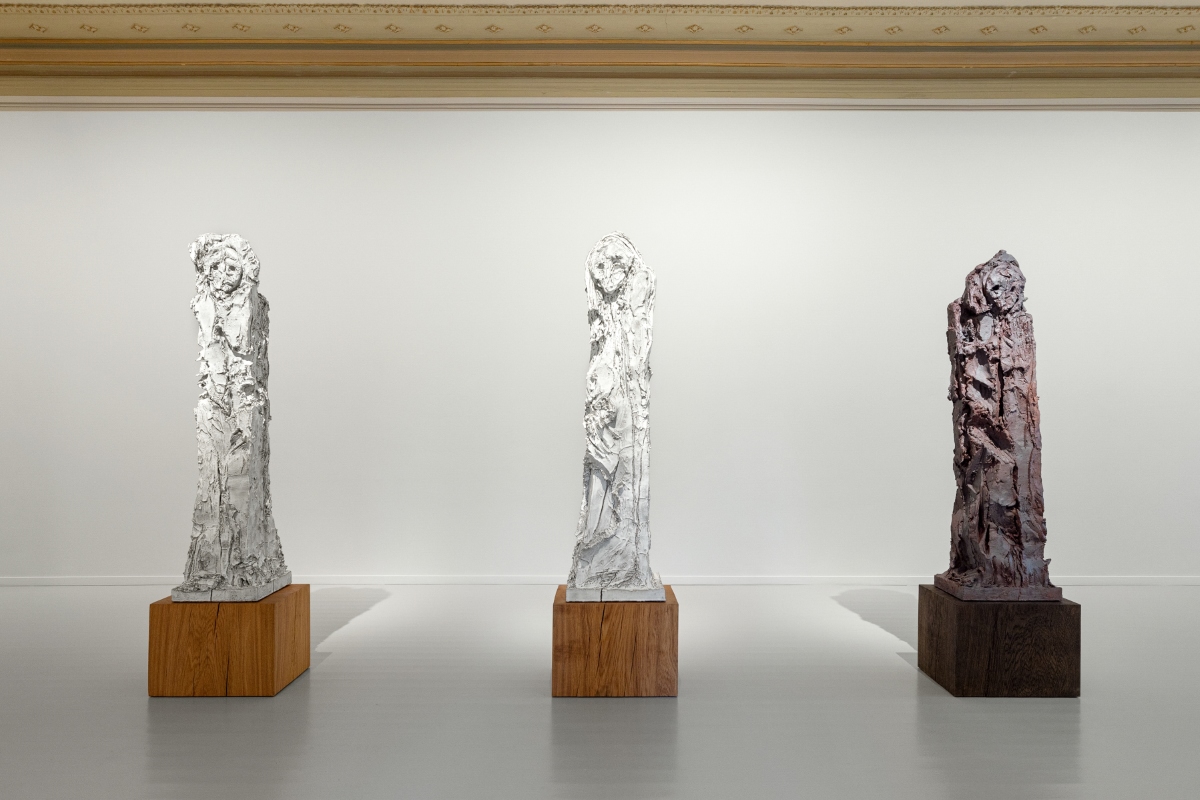
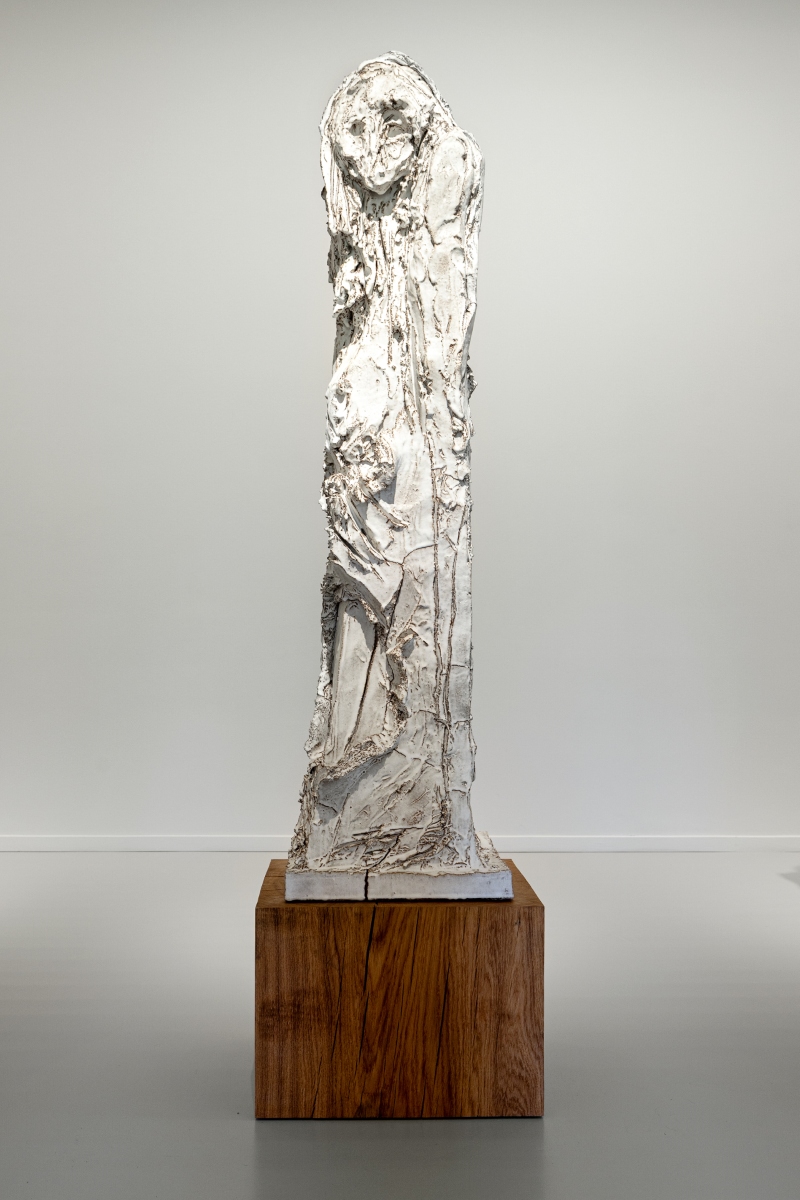
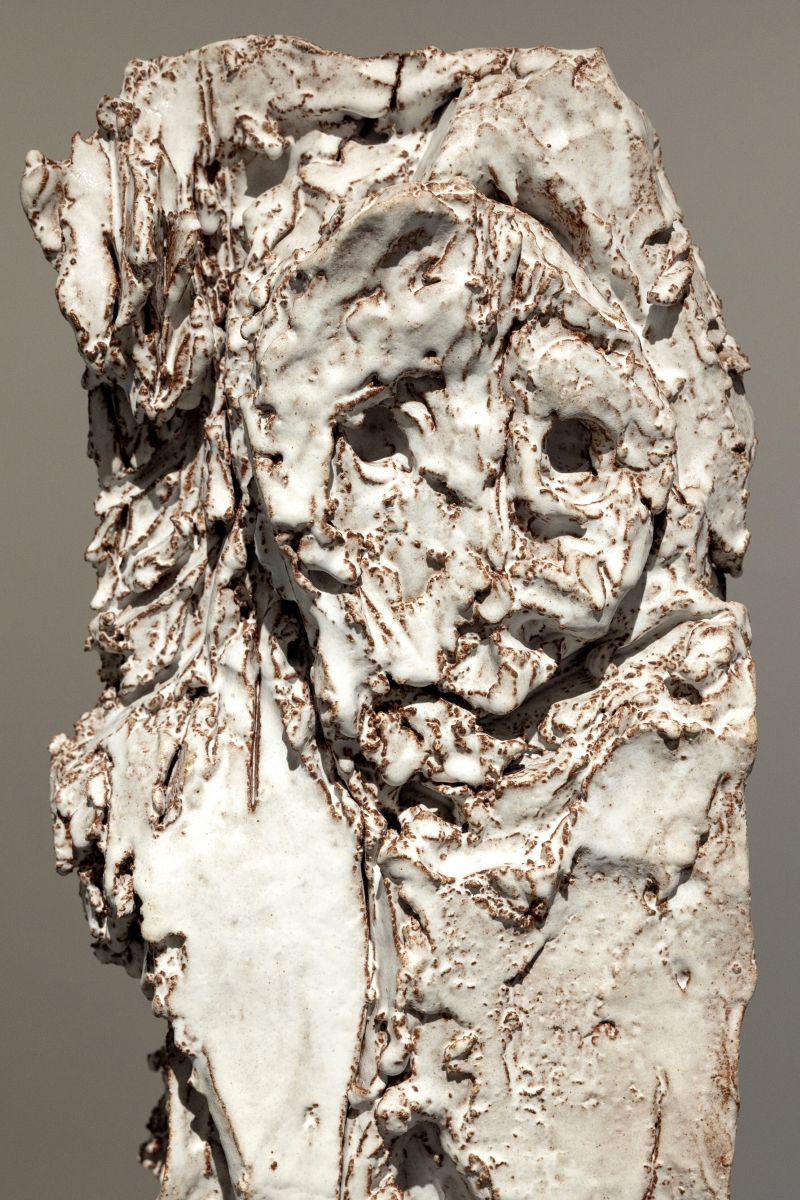
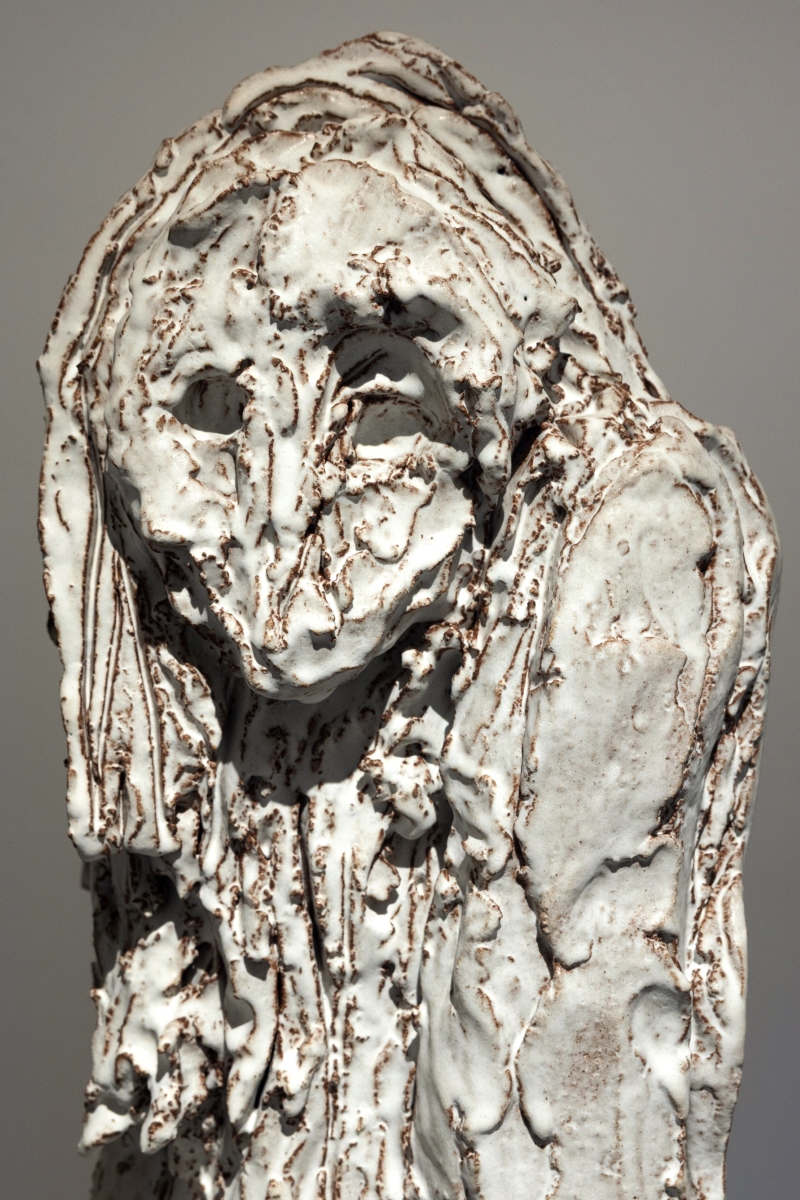
As always, many of the works must be seen in person. The work of Anders Hald, specifically the central sculpture of his series We Can Be Heroes, really holds your attention. Titled after a David Bowie song, this series was made last year during Hald’s three-month residency at Senter for keramisk kunst in Ringebu, Norway. Hald’s practice includes wall-based ceramic reliefs and cast bronze sculptures. All three sculptures in the exhibition were made through the process of carving, removing material from a solid block of clay formed around an iron core. The central sculpture is made of a dark, iron-rich clay body covered in a simple and humble white glaze but its energy is powerful. The hunched shoulder of this life-size humanoid creature, reminiscent of Vermeer’s Girl with a Pearl Earring or the iconic cover of National Geographic’s 1985 issue featuring Steve McCurry’s photo Afghan Girl, contains a sense of intimacy. It feels so vulnerable and tender that I want to comfort it.
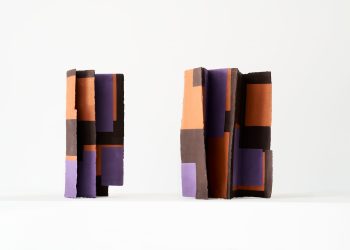
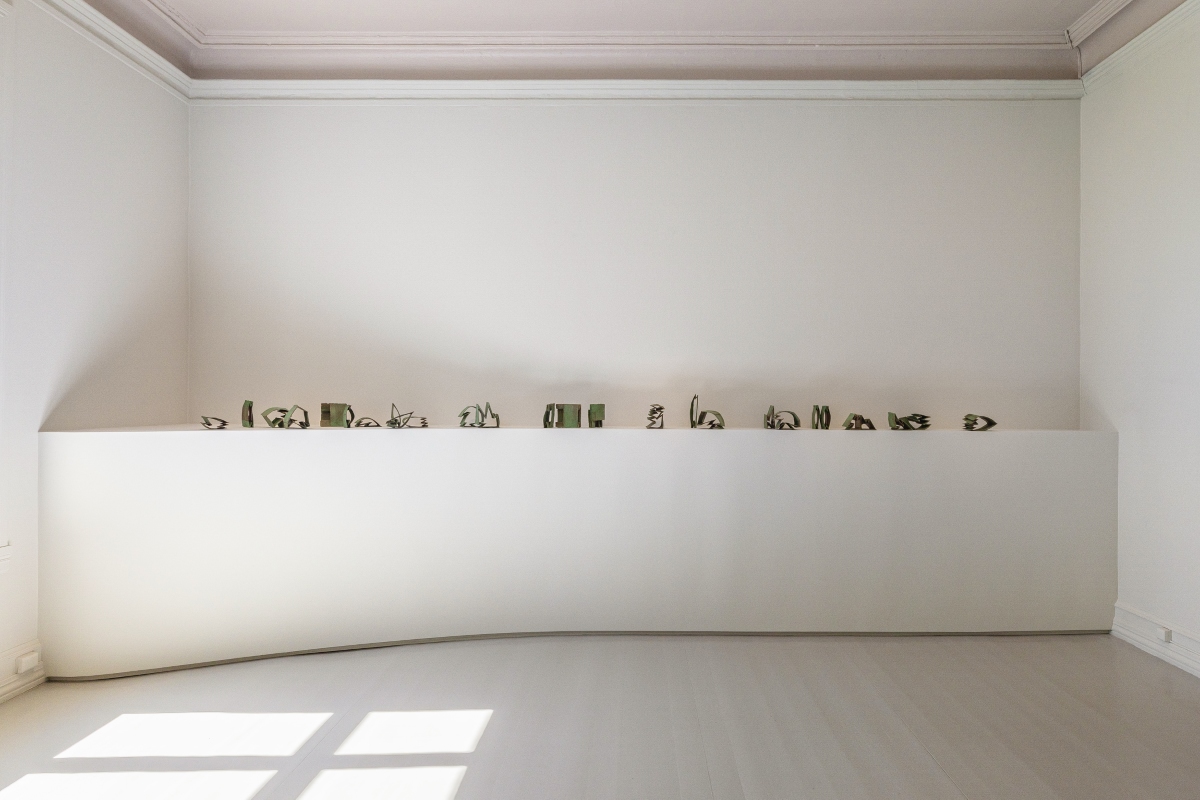
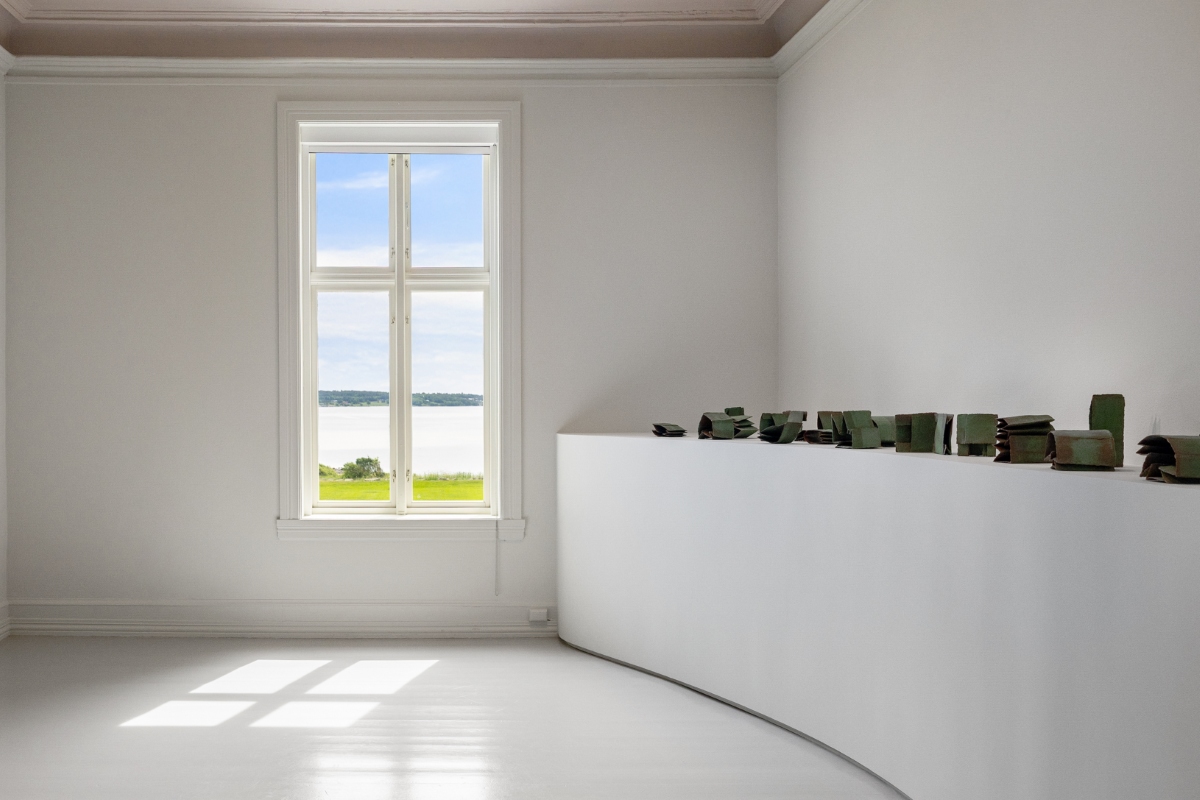
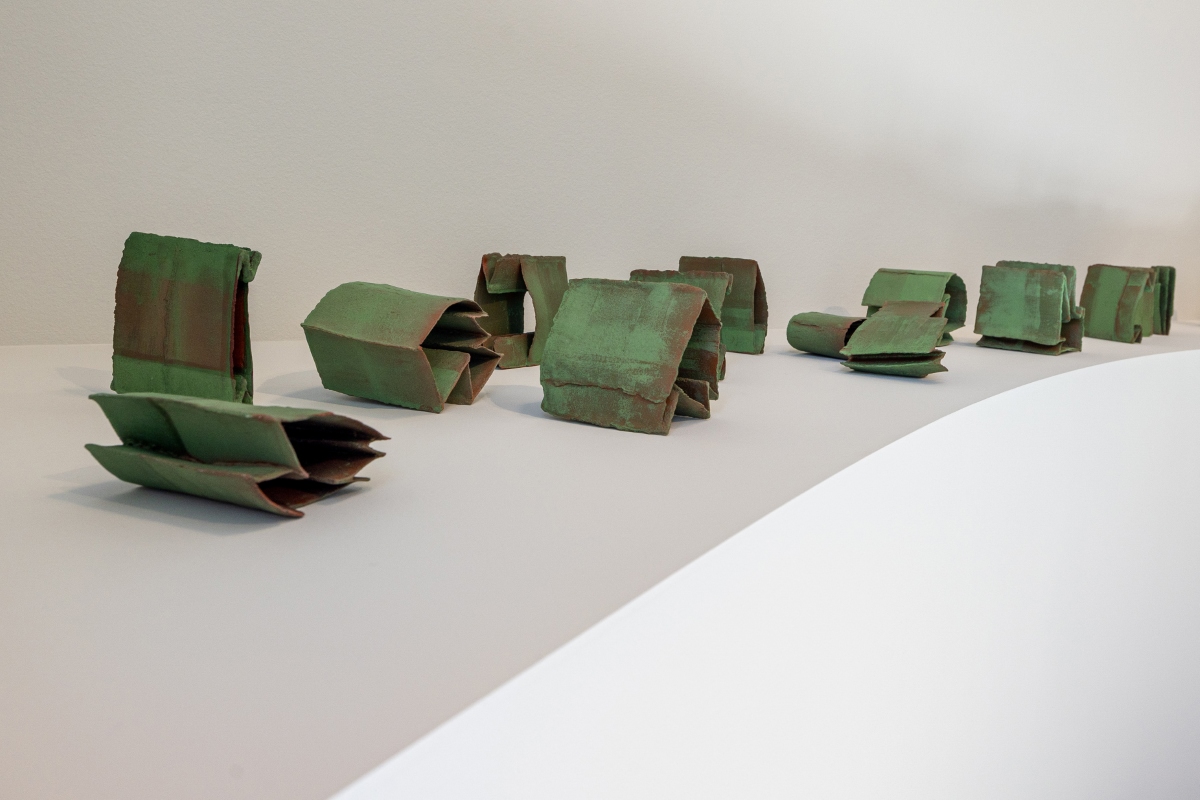
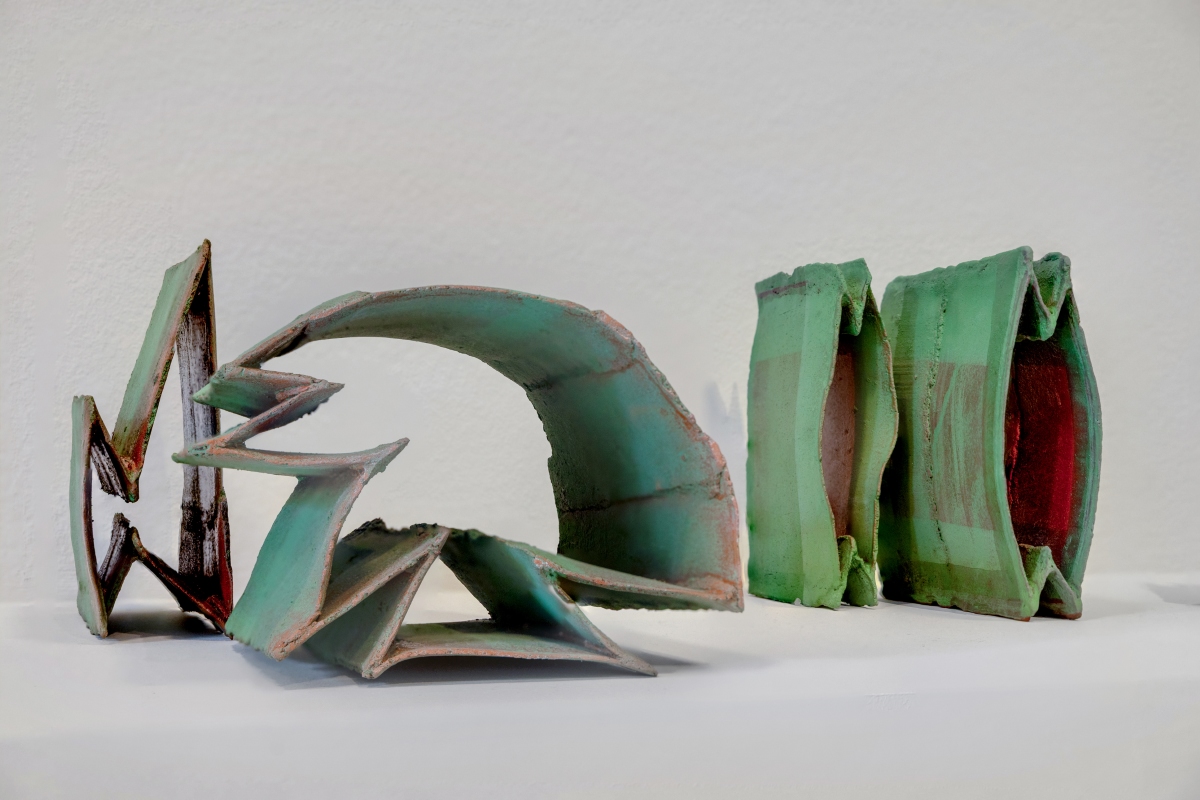
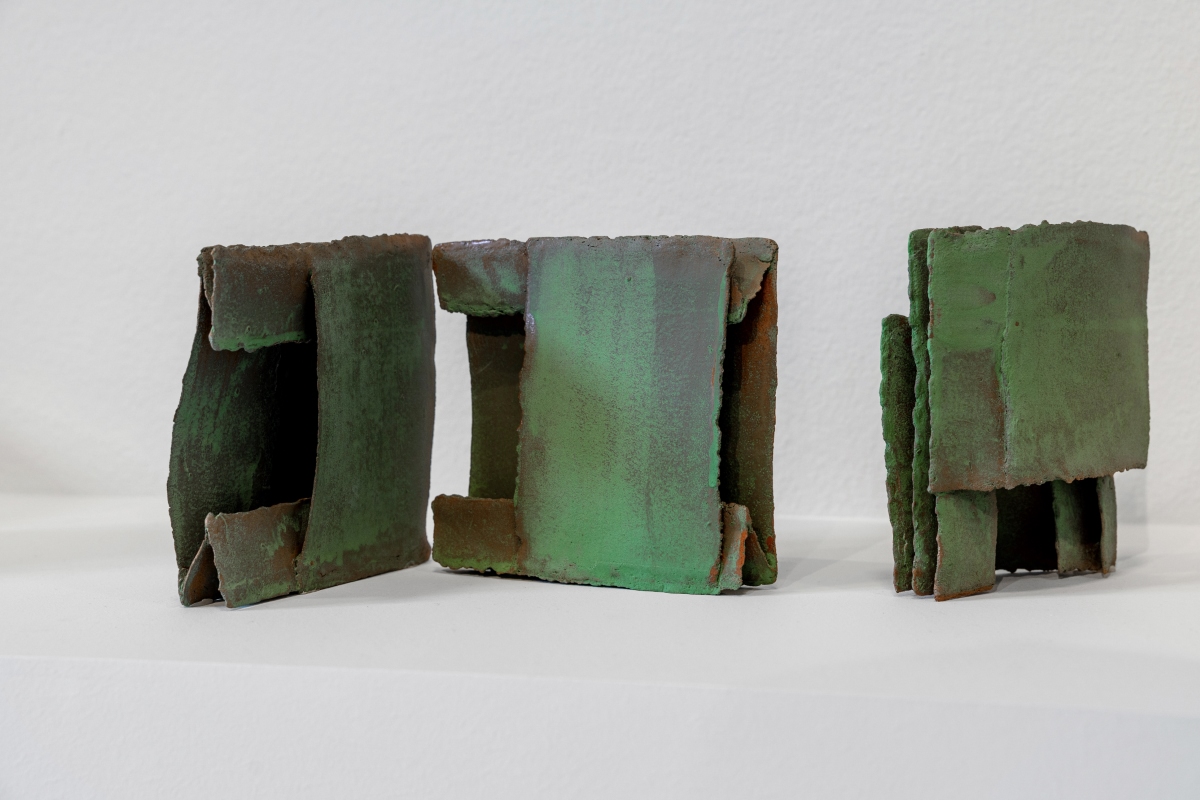
Artist Astrid Sleire’s nearby installation of works can provide this comfort through the landscape of handheld geometric sculptures. This series is made from carefully arranged stacks of slab-built forms glazed in matte greens alongside shimmery transparent to reveal slivers of the red clay beneath. Titled Omriss (Outline), it is integral to see through the individual works, for some to layer and optically become a shared unit. The body of work was made specifically in response to the word “tendencies,” to go on, and I see it as a pattern of behaviors or a rephrasing of the same sentiment. Sleire masterfully engages the viewer’s eye, which scans the horizon line she has created. I find my gaze bouncing along the jagged edges, resting in the shadows, and gaining momentum as though I am on slide.
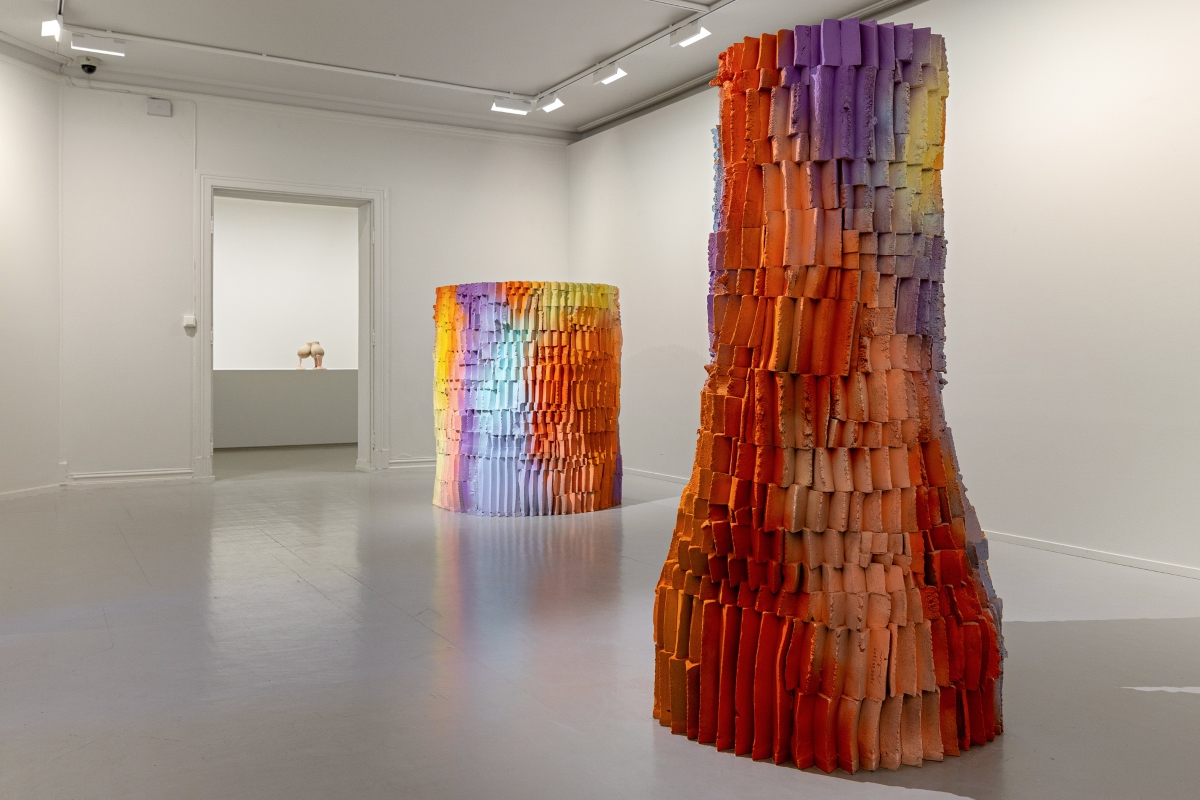
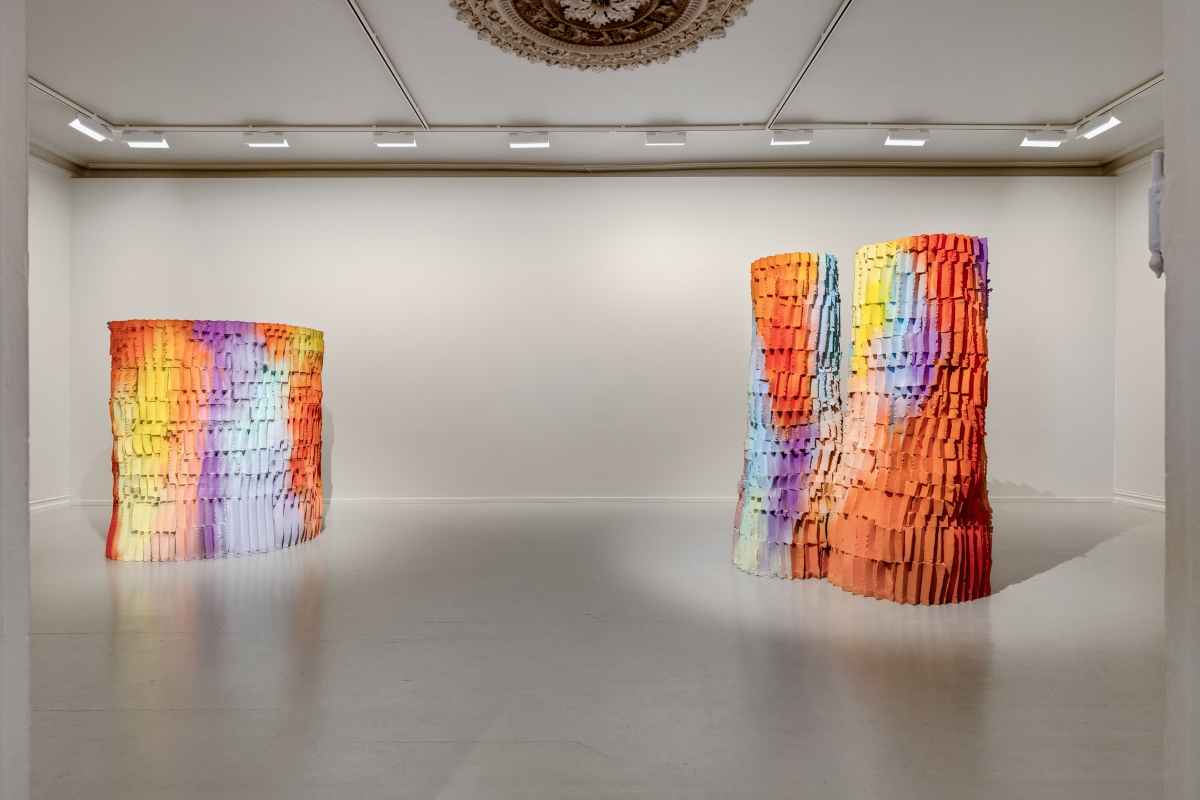
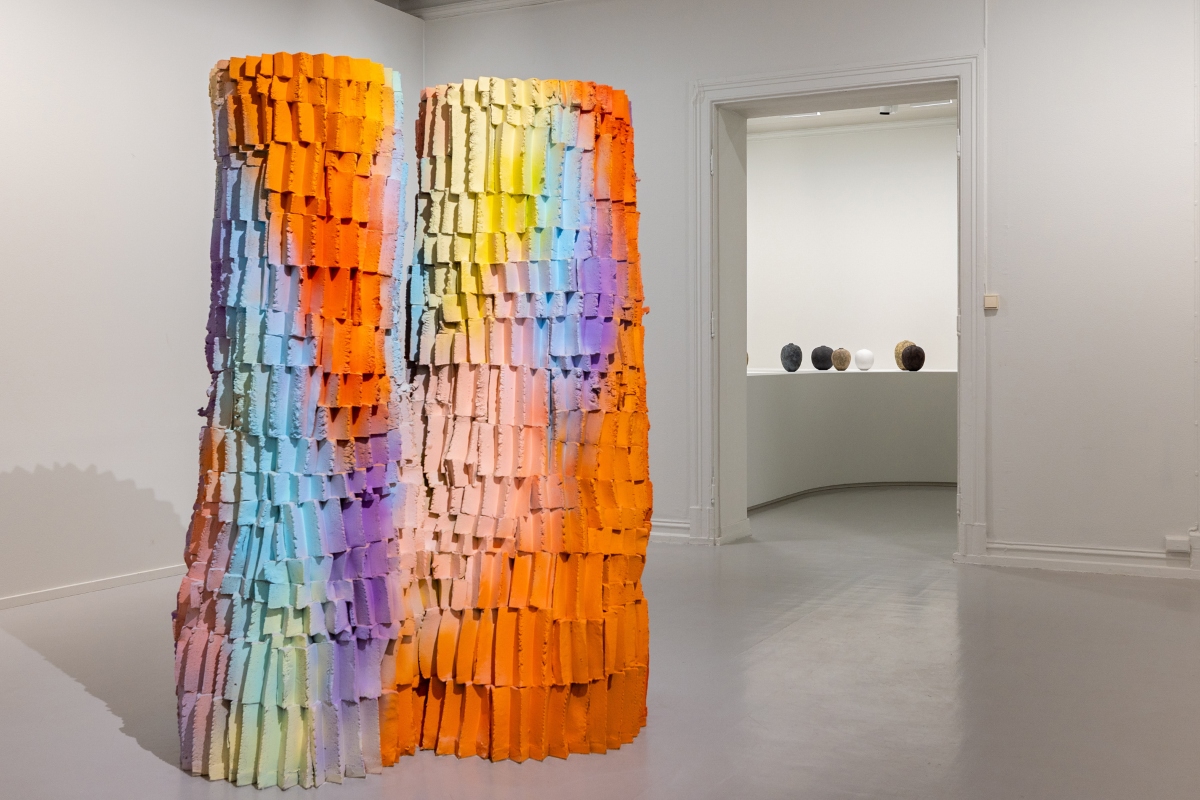
Other works also come alive when experienced through embodied looking. If you view the works of Anton Alvarez through some documentation shots against a stark white background online, then it will seem like a designed object you can purchase at a fancy wine shop that also sells Perelló olives and tasteful bouquets of wildflowers. Big mistake. Rather than the size of a can of olives, the scale of these sculptures in Tendencies is closer to that of tree trunks.
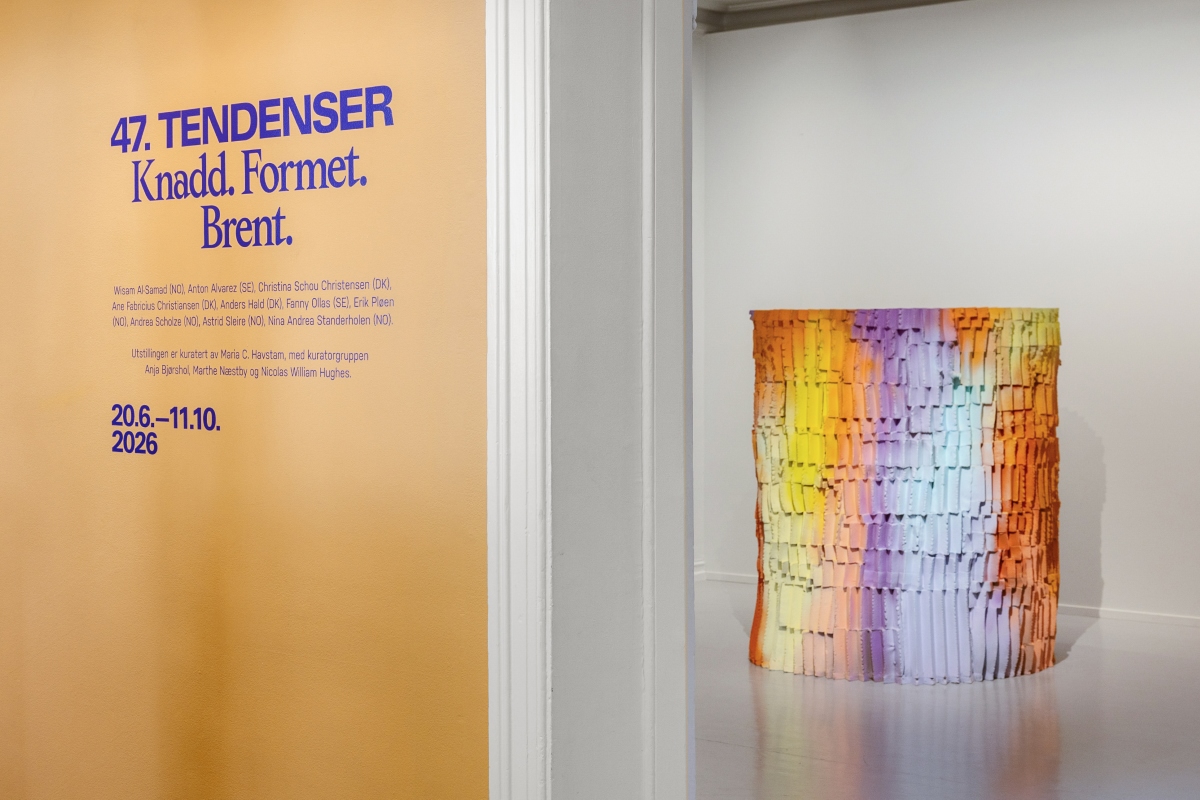
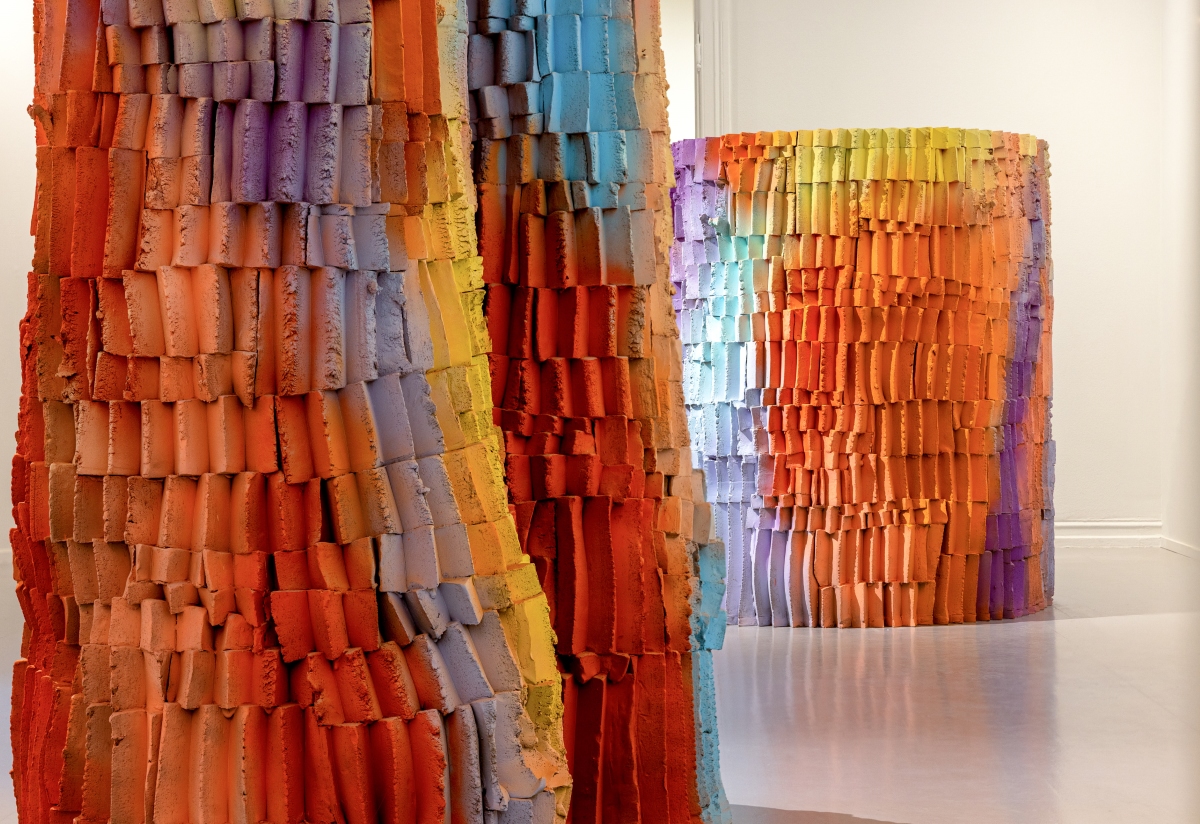
Alvarez uses machines he developed to create clay extrusions that may be modified and assembled as they were for this exhibition. The three sculptures Alvarez made for the gallery are massive columns, two of which are too tall for me to look into. A peek inside the shorter one reveals that the sculptures are made of unfired, raw clay. The exterior of these pillars are spray painted in expressive swathes of rainbow colors that add hue without hiding the texture. I can’t help but recall the work of Katherina Grosse as I recently saw her solo exhibition at White Cube Bermondsey in London. Alvarez has spoken of his history painting graffiti and his practice reflects a continued engagement with architecture. Like pillars of the Parthenon on the Acropolis, his sculptures disguise their emotional quality through a language of utility.
While Alvarez expresses the use of color, or rather many colors, came from a spontaneous decision, artists Wisam Al-Samad and Nina Andrea Standerholen were more intentional with their choices. Al-Samad is a Norwegian artist who was born in Iraq and in the work titled Aurora of Love, he uses a color palette that draws from his Eastern background and the Northern Lights of where he now lives. The forms are inspired by Arabic words for love. Nina Standerholen also similarly draws from her background, specifically her years as a sheep shepherd. Working in Norway’s oldest national park Rondane, Standerholen uses not only natural clay and sand as materials but is also inspired by the subtle colors that reveal themselves in the park year after year. Her work grows out of a deep and personal relationship with Norway’s natural landscape. The curator’s vision of head, heart, hand, and soul is perhaps most clear through Standerholen’s practice.
I initially misunderstood this exhibition to exclusively represent Norwegian ceramicists so I was surprised to see images of Christina Schou Christensen’s prior to visiting as I thought she was Danish… which she is. Rather than specifically Norwegian artists, Tendencies foregrounds the work of ten Nordic artists. Perhaps it is only my own ignorance but I had to look into the distinction between Scandinavian and Nordic countries. Scandinavia includes the intertwined Danish, Norwegian, and Swedish countries while the Nordics include those three in addition to Finland, Iceland, Greenland, The Faroe Islands, and Åland. These other countries were not the focal point in this year’s exhibition. The curator selected the artists after consulting the Clay Museum in Denmark and the Röhsska Museum in Sweden so this could have contributed to the particular selection of artists.
Additionally, Norwegian studio pottery history is recent and the ceramic art scene is therefore arguably even younger. According to Knut Astrup Bull, the Senior Curator of Design and Decorative Arts at the National Museum, no Norwegian pottery was discovered with the Vikings. Early Norse people commonly carved vessels from horn, wood, and steatite with potteries established later than other countries. Studio craft only began in Norway between World War I and World War II with earthenware tableware. Porcelain entered the scene in the late 70s, when Japanese and non-traditional west coast American influences came into the country through foreign artists coming to teach at schools in Bergen.
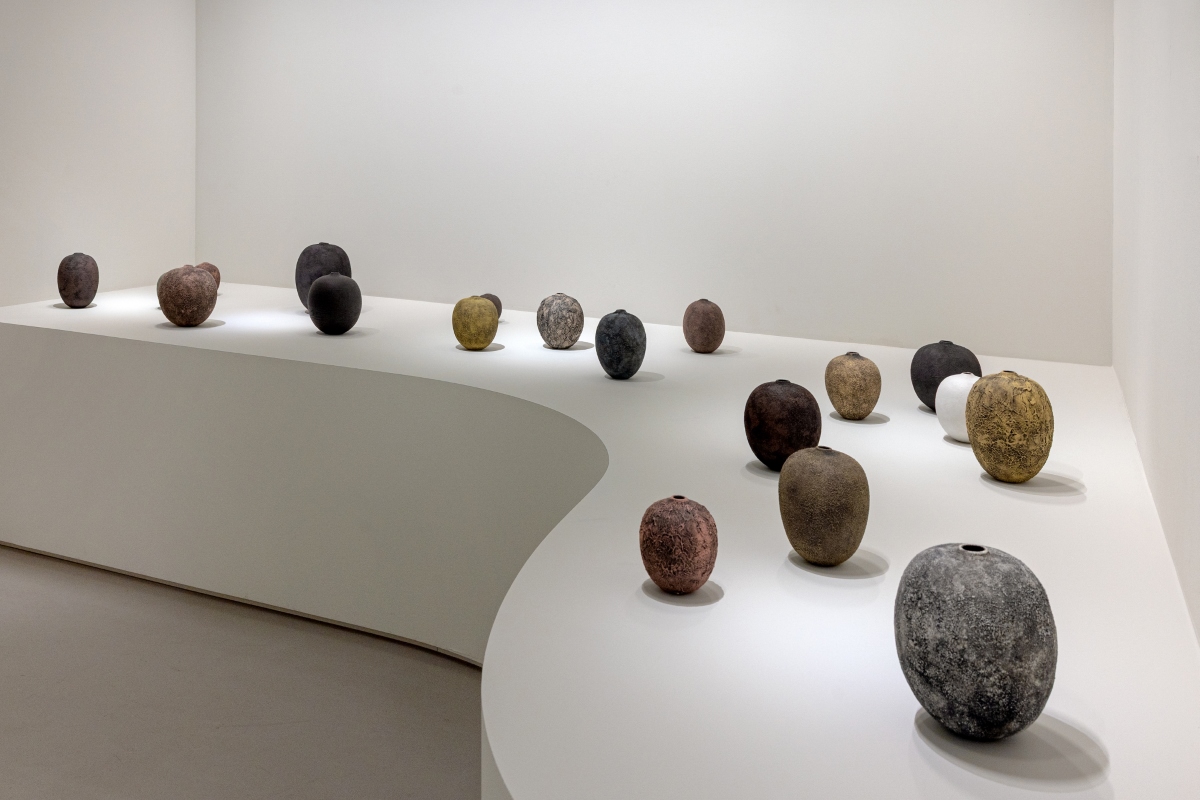
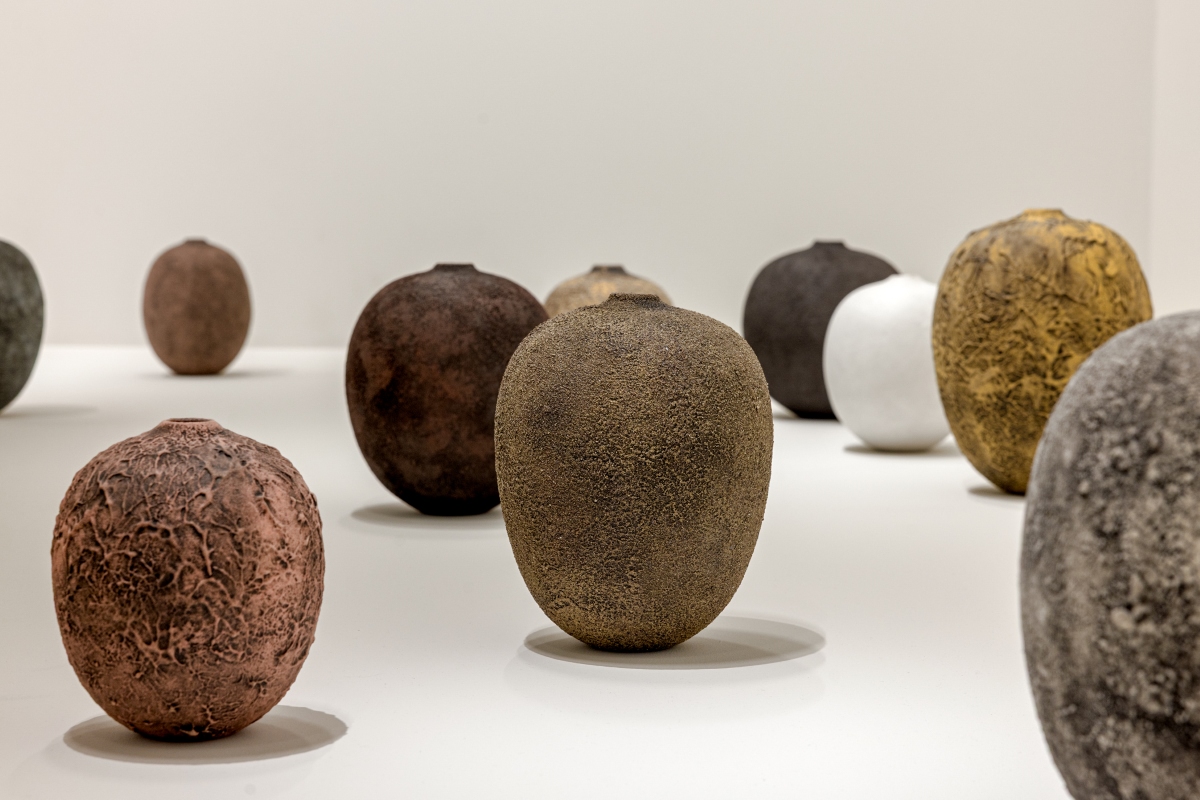


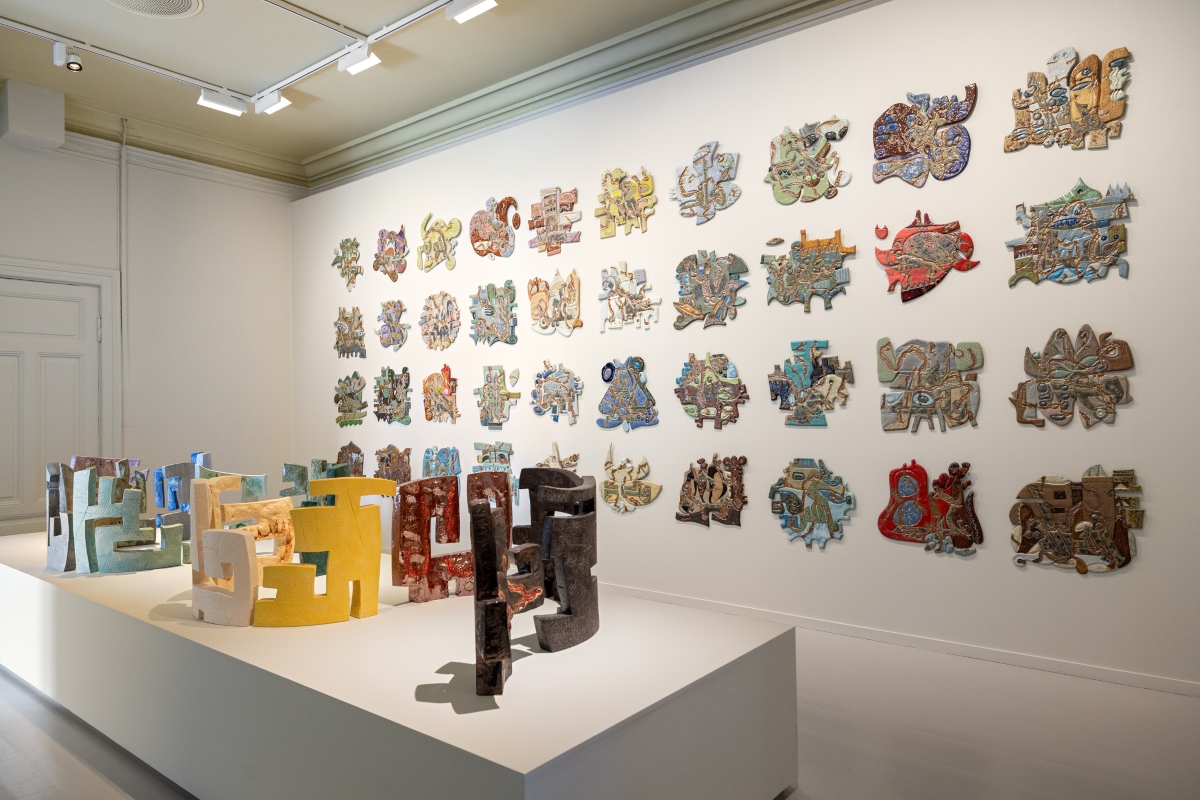
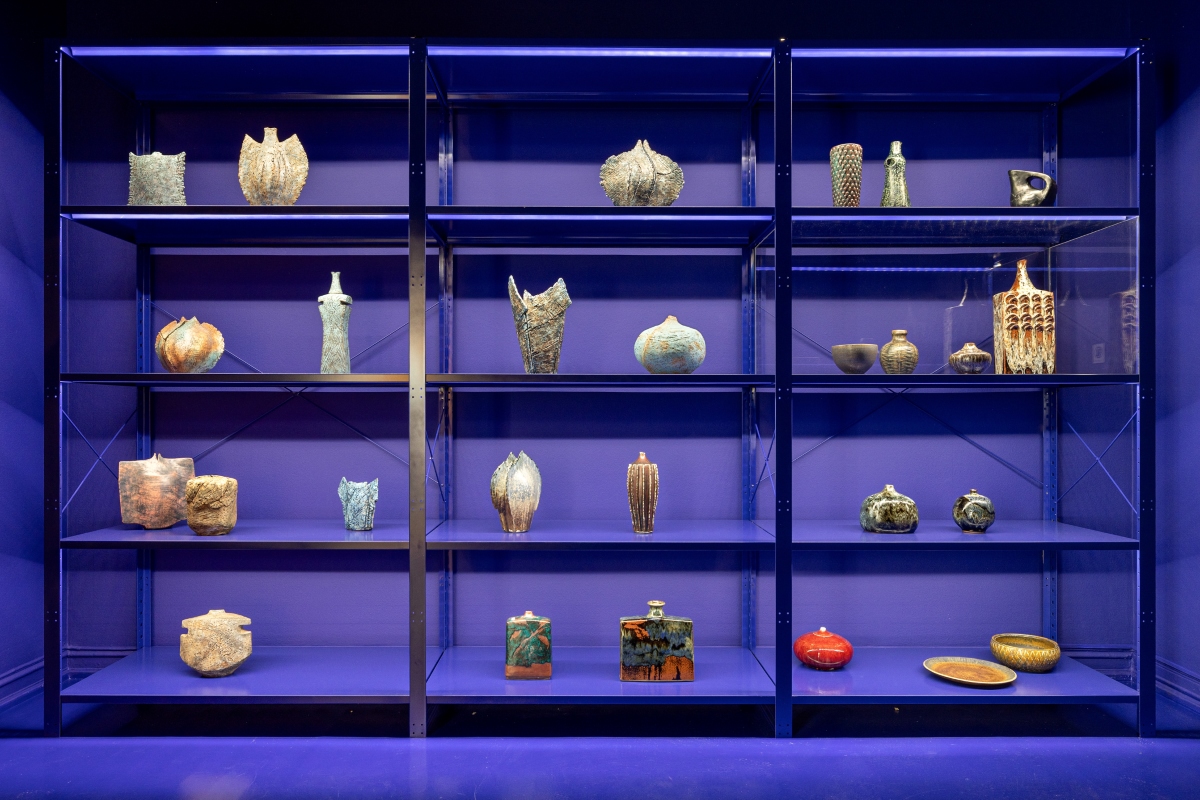
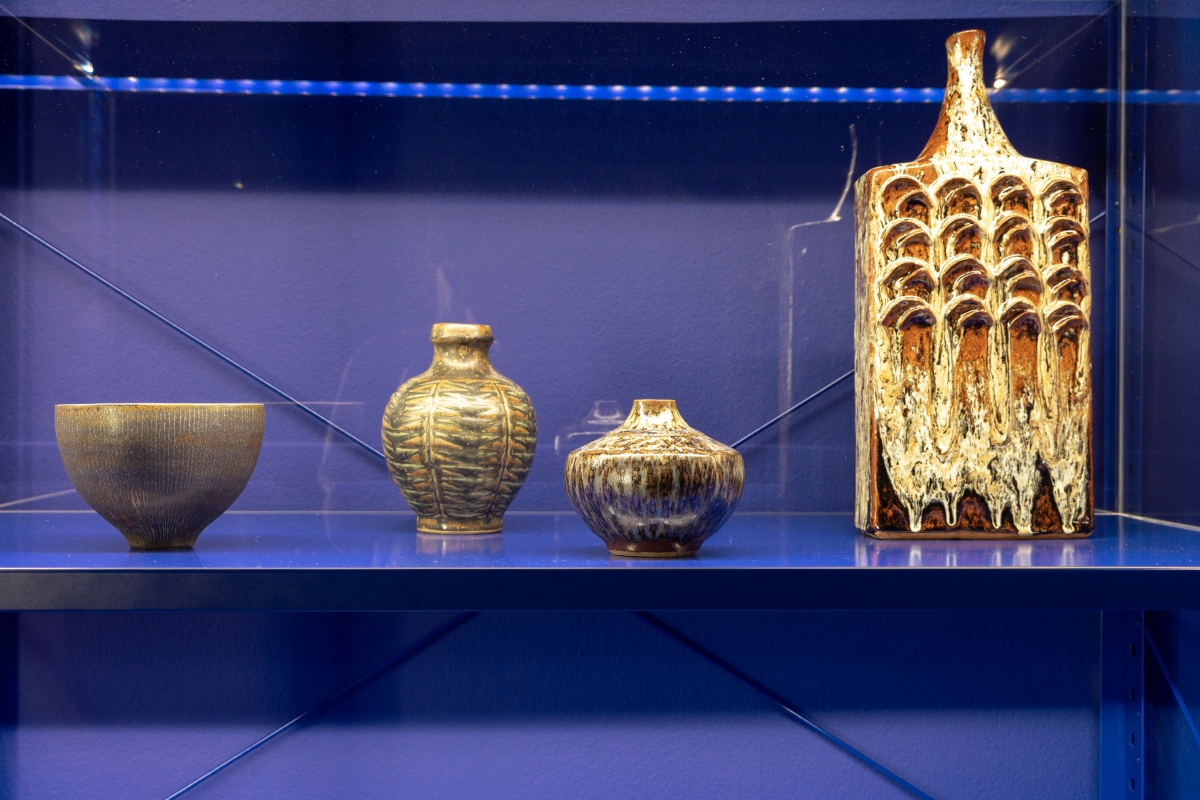
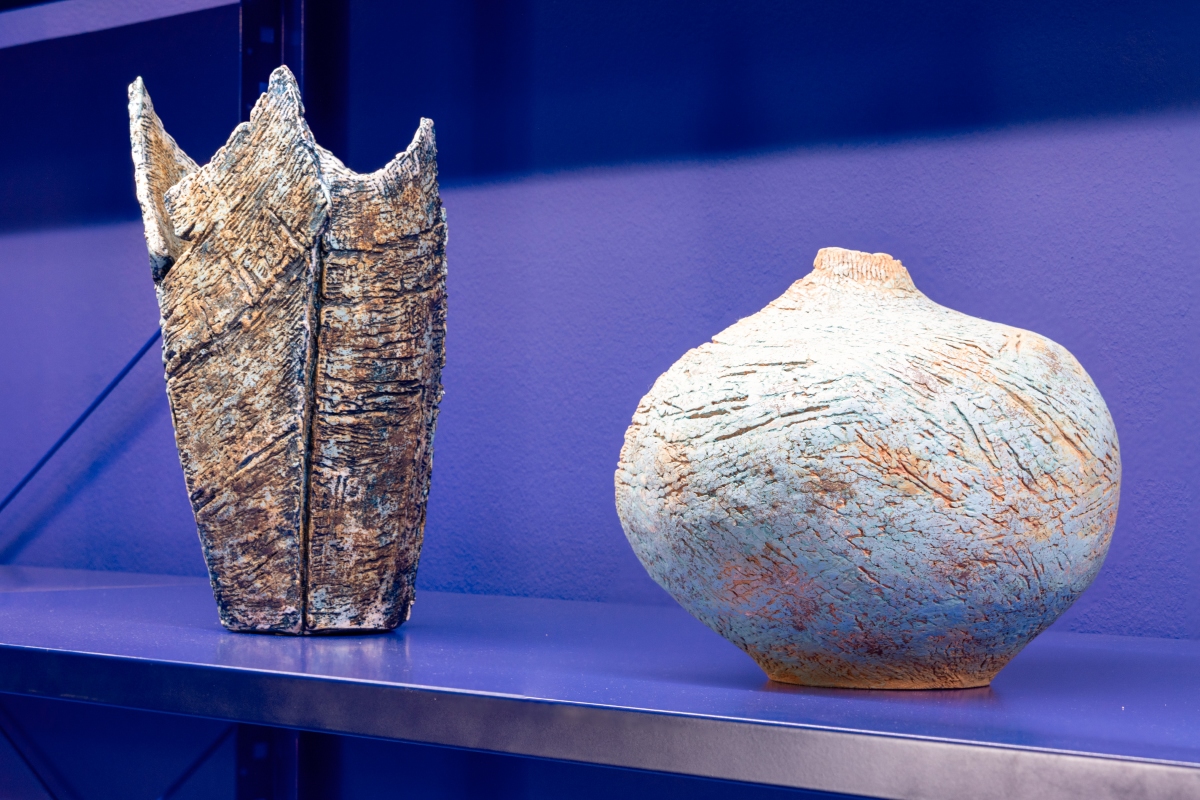
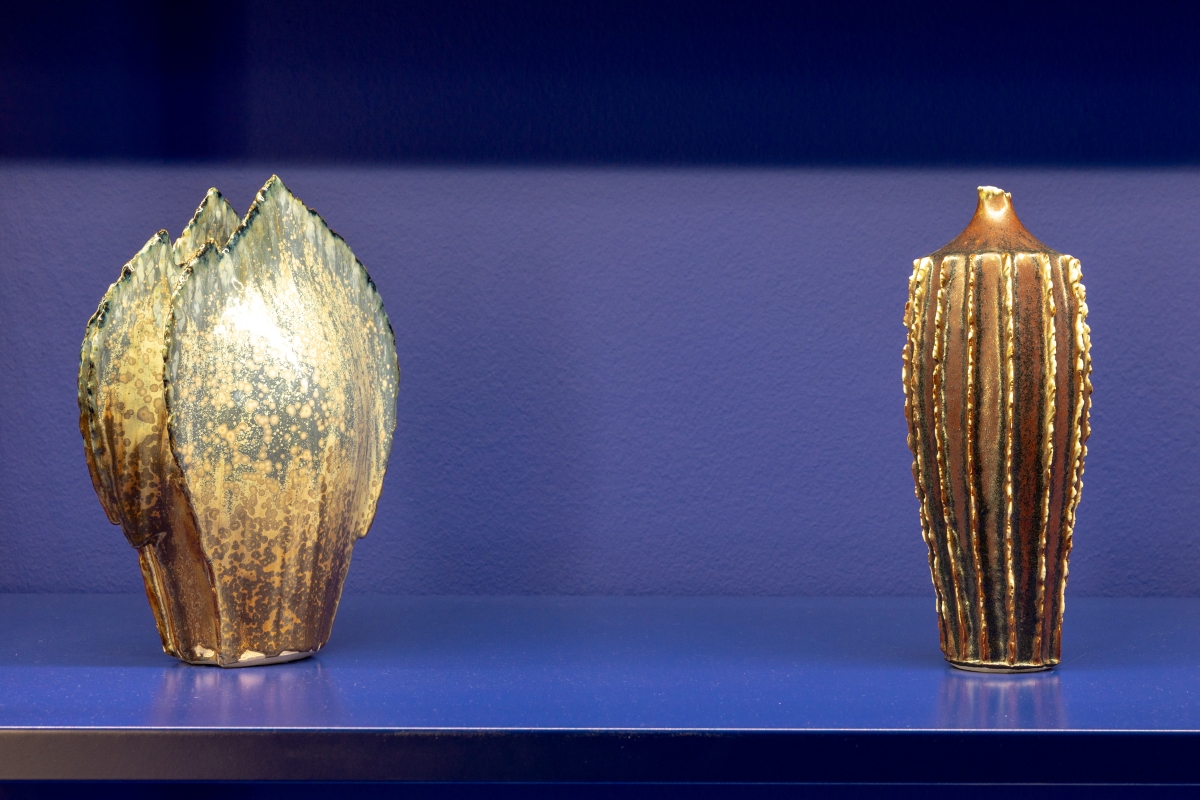
It could be said that academia was the main juncture facilitating knowledge exchange and giving studio pottery artists the resources to further develop their practices. Erik Pløen also traveled as a professor to the University of Chicago and experimented with gas-fired kilns and ash glazes during this time. Upon returning to Norway, Pløen installed Norway’s first ceramic gas kiln in 1964. There is a gorgeous work, simply titled Floor vase from 1975 exhibited in this edition of Tendencies that demonstrates Pløen’s skill of marrying form and glaze.
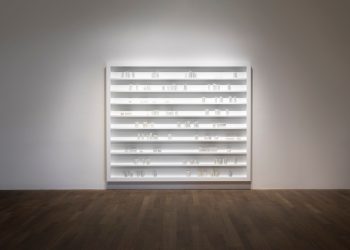
A gargantuan floor-to-ceiling shelving unit in a secluded room of the gallery features works by Pløen from the 1950s into the 2000s. The works made later in his life have fin-like appendages that provide a sharp edge or pointed tip to counter the soft curves of the vessel. Like the work of Astrid Sleire, Pløen’s practice also has an internal rhythm and inertia. His body of work on display speaks to a period of experimentation and conversation with ceramic artists in nearby Scandinavian countries and as far as the USA.
This exhibition demonstrates how a tradition like studio pottery successfully remains alive and maintains continuous ties to the present. Rather than a literal homage to Erik Pløen and his idea for Tendencies, Galleri F 15 presents artists that represent the contemporary expression of the medium in sculpture, alongside free programming for young children. It is clear proof that public financial support for the arts and crafts sector is important for bolstering emerging and established artists outside of commercial environments, and is also conducive to supporting the longevity of longitudinal projects like Tendencies.
Unu Sohn is an artist and ceramicist based in London. She holds a master’s degree in ceramics from the Royal College of Art.
47th Tendencies: Kneaded. Shaped. Fired. is on view between June 20 and October 11, 2026, at Galleri F 15, in Moss, Norway.
Subscribe to Ceramics Now to read similar articles, essays, reviews and critical reflections on contemporary ceramics. Subscriptions help us feature a wider range of voices, perspectives, and expertise in the ceramics community.
Captions
- Ane Fabricius Christiansen, Tilstandsportrætter, 2024. Photo by Eivind Lauritzen, courtesy of Galleri F 15
- Christina Schou Christensen, Ooze, 2026. Photo by Eivind Lauritzen, courtesy of Galleri F 15
- Andrea Scholze, Tenker tilbake, 2026. Photo by Eivind Lauritzen, courtesy of Galleri F 15
- Fanny Ollas. Photo by Eivind Lauritzen, courtesy of Galleri F 15
- Anders Hald, We can be heroes, 2025. Photo by Eivind Lauritzen, courtesy of Galleri F 15
- Astrid Sleire, Omriss, 2026. Photo by Eivind Lauritzen, courtesy of Galleri F 15
- Anton Alvarez, 1806261800 and 1806261730, 2026. Photo by Eivind Lauritzen, courtesy of Galleri F 15
- Anton Alvarez, 1806261800, 2026. Photo by Eivind Lauritzen, courtesy of Galleri F 15
- Nina Andrea Standerholen, Det man kan se når man er nede på kne. Photo by Eivind Lauritzen, courtesy of Galleri F 15
- Wisam Al-Samad, The Road to Love, 2023, and Aurora of Love, 2025. Photo by Eivind Lauritzen, courtesy of Galleri F 15
- Erik Pløen. Photo by Eivind Lauritzen, courtesy of Galleri F 15