By Graham Feyl
Spring 2025
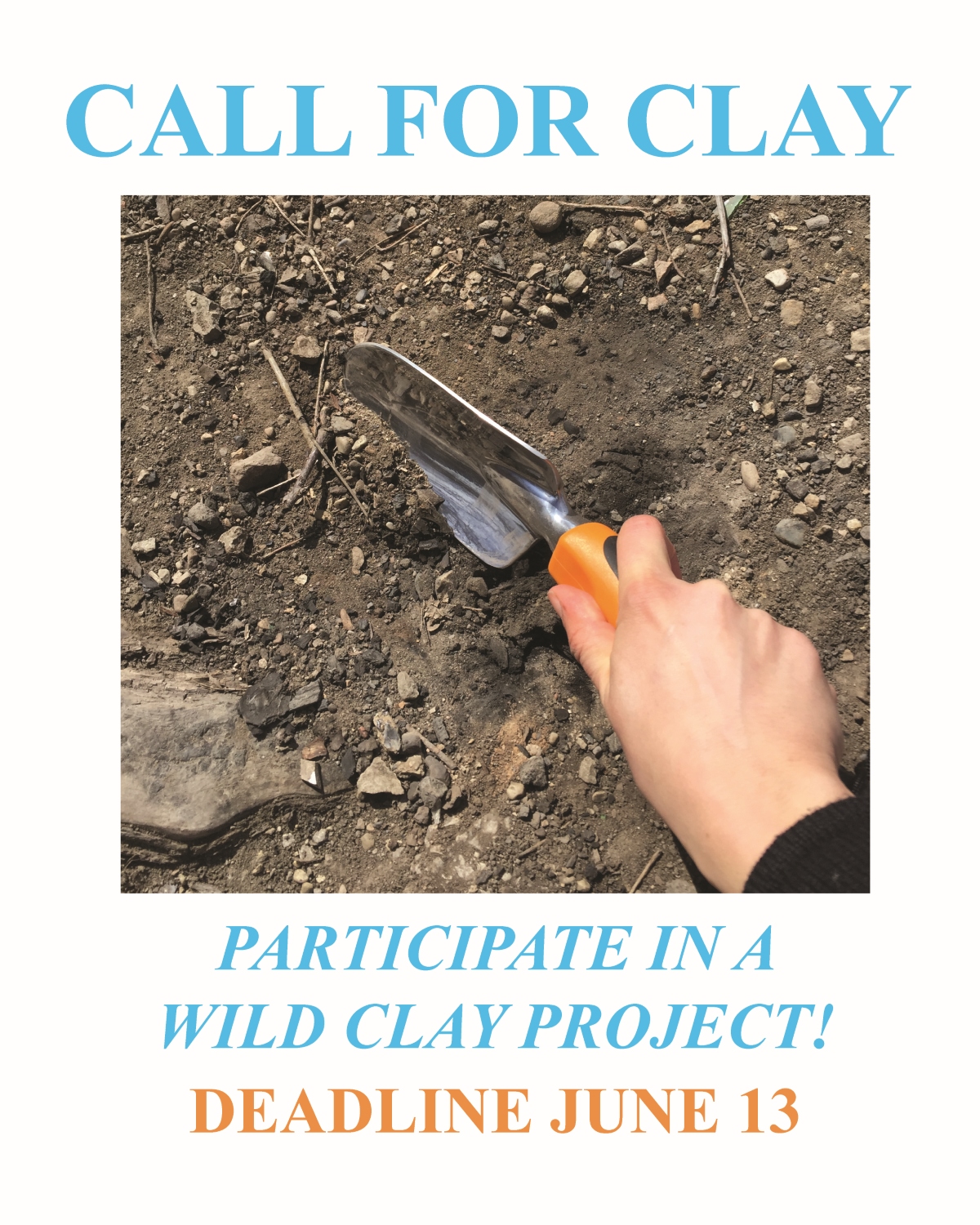
As velvety darkness began to wrap around me, I started my habitual observance of the day’s end: lounging in bed, letting the blue light from my phone pierce the darkness and flood my mind with a temporary digital dopamine rush. I listlessly moved from the biting comments on Reddit posts to the clickbait titles across art news platforms. As I concluded this ritual by scrolling through friends’ stories on Instagram, I stopped the moving feed. Ceramic artist E. Saffronia Downing had posted a call: “CALL FOR CLAY. Participate in a Wild Clay Project! Deadline June 13. Send or bring a zip-style bag of unfired wild clay to…John Michael Kohler Arts Center…Include a letter describing where you found the clay and any thoughts, images, or reflections from your foraging experience. The more details the better!”1 [Fig. 1]
“What does the ‘wild’ of wild clay feel like?” I thought. Sleep came with dreams of warm earth.
Winter 2026
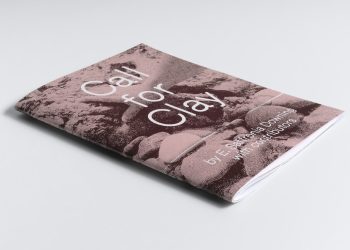
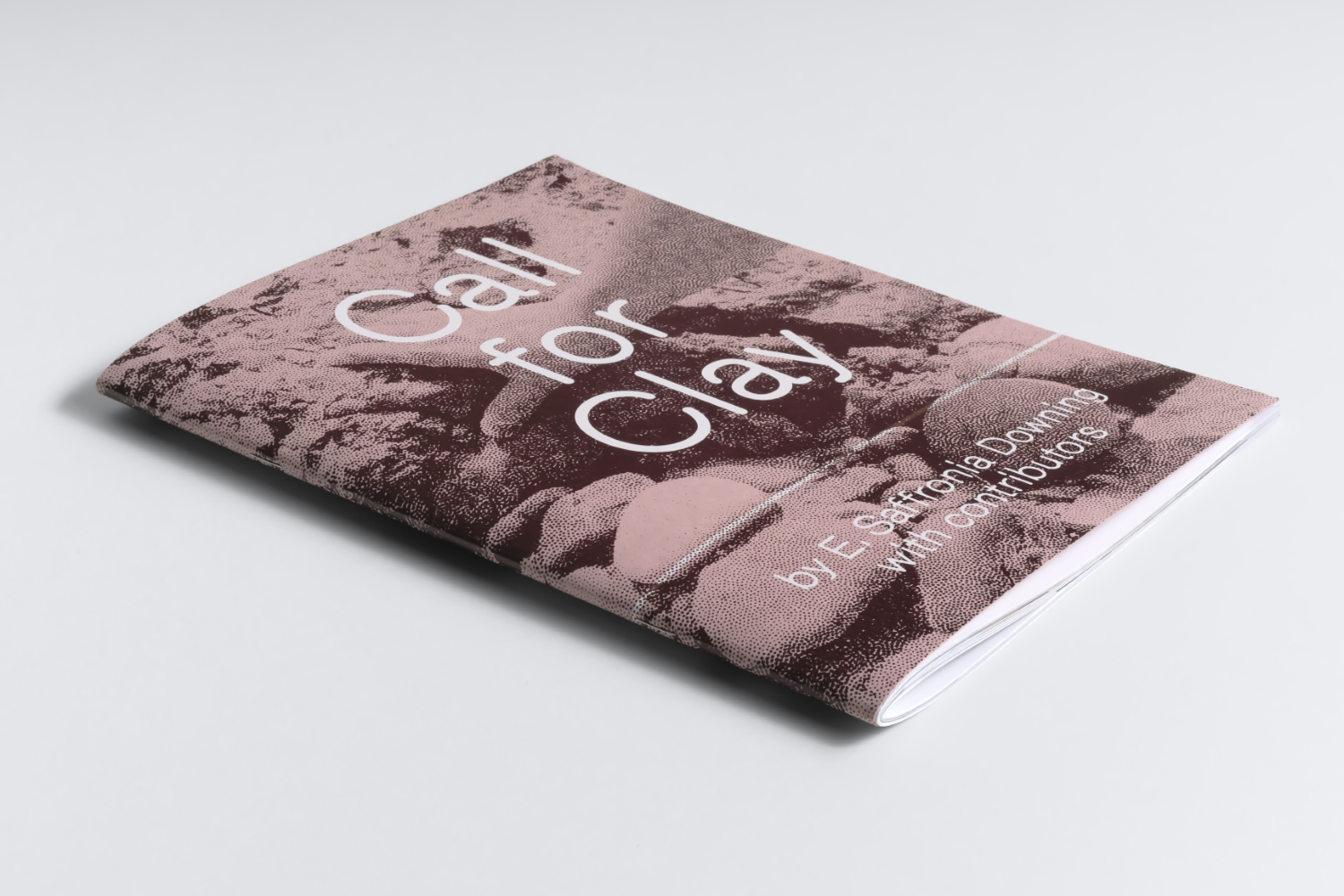
My fingers fumbled impatiently as I attempted to peel the tape that held down the opening of a manila envelope. After yielding to scissors to finish the job, my hand rushed into the package opening to pull out the publication that awaited inside. [Fig. 2]
Call for Clay catalogs the results of Downing’s clay crowd-sourcing that had appeared on my feed the year prior. Through public open calls – between Downing and in collaboration with Interloc (Thomaston, Maine) in 2023 and the John Michael Kohler Arts Center (Sheboygan, Wisconsin) in 2025 – Downing asked and invited participants to send samples of foraged clay along with letters describing the places where the clay was gathered. Forty contributors from nineteen states and three countries sent in bits of clay.
Thematically, the project examines how wild clay is a material embodiment of both place and memory; each submission documents the deeply personal stories and memories associated with each piece of foraged clay.
Theorizing Wildly
Downing’s Introduction demonstrates how the personal and the theoretical are deeply intertwined, at times blurring. Beginning with a chance encounter with wild clay on the sidewalks of Chicago at an active construction site, Downing centralizes a way of thinking with and through “wild clay” to consider how place and the self are connected.
What does ‘wild’ mean here? Downing defines ‘wild clay’ along its material form; that is, clay “dug up from its native environment” with minimal to no processing. Queer theorist Jack Halberstam, in his 2020 book Wild Things: The Disorder of Desire, theorizes wildness as “…a way of being in the world differently, of interacting with rather than separating from vegetal and animal forms of life.”2 This interacting-with-rather-than-separating denotes community, a togetherness rather than a separation. By requesting submissions that were both clay bits and letters describing the memories and stories around the places from which the clay was foraged, Call for Clay illustrates just how intertwined we are with the earth beneath our feet.
While Call for Clay is about listening to what is happening beneath the surface, how does one know when they have come across wild clay? While this claim can be scientifically measured – as scientists are able to identify clay by measuring its grain size, which has the smallest particles of any soil type, under a microscope – Downing states: “My knowledge of clay is rooted in my sense of touch.” Although the idea of touch and ceramics are interconnected, Call for Clay adds an important dimension to this conversation by foregrounding touch not only as an embodied experience but as a mechanism for community formation. Touch becomes an action woven through every stage of Downing’s call: from the fingers that stopped their social media feeds to read the call, the hands that reached down into the earth to pull up the clay, to the hands that moved the packages containing the submissions from one location to another, to Downing touching the clay samples, and to my adhesive-sticky fingers that left little marks on my copy of Call for Clay. We might not be able to touch one another, but we are joined through our holding of various parts of Call for Clay.
Sprinkled throughout the introduction, the word ‘clay’ appears in varying shades of brown. A contribution by Jacob Lindgren, co-founder of Inga Books in Chicago and the designer of Call for Clay, these bursts of brown add a subtle shift to how to consider the project. They not only act as a mnemonic device for recalling that clay is the central component of the booklet, but also act as a tool for training the eye to spot these bits of earth even in the most ordinary settings.
Odes to Clay
While the submissions follow a similar structure – a letter describing the process of foraging for the clay, including photos of the clay – each is a distinct embodiment of the individual who brought their chunk of clay from the depths of the earth into the light. Call for Clay has been discussed as both a scrapbook and an archive, and it is this very descriptive pairing that I find demonstrates a blurring of the boundaries between the personal and the collective. Each submission is personal in its uniqueness, yet when placed next to other stories, each narrative becomes part of a larger chorus. What Downing presents collapses the academic weight of ‘archive’ with the intimate, familial sense of ‘scrapbook.’ Where ‘archive’ and ‘scrapbook’ are finite containers of memory, Call for Clay seems to have no definite end or specific location. While there was an end date for submissions (June 13), the sense of foraging for wild clay and what that process evokes can, and should, continue on even beyond the pages of the booklet. Clay, as Downing notes, has always been there and will continue to be there. So why not continue to forage on?
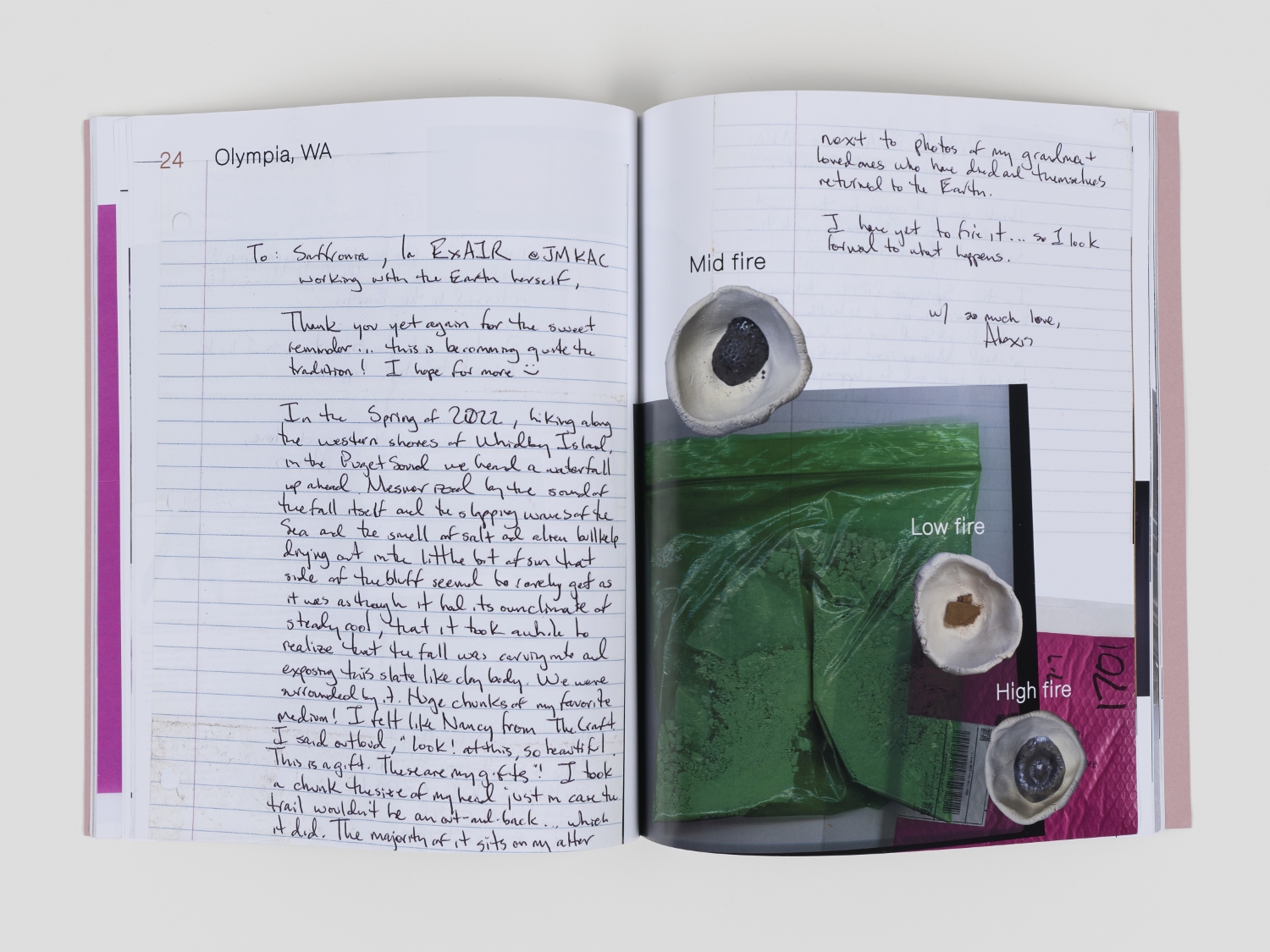
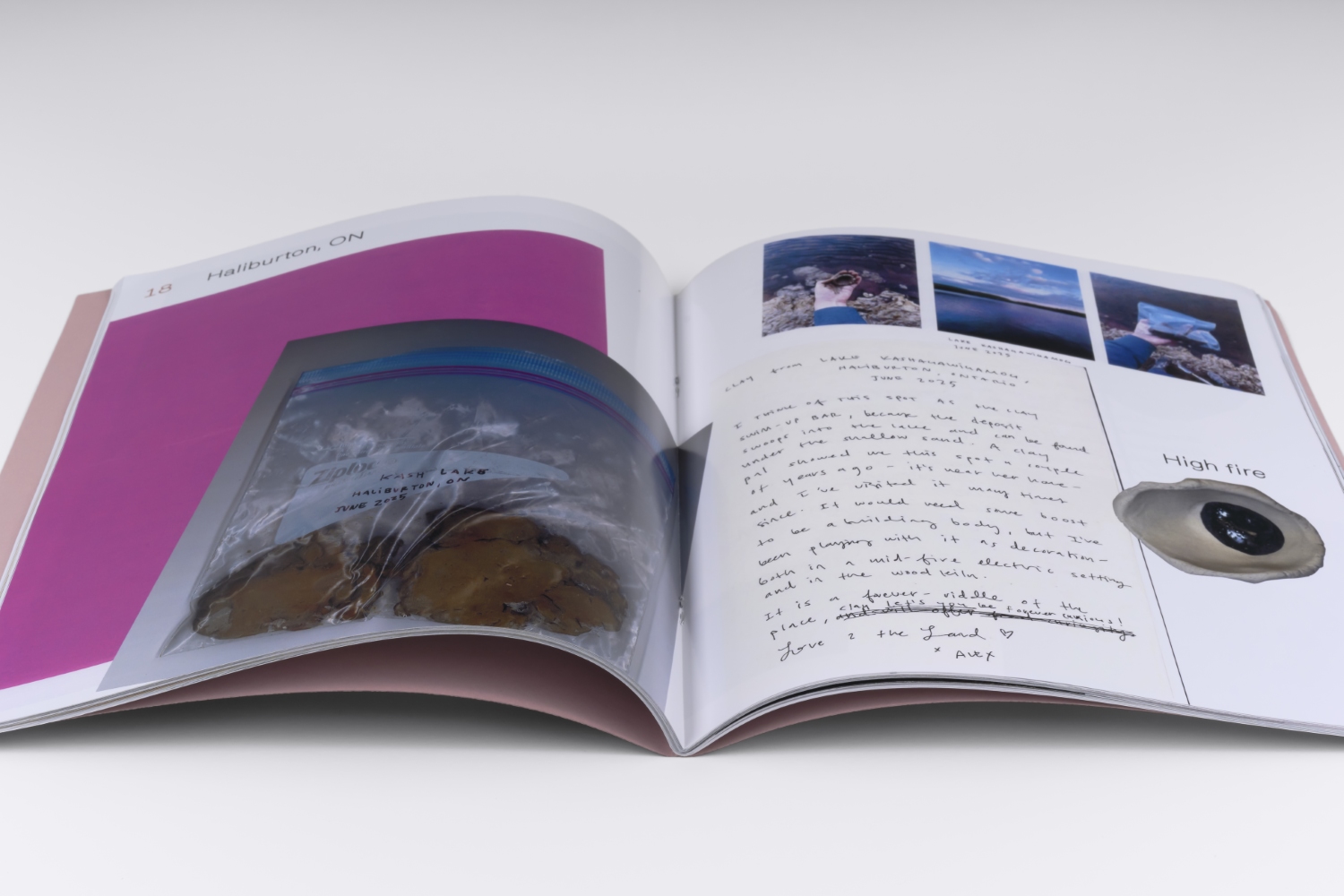
As one moves from submission to submission, they encounter how far-reaching Call for Clay extended. Some submissions have a personal connection with Downing, such as Alexis Ortiz-Durate, who opens their letter with “Thank you yet again for the sweet reminder…this is becoming quite the tradition!” and ends with a caring “with so much love.” Other submissions seem to have learned about Downing and the project only from the call, ending their letters with “sincerely” or “Let me know if you have any questions!” Regardless of the sense of how familiar one is with Downing, each submission becomes connected to one another through their shared process of participation. [Fig. 3]
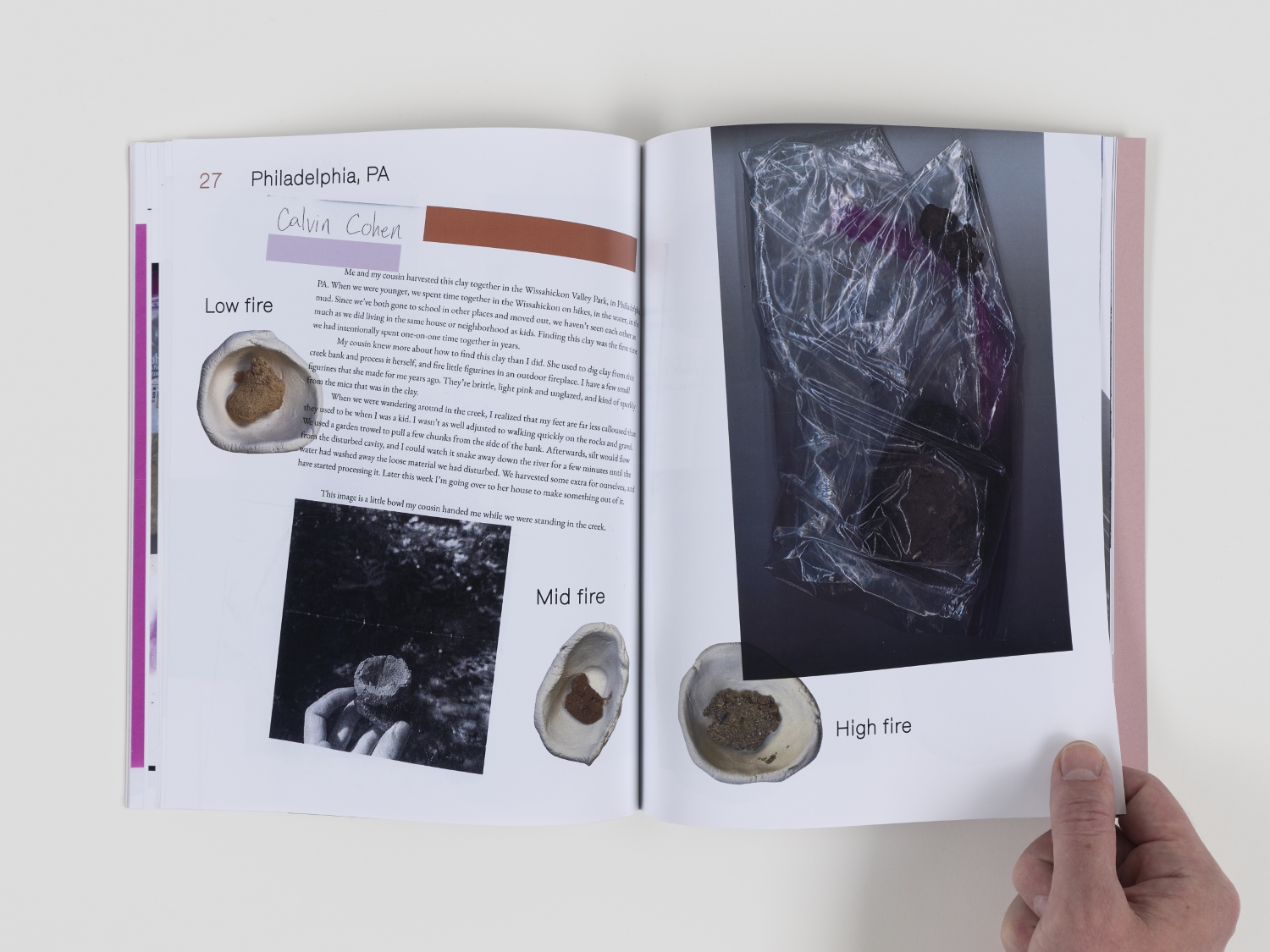
Several submissions marked not only the process of foraging for the wild clay, but how memory and time are integral to this process. A typed letter from Calvin Cohen, from Philadelphia, Pennsylvania, opens with: “Me and my cousin harvested this clay together in the Wissahickon Valley Park, in Philadelphia, PA. When we were younger, we spent time together in the Wissahickon on hikes, in the water, in the mud.” But as time passes, relationships alter and change: “Since we’ve both gone to school in other places and moved out, we haven’t seen each other as much as we did living in the same house or neighborhood as kids. Finding this clay was the first time we had intentionally spent one-on-one time together in years.” Foraging, then, becomes not only a process of harvesting wild clay but also a means of digging up the ways one used to connect. Cohen even reflected on how their body has changed, noting that “I realized that my feet are far less calloused than they used to be when I was a kid. I wasn’t as well adjusted to walking quickly on the rocks and gravel.” Our bodies and clay change. [Figure 4]
Scattered throughout the deeply personal, some submissions are quite exact in their information. A David Miner from Elliot, Iowa wrote: “The sample is a gray clay variety at the Miner Farm in Douglas Township, Montgomery County, Iowa. An earlier batch has been fired to cone 10 in a reduction atmosphere. I also use another red clay found at the same location.” Though brief, Miner’s submission alludes to foraging and working with wild clay from the same location as a continuous process beyond the scope of the call. While Downing’s call has ended, the search for wild clay will continue on. [Figure 5]
Hearing Clay Calling
In a submission by Jenn Eiser from Glenn, Michigan, they open their letter stating that the clay they submitted was harvested “from a beach in Michigan with many names.” Rather than describing the clay itself, Eiser navigates what clay means, what it can do, and how it reflects connection. Clay has an “ability to feel so special and so forgiving. The feelings of safety for experimentation risk taking in the clay’s natural abilities mirror the way I feel about the friends who show me this beach.” While clay might become referential to a particular location -”I’m looking for ways to carry a place with me when I’m not there – to raise it to my lips” as Eiser writes- Call for Clay highlights that clay is a reflection of ourselves. In the Introduction, Downing asks: “If clay has a memory, does it remember its primordial origins…Does clay remember the human hands that scooped it up from the depths?” If one begins to think about clay itself, and imagine that it remembers its formation and removal from one location to another, alongside ourselves, we can begin to see that we might not be so different.
It is here that Call for Clay embodies Halberstam’s idea of wildness as a process of interacting-with-rather-than-separating. Halberstam concludes Wild Things through his own “call of the wild”: “… to be with the wild, accept the wild, give yourself to the wild, and float or drown in its embrace.”3 Call for Clay is precisely this: an embrace of the wild as a collapse between boundaries, one that draws together individuals who might never otherwise have encountered one another. I find myself among them. Lying in bed that night, stopping my scroll to read Downing’s call, and now sitting with Call for Clay next to me, I have become part of this larger group. I might not have foraged for wild clay, but I can now hold and touch the very stories about this process.
Call for Clay does more than just ask for submissions; it asks us to look beneath our feet once in a while and remember how even something as still and constant as clay can hold and reflect so much of who we are. [Figure 6]
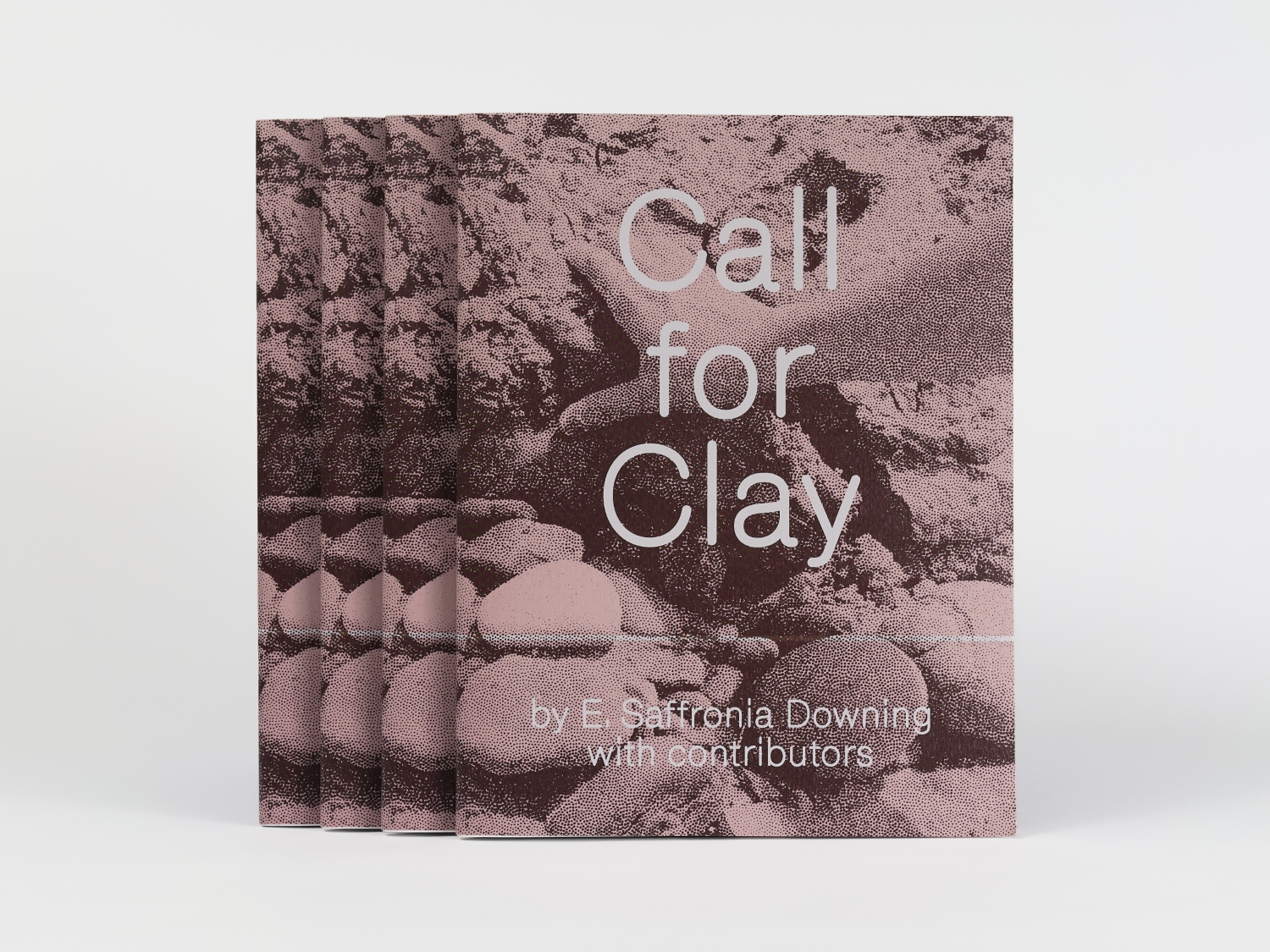
Call for Clay is available for purchase online or in-stores at Inga Books (Chicago), Printed Matter (New York) and other independent artist book stores. This publication was made with support from the John Michael Kohler Art Center.
Works Cited
- Downing, E. Saffornia and contributors. Call for Clay. 2025.
- Halberstam, Jack. Wild Things: The Disorder of Desire. Duke University Press, 2020.
Graham Feyl is an art historian and curator whose work centers on queer and transgender artistic production, design, craft, and material cultures. He has curated exhibitions – in Chicago, Portland, Chattanooga, and Santa Barbara – around similar themes. His writing has appeared in publications such as ASAP/Review, Lum Art Magazine, and the Decorative Arts Trust Bulletin. Graham is currently a Ph.D. candidate at the University of California, Santa Barbara, in the Department of the History of Art and Architecture.
Subscribe to Ceramics Now to read similar articles, essays, reviews and critical reflections on contemporary ceramics. Subscriptions help us feature a wider range of voices, perspectives, and expertise in the ceramics community.