Joël Brodovsky-Adams: Like a Rumor is on view at Superhouse, New York
September 9 – October 17, 2026
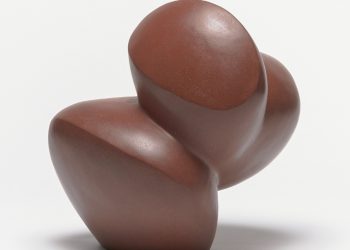
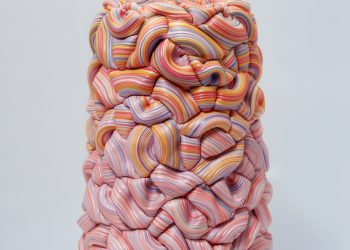
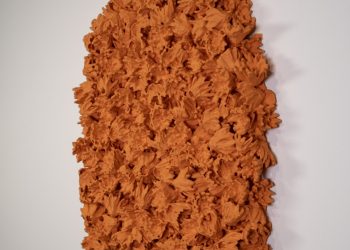
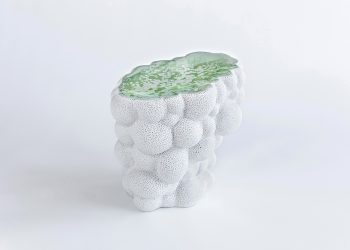
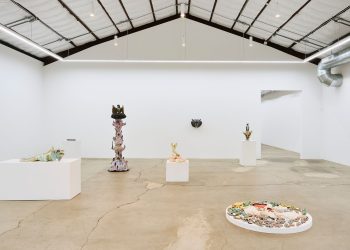
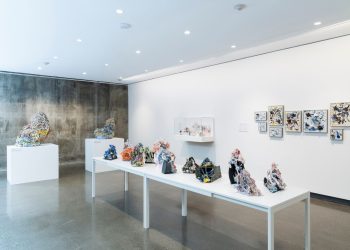
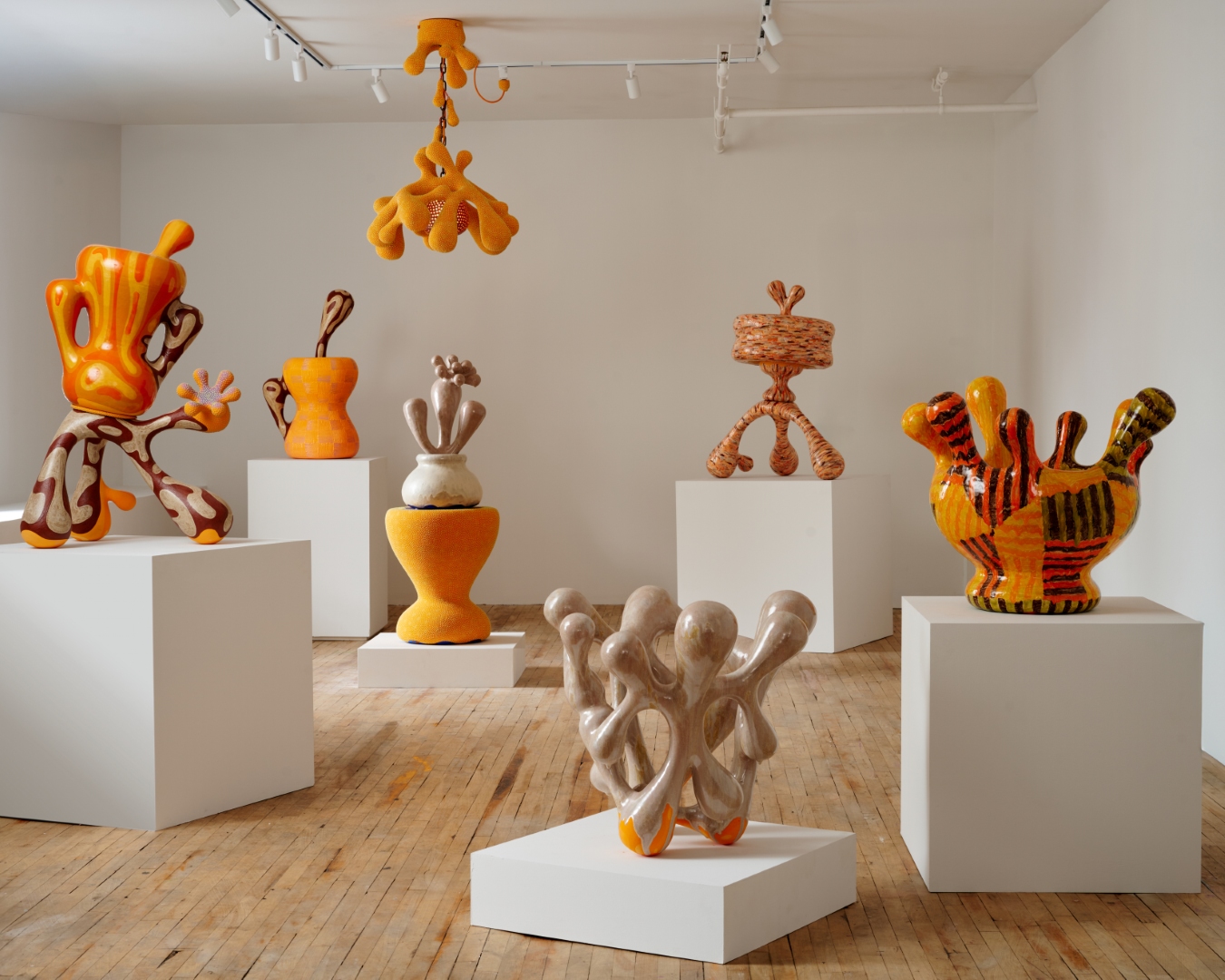
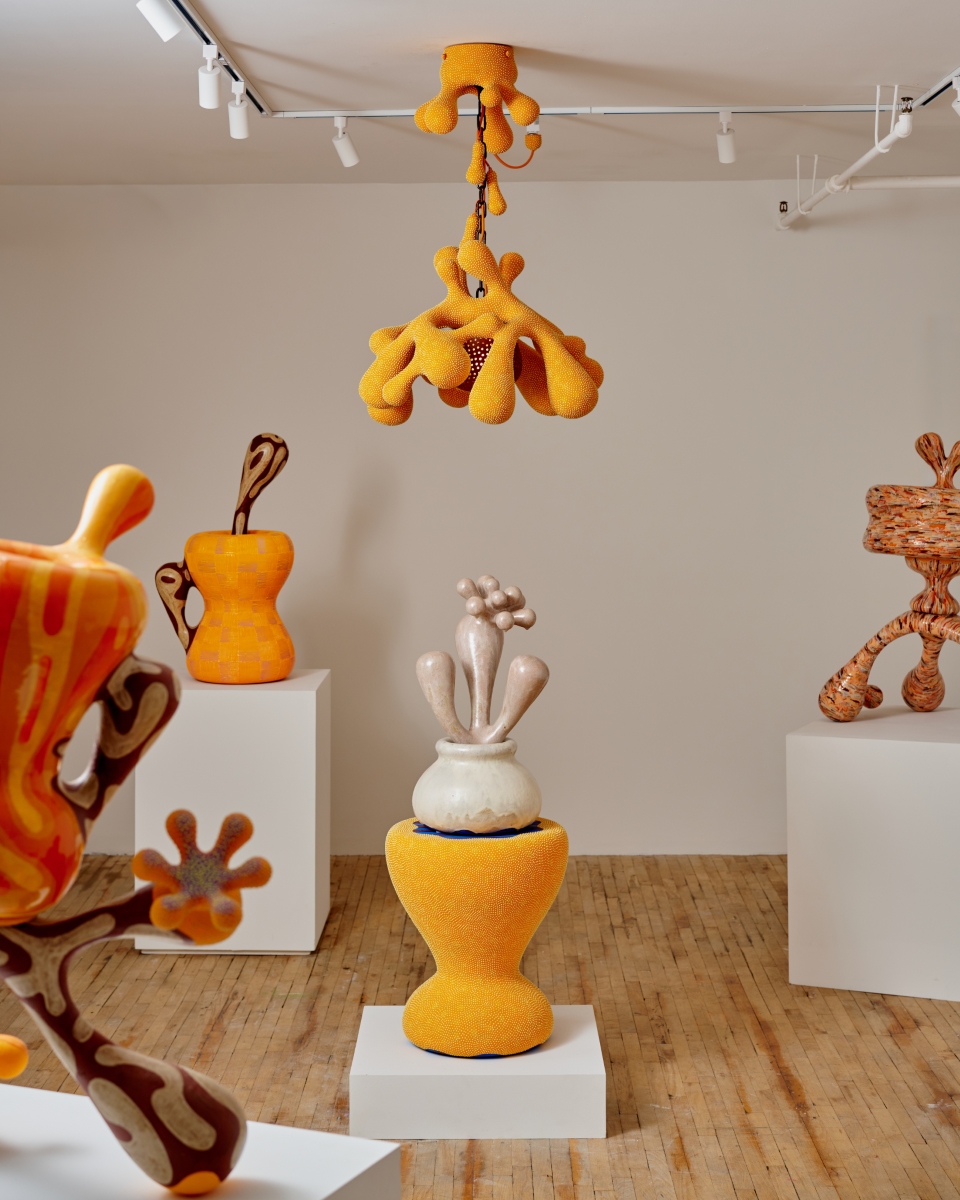
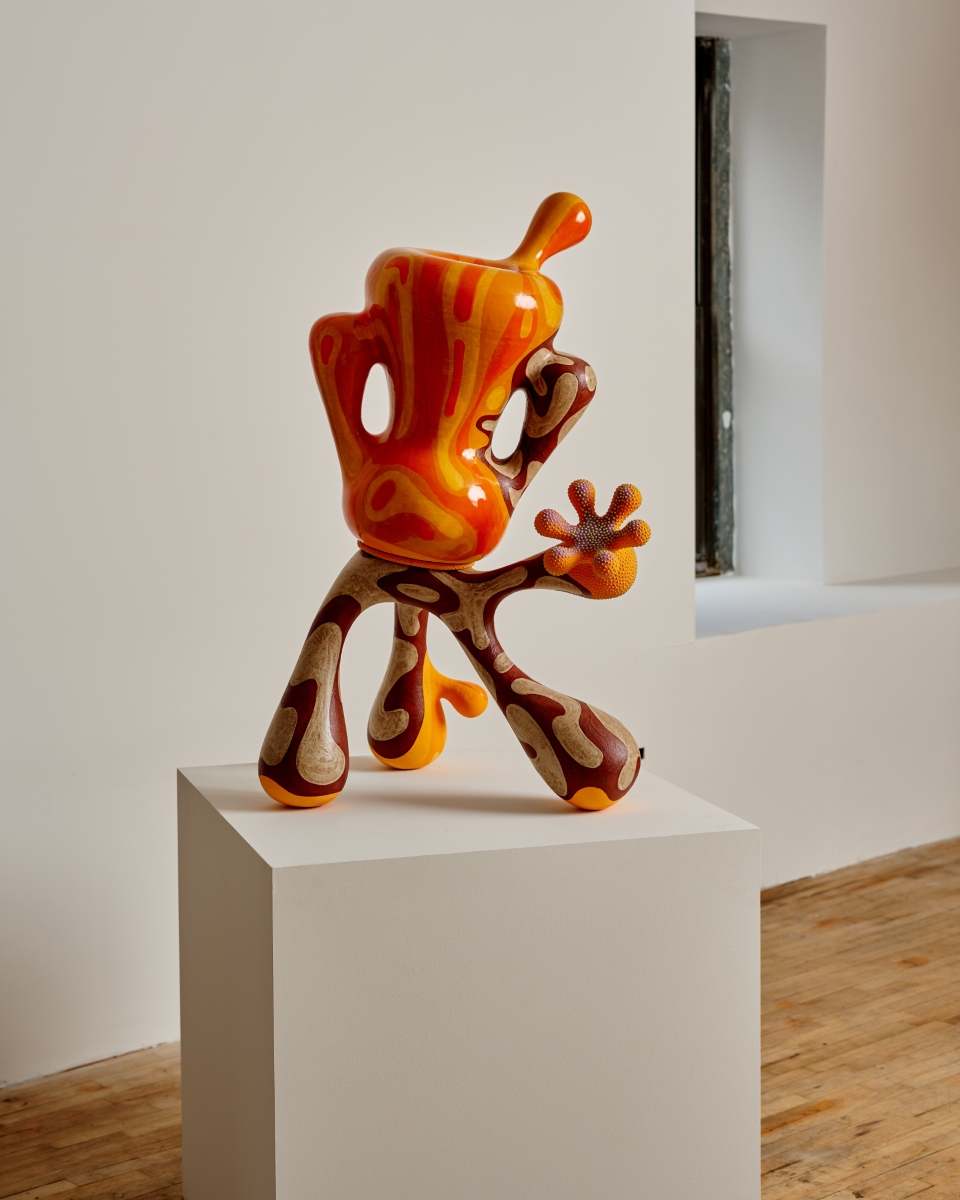
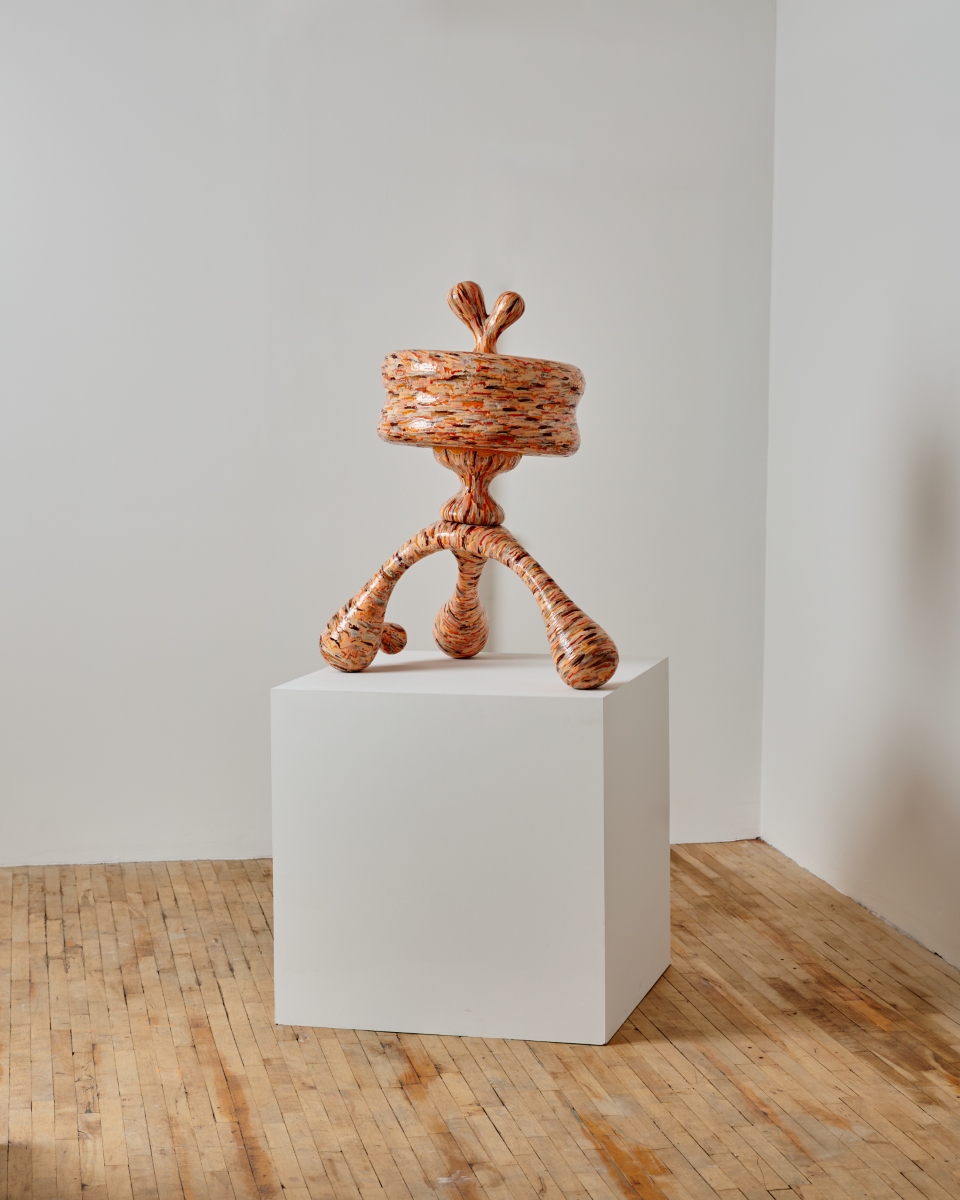
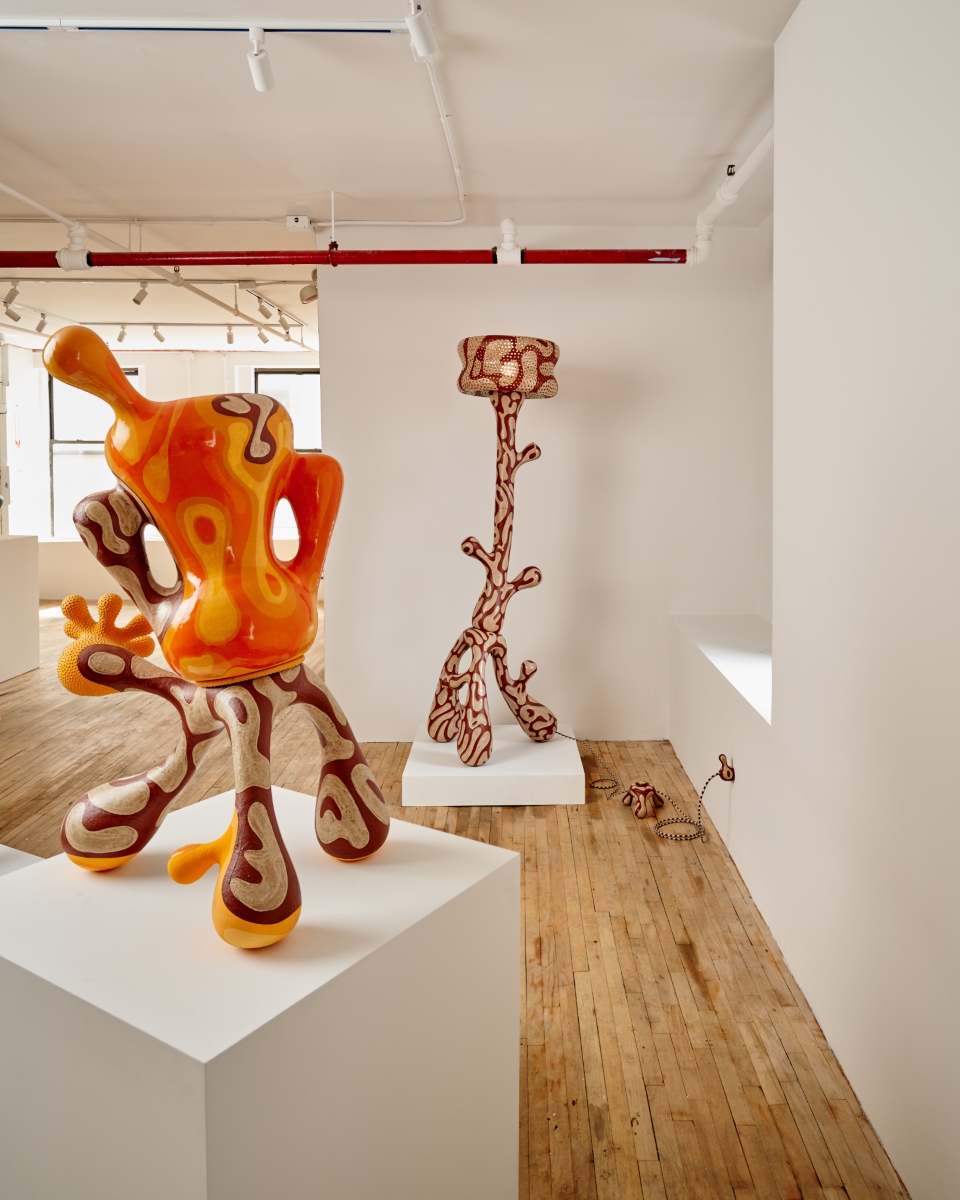
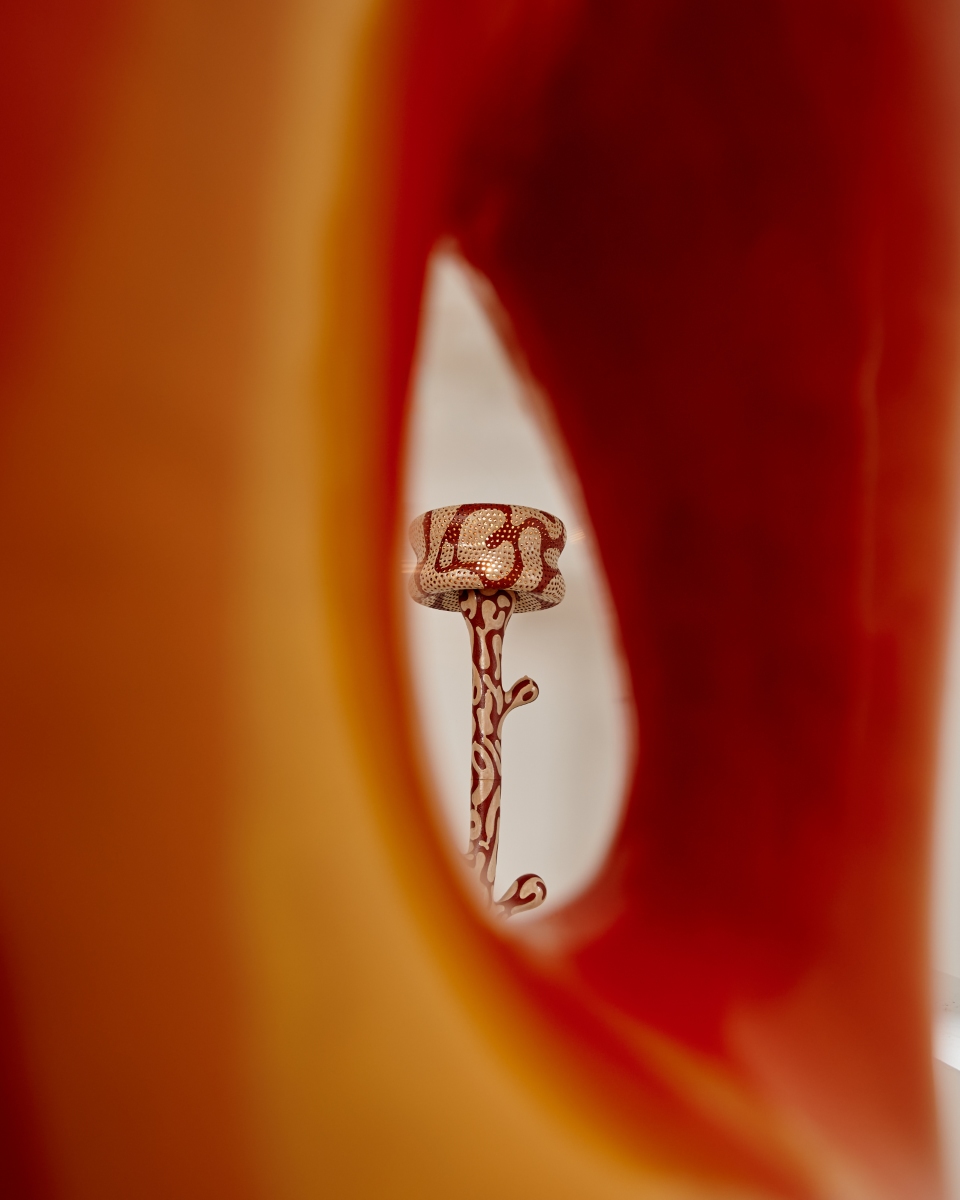
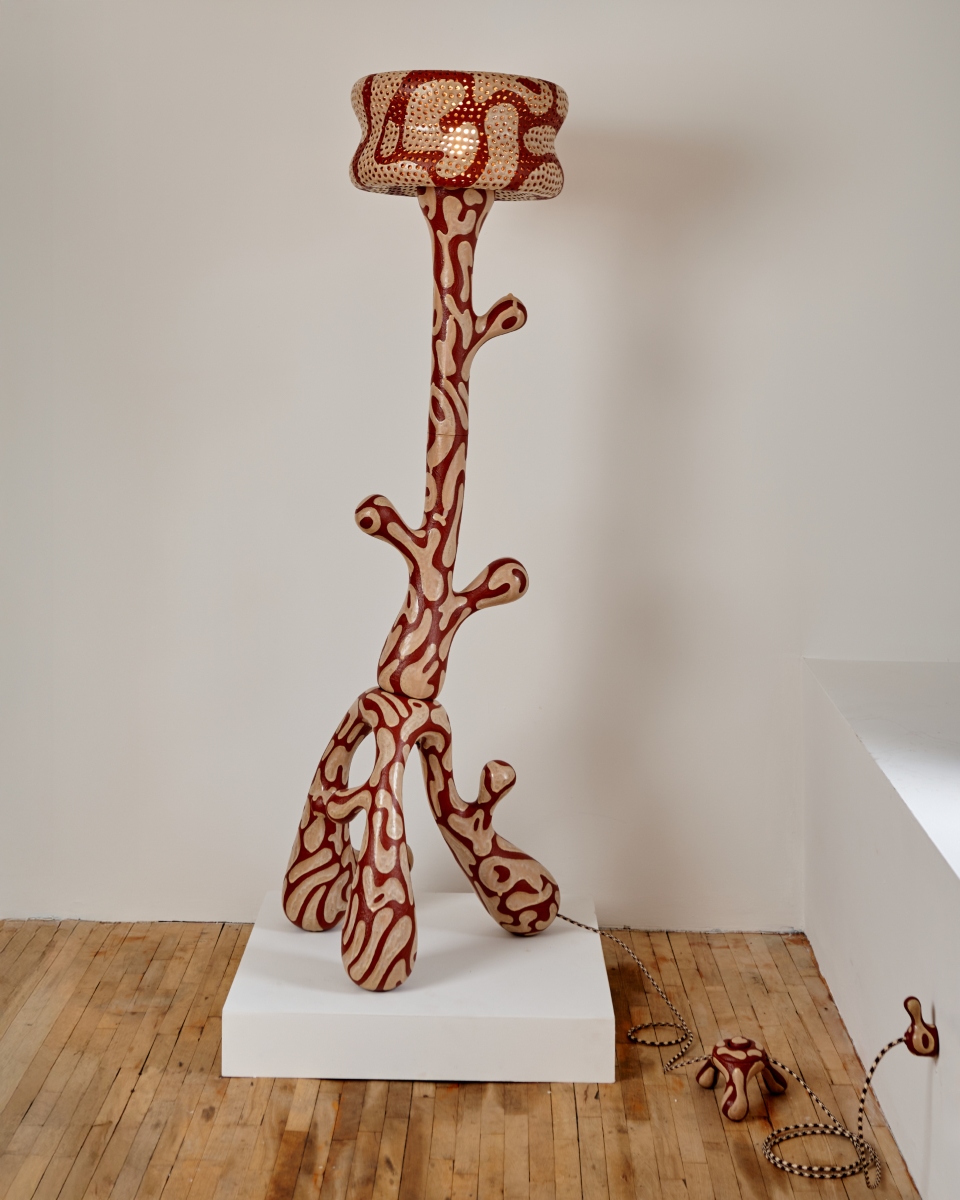
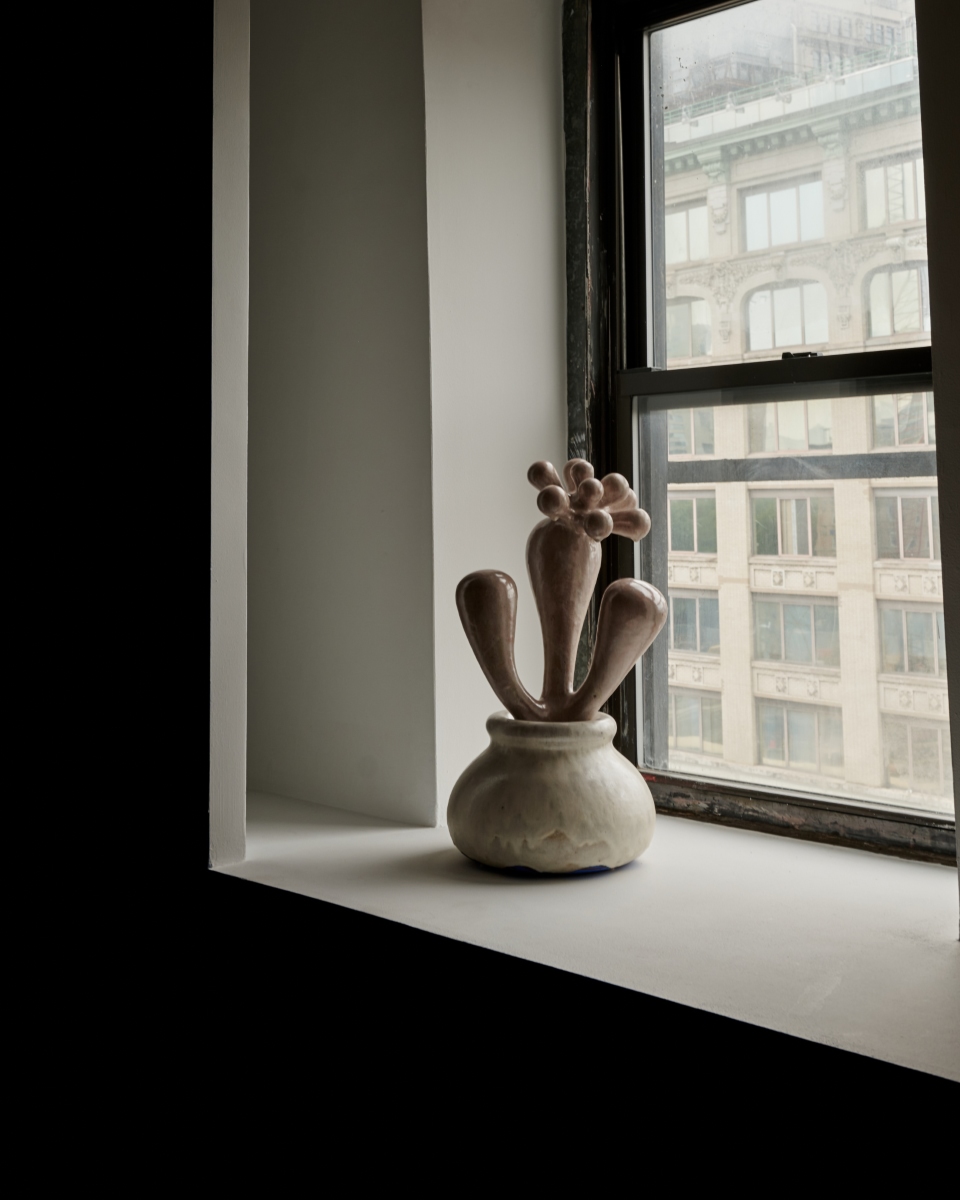
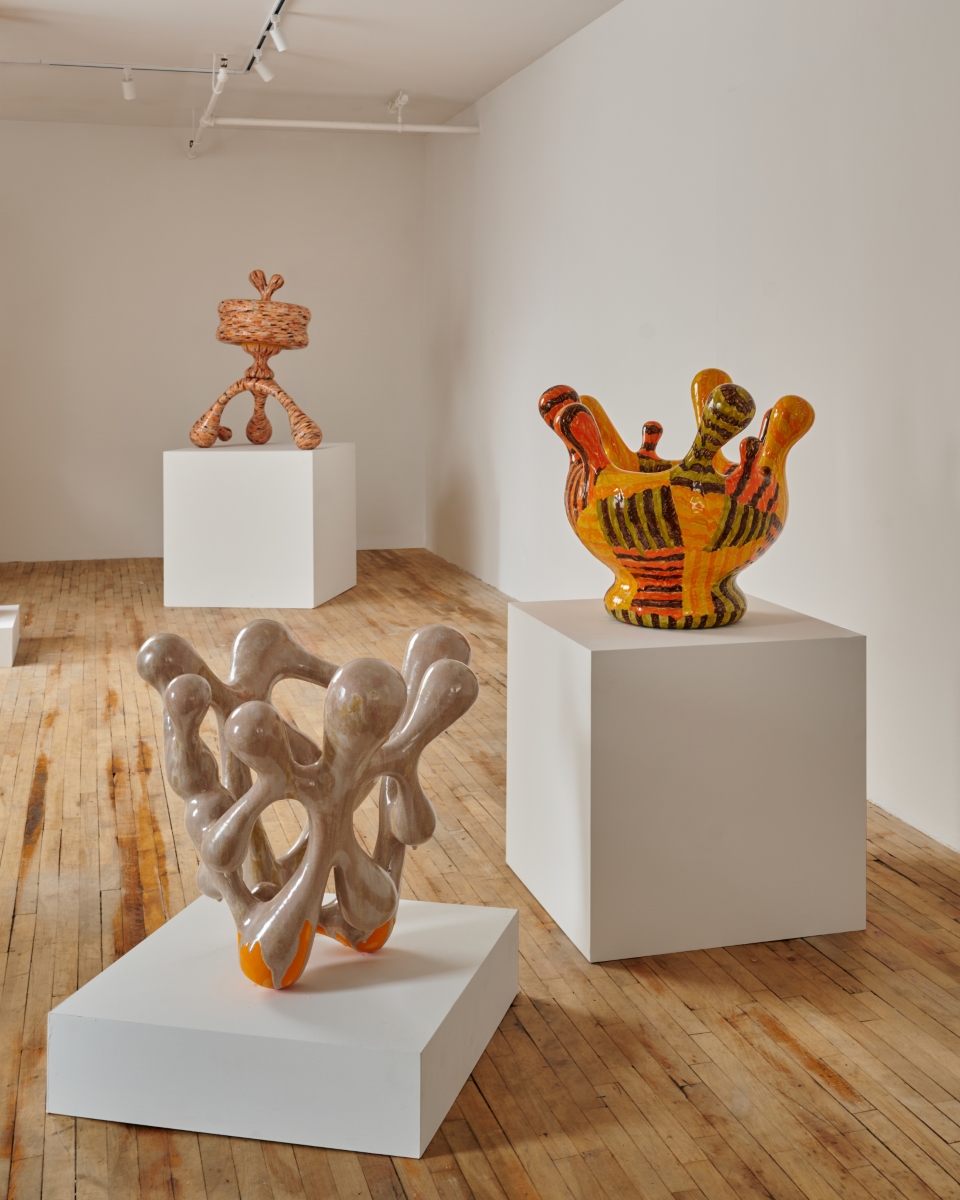
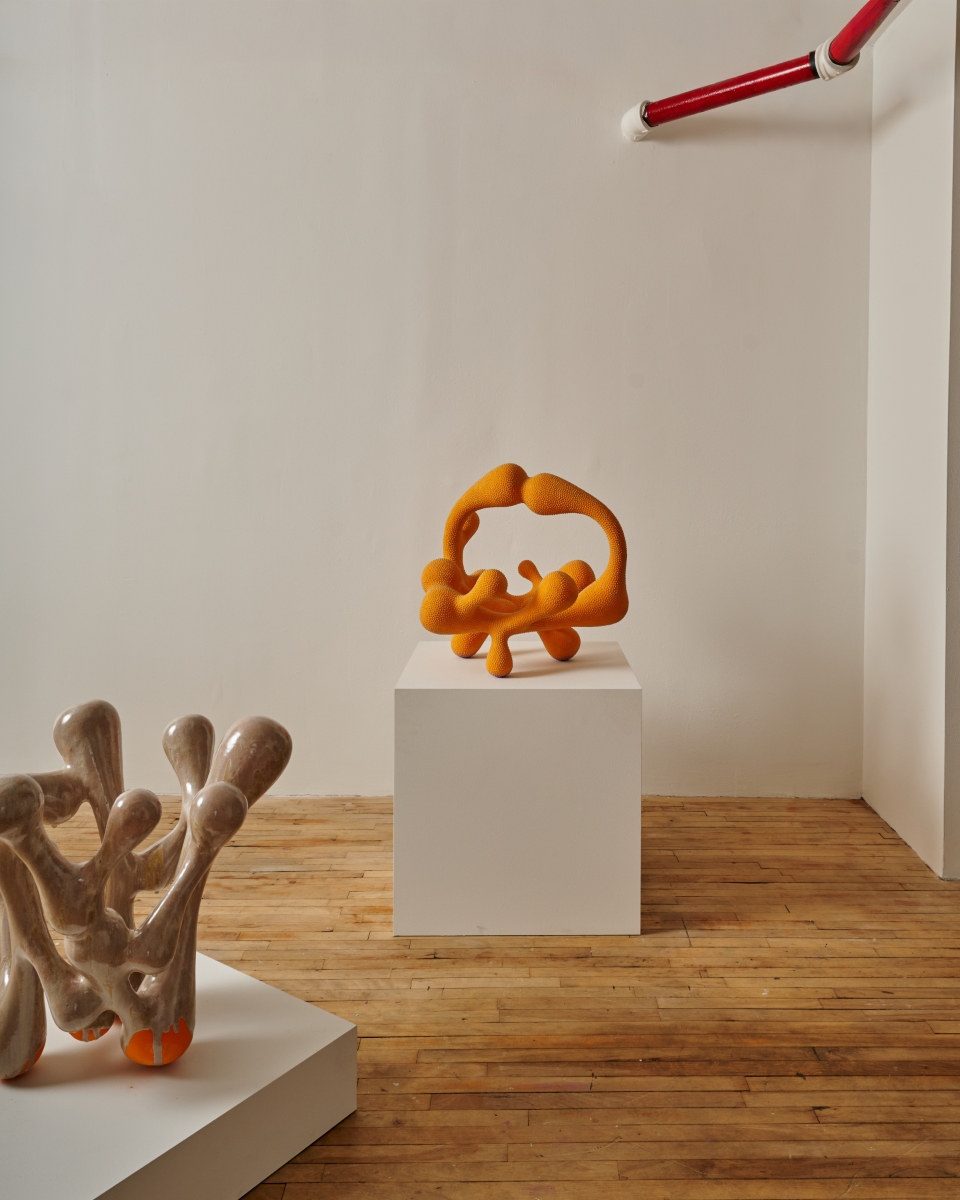
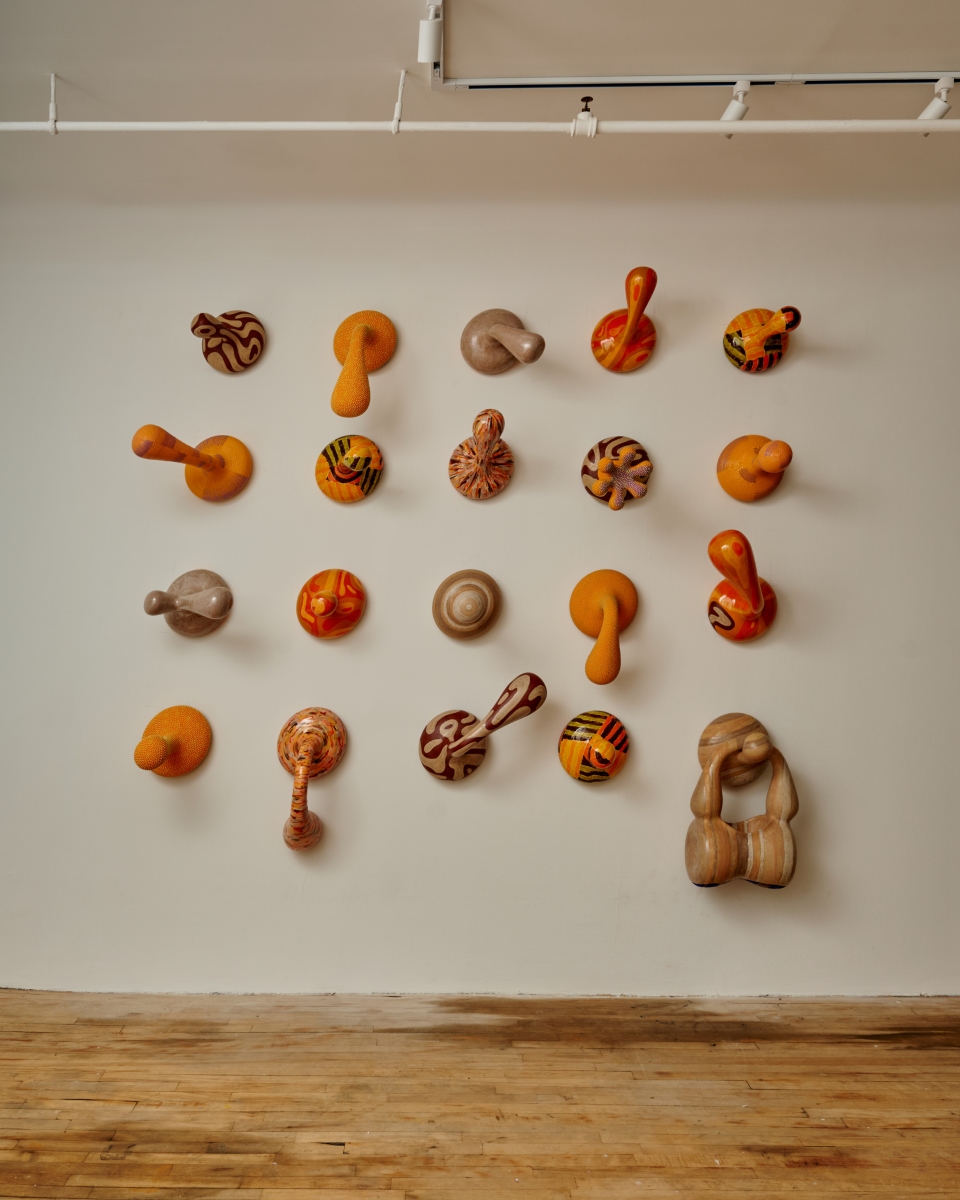
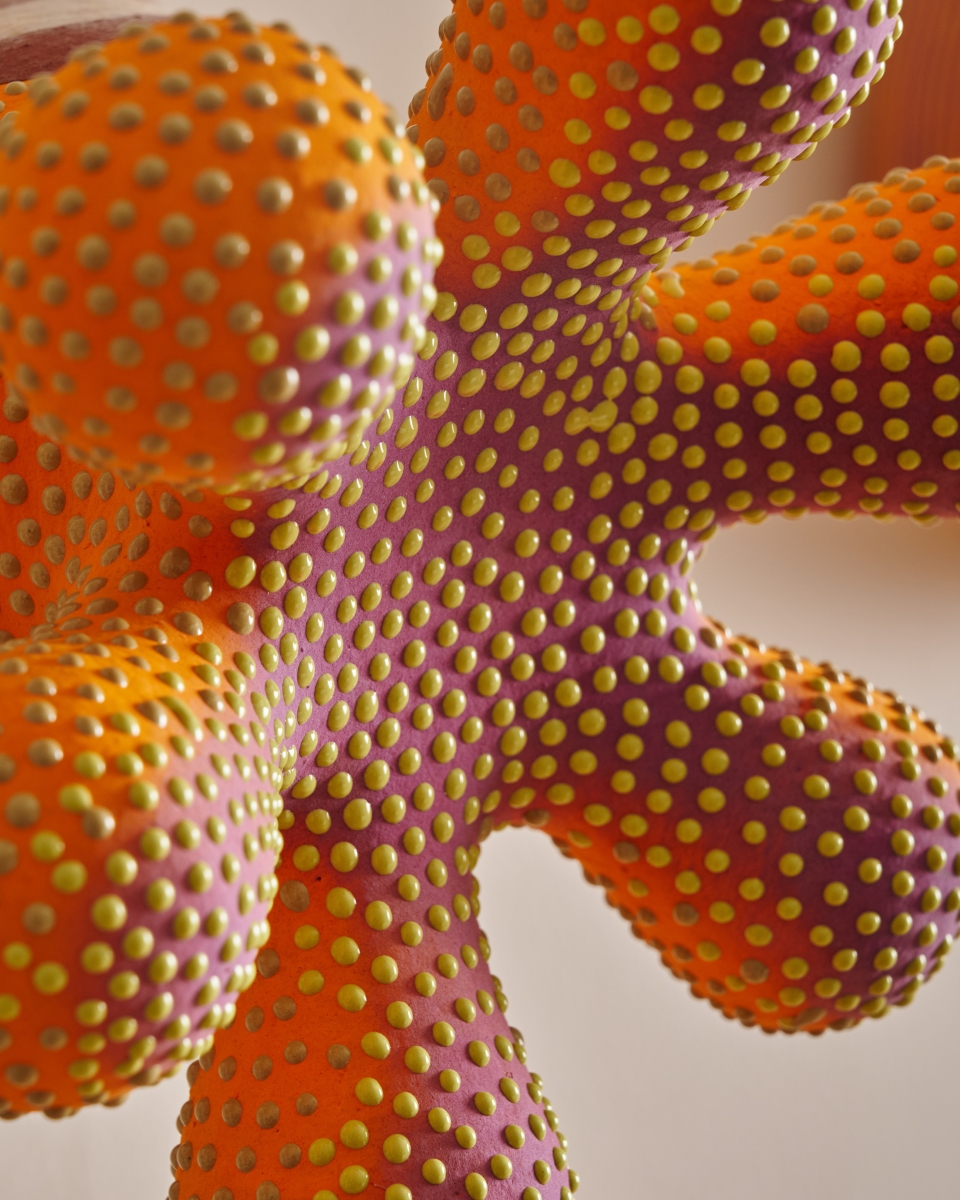
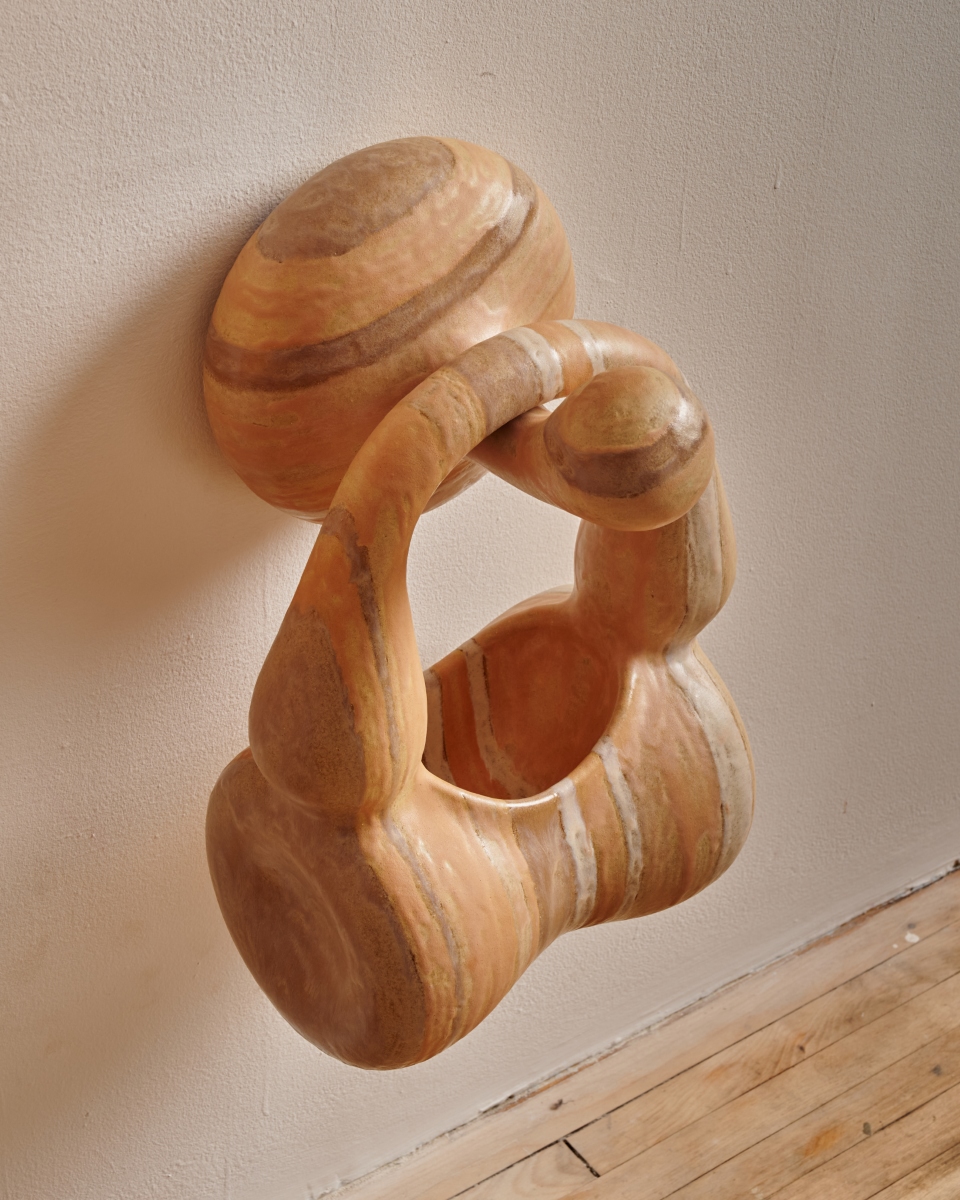
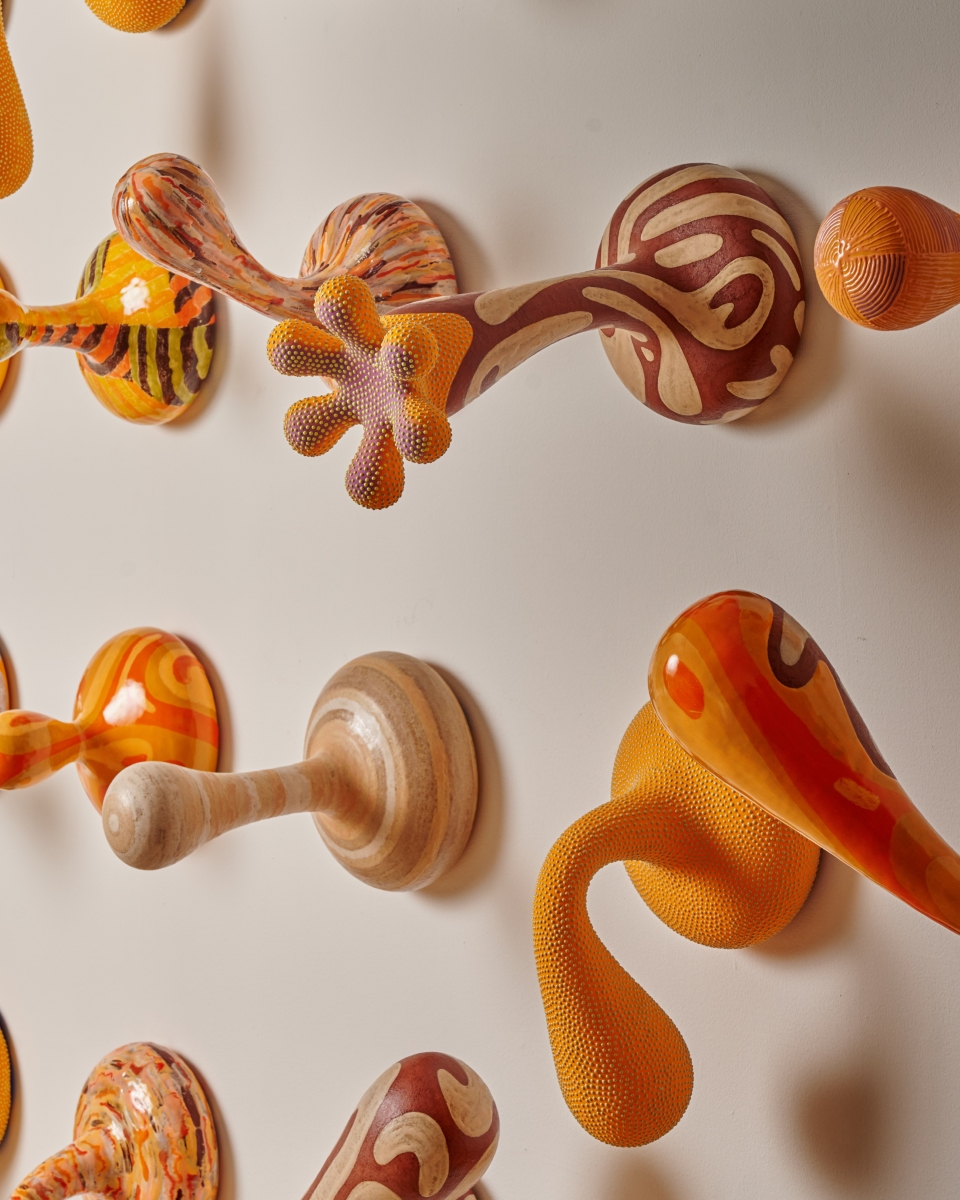
Superhouse is pleased to present Like a Rumor, a solo exhibition by Joël Brodovsky-Adams. The exhibition brings together sculptural vessels and lighting that channel the energy of queer club culture into buoyant, gestural forms alive with the possibility of pleasure. Built entirely from wheel-thrown components and dressed in pattern, the works appear as both characters and elements of a scene: theatrical objects that seem to pose, gesture, or dance.
Essay by Michael Bullock
Swish is a movement before it becomes an identity. A loose wrist, a hip given too much latitude, a hand traveling farther than necessary, a particular way of standing or walking: boys learn remarkably young that such gestures have consequences. “You act like a girl” is never merely an observation. It’s a correction. Reduce the gesture. Control the body. Physical expression gets sorted into masculine and feminine, permissible and suspect, until learned restraint begins to look natural. The expressive boy exposes that fiction simply by moving through the world without self-censorship. Brodovsky-Adams gives the gesture back to the pot. His objects bulge, bend, reach, and spread themselves out. They put on outfits and lean into one another. Some seem perfectly aware that they are being looked at. Their relationship to the body is as much behavioral as physical. The vessel has acquired manners, though not the kind boys are typically taught to have.
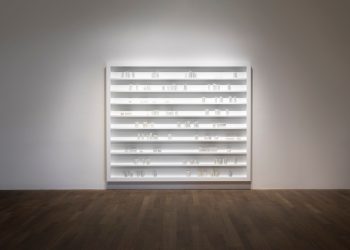
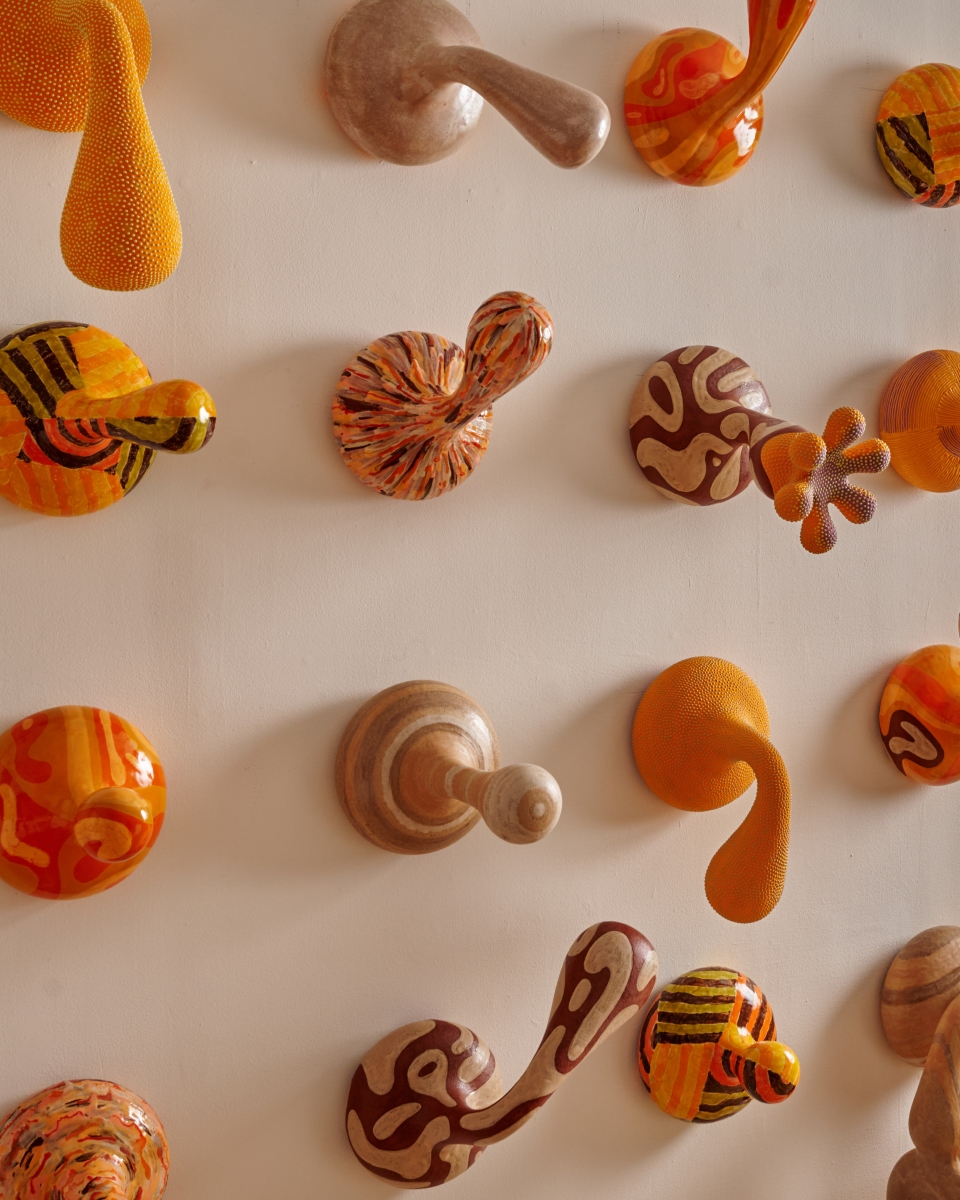
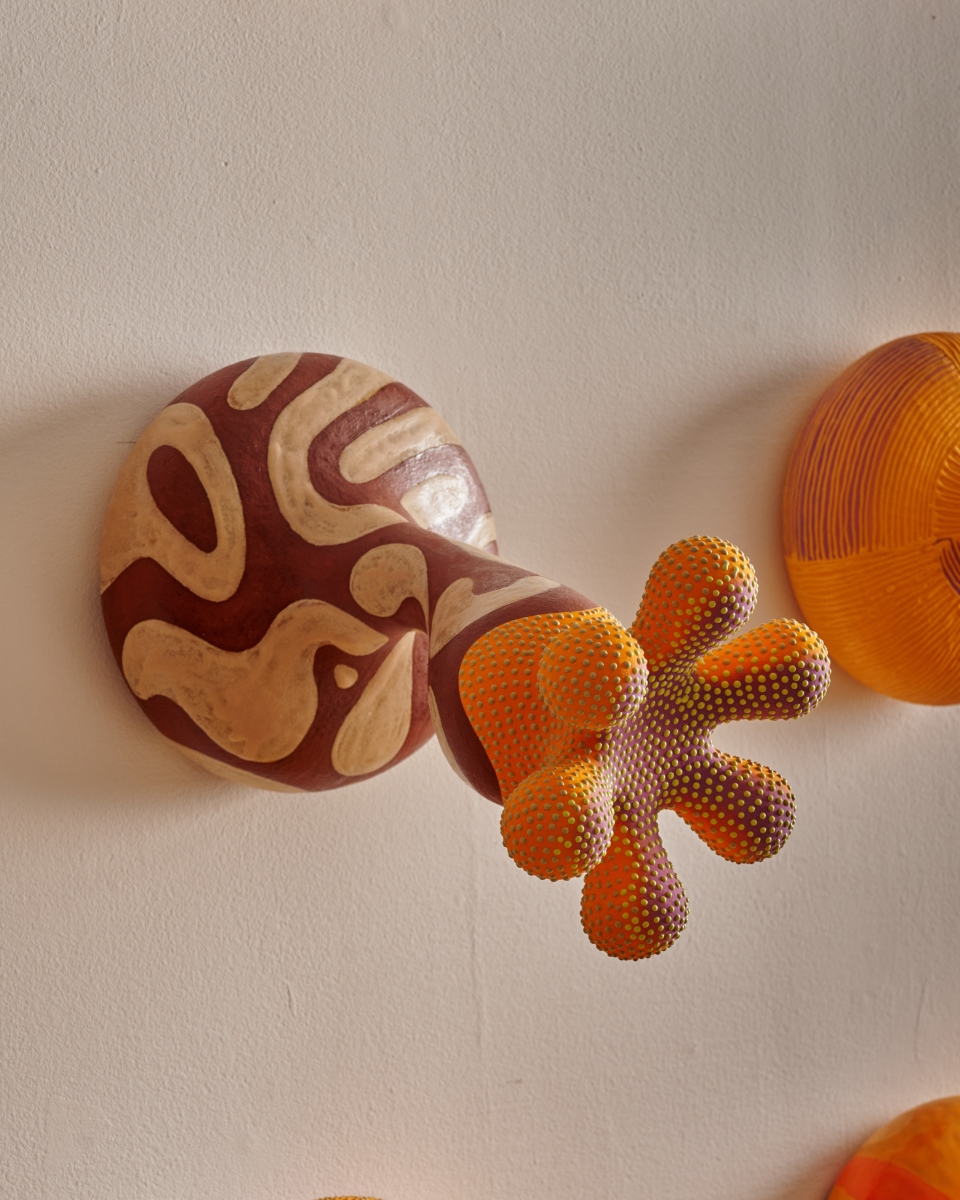
In his Sunset Park studio, pots are everywhere, although some have wandered pretty far from the assignment. One rises on a long neck before erupting into a crown of swollen appendages. Another, glazed metallic silver, knots together a collection of bulbous wheel-thrown forms: necks become limbs, feet point in several directions, openings disappear into other bodies. You can still see the pot in there. There are simply too many of them. Elsewhere are lamps, vessels, hooks, and things that remain just recognizable enough. After all, a pot has responsibilities. It is expected to contain something, just as a lamp should illuminate and a hook bear the modest burden of a coat. Brodovsky-Adams has made a wall full of ceramic hooks that test the agreement. Some remain perfectly serviceable. Others have become so elaborate that their original function has been “completely … negated.”
The vessel remains a point of departure as Brodovsky-Adams moves deeper into sculpture. Even his strangest forms begin on the wheel. The pot remains recognizable, only less obedient to what a pot is supposed to do. The accusation of uselessness has always had a moral streak. In his 1908 essay “Ornament and Crime,” Adolf Loos famously declared that “the evolution of culture is synonymous with the removal of ornament from utilitarian objects.” During graduate school, Brodovsky-Adams became preoccupied with the peculiar historical company kept by ornament and queer pleasure. Both have been dismissed as frivolous, insubstantial, excessive, and unproductive. Ornament exceeds what an object needs to function. Queer pleasure has been judged to fall short by conventional measures of utility.
Brodovsky-Adams encountered this hierarchy early. As a teenager, he became increasingly studious, filling his schedule until there was no longer room for art classes. He went to McGill, following what he now calls a “more traditional trajectory.” Yet during his first week there, he began taking wheel-throwing classes. Ceramics continued alongside it.
A lamp still gives light. A vessel can still hold something. His objects wonder what else usefulness might contain. Even Brodovsky-Adams occasionally catches himself resisting the impulse to push the decoration further. Dressing an object up can feel, as he puts it, like “a bit much.” Too much decoration, too much pleasure, too much gesture: the permitted amount has been exceeded.
Fashion gives Brodovsky-Adams another way of testing that limit. He speaks of “dressing” the objects, sometimes quite literally. A pattern from his favorite Eckhaus Latta shirt finds its way onto the surface of a ceramic form. Clothing passes from his own body onto the imagined body of the vessel. Pattern follows a curve, exaggerates a bulge, draws attention to one part while redirecting the eye from another. Among the images pinned in his studio is a photograph by designer Victor Barragán of a man in a Speedo, manipulated so that its pattern creates an optical illusion, exaggerating the curves of his buttocks. Decoration does not simply cover the body; it changes how the body is perceived. Brodovsky-Adams brings the same logic to clay.
The gay club is where these mannerisms received not just permission to exist, but communal applause. There, a gestural vocabulary sharpened. In Montreal, Brodovsky-Adams and his friends went to Sky, a three-story gay club with different music on each floor. “I mean, it was my coming out,” he remembers. At first, he wasn’t fully out; he would join his friends at the club without talking about why he was there. Eventually it became the place where he could feel desire, feel desired, and grow comfortable in his own body. When COVID closed clubs and that part of his life disappeared, nightlife entered his ceramics more directly. Photographs of friends drinking and dancing became source material. Eventually the figures receded, leaving behind the bodily intelligence of the room. A gay club permits movements discouraged elsewhere. Men pose, strut, swish, cruise, imitate, exaggerate, dress, and undress. Masculinity becomes available for play. The body recovers some of the expressive range it was trained to surrender. What begins as bodily freedom becomes something larger. Brodovsky-Adams thinks of “that tendency towards hedonism and pleasures as so inherently queer.”
People dress elaborately to enter a dark room where much of what they are wearing can barely be seen. Money is spent. Hours disappear. Bodies exhaust themselves. There is the look across the room, the dance, the touch, the stranger who becomes a friend or lover. The electricity of being alive is shared. By morning there may be little physical evidence that anything useful has occurred. José Esteban Muñoz writes in Cruising Utopia, “Think of ephemera as trace, the remains, the things that are left, hanging in the air like a rumor.” Queer history has often depended upon such traces. Gesture becomes evidence: the cruising look, the lingering handshake, the particular strut, small physical acts capable of carrying an entire social world. A cruising glance might last half a second. Fired in clay, it can last forever. Brodovsky-Adams takes this fleeting language and gives it lasting form. The work gives a specific cultural experience permeability, allowing it to travel beyond the room that produced it.
The exhibition extends that logic into space. Brodovsky-Adams imagined its entrance as the dressing room of a nightlife venue, with the larger gallery beyond as its stage or dance floor. It is the route of the performer rather than the audience: a passage from backstage into the room, where dress, gesture, and attitude become public. The conceit has grown more abstract as the work developed, but something of that transformation remains.
In the larger sculptures, several bodies become a crowd. They touch, separate, and return, each pot still discernible within a form unconcerned with where one ends and another begins. At thirty, Brodovsky-Adams is still close enough to what he inherited for its rules to remain visible, even as the contours of a life and practice distinctly his own come into view. The pot remains, which is precisely why its misbehavior matters. Making pleasure and joy central to the definition of usefulness is distinctly queer. “That’s the impulse with all of it.”
About Michael Bullock
Michael Bullock is a Brooklyn-based writer, editor and documentary filmmaker focused on art, design and queer culture. He is the author of Roman Catholic Jacuzzi (Karma 2012), the editor of Peter Berlin: Artist, Icon, Photosexual (Damiani 2019), and co-editor of I Could Not Believe It: The 1979 Teenage Diaries of Sean Delear (Semiotext(e) 2023). Bullock serves as associate publisher of PIN–UP and The Whitney Review of New Writing and is a contributing editor to apartamento.
About Joël Brodovsky-Adams
Joël Brodovsky-Adams (b. 1995) is a ceramic artist based in Brooklyn, New York. He holds an MFA from the New York State College of Ceramics at Alfred University and was recently an Artist Fellow at the Museum of Arts and Design in Manhattan. Originally from Winnipeg, Manitoba, Brodovsky-Adams began working with ceramics in 2013 at L’aluminé in Montréal, Québec, and later completed a post-baccalaureate certificate at NSCAD University in Halifax, Nova Scotia, in 2021. His work has been exhibited internationally, including a two-person presentation with Superhouse at NADA New York, a group exhibition at the Canadian Clay and Glass Gallery in Waterloo, Ontario, and a group exhibition at Sculpture Space NYC.
Contact
hello@superhouse.us
Superhouse
120 Walker Street, 6R
New York, NY 10013
Unites States
Photos by Matthew Gordon