By Aleina Grace Edwards
When I was small, I was scared of bodies—real, human ones, with their weak skins and wet entrails. I feared deadly diseases born by mosquitos that bit me in the summers; I feared the snapping of my bones, even the smallest ones. I grew up looking at sculptures for comfort, first the Classical figures at the Getty Villa in Los Angeles where I was raised; in college, the Gothic effigies in the Philadelphia Museum of Art. There was a knight in one of the PMA galleries, grey and prone and perfectly still under the protection of his shield. His hands had been broken right off his wrists, but his head rested on what looked like a pillow to my undergraduate eyes, his hair pooling around his ears. His face was peaceful in its nonspecificity. He didn’t look like an individual person, but an embodiment of that euphemism for death—he’s at rest, I remember thinking. A relief.
But what of those people who don’t slip into a perpetual slumber, sheltered by the walls of a museum or the architecture of a cathedral? I’ve been thinking about how we mourn in the Western world today, the insufficiency of our rituals—the awkwardness and disorganization of digitized grief, the displacement of it as we scroll Instagram content documenting genocides. Our formal funeral processes, morticians painting eyes and cheeks, the total disengagement from decay. In Los Angeles, that disengagement begins well before death now, the increase in cosmetic procedures signaling the growing denial of aging in the first place.
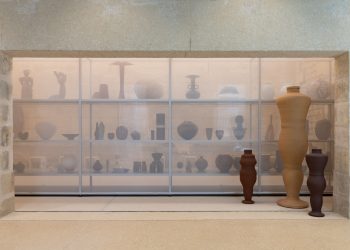
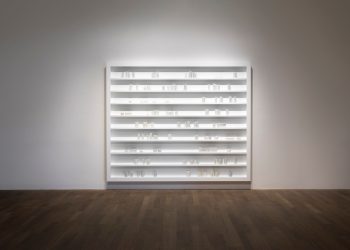
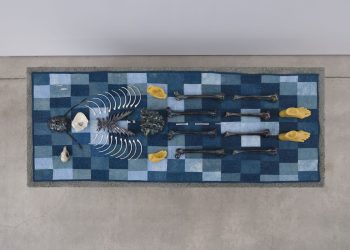
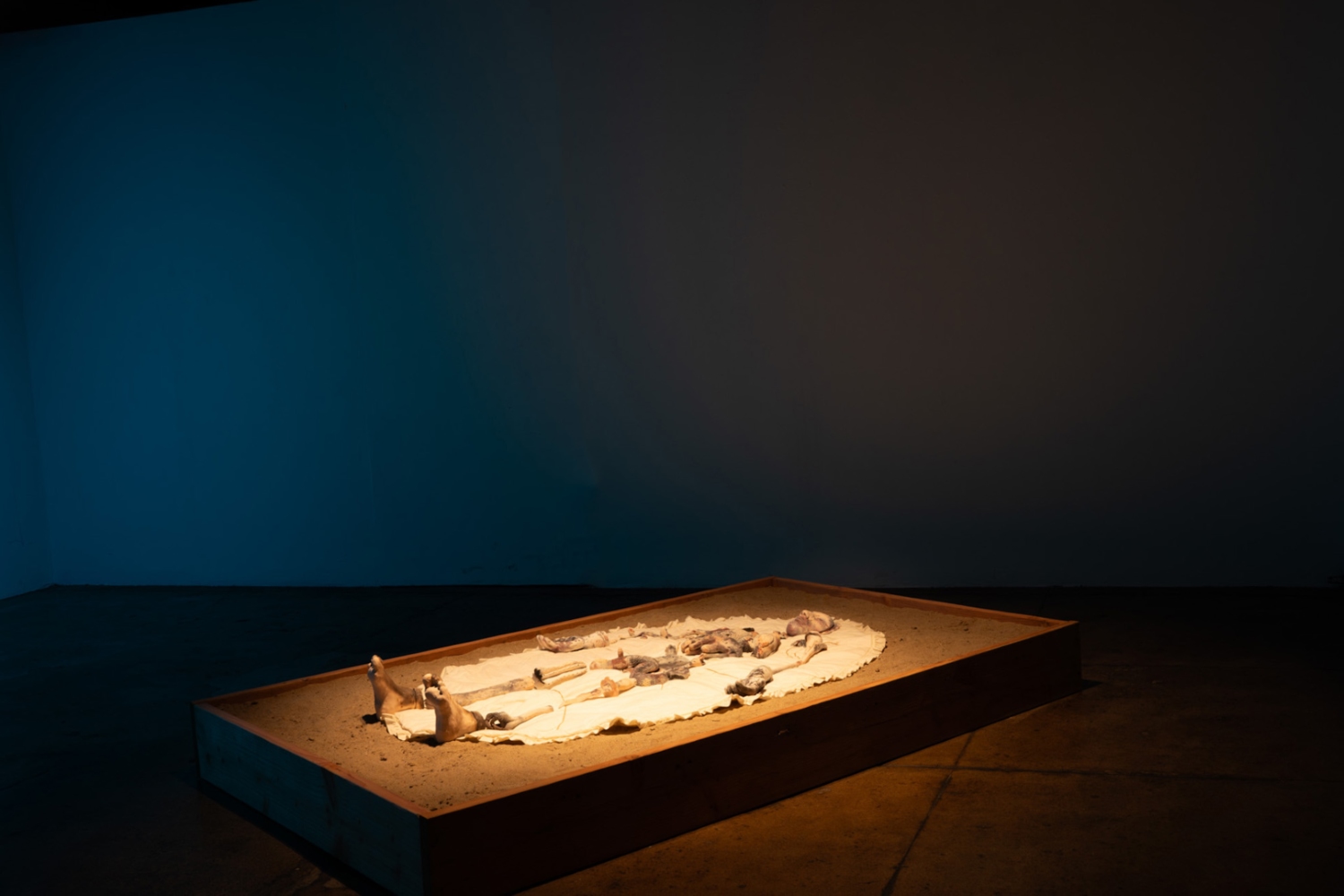
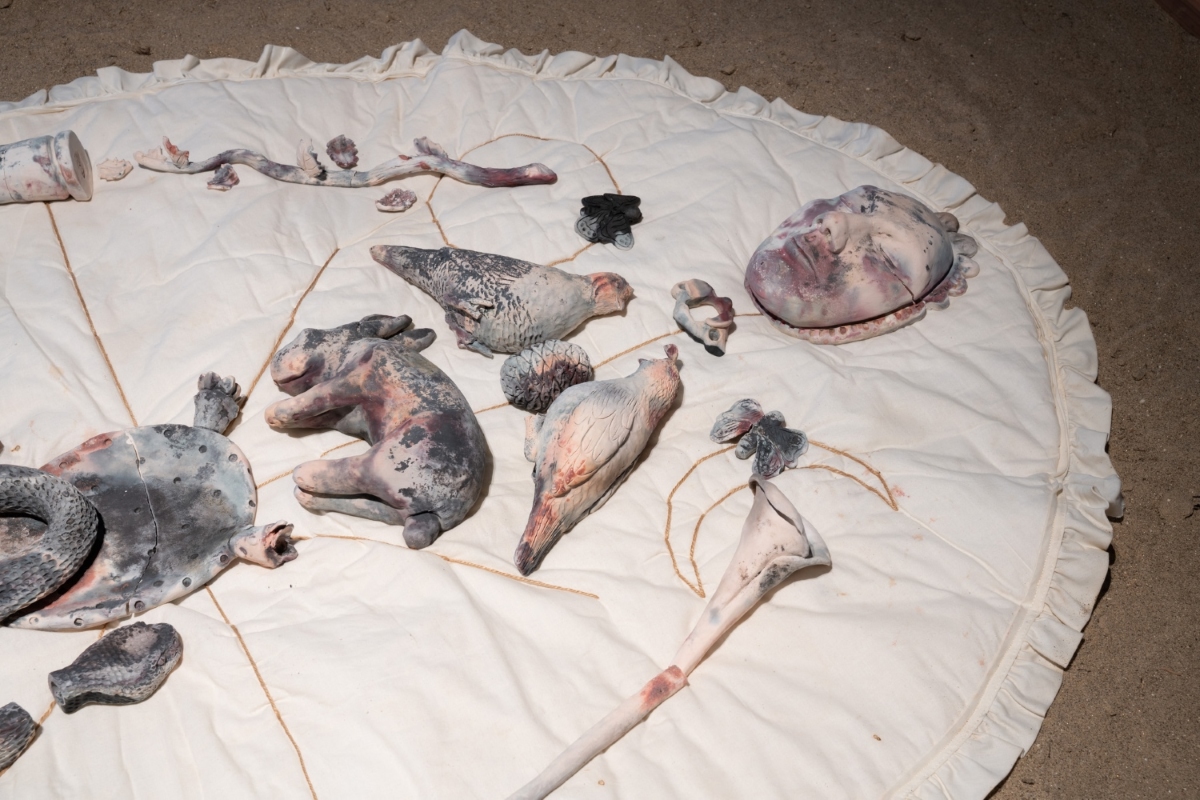
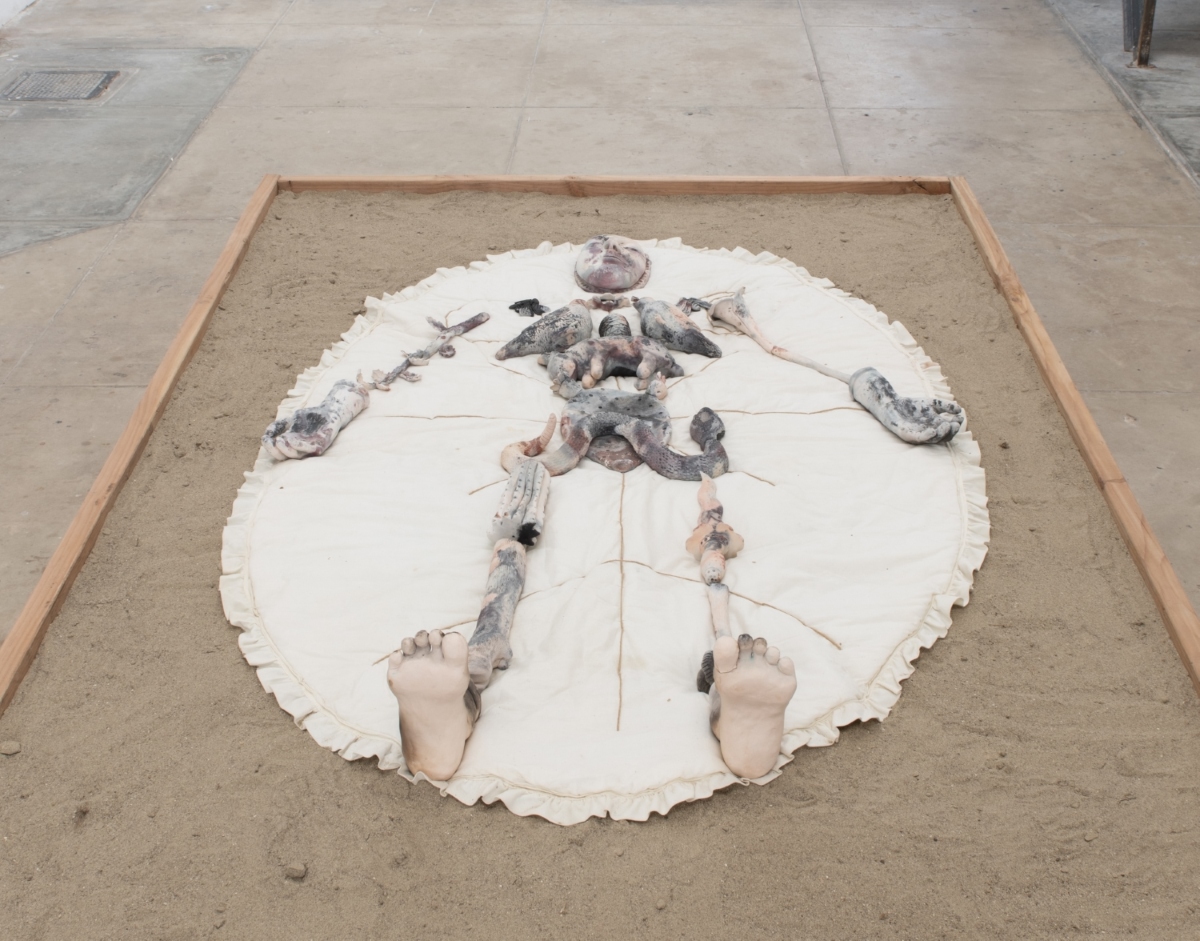
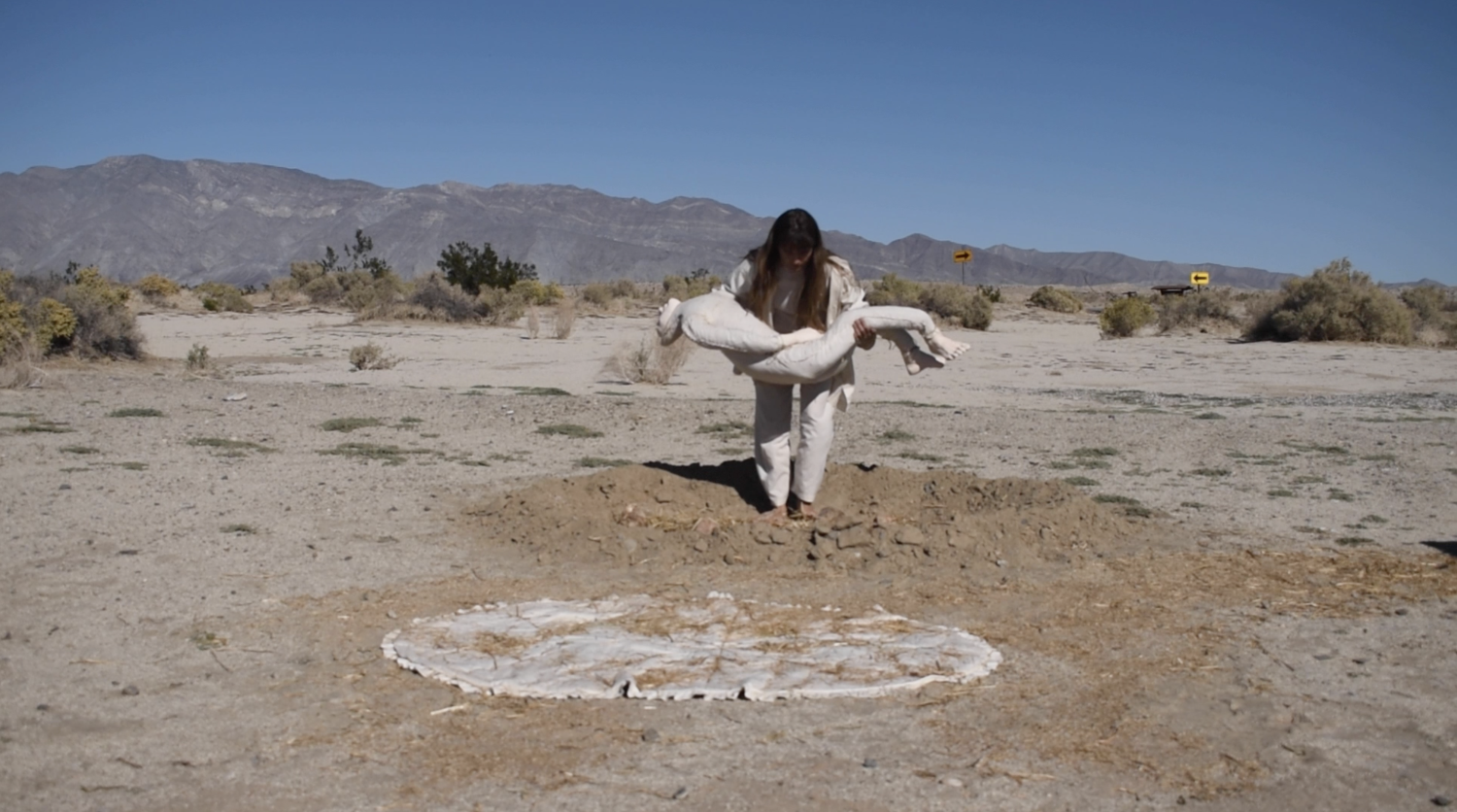
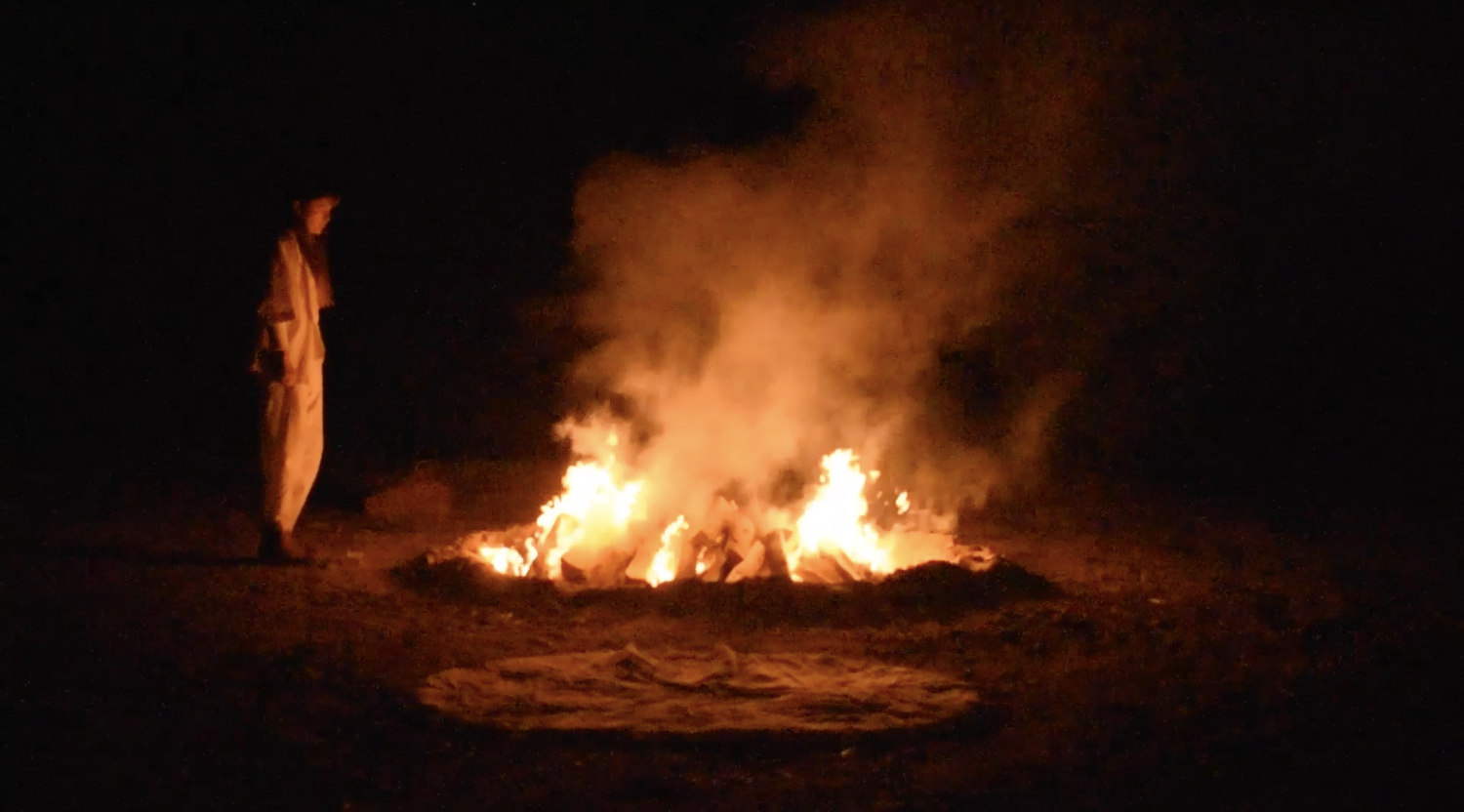
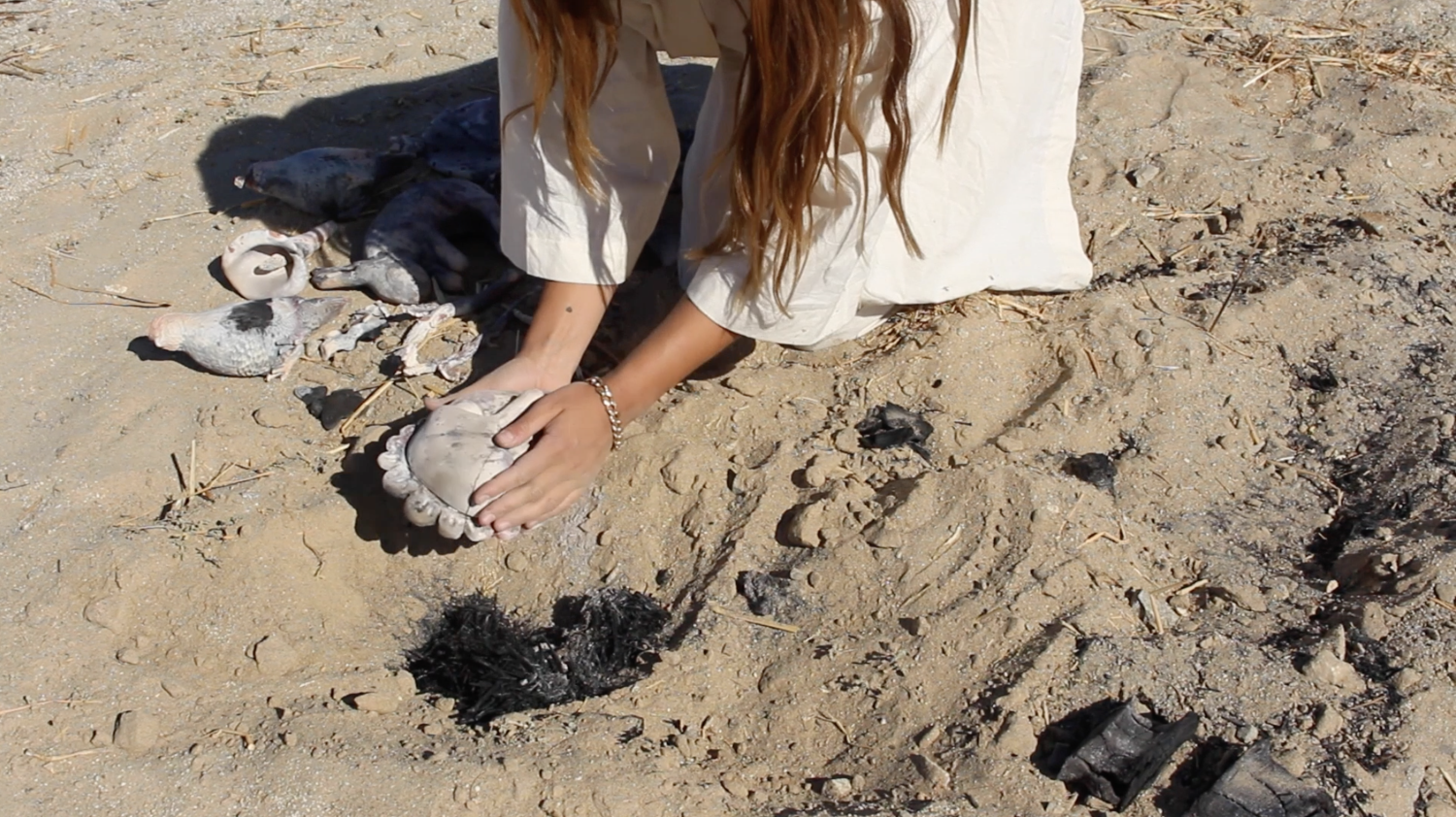
Lately, I’ve been looking at altars. Artists casting bones and collecting candles, lighting little fires. In January of 2026, I developed an exhibition catalogue for two young Southern California curators, Bella Marinos and Henry Littleworth, who mounted a group show in Santa Ana called “there is little left at all”—now an even more fitting description of modern spiritual rituals than it seemed to be did even six months ago. What do we make of what we have left? The work in that show relied on assemblage; in one room there was a pile of ceramic bones—Helena Westra’s Now I lay me down to rest (2022). Looking closer, I saw many of the bones were plant and animal forms, all native to Southern California. The body as such dissolved, or opened. The anxious younger girl in me shivers at this. But this is the defining characteristic of the sorts of bodies I keep seeing, parts accrued and anthropomorphized, their meanings made through the gathering and reconfiguration of material histories: clay from ancestral lands; hair from human scalps; wax and wood from the surrounding environments. Not the stony sort of people I’d grown accustomed to, comfortable with, but exquisite corpses.
***
In an Instagram post back in August, the Los Angeles-based artist iris yirei hu wrote that religion, spirituality, and faith have been “taboo subjects in post-war contemporary art discourse.” Amanda Sroka, Senior Curator at the Institute of Contemporary Art in Los Angeles (ICA LA), echoed this sentiment when we spoke earlier in the summer—she said she was surprised by how much of the response to her recent exhibition, Speaking in Tongues, seemed like a reaction to the very idea of organized religion, whether it was good or bad. A vocal advocate for spirituality as a curatorial lens, Sroka is more interested in exploring the way religiosity and spiritual practices shape-shift than she is in examining any one dogma. Of course, it’s easier to talk about religion as a matter of category than to contemplate spirituality, a slippery idea.
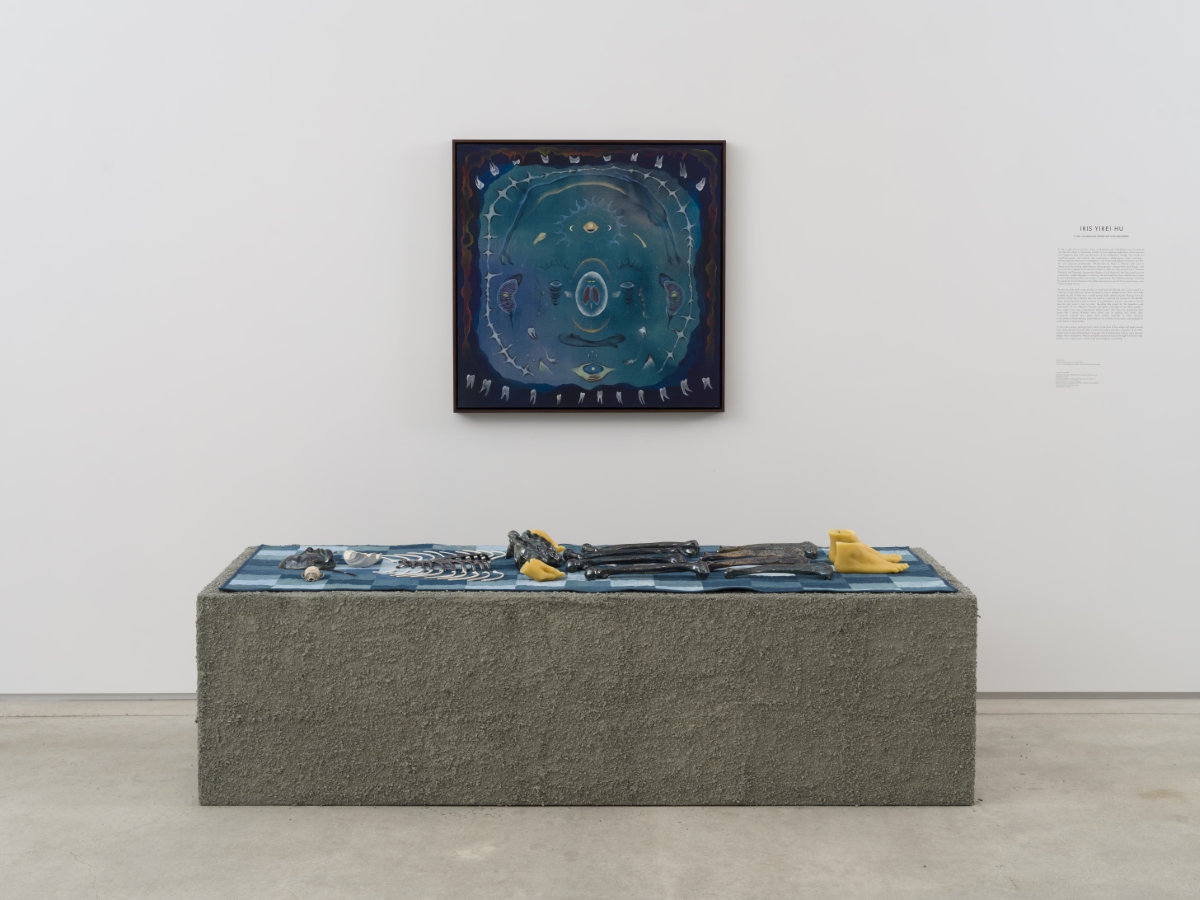
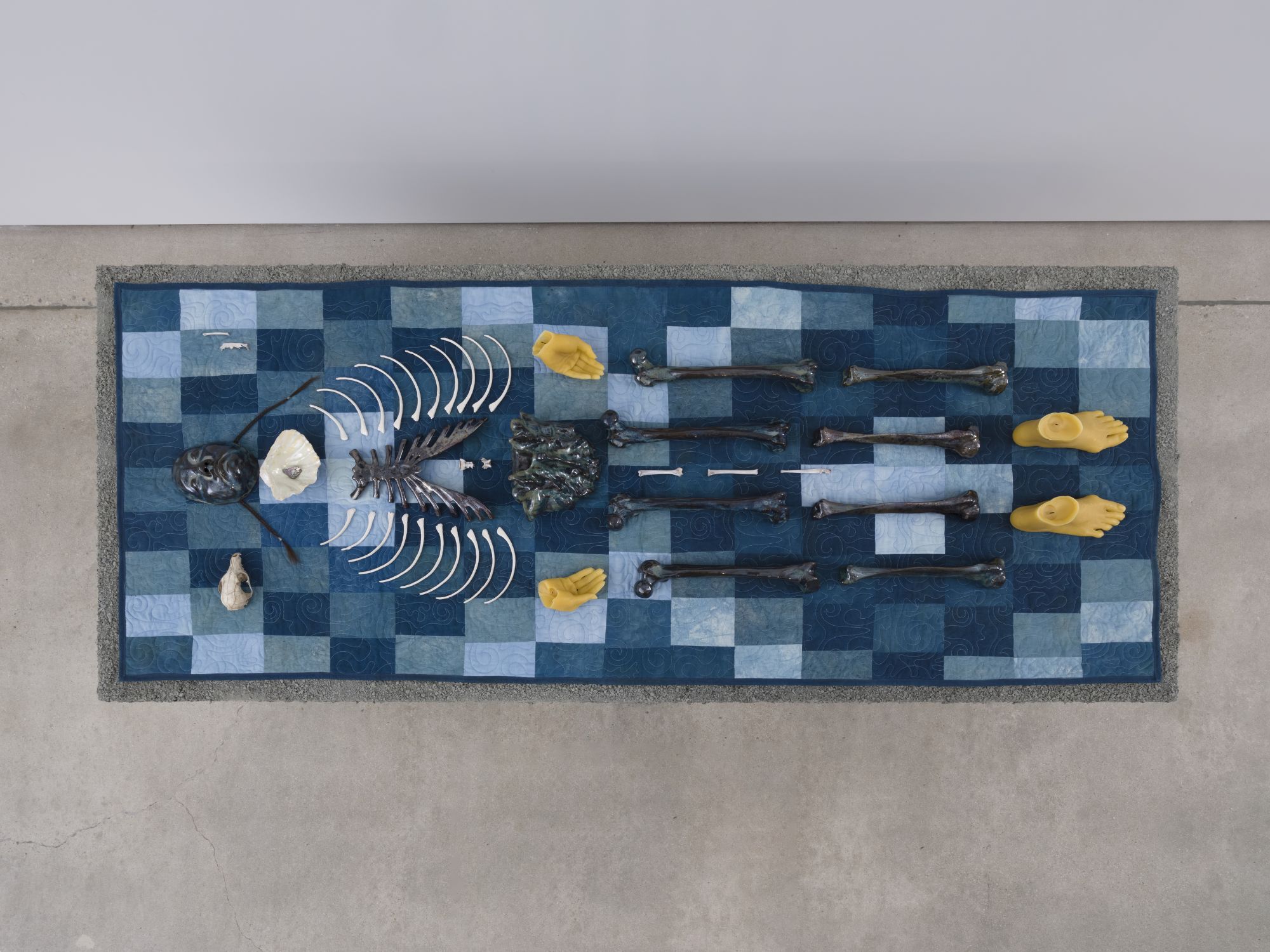
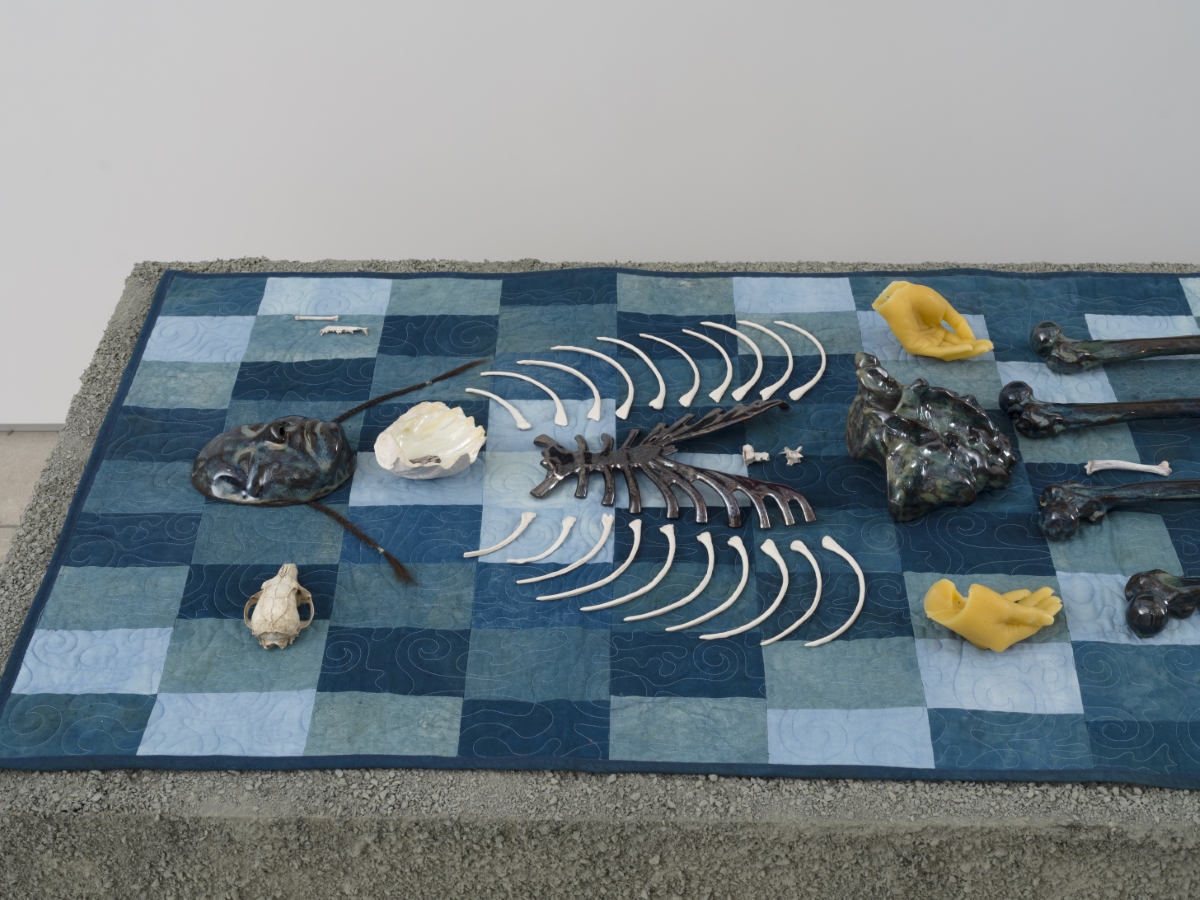
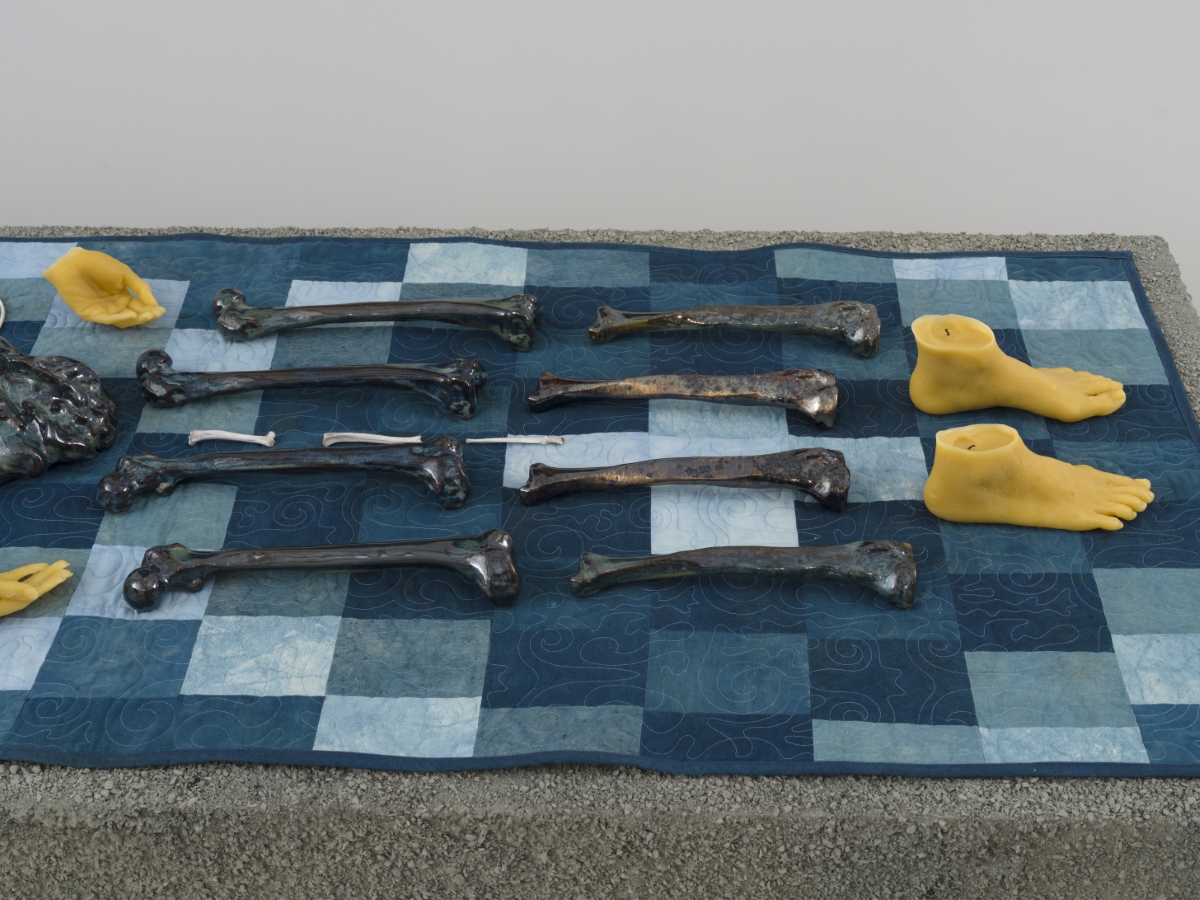
Two of hu’s pieces appeared in Speaking in Tongues, which ran from April to August of this year. “I’m interested in thinking about the afterlife, and death and loss…and of the liminal space between material and spirit, between the earthly and the divine, between the tangible and the sacred,” hu said of her work in an interview with Silverlens Gallery1. One of the pieces in the ICA exhibition was Corpus Mundi (2026), or “body of the earth.” Composed of porcelain-cast bones, beeswax hands and feet, and two delicate braids of the artist’s own hair, this fragmented body appears to be offering or relinquishing itself. The fractured parts and pieces nod to hu’s Indigenous lineage and experiences—the artist “self-identifies as Miao…a Chinese term used to characterize several, often distinct ethnic groups,” according to the wall text at the ICA. The Miao people—forced from Southern China and into Vietnam, Laos, Thailand, and Myanmar—are bound not by country, language, or ethnicity but by cultural ties to a homeland, and a shared sense of spirituality.2 It’s a multiplicitous group, its inclusivity an alternative to the limitations of geographic borders and ethnic categories.
Likewise, hu’s piece is as much about accumulation as disintegration, an effigy that frustrates our usual drive for a whole body, a complete body, a preserved body. This form is not alive in the obvious sense, but the animal skull resting near its head and the quilt under its bones are Miao symbols of nourishment and protection for the afterlife. Corpus Mundi visualizes a single death as just one link in the circle of life. This body becomes one small part of a diasporic universe.
***
The sculptor Adebunmi Gbadebo works in the realm of ghosts, too. In her first solo exhibition—Watch Out for the Ghosts, at Nicola Vassel in New York City in 2025—Gbadebo presented a suite of anthropomorphic ceramic sculptures that embody the artist’s ancestors and visualize alternative histories—themselves characters in a kind of afterlife. It’s worth noting Gbadebo is also a Yoruba priest.
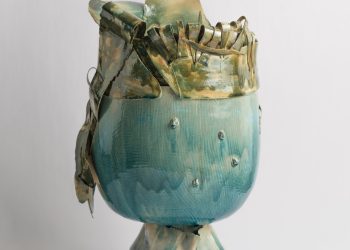
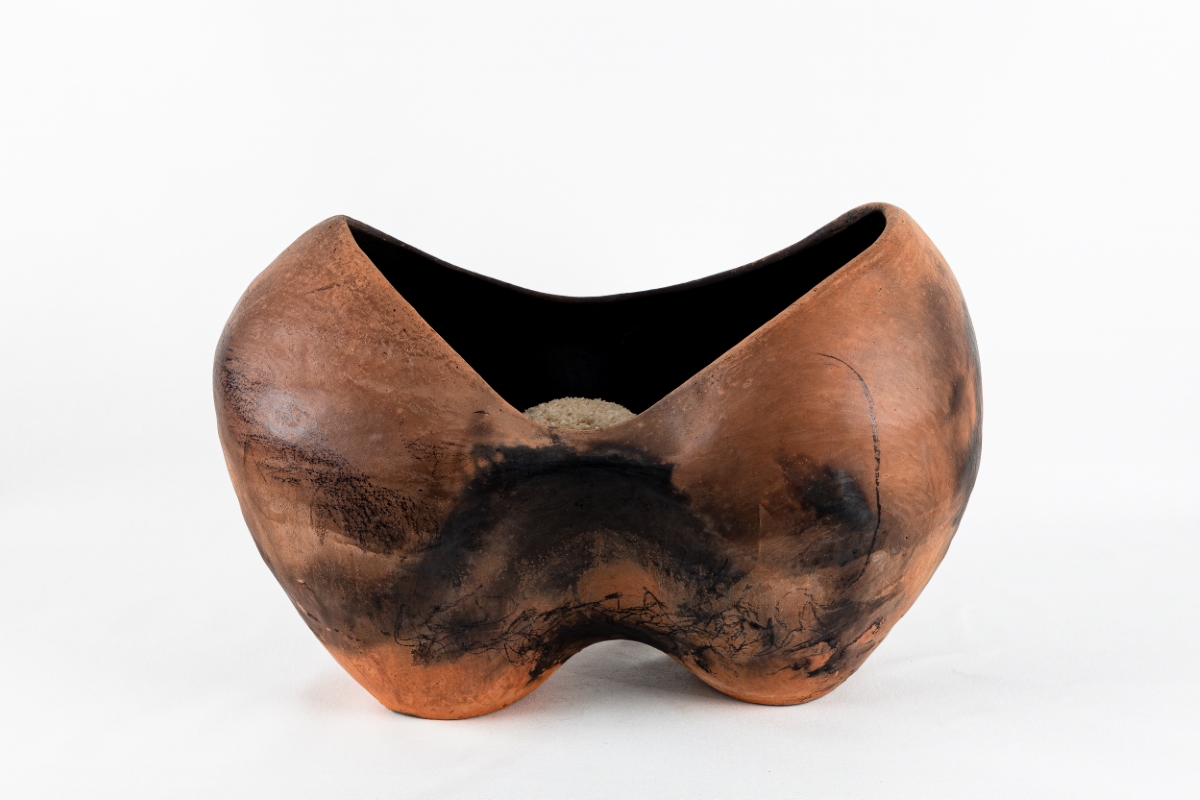
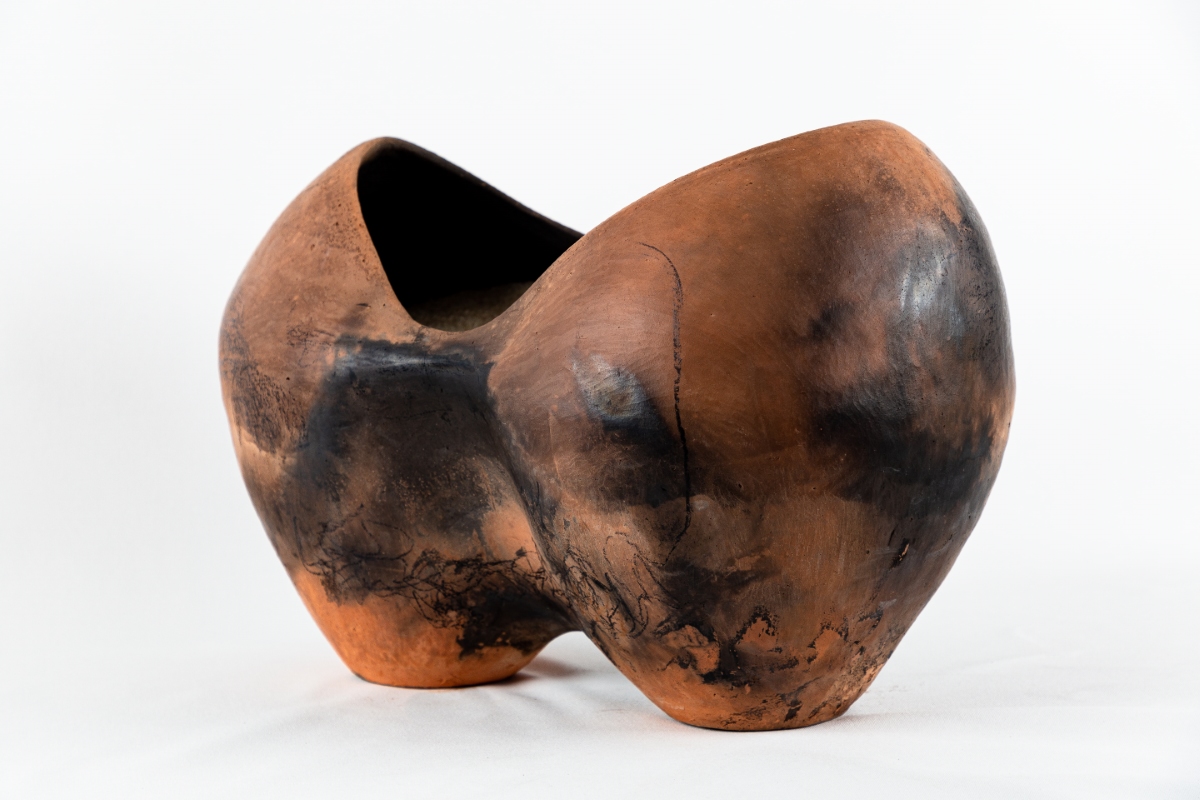
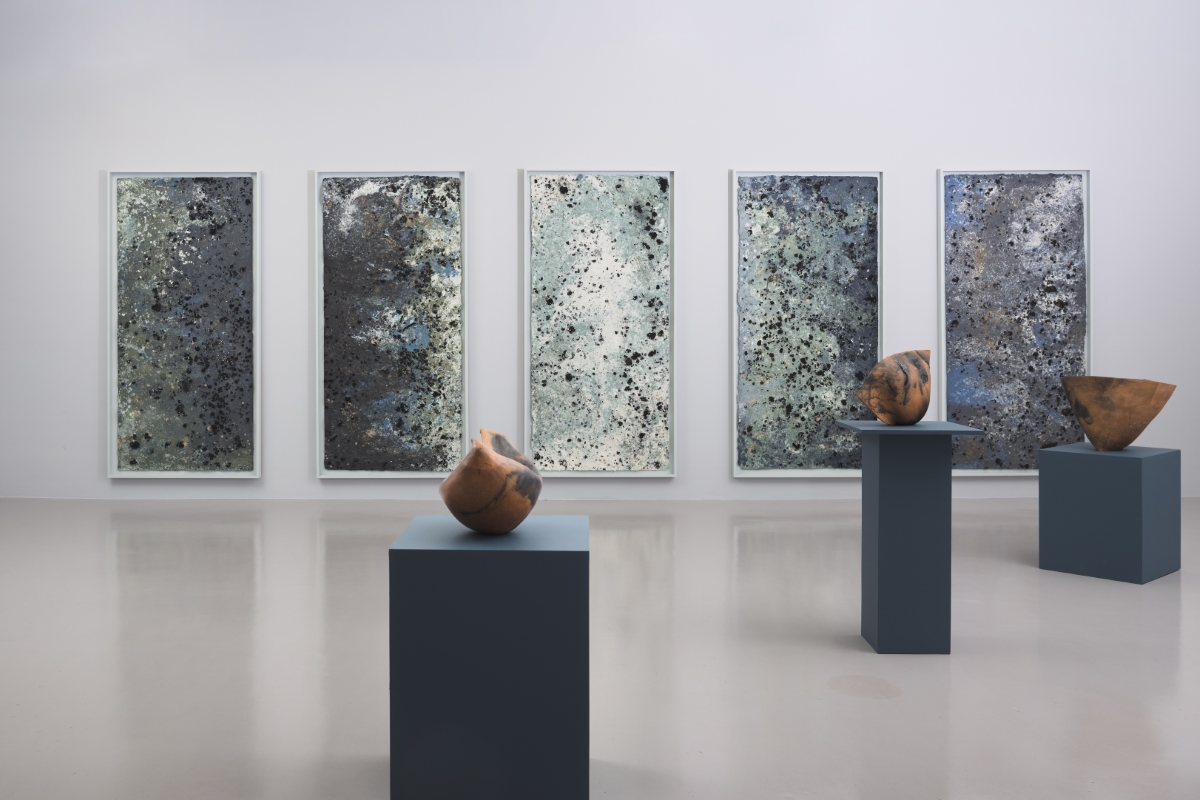
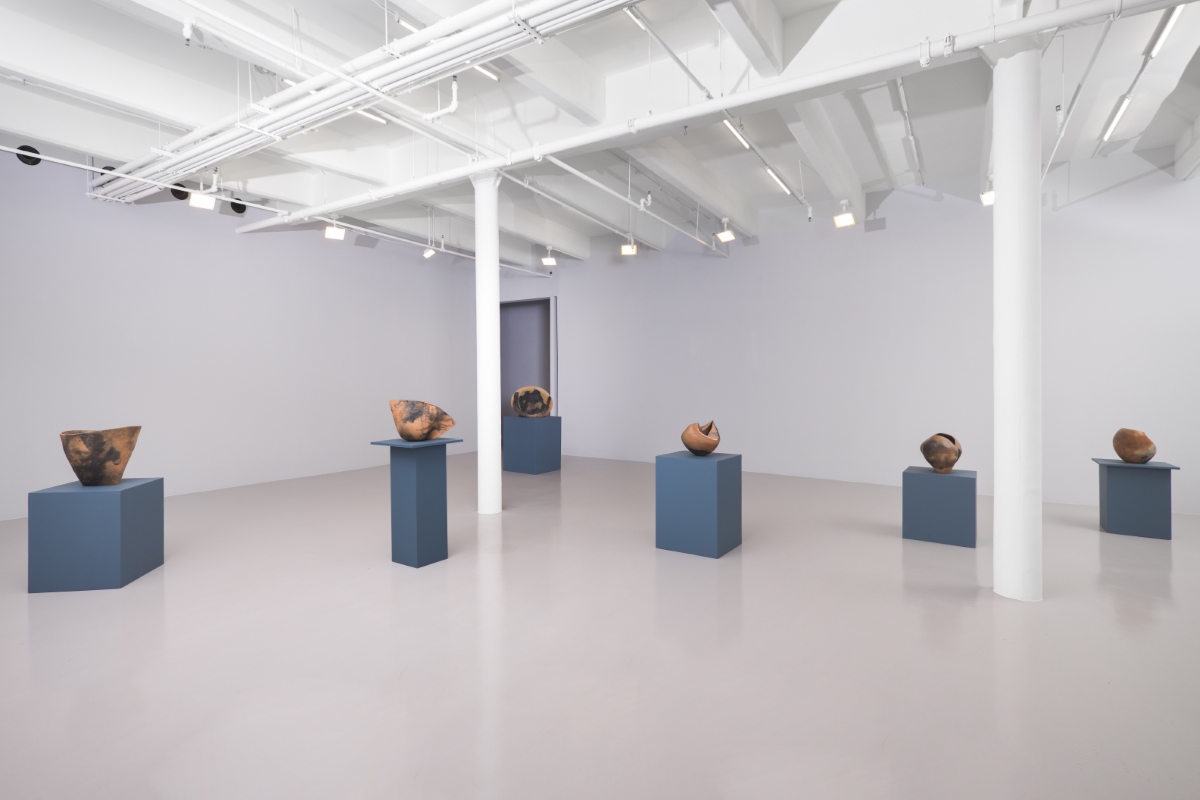
Like hu’s, Gbadebo’s practice is rooted in material memory and ancestral knowledge3, and hers takes us to the American South, Nigeria, and Cameroon. For the past three plus years, Gbadebo has been gathering soil from the cemetery on True Blue plantation in Forte Motte, South Carolina, where her ancestors were enslaved. I watch a few seconds of a short film about the project: “The fields, the woods, God, and the red clay,” a gentle voice intones, as a shot of sprinklers raining water on cotton cuts to a long, dusty path into the trees. The iron-stained soil shown here becomes the base of Gbadebo’s clay body, which she combines with other materials—human hair, horse hair, and sugar, for instance—to add layers of symbolic meaning and invigorate the forms with their histories, their inheritance. She coil-builds in Nigerian and Cameroonian traditions.4
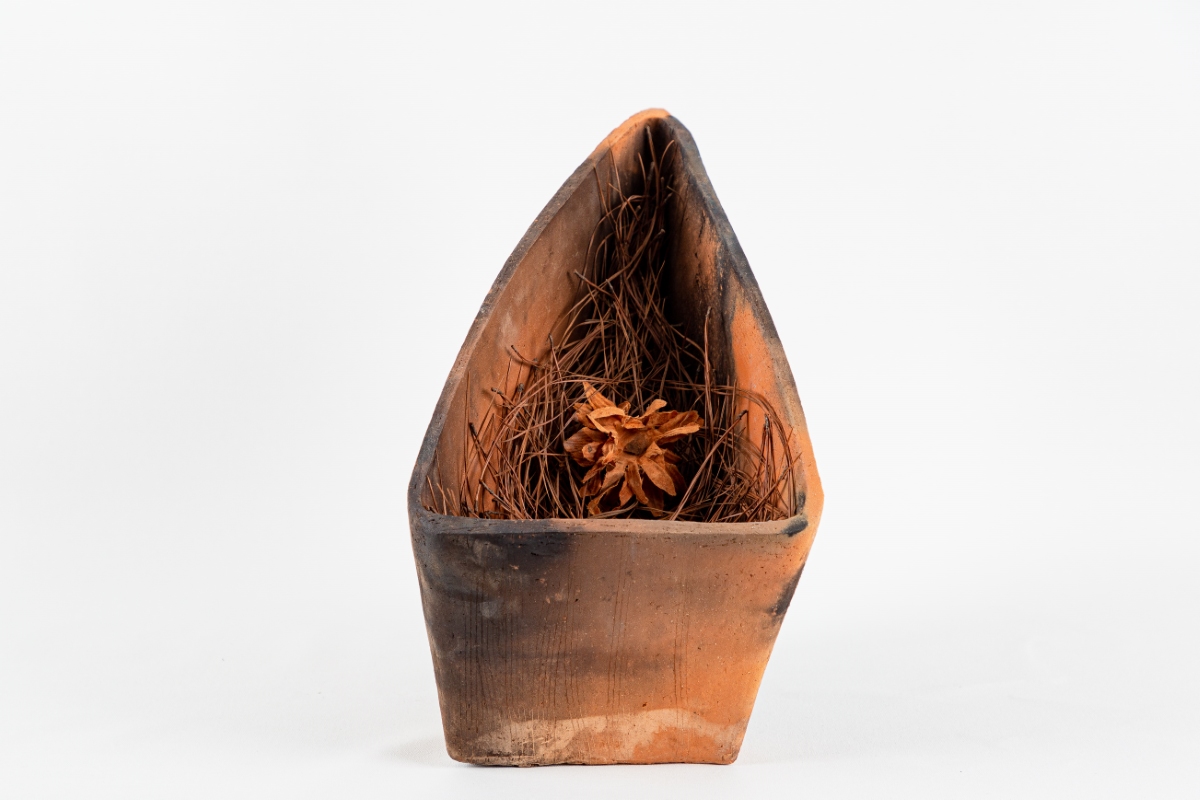
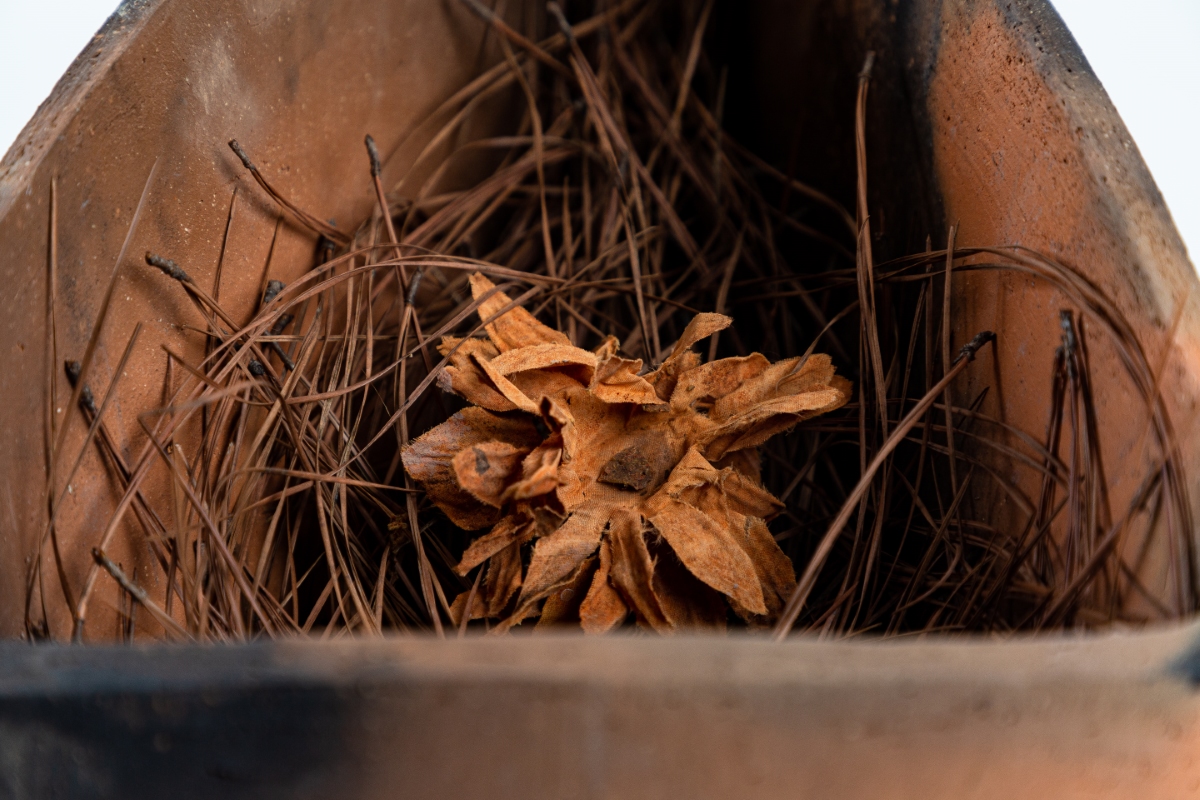
Though her sculptural ceramic vessels are more abstract than hu’s, they still read as essentially human, their soft folds and skins textured from raku firings. They’re named for people buried at the plantation. William Ravenell (2025) reminds me of a pair of hip sockets; Ellie B. Moseley (2025), a shoulder or scapula.5 These forms are landscapes with unique topographies; they are vessels holding other organic materials, like pine needles and grains of rice—one plant native to the area, the other grain grown via slave labor. In Gbadebo’s work, clay becomes a vector for these histories. One body stands for many.
***
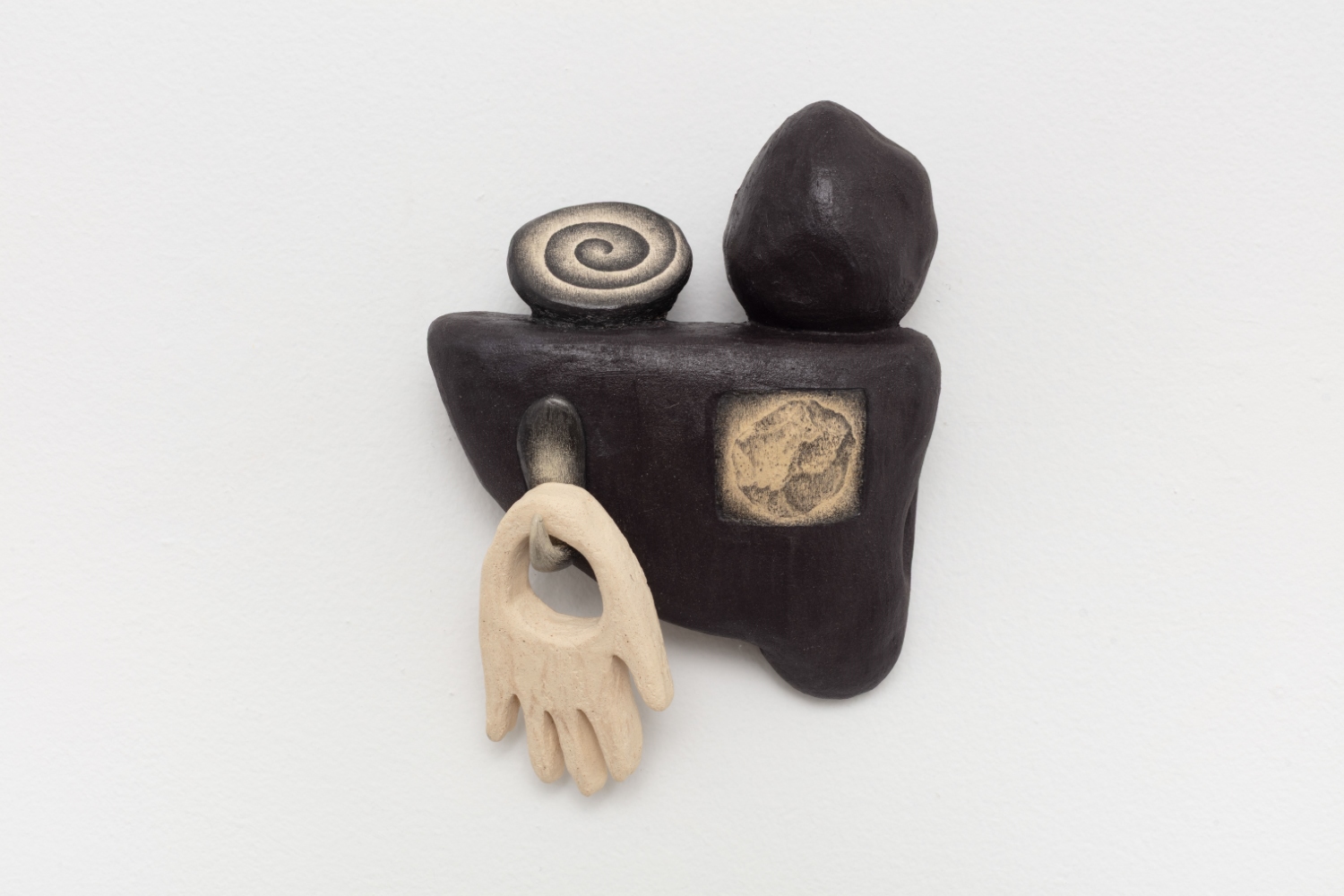
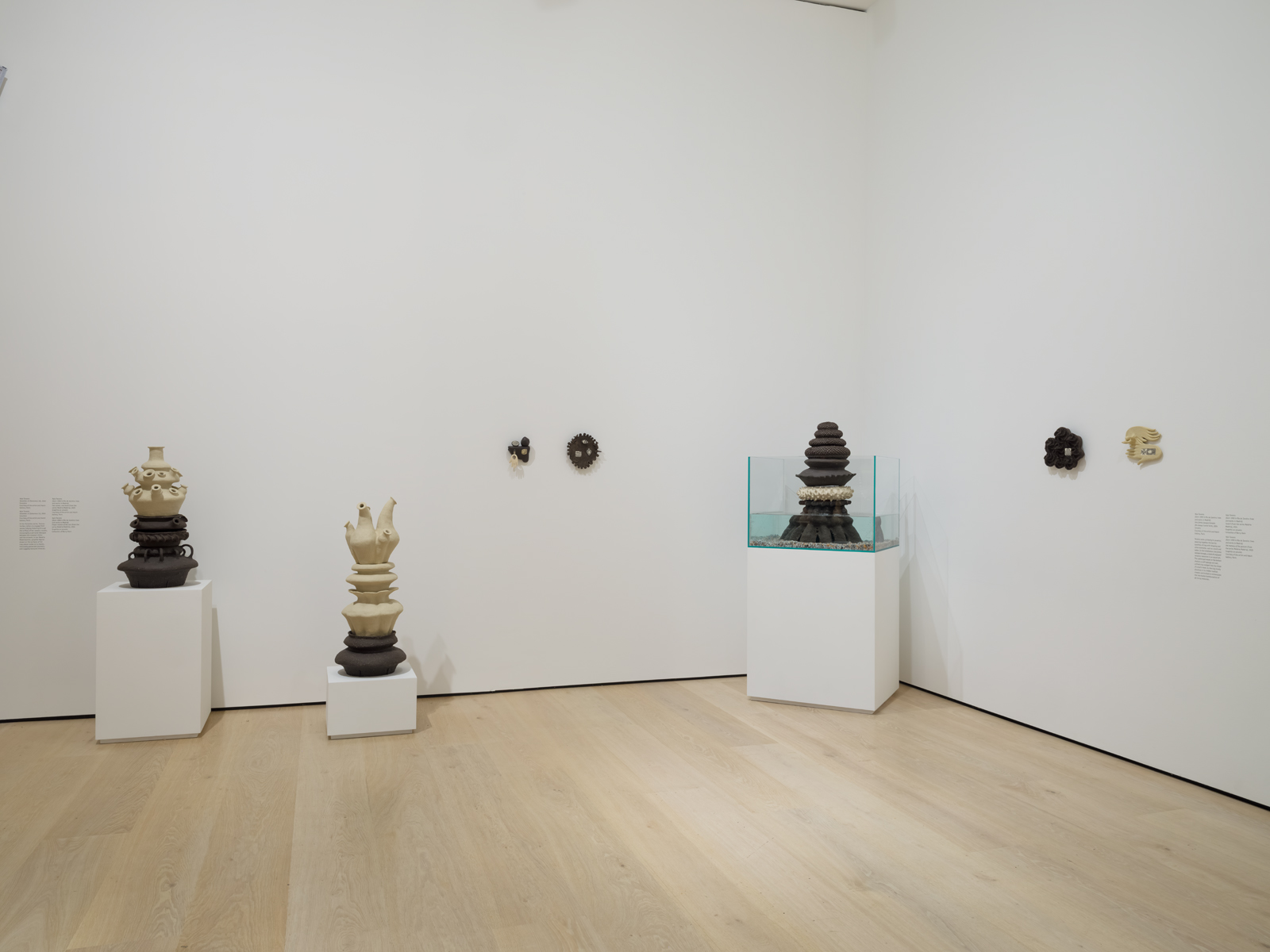
I saw Brazilian artist Ayla Tavares’ work at the Hammer Museum this summer, too—part of Several Eternities in a Day: Form in the Age of Living Materials, a show focused on artists in the Americas working with organic materials like clay, all the histories they carry, the ways they can receive and defy the maker’s hand. Some of Tavares’ ceramic sculptures stood on pedestals; one stacked vessel was partially submerged in a tank of water, squatting like a spiky sea creature. There were small assemblages on the walls—collections of smaller specimens, bodily, but not whole. Two Stones, One Hand (2025) looked like a ledge of rock cum altar. On top sat a spiraling form like an open shell, a black stone. I imagined I might be able to pluck the stone, which looked vaguely volcanic, right off its resting place. On the ledge’s face, there was a little hand hanging from a hook. It looked like it would come off with ease, too.
Lamb Gallery has described Tavares’ sculptural work as “newly reconfigured bodies,” built through association, signaling through synecdoche like Gbadebo’s.6 The artist is from Brazil but lives in Spain; like hu and Gbadebo, she is attentive to the experiences of displacement and dislocation. I realized I consider all these artists’ work alongside the form and functions of Classical and European funerary monuments because like those works, they are catalyzed by loss. Loss of home and history, of self.
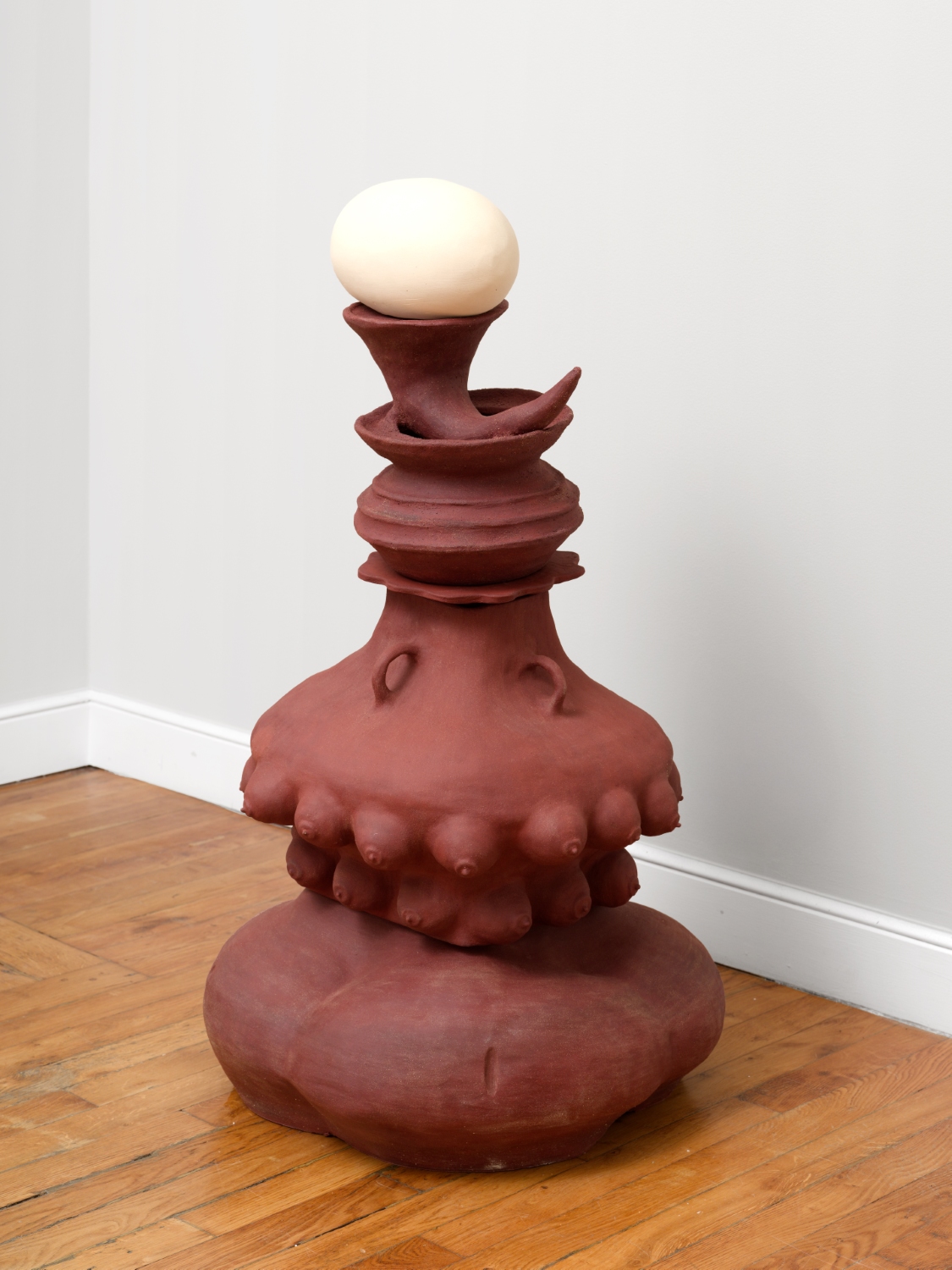
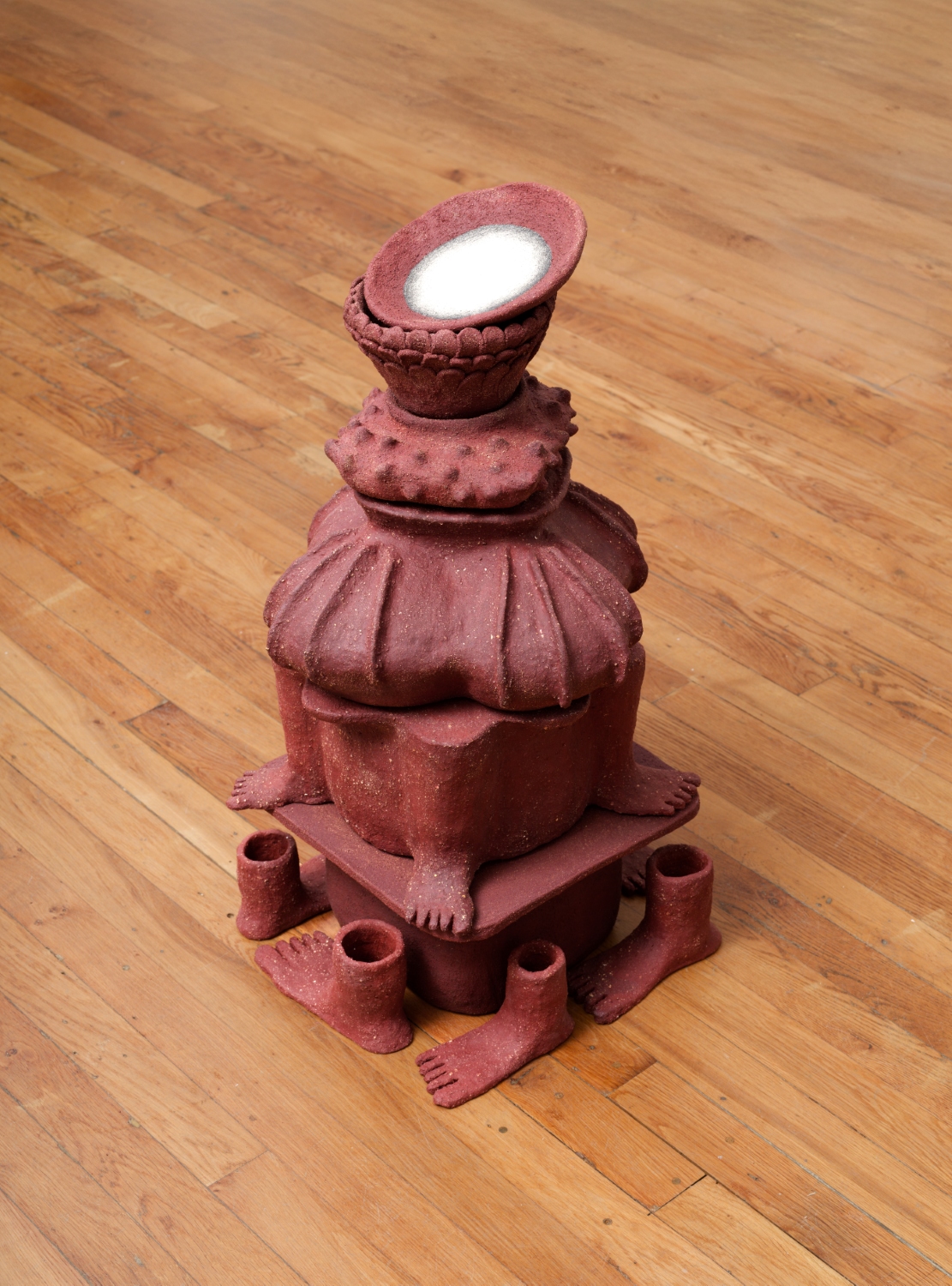
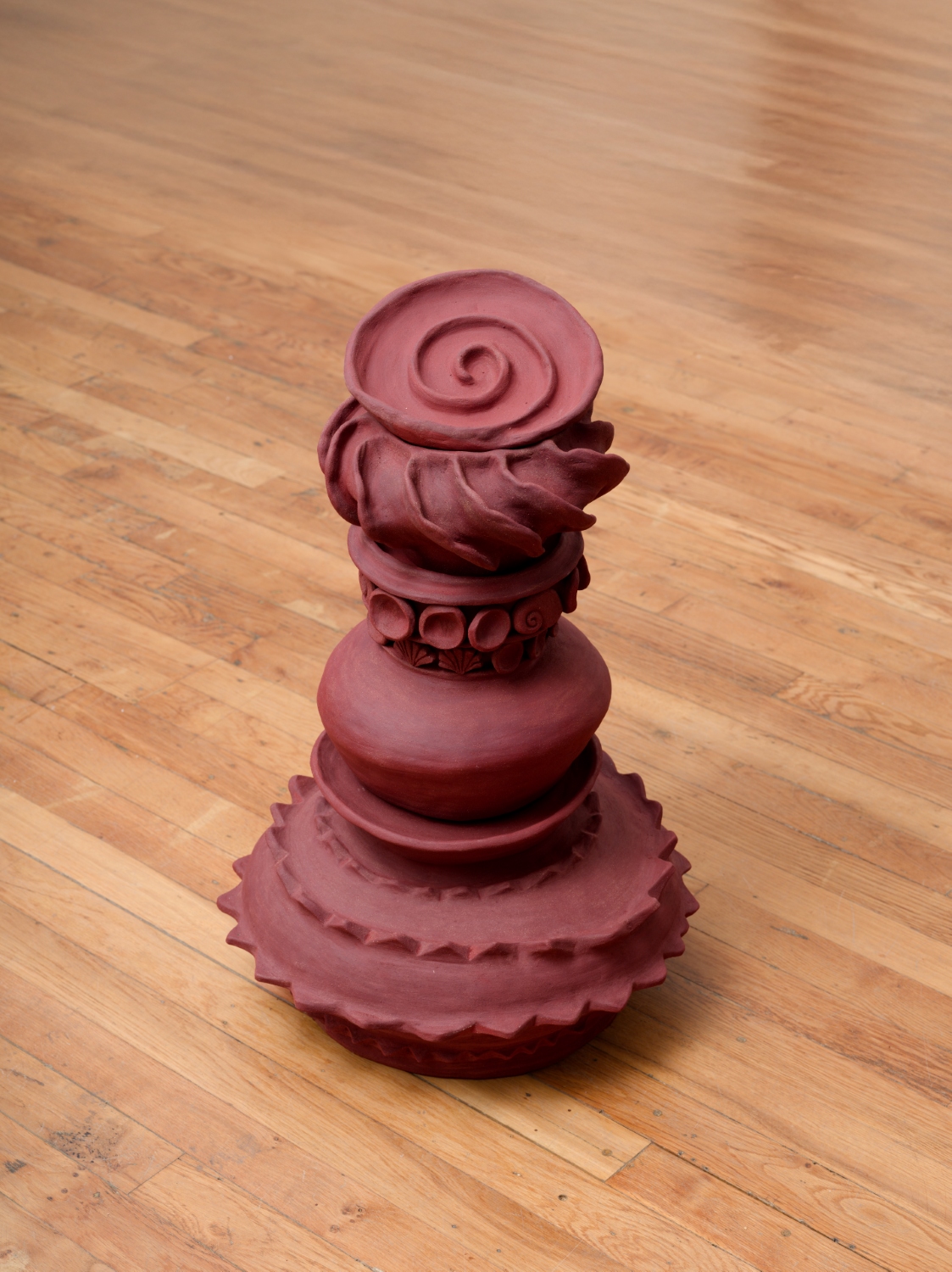
Importantly, none of these artists attempt to reconsolidate a single self. There are more obviously figurative elements in some of Tavares’ pieces: for instance, Assemblages I, II, and III (2025) are made from stacks of body parts, sturdy feet and full breasts and swollen bellies. They are undone—even monstrous—by the traditional standards of European sculptural forms, but they take a more expansive, systemic view of the body, of lifetimes. Even Tavares’ smallest works provide the same perspective you might get standing while at the bottom of a mountain, looking up: you are so small, just one tiny thing in an immense world. You are of this world. With its material connections to the earth and to the hands that shape it, clay is an effective conduit for humanity, even without the clear confines and tidy containment of a single representational form.
This capacity for holding, for carrying it all, is essential to these contemporary altars and effigies—to a modern spirituality. As the writer Ursula Le Guin articulated in The Carrier Bag Theory of Fiction, the container is the first and most essential human tool.7 An altar or an effigy can contain a story—and it can also be a mechanism of passage and exchange. But the stiff, archaic smiles of Etruscan funerary sculptures and the idealized stone corpses laid across Christian tombs were preservation efforts. Now, leveraging the transmutable and multivarious qualities of clay, contemporary artists are creating entropic, evolving effigies that capture evolutions, losses, and additions. They are not just monuments to the past, but totems of new beginnings, alternative histories. In these works, disfigurement, deconstruction, and decomposition may represent death, but they also signal a turn toward all the life yet to come.
Aleina Grace Edwards is a writer and editor focused on preserving and promoting locally rooted arts and culture. She collaborates with artists, nonprofits, publishers, and creative individuals to produce essays, publications, and exhibitions. Her recent arts writing can be found in Carla and Southwest Contemporary, while her personal essays have appeared in Electric Literature, New Letters, and Northwest Review.
Subscribe to Ceramics Now to read similar articles, essays, reviews and critical reflections on contemporary ceramics. Subscriptions help us feature a wider range of voices, perspectives, and expertise in the ceramics community.
Captions
- Helena Westra, Now I lay me down to rest: A Controlled Burn, 2022, pit-fired ceramic, wood, fabric, twine, and desert sand. Exhibited in there is little left at all (2026), curated by Bella Marinos and Henry Littleworth, at the Orange County Center for Contemporary Art. Image credit: Zachary Lucas
- Helena Westra, Now I lay me down to rest: A Controlled Burn, 2022, pit-fired ceramic, wood, fabric, twine, and desert sand. Exhibited in there is little left at all (2026), curated by Bella Marinos and Henry Littleworth, at Hannah Sloan Curatorial & Advisory. Image credit: Zachary Lucas
- Helena Westra, Now I lay me down to rest: A Controlled Burn, 2022, Performance video still. Exhibited in there is little left at all (2026), curated by Bella Marinos and Henry Littleworth, at the Orange County Center for Contemporary Art. Video: Helena Westra
- Installation view of The invocation of the spirit blue child (2026) and Corpus mundi (2026) by iris yirei hu in Speaking in Tongues, organized by ICA LA Senior Curator Amanda Sroka with Curatorial Associate Emilia Shaffer-Del Valle for the Institute of Contemporary Art, Los Angeles, April 4-August 23, 2026. Photo courtesy Jeff McLane/ICA LA.
- Installation view of Corpus mundi (2026) by iris yirei hu in Speaking in Tongues, organized by ICA LA Senior Curator Amanda Sroka with Curatorial Associate Emilia Shaffer-Del Valle for the Institute of Contemporary Art, Los Angeles, April 4-August 23, 2026. Photo courtesy Jeff McLane/ICA LA.
- Adebunmi Gbadebo, Ellen B. Mosely, 2025, Soil from True Blue Plantation (Fort Motte, South Carolina), Loblolly pine needles, artificial flower, pit-fired, 9 x 17 x 14 in. Courtesy of Adebunmi Gbadebo & Nicola Vassell. Photo by Aaron Wilson Watson
- Adebunmi Gbadebo, William Ravenell, 2025, Soil from True Blue Plantation (Fort Motte, South Carolina), shoe polish, Carolina Gold rice, pit-fired, 15 x 20 x 14 in. Courtesy of Adebunmi Gbadebo & Nicola Vassell. Photo by Aaron Wilson
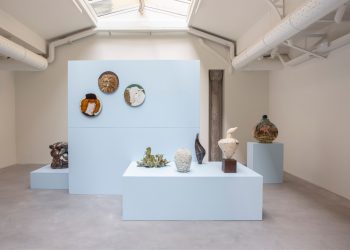
Watson - Installation views, Adebunmi Gbadebo: Watch Out for the Ghosts, Nicola Vassell, New York (2025). © Adebunmi Gbadebo. Courtesy of the artist and Nicola Vassell Gallery. Photo Credit: Luis Corzo
- Ayla Tavares, Assemblage 1, From the series ‘Anthologies of a Receptacle’, 2025, Ceramic, 100 x 54 cm. © Aurélien Mole. Courtesy of the artist and Hatch Gallery.
- Ayla Tavares, Assemblage 2, From the series ‘Anthologies of a Receptacle’, 2025, Ceramic, 100 x 54 cm. © Aurélien Mole. Courtesy of the artist and Hatch Gallery.
- Ayla Tavares, Assemblage 3, From the series ‘Anthologies of a Receptacle’, 2025, Ceramic, 100 x 54 cm. © Aurélien Mole. Courtesy of the artist and Hatch Gallery.
- Ayla Tavares, Two Stones, One Hand, 2025, from the series ‘Matéria Matéria’, Graphite on ceramic, 23 x 15 x 5 cm. © Josh Schaedel. Courtesy of the artist and Hatch Gallery.
- Installation view, Several Eternities in a Day: Form in the Age of Living Materials. Hammer Museum, Los Angeles, Apr 5 – Aug 23, 2026. Photo: Jeff McLane.