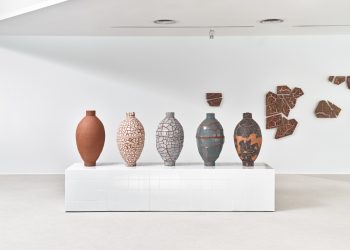
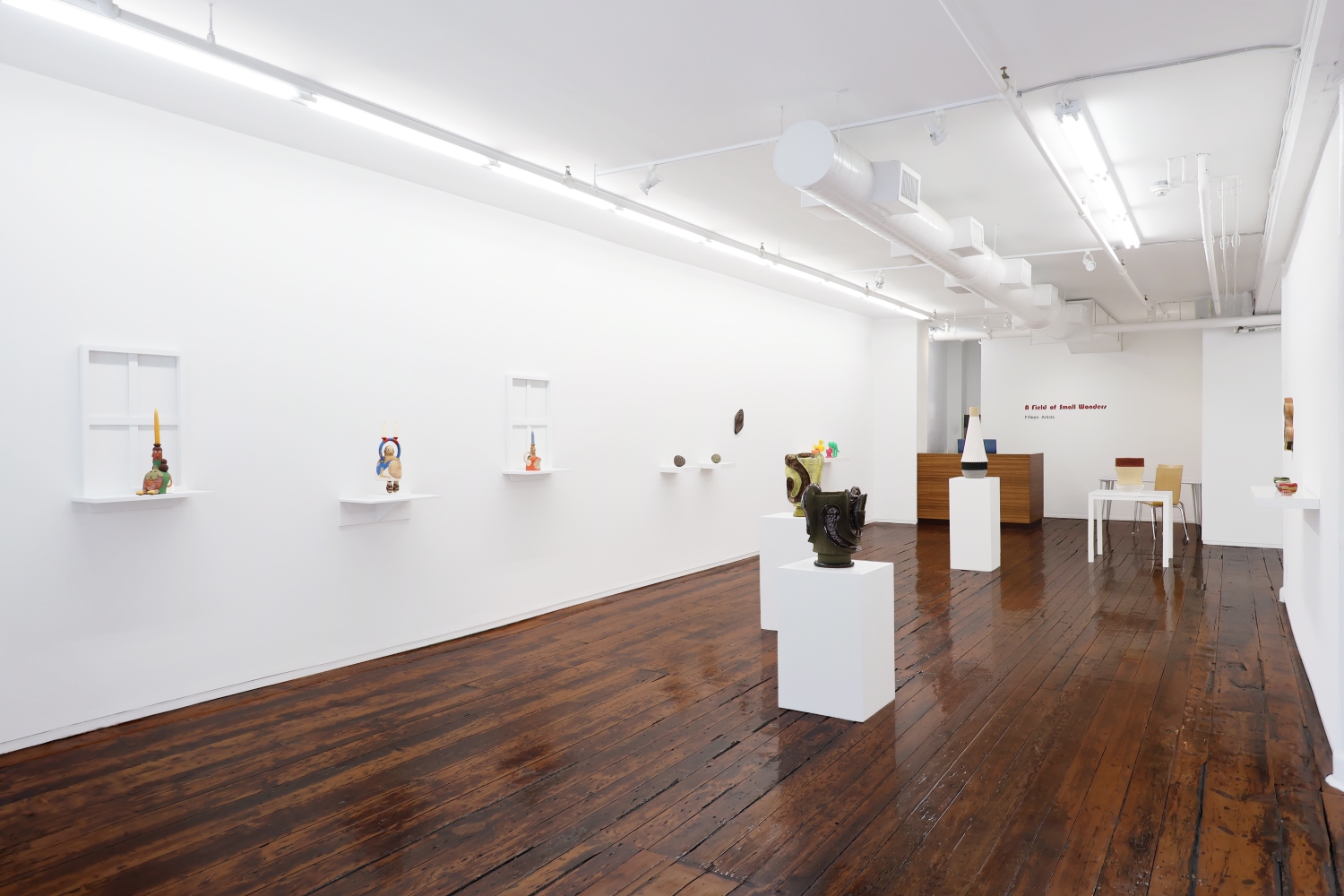
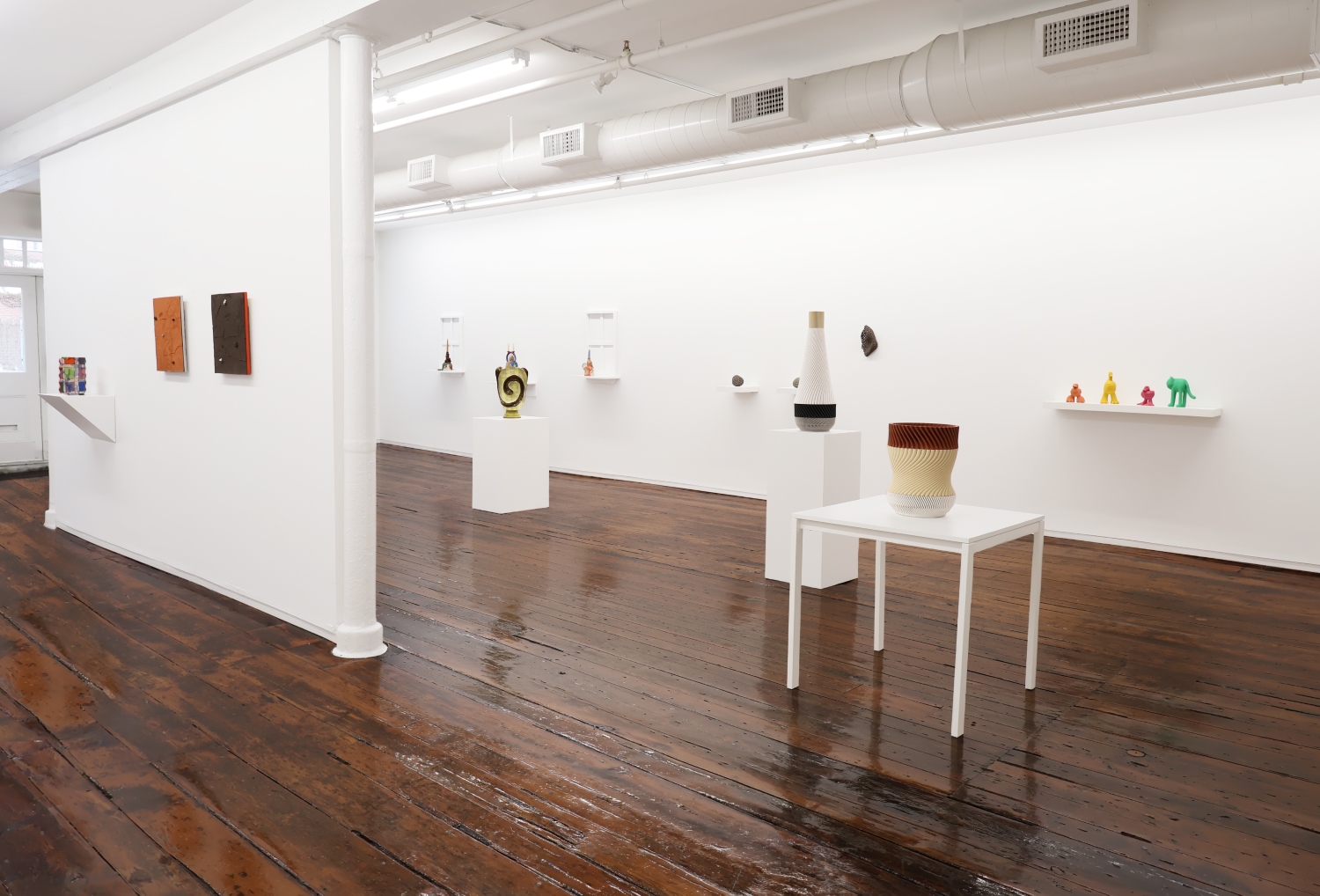
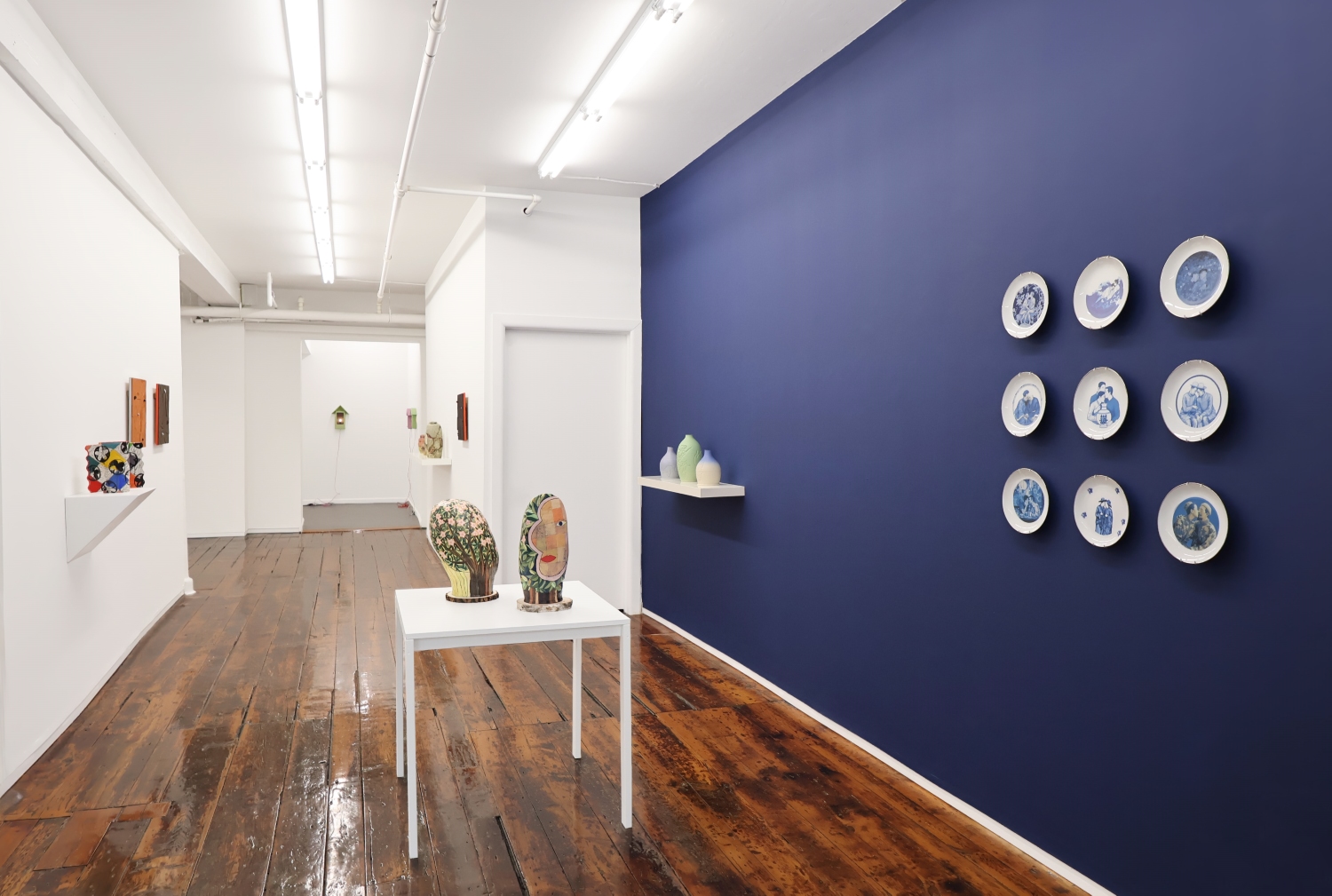
A Field of Small Wonders is on view at PENTIMENTI, Philadelphia
November 7, 2026 – January 9, 2027
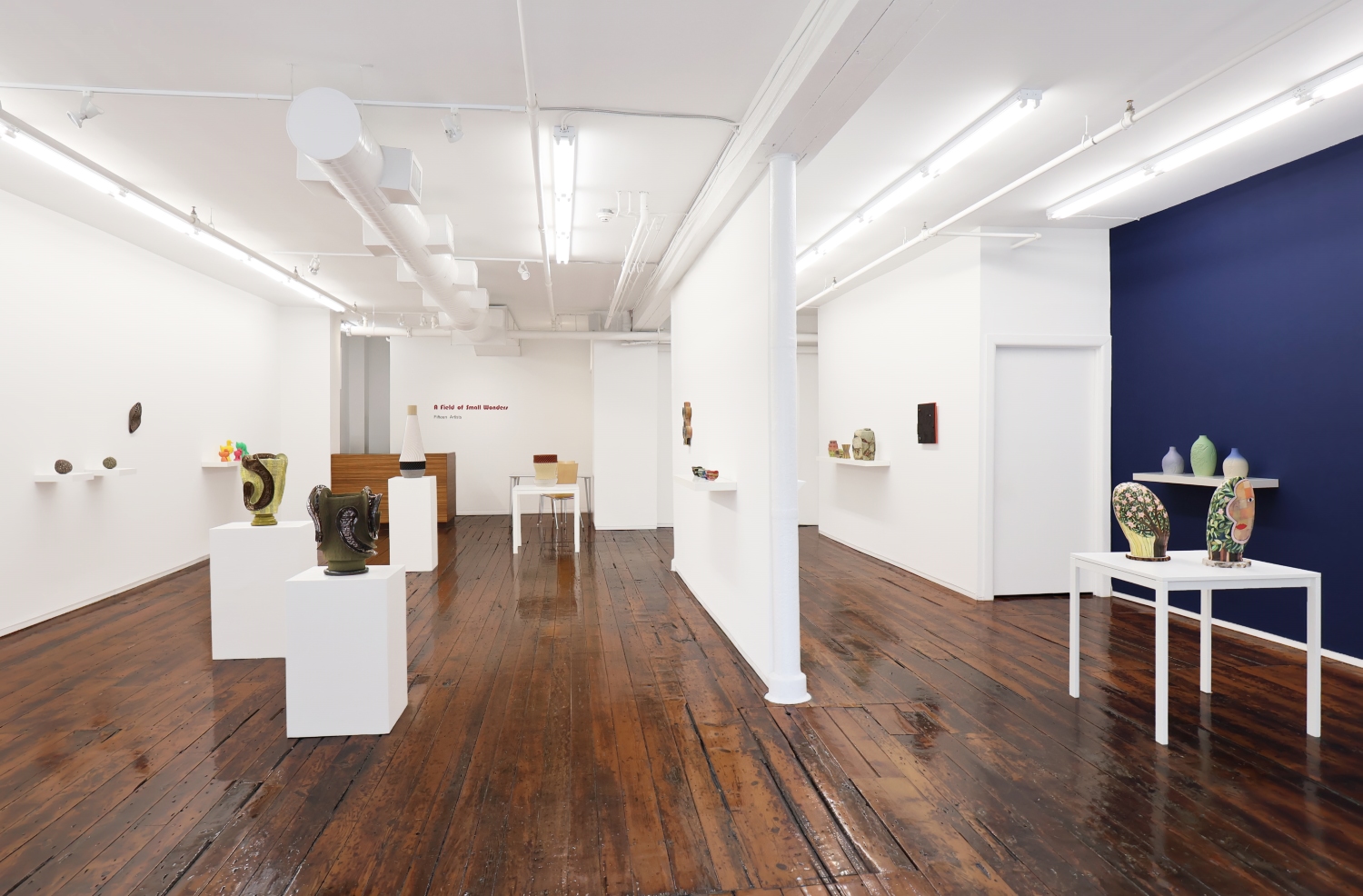
PENTIMENTI is thrilled to present A Field of Small Wonders, a group exhibition featuring the work of 15 artists whose practices span generations, perspectives, and approaches to ceramics, from established voices to emerging artists at the beginning of their careers.
A Field of Small Wonders brings together works created on an intimate scale. For some artists, these works extend naturally from their established studio practices; for others, the smaller format opens a space for experimentation, risk-taking, and exploration beyond the boundaries of their customary work.
Drawing on global cultures, traditional craft, contemporary technologies, history, and humor, the artists share a commitment to experimentation and a desire to expand the possibilities of the medium.
Featured artists: Clare Burson, Jeremy R. Brooks, Adam Chau, Corinna Cowles, Kai Fukunaga, Sean Gerstley, Frankie Iadarola, Yoonsun Lim, Joan Lurie, Thomas McIntyre, Chiara No, Thomas Schmidt, Sergio Suárez, Austyn Taylor, Cooper Miller Wright
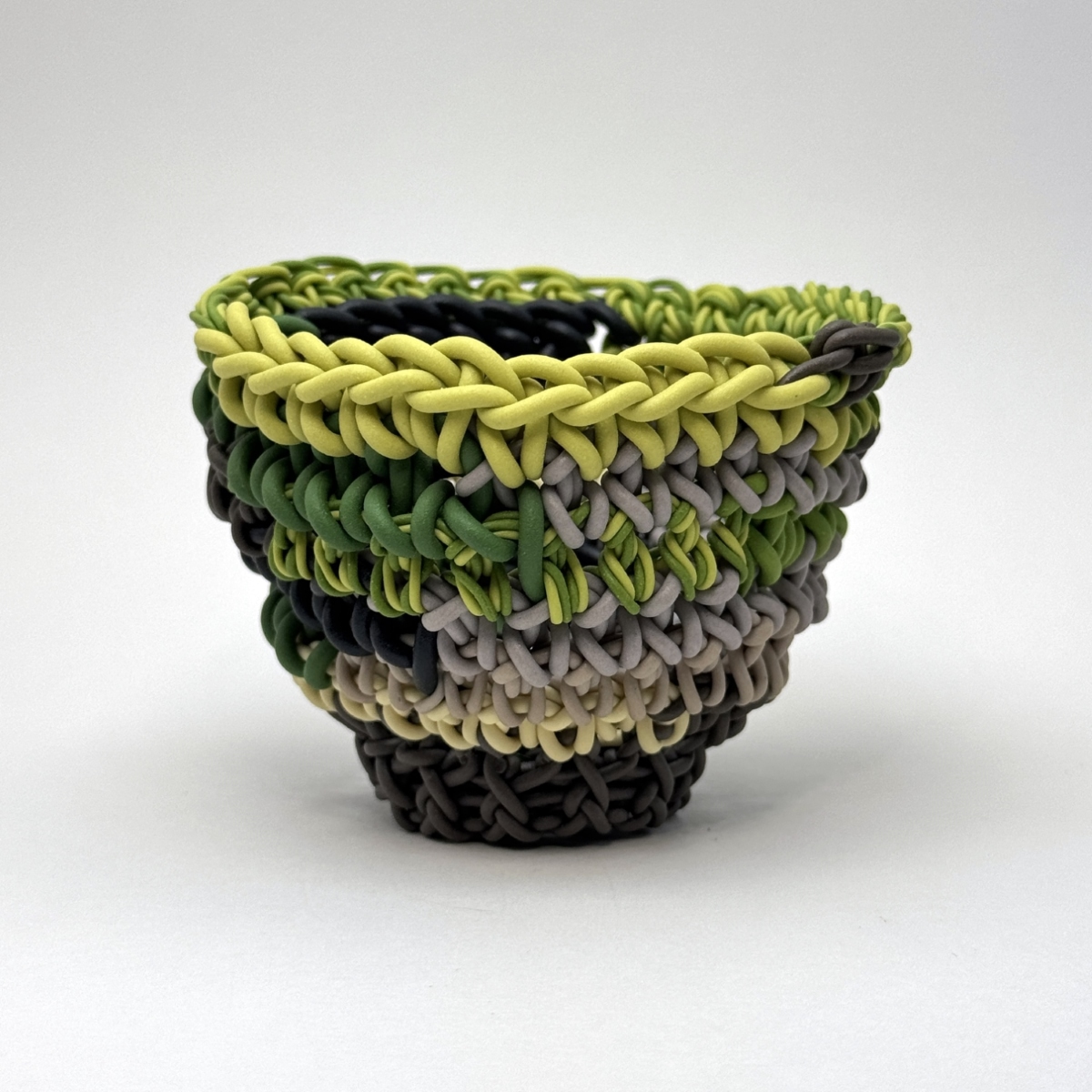
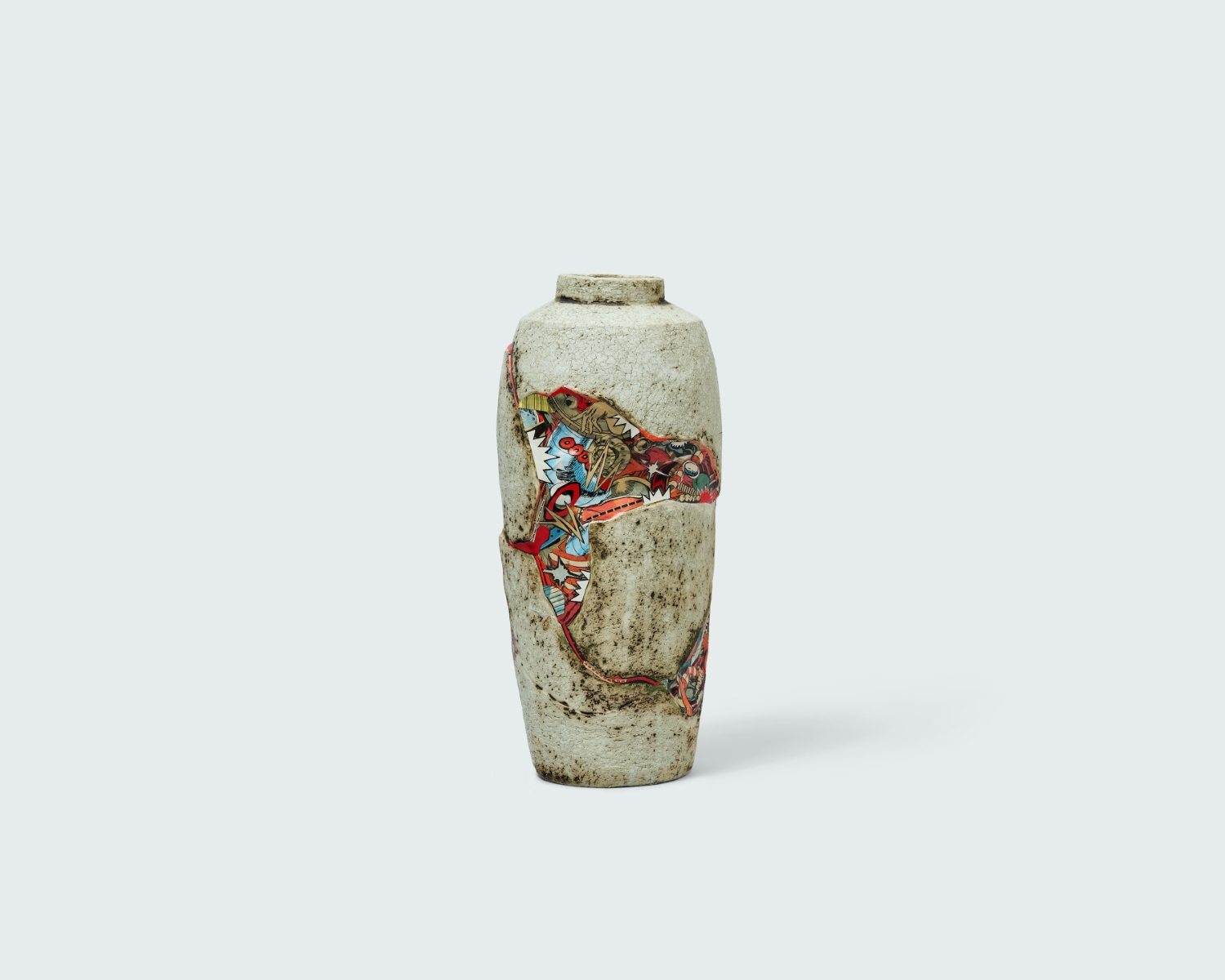

Clare Burson: “In creating the Ka-Boom series, I was inspired by an archaeological landscape in Laos known as The Plain of Jars. I built, destroyed, and then reconstructed my ceramic forms, reflecting on the rise and fall of civilizations and the role of archaeologists in piecing together lost worlds. Creating collages from colorful secondhand comic books to fill the gaps between fragments, I consider the ways in which contemporary vantage points quite literally shape our understanding of the past.”
Jeremy R. Brooks: “I see these Knot Pots as scaffolding supporting a critical collapse of the medium itself. Their architecture pushes clay to its physical breaking point. By forcing the material to adopt the structural systems of fiber craft, I embrace the resulting deformation and distortion as a mark of deliberate folly. Within this fractured framework, physical craft and experimental inquiry become permanently intertwined.”
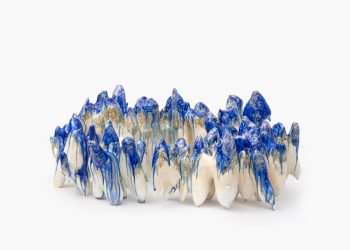
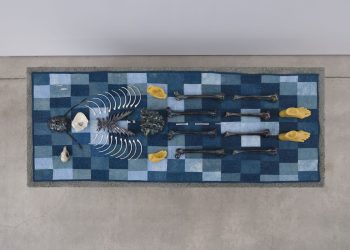
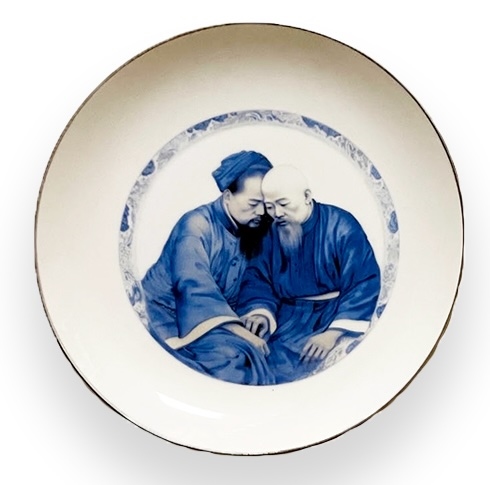
Adam Chau: “With a background in both craft and design, I mix analog craft techniques with digital technology, including Artificial Intelligence. As an Asian American artist, my concepts revolve around the rich history of blue-and-white porcelain aesthetics. A career highlight for me was a two-month residency in Jingdezhen, China in 2019 to study porcelain manufacturing. Fueled by a desire to bridge the past with the future, I try to continue the conversation into new territory for the medium.”
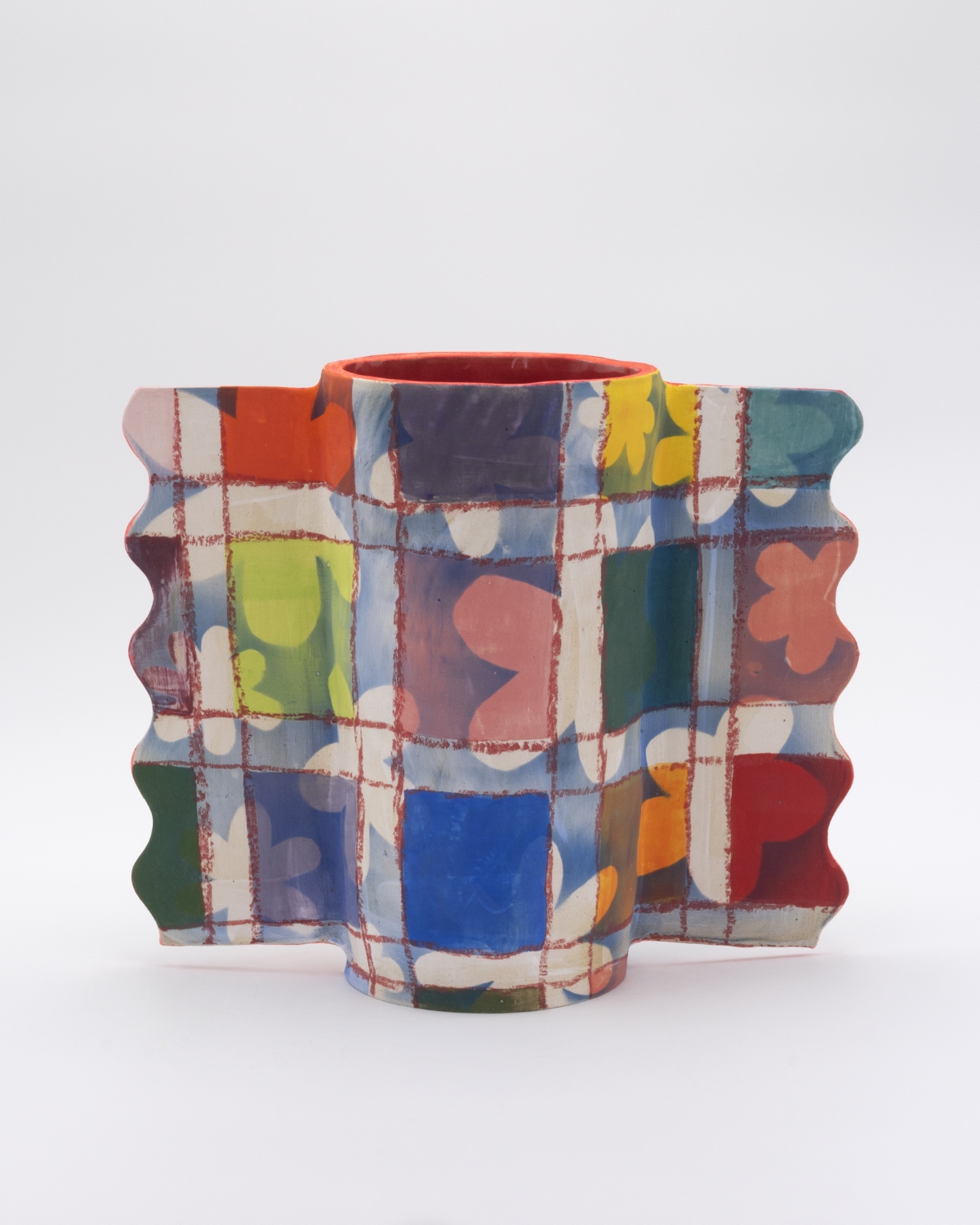
Corinna Cowles: “Lately, I’ve been using my favorite shape cutouts to explore the rhythmic point-counterpoint between 2D-3D, positive-negative space, and upscale-downscale shifts developing into its own active visual language. Slicing and reworking ceramics; building remnants, clay scraps, and found materials into paintings: the combined processes actuate a single complex wave that bulges, spikes, sings, and dances my pieces in their own directions.”
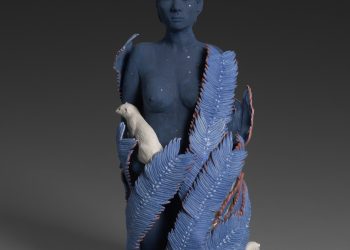
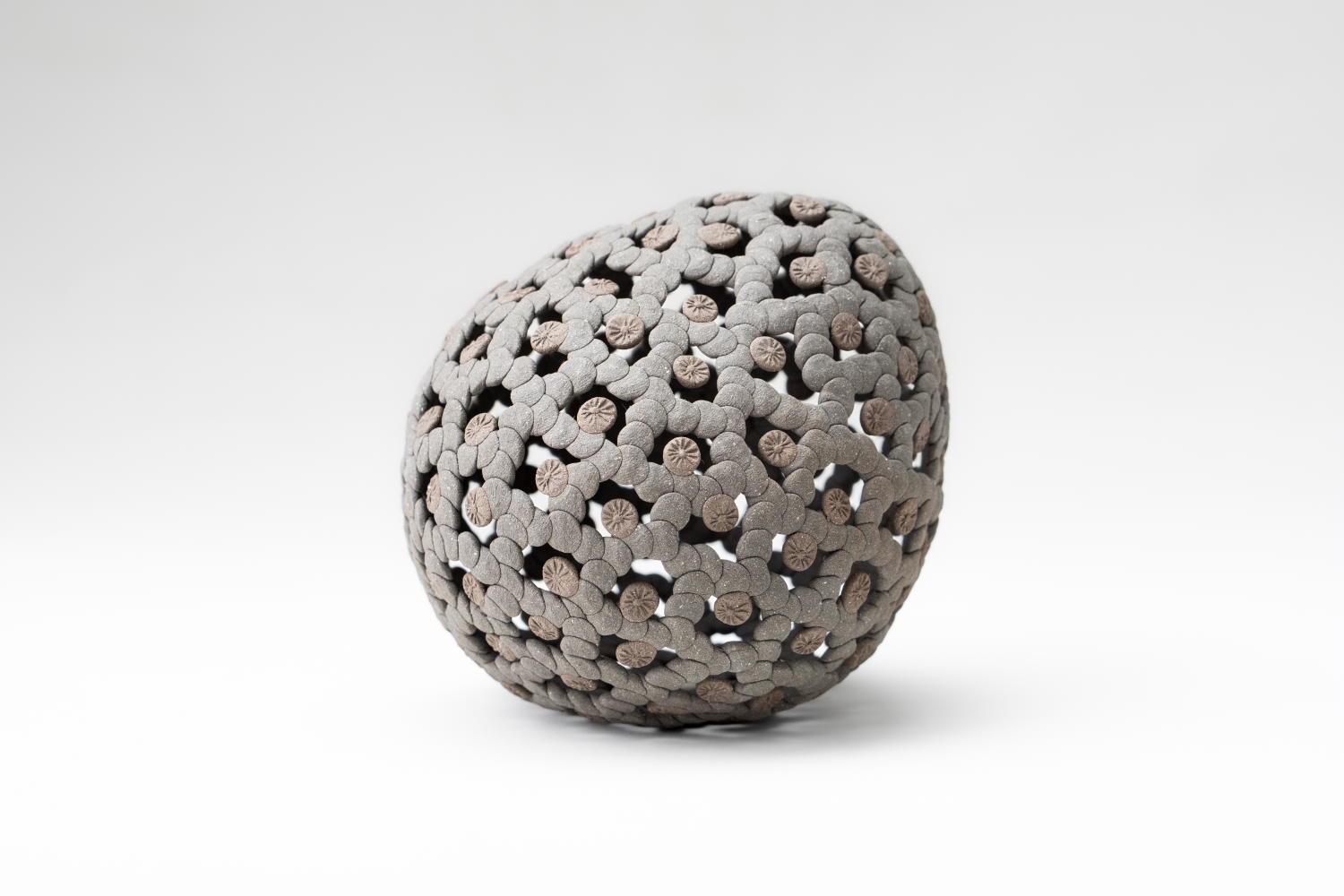
Kai Fukunaga: “This series honors nature’s rhythms and the quiet persistence of growth that seems both fragile and enduring. My sculptures emerge intuitively, built from individual dots of clay pressed together. Through this gradual accumulation, I explore how small, singular gestures weave into patterns of complexity. This meditative process invites us to slow down and reflect on how our lives are interconnected with the world, shaped by a lasting accumulation of seemingly insignificant moments unfolding one leaf at a time.”
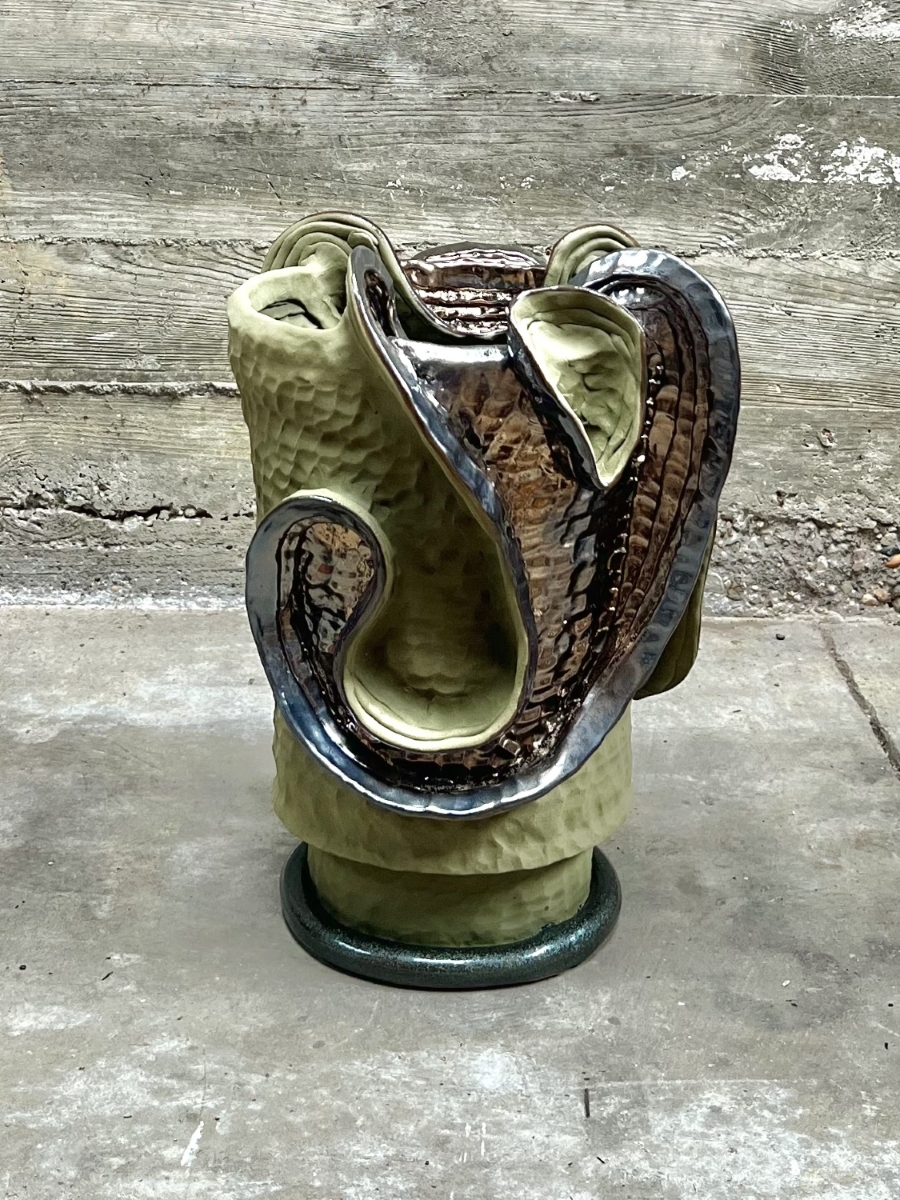
Sean Gerstley: “Swirly Queen series were made in a moment of free play, with my hands thinking alongside the mind and allowing the clay to participate in its own becoming. I shaped swirling forms upon the vessels and got excited about the way a spiral can appear to be moving inward and outward simultaneously. One vessel is glazed in dry matte olive green with tarnished gold linework; the other in a quilt-like patchwork of surfaces.”
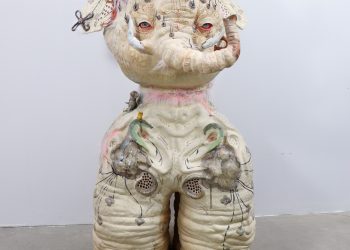
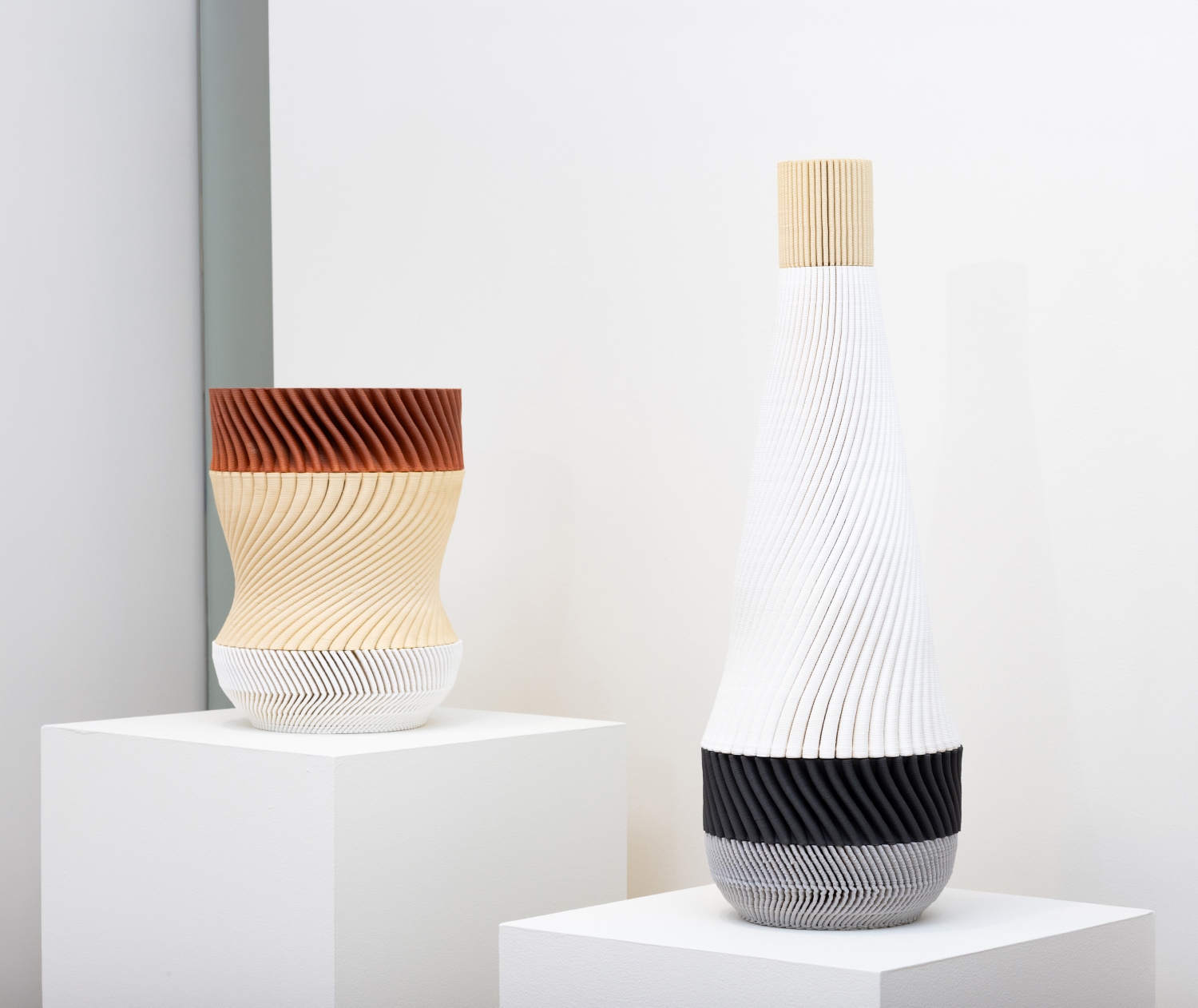
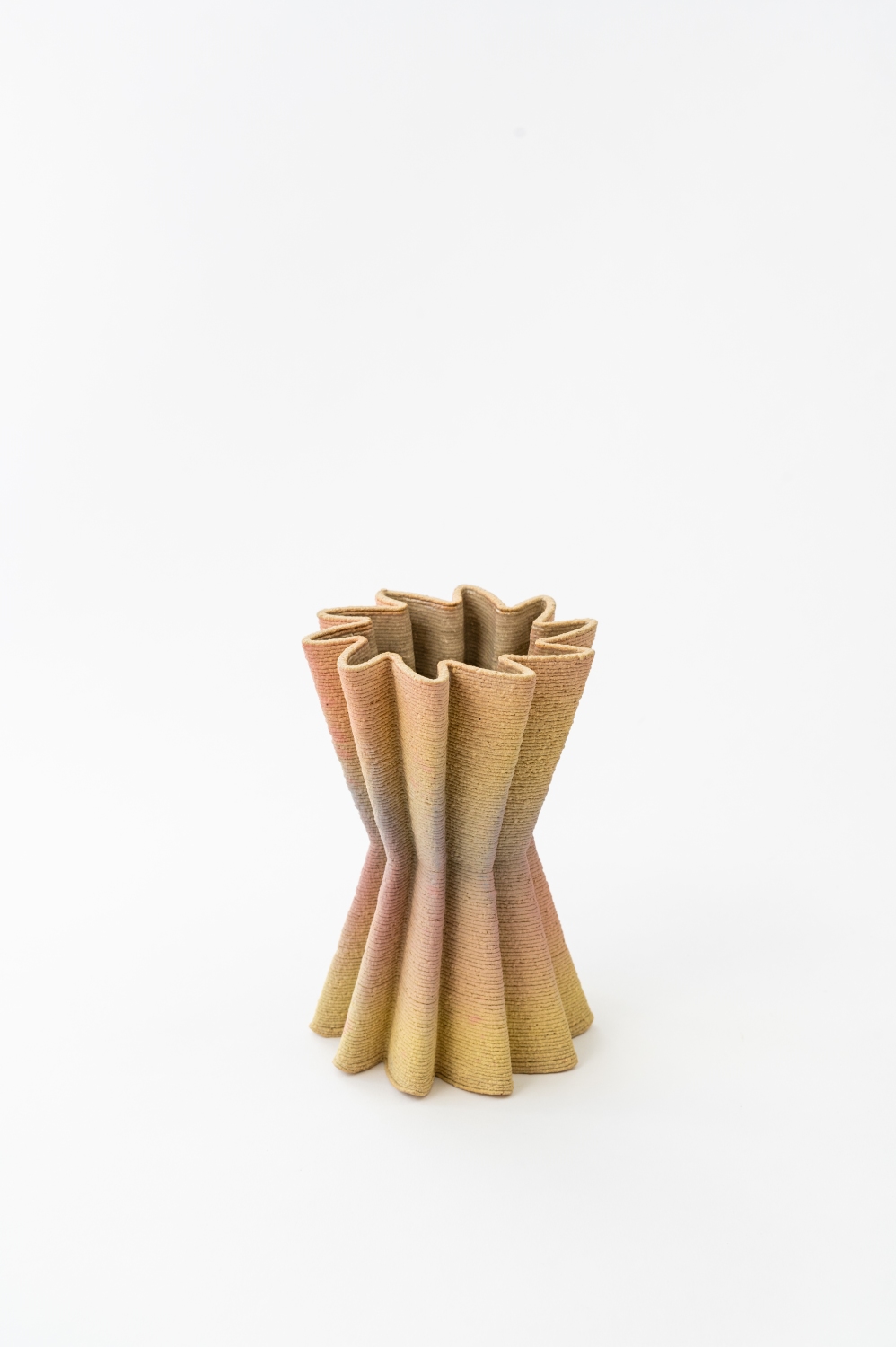
Frankie Iadarola: “These works explore the space between digital precision and the unpredictability of clay. I use 3D printing as a tool for building form through repetition and accumulation, while allowing the process of printing, firing, and glazing to disrupt that precision. I’m interested in this translation from digital to physical—how a form designed to be exact becomes imperfect and tactile.”
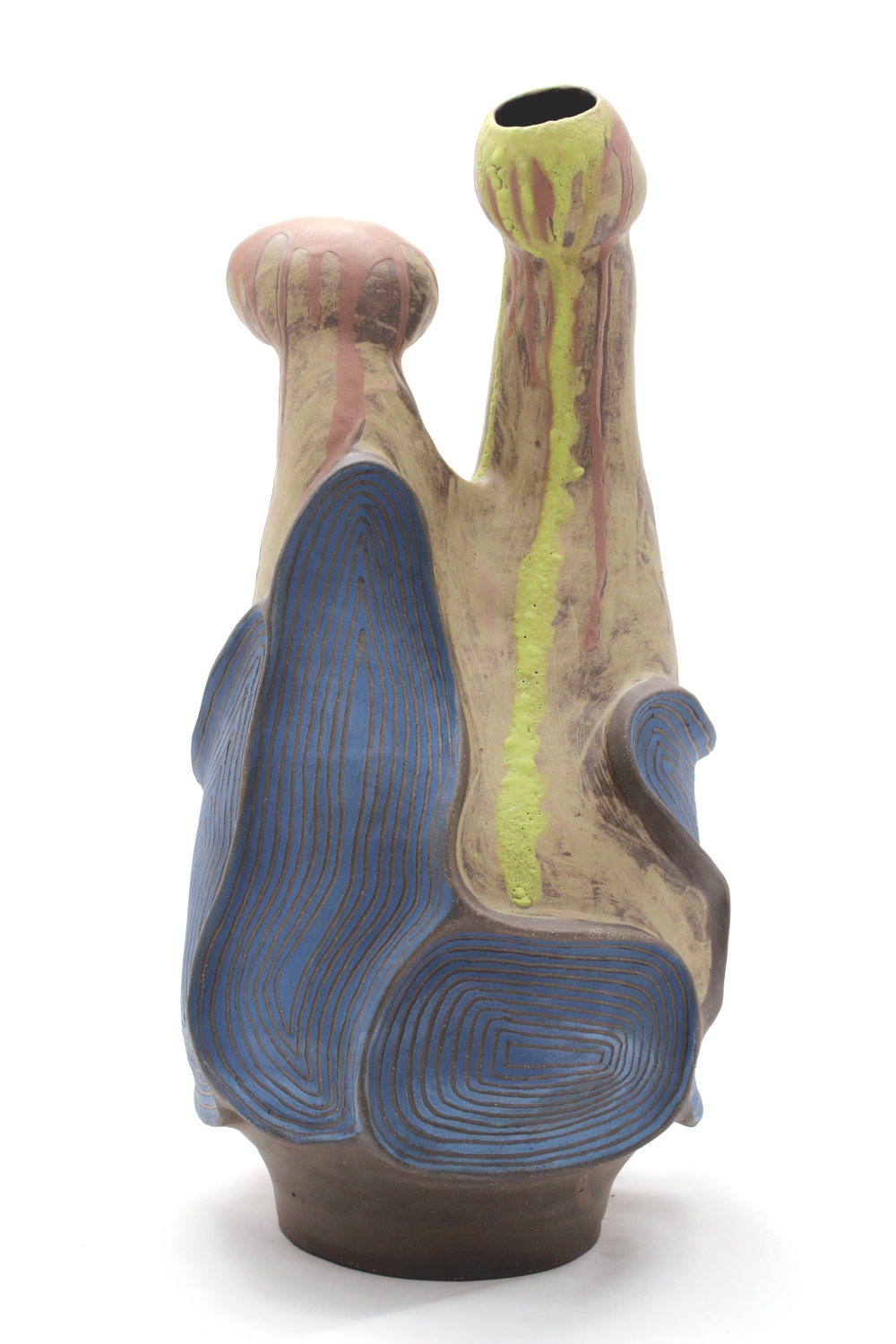
Yoonsun Lim: “In Eve’s Face and Tree II and III, I give form to Eve’s quiet, enduring longing for Eden — the paradise she lost but never stopped dreaming of. Each face is hand-built in stoneware, drawn with colored slip, and fired three times, layering leaves, flowers, and patchwork color like memories growing over time. These works offer no resolution, only a body for that longing: rooted, blooming, and never finished.”
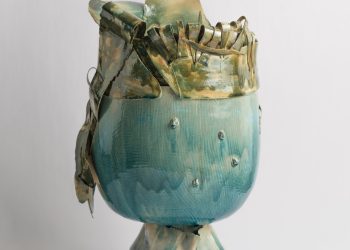
Joan Lurie: “I’m interested in the vessel form, its relationship with the body and its importance as a container since carrying things around and putting things into things takes up a lot of my time. These works are individual pieces that evolve through a process of layering and adding. Those additions are all thoughts of things that I don’t wish to forget.”
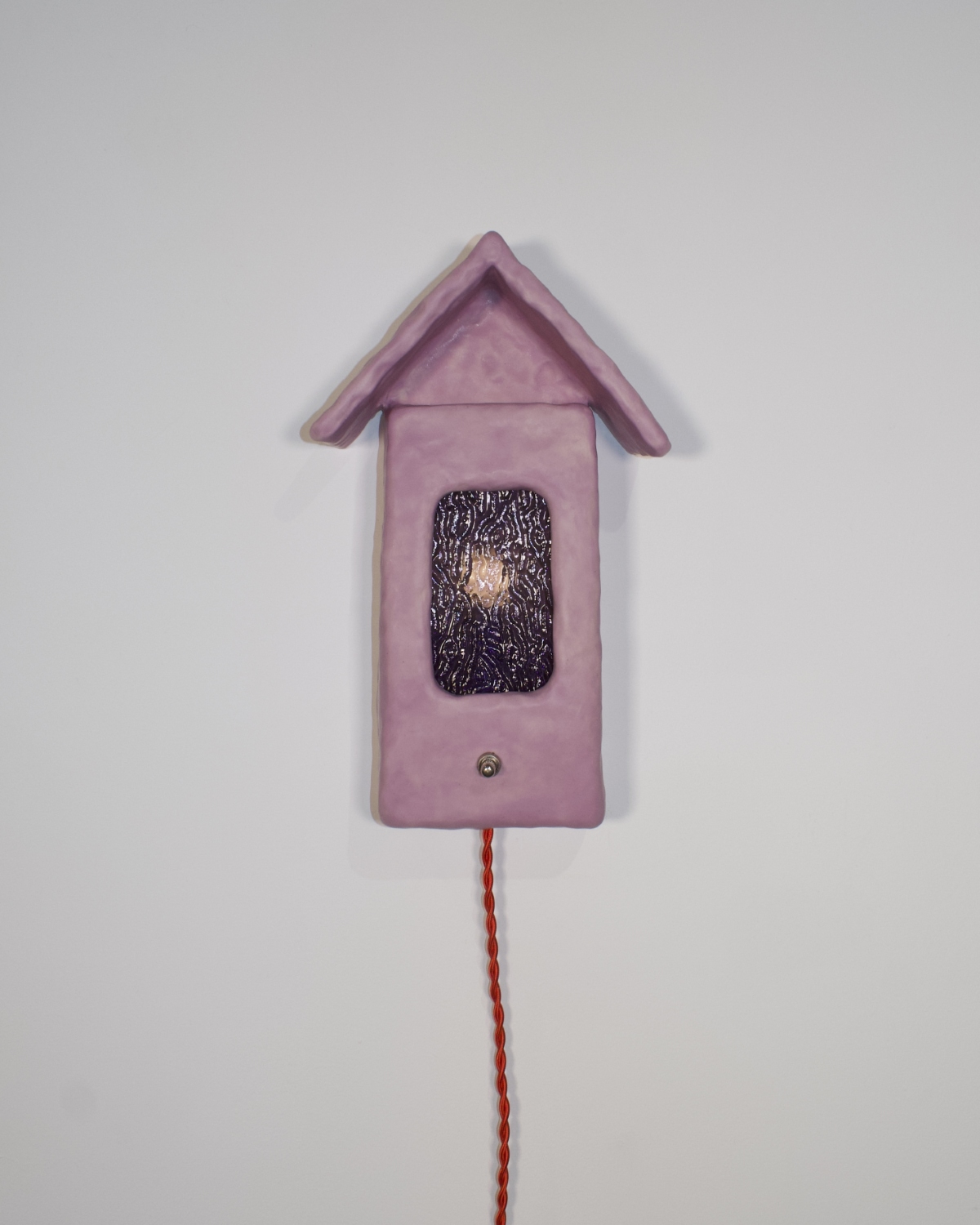
Thomas McIntyre: “These sconces subvert the traditional ideals associated with kitsch Midwestern and Colonial Revival aesthetics through vernacular, hand-hewn construction and a candy-like palette of materials and colors. Their irreverent sensibility recalls the dim, whimsical television lamps of the 1950s and ’60s. The ascribed functionality is thoroughly secondary to its presence in the domestic space as an object of decoration. My sconces reinterpret familiar architectural forms as playful objects of domestic ornamentation.”
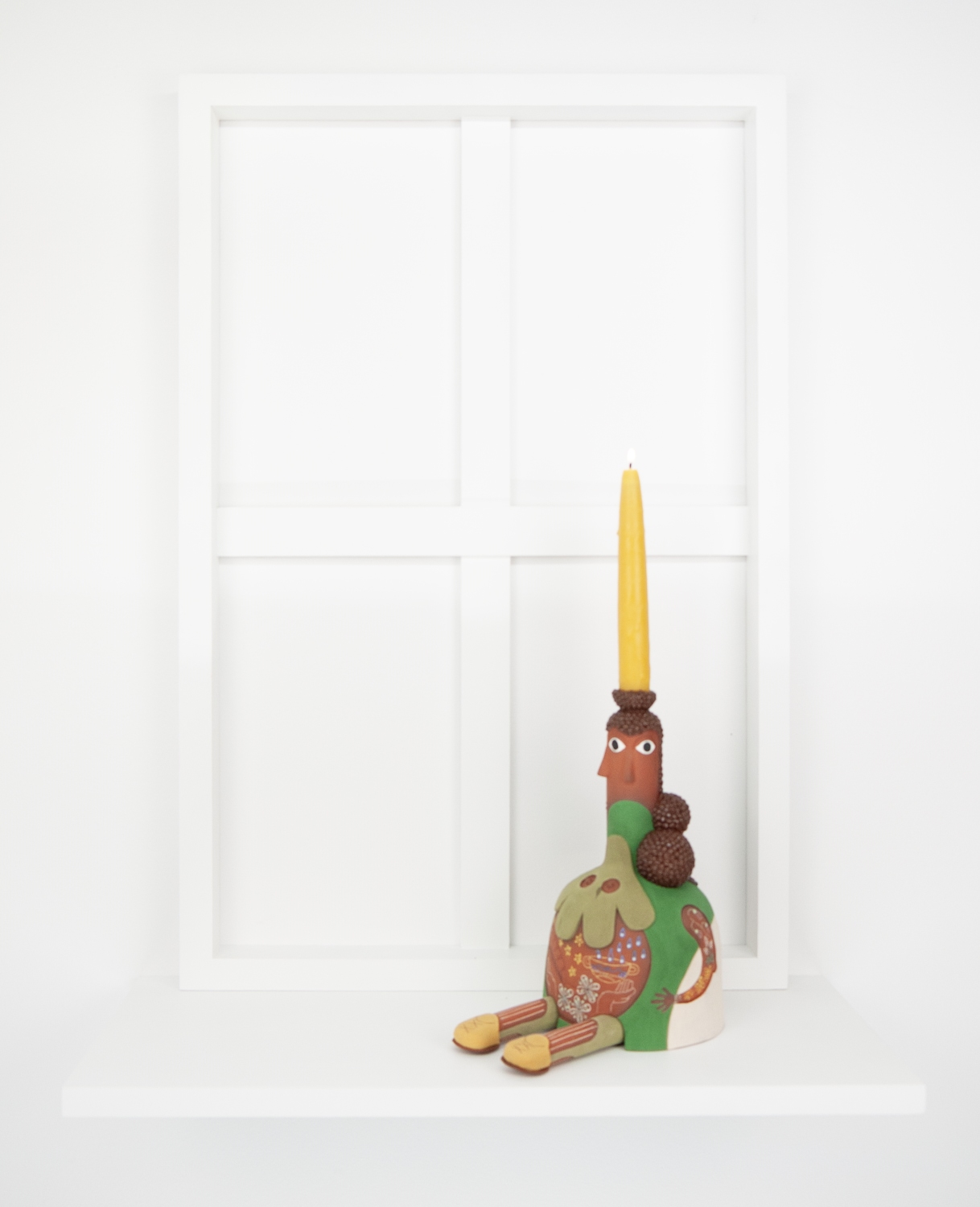
Chiara No: “While visiting family in Spain, mi tía had a La Reina ceramic bell that doubled as a candleholder on her mantle. She gave it to me. Since then, I’ve thought about how traditionally, candles have acted as a beacon in windows—symbolizing welcome and longing for loved ones. In US history, these same beacons signaled safe houses to those escaping slavery in the 19th century. For this show, I created works that explore Philadelphia’s role in the Underground Railroad and how safety is sought for refugees, immigrants, and strangers today.”
Thomas Schmidt: “I’m interested in how technology can deepen our relationship with materials, opening new possibilities for the tactile knowledge at the heart of craft. For me, digital modeling is a way of thinking through clay. Even on a screen, I’m imagining weight, texture, and how a surface might feel. I leave the printed layers visible because they tell the story of a form becoming physical. They hold a rhythm that connects digital fabrication to weaving and building by hand.”
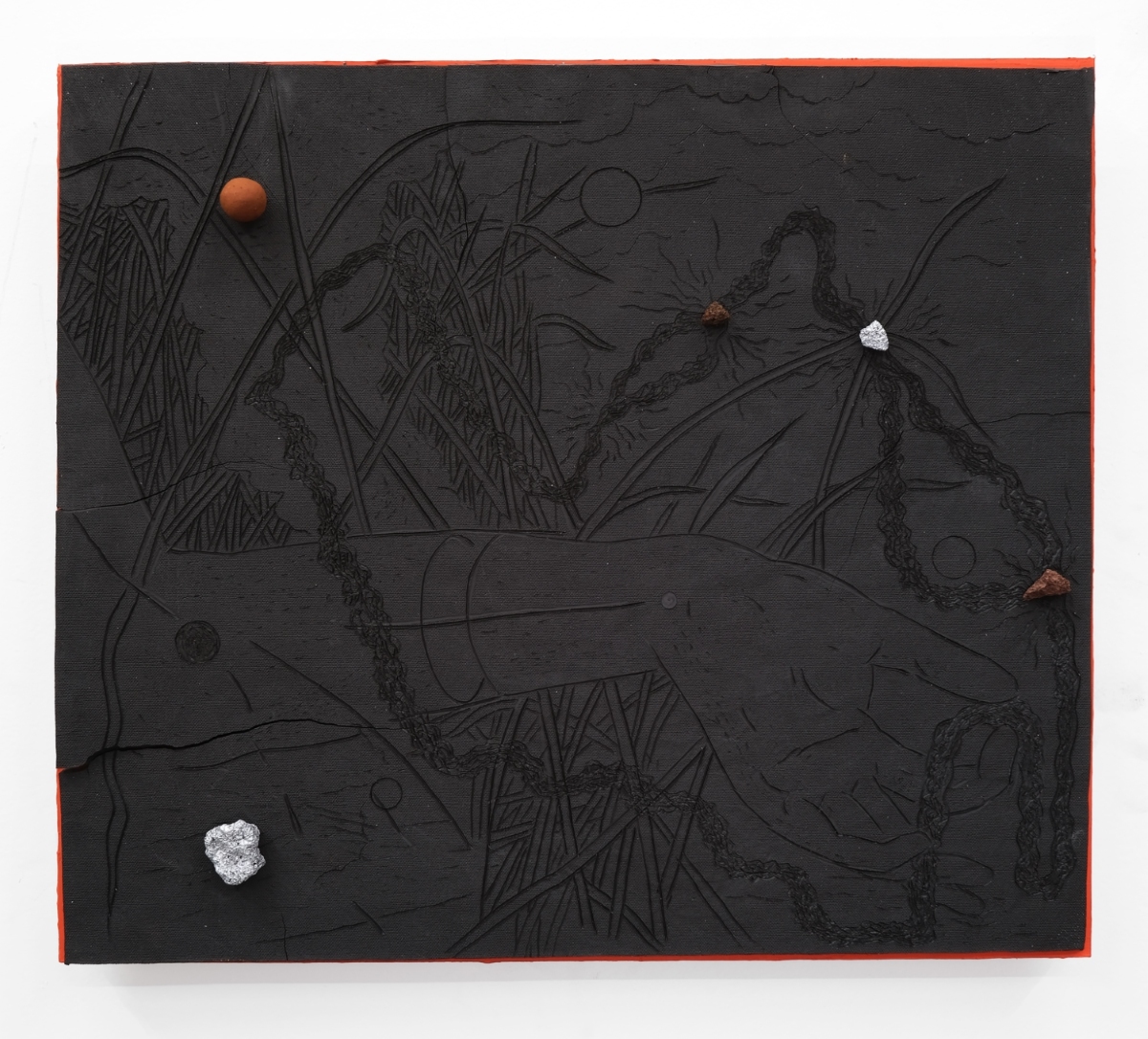
Sergio Suárez: “Drawing is very present in my practice but it is obscured by the printmaking process since the ink covers up the surface. These works employ clay as a referent to the body and the vessel. Who am I? Am I clay? The energy shaping its form, or the heat that hardens its body? None, or perhaps all at once. An addition of characteristics at times in contradiction. The material and the invisible, a body occupying a place or a place becoming conscious of itself, feeling, thinking, remembering, perhaps not an answer but a question. Throughout time we have made vessels to contain the shapeless, I associate narrative and this container. It gets passed as we communicate and it makes it easy to hold that which slip between our fingers, but it is also brittle and it can break when it can’t contain the material.”
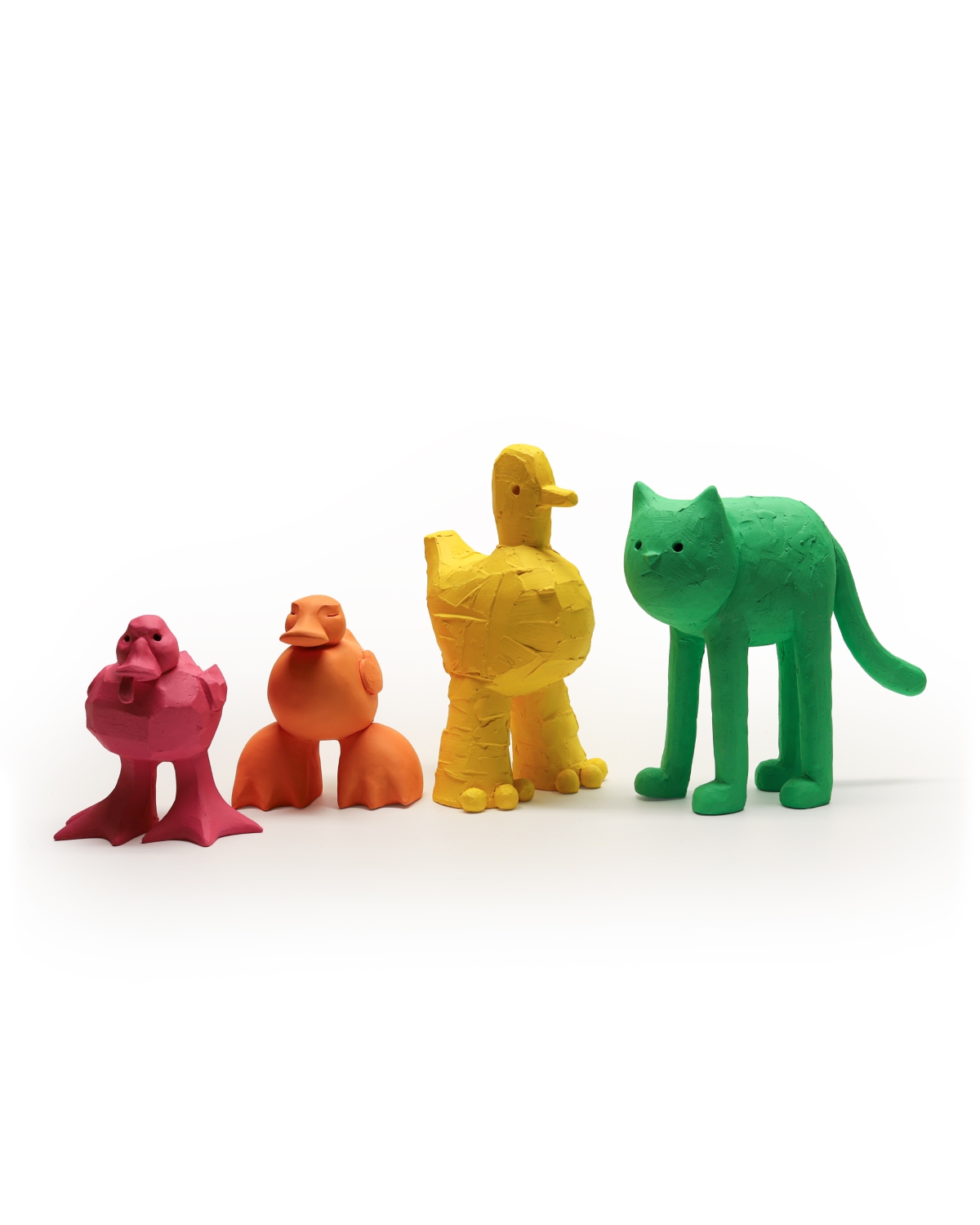
Austyn Taylor: “Punk duck pretends not to care, meditation duck is immune from care and the stoic duck consciously dissociates. Schopenhauer’s cat observes the situation realistically.”
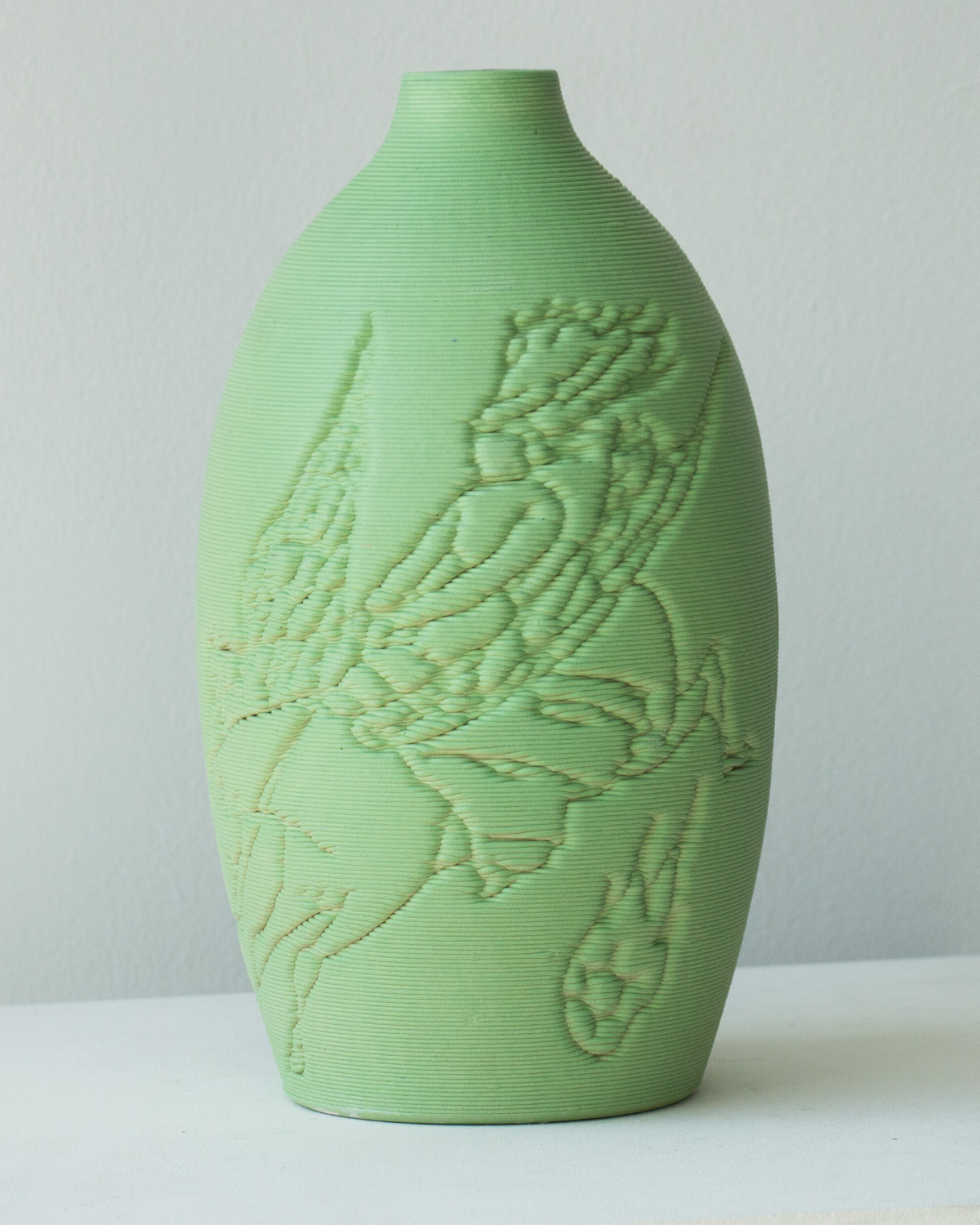
Cooper Miller Wright: “These pieces are from a larger body of work that pushes against the spectrum of time in pottery. Old forms and images combine with new technologies and processes to imagine a future of ornamentation that is learned rather than unfamiliar. By drawing from historical traditions while exploring new methods of making, the work considers how ornament can continue to evolve without losing its connection to historical precedence.”
Contact
mail@pentimenti.com
PENTIMENTI
145 North Second Street
Philadelphia, PA 19106
United States
Photos courtesy of the artists and PENTIMENTI