By Vasi Hîrdo
Visiting Stoke-on-Trent for the first time felt like stepping into a city — really a group of six towns — that has been tied to ceramics for centuries. The train from London takes about an hour and a half or longer if delays get in the way, as they did on my trip. Still, once I got there, I was impressed. The ninth edition of the British Ceramics Biennial filled the former Spode Works factory, turning its industrial halls into spaces for art, conversation, and most importantly, ceramics. The timing was also special: Stoke is celebrating its centenary this year, marking a hundred years since it was granted city status.
I arrived with certain expectations and fixed notions. I thought the Biennial would primarily showcase the best of contemporary ceramics in the obvious setting of the Potteries. What I found was something broader. The Biennial has a clear mission: to make change through clay. It creates projects that bring the community together, involve visitors, and demonstrate how ceramics can still play a role in shaping the city’s life. Many factories in the area have closed in recent decades, yet clay remains an integral part of Stoke’s identity and future. The Biennial works closely with this history, always shaping programmes that connect with the legacy of the place, its social issues, and its possibilities. And while community work is central, the exhibitions manage to present fantastic ceramic art. Artists are encouraged to push their practices, to go further, create complex work, and to share that journey with others through the films and artist talks organized during the Biennial.
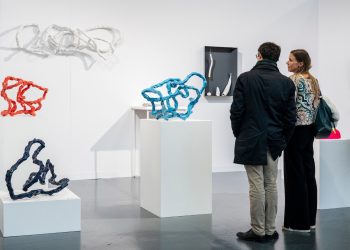
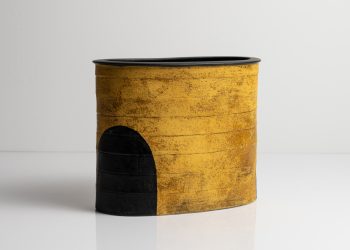
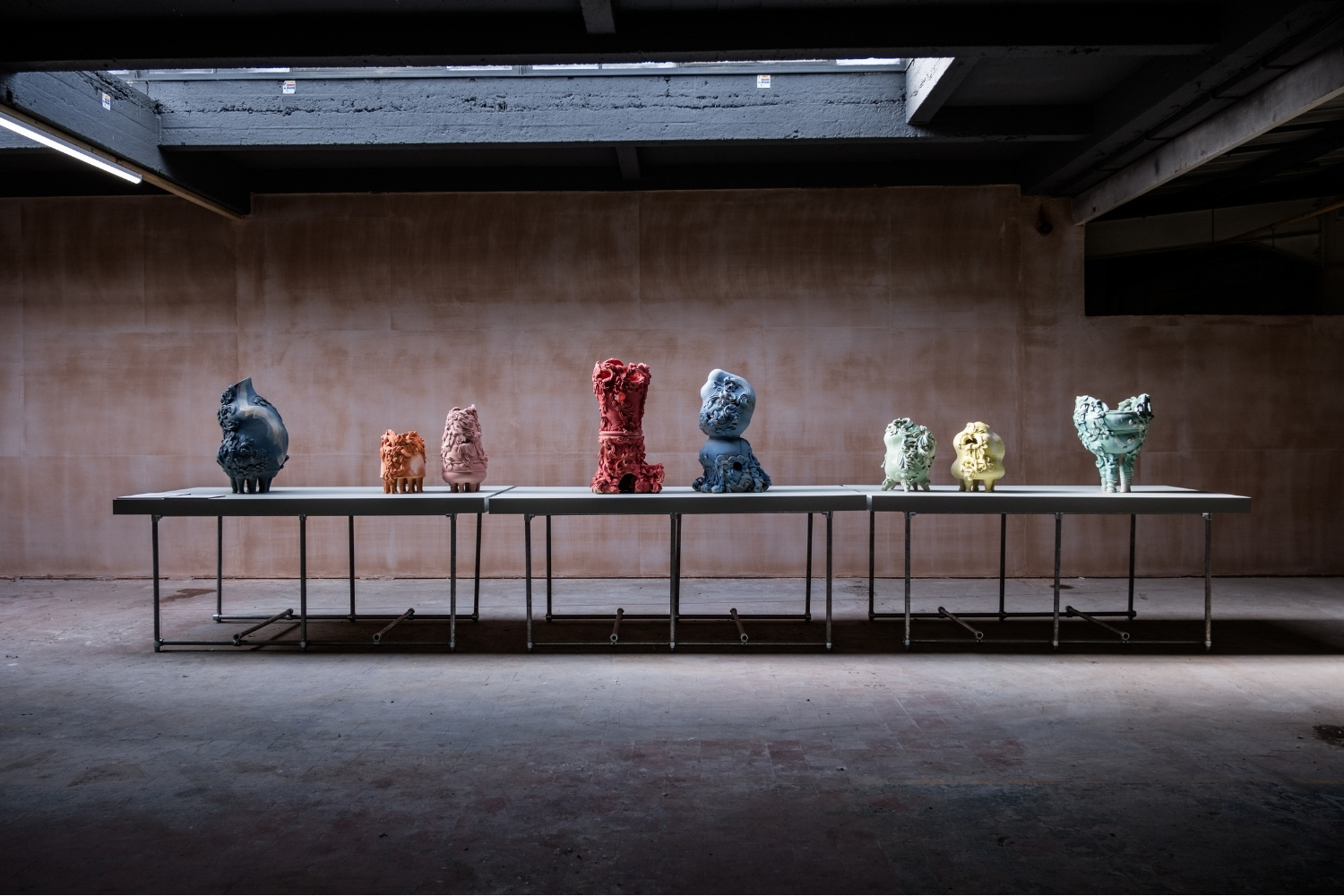
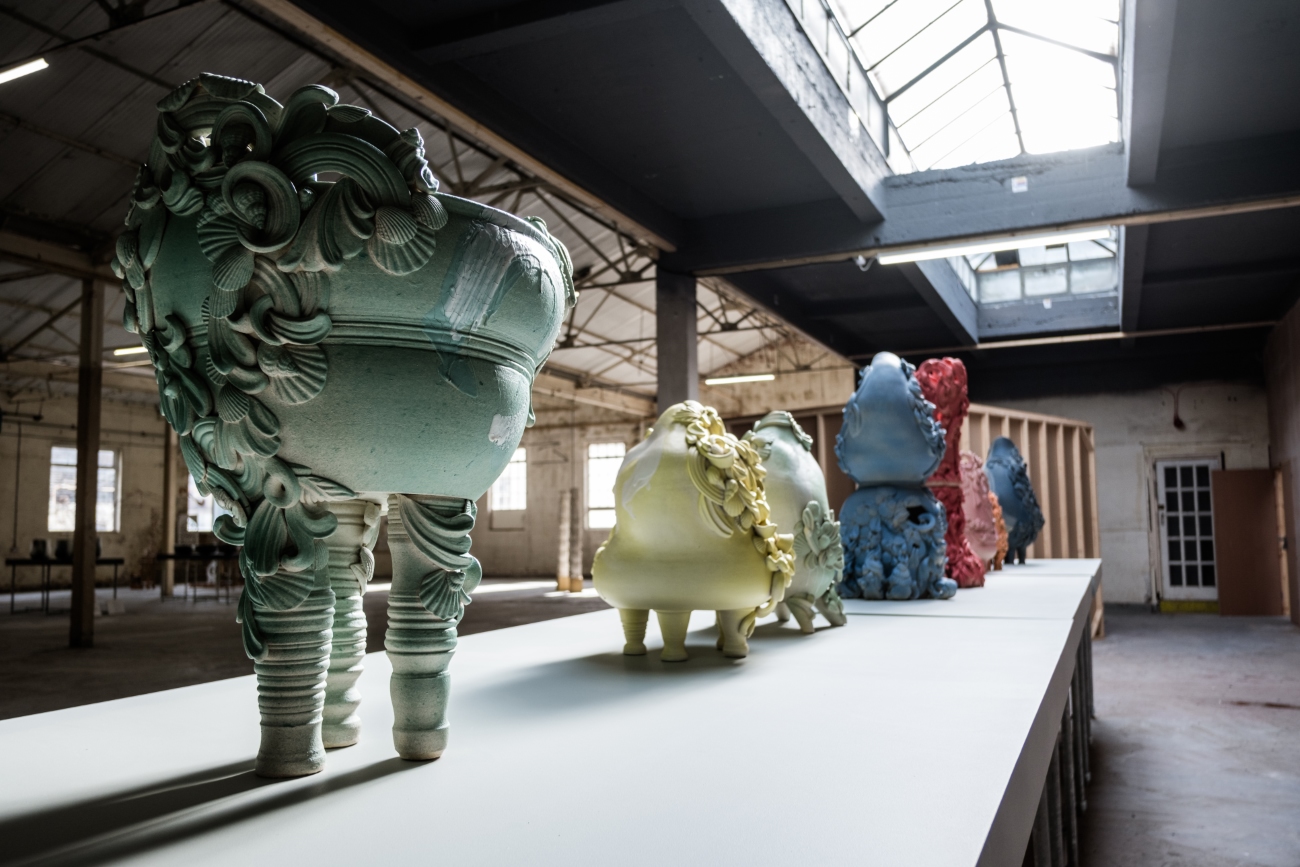
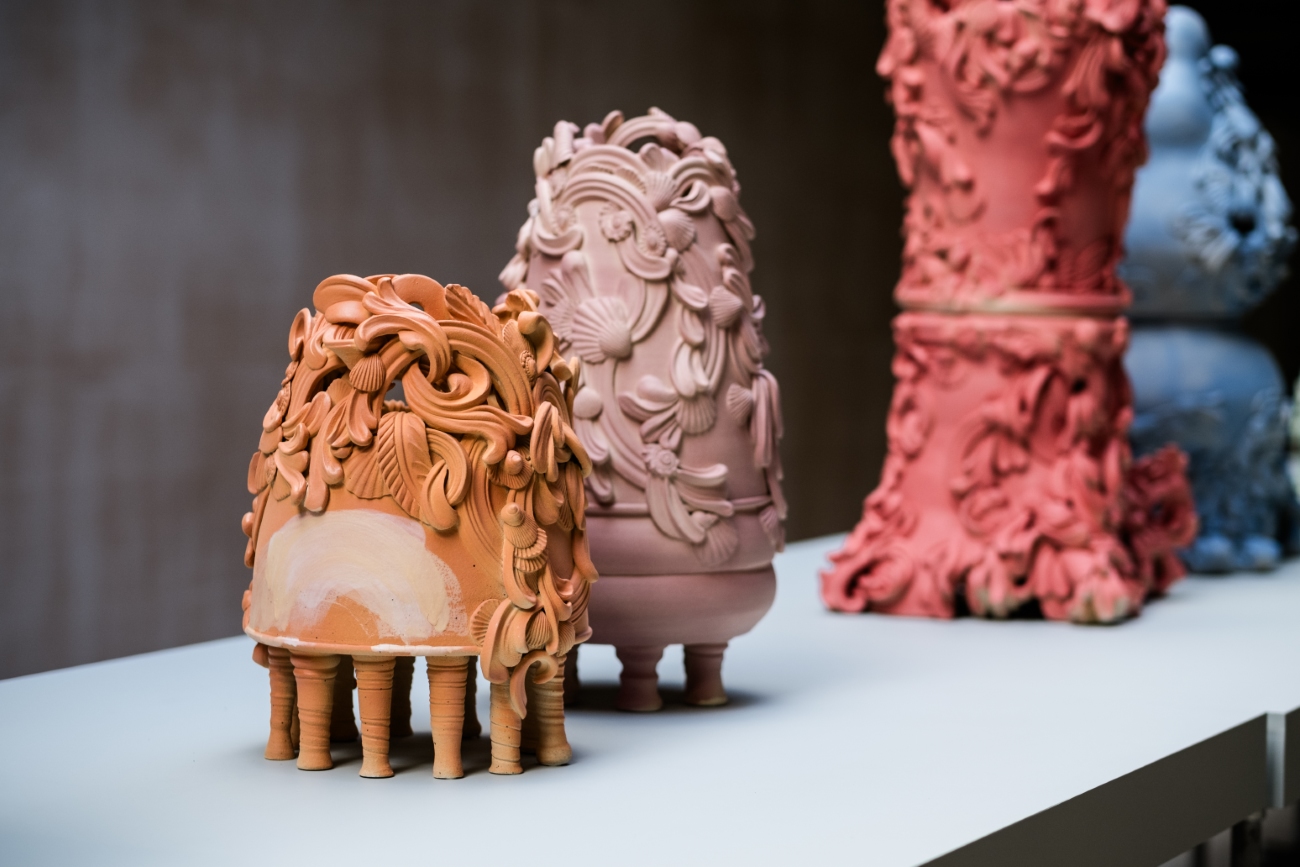
The centrepiece of the Biennial is the Award 2025, which brought together ten artists: Kyra Cane, Fernando Casasempere, Noor Ali Chagani & Clio Lloyd-Jacob, Susan Hall, Leah Jensen, Charlotte Moore, Jane Perryman, Alison Rees, Daniel Silver, and Jo Taylor — selected by a jury from hundreds of submissions. Jo Taylor was announced as the winner of the Biennial’s £10,000 Award Prize for her exuberant ceramic sculptures. Their baroque twists and flourishes seemed to pose a playful challenge: why shouldn’t clay celebrate exuberance? Her work can bring a smile to everyone’s face, a clear invitation to be happy and enjoy the moment.
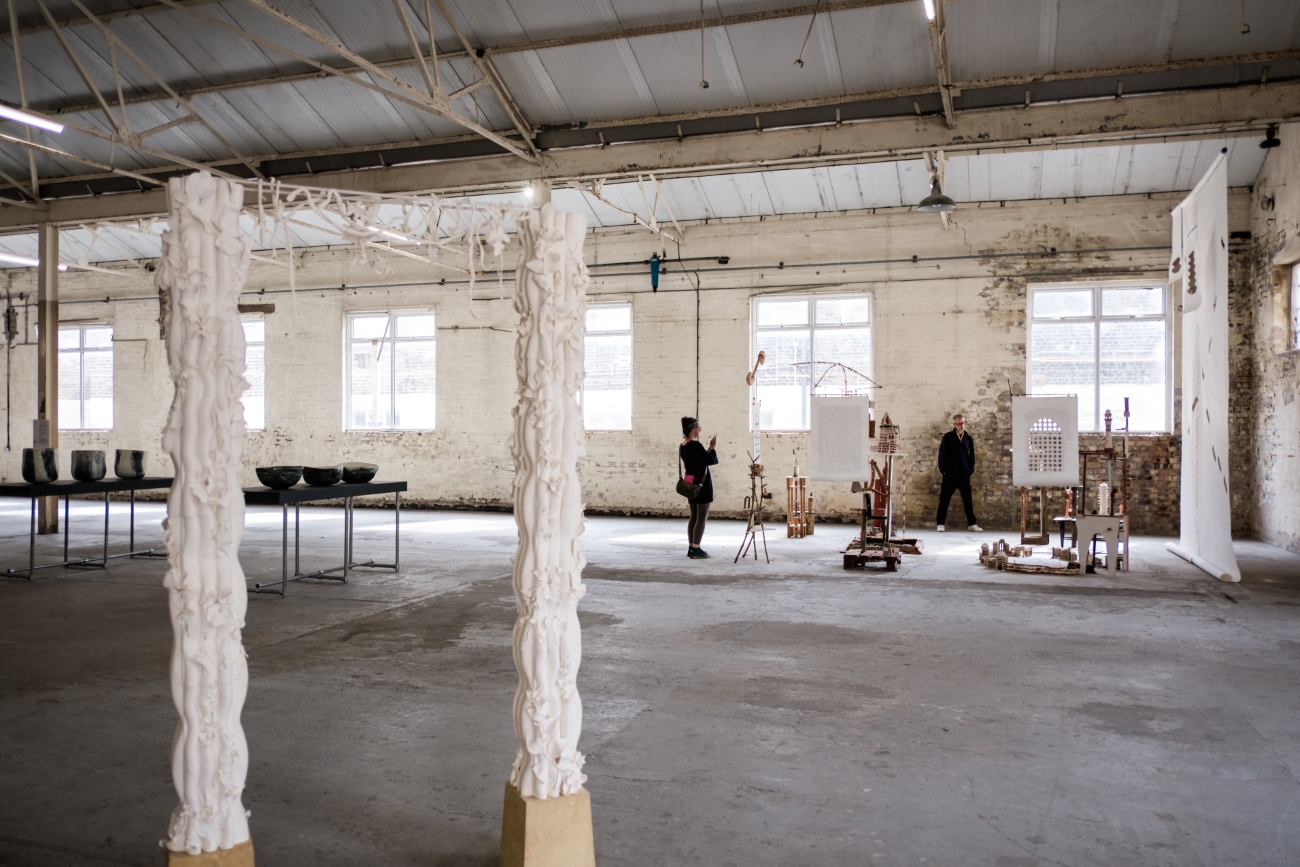
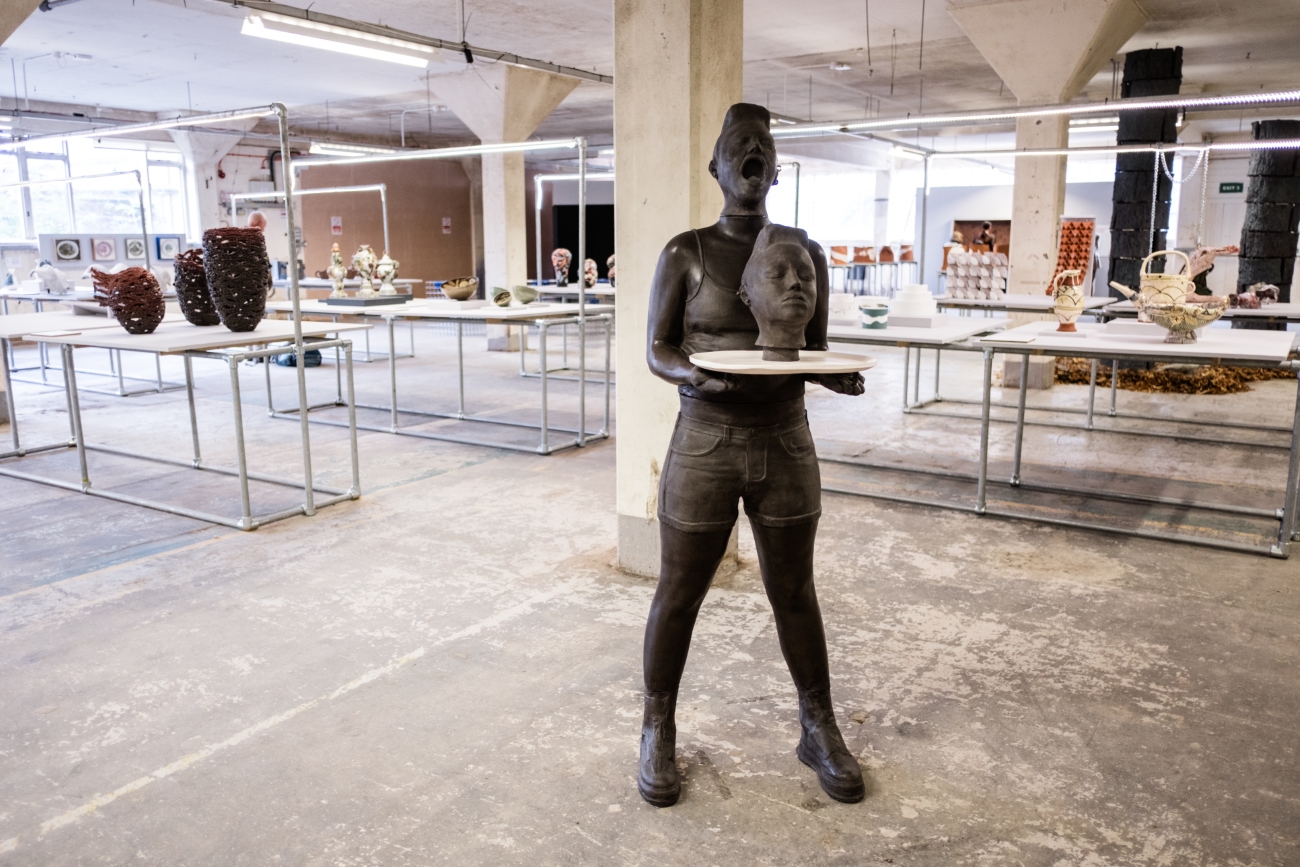
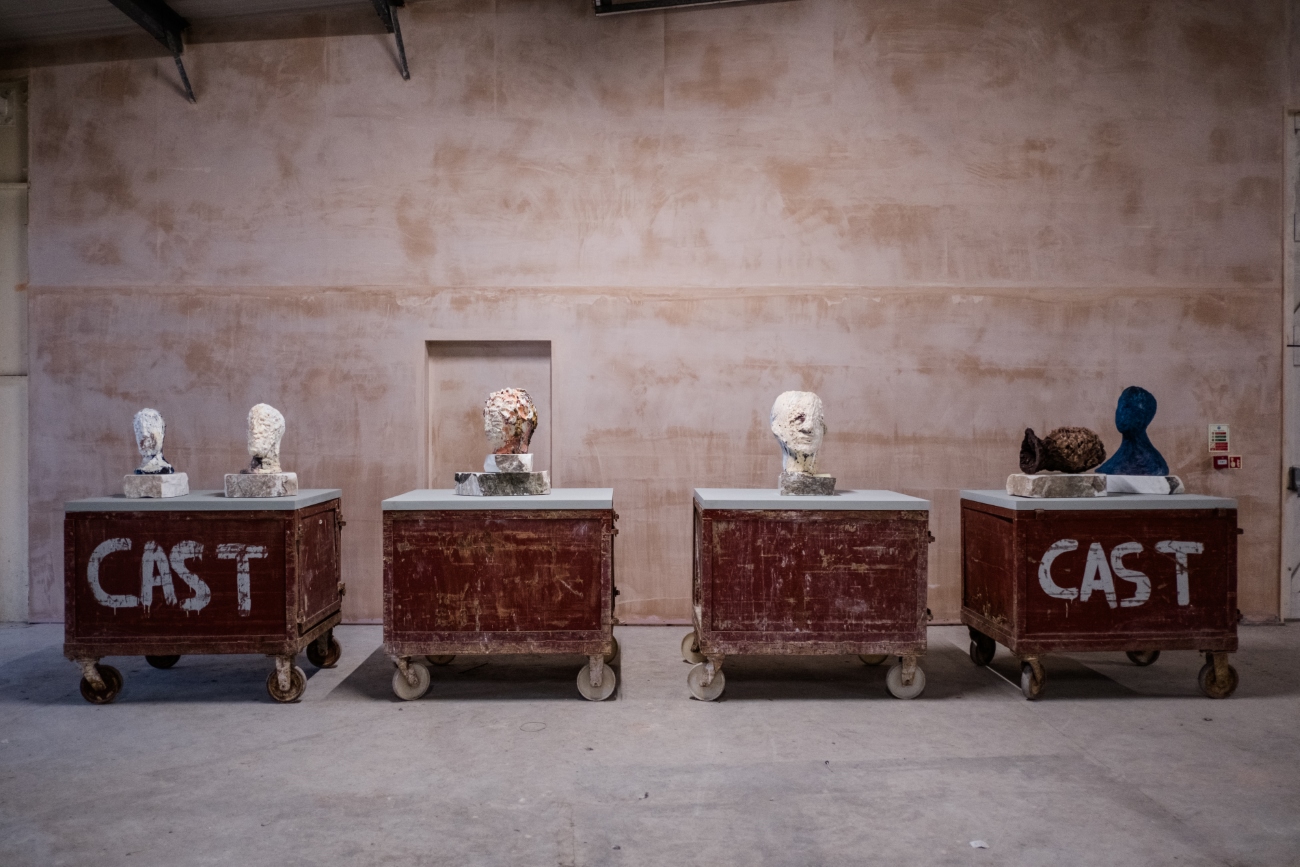
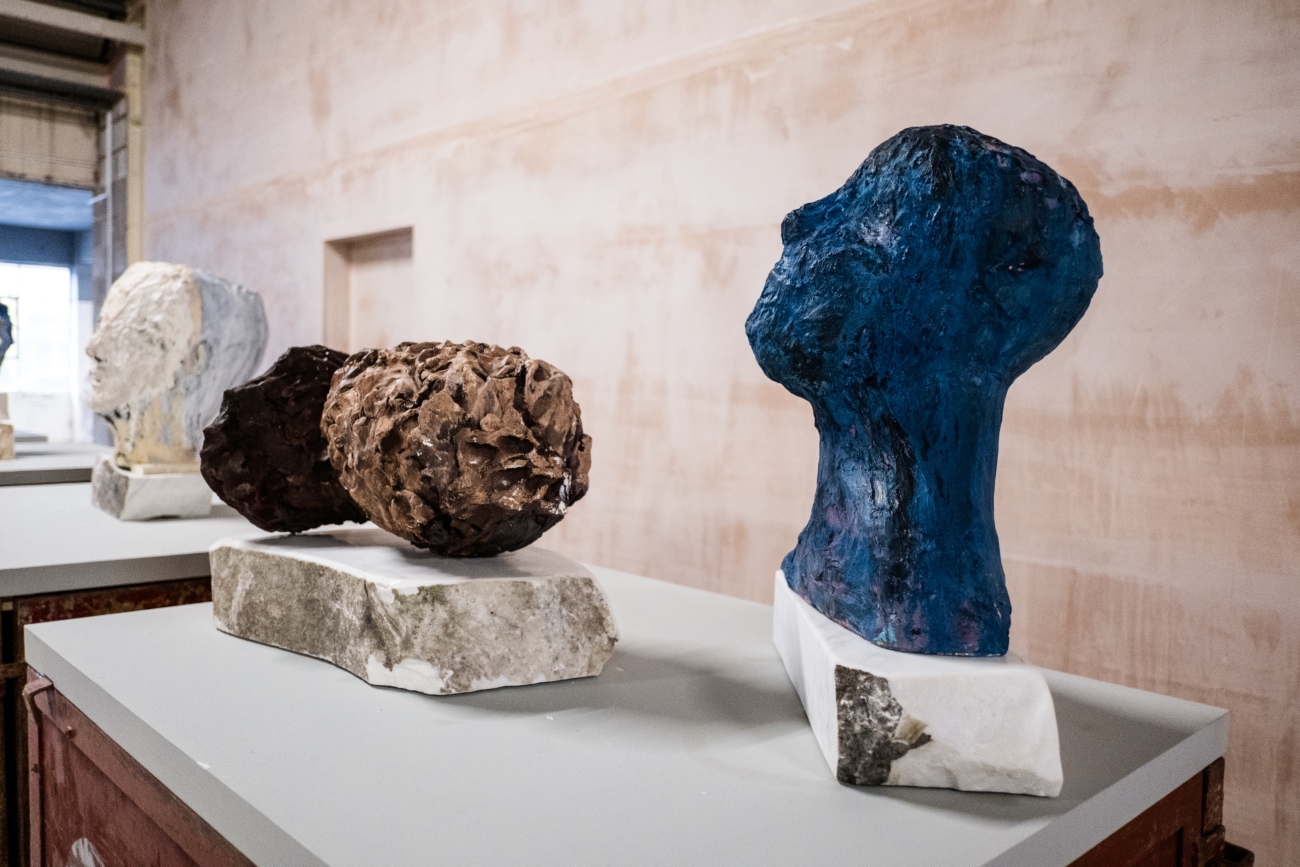
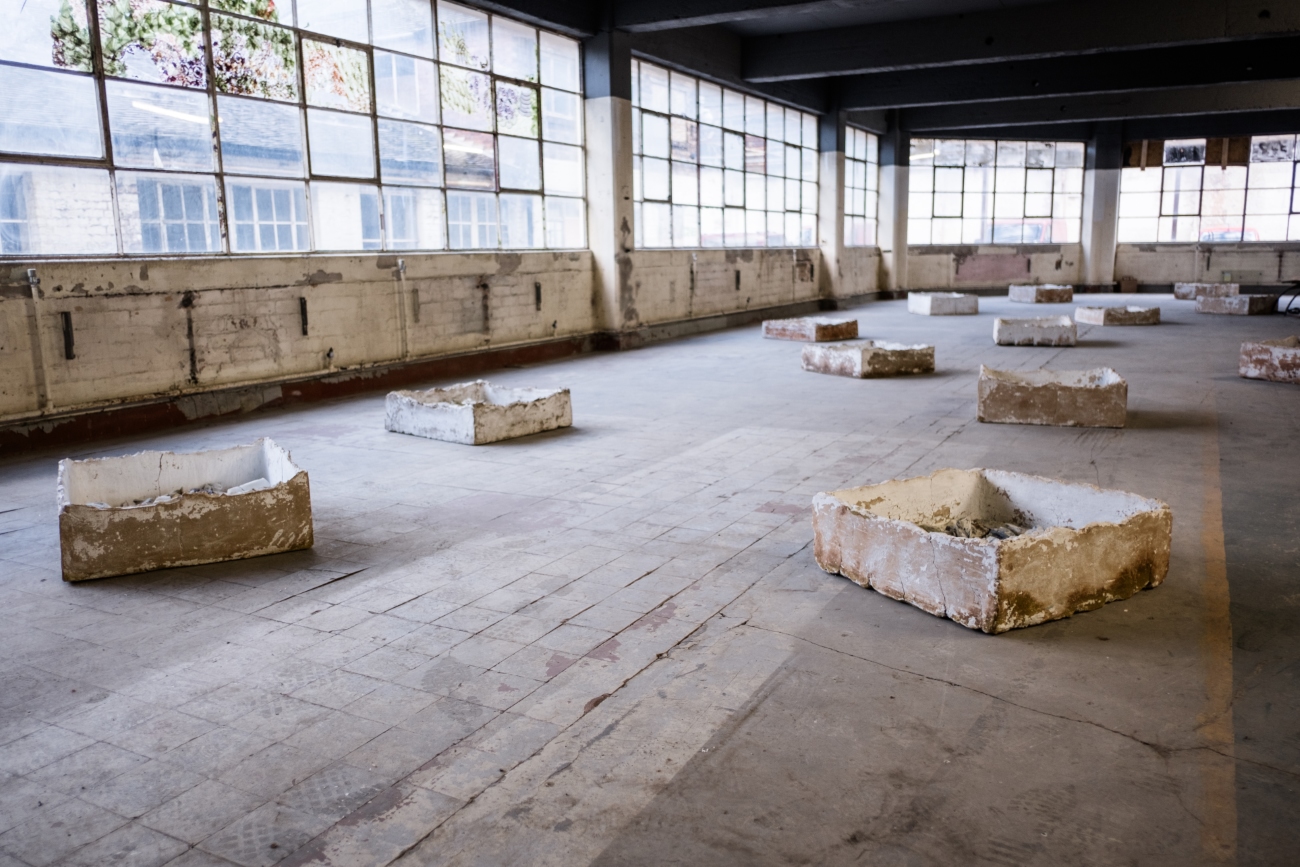
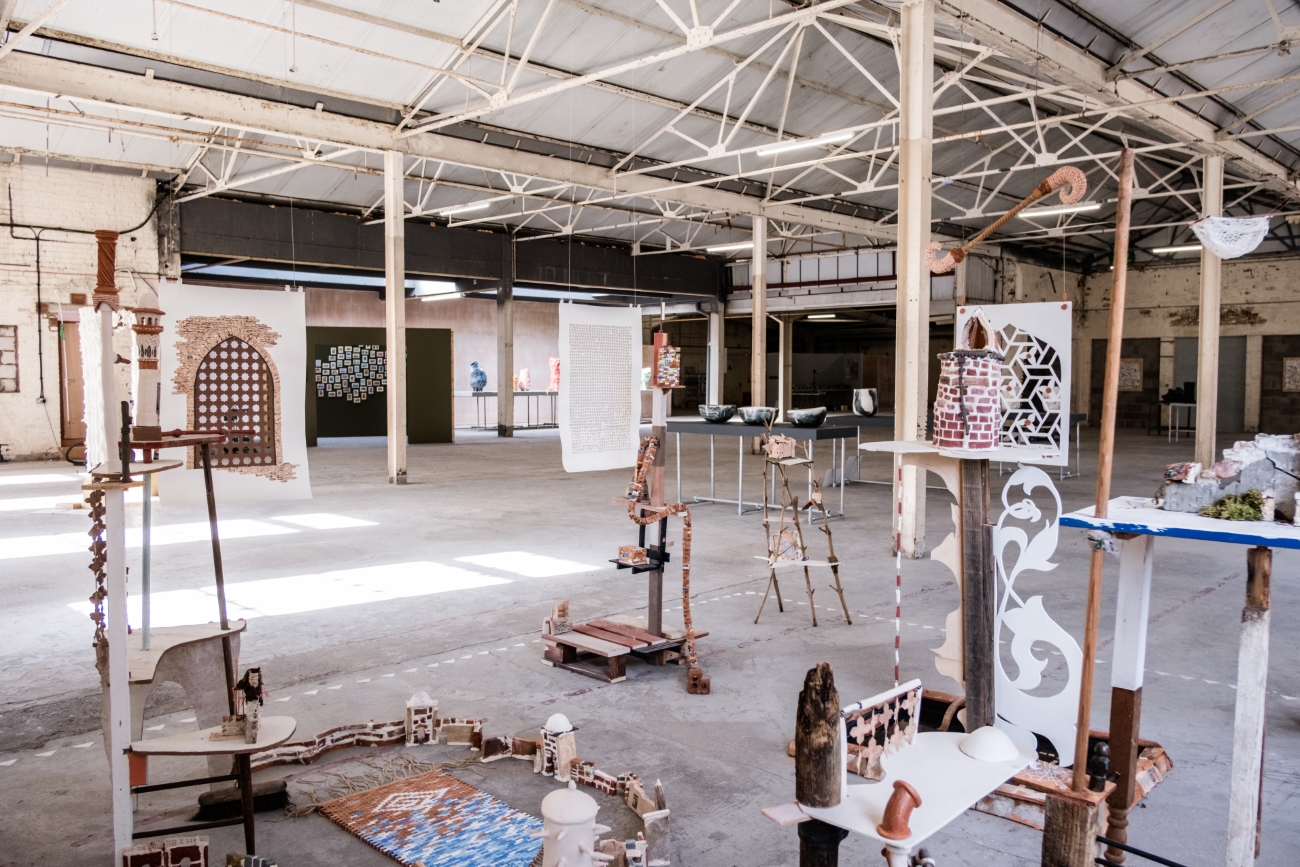
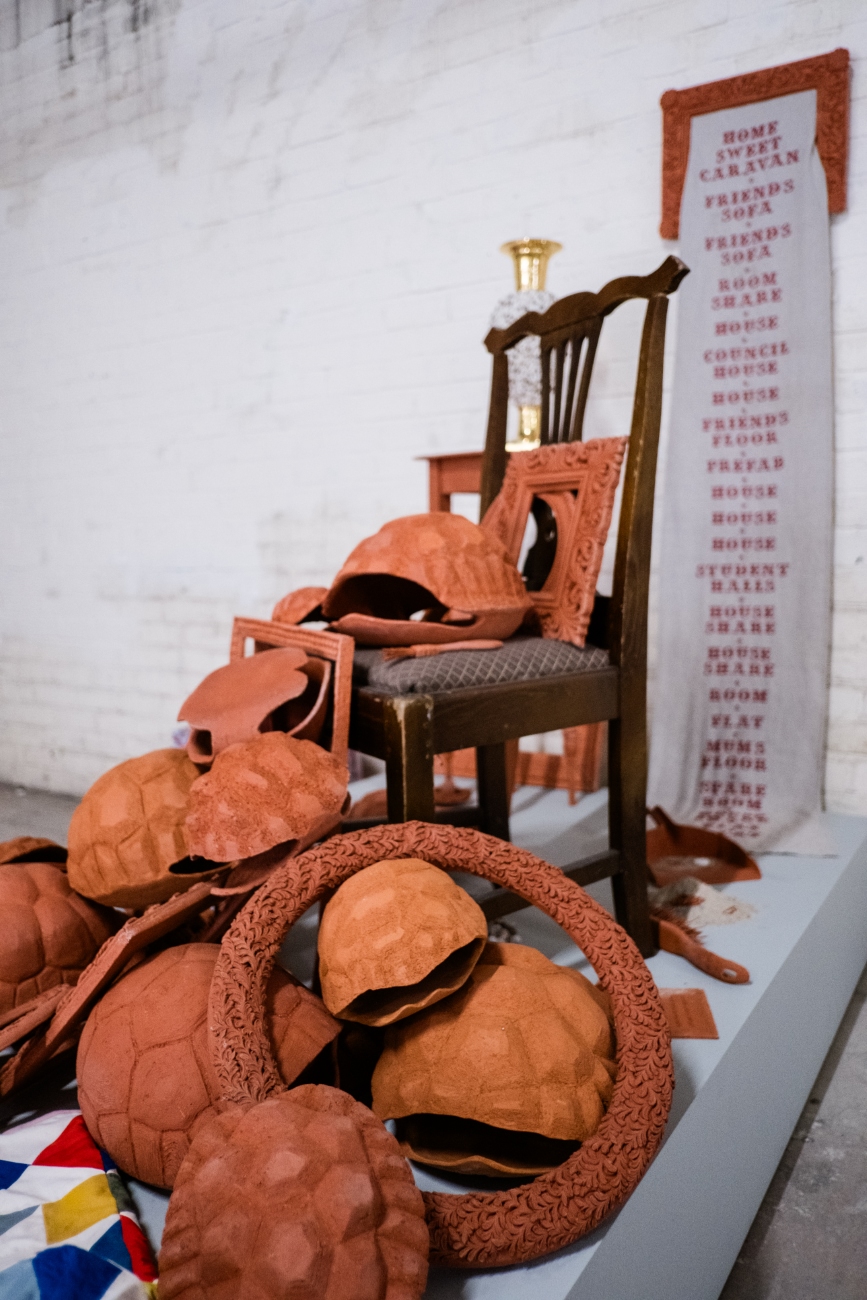
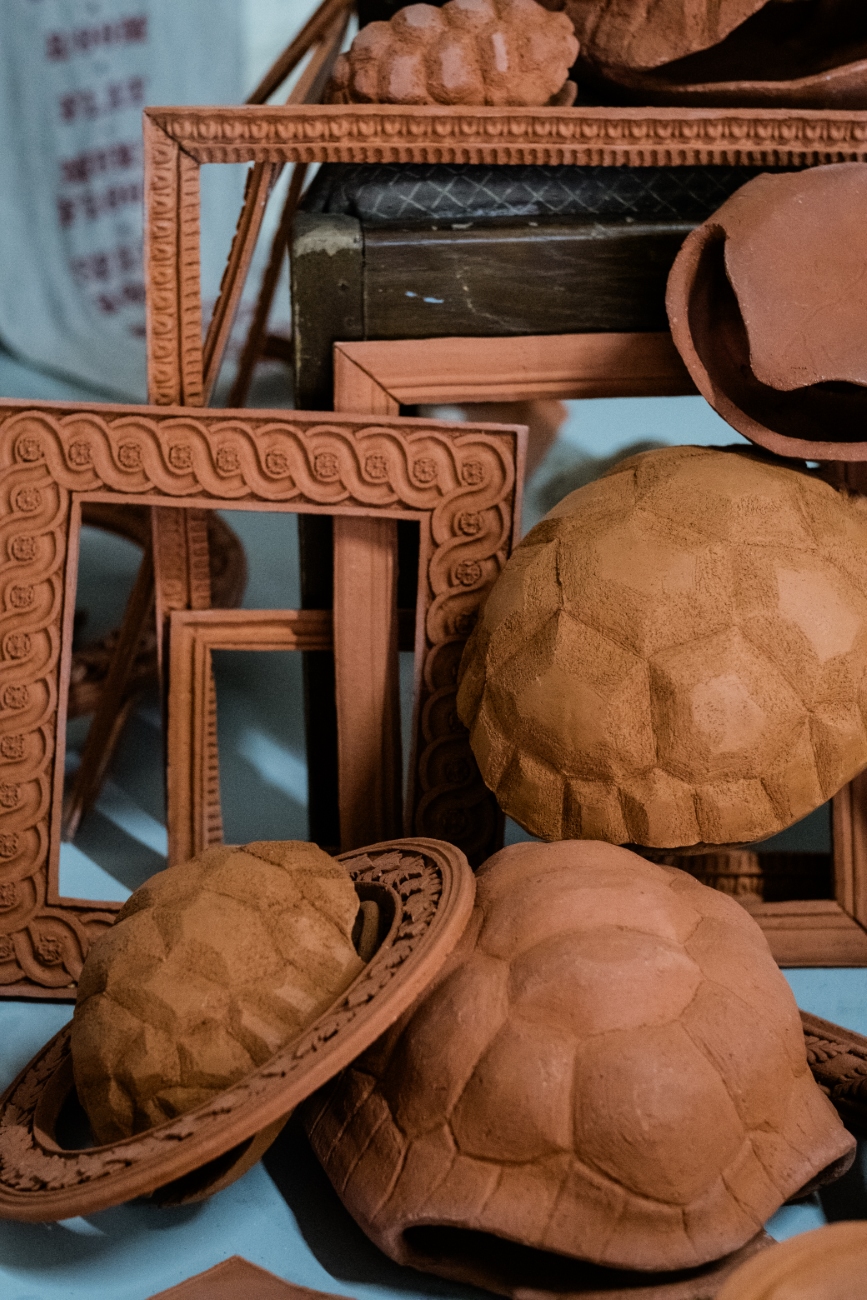
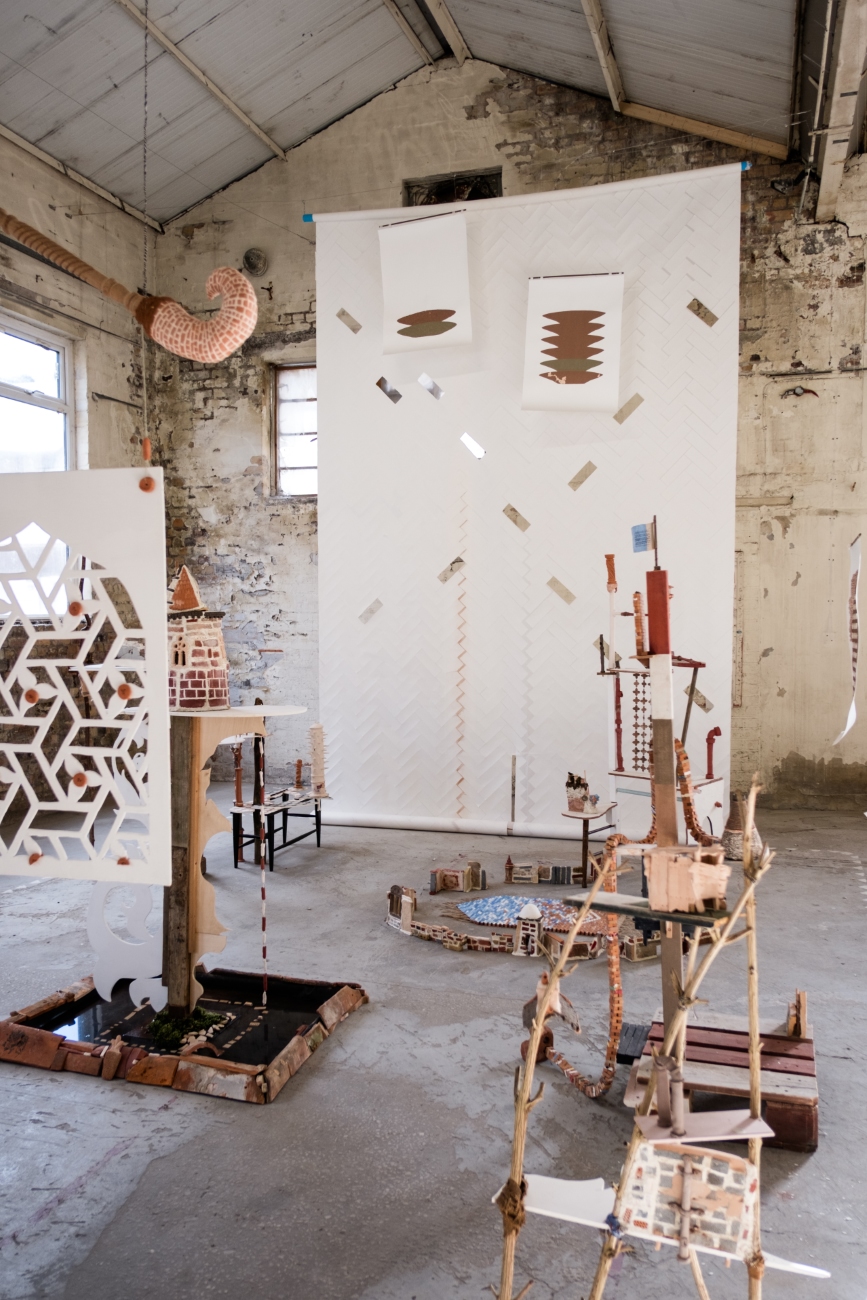
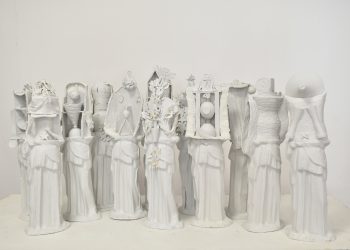
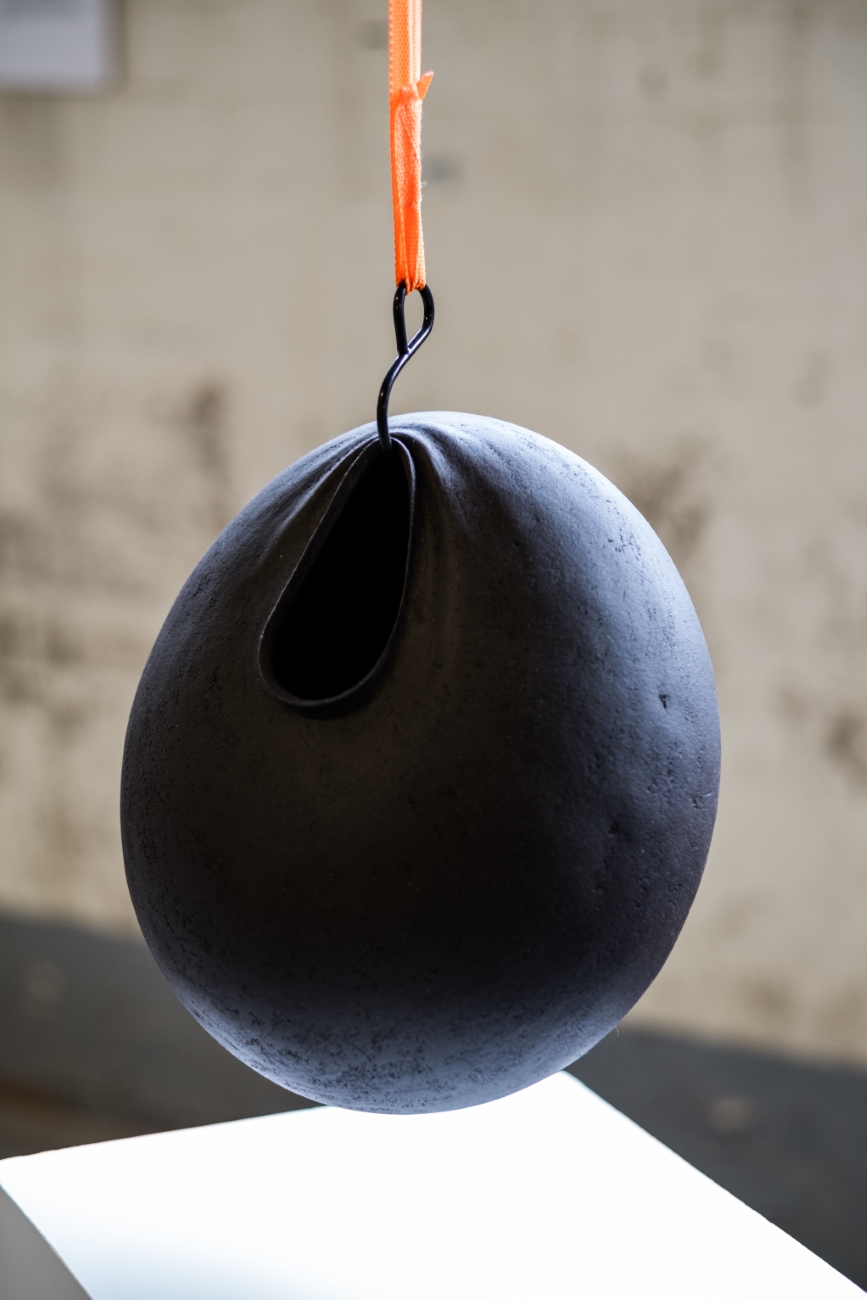
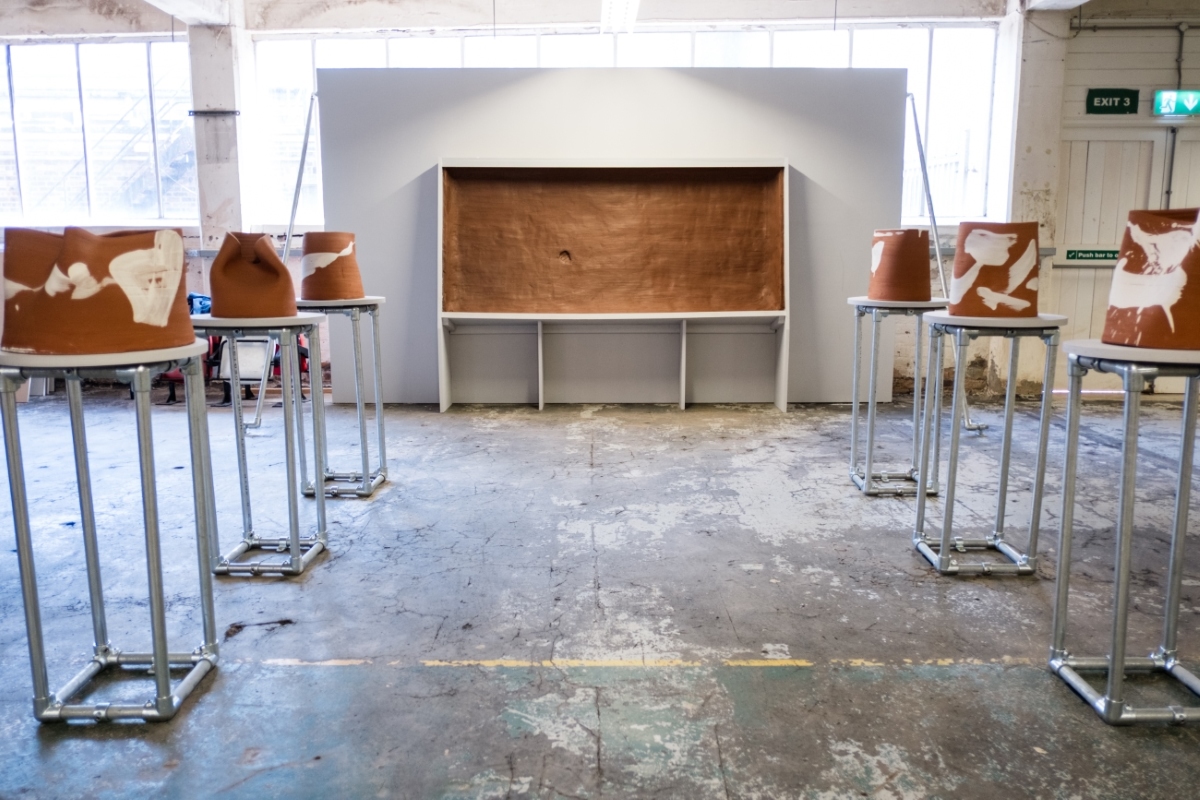
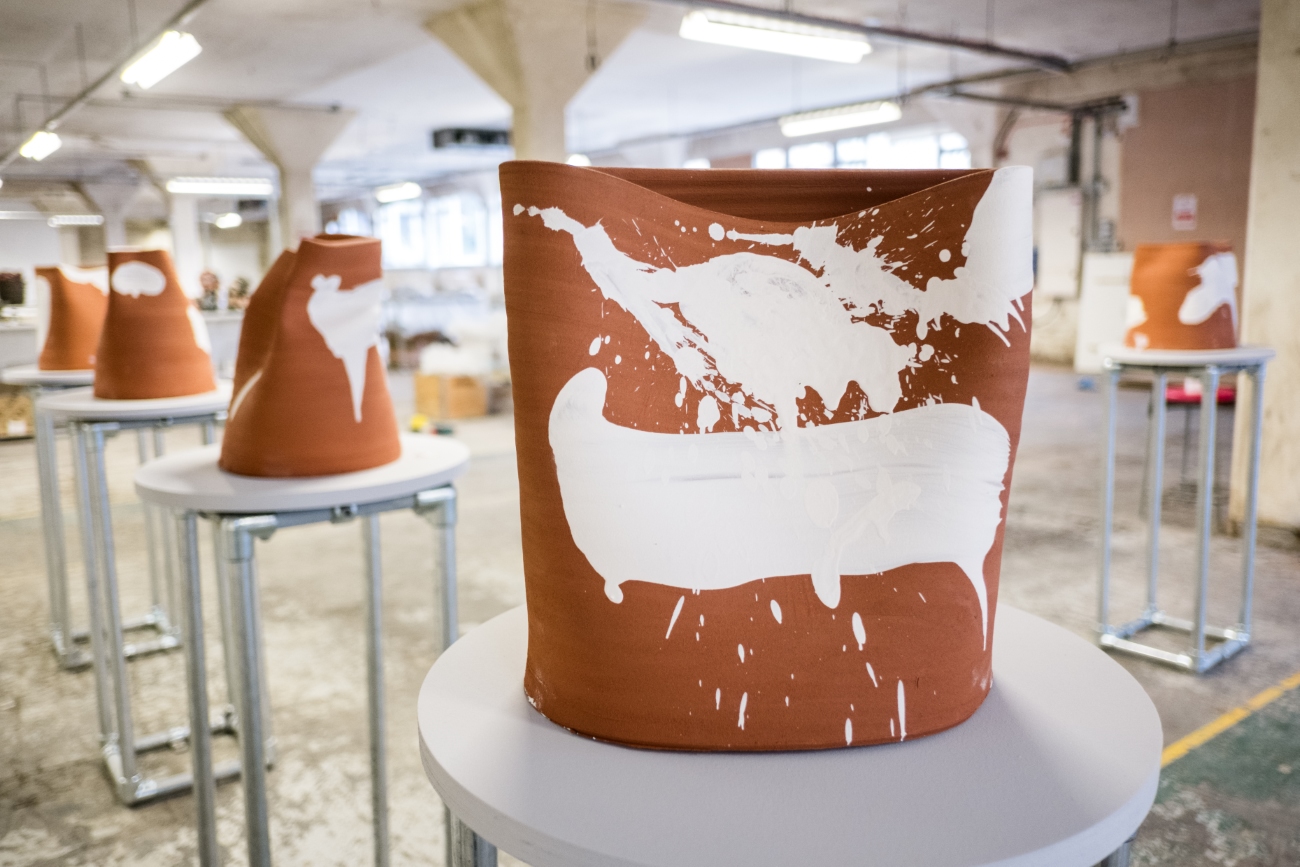
Other artists also left strong impressions. Leah Jensen, usually associated with finely carved porcelain, shifted to terracotta to reflect on the precariousness of housing. Her works felt like fragile containers of hidden stories, their surfaces marked with subtle clues about unsettled lives. Fernando Casasempere filled a large hall with discarded (and fired) fragments from his studio, creating a landscape that felt like the archaeology of his practice. For me, it stirred an unexpected memory of a burnt house I once visited, with broken remnants scattered across the floor. Casasempere’s installation had a similar weight, as if remnants from the past had been brought together to tell new stories. Noor Ali Chagani and Clio Lloyd-Jacob constructed brick structures that echoed the absence of home, both monumental and intimate. Daniel Silver’s figures, which explored family ties, felt oddly familiar, as though they belonged to a memory I couldn’t quite place.
The Award exhibition is supported by a series of films by Elastic Pie, which offer rare glimpses into each artist’s studio. These short portraits add depth to the works on display, providing helpful context, as the scale of the exhibition sometimes made it harder to form a connection with the works. The works were placed far apart, so visitors had to walk a fair distance from one piece to the next. The distance dilutes dialogue between works, as it was difficult to catch sight of another work while standing in front of one. A more focused presentation might have strengthened the exhibition’s impact.
Each edition of the British Ceramics Biennial leaves behind its own traces, slowly reshaping the city and reinforcing the sense that clay still matters here.
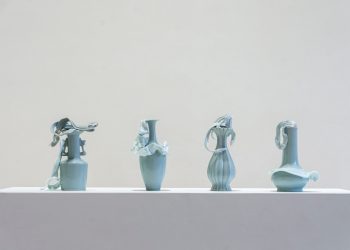
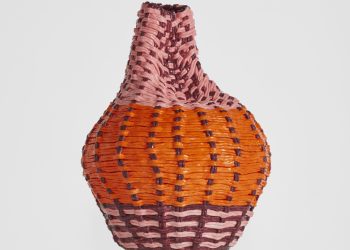
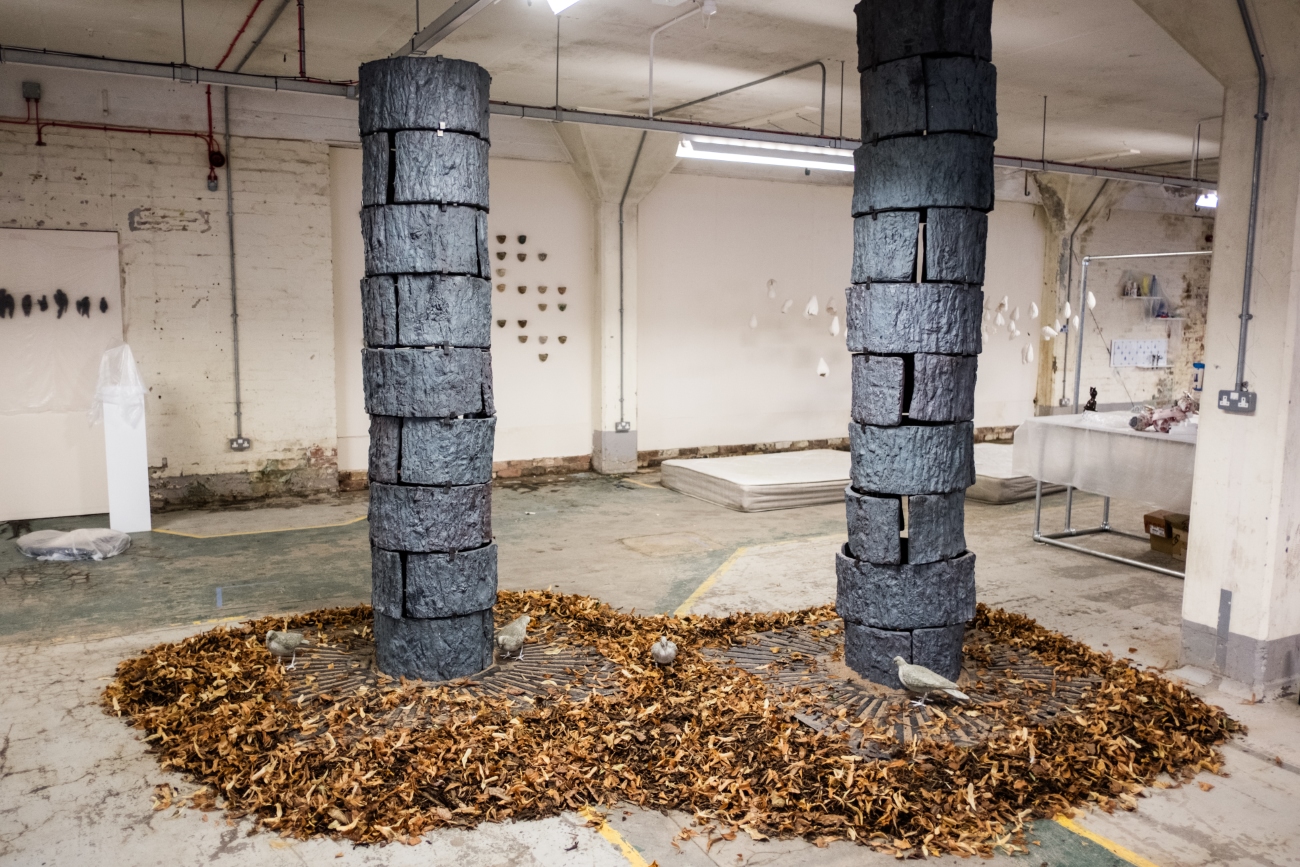
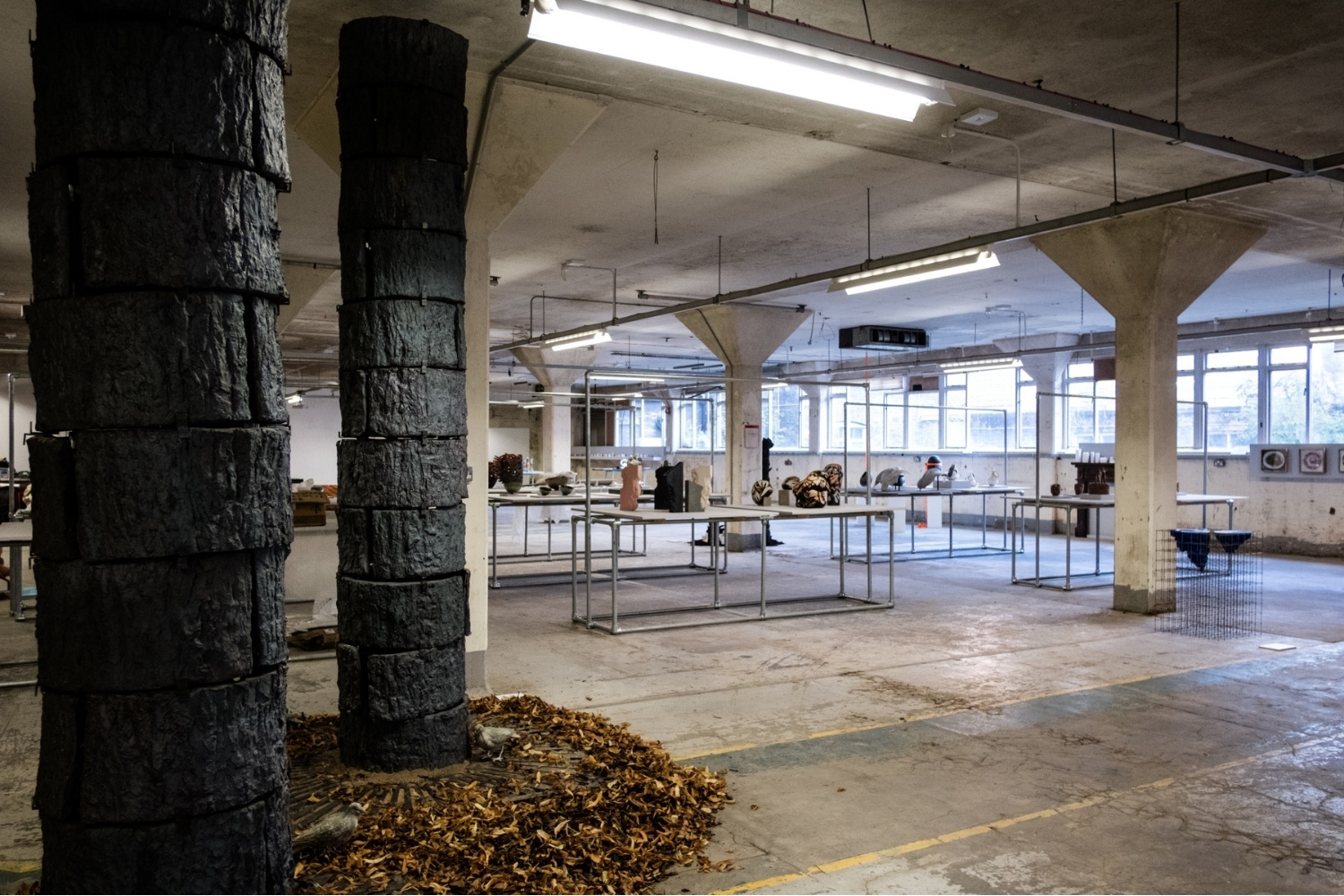
The Biennial also promotes new voices through Fresh 2025, featuring 25 early-career artists from across the UK and Ireland. Four were awarded Fresh Talent prizes, which include residencies and professional support: Bahareh Khomeiry (Guldagergaard International Ceramics Research Center), Kaytea Budd-Brophy (University of Staffordshire), Elliot Mountain (British Ceramics Biennial), and Catalin Filip (Grymsdyke Farm). Among the highlights were Bahareh Khomeiry, whose pieces spoke of resilience, freedom, and belonging; Nibras Al-Saman, who created tree-stump assemblages reflecting the devastation of nature and its fragile endurance; and Kate O’Neill, whose white pieces explored the quiet drama of domestic life. Together, they demonstrated how ceramics continues to attract artists with fresh perspectives and urgency.
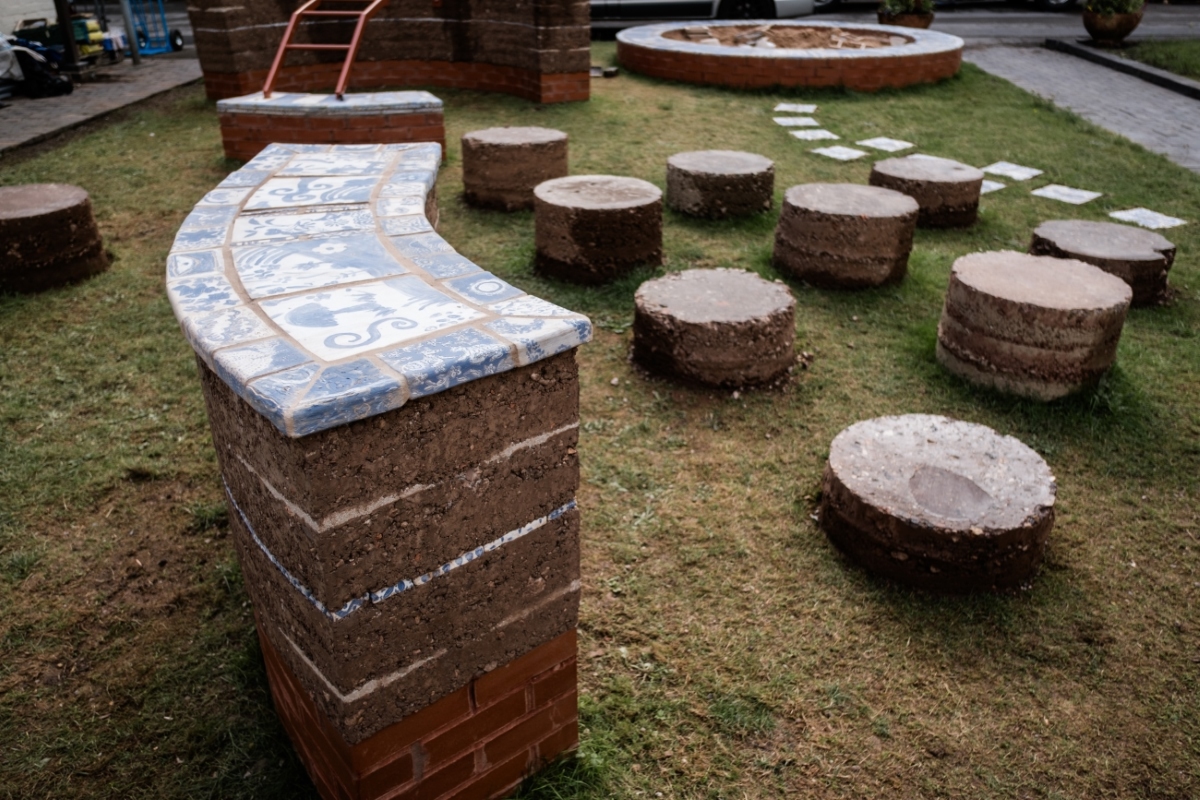
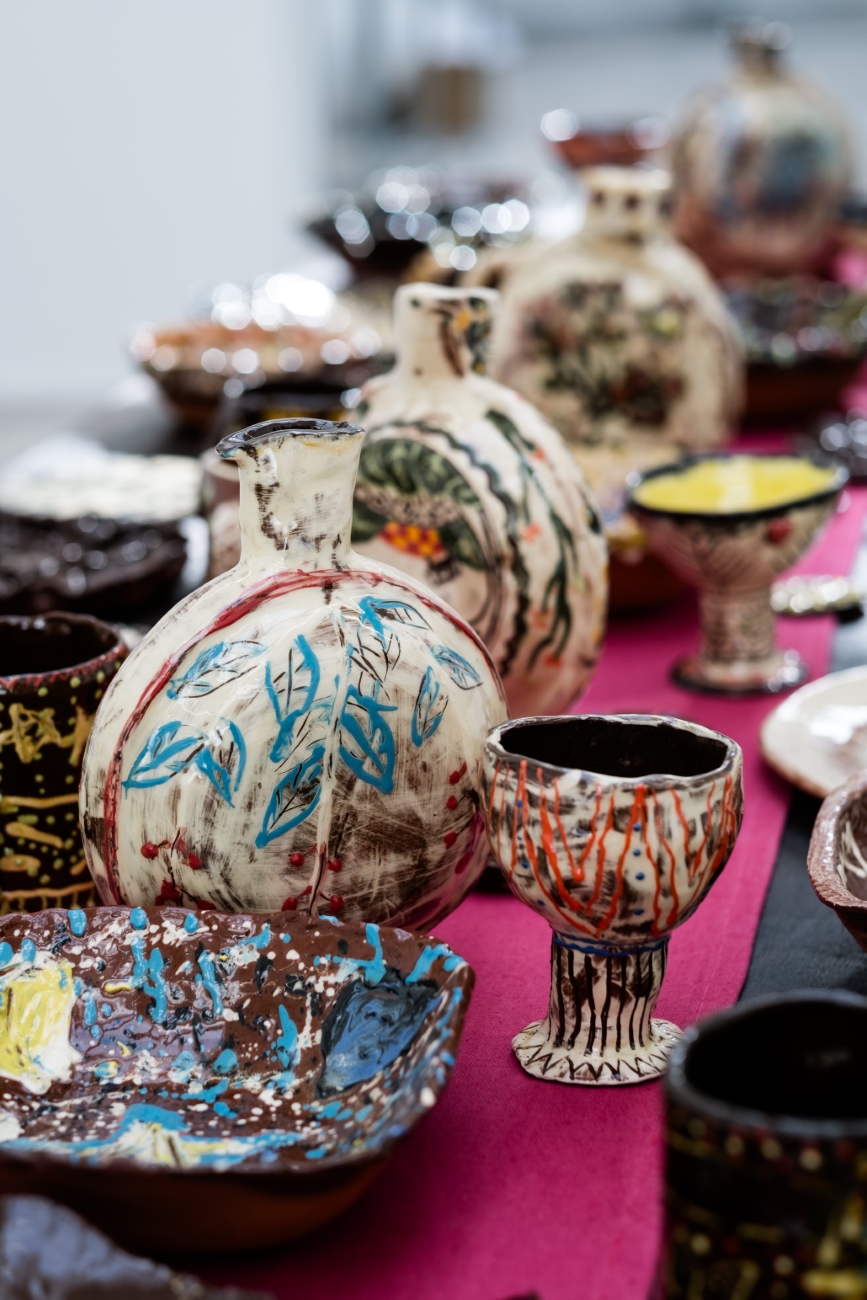
Equally significant were projects that placed process and participation at the centre. Slip Tales, created in collaboration with refugees and asylum seekers, produced a collection of vibrantly decorated ceramics that embodied the joy of shared making. Several other projects, such as Playscape or Johnny Vegas and Emma Rodgers’s installation, reinforced clay as part of the city’s identity, opening it to new audiences who might not otherwise encounter it. For Clare Wood, Artistic Director and Chief Executive, these kinds of long-term, socially engaged projects are at the heart of what the Biennial aims to do.


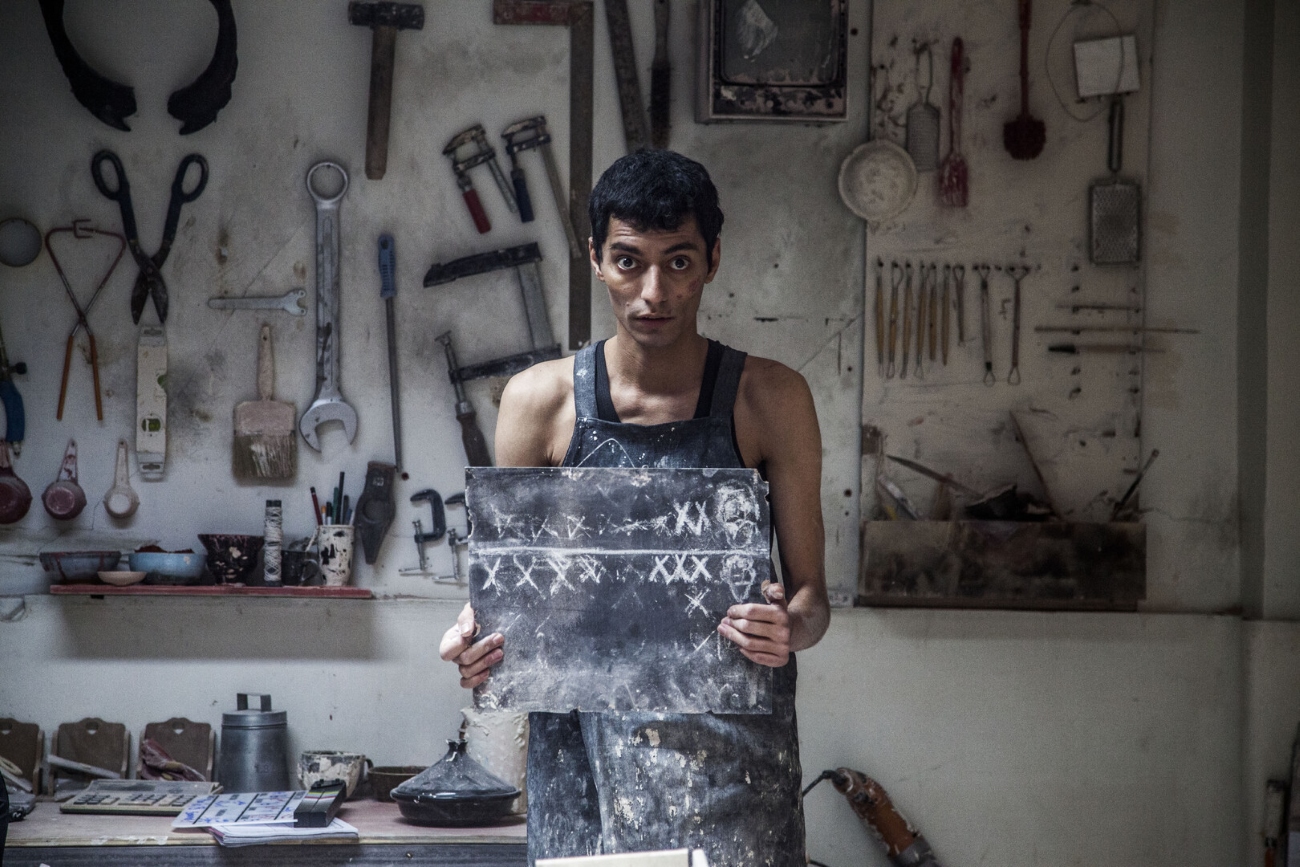
The Biennial also launched Clay Films this year, a new strand bringing together clay and moving image. One of the most affecting was Majid Asadi’s film, set in an Iranian pottery studio, which told a moving story of two brothers at odds, framed by the steady rhythm of working with clay in (their?)(our?) uncertain times. This section opened the Biennial beyond UK borders, inviting artists of African and Caribbean heritage based anywhere in the world. It’s an excellent initiative, and the resulting films on show were compelling; however, the connection to the Biennial’s focus on Stoke and the UK ceramics scene felt less immediate. Perhaps it is an approach that could be further developed or even inspire other international biennales.
Outside the Biennial, Stoke itself reinforced these impressions. I visited the Potteries Museum & Art Gallery, where the displays trace the region’s deep ties to ceramics (I was also amused to find a dimly lit Kim Simonsson in one of the rooms). Even small encounters spoke of this history: a taxi driver told me his father had migrated from India in the 1950s to work in the potteries. Today, some of his children live in the city, although none are involved in ceramics. Still, he knew that every two years something is happening in the center of town. For visitors, Stoke offers much more alongside the Biennial. The Visit Stoke website is full of ideas on what to see, do, and where to stay. I stayed at the Hilton Garden Inn, just a short walk from the Potteries Museum, with a clear view of one of the 47 surviving bottle kilns — a reminder of the estimated 2,000 that once dotted the city at the height of the pottery industry. It proved an excellent base for exploring the area.
The 2025 edition showed how the Biennial continues to shape Stoke-on-Trent as a meeting place for ceramics, and how creating with clay can also mean creating change. In the eighteenth century, lead glaze spread across Britain through travelling workers who carried skills and techniques from one pottery to another. Something similar happens today: artists from all over the UK come to Stoke to create and show their work, and in doing so, they spread new ideas out into the world. Each edition of the British Ceramics Biennial leaves behind its own traces, slowly reshaping the city and reinforcing the sense that clay still matters here.
Vasi Hîrdo is the Editor in Chief of Ceramics Now Magazine.
The 2025 British Ceramics Biennial is on view between September 6 and October 19, 2025, at Spode Works in Stoke-on-Trent.
Subscribe to Ceramics Now to read similar articles, essays, reviews and critical reflections on contemporary ceramics. Subscriptions enable us to feature a wider range of voices, perspectives, and expertise within the ceramics community.
Captions
- Installation views of Award 2025 and Fresh 2025, British Ceramics Biennial 2025, photographs by Jenny Harper
- Jo Taylor, (Not) Guilty Pleasures, 2025, photograph Jenny Harper
Daniel Silver, Family, 2025, photograph Jenny Harper
Fernando Casasempere, Sedimentary Selves, 2025, photograph Jenny Harper
Noor Ali Chagani and Clio Lloyd-Jacob, Existing to be Removed, 2025, photograph Jenny Harper
Leah Jensen, It was Lost in the Move, 2025, photograph Jenny Harper - Elliot Mountain, A Stale Conversation Between Two Brothers, photograph Jenny Harper
Bahareh Khomeiry, detail of Trapped, Breaking Free and United, photograph Jenny Harper
Catalin Filip, detail of Movement Phases, photograph Jenny Harper
Kaytea Budd-Brophy, detail of Beauty in the Breaks, photograph Jenny Harper - Just Be There, Johnny Vegas and Emma Rodgers, photograph Jenny Harper
Film still from the movie Brother’s Horn by Majid Asadi
Playscape at British Ceramics Biennial 2025, photograph Jenny Harper
Slip Tales at British Ceramics Biennial 2025, photograph Jenny Harper