


By Katherina Perlongo
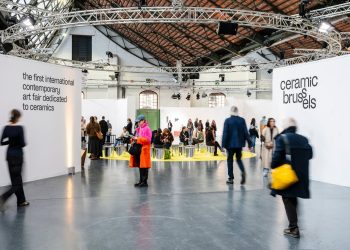
The 2026 edition of ceramic brussels came to a successful close, reaffirming its status as one of Europe’s most important platforms for contemporary ceramics. Over five days at Tour & Taxis in Brussels, the fair once again demonstrated the breadth of the medium, from object-based practices to fully articulated sculptural positions, while continuing to negotiate ceramics’ complex position between craft, design, and the visual arts.
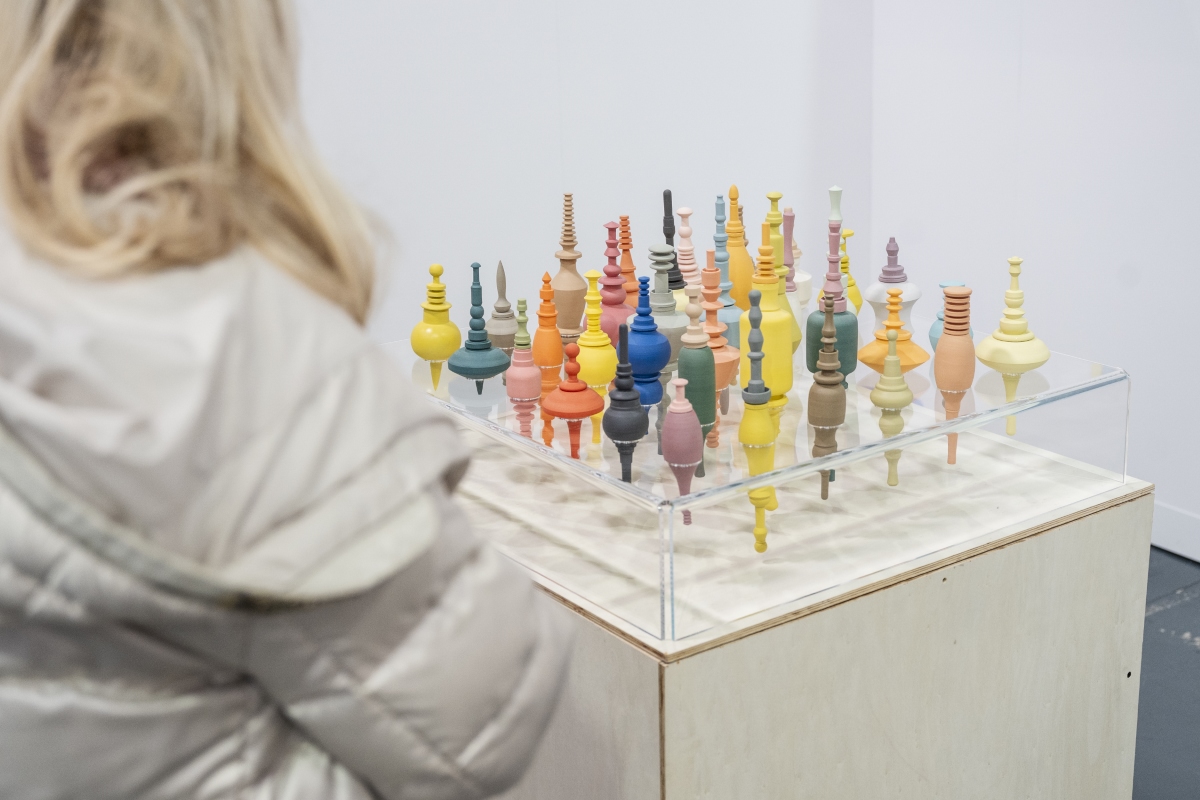
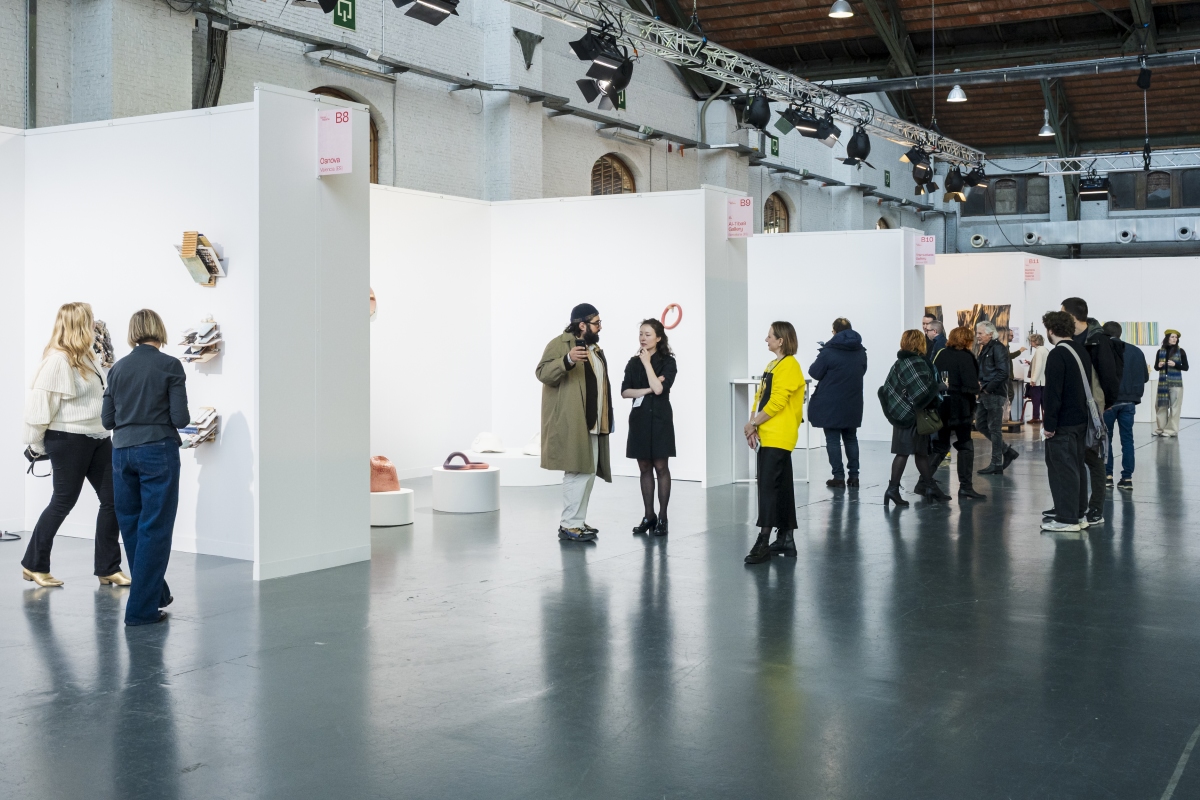
This year, ceramic brussels placed a special focus on Spain with Focus España, bringing together a curated selection of Spanish galleries, artistic positions, and a program of talks. The focus highlighted the country’s long-standing engagement with clay as a medium of artistic experimentation. The Spanish presence ranged from works rooted in traditional techniques to contemporary approaches, forming a diverse yet coherent chapter within the fair. Seven galleries participated in Focus España: Al-Tiba9 Gallery, Barrera Baldán Galería, METRO, Osnova, Ponce+Robles & Jorge López Galería, and Tramuntana Gallery.
Serving as the opening gesture of Focus España, the tribute to Enric Mestre (1936–2025) presented a carefully selected body of works by the sculptor, who passed away last year. Initiated by ceramic brussels in collaboration with Modern Shapes Gallery and supported by the Embassy of Spain in Belgium, the homage framed an artist whose contribution has been crucial in advancing the international visibility of contemporary ceramic sculpture and provided a symbolic and programmatic introduction to the fair. As one of the leading figures of the Spanish school, Mestre is mentioned alongside artists such as Jorge Oteiza and Eduardo Chillida. Initially trained as a painter, he turned to ceramics before fully embracing sculpture, gradually leaving functional forms behind.
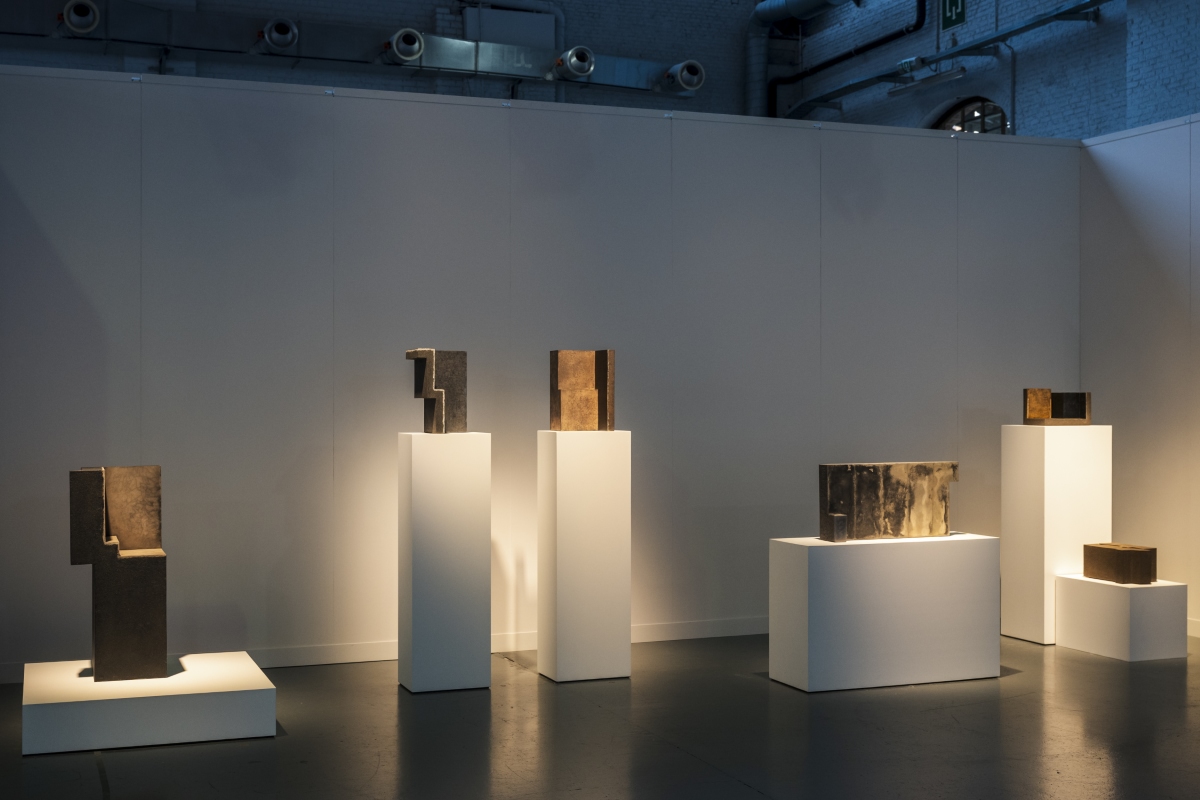
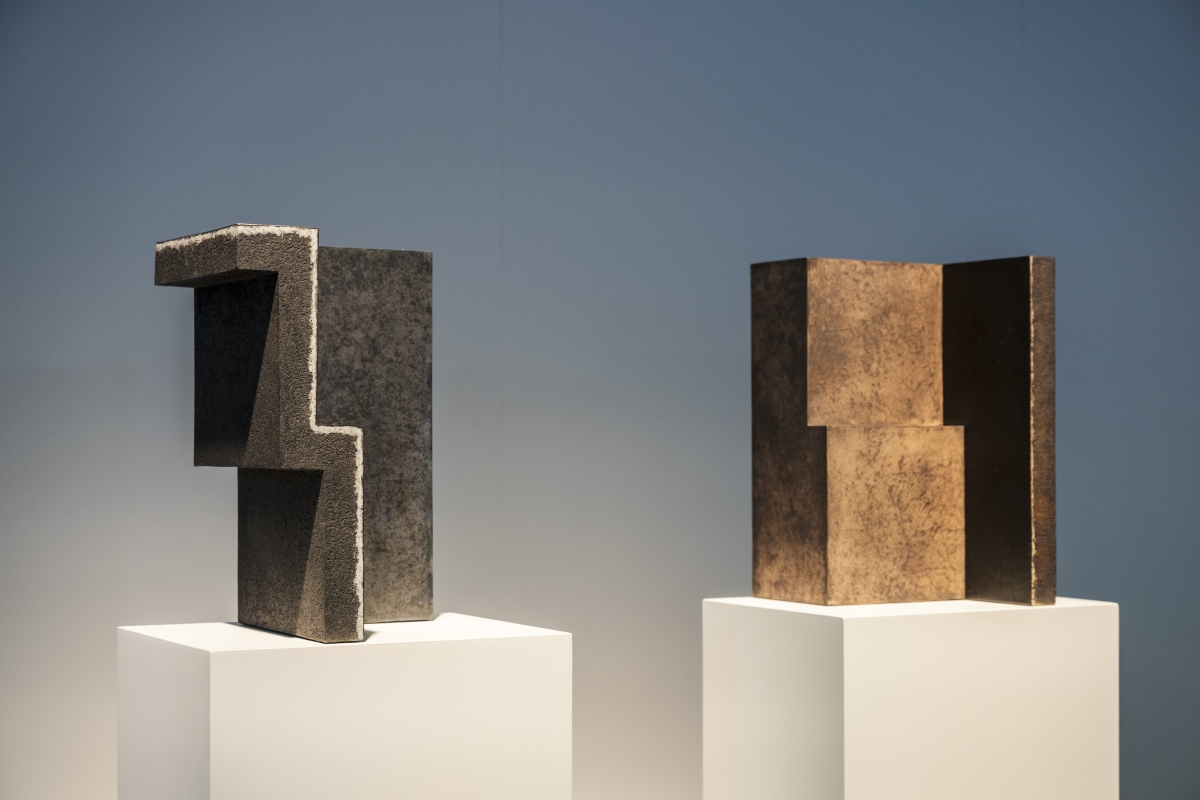
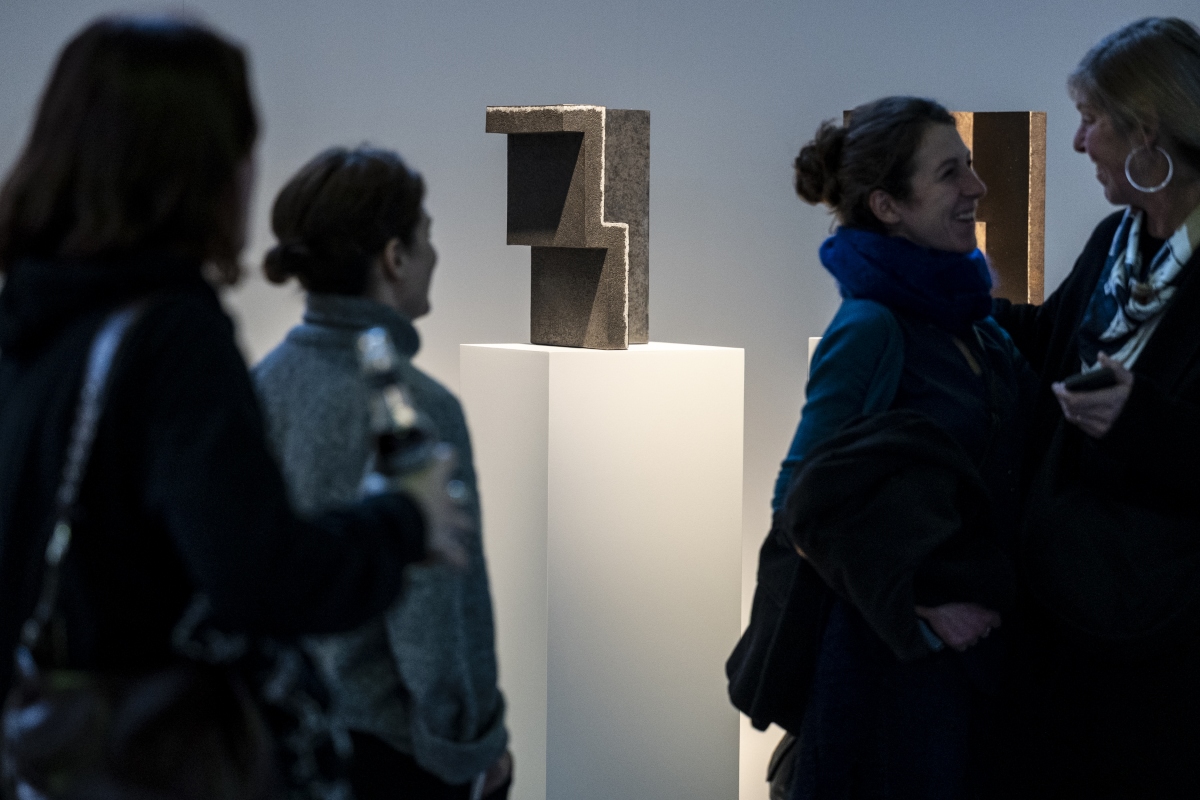
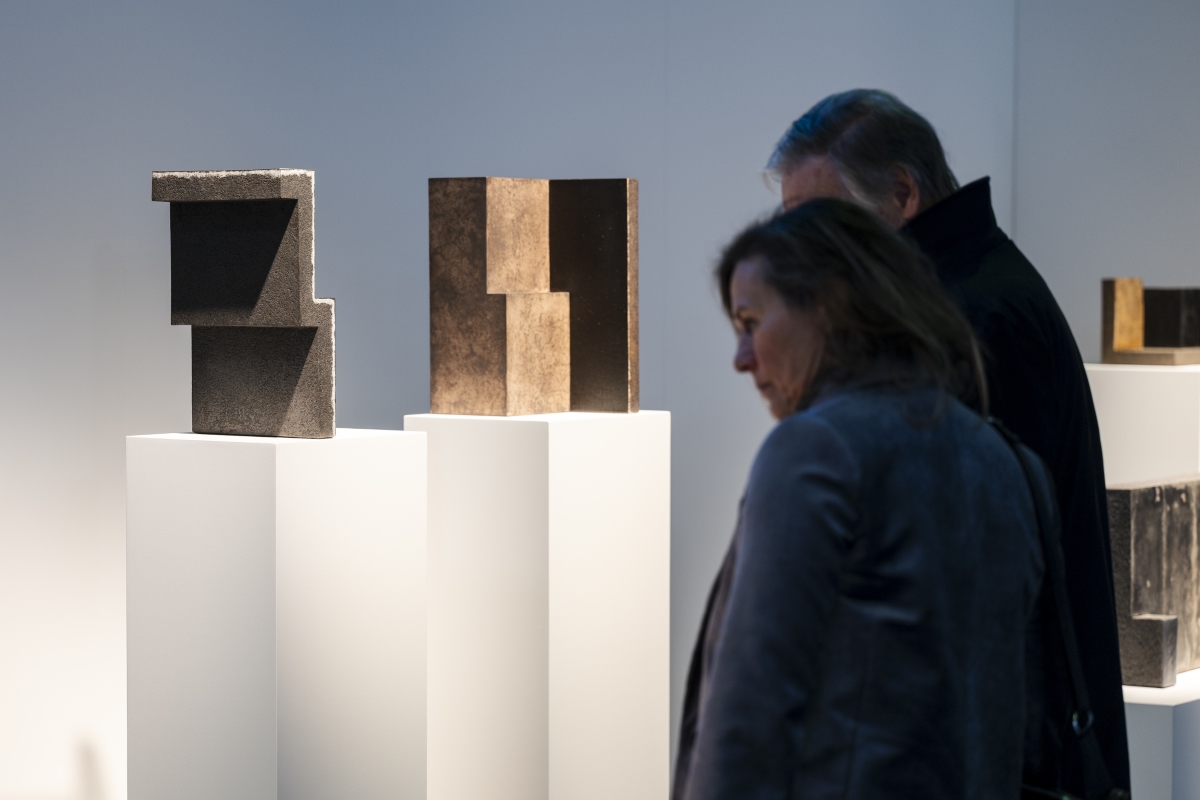
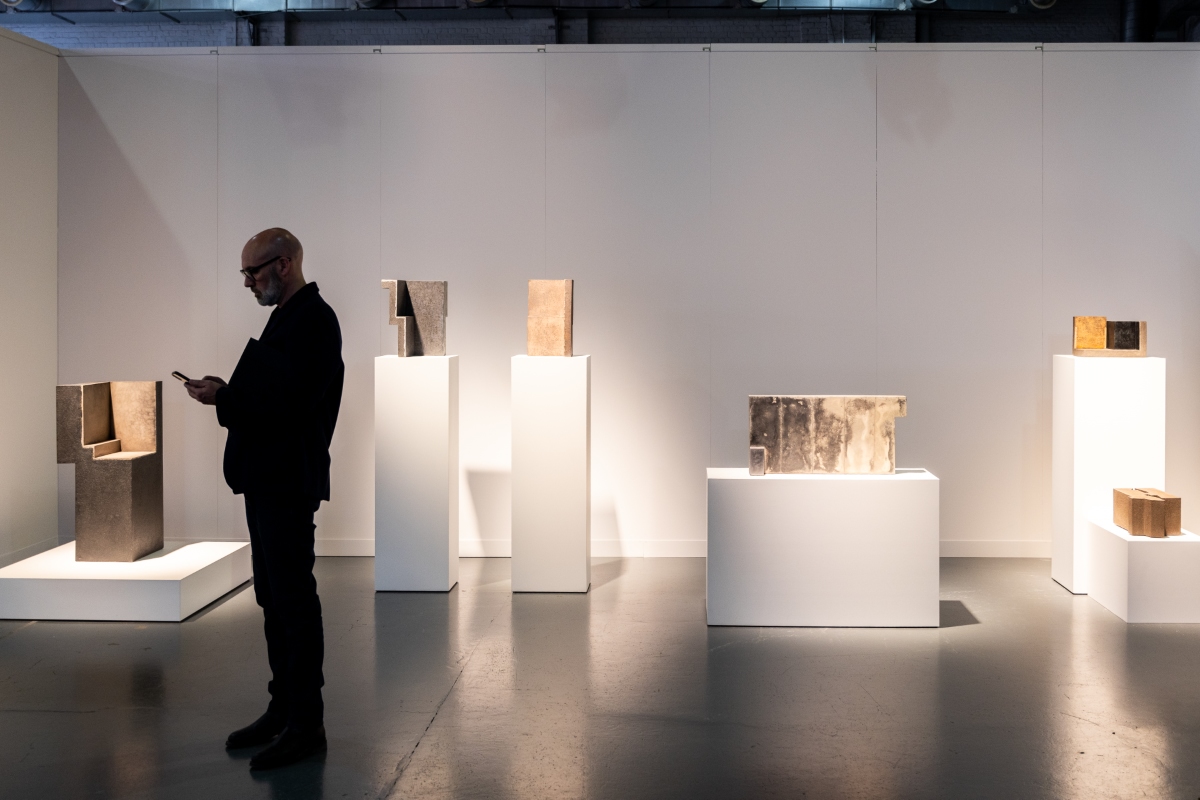
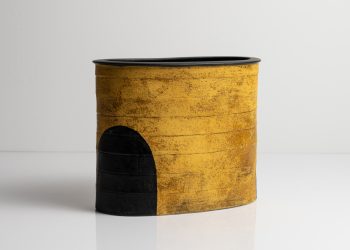
His austere, architectural sculptures – often boxlike, slab-built forms dominated by right angles – combine interlocking geometries with carefully balanced proportions to create objects that are both precise and poetic. Mestre’s work evolves through a sustained process of reduction and concentration, producing forms that evoke chambers, silos, sepulchers, deserted arenas, and empty piazzas: architectures that appear closed off yet emotionally charged. As Román de la Calle has observed, they convey loneliness and introspection, embodying spaces where memory and inner dramas might unfold.
On the fair floor, these sculptures were carefully lit, allowing their interplay of light and shadow to fully emerge, transforming the works into meditative, poetic, and emotionally resonant spaces. Far from being defined by function or material tradition, Mestre’s forms assert themselves as spatial creations with full sculptural and conceptual autonomy. Placed at the outset of Focus España, the homage did more than honor a singular artistic legacy. It established a clear interpretative framework, presenting ceramics as a sculptural medium fully embedded in the discourse of contemporary art rather than as a peripheral or hybrid discipline.
Continuing the dialogue on the sculptural potential of ceramics, Tramuntana Gallery from Girona emerged as one of the fair’s highlights. At the fair, it presented two artists from almost opposite generations – Claudi Casanovas and Berta-Blanca T. Ivanow – separated by nearly forty years, creating a compelling conversation across time and approach.
Claudi Casanovas (*1956) is an established figure in Spanish sculpture. Some of his works from the 2024 series Fumaroles were also presented at the fair by the French Galerie Capazza, underscoring his international significance. The large-format pieces, on display at Tramuntana reclaim clay’s physical presence as sculpture, not vessel or object, with surfaces built through mixed clays, organic inclusions, metals, and metal oxides, often sandblasted to create richly textured, eroded finishes. They evoke rock formations, centuries-old tree trunks, or objects predating human memory. At the same time, these monumental forms resist pure solidity. Their surfaces recall flames, smoke, and volcanic emissions – states of matter in flux. What appears enduring and immovable is thus charged with a sense of transformation, of matter caught in the midst of change. Up close, the works unfold as landscapes of brown tones, furrows, and fractures, where permanence and ephemerality coexist, and the dialogue with nature becomes palpable.
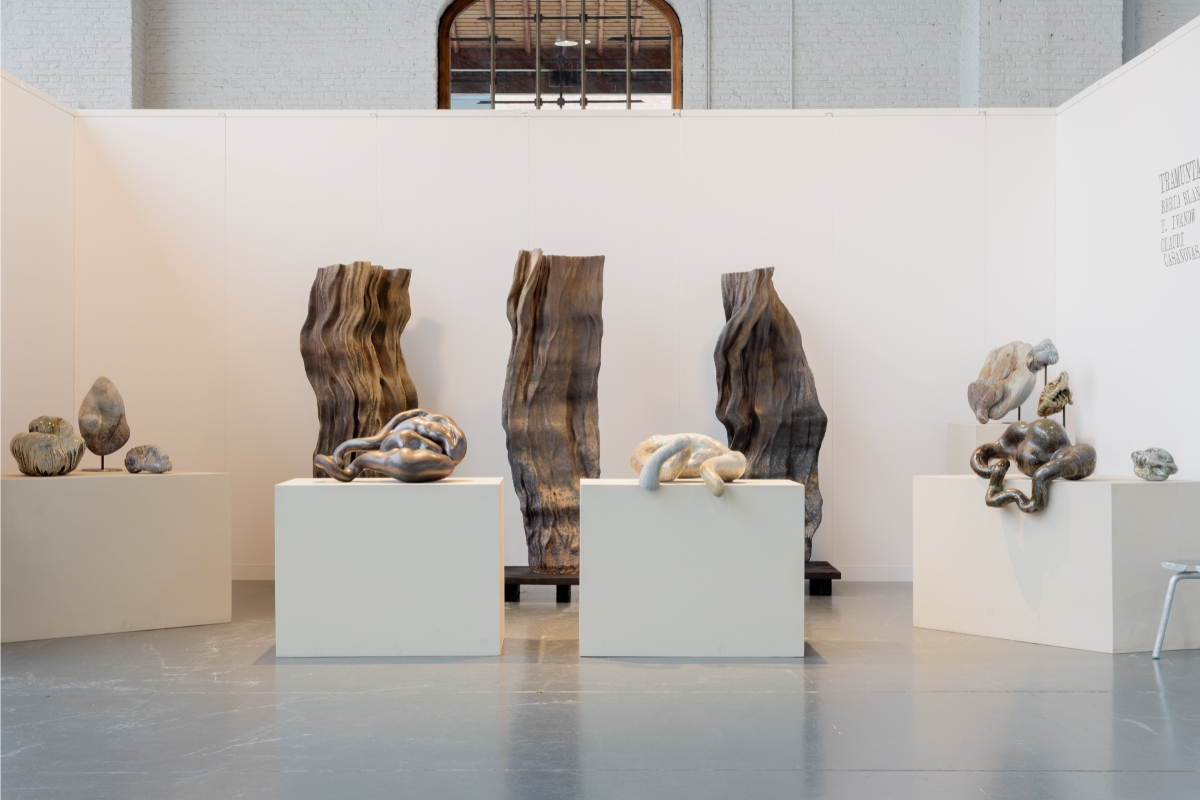
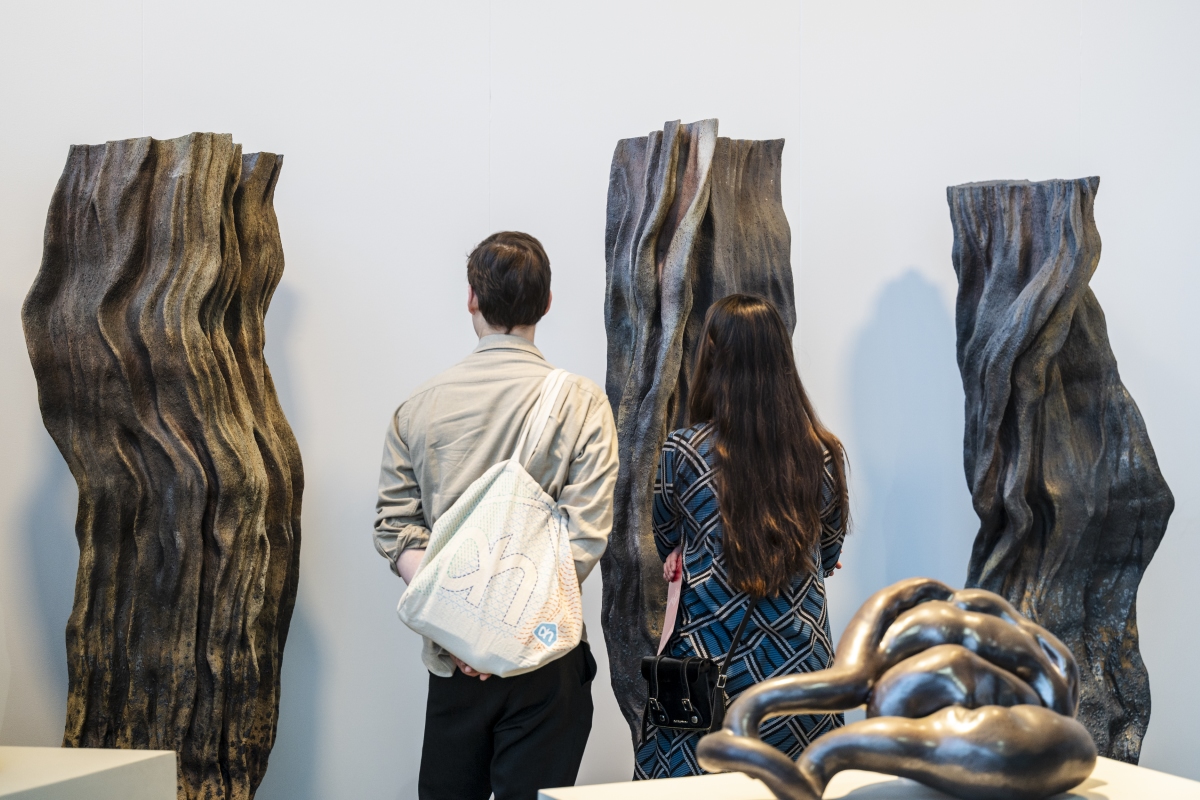
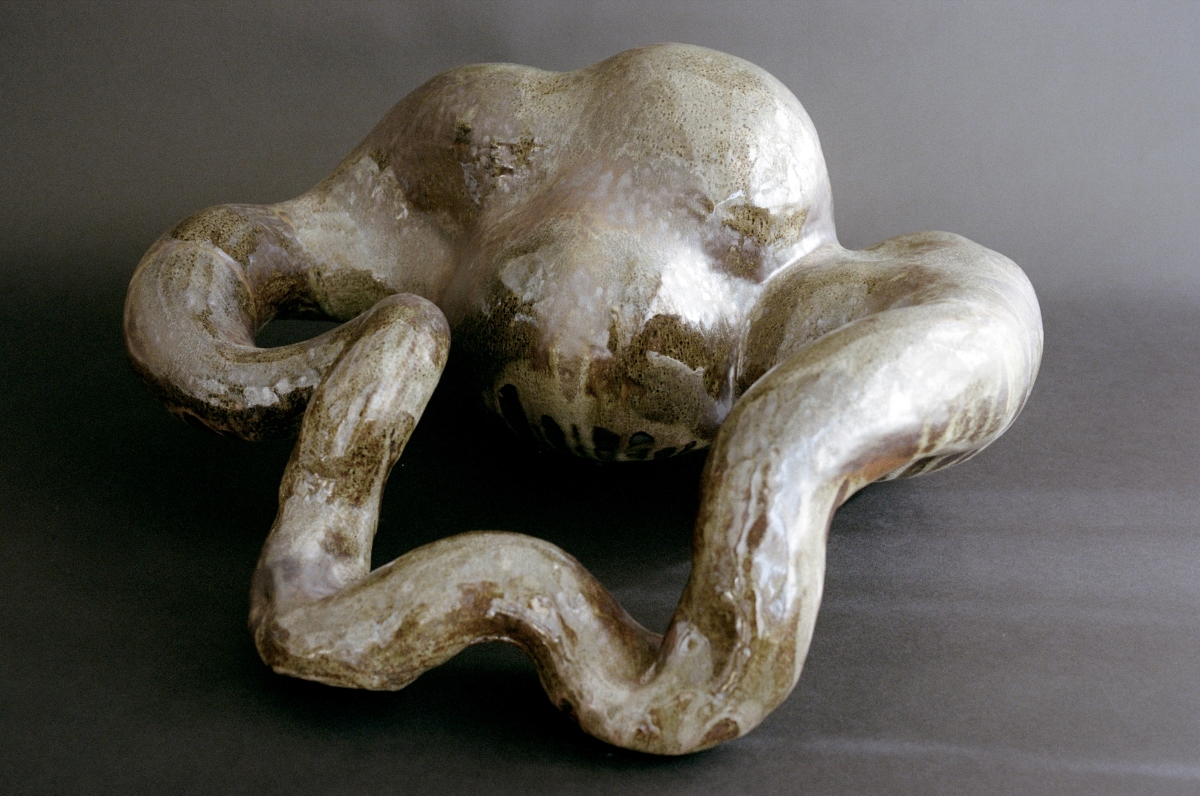
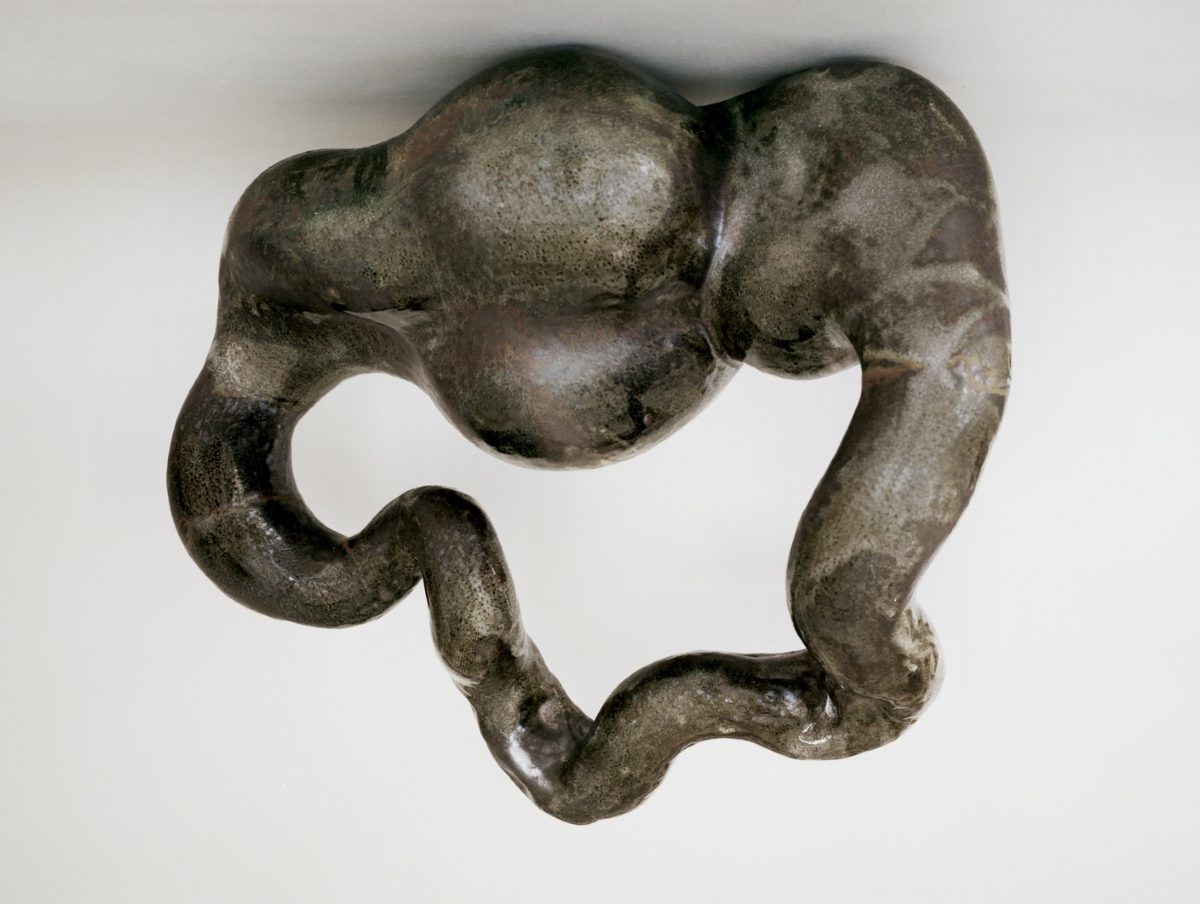
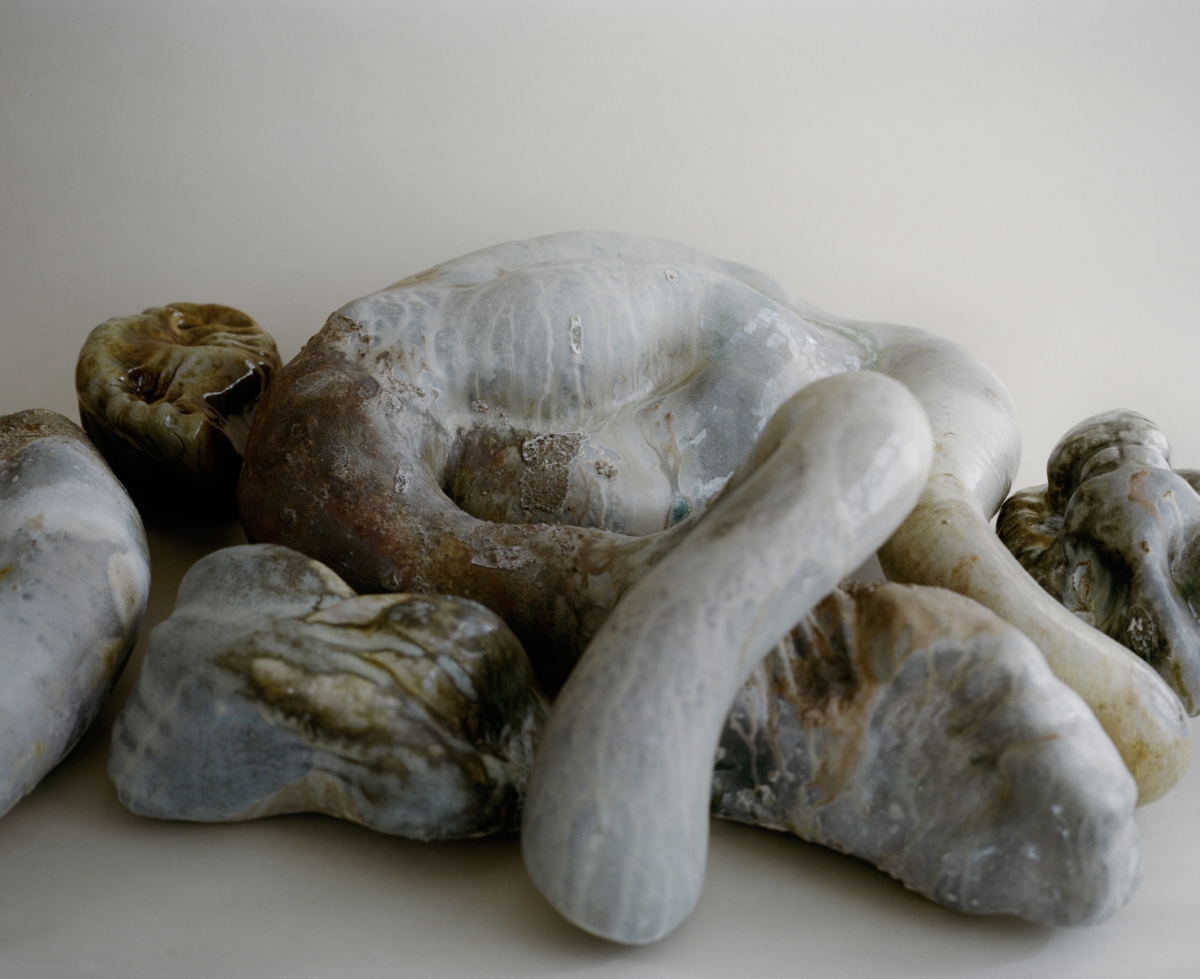
Working within ideas of transformation, Berta-Blanca T. Ivanow (*1992) introduces a practice that approaches clay as a mutable, responsive material. An emerging artist from Barcelona, Ivanow channels her multidisciplinary practice – sculpture, performance, and cinematography – into stoneware clay, occasionally combined with paper, metal, or soap, crafting forms that pulse with movement, transformation, and impermanence. Ivanow’s sculptures seem alive, in flux, suggesting processes of growth, decay, and regeneration. Executed in her studio in the Catalonian countryside, they carry a deep connection to the natural world, responding to the elements of earth, fire, water, air, and aether in a non-hierarchical interplay. Trained at Central Saint Martins in London and The Art Students League in New York, Ivanow balances rigorous material experimentation with a profoundly corporeal and intuitive approach. Her works resonate with primal, archaic forces, reflecting ritual, instinct, and the pre-linguistic memory of the body. Cracks, fissures, and hollowed spaces allow light to filter through, creating a sense of interiority and inviting viewers to explore the depth of each form. In their nomadic, mutable shapes, her sculptures suggest organisms in transit – wombs that do not give birth, bodies in potential, landscapes in motion – capturing the ephemeral and generative qualities of life itself. At the fair, Ivanow’s works emerged as one of the highlights, offering a powerful and distinctly embodied vision of ceramics as a living, transformative medium.
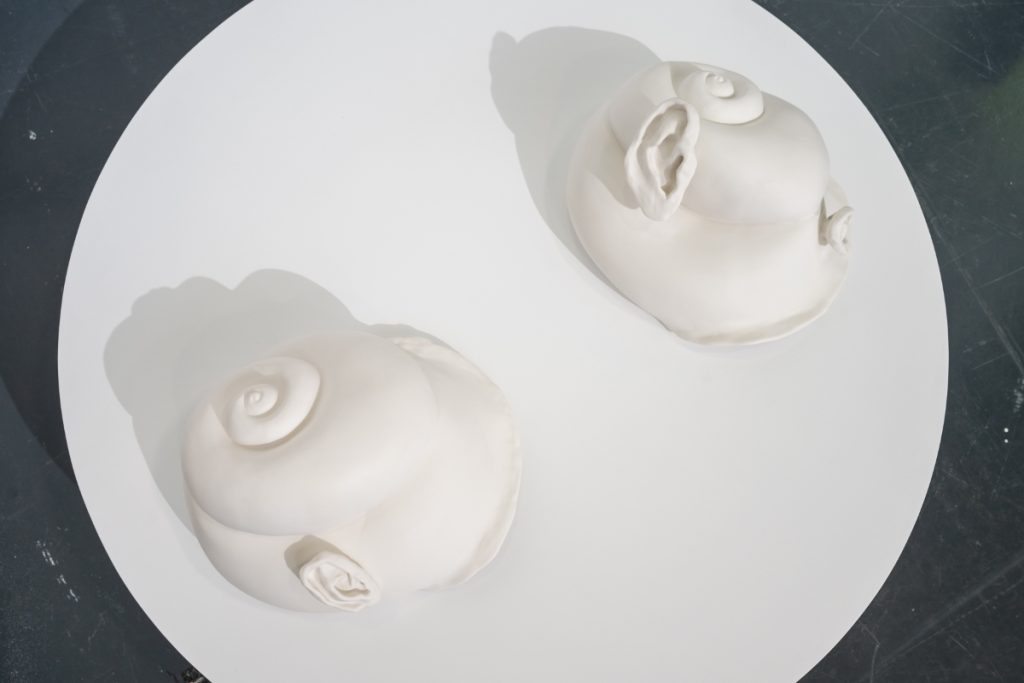
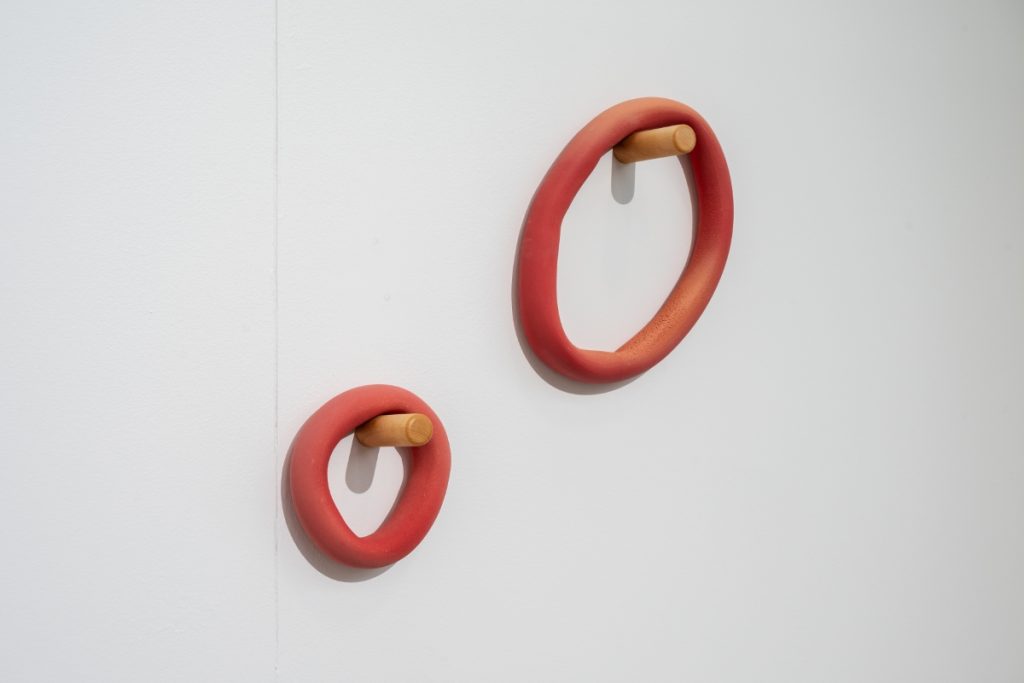
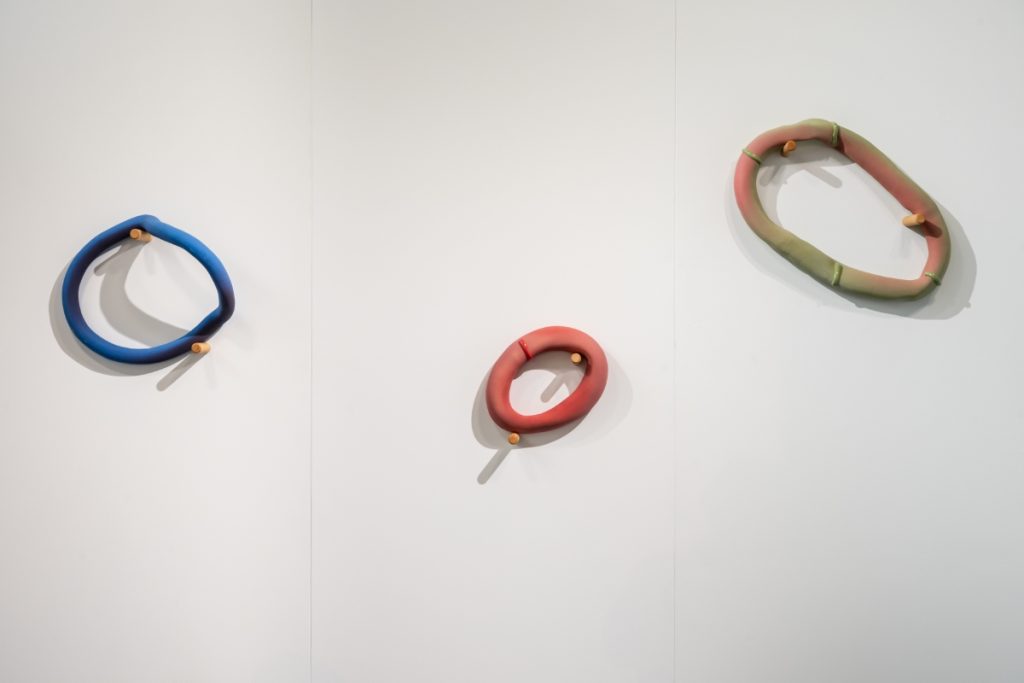
Another contemporary voice exploring the body and material engagement was presented by the gallery Osnova, which recently opened a location in Valencia and showcased works by Arina Antonova (1980) alongside Maya Hottarek (1990). Hottarek’s practice examines the body in relation to society, economy, and the environment, resisting binary divisions between nature and artifice, the organic and inorganic, the human and beyond. Her porcelain sculptures Introverted Extrovert (2024) and Extroverted Introvert (2024) explore the body as a portable container, shifting between forms reminiscent of snail shells and human ears, and reflecting modes of existence within a world in constant motion. It was Antonova’s Call for Action project, however, that drew special attention at the fair. Trained in archaeology and art history at the University of Hamburg and the University of Humanities and Social Sciences in St. Petersburg, and later specializing in illustration and animation at the University of Applied Sciences in Hamburg, Antonova brings a multidisciplinary perspective to her work. The artist’s approach is directly performative. Antonova transforms ceramic objects into interactive instruments inspired by wearable forms such as bracelets. The pieces are designed to be activated through movement: visitors are invited to try them on, shift with them, or resist them, creating a performative dialogue in which gesture, motion, and spatial awareness are inseparable from the object itself. Drawing on personal and historical references – from her mother’s plastic bracelets in the 1990s to memories of the late Soviet era – Antonova negotiates the tension between constraint and freedom, strength and vulnerability.
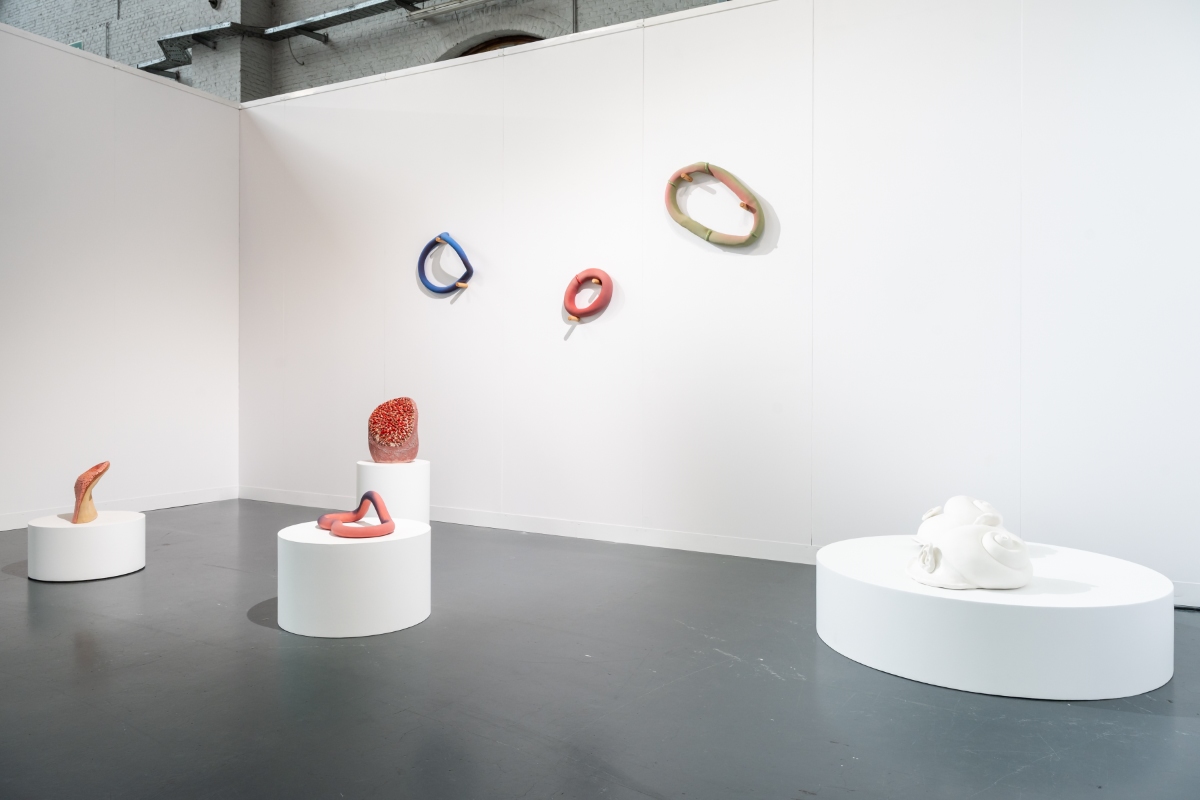
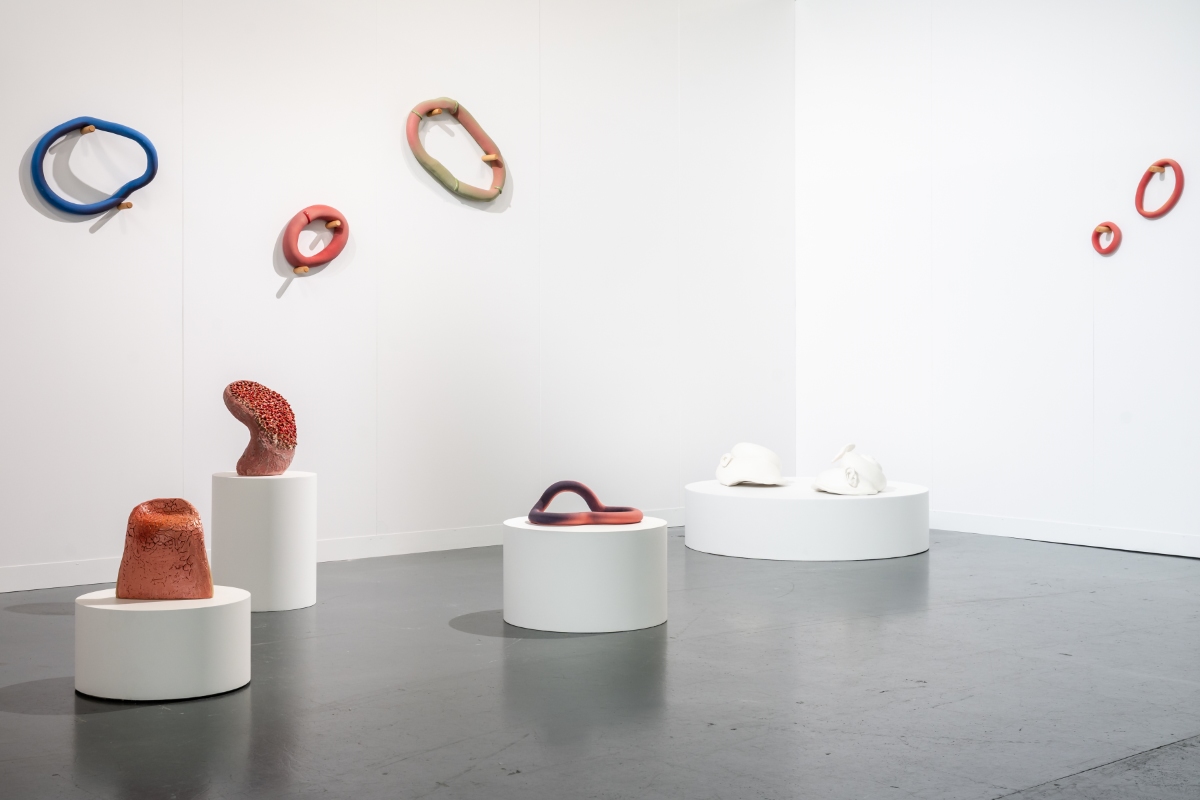
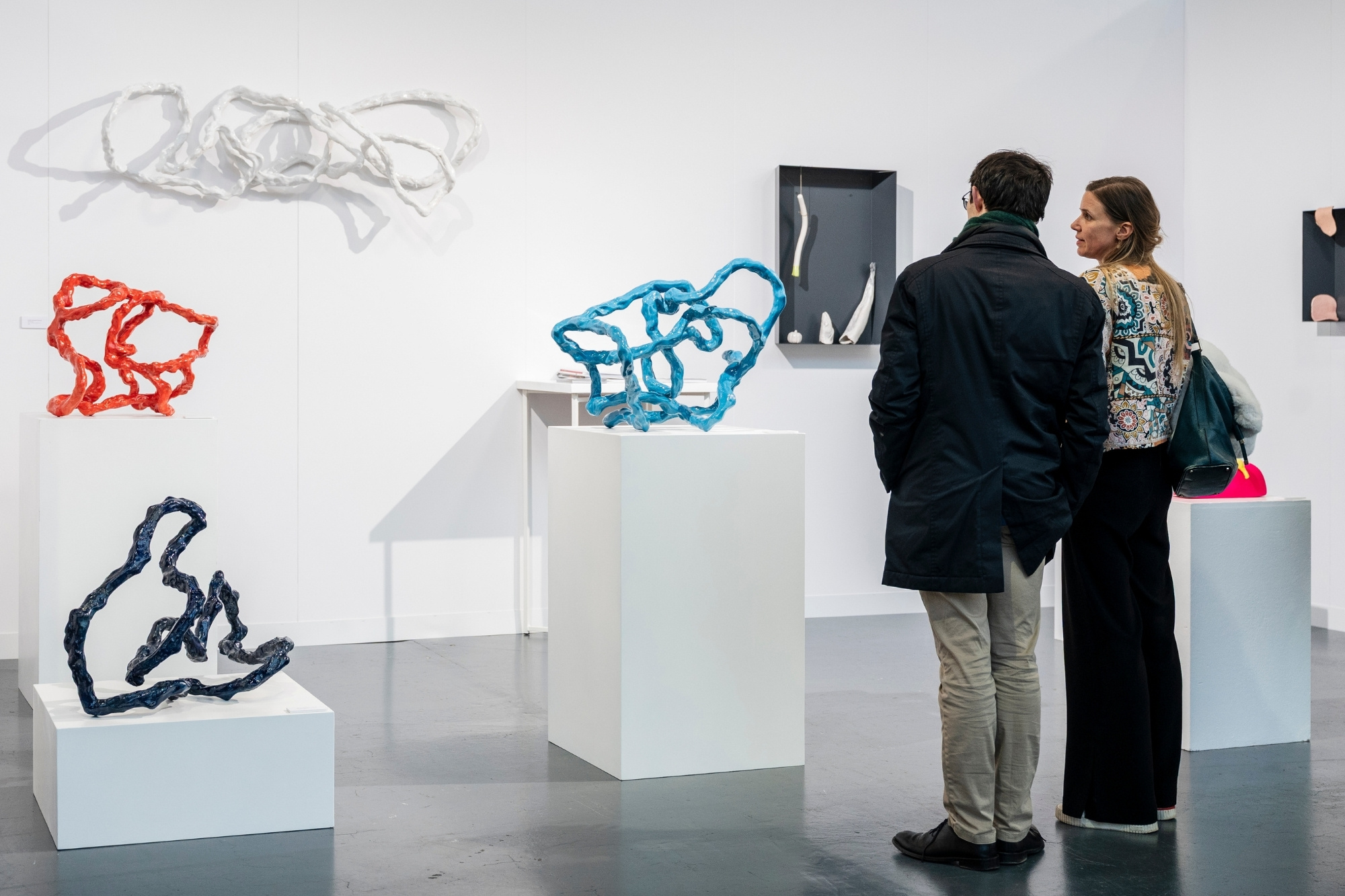
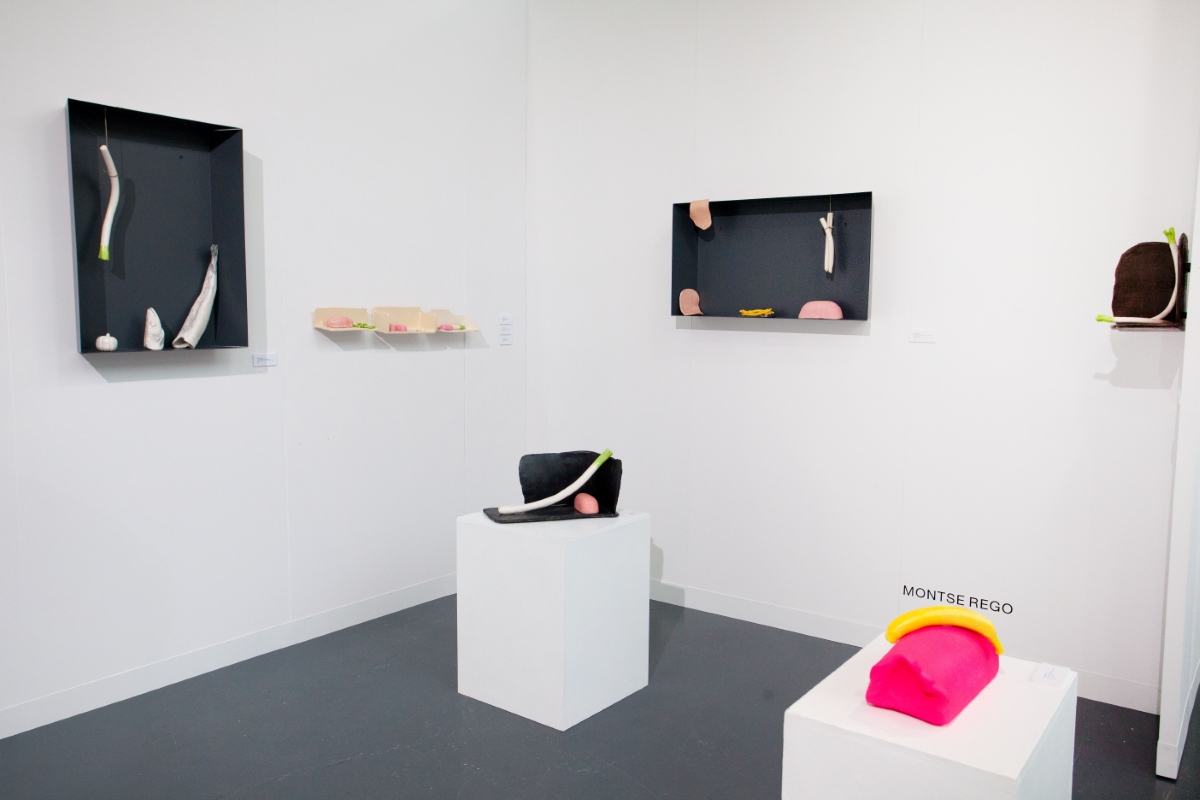
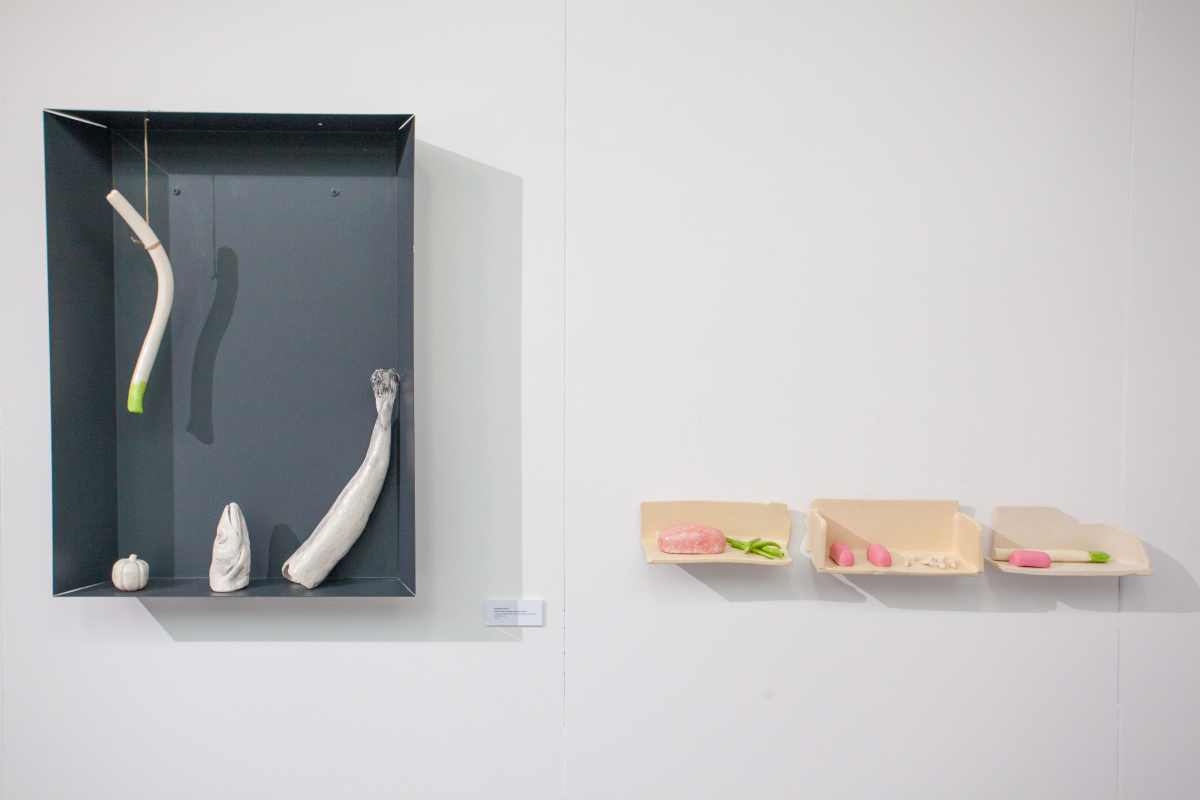
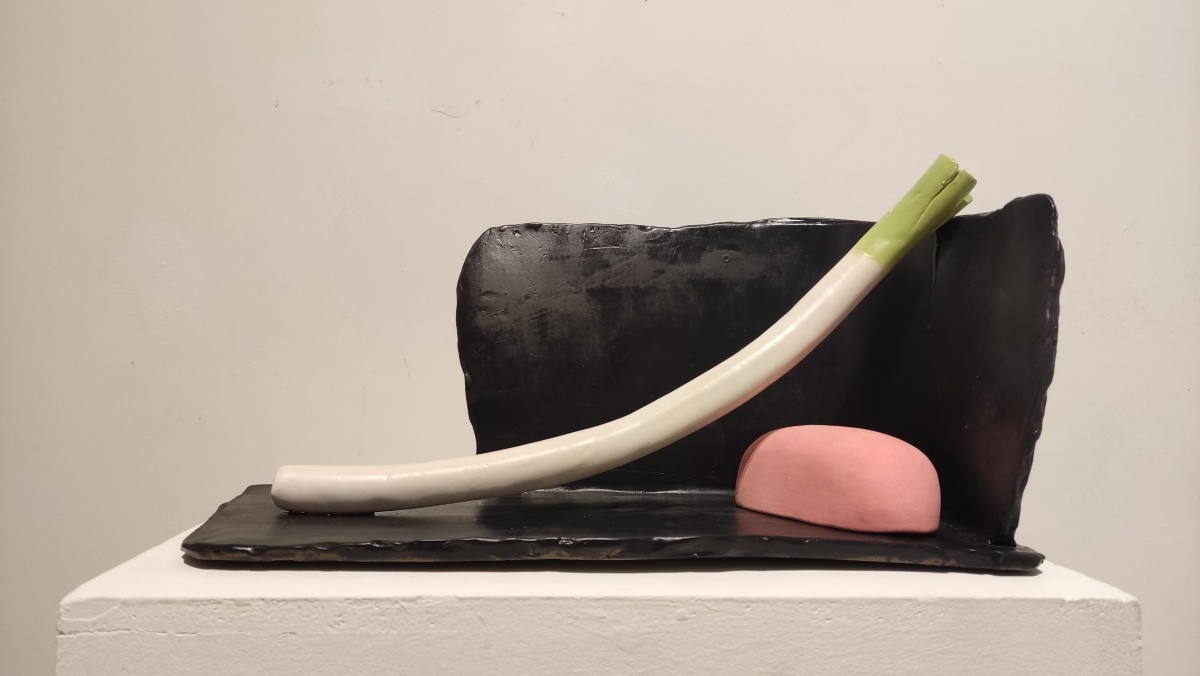
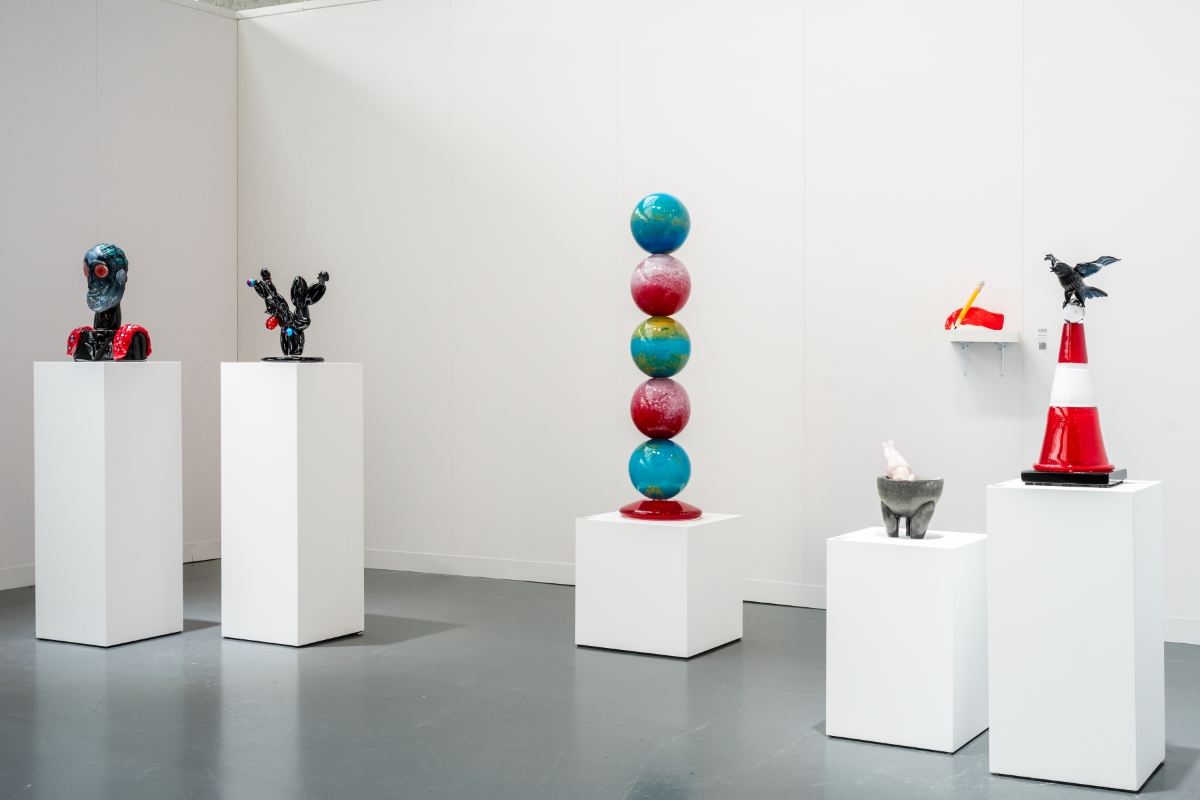
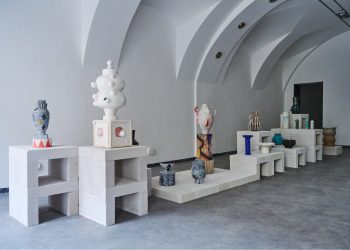
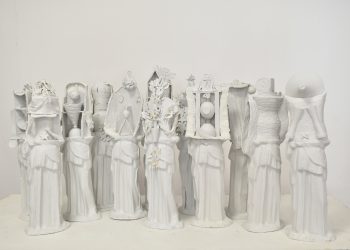
Notably, many of the artists presented by Spanish galleries at the fair work across multiple disciplines, with ceramics often forming just one aspect of their practice. Montse Rego (*1969), showcased by gallery METRO, exemplifies this interdisciplinary approach. Her work moves across installation, ceramics, photography, video, design, and jewelry, unfolding between the everyday, femininity, and the dreamlike to shape a distinctive personal visual language. In her Architectures for Still Life, Rego engages directly with the Spanish still-life tradition, drawing inspiration from the 17th-century painter Juan Sánchez Cotán, a master of the early Spanish bodegón. Cotán’s iconic compositions – still lifes of fruits, vegetables, and game arranged in austere stone niches, often with suspended objects – established a model of spatial clarity and contemplative rigor. Rego reinterprets these formal and conceptual principles, creating theatrical structures where natural foods coexist with ultra-processed products such as mortadella. The works operate on multiple levels simultaneously: the historical dialogue with Spanish art, references to pop culture icons like the “Pink Panther,” and a critique of contemporary consumer society all coexist, unfolding gradually as viewers explore the pieces. The juxtaposition of the wholesome and the banal, nutrition and spectacle, permanence and ephemerality, introduces humor and playfulness into the composition, while the underlying formal rigor remains central.
Beyond the gallery presentations, Focus España unfolded through a program of talks and conversations, bringing together leading voices from the Spanish ceramics scene – artists, curators, museum directors, and gallery representatives. A recurring theme throughout these discussions was how ceramics can gain greater visibility within the contemporary art field, and the role institutions and museums play in this process. One of the key conversations, Ceramics in Spanish Institutions: Challenges and Shared Perspectives, featured Oriol Calvo Vergés (president of the International Academy of Ceramics), Jaume Coll (Director of the National Spanish Ceramics Museum in Valencia), and the Barcelona-based artist Sophie Aguilera, addressing questions such as: How do Spanish institutions support, promote, and give visibility to artistic ceramics? The discussion highlighted both structural challenges and opportunities: It was noted the fragmentation of national narratives, with many autonomous regions acting independently, while museums were seen as crucial not only for acquiring ceramic works for their collections but also for setting standards and shaping public perception of the medium. All three panelists agreed on the ongoing “fight for the image of ceramics”, emphasizing that, despite a growing contemporary market, the struggle for recognition is similar to that in other countries. Education also emerged as a central concern: while many Spanish artists are trained in industrial ceramics, dedicated ceramics programs are largely absent from most Departments of Fine Art. This gap underscores the importance of both institutional support and informal pathways in sustaining contemporary ceramic practice.
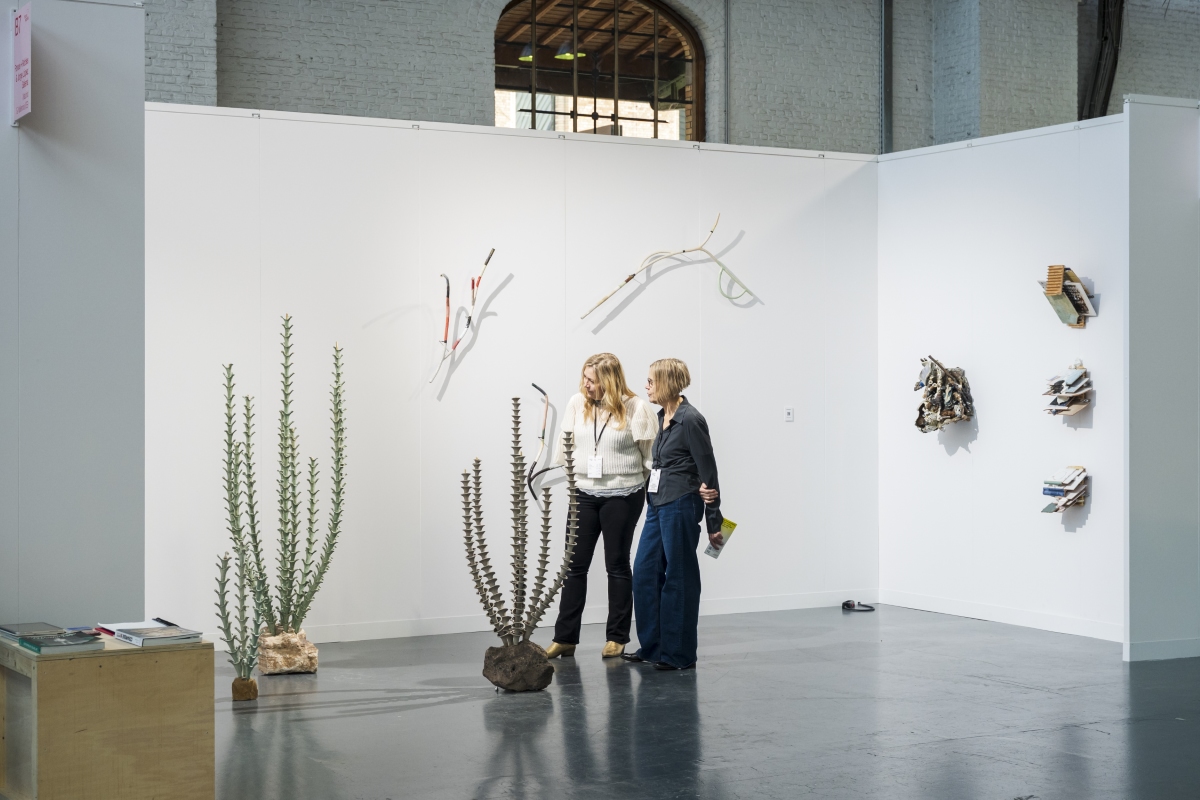
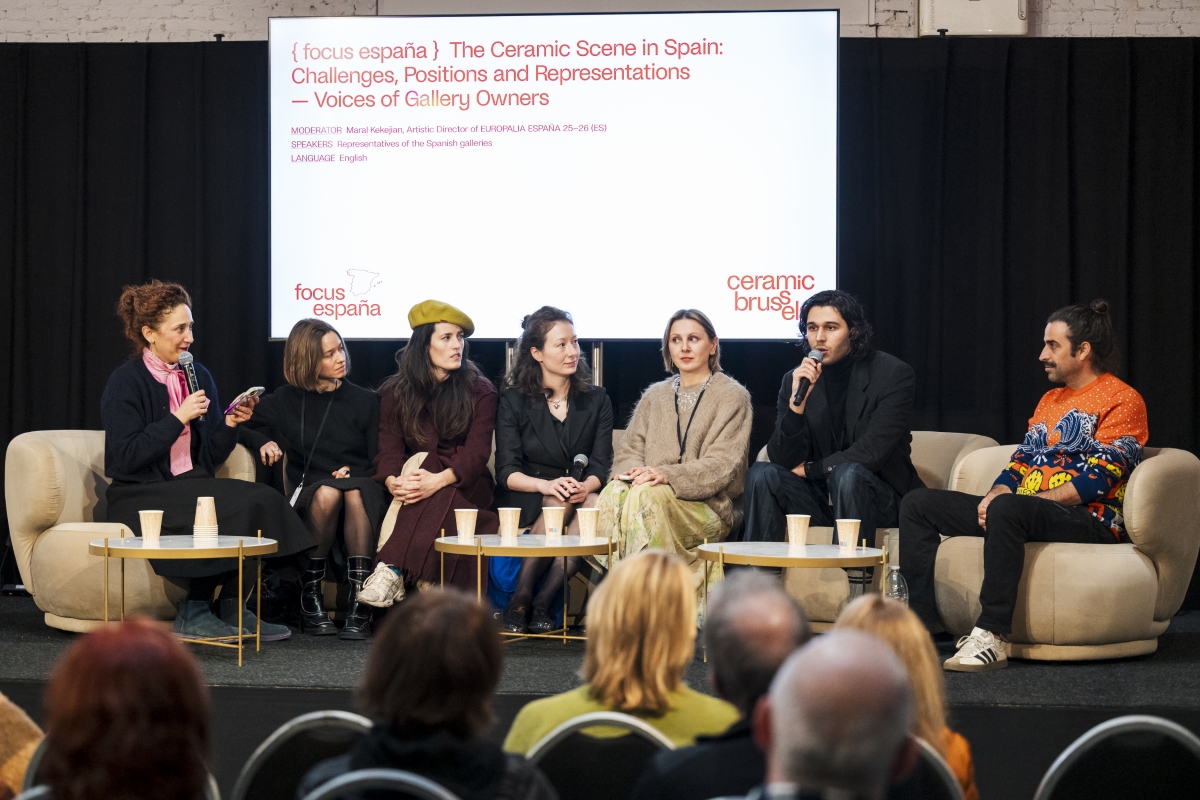
A second talk, The Ceramic Scene in Spain: Challenges, Positions and Representations – Voices of Gallery Owners, reinforced this perspective. The participating gallery owners, none of whom focus exclusively on ceramics, emphasized their openness to artists working across multiple media, including clay. This inclusive approach reflects the diversity of trajectories that bring artists to ceramics – a diversity clearly visible among the artists presented at the fair – and underlines the need to recognize and integrate these varied paths into the broader discourse. At the same time, the conversations acknowledged positive momentum: the field is evolving, interest is increasing, and there is a clear need for dedicated platforms, publications, and galleries focused on ceramics. While some might question whether a fair exclusively for ceramics risks reinforcing marginalization, it was also recognized as precisely the kind of initiative that can nurture visibility, build audiences, and connect collectors to the medium. What emerged across the talks and throughout the fair was not a sense of closure, but of continuity: while the energy and dialogue were visible everywhere, it became clear that the contemporary ceramics scene in Spain, like elsewhere, remains a field in motion, inviting ongoing attention and engagement.
Katherina Perlongo (*1989 in Bolzano, Italy) is a Berlin-based curator working at the intersection of contemporary art, craft, and design. With experience in curatorial and leadership positions across institutions dedicated to modern and contemporary art, her practice focuses on materiality, making, and the narratives embedded in objects.
The 3rd edition of ceramic brussels took place from January 21 to 25, 2026.
Subscribe to Ceramics Now to read similar articles, essays, reviews and critical reflections on contemporary ceramics. Subscriptions help us feature a wider range of voices, perspectives, and expertise in the ceramics community.
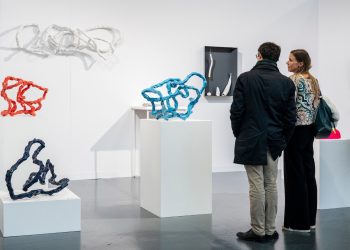
Featured image: METRO at ceramic brussels 2026. Photo by Geoffrey Fritsch


Comments 1