Anemoon On Fire: Selected works, 2022-2026
Anemoon On Fire creates ceramic sculptures that imagine how life might evolve in a future transformed by climate change and pollution. Fascinated by marine biology, deep-sea creatures, and speculative evolution, she invents new species that appear to have adapted to increasingly hostile environments. Her fictional organisms combine recognizable elements of existing animals with mutations driven by rising waters, plastic pollution, and other ecological disruptions.
Nature is both fascinating and concerning in her practice. Drawing partly on her experiences as a diver, Anemoon considers survival and adaptation as ongoing processes: some species disappear, others transform, and entirely new forms of life emerge. Personal experiences and inner anxieties also enter this imagined ecosystem, giving the creatures an emotional dimension as well as an environmental one.
Working primarily with porcelain, she builds highly detailed sculptures and develops their surfaces with engobes, oxides, pigments, and layered glaze combinations. The resulting works sit between scientific specimen and fantasy creature, proposing strange yet conceivable inhabitants of a world altered by human activity.
Captions
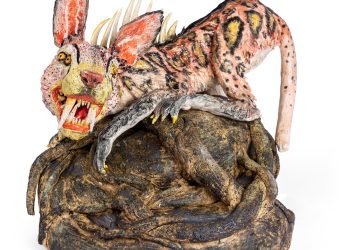
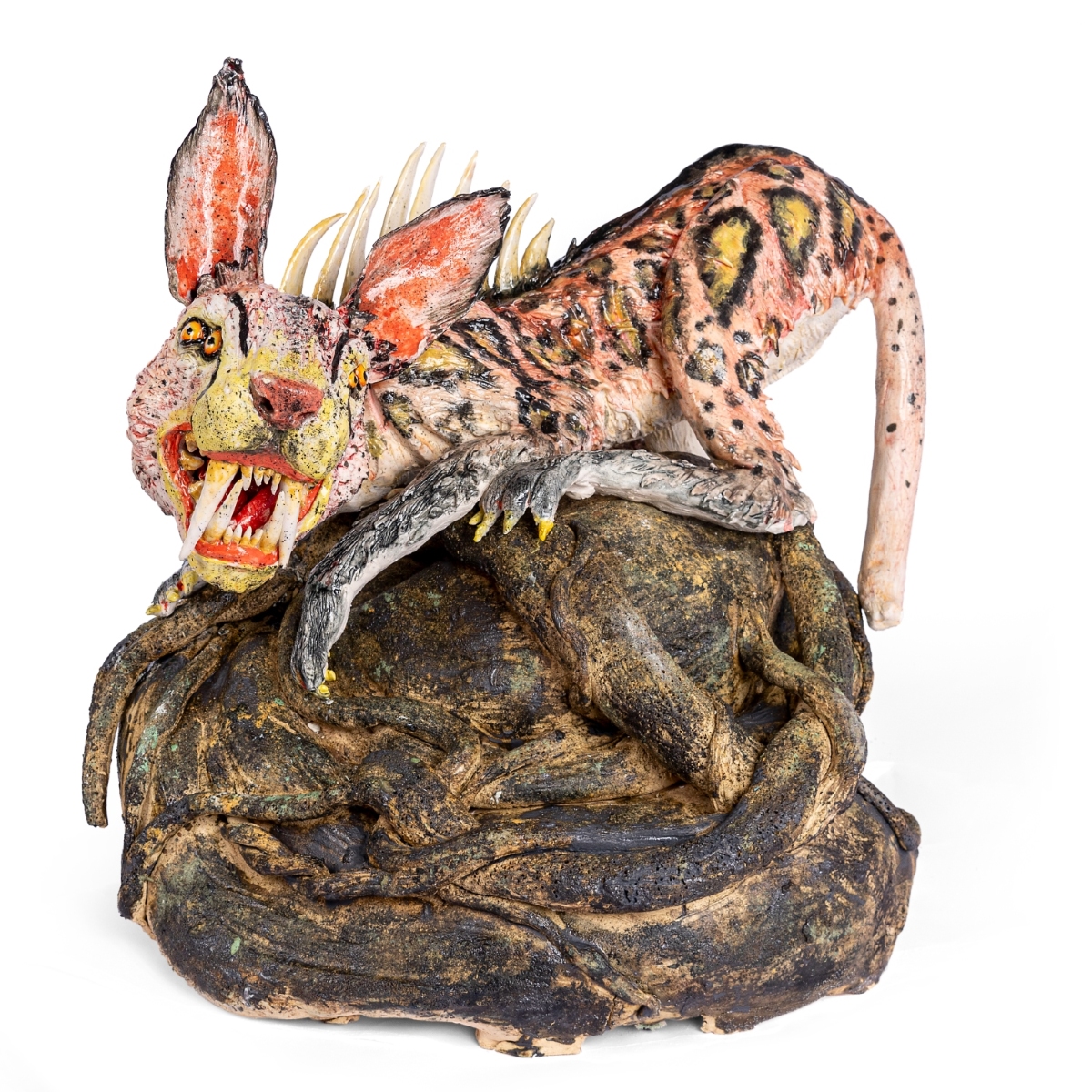
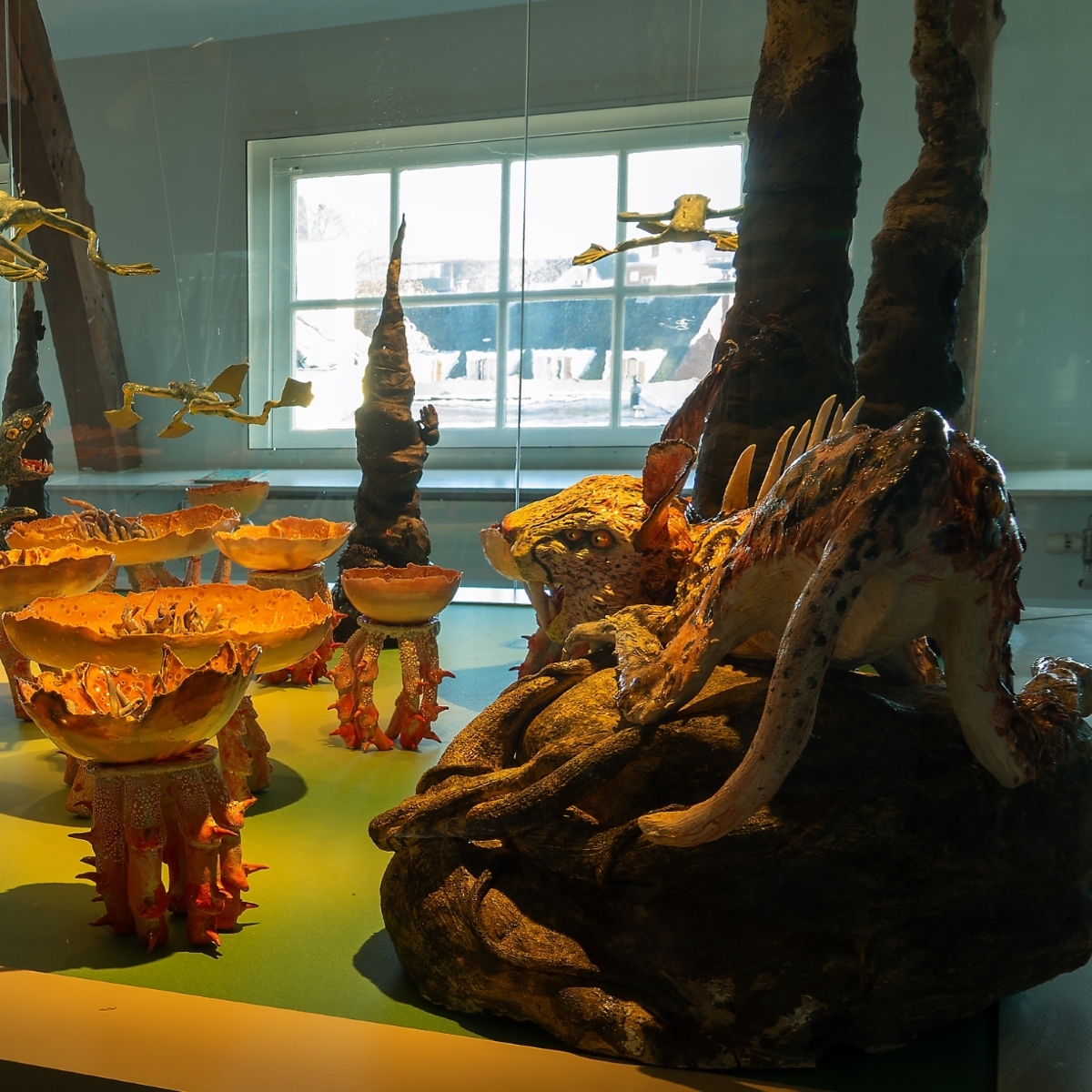
- Culter Cat, 2024, Handbuild porcelain and stoneware. The Culter Cat dominates the forests, both on land and in the water. Their powerful hind legs combined with the development of membranes between their toes make them fast swimmers, able to pursue their prey into the water. On land they are able to rush through the dense vegetation of the mangrove thanks to the razor-sharp protrusions which extend from the exposed skeleton at their shoulders. Together with their speed, agility and strength, the Culter Cat’s low-profile demeanour has granted it a position at the top of the food chain as the apex predator of the mangrove environment.
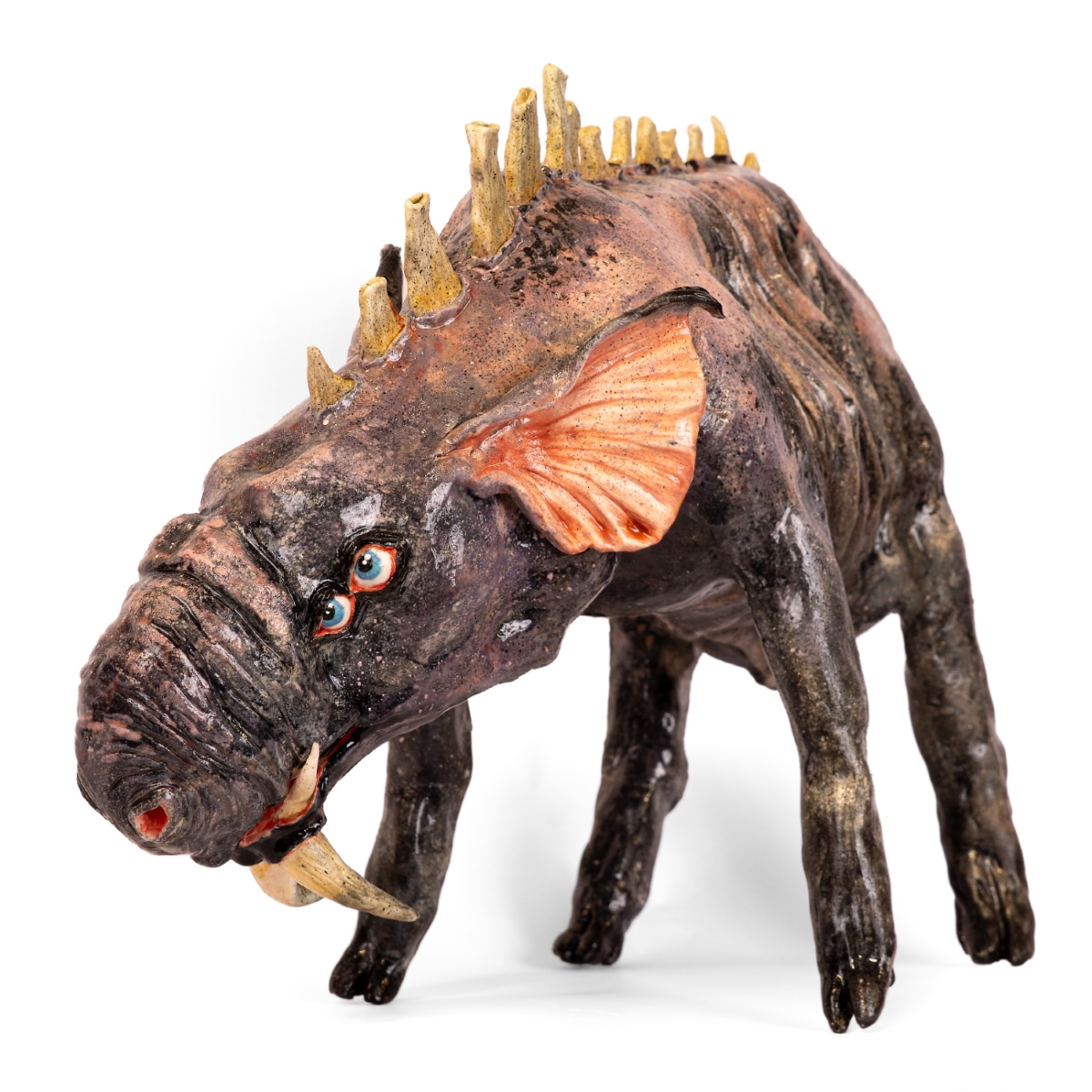
- The Dolabra Swine, 2025, Handbuild porcelain. In the future, the Dolabra Swine is widespread around the globe, but this one in particular is found in Asia. They use their downward-facing tusks to dig in the hard, rocky ground of the Yellow Mountains and among the fossilized roots in search of food.
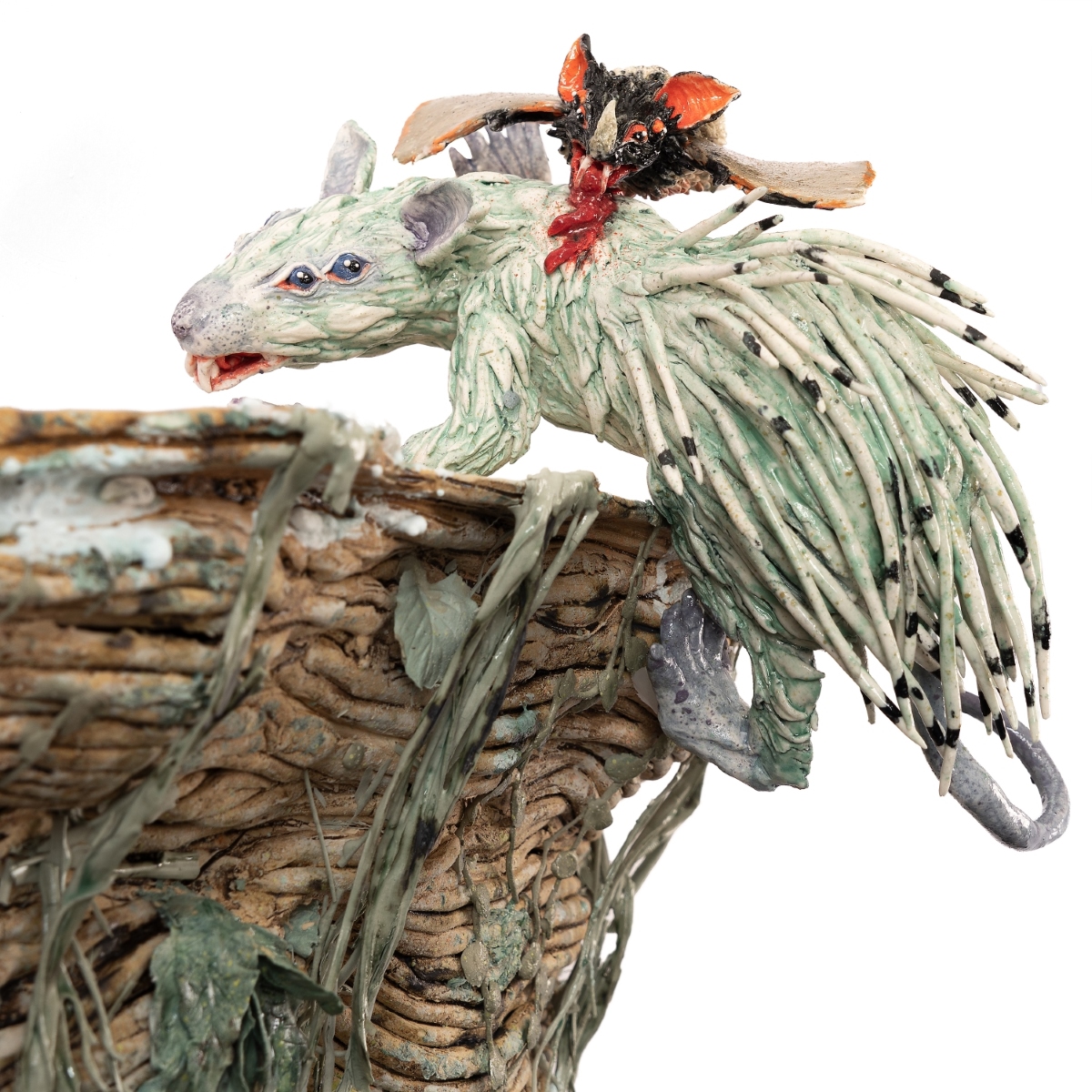
- Misty Mountain Rat attacked by a Snowball Bat, 2025, Handbuild porcelain.
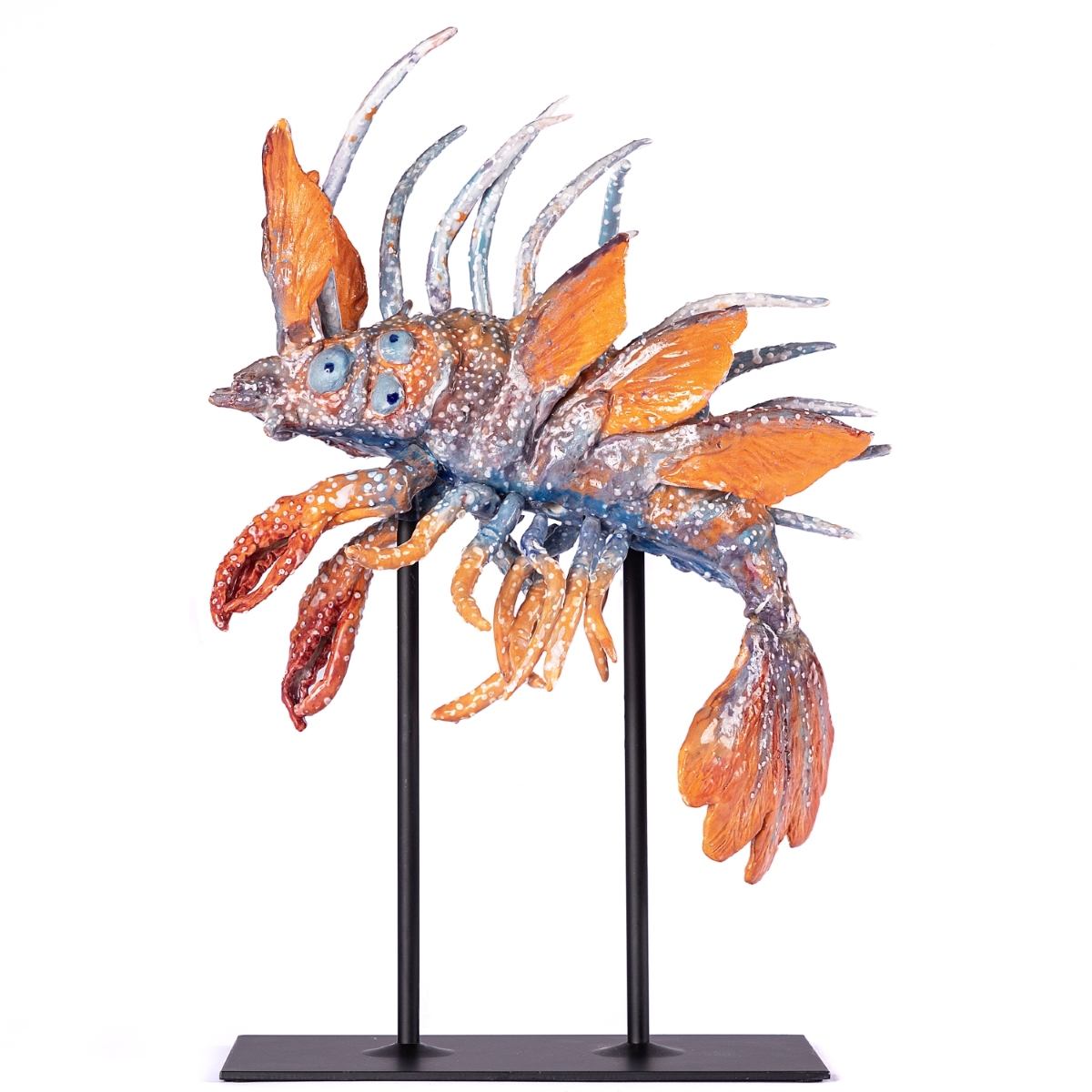
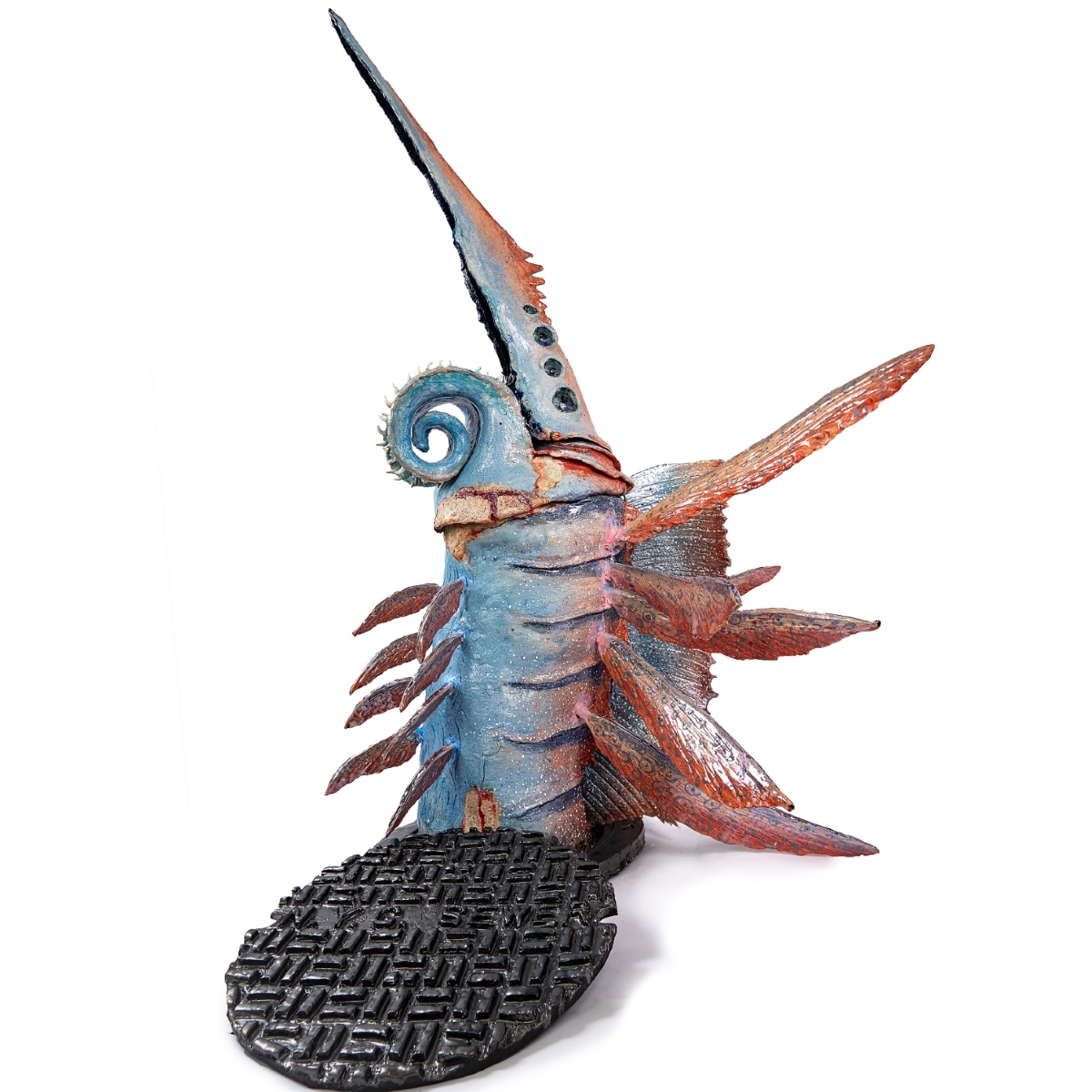
- Giant Bottle Shrimp, 2023, Handbuild porcelain.
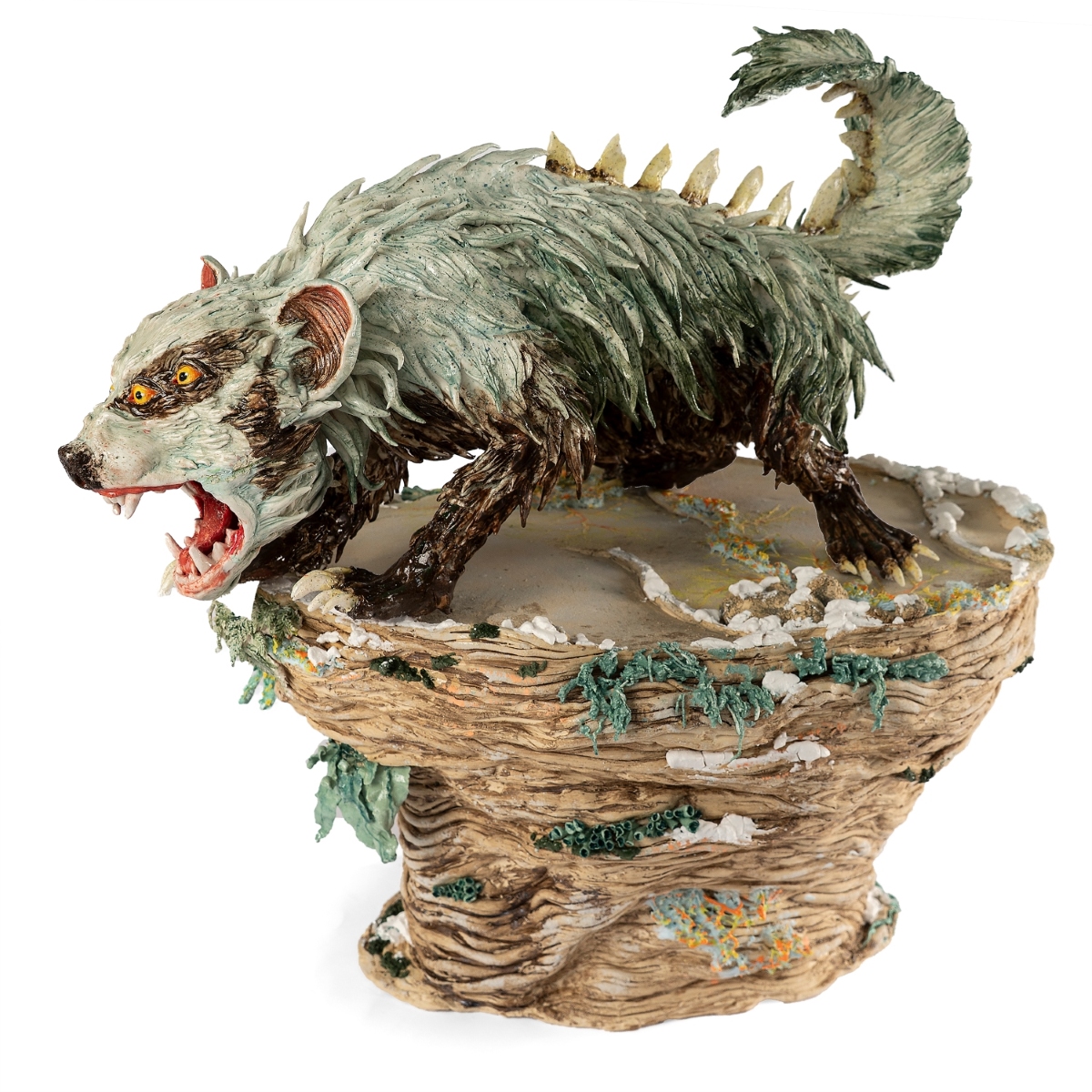
- The Gulo Gulo Hoká (Gulo Gulo Bear Badger), 2025, Handbuild porcelain. The Gulo Gulo Bear Badger gets its name from its resemblance to a small bear, but has in fact evolved from the American badger. Due to climate change, the species has spread all over the continent. It’s a solitary animal and is mostly a scavenger, but it’s very much capable of killing prey much larger than itself, in some cases even bears.
- Helicophorus, 2023, Handbuild stoneware. This sculpture is 1.60 m high and was made for Prospects (Art Rotterdam 2024). Due to climate change and pollution, the water is rising and sloshing through the streets of New York. Therefore, creatures that normally live in oceans, rivers, and sewers come up through the manholes. These creatures have skin and health problems due to the polluted and poisoned environment. Rapid evolution allows them to turn this pollution to their advantage.
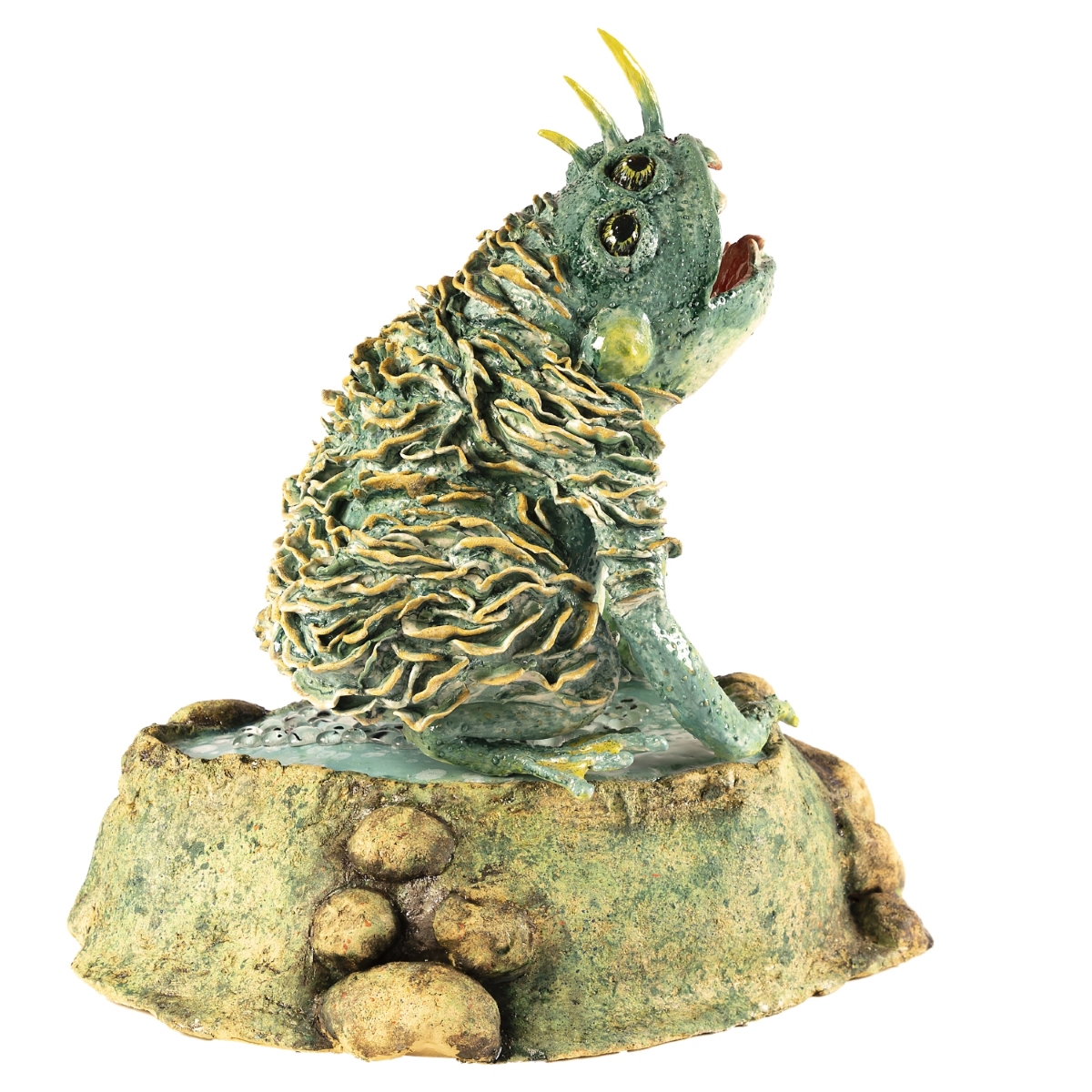
- Lichen Toad with Frogspawn, 2024, Handbuild porcelain and glasfusion. The Lichen Toad is covered by a fungal layer and lives in symbiosis with this fungus. The Toad and its fungal companion have established a mutualistic relationship which has evolved into an indivisible union.
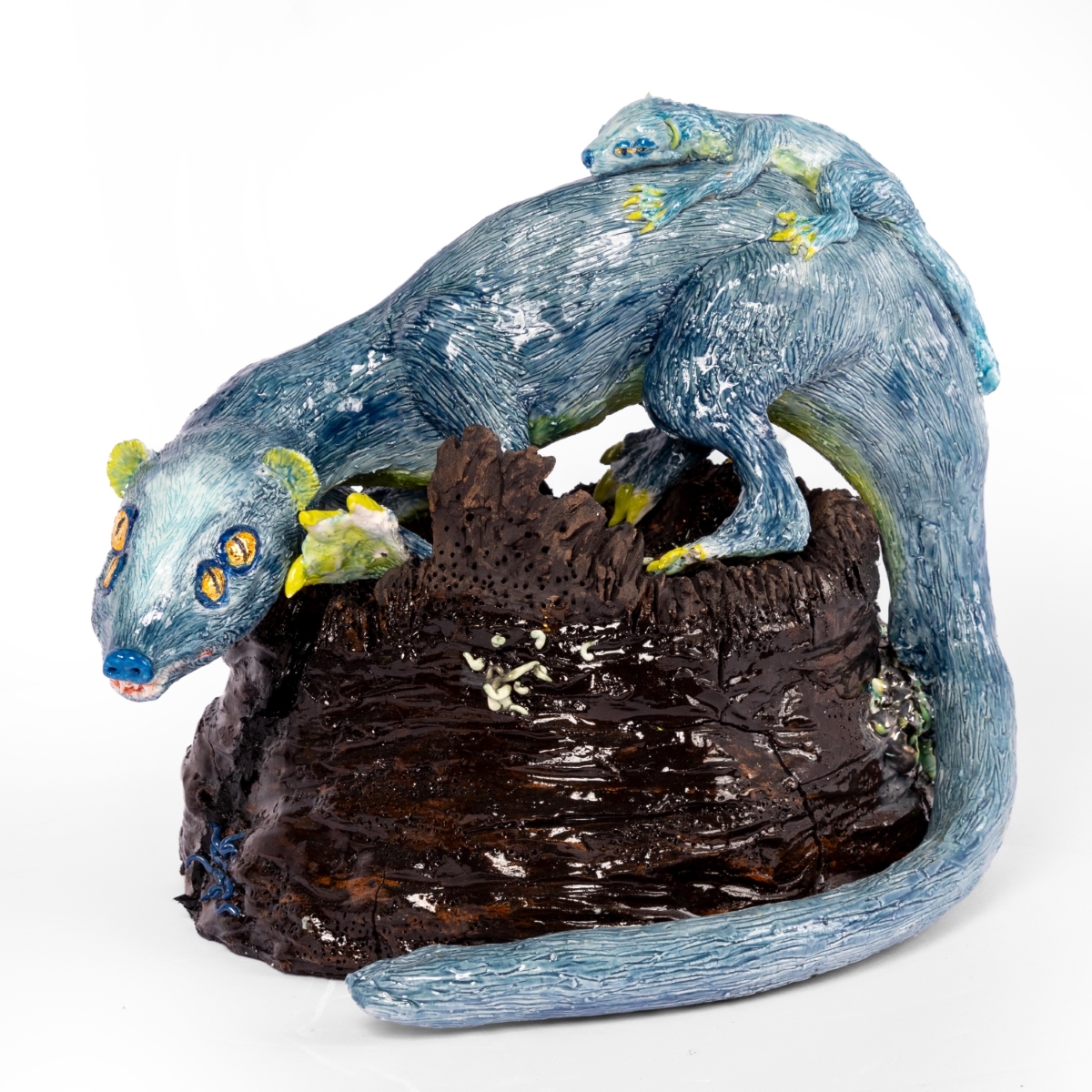
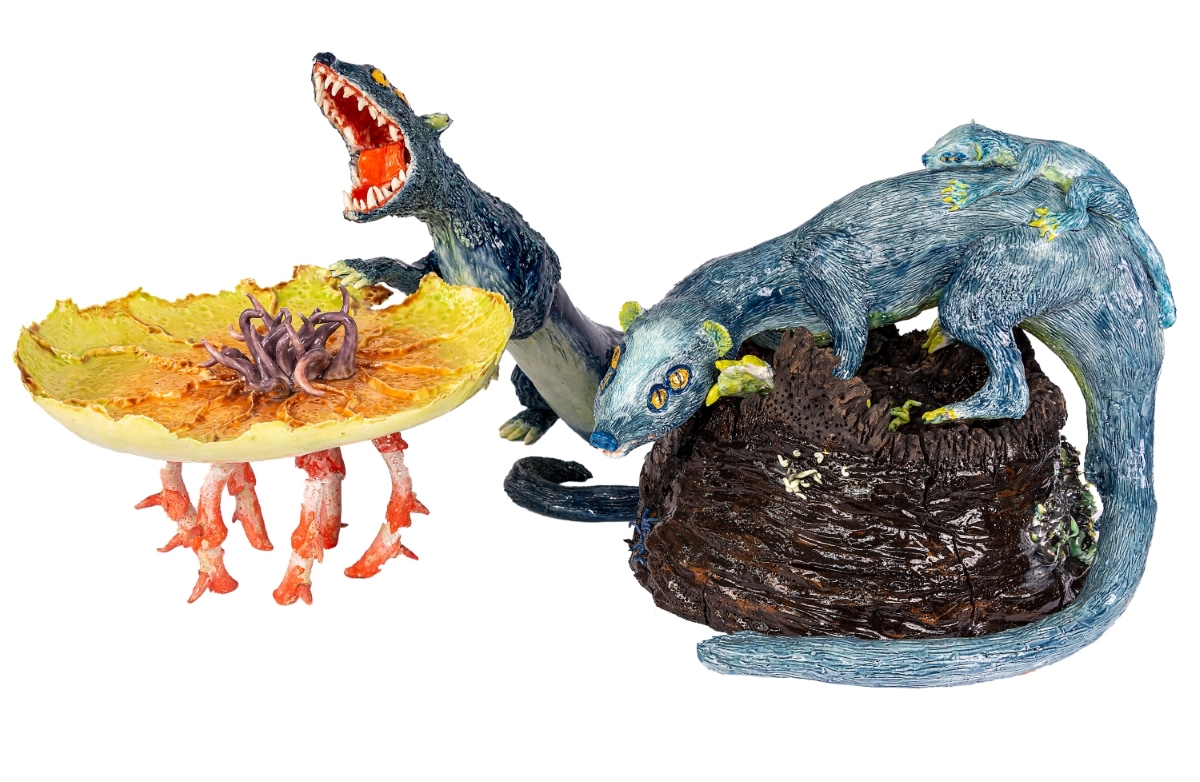
- Blue Mangrove Marten female with cub, 2024, Handbuild porcelain and black stoneware. Part of the exhibition Oracles From Far And Near.
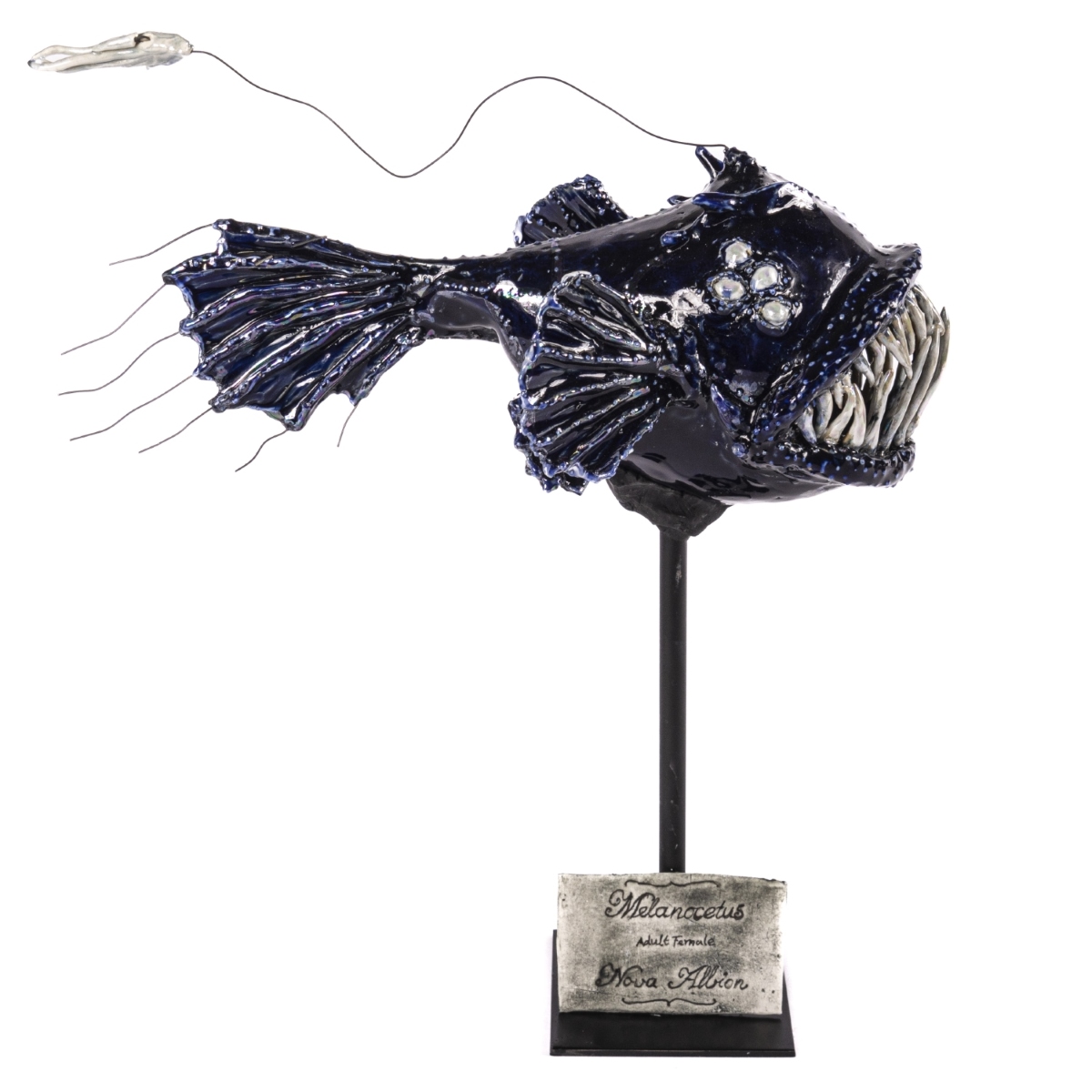
- Melanocetus, 2022, Handbuild porcelain and stoneware.
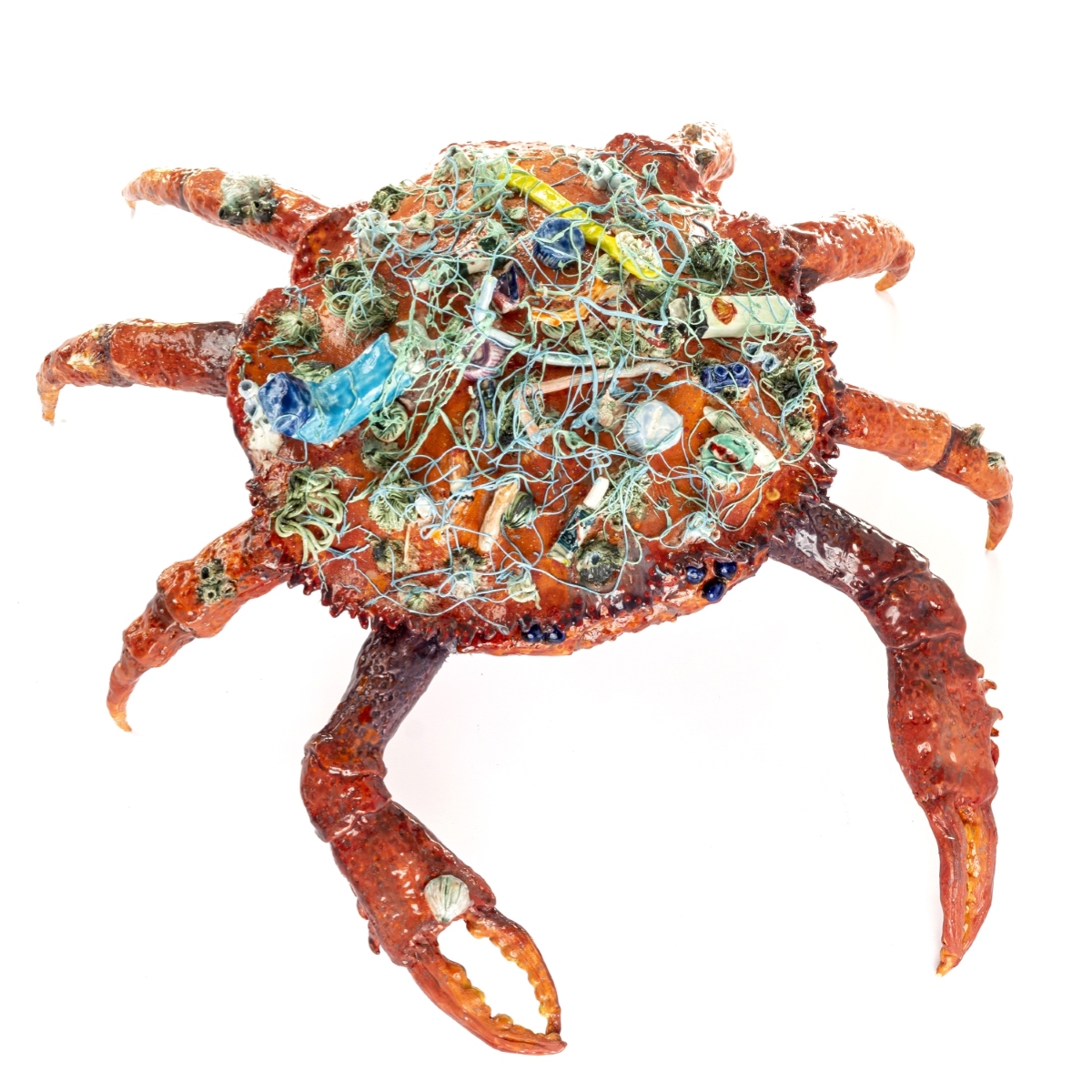
- Tasmanian Decorator Crab, 2023, Handbuild porcelain.
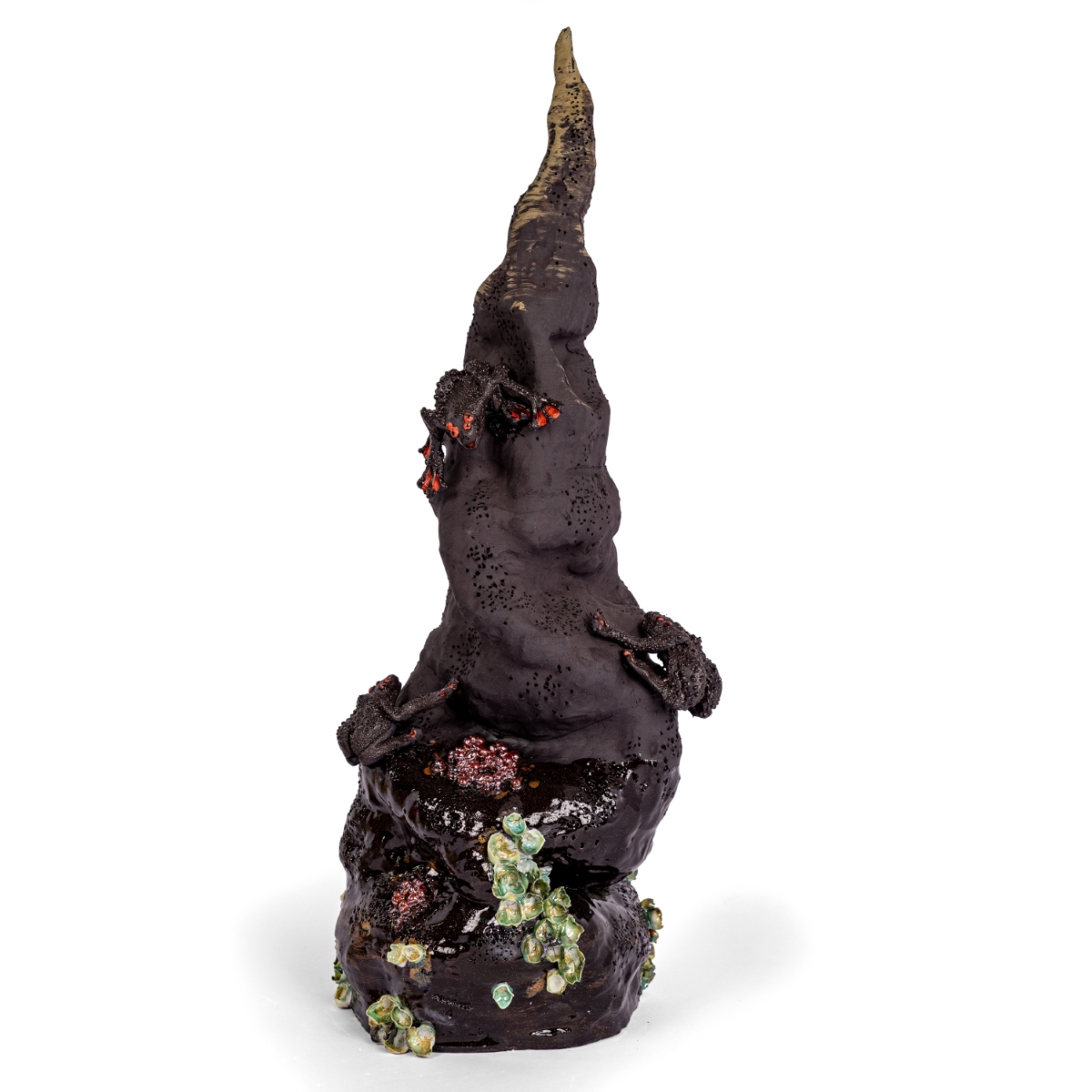
- Black Mangrove Rootpoint with Black TreeFrogs, 2024, Handbuild Black Stoneware and porcelain. Part of the exhibition Oracles From Far And Near.
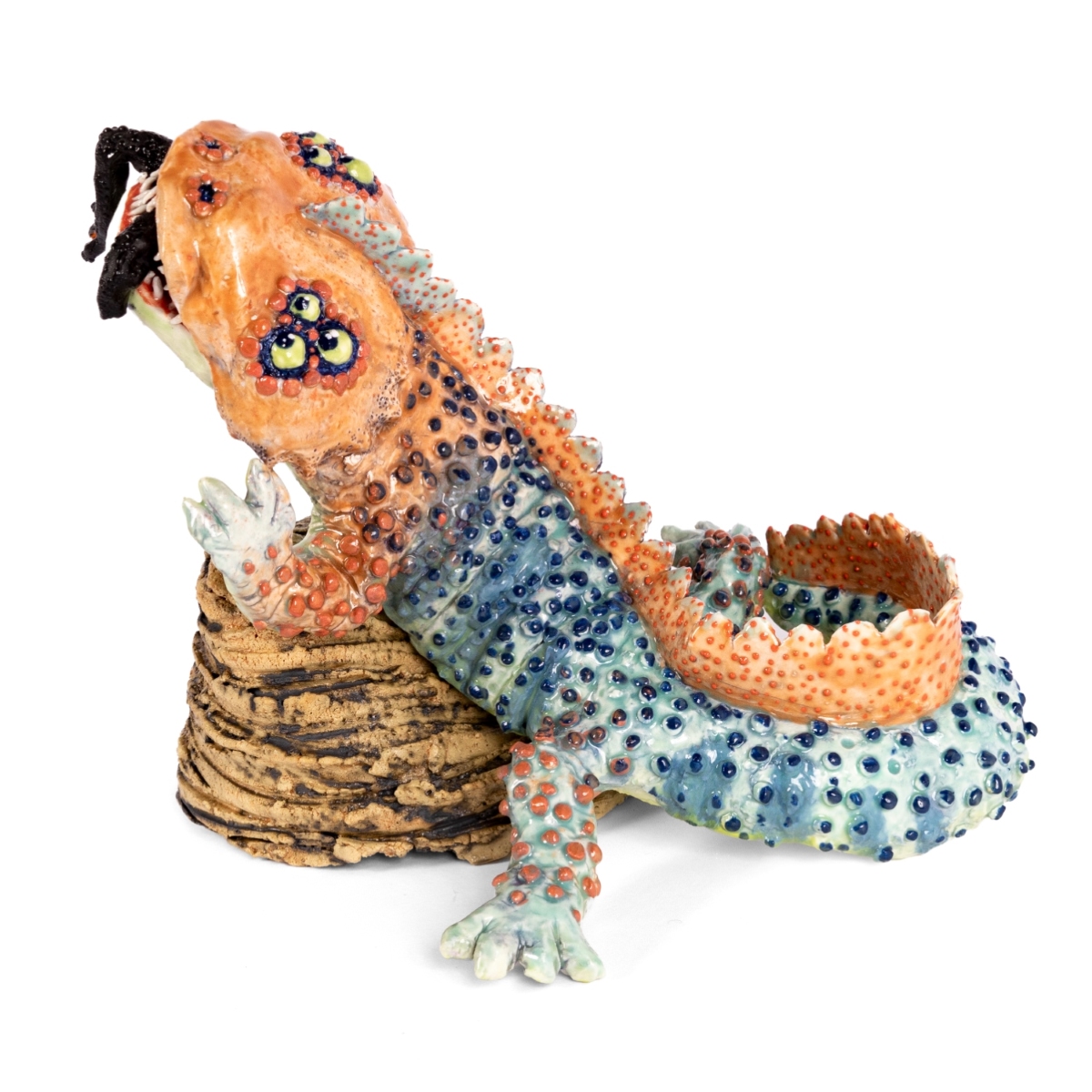
- Cryptobranco Salamander, 2023, Handbuild porcelain.
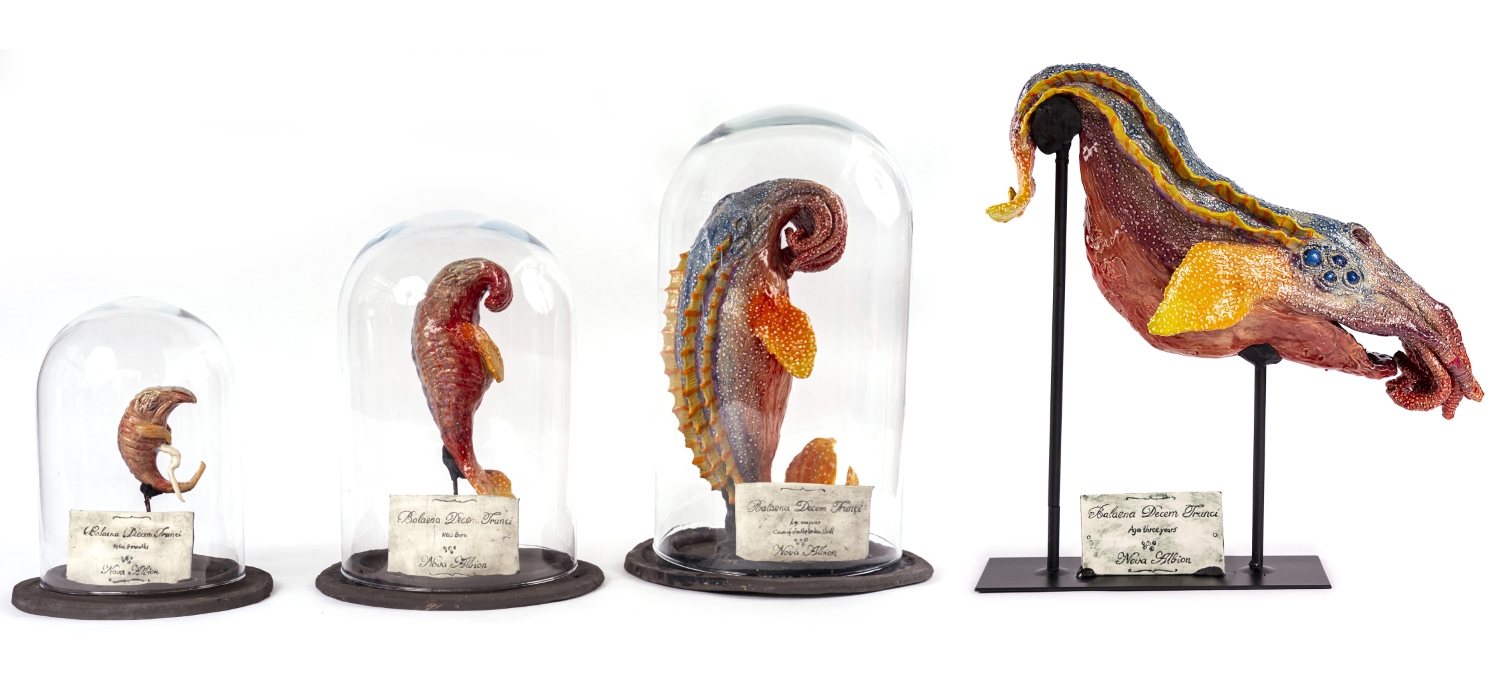
- The Balaena Decem Trunci, 2022, Handbuild in stoneware and porcelain. Third prize in the National Dutch Ceramic Award 2022. Here you can see the Balaena Decem Trunci in development, preserved as a foetus of 8 months, a newborn specimen, and at 1 year and 3 years of age. The Balaena Decem Trunci can grow up to 24 meters and has 10 trunks. It’s a toothed whale, but they are true omnivores. With their trunks they suck over the bottom of the sea and the deep sea. The trunks contain a filter system that ensures that the edible parts are separated from the plastic particles. This plastic is stored and converted in a special part of the body. Once the animal becomes sexually mature, this plastic comes out in the form of large, long, luminous sails running down the length of the animal. In this way, it can find a partner to mate with even in the dark deep sea.
- Blue Mangrove Martens, 2024, Handbuild porcelain and black stoneware. Blue Mangrove Martens move in pairs and carry their young on their backs. They mate for life and raise their kits together. They have become highly adapted to live in mangrove areas; their special fur and layer of blubber under the skin allow them to transition between water and land without dysregulated internal body temperatures.
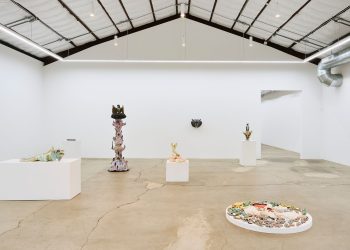
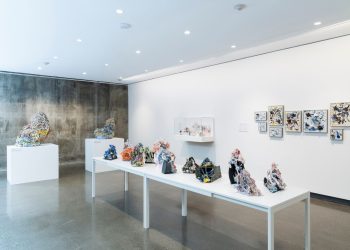
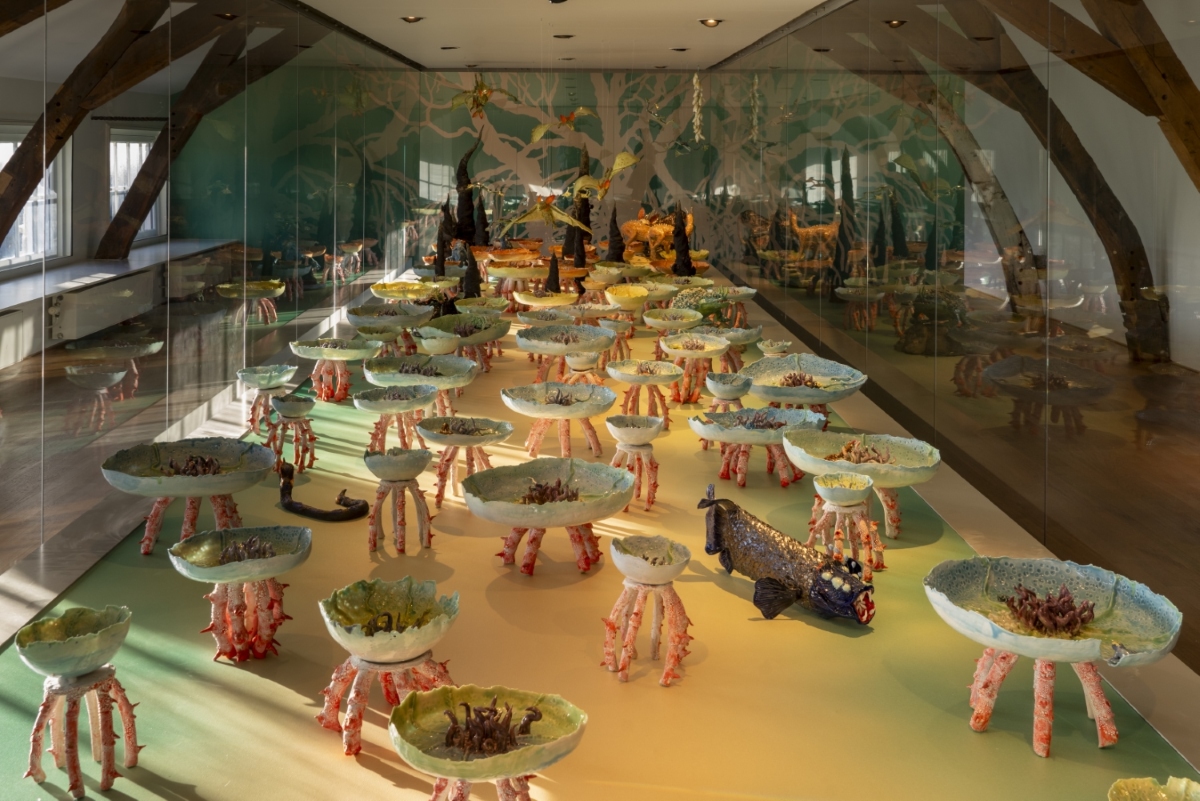
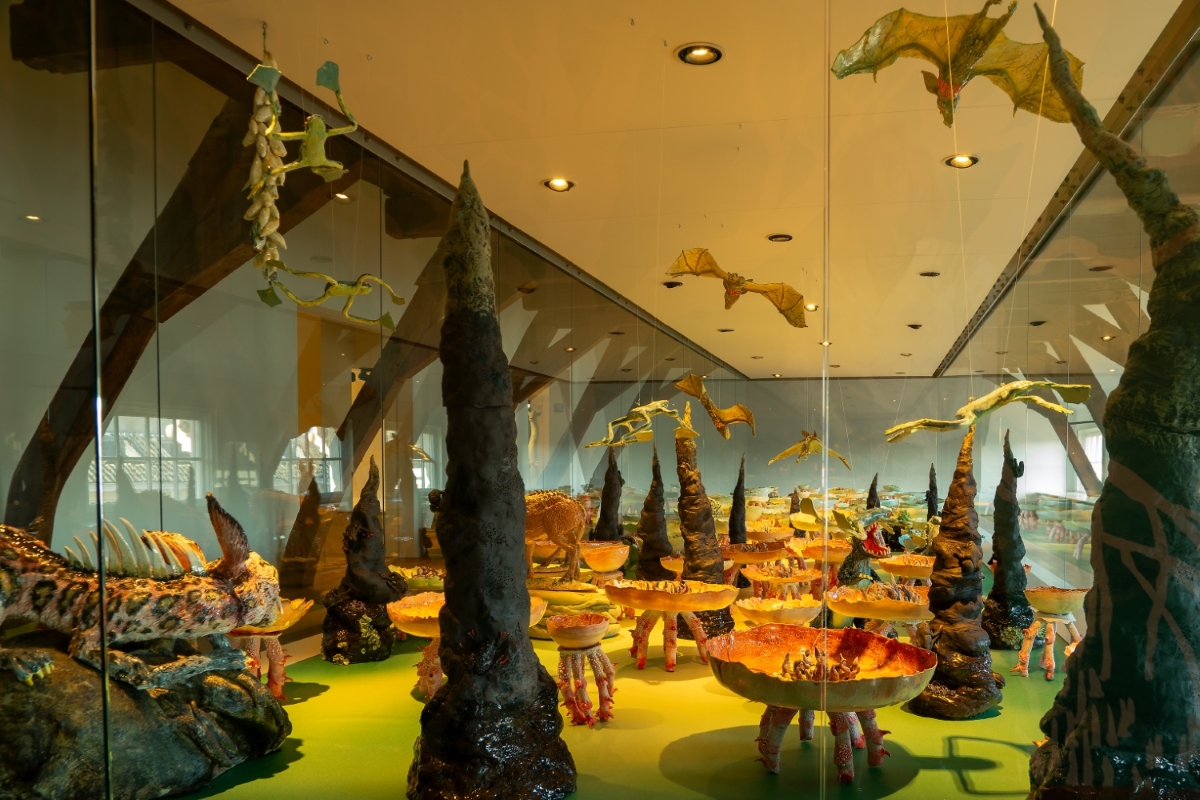
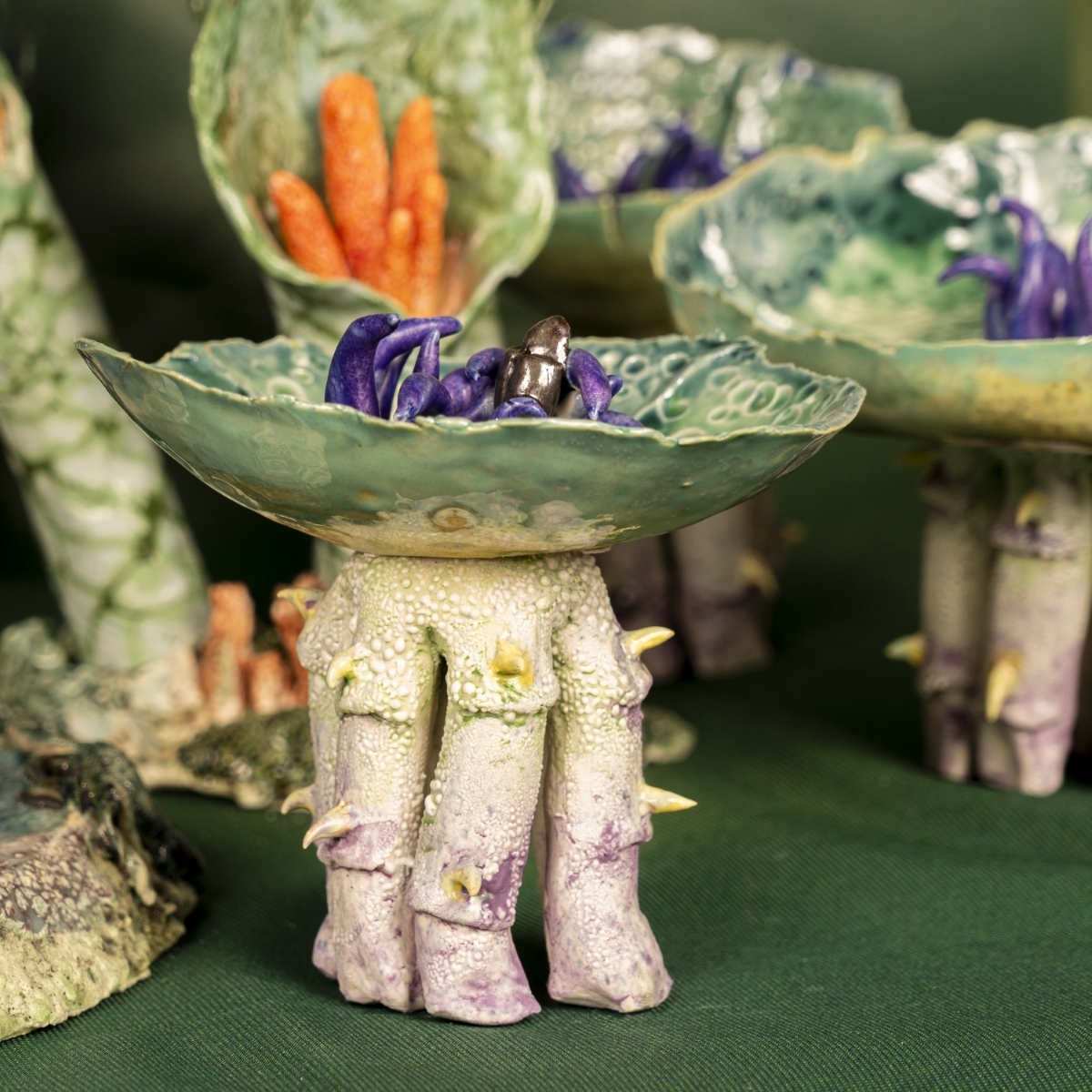
- Animals Far From Now and Beyond, 2024, Porcelain and Stoneware. Part of the exhibition Oracles From Far And Near, on display from November 30, 2024 to October 26, 2025 at the Princessehof National Museum of Ceramics in Leeuwarden, the Netherlands. Created for a glass display case measuring 2.5 by 11 meters and accompanied by a specially composed soundscape, the installation transports viewers into a distant future inhabited by imagined species and unfamiliar ecological relationships. Due to climate change, the water has risen and the coastlines of the world have changed. Parts of the world are flooded and some parts have changed into mangrove forests and giant swamps. Animals had to adapt and evolve to survive. New species have emerged from these adaptations. The first thing that catches the eye is a sea of what looks like Waterlily leaves, but are in fact a new kind of crabs: the Lotusleaf Crabs. They come in different sizes and colors. The sea of Lotusleaf Crabs symbolizes the water level. Near the mangrove, the pencil roots of the black mangrove are visible. Under and above the water level, there are a lot of animals to discover.
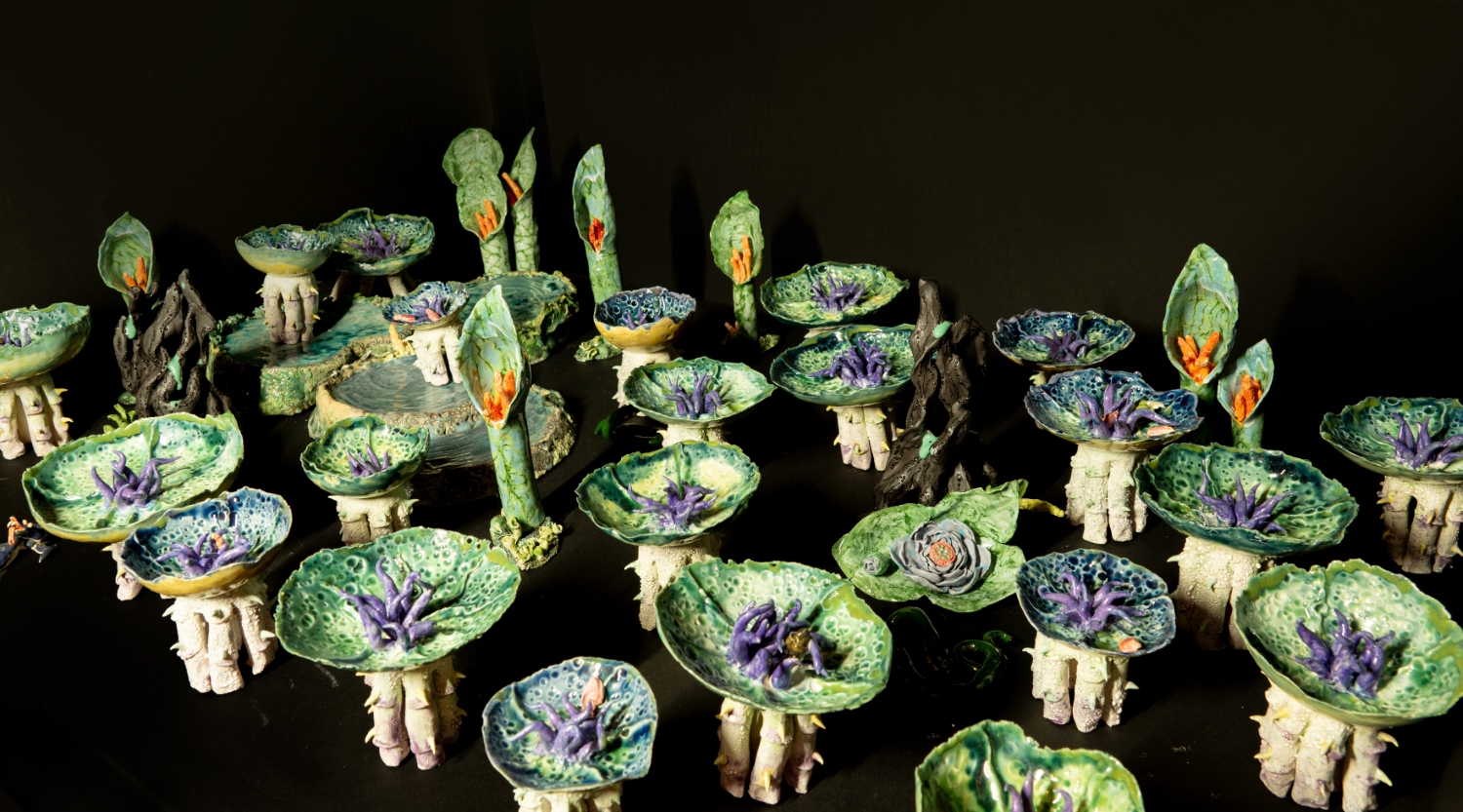
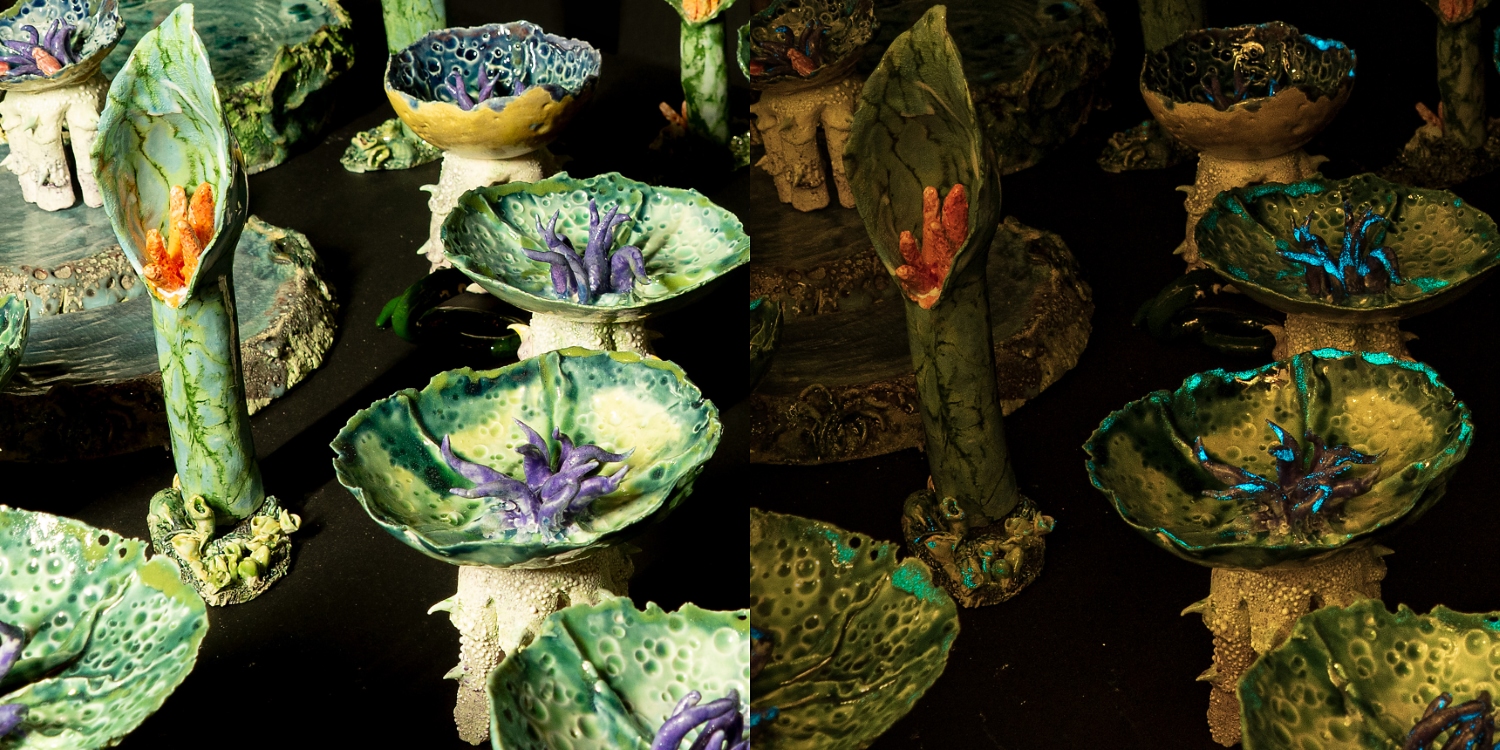
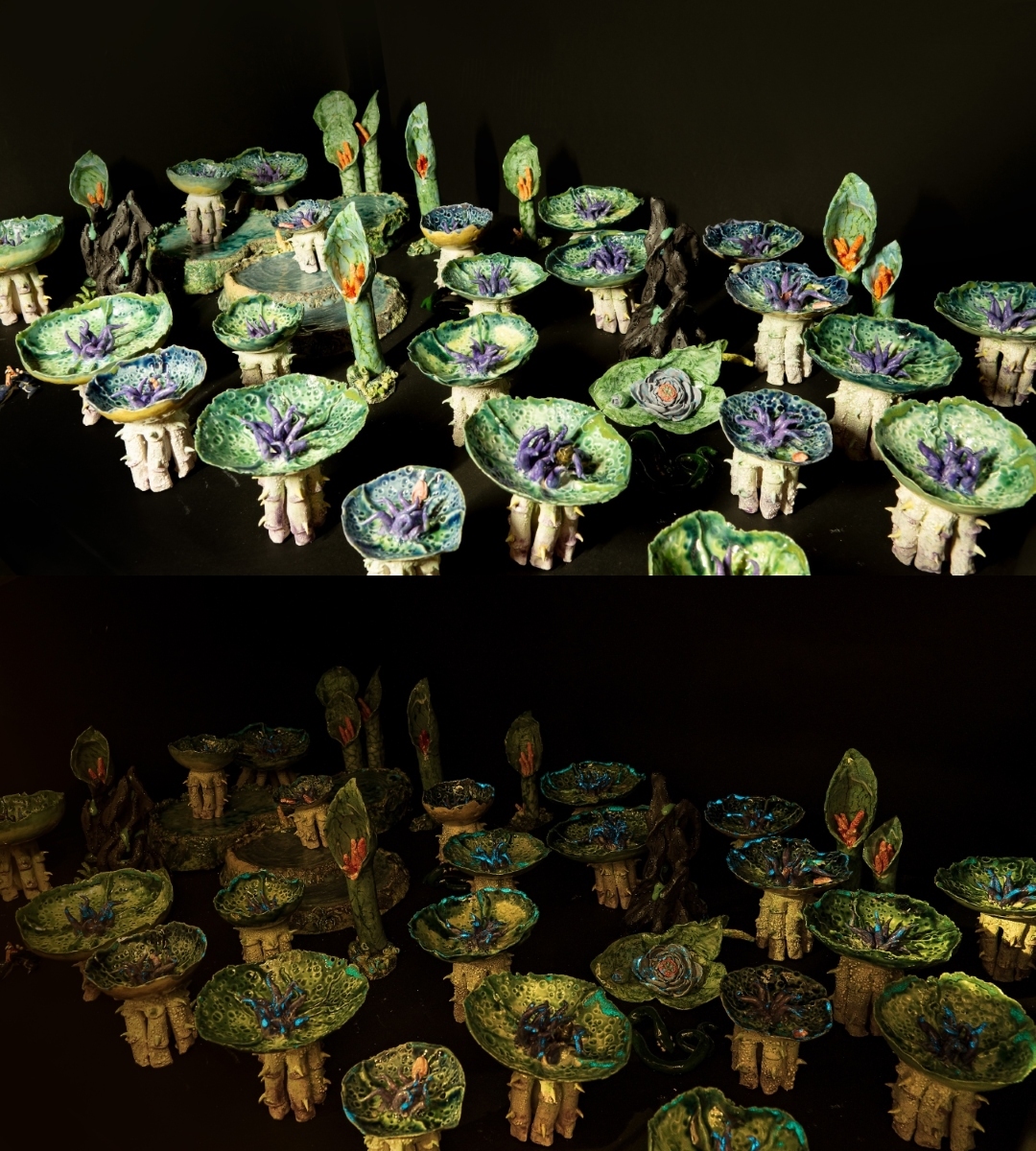
- Lumen Swamp, 2026, Handbuild porcelain. Millions of years into the future, the swamps of China will have developed into a bioluminescent spectacle. This ecosystem is a feast for the eyes. Along the petrified trees, which are in the first stage of fossilization, glowing green lichen slithers. This slime is a life form in itself. Lotus Leaf Crabs dominate not only the coastlines, but evolved, smaller versions can also be found inland along rivers and in swamps. These Lumen Lotus Leaf Crabs have no eyes, but their sensitive tentacles sense vibrations in the air, they catch prey, and the acids in the slime digest it. Well-camouflaged moss frogs and small blue tree frogs inhabit this area in large numbers. When night falls, it is easy to see how many species exhibit glow-in-the-dark effects; both plant and animal.