Steven Claydon: Lacrimosa is on view at Sadie Coles HQ, London
January 12 – February 26, 2022
An anagama is a hole kiln. A locus of becoming and a sepulchre – both tomb and womb. It is also a chrysalis, a site of metamorphosis. A sacred thing and a secular thing. A beast and a tool.
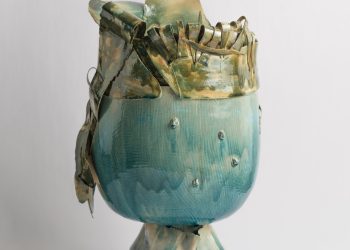
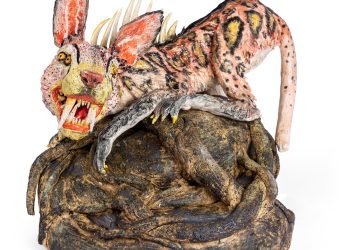
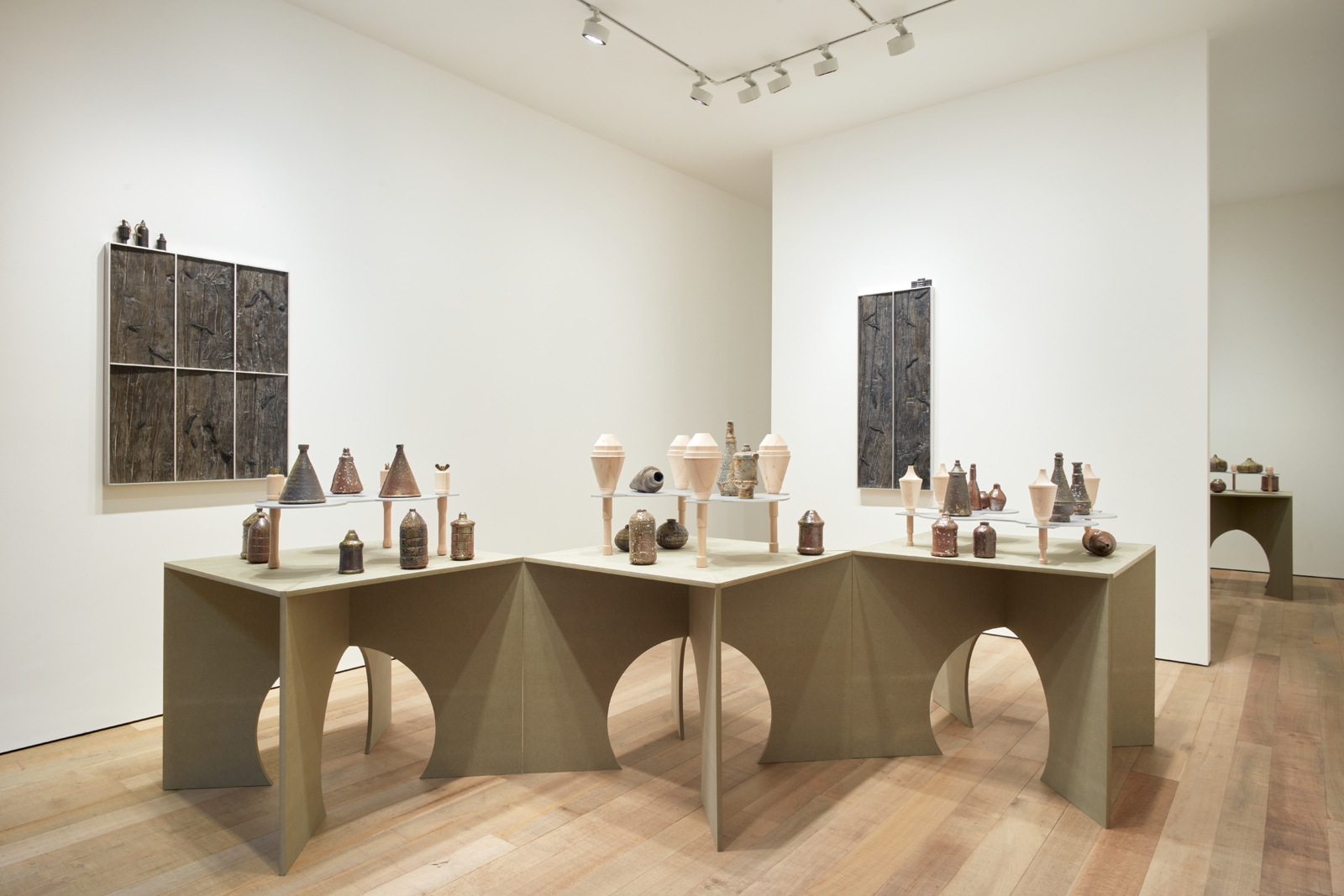
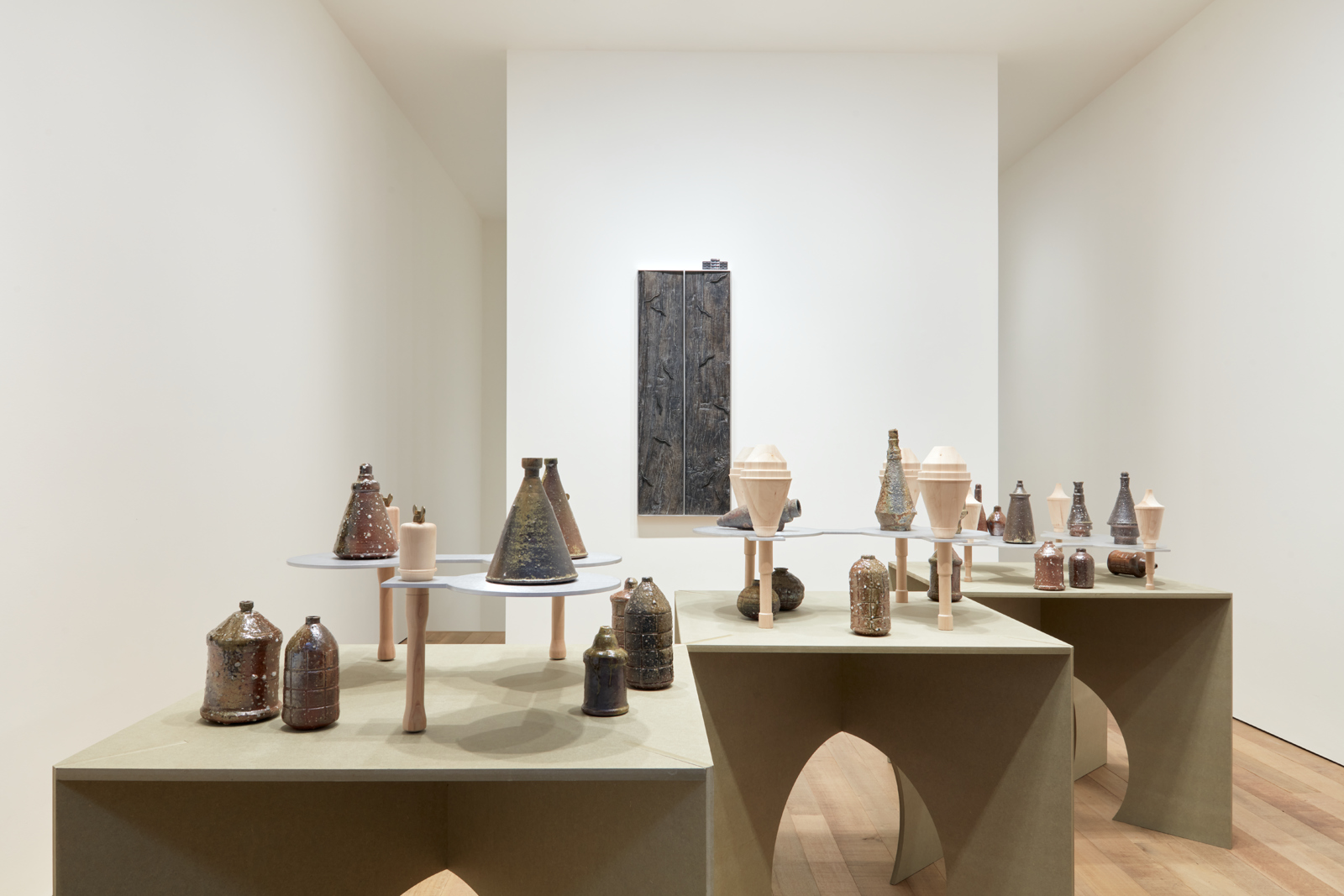
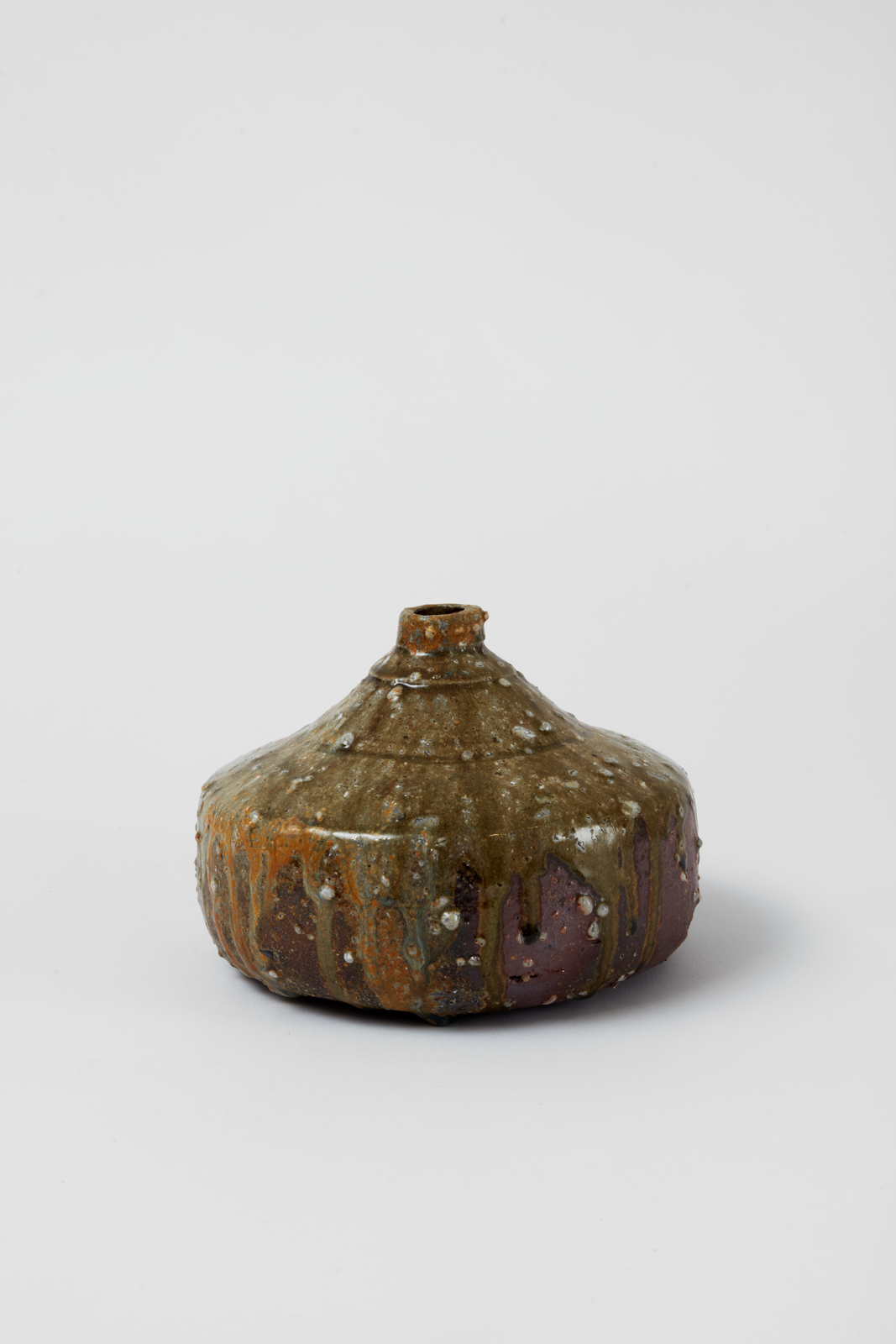
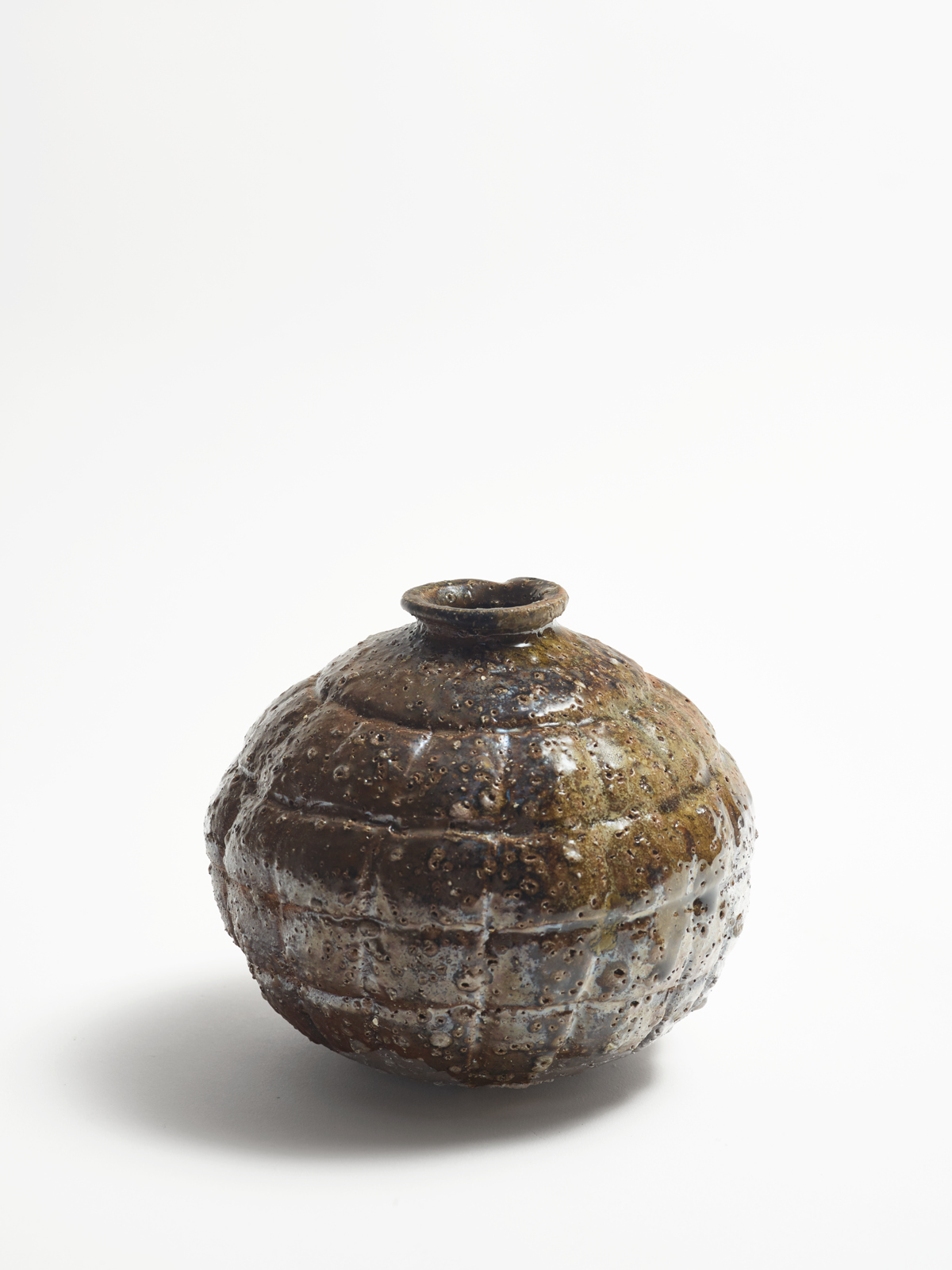
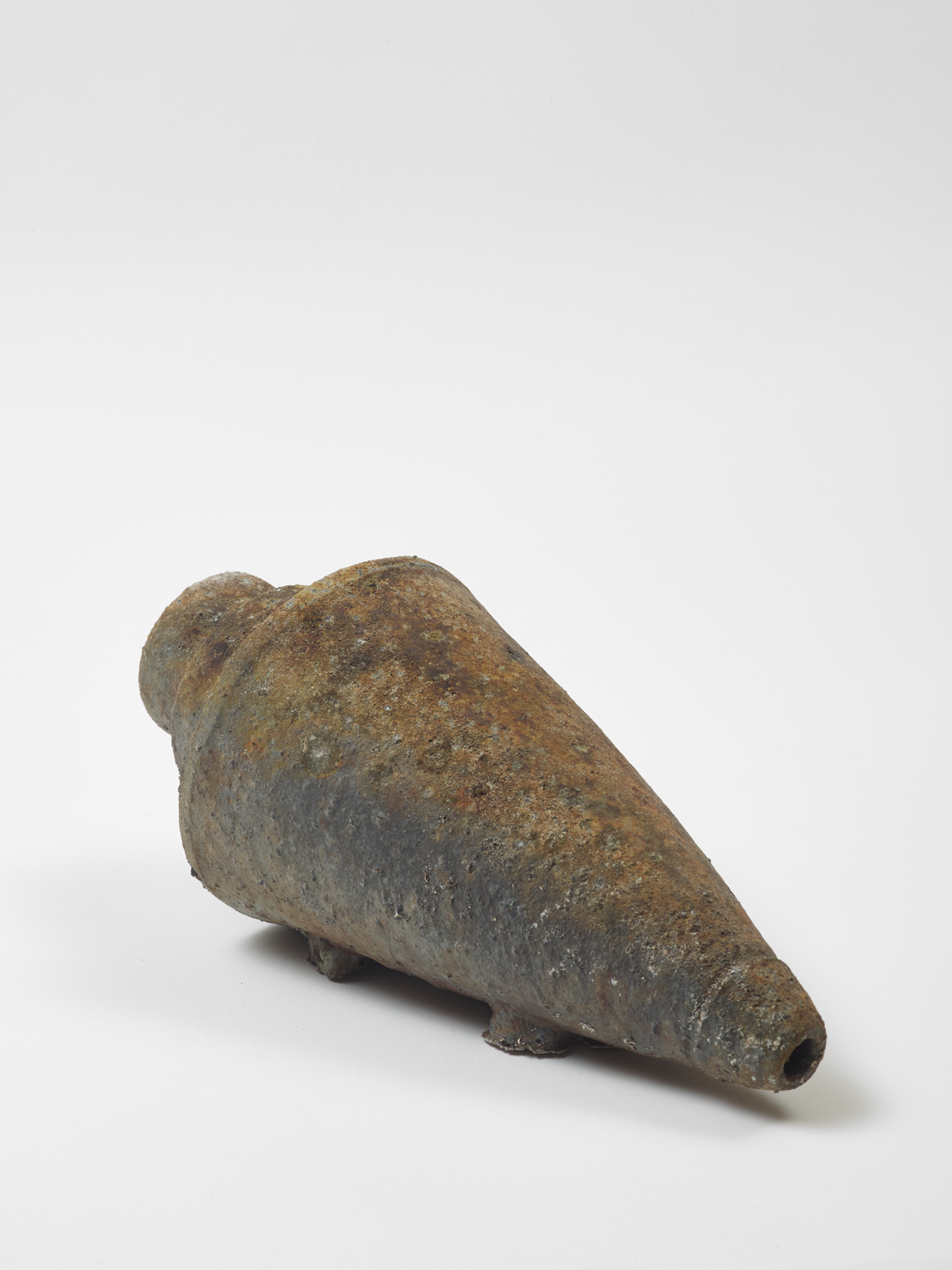
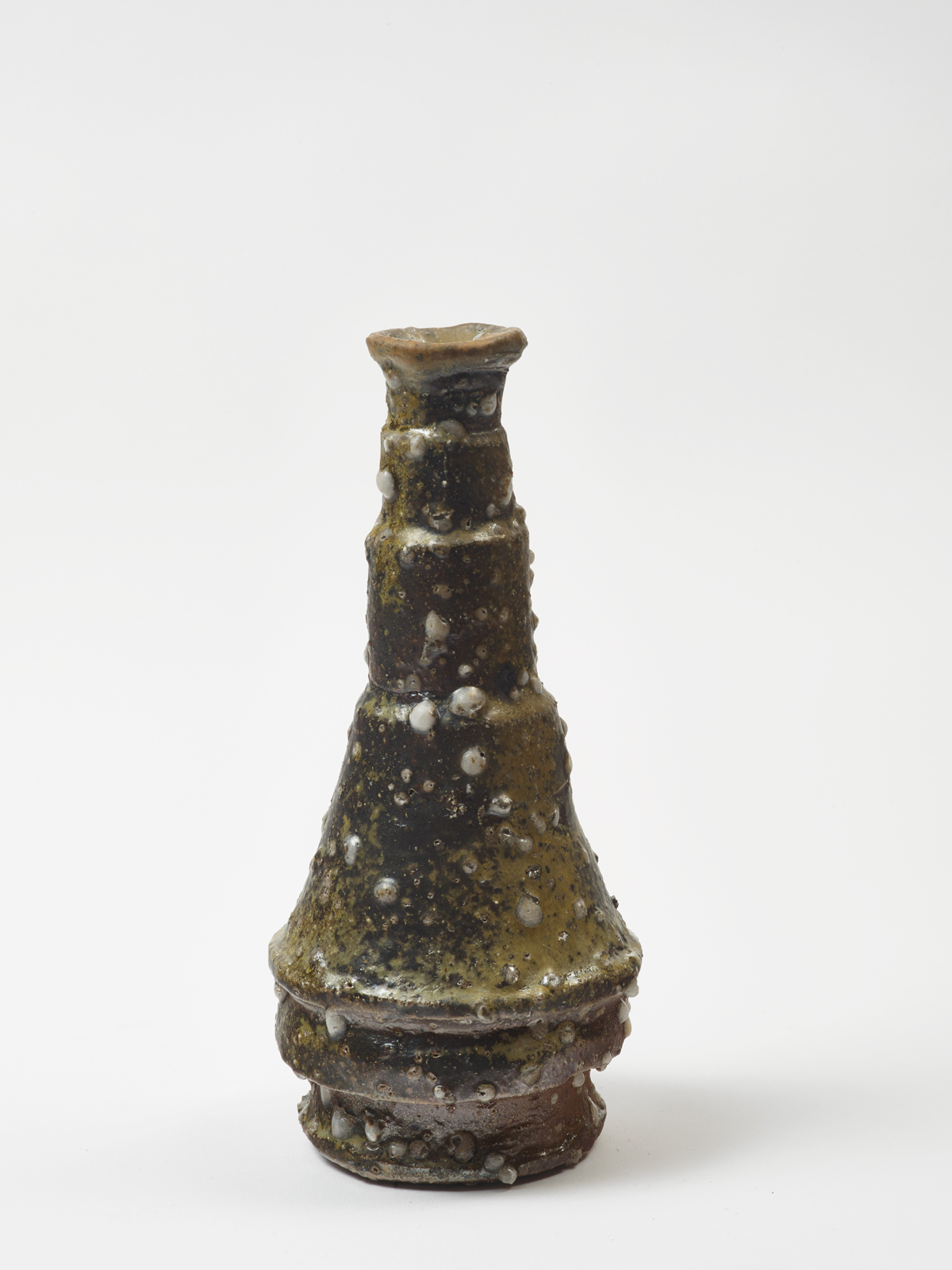
Steven Claydon’s latest exhibition at Sadie Coles HQ centres on a new group of ceramic objects. Ideas of mortality, grief and rebirth are mediated through material processes and historical references. Produced using ancient Japanese firing technology, the ceramic vessels invoke sources including the wabi-cha tea ceremony, modern munitions, and funereal reliquaries such as the lachrymatory – a small vial of terracotta or glass found in ancient Roman tombs, once thought to have held the tears of mourners.
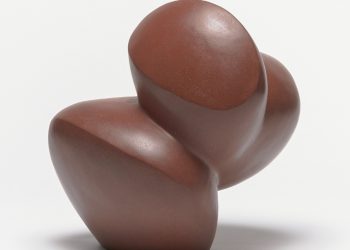
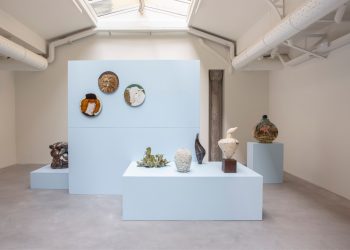
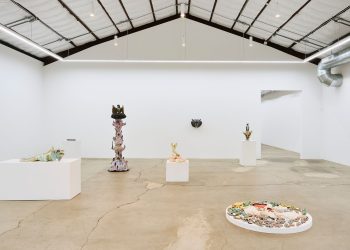
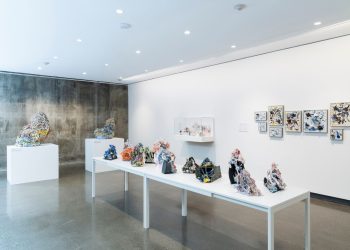
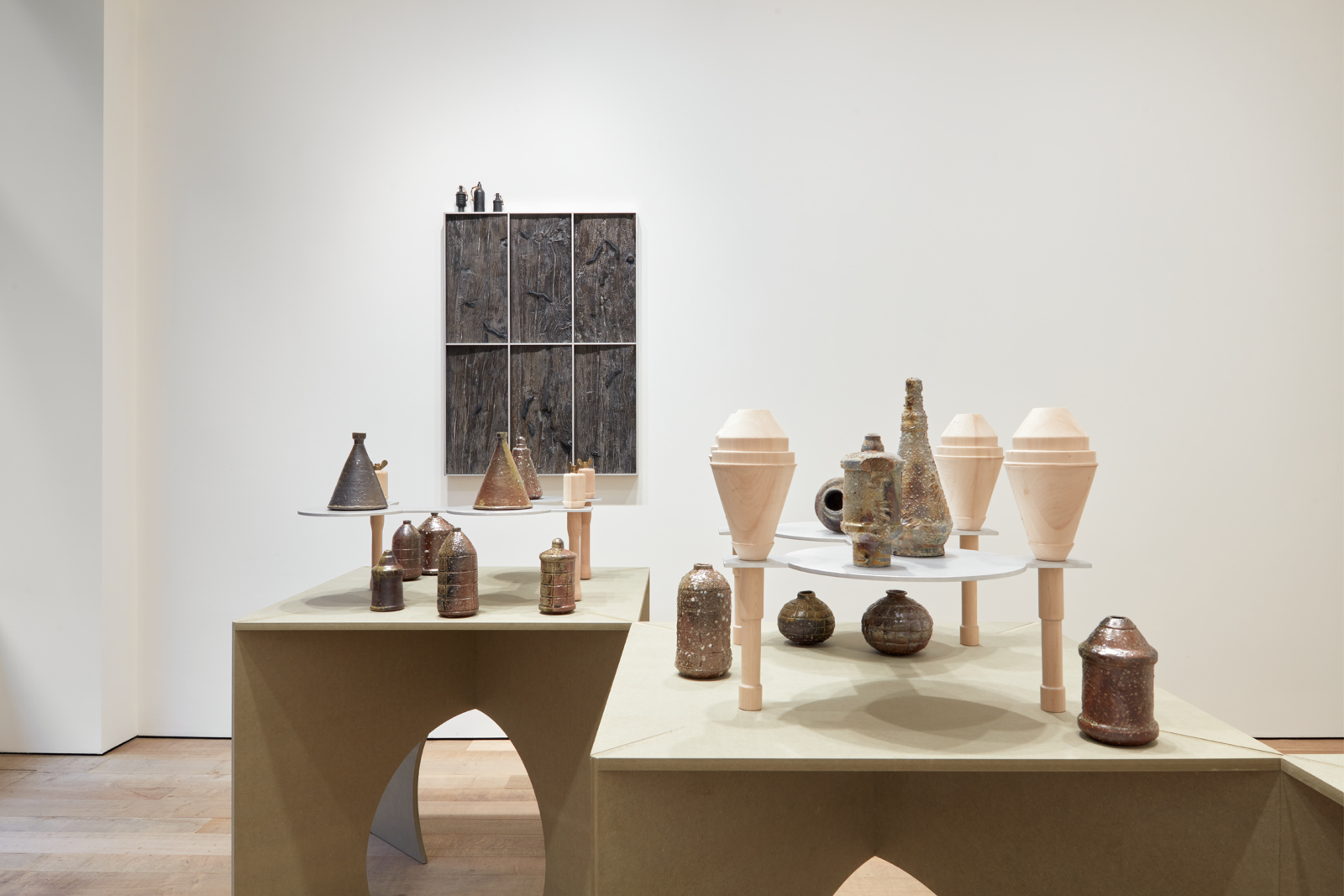
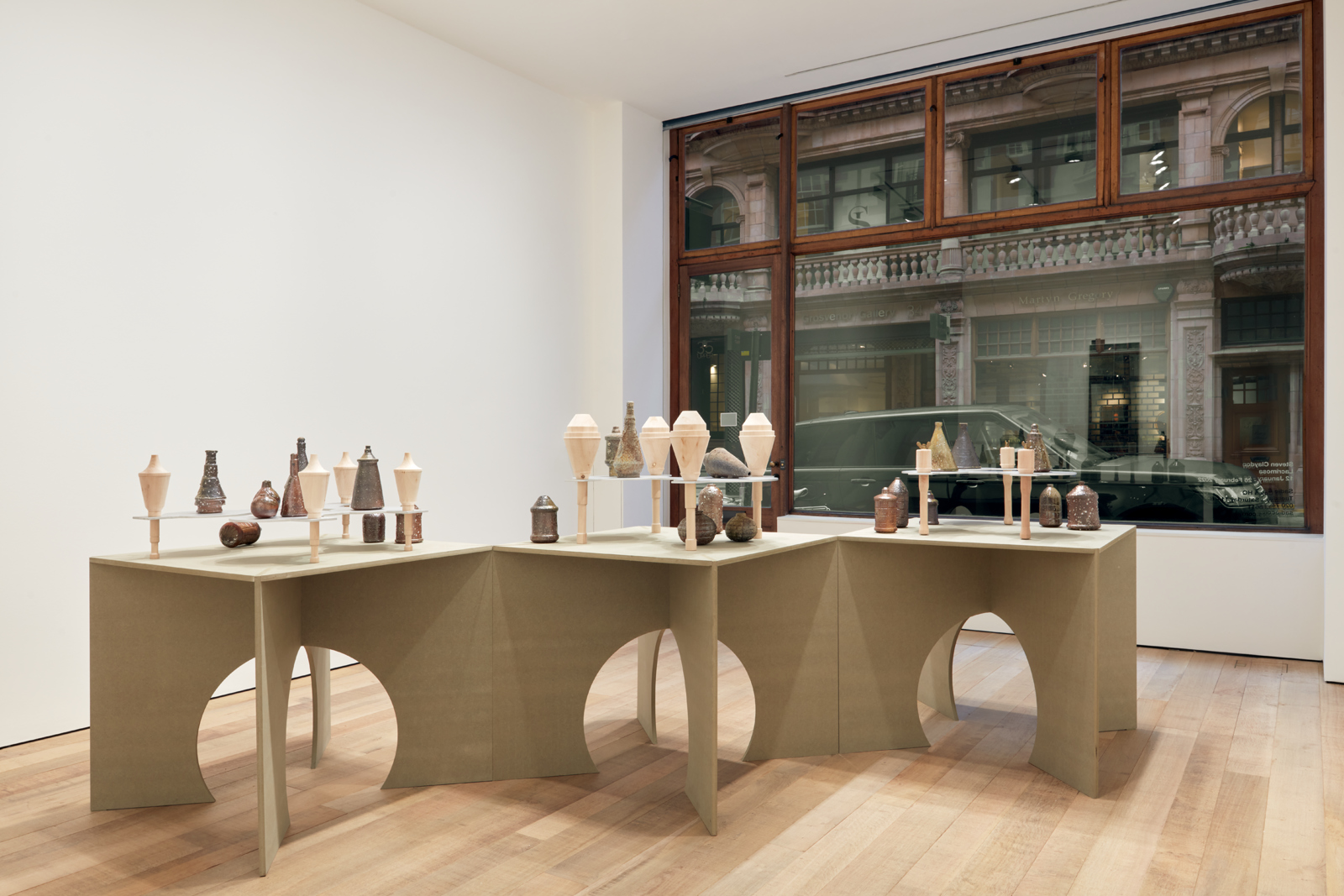
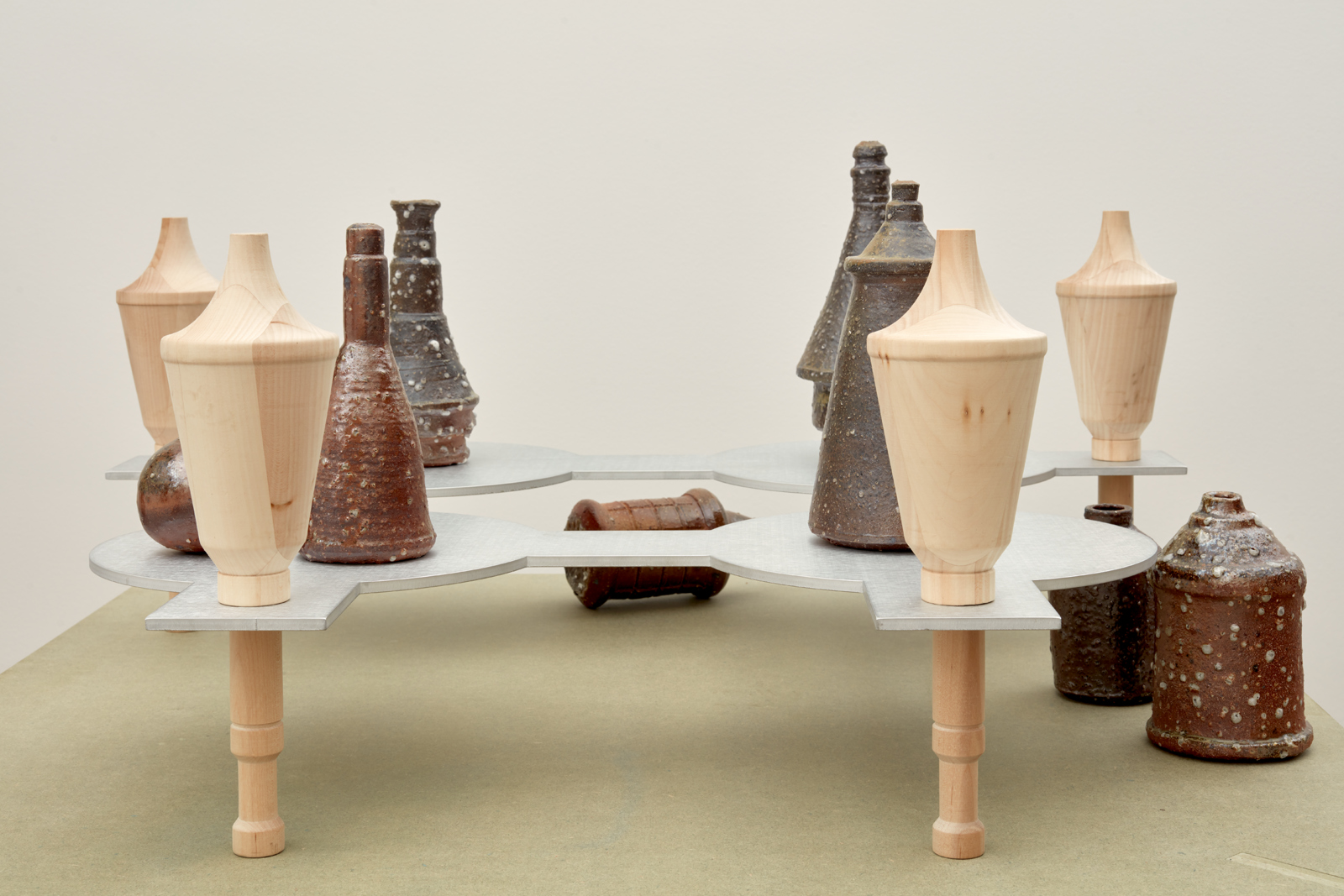
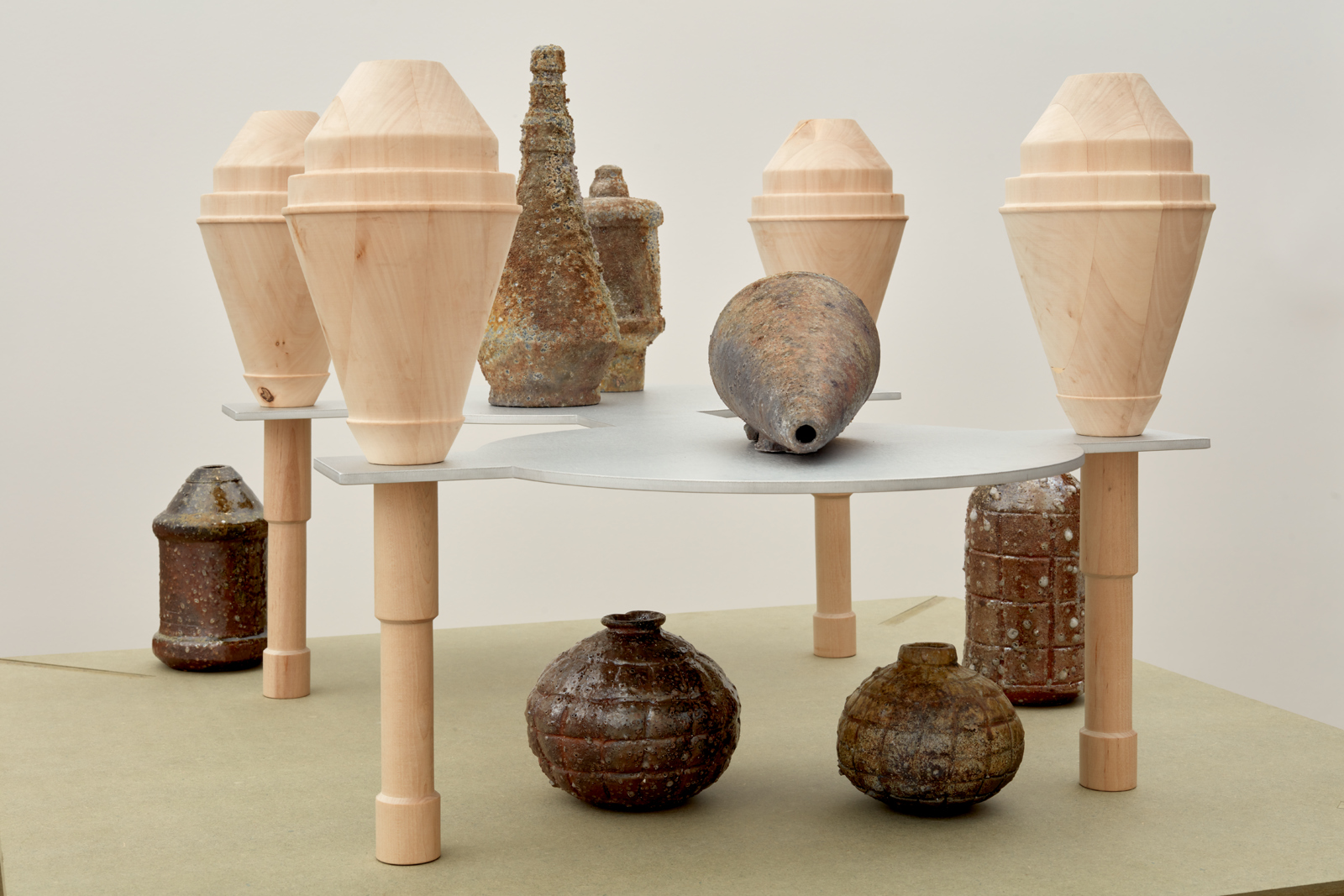
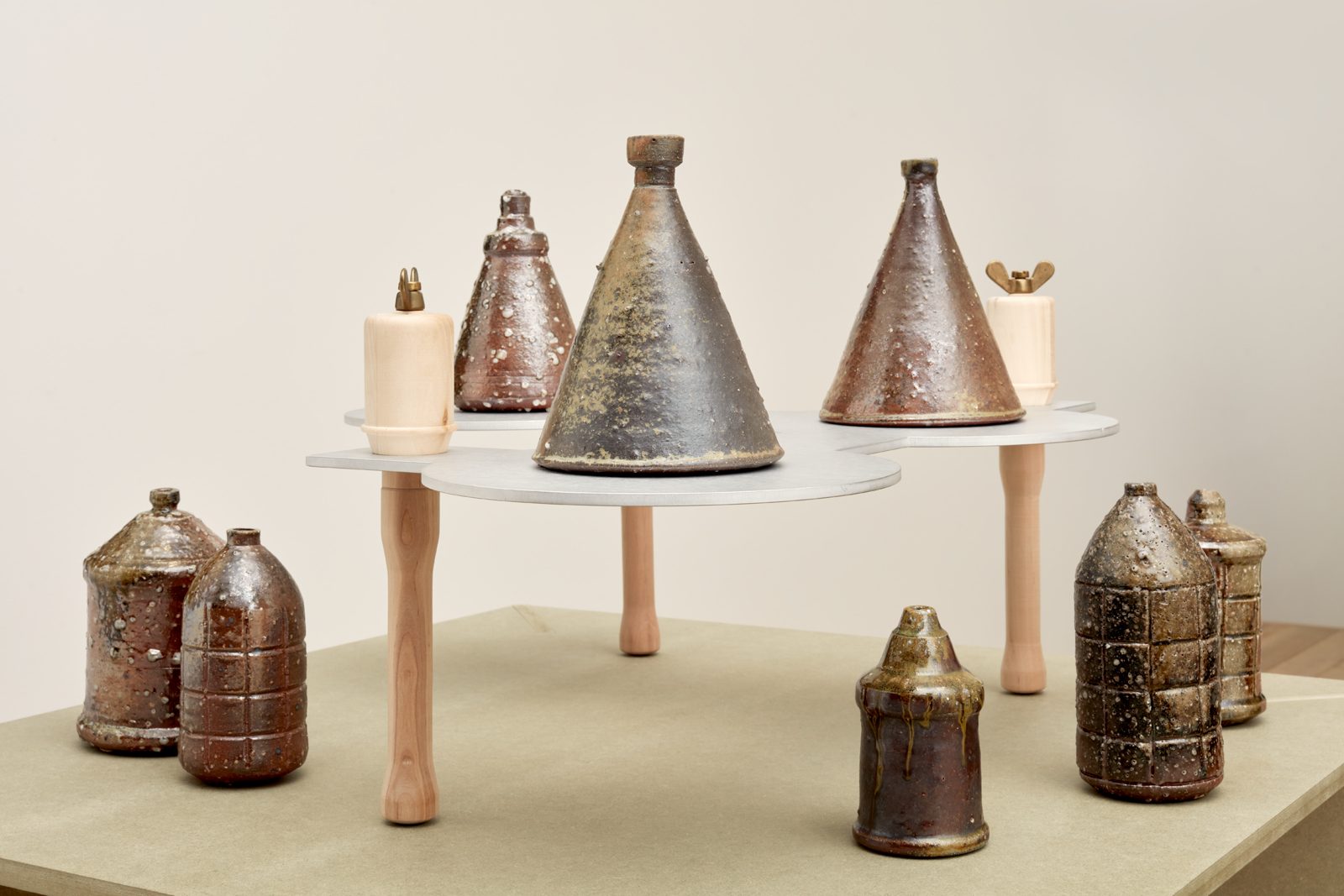
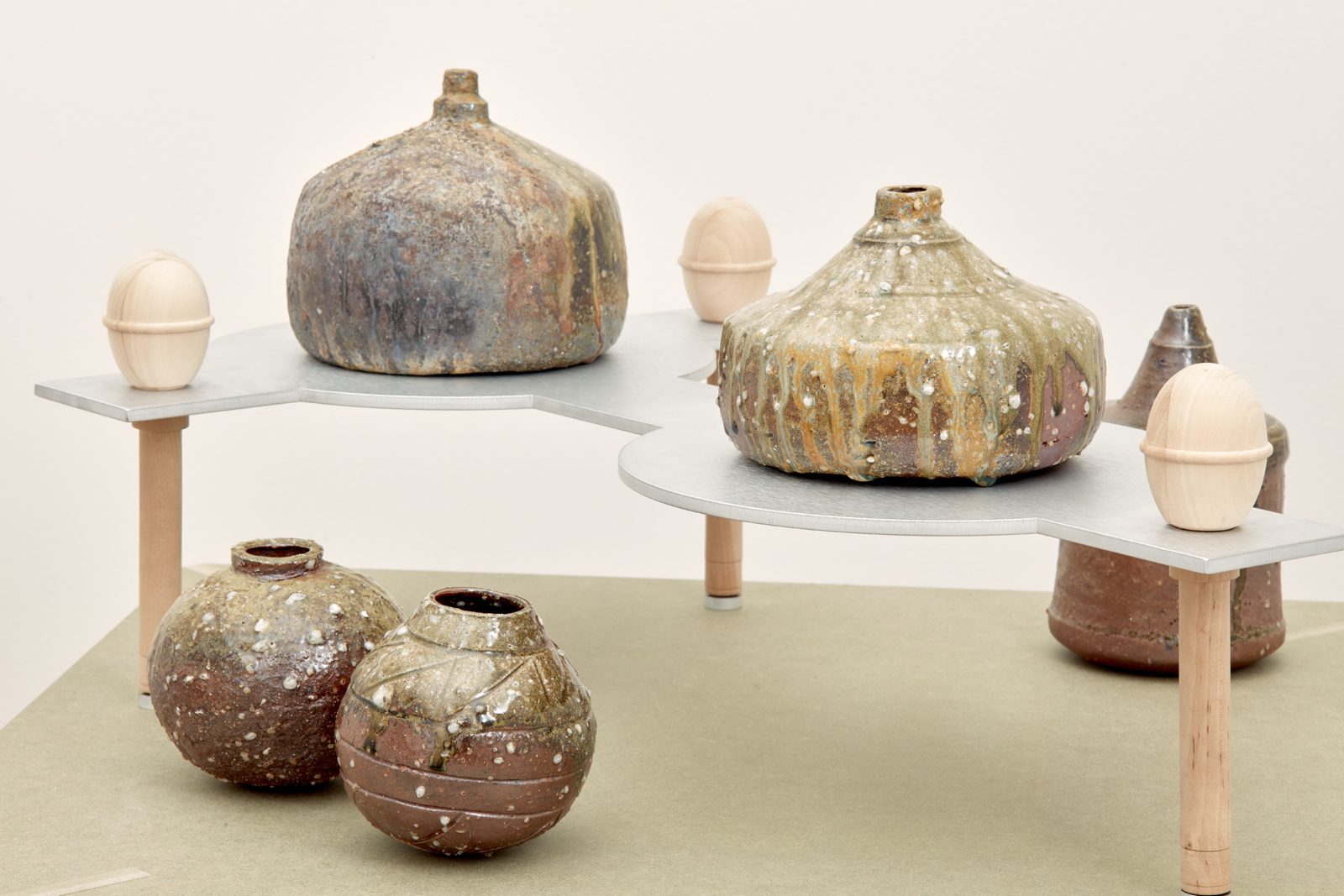
The exhibition revolves around the concept of vanitas – the symbolic expression of life’s transience. Four assemblages, each titled Mines, Bombs and Spirits, consist of small-scale ceramic containers placed on top of laser-cut aluminium tables. The vessels were fired over a sixty-hour period in an anagama ‘hole kiln’ and subsequently exhumed from a mass of ash and cinder – a process of arcane forging and archaeological retrieval. The kiln acts, in this way, as a site of destruction, incarceration and rebirth. In their conical and orblike shapes, the resulting objects closely evoke the stoneware pottery of sixteenth-century Japan and the associated ritual of the tea ceremony. The rites of the wabi ceremony convey their own vanitas sensibility: the stoneware ‘tea tools’ are at once humbly utilitarian and imbued with ideas of material renunciation and profound melancholy (wabi translates as ‘forlorn’). This doubled mood finds counterparts in other cultural moments and milieus, including metaphysical poetry – contemporaneous with the zenith of the tea ceremony across Japan – as exemplified by John Donne’s ‘Twickenham Garden’ (“Hither with crystal phials, lovers, come, / And take my tears, which are love’s wine”).
The shapes of the vessels derive also from mines and grenades. The allusion reflects the historical oddity whereby potteries renowned for tea ceremony wares were requisitioned for ordnance production during World War Two. Claydon has introduced other ‘interpolations’ that simultaneously enhance and destabilise his objects’ archaeological veracity. Smashed semi-precious feldspar, for example, is added to the clay-body to produce a ‘crab eye’ effect characteristic of Shigaraki pottery (while being derived from commercially sourced moonstone destined for the ‘alternative’ and ‘esoteric’ markets).
Resonances of mourning and mortality combine, in Claydon’s installation, with notions of geological transformation and alchemy. These twin elements might be likened to the Nietzschean opposition of Apollo and Dionysus, or again to Nietzsche’s Twilight of the Idols with its theme of cultural belatedness: the demise of an old world order signals a
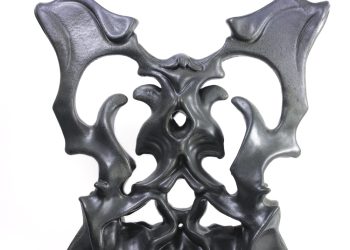
commensurate rebirth. The installation is illuminated by SAD frequency lamps, typically used to treat seasonal depression – cool light offering a salve for melancholy. Claydon’s objects are vessels in a metaphoric, as well as a literal, sense – akin to artefacts that pass through a ‘life cycle’ of meanings. The units of display, constructed from laser-cut aluminium, are themselves stylistically ambivalent. With their diagonal planes and curving archways (based on motifs from the tea ceremony), they alternately evoke Constructivist sculptures, offcuts of postmodern architecture, and floor plans for coastal watchtowers.
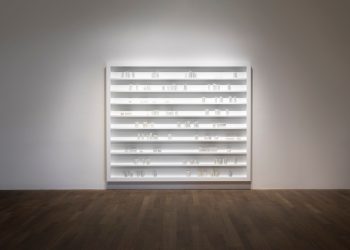
In a wall-based resin panel synthesised to resemble antique adzed oak, Claydon plays upon the concept of the ‘still life’ or natura morta. Centipedes and cockroaches appear as cast copper forms (patinated or ‘pennied’ to a deep umber) apparently scurrying over the surface of the ‘wood’. Stemming from a residency that the artist undertook in Gapado, South Korea, the panel is a conflation of eastern and western artistic traditions – the apparently incidental insect of vanitas painting and the monstrous ōmukade (centipede) of the Japanese yokai or ghost genre. The oak panels of a portable altar here take the place of the fragile paper screens or shoji of Korean and Japanese interiors. The insects likewise express a duality of east and west: the centipedes are based on creatures he observed in Gapado, while the cockroaches allude to an infestation in a dismal flat he once rented in south London.
Steven Claydon (b. 1969) studied at Chelsea College of Arts and Central Saint Martins. Mines, Bombs and Spirits were recently displayed at the Holburne Museum, Bath, as part of Hornet, hailstone, crab eye, aerodrome… (etc.), with Aaron Angell. Major exhibitions have included The Outside In, Museum of English Rural Life, Reading (2018); The Archipelago of Contented Peoples: Endurance Groups, The Common Guild, Glasgow (2017); The Gilded Bough, Sadie Coles HQ, London (2016); Analogues, Methods, Monsters, Machines, CAC Genève (2015); The Fictional Pixel and The Ancient Set, Bergen Kunsthall (2015); Culpable Earth, Firstsite, Colchester (2012); Mon Plaisir…Votre Travail, Salle de Bains, Lyon (2011); Golden Times, Haus der Kunst, Munich (2010); and The Ancient Set and The Fictional Pixel, Serpentine Pavilion, London (2008). In 2015 he curated (with Martin Clark) The Noing Uv It at Bergen Kunsthall, and in 2007, Strange Events Permit Themselves the Luxury of Occurring at Camden Arts Centre. His films Grid & Spike and Mimicry Systems were broadcast as part of Channel 4’s ‘Random Acts’ in 2013. A substantial monograph was published by CAC Genève and Mousse in 2017. Claydon has been involved in experimental electronic music for over 20 years, notably as part of the bands Add N to X, Jack too Jack,Long Meg and most recently ZK-snarks.
Contact
info@sadiecoles.com
Sadie Coles HQ
8 Bury Street
London SW1Y 6AB
Photos courtesy of the gallery