Heide Nonnenmacher (b. 1951, Stuttgart) is a ceramic artist based in Nattheim, Germany. She studied art at the University of Education in Schwäbisch Gmünd from 1971 to 1974 and established her own studio in 1982. Throughout her career, she has participated in multiple international residencies and exchanges, including artist residencies in Shigaraki, Japan (2003), at the Yingge Ceramics Museum in Taiwan (2015), and in Jingdezhen-Sanbao, China (2019). She is a member of the International Academy of Ceramics (IAC).
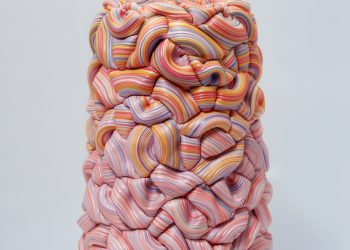
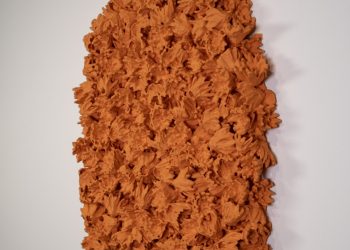
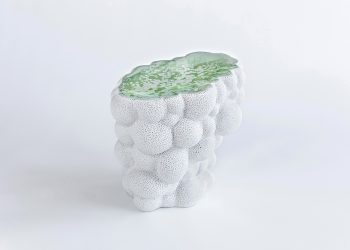
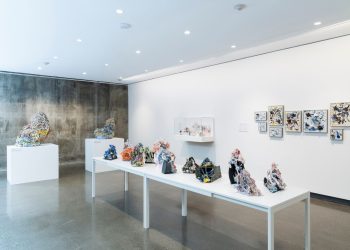
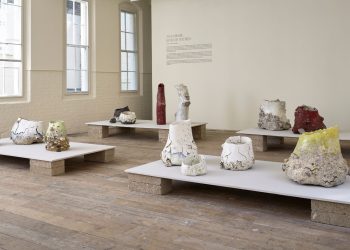
Working primarily with porcelain, Nonnenmacher develops sculptural forms informed by structures found in nature and by the fossil landscape of the region where she lives. Her work has drawn particularly on the fossil phenomenon around Nattheim, as well as forms associated with plant and animal life and underwater organisms. She describes her process as a mixed-media technique in which absorbent materials such as cellulose, wool, sponges, and roots are used as carriers for porcelain, enabling her to construct intricate forms and fine structures.
Nonnenmacher has exhibited extensively in Germany and internationally, including at the Premio Faenza, the Korean International Ceramics Biennale, the Porcelain Biennale Meissen, the Jingdezhen International Ceramic Biennale, the Latvia Ceramics Biennale, and the International Biennial of Ceramic Art of Aveiro. Her distinctions include honorable mentions at the Korean International Ceramics Biennale in 2015 and the Taiwan Ceramics Biennale in 2016, the Hessian State Award in 2023, and the Baden-Württemberg State Award in 2014 and 2024. Her work is represented in several public collections, including the Badisches Landesmuseum Karlsruhe, the Yingge Ceramics Museum, the Sanbao Museum in Jingdezhen, and the Württembergisches Landesmuseum Stuttgart.
Visit Heide Nonnenmacher’s website and Instagram page.
Featured work
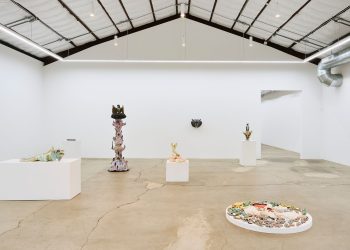
Selected works, 2020-2025
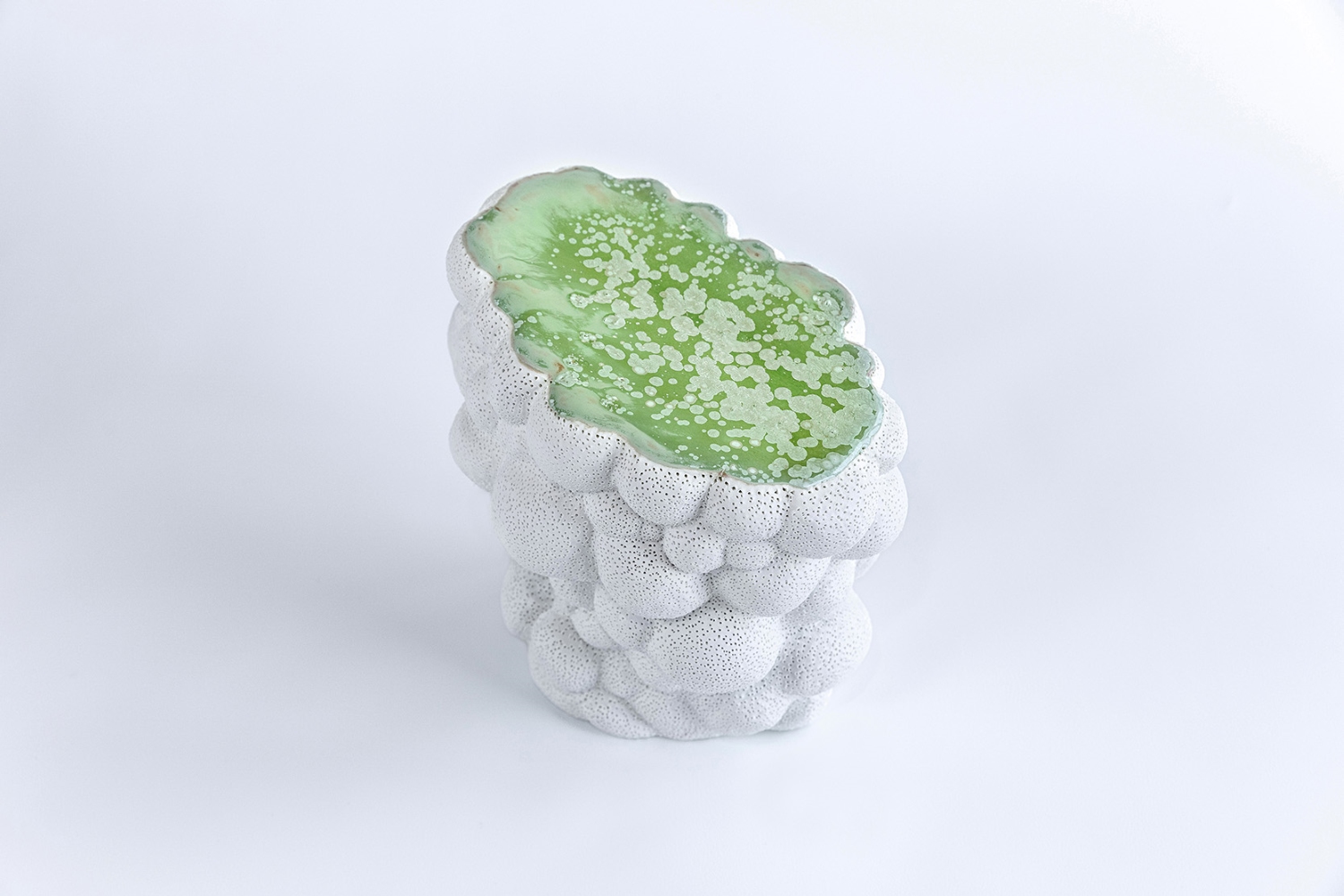
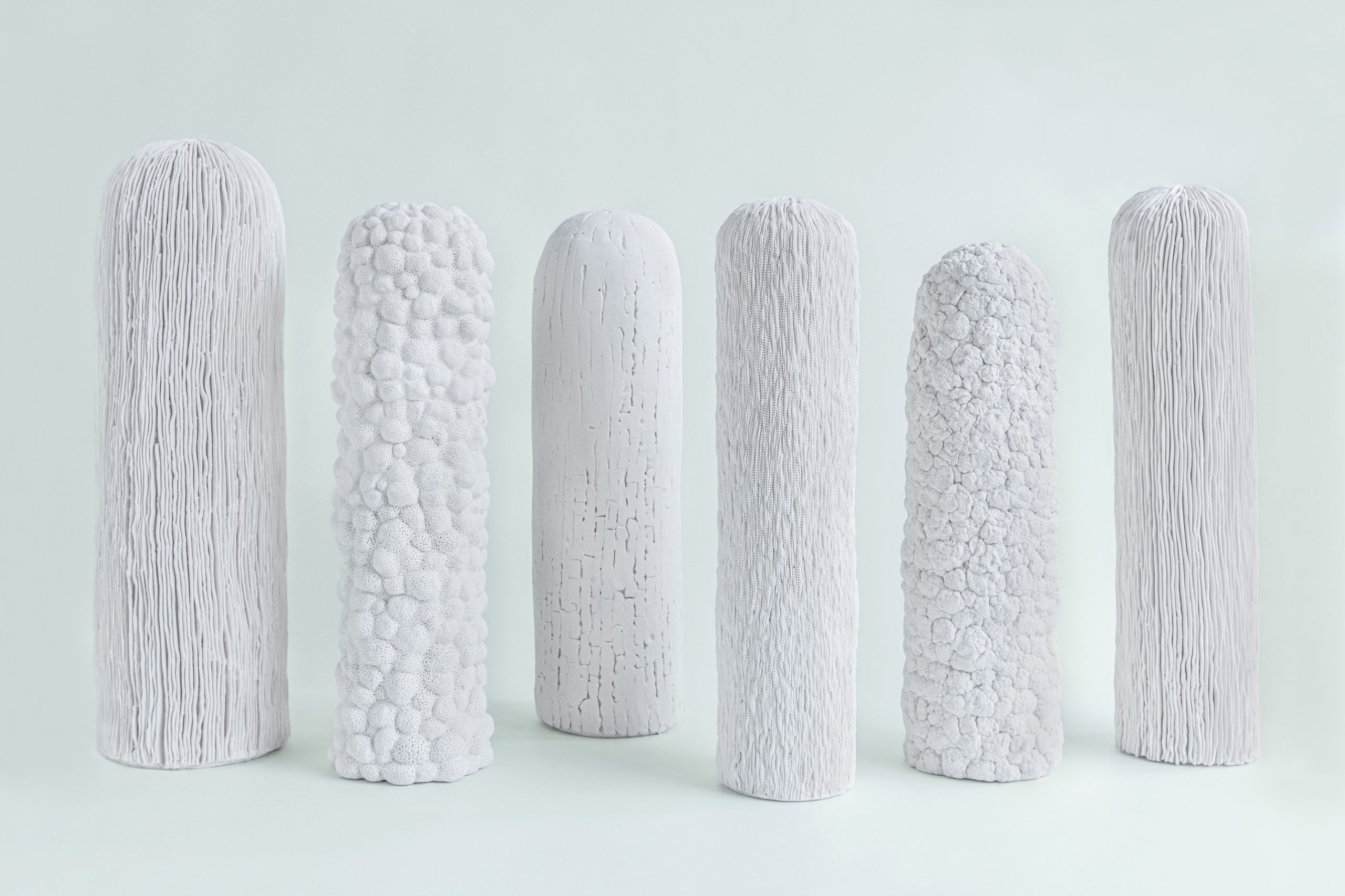
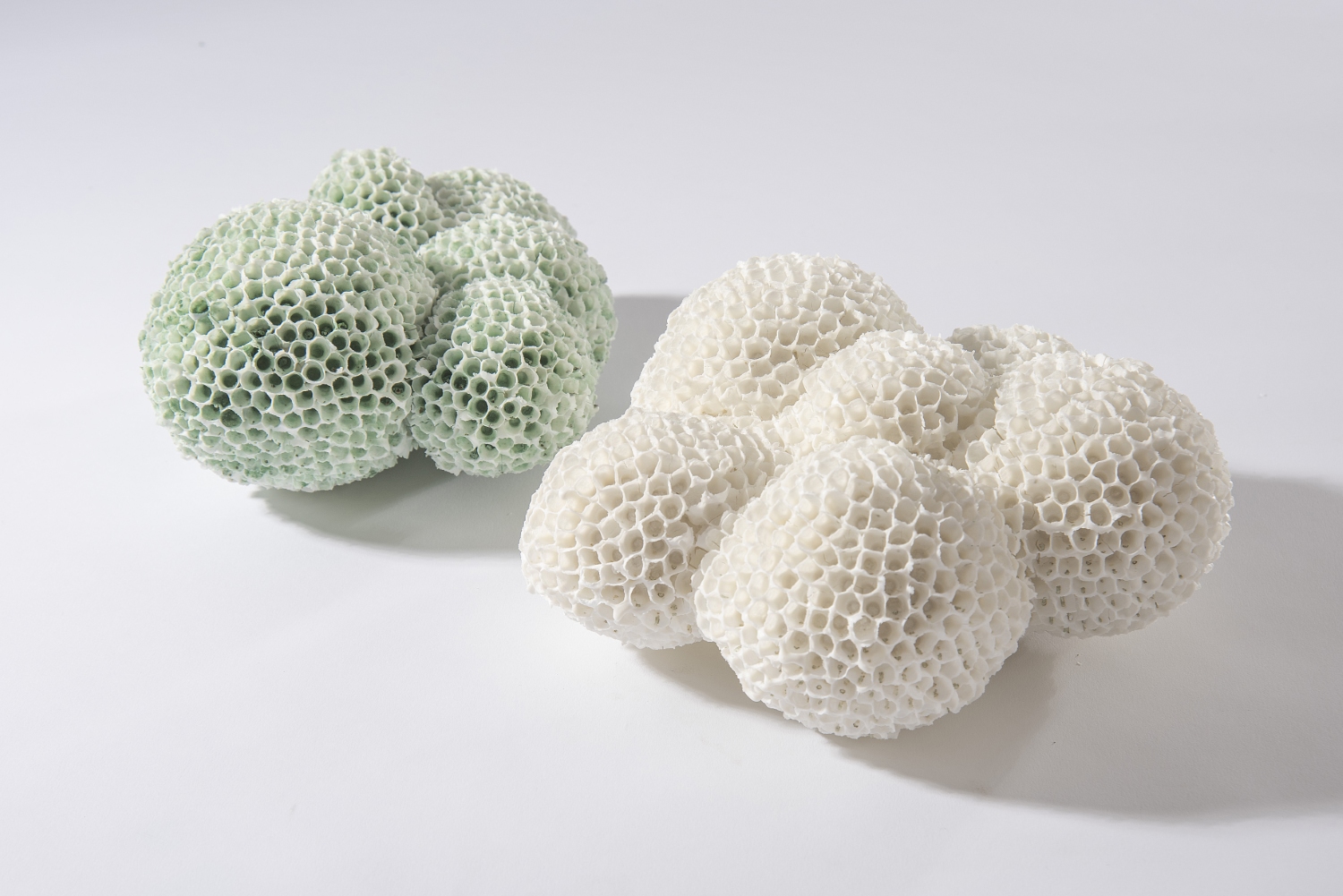
My work grows out of a fascination with the natural structures that surround me and with the ancient geological history of Nattheim, where I live and work. Around 150 million years ago, this region was part of the Swabian Jurassic Sea. Its corals, sponges, radiolarians, and other marine organisms, preserved today as fossils, provide an important source for my forms. I am especially drawn to their filigree structures, repetitions, and the ways in which organic forms are preserved, transformed, and reappear in new configurations.
Porcelain allows me to translate these structures into sculptural objects. I work particularly with paper porcelain and different carrier materials, especially thin, long-fiber paper, which help me create extremely delicate forms. Pinching is also an important part of my process. I am interested in the moment when porcelain seems to lose its expected hardness: surfaces can appear soft, textile-like, or as if they are moving in water. My exploration of these structures began with the idea of reproducing the subtleties of a wasp or hornet’s nest in porcelain. From there, my work developed through the botanical forms of the Orto Botanico series and toward the underwater world of the Swabian Alb. Fractal structures and the repetition of forms found in nature remain central to works such as Homage to the Jura Sea and Radiolarians.
Since 2020, climate change has become another important part of my work. I am concerned with the effects of global warming on coral reefs, particularly coral bleaching and species extinction. Rather than approaching these questions through resignation, I think about transformation and survival: Where do the living creatures of the reef go when the water becomes warmer or rises? How might they survive, reproduce, or mutate? In translating these possibilities into ceramic form, new structures and imagined organisms emerge. Through them, I continue to explore the complexity of nature and its ongoing processes of growth, transformation, decay, and renewal.