


Magazine
Ceramic artists list
> Ceramic artists list 97. Ryan Blackwell 96. Ellen Schön 95. Francesco Ardini 94. David Gallagher 93. Elizabeth Shriver 92. Jason Hackett 91. Patricia Sannit 90. Bente Skjøttgaard 89. Steve Belz 88. Ruth Power 87. Jenni Ward 86. Liliana Folta 85. Kira O'Brien 84. Annie Woodford 83. Kwok-Pong Bobby Tso 82. Bogdan Teodorescu 81. Kimberly Cook 80. Paula Bellacera 79. Debra Fleury 78. Cindy Billingsley 77. David Gilbaugh 76. Teresa & Helena Jané 75. Marianne McGrath 74. Suzanne Stumpf 73. Deborah Britt 72. Kathy Pallie 71. Els Wenselaers 70. Kjersti Lunde 69. Brian Kakas 68. Marie T. Hermann 67. Mark Goudy 66. Susan Meyer 65. Simcha Even-Chen 64. Barbara Fehrs 63. Shamai Gibsh 62. Natalia Dias 61. Bethany Krull 60. Amanda Simmons 59. Arthur Gonzalez 58. Chris Riccardo 57. Akiko Hirai W 56. Johannes Nagel 55. Rika Herbst 54. Liza Riddle 53. Chang Hyun Bang 52. Virginie Besengez 51. Jasmin Rowlandson 50. Chris Wight 49. Wim Borst 48. Rafael Peréz 47. Guðný Hafsteinsdóttir 46. Cathy Coëz 45. Merete Rasmussen 44. Carol Gouthro 43. JoAnn Axford 42. David Carlsson 41. Margrieta Jeltema 40. David Roberts 39. Patrick Colhoun 38. Abigail Simpson 37. Signe Schjøth 36. Katharine Morling 35. Dryden Wells 34. Antonella Cimatti 33. Cynthia Lahti 32. Carole Epp 31. Blaine Avery 30. Ian Shelly 29. Jim Kraft 28. Wesley Anderegg 27. Connie Norman 26. Arlene Shechet 25. Young Mi Kim 24. Jason Walker 23. Peter Meanley 22. Shane Porter 21. Jennifer McCurdy 20. Yoichiro Kamei 19. Debbie Quick 18. Ian F Thomas 17. John Shirley 16. Grayson Perry 15. Vivika & Otto Heino 14. Georges Jeanclos 13. Daniel Kavanagh 12. Nagae Shigekazu 11. Matthew Chambers 10. Tim Andrews 9. Claire Muckian 8. Adam Frew 7. Maciej Kasperski 6. Roxanne Jackson 5. Keith Schneider 4. Celeste Bouvier 3. Tim Scull 2. Kim Westad 1. Sara Paloma

Contemporary Art

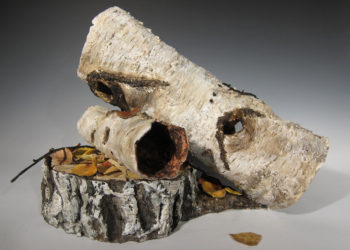
Ryan Blackwell: Self Portrait: Spring 2010, Animal Bones, Clay, Resin, Wood, 18 x 11 x 2 in.

  • The Open West 2012 Award Winners exhibition / Gardens Gallery, Cheltenham, UK

    The Open West 2012 Award Winners exhibition Cheltenham

    The Open West 2012 Award Winners exhibition / Gardens Gallery, Cheltenham, UK
    November 15-20, 2012

    Private view: Thursday, November 15, 6 pm.

    Artists: James P. Graham, Haruka Miyamoto, Koji Shiraya.

    Following the open west’s acclaimed exhibition at Gloucester Cathedral earlier this year, curators Lyn Cluer Coleman and Sarah Goodwin are now presenting an exhibition of the three award winners, James P Graham (University of Gloucestershire Award) Haruka Miyamoto (Ecotricity Award) and Koji Shiraya (Curators Award).
    This year’s award winning artists are connected by their concerns for the environment, showing acute awareness of the origins of the materials they use, from base metals to volcanic rock, leather, waste rubber and plastic, porcelain and feldspar.

    James P Graham lives and works in Italy and London and exhibits internationally. Originally trained in film and photography, James’ recent sculptural work is informed by landscape and nature. His new sculpture, Golden Cage, coming to Cheltenham directly from the Chelsea Physic Garden, uses volcanic rocks from the active crater on Stromboli, which have been wound and suspended with gold thread. The work “symbolises man’s attempts to imprison and control nature,” (CNN, Eco Solutions, 20.7.12).

    Haruka Miyamoto lives and works in London. Her training is in textiles (recently graduated from Chelsea College of Art & Design) and she works as a fashion, shoe and product designer as well as an artist. “The idea of my work is based on lifecycles in nature. I rescue materials from the bin and give them a second life, so they don’t end up in landfill. The impact that humans have on nature can be devastating. The dodo, which became extinct due to human activities, is a symbol of extinction.” Haruka showed in British-ish, the best of the UAL design graduates at the V&A for London Design Festival, and auctioned her work ‘Extraordinary Rubbish’ in the Faberge Egg Hunt 2011.

    Koji Shiraya who works in London and is soon to return to Japan, is an artist who completed his MA in Ceramics and Glass in 2010 at the Royal College of Art. His work After the Dream shown in the darkened crypt at Gloucester Cathedral captured an intriguing ambiguity, using porcelain spheres as metaphors for the mind, and its Gardens Gallery setting will stimulate a new language. In his sculpture Trinary 2011 all of the samples in the jars are filled with some of the main components of the earth’s crust. Koji has shown work at Einfall: Beyond Spontaneity at the Freud Museum and at Designers & Makers at Somerset House.

    Applications for the open west 2013 will be received from December. See theopenwest.org.uk for full details.

    Read More

  • Jannis Kounellis / Parasol unit foundation for contemporary art, London

    Jannis Kounellis exhibition Parasol unit foundation for contemporary art, London

    Jannis Kounellis / Parasol unit foundation for contemporary art, London
    28 November 2012 – 24 February 2013

    Preview: November 27, 2012, 6:30 – 9:00 pm.

    Parasol unit foundation for contemporary art is delighted to present a solo exhibition of works by painter, sculptor and performance artist Jannis Kounellis from 28 November 2012 to 24 February 2013 (Private View, 27 November 2012).

    Considered a protagonist of Arte Povera, an art movement that emerged in Italy during the 1960s, Kounellis embarked on his artistic career by creating some of the most radical art works of the time. Often combining the inanimate and animate, he boldly incorporated things such as propane torches, plants and animals as integral if not vital parts of his works. He also introduced the notion of performance within works of art, something that to this day continues to inspire artists around the world. In all these works Kounellis drew from his deep knowledge of and sensitivity to cultures of the past and his own heritage, in itself a spirited discussion between collective and personal experiences.

    The exhibition at Parasol unit aims to consider Kounellis’s early works from the 1960s, 70s and 80s and his own response to them from today’s standpoint, which often culminates in a more recent and spontaneous work. This juxtaposition of works of art from the different decades should thus engender an arena for discussion. On show will be works, such as Untitled (Carboniera), 1967; Untitled (steel plate and braid),1969, on loan from Centre George Pompidou, Musée national d’art; Metamorphosis, 1984, and Untitled, 1977, an electric train moving on steel plates installed around one of the pillars of the Parasol unit gallery.

    Born in 1936 in Piraeus, Greece, Kounellis moved to Rome in 1956, where he still lives and works. In recent years, Kounellis has had numerous solo exhibitions internationally, including, among others, at Neue Nationalgalerie, Berlin, 2007; National Centre for Contemporary Art, Moscow, 2011; Today Art Museum, Beijing, 2011; and Museum of Cycladic Art, Athens, 2012.

    Read More

  • Anne Tophøj and Marianne Nielsen: Elitist Folklore / Copenhagen Ceramics

    Anne Tophøj and Marianne Nielsen: Elitist Folklore exhibition Copenhagen Ceramics

    Anne Tophøj and Marianne Nielsen: Elitist Folklore / Copenhagen Ceramics
    October 25 – November 17, 2012

    Artist talk: Saturday, October 27, at 2 pm.

    The dish, the plate, the table and the flower. These common everyday objects and the most beloved iconic shapes from nature are framing in the lives of most people. For their shared exhibition at Copenhagen Ceramics Marianne Nielsen and Anne Tophøj are investigating why and how we value these universal expressions of culture and nature. But what is elitist folklore? What does it look like from their point of view?

    Marianne Nielsen occupies a very special position in Danish Ceramics. She takes interest, in an almost nerdy way, in the role of nature in our culture. In recent years her work often has concluded in definite renderings of natural subjects: mountains, feathers, leaves and now flowers and plants. As a kind of souvenir they refer to something beyond ourselves, being continuous, universal and something which, through its authenticity, contains an essential beauty. Yet, the representations of nature are about ourselves, since they only acquire their meaning through our very own gaze.

    Marianne Nielsen articulates this: ’Flowers hold a modest position in the arts as something banal, soft, often assigned the subordinate part. For these pieces I have let the flower be on its own, allowing it to make up the entire work. The works are about what is not directly present – the references linked to flowers, both as representatives of beauty and natural souvenirs. But they also deal with that particular application that has worn down the flower-motif and turned it into a cliché.’

    In a similar way Anne Tophøj is working with the values and inherent meanings of things. Either because the artifacts contain specific images or symbols that pass on a story or message, or by suggesting a particular use or way of handling.

    Characteristic of her work she investigates the dish and the plate, objects that we are all very familiar with and make daily use of. As she herself puts it:The plate and the dish are signs of human culture and how we raise ourselves above the animals; they are pivotal in all eating rituals and our daily meals. Artefacts that we all have in common – universal, banal, indispensable tools helping us to sustain life. They are beloved and treasured objects that different cultures and times have shaped endlessly for use and for ornamentation, for the table and for the wall.”

    Read More

  • Marta Jakobovits - Romanian ceramic artist, October 2012

    ROMANIAN CONTEMPORARY CERAMICS, October 2012: Marta Jakobovits

    Marta Jakobovits - Romanian ceramic artist

    Interview by by Ileana Surducan and Alexandra Mureşan for Ceramics Now Magazine - Issue Two

    What message or emotion do you want to convey to the observer through your works? Is your artistic undertake based on a certain idea or is it more of a searching process and experimentation?

    For me, this process is never conscious, programmed or preconceived. It is more of a constant experiment that is absolutely instinctive. My only guides on this path are those primal, undefined sensations generated by touching and feeling the malleable and permissive clay.
    Only afterwards I come to realize with wonder that a kind of actualization takes place - a humble identification, like a translation of some archaic, immemorial message. When I stop and ”read” the pieces that I created, and I analyze the way I created them, I marvel and realize that an actualization was already in me, that that translation was made through me.
    Good or bad, this is my path; through it I try to understand, not in a rational way, but rather through sensations and feelings, some of the facts of my existence, trying at the same time to leave some signs behind, signs that have meaning only if they are perceived by others.

    [] Read the full interview in Ceramics Now - Issue Two

    Many of your works are created in raku – a technique that is not the most convenient for everybody. Why did you choose this technique? What are the advantages and disadvantages that it presents?

    Raku is a technique that allows one to obtain very special and organic effects, both surprising and discreet. The expressive potential of the surface is greatly enhanced and can vary according to time and to different types of materials used in the burning – crumbled paper, sawdust, grass or dry leafs. Because of the strange appearance obtained through the ulterior reductions, the objects that are born through raku seem to me to be part of an ancient world, they appear timeless.

    The process of preparing the clay for the object that will be raku fired is special and equally important to me, because this offers just as many possibilities. The preparation involving different salts, oxides, engobes or glazes, in diverse combinations gives the final piece a special and unique visual individuality.
    Throughout the years I tested many of these possibilities, and through numerous repetitions I tried to understand and feel the spell of prompt intervention and immediate decision. These interventions can give you the impression that you work directly with the magical proprieties of the ceramic material.

    Marta Jakobovits Contemporary Ceramics featured on Ceramics Now

    Clay is perceived by many to be a docile and easy to manipulate material, but a real ceramic artist knows its potential and limits. In your opinion, what should be the relation between an artist and the material he uses?

    Clay is a material that is very open to the tactile dialog of touches, and this opening is very important to me because it creates a link to a world full of miracles and secrets. Through the material I am capable to connect with messages from ancient times. Clay seems to transport me into a different time, a different dimension. This is the reason why, whenever I find myself face to face with clay I try to reach the highest level of sincerity.

    Read More

  • Anti-Utopias / Sabin Bors - EXTRA!, October 2012

    EXTRA!, October 2012: Anti-Utopias / Sabin Borş

    Anti-Utopias contemporary art platform

    Interview by Vasi Hîrdo for Ceramics Now Magazine - Issue Two

    You hold functions such as curator, associate editor and columnist for different magazines, and you recently initiated a contemporary art platform titled Anti-Utopias. Since you don’t have any formal art education, how did you become interested in contemporary art?

    Art has always been one of my main interests, ever since I was a kid, and though I did not follow any formal art education, I did follow an MA in philosophy and culture where some of the major topics we discussed have been Art, Institutions and Cultural Policies, The Artist’s Statute in Post-Modern Culture, or Contemporary Perspectives Upon Culture. I also follow a PhD with a thesis on the future of museums, in terms of art, policies, architecture. Throughout the years I’ve kept a close contact with art in my readings and references, and I think coming from the “outside” is actually an advantage because it allows me to view art in a broader context and integrate its discourse differently. At the same time, I am also aware of the two perils with philosophers discussing art: on the one hand, they run the risk of subsuming art to a philosophical speech; on the other hand, they can feed art with concepts that only deepen the dilemmas of contemporary art and thus contribute to its fractures. When I started Anti-Utopias, my main concern was to create a thematic platform bearing in mind these two perils precisely, but also the theoretical abundance where art in general claims itself from. 

    Tell us about Anti-Utopias. Why did you choose the utopian – anti-utopian motive as the theme of your project?

    In spite of all the discourses on contemporary art, I think it is still trapped in a false attempt to surpass its own modernity. The artistic discourse still tries to dissect its own foundation and remains somehow captive inside artificial constructions, based on imitation. I am equally circumspect whether discourses crediting the derivative modernities can indeed not only resurrect, but actually redeem the project of modernity. These modernities are based on alter-constructions that complete the same project, though they construct on the margins of modernity. We relate to the same referent, and hope our alter-construction will indeed rescue notions and practices. Art is caught in this paradox: on the one hand, it has to constantly shift its aims outside the marges, because when you construct on the marge, the marge itself becomes a center; on the other hand, art contributes to a global process of territorialization, precisely in this movement it needs to operate. It’s like an expanding fissure that deepens the faults. And it is along this fissure that one can understand the exposure of art, in what this fissure draws ahead, but especially in what it leaves behind, not only as a trace, but in that which remains. Art is this rest, this remnant. Art is reversion. And I think this is one of the ideas and concepts that I need to develop further, this idea of art being a reversion.

    When I started this project I knew I was placing its theoretical horizon under two major discursive pressures. The first one is this unsuccessful attempt to give an answer to an utopia other than by formulating another utopia, and the second is the use of the prefix “anti-“ itself, which does indeed bestir a number of critical reflexes and exercises. Obviously, there is no exit from utopia, and the more we seek to counter this statement, the more we end up in utopias of the refusal or in the utopias of some alter-constructions. From my perspective, anti-utopias don’t claim themselves from a refusal or a counter-position, nor are they the expression of a cultural, historical, or political transgression. They do not fall into the metaphysical discourse where anti- would refer to a sort of anti-metaphysics, and I don’t see them being shaped as a means of counteracting either. For me, anti- should refer to a state of exposure, to a certain openness which is not only affirmative but also all-embracing, definitive, and which can be understood on multiple levels: over-exposure, exposure to the certitude of death, exposure to a certain risk and impossibility, exposure to its own tragedy, etc. It is an exposure not only to the unpredictable, but also to a subtending dread defining art and life itself – a fear of dying, the interruption of breath. And though this discourse may seem to bear away from the current artistic discourse, I still think it is this dread that art is running away from. And this can be seen in all its diversity, separations, counter-currents, and reconsiderations. Not lastly, I think that the insistence upon difference/differences cannot account for the current state of things any longer, but only perpetuates the discursive and political impossibilities. From one utopia to another. I think art and society are on the verge of a more radical transformation, for which it has no name yet, a transformation we cannot fully appropriate right now.

    Read More


  • Carsten Nicolai - Unidisplay

    “The installation unidisplay offers an examination of semiotics and the laws of perception. The work operates with a number of modules of different visual effects that interfere with the viewers’ perception, through optical illusion, jitter, flicker, after-image, movement, complementary colour effect, and so on. The installation unfolds against a long projection wall with two mirror walls on the side thus visually expanding like a universe. The basic visual, made up of sequences, motifs and graphic translations of various units of time measurement acts as a world clock and evokes the intertwining of time, between past, present and future. The installation is created with Derivatice’s TouchDesigner software which has been used for alva noto live performances with a triple-screen projection.” (via)

    More connections »

    (via rcruzniemiec-deactivated2013020)

  • The reopening of Fabrica de Pensule / Cluj-Napoca, Romania

    The reopening of the Paintbrush Factory Fabrica de Pensule, Cluj-Napoca, Romania

    The reopening of Fabrica de Pensule / Cluj-Napoca, Romania
    October 5, 2012
    - 7-10 PM


    Contemporary art exhibitions:
    SABOT
    / Paul Branca – L’origine de l’espace privée
    Plan B / Alexandra Croitoru – Do not forget you are an artist!
    Peleş Empire / Original/Copy III
    Lateral Art Space / Adrian Sabău – In-lined
    Baziş / Bandi Saşa – Persona non grătar
    Baril / Constantin Flondor – Sifting
    AltArt / Time’s Up (AT) – Unattended Luggage
    Intact Space / Fake it! Limited Edition
    Etaj III, corridor / Ana Adam – Drawings
    open studio / Istvan Cîmpan (first floow)
    open studio / George Crîngaşu (SABOT Residence Space, forth floor)

    + Divas at Sala Studio (8 pm). Directed by Ferenc Sinkó, GroundFloor Group.

    The exhibitions are part of the Contemporary Art Factory project organized by The Paintbrush Factory (Fabrica de Pensule) and financed by the Administration of the National Cultural Fund (AFCN).

    Fabrica de Pensule / The Paintbrush Factory is a collective space for contemporary arts in Cluj, Romania. The project started at the beginning of 2009, as an independent initiative to bring together ideas, events and projects of cultural organizations, galleries, producers and independent artists in Cluj and as a reaction to the local lack of production and exhibition spaces in the city.

    The artists, galleries and organizations – active in the fields of theater, contemporary dance, visual arts, arts in public space, music – are jointly engaged into delivering relevant cultural content, both for the artistic community and the wide audience. Besides artist studios and production spaces, Fabrica de Pensule also hosts events of local and international partners. It acts as a major player in cultural and urban policies in the Romanian context.

    Read More


  • Carol Gouthro: Anthozoa gouthroii “Viridis”, 2012, Terrecotta clay with underglazes and glazes, 6”h. x 10.5”w .x  6.5”d


  • Carol Gouthro: Anthozoa gouthroii “Chromatella”, 2012, Terrecotta clay with underglazes and glazes, 6”h. x 10”w .x  6”d

  • Bertozzi & Casoni: Regeneration / All Visual Arts, London

    Bertozzi Casoni Regeneration exhibition, All Visual Arts, London

    Bertozzi & Casoni: Regeneration / All Visual Arts, London
    October 13 - November 10, 2012

    Private view: October 12, 7-9 pm.

    All Visual Arts are proud to present Regeneration, a unique installation from Italian artists Bertozzi & Casoni. The artists are acclaimed for their delicate depictions of a culture in decay, deftly rendered in fragile ceramic clay. Their latest work Regeneration queries the hierarchy of aesthetics, revealing the beauty in the neglected and discarded ephemera of our seamless culture. The pieces compel the viewer to confront the visceral decay of contemporary society, to expose the cracks between the artifice of the world we are presented with and to explore what lies within these fissures. With this imaginative approach to their practice, Bertozzi and Casoni align the traditional with the experimental, and allow us to construct our own narrative around their evocative scenes.

    Bertozzi and Casoni manipulate the indistinction between the real and the simulacrum in their work, an obsession for detail which evokes the Decadent taste for imitation and crafted artifice as superior to the natural. In fabricating these visually and emotionally compelling still-lifes, the artists engage the viewer in deeper themes of impermanence and mortality. Through rendering the abject and overlooked in such exquisite detail, Bertozzi and Casoni signal the return of the repressed, the avoidance of our own mortality. In one piece in which the memento mori is explicitly rendered, an ox skull is dominated by a vivid monitor lizard, symbolic of both death and rebirth in its habitat across Asia and Australia. In the antonymously titled DisGRACE, vibrant blooms sprout from the polluted detritus of a decadent and avaricious society, a scene of nature triumphing over the excesses of hyper-capitalism.

    Regeneration contemplates the possibility of change through rebirth, rediscovery and reappropriation, manipulating earth into elegant and fragile structures. In one piece, a cluster of butterflies flock to raise the severed head of a deer from an ornamental platter, recalling the Renaissance representations of John the Baptist or Holofernes. In a similar echo of classical scenes, and dominating the Regeneration is the serene image of a silverback gorilla resting in the Buddhist lotus position on a bed of discarded mattresses. A roe deer lies prone across its body, while wrens and goldcrests commune around the pair. The piece is an evocation of symbolic power, from the visceral confrontation of our Darwinian descendent dying out in front of our eyes, to the shift between the viewer and sculpture, object and subject as we find ourselves caught in the compassionate gaze of the animals. Our own mortality is inscribed in the tableaux where urban structures, religion and the animal world collide to reveal the grace in disgrace which Bertozzi and Casoni seek to capture.

    It seems appropriate that the duo push their material to its limits and question the possibility of representation in their work at every turn. Their liberal accumulation and compilation of cultural references is evident in the playful amalgamation of objects in a work where a swordfish’s head juts from a guitar case; the shapes tessellating the natural with the cultural. Their curiosity and playful approach to objects creates a process of continual experimentation and discovery, freeing themselves from convention and the stereotypes of the ornamental and domestic associated with the ceramic medium, and producing unexpected moments of pathos and humour through their synthesis of past and present, nature and artifice. The artists subvert the established rules about the perception of applied arts through inverting the symbolic power of their traditional medium, exceeding the inherent conservativism of ceramics to sculpt fantastic and grotesque scenes that liberate both the artist and viewer’s imagination.

    Read More

  • ©2013 Ceramics Now. All Rights Reserved. Website by Thomas Cullen. Powered by Tumblr.