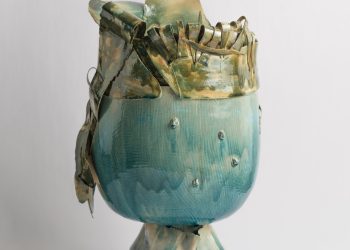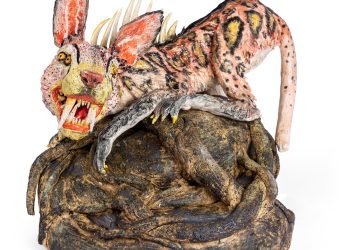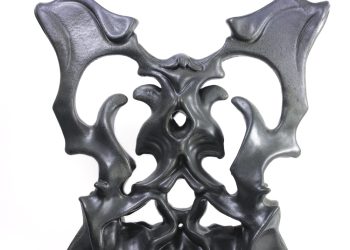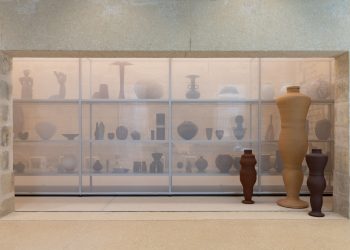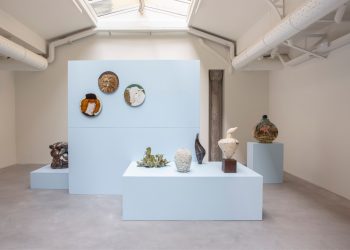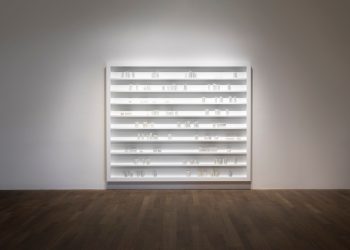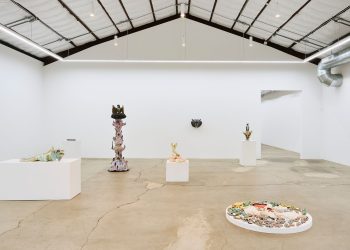




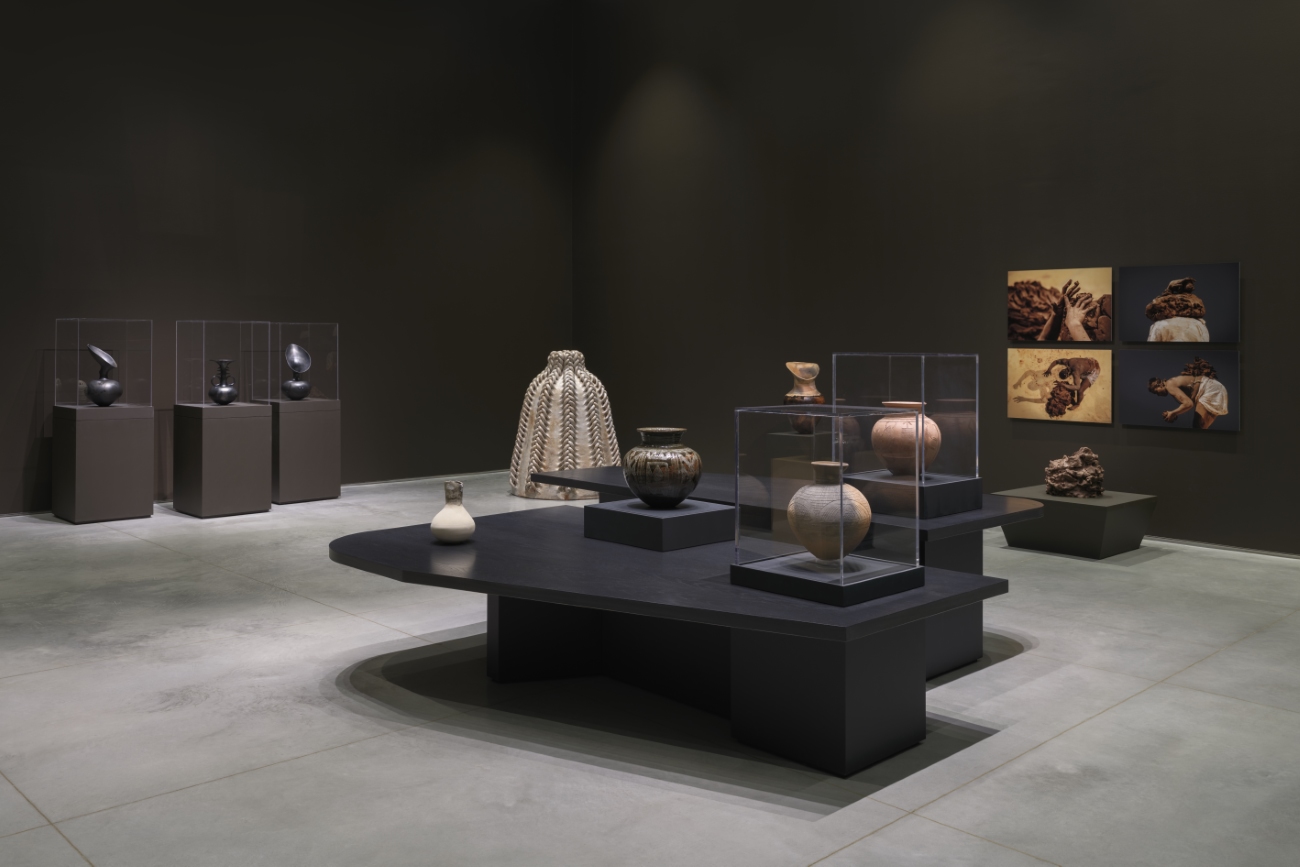


Body Vessel Clay: Black Women, Ceramics & Contemporary Art is on view at Ford Foundation Gallery, New York
September 10 – December 6, 2025
Body Vessel Clay brings together three generations of groundbreaking Black women artists whose work with clay explores the medium’s multilayered cultural and political significance. Featuring over fifty works across ceramics, film, photography, and archives, the exhibition draws connections between the legacy of renowned Nigerian potter Ladi Dosei Kwali (1925-1984) and contemporary artistic practice. Through these lines of influence and innovation, the show traces how Black women artists have transformed the field of ceramics over the past seventy years—disrupting conventions, challenging hierarchies, and expanding the possibilities of clay as a medium.
Following critical acclaim at Two Temple Place in London and York Art Gallery in 2022, this landmark exhibition makes its U.S. debut on the centenary of Kwali’s birth, honoring her powerful work’s deep and broad influence over time and place. Curated by Dr. Jareh Das, this iteration of the exhibition features new works and includes three U.S.-based artists: Adebunmi Gbadebo, Simone Leigh, and Anina Major. It challenges dominant narratives in ceramics history by celebrating matrilineal, Indigenous African pottery techniques and clay’s enduring presence as both an artistic and functional form of expression. Dr. Das’s revelatory curation will immerse visitors in a contemplative space for reflecting on the layered histories of ceramics and the radical potentials of form, gesture, and the material memory of clay. The transformative qualities of the featured works become amplified in conversation with each other across generations, redefining and pushing the boundaries of ceramics.
The exhibition begins with Ladi Kwali, whose pioneering work revolutionized ceramics in West Africa and beyond. In 1954, Kwali joined the Pottery Training Centre (since renamed the Ladi Kwali Pottery Centre) in Suleja (formerly Abuja), established by British potter Michael Cardew (1901-1983), as the first female trainee. There, she was introduced to modern techniques of glazing and high-temperature kiln firing, transforming once-functional objects into collectable decorative works. Kwali is most celebrated for her hand-built Gbari water pots. She also created various thrown objects, including tankards, plates, dishes, bowls, and more, a range on display in the selection of her works featured in the show.
This meeting of British studio pottery and Indigenous Nigerian hand-built pottery traditions marked a pivotal moment in Nigerian modernism and craft history. Through a presentation of ceramics, archival photographs, press clippings, letters, and publications, this exhibition offers a rare insight into life at the Pottery Training Centre, its legacy, and the international acclaim Kwali achieved during her lifetime, including her appearance on Nigeria’s 20-Naira note.
Kwali paved the way for other women from her community to join the Pottery Training Centre, including Gbari potters Halima Audu and Asibi Ido, both of whom developed distinct artistic voices. Like their mentor, they continued to produce hybrid ceramic forms that combined traditional hand-building techniques with modern methods, as seen in their displayed works. An early vessel by ceramic artist Magdalene Odundo featured in the exhibition reflects the lasting impact of her formative 1974 visit to Nigeria and her direct encounter with Kwali. At the recommendation of Michael Cardew, Odundo interned at the Pottery Training Centre, where she worked alongside Kwali and other potters, learning Gbari hand-building and burnishing techniques and key practical skills. These methods became foundational to her evolving practice. Over the past four decades, Odundo has developed a singular approach that weaves African and ancient Greek and Roman ceramic traditions into refined, anthropomorphic vessel forms—works honoring matrilineal knowledge while forging new sculptural languages.
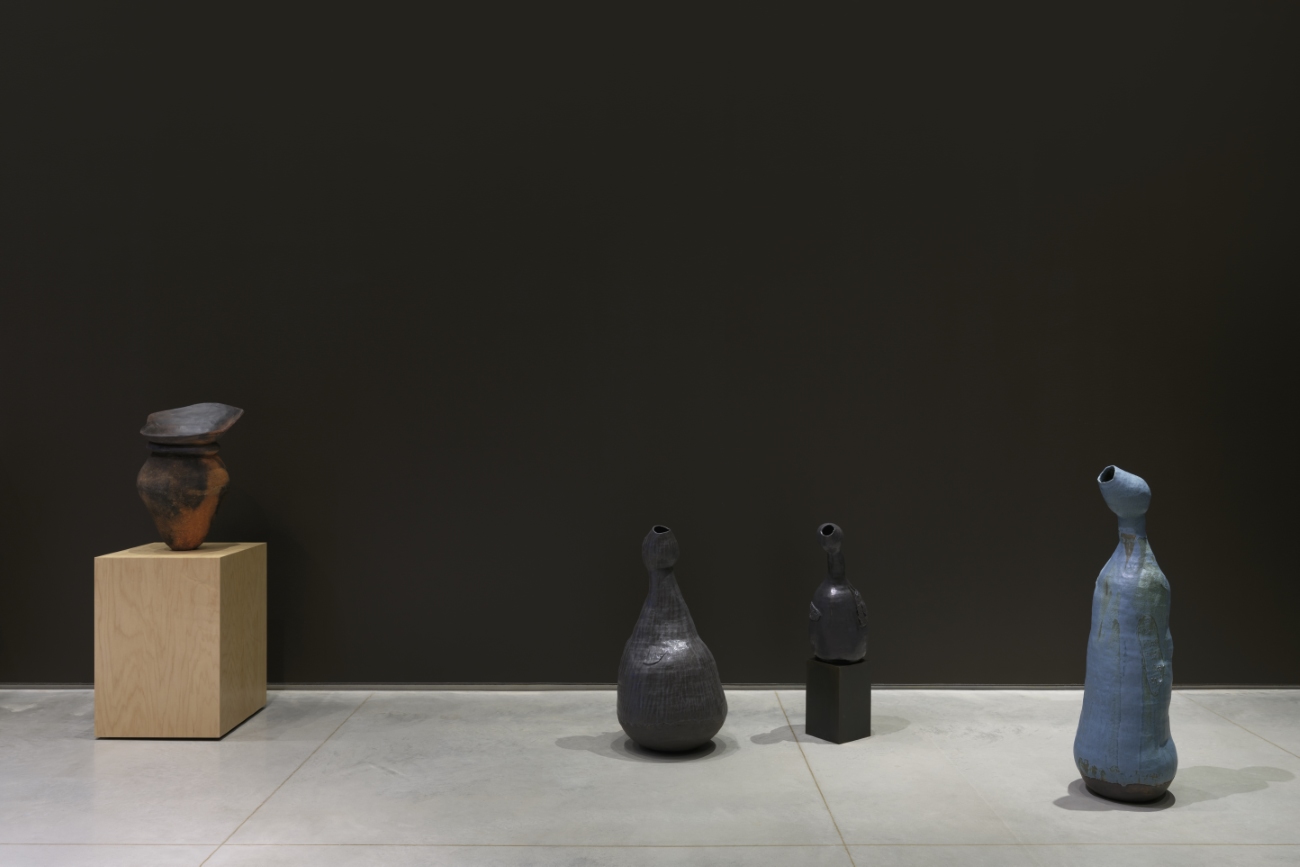
Kwali’s presence is also felt obliquely as her influence resonates through a younger generation of international contemporary Black women artists who work with clay in radical, experimental, and deeply personal ways. Bisila Noha’s thrown and hand-built two-legged vessels stem from her project, Searching for Kouame Kakahá: A celebration of the unnamed women of clay; our shared mothers and grandmothers (2020-), which redresses the fact that pottery, especially that made by women in the Global South, has been ignored, belittled, and forgotten. Adebunmi Gbadebo uses culturally and historically imbued materials, including clay, hair, and rice, to craft vessels from soil sourced at Fort Motte, South Carolina, where her ancestors were enslaved. These works embody mourning, memory, and reclamation to honor erased histories through meditative African coil techniques. Each vessel becomes a site of spiritual excavation, connecting land, lineage, and the enduring impact of slavery across generations. Phoebe Collings-James’s ongoing Infidel series (2023-) draws on West African and Caribbean ceramic traditions of coiled vessel-making, reimagining the “infidel” as a container for national, political, and spiritual knowledge. Described by the artist as a “heretic anthology,” these ceramic sculptures, presented in procession, are ambiguous, creature-like, and vessel forms with mouths that seem to speak or shout. At once unsettling and fragile, they evoke vulnerability, resistance, and transformation, reclaiming the figure of the “infidel” as a potent symbol of defiance.

Clay is both a material and a metaphor in performance, as its malleability evokes transformation, memory, and resistance. In performance, it becomes more than a medium; it becomes a collaborator, a force to shape and be shaped by. In Clay (2015), filmed by Webb-Ellis, Jade de Montserrat uses her body to engage directly with the land in repetitive digging, building, and submerging. Her gestures, rooted in childhood memories of rural Yorkshire, speak to the human body’s elemental connection to the earth, symbolising both creation and extraction. Julia Phillips’s Becoming (the Hunter, the Twerker, the Submitter) (2015), a silent video loop, isolates and fragments a dancing figure into disjointed body parts. This deconstruction evokes themes of desire, predation, and submission. Through ambiguous choreography, Phillips probes bodily autonomy, objectification, and power. In her six-hour durational performance, Uro (2018), Chinasa Vivian Ezugha physically labored with 30kg of raw clay, applying it to her body and canvas in a visceral exchange of resistance and collaboration. For Body Vessel Clay, Ezugha revisits this performance through photographs and a new sculptural work that remembers clay not as static, but as a dynamic presence, material witness, weight, and memory all at once.
Works in the show embody innovative material strategies for preserving cultural knowledge and histories. Anina Major’s woven and glazed ceramic sculptures, like the one presented, reinterpret the Bahamian tradition of plaiting, a straw-based weaving technique, drawing on early memories and a desire to preserve her cultural heritage. Adapting this technique to clay by altering clay body recipes, Major achieved the elasticity needed to mimic the interlacing forms of plaited palm, transforming an ephemeral tradition into enduring ceramic form. For Major, firing the work is both an act of remembrance and resistance to preserve the fragility of straw through the permanence of clay. Simone Leigh’s sculpture on view from her Village Series (2023-2024) blurs the boundaries between body and structure, referencing African architecture, ritual vessels, and ancestral presences. Her glazed ceramic and bronze sculptures often draw inspiration from vernacular architectural forms and aesthetics in African art traditions. Leigh’s work asserts ceramic form as both symbolic architecture and embodiment, materializing histories often excluded from dominant narratives. The artist describes her practice as autoethnographic, rooted in Black feminist thought and explorations of Black female-identified subjectivity.
The artists in Body Vessel Clay share a deep fascination with testing the medium’s properties to create new, personal, political, collective, and visionary aesthetics across geographies and temporalities. By tracing lines of continuity between past and present, Body Vessel Clay repositions clay not as peripheral but as central to global art histories and as a vessel for memory, defiance, and transformation.
The exhibition features work by artists including Halima Audu, Phoebe Collings-James, Jade de Montserrat, Chinasa Vivian Ezugha, Adebunmi Gbadebo, Ladi Kwali, Simone Leigh, Anina Major, Bisila Noha, Magdalene Odundo, and Julia Phillips. It also includes a rich selection of Abuja Pottery ceramics (Michael Cardew, Asibi Ido, and George Sempagala), and archival material—correspondence, press clippings, and photographic
documentation—related to the Pottery Training Centre in Abuja, drawn from the collections of Doig Simmonds, the Crafts Study Centre, and the W.A. Ismay Archive at York Museums Trust. Exquisite, research-led exhibition design by Ayo Design and graphic design by NMutiti Studio invite readers into a dynamic, contemplative journey across the show’s layered themes and interconnections.
Body Vessel Clay is realized with loans from Brooklyn Museum; Cooper Hewitt, Smithsonian Design Museum; the Crafts Council Collection (U.K.); the Crafts Study Centre and University for the Creative Arts at Farnham (U.K.); The Newark Museum of Art; York Museums Trust (U.K.); and private lenders.
Contact
gallery@fordfoundation.org
Ford Foundation Gallery
320 E 43rd St
New York, NY 10017
United States
Photos by Sebastian Bach. Courtesy Ford Foundation Gallery
Captions
- fig 1. Installation view, Body Vessel Clay: Black Women, Ceramics & Contemporary Art
- fig 2. Ladi Kwali (Nigeria, 1925-1984) Water pot, 1959, Earthenware, large hand-built pot with rim incised and inlaid red pattern with a transparent glaze 13 ¼ x 14 ⅛ inches / Water pot, 1959, Earthenware, hand-built, impressed and incised geometric decoration, glaze over red slip, wood-fired 11 ¾ x 12 ⅝ inches / Water pot, 1959-1962, Stoneware, transparent and slip glaze, bands of rouletted decoration around the body and on rim, a coiled globular pot with a small, short, incised neck and flared rim 14 ¼ x 14 ⅜ inches
- fig 3. Installation view, Body Vessel Clay: Black Women, Ceramics & Contemporary Art
- fig 4. Bisila Noha (Spain, 1988, lives and works in the United Kingdom) Reunion I, 2021, Terracotta 1, 10 ⅝ x 8 ⅞ x 4 ⅜ inches / Reunion XII, 2022, Terracotta, 10 ¼ x 9 ⅛ x 4 ⅛ inches / Two-Legged Vessel, 2020, Black stoneware, 6 ¾ x 5 ⅞ x 3 ⅜ inches / Two-Legged Vessel, 2020, Baney clay, 6 ¾ x 5 ⅞ x 3 ⅜ inches
- fig 5. Installation view – Doig Simmonds (United Kingdom, b. 1927, lives and works in the United Kingdom), 11 documentary photographs of Pottery Training Centre and Abuja, c. 1960s, Dimensions variable
- fig 6. Nigerian Modernism & the Pottery Training Centre, Abuja, 1950s-1970s, Installation view – Pottery Training Centre, Abuja archives wall vitrine
- fig 7. Ladi Kwali’s Internationalism: A Rupture in Nigerian Modernism, Installation view – Ladi Kwali archives wall vitrine
- fig 8. Installation view – left to right: Bisila Noha (Spain, 1988, lives and works in the United Kingdom), Installation view, left to right: Reunion I, 2021 / Reunion XII, 2022, Two-Legged Vessel, 2020, Black stoneware / Two-Legged Vessel, 2020, Baney clay | Adebunmi Gbadebo (United States, b. 1992, lives and works in the United States), Scott, Ida, 1892-1945, Asleep in Jesus, 2024 / True Blue Plantation, cemetery soil, shoe polish, Carolina Gold rice, white rice, pit-fired, 23 ¾ x 16 ½ x 16 inches | Phoebe Collings-James (United Kingdom, 1987, lives and works in the United Kingdom), Infidel [Scorpion], 2025, Glazed stoneware ceramic, 33 ⅞ x 17 ¾ x 17 ¾ inches / Infidel [knot song], 2025, Glazed stoneware ceramic on a blackened steel base, 29 ½ x 9 x 9 inches
- fig 9. Installation view – left to right: Simone Leigh (United States, b. 1967, lives and works in the United States), Village Series, 2023-2024, Stoneware, 59 x 47 inches | Adebunmi Gbadebo (United States, b. 1992, lives and works in the United States), Sam, 2023, Soil dug from True Blue Plantation, South Carolina, human hair, pit-fired 28 ½ x 16 x 15 inches
- fig 10. Installation view – left to right: Adebunmi Gbadebo (United States, b. 1992, lives and works in the United States), Scott, Ida, 1892-1945 / Asleep in Jesus, 2024, True Blue Plantation cemetery soil, shoe polish, Carolina Gold rice, white rice, pit-fired, 23 ¾ x 16 ½ x 16 inches | Phoebe Collings-James (United Kingdom, 1987, lives and works in the United Kingdom), Infidel [Scorpion], 2025, Glazed stoneware ceramic, 33 ⅞ x 17 ¾ x 17 ¾ inches / Infidel [knot song], 2025, Glazed stoneware ceramic on a blackened steel base, 29 ½ x 9 x 9 inches / Infidel [virtuosic], 2025, Glazed stoneware ceramic, 44 ⅛ x 12 ⅝ x 12 ⅝ inches
- fig 11. Installation view – left to right: Magdalene Odundo (Kenya, 1950, lives and works in the United Kingdom), Untitled #10, 1995, Earthenware, 21 ¼ x 12 inches / Symmetrical Reduced Black Narrow-Necked Tall Piece, 1990, Terracotta, 16 x 10 inches / Untitled #2 Vase (England), 1994, Slip-coated red clay, 21 ⅝ x 11 7/16 inches
- fig 12. Installation view – left to right: Simone Leigh (United States, b. 1967, lives and works in the United States), Village Series, 2023-2024, Stoneware, 59 x 47 inches | Adebunmi Gbadebo (United States, b. 1992, lives and works in the United States), Sam, 2023, Soil dug from True Blue Plantation, South Carolina, human hair, pit-fired, 28 ½ x 16 x 15 inches | Chinasa Vivian Ezugha (Nigeria, b. 1991, lives and works in the United Arab Emirates and United Kingdom), Installation view – Uro (Performance documentation for SPILL 2018), 2019/2025
- fig 13. Installation view, Body Vessel Clay: Black Women, Ceramics & Contemporary Art
- fig 14. Installation view, Body Vessel Clay: Black Women, Ceramics & Contemporary Art
- fig 15. Intergenerational Vessels & Matrilineal Influences, Installation view – Intergenerational – left to right: Anina Major (The Bahamas, b. 1981, lives and works in the United States), Salt Crusted Ribs, 2024, Glazed stoneware, sea glass, and sand, 10 ½ x 9 inches | Ladi Kwali (Nigeria, 1925-1984), Unglazed pot from Farnham demonstration, 1962, Earthenware, 14 ⅜ x 12 ⅝ inches | Halima Audu (b. unknown, d.1961), Jar, 1959, Stoneware, 11 ⅜ x 11 ⅜ inches | Bisila Noha (Spain, 1988, lives and works in the United Kingdom), Water Jug, 2021, Various stoneware clays and porcelain, 14 ⅛ x 10 ⅝ inches | Magdalene Odundo (Kenya, 1950, lives and works in the United Kingdom), Pot, 1979, Coiled pot with pointed base, bonfire fired with fired clay stand, 15 ¾ x 12 ⅜ inches
- fig 16. Installation view, Body Vessel Clay: Black Women, Ceramics & Contemporary Art
- fig 17. Chinasa Vivian Ezugha (Nigeria, b. 1991, lives and works in the United Arab Emirates and United Kingdom), Installation view – Uro (Performance documentation for SPILL 2018), 2019/2025