Arina Antonova: Shekel & Anubis Agency is on view at Galerie Dix9 Hélène Lacharmoise, Paris
March 21 – April 29, 2026
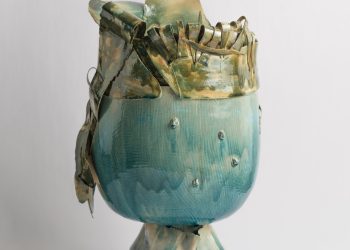
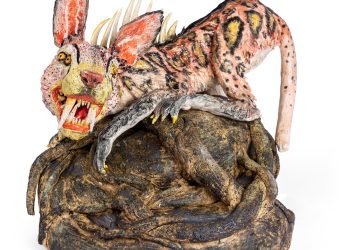
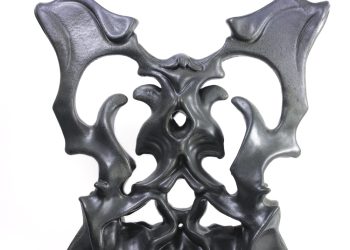
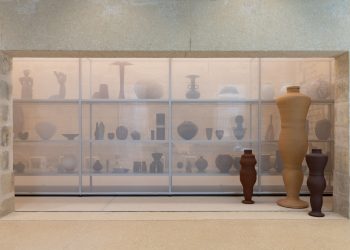
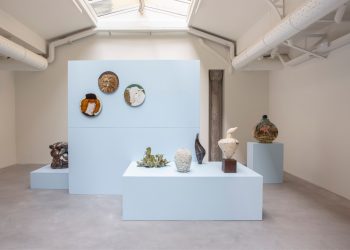
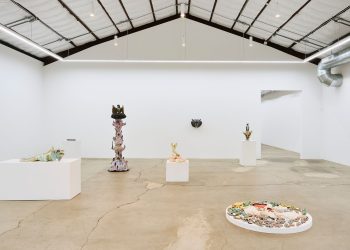
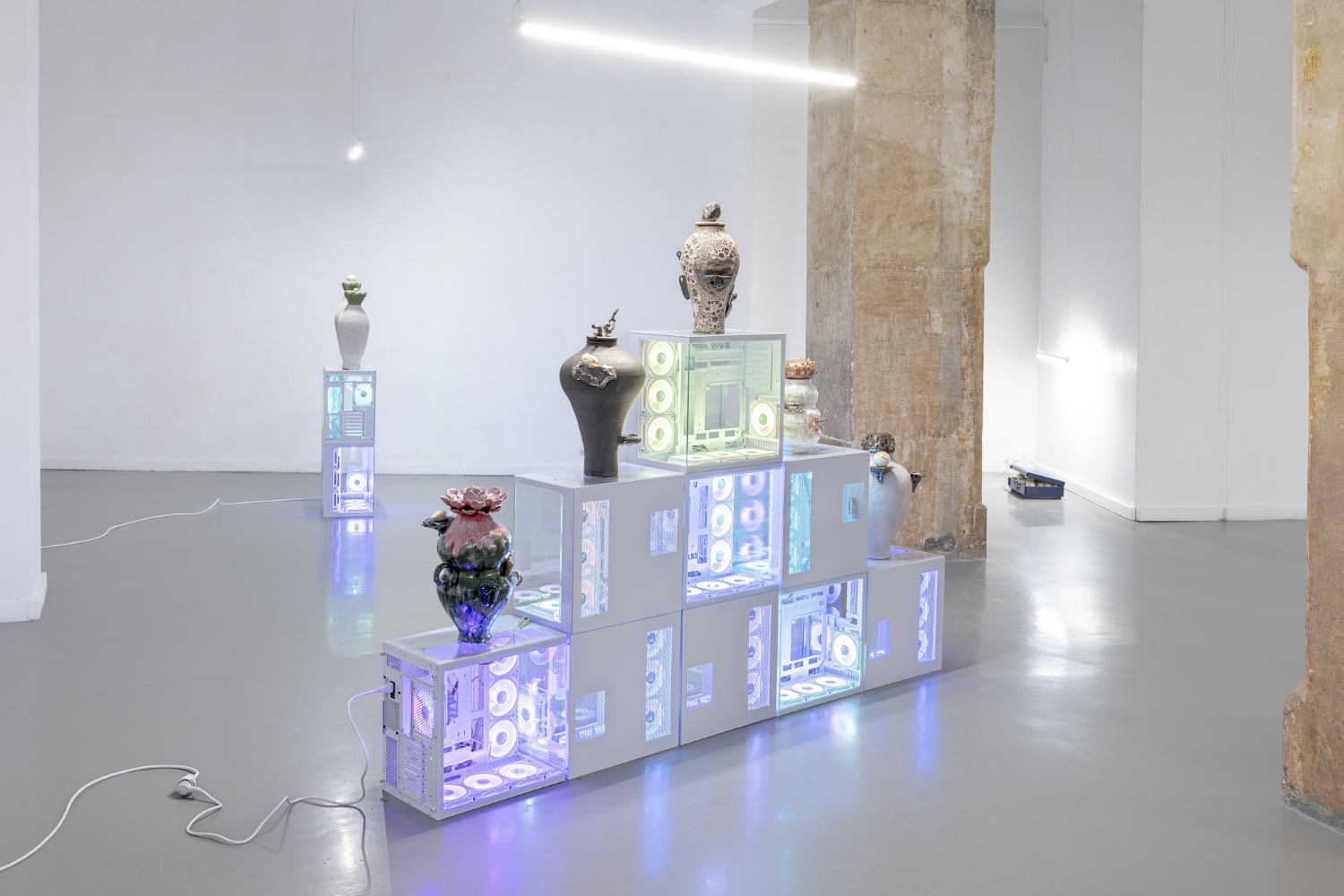
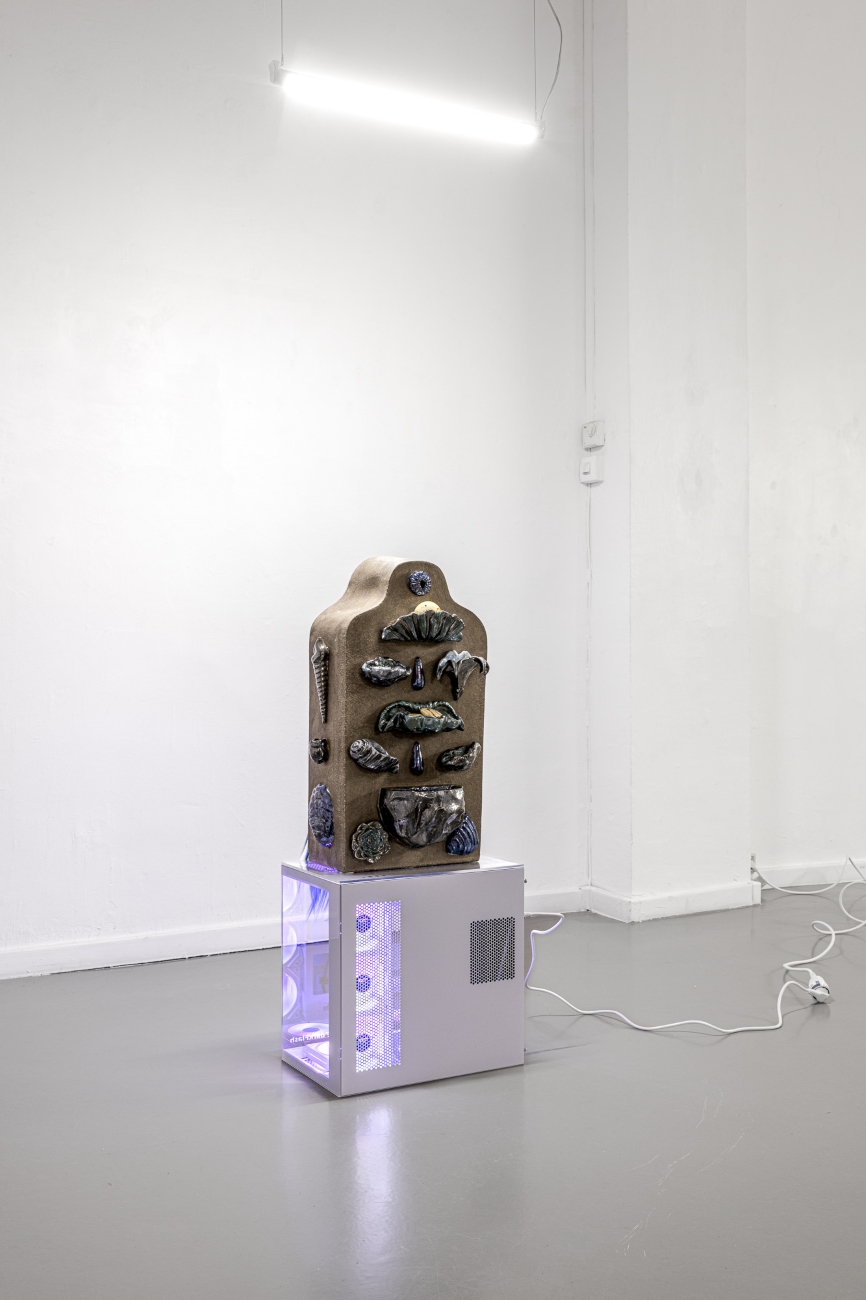
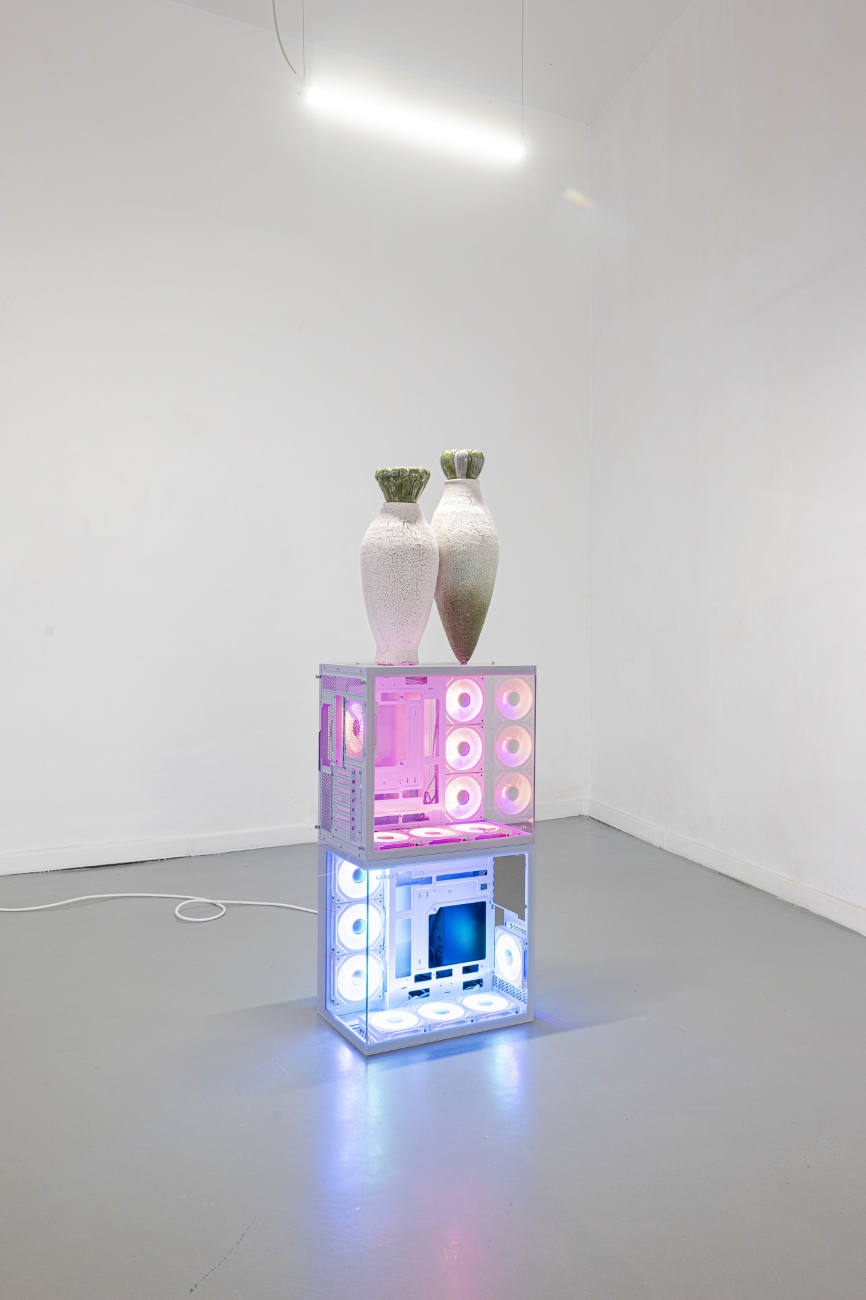
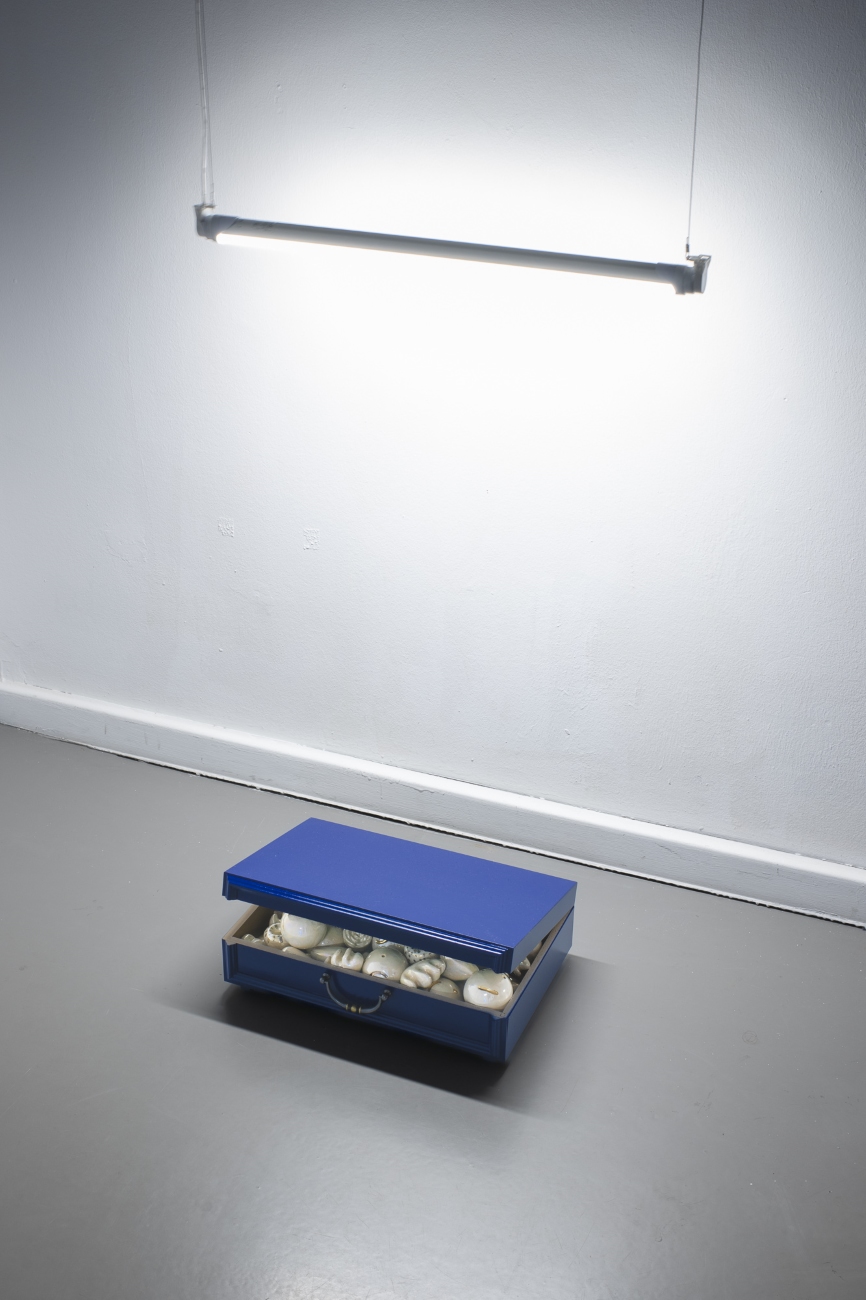
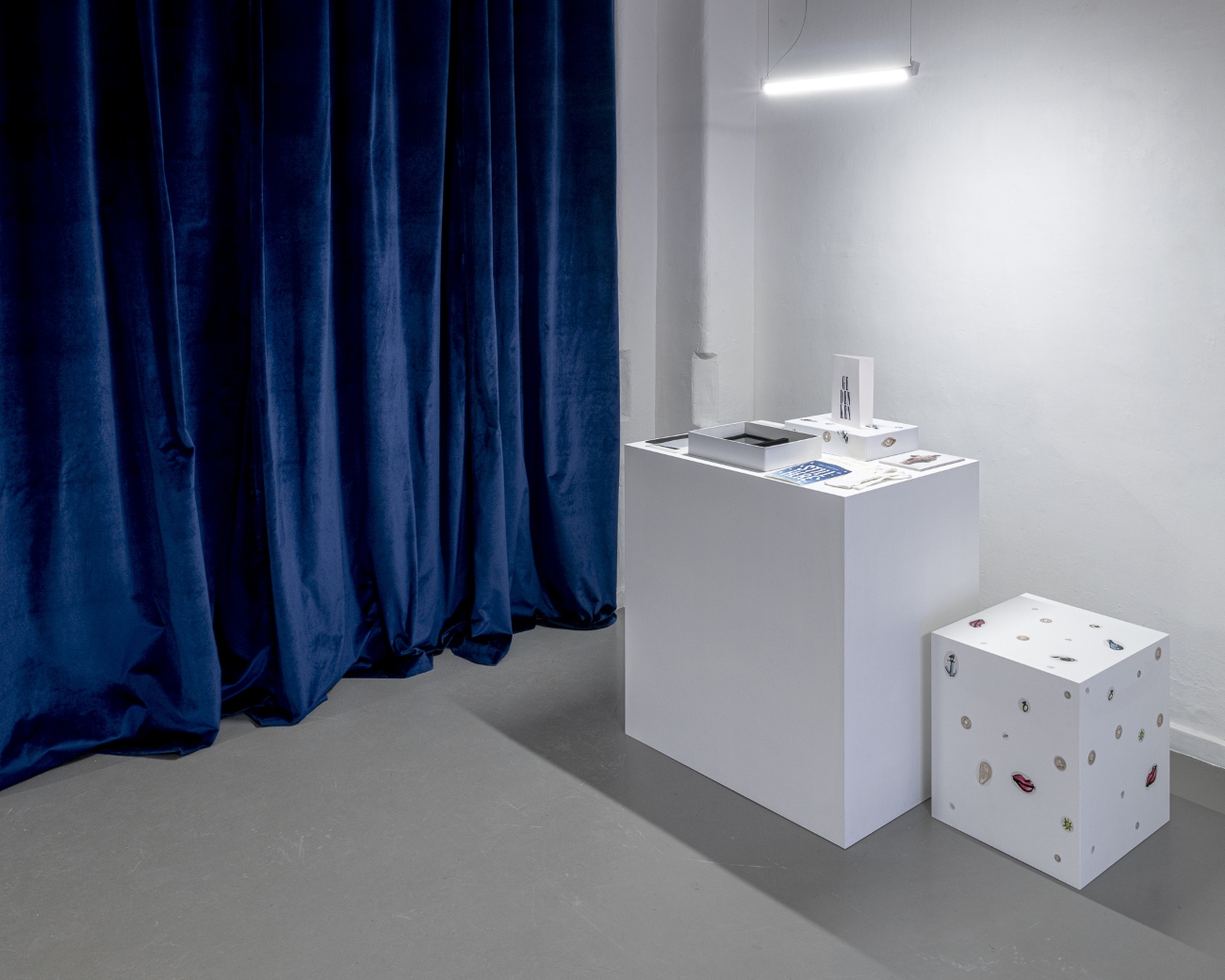
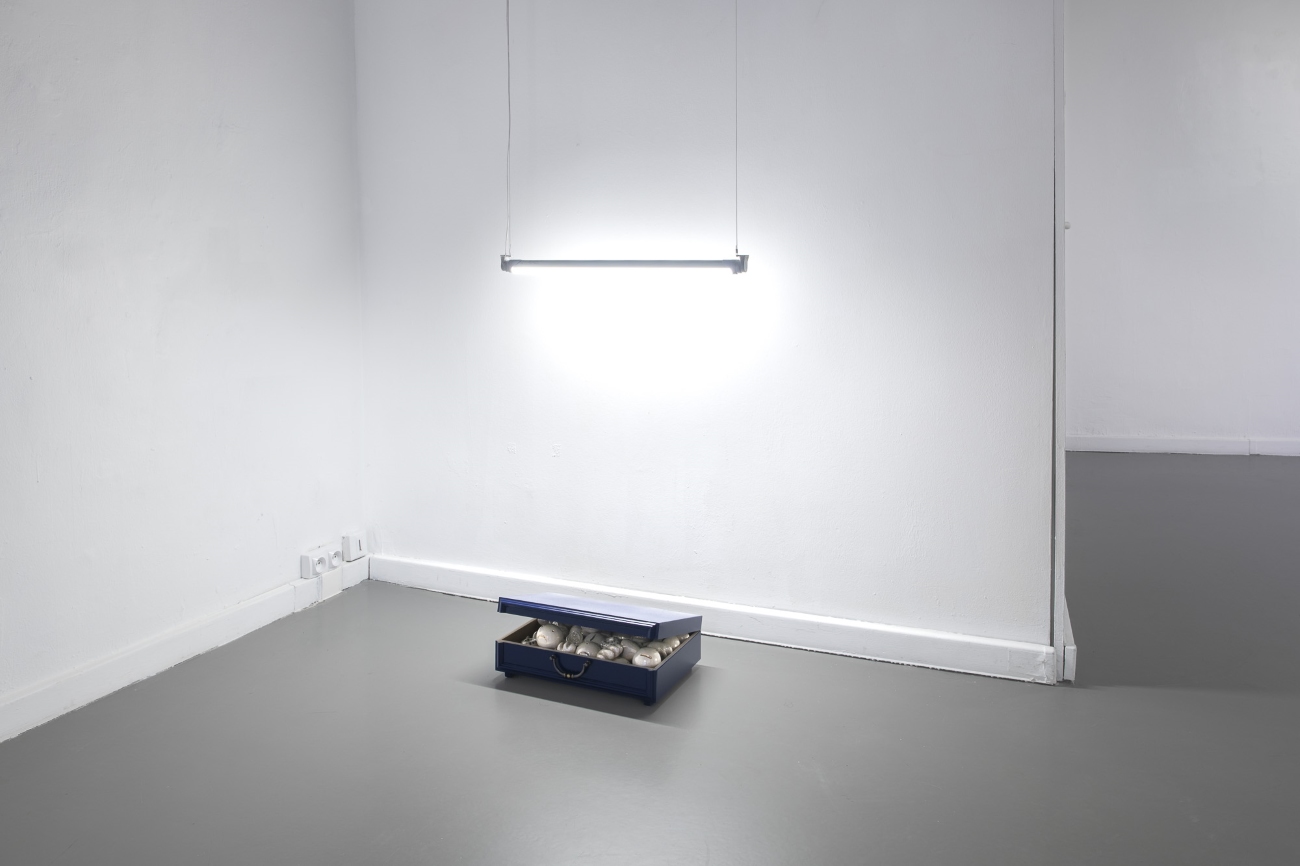
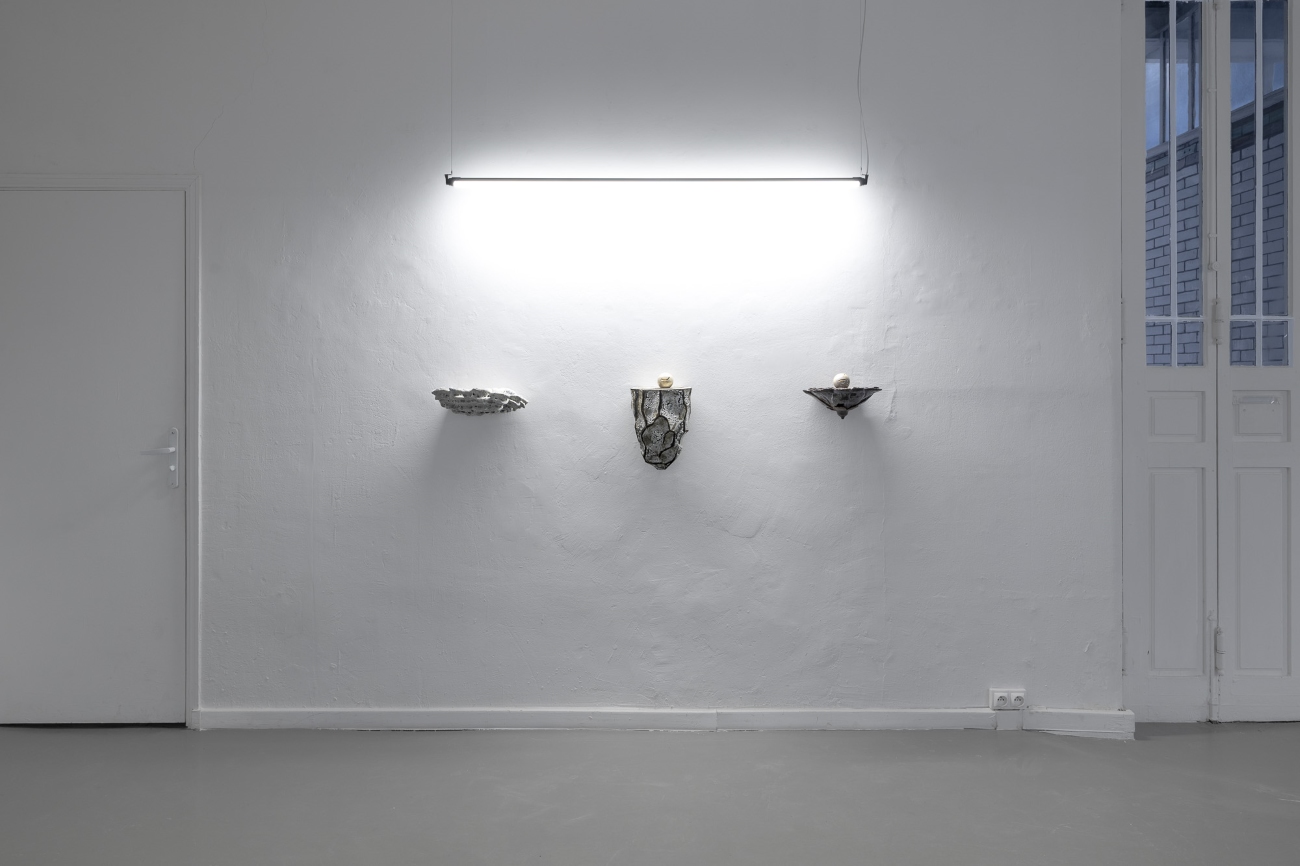
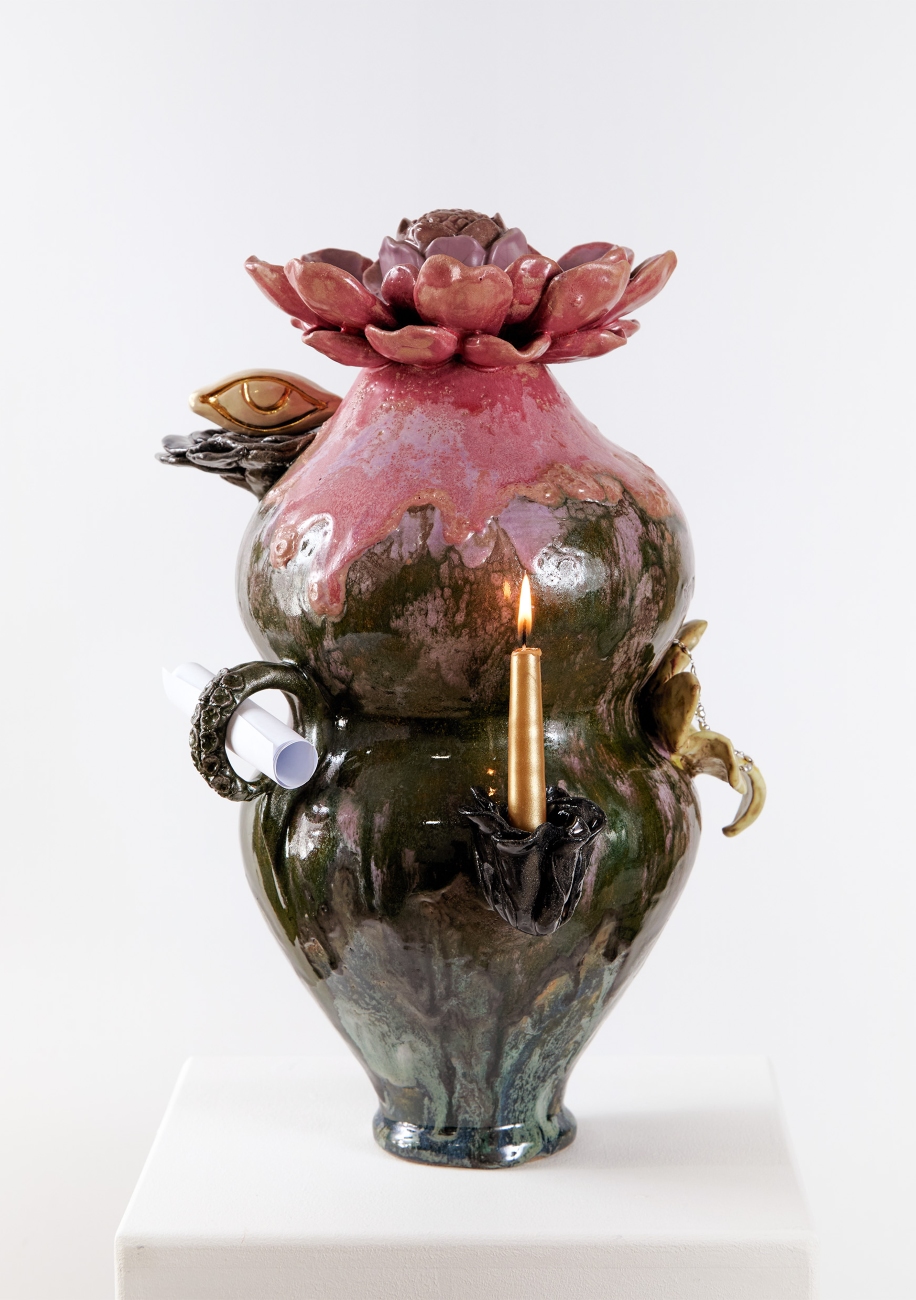
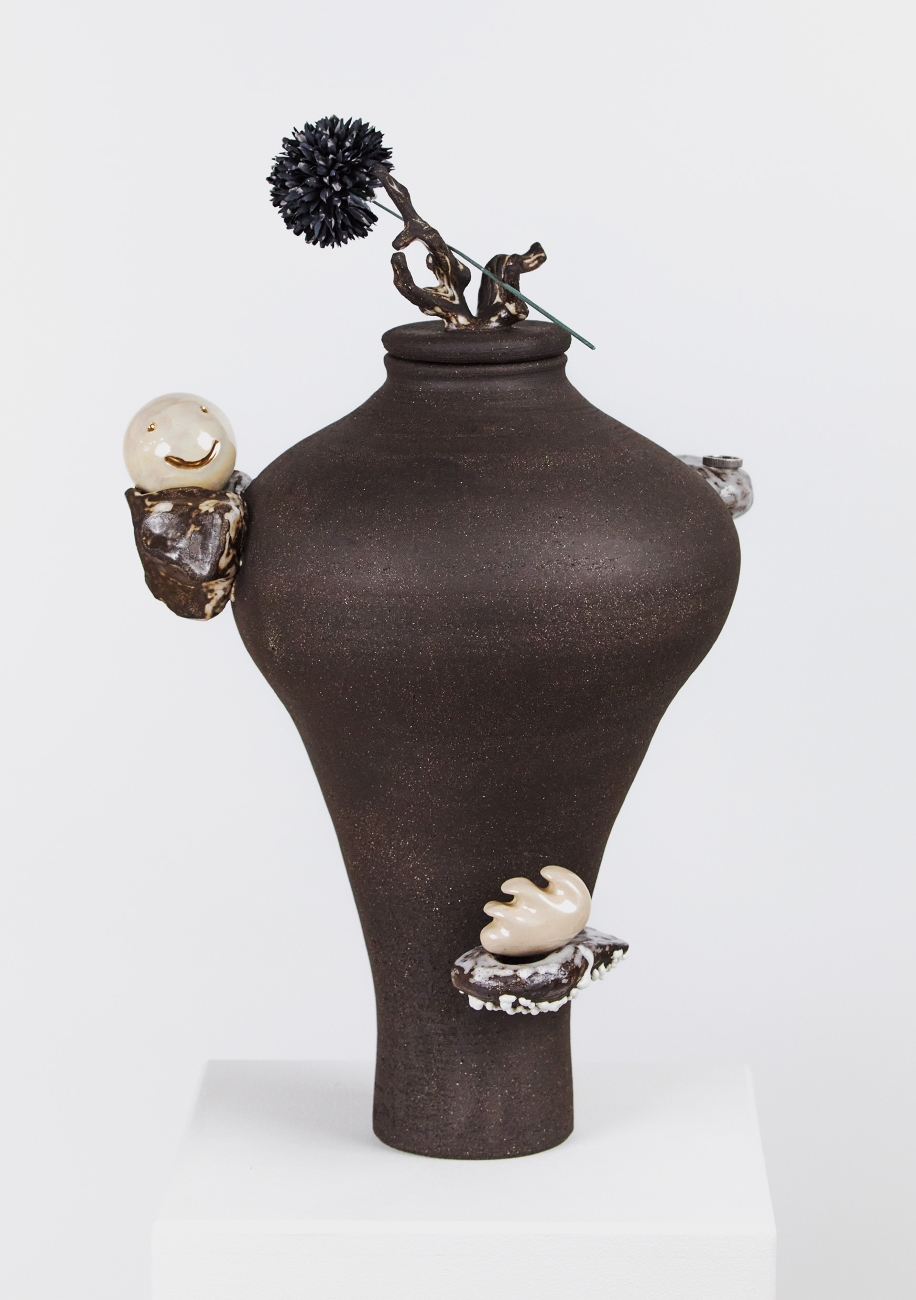
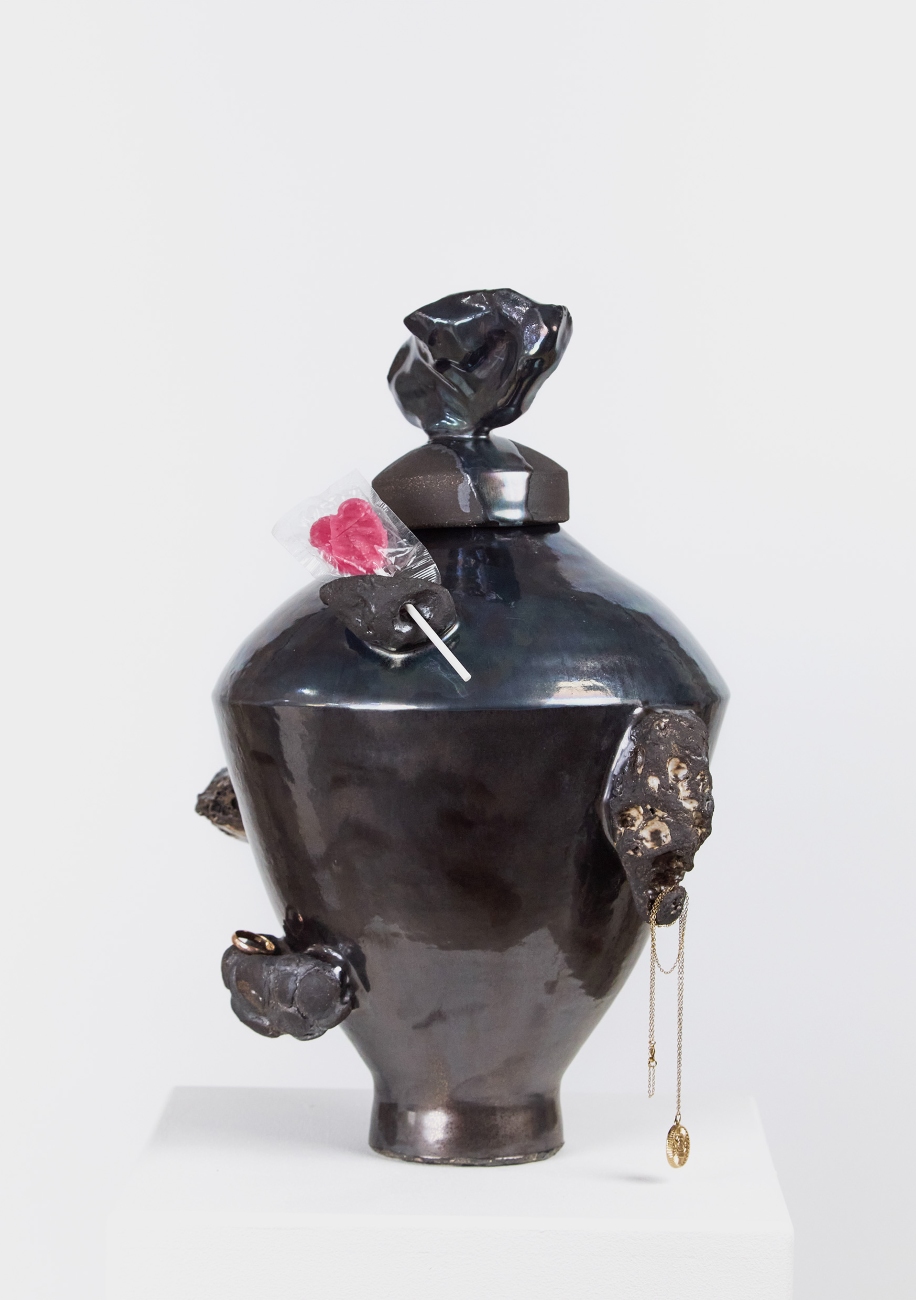
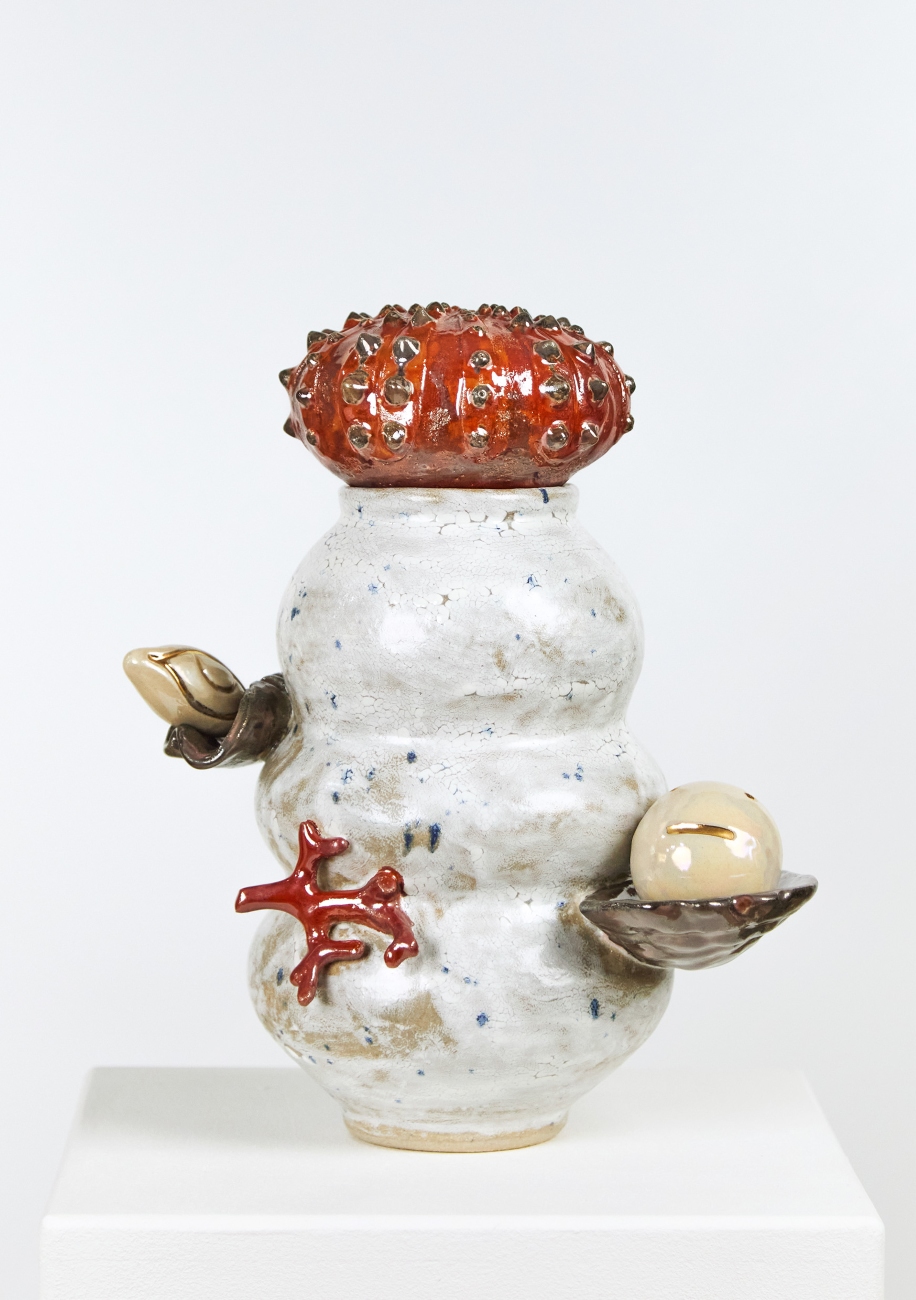
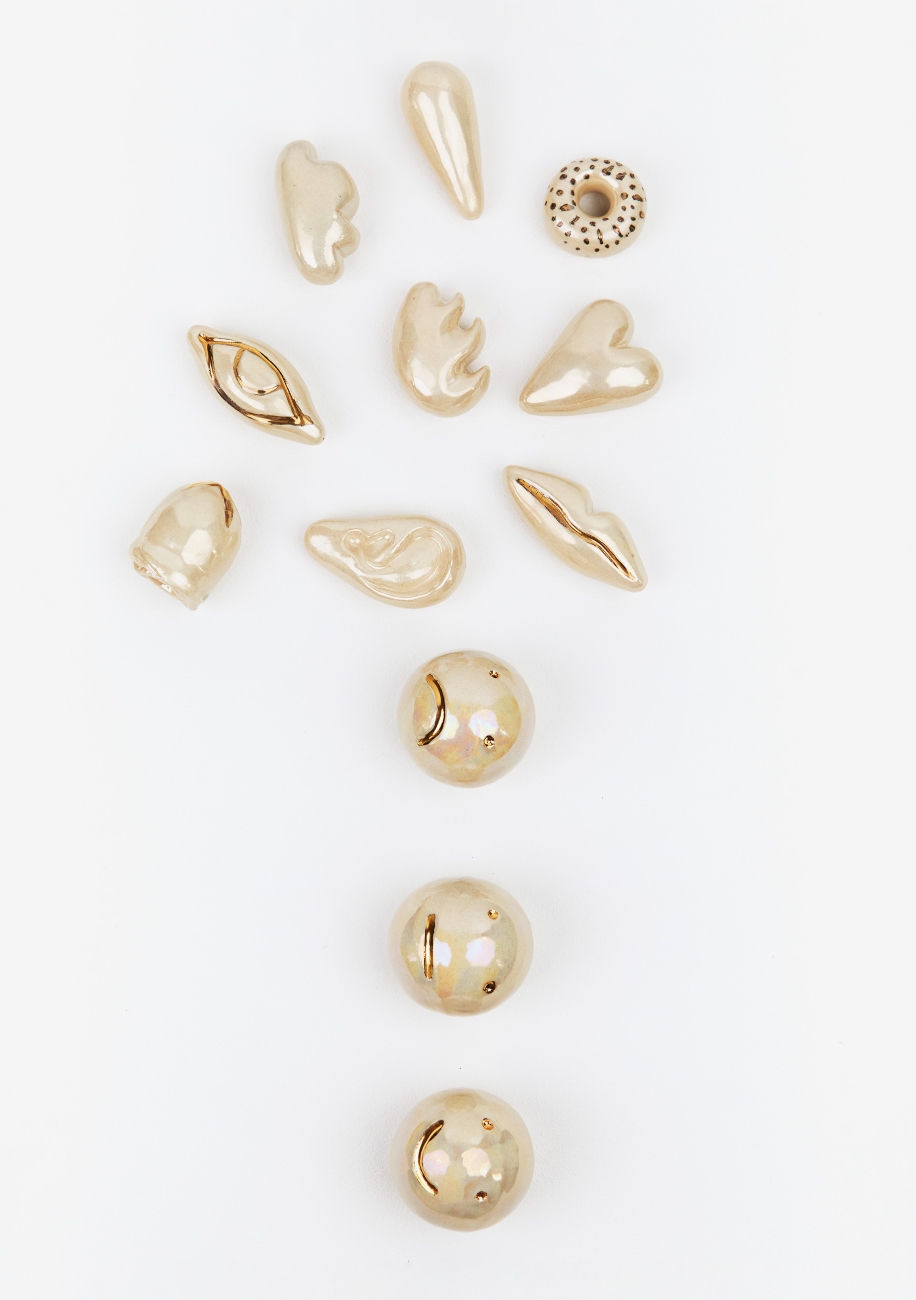
Galerie Dix9 Hélène Lacharmoise presents Arina Antonova Shekel & Anubis Agency, a ritual-based sculpture project curated by Azad Asifovich. Drawing inspiration from Neil Gaiman’s American Gods, the exhibition reimagines funerary urns, reliquaries, and mourning vessels not as sterile, industrially produced objects but as tactile, emotional, and customizable forms of radical care and transition. The series comprises nine stoneware urns – including a double urn conceived for a couple – five of which are elevated on a pyramid of nine stacked computer towers that conjures both ancient burial architecture and the digital afterlife. Completing the exhibition are a central fountain titled Fountain of Lamentation, three wall portals (Camellia Wall Portal, Sea Shell Wall Portal, and Textured Rock Wall Portal), and the Emotion Pearls & Emoji Charms Set, a collection of glazed ceramic objects offering a digital-age vocabulary of grief.
The public opening with brunch took place on 21 March (11h-21h), with a mid-show brunch on 11 April (11h-13h) and a finissage on 29 April (11h-21h).
Shaping Absence
Text by Dr. Lisa Hockemeyer
Death and mourning run like a red thread through the history of art and civilization. They have taken shape in countless forms: in religious and secular images such as memento mori, in reliquaries, tombs, and funerary architecture, and in personal objects such as mourning jewellery.
Yet among these, the urn, although integrated into the domestic sphere in many cultures and therefore a deeply personal object, has received remarkably little attention in art history, and even less in contemporary art.1 Compared to other forms of commemoration, it appears the Cinderella of remembrance, often reduced to its function as a vessel for human remains. Its image in art history is frequently decorative or allegorical, associated with balusters, trompe l’oeil ornament, the romanticized language of Neoclassicism, or even the patterns of twentieth century textiles. In its tangible, functional form, however, the urn has often remained restrained, marked by minimal, often classical, or allegorical signs of death and mourning, or left entirely bare.
Across these traditions, death, even in its most glorified or embellished form, is ultimately confined to a fixed place, both physically and symbolically, while the mourner remains a witness rather than an active presence.
Arina Antonova’s work enters this space by reimagining the urn as an object that generates emotion and relation rather than presenting a static monument. Her urns are made as much for the deceased as for those who remain. They create a space of connection, both physical and metaphorical, inviting touch, pause, and reflection. Mourning becomes not a state to endure, but a lived experience moving through body, mind, and heart.
Antonova’s urns are belly-shaped sculptures, they continue her exploration of the vase, a form of profound significance to Antonova, who regards the vessel as the archetypal object of care. Since the beginning of time, it has held the substances of life such as food and water, serving as a symbolic bearer of nourishment and protection. In developing this body of work, Antonova turns to what she describes as the politics of form.2 The vessel, in her understanding, is never neutral. Historically shaped through women’s labour of care, it has held sustenance and medicine, accompanied the dead in burial rituals, and borne witness to acts of tending and remembrance. These associations, she holds, persist today, as the emotional and practical responsibilities of caring for the elderly, organizing funerals, and sustaining memory continue to rest largely in women’s hands.3
Care, understood as a symbiosis between human beings and life, lies at the heart of Antonova’s work with form and matter. To her, clay is more than a medium; it is a living substance drawn from the earth, shaped by pressure, moisture, and time. Responsive to the slightest touch, it records gesture before hardening, preserving the movement of the hand as a lasting imprint. In this way, care is not simply represented but embedded within the material itself. Through the slow processes of forming and firing, touch becomes enduring, and memory settles into matter, carried in the surface as the quiet persistence of life.
Life is evoked most powerfully through references to nature. Through her masterful handling of material, colour, glaze, and decoration, Antonova opens layered and diverse meanings. Her practice resonates, unexpectedly, with the legacy of Bernard Palissy (1510-1590), whose vision extended beyond functional ceramics toward elaborate works in which snakes, plants, and animals were not allegories but celebrations of the living world in its material specificity.4
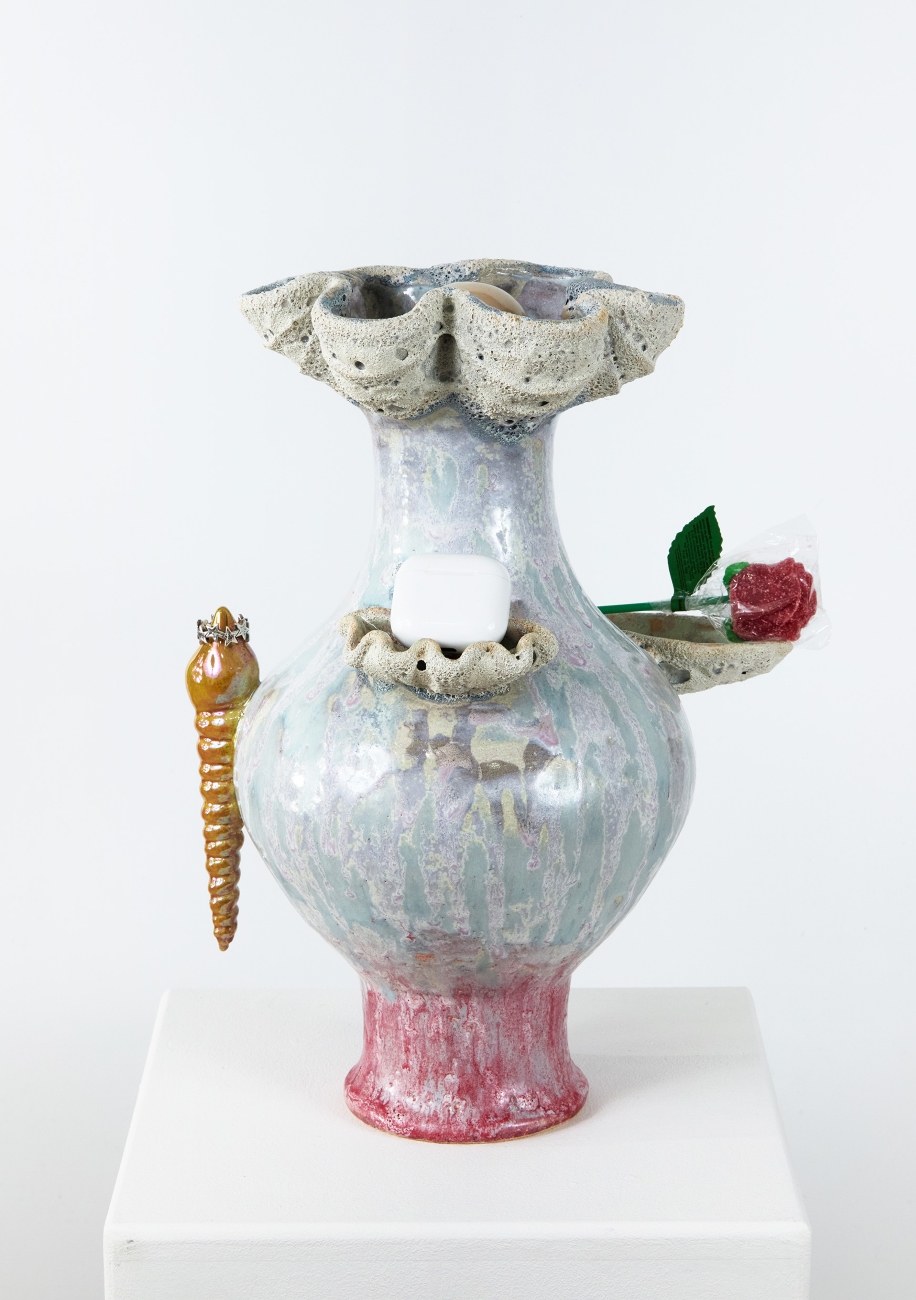
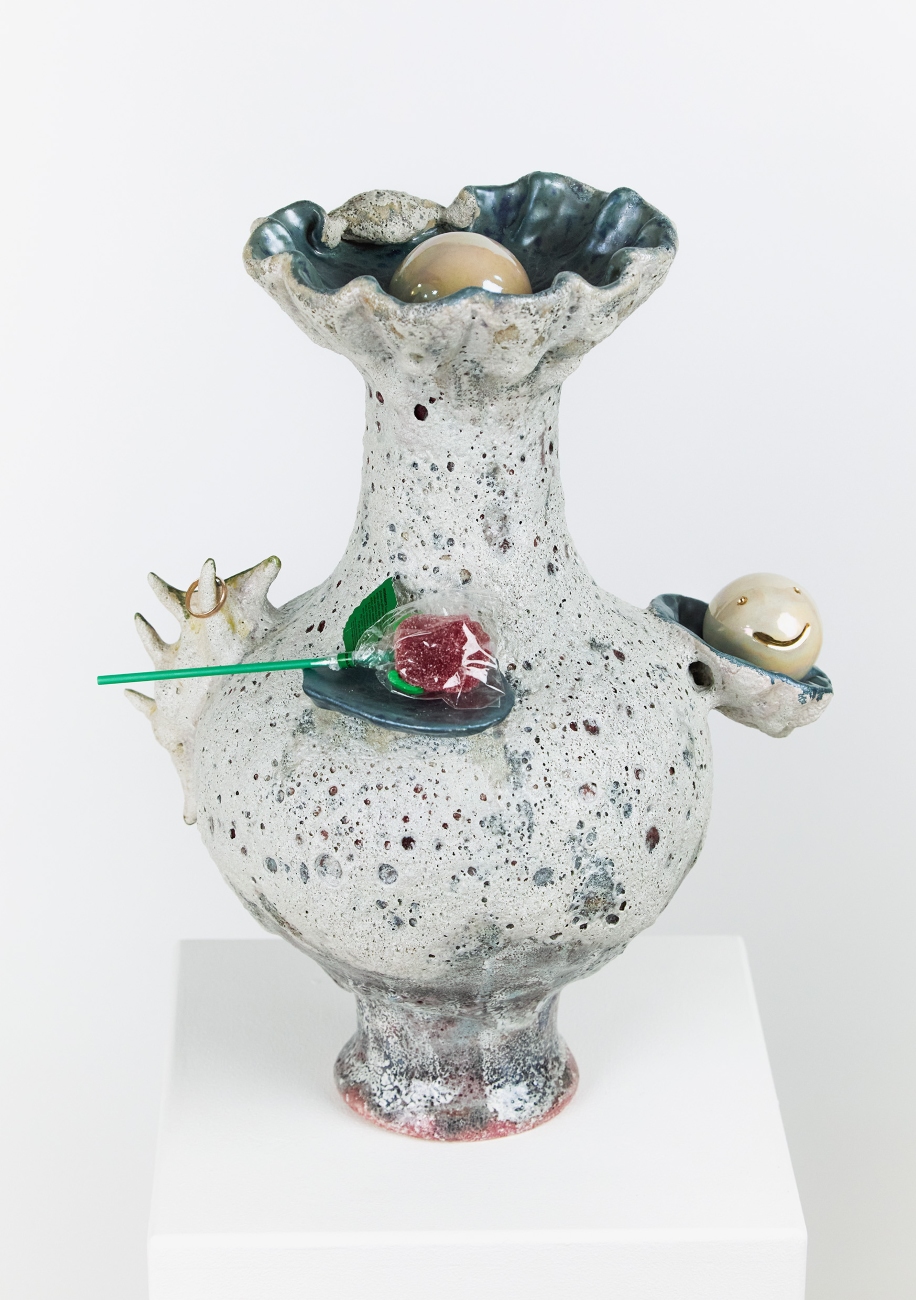
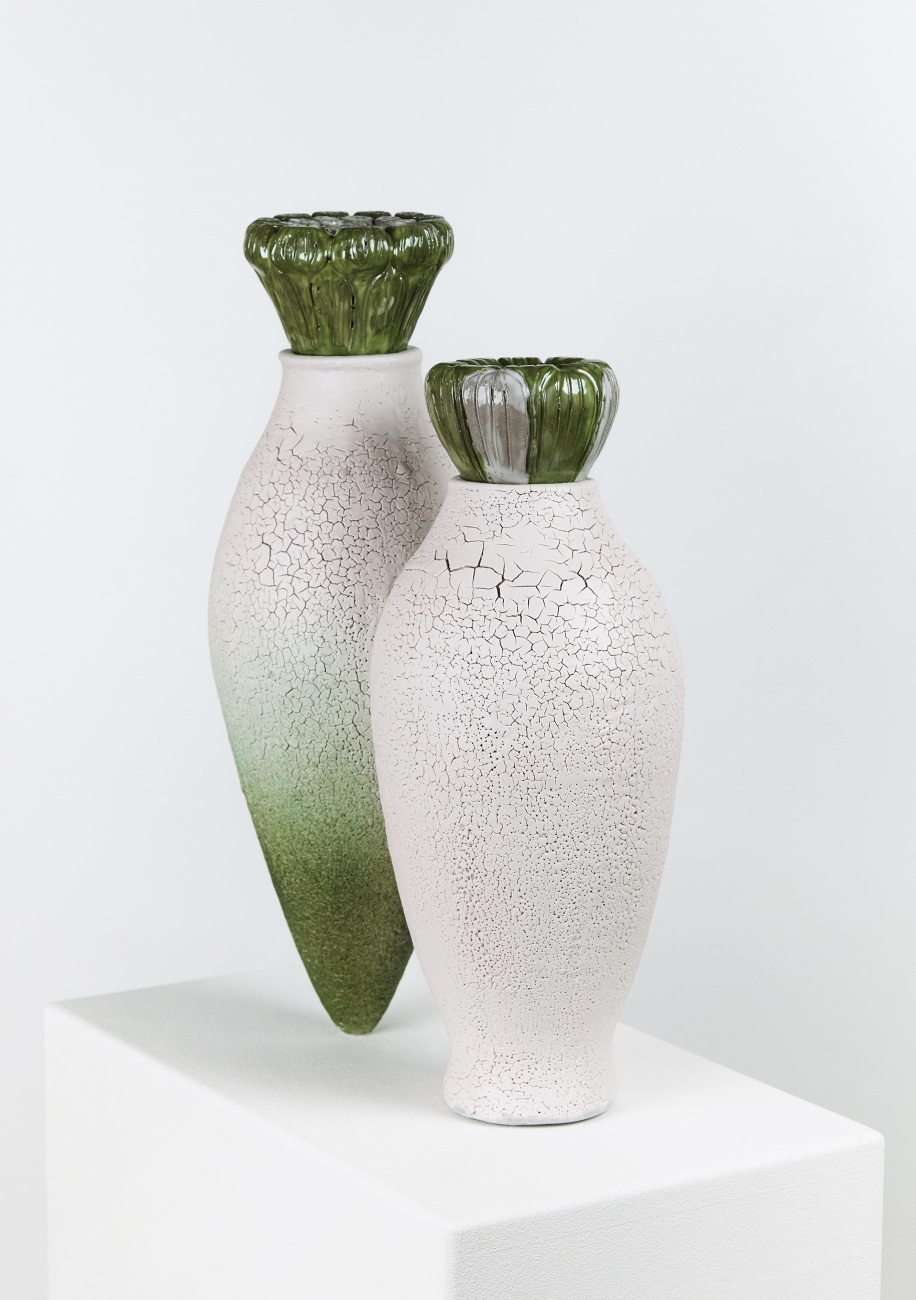
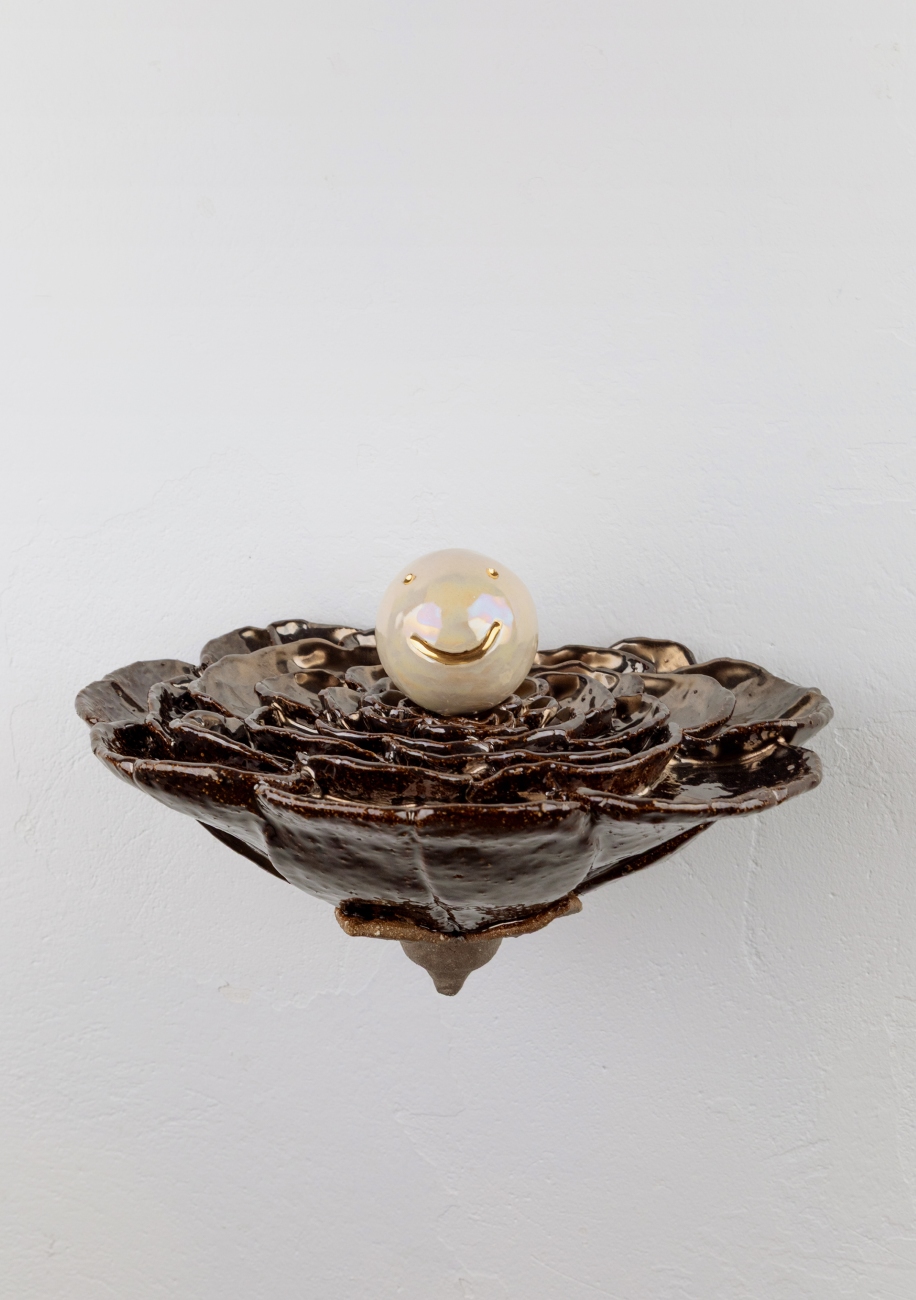
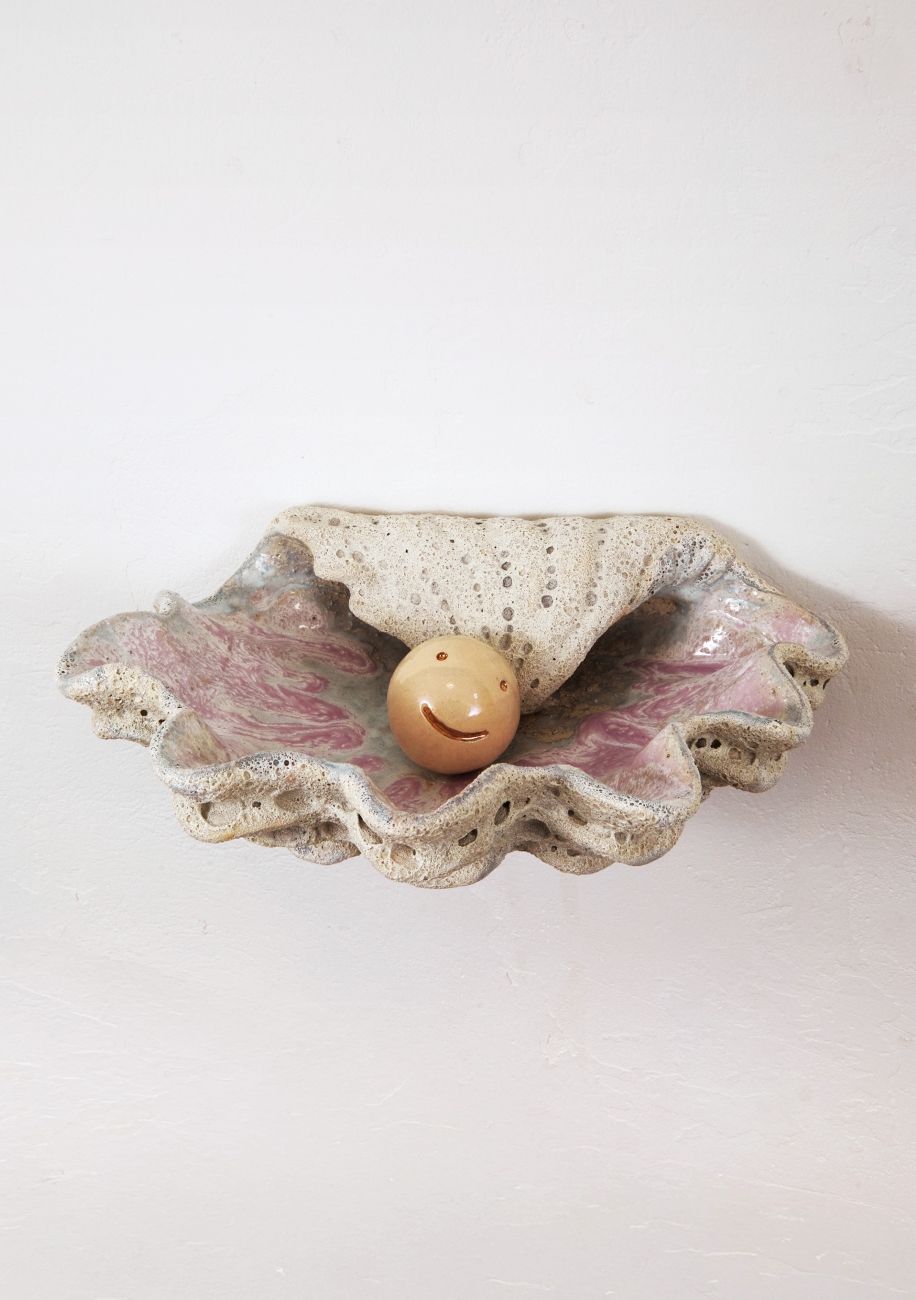
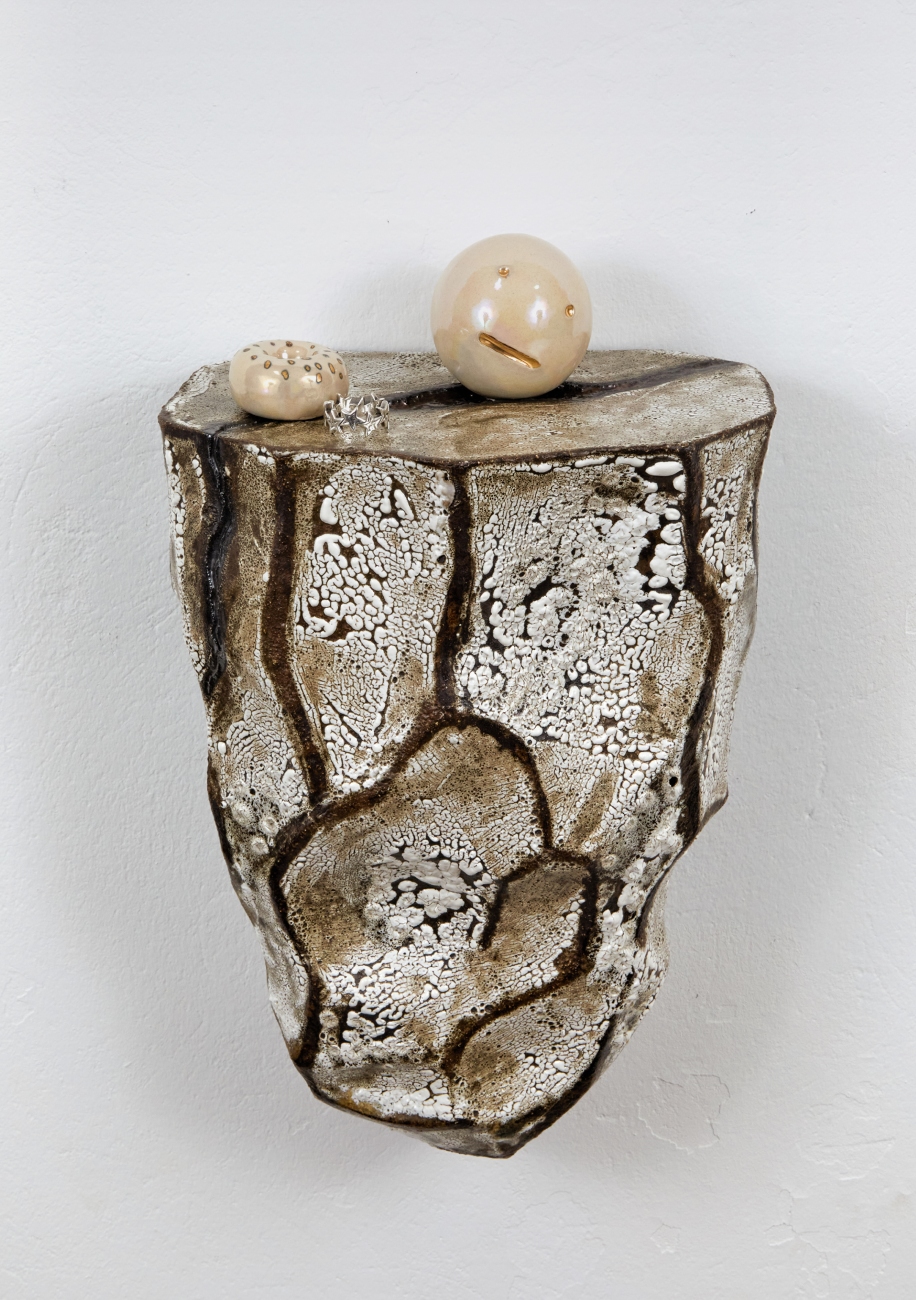
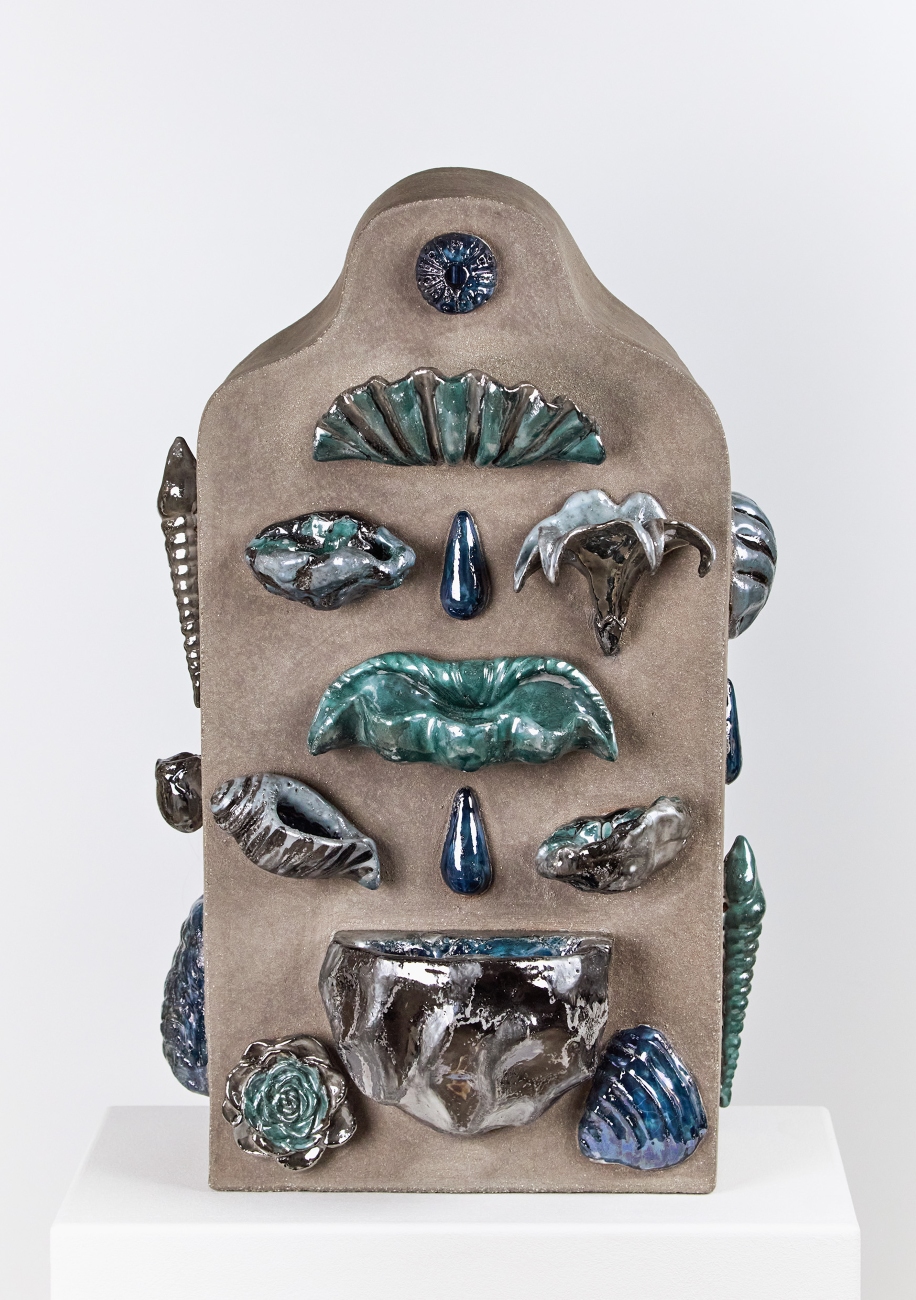
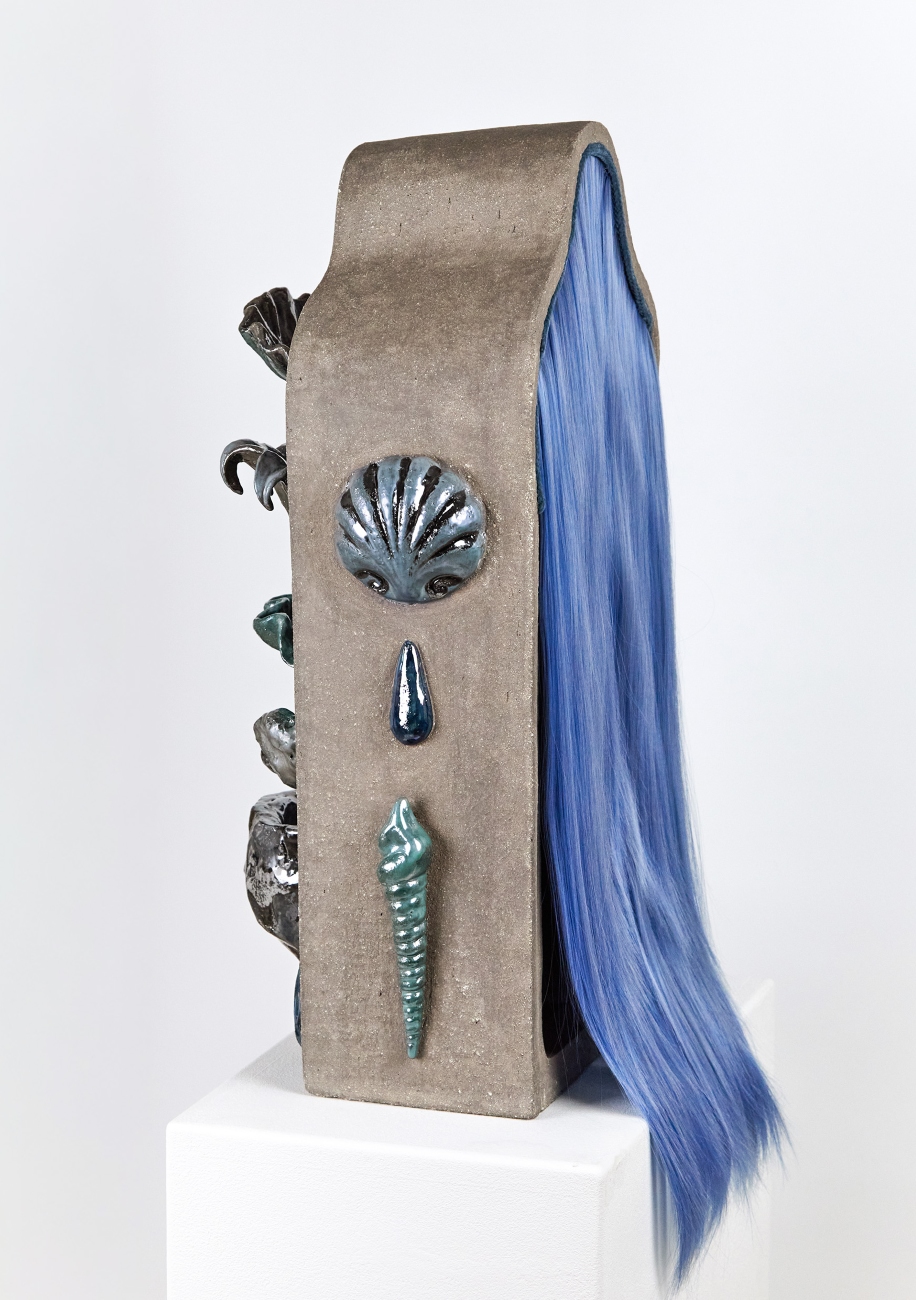
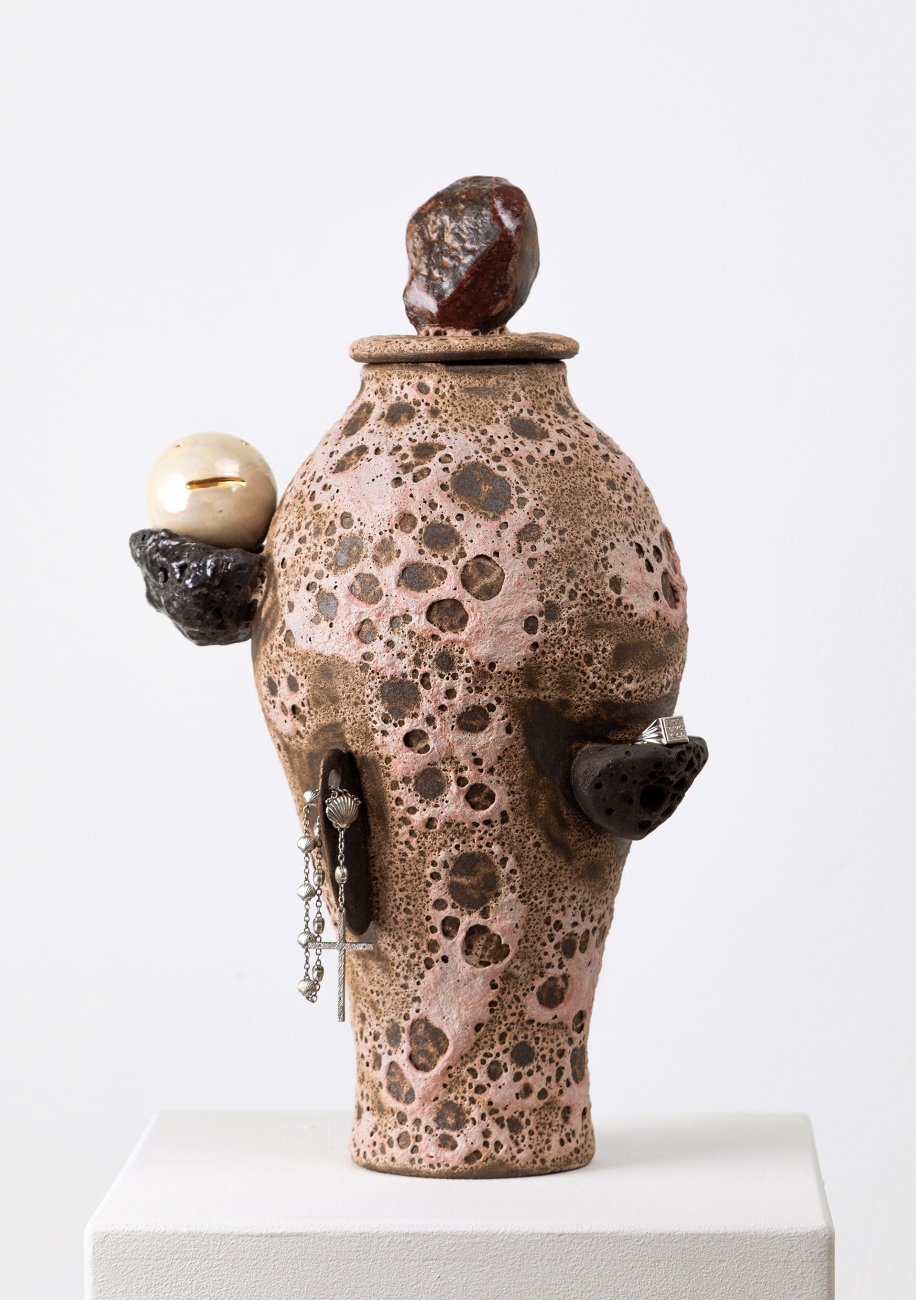
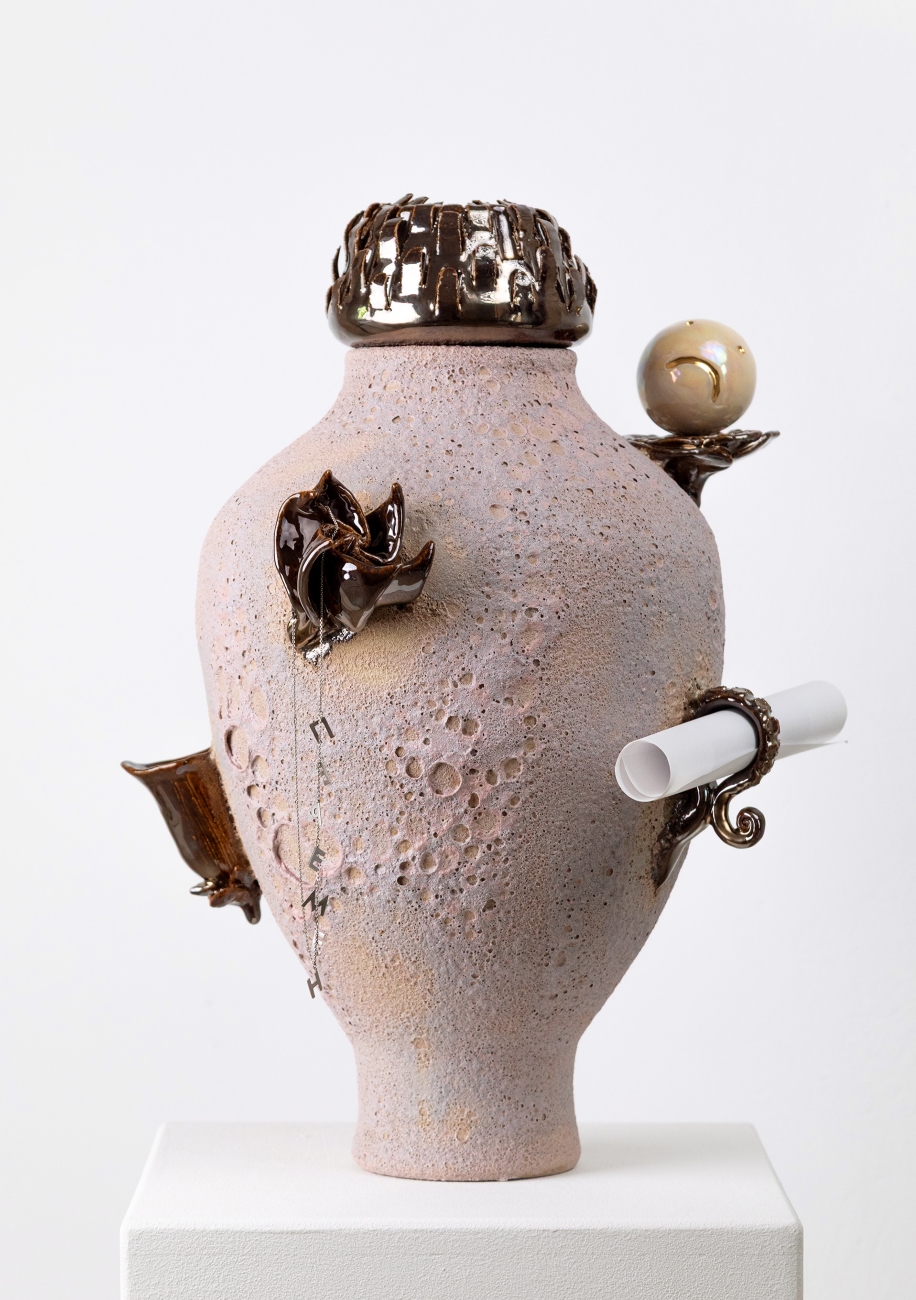
Organically formed, Antonova’s urns mimic the irregularities and textures of natural bodies and surfaces, conveying a sense of growth and vitality. Rooted in close observation of natural worlds, her vessels resemble micro ecosystems. They recall geological formations and draw from marine or botanical realms alike. Adorned with flowers, rocks, shells, and other organic forms, they evoke nature not as ornament but as a sensory and symbolic terrain. Nature becomes a custodian of memory, standing in for the places where one might wish to be laid to rest, transformed through glaze, colour, and texture into a tactile topography of remembrance.
Pink Lava Urn and Shiny Rocks Urn, for example, recall porous pumice or polished obsidian, one soft and cratered, the other sharp and reflective. Pebbles and smaller stones emerge from their surfaces turning the vessels into geological territories. Sea Shell Urn, Sea Urchin Urn and Venus Shell Urn draw from marine life, while Chrysantheme Urn and the double urn Heracléum belong to the realm of soil and growth. Crackled glazes and rough textures suggest dried earth and reef limestone, and are set against colourful sea urchins, anemone rims and ornate flower buds, some of them potentially poisonous. Might they be read as contemporary memento mori of the natural world?
The urns dissolve the boundary between aesthetic object and ritual function. Attention shifts from the depiction of the other toward the self as subject, and further toward participation, suggesting that care for the living is as essential to the ritual of mourning as care for the deceased. They draw from nature, cultural memory, and the symbolism of the digital age, including emojis, while offering space for personal tokens that may express and bridge individual and generational experience. Lustred objects in soft shapes of hearts, mouths, pebbles and spherical emojis expressing joy, contemplation, or sorrow accompany the urns, inviting touch and silent communication.
In this way, Antonova’s work echoes the quiet intimacy of a shrine. Like her Fountain of Lamentation which recalls the historic Fountain of Tears (1764)5 and its poetic transformation in Alexander Sergeyevich Pushkin’s (1799-1837) The Fountain of Bakhchisarai, a work that embodies grief, lost love and eternal mourning, these forms create space for memory and personal gesture. Mourning becomes tactile and participatory. The living are invited to arrange, to linger and to remain for as long as remembrance unfolds. Antonova encourages those who stay to shape their mourning, understanding closure not as erasure but as transformation. Like the Heracleum, whose beauty conceals a latent toxicity, pain becomes integral to completion, physically sealing the container. Closure, then, is less an ending than a culmination.
Contact
arina.antonova@gmail.com
lamusee.art@gmail.com
The gallery is open Tuesday – Friday 2 pm-7 pm, and Saturday 11 am-7 pm, and by appointment
Galerie Dix9 Hélène Lacharmoise
19 rue des Filles du Calvaire
75003 Paris
France
Installation views by Dmitry Kostyukov. All object photographs by Santino Lamorte.
Footnotes
- One notable exception is the ongoing research initiative DeathLab, a public event series that employs artist-designed urns to examine evolving values in funerary culture through material expression. See also: Winkel, M., Siedhoff, M., and Wintzer, J., (2024), ‘Shifting values at the cemetery – the artistic interventions of DeathLab’, Geogr. Helv., 79, 51-59, link, 2024, (accessed Feb.6th 2026).
- Private correspondence with the artist, 10 Feb. 2026.
- Ibid.
- See also: Kayser, P., (2006) ‘The Intellectual and the Artisan: Wenzel Jamnitzer and Bernard Palissy Uncover the Secrets of Nature’, Australian and New Zealand Journal of Art, 7(2), pp. 45-61. Link, (accessed Feb. 7th 2026).
- For the history of the Fountain of Tears and how it inspired Pushkin’s The Fountain of Bakhchisarai see also: Amir, S., ‘Fountain of Tears’, (2019), The Friday Times, link, (accessed Feb. 11th 2026).