Claire Curneen: Between my finger and my thumb is on view at Ruthin Craft Centre, Ruthin
March 28 – June 28, 2026
‘Between my finger and my thumb’: the first line of Seamus Heaney’s poem Digging perhaps evokes the sensuous squeezing of clay in the artist’s hands, but, as Claire points out, this is a nod to creative labour more broadly, the idea taking form through physical effort. Claire pinches clay as Heaney digs with his ‘squat pen’, poetic labour connecting hand and head.
For Claire, physical technique and the act of making are crucial. Her training as a potter – learning glaze technology and how materials behave, a kind of education that is dying – makes her work as a sculptor unique. Hand-building creates a physical relationship with an object as you move around it. ‘The way I make something is so important because I make it like I make a pot … I can’t make it any other way.’
For this reason, age-old ceramic metaphors resonate strongly for Claire: the clay vessel as a body (with its neck, lip, belly, foot) and the body as a vessel. What her figures contain – doubt, resilience, anguish, ecstasy – is as important as what we see.
Slightly paradoxically, then, Ancient Plaything is ‘the only pot I’ve ever made.’ Its title comes from the Guwan Tu (‘Pictures of Ancient Playthings’), a series of scroll paintings commissioned in 1729 by China’s Yongzheng emperor to depict a personal arrangement of artworks. This tall porcelain pot, with elongated gourd-like neck, flowers and stems modelled in relief and painted in blue and lustre, and two birds on the rim facing each other, expresses Claire’s feeling that her figures are ‘like Chinese blue and white pots.’ ‘Like’: with no base and its body modelled as a head, it is not literally a pot.
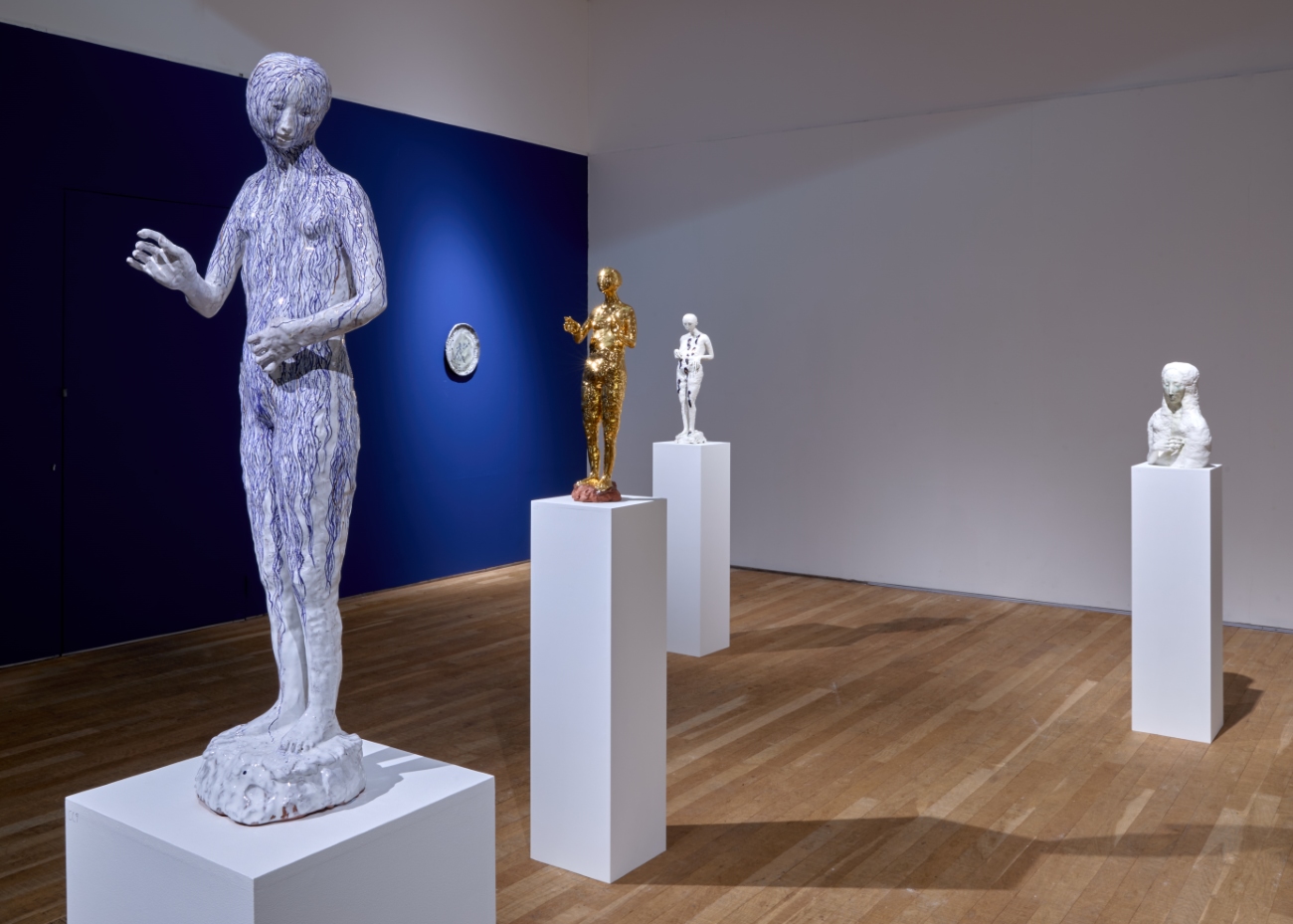
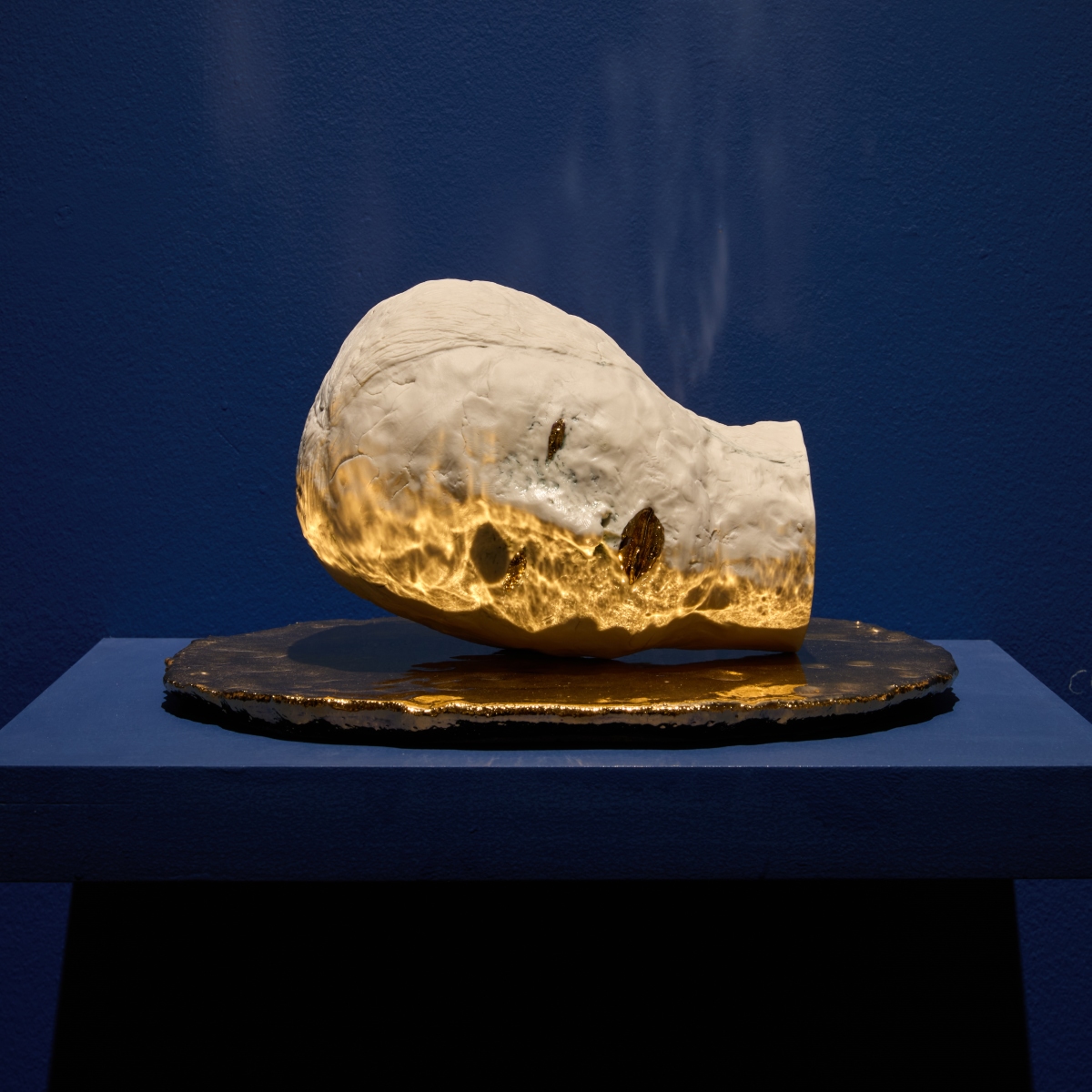
Claire wants her work to be seen as ‘a spectacle of making’. The interiority of her figures is expressed through ceramic technique: the textures of hand-building, painted and printed motifs, gold lustre like precious blood, glazes clear like tears or opaque with tin oxide. It is important to understand how a piece is made. To fit Claire’s kiln, Piercing the Heart has been made in two parts – like a magician’s assistant sawn in half, we joked: ‘how did they do that?’ ‘Craft is a belief system,’ says Claire, ‘we trust in it and there is a magic in it.’
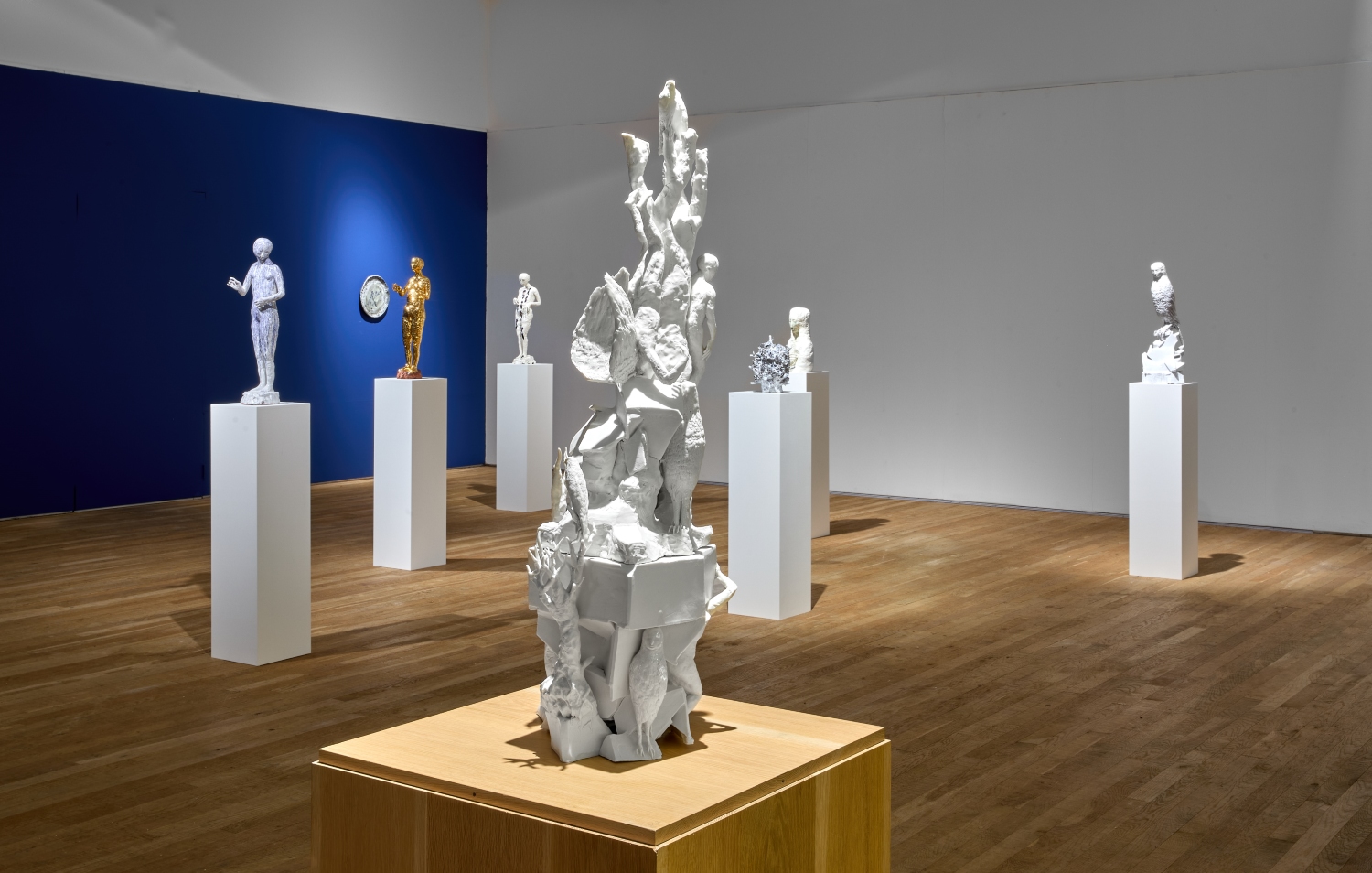
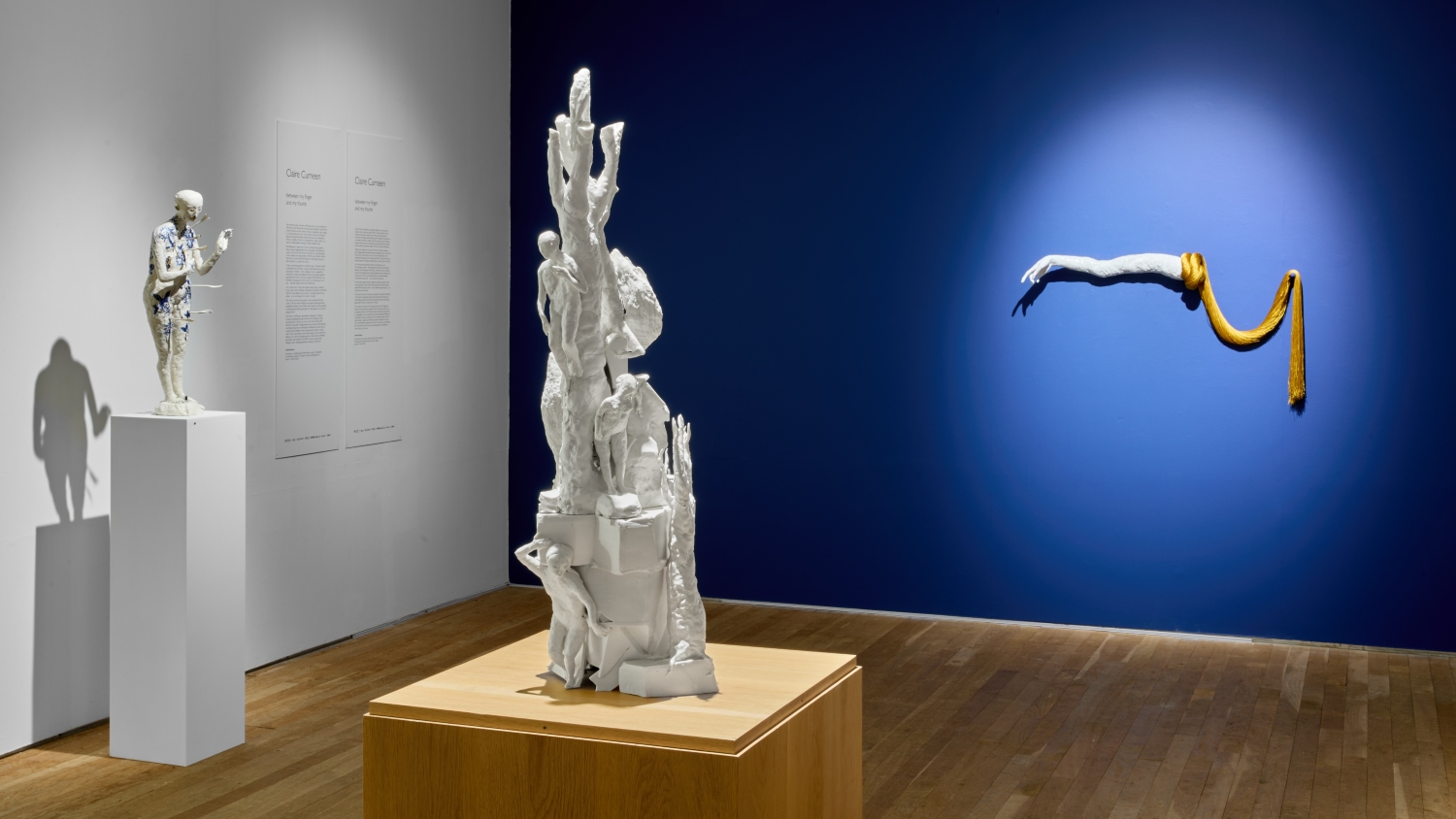
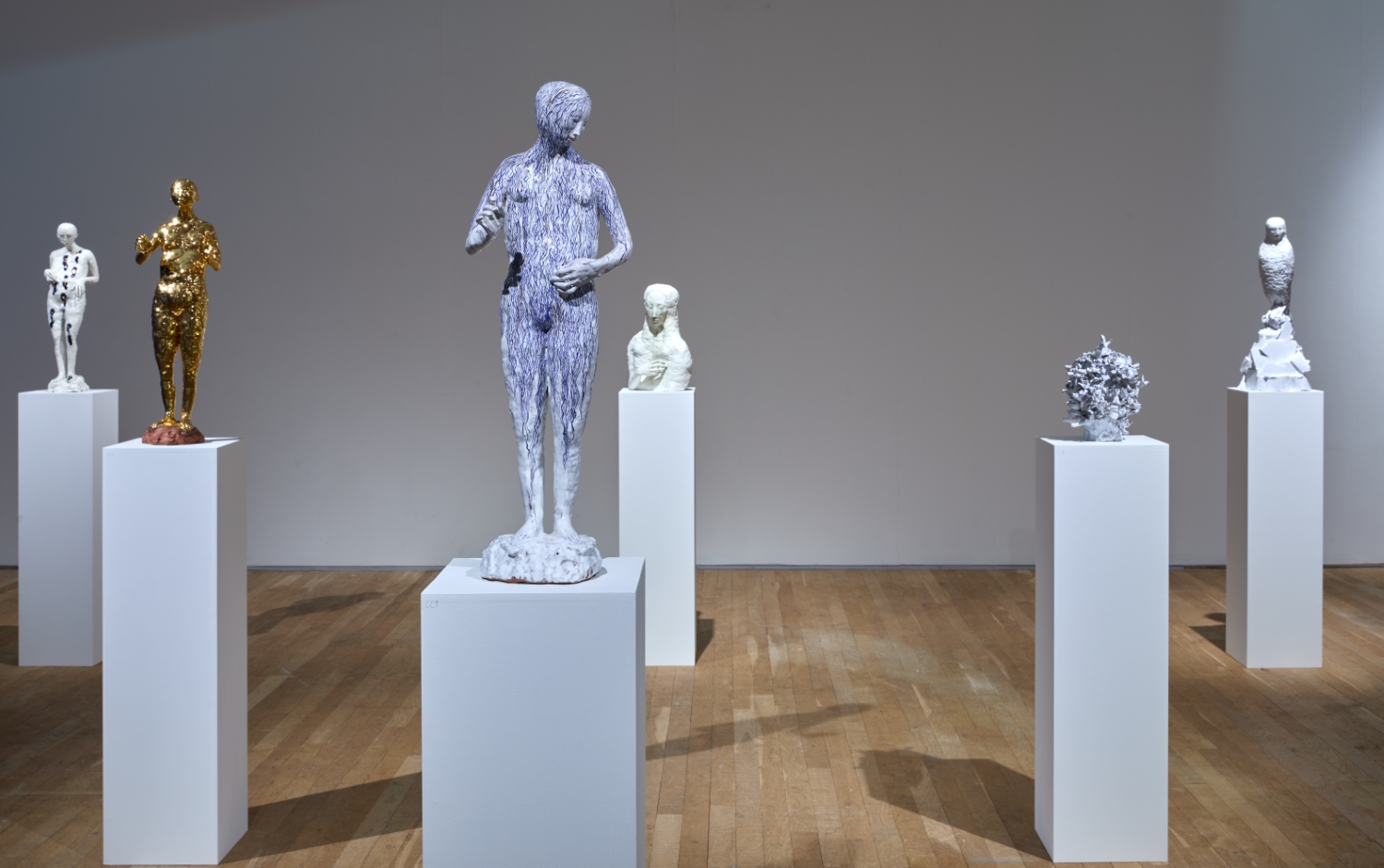
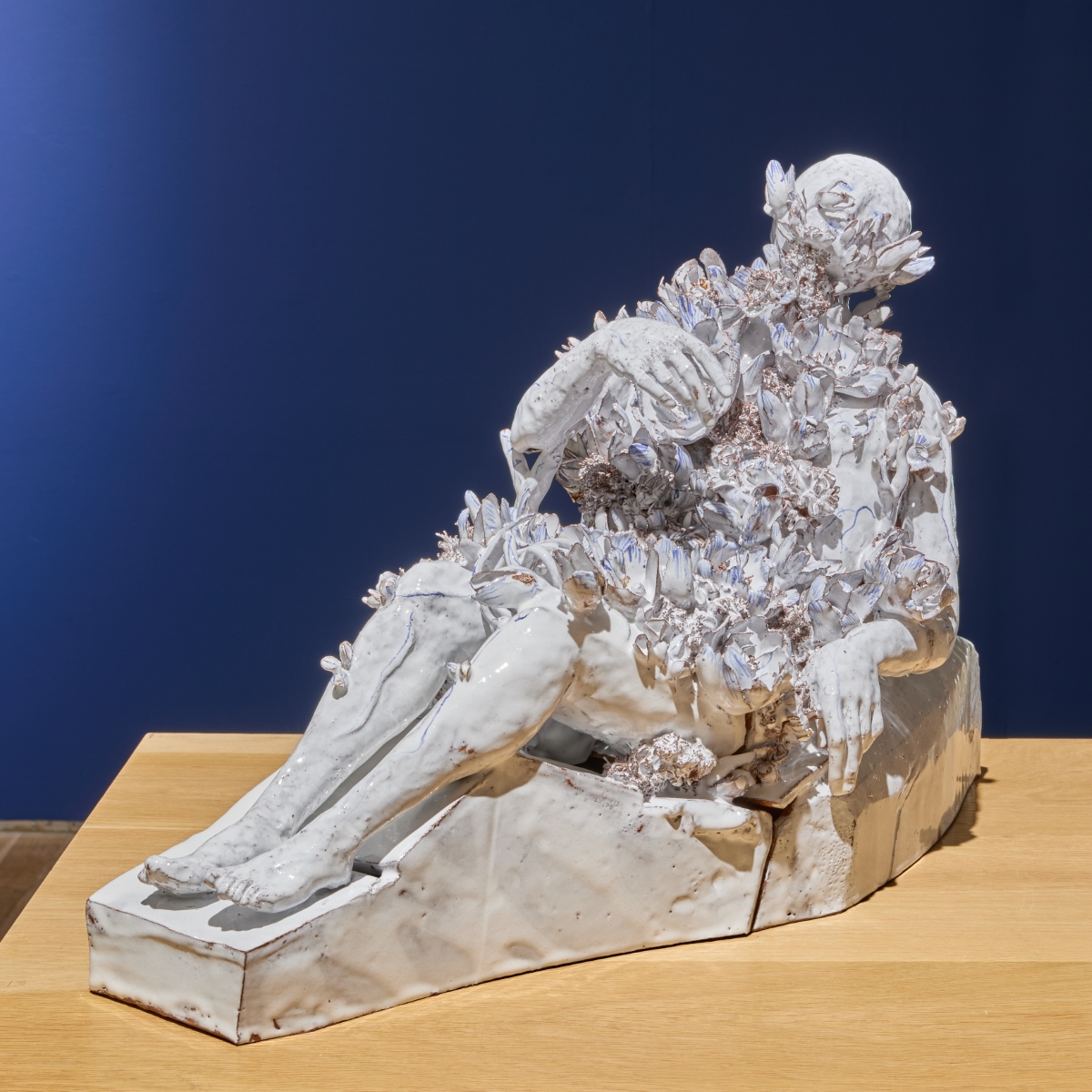
Piercing the Heart alludes to Bernini’s The Ecstasy of St Teresa and, with a spouting branch, to the myth of Daphne. This reclining female figure is blanketed in richly modelled flowers: ‘a blooming eruption that consumes, only for it to be short-lived. But in ceramics you can keep it.’ Tin glaze disguises the red terracotta beneath; it softens the painted blue pigment and recedes at edges to define flowers and fingers, slanted rocks and soulful eyes.
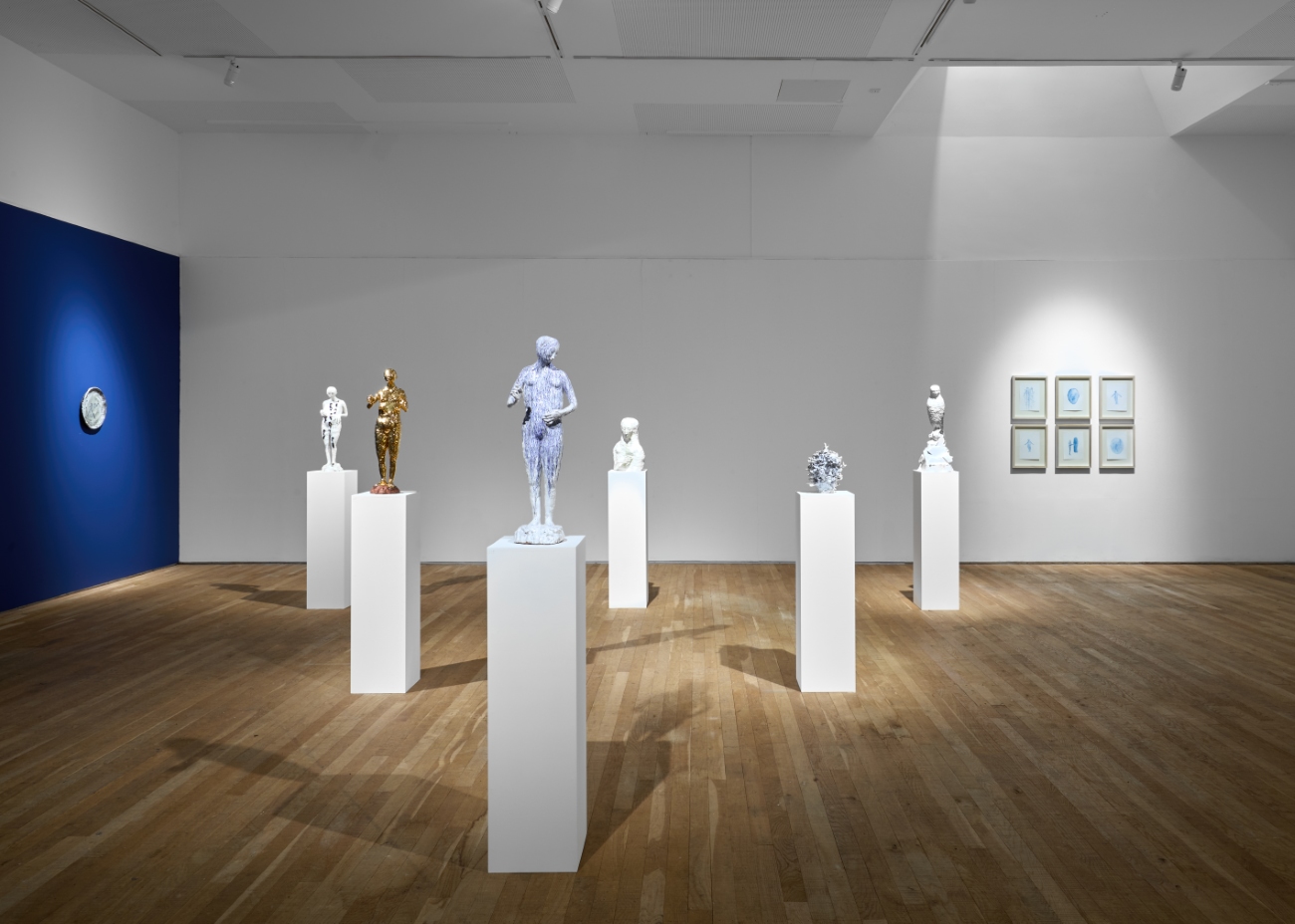
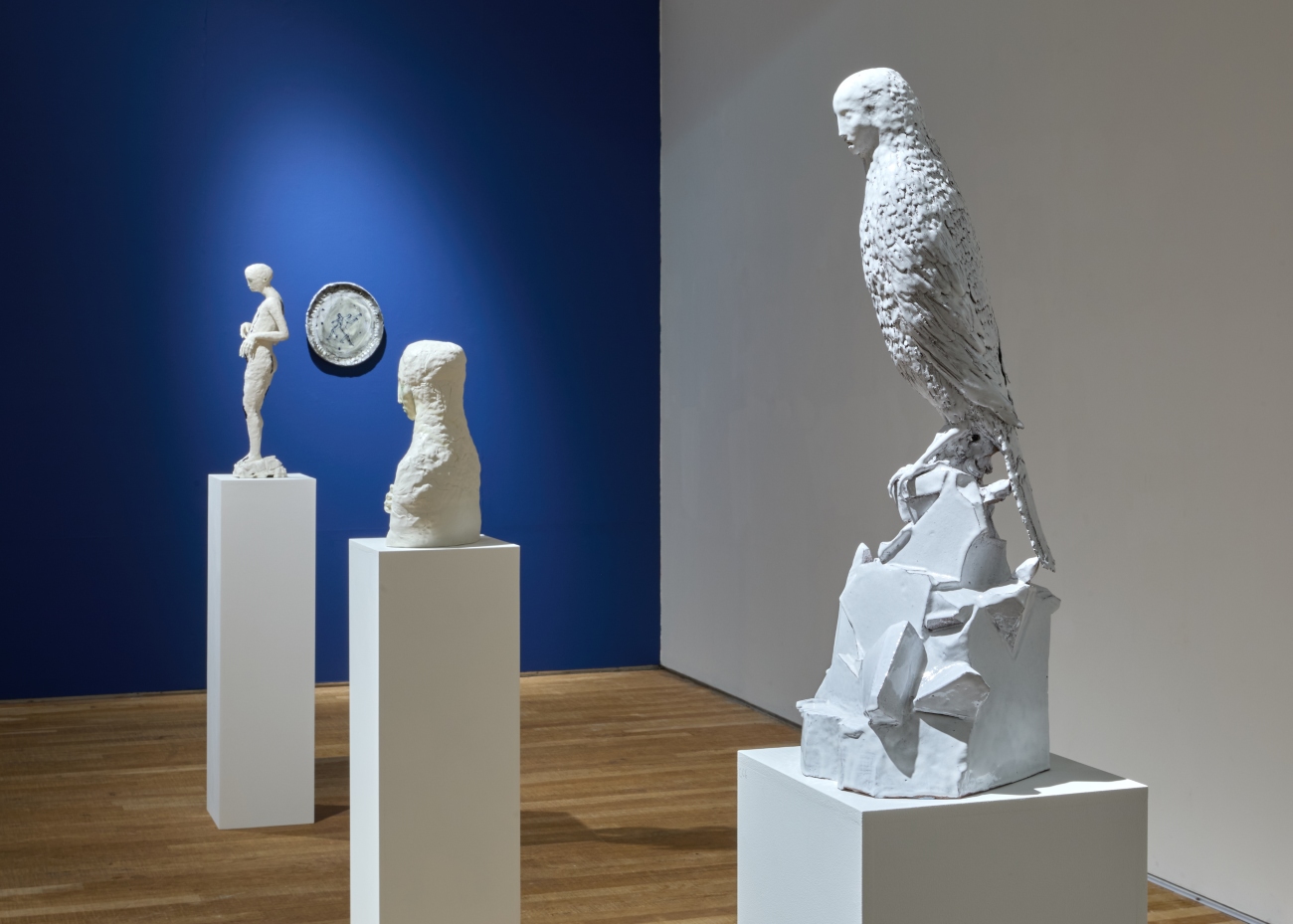
Claire loves how tin-glazed terracotta differs from the porcelain she is best known for, its unpredictable effects, its more demotic connotations. Siren, a bird with a woman’s face, sings alluringly on a rocky base: the thinning tin glaze beautifully describes the texture of her feathers. So too the taut claws of the bird figure Angel.
Systems of belief are ‘beautiful things’, says Claire, though she recognises that religions can do terrible things. In her hands, ancient myth and biblical stories still today excavate the most important questions posed by our existence – our vulnerability, our suffering, our inner life, the challenge of connecting with others. Claire’s work may strike us as lonely or sad, but ‘we are all alone at the end’, she says, and insists it is not sad. Rather, it is reflective, contemplative, brave. She is refreshingly honest about happiness, admitting to not always being happy and not understanding why many think the pursuit of happiness is essential.
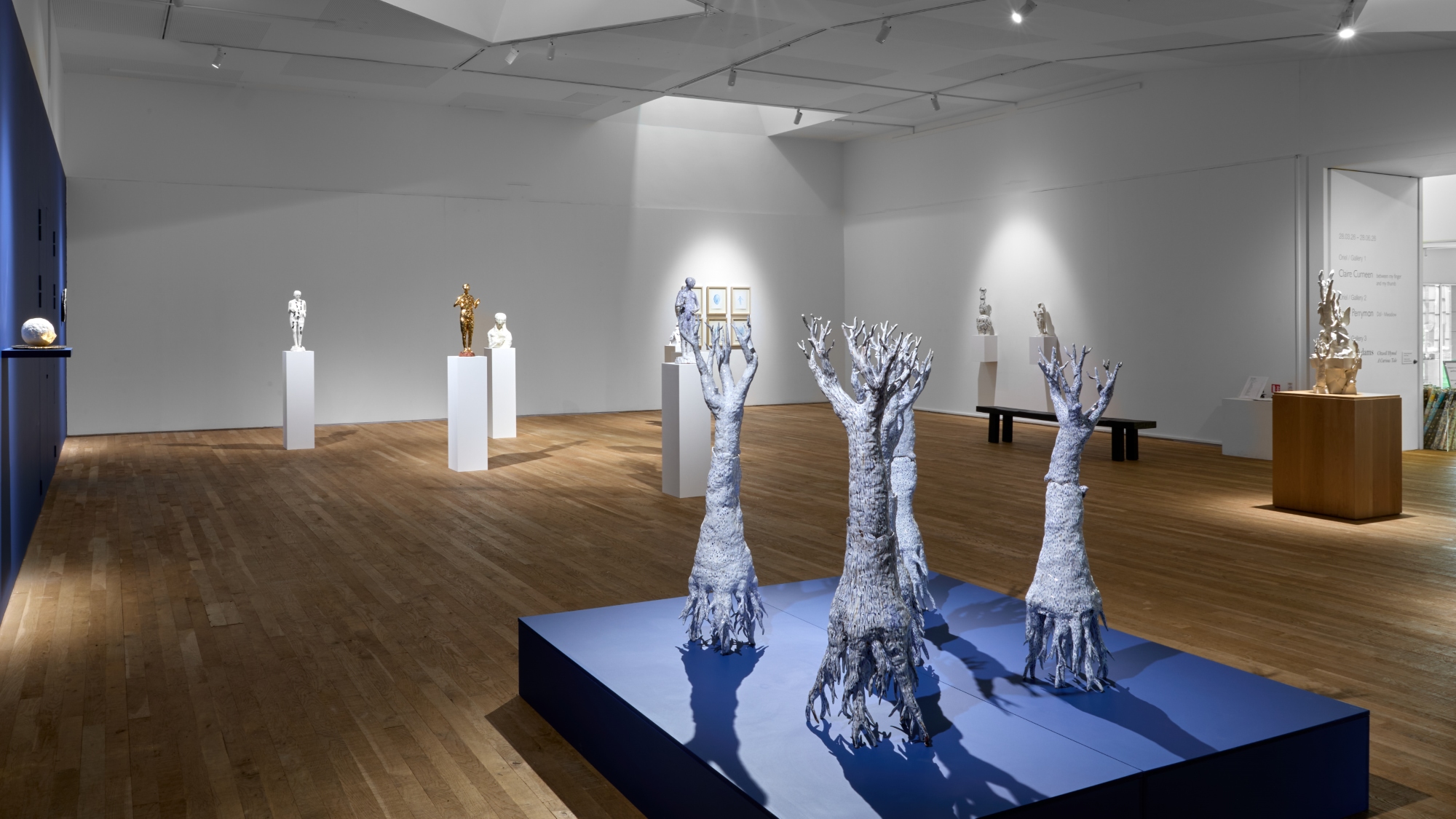
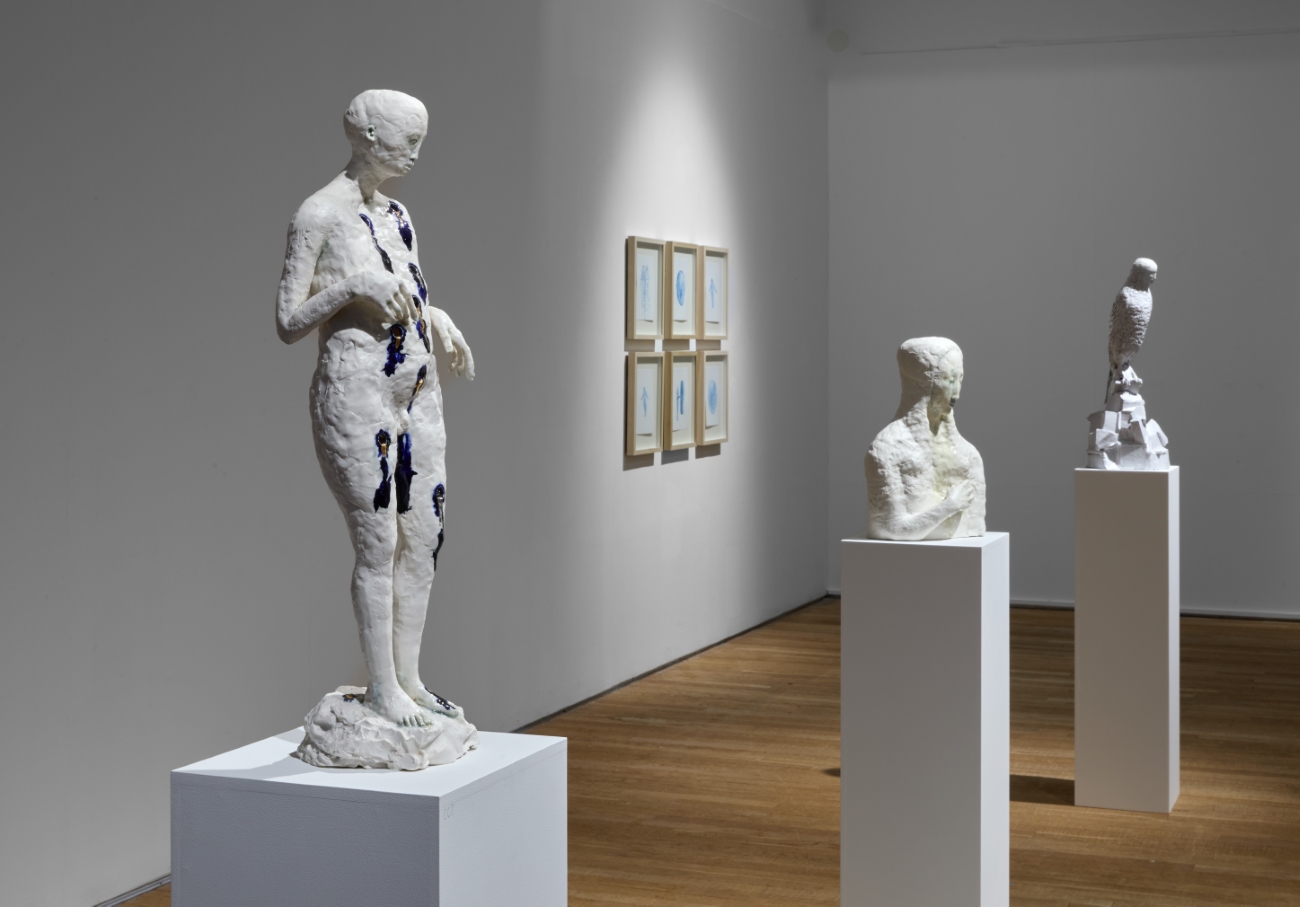
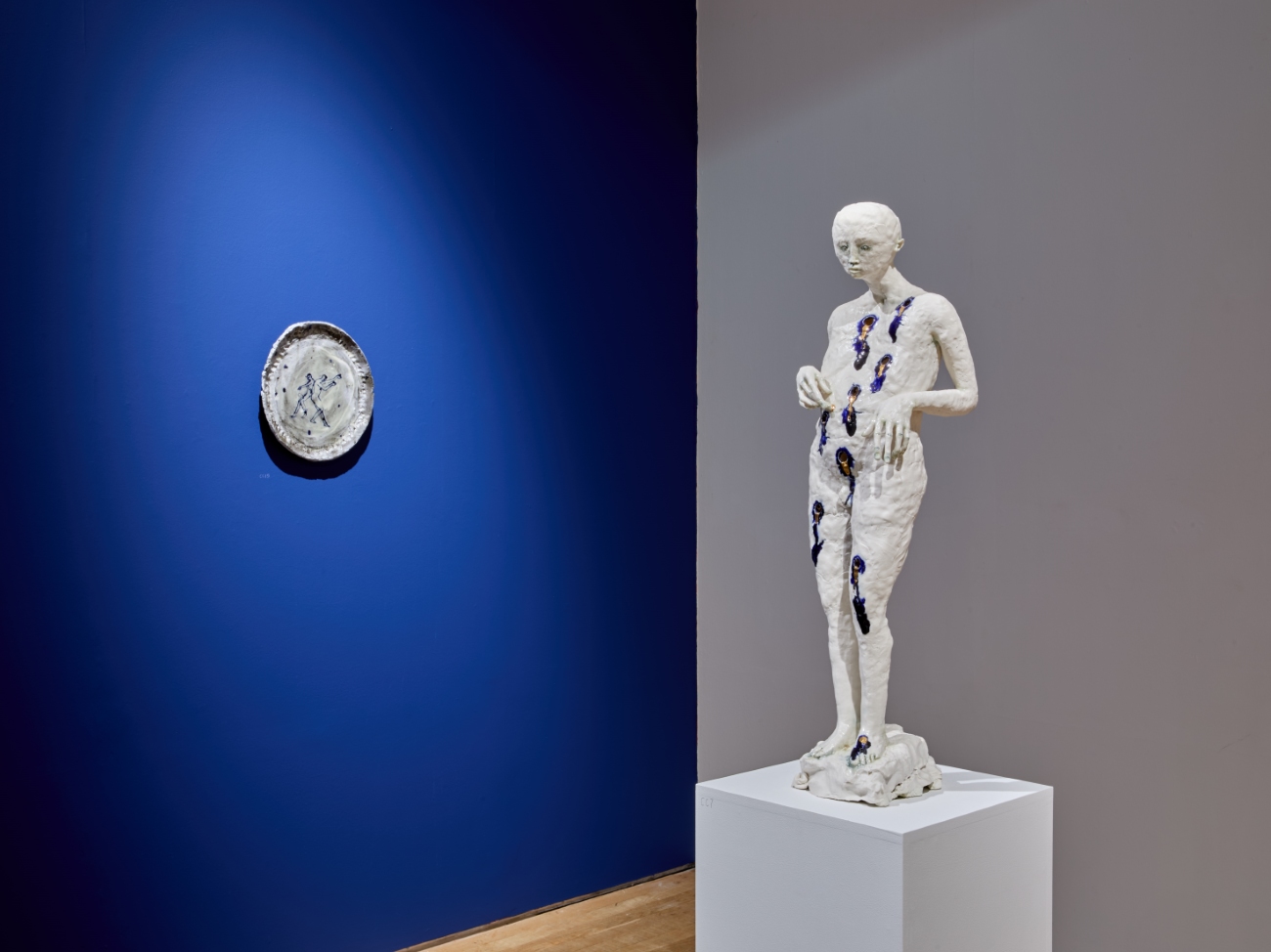
The introspective character of Claire’s figures makes Welcome Stranger a surprise. It is ‘quite blingy – not what I do’, she says. Named after the huge gold nugget discovered in Australia in 1869, this standing terracotta figure is covered in gold lustre from head to toe. In the Empty Tomb figures, we see how Claire uses gold lustre to suggest a figure’s internal life, bleeding to the surface or remaining within. In Welcome Stranger, this interiority has become the whole of the figure’s exterior in what seems a courageous gesture of openness, vulnerability, generosity, offering welcome or hoping for it. Claire cares about strangers. She has spoken about observing the quiet suffering of others and quoting it in her work.
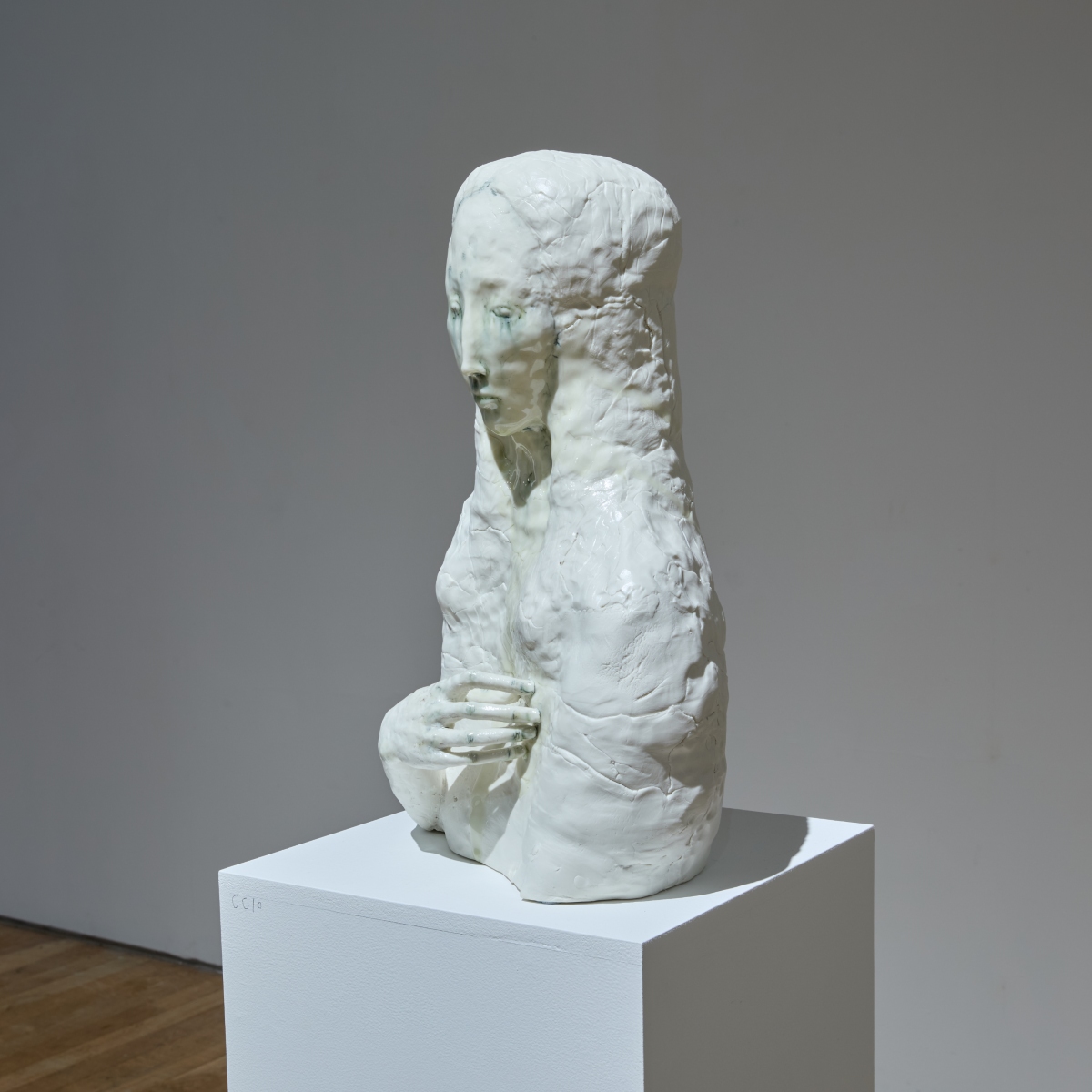
Claire identifies with Nature Morte, a tin-glazed terracotta female head covered with modelled flowers, a ‘self-portrait of sorts’, but not literally. She welcomes the idea of people engaging with her own interiority but is not prescriptive about the ideas that her work embodies.
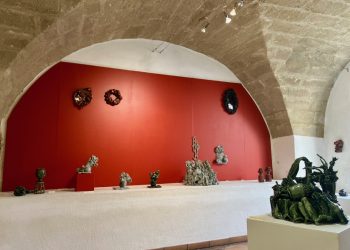
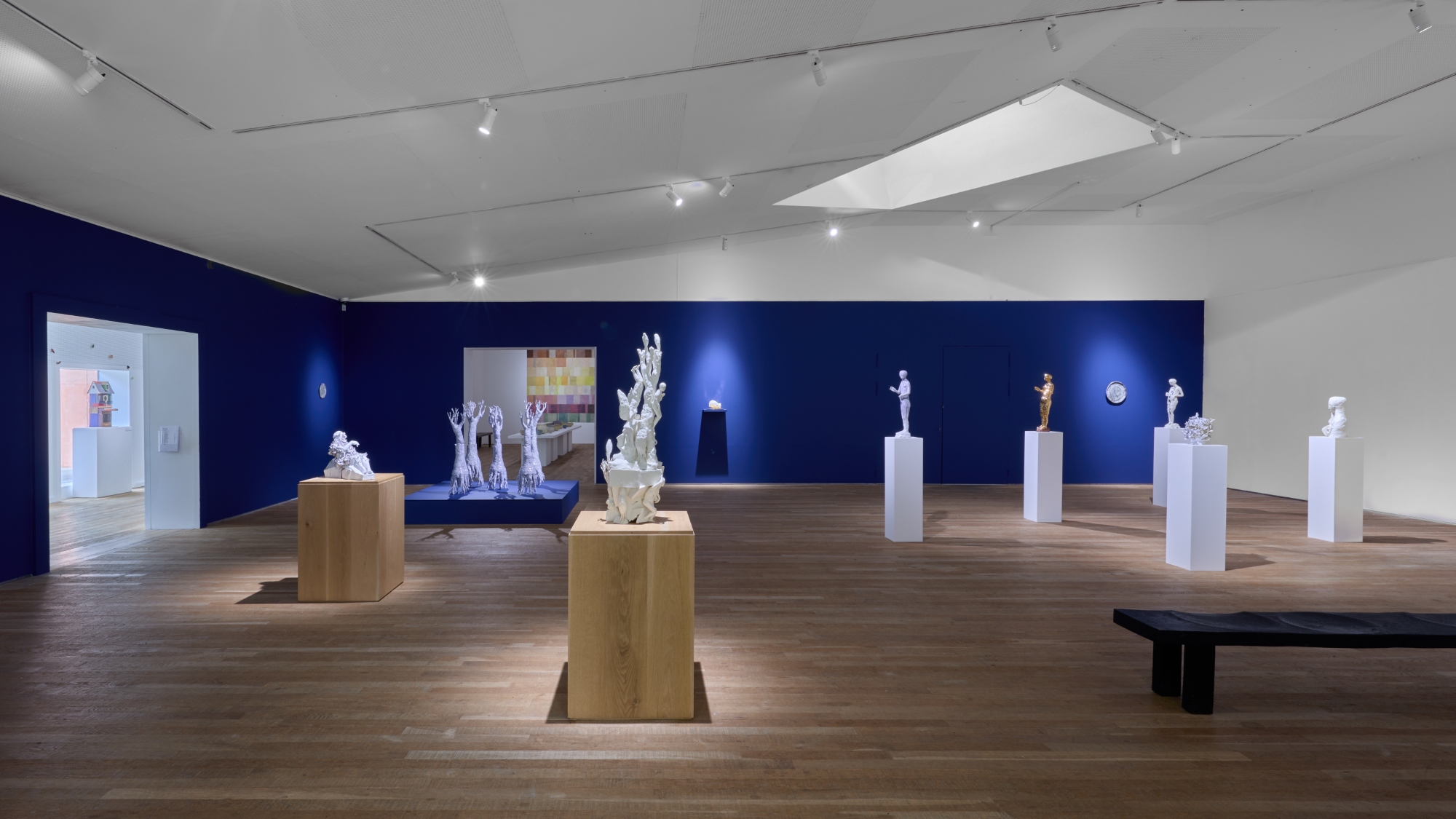
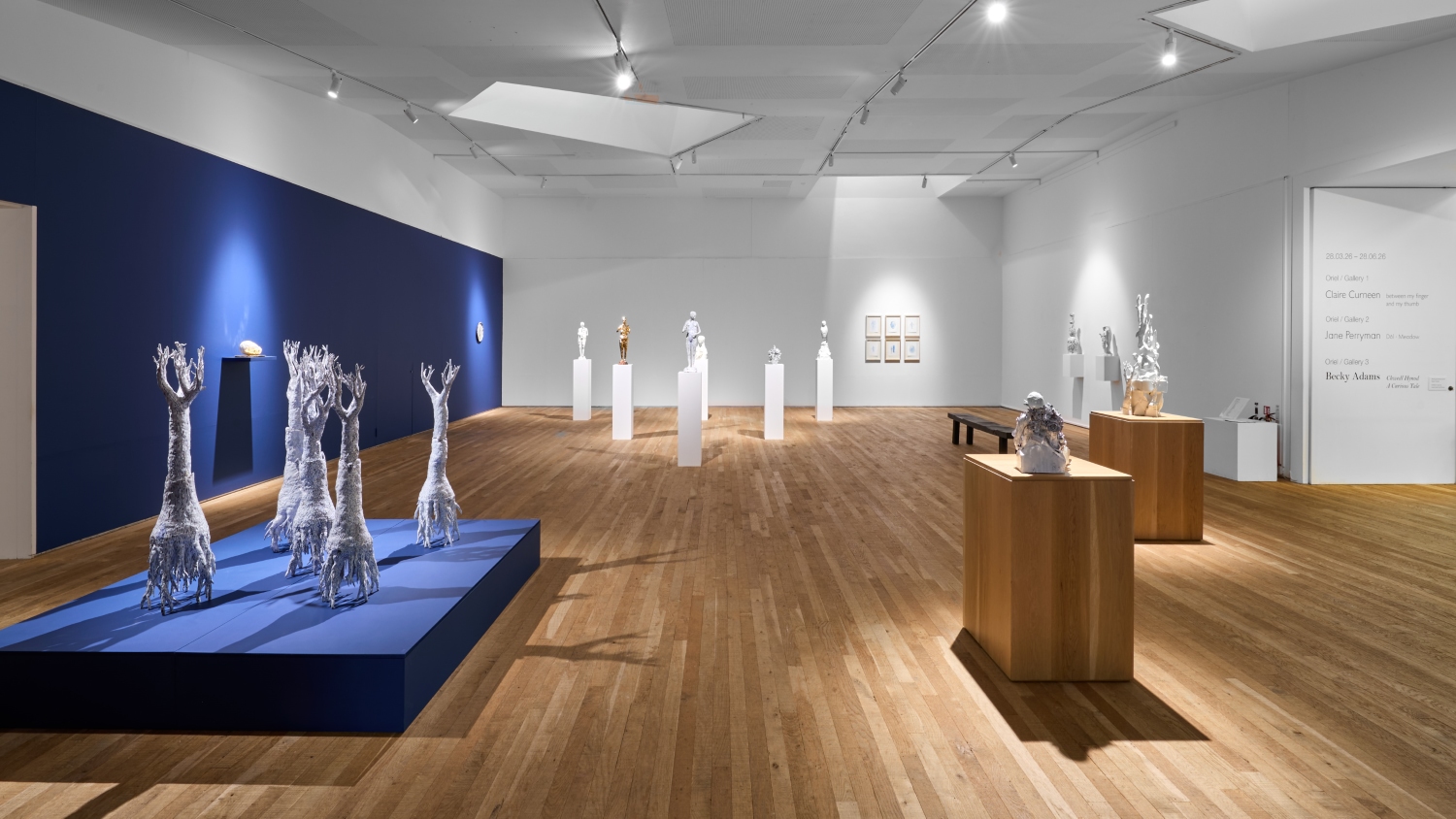
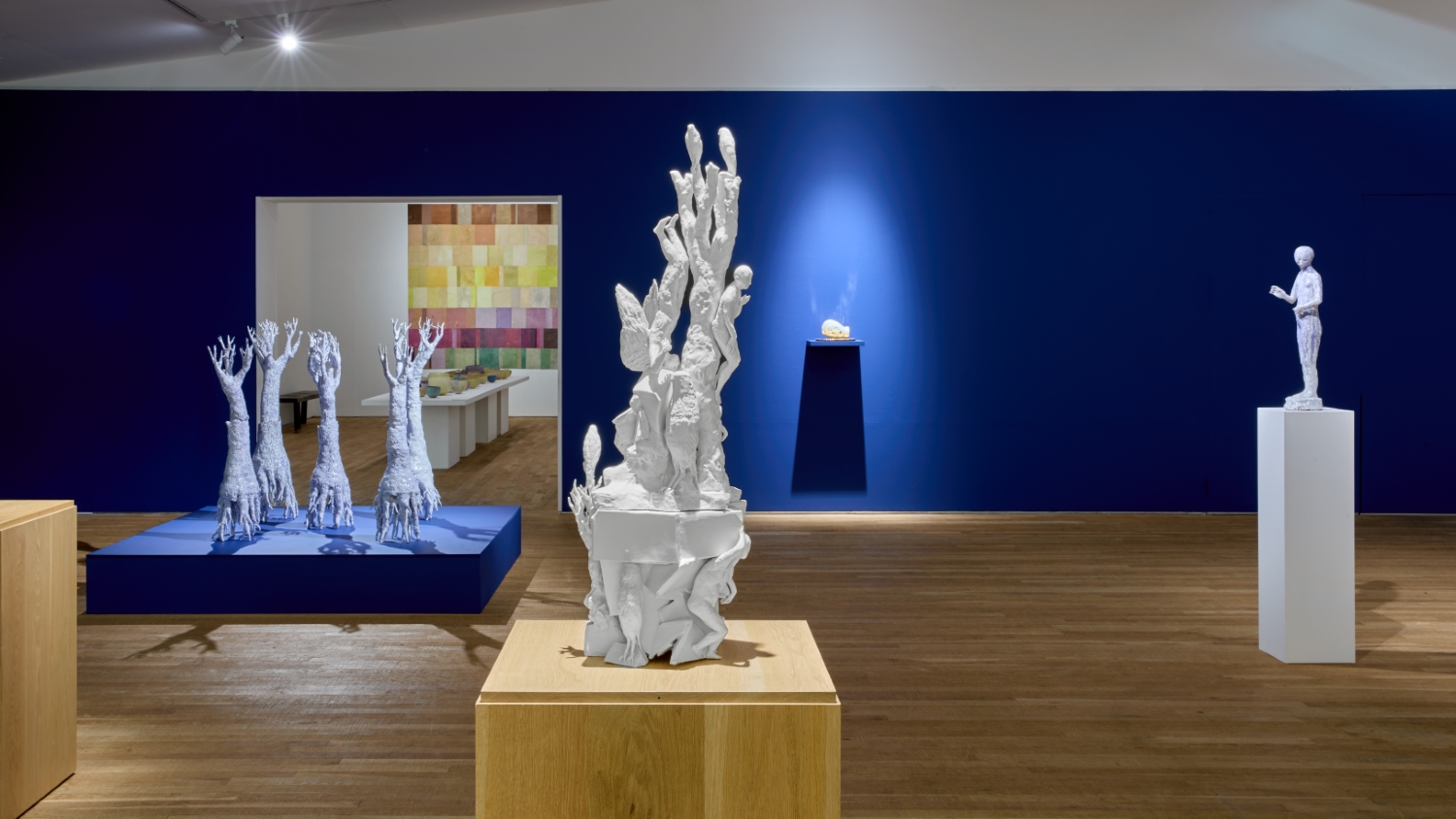
The invitation to exhibit in The Drawing Schools at Eton College from Master of Art and ceramics specialist Connor Coulston (and then in the main gallery at Ruthin Craft Centre) excites Claire with the opportunity in a large gallery to show works not as ceramics traditionally shelved and showcased en masse, as if given security in numbers, but away from the walls, isolated in space, each individual sculpture considered on its own terms. Not before time, given how the ‘fine art’ world has now embraced the ‘craft world’ and how curators have developed the confidence to show ceramics in this way. Her ideas call to mind the formal spatial arrangement of objects in the Guwan Tu.
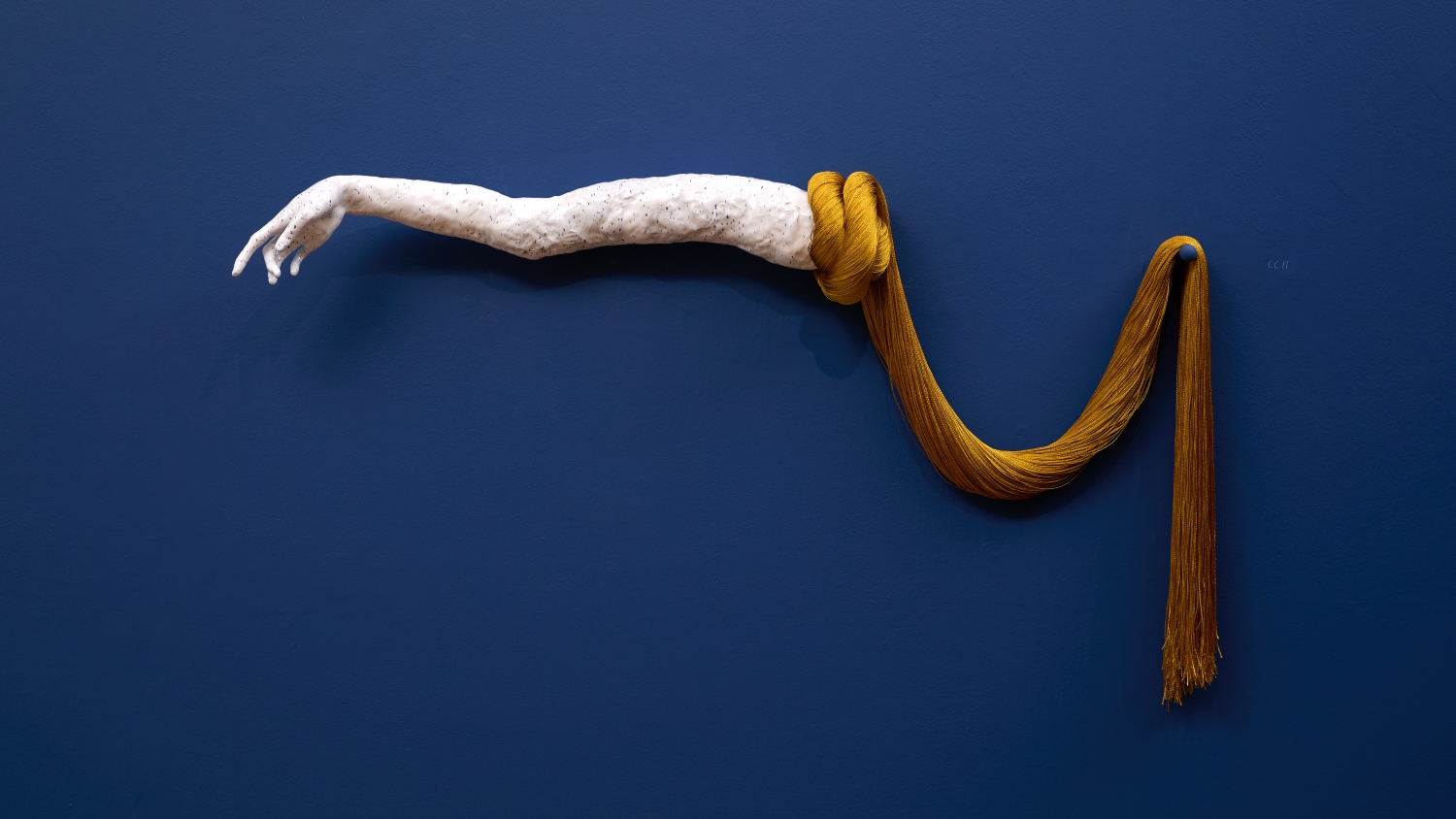
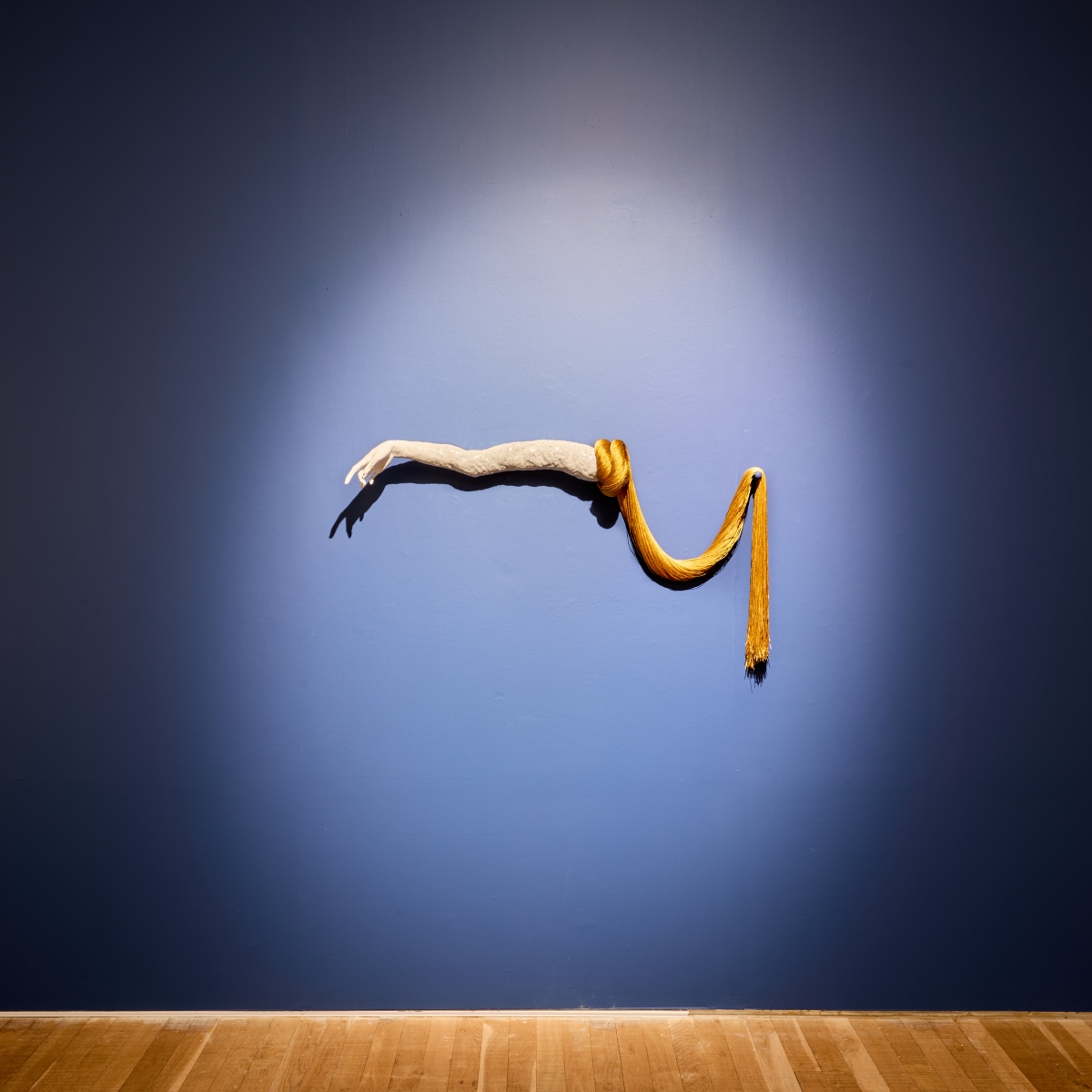
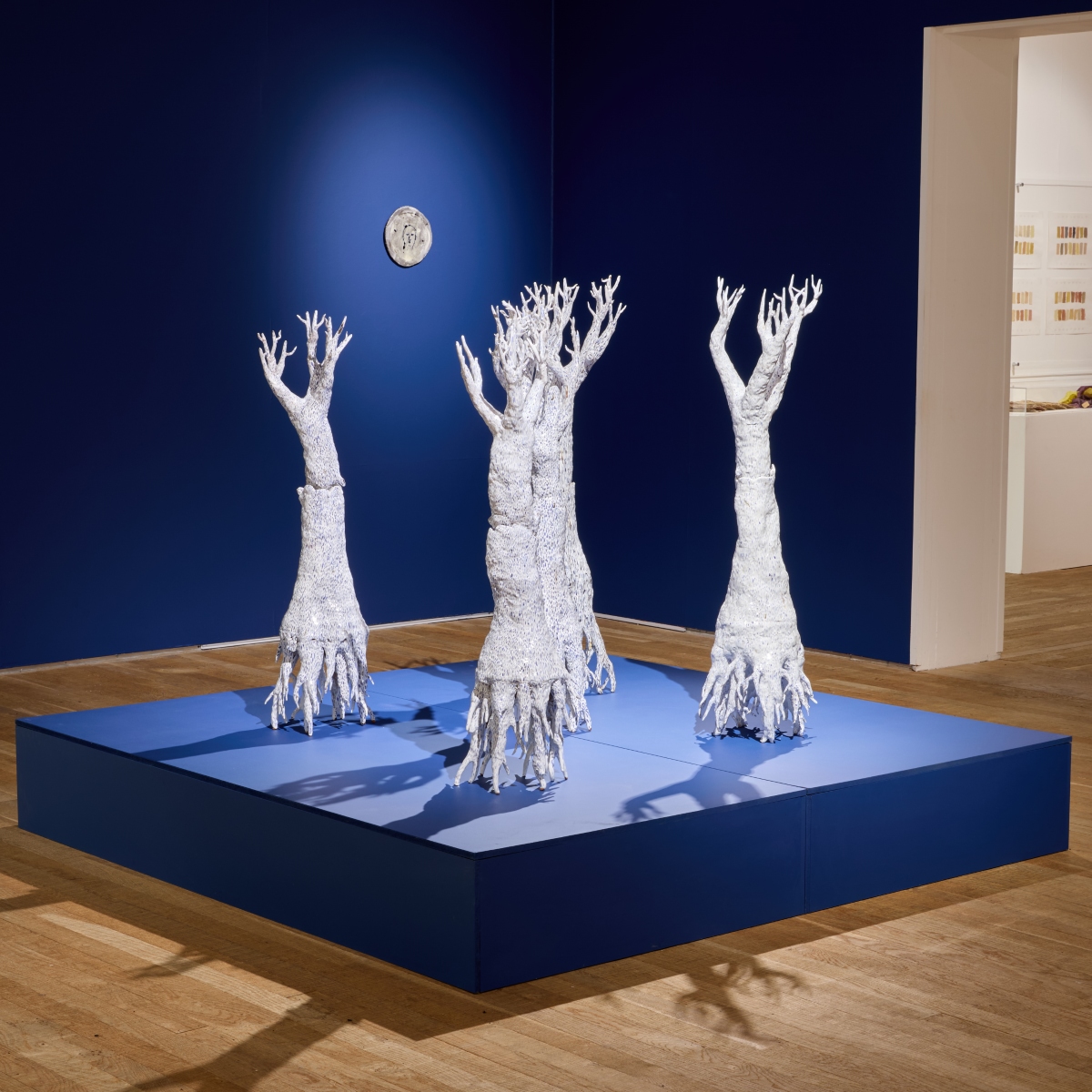
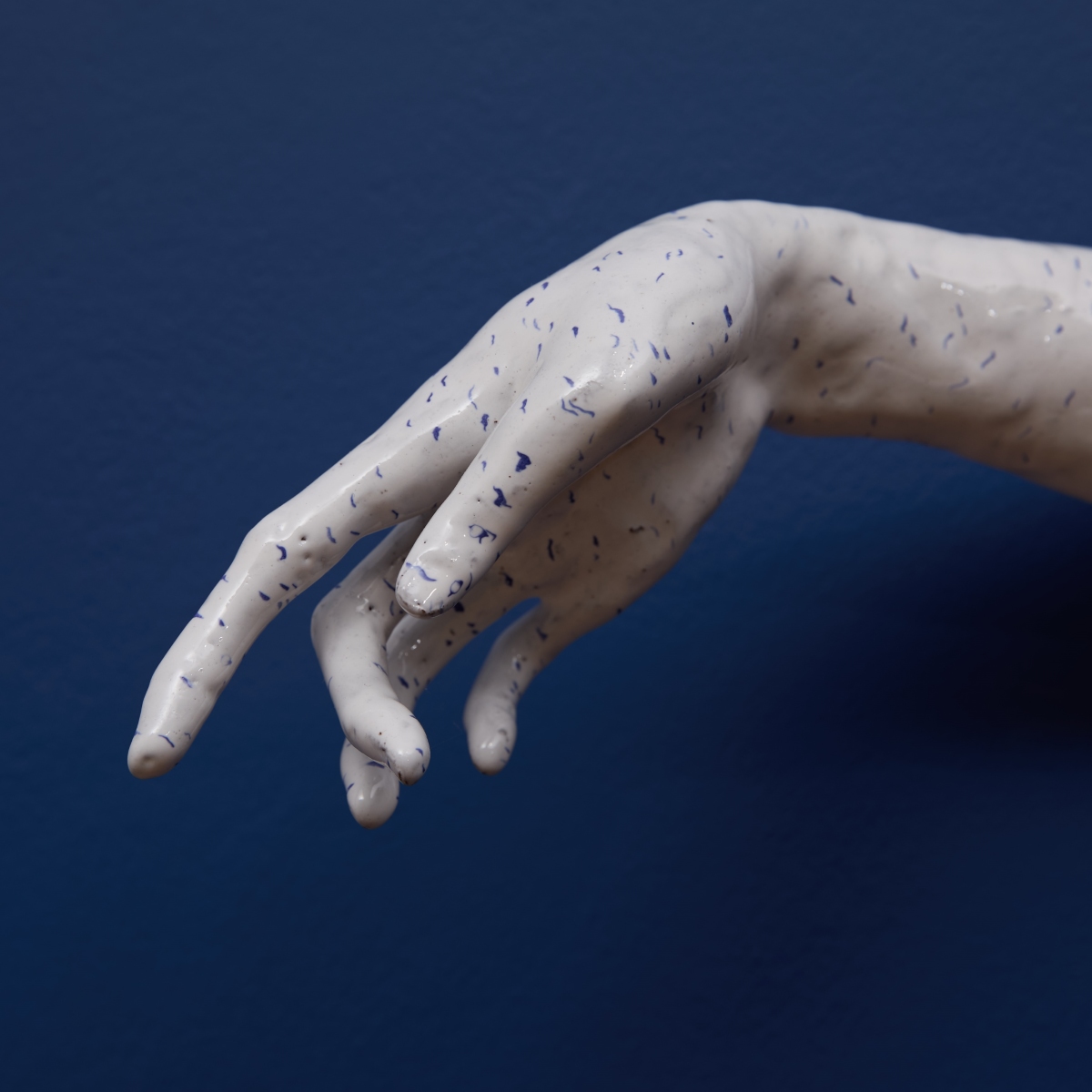
Painted Tree, made in tin-glazed terracotta in two parts, is painted with raindrops. Placed on a low stand in the small courtyard outside Claire’s studio, it glints beautifully in sunshine and light rain. She plans to make a ‘grove’ of about five such trees. The idea relates to the theme of Daphne and of transformation, exploring the anthropomorphic qualities of trees and the association between branches and human hands. When trees shake, Claire says, they are like hands drawing attention. An experimental terracotta branch is alive with hands among its shoots, some splayed and reaching, others held together, more reticent. Another terracotta branch is modelled with hands at it tips, gold threads cascading from its ‘elbow’.
Claire talks of this work constituting ‘a memory of making’, returning to the earlier idea of a terracotta tree made in about 1999. Claire warns me not to over-intellectualise this. ‘The more I talk about my work, the more I undo it.’ She feels that she is now working more instinctively, working with a stock of ideas and experience – ‘the memory of making’ – that come to her increasingly naturally. She doesn’t like the art world’s ‘echo chamber’, grounding her practice in her family that pursues other interests, in social life, food and walking, in her students at Cardiff School of Art & Design who share personal things in extraordinary ways.
For her students, Claire is something of a counsellor, ‘making a difficult situation manageable’ by seeing art as ‘not just about me, but something bigger.’ Underpinning it all is her sense of good fortune in being able to do what she does and in what her work enables her to do – ask questions, indulge curiosity, explore emotions, make connections.
Text by Andrew Renton, commissioned by Ruthin Craft Centre. Andrew Renton is an applied art curator with a particular interest in ceramics. He worked at National Museums Liverpool (1993–1999) and at Amgueddfa Cymru – National Museum Wales (1999–2024) in the roles of Head of Applied Art, Keeper of Art and Head of Design Collections. At Amgueddfa Cymru he developed the collection of historic applied art and modern and contemporary craft and curated a series of exhibitions on craft and design. He has published research on historic Welsh ceramics and a wide range of other topics. Andrew is a Trustee of the Crafts Study Centre, University of the Creative Arts, Farnham; Nantgarw China Works Museum; and the Contemporary Art Society for Wales.
Contact
ruthincraftcentre@dll.co.uk
Ruthin Craft Centre
Park Road, Ruthin
Denbighshire, LL15 1BB
United Kingdom
Photos by Dewi Tannatt Lloyd