Clay, land, and planetary imagination in South Korea’s leading ceramics biennale
From September 18 to November 1, 2026, the 13th edition of the Gyeonggi Ceramics Biennale unfolds across Gyeonggi Province, South Korea’s historic heartland of ceramics. Anchored in Icheon, Gwangju, and Yeoju—three cities closely tied to clay, kilns, and ceramic production—the Biennale has, since its founding in 2001, become one of the most established international platforms dedicated to ceramics. Under the artistic direction of Daehyung Lee, the 2026 edition proposes a shift in how ceramics is understood: not simply as an object made by human hands, but as the result of an ongoing collaboration between human intention, material agency, environmental conditions, and planetary time.
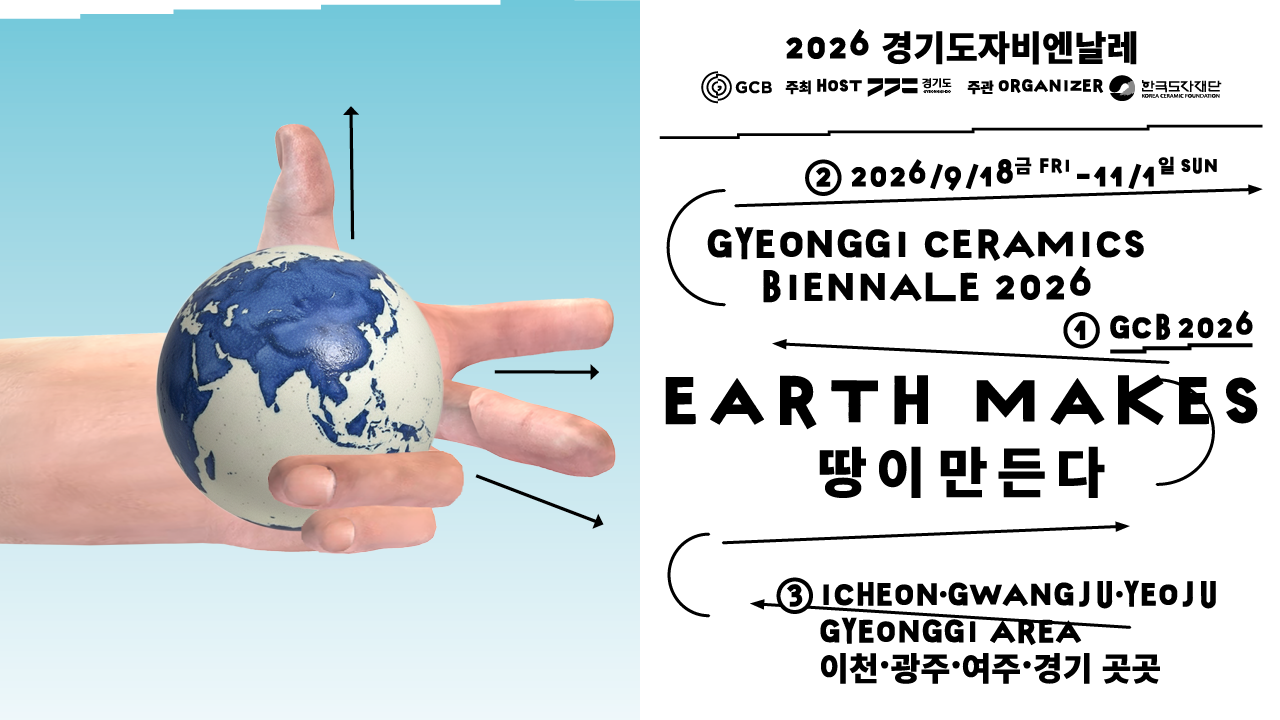
The title, Earth Makes, functions as both proposition and provocation. It asks what changes when clay is no longer understood as a passive material awaiting artistic control, but as an active collaborator in the making of form, meaning, and memory. Heat, gravity, moisture, pressure, minerals, weather, and chemical transformation are not secondary conditions surrounding ceramic production; they are part of the work’s authorship. To work in clay is always to negotiate with forces that exceed complete control. Clay shrinks, cracks, slumps, stains, absorbs moisture, and hardens through fire. It records touch, yet also resists it. It carries geological time within it while remaining one of the most intimate materials through which humans have shaped daily life, ritual, architecture, and artistic imagination.
Rather than treating ceramics primarily as a category of object, style, or national tradition, Earth Makes proposes it as a living field in which material transformation, social history, ecology, and future imagination converge. The main exhibition, held at the Gyeonggi Museum of Contemporary Ceramic Art in Icheon, brings together artists working across sculpture, installation, moving image, sound, participatory projects, and experimental material research. Across these practices, clay appears not only as substance, but as witness, archive, architecture, sensor, and speculative medium.
The exhibition unfolds through three chapters—Made from Earth, Made by Earth, and Made in Earth—which move from the elemental behaviour of matter to the social and historical life of land, and onward to planetary futures, technology, and intergenerational responsibility. Together, they frame ceramics as a medium that is both grounded and expansive: attentive to the physical realities of clay while opening onto questions of labour, memory, migration, ecology, and the future of material culture.
A Biennale Rooted in Place
The Gyeonggi Ceramics Biennale is inseparable from the region that sustains it. Gyeonggi Province has long been an important foundation for the history of Korean ceramics, and the Biennale’s three host cities—Icheon, Gwangju, and Yeoju—each carry distinct ceramic identities. Icheon is known as a living ceramics city where master artisans, studios, festivals, and contemporary ceramic production continue to thrive; Gwangju is deeply associated with the royal kilns of the Joseon dynasty and the history of Korean white porcelain; and Yeoju has developed around everyday wares, ceramic industry, and a culture of functional ceramics embedded in daily life.
By unfolding across these three sites, the Biennale situates contemporary ceramics within a region where ceramic history remains embedded in landscape, industry, pedagogy, and local identity. Earth Makes does not present ceramics as an abstract global category detached from place, but as a medium inseparable from local soils, water, labour systems, and material traditions. At the same time, it refuses to reduce ceramics to heritage alone, staging a conversation between Korean ceramic histories and a wider international field of contemporary practice.
Chapter 1 Made from Earth
The first chapter, Made from Earth, focuses on clay and ceramics as active materials. Rather than approaching ceramic works solely as finished objects, it foregrounds the elemental processes through which matter is shaped: drying, cracking, collapsing, hardening, firing, shrinking, staining, and transforming. Water, fire, gravity, pressure, and chemistry are treated not merely as technical variables, but as co-producers of form. What emerges is a view of ceramics as a field of unstable collaboration, where intention and accident remain deeply entangled.
Rather than asking clay to obey a predetermined design, the artists in this chapter work with its capacity to respond, resist, collapse, and transform. Their practices foreground process, contingency, and bodily encounter, drawing attention to the moment when matter begins to exceed the artist’s hand.
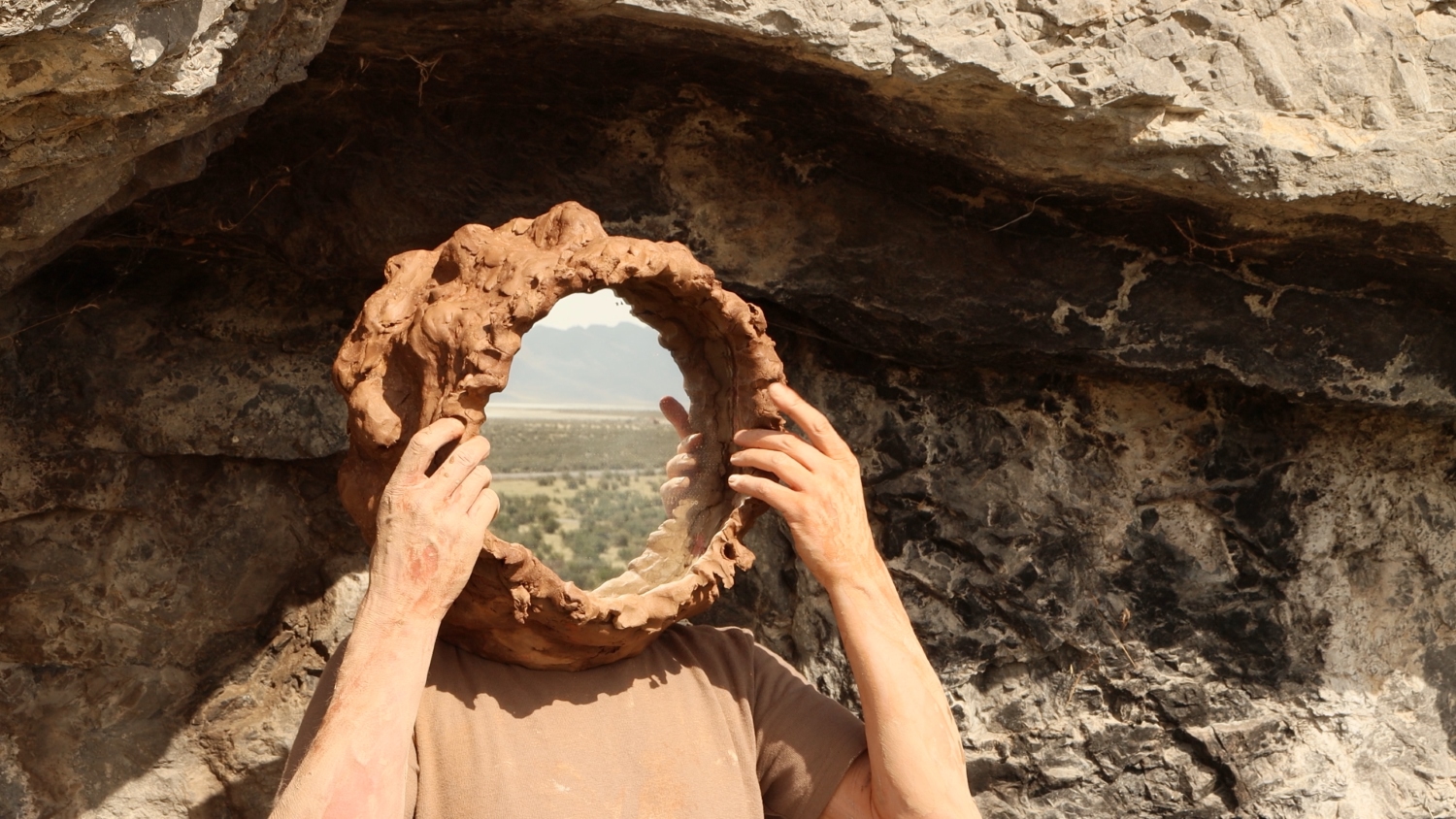
In William Cobbing’s work, clay becomes an extension of the body and a site of elemental metamorphosis. His practice often stages encounters between the human figure and unstable material states: bodies submerged in clay, heads transformed into vessels or landscapes, surfaces that oscillate between skin, earth, and mask. Clay does not simply depict transformation here; it performs it.
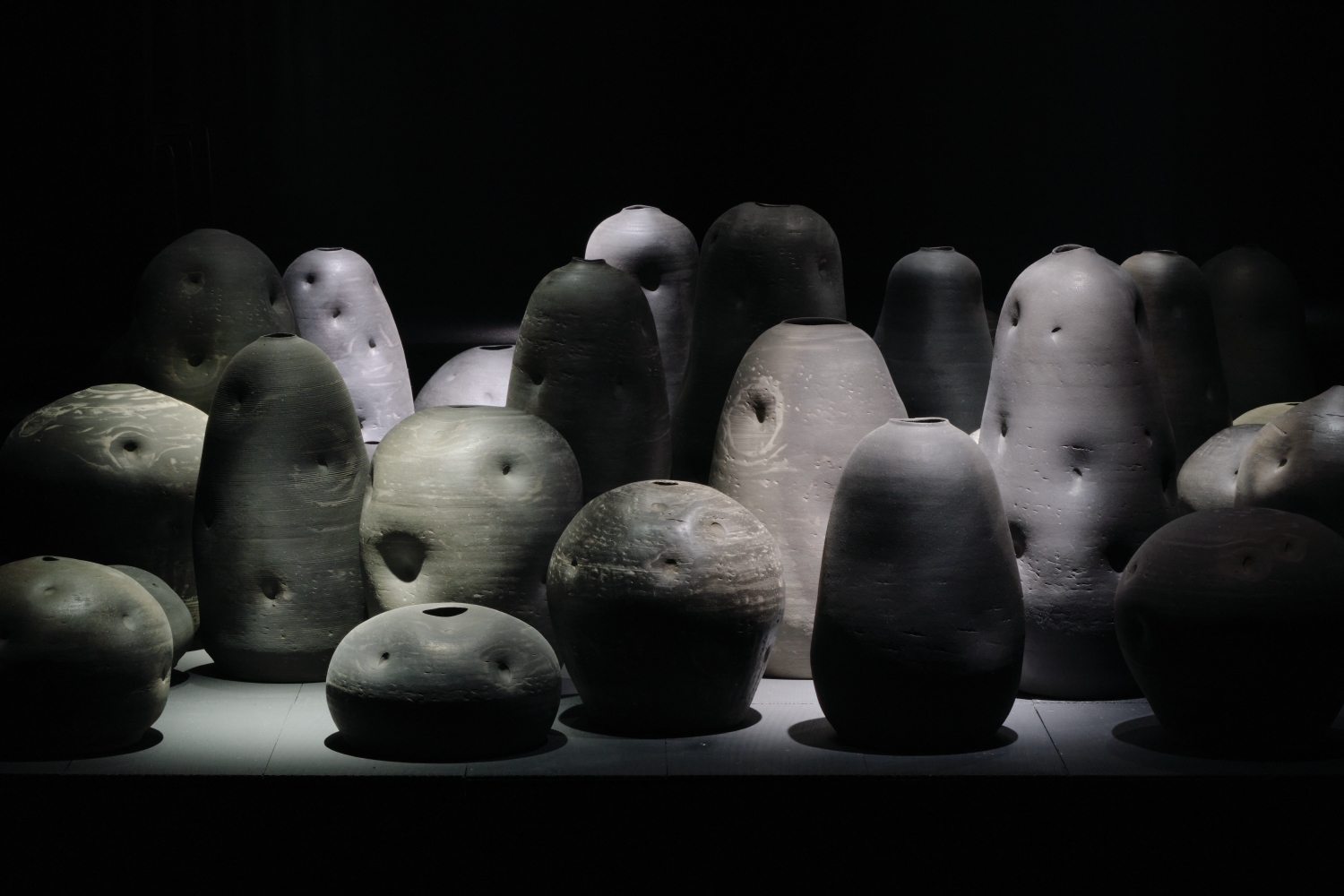
A different but equally significant material intelligence appears in the work of Chang-Ho Kim, whose practice draws from the traditions of Korean Onggi. Onggi jars are functional objects designed to breathe, ferment, store, and endure, and their porous materiality is inseparable from systems of food preservation, climate adaptation, and communal life. In Earth Makes, Kim’s work foregrounds a longstanding understanding of clay as a living, responsive medium—one whose behaviour matters as much as its form.
Chapter 2 Made by Earth
If the first chapter approaches earth as matter, Made by Earth shifts attention to earth as ground: land, environment, territory, memory, and social field. Here, ceramics moves beyond the studio object and enters questions of migration, architecture, conflict, labour, habitation, and the histories embedded in soil. The chapter proposes that we are not only making with earth; we are also made by it—by the places we inhabit, the materials available to us, the landscapes that shape daily practices, and the political histories sedimented into land itself.
This is where Earth Makes becomes most explicitly historical and geopolitical. Clay and soil are approached as carriers of memory, holding traces of extraction, cultivation, ritual, displacement, violence, and repair. The artists gathered in this chapter explore how ceramics might register the relationship between place and identity without reducing either to stable essence.
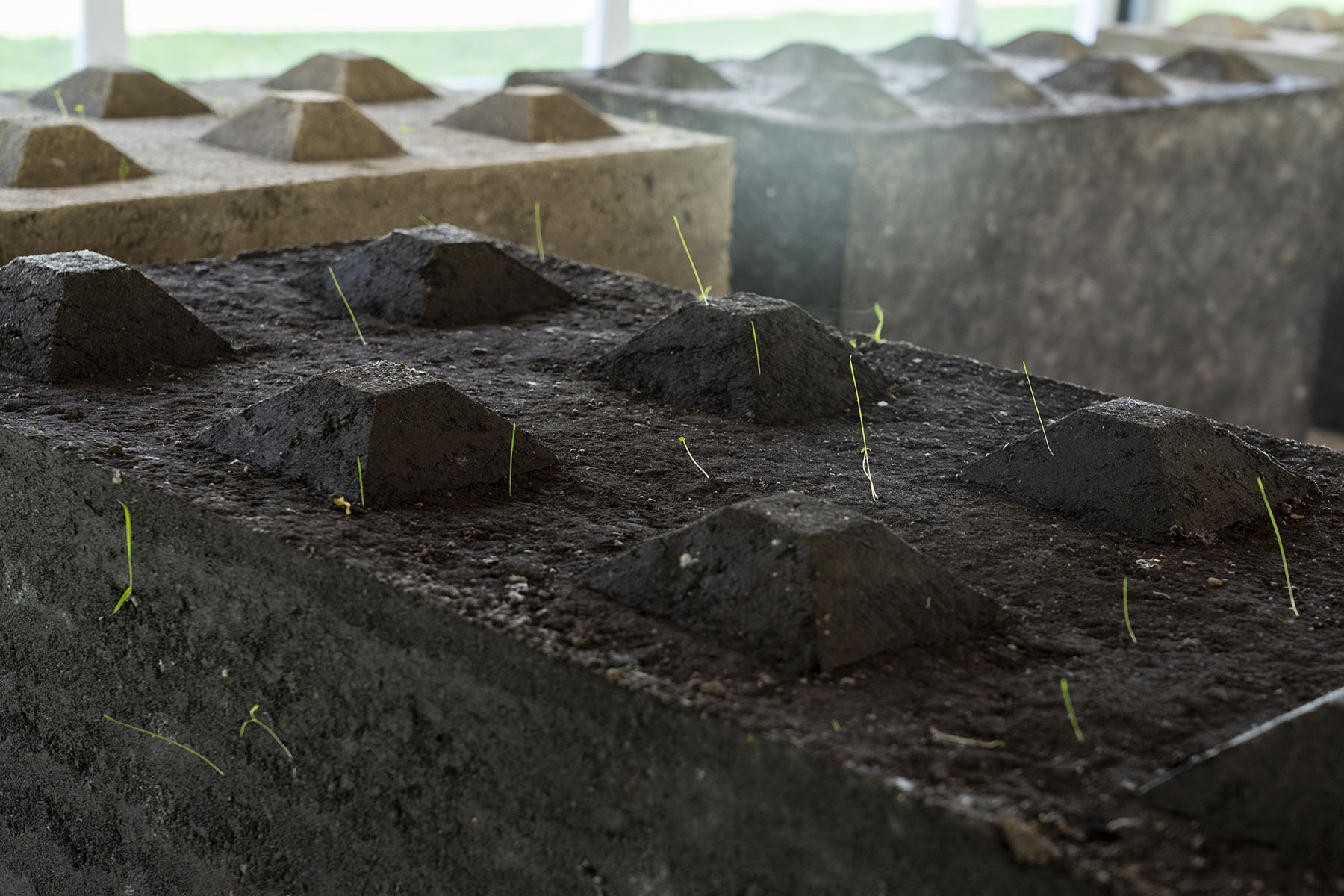
Elena Khurtova’s investigations into soil as sculptural and historical material are particularly resonant in this context. Her rammed-earth forms present soil not simply as substance but as a compressed body of memory—local matter capable of holding stories of division, ecology, and time. In Korea, her work takes on particular urgency through its engagement with soil from the DMZ and border regions, where the land carries histories of war, separation, and military occupation alongside traces of ecological regeneration formed in the absence of human intervention. The participatory process further extends this material history, transforming soil from a site-specific substance into a shared act of remembrance, repair, and collective making.
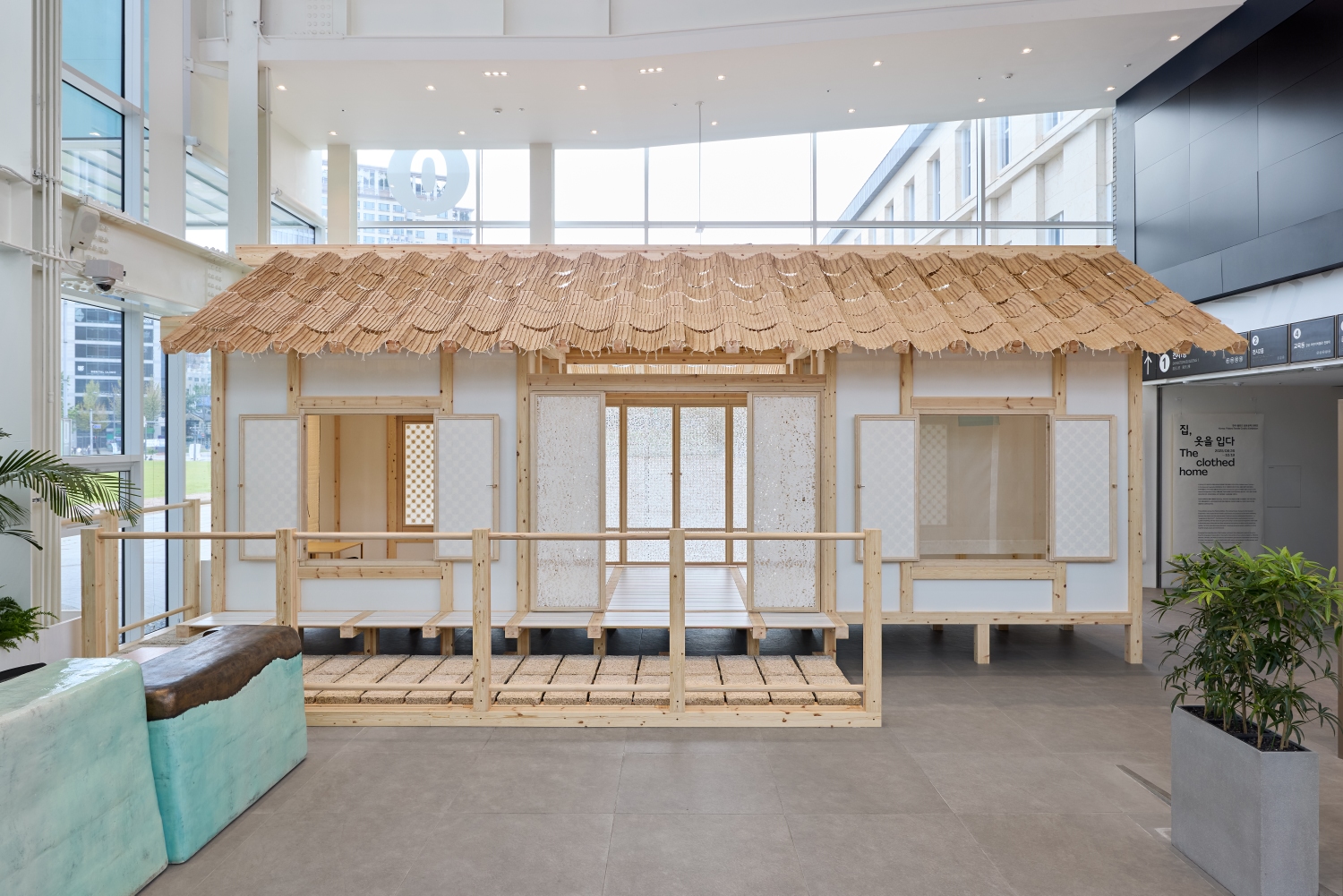
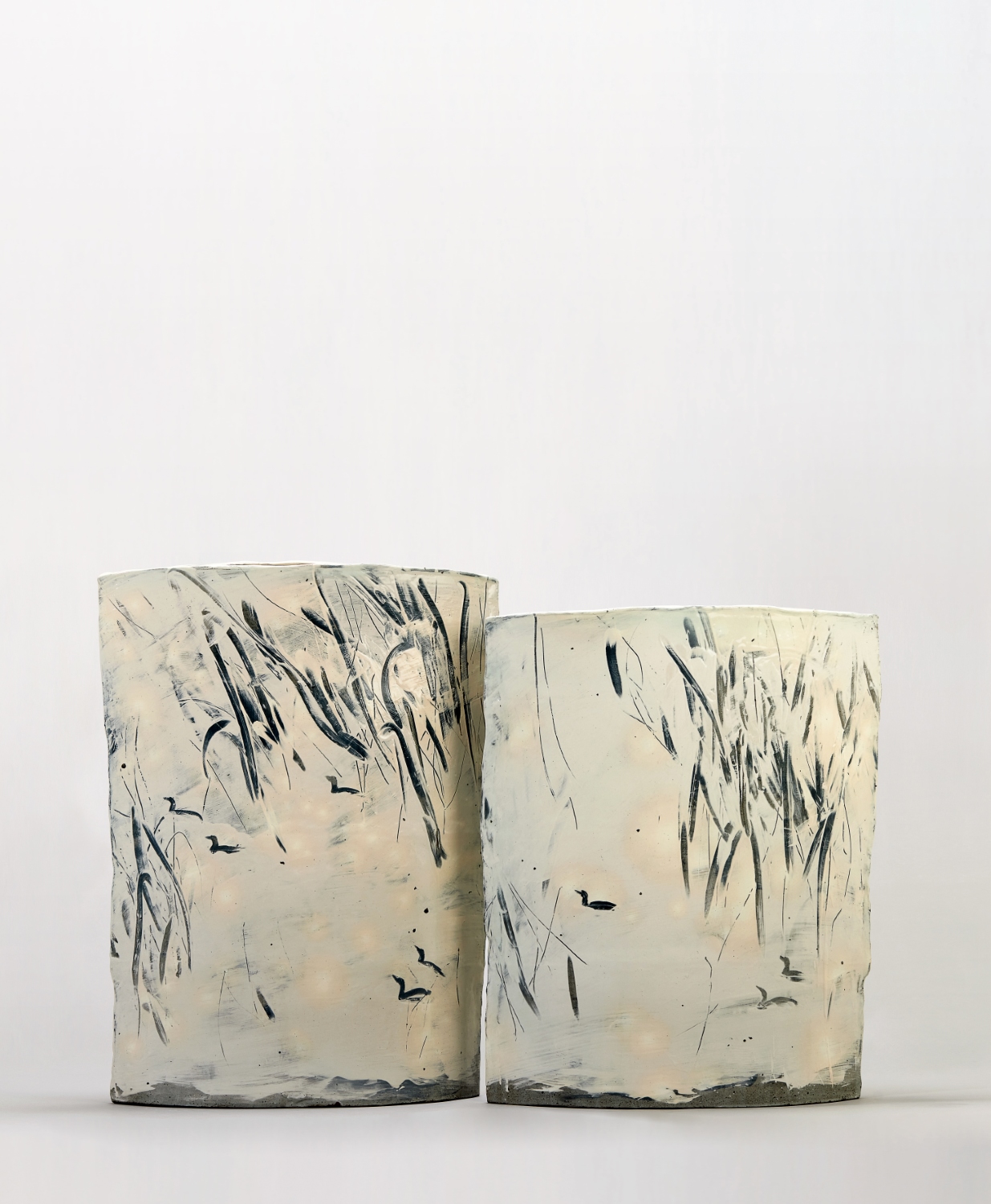
The chapter also considers ceramics in relation to vernacular architecture, craft memory, and the aesthetics of dwelling. Earth has historically functioned as wall, floor, vessel, kiln, and shelter; it is not only the source of ceramic objects but also the substance of built worlds. Within this chapter, the special project Wind, Light, Earth brings Korean architectural and ceramic traditions into dialogue with questions of landscape, seasonality, and dwelling. Created through a collaboration between architect Youngchul Jang, who built the Hanok(Traditional Korean house) pavilion Piljeong, and Buncheong ceramic artist Sungjae Choi, the project turns toward forms of beauty shaped by land, seasonality, and ways of dwelling. Through wind, light, earth, architecture, and fired clay, it considers landscape not as something fixed or owned, but as something temporarily borrowed, inhabited, and shared.
Chapter 3 Made in Earth
The third chapter, Made in Earth, turns toward the future. Following Made from Earth, which foregrounds the agency of matter, and Made by Earth, which considers the social and historical life of land, this final chapter situates ceramics within a wider horizon of planetary time, ecological crisis, digital technology, and intergenerational responsibility. It asks how clay might carry memory forward, how ceramics might imagine possible futures, and how one of humanity’s oldest technologies can remain urgent in a world increasingly shaped by screens, synthetic interfaces, algorithmic systems, and the gradual erosion of tactile knowledge.
This future-oriented inquiry is grounded in the material history of ceramics itself. Ceramics has always existed between durability and fragility, utility and ritual, ruin and survival. It is also one of the materials through which human history has most often endured: fragments of vessels, tiles, figurines, and fired clay surfaces that remain long after empires have disappeared and organic matter has decayed. Made in Earth extends this archaeological logic into the future. Rather than treating ceramics only as evidence of what has survived from the past, the chapter considers it as a medium for future memory: a way of leaving traces, transmitting messages, and imagining worlds not yet here.
This future-facing proposition finds one of its clearest forms in Dear Future, the chapter’s special project bringing together representative student artists from 28 ceramic departments across Korea. Conceived as a proposal to send “assets of the Earth” one hundred years into the future, the project invites young artists to think of ceramics as a time capsule: a medium through which present-day values, anxieties, ecologies, and hopes can be transmitted beyond their immediate moment.
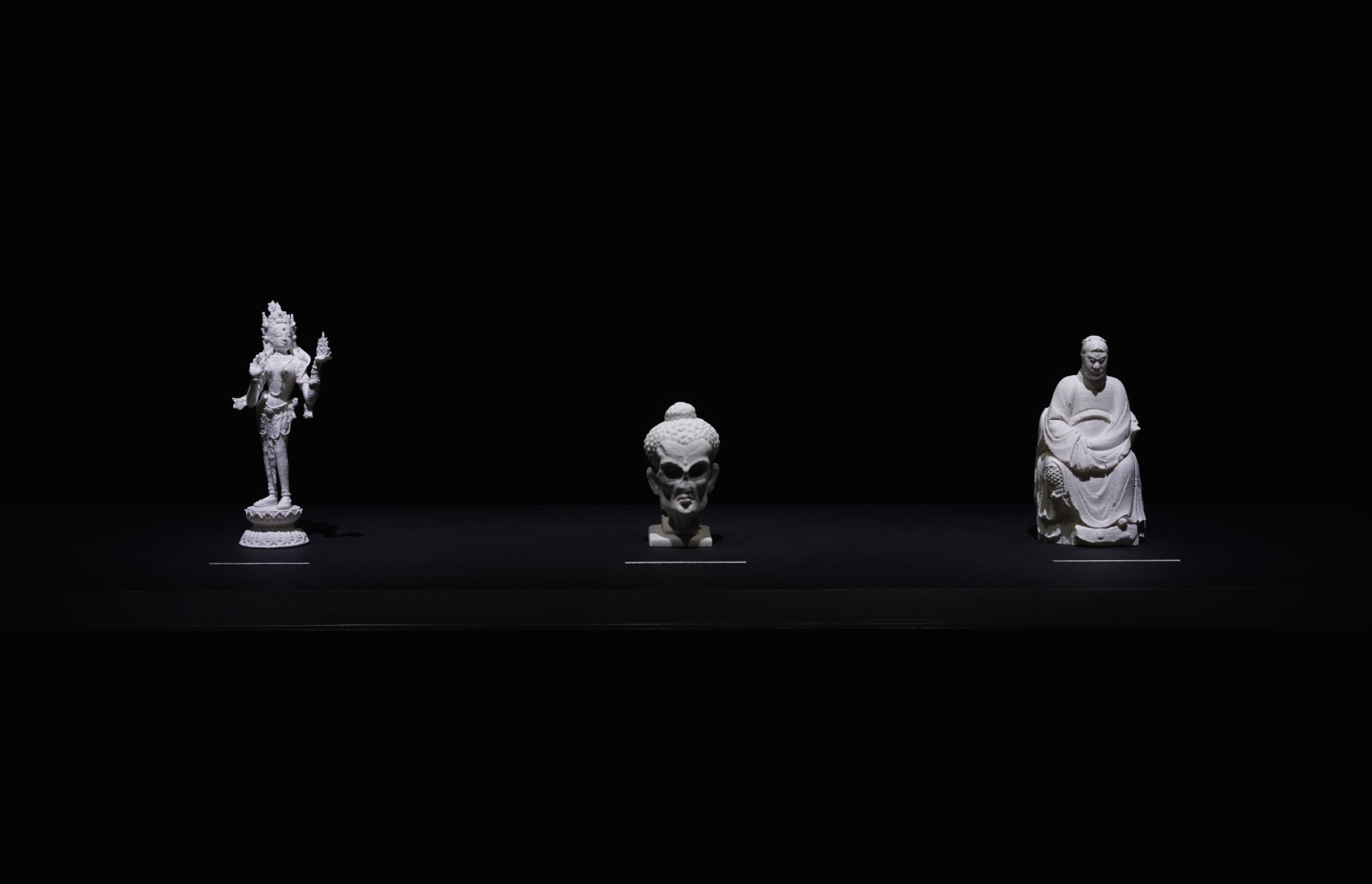
The work of LEE Wan also resonates strongly within this chapter’s concern with technology and cultural memory. For the Biennale, LEE collaborates with ceramic artist Seongman Ahn to revisit his work Treasure through 3D scanning and ceramic printing technologies, rematerialising cultural heritage data through clay. Here, replication becomes more than reproduction; it raises questions about what is preserved, who owns it, and how cultural memory is transmitted. Ceramics thus becomes not simply a medium for preserving the past, but a means of reconfiguring the future.
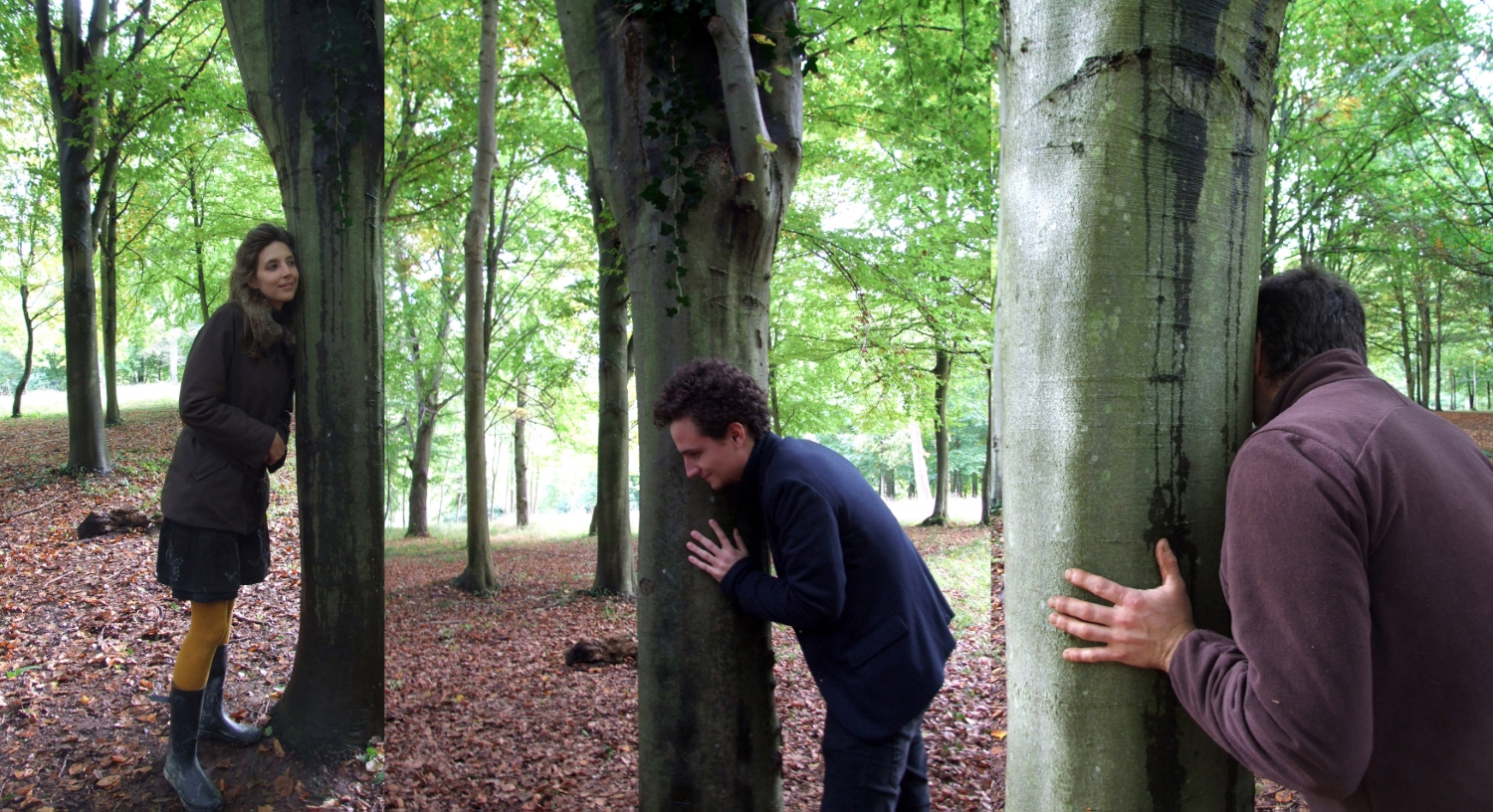
Other works in Made in Earth consider how ceramics intersects with contemporary technology, sensory experience, and nonhuman communication. Known for interactive installations that activate relationships between touch, sound, presence, and sensory exchange, Scenocosme invites visitors to communicate with plants and trees through physical contact—touching, embracing, listening, and sensing. Their work expands the Biennale’s understanding of ceramics into the realm of responsive environments, where human bodies, natural forms, sound, and tactile perception become part of a shared field of interaction.
Focus Australia and a Wider Ceramic Conversation
One of the defining features of the 2026 Biennale is Focus Australia, with Natalie King as commissioner. A curator with extensive experience across the Asia-Pacific region, King curated the Australian Pavilion at the 2017 Venice Biennale, the New Zealand Pavilion in 2022, and the Timor-Leste Pavilion in 2024, and has long worked with Australian and First Nations artists. Rather than presenting Australia as a conventional national showcase, the platform places Korean ceramic discourse in dialogue with Australian and First Nations practices shaped by land, environment, community, and local material knowledge.
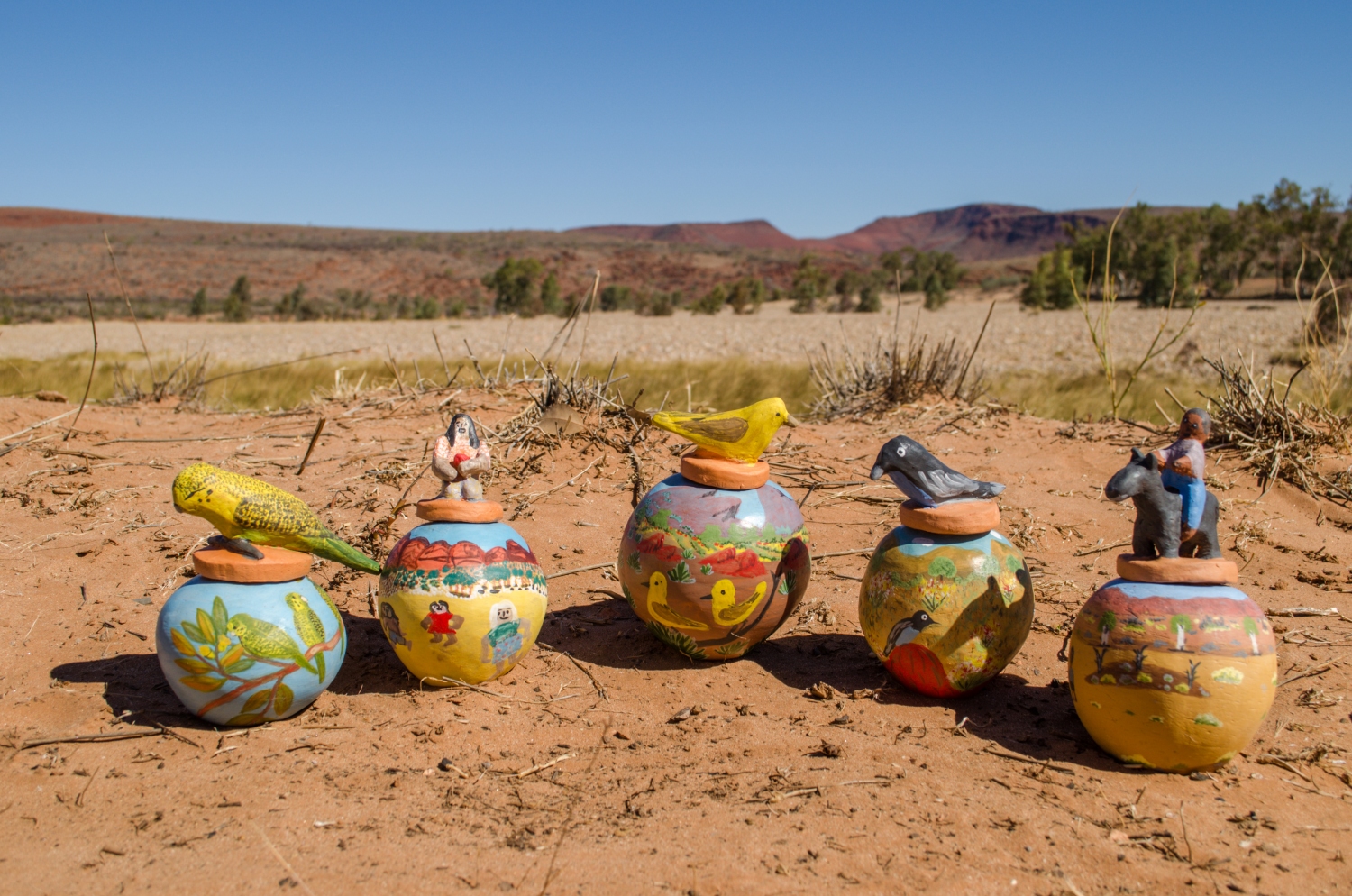
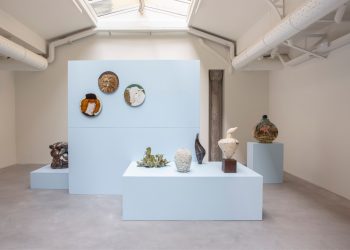
(fig 2) Hermannsburg Potters artworks on Country, 2020. Photograph by Bec Capp.
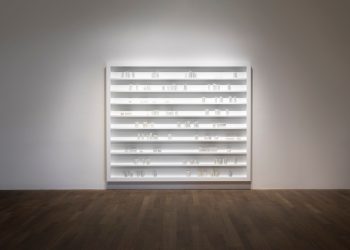
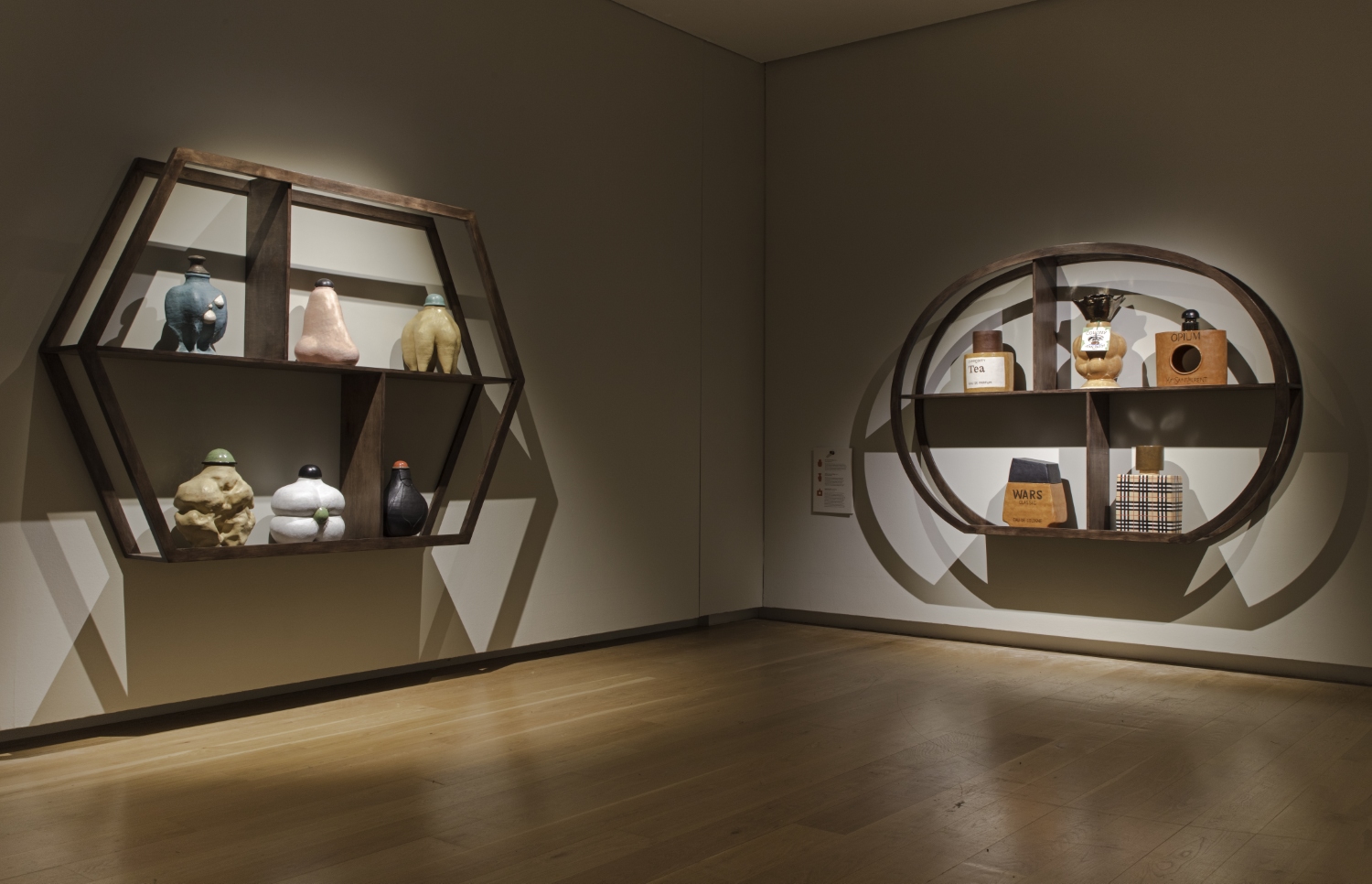
(fig 3) Renée So, Installation view of Commodities: Sculpture and Ceramics, Compton Verney, Warwickshire, 2025. Courtesy of Compton Verney. Photograph by Jamie Woodley.
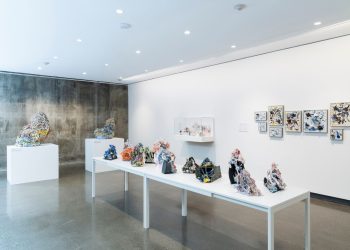
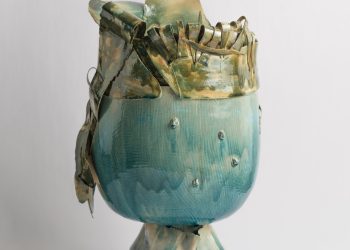
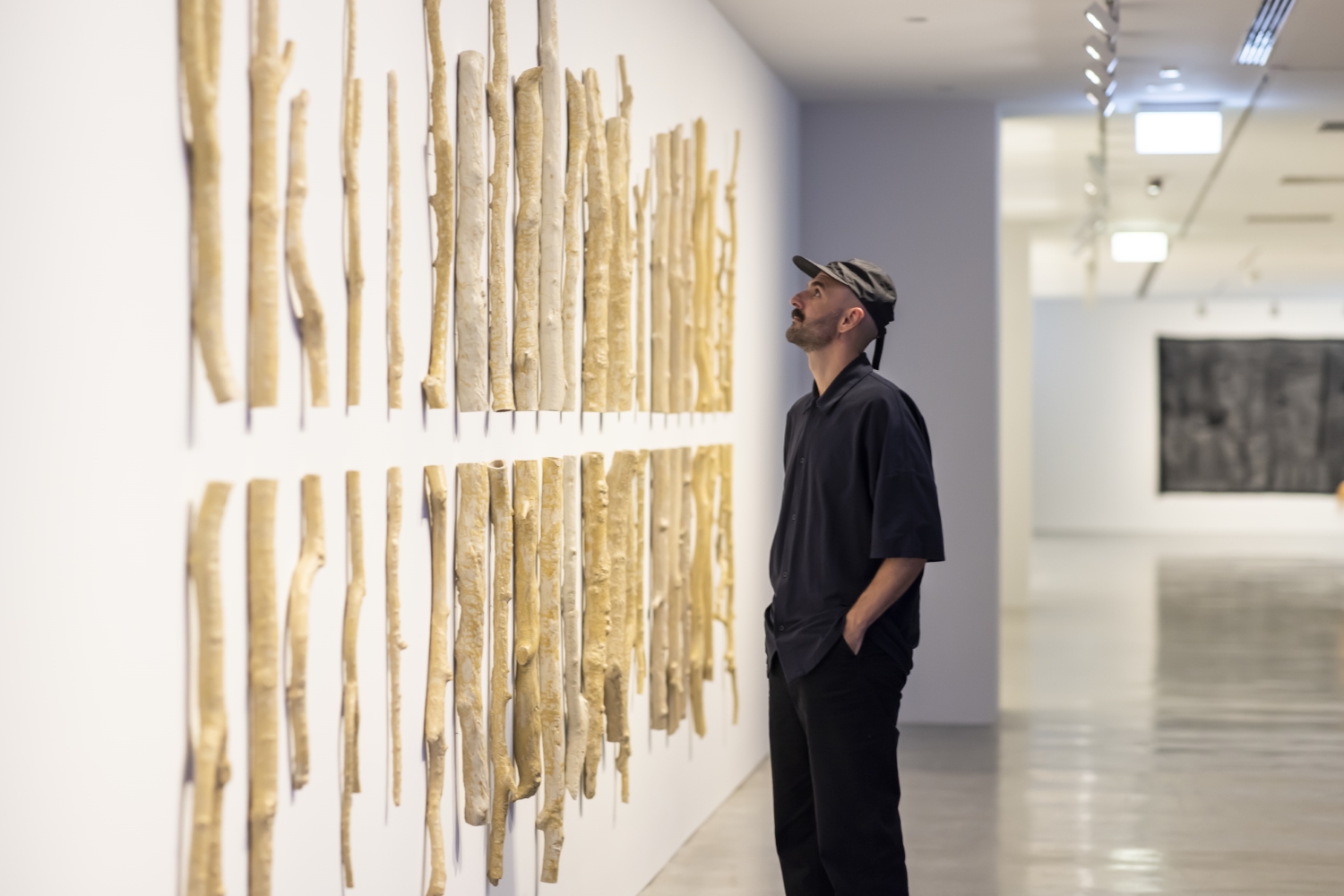
The section is represented by three artists and collectives: Hermannsburg Potters, Yasmin Smith, and Renée So. Smith’s practice, which often engages foraged materials, smoke, ash, and site-responsive processes, expands ceramics into an ecology of environmental encounter. Hermannsburg Potters present a ceramic language grounded in Country, storytelling, memory, and communal making. Renée So’s practice, meanwhile, draws on ceramic histories, ancient forms, and cross-cultural references to reconsider the relationship between vessel, figure, ornament, and identity. Together, these practices open a comparative field in which ceramics is understood not only through form or technique, but through land stewardship, ecological relation, cultural memory, and material imagination.
Within the context of Earth Makes, Focus Australia extends the Biennale’s central question—how the Earth participates in making—toward questions of Country, ancestral knowledge, ecology, storytelling, and the movement of forms across cultures.
Across Three Venues
While the main exhibition forms the conceptual core of Earth Makes, the Biennale extends far beyond a single display. Across Icheon, Gwangju, and Yeoju, the 2026 edition includes special exhibitions, the international competition, the Kids Biennale, markets, artist workshops, talks, and community programs, as well as forums that position ceramics within wider conversations around ecology, media, material research, architecture, design, and future education.
This expanded format matters because contemporary ceramics is increasingly being redefined by its permeability—its ability to move between disciplines, institutions, and audiences. At the Gyeonggi Ceramics Biennale 2026, ceramics is not confined to the white cube or the vitrined object. It appears instead as installation, workshop, moving image, social practice, student collaboration, sensory environment, and public discussion.
Ceramics as Archive, Witness, and Proposition
At its heart, the Gyeonggi Ceramics Biennale 2026 asks a deceptively simple question: what if ceramics are not made by human hands alone, but by the Earth itself? The strength of Earth Makes lies in the fact that it does not impose a single answer to this question. Instead, the Biennale brings together moments in which clay can be encountered as active matter, social witness, architectural memory, ecological record, and future archive, opening a new field of thought around ceramics.
Here, ceramics is proposed not simply as a medium to be celebrated or preserved, but as a way of rethinking the world. How does matter transform? What kinds of relationships unfold between human and nonhuman beings? What stories are inscribed in land? And what kinds of futures are already being shaped by the ways we treat matter and environment? Through these questions, Earth Makes repositions ceramics within the urgent conditions of ecological crisis, technological acceleration, and renewed attention to the politics of land and labour. Ceramics appears here not as a nostalgic medium of tradition, but as a compelling language for thinking about what it means to live on a damaged, changing, and still generative Earth.
In that sense, Earth Makes is not only a title. It is a curatorial proposition about authorship, responsibility, and relation. Clay is no longer simply what we shape. It is also what shapes us—what remembers through us, transforms with us, and asks what kinds of futures we are willing to pass on.
Artistic Director
Daehyung Lee is Artistic Director of the Gyeonggi Ceramics Biennale 2026 and Director of Hzone. He has directed major international projects including CONNECT, BTS and the Korean Pavilion at the 2017 Venice Biennale, and is currently leading large-scale site-specific installations in the Shinan Art Island Project with Antony Gormley and Yukinori Yanagi.
Participating Artists
atelierJAK (Korea/Germany), Birender Kumar Yadav (India), Chang-Ho Kim (Korea), Elena Khurtova (Russia), Hanna Chang (Korea), Hermannsburg Potters (Australia), Junmyoung Kim (Korea), Karla García (Mexico), Kiyoul Cha (Korea), Kleinian (United States), LEE Wan (Korea), Lorie Ballage (France), Maja Quille (Denmark), Megumi Naitoh (Japan), Myung-Joo Kim (Korea), Paul C. (Korea), Renée So (Hong Kong), Scenocosme (France), Seongman Ahn (Korea), Serin Oh (Korea), Seungmo Park (Korea), Sungjae Choi (Korea), Syyoung Kim (Korea), Varvara & Mar (Estonia/Spain), William Cobbing (United Kingdom), Yasmin Smith (Australia), Youngchul Jang (Korea), Youngkak Cho (Korea), and 28 emerging artists from Korean universities.
Gyeonggi Ceramics Biennale 2026
Dates: September 18 – November 1, 2026 (45 days)
Locations:
● Gyeonggi Museum of Contemporary Ceramic Art (Icheon)
● Gyeonggi Ceramic Museum (Gwangju)
● Gyeonggi Museum of Ceramic Design (Yeoju)
Key events:
● VIP opening: September 17
● Public opening: September 18
● Workshops & public programs: September 18–November 1
● Forum: September 19
● Australian Culture Day (Focus Australia-related event): October 11 (exact date TBC)
Contact: contact@gcb.kr