By Cammi Climaco
It’s not often, if ever, that I go to an art museum and see three ceramics shows happening at the same time, but here I am in August at the Everson Museum in Syracuse, NY. It’s been fifteen years since I visited the Everson. They had a basement room filled with glass cases holding hundreds, maybe thousands of pieces of ceramics jumbled together with bad lighting and industrial carpeting. I can’t remember anything in the collection, when there’s too much stuff to look at, I get overwhelmed and exhausted and end up seeing nothing. But today everything’s changed. Foremost, the addition of Curator of Ceramics, Garth Johnson. For the past eight years, Johnson has completely transformed the landscape of ceramics at the museum. The galleries have been shifted, programming promotes ceramics, and they’ve added a working ceramics studio for classes and workshops. This. Is. A. Ceramics. Museum.
A few important things about the Everson, it’s an I.M. Pei building in downtown Syracuse, one of the warmest pieces of brutalist architecture you’ll ever see. The Everson has a hundred-year history with ceramics, with over 6000 pieces in its permanent collection, one of the largest in the country. AND, it owns, not arguably, the most important piece of American ceramics: the Scarab Vase by Adelaide Alsop Robineau. It’s truly glorious. As Robineau was a Syracuse local and all-around badass, the museum acquired thirty-two of her pieces in 1916. Later, in her honor, it started a juried exhibition called the Ceramics Nationals which went on for sixty years. They were the first for American ceramicists. The museum bought work from these shows, expanding its collection into a who’s who of American ceramics. I can talk about Robineau and everyone else in the collection, Maija Grotell, Karen Carnes, Toshiko Takaeusu, Jun Kaneko, Robert Turner, all day but I’m here to talk about the shows.
New Works in Clay: By Contemporary Painters and Sculptors
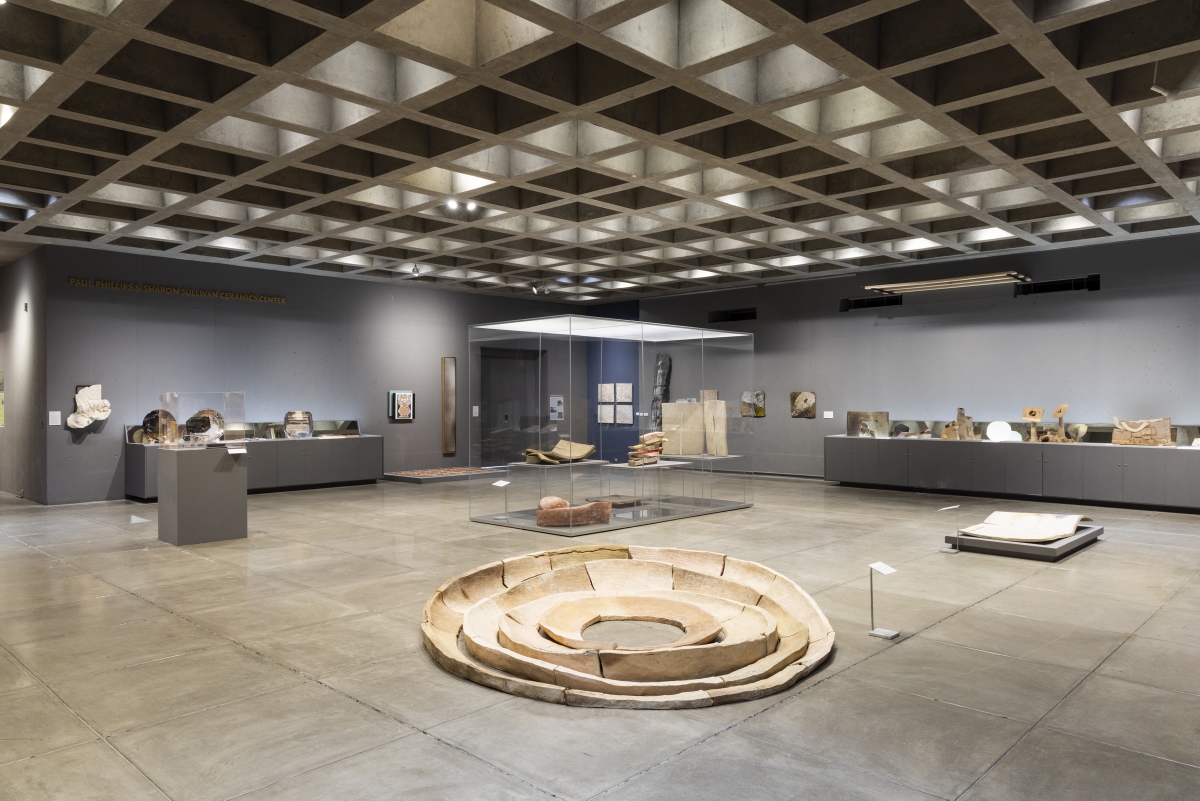
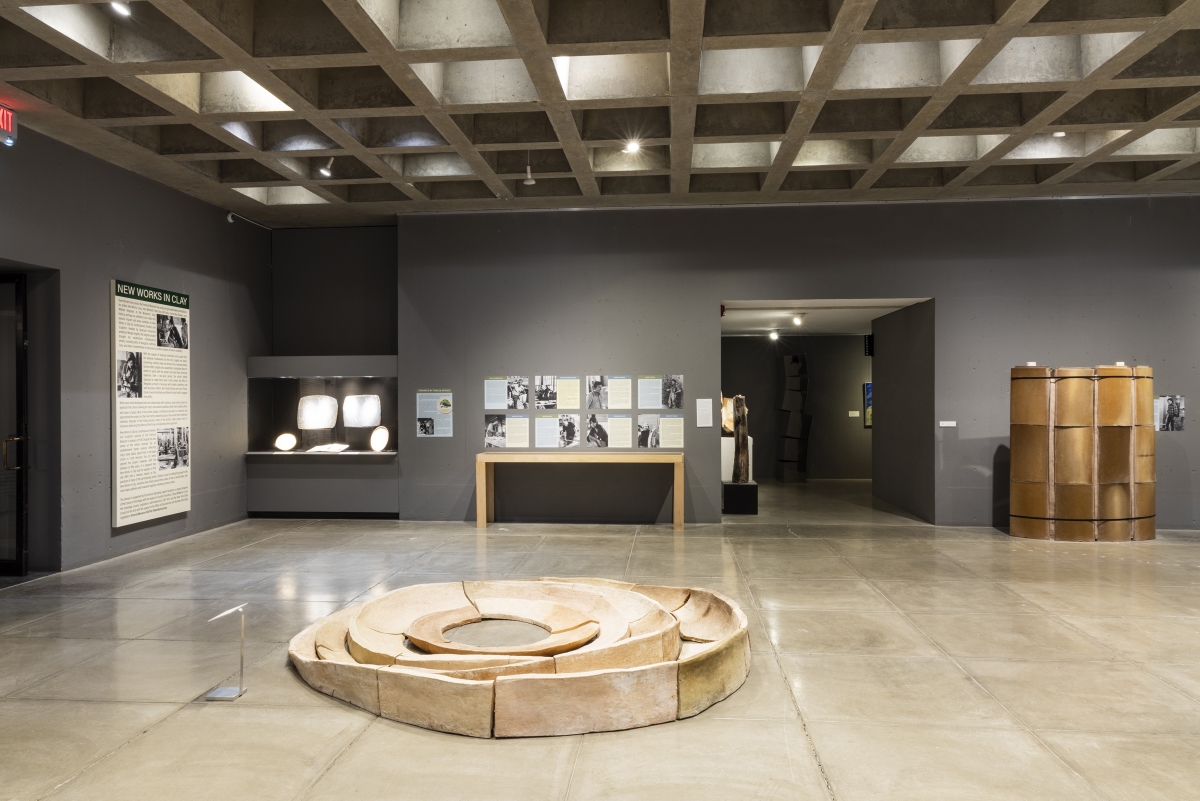
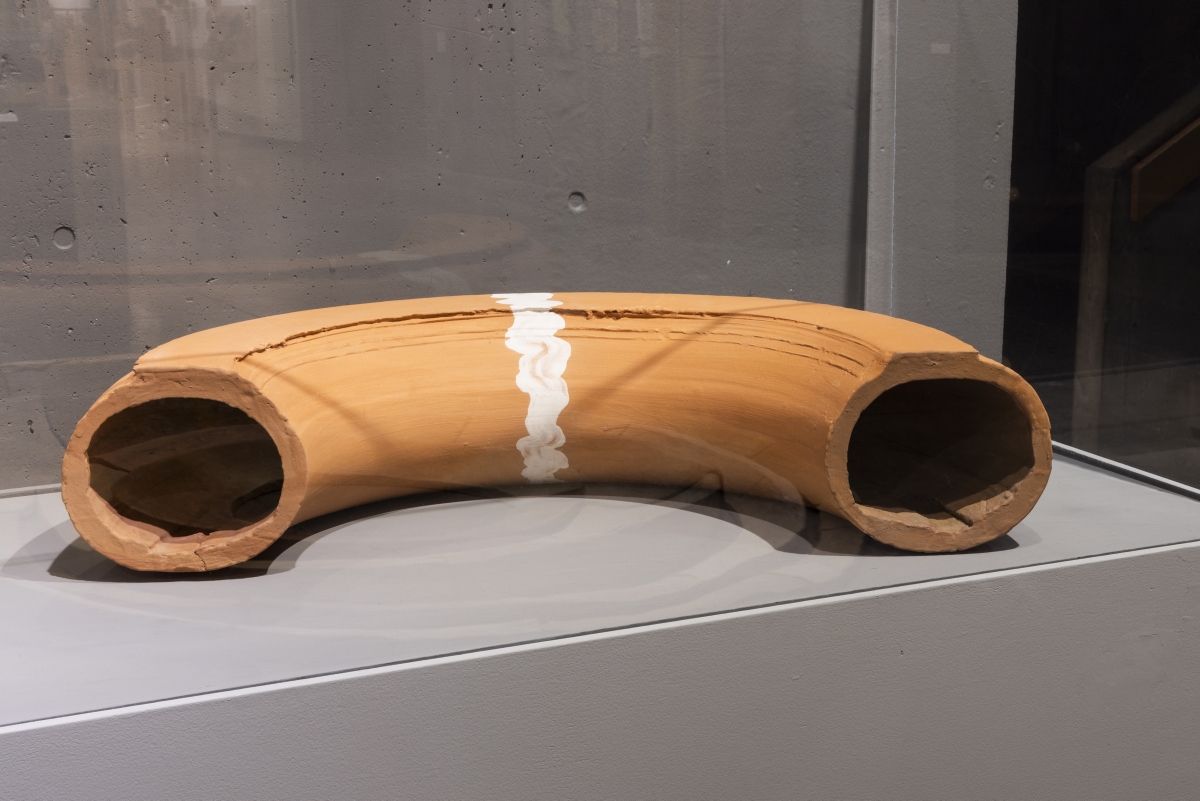
In 1975, the Everson received a National Endowment for the Arts Grant to take an uninhabited can factory in Syracuse and turn it into a ceramics studio. Conceived and spearheaded by Ceramic Artist/Syracuse University Professor Marjorie Hughto, it was designed to invite artists who didn’t primarily use clay to give them the opportunity to create a body of work. At the time (pretty much until sixteen years ago) there was a distinct divide between fine artists, painters and sculptors, and ceramic artists with very little crossover. This residency was meant to bridge that gap. In early 1976, the first New Works in Clay exhibition took place and for the first time in fifty years, Curator Garth Johnson brought the work back together for this exhibition. Artists included Larry Poons, Michael Hall, David Smith, Billy Al Bengston, Anthony Caro and Helen Frankenthaler amongst others.
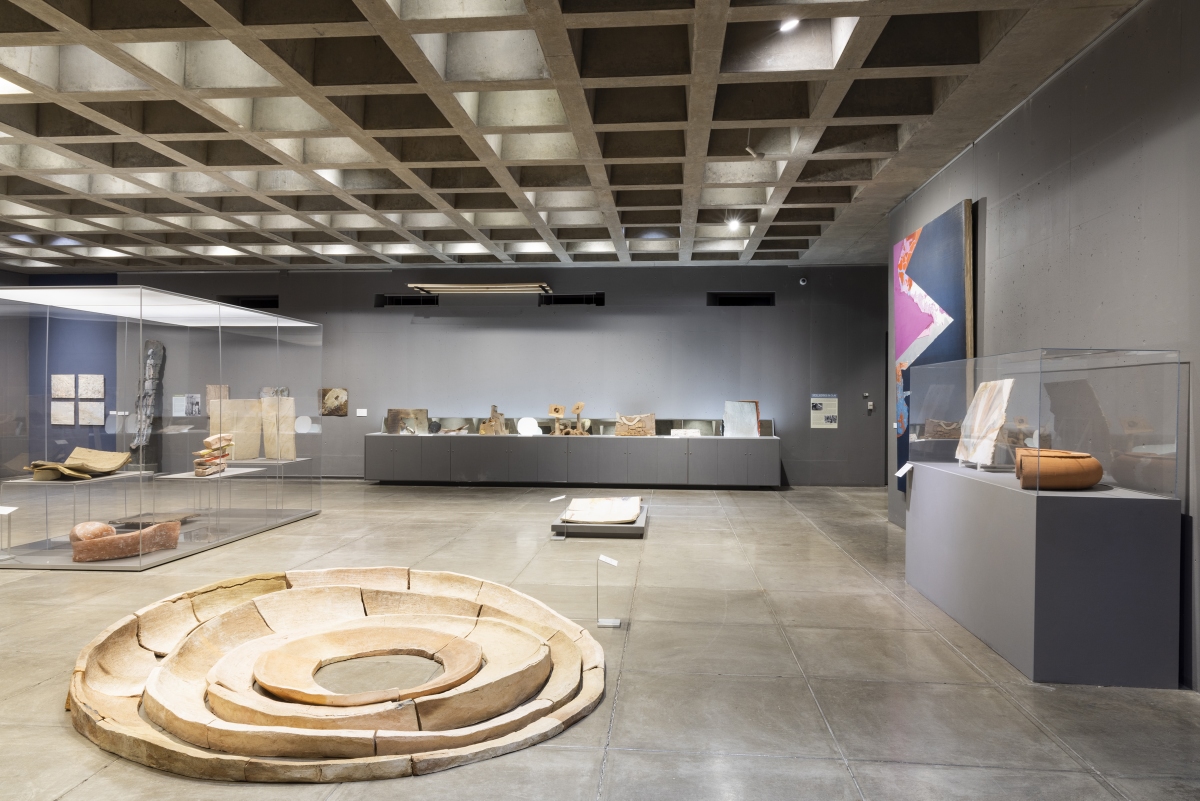
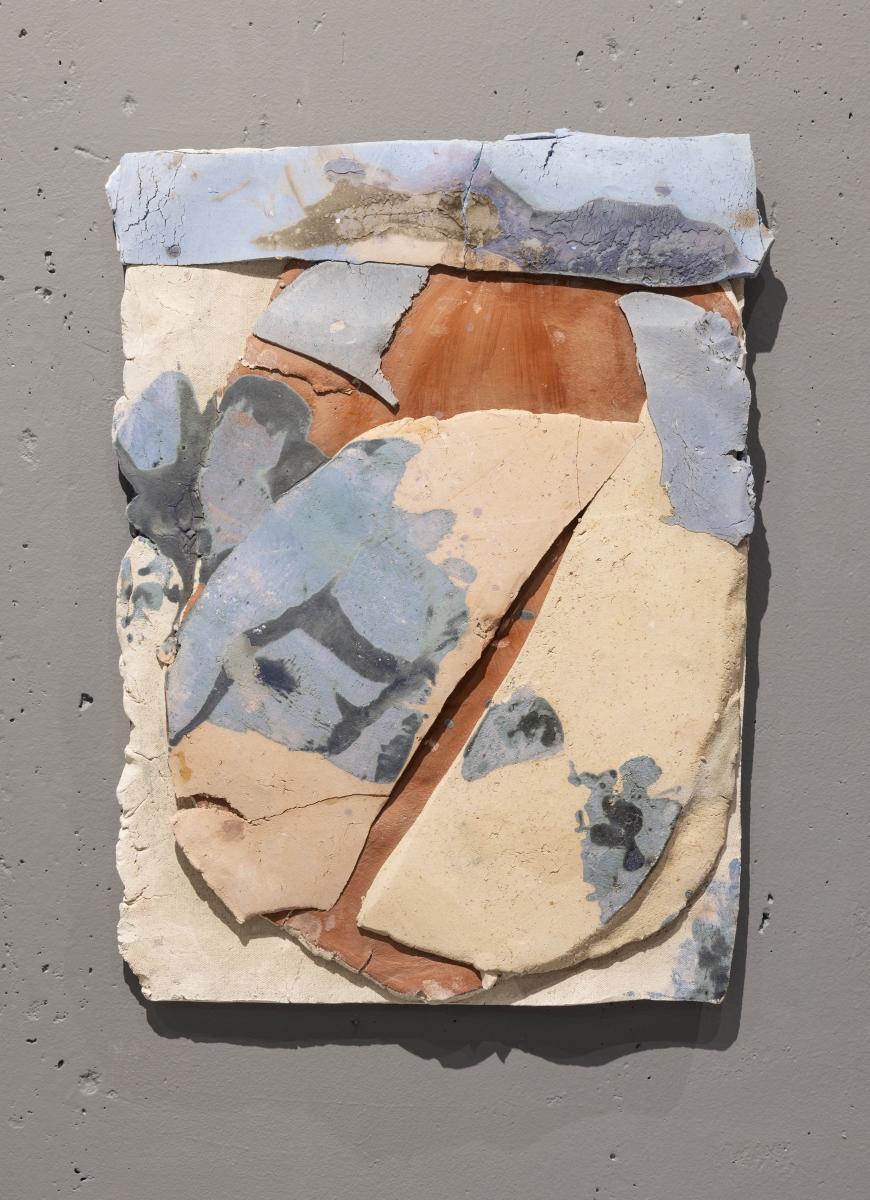
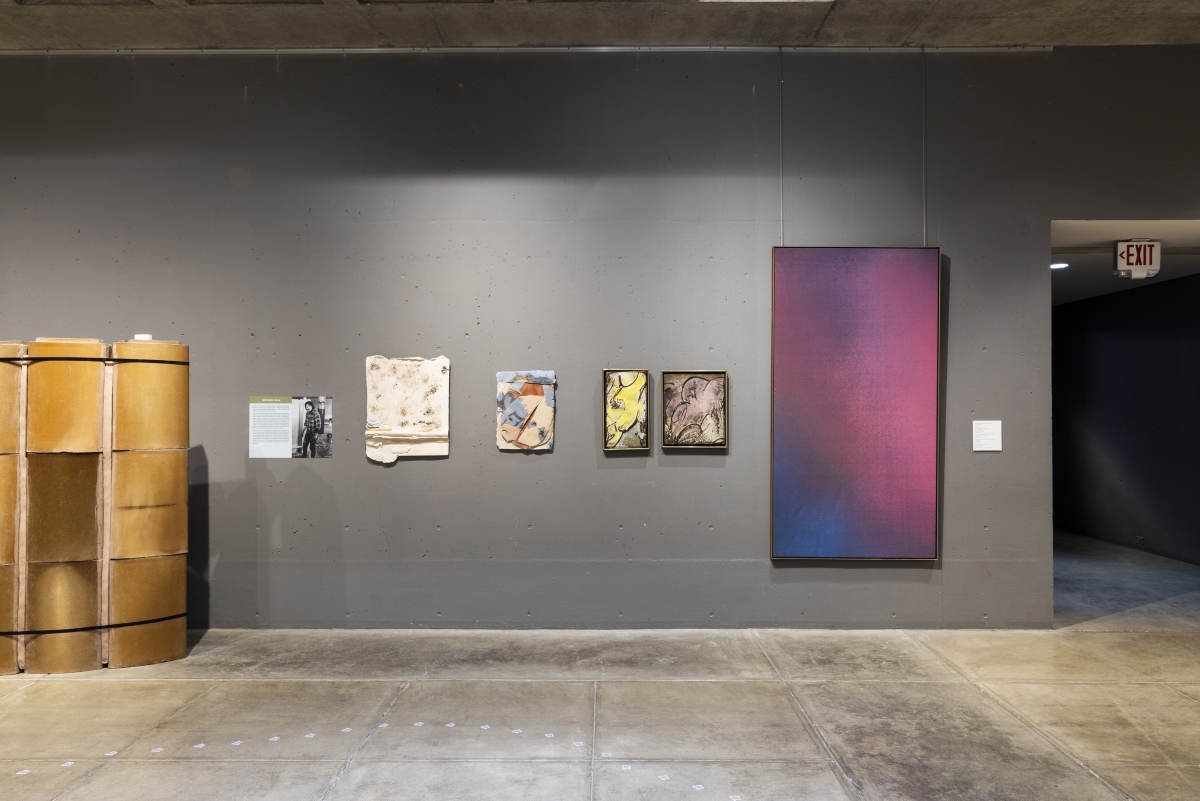
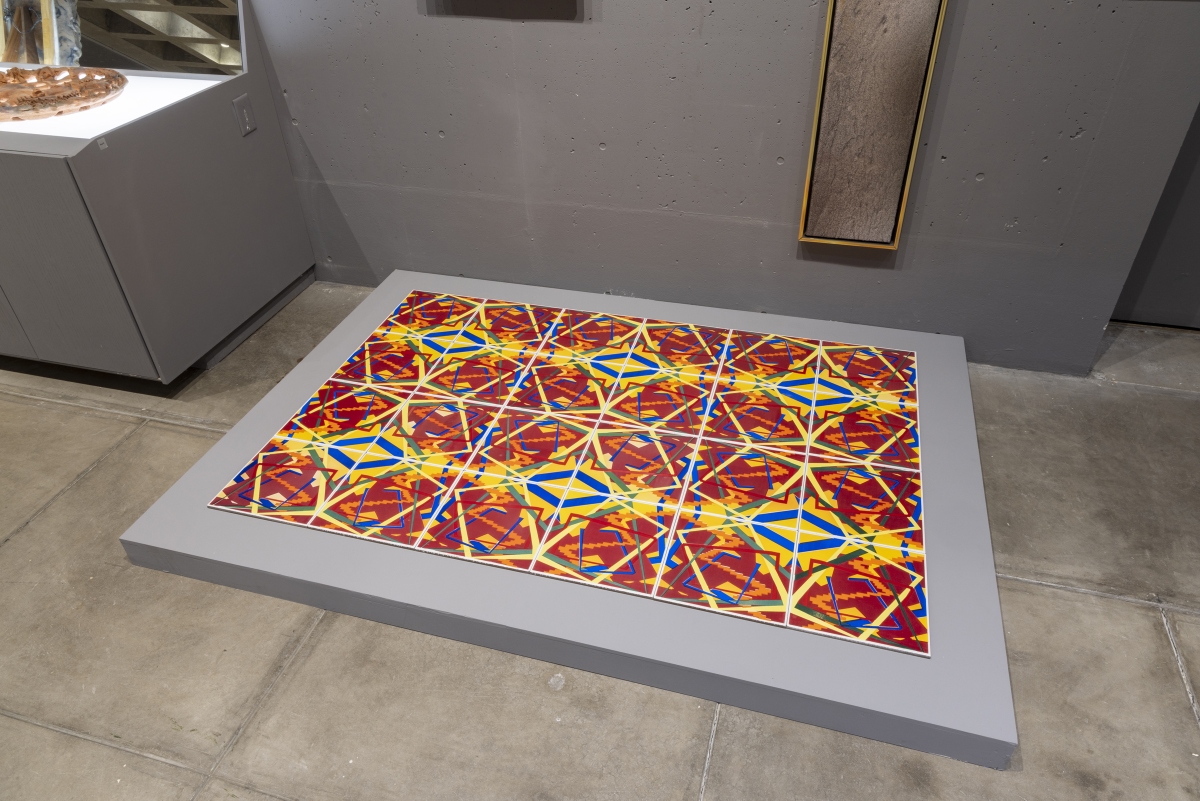
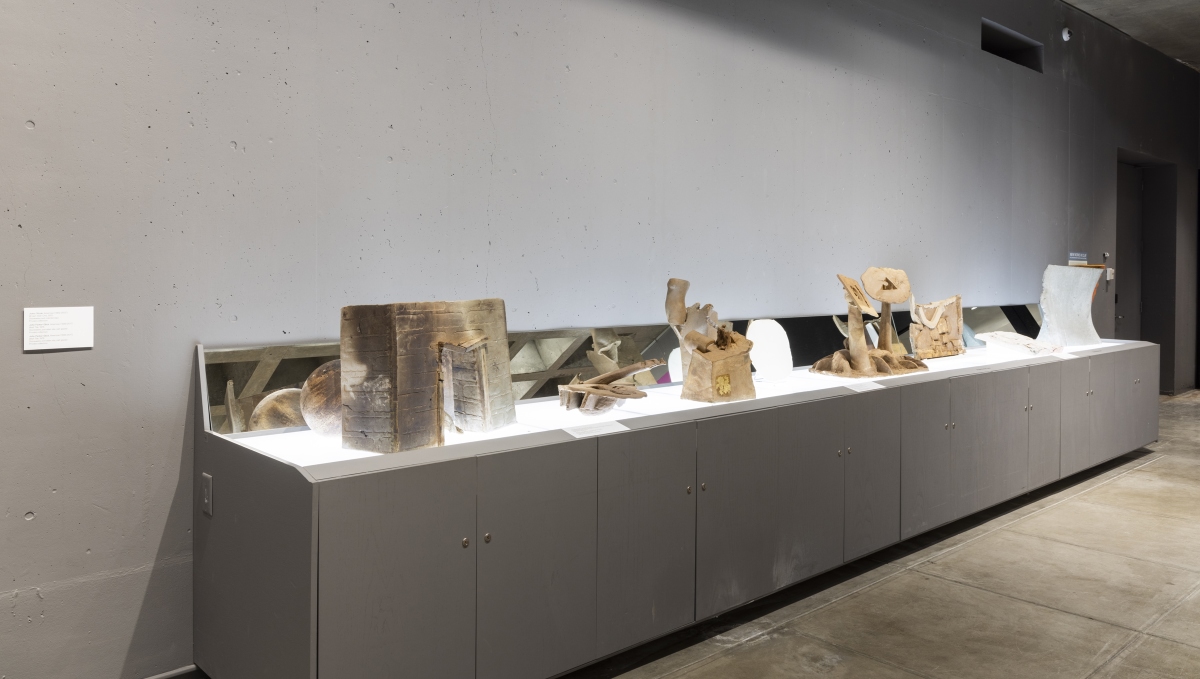
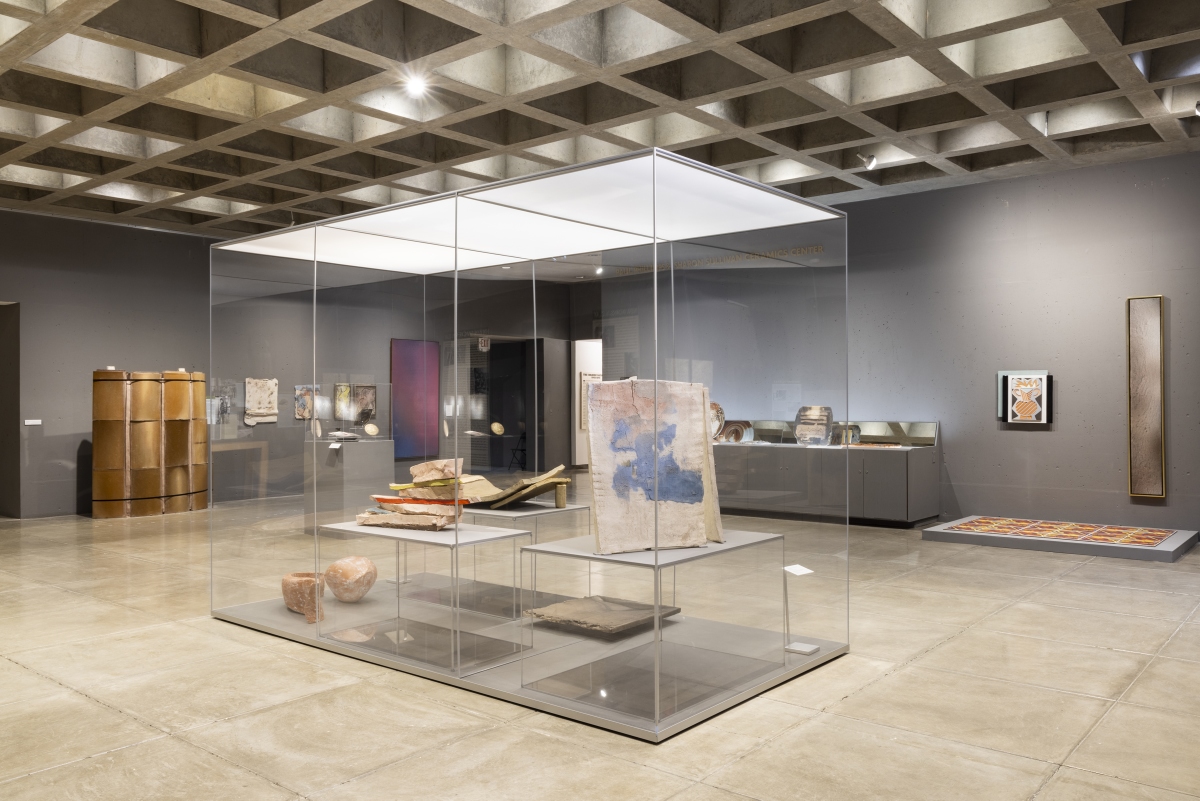
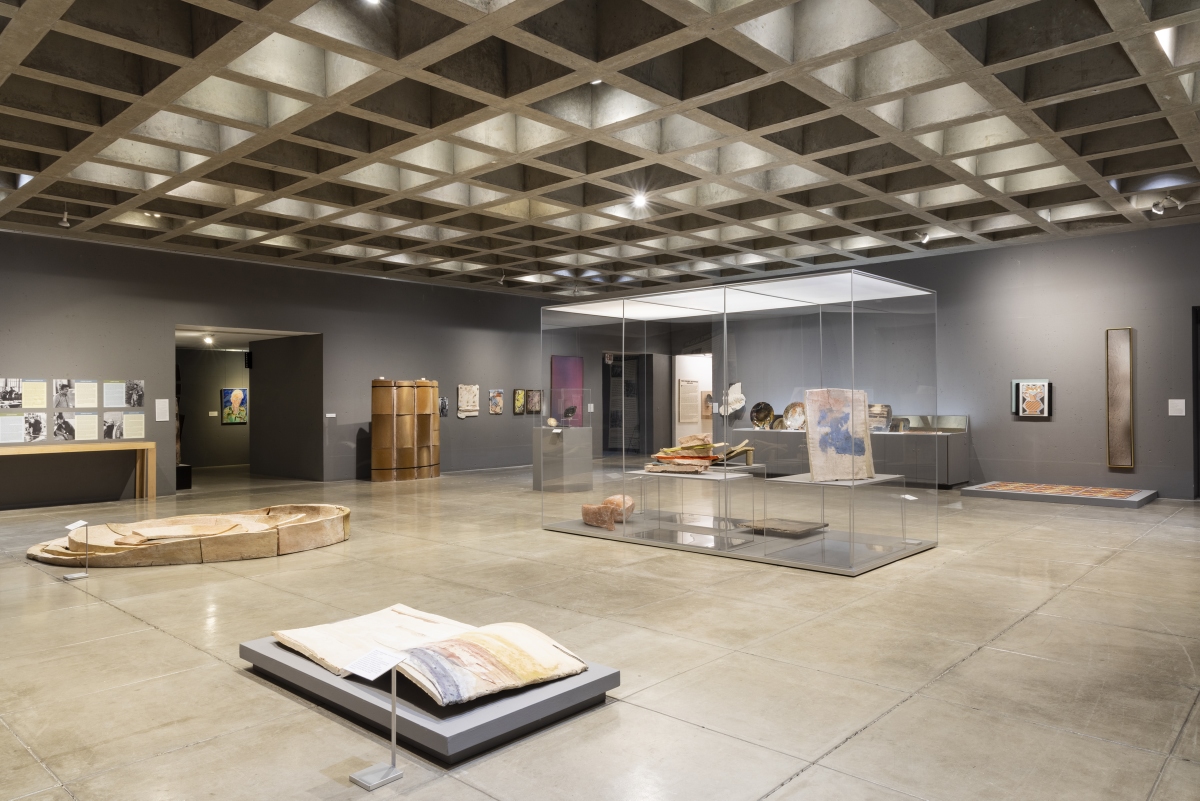
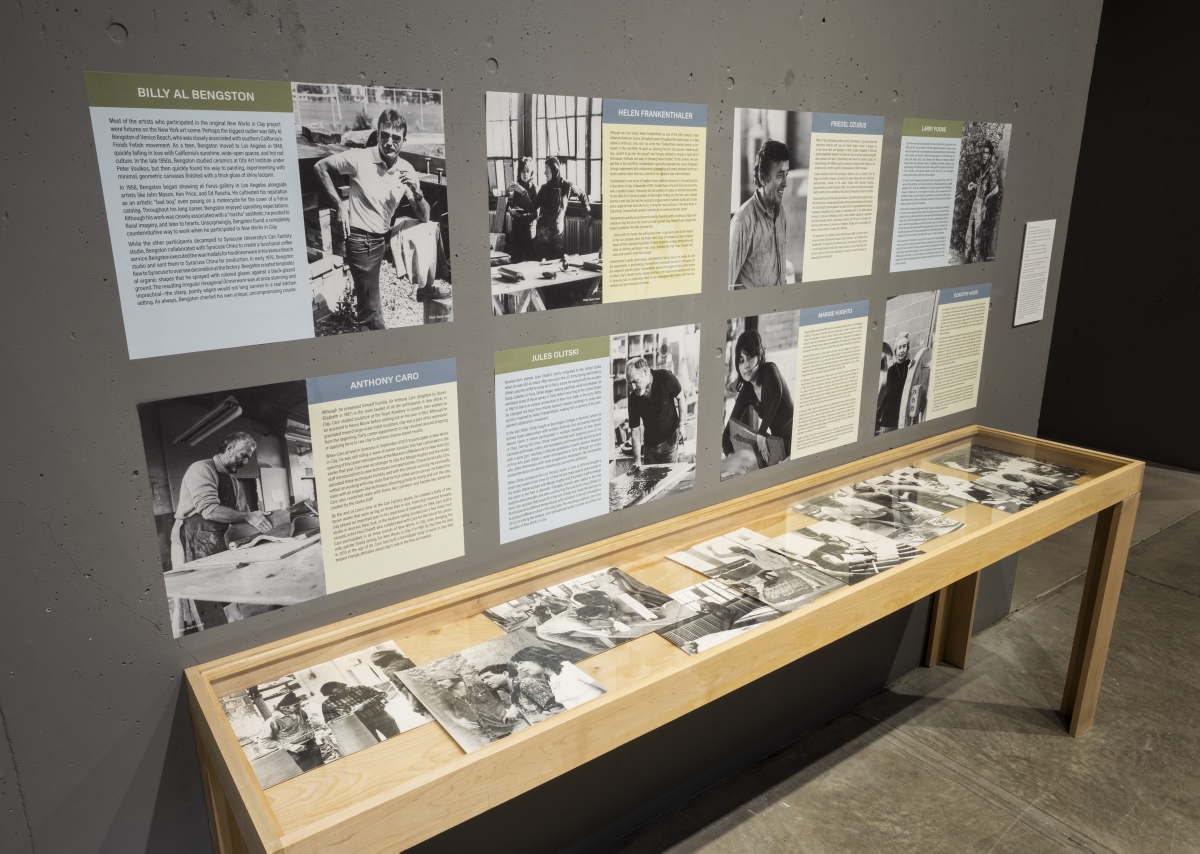
It’s weird to write about work that was made fifty years ago, I was little. But as time works its magic, everything has concurrently changed and stayed the same. While clay was once a material in the background of culture no one would take seriously, ceramics is now a force in the galleries. There used to be a war between art and craft, it was like everyone on earth colluded in a conspiracy that work made of clay wasn’t fine art. It went on for decades. That divide between fine art and craft isn’t really an argument anymore, all kinds of artists use it all the time with reckless abandon, some would argue too much. Not me, not me, just kidding.
This show is a mix of explorations, experimentations and big decisions. As a ceramicist, my first instinct is to deconstruct the pieces and the parameters of the materials. Almost all the work is made with a white stoneware with the addition of colored slips and a suspicious lack of glazes. This could be because it was the 1970’s, land art by artists like Robert Smithson, Walter de Maria and Anna Mendiata was getting a lot of attention so slips would have been a more natural approach and they were hot at the time. Artists in the residency could have been focused on the making, new to learning the properties of a material that can do anything. Or, maybe they just wanted to keep a simple approach for artists who have never worked with clay-to dive in without being weighed down in the chemistry aspect of glazes. Or, of course, budgetary concerns and time constraints. For someone new to clay, glazes can be totally overwhelming. Maybe all of those reasons.
The contrast between what we see in ceramics now is astounding. While we’re watching thirty second videos of coded 3D printing machines dropping slip into colored patterns, glazes formulated to run, and colors, this show feels so analog. There’s a tile piece with some screen-printed tiles, but even those feel pre-computer-aided design.
All the artists chosen for the residency brought a different approach. Larry Poons approached the material like he would a painting, covering a wall with canvas, laying clay on it and building up surface with thick colored slips feeling like a layered stucco wall revealing a color underneath. The wall was then cut into tiles. The lack of a clear glaze in this work was more noticeable than the other pieces in the show, the colors would have really popped. But, there’s something in the natural clay that’s endearing, the absolute lack of technology gives the tiles a sense of humility. His oil paintings are vibrant, active and full of color, without that color, the depth of the surfaces is where all the drama lies. They felt a little like Death Valley, like this is Larry Poon’s work in an alternate universe. Apparently, this project changed how he approached surfaces in his painting practice.
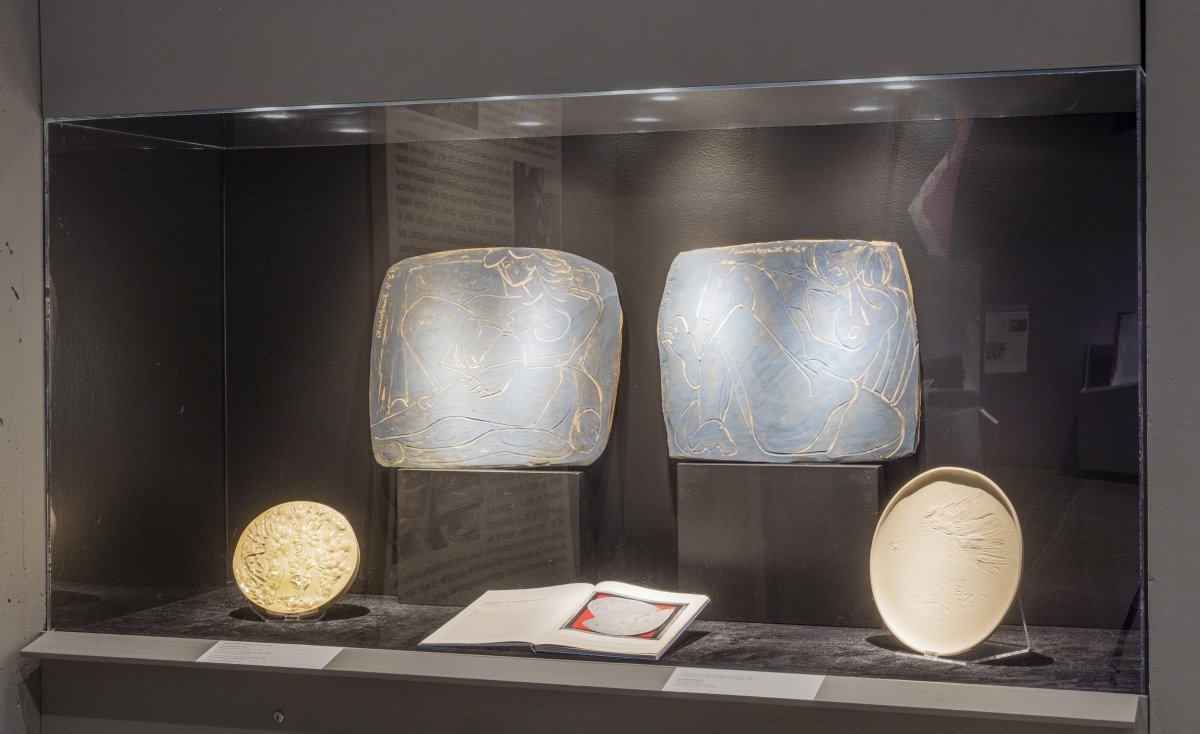
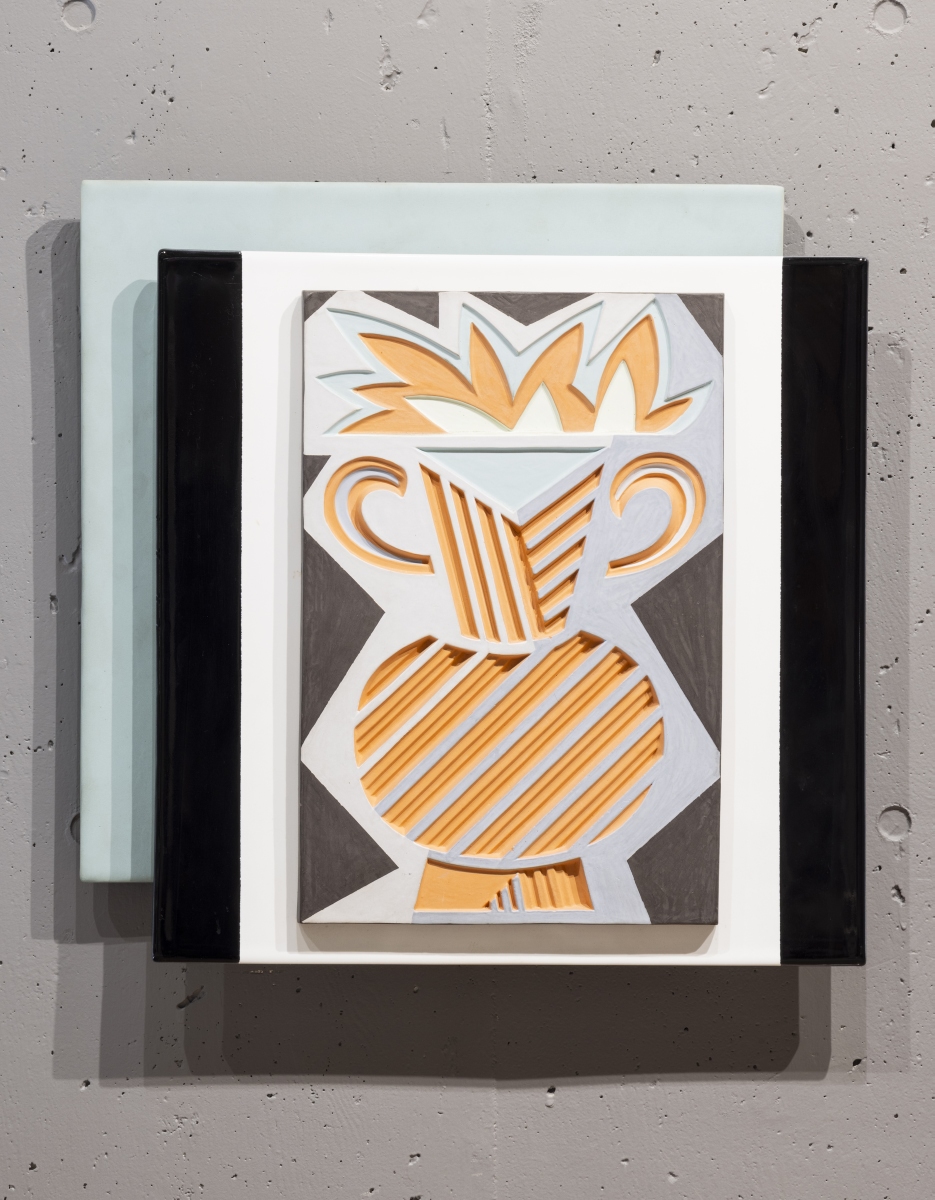
Helen Frankenthaler’s pieces are perfect, some of the few which have glaze. Known for working her giant canvases on the floor, she’s taken big slabs of clay, bowed them then dragged quiet, thin layers of colors across the surface, typical of her paintings. You can see the Helen Frankenthaler you know and love. Can you tell I’m a big fan?
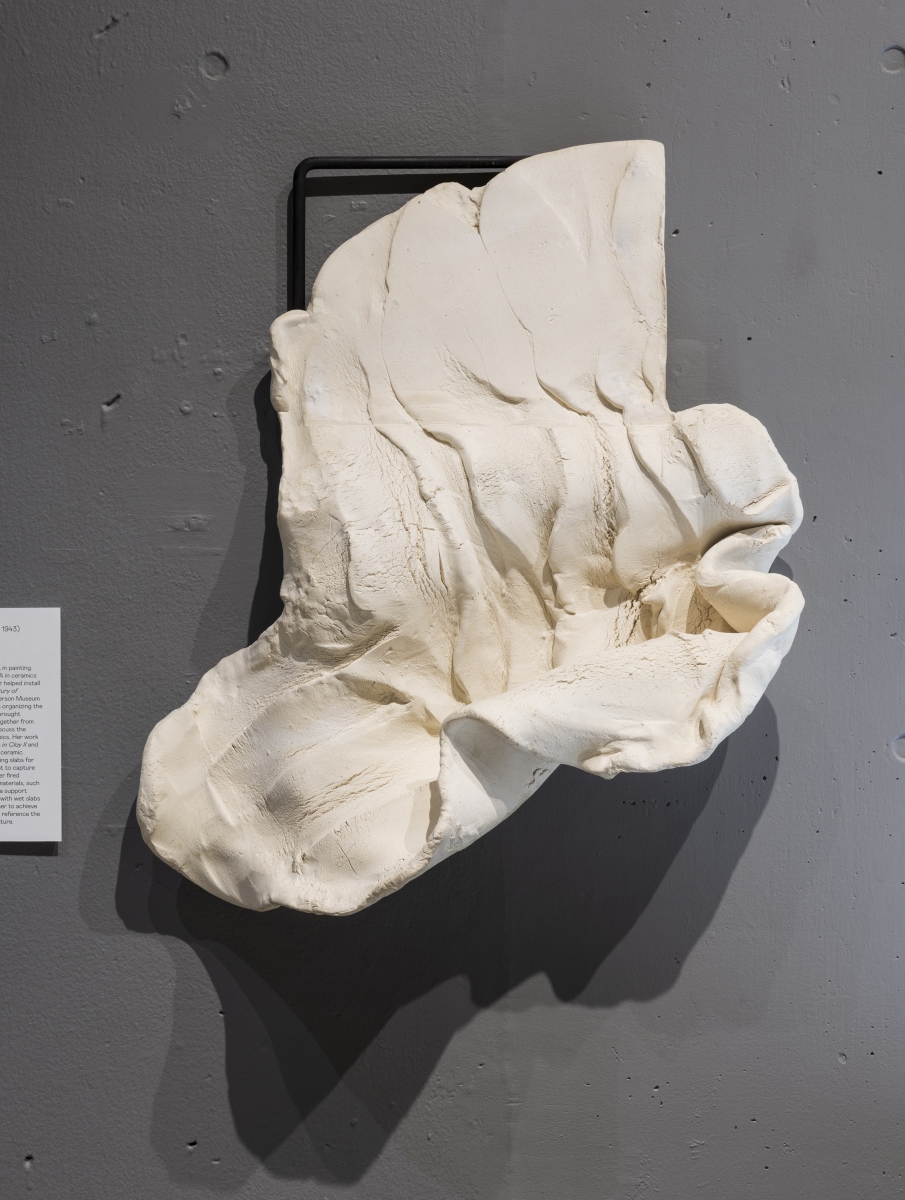
Anthony Caro’s approach to the residency was material based. Caro, originally from London, was at one time an assistant to Henry Moore. He’d worked with oil clay for casting bronze but never clay as the end material. During the residency he really tested, pushed and learned what clay can do. And his slab piece in the show reflects that. It’s bent, folded and propped like a thick frozen piece of paper.
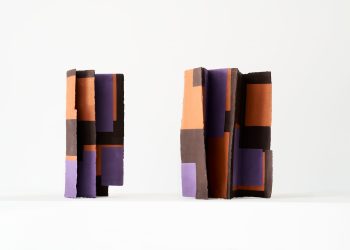
Painter Friedel Dzubas’ piece in the show was one of my favorites. A slab, ripped edges visible, was stacked with shiny glazed smooth edged pieces, still in the bisque state. It feels like he had to make a choice, you either get the color from the glaze or you get mature clay and he chose color. In the 70’s the only way to get the color in glazes was low fire, so it makes sense. The colors satisfyingly hit the edges. While I’m annoyed they’re in bisque, these are actually some of my favorite pieces in the show. They are making order of the material, they are putting math on chaos to me. I love it.
Billy Al Bengston’s dinnerware was quietly standing out. Bengston, once a student of Peter Voulkos, was one of the few artists in the show who had worked with clay before. Normally a painter, Bengston designed a dinnerware set and worked with Syracuse China Corporation to realize the project. It had all the painter’s brush marks, making the pieces both design and canvas.
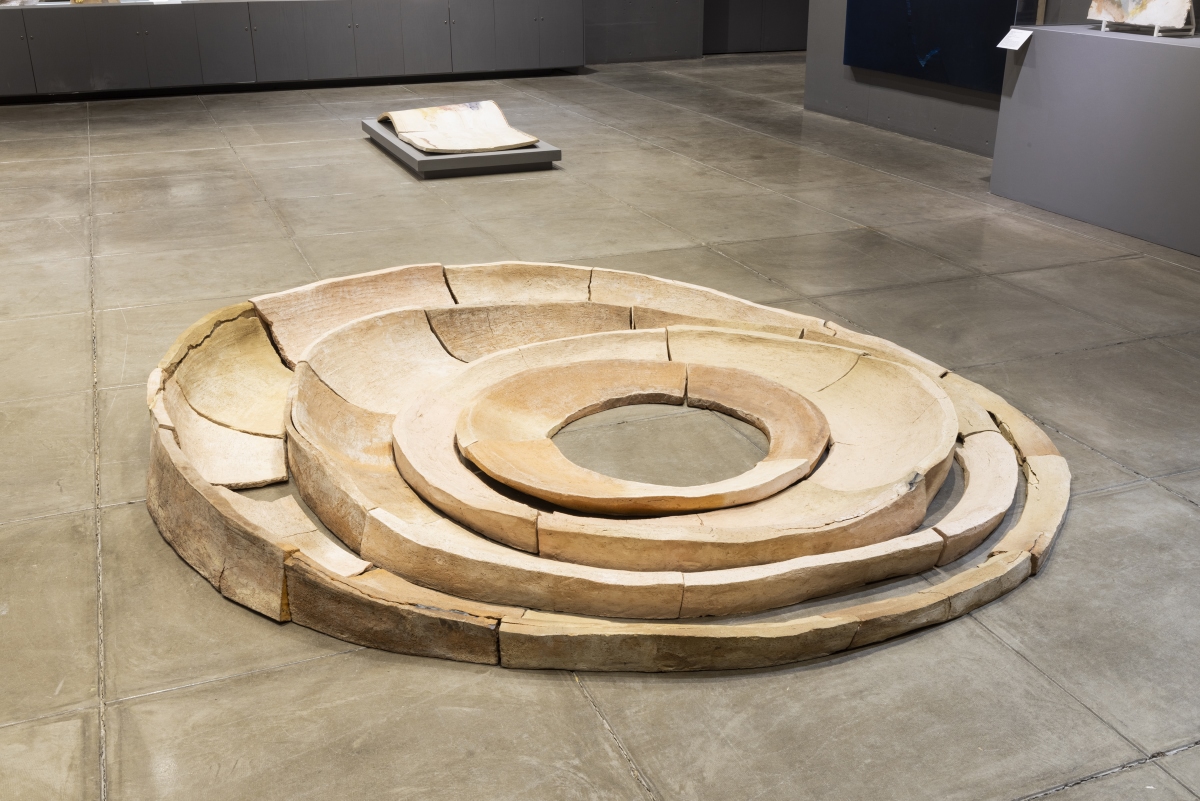
Back to Land Art, painter Jules Olitski’s work in the show defined the era to me more than any other work in the show. It reminded me of Spiral Jetty and, in a more modern way, the ramps at the parks for Razor scooter riding. The concentric circles with the cuts create a sloppy sacred geometry. The spiral feels like architecture and nature at the same time.
Nanni Valentini: Interspaces
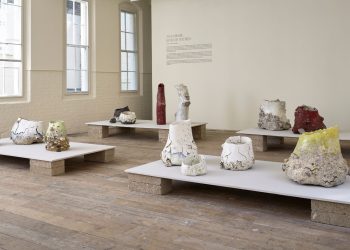
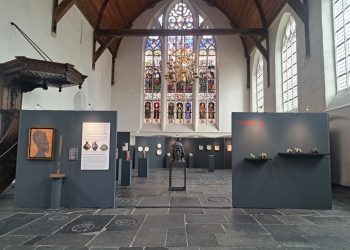
After spending time in the New Works show, Nanni Valentini’s work was refreshing, even as some of it was made in the same era. Valentini was an artist who understood clay. Valentini was born in 1932 in Sant’Angelo in Vado, Italy. He first trained in ceramics but inevitably attended the Academy of Fine Arts in Bologna (where he took classes with Morandi) to study fine art. Valentini died in 1985. It’s so fun to walk into a space and think, what is happening here? What am I even looking at?
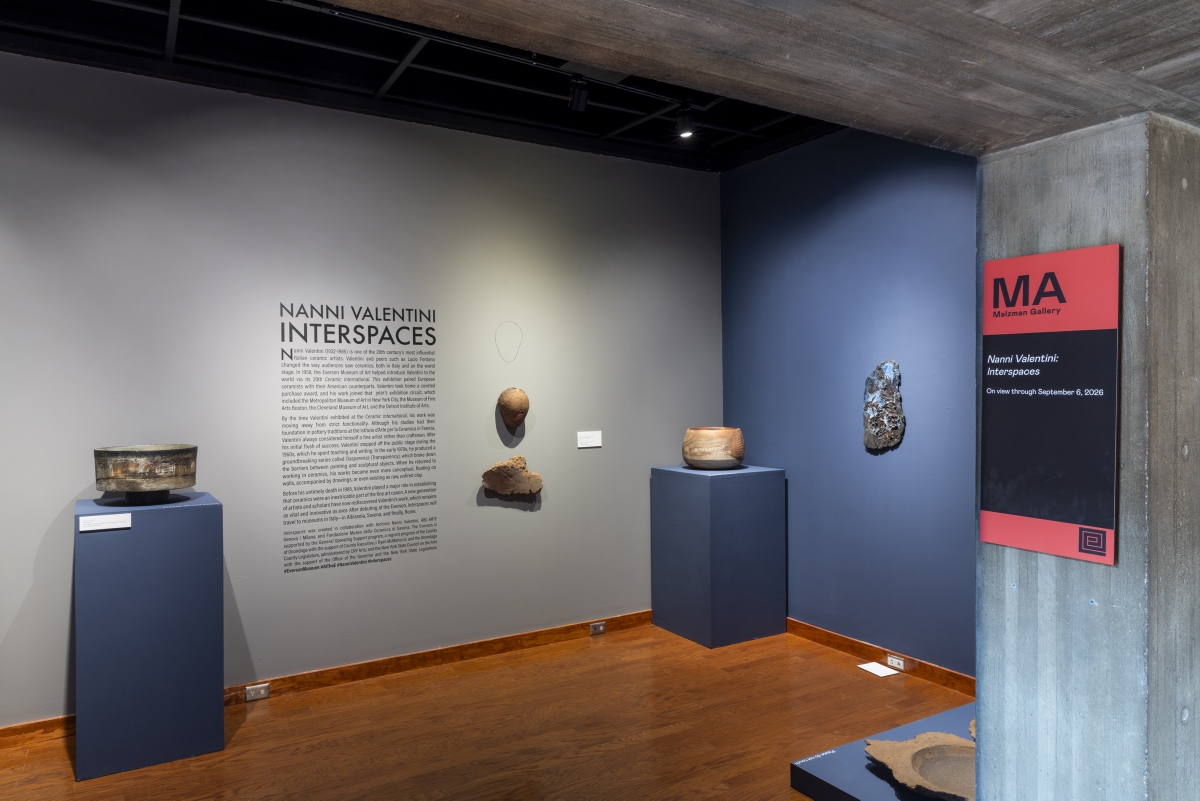
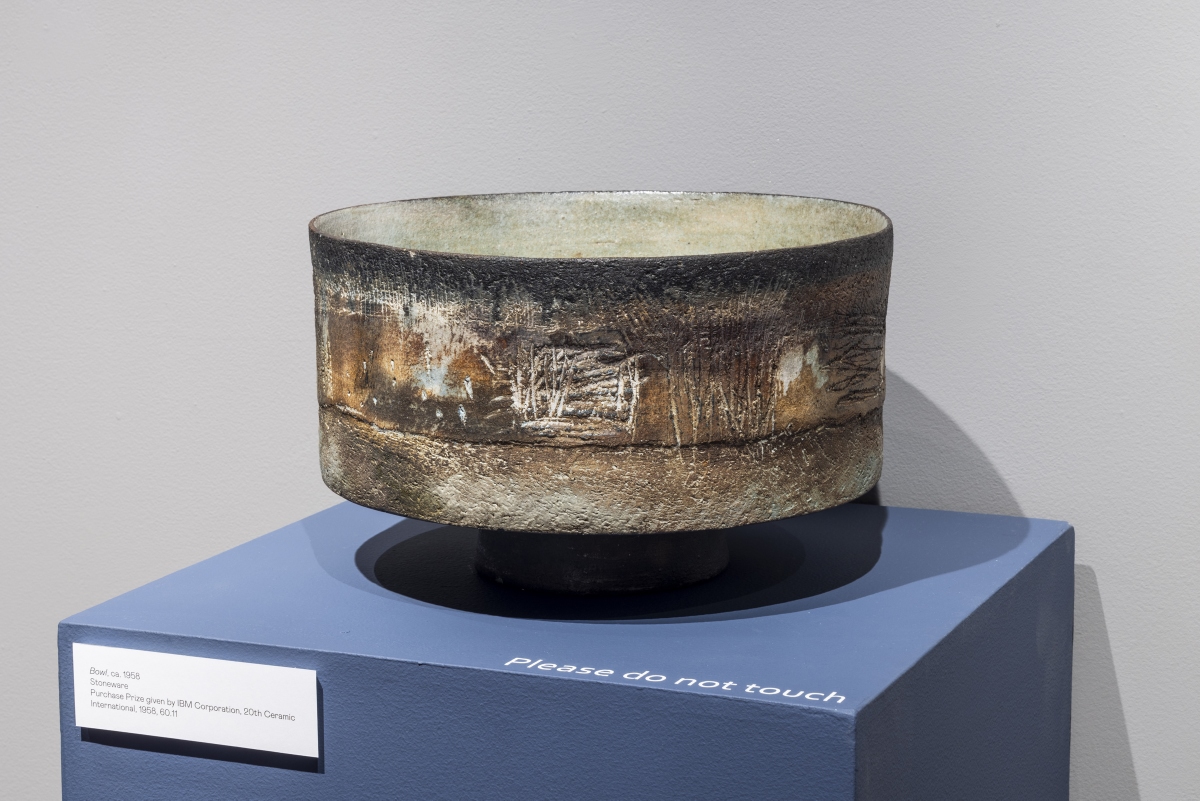
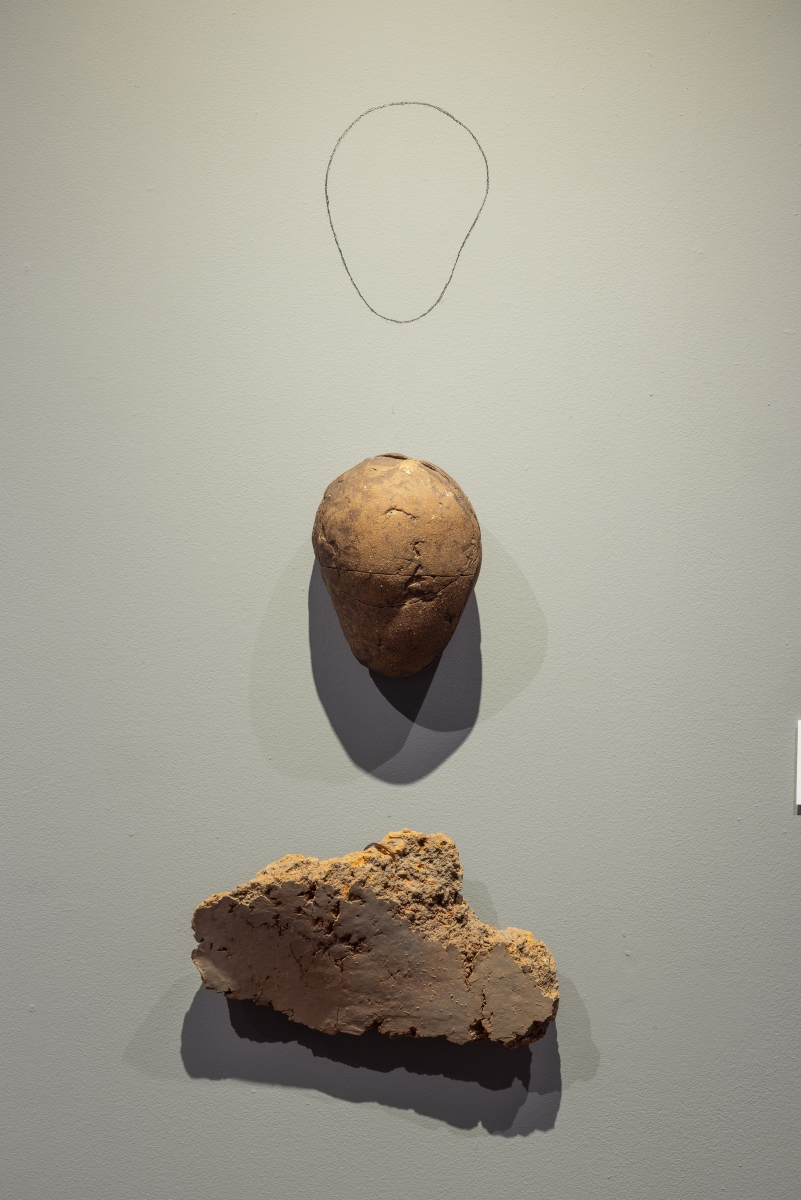
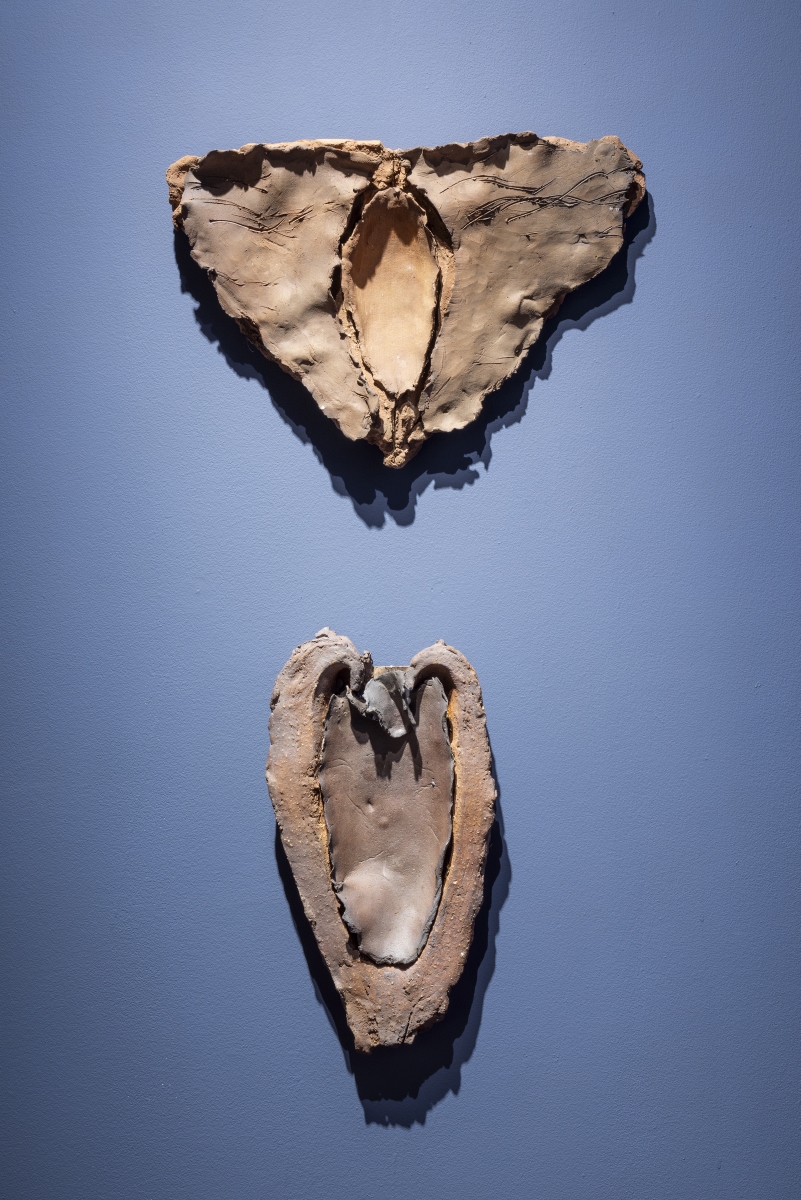
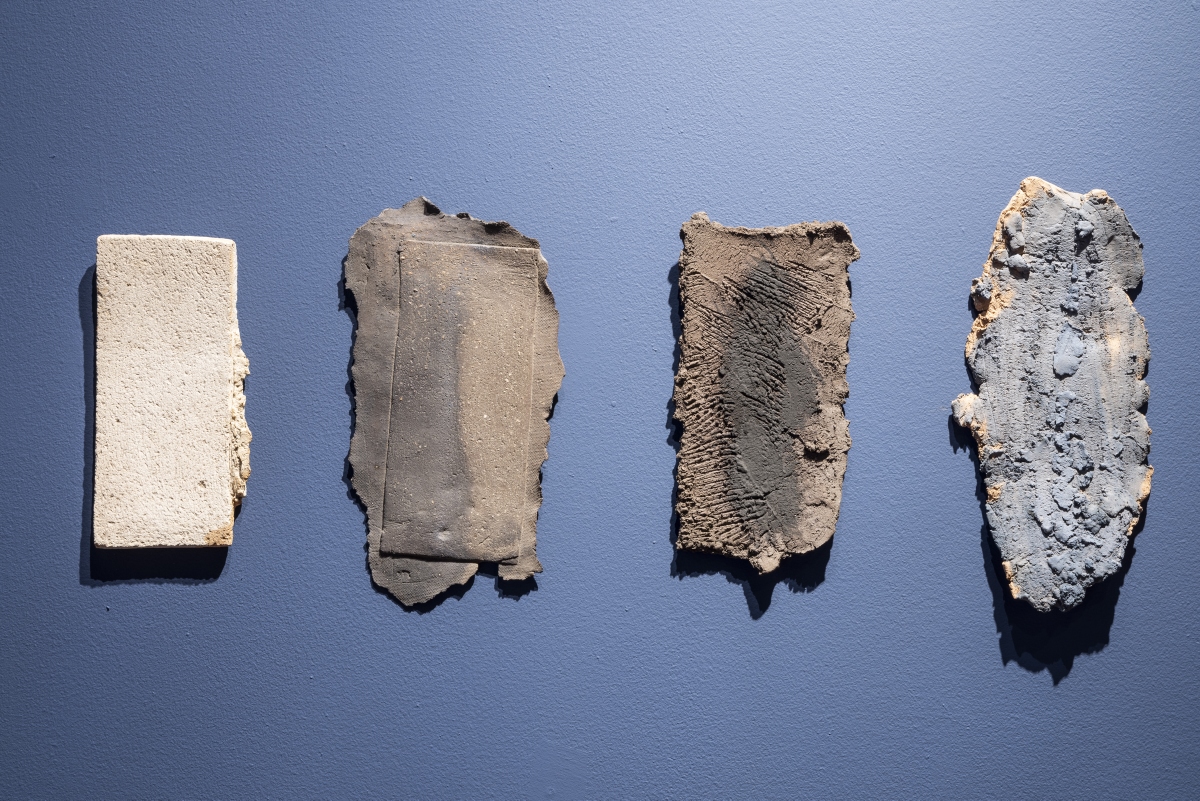
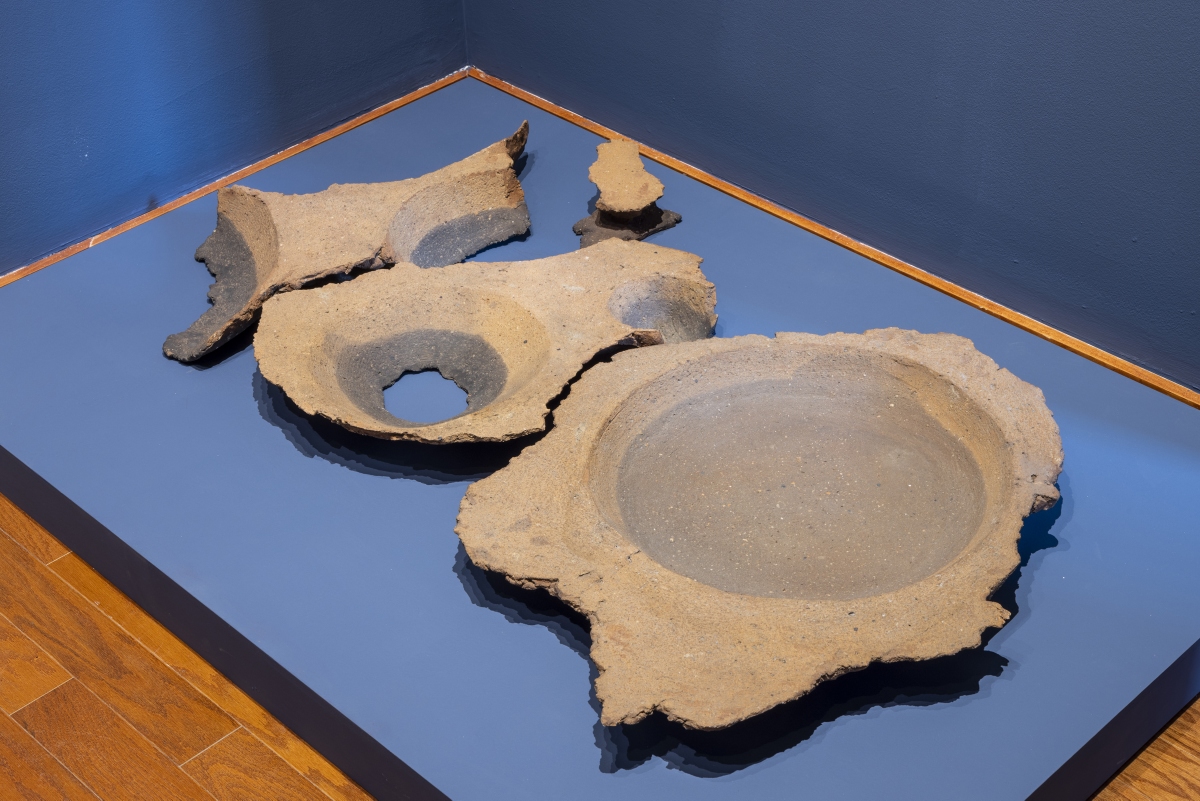
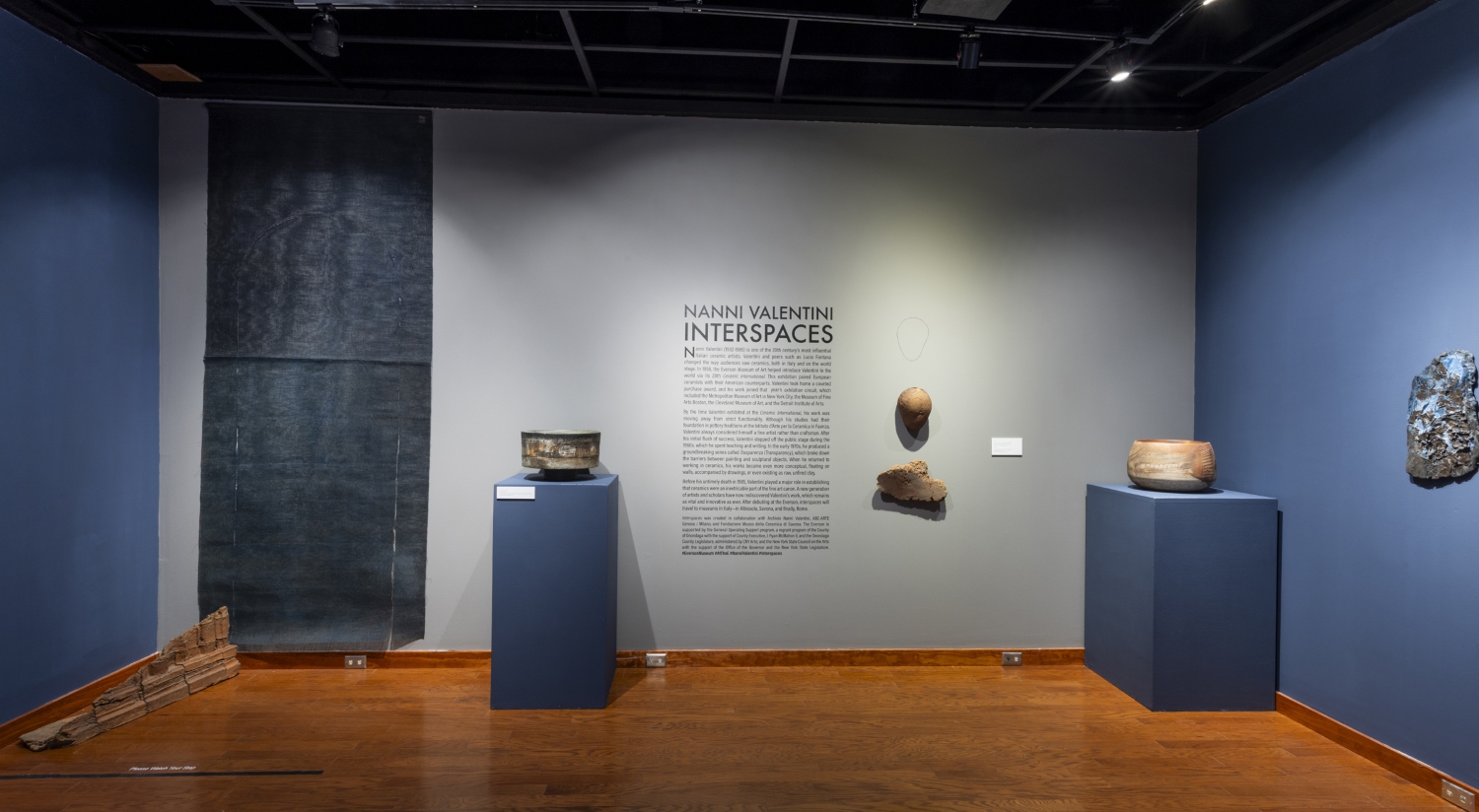
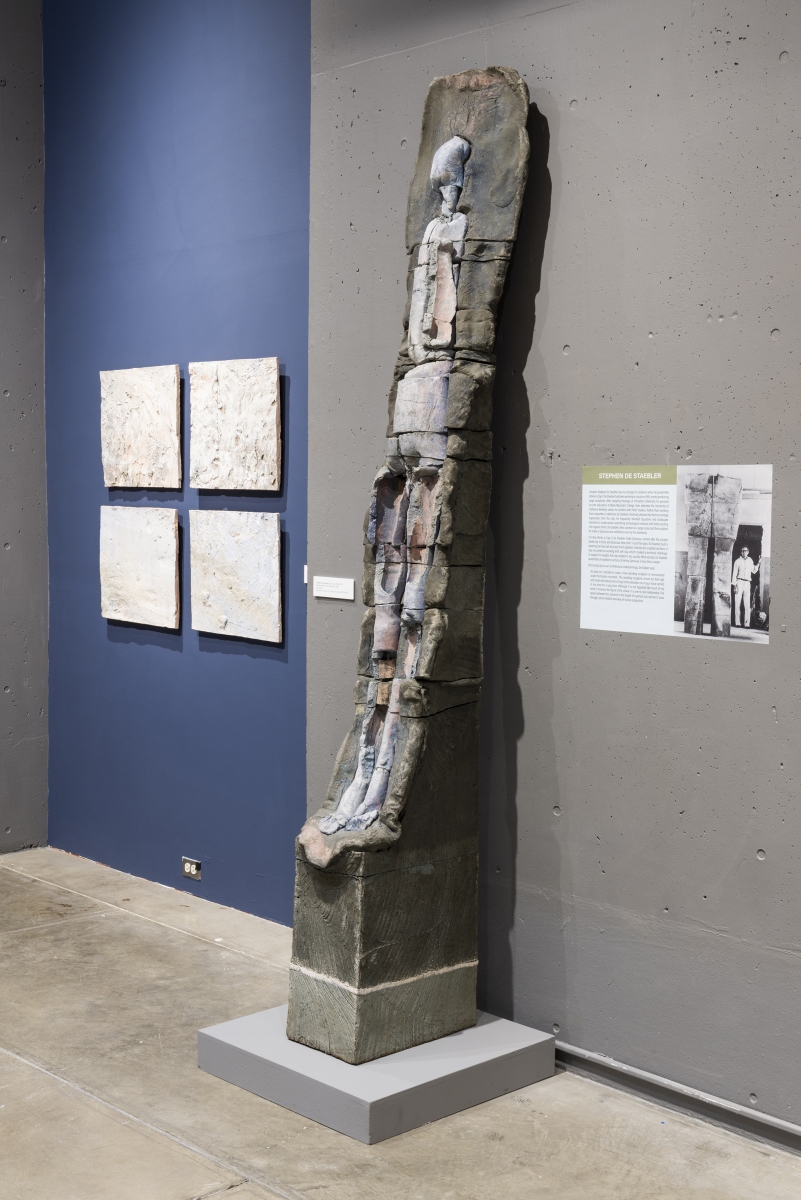
Back in the old days, a lot of people who made pottery thought that if they wanted to be taken seriously as an artist, even if they made the most beautiful pots, they would have to make sculpture. The pieces on display show just that. The first piece that stood out to me was a footed bowl with a skirt that felt like armor. Its form is a classic example of Midcentury Modern ceramics. The shape was painted, burned, smoked and scratched. I love when you can see the artist moving across the surface of a piece, deciding which mark to make, how deep to scratch, as a form of communication, a language. It was just on that cusp of looking like an ancient alien object.
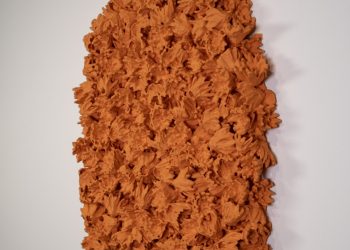
As Valentini aged, it feels like his work changed and became about an inner understanding of existence, rumination on earth, life and materials. My favorite piece was Trasparenza (…e del cielo e della terra), 1979-80. It’s a glowing indigo-dyed gauze panel with the grid of the warp and weft, with thick, harder lines creating soft geometric planes. Next to it was a piece of terra cotta architecture looking like it was found in a dig from the Roman Empire. It was a match between the ancient materials versus the poetry of constantly looking back to look forward.
In Valentini’s work, you can see an artist reaching for the form, the surface and emotion simultaneously. The pieces are assertive, not aggressive, with a quiet power. They feel somber. I’m so happy I got to see this show and learn about Nanni Valentini, I’ve got a bit of a crush on him really.
Renqian Yang: Neither Here Nor Elsewhere
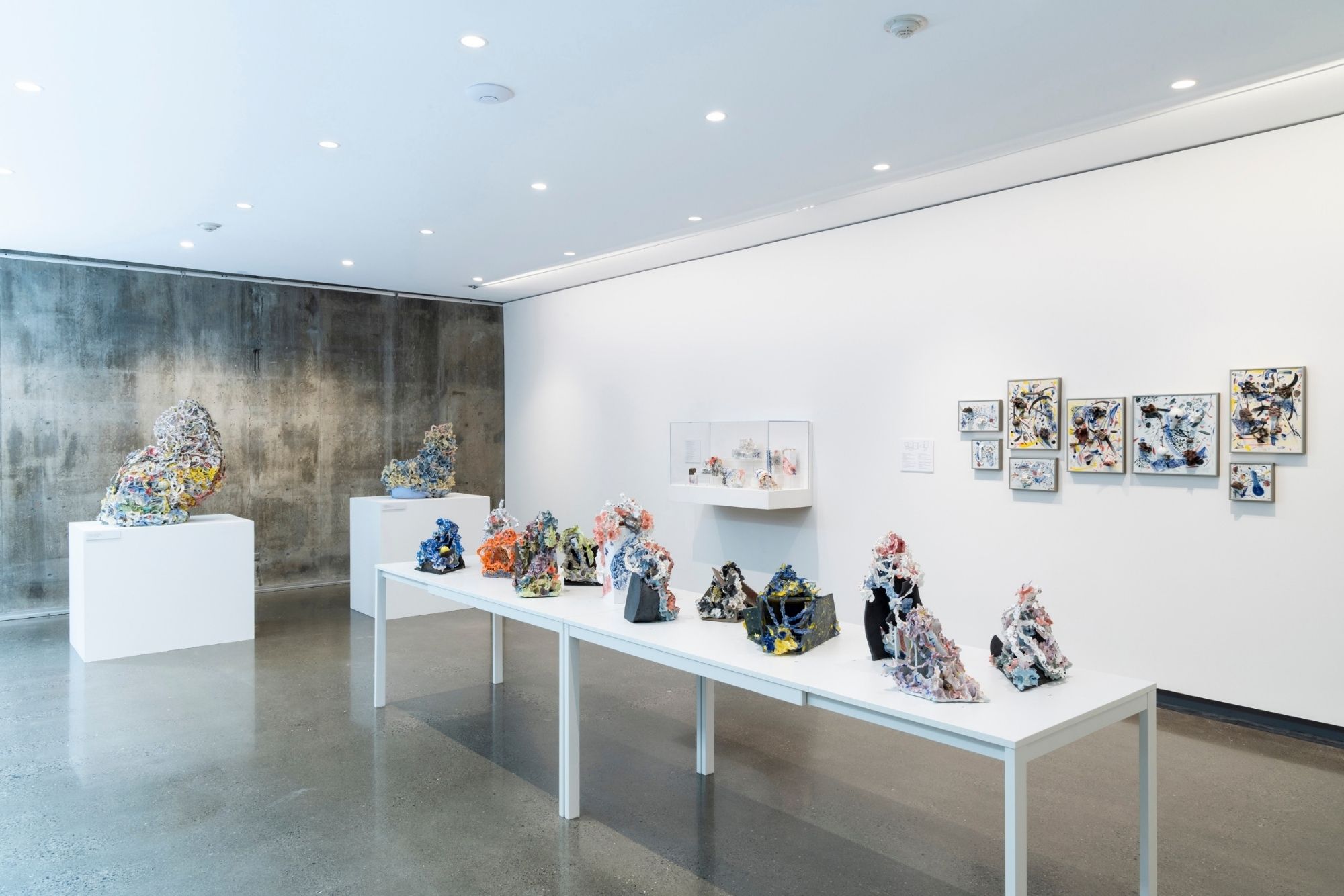
There’s nothing more joyous than walking into a room full of porcelain. The amount of effort it takes to make it happen, thousands of years of material research, mining, mixing, your personal material research, testing, making, glazing and firing is extraordinary. Any artist who uses it as their primary material is incredibly brave. It’s temperamental, it’s expensive and could turn on you in a moment. Renqian Yang uses it with alacrity in this show. Yang is a Chinese American artist who lives in Oswego, New York. The pieces in this show, all porcelain, were produced in three separate studios: her studio in Oswego, STARworks Ceramics in North Carolina and the Jingdezhen International Studio in Jingdezhen. Because porcelain is the rarest form of clay, it feels important to the narrative.
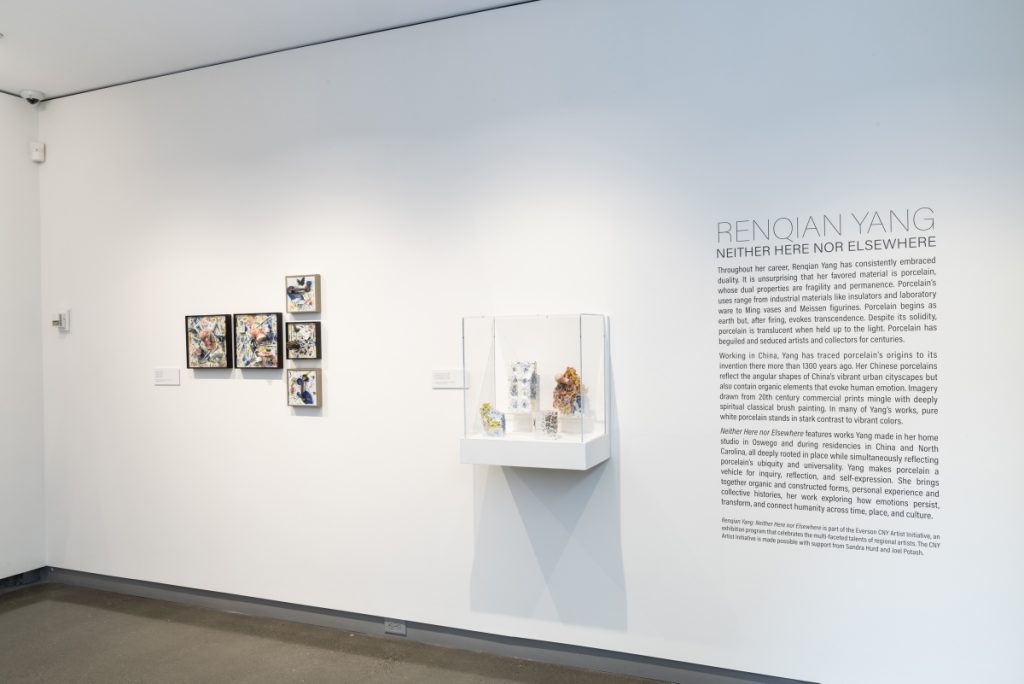
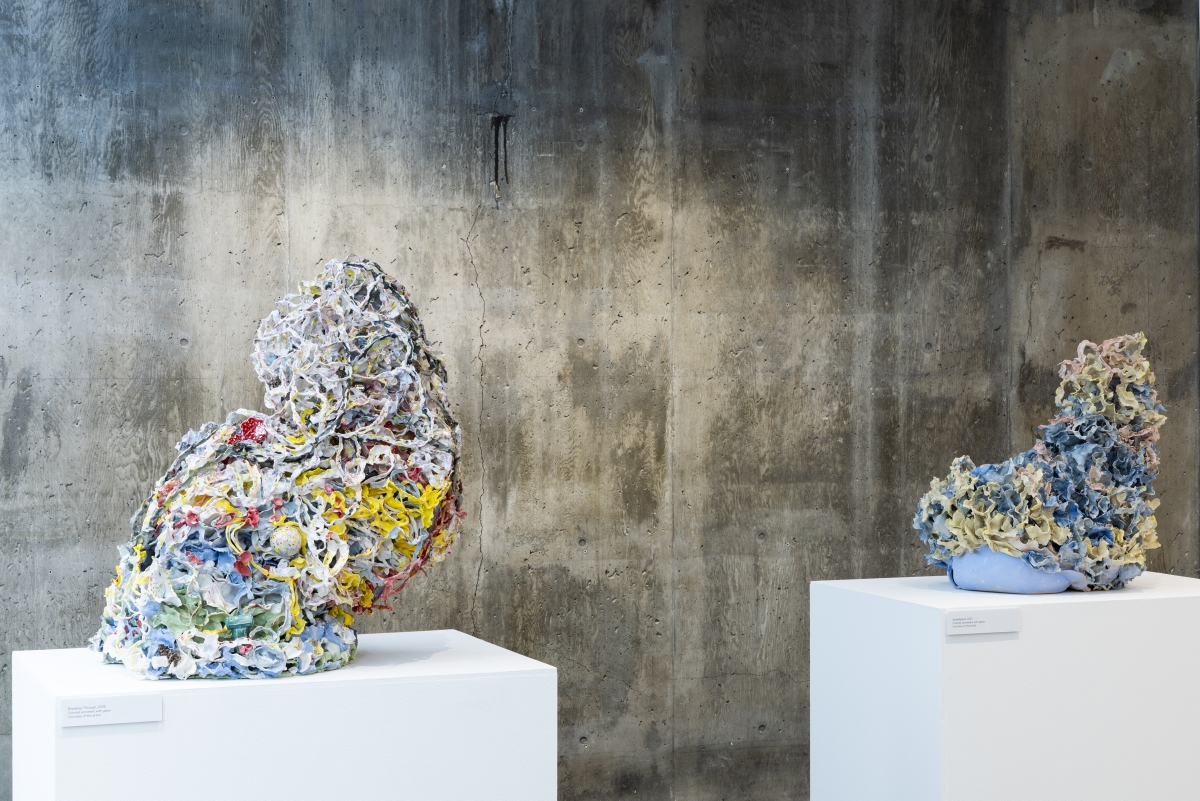
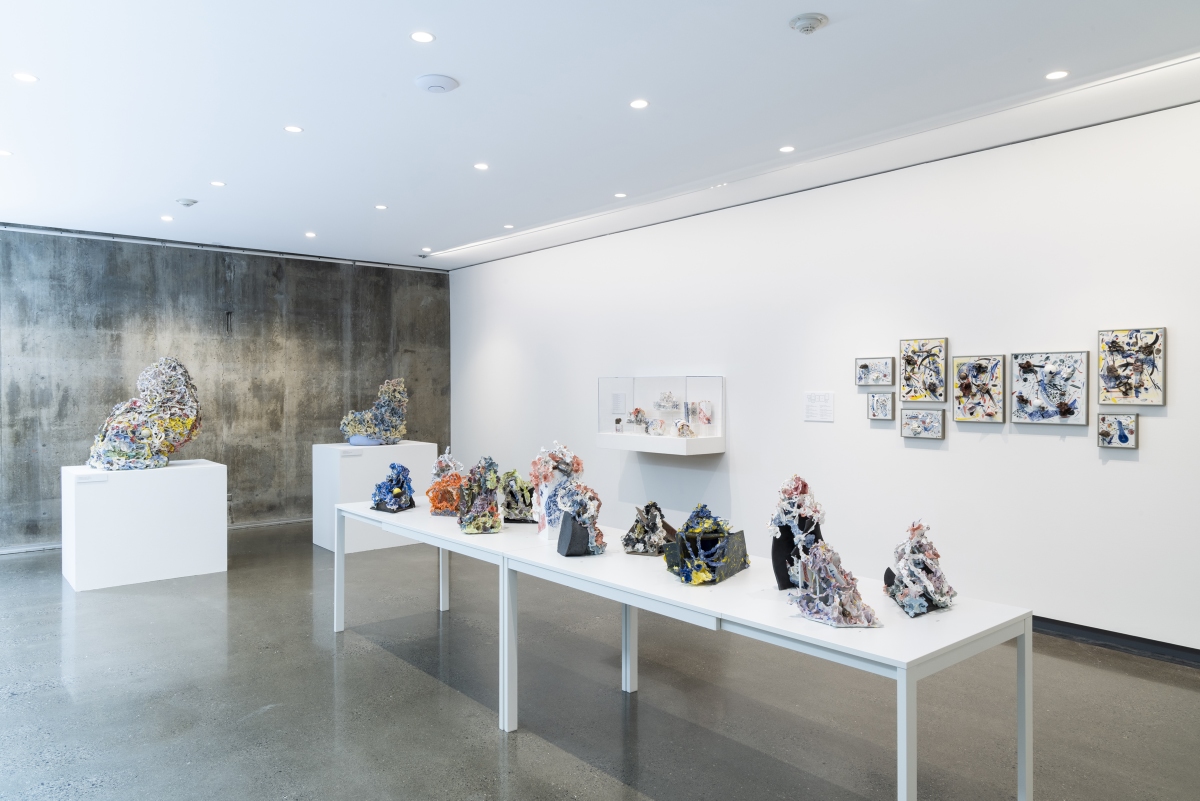
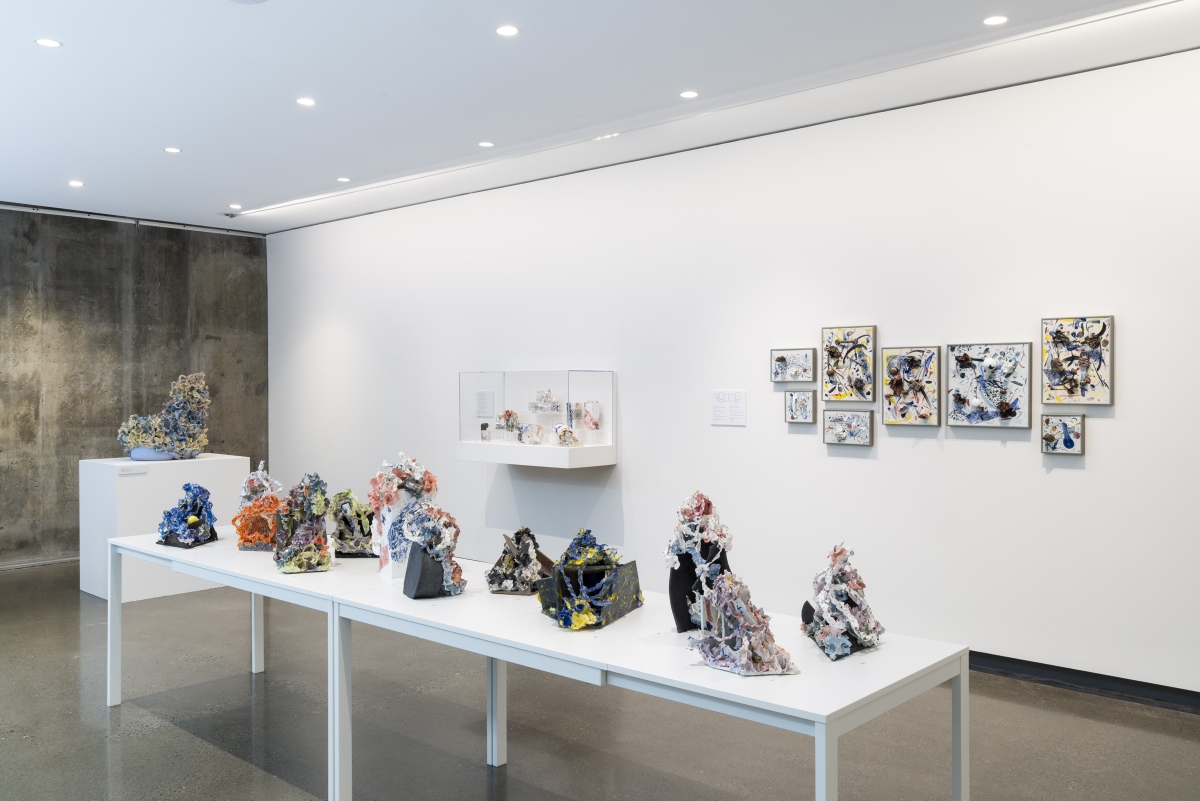
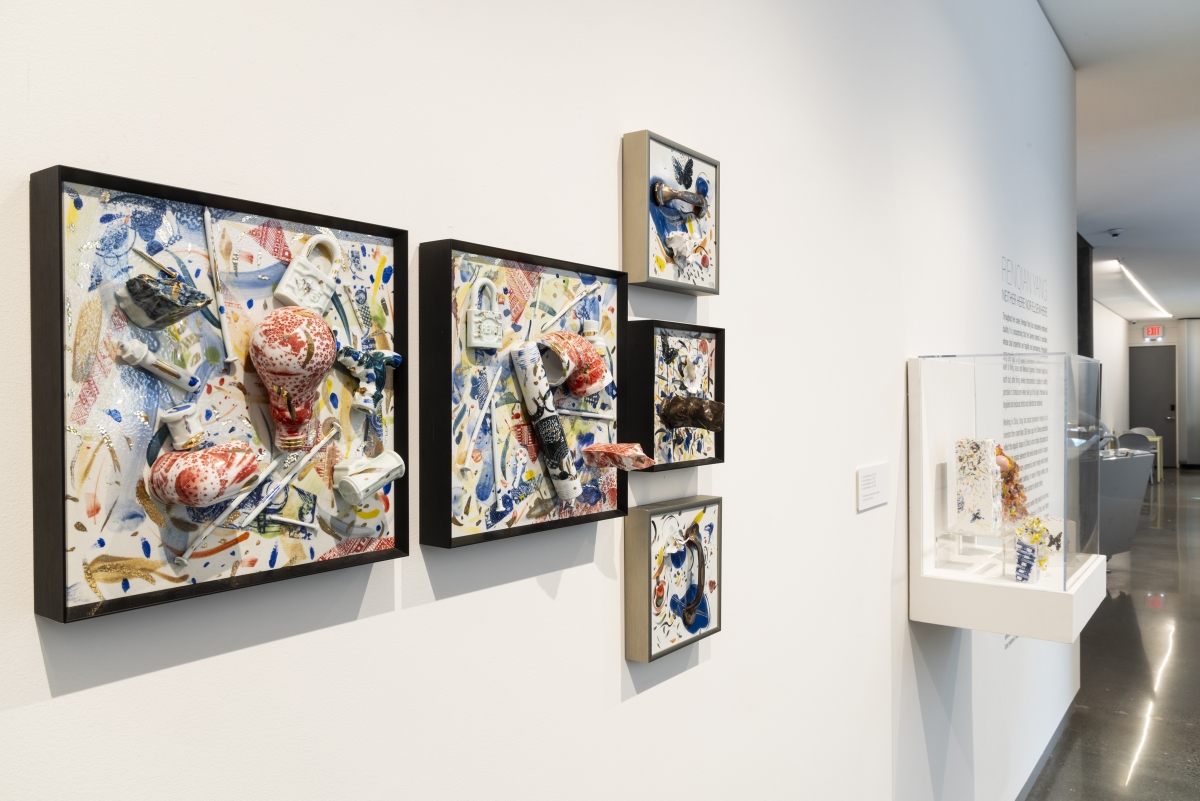
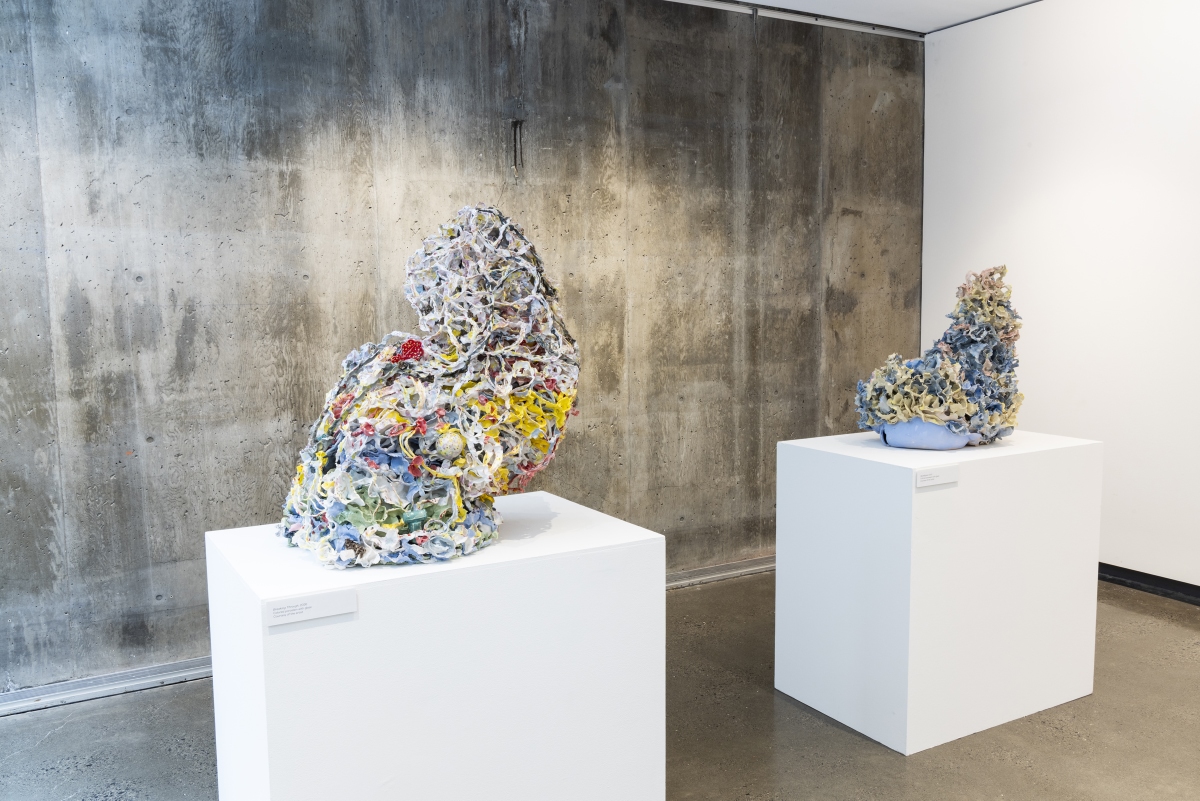
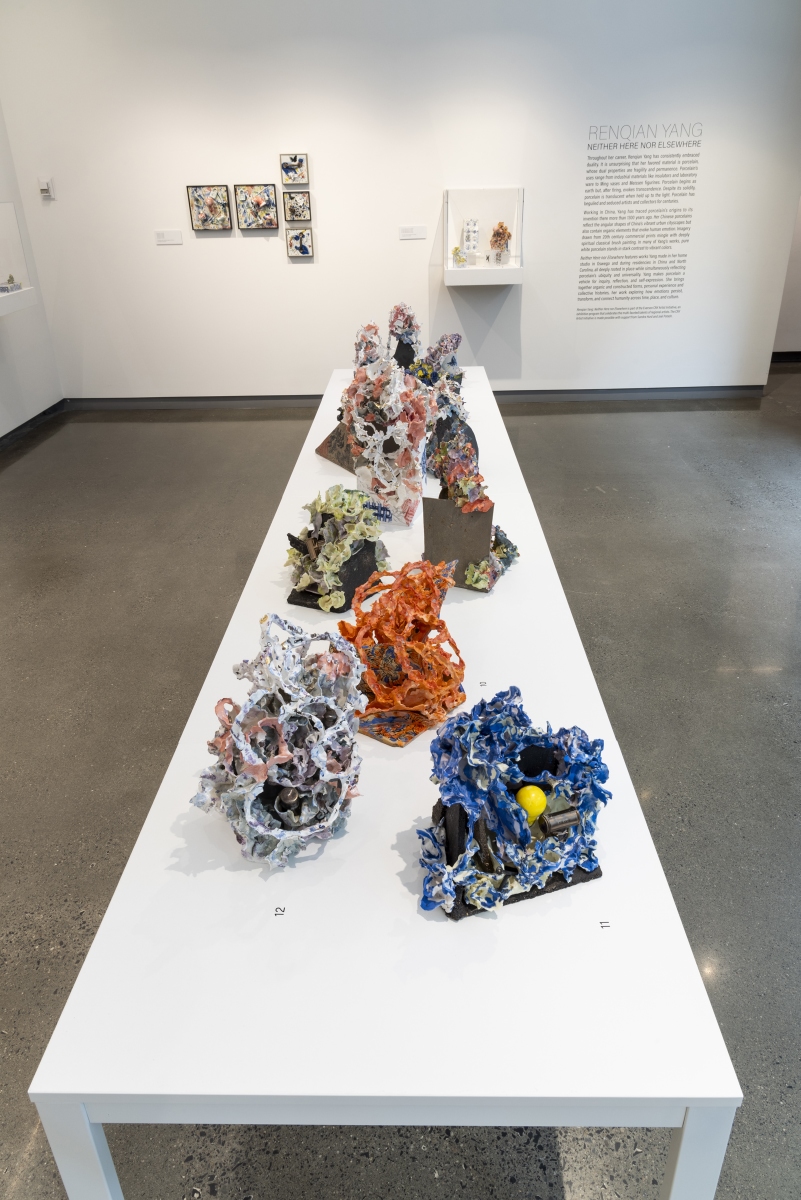
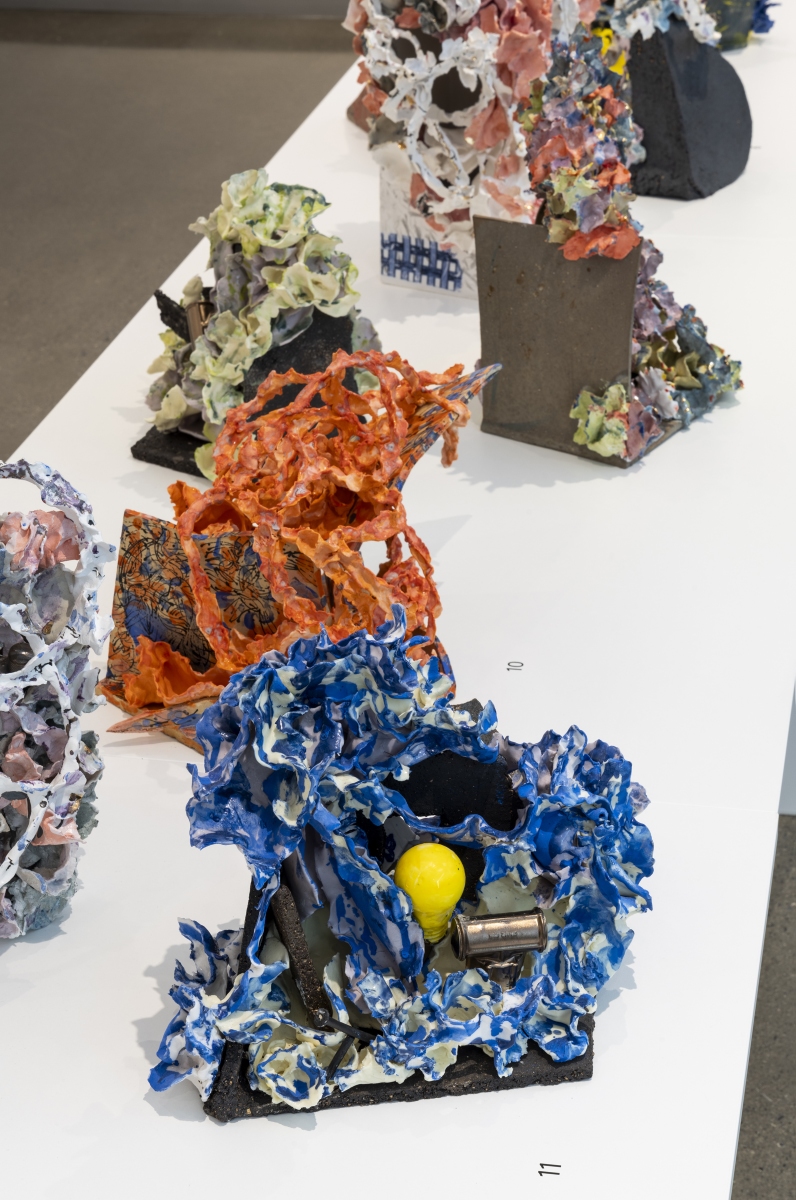
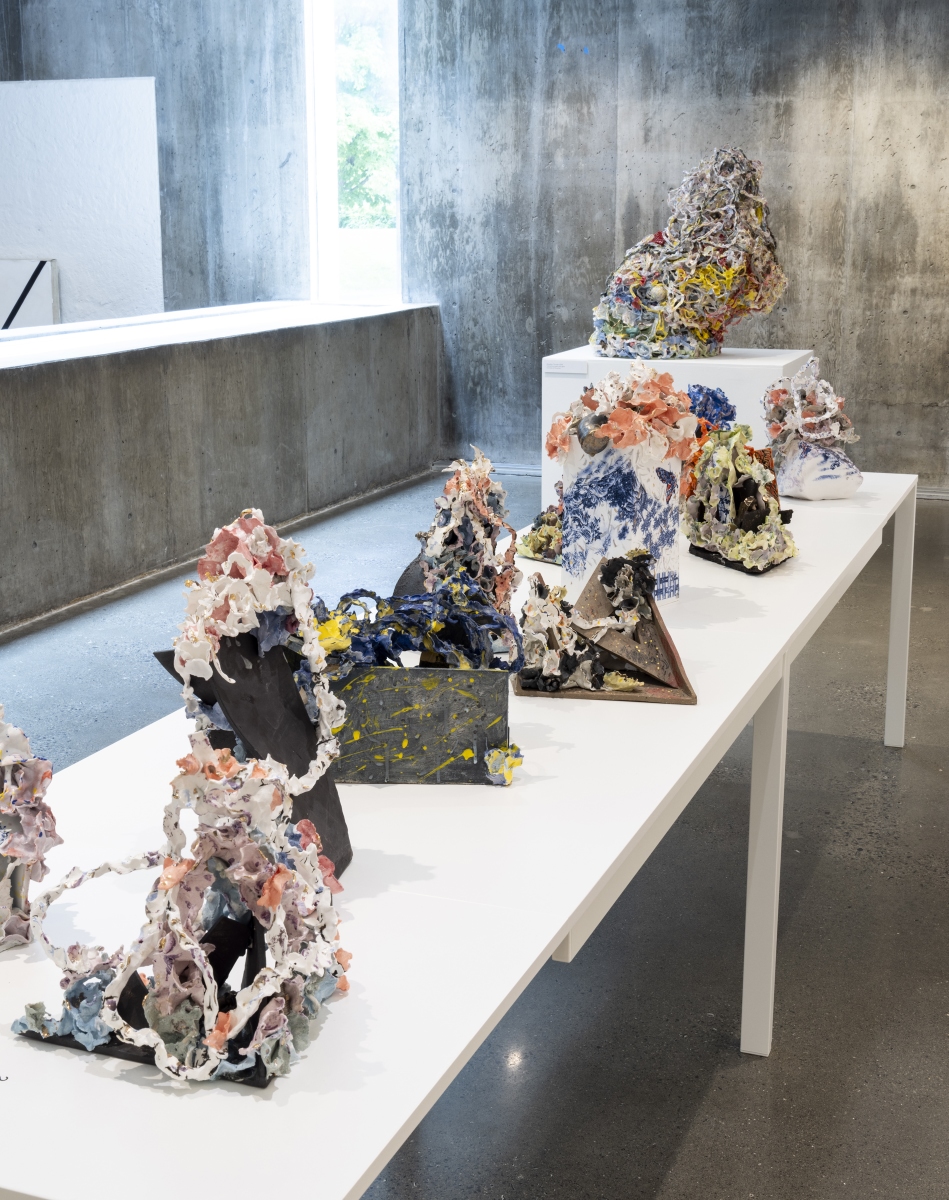
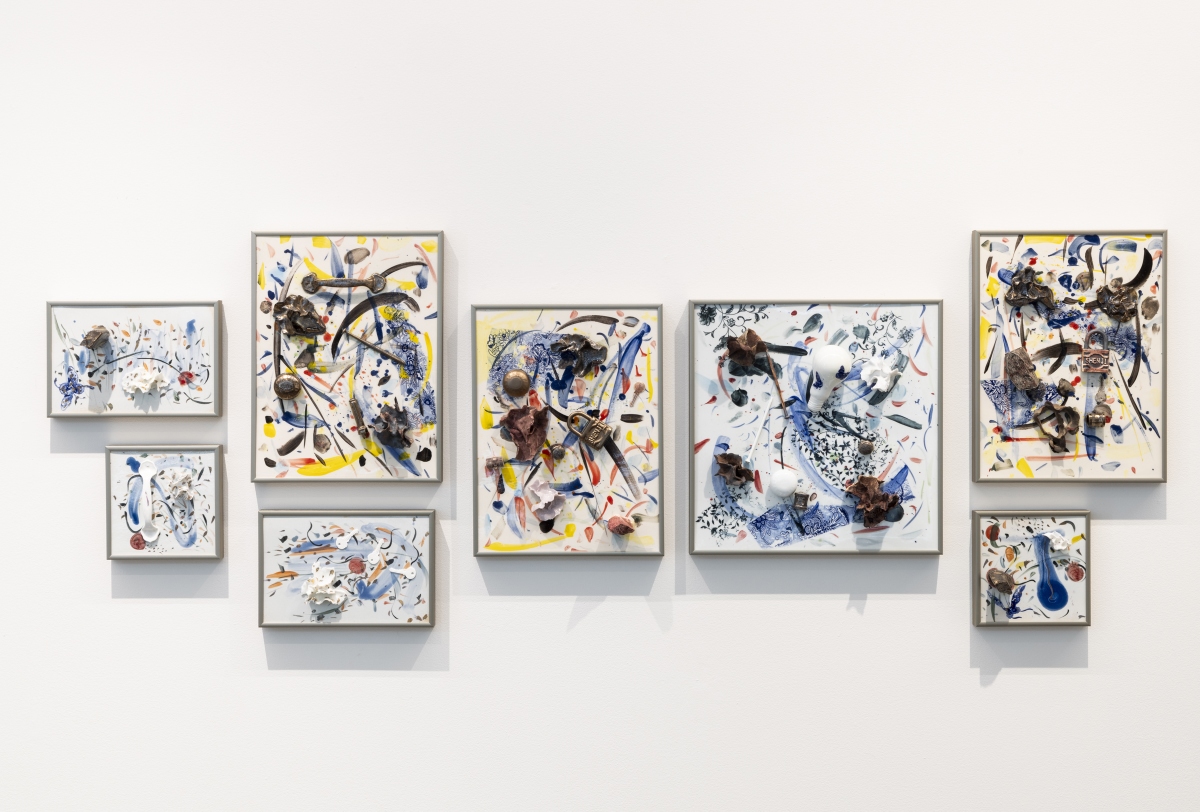
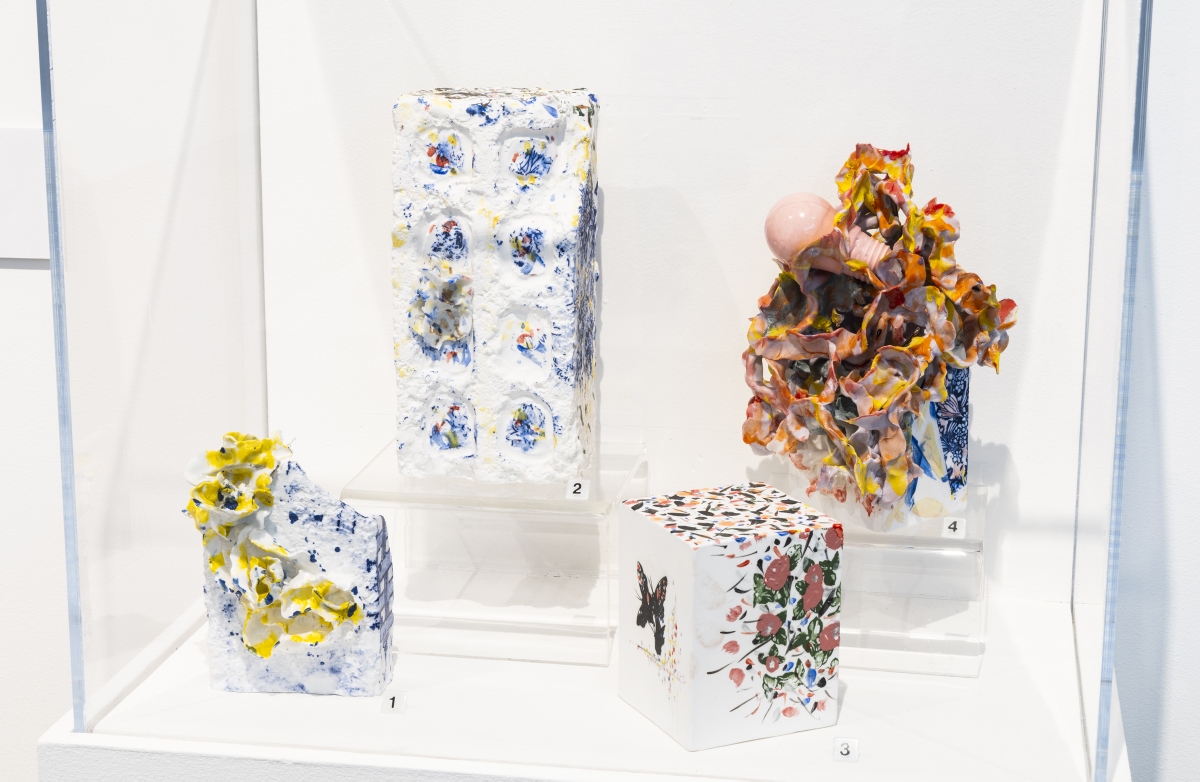
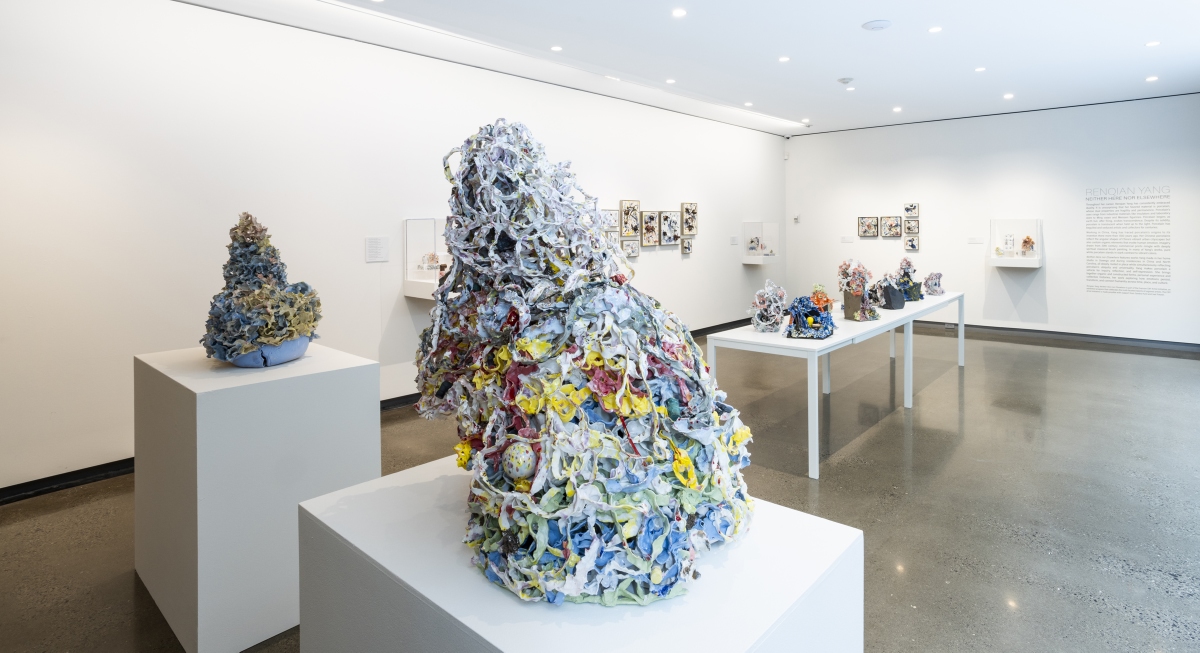
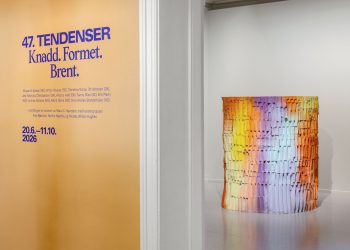
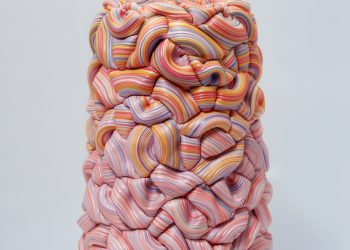
Starting with a piece of architecture, ribbons or strands of clay blast out of the geometry to make a weighty tangled chaos of interconnectedness. The clay looks smushed, pinched and worked, giving the impression of neural pathways or DNA strands processing information. The porcelain is dazzling, popping out of the confines of the cube. They sometimes look like slumping toxic ooze or sometimes like a flower coming out of a crack in the cement. It’s like language, math, science, time, memories, everything coming out of Pandora’s boxes.
The surfaces and the undulating lines feel soft, versus the rigidity of clay. Sometimes buried in the nests will be some discernible form, maybe a lightbulb or a kind of cookie, hitting an idea, which gives a pause in the chaos. The color is everything, it shifts and sets the tone for each piece, sometimes leading to flames, anger and danger or Spring, joy and growth. Very moody. Some of the ribbons made me want to grab onto a line and follow it through the interior of the piece and get lost in its chaos, like I’m in for a wild ride.
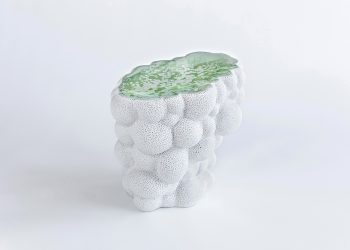
The pieces made in Jingdezhen, where Yang did a residency, are like aliens. It’s fascinating to see how different locations make different work. Since Yang is primarily using porcelain, you can see the location in the clay bodies. The Jingdezhen porcelain is so white it looks blue, there’s nothing else like it on earth. These pieces have collaged super saturated color decals of florals or butterflies floating on the surfaces creating dizzying erratic patterns. Some decals depict nature in the most unnatural way, the colors too bright and imagery too flat reaching for the flowers above. The architectural boxes or industrial pipes with organic forms coming out of them feel like our struggle with the natural world versus our need to create systems to sustain and support us.
What I ended up liking about Renquin Yang’s work in this show was its ability to shapeshift. The work felt heavy and light, in the same piece. There was a nature vs. architecture push and pull I really liked. She’s giving so many clues into how we work, think and react. There’s a struggle between the confines of a geometrical form and the freedom of letting yourself feel the world.
If you’re ever in the area, visit the Everson.
Cammi Climaco is a ceramicist and multidisciplinary artist based in Queens, New York, with a studio practice in Brooklyn. She earned her BFA in Crafts from Kent State University and an MFA in Ceramics from Cranbrook Academy of Art. Cammi has taught at institutions such as Pratt Institute, 92Y, BKLYN CLAY, and Greenwich House Pottery. In addition to her teaching and studio work, she co-hosted The Ceramics Podcast and now hosts The Ceramics Companion, where she talks about ceramics.
New Works in Clay is on view at the Everson Museum of Art, Syracuse, NY, between June 20, 2026 and January 3, 2027; Nanni Valentini: Interspaces between May 2 and September 6, 2026; and Renqian Yang: Neither Here nor Elsewhere between June 13 and August 16, 2026.
Subscribe to Ceramics Now to read similar articles, essays, reviews and critical reflections on contemporary ceramics. Subscriptions help us feature a wider range of voices, perspectives, and expertise in the ceramics community.
Photos courtesy of the Everson Museum of Art