Kiichi Takeuchi: in passing is on view at Gallery Wave, New York
October 21-31, 2026
There is something curious about looking at a ceramic object. We see its shape, surface, and the marks and textures that make it distinct. Much of what went into its making is no longer visible. Clay has been handled, pressed, shaped, exposed to heat, and sometimes removed. What remains is a finished piece and a record of what happened along the way. in passing brings together selections from two major bodies of work by Kiichi Takeuchi, Kimono Saggar (2023) and Momoke (2025), tracing the depth of his ongoing discoveries of what clay can become. Though different in their methods, both series reveal an exchange between the artist’s intention and the material’s response.
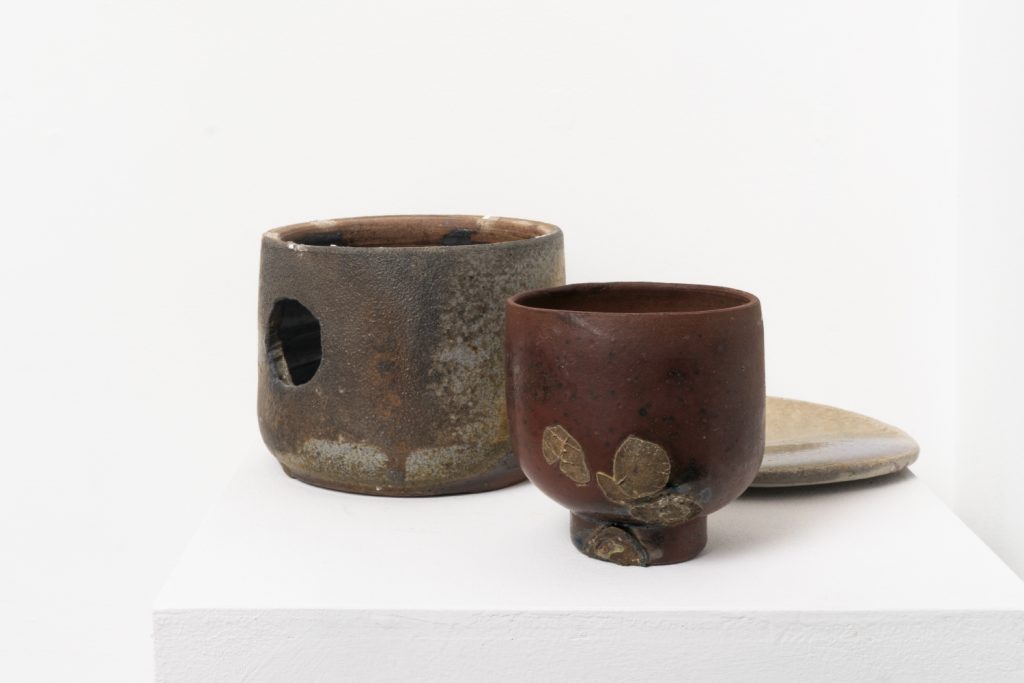
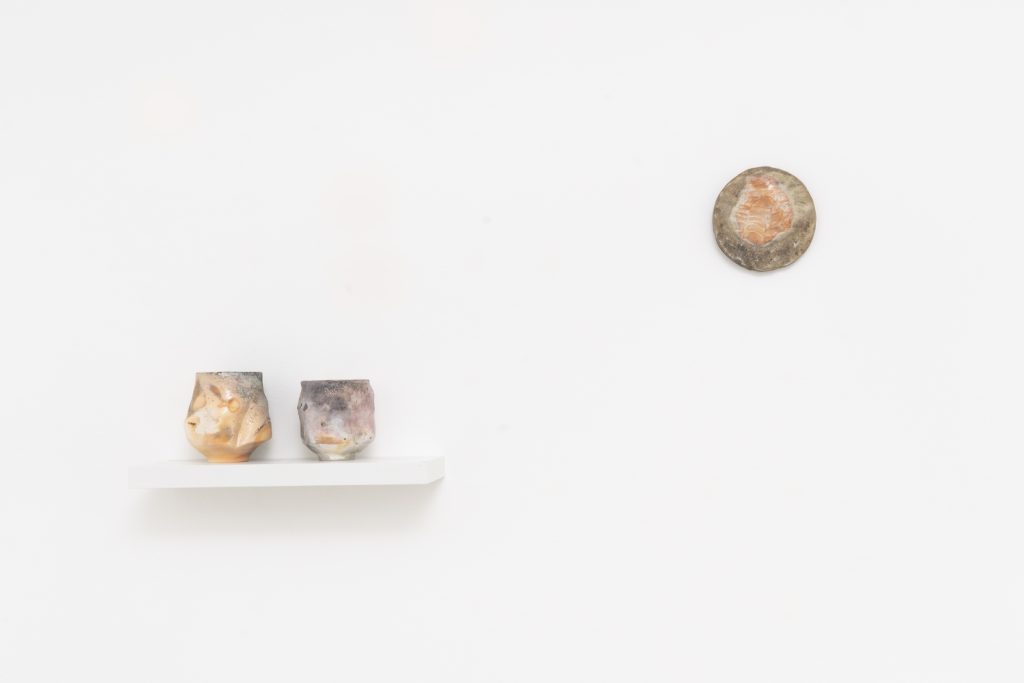
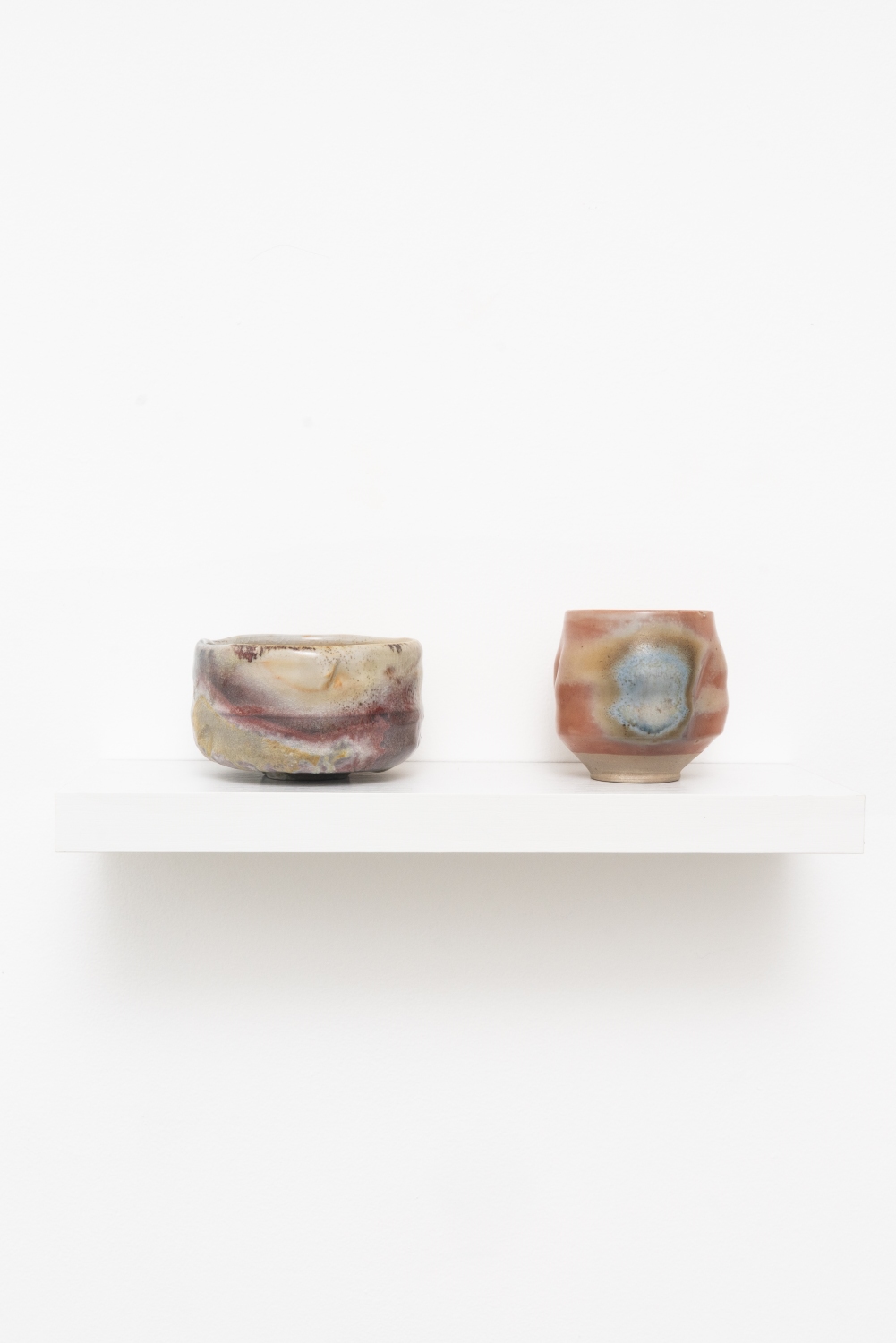
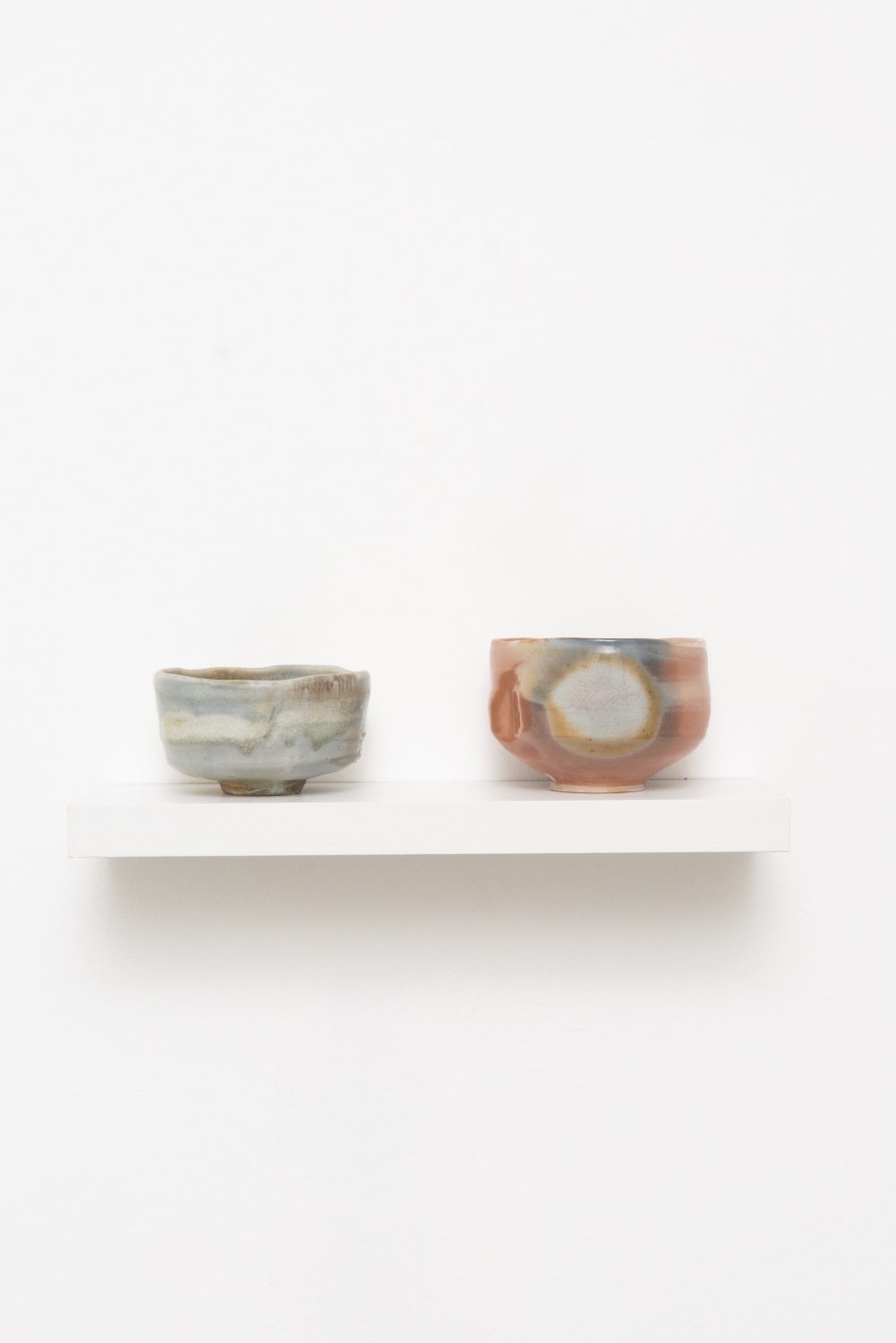
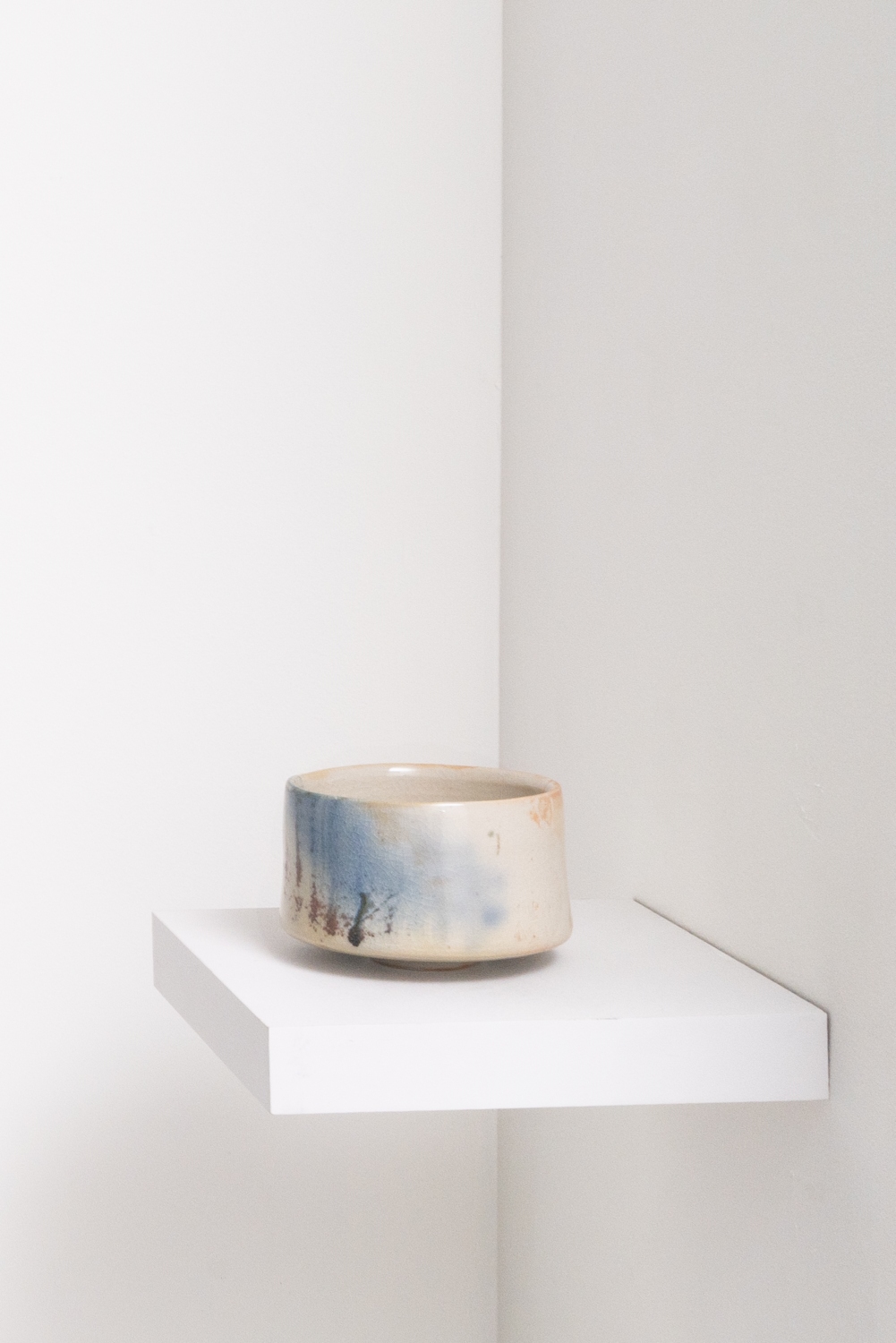
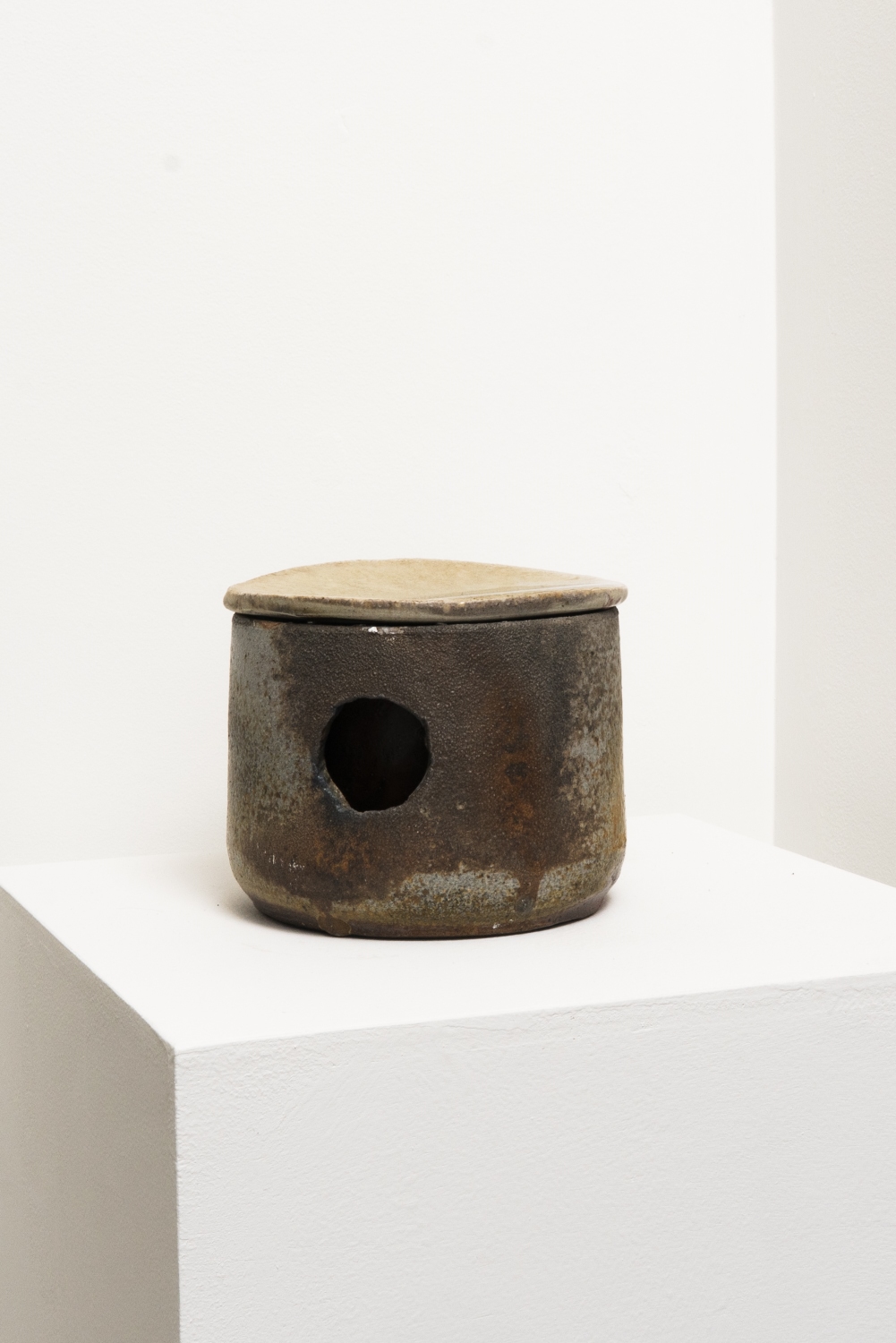
In Kimono Saggar, the tea bowls reflect (2026) and immature monster (2026) take on a painterly quality as flame reaches the surface in different ways. Takeuchi adapts the traditional ceramic saggar, a container used to protect vessels during firing. He cuts openings into these protective shells, allowing flame, ash, and vapor to pass through. The hands decide where to cut and how much of the vessel to expose, then leave the rest to the conditions inside the kiln. By creating a path for the fire to enter, Takeuchi makes room for chance. The result in reflect forms a simple cylindrical form, with soft blue tones spreading across the pale clay. Dark red and black marks run downward like loose brushstrokes. immature monster is more irregular, with warm tones and rounded marks that appear almost bodily. Its playful appearance carries a slight uneasiness. The clay body reveals subtle shifts in tones, with marks that at times resemble stains, wounds, or traces of burning. Placing the finished tea bowls next to the saggars conveys a close collaboration between the container and what it holds. The juxtaposition offers a glimpse into how the vessels came to be. Takeuchi prepares the conditions for these effects, then must wait to see what the firing has produced.
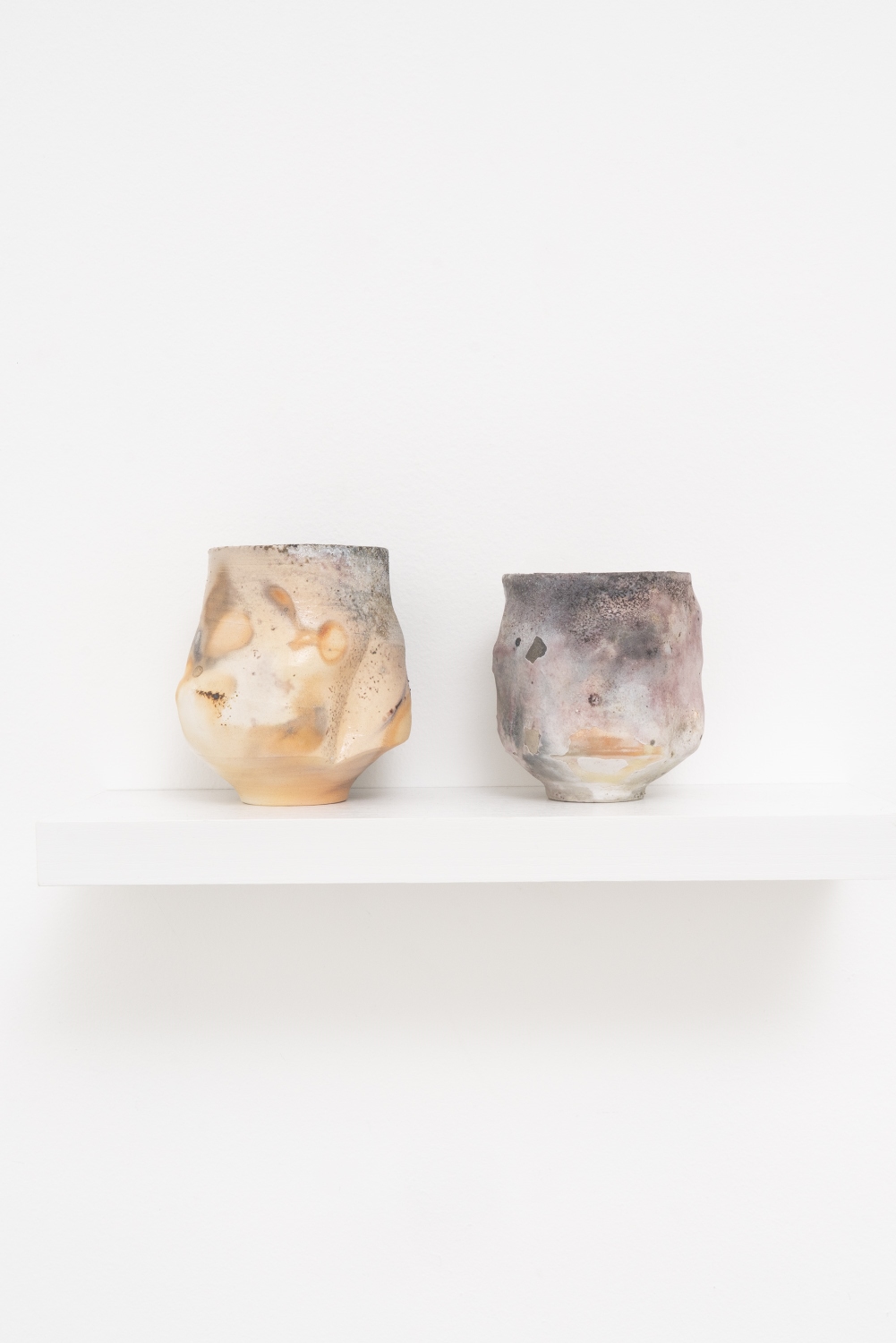
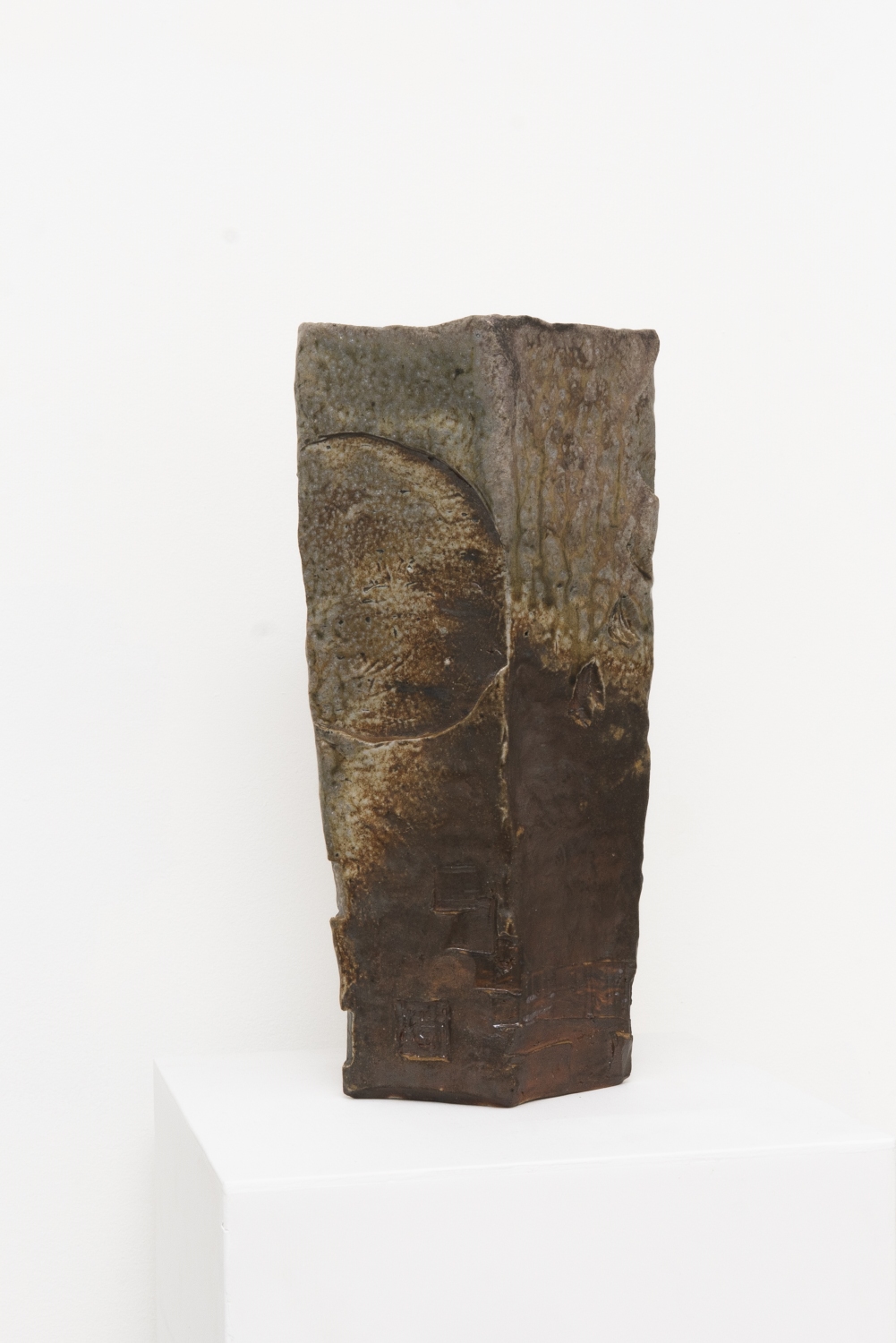
Momoke follows a different kind of encounter. Takeuchi works with wild clay excavated from Long Island and Pennsylvania, building layered forms through nerikomi, a Japanese technique of combining different clays. He then cuts, scrapes, and carves into them with industrial tools. The Japanese word momoke describes a soft, slightly worn or frayed quality, which comes through in the exposed layers and uneven edges, altering the original form. The slow formation of natural material gradually takes shape in the clay body. The resulting object carries an accumulation of time, patience and dedication made along the way.
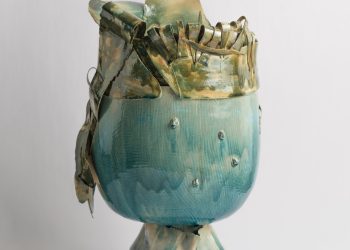
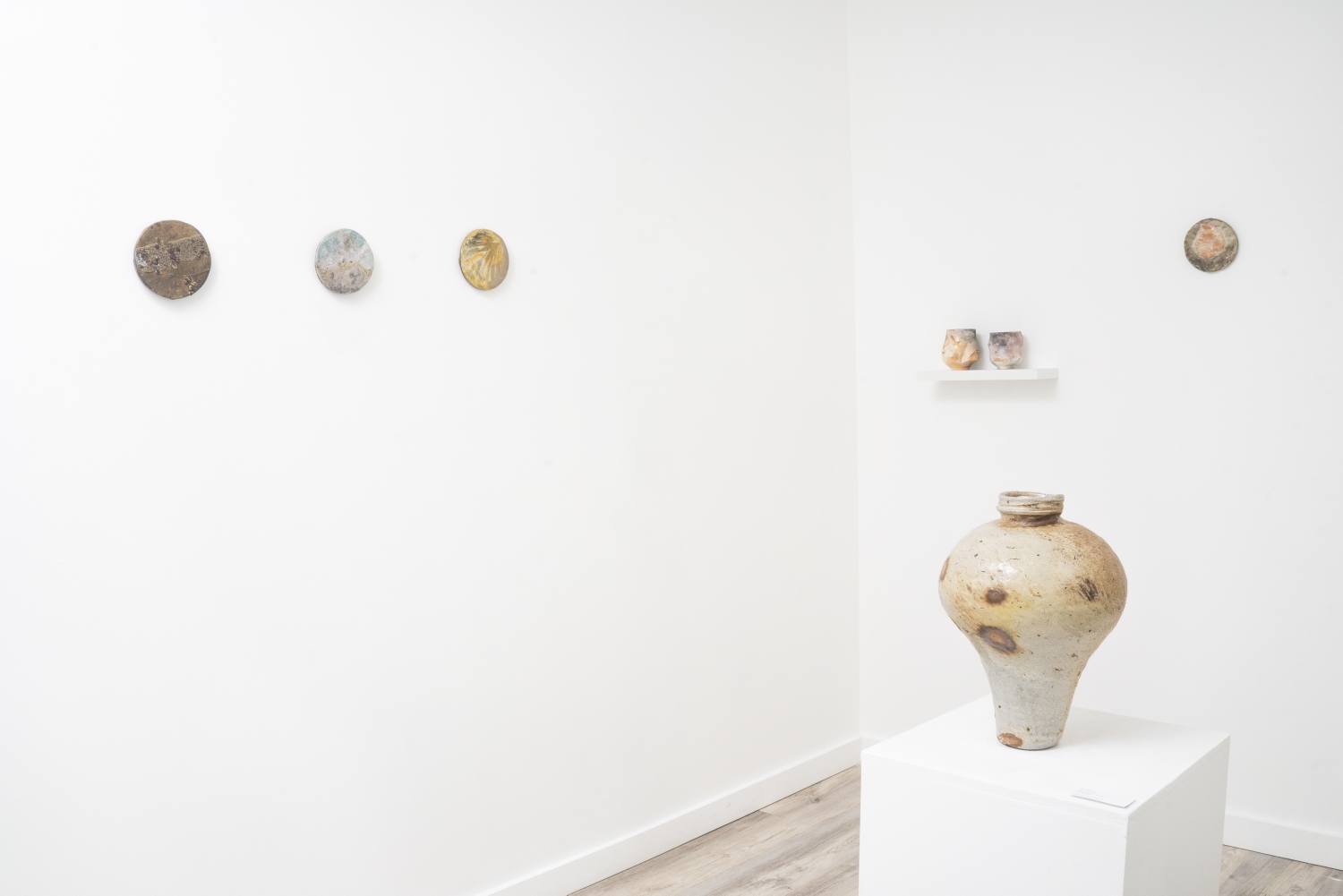
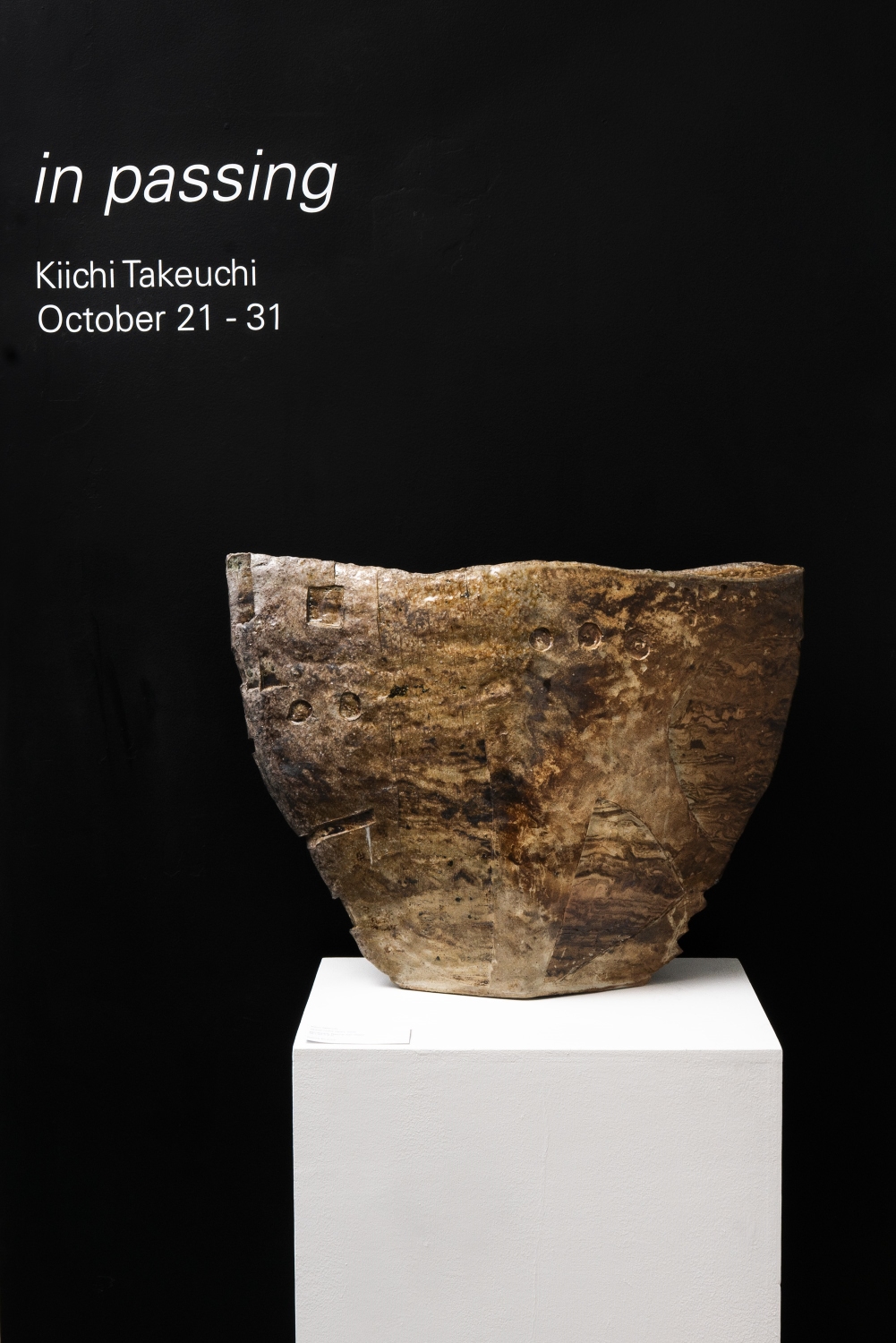
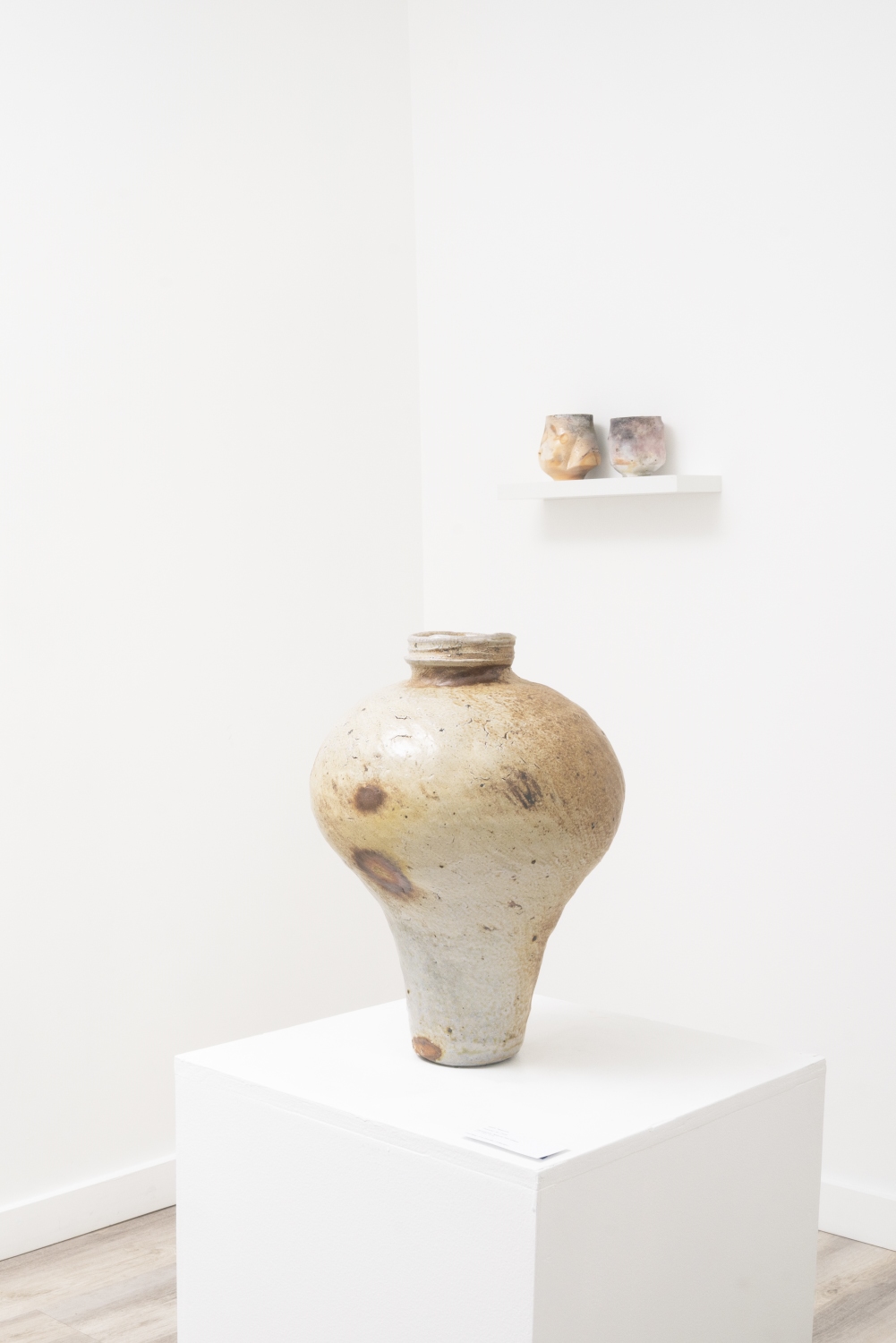
The act of carving takes on a more personal meaning in Vessel of the Heart (2026). Made at a time when events deeply important to Takeuchi seemed to be slipping beyond his reach, making became a way of sitting with uncertainty. The wide, irregular form contains deep cuts, uneven edges, small openings, and rough, earthy textures. Each mark is direct, creating a weathered, fragmented appearance. The repeated work of carving rendered meditation, giving shape to the feelings that were difficult to resolve. In Passing Jar (2026), a rounded body rises from a narrow base into a fluid and elegant silhouette. Dark patches and circular marks settle into its pale surface. Both vessels bear marks that resemble scars, though each has different characters. They speak quietly to the ways experiences become part of a life through making and living, long after the initial events have passed.
The openness to work without a fixed outcome runs through Takeuchi’s practice. It involves accepting risks and embracing the consequences. The same attention appears in his interest in the natural world. Looking at the clay bodies, the gradual shifts in tone recall the changing light of the sky at sunrise. Rough edges and exposed layers bring to mind geological formations and the slow accumulation of sediment. Some areas appear muted, some are interrupted by sharp cuts. The contrast gives the surfaces great depth and a sense of movement, as though they have only just come to rest.
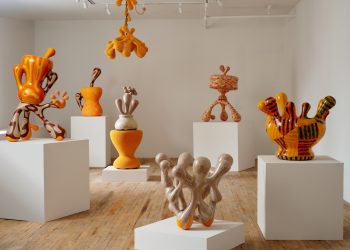
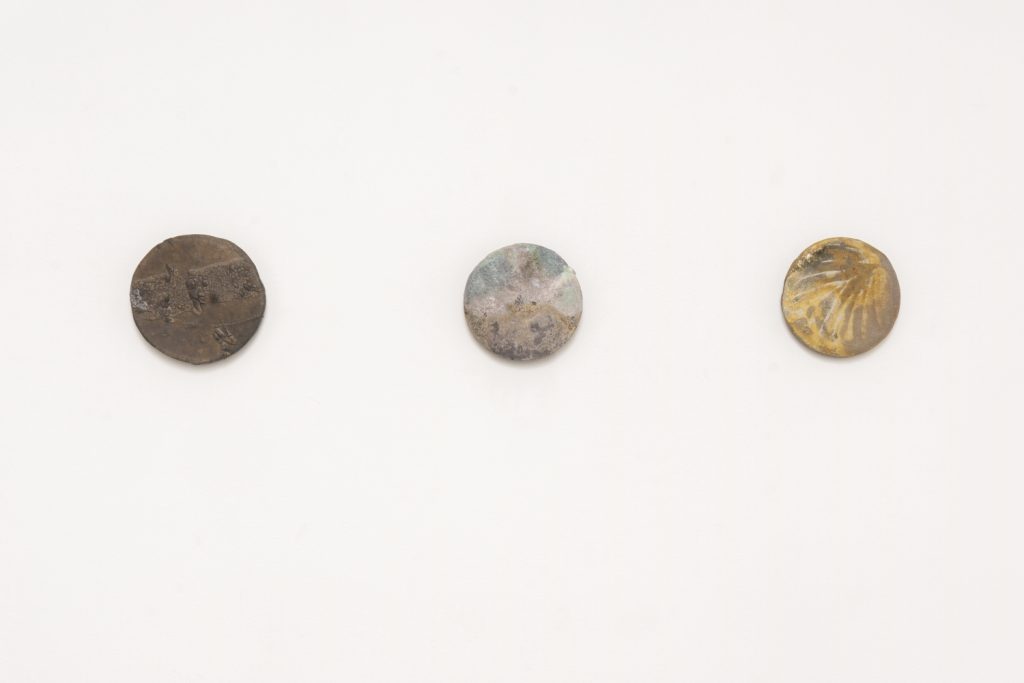
The exhibition includes vessels, tea bowls, lids, saggars, and large-scale jars. Their differences in size and function shape the experience of looking. The larger jars occupy the room with a presence felt from a distance. Their height, width, and overall shape come into view before the finer details. Smaller pieces draw the eye closer. Tea bowls fit the scale of the human hand, and lids line the wall in a linear sequence. Their similarities become apparent first, a close look brings out small variations in shape, edge, and color that give each one its own personality. A tea bowl brings to mind the hands that hold it, the fingers that wrap around its sides, and the familiar act of bringing it to the mouth. Cuts and scrapes across the clay carry the pressure of Takeuchi’s hands. Without touching the works, their weight and the feeling of holding them can be imagined. The distance between making and viewing becomes smaller through these familiar objects and everyday rituals. The same clay that has been worked by the artist now occupies a space in relation to the viewer’s body.
Moving between the work, each new position brings another detail into view. It may be a shift in tone, an exposed layer, the edge of a cut, or an unexpected space within a vessel. Every piece carries something of its making, with parts of that history remaining beyond the viewer’s reach. The exhibition proposes a slow way of looking and discovering. Some things become clear only as we come closer. Others remain with us as we move on.
About the artist
Kiichi Takeuchi (b. 1979, Tokyo, Japan) is a New York-based ceramic artist whose practice explores the relationship between material, fire, memory, and human intervention. Working primarily with wood firing, wild clay, and both wheel-thrown and hand-built forms. He develops surfaces through natural ash, flame, layered clay, carving, and subtraction. His ongoing series include Kimono Saggar and Momoke, both of which examine the tension between control and chance, construction and absence. Takeuchi has presented at NCECA and wood firing conferences in the United States, and teaches pottery and sculpture at Long Island University.
About the gallery
Gallery Wave is a vibrant, contemporary art space located in the heart of New York City, committed to showcasing diverse artistic talents from around the world. The gallery serves as a platform for both emerging and established artists to engage with art enthusiasts through curated exhibitions.
Exhibition Coordinator / Photographer: Bing Lu
Contact
gallery60nyc@gmail.com
Gallery Wave
1031 2nd Avenue
New York, NY 10022
United States