Irina Razumovskaya: KORE is on view at Keramikmuseum Westerwald, Höhr-Grenzhausen
September 24, 2026 – January 10, 2027
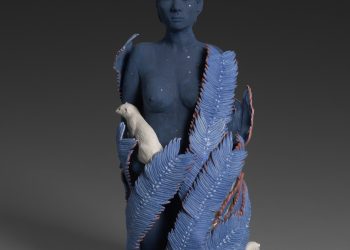
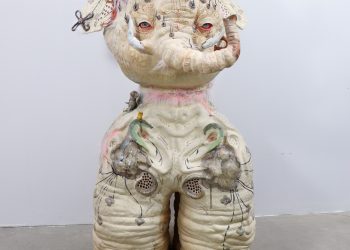
From 24 September 2026 to 10 January 2027, the Keramikmuseum Westerwald presents the exhibition “KORE” by Westerwald Prize winner Irina Razumovskaya (b. 1990, Leningrad). She studied at the Saint Petersburg Stieglitz State Academy of Art and Design and at the Royal College of Art in London, where she teaches today.
Current societal debates are often shaped by experiences of loss. Social change and the absence of a central perspective on the many challenges of our time intensify the longing for a supposedly lost world in which roles and expectations seemed more clearly defined.
In contrast, the very title of Irina Razumovskaya’s reflects the ambiguity in her work. As ruler of the underworld and maiden of fertility, the Greek goddess Kore embodied a dual role. For Razumovskaya, she is an emblem of the ambivalence that women are often expected to fulfill – an ambivalence, however, that cannot be navigated without experiences of loss.
Her exhibition KORE begins with the silence that is also deeply rooted in her personal experiences of loss. It speaks of a stillborn child, a lost homeland, a language no one speaks anymore, and gaps in centuries-old texts. In doing so, Razumovskaya reveals not only her own wounds, but also those of her abandoned homeland.
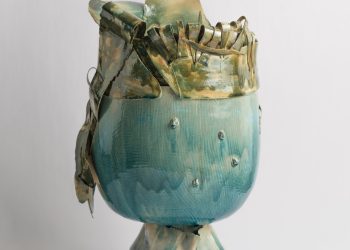
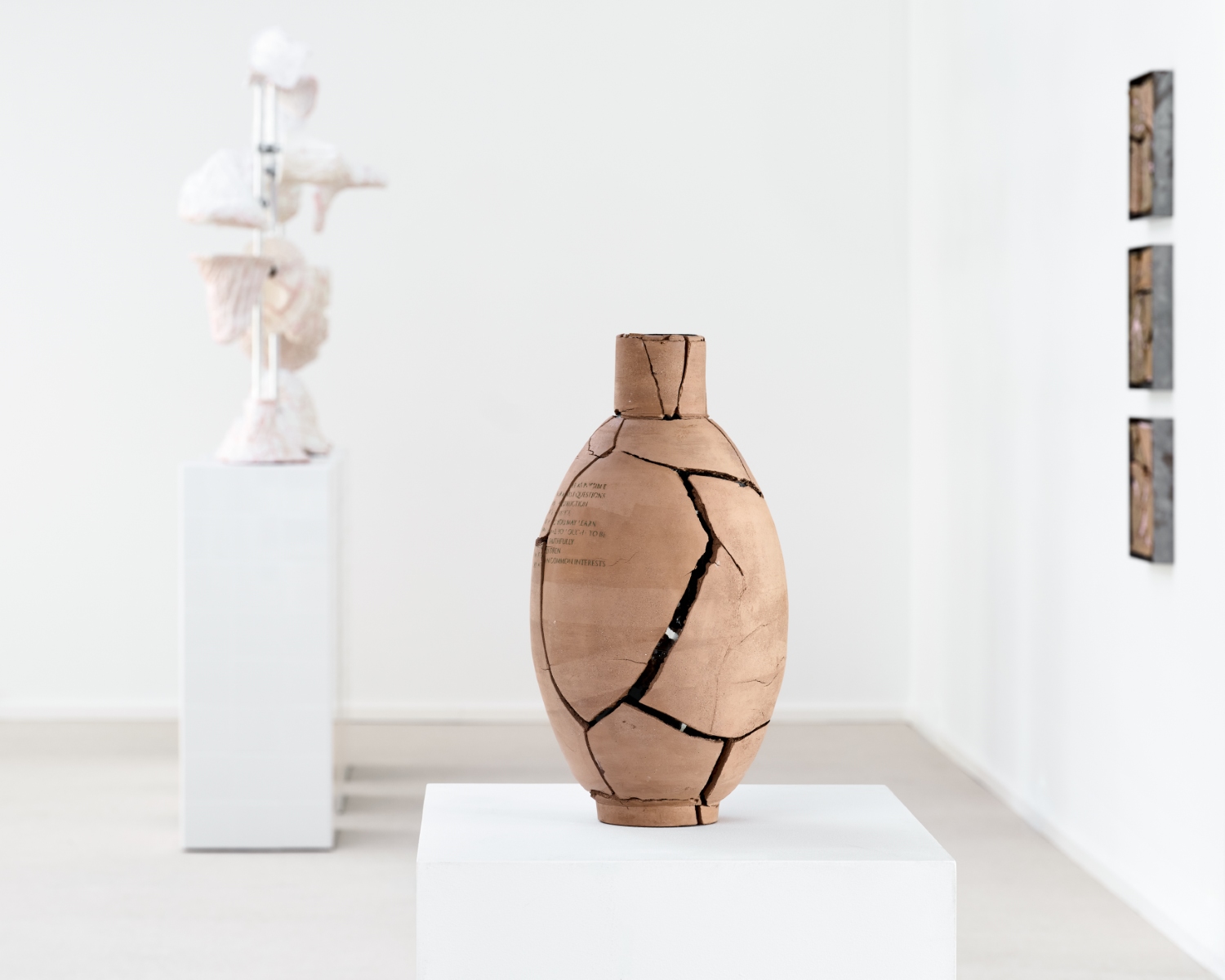
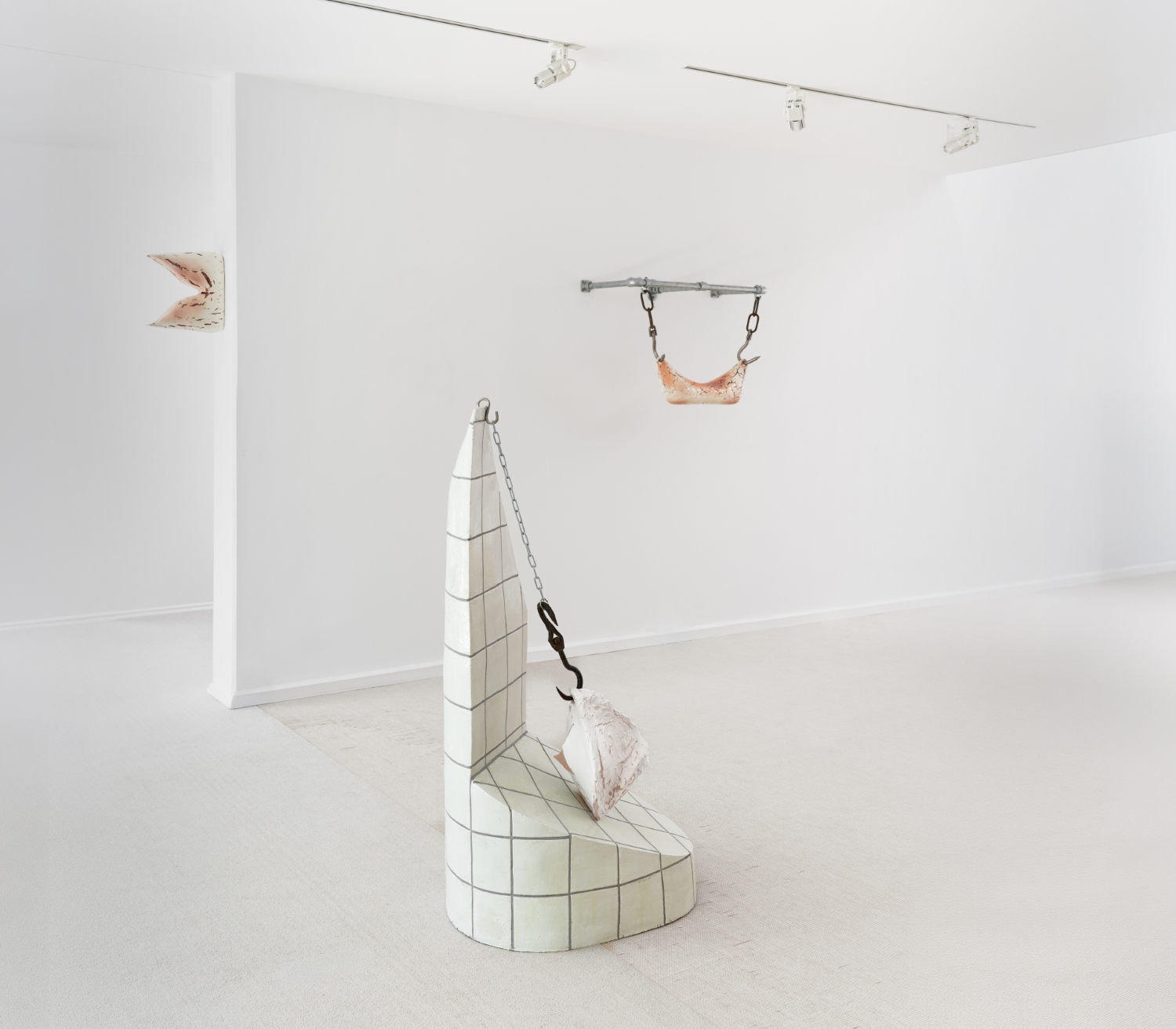
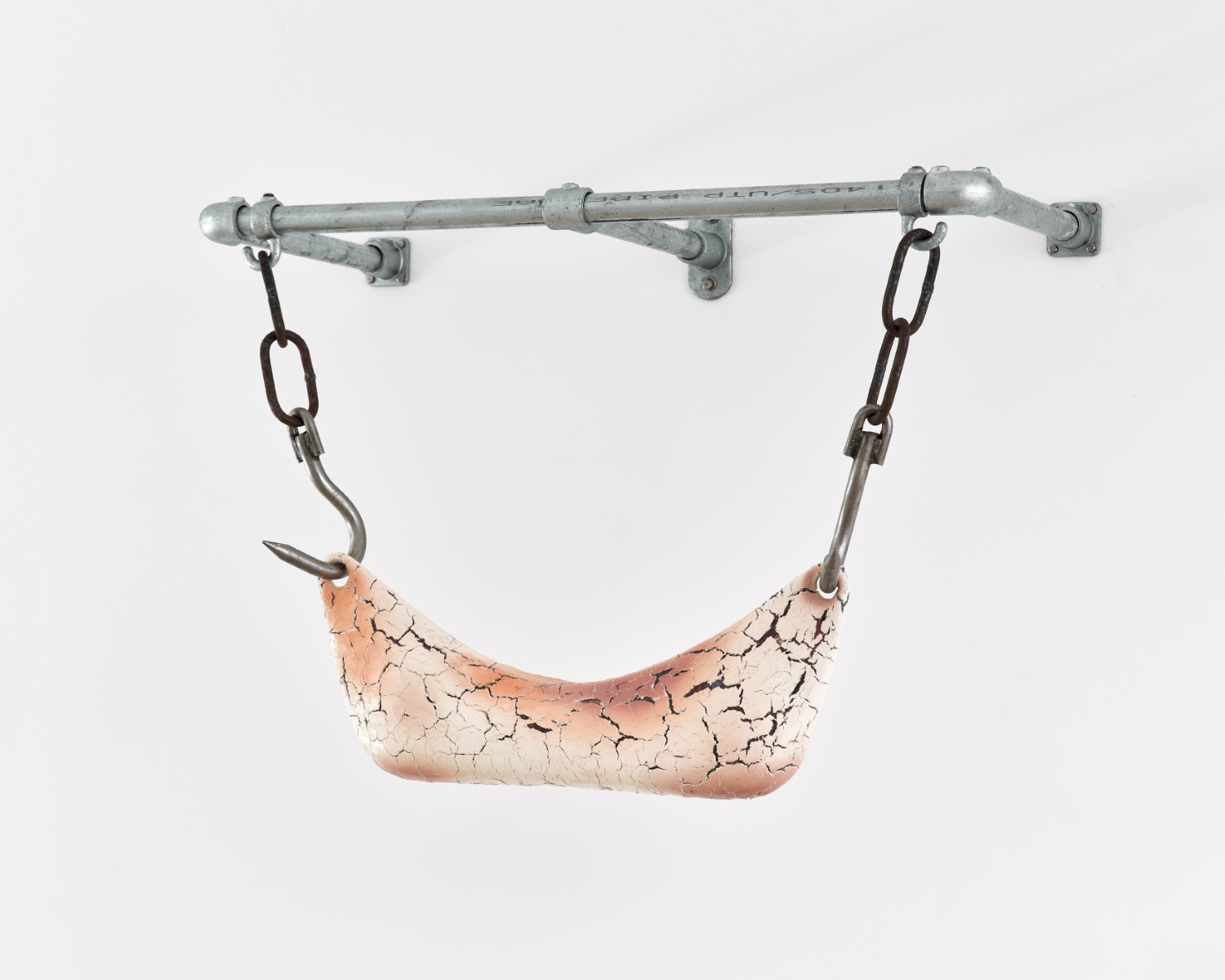
Art certainly does not offer tailor-made solutions to societal crises, and it refuses to serve as propaganda for those populists whom the sociologist Andreas Reckwitz once aptly described as “entrepreneurs of loss”. Art prefers to scratch at surfaces. And it is precisely surfaces that hold a particular power in ceramics: Irina Razumovskaya was also awarded the Westerwald Prize because she understands so convincingly how to deploy the power of the ceramic surface as an artistic medium. At the Keramikmuseum, she presents various groups of works in which cracks and scars carry conceptual meaning.
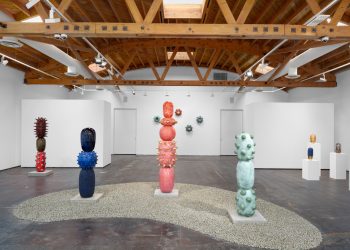
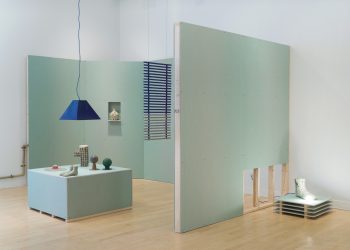
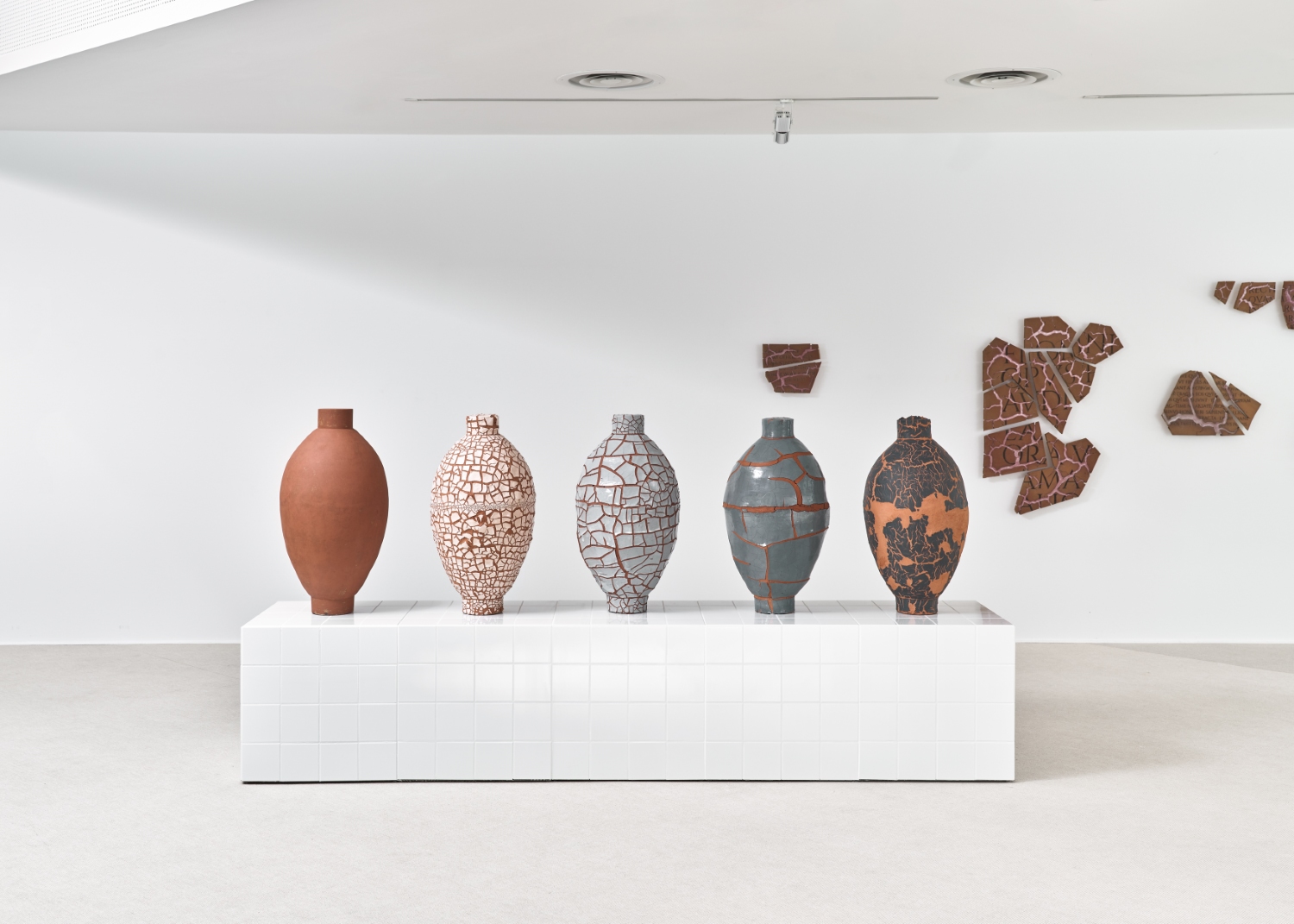
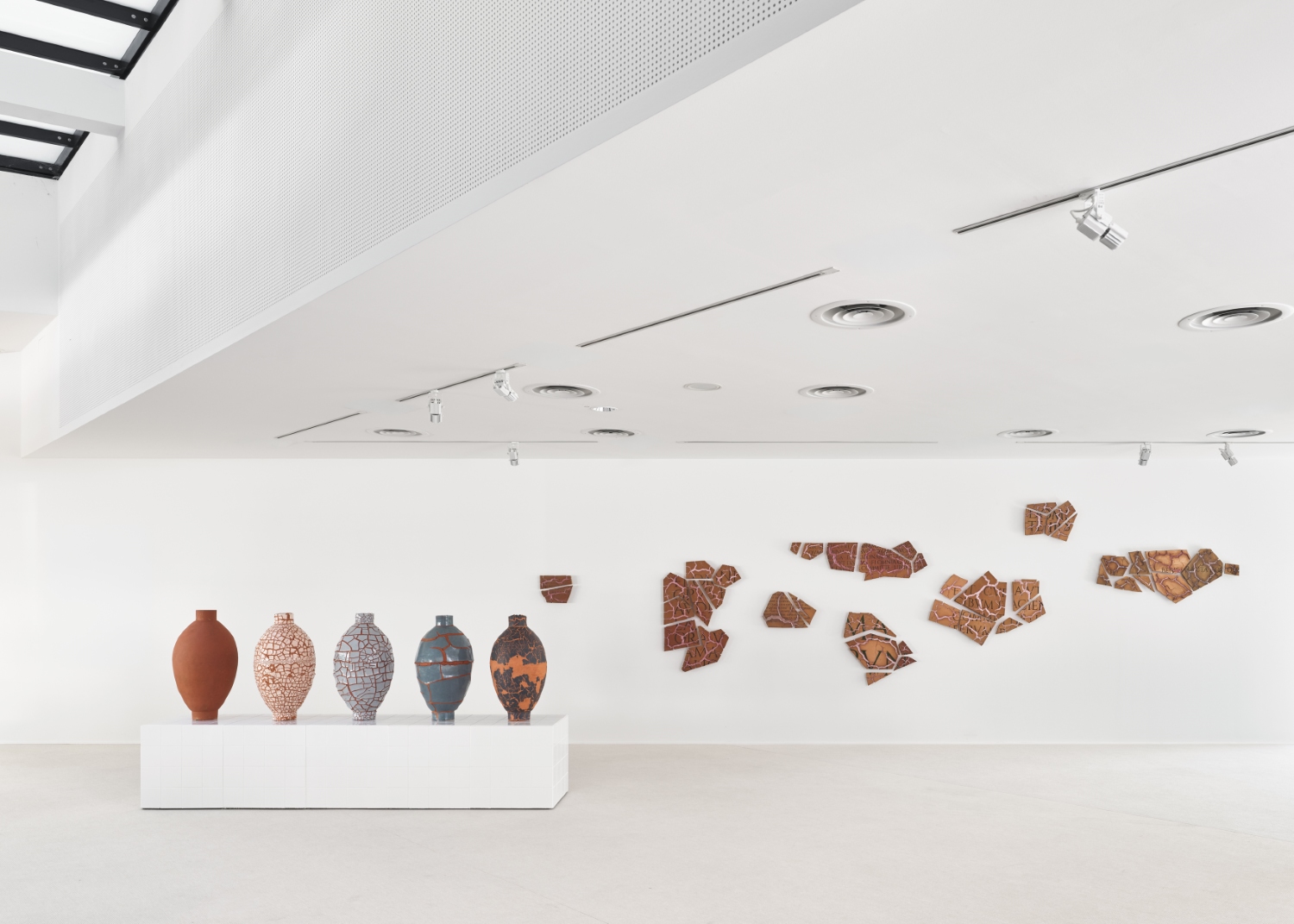
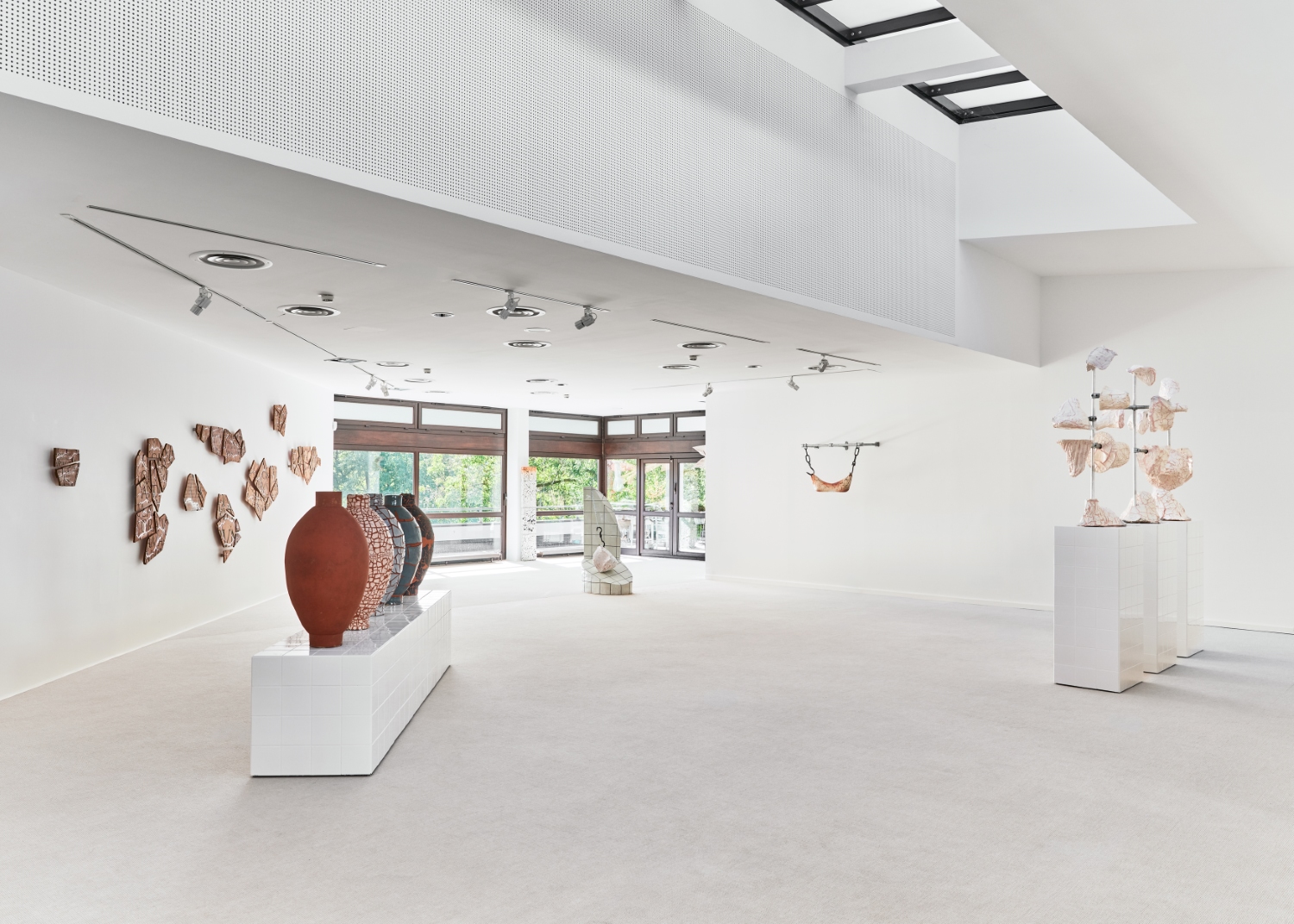
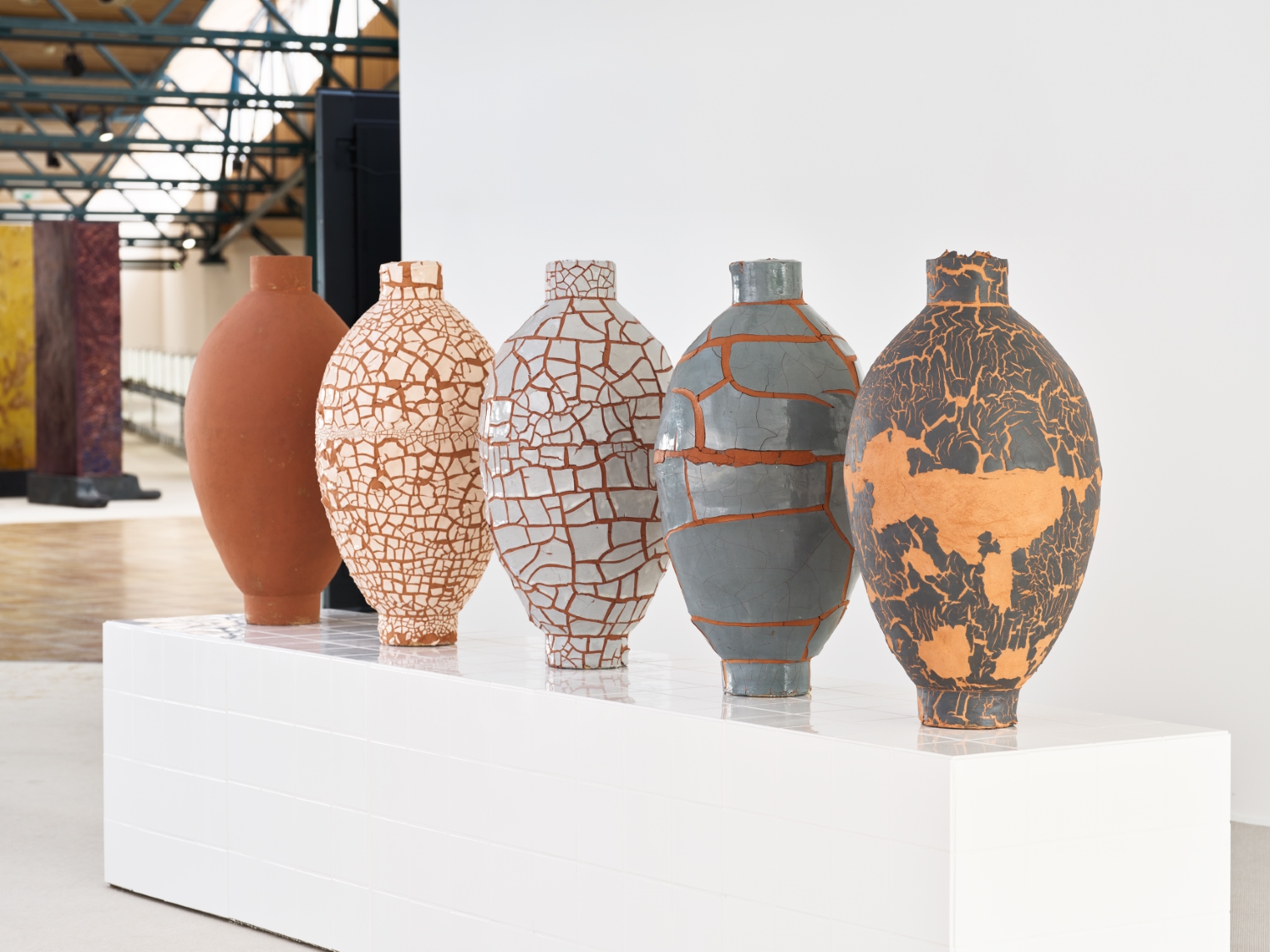
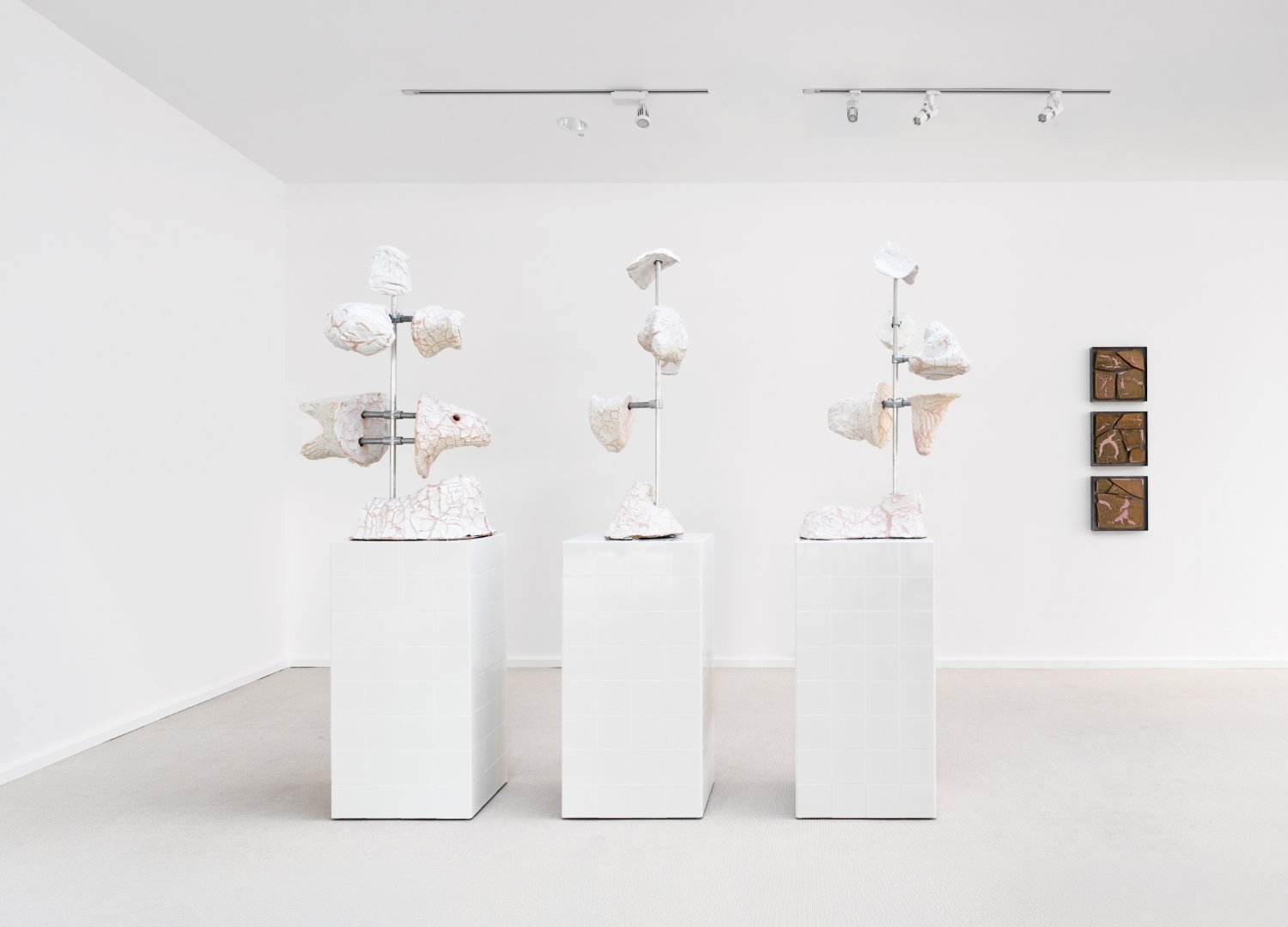
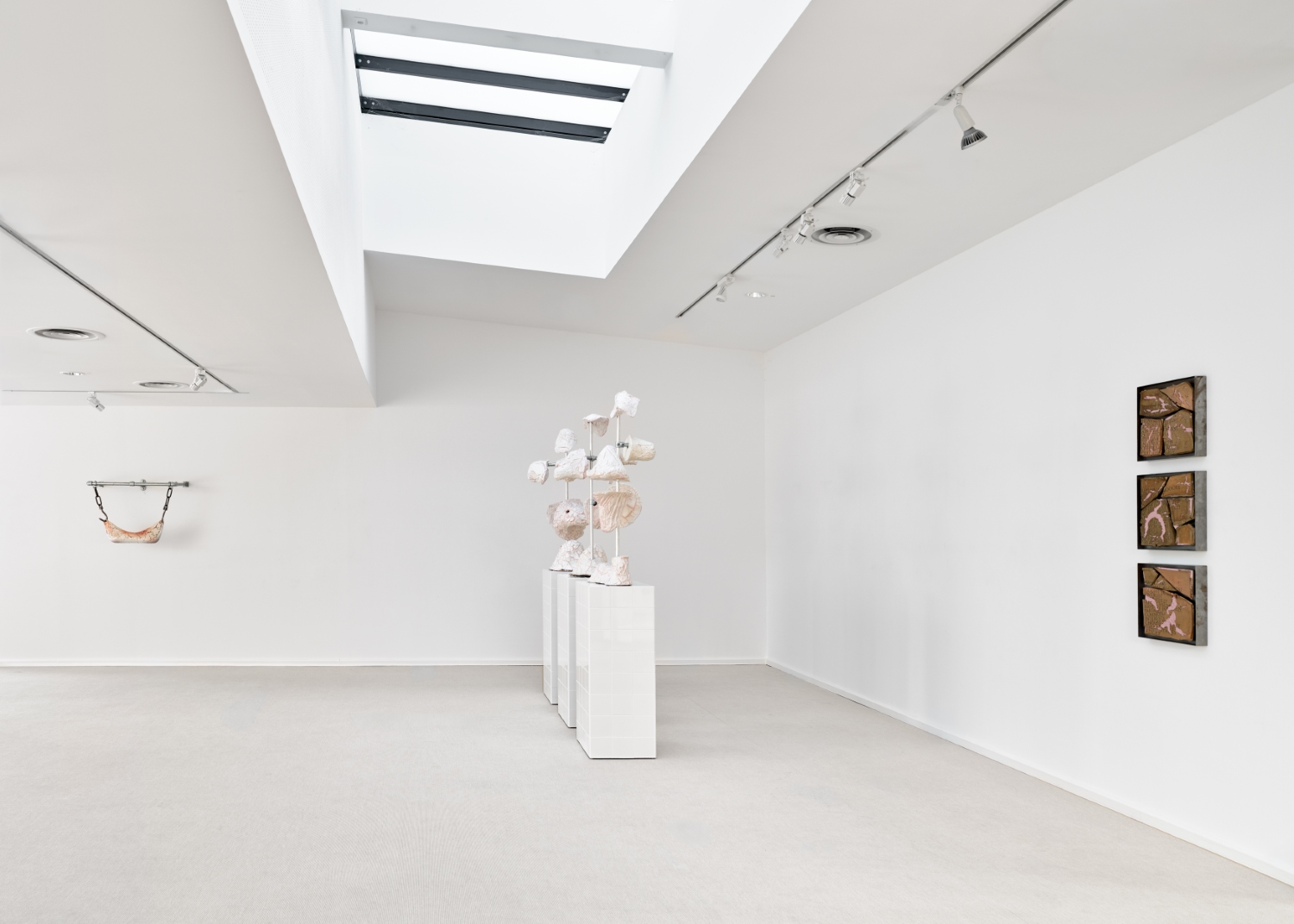
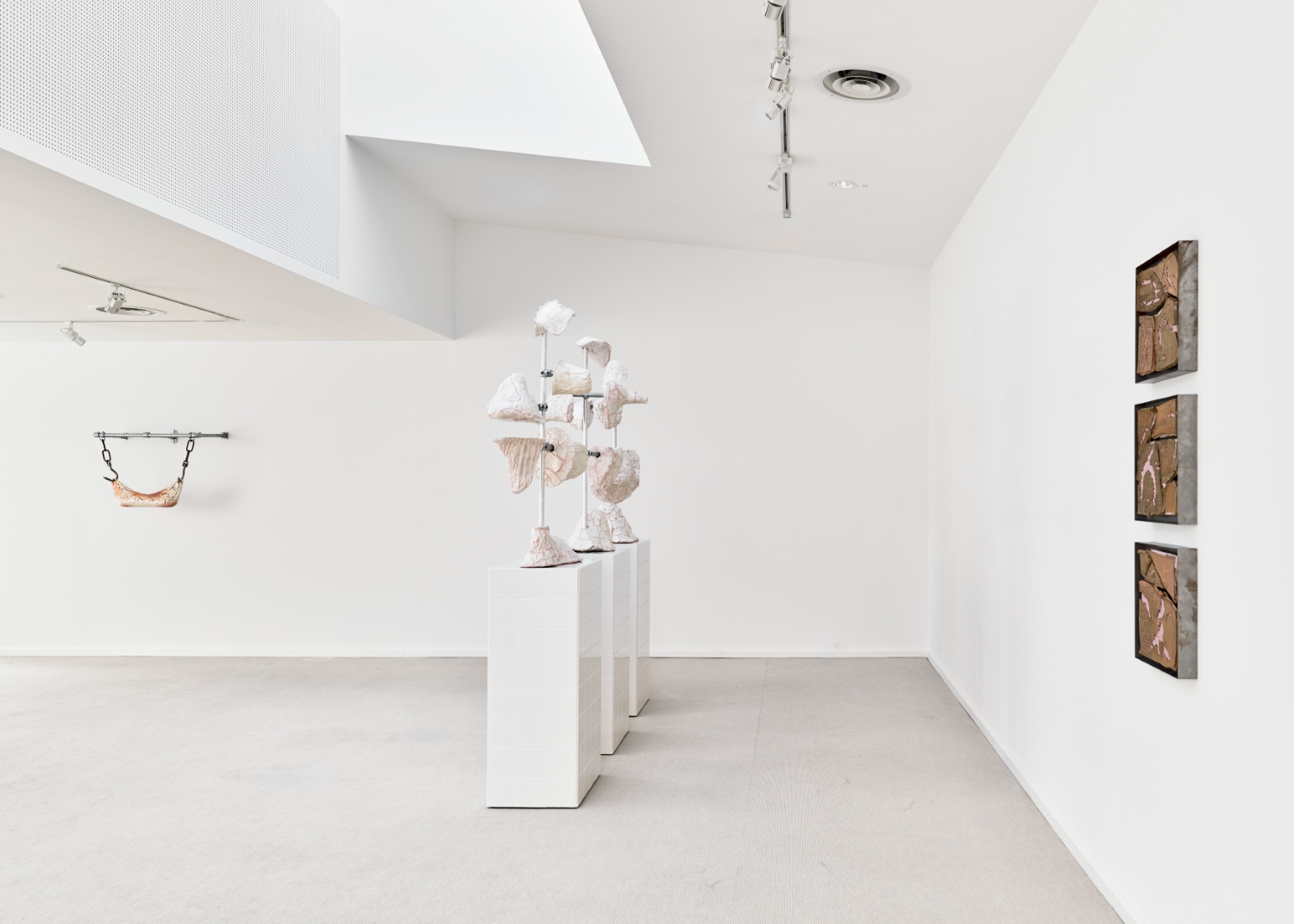
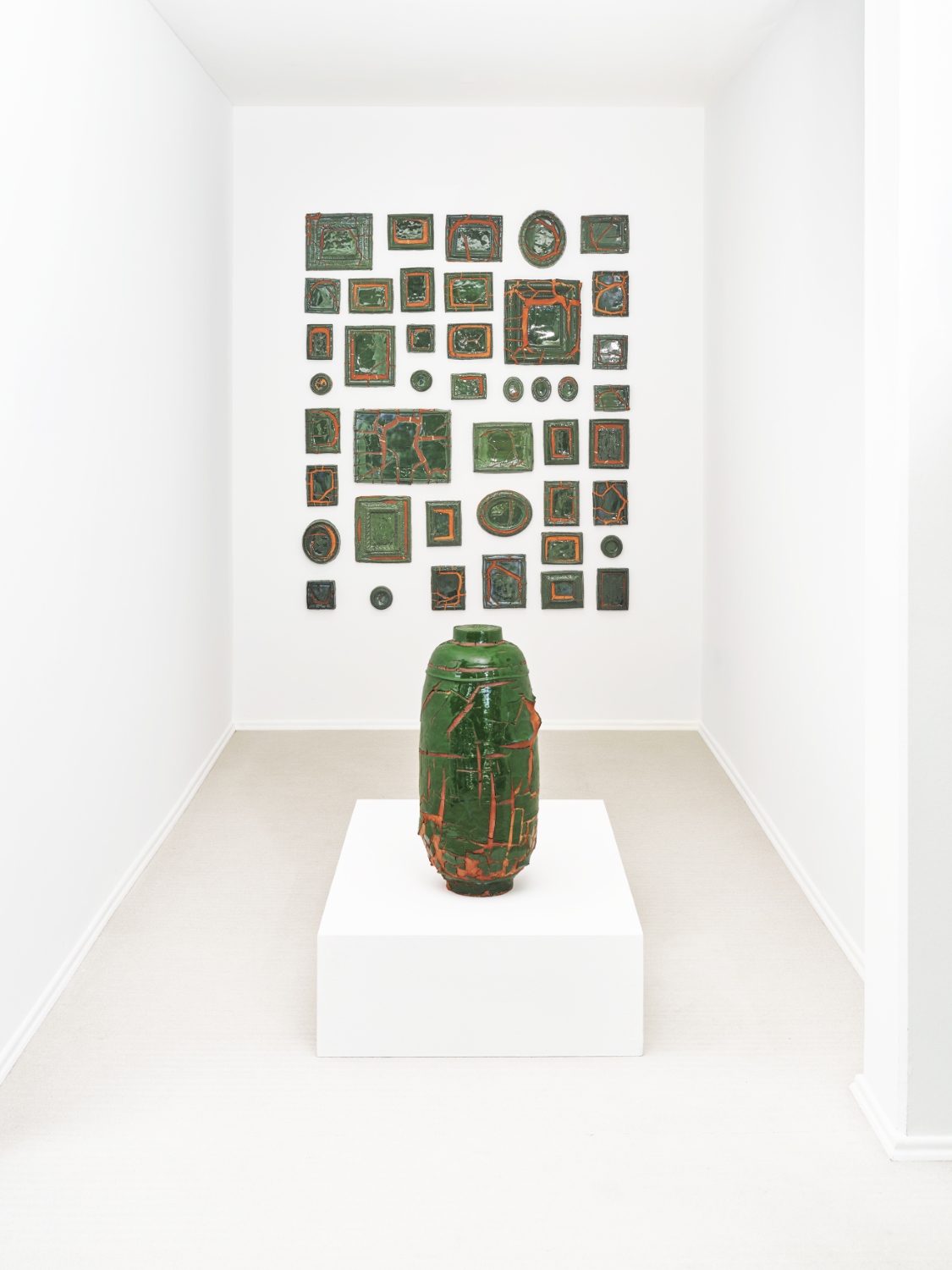
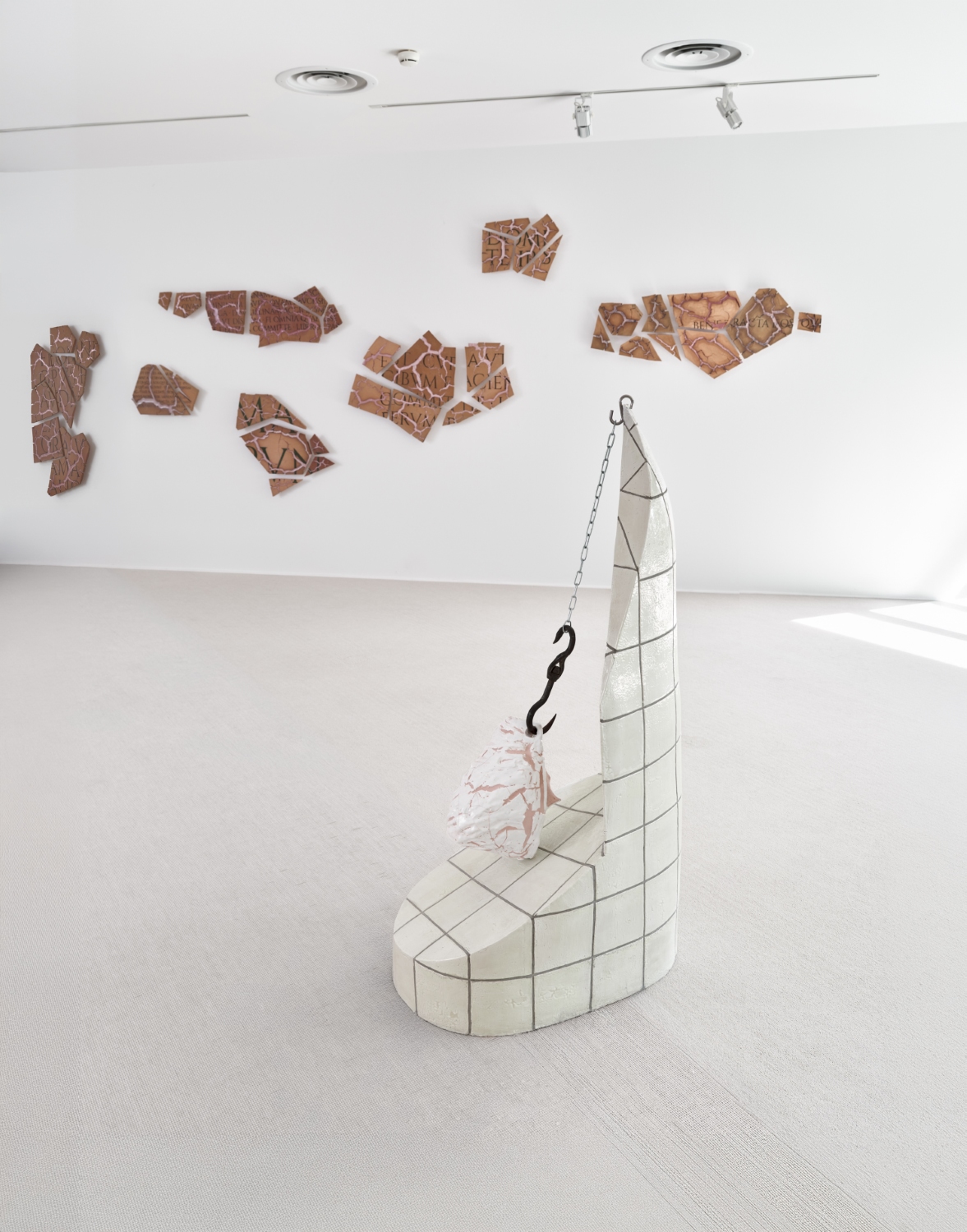
At the beginning of the exhibition, five large vessels stand with matt, crusty surfaces. The five Amphorae literally embody the five stages that every mourner goes through. Their surfaces stand in direct contrast to the white-tiled, sterile plinth on which they are displayed. The series visualizes the oldest task assigned to women: to be a brimming vessel that carries the future. Pain is pre-programmed, and no space is provided for experiences of loss. This work is rooted in a biographical experience of the artist, who here finds a poignant form for the stillbirth of her first daughter. Yet through her artistic work, Razumovskaya also uncovers a path towards healing.
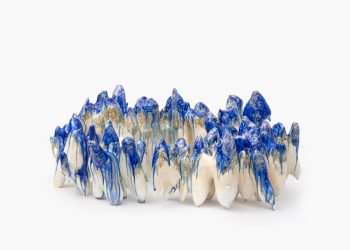
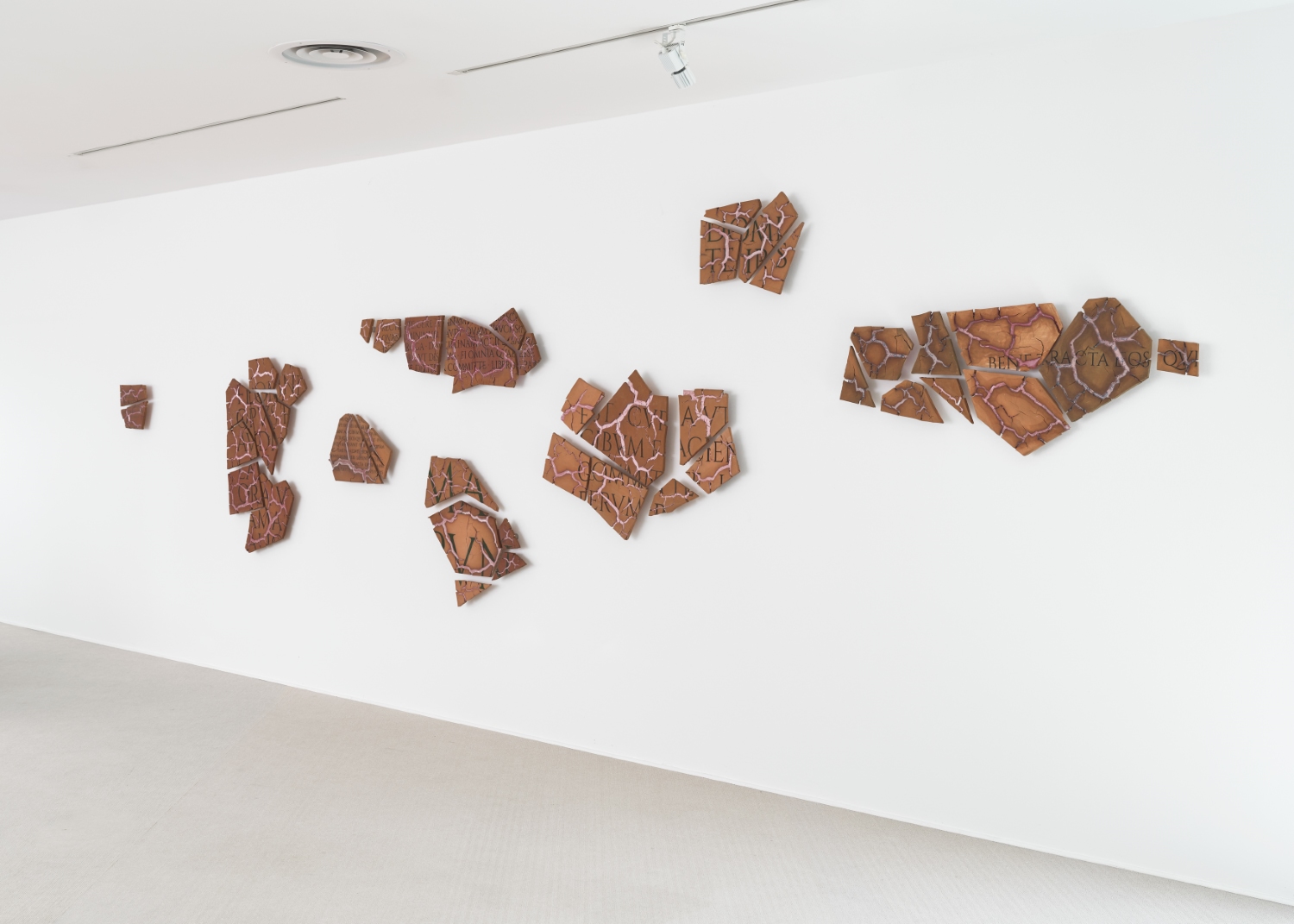
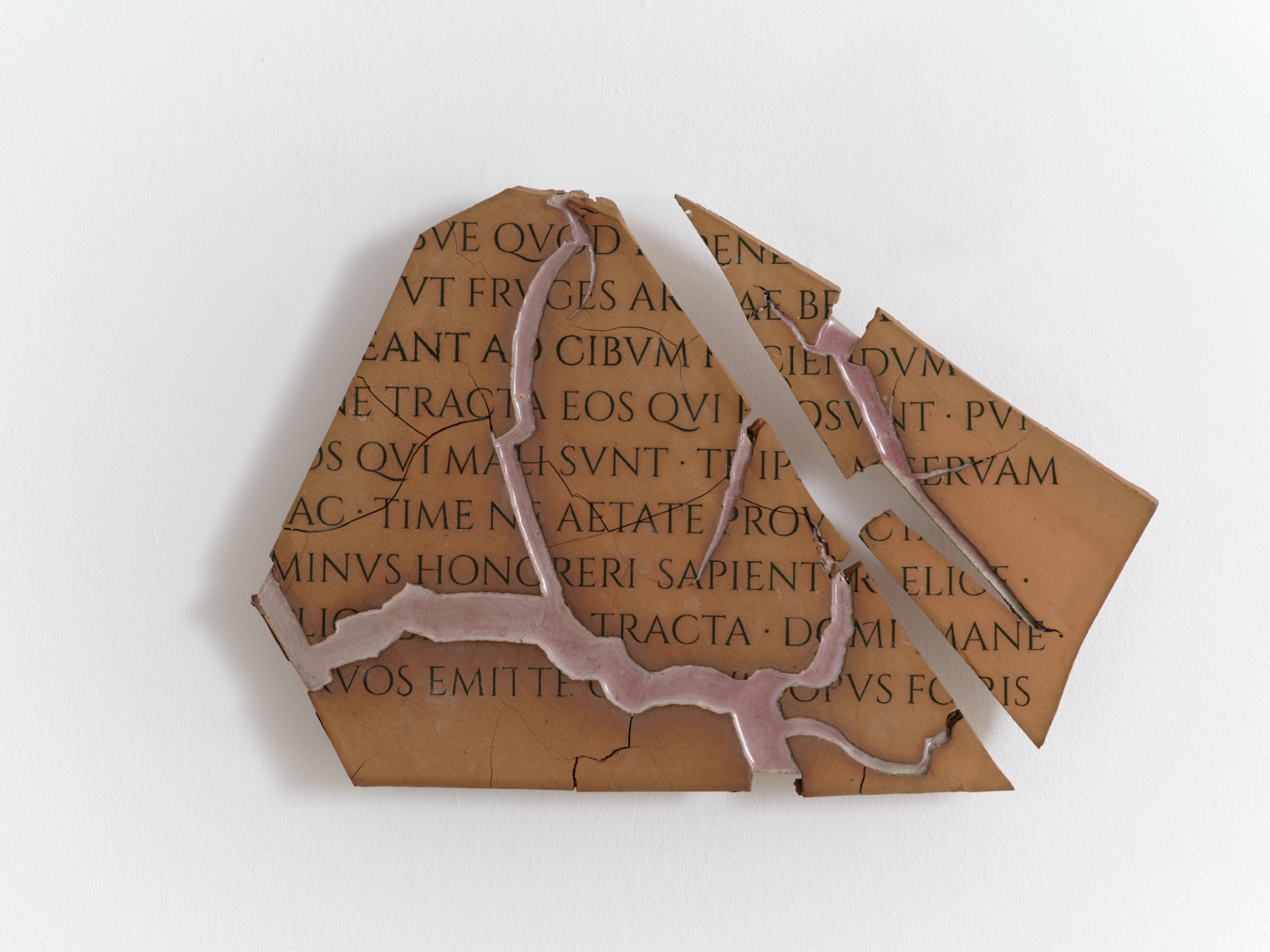
In the background of this very personal work, the Lacunae line up along the wall – a collection of broken ceramic tablets. The cracks in the tablets are filled with a pale, flesh-coloured glaze that appears like scar tissue. This work is another example of how Razumovskaya places experiences of loss within a broader context. A lacuna denotes both a missing passage in a text and a small cavity in living tissue. The work thus unites both meanings. The large wall installation, in the form of a lapidarium, brings together text fragments from literature in which women are subjected to rules of conduct. Razumovskaya drew on Xenophon’s Oeconomicus, on the Bible, and on a modern edition of Sappho’s poems, in which the missing words become the load-bearing element.
At the same time, the fragments of ancient texts also recall the writers of the Soviet Union in the 1930s, who were denied a voice of their own. Translating centuries-old texts was their only way of expressing the unspeakable. They hid their criticism and cries for help between the lines.
In this way, the artist searches for a form of her own to preserve and capture the unspoken. She visualizes it through gaps that say at least as much as what is visible. Broken ceramic forms make stories of pain, control and grief visible – stories that were actually meant to remain untold. In her ceramics, Razumovskaya materializes the unheard, forever.
Contact
kontakt@keramikmuseum.de
Keramikmuseum Westerwald
Lindenstraße 13
56203 Höhr-Grenzhausen
Germany
Photos by Kai Werner Schmidt and Tania Tolvers. Courtesy of Keramikmuseum Westerwald