






Danielle O’Malley: Selected works, 2021-2024
My work is rooted in an environmental consciousness that derives from my concern for the Earth’s rapidly declining health. I use it to highlight the misuse and abuse that we (humans from Western industrialization through present day) inflict on local and global natural ecologies. My work is influenced by my everyday observations of landscapes (both naturally occurring, and human altered), environmental catastrophes, and how present-day society interacts with the natural world. I am passionate about green health because I grew up in a rural location where I learned from an early age to respect the natural world through acts of gardening; food preservation; and livestock care. As an adult, reflecting on these experiences that influenced my values and heightened my sensitivity to local environments, I am especially perceptive of our hazardous climate.
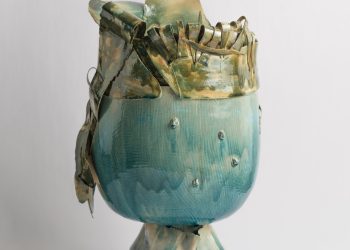
My materials and my process show my concern for natural ecologies through meticulous attention to turning earthen and upcycled materials into strong sculptural form. My monumental sculptures are made out of earthenware clay, handmade paper pulp, and upcycled waste materials (plastic bags, fishing line, electrical wire, and old clothing and bedding). I marry my earthen objects with industrial surplus that is re-contextualized through repetitive textile processes and the contrasting media charges my work with tension. The union of materials also serves as a metaphor for the complex relationship that humanity has with the natural world.
In addition to conscious material usage and impactful placement, I rely on strong formal devices and sensual form to create work that is symbolically charged. My forms are influenced by domestic and industrial objects that I experience in my daily life that are indicative of warning symbols and possible solutions for living more resourcefully. I use exaggerated scale, assembled mass, form isolation, and tension to emphasize my concern for the declining health of our planet.
My large-scale work offers my viewers a space to reflect on our hazardous environmental situation. I hope that my passion for making, my love for the earth, and my delight in observing the world around me in combination with my work will encourage people to join me in reconsidering our daily routines.
Captions
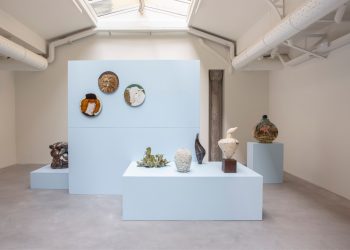
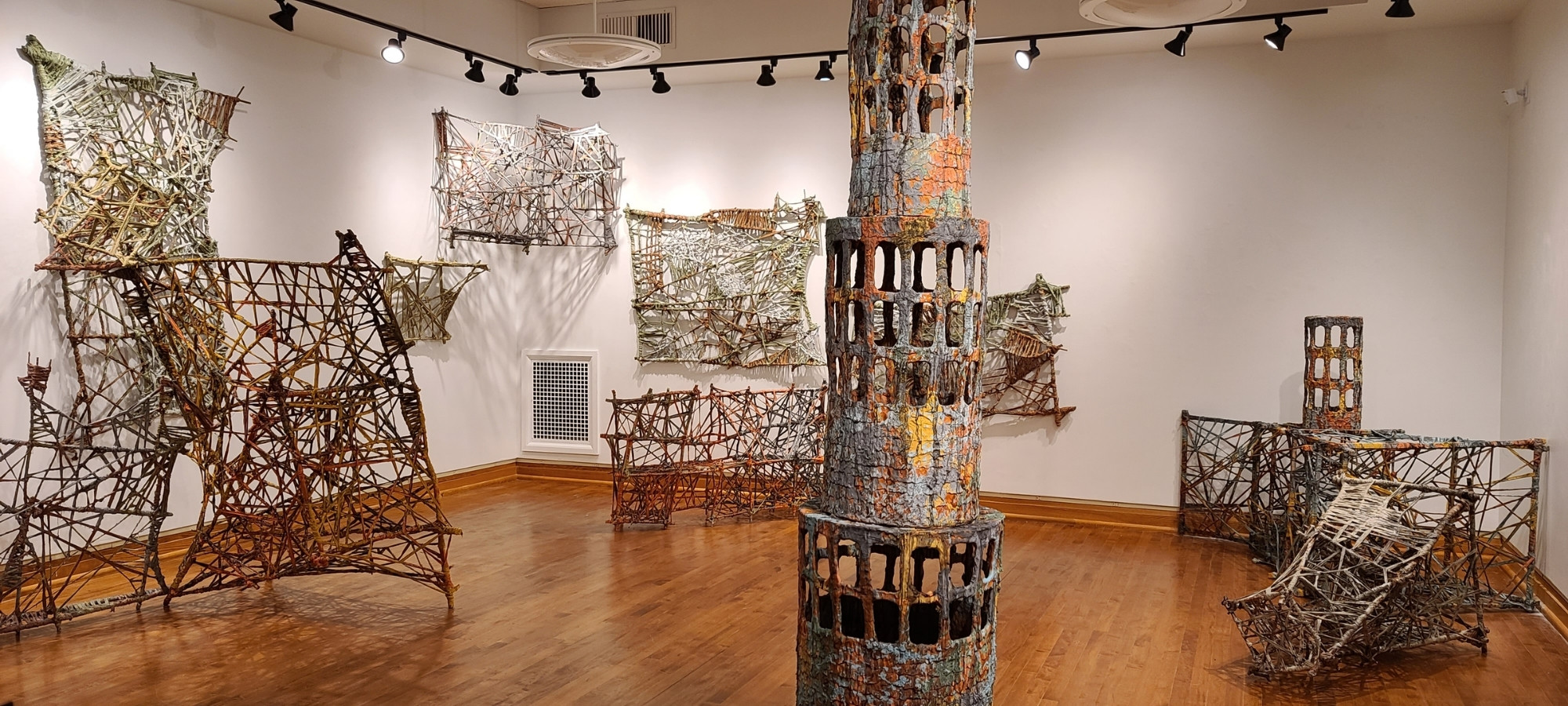
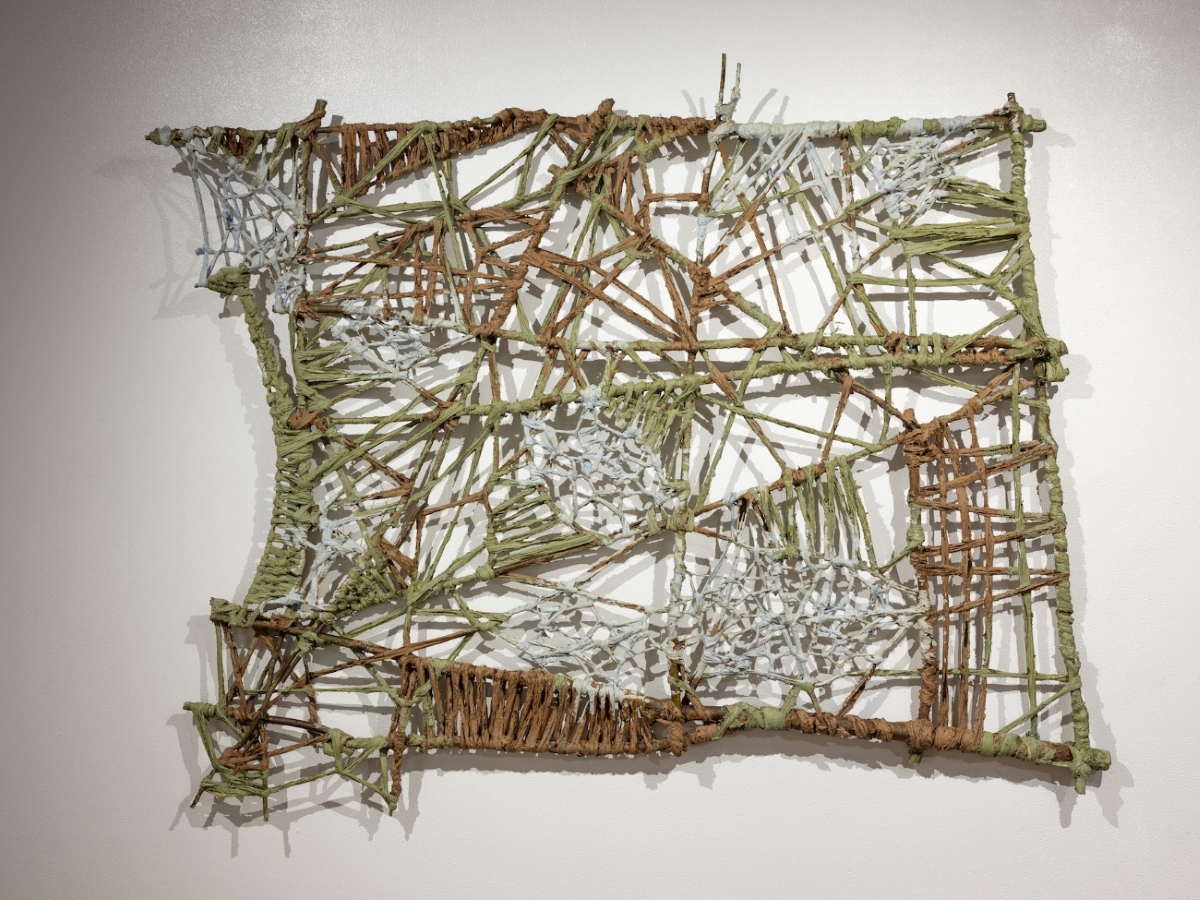
- Where the Deer and the Antelope Played, 2024, Handbuilt Earthenware Paper Clay, Unfired Adobe Clay, Bound Willow Branches (locally and ethically sourced), Woven Up-cycled Fabric (bedsheets) with Unfired Adobe Clay, Up-cycled Latex Paint, Up-cycled Tempera Paint, Oxides, installed in 15’ x 15’ gallery. This installation highlights iconography of the western landscape that is representative of the need for healthy boundaries with the natural world, so the Earth can heal from the wounds humanity continues to inflict on it. Fences, property markers, and scars on the land (from extraction processes) are as integrated into the western landscape as flora and fauna. They act as boundaries and barriers that protect, block, identify, guide and contain. They are also representative of colonization and the devastation that colonialist values bring to the land. According to Canadian researcher Max Liboiron, “pollution is not a manifestation or side effect of colonialism but is rather an enactment of ongoing colonial relations to the land.” This installation is a call for an anti-colonialist approach to the present-day eco-emergency.
- Sink or Swim, 2021, Handbuilt Earthenware, Porcelain, Stoneware, Woven Electrical Wire, Knit/Crocheted Fishing Line, Handmade Paper (Up-cycled Clothing + Locally Sourced Plants), Antique Hooks, Rust Dye, 7’ x 3’ x 2.5’. It is common to encounter piles of retired, discarded buoys in coastal regions – making one think of litter, pollution, and wastefulness. This piece references overconsumption and it symbolizes our need to be more resourceful with materials that are locally available (upcycle/reclaim) as this buoy-like cluster is lashed together with discarded materials.
- Smoke Stacks, 2023, Fired Paper Clay, Tempera & Latex Paint, Adobe Clay, 10’ x 15’ x 8’. By using iconography from the western landscape that is indicative of wide-spread carbon footprint, this installation will be a call for viewers to start relying on locally available resources in order to reduce greenhouse emissions.
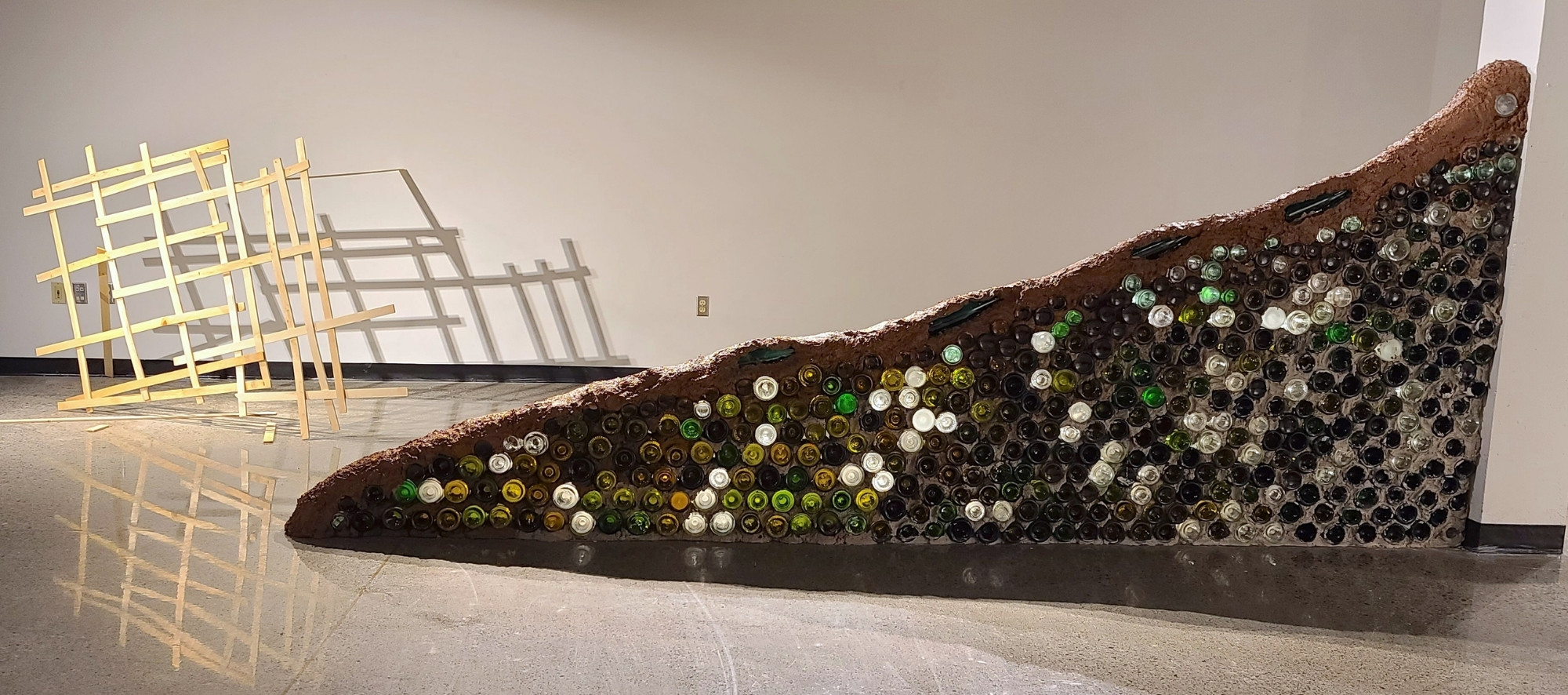
- Where the Buffalo Roamed, 2024, Up-cycled Glass Bottles (gathered from a local wine shop), Unfired Adobe Clay, Wood, 5.5’ x 14’ x 1.5’. The piece highlights the negative consequences of our consumeristic culture by showing how our waste products are becoming integrated with the land. Human-made substances outweigh natural materials.
- Tethered and Restricted, 2021, Handbuilt Paper Clay (Earthenware/Stoneware), Handmade Paper (Up-cycled Clothing + Locally Sourced Plants), Handmade Rope from Up-cycled Bedding, Rust Dye, 3’ x 10’ x 7’. This installation references public beaches with swim sections indicated by ropes and buoys. This installation incorporates a boundary-like sensibility; representing safeguarding and respect for nature. The space is literally roped off — making it symbolic of either a safe or contained space.
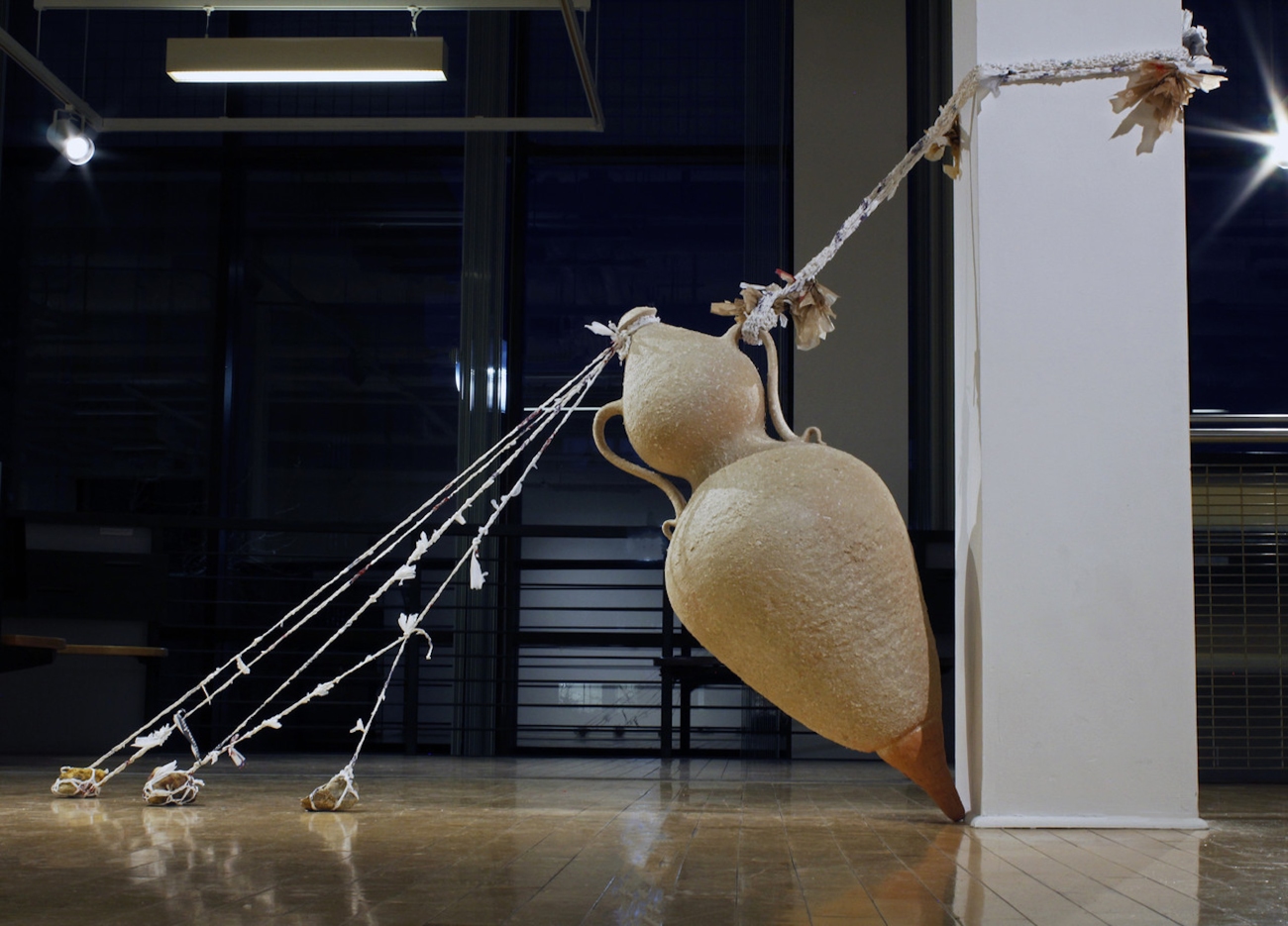
- A Precarious Situation, 2021, Handbuilt Paper Clay (Earthenware), Up-cycled and Crocheted Plastic Bags, Handmade Paper from Locally/Ethically Sourced Plants, Found Rocks, 5’ x 7’ x 2’. This piece is indicative of sensual form inspired by moorings I encounter in oceanic landscapes. A sense of tension is created as the sculpture leans, unbalanced, and the crocheted plastic constricts the earthen element – serving as a metaphor for the imbalance of the natural world.
- An Unstable Foundation, 2021, Handbuilt Paper Clay (Earthenware), Up-cycled and Crocheted Plastic Bags, Handmade Paper from Locally/Ethically Sourced Plants, 5’ x 13’ x 3’. This large, smooth, and voluptuous form was inspired by mooring forms found in coastal landscapes. The exaggerated the scale anthropomorphizes the form and alludes to a seed pod. The weight of the piece stretches and strains the support structure – showing that plastic is not sustainable.
- Materials in Motion #1, 2022, Up-cycled Fabric with Adobe Paper Clay woven on Willow Structures; Handbuilt Earthenware with Majolica and Up-cycled Electrical Wire; Handbuilt Earthenware/Stoneware Trestles with Rust Dye, Charcoal, Drawing Ink; Tracks lashed to Wooden Board, installed in 15’ x 15’ gallery. This piece utilizes iconography from the western landscape that symbolizes wide-spread carbon footprint (as trains and mining carts are used to move materials from their point of origin to world-wide destinations). It is a call for people to rely on locally available resources in order to reduce greenhouse emissions.
- Materials in Motion #2, 2023, Handbuilt Earthenware with Majolica and Up-cycled Electrical Wire; Handbuilt Earthenware/Stoneware Trestles with Rust Dye, Charcoal, Drawing Ink; Tracks lashed to Wooden Board, 9’ x 6’ x 2.5’. This piece utilizes iconography from the western landscape that symbolizes wide-spread carbon footprint (as trains and mining carts are used to move materials from their point of origin to world-wide destinations). It is a call for people to rely on locally available resources in order to reduce greenhouse emissions.
- Materials in Motion #3, 2023, Handbuilt Earthenware with Majolica Glaze, Up-cycled Electrical Wire, displayed on Hand-stitched Up-cycled Bedding Quilt, 2.5’ x 8’ x 8’. This piece utilizes iconography from the western landscape that symbolizes wide-spread carbon footprint (as trains and mining carts are used to move materials from their point of origin to world-wide destinations). It is a call for people to rely on locally available resources in order to reduce greenhouse emissions.
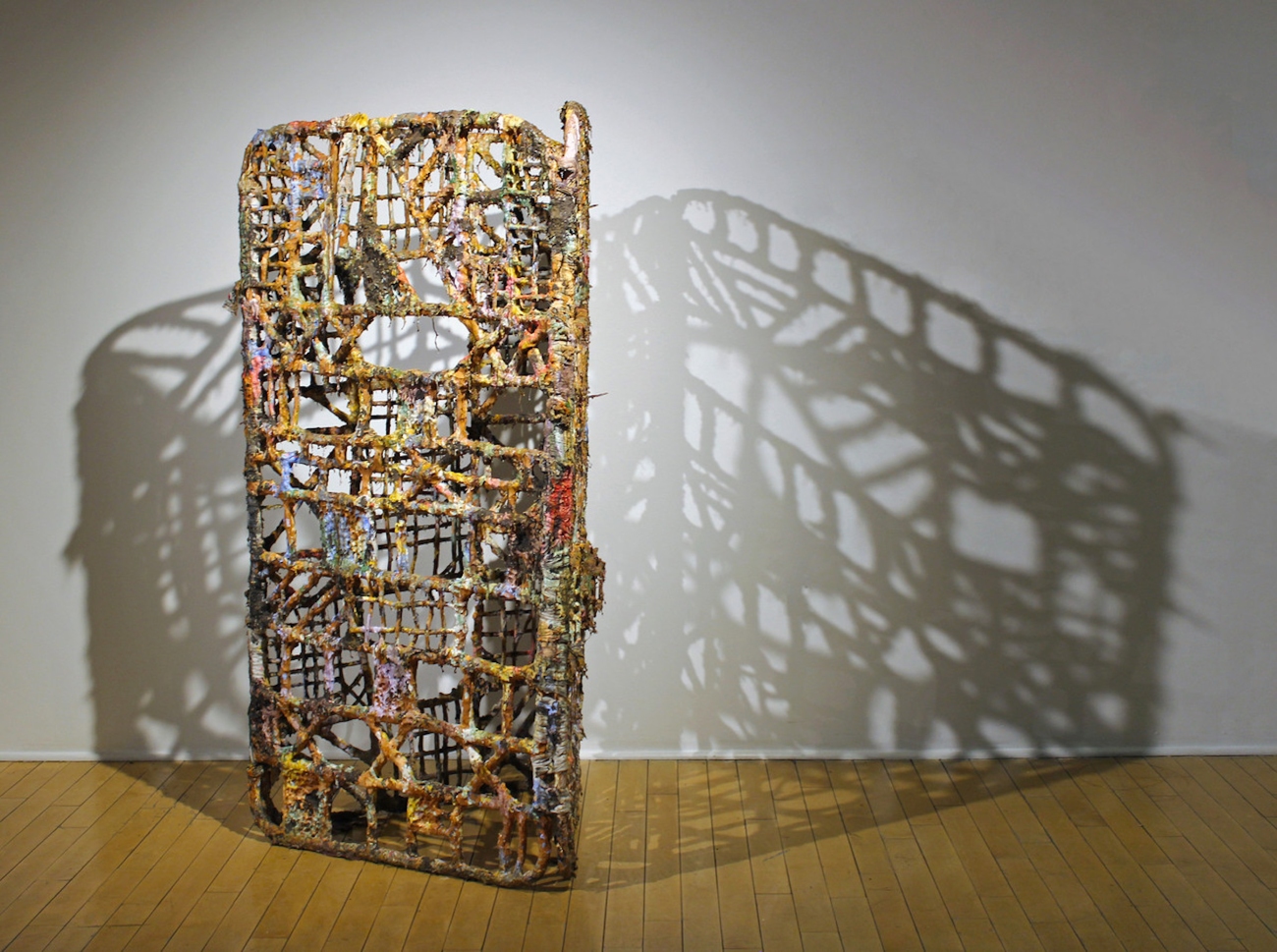
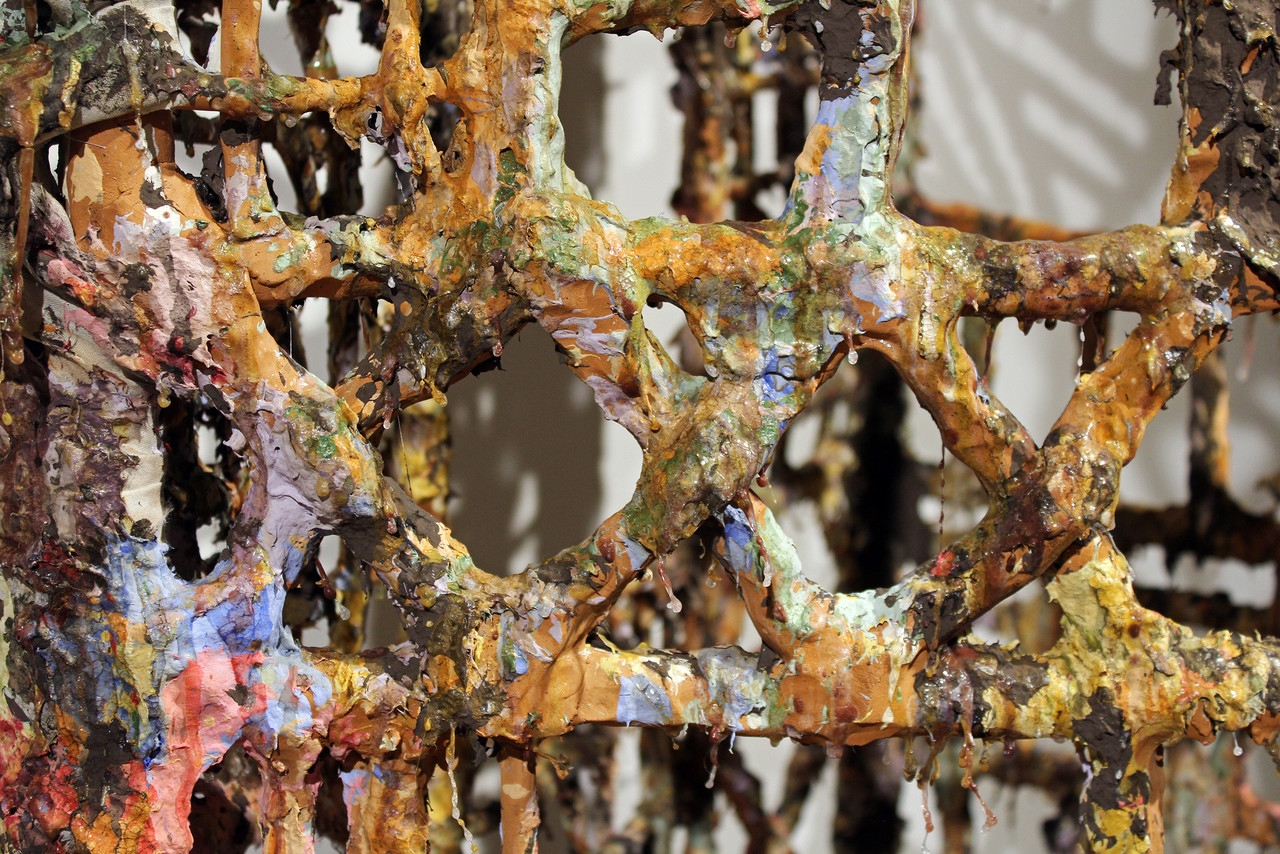
- Caged, 2021, Handbuilt and Woven Paper Clay (Earthenware), Zip Ties, Up-cycled Draperies, Adobe Paper Clay with Oxide/Gouache, Sodium Silicate with Oxide Stains, Rust Dye, Coffee Dye, 5.75’ x 3.5’ x 3.5’. This monumental piece references traps that I find discarded and washed up on the beach. It alludes to the fact that we are as much the victim as the earth is through our misuse and abuse of the natural world.