By Mami Kato, Kristie Lui, Naomi Saito, and Haruka Miyazaki
To consider the ceramic vessel is to contemplate its spatial interior. For Tokoname-based ceramic artist Kato Mami 加藤 真美 (b. 1963), the interior of a vessel, far from being an empty void, embodies its essential nature. Interior and exterior coexist, forming a site that mediates the relationship between human and object (vessel). This is a function Kato regards as a fundamental theme in all vessels: “I was captivated by the inside of everyday vessels: how they receive, wrap, and hold,” Kato reflects, “Rather than emptiness, the space holds a certain presence, a trace of a soul.”
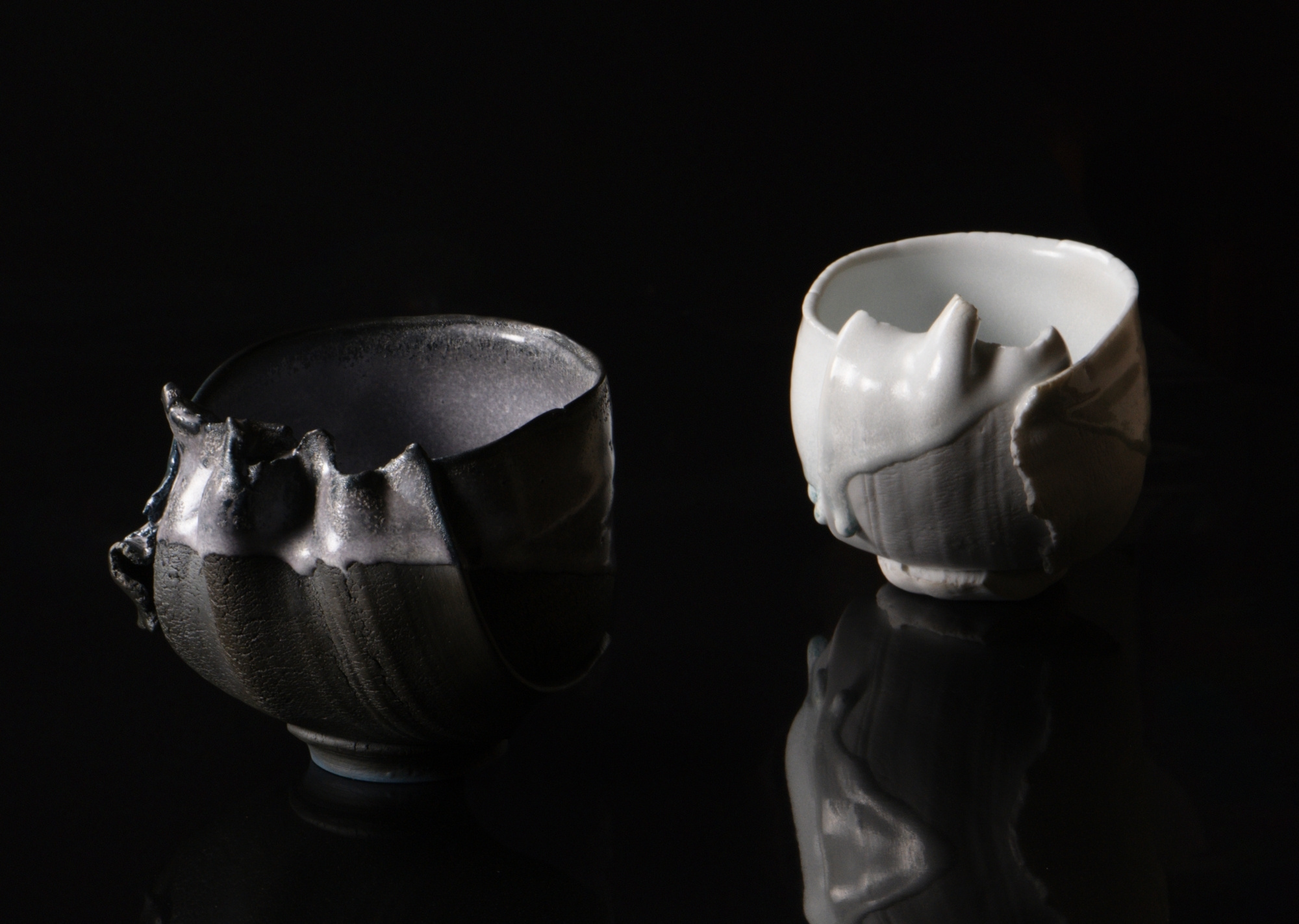
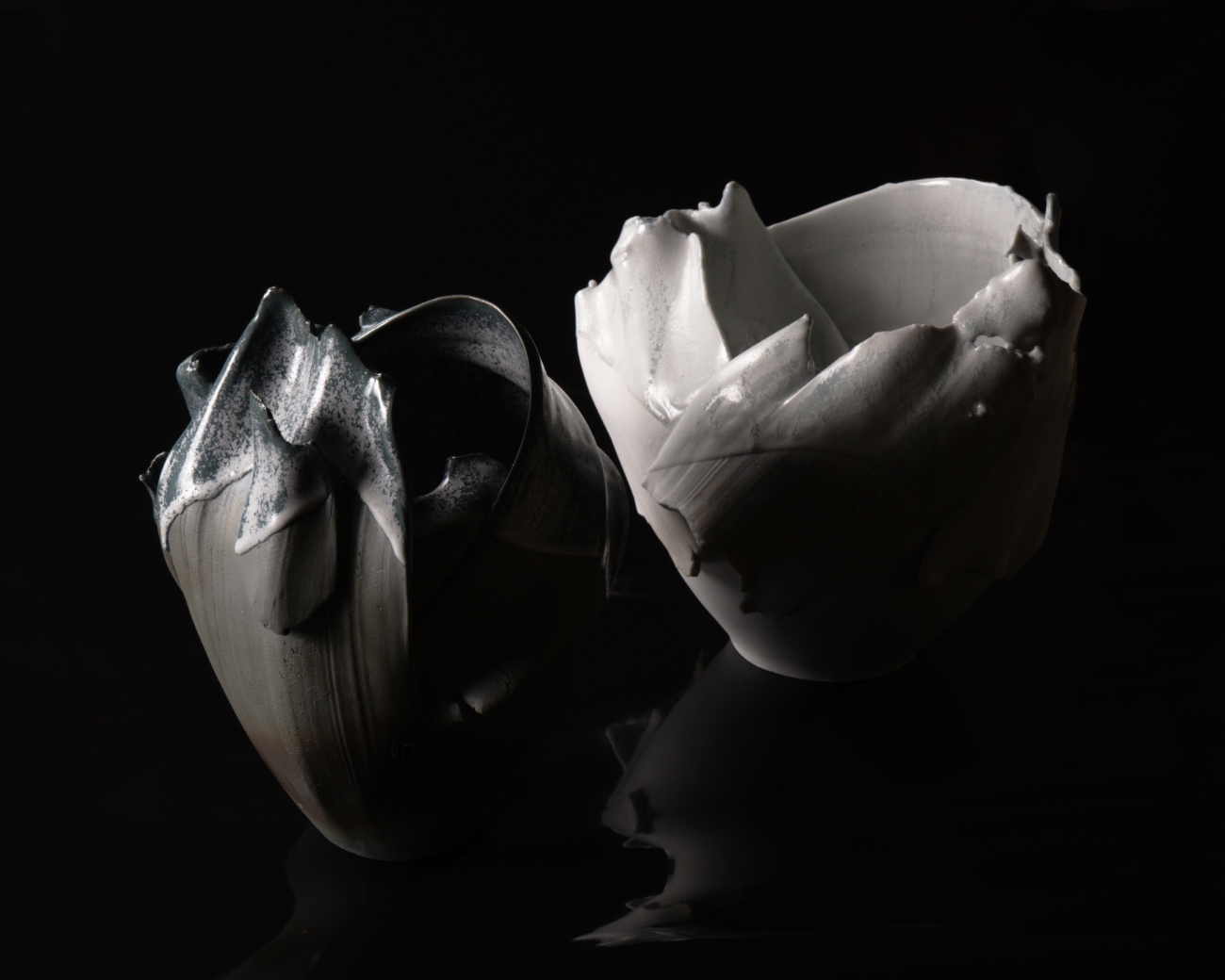
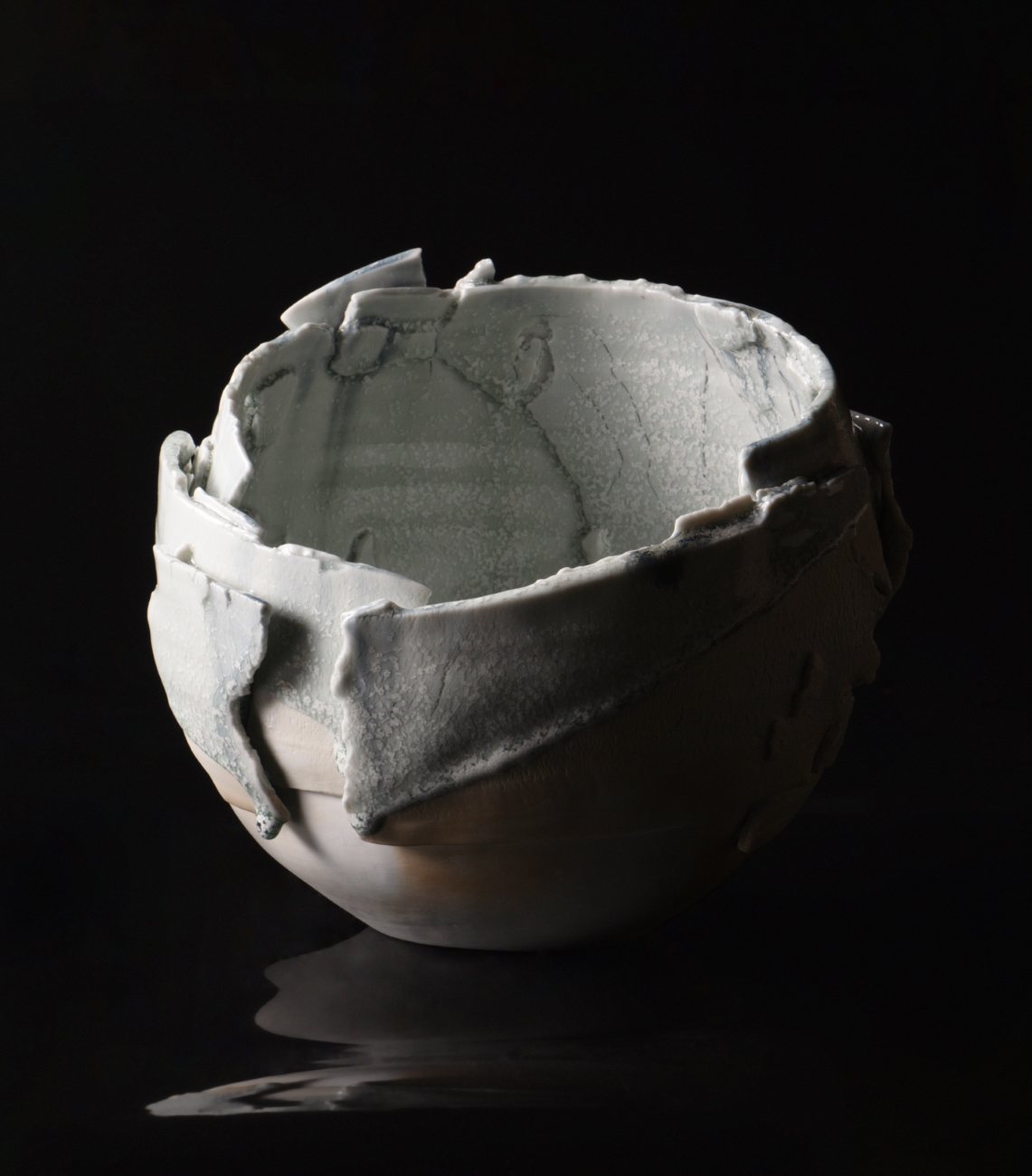
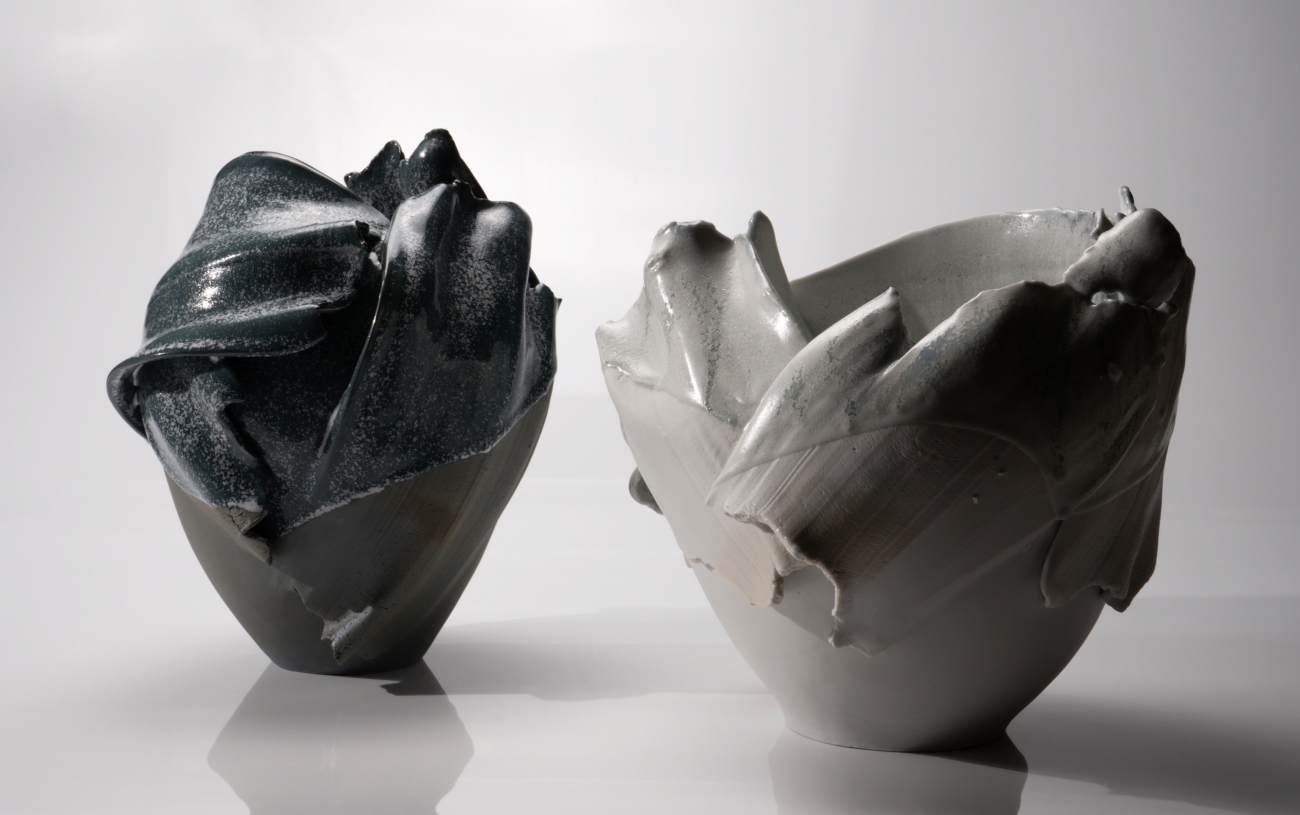
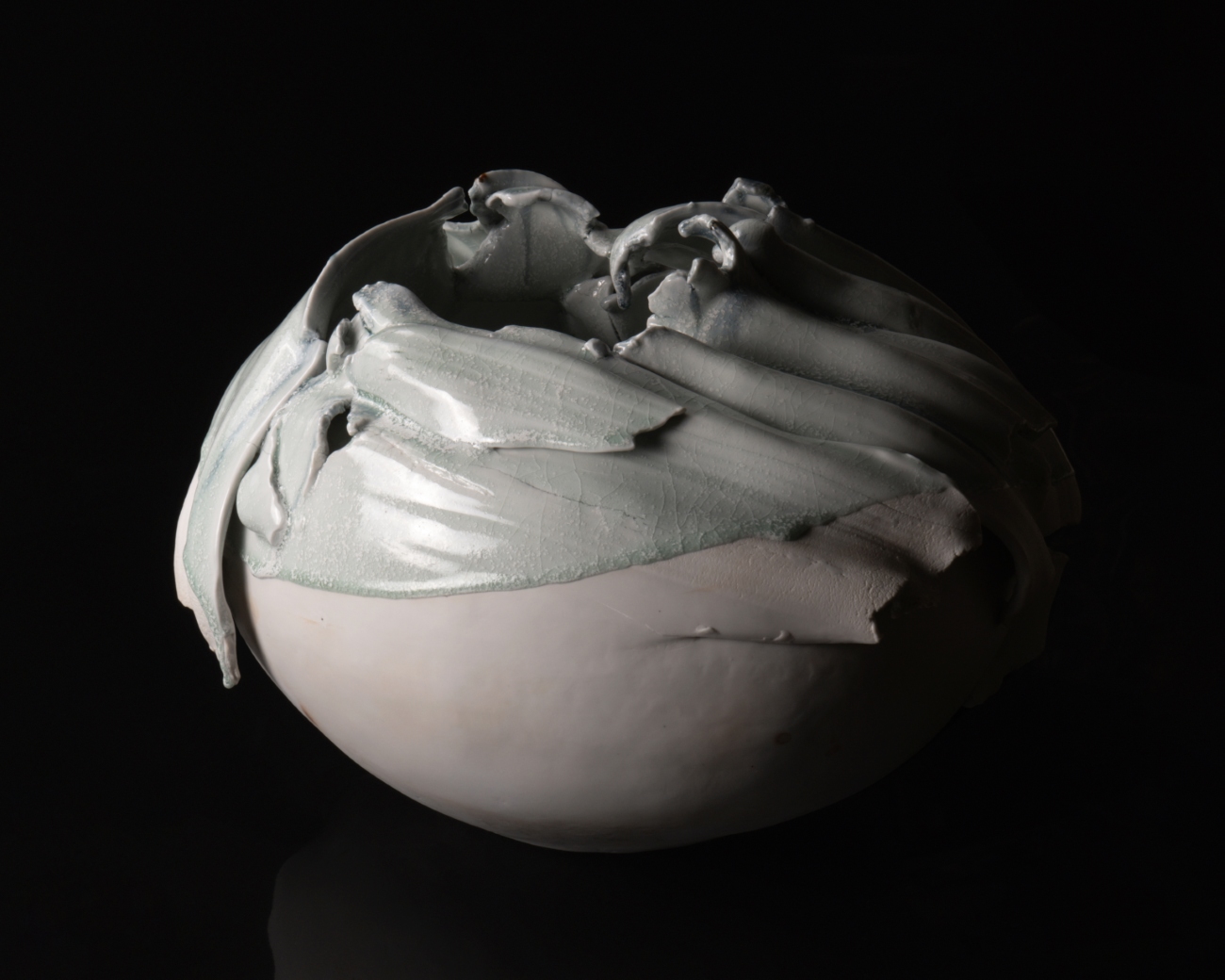
For Kato, this philosophy of interior presence also extends outward into form: the vessel’s “soul” finds further expression in textures and surfaces that invoke potent themes from the natural world. Working primarily with sheets of porcelain clay, Kato constructs sculptural forms that echo glacial terrains, quarried mountains, or oceanic tides. Her process is defined by formal tensions between sharpness and softness. Delicate slabs and ribbons of porcelain clay are layered, folded, and draped to achieve structure while still retaining organic fluidity. Under shifting light, the surfaces of her works comprise crystalline tones and dramatic, angular shadows that impart an ethereal impression on the viewer. Subtly iridescent glazes, in pale greens and blues, emerge through the matrix like glacial melt over porcelain, recalling distant and celestial terrains. The making is meticulous: hand-building, painting, glazing, drying, before finally firing in a gas kiln.
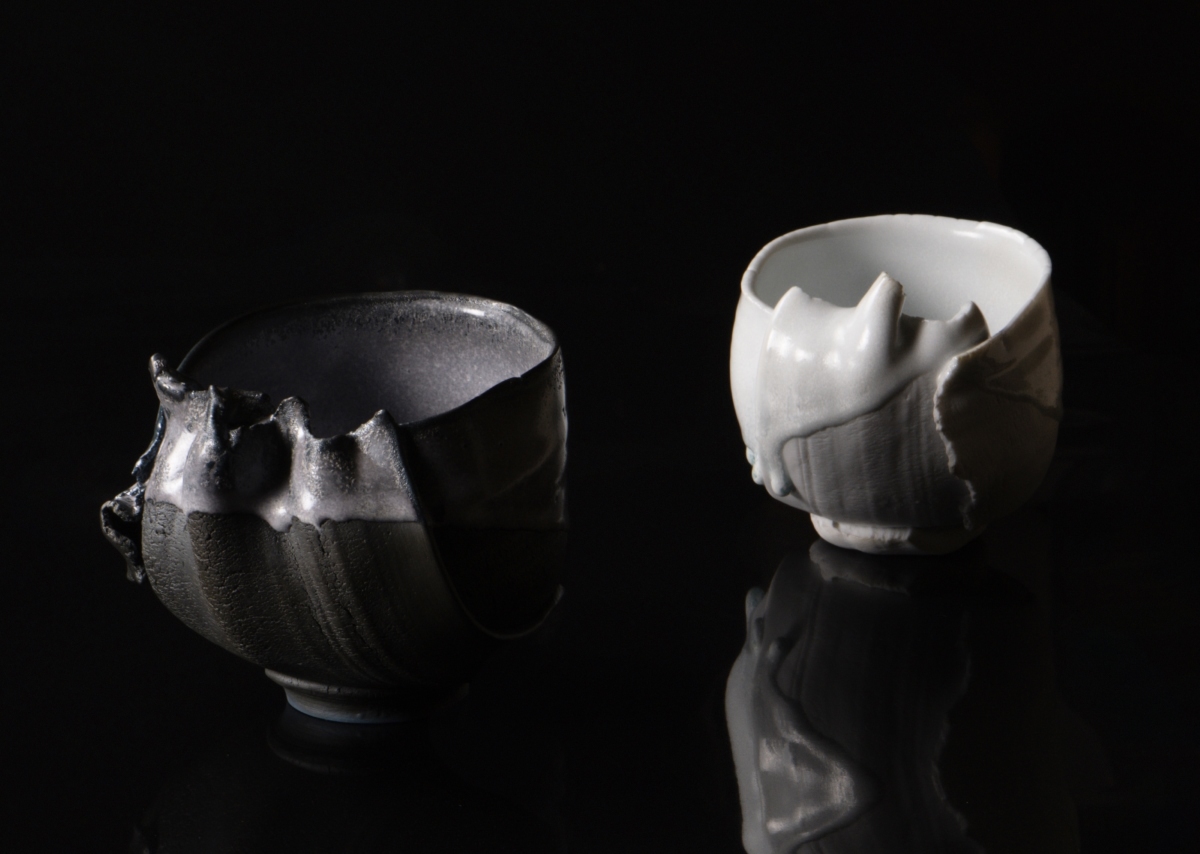
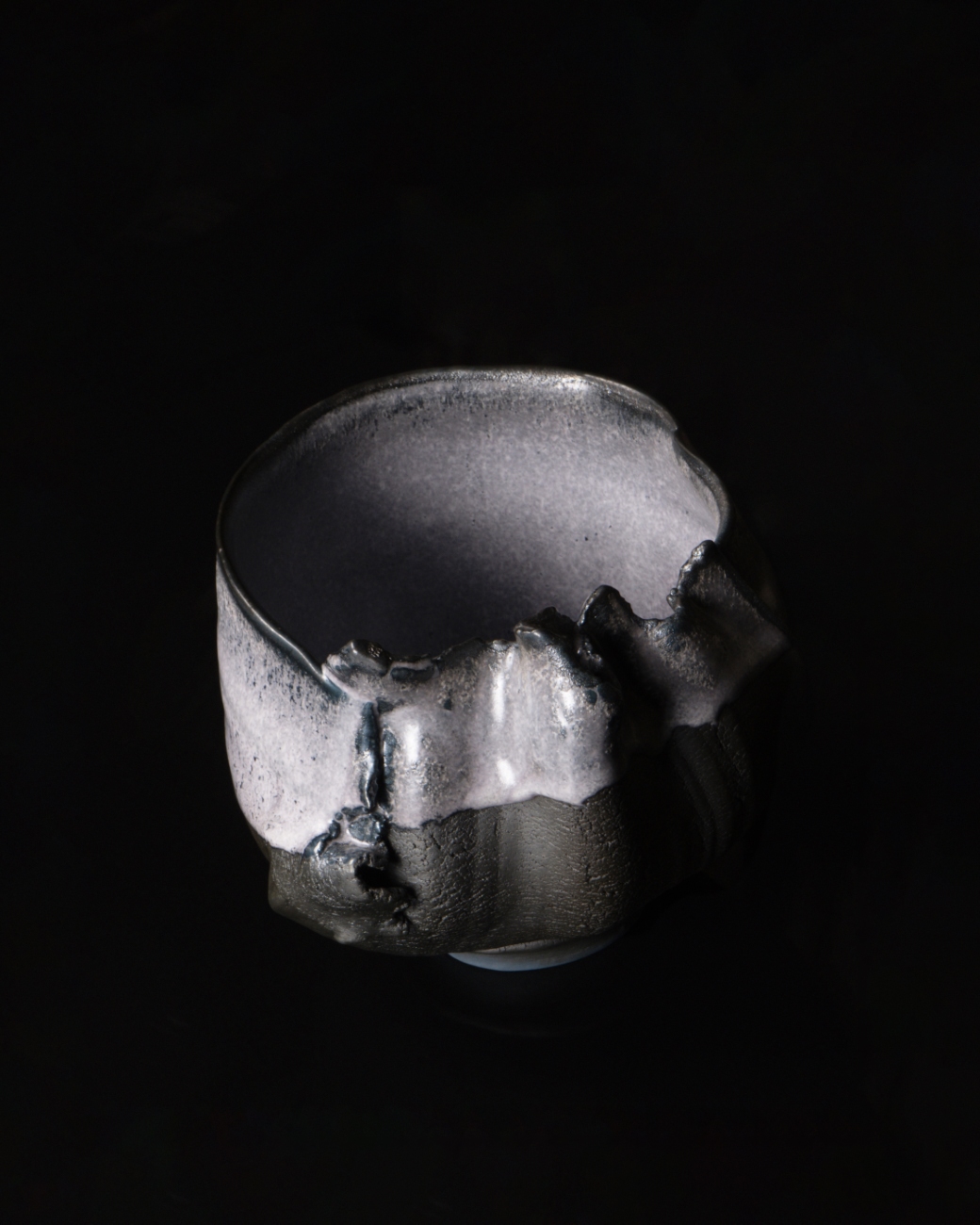
The thematic sensitivity to form and containment in vessels finds one of its most poignant expressions in Kato’s celebrated chawan (tea bowls), among the most beloved vessel forms in Japanese ceramics. In her chawan, she compresses vast imagined landscapes into the intimate scale of human hands. Each bowl is formed by draping a slab of clay over a mold, resulting in asymmetrical seams and distortions that accentuate its interior form. Kato invites the beholder to contemplate its mikomi (見込み; a term that refers to the interior space of a tea bowl among its other meanings) into more than just a container for tea. Interior space becomes a site of convergence where, in the hands of the beholder, projected imagination completes the vessel itself. It is here that the question returns with new force: what constitutes a vessel?
In 2014 and 2024, Kato made history as the first woman to win the the Shōroku Award Chawan Exhibition (renamed to the Mino Chawan Exhibition in 2015). This was a turning point in both her career and the broader landscape of Japanese ceramics. About the winning tea bowl, Kenji Kaneko (concurrently the Director of Bizen City Art Museum, Tōshin Mino Ceramic Art Museum, and the Ibaraki ceramic art museum) who was serving as a panel judge, remarked:
“This tea bowl was formed by draping a slab of clay over a mountain-shaped plaster mold. Where the slabs overlap on the body, they are slightly misaligned and crimped, creating a distinctive nuance unique to the artist. These subtle distortions lay bare the internal structure of the vessel, posing the question: What is a vessel? In this way, the artist imbues the work with a deeply personal reflection. It becomes, in a sense, a space through which the self is released.”
Following this milestone, among several other accomplishments, Kato was also awarded the Grand Prize, at the prestigious 44th Mino Ceramics Exhibition, Japan in 2019. In 2021, her work received the Grand Prize at the 22nd Japan Ceramic Art Exhibition, where the jury noted how the surface of her ceramics, which resembled crackled icy frost in color and form, still radiated a presence of warmth from within. The winning vessel from 2021 was inviting, beckoning viewers to look inside through various systems of undulating curves that guided the eye towards the centre of the piece. This abstract duality, between coldness and vitality; structural and organic, are expressed throughout her oeuvre.
Over time, Kato’s vessel forms have continued to evolve. She meditates upon how vessels outwardly connect and communicate with subjects and viewers. Her recent works establish a dialogue between nature and vessel, between physical form and emotional resonance. In 2024, she was nominated for the prestigious Paramita Ceramic Art Grand Prize Exhibition.
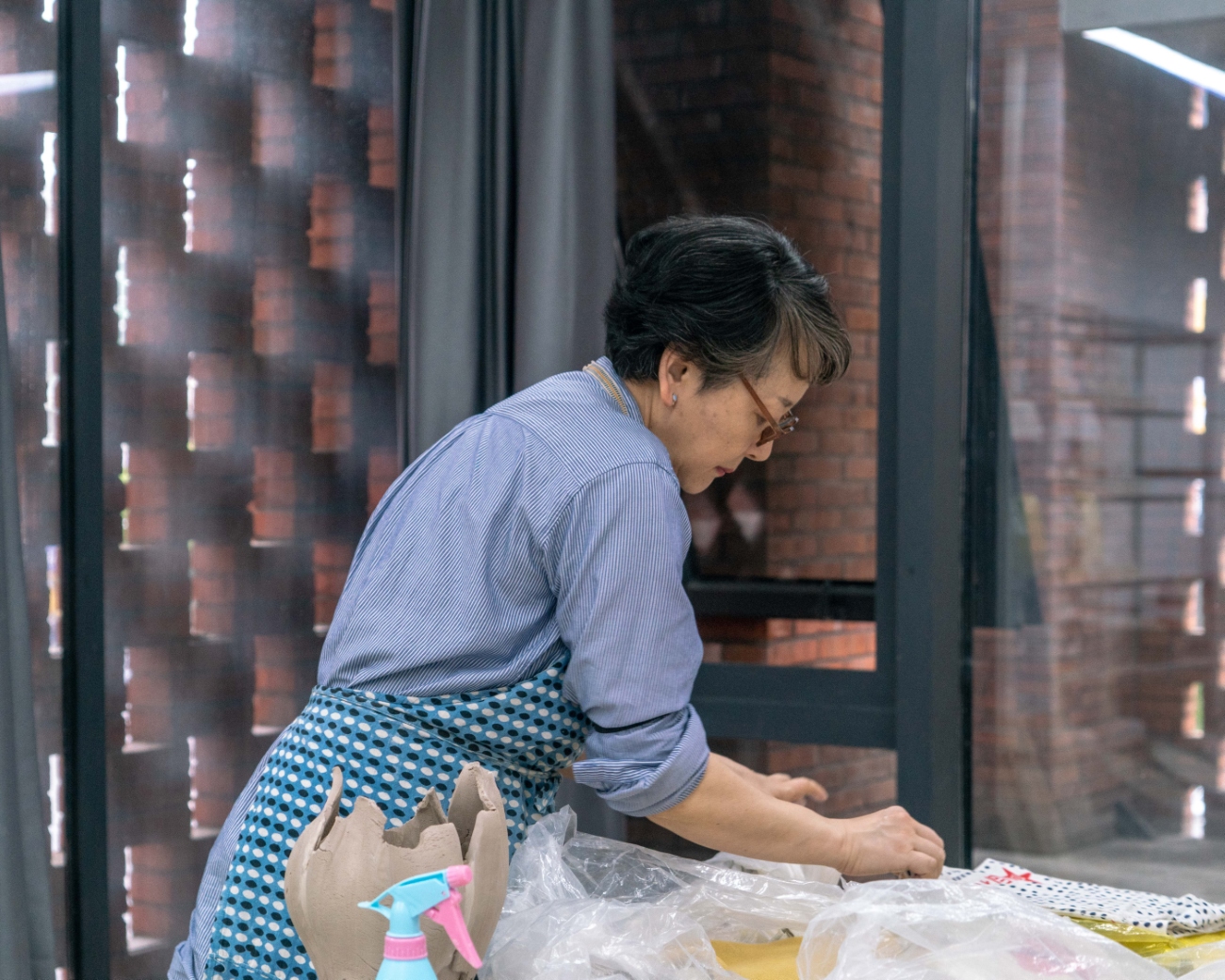
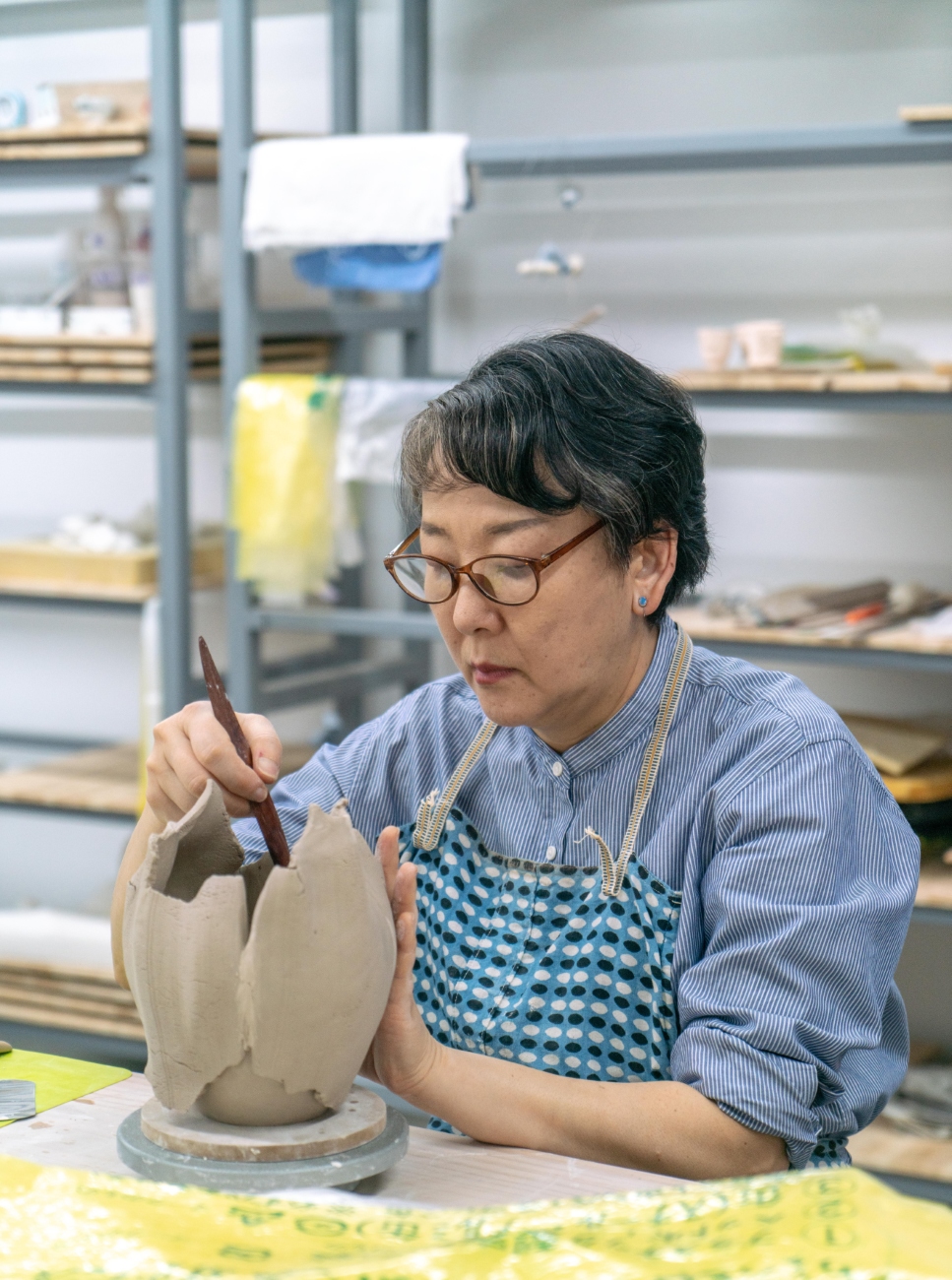
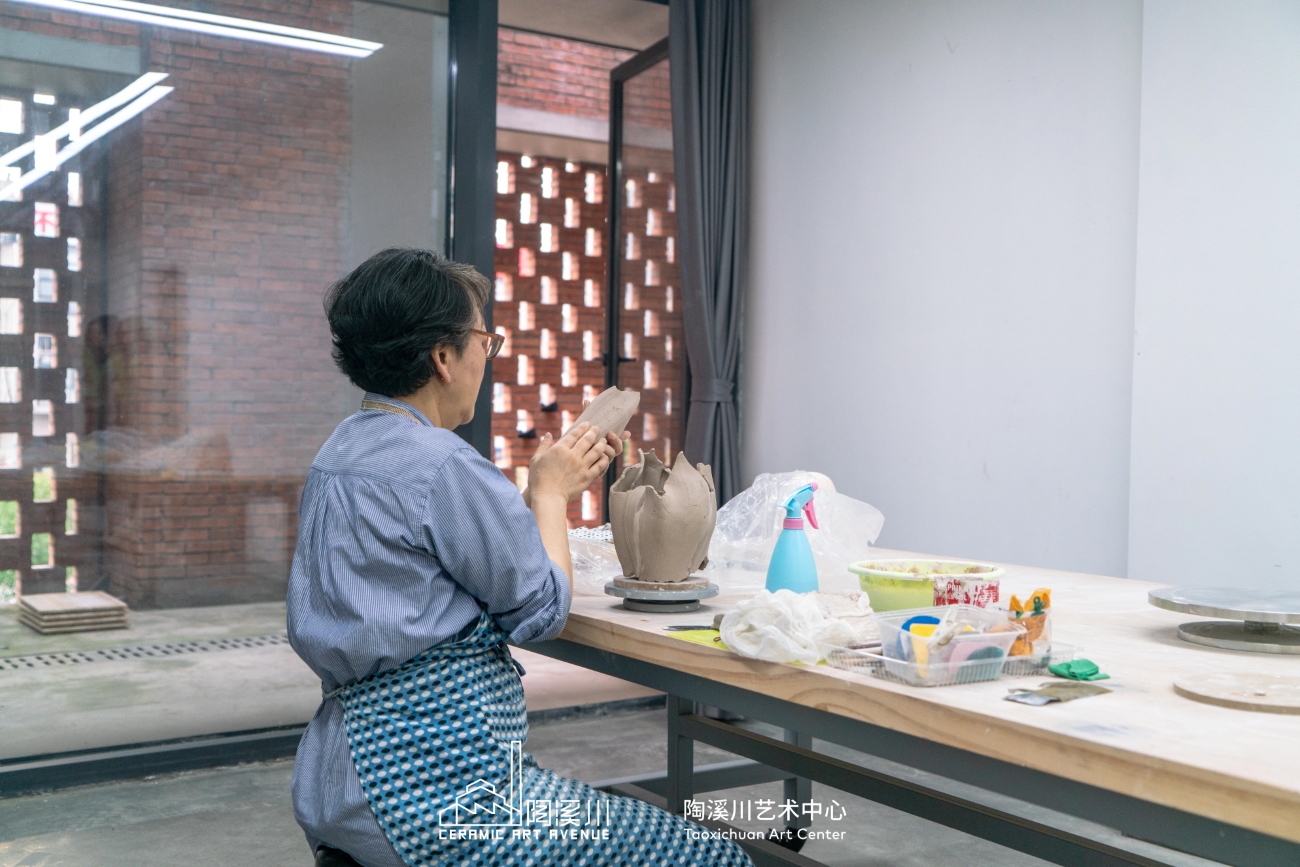
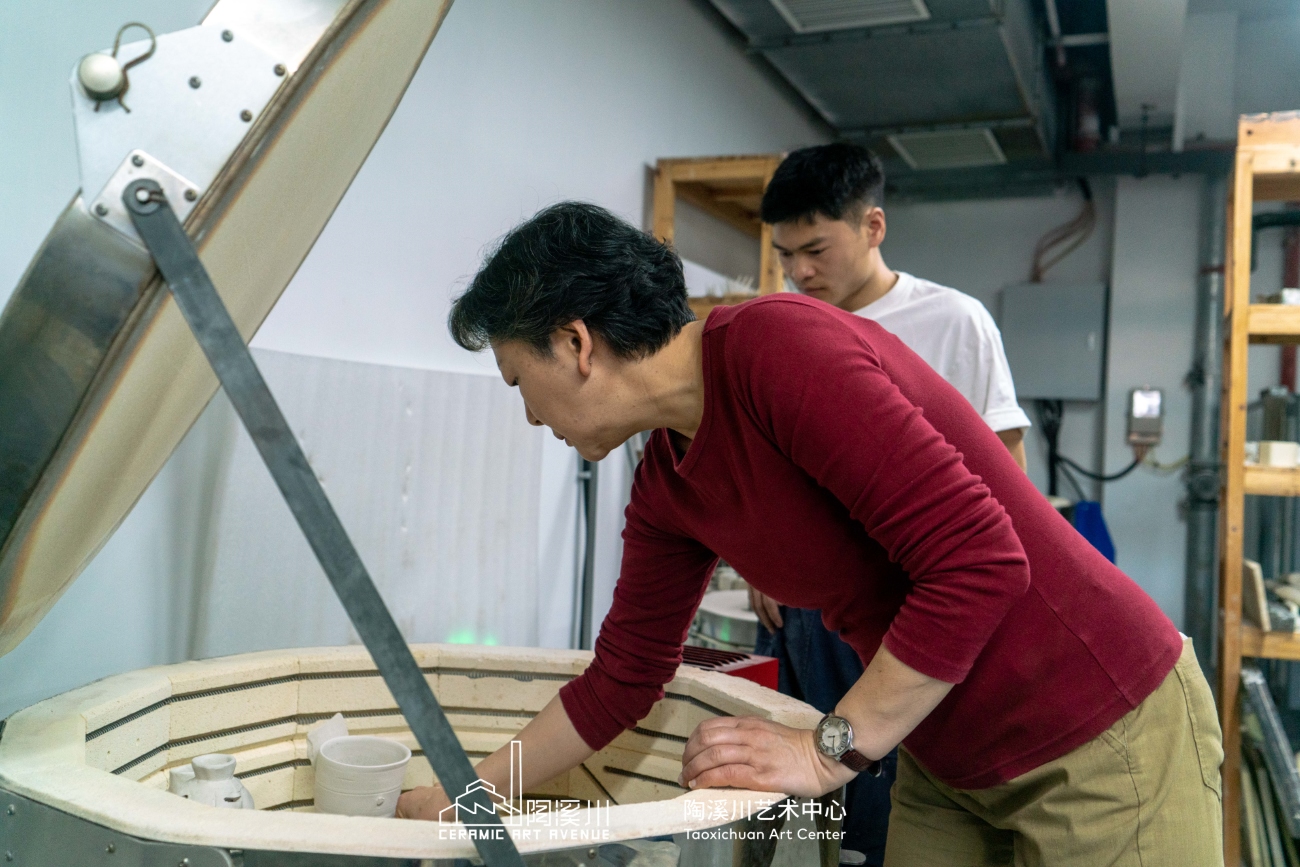
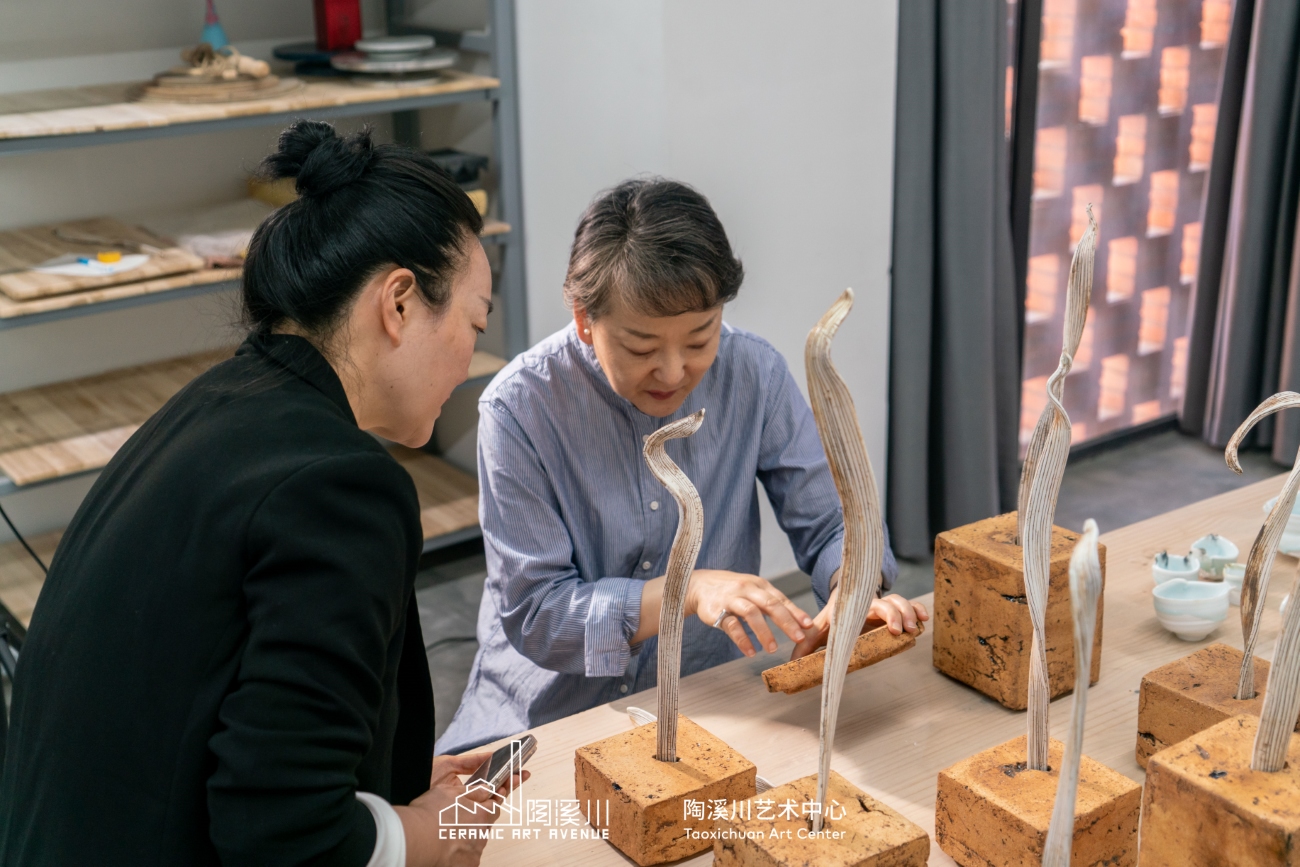
Beyond her studio practice, Kato is a dedicated educator, sharing her techniques internationally. She has led tatara (slab-building) workshops, including one in the serene town of Santa Maria de Palautordera in Catalonia, Spain. These cross-cultural exchanges have affirmed her understanding of the ceramic vessel as a universal form, one that transcends language. Most recently, in May 2025, Kato led a workshop at the Taoxichuan Art Center in Jingdezhen, China: the historic birthplace of porcelain. It was a full-circle moment, connecting her to the lineage of porcelain while sharing her own techniques with a new generation of international ceramic artists. During her time there, Kato reflected on her personal journey with clay, which began during a period of illness while she was in university. In that quiet and vulnerable time, she first encountered clay: its gentle textures and forms became a moving source of comfort and discovery.
Reflecting on this memory, she shared:
“I seek forms that transcend time. A silent presence that radiates a sense of universal beauty. I hope my works resonate with the natural world, whether in remote earthly landscapes like deserts, glaciers, and ocean depths, or in terrains on other planets like Mars. I surrender meaning to the viewer. I want each person to form their own personal connection with my work. To feel something, to be moved, to imagine.
There are many poetic metaphors in pottery: I think that my experience has taught me that people and vessels share similarities in the breadth and ability of acceptance. This is the sanctuary that ceramics offer.”

Kato’s vessels are sites of contemplation, connection, and feeling. In October 2025, she opens her first solo exhibition in New York at Dai Ichi Arts gallery titled “Silent Earth.” On the occasion of her solo show, in a recent interview with the artist, we expanded upon the material and thematic roots of her practice:
KL: Firstly, regarding material in your practice, what made you choose to work with porcelain?
MK: I still make earthenware to this day, but I’m not exactly sure why I began working with porcelain. At the time, I was in a self-deprecating mindset, but I wanted to turn things around. So, I started working with porcelain almost instinctively perhaps.
I was drawn to its smooth, fine texture. The purity of its whiteness felt like a blank sheet of paper. It showed me something honest, unadorned. I found myself chasing that feeling, hoping to become like that—unclouded and clear. In a way, porcelain helped me shift my perspective. It became the medium that best expressed what I wanted to create.
[Note from the artist: After the economic bubble burst, most of the galleries that represented my work went bankrupt, and I was struggling financially. Around the same time, a highly decorated object maker said to me, “Your work is just vessels, but mine is art.” It was a deeply crushing moment. I didn’t mind being told that my work wasn’t good, but to say that vessels couldn’t be art felt fundamentally wrong to me. I could feel things. I knew I carried a rich inner world. I just needed to embody it, and prove it to myself. That drive led to my submission to the Chozo Prize Ceramics Exhibition, where I was awarded the Koie Ryoji Prize.]
KL: You were the first woman to win the Mino Chawan Competition in 24 years: Congratulations! What made you want to submit to this competition in particular? Could you also share more about the winning piece, and what makes a good chawan to you?
MK: Thank you very much. Before receiving the Shuroku Award, I applied to the Chōza Tougei Exhibition with a porcelain piece for the first time. It had been a long time since I’d submitted to an open call show. The ceramicist Koie Ryoji, who exhibited a vessel-shaped objet d’art, reviewed my work and commented, “It’s simple, but I can hear its music.” He awarded me the Judge’s Award.
At the time, I had been prepared to quit pottery altogether. But being recognized by Koie made me think, “Someone was able to empathize with me. Even if it’s quiet, someone can still hear my voice. Maybe my work isn’t so bad.” With that shift in mindset, a friend encouraged me to apply to a chawan exhibition, and I submitted my work.
The awarded frost-glaze chawan was made by first cutting porcelain clay into long, thin slabs—like slices of bacon—and wrapping them into a circular form. When a flat slab is formed into a cylinder, an interior space instantly appears. I pull the slab, stretching and wrapping it naturally into a spiral. Then I use a spatula to gently expand it, allowing the interior to become a rich, mellow space. It feels as if the air mass inside is expanding, pressing against the porcelain walls.
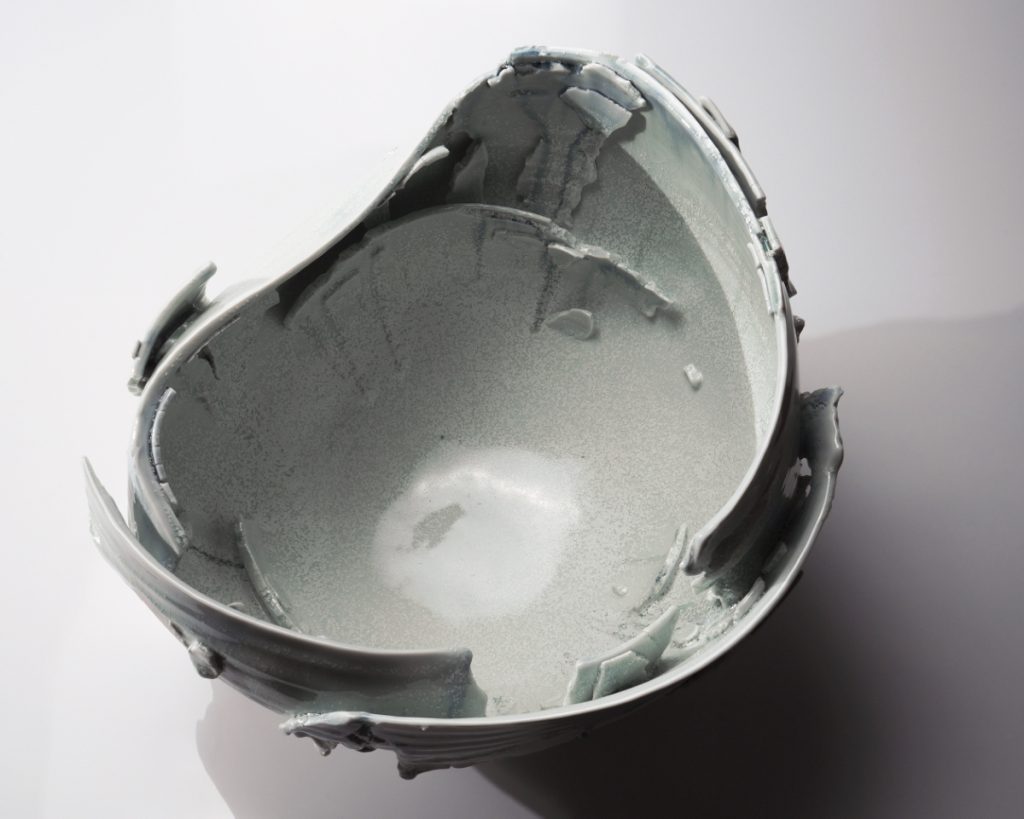
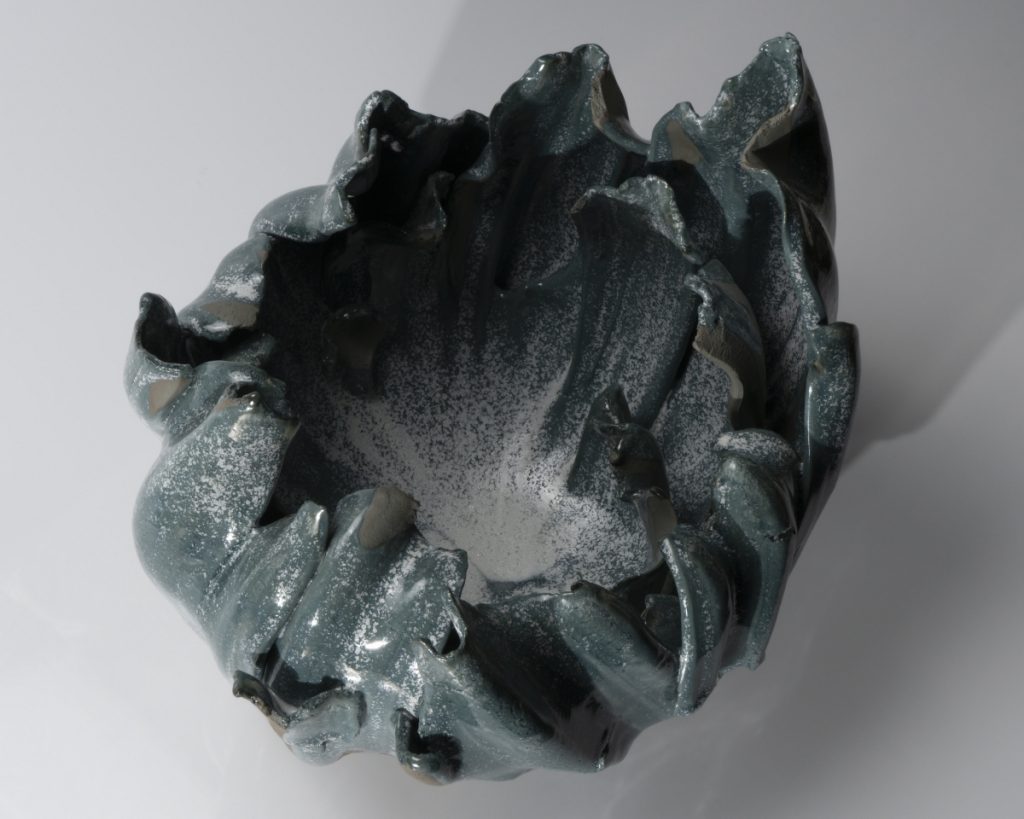
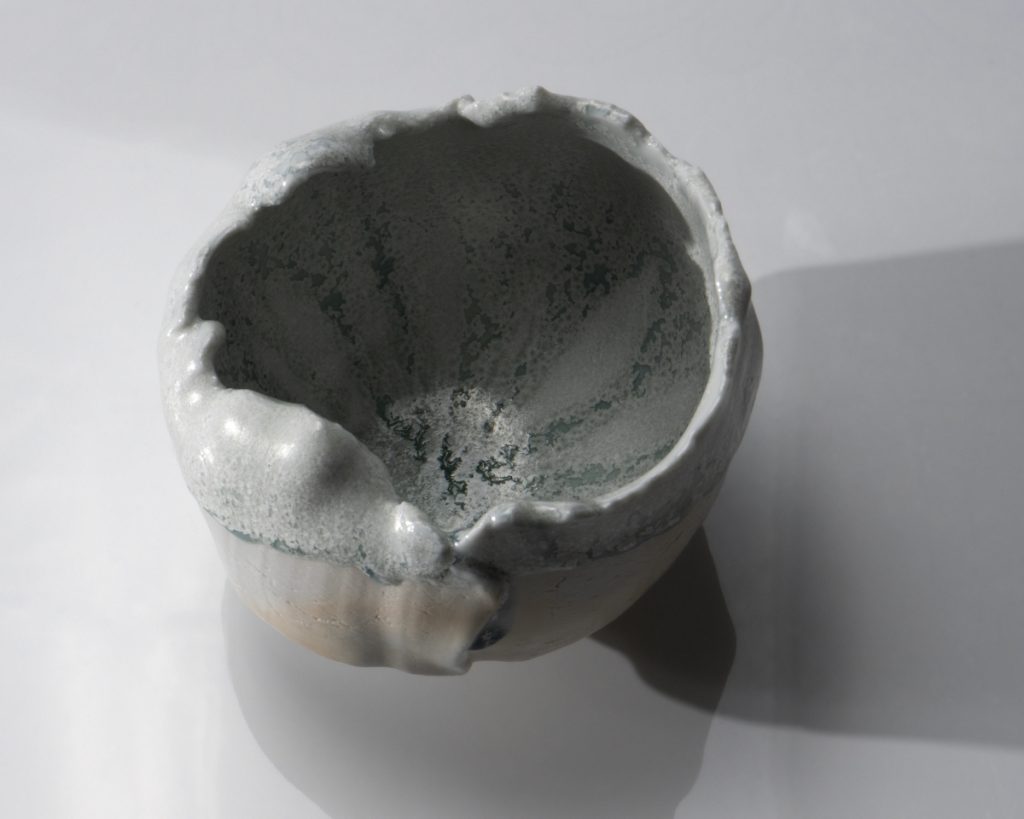
When making a chawan, I consider its spatial aspects deeply. I don’t start from the exterior—I begin from the inside, the mikomi (見込み), the internal depth of the bowl. For the lip, I made it thin, considering the delicate experience of drinking usucha (薄茶), thin tea. I also aimed to avoid a monotonous flow in the form.
I believe the inner space of a chawan (mikomi)—the part that holds something, yet feels full even when empty—is essential. It’s not just empty space, but a space filled with a kind of presence, like a soul. This spatial richness is a fundamental theme not only for tea bowls, but for all vessels. The inclusive nature of a vessel feels maternal in a way—accepting, embracing everything. Through making this piece, I was able to embrace myself, too—to reach into its depths and, in doing so, accept and forgive parts of myself I find hard to face. There is a mutual vector at work: between the maker and the object made.
A good tea bowl is difficult to create. Yet in a tea ceremony, it becomes a tool for expressing the host’s intentions for the day. I want a bowl to have a unique presence—a small landscape held in the palm of the hand, a microcosm to entrust the heart to. Physically, it should feel comfortable in the hand and seem deeper and wider inside than it appears from the outside. If the interior is poor, it’s not worth serving tea.



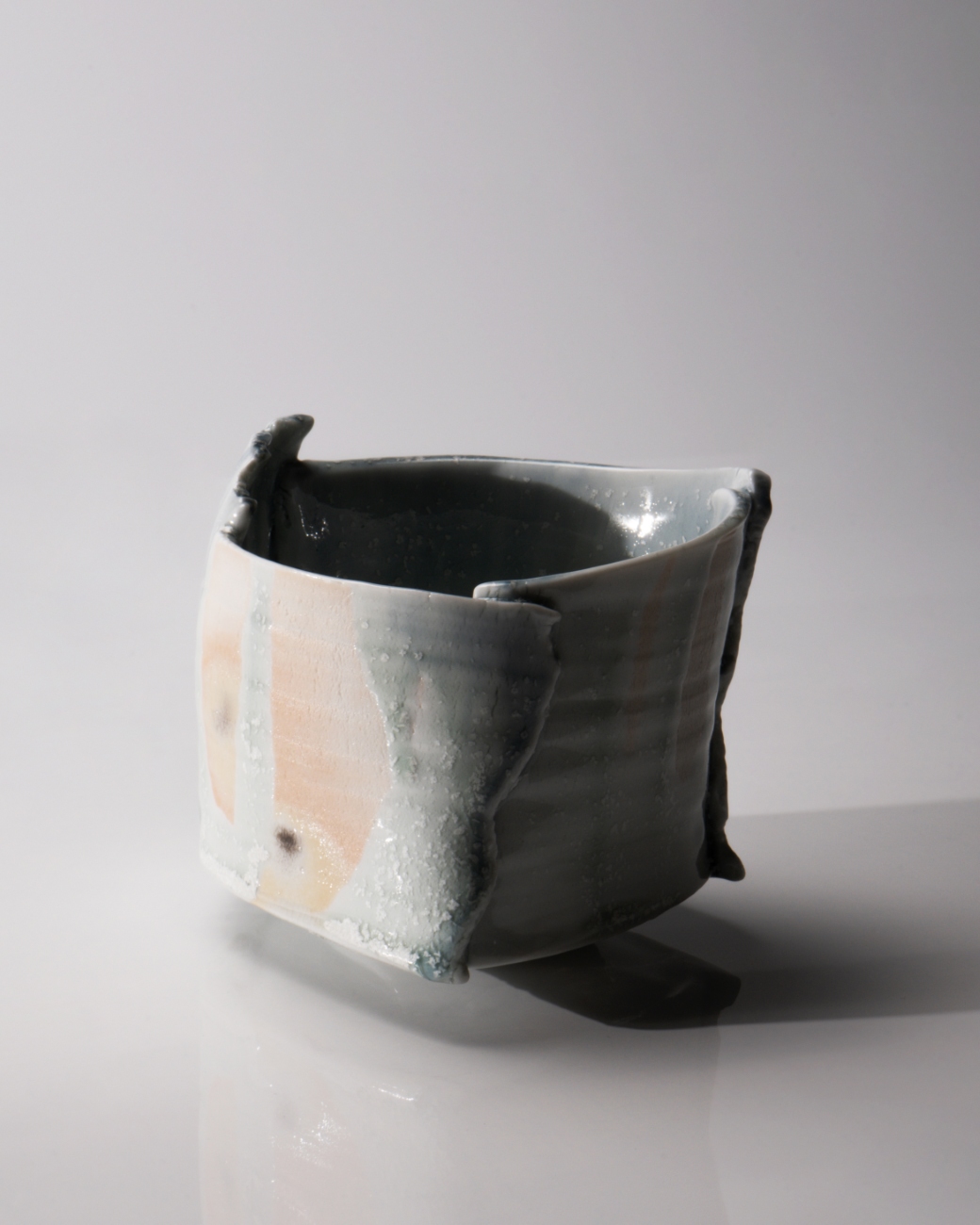
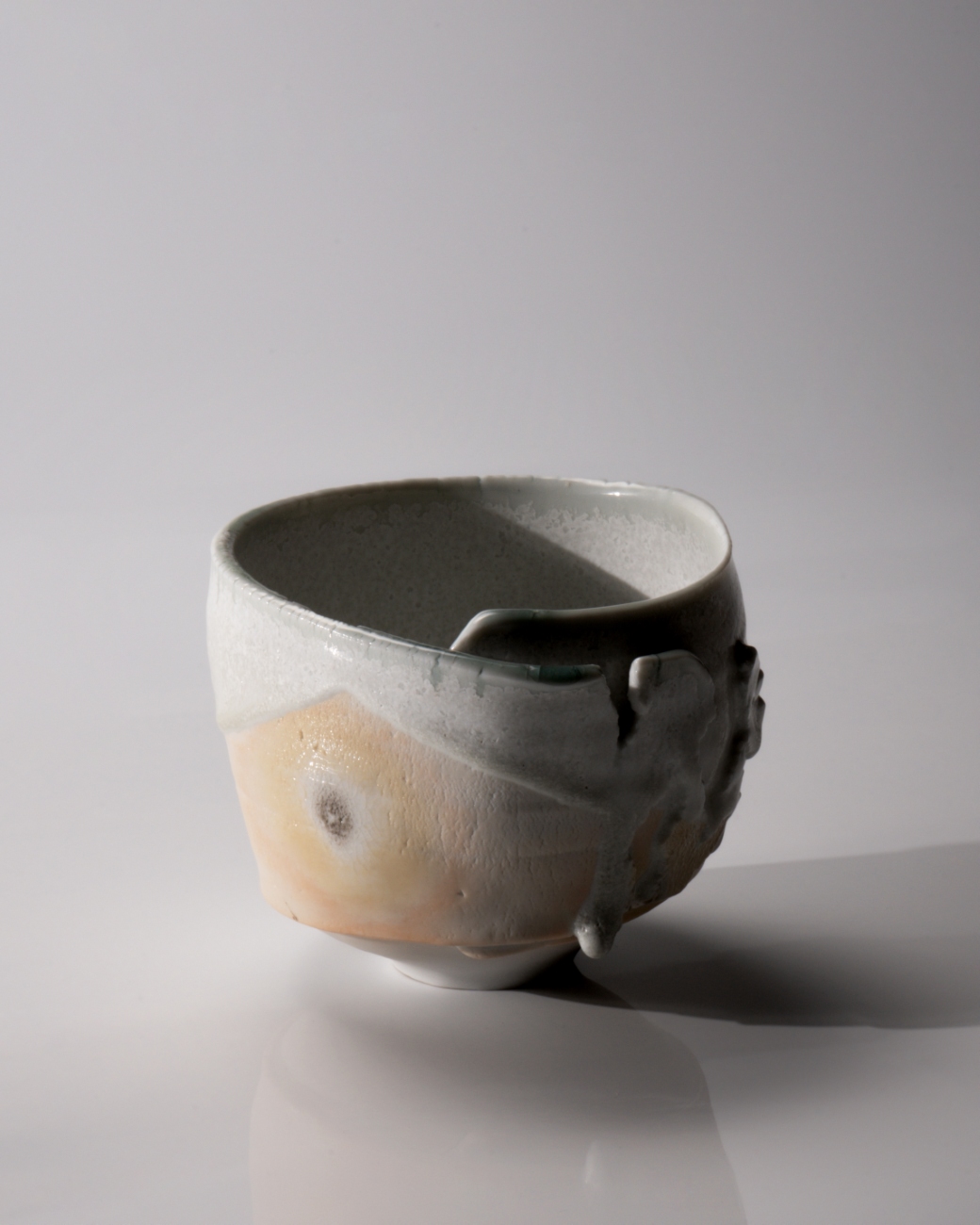
NS: In your vessels, there’s an evocative sense of ruins and the passage of time: was that a conscious choice?
MK: I think it’s an unconscious, latent desire. Of course, I approach it consciously—seeking balance—but still, it comes from somewhere deeper. There are moments in life when I grow tired of both my own ego and the claims of others. In those times, I find myself longing for a presence that simply exists—quietly standing there.
There’s something moving about a thing that has been abandoned and left to decay naturally. The process of returning to nothingness… the disappearance of artificiality through deterioration. Everything, eventually, crosses over to the other side. It feels like a kind of purification. And I find that beautiful.
Perhaps that’s why my work ends up feeling so natural. There may be a Buddhist element to it; the acceptance of impermanence. I think it’s something I’m able to express because of my own weakness.
NS: Regarding the theme of pottery as a universal language, we’re interested in how history and memory has influenced your thinking. You said in the past that you visited archaeological sites with your father from a young age: How has witnessing the resilience of unearthed artifacts and the process of archaeology influenced your own works?
MK: Rather than saying that pottery is a universal language, I feel that I create it as a metaphor for a universal landscape.
I vividly remember being six years old, barefoot at an excavation site in Nagasaki, when a scholar pointed out a pottery shard embedded in the mud. The idea that this shard had been made and used by someone in ancient times—and was now right there in front of me—struck me as incredibly important, essential, and romantic.
That image of pottery fragments has remained in my subconscious ever since. I think my awareness would occasionally return to it while creating. I also enjoyed imagining the original shapes and curves that once connected those fragments into a whole.
I developed an original glaze called frost glaze, which I mixed to achieve a weathered texture. It resembles the silvered Roman glass often found in excavated pieces.What I find beautiful is how, with time, the artificiality of old objects fades. They begin to resemble something more natural, as if returning to the earth.
KL: What do you hope that people can receive about your most recent works in 2025, and what do you hope to develop or continue in your practice?
MK: While the board construction technique presents physical limitations, I’ve recently begun to draw out a certain softness and vivid movement from it. I’m no longer bound by the materials or the methods I use. This shift has quietly breathed life into the world I’ve been working in until now.
Often, I’m the one who ends up impressed and inspired by how others perceive my work. So I prefer to leave the interpretation up to you. I simply hope that you’ll journey both inside and outside of the forms, and listen to their small whispers.
Looking ahead, I want my work to feel less artificial and less tethered to what I’ve already done. I hope to create something that goes beyond all of that, something that makes people sigh in quiet relief.
That’s about it.
Pottery will remain on this earth long after I’m gone, sometimes bathed in moonlight, sometimes resting in silence, traveling through time with the traces of me. I hope to create something with a universal presence. Something that can belong anywhere: in a desert, on the moon, or beneath the sea. Those with little talent have no choice but to be honest.
So I ask myself: how far can I go?
[Author’s note: The comments above from the Mino Chawan Exhibition were commissioned by the Mino Ceramic Art Association. The inclusion of the above comments are courtesy of Ishizaki Yasuyuki, Kaneko Kenji, and the artist Kato Mami].
Silent Earth: Contemporary ceramics by Kato Mami is on view from October 23 to November 6, 2025, at Dai Ichi Arts in New York.
Subscribe to Ceramics Now to read similar articles, essays, reviews and critical reflections on contemporary ceramics. Subscriptions enable us to feature a wider range of voices, perspectives, and expertise within the ceramics community.
Captions
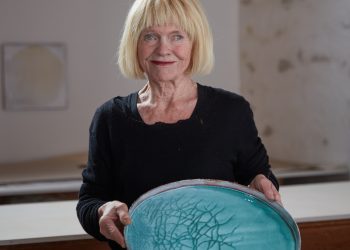
- Kato Mami at Tao Xichuan Art Center, Jingdezhen, during her residency program in May 2025. Image credit: Taoxichuan Art Center International Studio, Jingdezhen
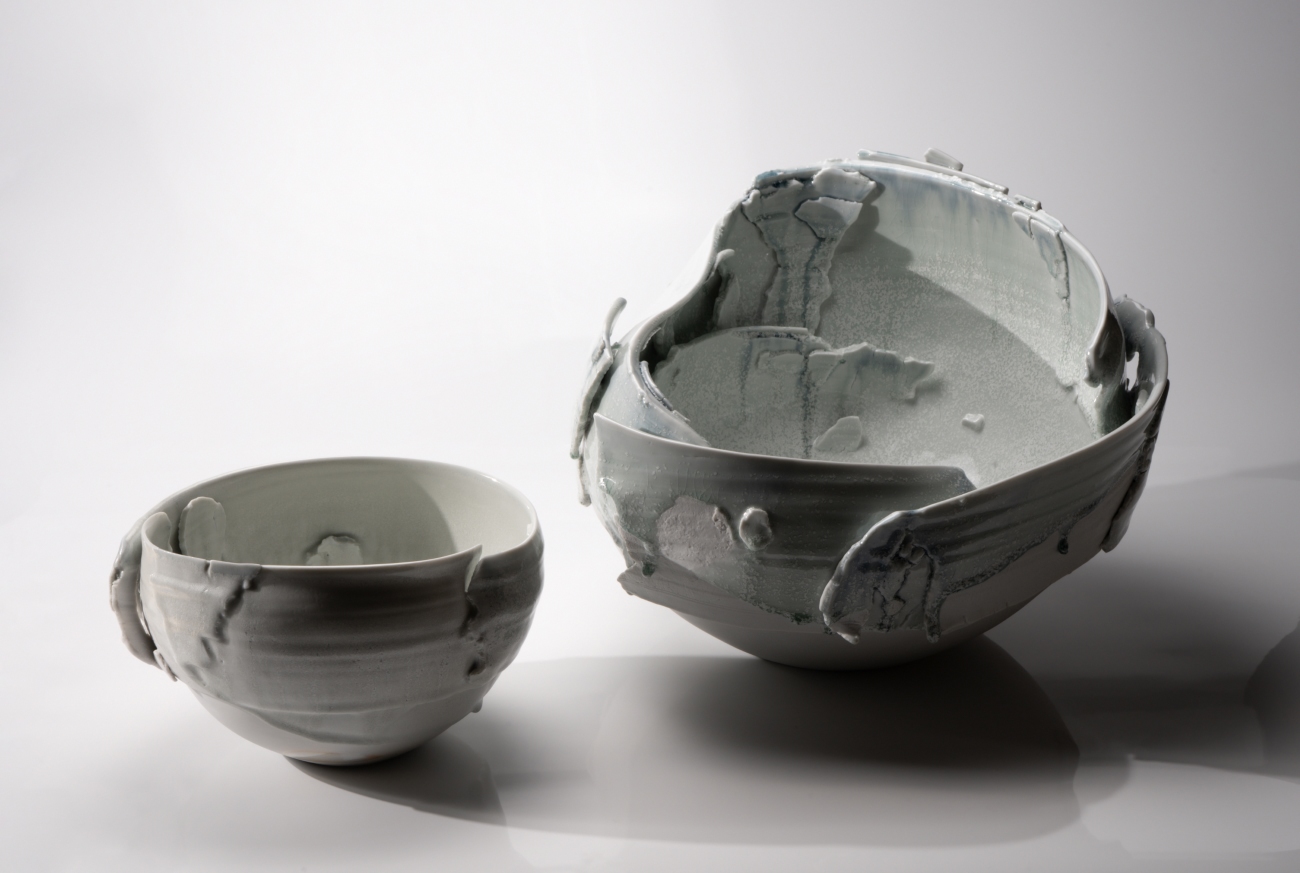
- Two tea bowls by Kato Mami. Photography by Yoriko Kuzumi
- Frost glazed purple teabowl, 2025, Seto porcelain, (h) 11 × (w) 13 × (d) 12 cm. Photography by Yoriko Kuzumi
- Gekka (Under the Moon) 1, 2025, Seto porcelain, (h) 29.5 × (w) 42 × (d) 39 cm. Photography by Yoriko Kuzumi
- Gekka (Under the Moon) 3, 2025, Seto porcelain, (h) 22 × (w) 22 × (d) 23.5 cm. Photography by Yoriko Kuzumi
- Two works by Kato Mami #1, (Right) Gekka (Under the Moon) 1, 2025, Seto porcelain, (h) 29.5 × (w) 42 × (d) 39 cm / (Left) Bowl with Frost glaze, 2025, Seto porcelain, (h) 16 × (w) 22 × (d) 26 cm. Photography by Yoriko Kuzumi
- Two works by Kato Mami #2, (Left) Tsukuyomi (Moon reading), 2025, Seto porcelain, (h) 29.5 × (w) 23 × (d) 22 cm / (Right) Gekka (Under the Moon) 2, 2025, Seto porcelain, (h) 26 × (w) 29 × (d) 26 cm. Photography by Yoriko Kuzumi
- Interior view of Gekka (Under the Moon) 3, 2025, Seto porcelain, (h) 22 × (w) 22 × (d) 23.5 cm. Photography by Yoriko Kuzumi
- Gekka (Under the Moon) 3, 2025, Seto porcelain, (h) 22 × (w) 22 × (d) 23.5 cm. Photography by Yoriko Kuzumi
- Michishio (High Tide), 2025, Seto porcelain, (h) 32.5 × (w) 42 × (d) 35 cm. Photography by Yoriko Kuzumi
- Tea bowl “Himuro” 2025, Seto porcelain with Frost Glaze, (h) 11.5 × (w) 13.5 cm. Photography by Yoriko Kuzumi
- Frost glazed white tea bowl, 2025, Seto porcelain, (h) 10.5 × (w) 13 × (d) 12 cm. Photography by Yoriko Kuzumi