By Marthe Yung Mee Hansen
Nina Malterud has dedicated more than five decades to ceramics and crafts. Many of those years have been spent in the studio, but also quite a few in boards and in the educational system––advocating for her profession and partaking in shaping directions for the Norwegian crafts field and artistic research.
Her own artistic practice has covered cups and bowls, human-sized jars, and tile commissions for public space. Over the years, she has left both dishes and large-scale work behind, to focus on intimate formats that accommodate her experiments in glazing and firing. The control that was once put into drawings and patterns, is now moved to other parts of the making process––not least into decisions of what to keep and what to let go of. What has remained constant is earthenware, a devotion sparked by ceramicist Lisbeth Dæhlin (1922–2012) whom Malterud first assisted and continued to have several collaborations with.
During the past four years, the artist has worked on two large projects that invited for research into her own archive and the history of the Norwegian crafts scene: A retrospective solo exhibition at Kode Art Museums and Composer Homes in Bergen in 2022 and the Norwegian Association for Craft Artists’ 50th anniversary exhibition at Lillehammer Art Museum in 2025–26. After completing the curatorial work for the anniversary exhibition, An Impatient Desire, Malterud has focused on her solo exhibition at Hå Gamle Prestegård on the south-west coast of Norway. Accompanying the exhibition, is a catalogue titled Glaze Stories.
Marthe Yung Mee Hansen: I would like to start at the beginning––how did you start working with ceramics?
Nina Malterud: I was young and I decided to apply for the National College of Art and Design in Oslo1 and got accepted. Ahead of this I had spent quite some time working with materials and form in different ways. Applying for art school simply felt like the natural thing to do if you were interested in working with your hands creatively. As I was only twenty years old, there were many coincidences involved in why I ended up doing ceramics specifically. The ruling approaches and tendencies in the study programme at the time seemed a bit outdated. We, the students, asked for more focus on materials, process and artistic possibilities, rather than the older ideas of applied arts. Still, we had a very good professional environment there. My close fellow students were a community that I still draw upon as a ceramicist, and it probably contributed a great deal to the fact that I continued afterwards.
However, after three years of studying, I took a year off to think things over. It felt like an unclear subject and profession––what exactly were we being educated into? During this break, I got a job as an assistant in ceramicist Lisbet Dæhlin’s studio and from then on, I was absolutely sold. It was like a dream that I did not know I had until then. Not only the making itself, but also the life in the studio––the whole rhythm of it and the atmosphere. Lisbet was a very welcoming and charismatic person to be around, humble and highly professional. She must have been around fifty at the time, so in my eyes she seemed old and wise, with lots of experience. After my time there, I thought “okay, this is it” and I started my own studio practice at Frysja in Oslo2. It is a wonderful place. I stayed there for twenty years before I got the job in Bergen.
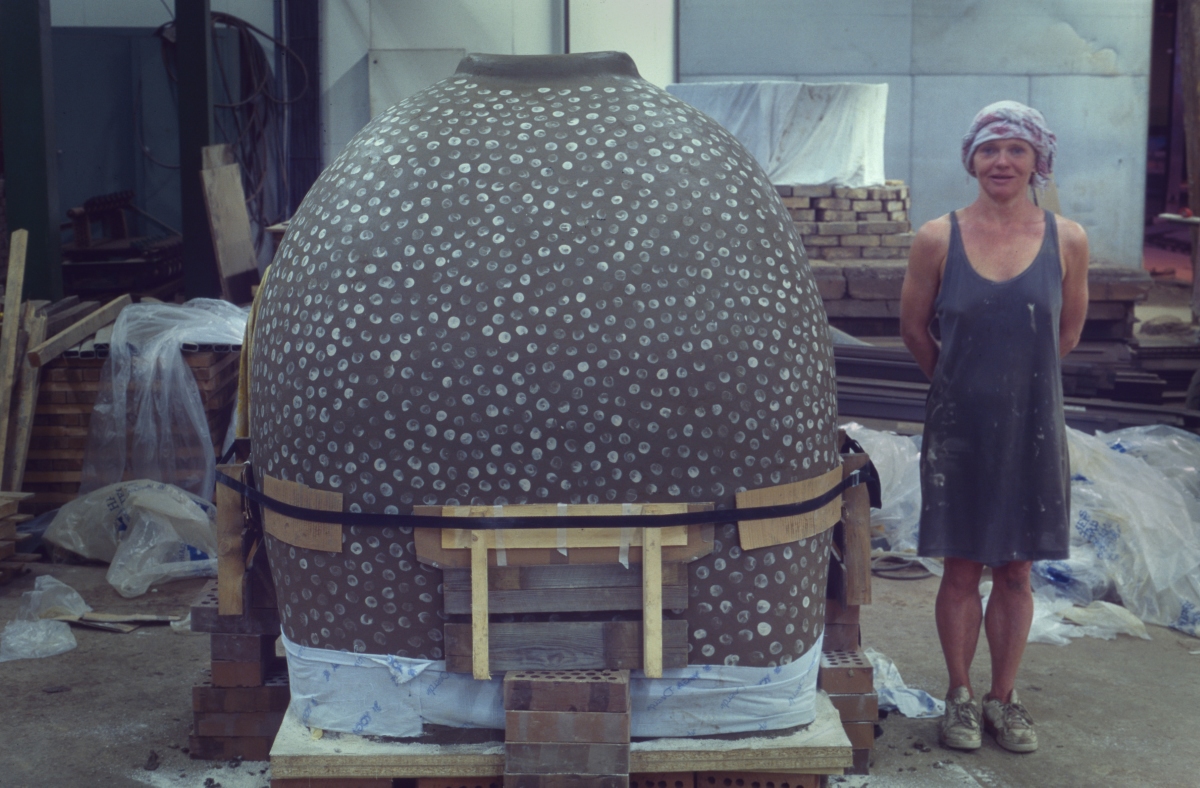
Let’s touch upon this part of your career too. Between 1994–2010, you worked full time in academia. First, as a professor in ceramics at the Art Academy in Bergen3, then as rector for the whole institution 2002–2010, and later as part-time adviser in research, teaching, and particularly the PhD programme in artistic research. What about this work made you dedicate so many years to it?
At the time I became a professor at the Academy in Bergen, I had already wanted to teach for some time. I felt like I had a certain talent for conveying ideas, contextualising and organising. However, I was not prepared for educational politics. I thought I was going to teach ceramics for six years, but the field was being reshaped by several merging processes into new academies of the arts in the 1990s. Additionally, this was a very tough time for crafts. The wave of theory in fine art was in many ways devastating for crafts within the academic institutions. It was being ridiculed.
What I learnt from that period was to listen to and take part in discussions that were not necessarily within my original field, and this broadened my perspectives enormously. Especially when we started the joint fellowship programme4 in 2003 with all the art forms. I found it incredibly interesting to step out of the craft–fine art divide and to hear what others thought about art, for instance in the fields of dance and film.
In 2002, I was asked to run for the position as rector for fine art, crafts and design. Back then it was done through elections. There was not a lot of competition for the position and to be honest I was not particularly motivated at first. But the leadership had been very male dominated, and I had around thirty female ceramics students and I felt like I had to show them that we could also do this kind of job. That was my motivation––to contribute to balance this out. I worked myself into it, and I found the challenges about adapting national large-scale education policies to the arts interesting. I discovered that it is more enjoyable to take part in decision-making than to be decided over. And of course, I was not doing it alone––I had good colleagues and staff by my side.
You have said that it was not a given that you would return to work with ceramics after this break. What made you decide to come back to it?
I suppose I did have some desire to return. But also, what else was I going to do? I was tired of working with leadership and organisational work, and the language that followed. Then, someone convinced me to apply for an exhibition space at Kunstnerforbundet5. I had exhibited there on four occasions between 1975–95 and it is and has always been a well-renowned institution. When I got that exhibition spot, I had something concrete to work towards. In some ways I had to start afresh, like asking colleagues how things work with transport and other practical things. But a lot returned quickly––those bodily routines of producing work do not disappear. I had about a year to prepare for the exhibition and luckily, I found a fantastic studio where I still work today.
In 2022 you had a large-scale retrospective exhibition at Kode Art Museums and Composer Homes in Bergen. In the exhibition, Material Statements, you presented works from 1970s up to the present. Projects like that provide an artist the chance to look back at one’s practice over the years. Can you tell something about this process, and were there in retrospect any projects that held special importance?
There were definitely some things I found not to be particularly relevant anymore and I must admit that I deleted a number of images before the retrospective exhibition. The pieces themselves were long gone––destroyed or thrown away years ago, but there were bits of it that I did not want anyone digging up again. So, I edited the history quite a bit.
A lot of the findings in my own archive overlaps with the history of the Norwegian crafts field. In the 1970s there was a flourishing of crafts in Norway. It was an extraordinary working environment at Frysja and in the Norwegian Association for Craft Artists6. As an artist, it was a tremendous stimulus, and I truly believe that we spurred each other on. We organised workshop sales where we, as members, could make something one day and show it in public the next. In this way, we did not have to wait for years for a slot in a gallery programme. A lot of the activity back then was done through very direct action, which gave everything great momentum. When I worked towards the exhibition at Kode, I though a great deal about that––about how much energy there was.
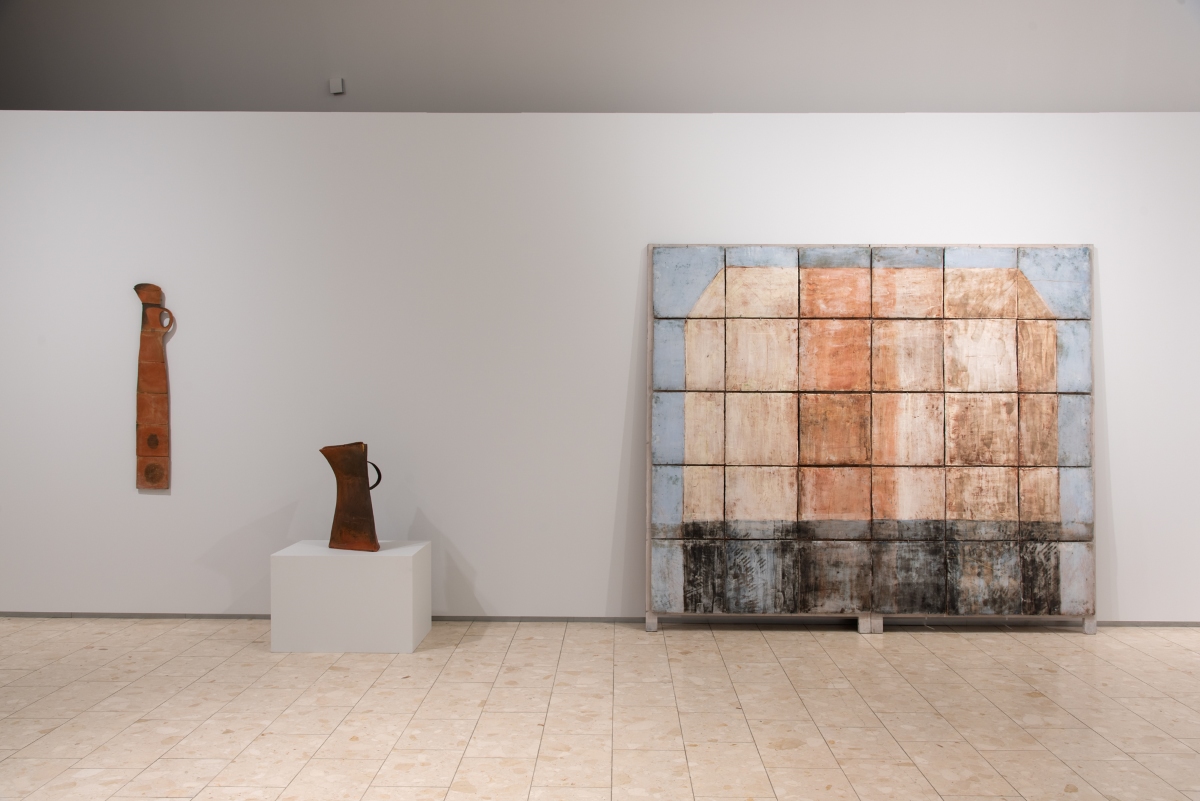
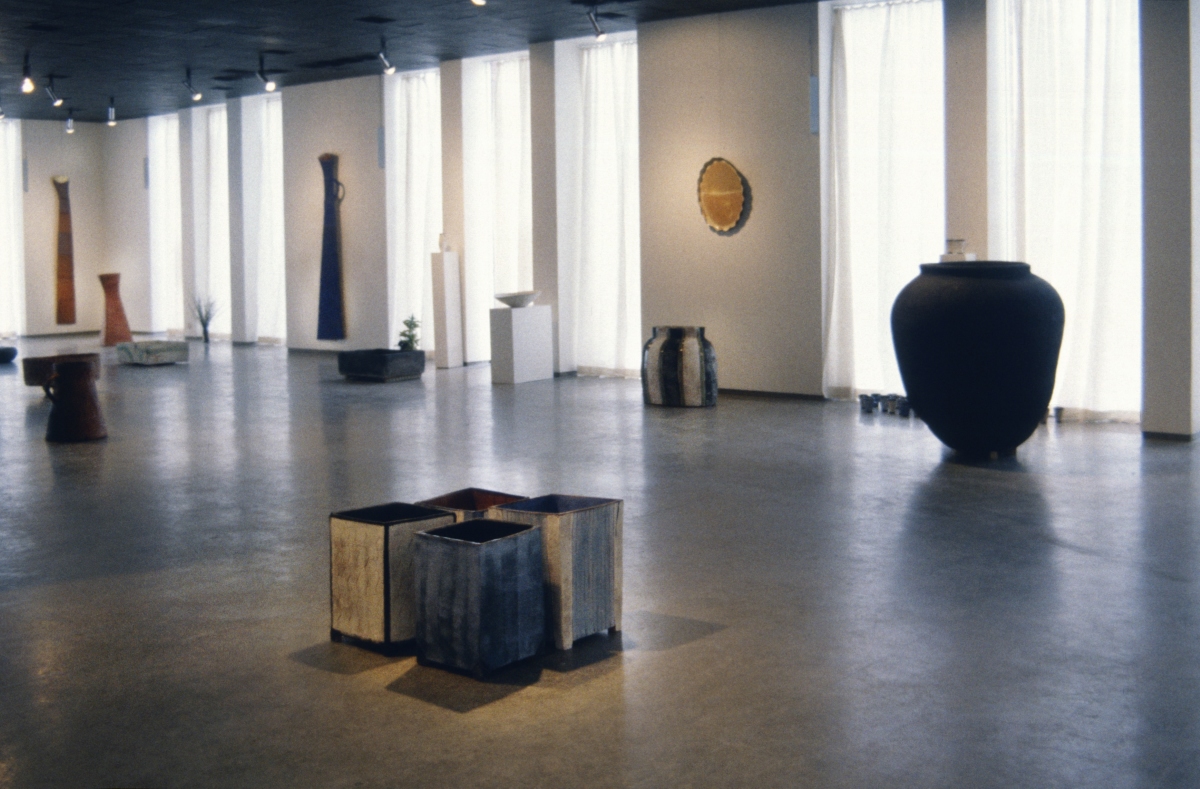
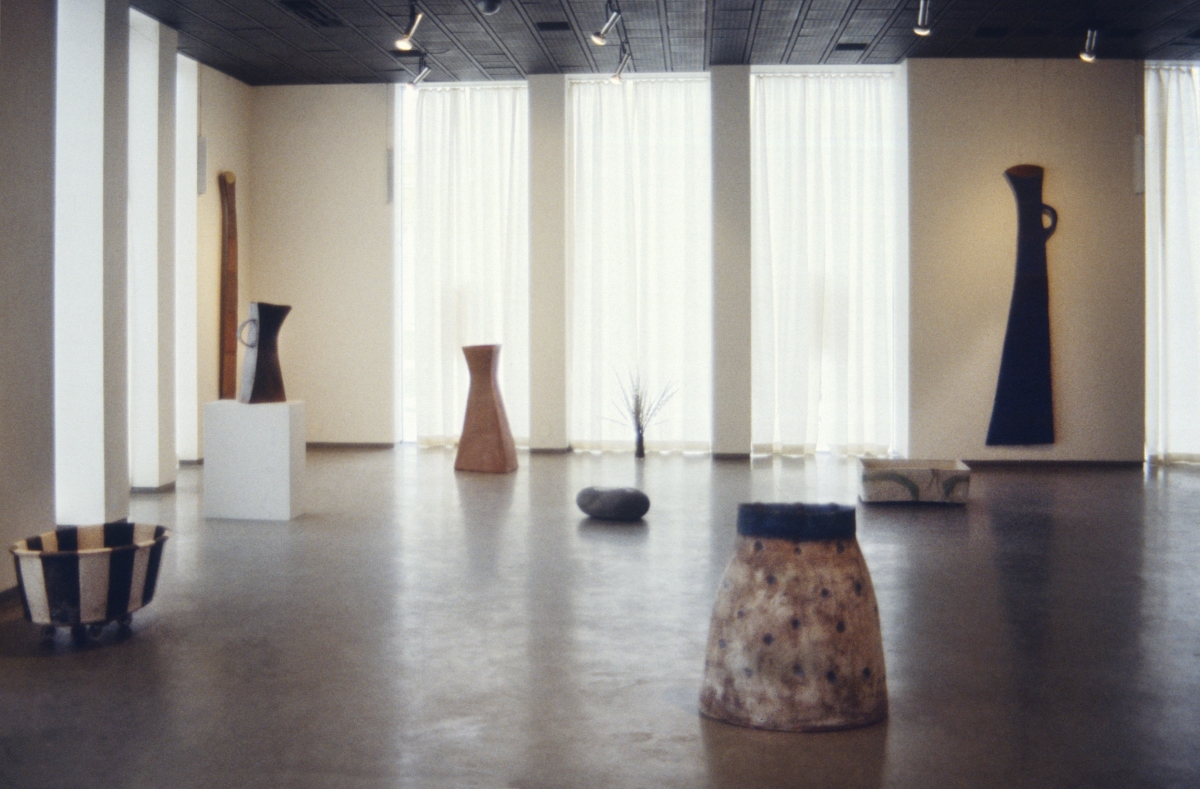
One highlight was the exhibition at Nordenfjeldske – The National Museum of Decorative Arts and Design in Trondheim in 1989, with Lisbet Dæhlin, Beth Wyller and me, titled Blåleire [Blue Clay]. We had the entire large hall, about 400 square metres. The three of us arrived a few days ahead of the opening without any concrete plan for how to install the exhibition apart from a few obvious wall pieces. We did not have any specific display in mind and ended up placing many works directly on the floor, distributed around the space. And it turned out quite successful. Several of the collaborative projects between Lisbet, Beth and I were like that. We worked well together, with both our similarities and our differences.
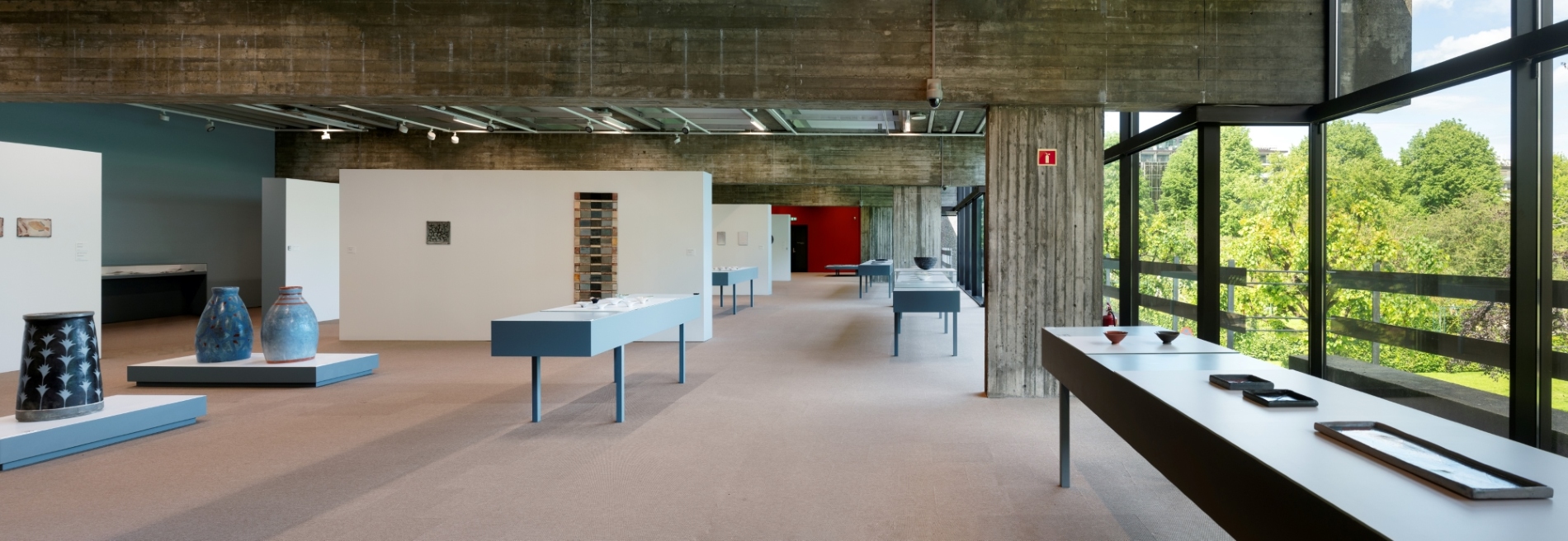
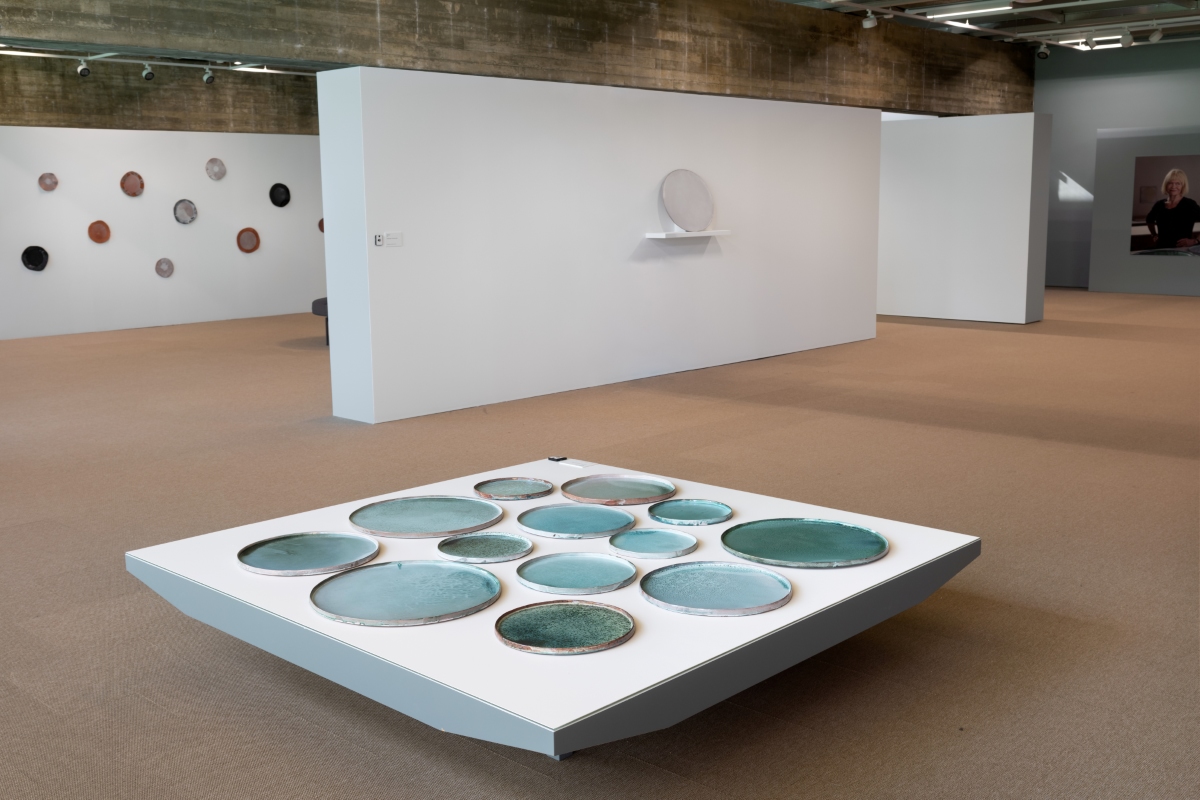
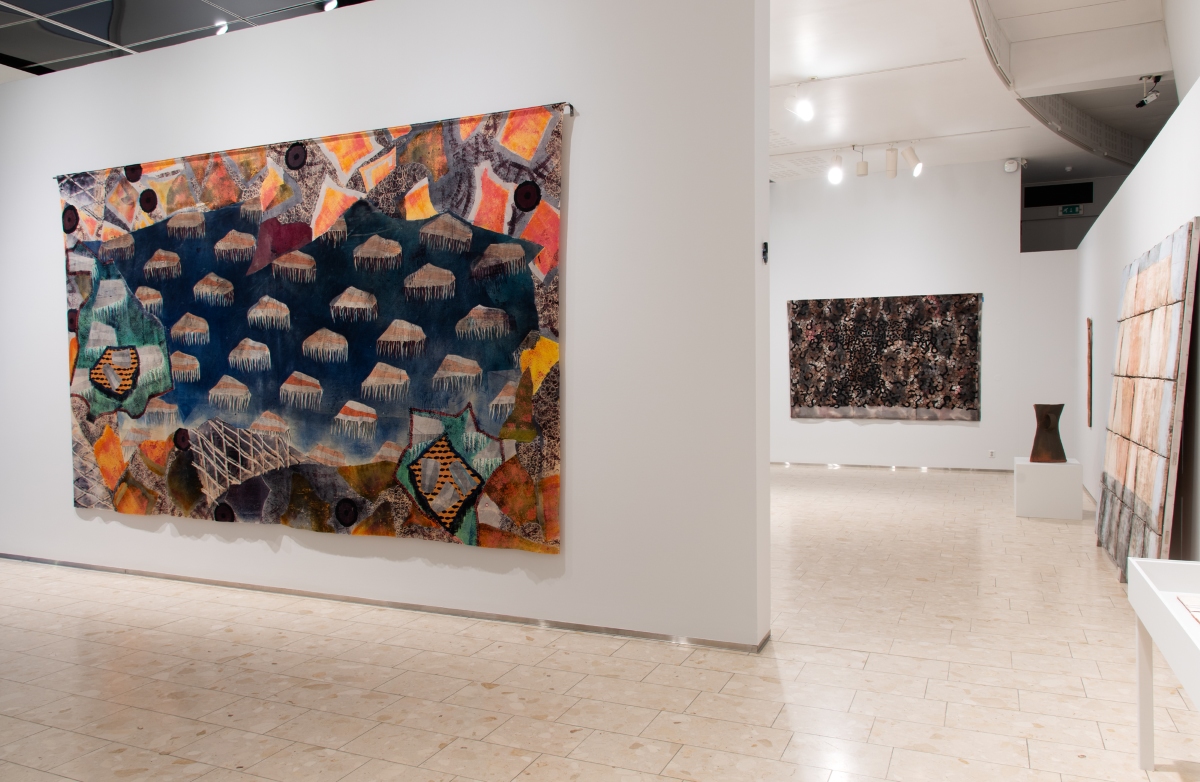
RIGHT: Rigmor Hvoland, Cutting Angels – Under Water, Swimming in Landscape, 1987, in the collection of The National Museum; Gro Jessen, A Three Seen by an Ant, 1994, in the collection of Kode Art Museums and Composer Homes. An Impatient Desire, The Norwegian Association for Craft Artists’ fiftieth anniversary exhibition, Lillehammer Art Museum, 2025–26. Photo: Camilla Damgård / Lillehammer Kunstmuseum.
Even more recently, you got another opportunity to dive into the archives. This time to look back at the larger context and conditions surrounding the start of your journey as an artist. You were invited to curate an exhibition for the Norwegian Association for Craft Artists’ fiftieth anniversary in 2025. The exhibition, An Impatient Desire, opened at Lillehammer Art Museum in December last year. This is your first time curating an institutional exhibition. Can you talk about your experience with it?
Yes, when the association asked me, I realised that I am one of the people who can say “I was there in 1975”7. Somehow, I have become a historical figure. I have a deep connection to that period, and I am certain that I would not have become a craft artist without the environment and the energy from back then––the collaboration that pushed us forward.
In the exhibition, I wanted to bring forward work that had been forgotten. Many of the names that were important back then are unknown to younger generations today. I also deliberately included lesser-known pieces by well-known artists. One of the issues is that several museums in Norway have been closed for longer periods of time, so crafts or decorative arts collections have not been consistently on display, meaning that the public have had very little access to the works. This might be one of the reasons why the museums were very cooperative with loans for the exhibition.
Another thing that should be mentioned clearly is that without the journal Kunsthåndverk8 we would have very few sources. I went through two decades of issues of the journal (1980–2000) and I am quite sure nothing truly important from the Norwegian craft milieu went unmentioned, whether it be in reviews, interviews or exhibition announcements. Without that archive, the research base would have been extremely limited. There are some books on ceramics and textiles from that period, but I wish someone would write something comprehensive about that whole period now.
What to you hope visitors take away from visiting the exhibition?
I hope visitors will experience the works with an immediacy and that they will be positively surprised. Many of the pieces have a strong formal presence, which I believe make them accessible, also to those without a lot of prior knowledge of the field. The artists possessed, possibly, a different kind of crafting knowledge at that time. The exhibition also includes some types of works that are almost not produced in our field anymore, like textile scarves.
It is possible to track some of the developments that took place around the 1970s by looking at the works. For instance, how many artists began scaling up in size. Like artists working with textile printing, who had used to make models for small industrial production and thereby been restricted to certain sizes and patterns, suddenly had a new sense of artistic freedom. They started making wall-pieces the size of entire doors or gates. This was the case in ceramics too, with large tile works and modules. The public art scheme9 also played a part in this––it was not new, but it was significantly updated. So, the shifts between the small and the large scale, as well as the range from items for personal use to public display, are important in the exhibition.
Let’s circle back to your practice. It is more than fifty years since you started working as a ceramicist. Can you describe some of the changes and developments in your practice? Such as differences between early and more recent works. And is there anything that have been consistent throughout the decades?
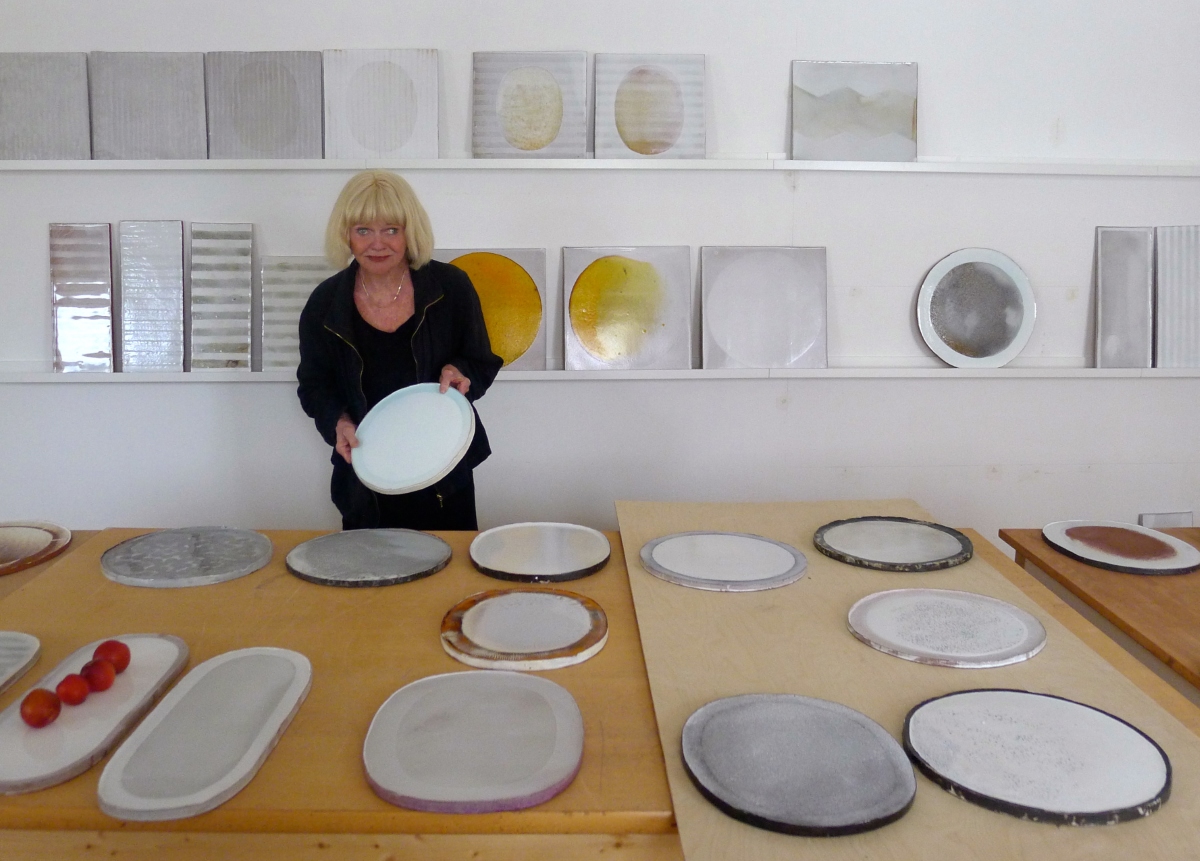
I think my relationship with time has changed drastically. I decided when I returned to my studio practice that I was not going to let sales be a determining factor. I could earn my living from part-time jobs in art education. In terms of my production, I started firing my works many times. Each firing adds more work to a piece, but for me, it develops more interesting and complex expressions. I also more or less gave up functional ceramics and the demands following that area. Instead, the heritage of bowls and dishes now exists as references in my work.
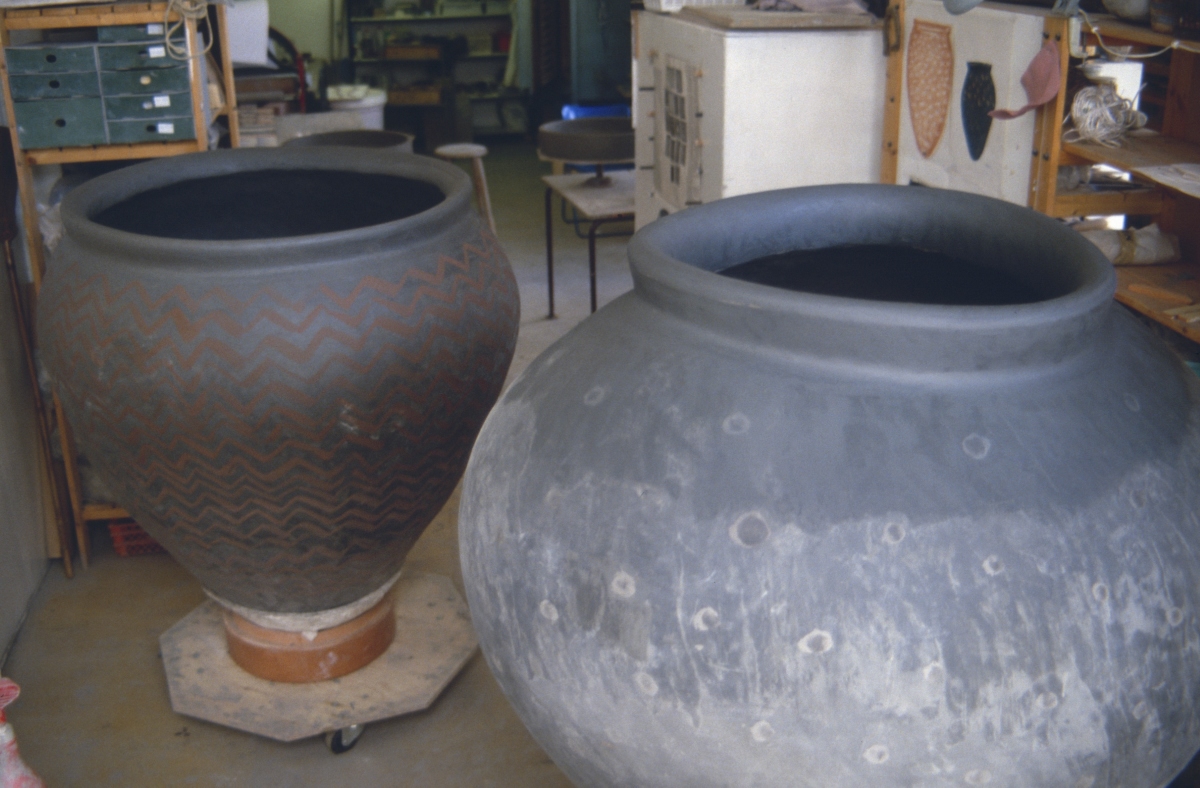
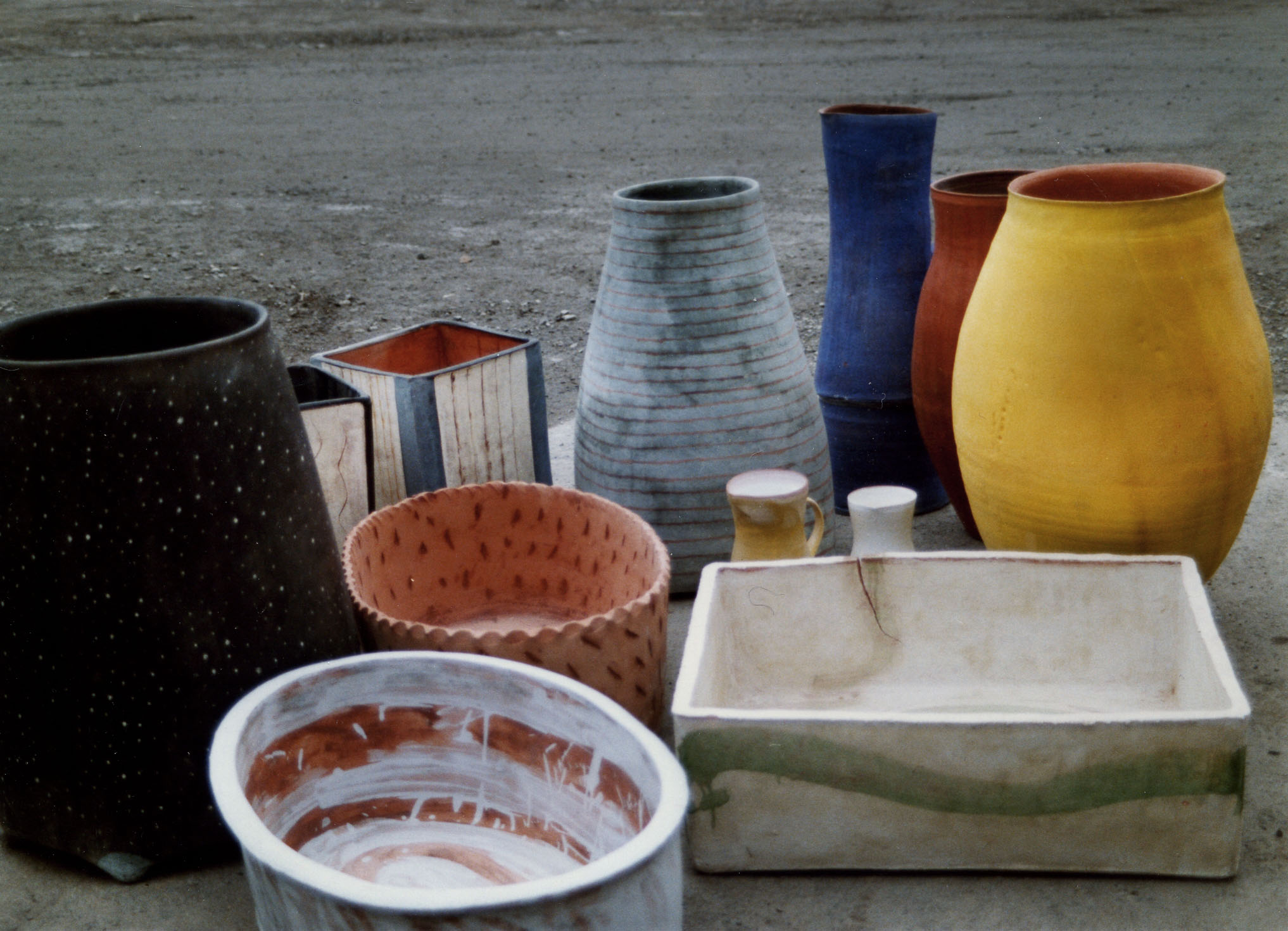
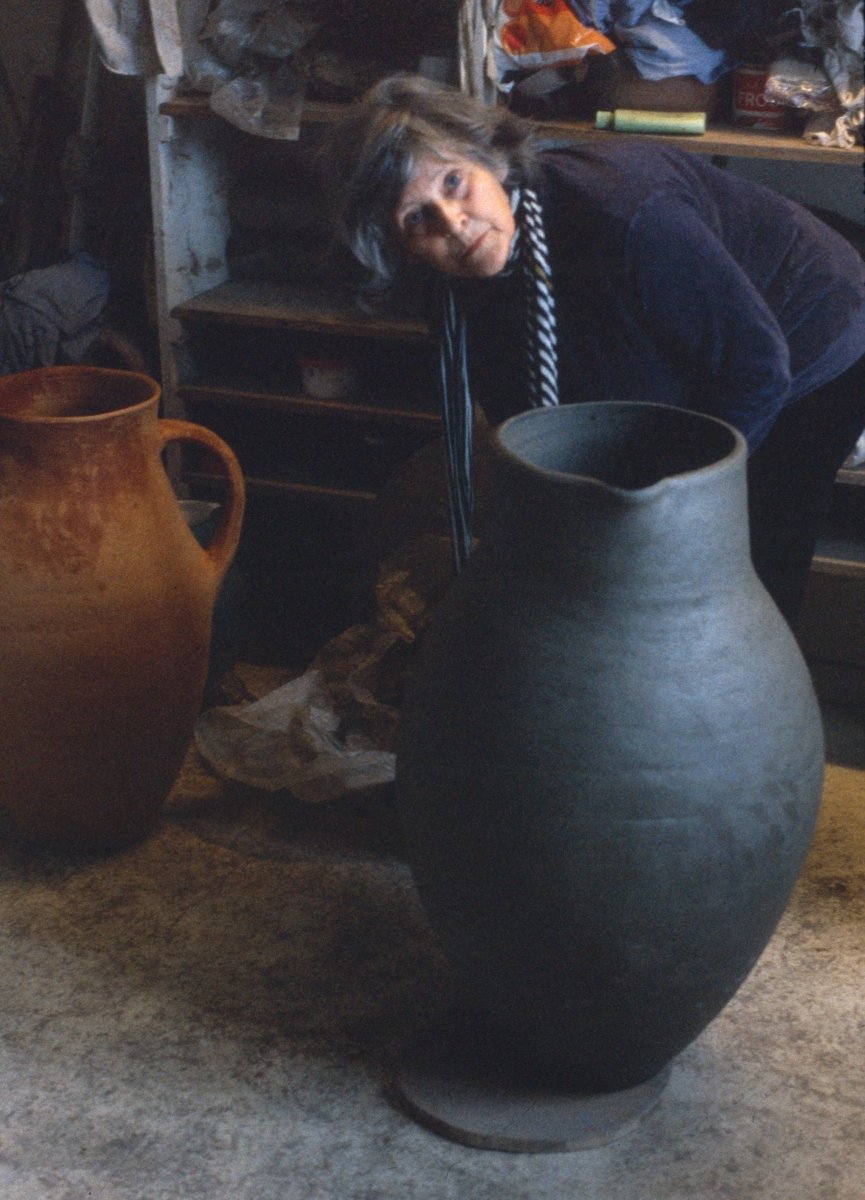
In the 1980s I made many very large works, big jars and such. When working in this scale, things became very fragile. One mistake and a whole big piece could be ruined. For me, this became too much technique and too little room for experimentation. Later, when I was working as a professor, I made only small bowls, manageable sizes. The important thing for me became: if something fails, it does not have to mean it is a disaster. With small pieces, you can say “all right, that one cracked” or “that one did not become anything. I will try again”. And if it still does not work, you can discard it. The selection process becomes freer with more intimate formats.
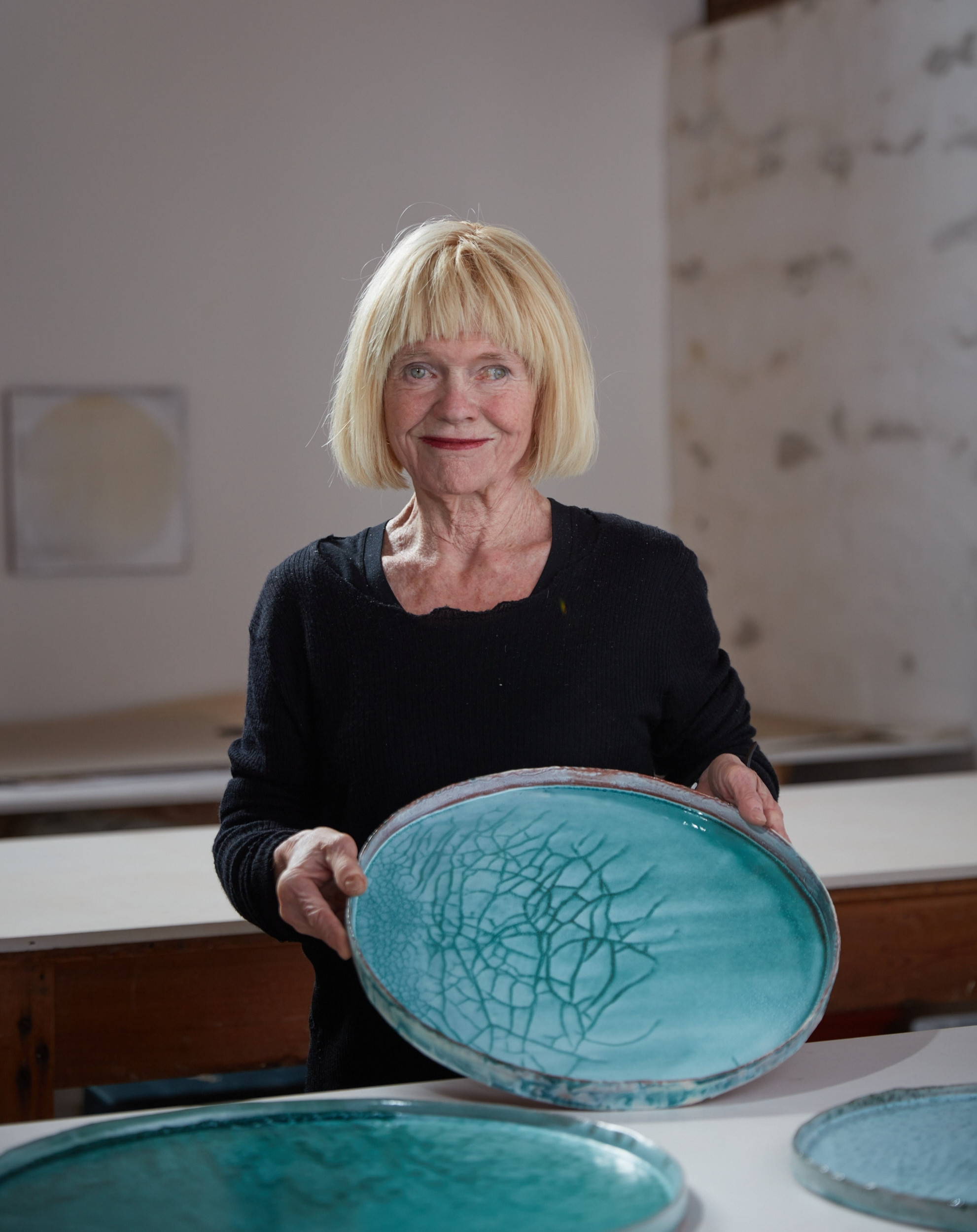
Something that stayed consistent, is the clay itself. I have always worked with earthenware and this red terracotta colour. And in my latest works too, I have returned to red, black and white, which is exactly what I started with. When we were in school, Japanese glazes were very fashionable in the ceramics field, but I never truly developed my own connection to this. When I started working at Lisbet’s, she was completely dedicated to the terracotta surface. As I began making my own things, I worked with very simple patterns in black and white. I used to work mostly with clay colours, raw surfaces and clear glaze only for sheen. But in more recent years, glaze has been my primary expressive tool.
As glazes have come to be such a central remedy in your practice, you have included it in some exhibition titles, like your solo show at Peach Corner in Copenhagen in 2024 and your upcoming exhibition at Hå Gamle Prestegård outside Stavanger. Can you say something more about this?
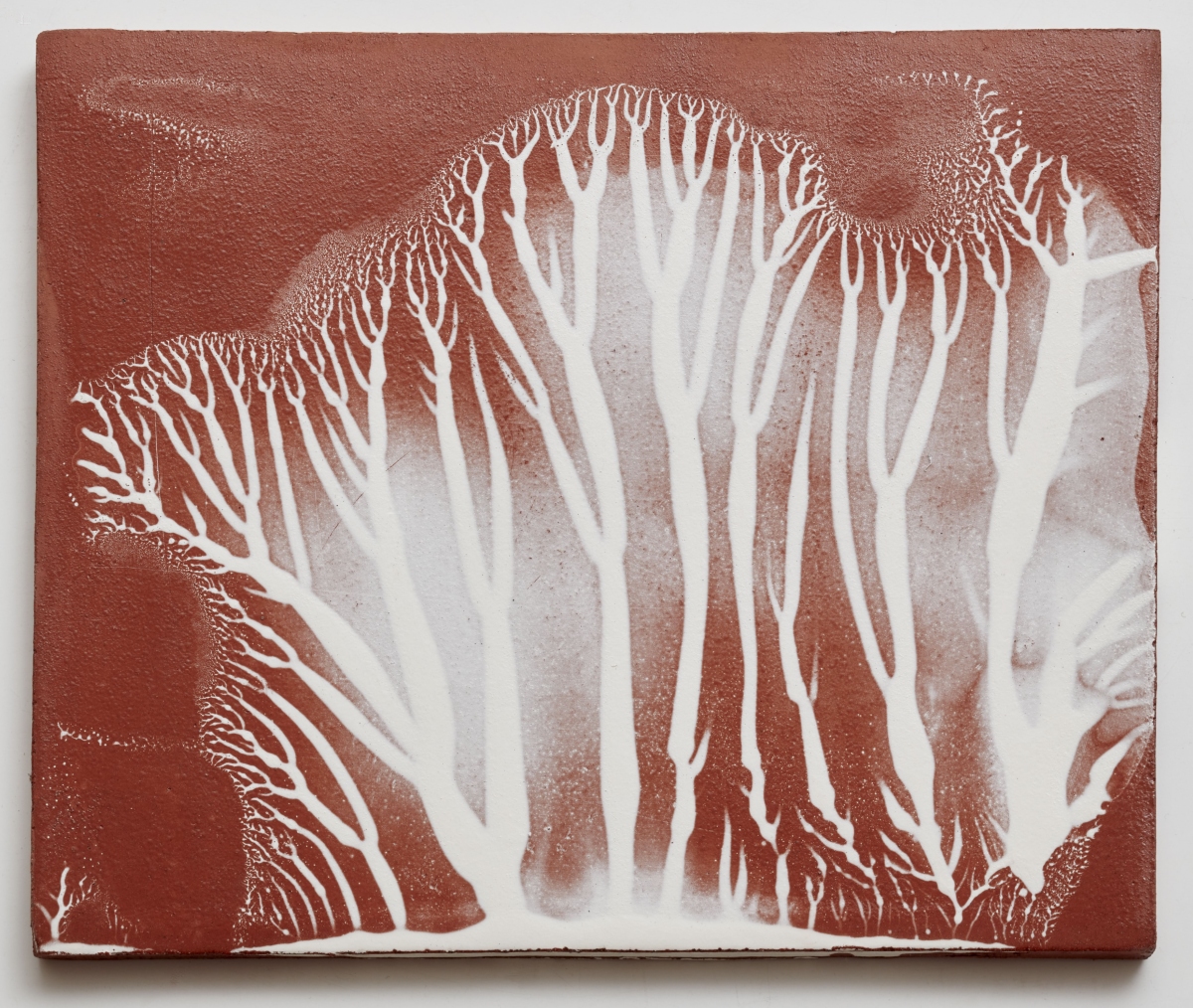
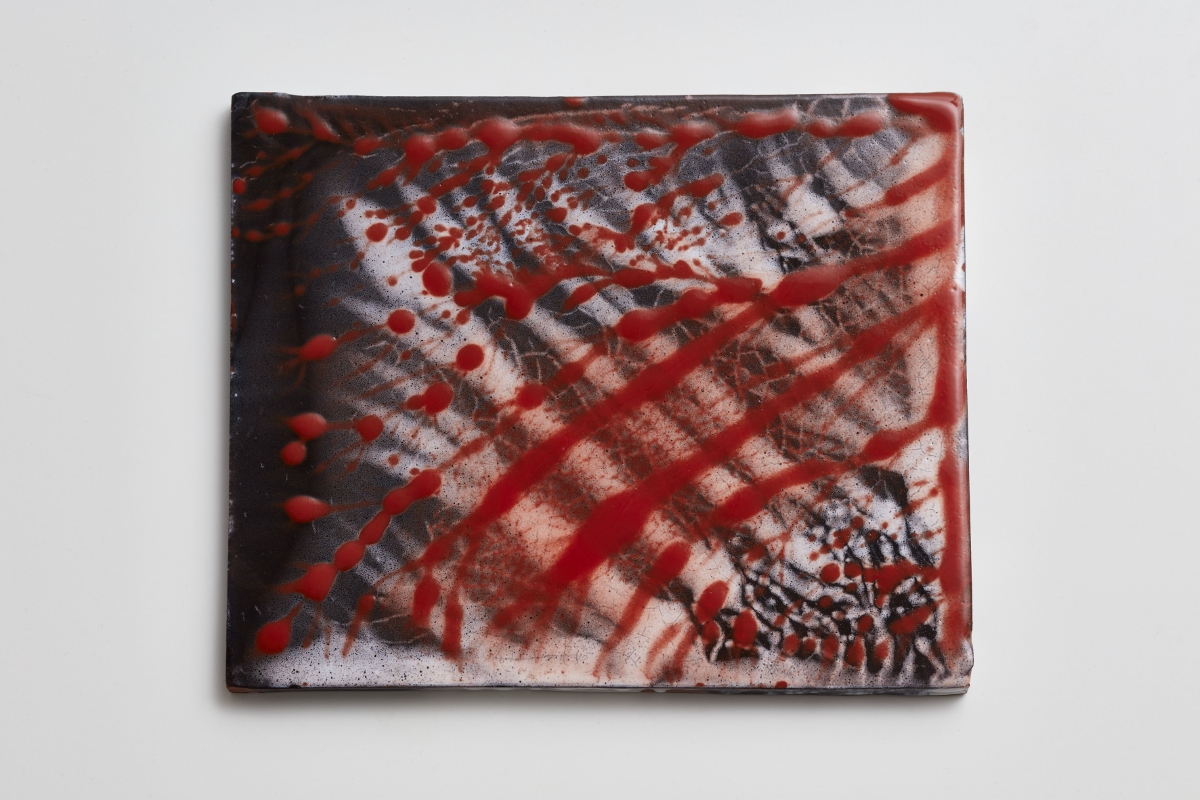
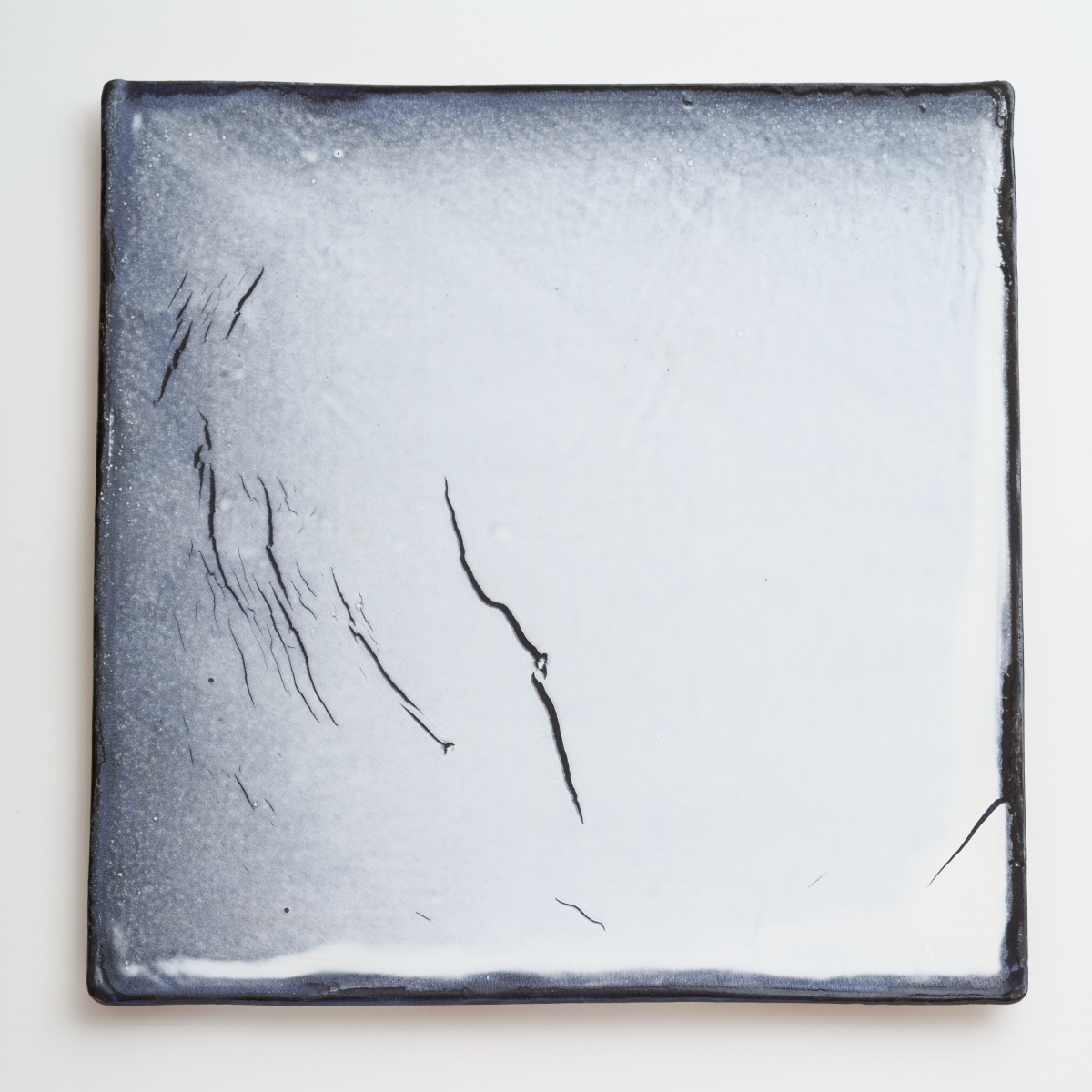
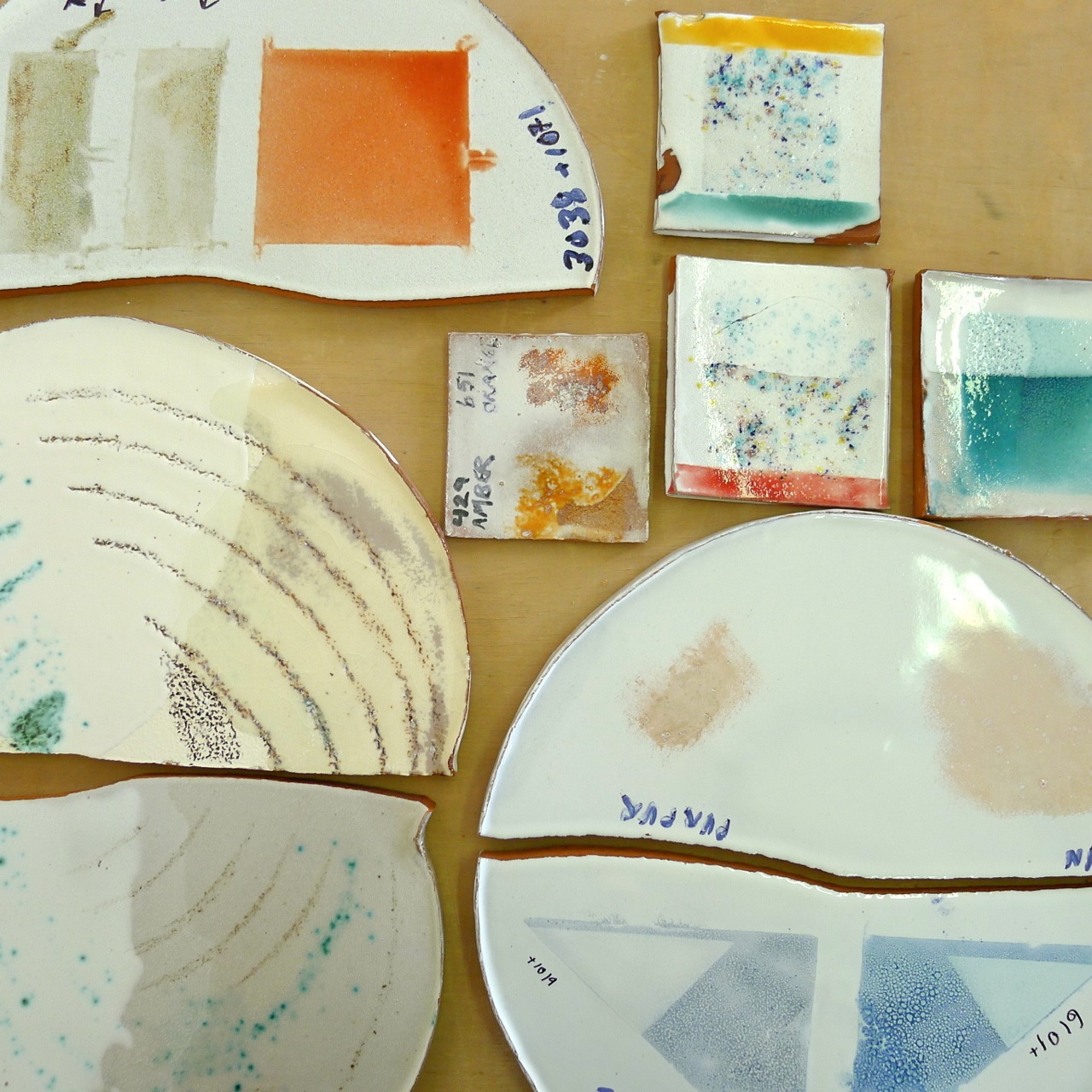
Glaze Stories just came to my mind. It describes some very specific things that I have been working on. The title comes from one time when I had spilled some glaze on my working desk, and then I accidentally placed small tub on top of it. When I lifted it, an intricate pattern appeared underneath. It looked a bit like a floral motif and I thought: “shall I try to recreate this?”. And so, I did, using slightly dense glaze in various thicknesses. The glazes spread in different ways when being lifted at slight angles, and a variety of motifs emerged.
Earlier in your career you were more concerned with patterns and drawing as starting points. From what I have read about your work in recent years, it seems like you have gradually let go of some of the control in your making process.
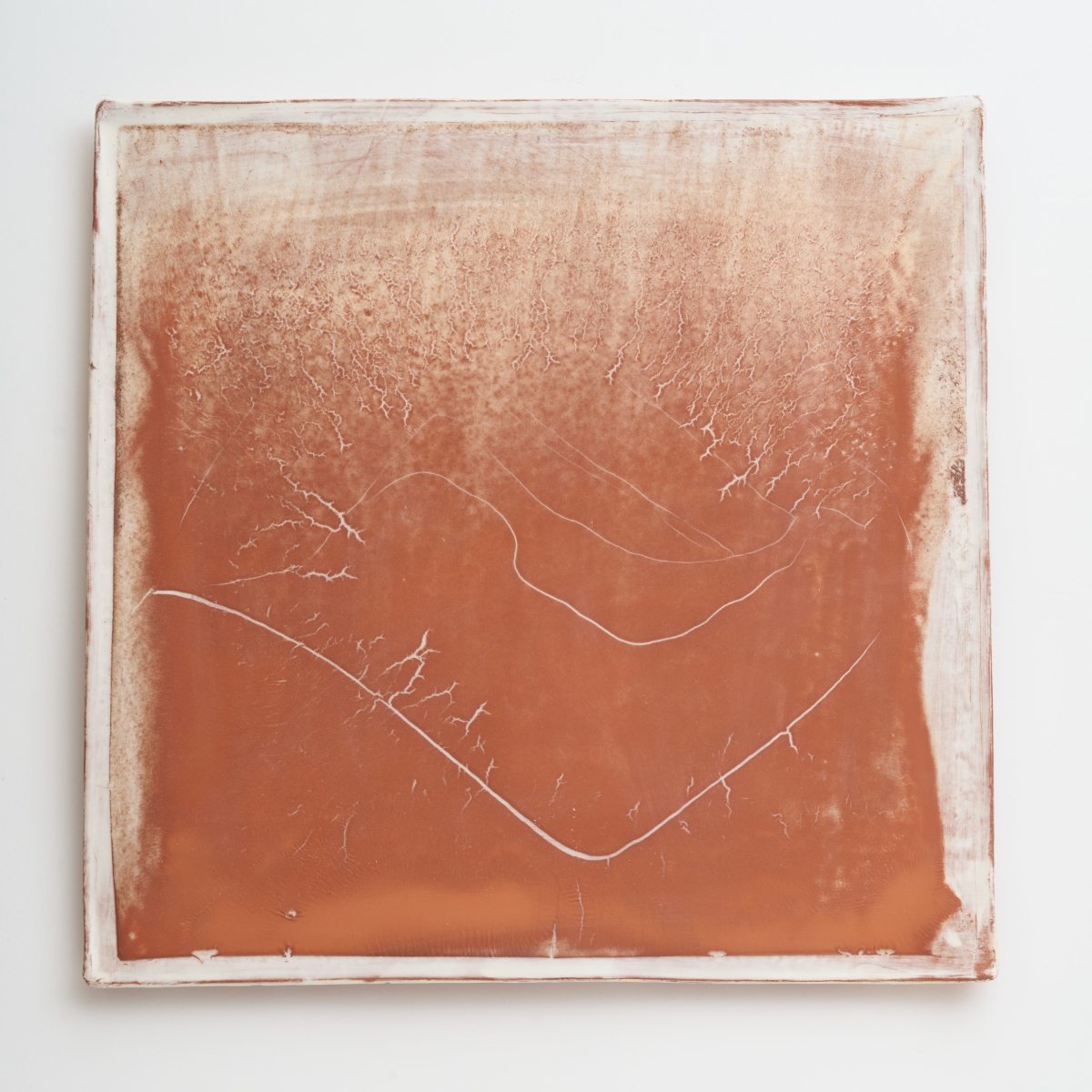
Rather than letting go of control, I think it is more about shifting where the control lies in the process. For instance, instead of putting the control into a pre-drawn line, it is placed in the choices made along the way––for the order of the glazes, the combinations, the overlaps or the thickness. Then there is another significant form of control, which lies in choosing what to keep and what to give up on. That is a form of control that happens throughout the process. Almost from the first firing, I ask myself: “what could this be? Which direction does it point towards? What is worth keeping or strengthening or make changes to?”
I have often worked in series. For example, in 2012 I worked with flat circles, ovals and rectangles––geometric formats and fixed dimensions. Within those, I would restrict myself: here only black and white, here only certain actions, and so on. But with these series, I experienced at some point that it tipped over into making designs. When I have these moments––when I think “now I know how to do this” ––the nerve disappears. Often the earliest pieces are the best, when the curiosity, uncertainty and tension may be visible. Not always, but often.
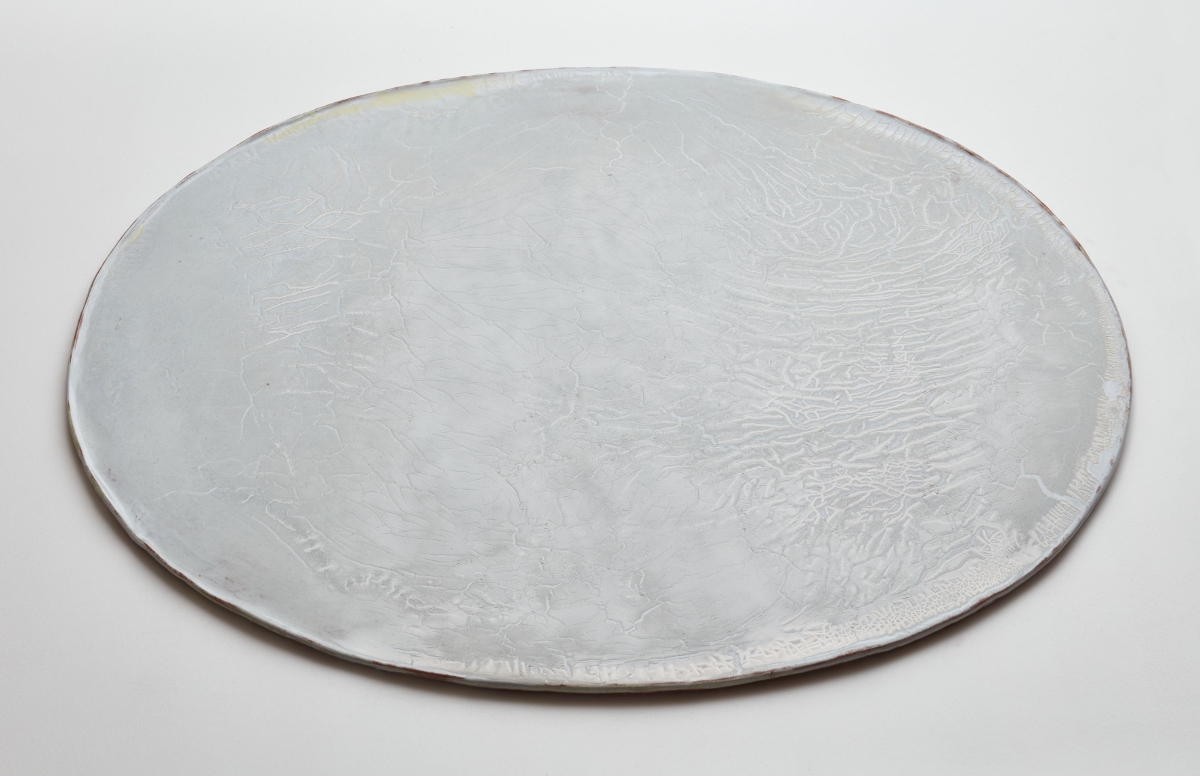
The work titles usually emerge when I see what the pieces have become. With whiteout10 for example, I wanted to explore a kind of minimalism, but if you look closely, there is actually a great deal going on. These motifs are somehow meditative. Some of the more recent works have more tearing and tension––more contrast or even conflict. Also, with earthenware, the material is inherently nature as clay is made from geological processes. So, the possibilities of natural references are somehow already there in the material. However, my best works are abstract, where the narrative lies in the material and the way it is made, not in a declared message.
Information box
An Impatient Desire, The Norwegian Association for Craft Artists’ 50th anniversary exhibition was on view at Lillehammer Art Museum between December 6, 2025 and March 15, 2026.
Nina Malterud’s solo exhibition Glaze Stories is on view at Hå Gamle Prestegård between March 21 and May 24, 2026. A new catalogue will be published on the occasion of the exhibition.
Nina Malterud (b. 1951) graduated from the National College of Art and Design in Oslo (1971–74) and has worked as an artist since then. From 1994, she was a professor of ceramics at the Bergen National Academy of the Arts, and between 2002 and 2010 served as Rector of the same institution. Subsequently, she has held various roles as a senior advisor at both national art academies and at the Faculty of Fine Art, Music and Design at the University of Bergen, particularly concerning artistic research and PhD education.
She had a solo exhibition at Kode Art Museums and Composer Homes in Bergen in 2022 and in that same year, she was awarded the Ulrik Hendriksen Honorary Prize and Appointed Officer of the Royal Norwegian Order of St Olav. In 2025 she was curator for the exhibition An Impatient Desire at Lillehammer Art Museum, celebrating the fiftieth anniversary of the Norwegian Association for Craft Artists.
Marthe Yung Mee Hansen currently works as an adviser and producer at Norwegian Crafts, and as a freelance art writer. She graduated with a master’s degree in Museology and Cultural Heritage Studies from the University of Oslo (UiO) in 2020 and did her undergraduate studies in Art History and Media/Cultural Studies at UiO and Sungkyunkwan University in Seoul, South Korea.
In 2024, she was part of the curatorial group for European Ceramic Context at Bornholm and the prize jury for Talente – Masters of the Future organised by Handwerkskammerfür München und Oberbayern. Her texts have been published in Impulse Magazine and the journal Kunsthåndverk among others.
Subscribe to Ceramics Now to read similar articles, essays, reviews and critical reflections on contemporary ceramics. Subscriptions enable us to feature a wider range of voices, perspectives, and expertise within the ceramics community.
Captions
- Nina Malterud, photographed by Øystein Klakegg (featured image)
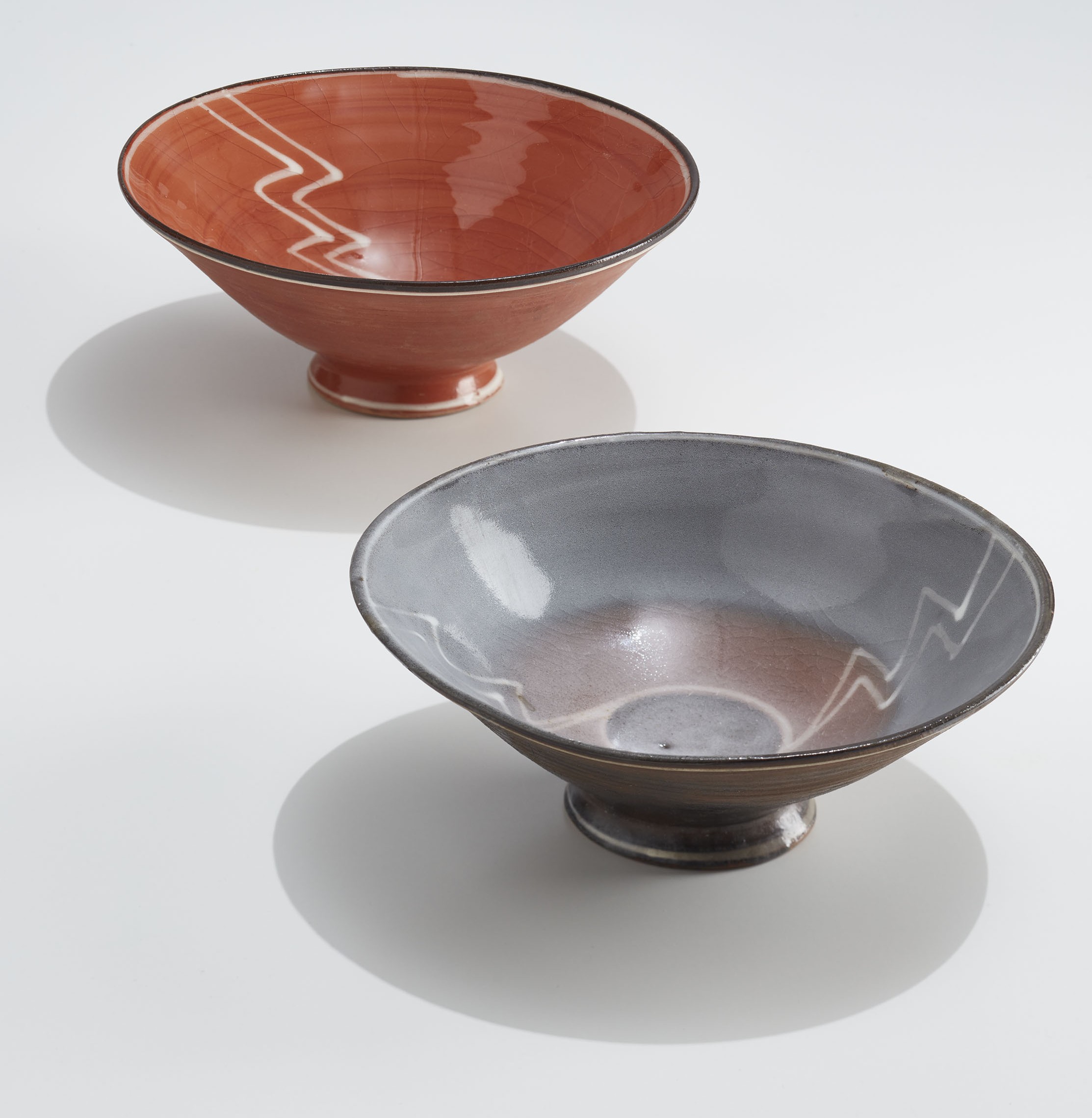
- Bowls, 1975. diam. 15 cm. In the collection of Kode Art Museums and Composer Homes. Photo: Øystein Klakegg
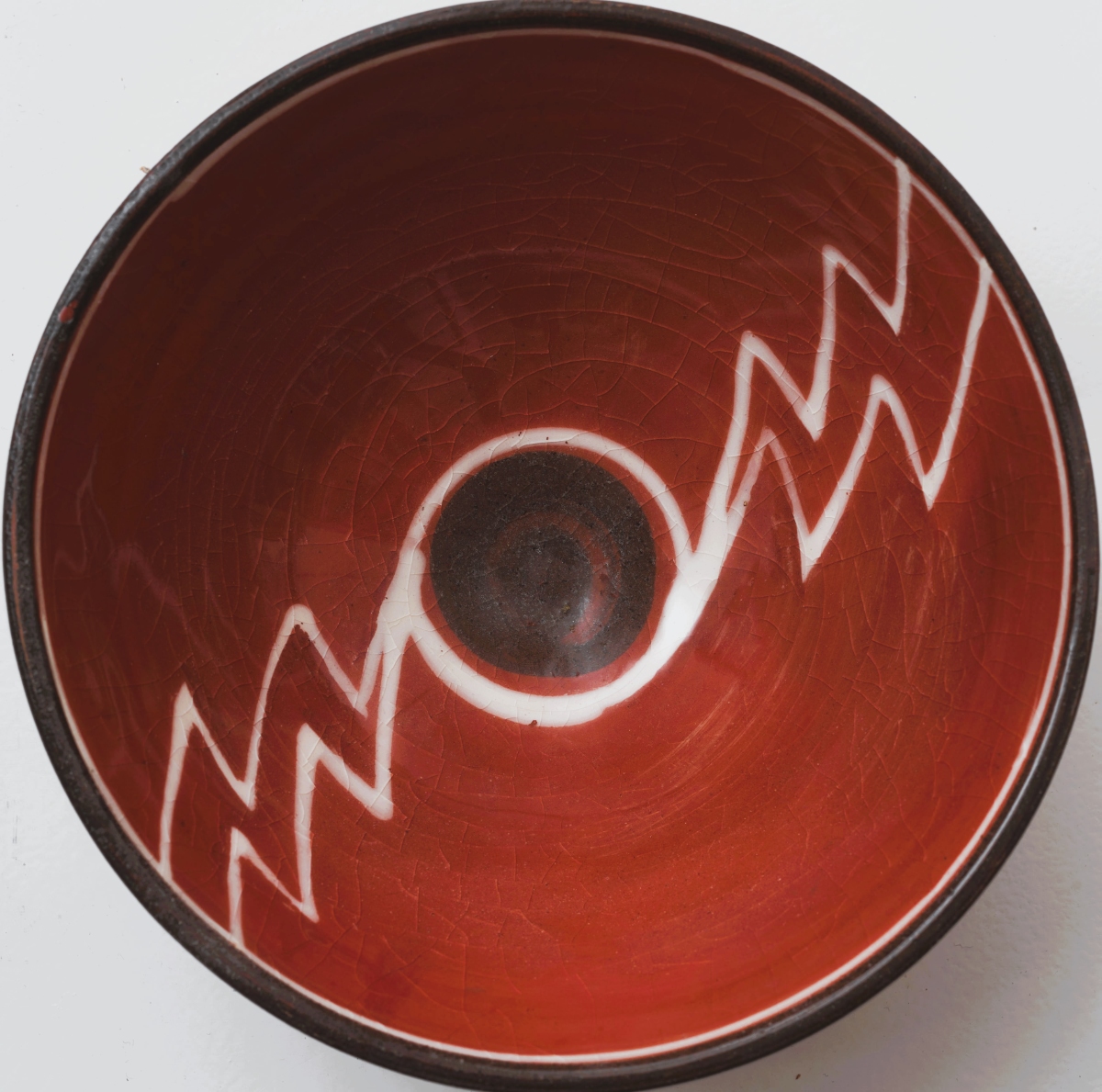
- Bowl, 1975. diam. 15 cm. In the collection of Kode Art Museums and Composer Homes. Photo: Øystein Klakegg
- Glaze Stories, 2022–23. 22 x 27 cm. Photo: Øystein Klakegg
- Glaze Stories, 2022–23. 22 x 27 cm. Photo: Øystein Klakegg
- Landscape in Square, 2024-25. 48 x 48 cm. Photo: Øystein Klakegg
- Landscape in Square, 2024-25. 48 x 48 cm. Photo: Øystein Klakegg
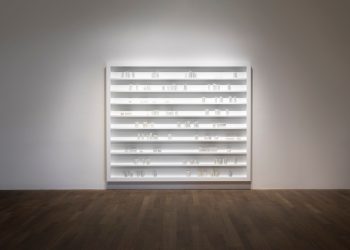
- whiteout, 2024. 55 x 67 cm. Photo: Øystein Klakegg
- Large pots in studio, 1987. Commission for Museum of Decorative Arts and Design, Oslo. Photo: private
- Nina Malterud at a workshop at Hallsberg Brick Factory, Sweden, 1997. Photo: private
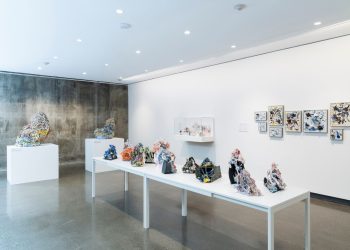
- Nina Malterud, Material Statements (solo exhibition), Kode Art Museums and Composer Homes, 2022. Photo: Dag Fosse
- Nina Malterud, Material Statements (solo exhibition), Kode Art Museums and Composer Homes, 2022. Photo: Dag Fosse
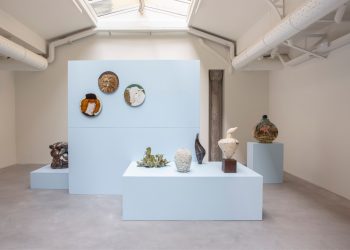
- Lisbet Dæhlin, Jug on Wall, 1988; Lisbet Dæhlin, Jug, 1989, in the collection of Nordenfjeldske – The National Museum of Decorative Arts; Beth Wyller, House, 1989. An Impatient Desire, The Norwegian Association for Craft Artists’ fiftieth anniversary exhibition, Lillehammer Art Museum, 2025–26. Photo: Camilla Damgård / Lillehammer Kunstmuseum.
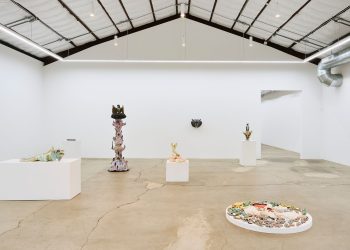
- Rigmor Hvoland, Cutting Angels – Under Water, Swimming in Landscape, 1987, in the collection of The National Museum; Gro Jessen, A Three Seen by an Ant, 1994, in the collection of Kode Art Museums and Composer Homes. An Impatient Desire, The Norwegian Association for Craft Artists’ fiftieth anniversary exhibition, Lillehammer Art Museum, 2025–26. Photo: Camilla Damgård / Lillehammer Kunstmuseum.
- From the exhibition Blåleire [Blue Clay], Nordenfjeldske – National Museum of Decorative Arts and Design, Trondheim, 1989.
- From the exhibition Blåleire [Blue Clay], Nordenfjeldske – National Museum of Decorative Arts and Design, Trondheim, 1989.
- Works by Lisbet Dæhlin, Beth Wyller and Nina Malterud, for a joint exhibition at Hordaland Art Centre, Bergen, 1990.
- Lisbet Dæhlin in her studio, about 1990
- Nina Malterud. From the studio, glaze samples. Photo: Elisa Helland-Hansen
- From the studio, glaze samples. Photo: Elisa Helland-Hansen
Footnotes
- The National College of Art and Design was established in 1818. In 1996, the institution became part of the Oslo National Academy of the Arts.
- Frysja Artist Centre is an artist studio community established in what used to be O. Mustad and Son’s factory buildings at the upper part of Akerselva river in Oslo. The art centre is owned by the City of Oslo and administered by the Agency for Cultural Affairs.
- The formal art education in Bergen has gone through several structural changes and developments over the years. Since 2017 is has been part of the Faculty of Fine Art, Music and Design at the University of Bergen. Link
- The National Artistic Research Fellowship Programme is a joint programme on PhD level between the higher art educations, established in 2003. The programme was radical in the way that artistic practice was to be the core. In 2018 institutional PhD programmes in artistic research, with the same profile were approved by the ministry and the national programme was reduced to a joint artistic research school.
- Kunstnerforbundet is one of Scandinavia’s oldest artist-run exhibition spaces. The institution was established in 1910 by a group of emerging artists in Oslo, Norway.
- The Norwegian Association for Craft Artists [Norske Kunsthåndverkere] is s an artist organisation that works to promote and support Norway-based contemporary craft artists.
- In 1975, the Norwegian Association for Craft Artists was established through a primary vote for a name change among the members of the Association for Artists of Applied Arts [Foreningen Norske Brukskunstnere]. Inspired and motivated by the artist action that started in 1974 in Norway, the craft artists wanted to make their identity as free artists more visible. Link
- Tidsskriftet Kunsthåndverk is a journal for craft, published by the Norwegian Association for Craft Artists. The first edition is dated to 1980. Malterud was one of the initiators behind the journal and has served as a member of the editorial board and co-authored several texts between 1979–87.
- The public art scheme in Norway [Utsmykningsfondet for nye statsbygg] was established in 1977. In 2007 the name was changed to Art in Public Spaces [Kunst i offentlige rom – KORO]. The institution is Norway’s national body responsible for curating, producing and activating art in public space. Link
- Whiteout is a weather condition in which visibility and contrast are severely reduced by snow, fog or sand. The horizon disappears from view, while the sky and the landscape appear featureless, leaving no points of visual reference by which to navigate.