
By Susannah Israel
There are journeys that run like rivers, looping back, carving new paths, and gathering stories along the way. For Susannah Israel, Archie Bray has been that river. Each time she returned, the current was different: once as a young resident chasing possibility, again as a writer drawn into the narratives of others, and finally as an artist whose years in clay fill the work with depth, gratitude, and resolve. This three-part reflection traces how a single place can transform us again and again, and why the Bray remains a wellspring of creative magic.
Part I. Visiting Artist, 2024
Over time my practice has moved in the direction of site-specific work, and my concept for the Visiting Artist residency was to reflect on the lasting influence of Archie Bray. The three sections of “We are the body, the boat, and the water” represent my three residency periods at the Bray. I made notes and drawings for several months before the residency, which is how I begin making work. I have learned to keep the process open, allowing for discovery, inspiration and the unexpected. I knew I would find all these and more, returning to the Bray for the third time in three decades, in three different capacities.
I brought different experiences and expectations to each residency, and acceptance was central to the third. After a long life in clay, I have physical limitations that preclude driving, and require wheelchair assistance in the airports. At the Bray, I needed help lifting and kiln-loading; rather than making me feel unable, this gave me wings to carry out an admittedly ambitious project. The encouragement and shared excitement about the developing piece was a substantial part of my experience. Getting to make a second sited sculpture for the Bray sculpture grounds is a wonderful honor, and without the support of a great many people, it would not have happened. That is the magic of Archie Bray.
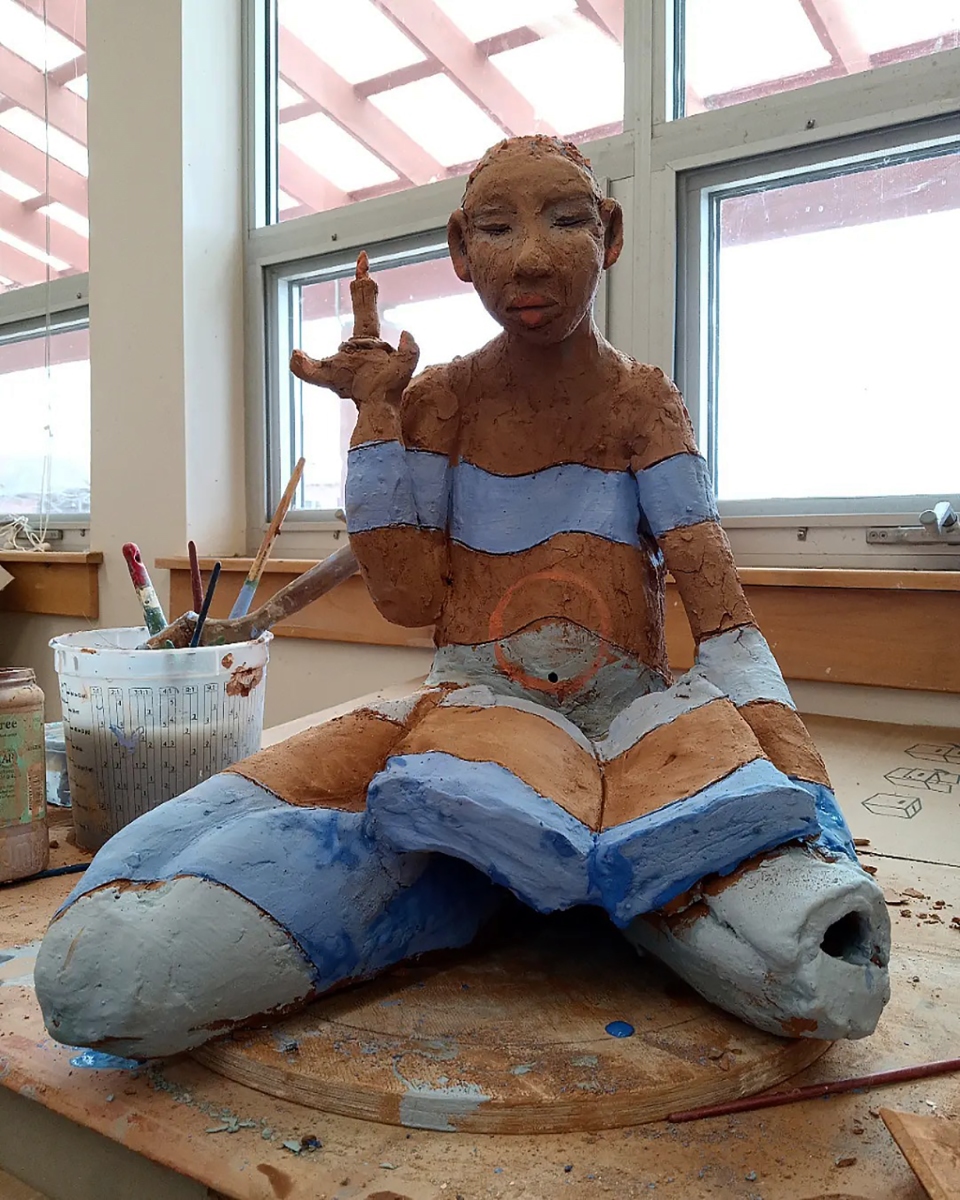
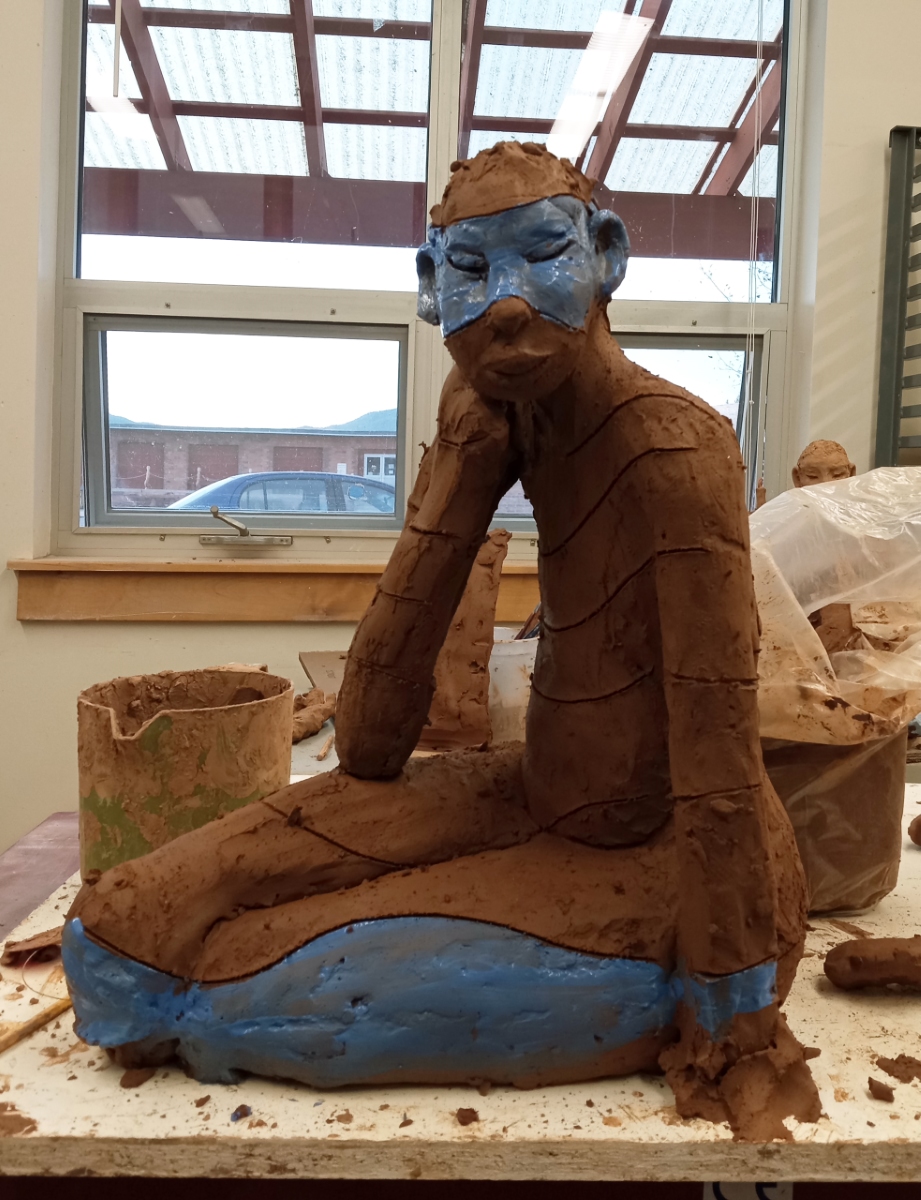
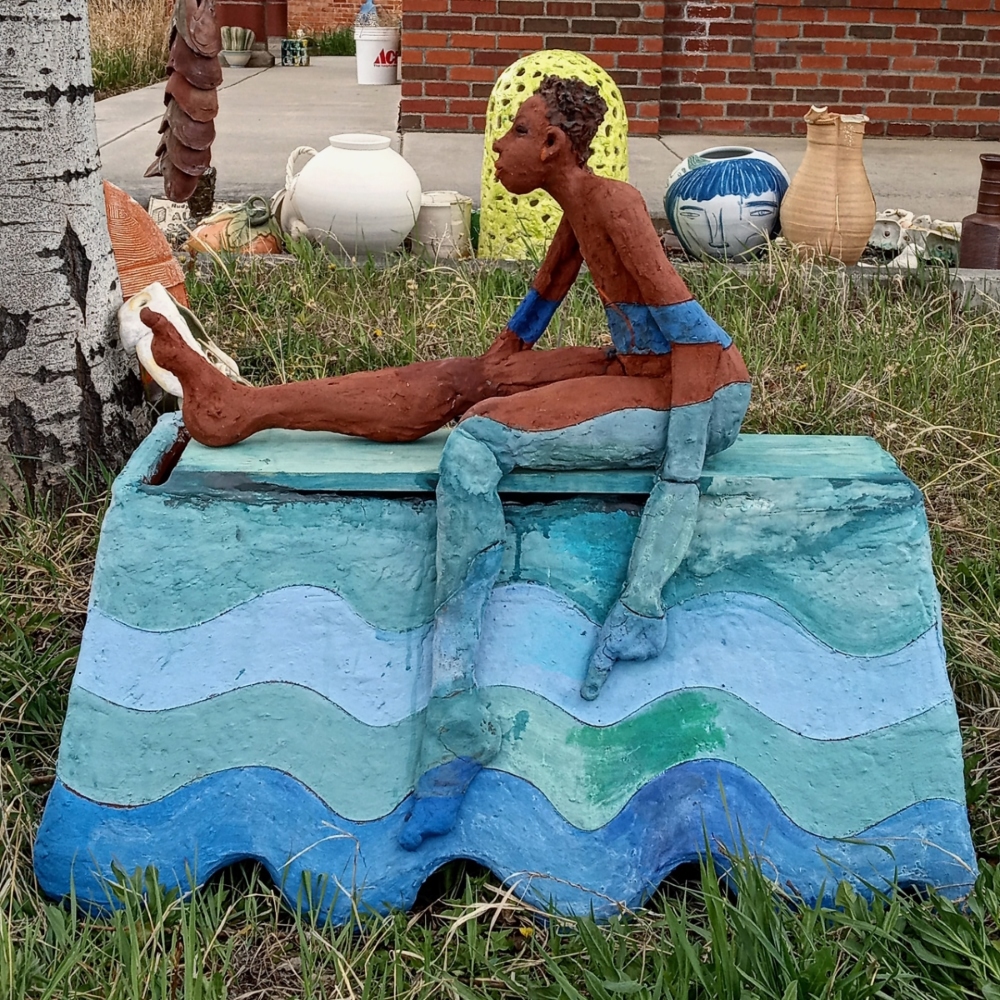
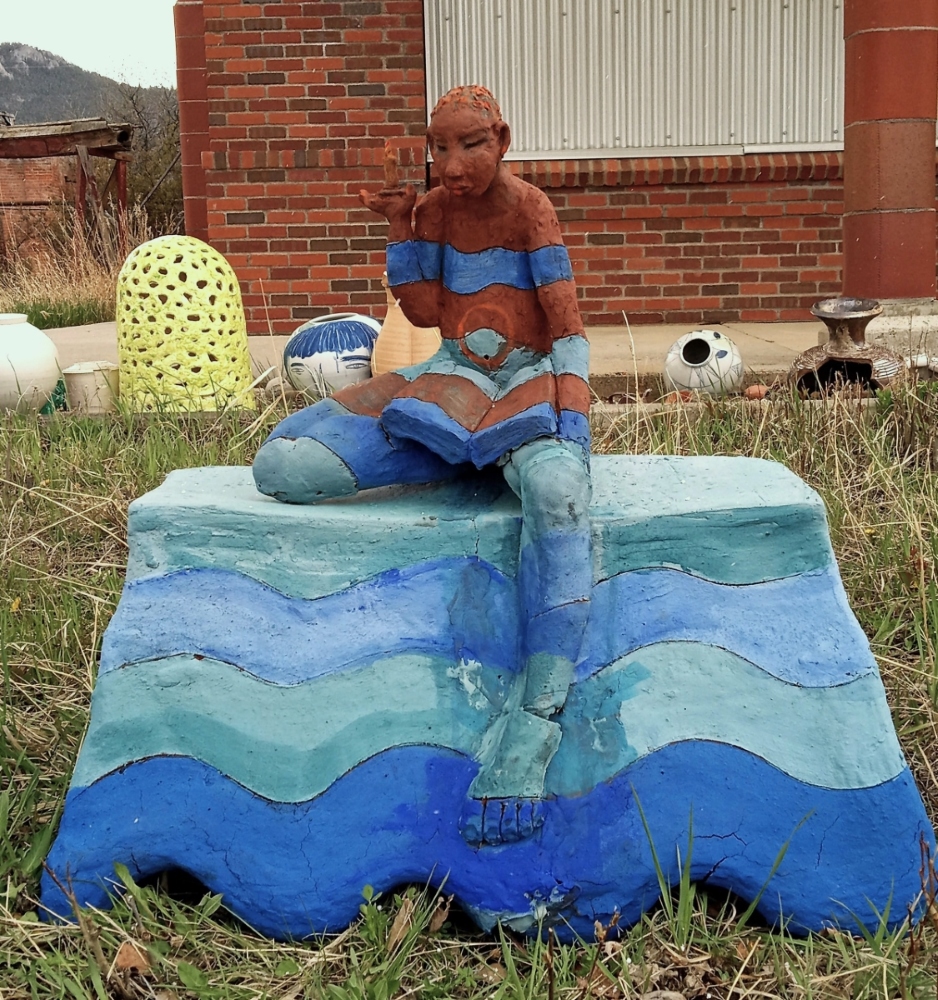
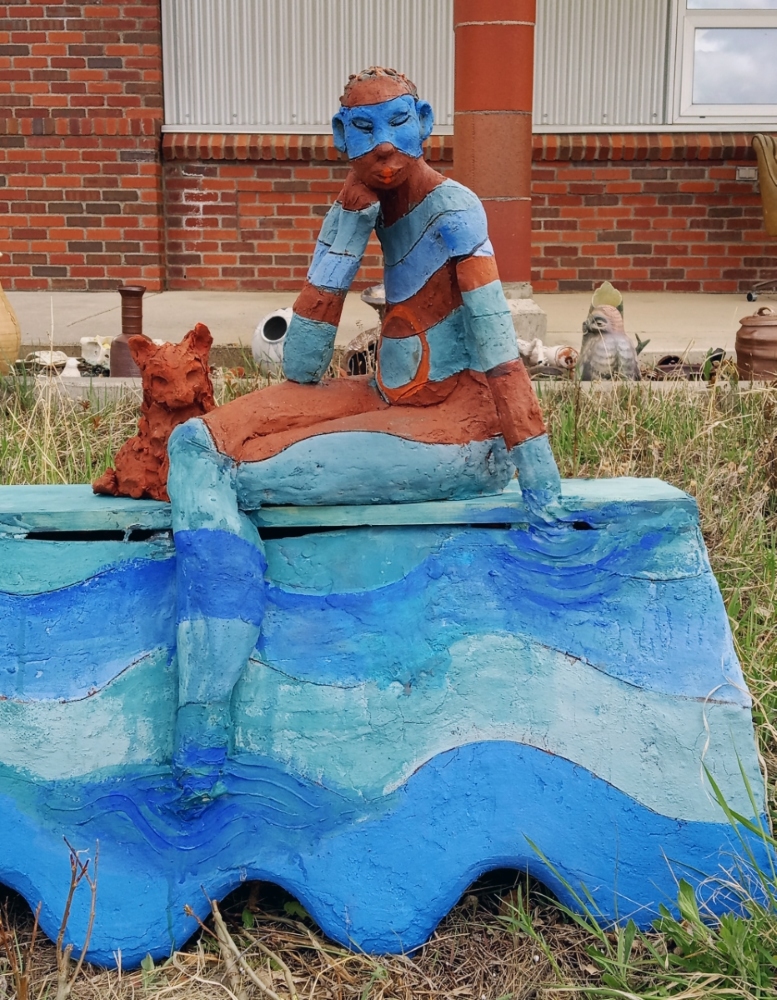
The title “We are the body, the boat and the water” refers to the human journey, how we become who/what we have lived. The sculpture is made in three sections, each one representing a different residency period at the Bray. The work tells my story in the form of a river that is also the boat that carries and permeates the figures riding it. In the end, it is all one journey. That first residency at the Bray established my love of terracotta, and my palette of primary colors, green, black and white. Water is a consistent metaphor I use to signify change, movement, and the passing of time; the serpentine line is my method of representing water with clay. Using my whole arm to make repeating curves is both a visual and physical process, creating balance and rhythm. These serpentine lines connect the three sections into one sculpture. I built the bases and the figures at the same time, using large coils. To define and emphasize the curving lines of water, I challenged myself by curving the bottom of the bases. I applied color to the leatherhard forms, so both curve and color move up the figures without a visual break. Despite the intensive work schedule, I found time for sharing stories and looking at amazing work by the residents and staff.

Summer Residency, 2002
The first figure has one leg and one arm submerged, riding the waves in a boat made of water. The waves continue up the body to the waist. The other leg is extended straight ahead and the person is looking eagerly toward the future. This is about my summer artist residency at Archie Bray in 2002, a time when I was beginning a teaching career and a new relationship, and feeling excited about what a life in clay would bring.
Writer in residence, 2011
The central figure, submerged to the heart, holds a lit candle and reads from a large book. Here the figure is reviewing the journey, at ease in the water, and ready to share and exchange knowledge. It represents my second time at the Bray as writer in residence. I worked in the visiting artist studio and interviewed the 5 residents completing their 2-year AIR, an intensive exchange that brought context and inspiration to my own art practice.
Visiting Artist, 2024
The third section of this site-specific sculpture is about returning for a final residency as an invited visiting artist. The figure is reflective and tranquil, and both feet and hands are submerged. The waves have risen to cover most of the face. The person is recognizing and celebrating the path to this moment, feeling grateful for all that has been possible, and ready for the next adventure in clay.
Part II. Writer in residence, 2011
I was selected as the 2011 Jentel Critic at Archie Bray, and I hold the unique distinction of having been both writer-in-residence and artist-in-residence (in 2002) at the Bray. I spent the first two weeks of May in Montana, interviewing the Bray Fellows about their artwork and experiencing firsthand the creative environment that shaped the pieces featured in their farewell exhibitions. From May 15 to June 15, I continued the residency at the Jentel Foundation in Wyoming, using the quiet, isolated setting to focus on writing five essays for the exhibition catalog. This is what I noted in my exit interview:
By nature I am a worker bee, dedicated to service in my community. Both these residency programs provided community, beautiful, inspiring surroundings and gave me time to work on anything I wanted. To quote Alan Rickman, it was ‘like pouring gasoline on a fire.’ I am forever grateful to the Bray and Jentel Foundations, and I am, frankly, intoxicated by all this honey.”
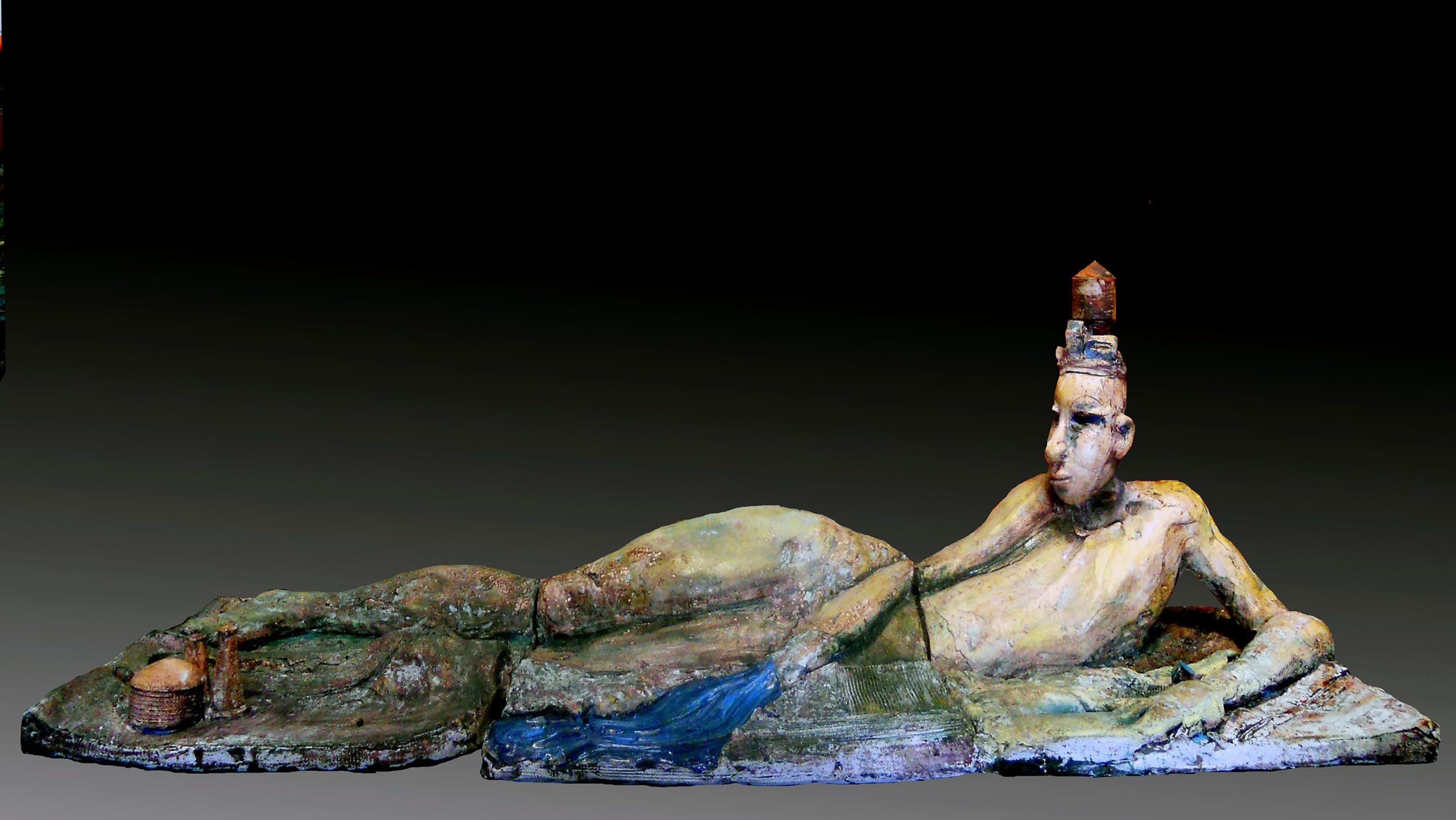
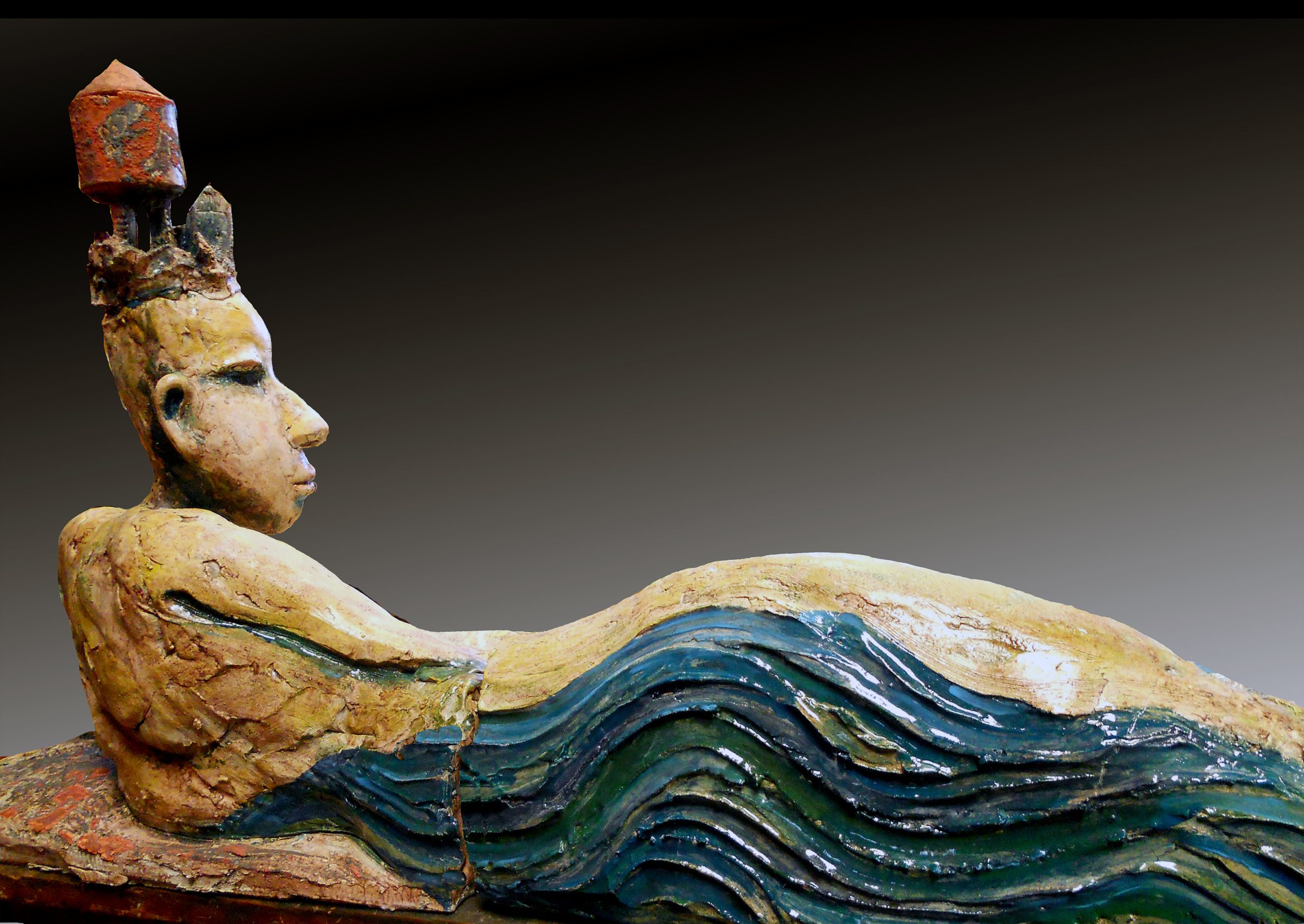
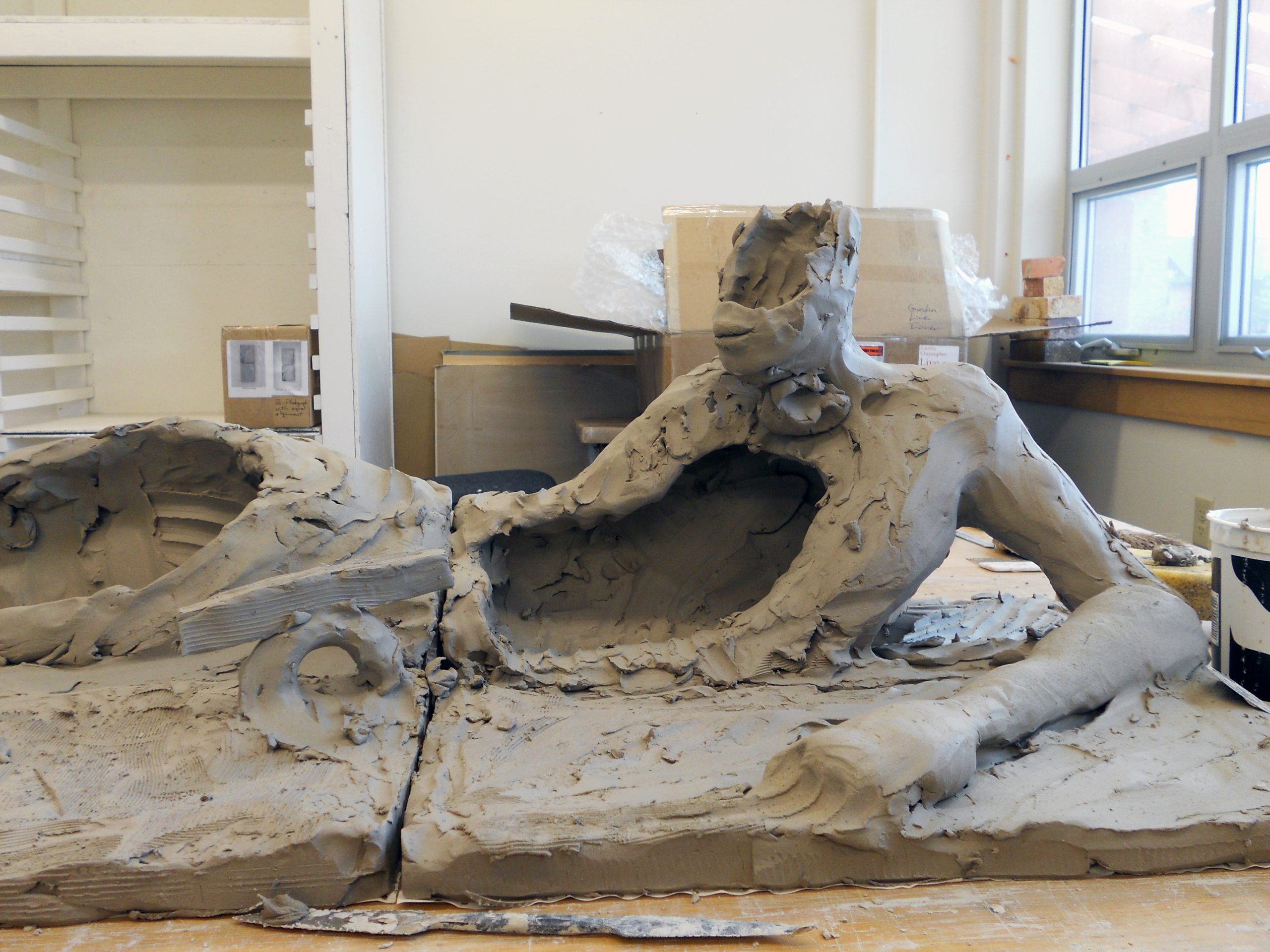
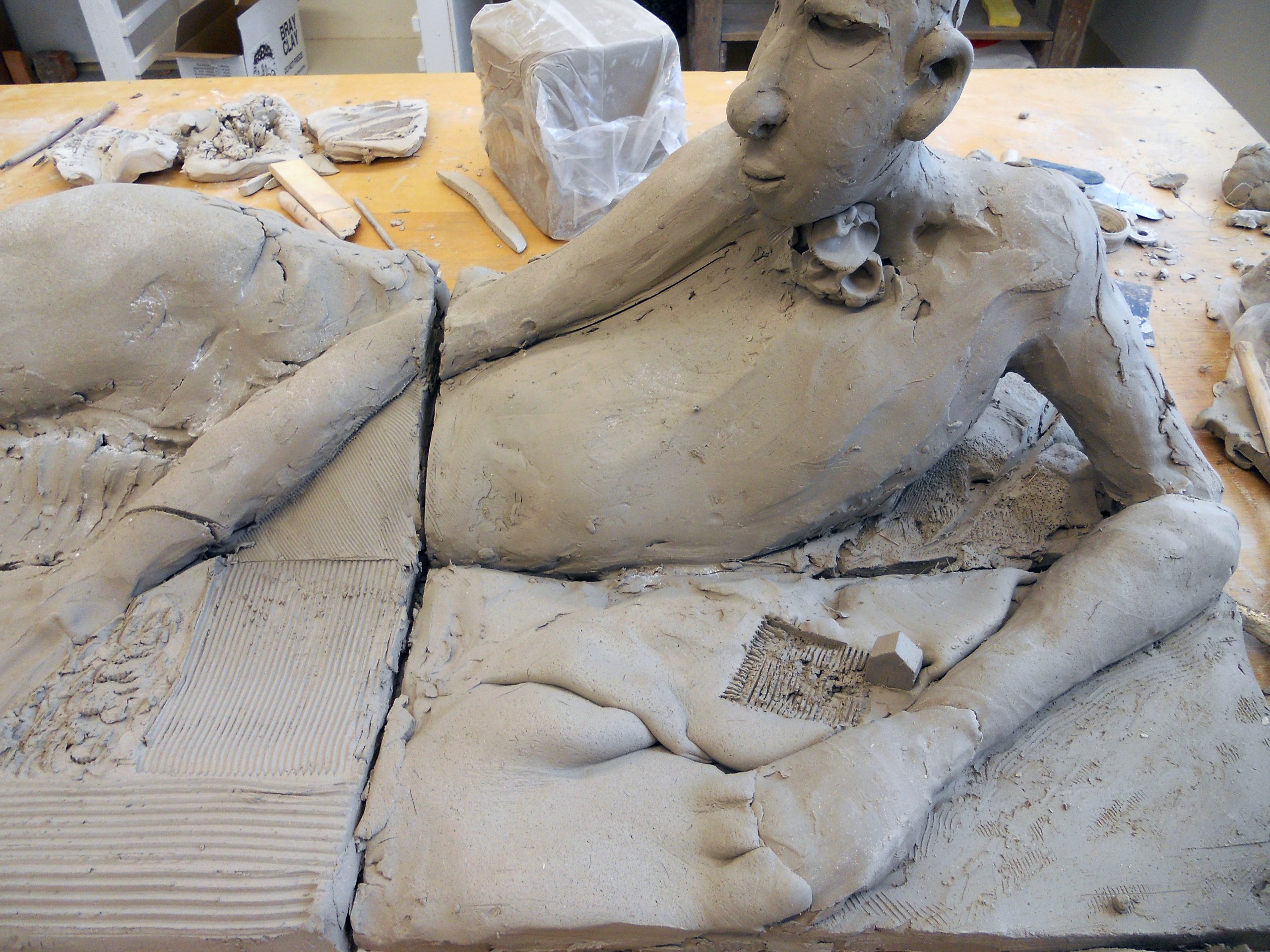


Harnessing critical writing to ceramic art is a wonderful challenge. I greatly enjoyed meeting the artists, learning about their methods and ideas, and condensing the copious notes that resulted into 500-word essays. But there was an unexpected part to the residency. As a critic at the Bray, I expected to completely focus on writing catalog essays for the five fellowship artists. I had the pleasure of meeting Resident Director Steve Lee. I got to see the new Shaner Studio. When Steve told me the Voulkos Studio was to be my work space for the next two weeks at the Bray, I listened in gleeful astonishment. Having disciplined myself to the prospect of two weeks without sculpting, I was immeasurably delighted.
I made the piece “Apostrophe” in 12 days, including bisque-firing, to the amusement of sculptor Kensuke Yamada. I had to. Driving alone from California through the changing, spectacular landscapes of the Sierra mountains, through Utah’s great red rocks to the Idaho-Montana pass, the terrain imprinted itself relentlessly upon me. I drew landscapes every night before bed, and they followed me into my dreams. I saw huge figures, overlooking the tiny human travelers with calm and distant regard. The agrarian machinery was a lesson in formal composition, vast beyond human scale. The drawings filled dozens of pages in my notebooks.
As I worked in clay at the Bray, these images compelled my attention. The sections of the sculpture are the six states I journeyed through: California, Nevada, Utah, Idaho, Montana, and Wyoming; each is represented in the blocks that form a reclining figure. I had intended to devote myself only to writing. But the sketchbooks would not allow it.
The name “Apostrophe” comes from a term in the theater. In an apostrophe scene, the actor onstage speaks to an absent person. As I worked it became clear that my absent person was Bill Lassell, my beloved creative collaborator who accompanied me during my first residency at Archie Bray, in the summer of 2002. Bill died at home unexpectedly, though peacefully, in 2009. Making that same journey alone, nine years later, his presence was indelibly part of my second residency, infusing the very landscape with memory and reflection.
Part III. Summer residency, 2002
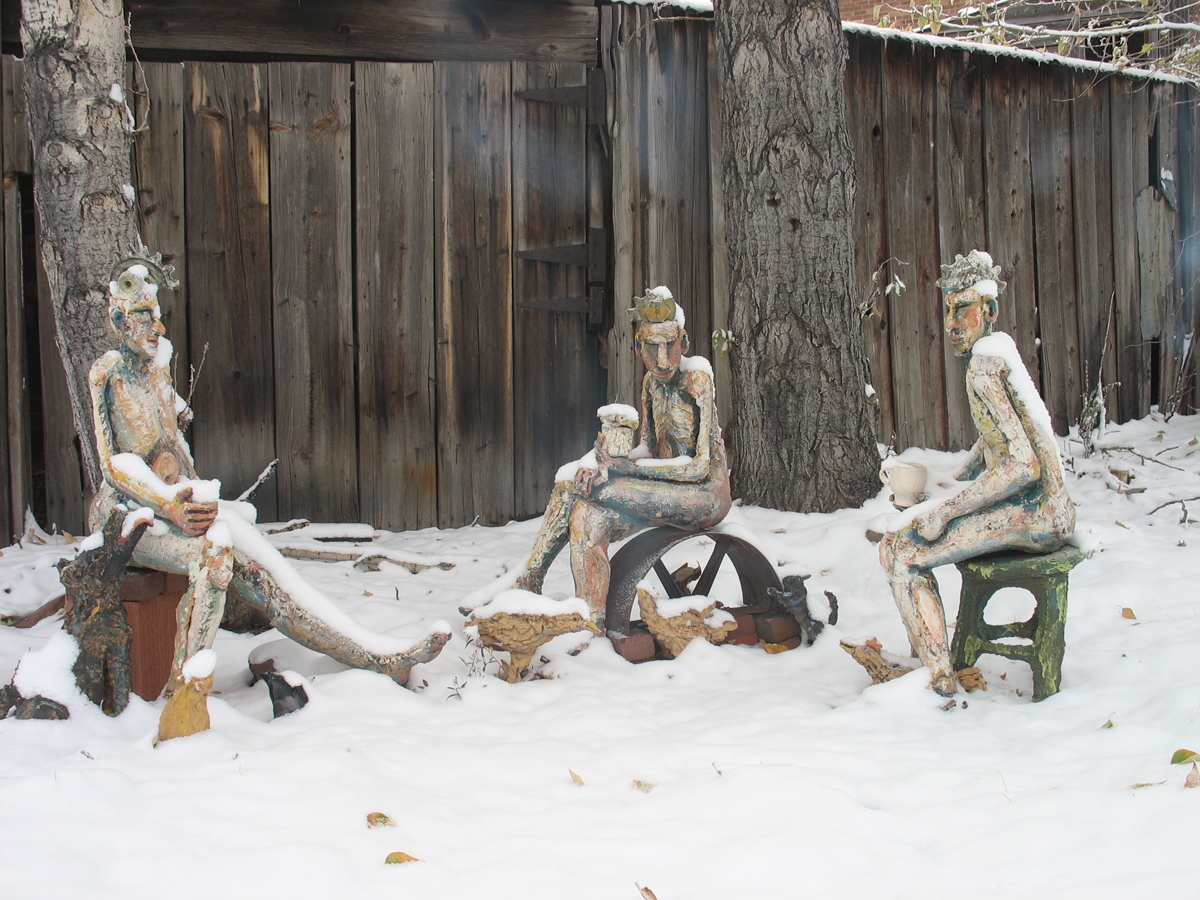
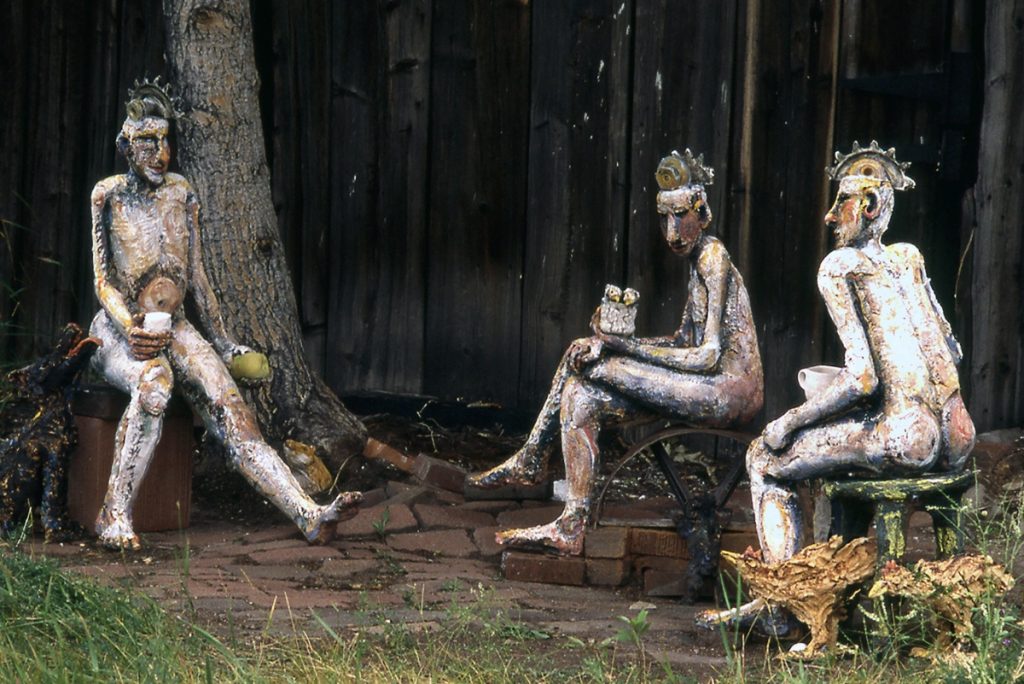
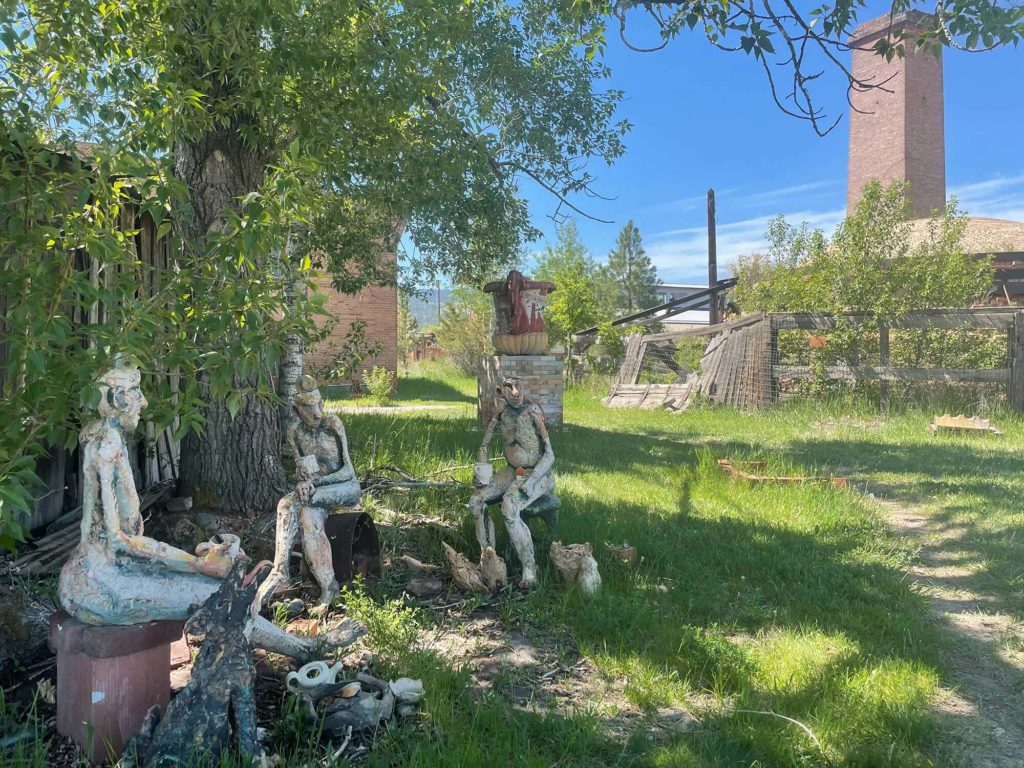
In June of 2002 I drove to Helena, Montana for a summer residency at Archie Bray. It was a critical time in my artmaking, as I was mourning the death of my partner of 25 years, and had not been working. The strength and inspiration of the Bray creative community brought solace and new inspiration, inspiring Tea at Archie Bray, an affectionate narrative about my residency experience.
The Tea Party piece is permanently sited at the Bray, so I intended it to be about community, the work, the long conversations of summer 2002. With this in mind I included elements from my fellow residents. Terry Geiber donated chopped nylon fiber for my clay mix; Susan Beiner made plaster molds of Bill Lassell’s feet, used for all three figures; Mika Negishi contibuted six clay eggs; Allison McGowan, a textured porcelain cup for the central figure; Sean Derry – the cast green apple the left figure is holding, tempting a gopher. I made the third cup, the chickens, figures and animals; Bill helped mix the clay, load and unload the kilns, and he carried everything that was heavy.
Each element of the sculpture is a reference to the summer’s events. A heat wave affected the baby birds, and they fell from their nest by the summer studio. We dropper-fed our little foundlings six to eight times a day. Their constant cheeping became our ambient sound track for the summer. We taught them to fly, by perching them on sticks and making them flap their wings. It worked – or instinct worked, and they were soon flying around the studio. They were bold and friendly, perching on our worktables to see what was happening, and had an excellent relationship with the baby kitten, also in residence.
En route to the Bray, Lesley had witnessed some kittens tossed from a car. She rescued the lone survivor, and named him Oliver. He was companionable with everyone, including the baby birds, and liked meandering aroundthe studio checking our work. When Lesley finished work for the day she would pick him up and drape him around her neck like a black velvet collar.
On July 4th a terrified young dog ran into the summer studio. We gave him water and mashed potatoes, lacking any dog food. A comical aspect of this evening was our discussion about his name. Various names were tried, and we concurred that he responded to Jim. The next day Sandra Trujillo drove Jim around Helena looking for his home. He responded to a particular street, and then a certain house where she let him out, and he trotted up to the door and was let in. I guess they’ll never know.
Because of these collective experiences, the animals of the summer studio all appear in the Tea Party sculpture. The chickens and gopher are the products of my imagination. It is noteworthy that these pieces have sustained no damage from the extremes of Montana weather, which makes them an excellent argument for the durability of clay in public art.
Susannah Israel is a sculptor, writer and educator known for terracotta figures that engage with social, cultural and political themes. Born in New York and now based in Oakland, she has exhibited internationally and her work is represented in major museum collections. Israel has received a US Artist Grant, the Fletcher Challenge Premier Award and a Virginia Groot Foundation Award, among others.
Archie Bray Foundation for the Ceramic Arts (The Bray) was founded at the foothills of the Montana Rockies in 1951 by entrepreneur, brickmaker, and avid arts patron Archie Bray, who intended it to be a place to “make available for all who are seriously interested in the ceramic arts, a fine place to work.” The primary mission is to provide an environment and connection with other serious artists that stimulates creative work in ceramics.
Located on the site of the former Western Clay Manufacturing Company, the 26-acre historic brickyard campus has more than 17 buildings, including a 12,000-square-foot resident artist studio facility, a new education and research facility, multiple sales and exhibition galleries, renovated administrative offices, and a facility for ceramic retail and manufacturing. The property is open to artists, students, gallery visitors, and ceramic supply customers, as well as the general public for classes, gallery visits, retail activity, self-guided tours, and structured group visits.
Subscribe to Ceramics Now to read similar articles, essays, reviews and critical reflections on contemporary ceramics. Subscriptions enable us to feature a wider range of voices, perspectives, and expertise within the ceramics community.
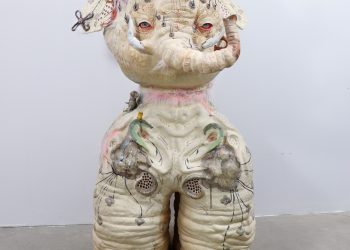
Featured image: Susannah Israel, We are the body the boat and the water, 2024, terracotta, H 50 x L 130 x W 25 inches. Photo by Simphiwe Mbunyuza