Handmade, Rewritten: Ceramics in a Digital World
This May Maak presents ‘Contemporary Ceramics + Craft’, a curated sale of works by the leading names in studio ceramics, alongside important makers working in wood, glass, fibre and silver.
As Maak celebrates 15 years of auctions dedicated to contemporary ceramics and craft, the latest auction offers an opportunity to reflect on the significance of the handmade in an increasingly digital world. In a cultural moment shaped by screens, algorithms, and artificial intelligence, people are being drawn to tactile, materially grounded handmade objects with a renewed sense of urgency.
Across both the art market and wider culture, there is growing evidence of a shift, especially amongst younger collectors, towards the authenticity and individuality of one-of-a-kind objects that can be physically engaged with rather than simply viewed. This desire is often perceived as a reaction to digital saturation.
As a movement, studio ceramics has been exploring material and form for over a century and in doing so has long embodied these qualities. What feels newly relevant today is not the emergence of the material-based arts, but a renewed attention to its depth and complexity.
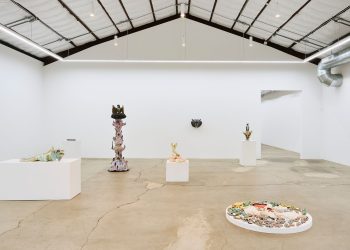
The Maak auction brings together a carefully considered selection of ceramic and craft disciplines that focus on materiality and reveal the maker’s hand. Rather than presenting a single narrative, the works in the sale reveal a field that is both deeply rooted and constantly evolving – one in which tradition, experimentation, and play exist side by side.
View the Contemporary Ceramics + Craft auction
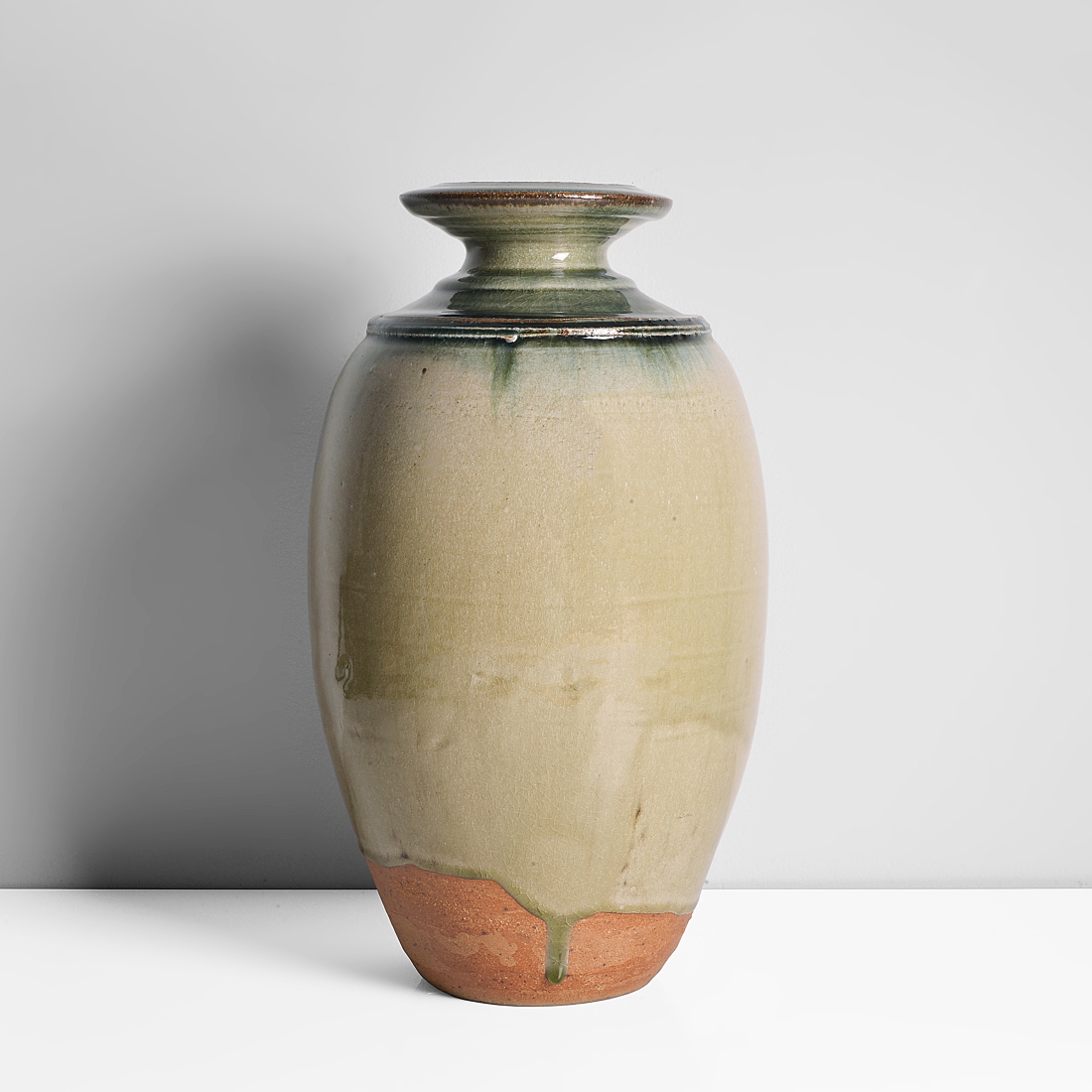
The idea of ceramics standing in opposition to the dominant cultural forces of its time is not new. The narrative of 20th-century studio pottery, shaped by figures such as Bernard Leach (lots 6-12) and Michael Cardew (lots 36-39), was grounded in ideals of honesty, utility, and restraint, with handmade objects positioned as a moral and aesthetic counterpoint to industrialisation.
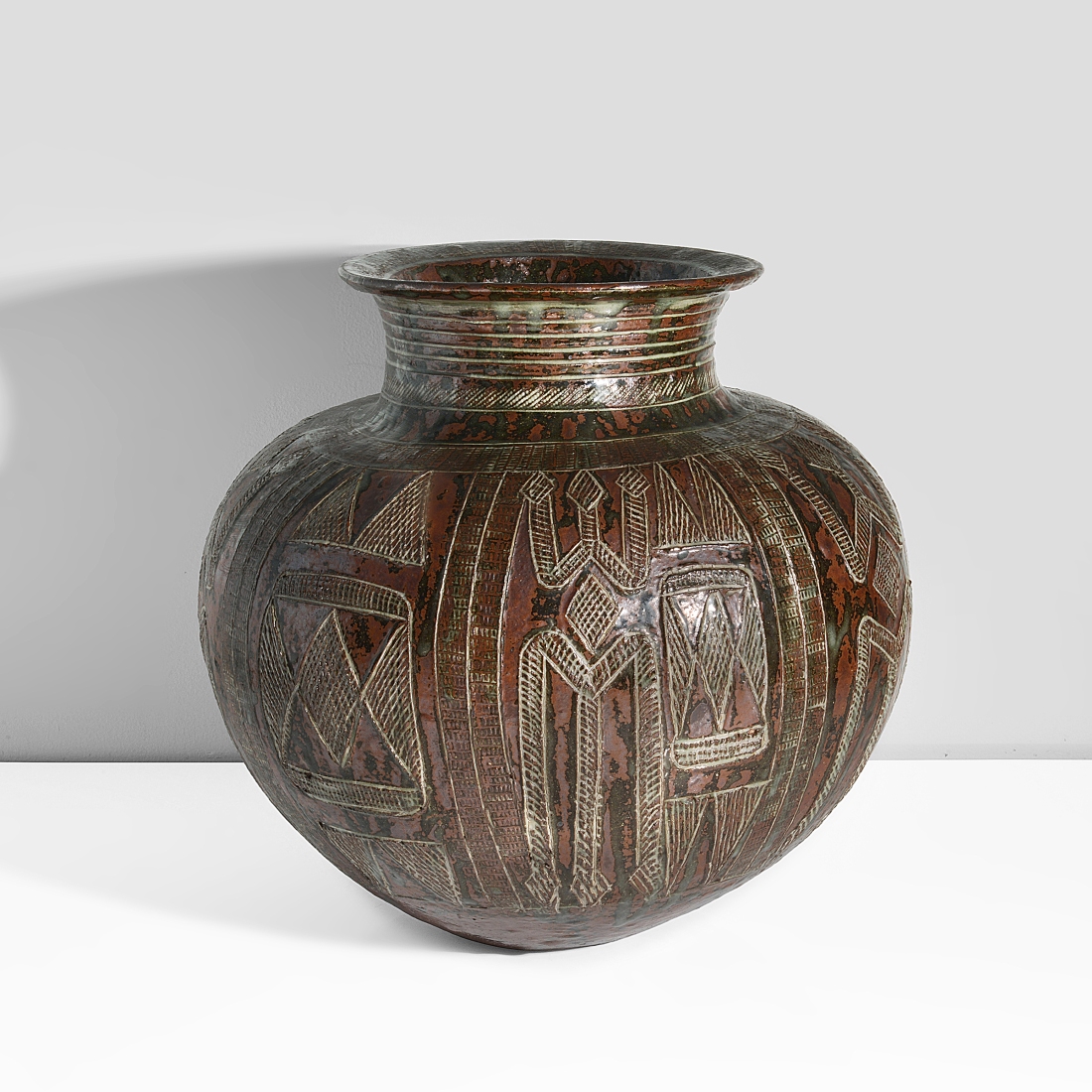
The foundations of the movement and subsequent exchange of ideas was itself slow and physical – rooted in travel, collaboration, and the movement of philosophies and objects across cultures. Leach’s time in Japan, and his return to St Ives with Hamada Shoji (lots 13-16) in 1920, established a dialogue between East and West that was embedded in making. Similarly, Cardew’s work in Abuja, Nigeria in the 1950s – where he worked alongside Ladi Kwali – demonstrates how techniques and traditions were adapted through direct, lived experience. Two works in the auction by Cardew (lot 39) and Kwali (lot 40) were each made in Abuja and demonstrate the fusion of the Eastern influenced stoneware techniques Cardew adopted from Leach with the indigenous pottery style of Abuja.
Set against today’s instant global connectivity, this earlier model of exchange feels markedly different. Yet the impulse remains the same: a desire to share knowledge through material practice.
Whilst the values and traditional techniques associated with Leach and Cardew have continued into the 21st century – as seen in the work of Richard Batterham (lots 43-47) and Jim Malone (lots 48-49) – they represent only one strand within a much broader field. The introduction of European modernism by émigré artists Lucie Rie (lots 52-64), Hans Coper (lots 65-68) and Ruth Duckworth (lots 74-75) expanded the possibilities of ceramics, opening it up to new formal and conceptual approaches. From this point, the discipline became increasingly diverse, experimental, and at times deliberately challenging. The qualities of the handmade in ceramics was no longer singular philosophy but an ongoing exploration.
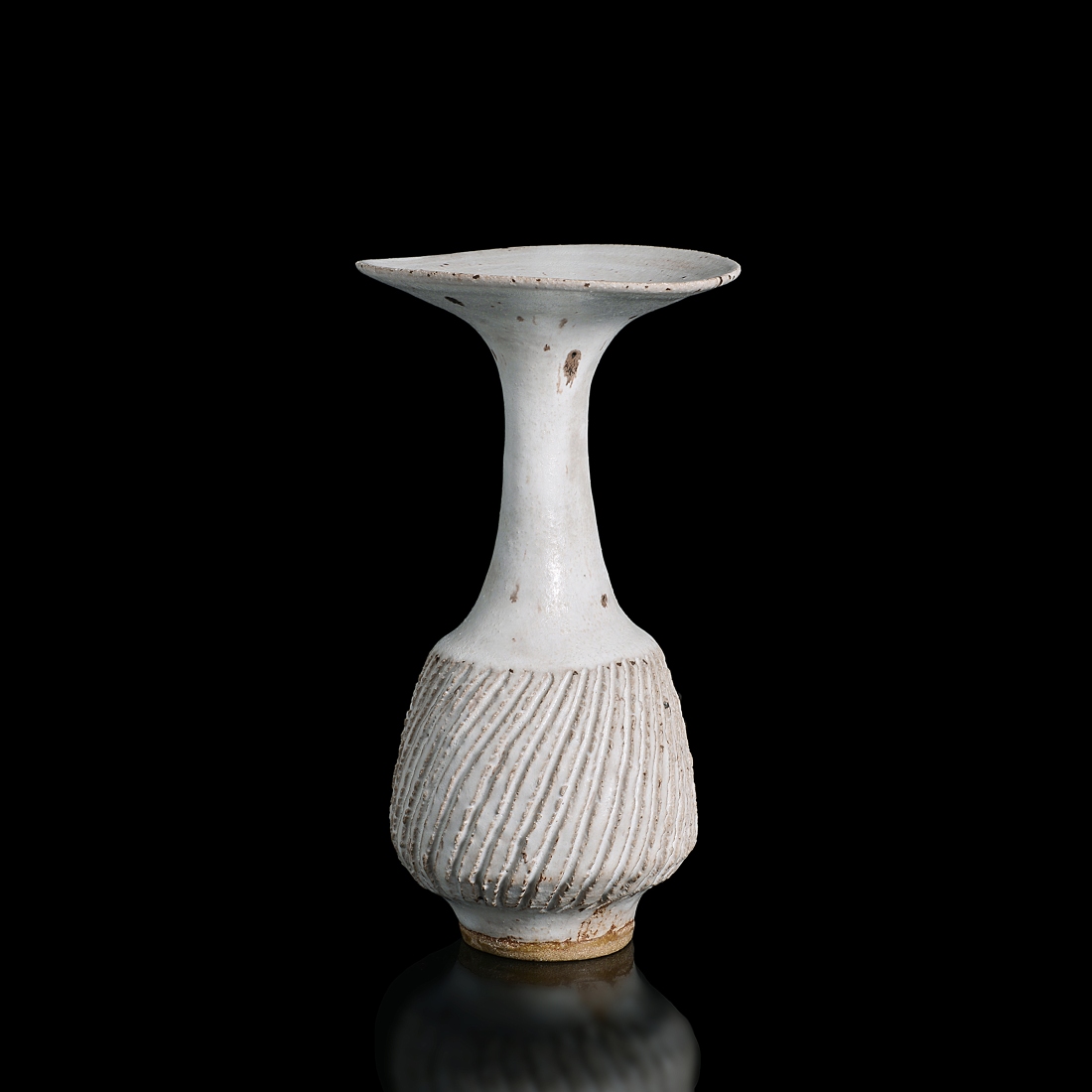
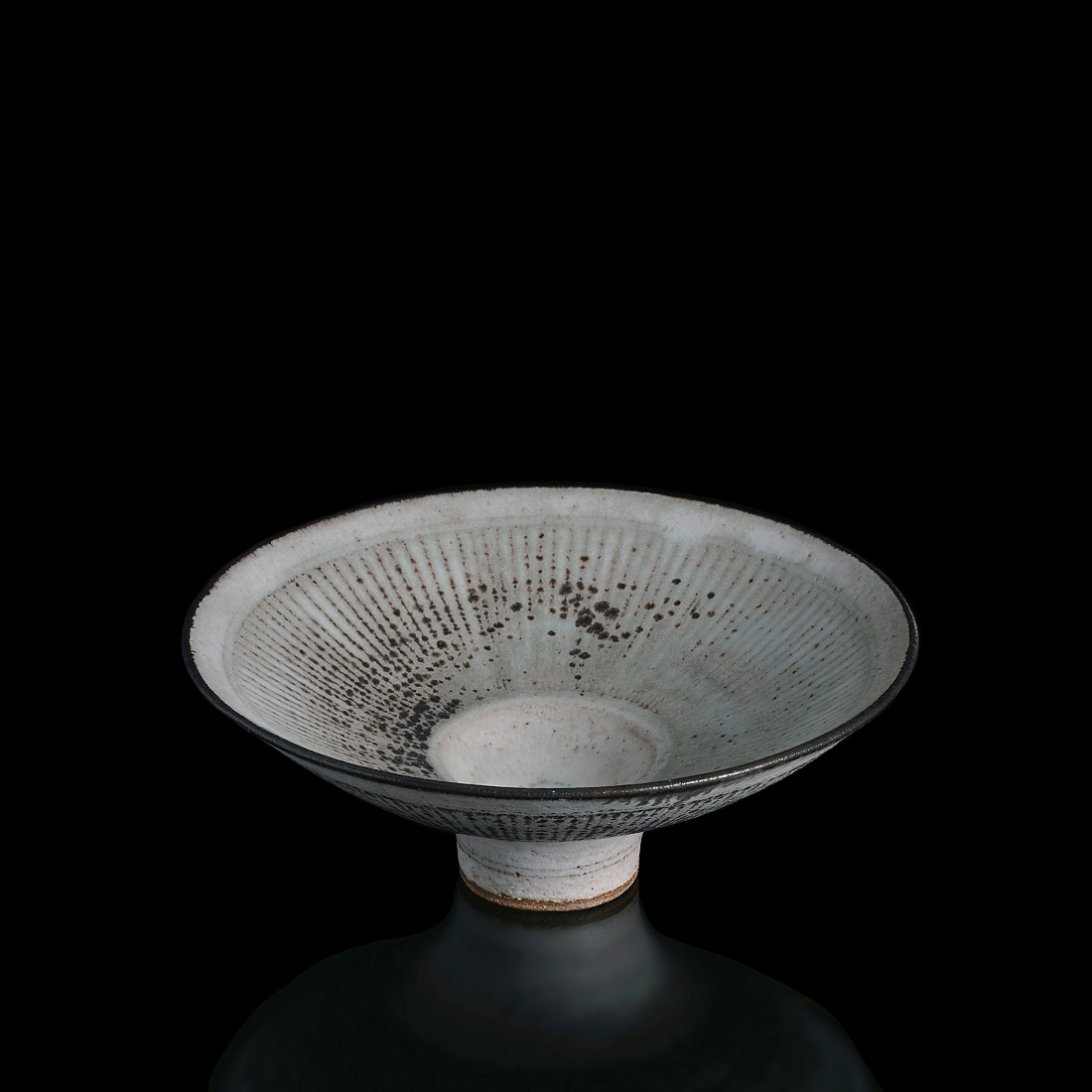
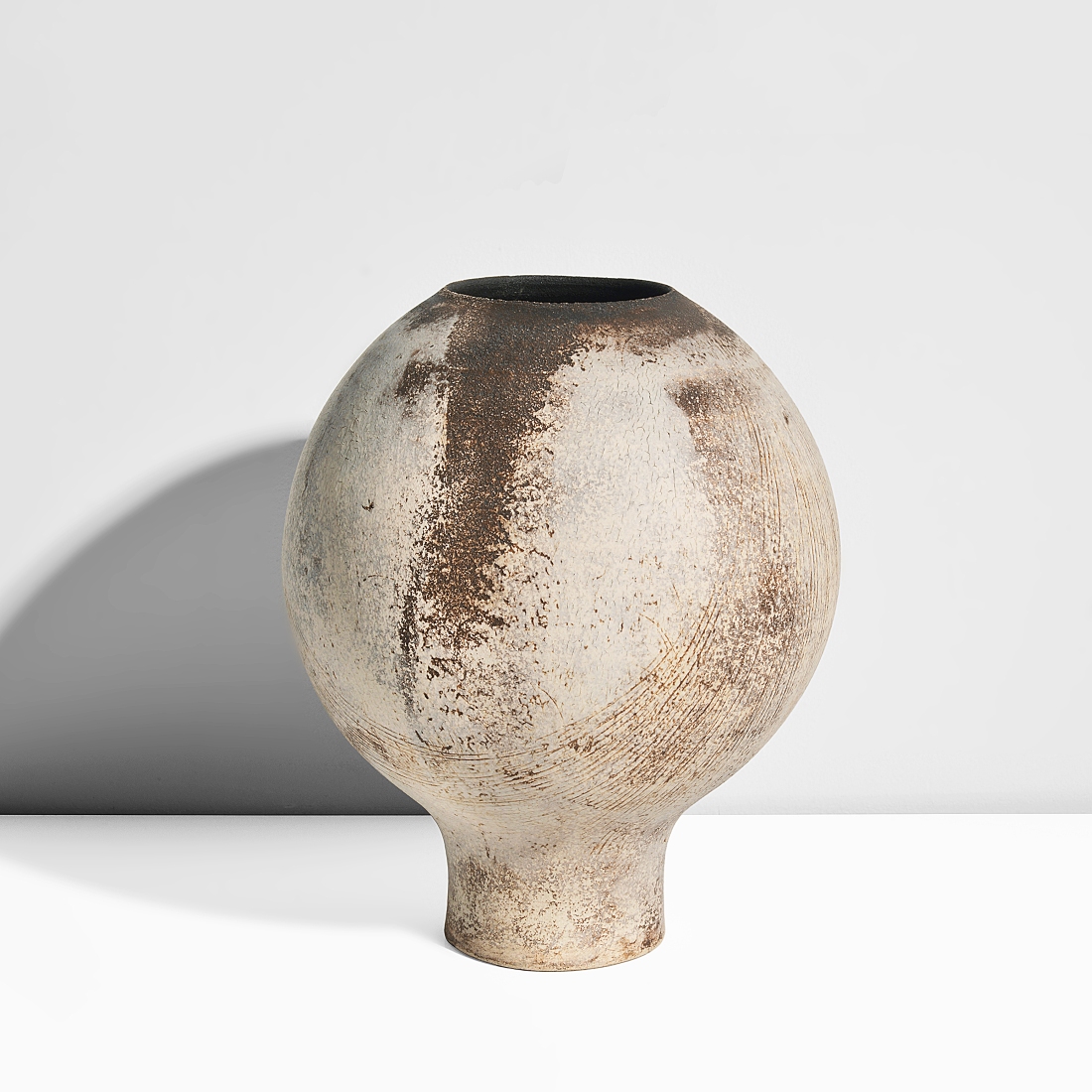
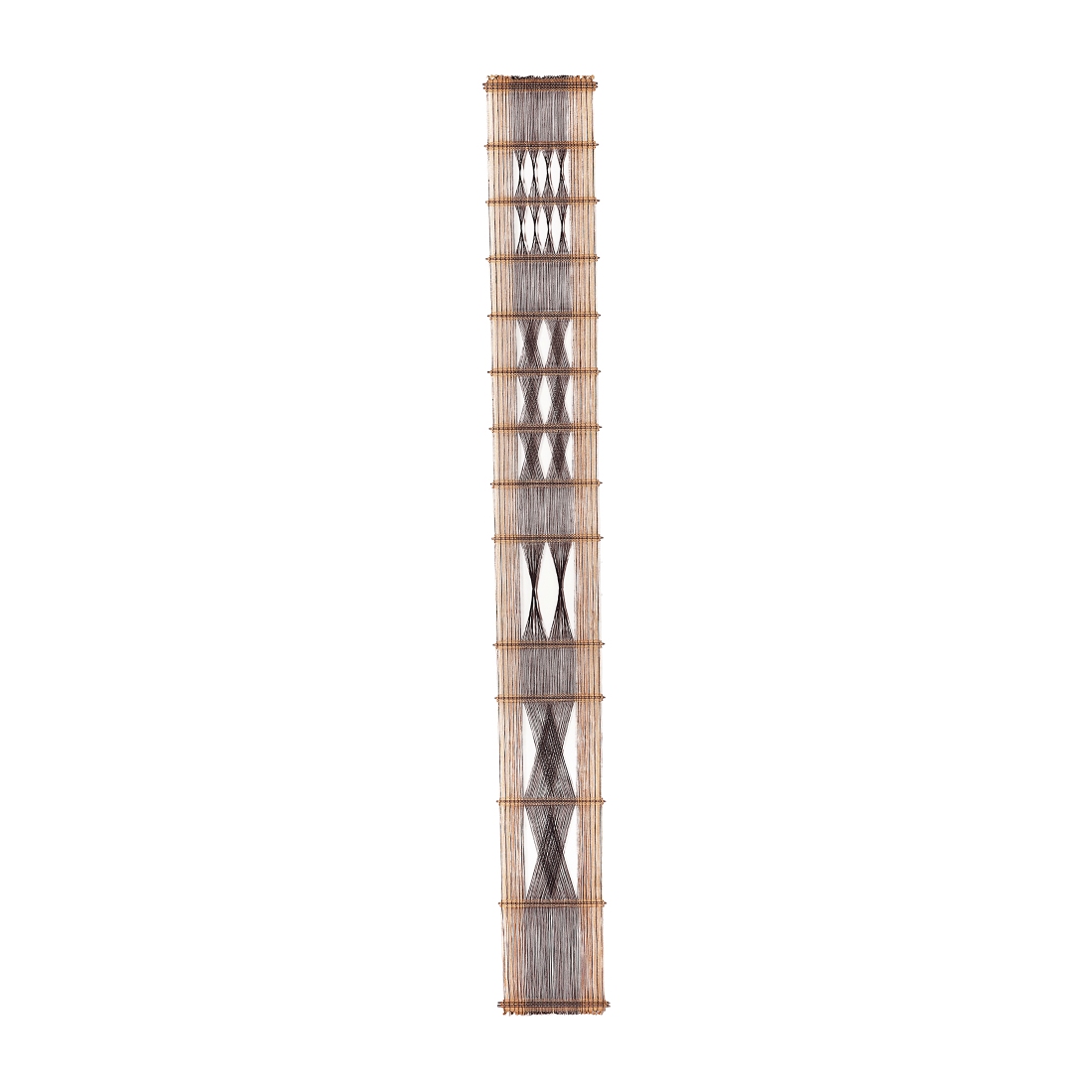
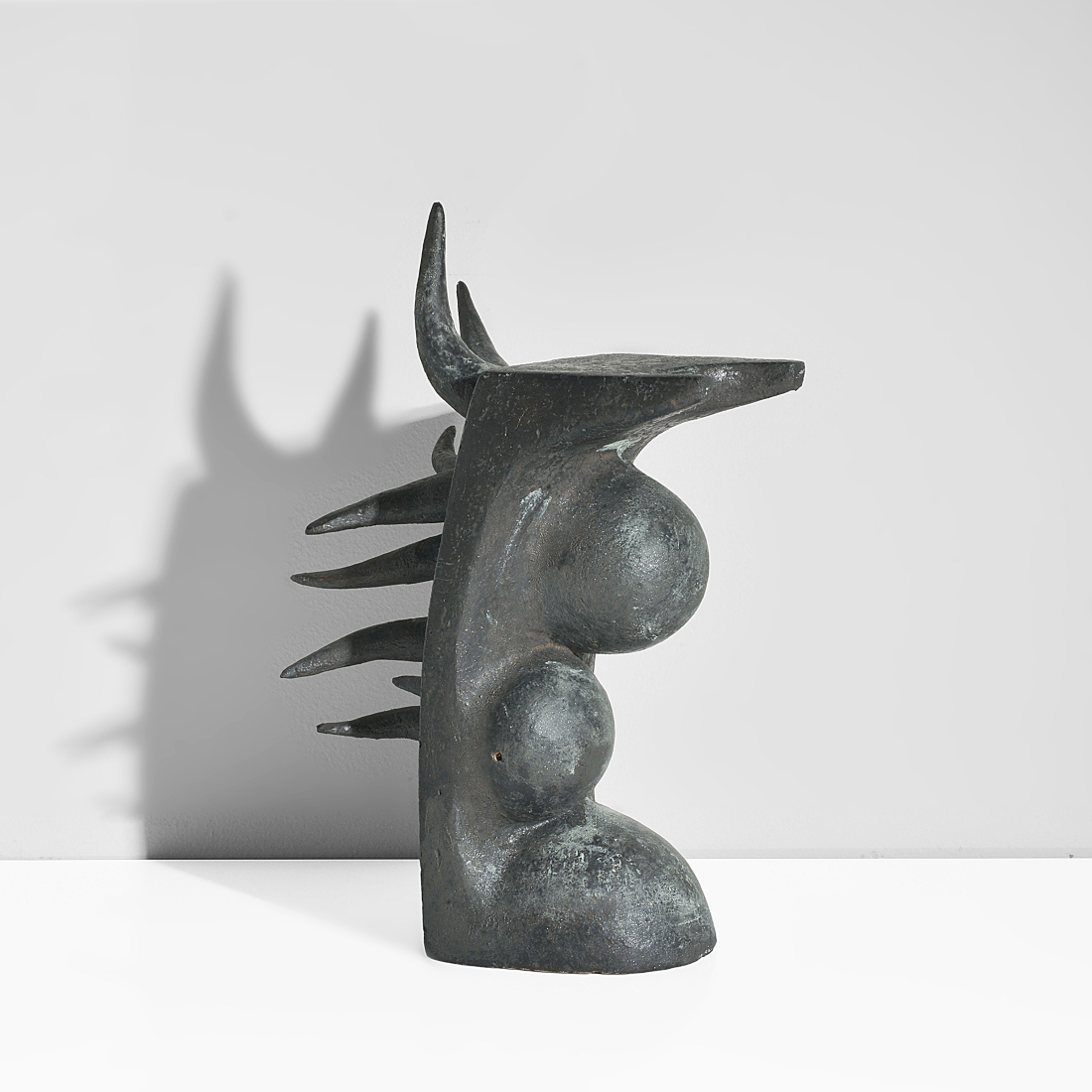
The 1970s proved a particularly dynamic moment of experimentation and ongoing redefinition of the handmade. Artists associated with the ‘New Ceramics’ movement – Elizabeth Fritsch, Alison Britton, Jacqueline Poncelet and Carol McNicoll – challenged the conventions of studio pottery by blurring the boundaries between vessel-making, sculpture, and painting. Their work pushed ceramics beyond function and into a more conceptual and expressive territory. This shift is reflected in the auction, which includes a significant group of works by Elizabeth Fritsch, from her first solo exhibition in 1974 (lot 198) through the following three decades (lots 199–202), alongside works by Alison Britton (lot 203) and Carol McNicoll (lots 204-207).
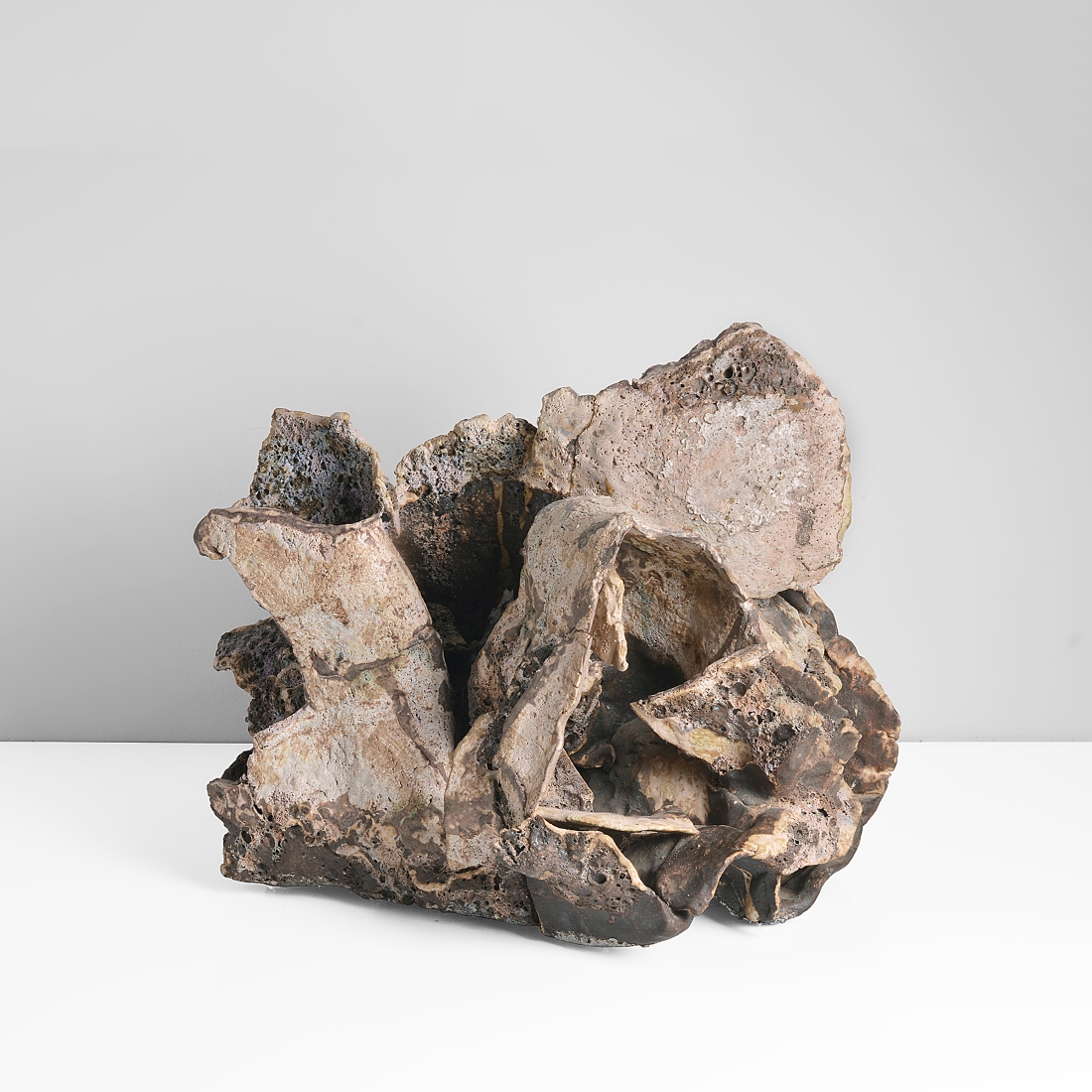
For some artists, such as Ewen Henderson, the exploration was focused on pushing the material properties of clay to its limits over the course of his career. Where earlier forms (such as lots 108 and 109) still loosely reference traditional forms and techniques, later works (lots 111 and 117) demonstrate how forms were pushed to the edge of collapse, surfaces fractured or distorted, and glazes behave unpredictably. These works emphasise process rather than conceal it; they retain a sense of risk, even of failure. If the earlier studio tradition sought harmony, this approach embraced tension. Clay is not simply shaped—it is negotiated with.
By contrast, an artist like Duncan Ross has spent decades refining a single technique as seen in lot 193. Each iteration of his vessels introduce subtle adjustments in proportion, surface, or balance. The result is not repetition, but distillation – an accumulation of knowledge embedded in the hand. In an age that privileges speed and constant innovation, this kind of sustained attention offers a quiet resistance.
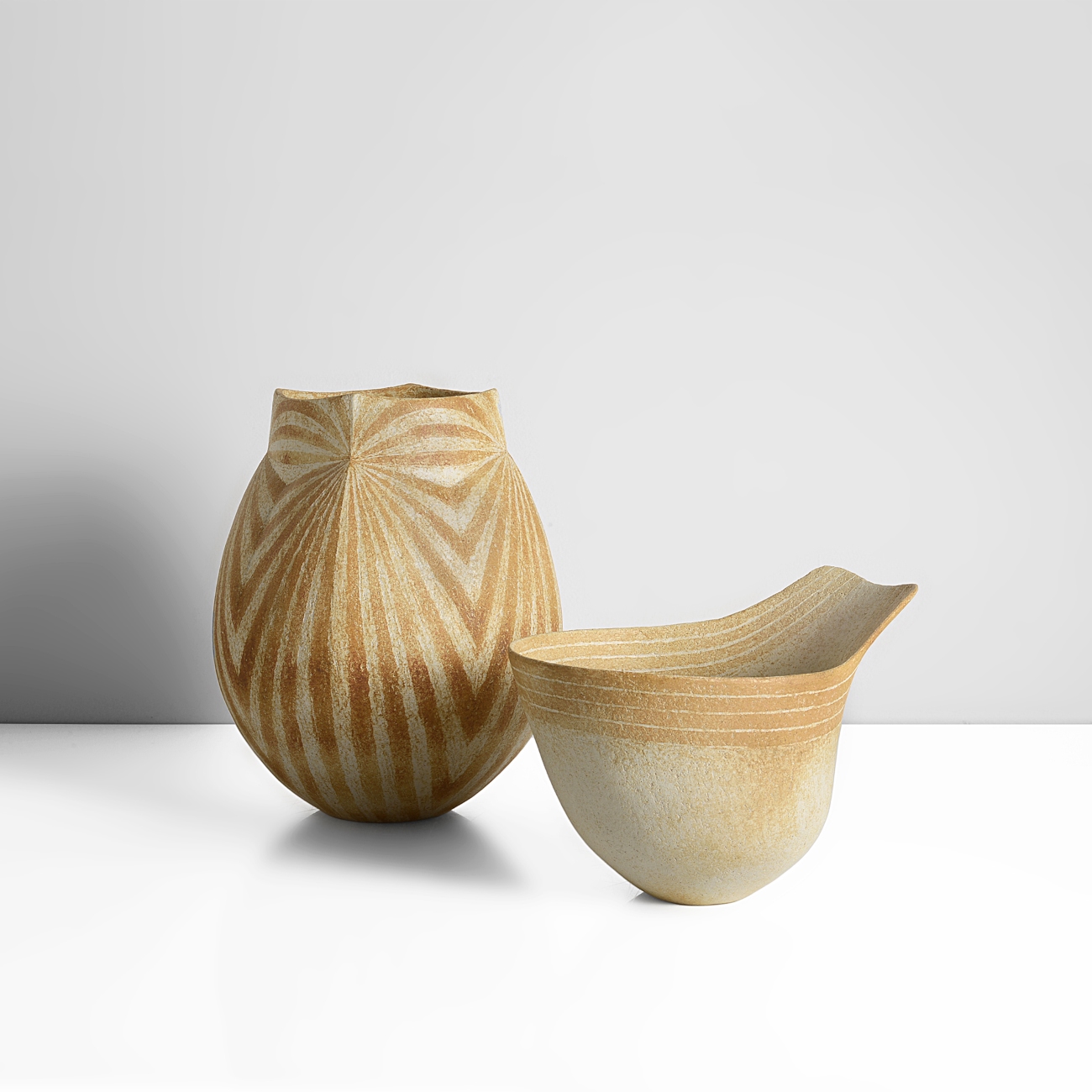
Within this environment of creative exploration and diversity, it is interesting to observe how artists define parameters for their own practice. For some, like John Ward (lots 150-163), this takes the form of self-imposed restraint. Ward would repeatedly revisit a core group of vessel forms, refining them through subtle variation whilst working within a deliberately limited palette of glazes and decorative devices. The immense appeal of John Ward’s pots to those who collect them is the warmth and tactile quality that comes from the way they engage with their physical environment. The geometric designs of his black and white pots – five of which have been selected for this auction – were inspired by the way shadows would fall on newly made pots in the studio. Ward’s work demonstrates how restriction can generate depth.
A similar commitment to restraint can be seen in the work of Edmund de Waal, whose practice is defined by an almost exclusive use of porcelain and a sustained focus on the cylinder form as seen in lots 262-272. Through subtle shifts in proportion, surface, and arrangement, de Waal transforms repetition into a form of enquiry. His work extends the language of the handmade beyond the individual object, situating it within carefully constructed installations like ‘not yet’, 2012 (lot 272) that engage with space, memory, and architecture. In doing so, it reflects a broader expansion of what ceramics can be, quietly moving from object to environment.
What emerges from these varied approaches in an understanding of the diversity of what the handmade can be. It is not synonymous with imperfection, nor with tradition. Instead, it encompasses both precision and disruption, discipline and experimentation. The contemporary ceramic landscape is defined by this plurality.
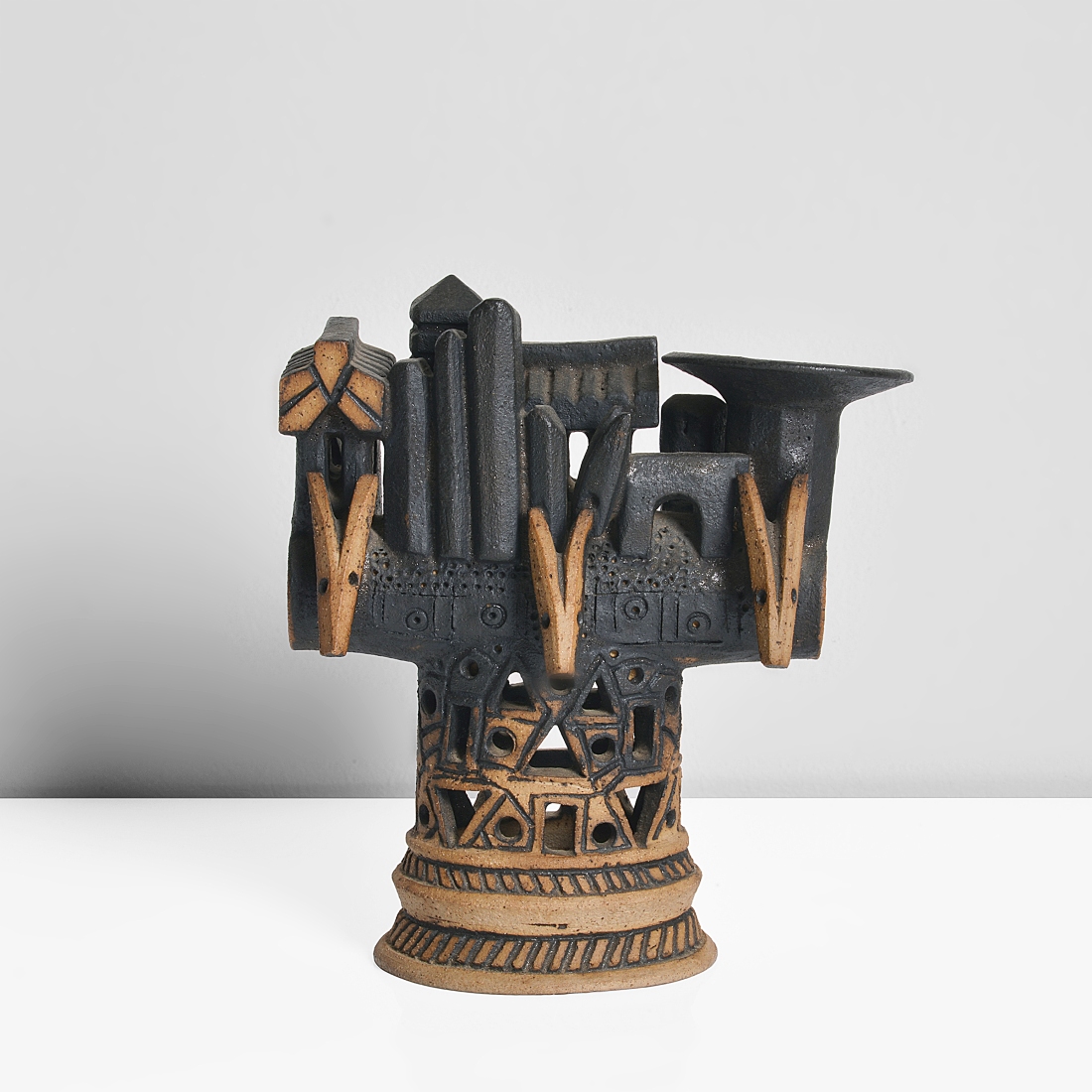
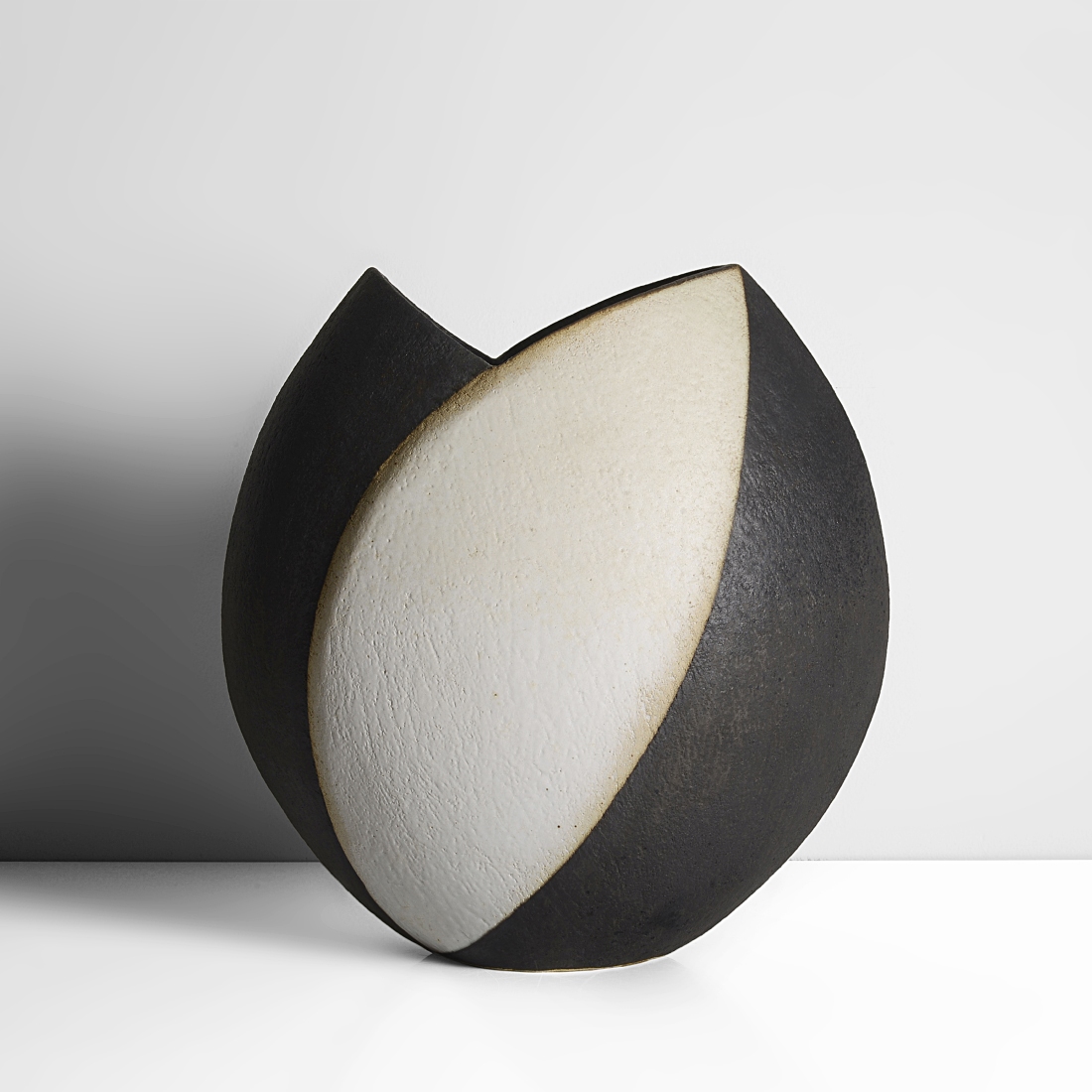
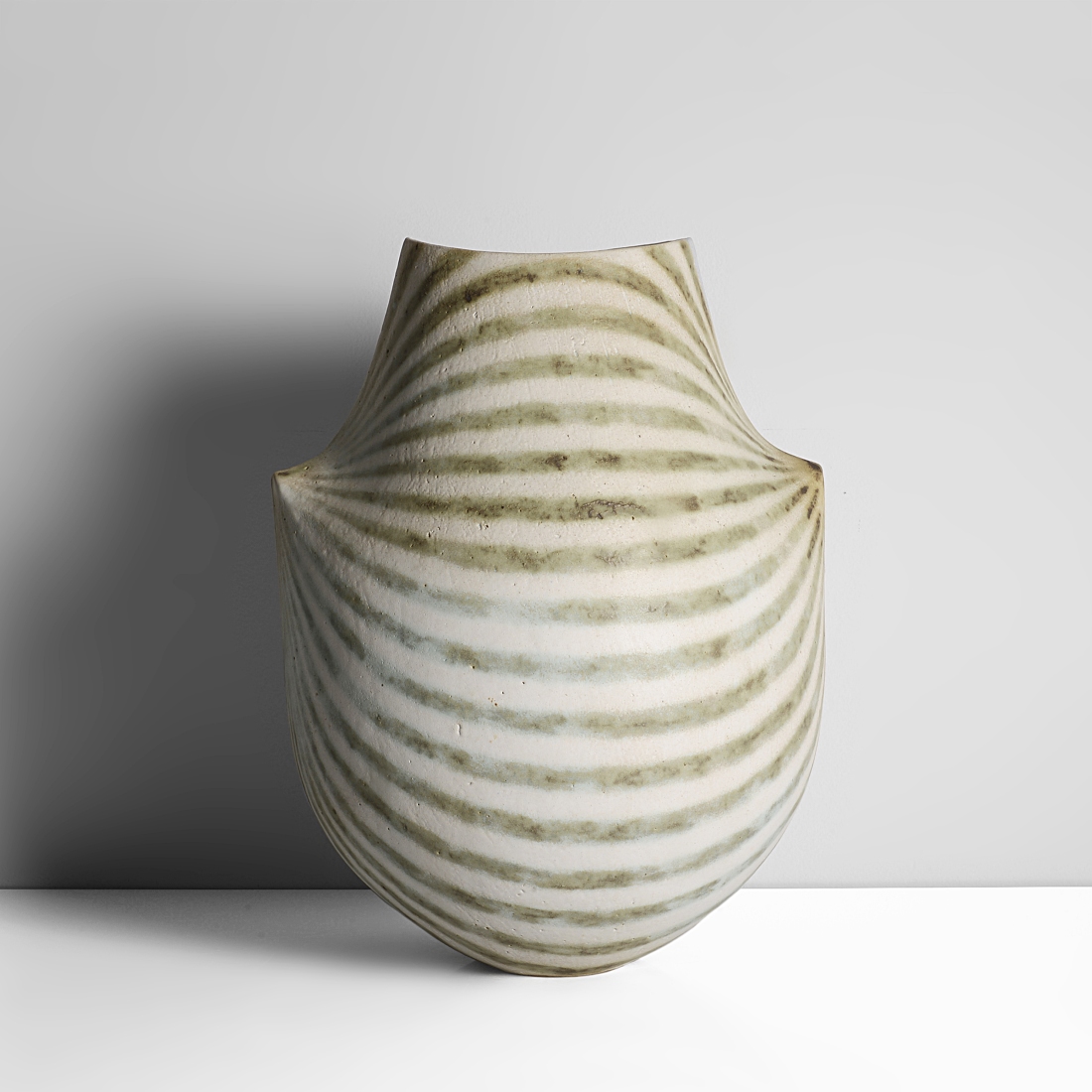
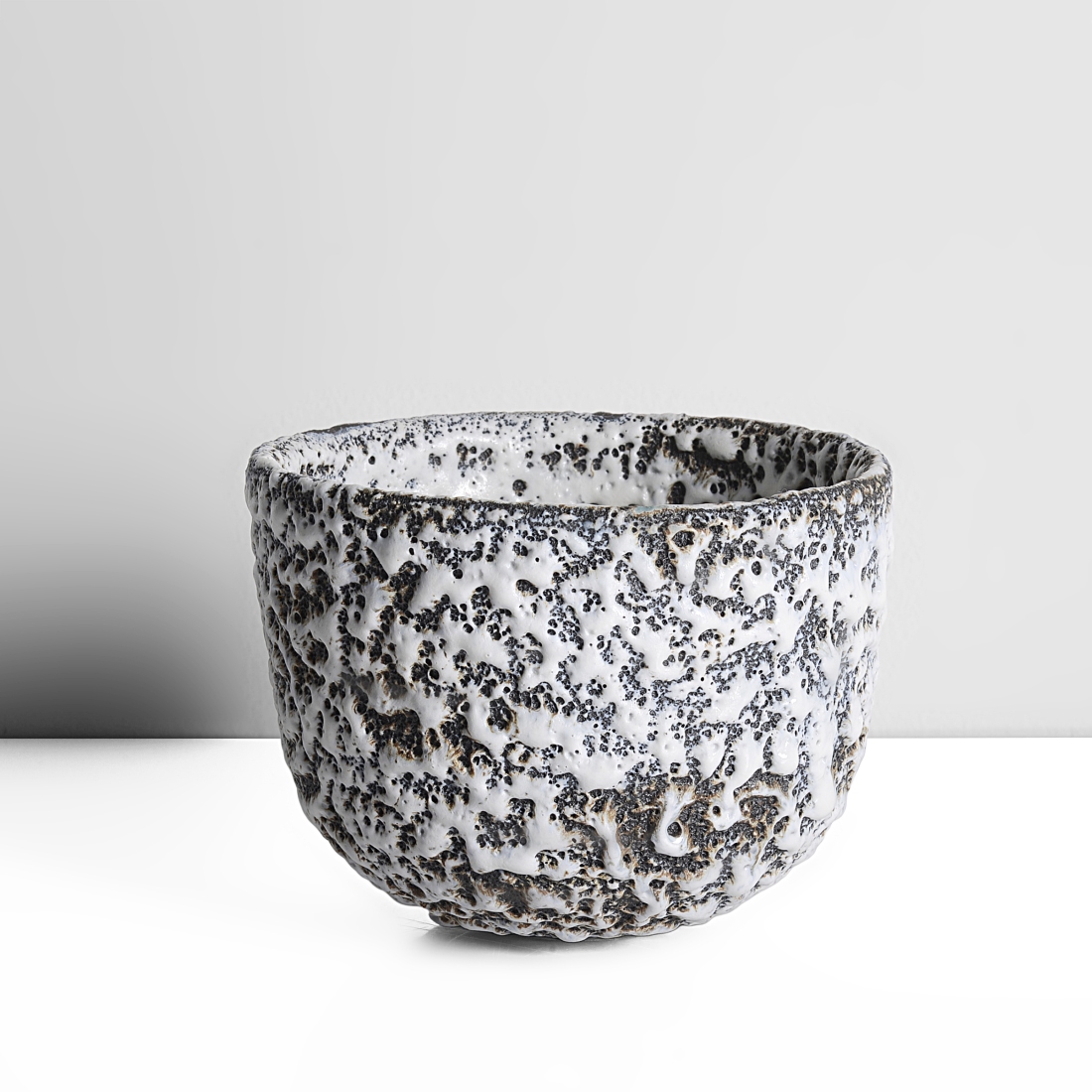
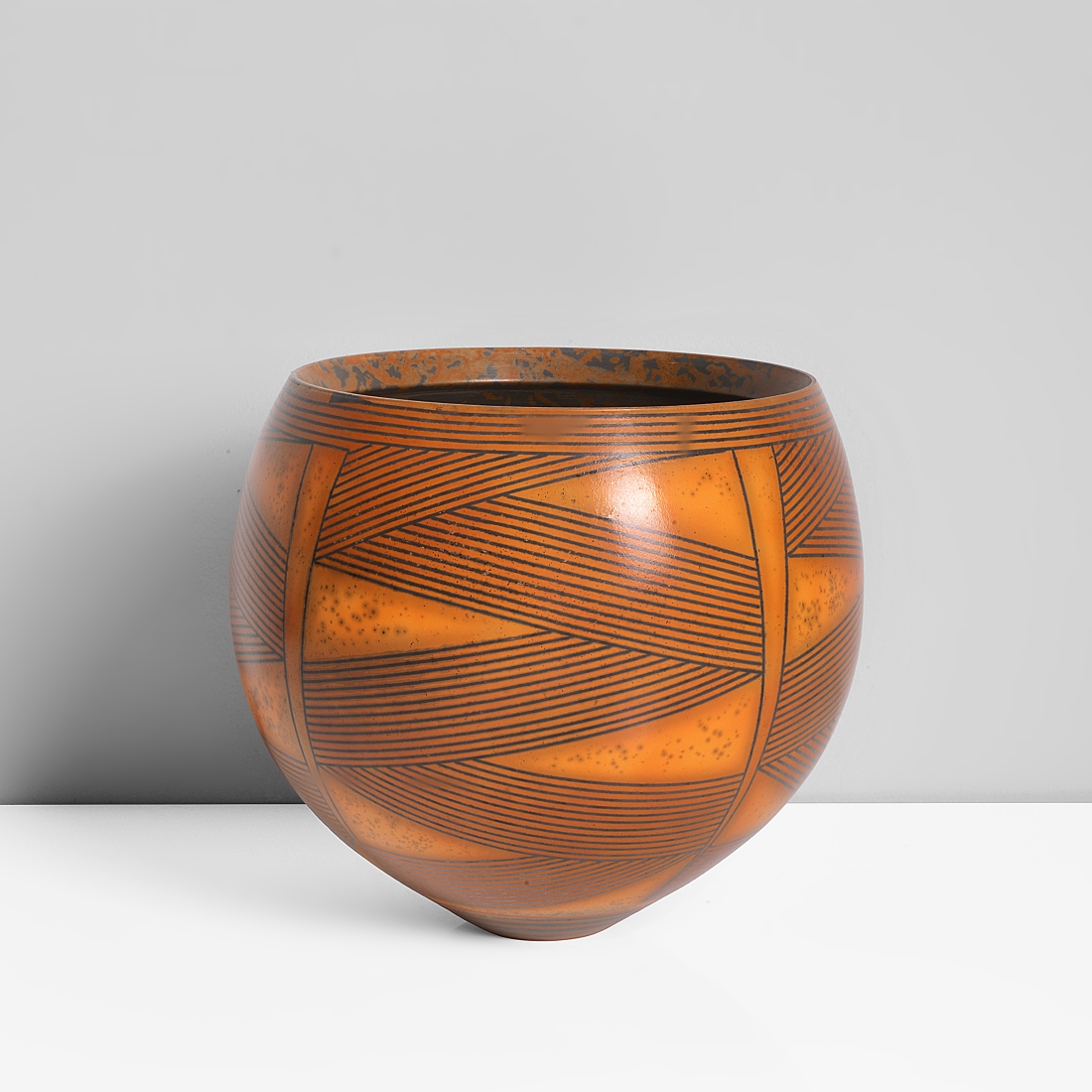
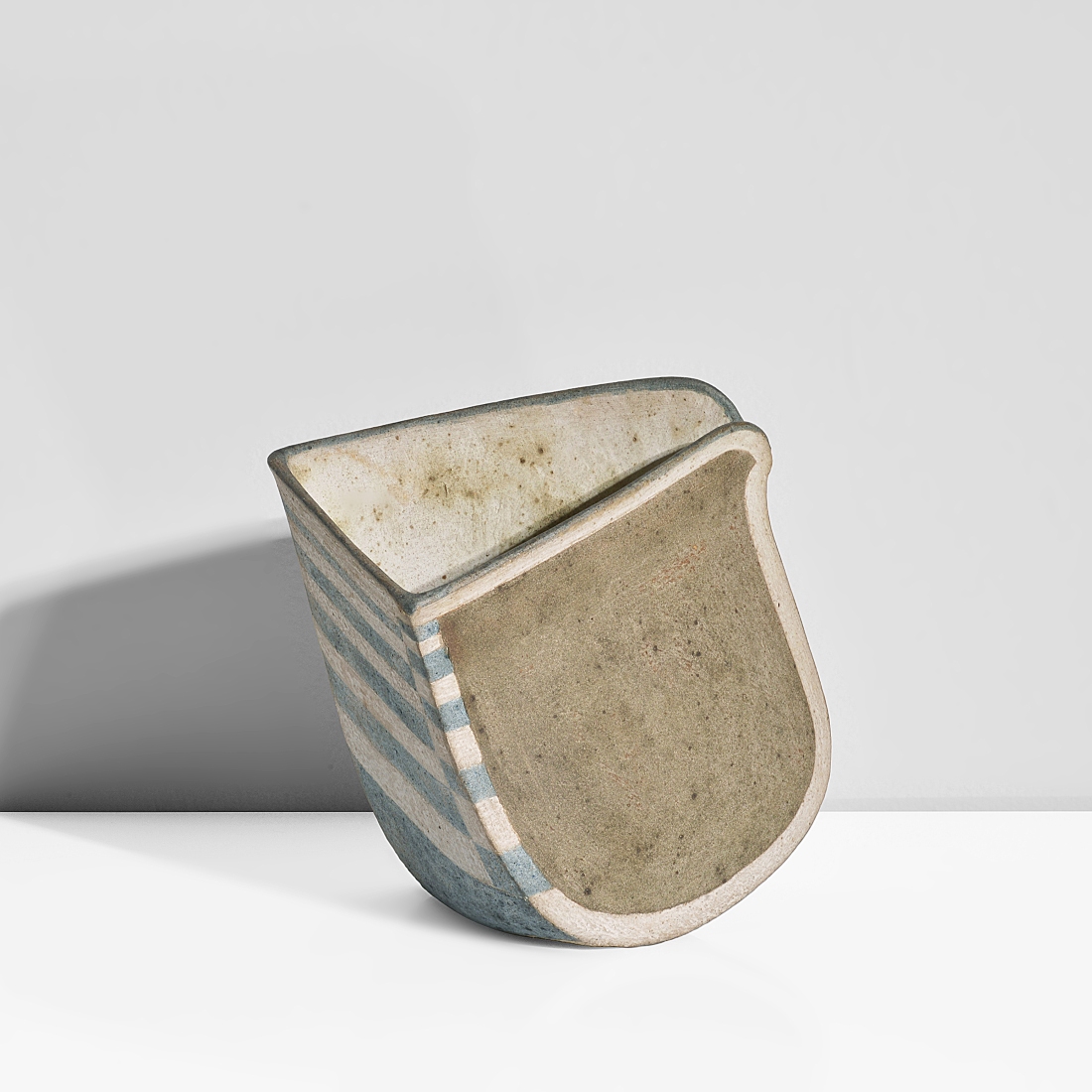
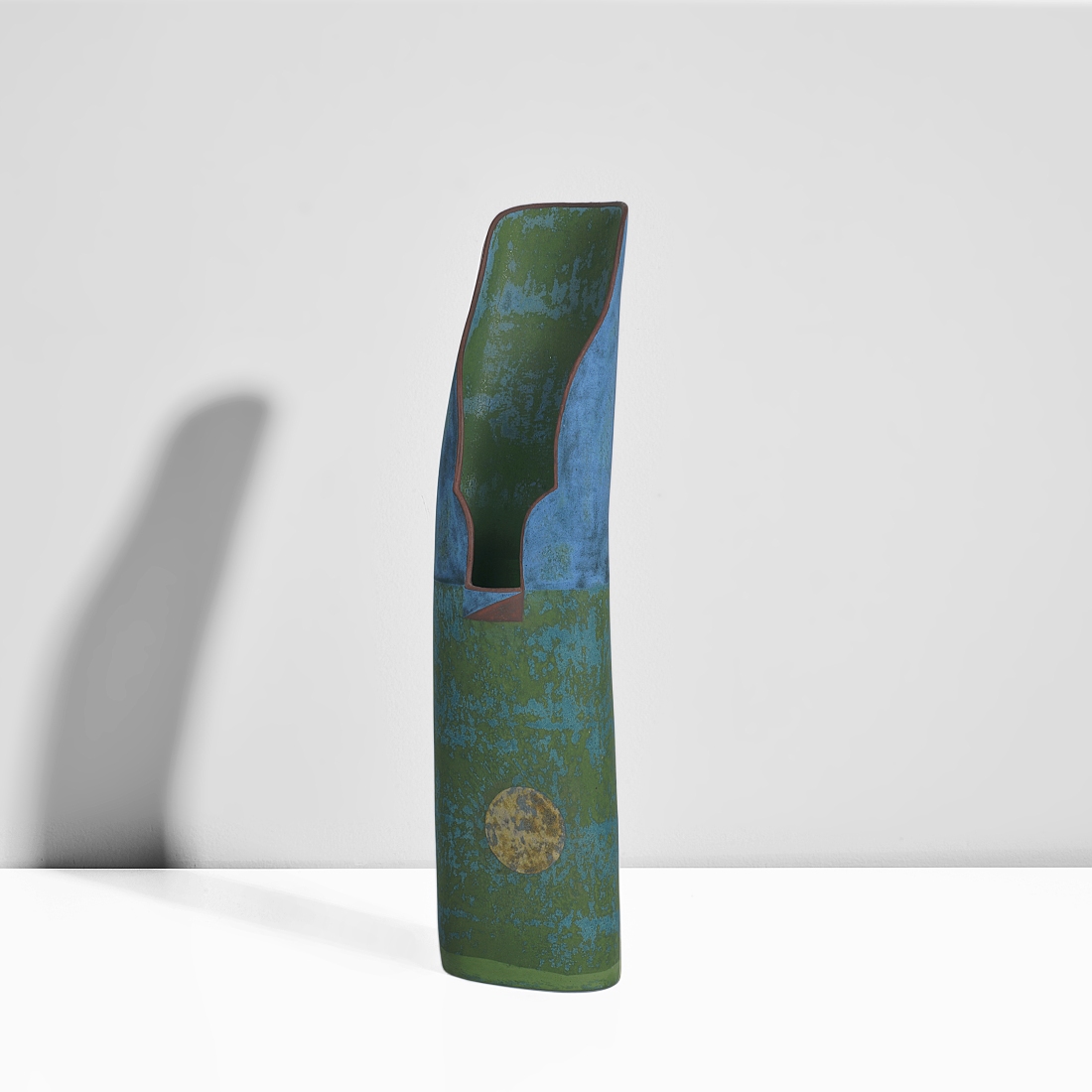
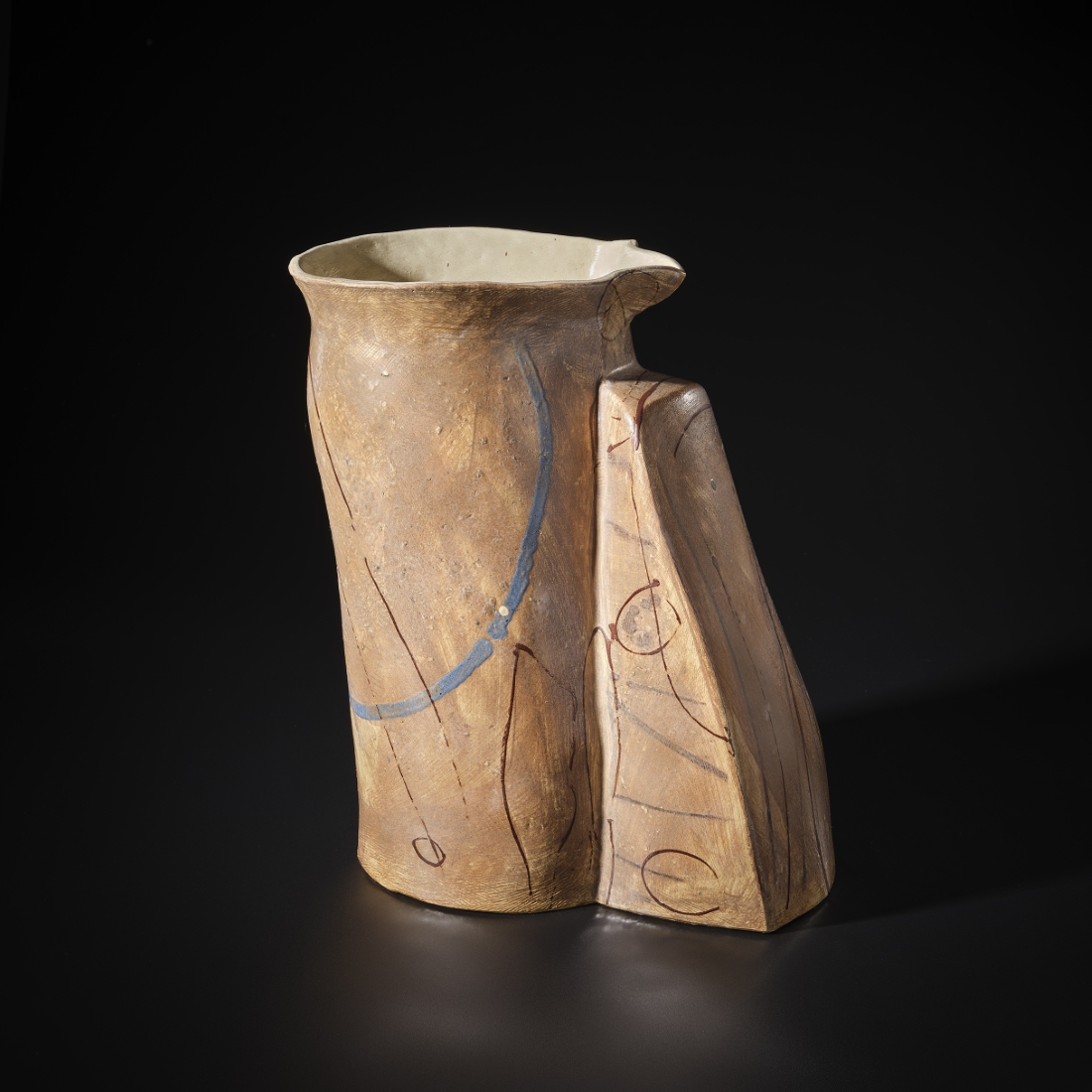
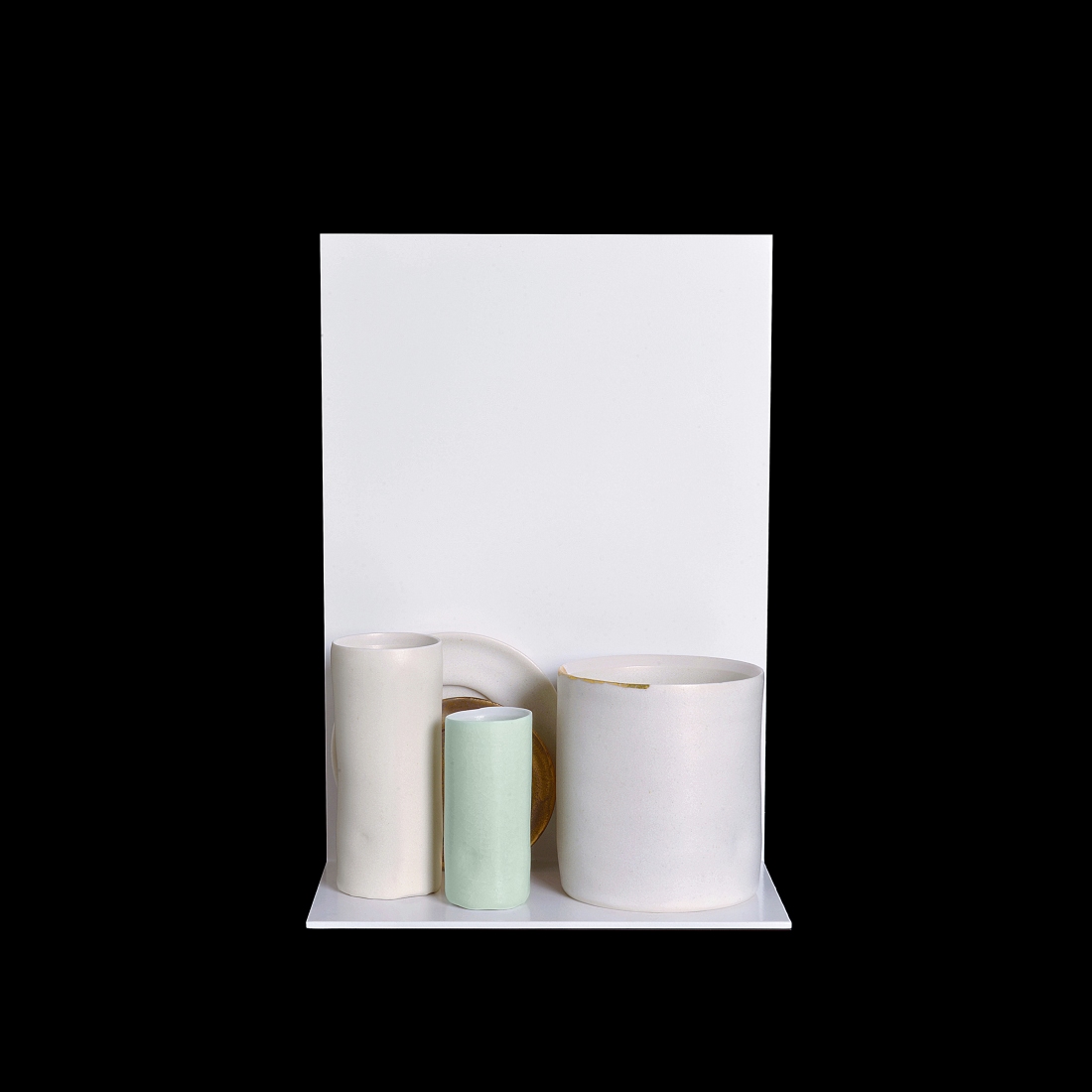
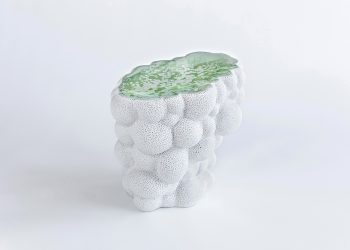
Beyond questions of process and philosophy, ceramics exerts another, more immediate pull: it engages the body. Unlike much contemporary visual culture, which is designed to be consumed at a distance, ceramic objects invite a physical response. On seeing a tea bowl by Emmanuel Cooper (lot 168), one imagines its weight, its balance, the texture of the surface in the hand. In a very different way, a sensitivity to surface and touch is also evident in the work of Jennifer Lee where the material of her vessels, like lot 274, invite close, physical engagement.
This “urge to touch” is not incidental; it is central to how these works are understood. In more playful works, such as the work of Ian Godfrey (lots 127-131), the forms themselves become a point of engagement, inviting not just admiration but curiosity, even amusement. These objects resist passive viewing. They ask to be handled, to be lived with.
These haptic qualities are intrinsic to many ceramic works and are especially resonant in functional forms, where tactility is experienced in everyday use. The feel of an Akiko Hirai sake cup in the hand, warmed by tea poured from a teapot with its distinctive twisted willow handle (lot 291), becomes a quiet, multi-sensory experience.
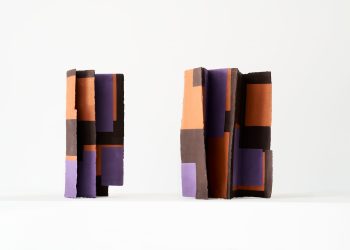
Importantly, this tactile dimension extends beyond ceramics. In a mixed-media context, it becomes possible to see how different craft disciplines share a common language. Whether working in glass, wood, metal, or textile, contemporary makers are often interested in the physical encounter between object and viewer, as seen in works across the sale, where similar concerns with material, process, and tactility extend beyond ceramics into other craft disciplines.
It is not the intention to frame this as a “return” to the handmade as the handmade never disappeared. What has shifted is how it is understood and valued, particularly by new audiences for whom ceramics and craft feel especially attuned as an antidote to the present moment.
The works brought together in this auction reflect that shift. They offer something that much of contemporary culture does not: resistance to speed, to uniformity, to distance. It insists instead on time, touch, and reflection.
We invite you to view the auction online or visit us in the gallery and consider what these objects offer – especially now – when material, integrity, and human connection feel more vital than ever.
The auction is now viewing online. The Covent Garden gallery exhibition and bidding will open on Saturday 9 May, with bidding closing on Thursday 14 May at maaklondon.com
About Maak
Maak is the leading auction house specialising in contemporary ceramics and craft. Known for its expertly curated sales and dedication to showcasing the best in international ceramics and craft, Maak provides a platform for collectors to acquire rare and exceptional works from both established and emerging artists through both their regular auction schedule and private sales.